Waxing
Waxing vs Sugaring: Which Should You Book as a Client
Quick answer
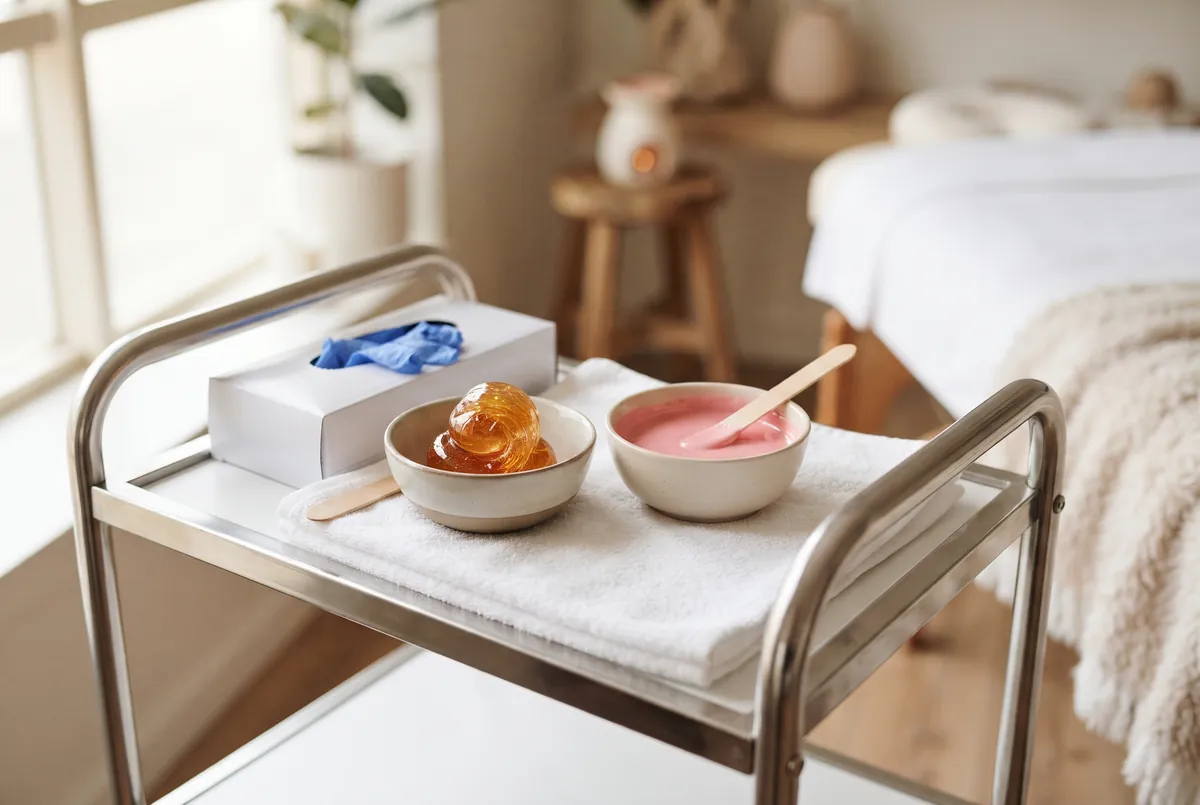
Choose sugaring if you have sensitive or reactive skin, dislike heat or struggle with ingrown hairs, because sugar paste is used lukewarm, grips mostly the hair and rinses off with water. Choose waxing if you want the widest choice of studios or a faster service on large areas. Both last a similar number of weeks and need the same hair length, preparation and aftercare.
Waxing vs sugaring is a choice more clients face every year, as sugaring studios open next to traditional wax bars and many salons offer both. On the surface the two services look almost identical: a warm product goes on, hair comes out at the root, and the result lasts for weeks. In practice, they differ in what the product is made of, how it is applied and removed, how it feels, how it treats sensitive skin and which kind of studio offers it. Those differences matter most for clients with reactive skin, a history of ingrown hairs, a low tolerance for heat or very particular expectations about a Brazilian.
I am Aida Khazieva, a licensed electrologist and cosmetologist with more than twenty years in hair removal, and I have worked with clients who swear by one method and clients who switch between the two depending on the area. This guide is written for the person on the bed, not the person holding the spatula. If you are a student deciding which method to train in first, my practitioner guide on wax vs sugaring: which to learn covers the business and training side. Here the question is simpler: which should you book?
The short answer: choose sugaring if you have sensitive or reactive skin, dislike heat, or want a product made of simple ingredients, because sugar paste is applied lukewarm and grips the hair more than the skin. Choose waxing if you want the widest choice of studios, the fastest service on large areas, or a method your local professionals have done for years. Both last a similar time and both need the same hair length and aftercare.
What Waxing and Sugaring Actually Are
Waxing removes hair with a resin-based wax that is heated and either removed with a strip (soft wax) or lifted by hand once it sets (hard wax), while sugaring removes hair with a paste or gel made mainly of sugar, water and lemon juice or another acid. Both pull hair out at the root, so both leave the skin smooth for longer than shaving. The difference begins with the product and continues through every step of the service.
Most waxes contain resins, often rosin (colophony), along with waxes, oils and additives that change their texture and melting point. They are heated in a warmer to a temperature that makes them spreadable. Soft wax stays tacky and is removed with a strip. Hard wax sets on the skin and is removed by hand. My guide on hard wax vs soft wax explains that split in detail.
Sugar paste is cooked from sugar, water and an acid such as lemon juice into a thick, pliable mass. It is used at a lukewarm temperature, close to body temperature, and in its classic form is kneaded by the practitioner's gloved hand and worked into the skin. There is also sugar gel, a softer version used with strips like soft wax. Because sugar dissolves in water, residue washes off easily. Many clients like the idea of a product with a short ingredient list, though that alone does not make it right for everyone, since anyone can react to any ingredient.
Names on menus can blur the line. Some studios list "sugar wax," which may mean a sugar-based product used with strips, or simply a marketing name for a soft wax. Others offer "Brazilian sugaring" alongside a "Brazilian wax" at different prices. If the menu is unclear, ask what the product is made of and whether it is removed by hand or with strips. The answer tells you which method you are actually booking, and it helps you compare one studio with another fairly.
Waxing vs Sugaring at a Glance
The clearest way to compare waxing vs sugaring is factor by factor, because the right choice depends on what matters most to you. The table below reflects how the two services usually compare in US studios. Individual products and practitioners vary, and a skilled waxer can outperform an inexperienced sugarist, and the reverse, so read it as typical tendencies.
| Factor | Waxing | Sugaring |
|---|---|---|
| Main ingredients | Resins, waxes, oils, additives | Sugar, water, lemon juice or other acid |
| Temperature on the skin | Warm to hot, tested before use | Lukewarm, close to body temperature |
| Direction of removal | Usually against the direction of growth | Classic paste: in the direction of growth |
| What it grips | Hard wax mainly hair; soft wax hair and skin surface | Mainly hair and loose dead skin |
| Re-working the same spot | Limited, especially with soft wax | Often possible with care |
| Residue cleanup | Oil-based remover | Rinses off with water |
| Availability | Very widely available | Fewer studios in many areas |
| Speed on large areas | Usually fast, especially with soft wax strips | Can be slower with paste, similar with gel and strips |
| Hair length needed | Often about a quarter inch | Similar, some sugarists accept slightly shorter hair |
| How long results last | Weeks, similar to sugaring | Weeks, similar to waxing |
Neither method is permanent. Both depend heavily on the skill of the person doing the service, on your hair and skin type and on what you do afterward. If permanent results are your goal, neither waxing nor sugaring is the answer; electrolysis is the only method the FDA accepts for permanent hair removal claims, and my guide on waxing vs electrolysis explains how that comparison works.
How Each Method Feels on the Skin
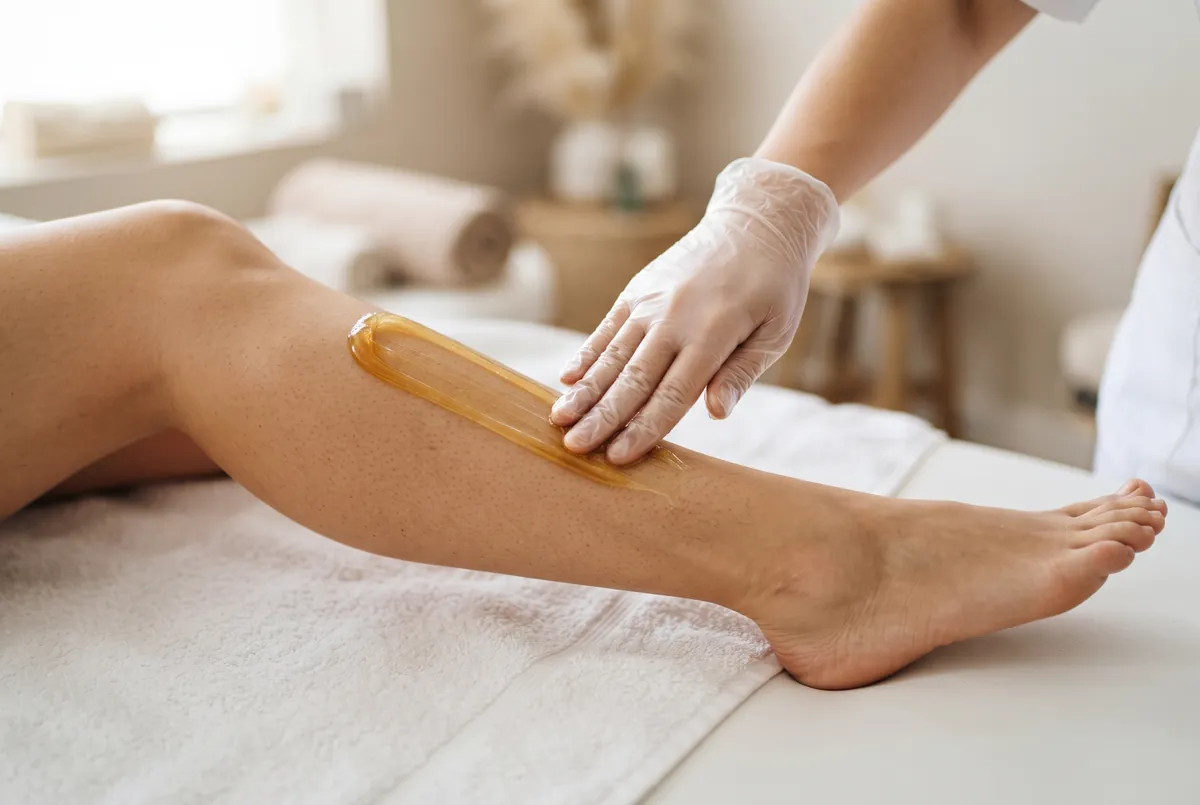
Sugaring usually feels cooler and gentler on application than waxing, while the moment of removal feels similar for both: a quick, sharp sensation followed by warmth that fades. Wax is warm when it goes on, sometimes hot, and clients with heat sensitivity notice it. Sugar paste goes on at a temperature many clients describe as barely warm. If heat is the part of waxing you dread, sugaring removes that part of the experience.
The application motion also differs. With wax, the practitioner spreads the product with a spatula and either applies a strip or waits for hard wax to set. With classic sugaring, the practitioner molds a ball of paste with a gloved hand, presses it against the direction of growth several times to work it around the hairs and then flicks it off in the direction of growth. Some clients find this repeated pressing slightly massaging. Others find it strange the first time. Both reactions are normal.
Pain at removal depends far more on the body area, hair density, the practitioner's skill and your own sensitivity than on the method. Many clients report that sugaring hurts a little less, especially on the bikini area and underarms, and some experience no real difference. A smooth, fast, well-tensioned removal is what reduces pain, whichever product is used. For practical ways to reduce discomfort with either method, see does waxing hurt and how to reduce discomfort.
Clients also ask whether sugaring is quieter. It is: there is no ripping sound of a strip, only the soft flick of the paste. That sounds trivial, but nervous first-time clients often tell me the sound of strip waxing makes them tense up before the pull. If that describes you, sugaring or hard wax, which also has no strip, may feel calmer.
Which Is Better for Sensitive Skin
Sugaring is often the better first choice for sensitive or reactive skin because it is used at a lower temperature, grips less of the skin surface and rinses off with water, but a well-done hard wax service is also gentle, and either method can irritate skin that is already compromised. Clients with thin skin, rosacea-prone faces, a history of lifting with strip wax, or a known sensitivity to resin ingredients are the ones who most often prefer sugaring.
If you have reacted to wax before, think about why. A reaction to a specific ingredient, such as rosin, is a reason to try a sugaring studio or a wax without that ingredient. A burn from overheated wax is a technique problem, not proof that all waxing is wrong for you. Lifted, raw skin after a strip wax often reflects soft wax used on an area where hard wax would have been better, or re-waxing over the same skin. A different waxer with better product choice may solve it.
Some situations rule out both methods until they are resolved. Neither should be done on sunburned, broken, infected or rash-covered skin, and neither is suitable for skin treated with certain prescription retinoids or acne medications. If you have diabetes, a circulation problem, a skin condition in the area or take medication that affects healing, talk to your physician before booking. My guide on waxing contraindications lists the main concerns, and they apply to sugaring as well.
Ingrown Hairs and Hair Breakage
Many clients and practitioners report fewer ingrown hairs with sugaring, mainly because classic sugaring removes hair in the direction of growth and may break fewer hairs, but technique and aftercare matter more than the method. Ingrown hairs often start when a hair snaps at or below the surface instead of coming out cleanly. The broken hair then grows back with a sharp tip that can curl into the skin. Any method that reduces breakage helps.
Waxing removes hair against the direction of growth, which a skilled waxer does cleanly with low, fast pulls and firm skin tension. When technique is rushed, the pull can snap coarse or curly hair. Sugaring's flick in the direction of growth is often described as gentler on the follicle. Still, a hurried sugarist can break hair too, and a careful waxer can produce excellent results on clients prone to ingrowns.
Whatever you choose, the habits that prevent ingrown hairs are the same: gentle exfoliation a few times a week starting a couple of days after the service, loose clothing on freshly treated areas, no shaving between appointments and no picking at bumps. If ingrowns are your main problem, read ingrown hairs after waxing; the prevention steps apply equally to sugaring clients. If they become painful, inflamed or keep returning in the same spots, see a dermatologist.
A practical test helps if you are unsure. Book the same small area, such as the underarms, with each method a few weeks apart, and compare how your skin looks that evening and the next morning, and how many bumps appear over the following week. Your own skin will give you a clearer answer than any general comparison, including this one.
How Long Results Last With Each Method
Waxing and sugaring usually last a similar length of time, typically measured in weeks, because both remove hair from the root and hair then regrows on its natural cycle. Any difference you notice is more likely to come from your hair growth, how cleanly the hair was removed and how regularly you book than from the product itself. Clients who switch methods sometimes believe one lasts longer simply because the second studio was more thorough.
Regular appointments matter for both. Hair grows in phases, so at any visit some hairs are actively growing and some are not yet visible. With consistent scheduling, more of the hair falls into a similar phase, and the results look smoother for longer. Shaving between appointments disrupts this and leaves hair at uneven lengths, which makes the next service less effective. For more on timing, see how long waxing lasts.
Some long-term clients of both methods notice that hair in certain areas grows back finer or sparser over time. That does not happen to everyone and is not a promise either method can make. Hormones, age, genetics and medications all affect hair growth. Neither waxing nor sugaring stops hair growth permanently.
Seasonality plays a small role too. Many clients book more often in summer, when legs, underarms and the bikini area are on show, and less in winter. Both methods handle this pattern the same way: the first appointment after a long break feels more like a first appointment again. Booking a few weeks before you need the result, then once more closer to the date, works with either.

Hair Length and Preparation for Each
Both waxing and sugaring need hair long enough to grip, often described as about a quarter inch, and some sugarists can work with slightly shorter hair than many waxers. The exact preference varies by practitioner and area, so ask your studio. Hair that is too short slips out of either product. Hair that is much longer can tangle, break or make the service more uncomfortable, and many studios will trim it before starting.
Preparation is the same for both. Stop shaving for long enough to let the hair grow out. Avoid sun exposure and tanning on the area. Skip strong exfoliants and retinoid products on the area for several days before. Exfoliate gently a day or two before, not on the day itself. Arrive with clean, dry skin and no lotion or oil, because both wax and sugar grip poorly on oily skin. My guide on how long hair should be for waxing gives more detail on length by area.
One small practical difference: sugar paste reacts to moisture, so sweaty or humid skin can make it less effective. Sugarists often dust the area with a light powder before starting. If you tend to sweat when nervous or arrive from a hot day outside, tell your practitioner. With wax, an oily or lotion-covered area is a bigger problem than humidity. Either way, clean and dry skin is the goal.
For clients with very coarse or curly hair, some practitioners recommend sugaring because the paste can be worked over the same area more than once, which helps with stubborn hairs, and because removal with the growth direction may reduce breakage. Others get excellent results on coarse hair with hard wax. If your hair is coarse and you have struggled with breakage or bumps, mention it and ask which method the practitioner would choose for your hair.
The Best Method for Each Body Area
Sugaring is often preferred for the bikini, Brazilian, underarms and face by clients with sensitive skin, while waxing is often preferred for large areas like full legs and backs when speed matters, but both methods work on every area in skilled hands. This is less a set of rules and more a reflection of where each method's strengths show most clearly.
- Brazilian and bikini: both work well. Hard wax and sugaring are the two gentlest options. Clients with very sensitive skin or many ingrowns often prefer sugaring.
- Underarms: both work well. Sugaring avoids heat on a sensitive area, and hard wax handles multiple growth directions well.
- Face (brows, lip, chin): both are used. Clients who use active skincare should tell their practitioner and may need to avoid both.
- Full legs and arms: soft wax strips are often faster. Sugaring with paste is thorough but can take longer; sugar gel with strips is closer in speed.
- Back and chest: waxing is the more common choice for large areas, though sugaring is used too. See chest and back waxing for men for this area specifically.
Some clients mix methods: sugaring for the Brazilian and underarms, waxing for the legs. That is perfectly reasonable if one studio offers both or if you are happy visiting two. For Brazilian-specific questions to ask before booking either method, read questions to ask before a Brazilian wax; nearly all of them apply to a Brazilian sugaring appointment too.
Hygiene: What to Check With Each Method
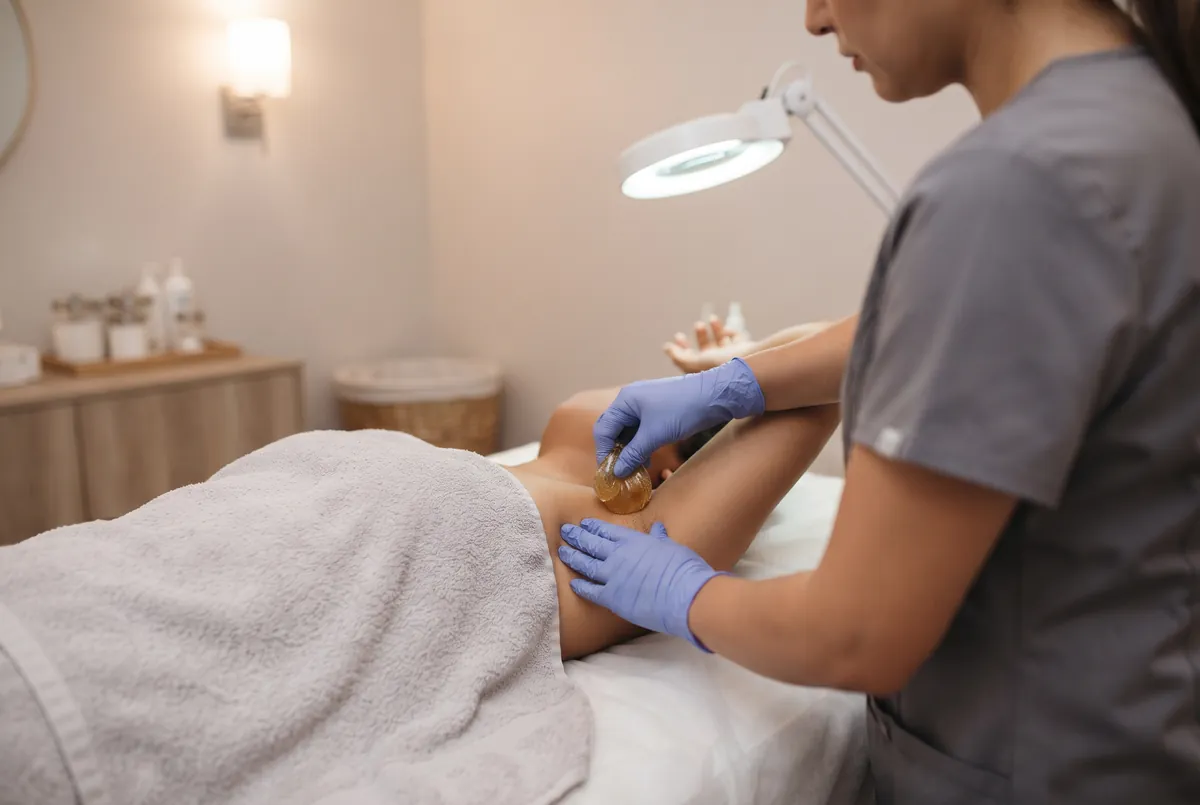
Hygiene is equally important for both methods: with waxing, check that a new applicator is used for every dip, and with sugaring, check that each client gets a fresh portion of paste that is discarded after the service. Double-dipping a used spatula into a shared wax pot is the main hygiene risk in waxing. In sugaring, the paste ball touches the skin directly, so the standard is a fresh ball taken from the container for each client, and never returned to it.
Other checks are the same: fresh covers on the bed, gloves for the practitioner, a clean, tidy station, and tools such as tweezers disinfected between clients. Ask directly. A professional studio will answer clearly and without hesitation. Many state boards set sanitation rules for these services. Rules differ by state, and you can check what applies in yours through the waxing licensing hub.
Some clients assume sugaring is automatically more hygienic because sugar has preservative properties in high concentrations. That is not something to rely on. The practitioner's habits are what keep the service clean. A sloppy sugarist and a sloppy waxer both create risk, and a careful practitioner of either method can provide a clean, safe service.
Gloves deserve a specific mention for sugaring. Because classic sugaring is done with the hands, the practitioner should wear fresh gloves for every client and change them if they touch anything other than the paste and the treatment area. With waxing, gloves matter just as much for intimate areas and any service where skin may show small spots of blood at the follicles.
At home, the picture is different. Home waxing kits are widely sold and simple to use on the legs, though overheating microwavable wax is a common cause of burns. Home sugaring is possible and some people cook their own paste, but getting the consistency and the hand technique right takes practice, and many people give up after a sticky first attempt. For sensitive areas like the bikini, a professional appointment with either method is usually the better first experience.
Cost, Availability and Choosing a Studio
Waxing is usually easier to find than sugaring, and prices for both vary widely by area, studio type and practitioner experience, so compare menus locally rather than assuming one method is cheaper. In many towns, waxing is offered by salons, spas and dedicated wax studios, while sugaring may be available only at a few specialized studios. In larger cities, both are common and the choice is wider.
A sugaring appointment can take somewhat longer on large areas, which some studios reflect in pricing. Others price both methods similarly. Packages and memberships exist for both. Before committing to a package, read the terms on cancellations, expiration and transfers. A package only saves money if you actually use it.
When choosing a studio for either method, look for licensed practitioners, a clear menu describing what each service covers, an intake form that asks about medications and skin, and honest answers about hygiene. Who may perform waxing and sugaring, and under which license, depends on your state; in many states both fall under the same esthetics or cosmetology rules, but check the waxing licensing hub for your state. A practitioner with years of experience in one method is usually a better choice than a beginner in the other, whichever you prefer in theory.

Switching From Waxing to Sugaring, or Back
You can switch between waxing and sugaring at any time, and the main thing to plan is hair length and timing, since both methods need the same preparation and work on the same hair growth cycle. There is no need for a long break between them. If you were waxing regularly and book a sugaring appointment on your usual schedule, the hair should be at a suitable length.
Expect the first appointment with a new method and a new practitioner to feel different. The sensation, the timing and the order of the service may all change. Give a new method at least two or three appointments before deciding, because the first visit with anyone is partly about them learning your hair and skin. If your skin reacts badly after the first visit, tell the practitioner. It may be a technique or product issue that can be adjusted.
Clients who switch from home shaving straight to either method should know that the first professional appointment is usually the most uncomfortable and may produce more redness and bumps. That is because hair that has been shaved for a long time is often coarse and growing in sync. It usually becomes easier with regular visits. If you have a vacation or event coming, book the first appointment well before it; see waxing before a vacation for timing tips that apply equally to sugaring.
Bring your history with you when you switch. Tell the new practitioner which areas you had done, how your skin reacted, and what you liked or disliked about the old method. That short summary lets them adjust from the first minute instead of learning by trial.
If you decide after a few visits that neither method suits you, that is useful information too. Some clients move to shaving or trimming for low-maintenance care. Others decide to invest in longer-term reduction or permanent removal on the areas that bother them most. For a permanent result, electrolysis treats each follicle individually and is the only method the FDA accepts for permanent hair removal claims.
Aftercare for Waxing and Sugaring
Aftercare is the same for waxing and sugaring: for the first day or two avoid heat, sweat, friction, sun, swimming and heavy scented products on the area, then start gentle exfoliation a few times a week to prevent ingrown hairs. Freshly treated follicles are open and easily irritated, whichever product removed the hair.
In practice, that means no saunas, steam rooms or hot tubs, no intense workouts and no tanning on the day of the service and ideally the day after. Wear loose cotton clothing over the treated area. Keep the skin clean and use a simple, fragrance-free soothing product if your practitioner recommends one. Avoid sexual activity right after a Brazilian, for comfort and to reduce the chance of irritation. My waxing aftercare guide covers the full routine, and if you exercise often, read working out after waxing; both apply to sugaring clients too.
Redness and small bumps for a few hours, sometimes into the next day, are normal with both methods. If you see spreading redness, swelling, pain that increases, pus or a fever, contact a physician. These are signs of possible infection, which is uncommon but can happen after any hair removal from the root.
Pregnancy, your menstrual cycle and some medications can make skin more sensitive for a time, with either method. Many clients continue waxing or sugaring during pregnancy with extra care; ask your physician and read waxing during pregnancy. If you are more sensitive around your period, booking at a different point in your cycle is a simple fix for both methods.
How to Decide: A Simple Checklist
To decide between waxing and sugaring, weigh four things: your skin sensitivity, your tolerance for heat, the areas you want treated, and what is available near you from experienced practitioners. The checklist below turns those into simple prompts. If most of your answers fall in one column, start there. If they are mixed, try both for different areas.
- Has your skin reacted badly to wax before (lifting, burns, rash)? If yes, consider sugaring or ask about the wax ingredients.
- Do you dislike heat on your skin? If yes, sugaring removes that part of the experience.
- Do you struggle with ingrown hairs? Try sugaring, and combine either method with regular exfoliation.
- Are you treating large areas like full legs or back and want a faster service? Waxing is often quicker.
- Is there an experienced sugaring practitioner near you? If not, a skilled waxer is a better choice than an inexperienced sugarist.
- Do you want one studio for every service? Choose a studio that offers both, or the method your preferred practitioner specializes in.
Whichever you choose, tell your practitioner about medications, skincare and skin conditions, prepare your hair and skin in the same way, and follow the same aftercare. Then judge the method over two or three appointments, not one.
Your Next Step
If you have sensitive skin, dislike heat or struggle with ingrown hairs, book a sugaring appointment with an experienced practitioner and give it a few visits. If you want speed on large areas, the widest choice of studios or a method you already trust, stay with waxing and choose a practitioner who uses hard wax on sensitive areas. Either way, choose licensed professionals, ask about hygiene and follow the same aftercare. If you would like to provide these services yourself, start with the waxing course, read which method to learn first, and check your state's requirements on the waxing licensing hub before working on clients.
Keep notes after each appointment: which method, which area, how your skin looked that evening, any bumps during the following week and when regrowth started to bother you. After a few visits those notes make the choice for you, and they help any new practitioner understand your skin quickly.
And if you find a practitioner you trust, consider letting them guide the method area by area. A professional who offers both and sees your skin in person is in the best position to suggest sugaring for one area and waxing for another, and to change the plan as your hair and skin change over time.
State Requirements
State licensing guides
Hours, exams, fees, and the licensing board differ by state. Open your state for the current requirements.
Common Questions
FAQ
Sugaring is often better for clients with sensitive skin, heat sensitivity or frequent ingrown hairs, because the paste is used lukewarm and grips the hair more than the skin. Waxing is often better for speed on large areas and is easier to find. The practitioner's skill matters more than the method, so a skilled waxer can be a better choice than an inexperienced sugarist.
Many clients find sugaring slightly less painful, especially on the bikini area and underarms, and it removes the heat that some people dislike about waxing. The sting at removal is similar for both methods and depends most on the area, hair density, technique and how regularly you book. Read how to reduce discomfort for tips that work for both.
Waxing and sugaring usually last a similar time, measured in weeks, because both remove hair from the root. Differences clients notice usually come from how cleanly hair was removed, their own growth cycle and how regularly they book, not from the product.
Both work well for a Brazilian. Hard wax and sugaring are the two gentlest options on the bikini area. Clients with very sensitive skin or many ingrowns often prefer sugaring. Ask the same questions before booking either; see questions to ask before a Brazilian wax.
Yes. Both methods need similar hair length and preparation, so you can switch on your usual schedule without a long break. Give the new method two or three appointments before deciding, because the first visit with a new practitioner is partly about learning your hair and skin.
Sugaring is often gentler on sensitive skin, but it is not safe on sunburned, broken, infected or rash-covered skin, or on skin treated with certain prescription retinoids or acne medications. If you have a skin condition, diabetes or take medication that affects healing, ask your physician first. The same screening as waxing contraindications applies.
No. Aftercare is the same: avoid heat, sweat, friction, sun and swimming for a day or two, wear loose clothing and start gentle exfoliation a couple of days later. See the waxing aftercare guide for the full routine.
Not automatically. Hygiene depends on the practitioner's habits. With waxing, a new applicator should be used for every dip and never double-dipped. With sugaring, each client should get a fresh portion of paste that is discarded after the service. Ask the studio how they handle this, and watch the first minute of the service.
Keep Reading
Related Guides


