Waxing
Waxing Contraindications: When You Should Not Wax and Why

Quick answer
Do not wax skin treated with retinol, tretinoin or strong exfoliating acids, skin recently peeled or lasered, sunburned, broken or infected skin, or any area while taking oral isotretinoin. Diabetes, circulation problems, blood thinners and steroid use need a physician's agreement first. The prescriber and product instructions set waiting periods. Trimming, shaving or tweezing are the usual alternatives.
Waxing contraindications are the reasons a practitioner should postpone, modify, or decline a wax. Most people think of waxing as a simple service, and on healthy skin it usually is. The trouble starts when the skin has been changed by something the client does not connect with hair removal: a retinoid cream used at night, an acne prescription, a peel done last week, a weekend in the sun, a cold sore that is just starting. In those situations the wax can take a layer of skin along with the hair. After more than twenty years as a licensed cosmetologist and electrologist, I can say that nearly every bad waxing outcome I have seen was predictable from a few honest questions asked before the wax was warmed.
This guide is written for two readers: clients who want to know when you should not wax, and waxing students who are learning how to screen. It explains why skin lifts or tears, goes through the main groups of contraindications one at a time, separates absolute from relative situations in a table, and then covers the practical side: the intake form, the consultation, patch testing, what to do if skin lifts anyway, and which hair removal options remain when waxing is off the table. Everything here is general education, not a diagnosis and not medical advice. Where a medication or a health condition is involved, the prescriber or dermatologist decides what is safe, and practitioners follow their training and the wax manufacturer's protocol.
Why Skin Lifts or Tears During Waxing
To understand waxing contraindications, start with what wax is supposed to grip. The outer layer of the skin is made of flattened, dead cells stacked like shingles and held together by natural lipids. On healthy skin this layer is firmly attached to the living layers underneath. Wax is designed to grip the hair and, to a smaller degree, the loosest surface cells. When the strip or the hard wax is removed, the hair comes out of the follicle and a little surface debris comes with it. That is why freshly waxed skin looks slightly polished. The living skin underneath stays where it is because its attachment is stronger than the pull of the wax.
Skin lifting happens when that balance is reversed. If the outer layer has been thinned, loosened, or dried out, the bond between the wax and the surface becomes stronger than the bond between the surface and the layers below. The wax then removes a patch of the outer skin. Practitioners call this lifting. It looks like a shiny, raw, pink or red area, sometimes with a clear edge in the shape of the wax strip. It may sting at once or only later, when a product touches it. Over the following days it can form a thin crust, and on some skin tones it leaves a dark or light mark that takes much longer to fade than the injury itself.
Several things push skin toward lifting. Products and medications that speed up cell turnover leave a thinner surface layer. Procedures that remove surface cells on purpose, such as peels and microdermabrasion, do the same thing in one visit. Sun exposure inflames the skin and weakens it. Some medical conditions and medicines make skin more fragile or slower to heal. Technique also matters: wax that is too hot, going over the same spot repeatedly, pulling upward instead of parallel to the skin, and failing to hold the skin taut all raise the risk. Thin areas such as the upper lip, brows, and inner thighs lift more easily than the lower legs. Screening exists to find the first group of causes, and training exists to remove the second.
Topical Retinoids and Exfoliating Acids
The question I hear most is whether you can wax while using retinol or tretinoin. Retinoids are vitamin A derivatives used for acne, texture, and signs of aging. The family includes over the counter retinol and retinaldehyde, adapalene, and prescription products such as tretinoin and tazarotene. They work by changing how skin cells form and shed, and one result is a thinner, less cohesive outer layer in the area where they are applied. That is the exact condition in which wax lifts skin. The face is the classic problem area because that is where people apply these products, and brows, upper lip, and chin are the most common facial waxing zones.
The safe rule for a practitioner is simple: do not wax an area where a retinoid is currently being used. How long a client needs to stop before waxing is not something a waxer should invent. It depends on the product, its strength, how often it is used, and the person's skin. For a prescription, the prescriber or dermatologist sets the pause, and the client should also ask whether stopping is appropriate for the condition being treated. For over the counter products, the product instructions and the wax manufacturer's protocol are the reference. Practitioners follow what they were taught in training and what their product line specifies, and when information is missing, they decline the area.
Clients often do not realize they are using a retinoid. It may be listed on the label under a chemical name, tucked into a night cream, an eye cream, or a body lotion marketed for texture or for bumps on the arms. Some people borrow a partner's acne gel. The same applies to exfoliating acids: glycolic, lactic, and mandelic acids, salicylic acid, and combination products such as exfoliating toners, pads, and cleansers. Benzoyl peroxide and some prescription acne and pigment creams can also leave the skin dry and reactive. Used regularly, these loosen the surface layer and increase the chance of lifting. Scrubs and exfoliating brushes used hard just before an appointment add mechanical thinning on top.
Location matters. A client who uses tretinoin only on the face may be a reasonable candidate for a leg or underarm wax, because the skin there has not been treated. A client who uses a retinol body lotion on the legs is a different case. During the consultation I ask what is applied where, and I ask the client to think through their whole routine from cleanser to night cream. If the answer is uncertain for a facial area, tweezing a few brow hairs or trimming is a safer service that day than waxing. Threading is sometimes offered as a substitute, but it still creates friction on thinned skin, so the same caution applies.

Oral Isotretinoin (Accutane)
Oral isotretinoin, widely known by the former brand name Accutane, is a prescription medicine for severe acne. Unlike a cream, it affects the skin of the whole body. It reduces oil production sharply and leaves skin dry, thin, and fragile, and it can slow healing. Waxing on Accutane is treated across the industry as an absolute contraindication, on every body area and with every type of wax. The risk is not mild redness. The risk is that a strip removes skin over a wide area, with a real chance of scarring or lasting pigment change. No experienced practitioner waxes a client who is taking it, and no wax formula makes it safe.
The harder question is what happens after the course ends. The skin does not return to normal on the day of the last capsule, and waxing is normally postponed for a period after treatment stops. You will find many different numbers quoted online, and I am not going to add another one. The waiting period is a medical decision. The prescribing physician or dermatologist knows the dose, the length of the course, and how the client's skin has responded, and that person decides when procedures like waxing are reasonable again. A practitioner's job is to ask whether the client has taken isotretinoin, when the course ended, and whether the prescriber has cleared waxing, then to follow training and the manufacturer's protocol.
In practice this conversation needs tact. Many clients on isotretinoin are young, self conscious about their skin, and eager to have brows or lip done before an event. Some leave the medication off the form because they think it concerns only acne. I explain the reason in plain terms: the medicine makes the skin too fragile for wax, the limit applies to the whole body, and we can shape brows with tweezers or trim hair in the meantime. Shaving and trimming are usually the simplest options during treatment, although even these should be gentle. Any other method the client is considering during or soon after the course is a question for the prescriber.
Recent Peels, Laser, and Microdermabrasion
Chemical peels, laser and light treatments, microdermabrasion, dermaplaning, and microneedling all have one thing in common: they deliberately disturb the surface of the skin so that it renews itself. For a period afterward, the outer layer is thinner or still rebuilding. Waxing after a chemical peel is risky for the same reason waxing over retinoid use is risky, with the added factor that the skin may still be inflamed. A superficial peel done in a spa and a deeper peel or resurfacing laser done in a medical office are very different events, and the skin's recovery differs accordingly. The reverse order is also a problem: freshly waxed skin should not be peeled or resurfaced right away.
The waiting period after any of these procedures is set by the provider who performed it and by the instructions that come with the product or device. A client who had a peel in a dermatology office should ask that office when waxing can resume. A practitioner who performs both peels and waxing follows the protocol of the peel line and the wax line and does not combine them in the same area in one visit. If a client cannot say what kind of peel or laser was done, or when, the treated area is not waxed. Laser hair removal has its own rule: clients in a course of laser sessions are usually told not to wax the treated area at all, because laser needs the hair in the follicle.
Sunburn and Recent Tanning
Waxing with a sunburn is a clear no. Sunburned skin is injured skin: it is inflamed, hot, tender, and its outer layer is already damaged and preparing to shed. Wax applied over a burn adds heat and then pulls on a surface that is poorly attached. The result can be lifting, blistering, significant pain, and pigment changes afterward. A burn that is peeling is also off limits, because the peeling sheets show that the surface layer is detaching on its own. The area is waxed only after the redness, tenderness, and peeling have completely resolved and the skin feels and looks normal again. A severe burn with blisters, fever, or chills is a medical matter, not a spa matter.
Recent tanning without an obvious burn still deserves caution. Skin that has had strong sun or a tanning bed session shortly before the appointment may be more reactive than it appears, and mild burns sometimes show fully only later in the day. I ask about sun exposure directly, especially before vacations and in summer, because clients tend to book a wax right after a beach day or right before one. Exposure after waxing matters as well: freshly waxed skin is more vulnerable to sun, and pigment marks are more likely if it is exposed too soon. The sibling article on waxing aftercare and what to avoid afterward covers that side in detail, so I will not repeat it here.
Broken Skin, Rashes, Active Infections, and Cold Sores
Wax is never applied over skin that is not intact. That includes cuts, scratches, scabs, fresh insect bites, razor nicks, blisters, burns, and areas that are raw from friction. Removing wax from broken skin reopens the wound, enlarges it, and gives bacteria an easy entry point. The same rule covers inflamed pimples and cysts in the waxing area and inflamed ingrown hairs. A small isolated blemish can simply be avoided by working around it. A cluster of inflamed bumps on the bikini line means the area needs to calm down first. If ingrown hairs are the recurring problem, the guide to ingrown hairs after waxing explains the prevention routine.
Rashes are a reason to stop and look carefully. An area with an active flare of eczema, psoriasis, dermatitis, hives, or any undiagnosed rash is not waxed. The skin barrier in a flare is already compromised, and waxing can worsen the flare and spread irritation. Some skin conditions also react to injury by producing new patches where the skin was traumatized, which is something the client's dermatologist can advise on. Clients with these conditions are not excluded from waxing forever. Many wax comfortably on unaffected areas when their skin is calm. The decision about the affected area belongs to the client and their physician, and a practitioner does not diagnose a rash or guess at what it is.
Infections are an absolute stop in the affected area and sometimes for the whole appointment. Bacterial infections such as impetigo and infected follicles, fungal infections such as ringworm, and viral conditions such as warts and molluscum can be spread to other areas of the client's body by wax, spatulas, and hands, and they can be carried to the next client if hygiene fails. Anything that is weeping, crusted, hot, swollen, or spreading needs to be seen by a physician before any hair removal is considered. A professional explains this kindly and without alarm: the service is postponed, the client is encouraged to have the area checked, and the appointment is rebooked once the skin is healthy.
Cold sores deserve their own mention because lip and chin waxing are so common. An active cold sore, or the tingling that signals one is coming, means no waxing on or near the lips. The virus can be spread across the waxed area, and the trauma of waxing can make the outbreak worse. Clients with a history of cold sores sometimes find that facial waxing triggers an outbreak even when the skin looks clear on the day. Those clients should mention the history on the form and can ask their physician whether preventive measures make sense for them. The same logic applies to genital herpes and intimate waxing: no service during an outbreak, and a conversation with a physician about recurring ones.
Varicose Veins, Moles, and Skin Tags: Work Around Them
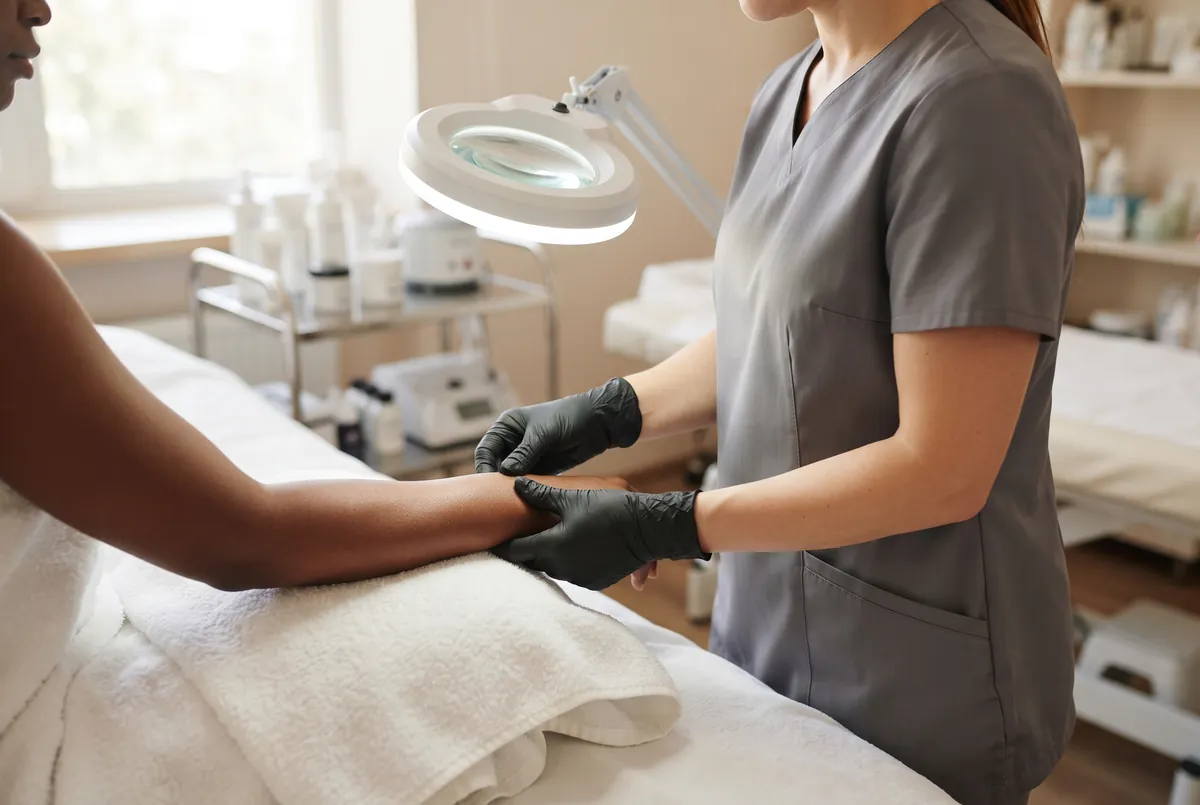
Some findings do not cancel a wax. They only change where the wax goes. Varicose veins are the main example on the legs. A raised, bulging, or tender vein is not waxed over, because heat, pressure, and the pull of removal on that spot can cause bruising and pain, and the vein wall is not something a cosmetic service should stress. The practitioner waxes the surrounding skin, leaves a margin around the vein, and can trim the hair over it with scissors if the client wants a uniform look. Fine surface thread veins are less of a concern, though the skin over them may bruise more easily, so lighter pressure and a gentler wax are sensible. Leg pain, swelling, warmth, or skin changes around veins are reasons to see a physician.
Moles, skin tags, and other raised growths are also worked around. Wax can grip a raised lesion and tear it, which bleeds, hurts, and irritates tissue that should be left alone. Standard practice is to protect the spot, for example by covering it with a small amount of barrier product such as petroleum jelly so the wax does not adhere, and to apply wax up to its edge without crossing it. Hair growing out of a mole is trimmed with scissors, not pulled out with wax. Warts are different from moles because they are contagious, so the area around a wart is avoided more generously and the client is advised to have it treated.
Diabetes, Circulation Problems, Blood Thinners, and Steroids
A second group of waxing contraindications has nothing to do with skincare products. These are health conditions and medicines that change how skin tolerates injury and how it heals. Diabetes is the one most often listed on intake forms. Depending on how long a person has had it and how well it is controlled, diabetes can reduce sensation, slow healing, and raise the risk of infection, particularly in the lower legs and feet. A small lift or a burn that would be a minor annoyance for another client can become a slow healing wound. For that reason waxing students are taught to ask clients with diabetes to check with their physician first, and many protocols call for extra caution on legs and feet.
Reduced sensation creates a specific danger: the client may not feel that wax is too hot. Normally a client's reaction is one of the practitioner's safety checks. If that feedback is unreliable, the practitioner depends entirely on testing the wax temperature on their own inner wrist and on working with small sections. The same reasoning applies to any condition that affects circulation or nerve function in the limbs, to lymphedema and swelling of a limb, and to a history of blood clots. In all of these, waxing is not automatically forbidden, but it is a relative contraindication: the physician who manages the condition should say whether waxing is reasonable, and on which areas.
Blood thinners are the next item. Anticoagulant and antiplatelet medicines make bruising and pinpoint bleeding more likely. Waxing normally causes a little of both in coarse hair areas such as the bikini line and underarms, even on healthy clients. For someone on a blood thinner, the bruising can be more extensive. The client should ask the prescriber whether waxing is acceptable. A client must never stop or skip a prescribed medicine in order to have a wax, and a practitioner must never suggest it. If the physician agrees, the practitioner uses gentle technique, firm skin support, small sections, and often begins with a test area to see how the skin responds.
Steroids thin the skin. Topical corticosteroid creams used on one area for a long time can leave that skin fragile, and it should not be waxed without the prescriber's agreement. Long term oral steroids can make skin fragile and easily bruised over the whole body. Other situations in the same category include cancer treatment such as chemotherapy or radiation, autoimmune conditions that affect the skin, medicines that suppress the immune system, and some antibiotics. I do not expect students to memorize every drug name. I expect them to recognize the pattern: anything that thins skin, increases bleeding, slows healing, or lowers resistance to infection means the client talks to their physician first, and the answer is recorded on the client record.

Absolute vs Relative Contraindications at a Glance
Training programs usually sort waxing contraindications into two groups. An absolute contraindication means no waxing in the affected area, and sometimes anywhere on the body, until the situation has resolved or a physician has cleared it. A relative contraindication means waxing may be possible with conditions: a physician's agreement, a different area, a gentler product, a patch test, or working around a spot. The table below is a general teaching summary of how these are commonly grouped. It is not a medical document, and individual schools, state rules, insurers, and wax manufacturers may classify some items differently. When your training or your product protocol is stricter than this table, follow the stricter rule.
| Situation | Usual category | What the practitioner does |
|---|---|---|
| Oral isotretinoin, current or recently finished | Absolute, whole body | No waxing. The prescriber decides when it may resume. |
| Topical retinoid or strong exfoliating acid on the area | Absolute for that area | Do not wax the treated area. Other areas may be suitable. Pause is set by the prescriber or product instructions. |
| Recent peel, laser, microdermabrasion, or resurfacing on the area | Absolute for that area until cleared | Wait for the treating provider's clearance and follow manufacturer protocol. |
| Sunburn or peeling skin | Absolute for that area | Postpone until the skin looks and feels fully normal. |
| Cuts, scabs, open or broken skin | Absolute for that area | Avoid the spot or postpone if it is widespread. |
| Active infection, cold sore, or contagious skin condition | Absolute | No service on or near the area. Suggest seeing a physician. |
| Active flare of eczema, psoriasis, or an undiagnosed rash | Absolute for the affected area | Do not wax the flare. Unaffected areas may be possible. |
| Raised varicose veins, moles, skin tags | Local, work around | Protect or avoid the spot, trim hair with scissors. |
| Diabetes, circulation or nerve problems | Relative | Physician's agreement first, careful temperature testing, small sections. |
| Blood thinners | Relative | Prescriber's agreement first, gentle technique, expect more bruising. |
| Long term steroid use, topical or oral | Relative, sometimes absolute for treated skin | Prescriber's agreement first. Avoid visibly thin skin. |
| Pregnancy | Relative | Usually possible with adjustments. See the pregnancy guide. |
| Known allergy to wax ingredients or adhesives | Relative | Check ingredients, choose a different formula, patch test. |
| Very sensitive skin or first wax on a delicate area | Relative | Patch test, gentle wax, clear aftercare. |
Two entries need a short comment. Pregnancy is listed as relative because most pregnant clients can be waxed, with attention to positioning, sensitivity, and comfort, and with the client's own care provider in the loop when there are complications. That topic has its own article, waxing during pregnancy, so it is not expanded here. Allergy is also listed as relative because the solution is usually a change of product. Many waxes contain rosin, a pine derived resin that some people react to, and strip waxes and after wax products may contain fragrance. The overview of types of wax for hair removal explains which formulas are made for sensitive skin.

How a Proper Intake Form and Consultation Work
Screening is a process with two parts: a written intake form and a spoken consultation. The form creates a record and gives the client time to think. The conversation catches what the form misses. A new client fills in the form before the first service, signs and dates it, and the practitioner reads it before the client undresses, not while the wax is already being stirred. Reading it in front of the client matters. It shows that the answers will be used, and it gives the practitioner a natural opening for follow up questions. A form that is collected and filed without being read protects no one.
A useful waxing intake form is short enough to be completed honestly and specific enough to trigger the right memories. General questions such as "Do you have any medical conditions?" produce a quick "no" from most people. Specific prompts work better because clients recognize themselves in them. The list below shows the topics I consider essential. The exact wording, the consent language, and the record keeping rules depend on your state, your insurer, and your employer, so students should use the form their school or salon provides and treat this list as a way to understand why each question is there.
- Skincare products: retinol, tretinoin, adapalene, or other vitamin A products, exfoliating acids, benzoyl peroxide, prescription creams, and where on the body each one is applied.
- Oral medications: isotretinoin now or in the past, blood thinners, steroids, antibiotics, and any medicine that makes the skin sun sensitive.
- Recent procedures: chemical peels, laser or light treatments, microdermabrasion, dermaplaning, microneedling, injectables, cosmetic tattooing, or surgery near the area.
- Sun exposure: recent sunburn, tanning bed use, a beach or ski trip, and any self tanner on the area.
- Skin conditions: eczema, psoriasis, dermatitis, a history of cold sores, a tendency to dark marks or raised scars, and any current rash, infection, or open skin.
- General health: diabetes, circulation or nerve problems, a history of blood clots, immune conditions, cancer treatment, and pregnancy.
- Allergies: reactions to wax, rosin, adhesives or bandages, fragrance, latex, or any previous bad reaction to hair removal.
- Waxing history: first time or regular, how the skin reacted before, and what the client used for hair removal most recently.
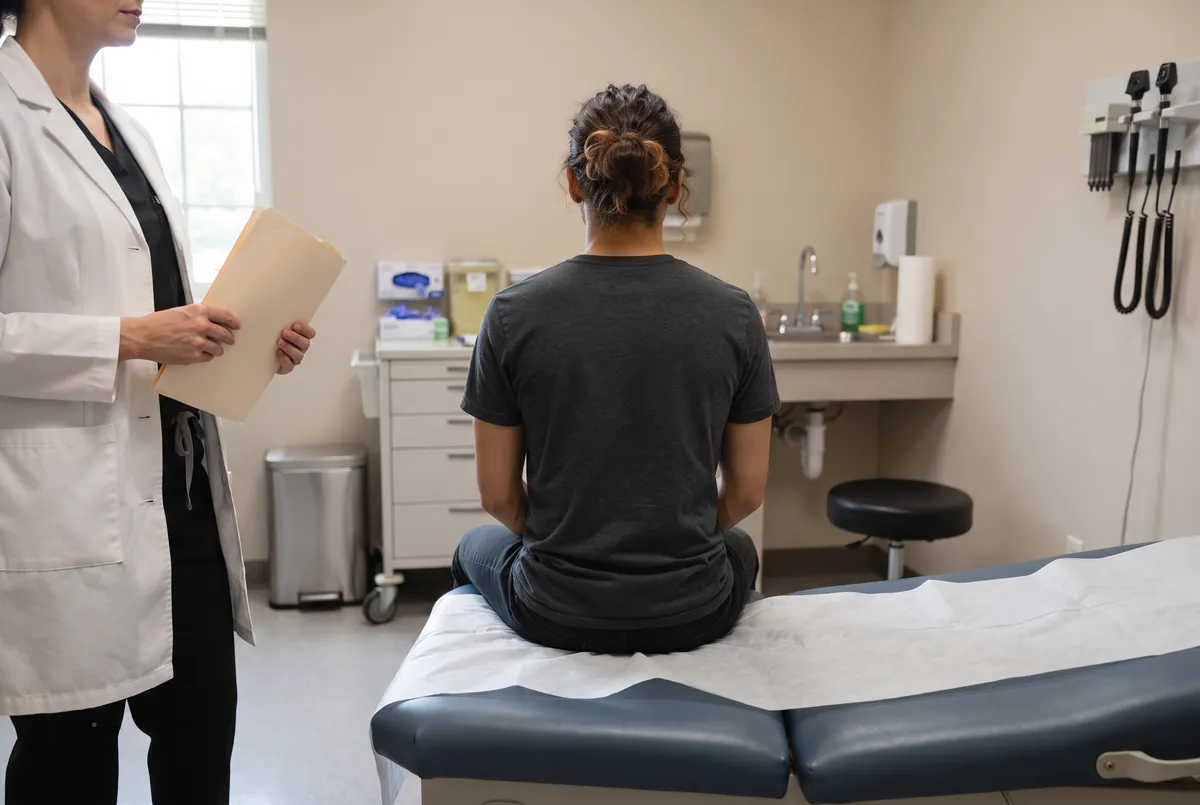
The spoken consultation takes two or three minutes and follows the form. I repeat the most important questions out loud in everyday language: "Anything with retinol or a prescription cream on your face?" and "Any acne medicine by mouth?" Clients who skipped a box often answer immediately when asked in person. Then I look at the skin under good light before any product goes on. I am checking for redness, flaking, shine that suggests over exfoliation, sunburn lines, broken skin, rashes, raised lesions, and veins. Dry, tight, flaky skin on the face is a warning sign even when the client denies using anything, and in that case I treat the visible evidence as more reliable than the form.
Returning clients need a shorter version of the same process at every visit. Routines change. Someone who has been waxed for years starts a new night cream, gets a peel as a gift, or is prescribed a medication, and does not think to mention it. A single question at the start of each appointment, "Anything new with your skin, products, or medications since last time?", takes seconds and should be noted on the client record. This habit is what separates a careful practitioner from a merely experienced one. Most of the lifting incidents I have reviewed with students involved a regular client and a change that nobody asked about.
Declining a service is part of the job, and how it is done decides whether the client comes back. I never frame it as a refusal. I explain what I found, what could happen if we went ahead, and what we can do instead today. Often the answer is partial: legs and underarms are fine, the face waits. I write the reason on the client record and, where a physician's opinion is needed, I ask the client to bring that answer to the next visit. Clients sometimes push back or offer to sign a waiver. A signature does not make fragile skin stronger, and a practitioner who goes ahead against their own judgment owns the result.
Students should also understand the limits of their role. A waxer does not diagnose, does not tell a client to stop or change a prescribed medicine, and does not interpret a physician's instructions beyond what was written. Scope of practice, consent, sanitation, and record keeping rules are set by each state, and they vary. The waxing licensing requirements by state are the place to check which license covers waxing where you plan to work. Honest disclosure from the client and honest limits from the practitioner are two halves of the same safety system, and neither works without the other.


Patch Testing Before Waxing
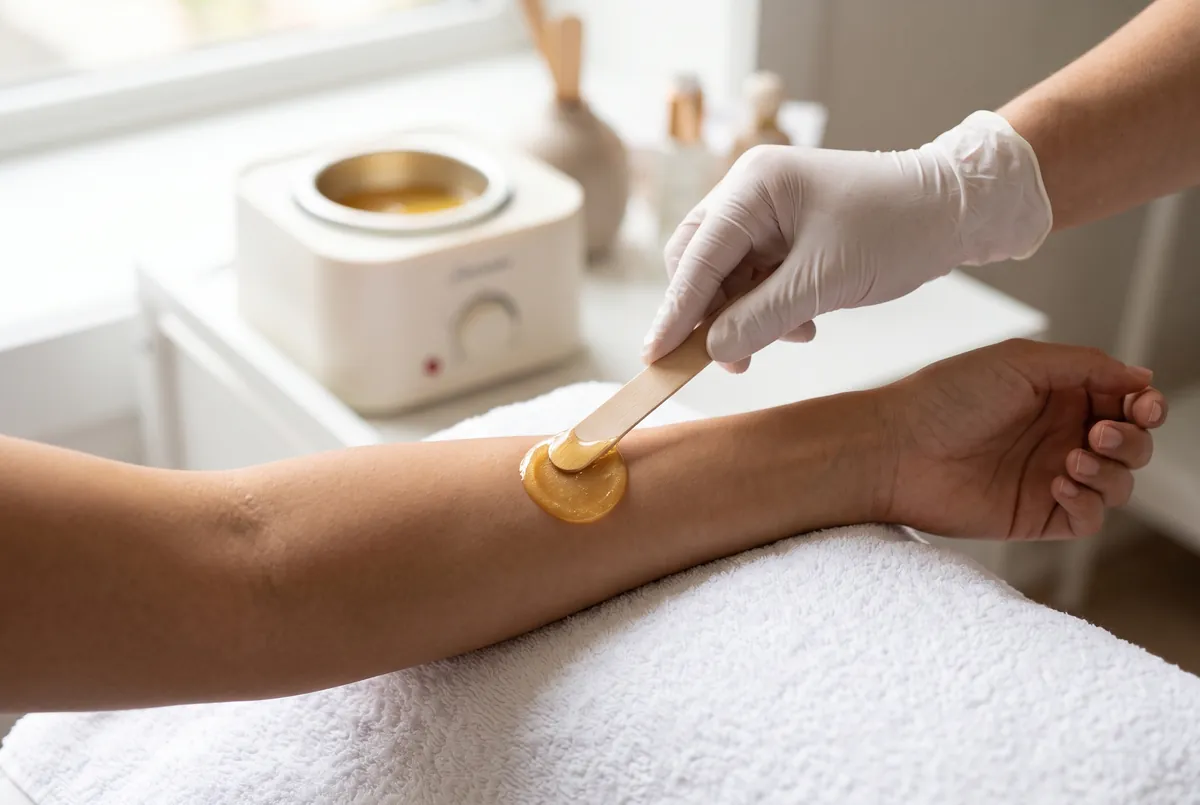
A patch test is a small trial of the wax on a limited, discreet part of the area to be treated, done before the full service. It is used for first time clients with sensitive or reactive skin, for clients with a history of allergies, when a salon changes to a new wax formula, and whenever a relative contraindication has been cleared but the practitioner wants to see how the skin behaves. The practitioner applies a small amount of wax, removes it with normal technique, and then observes. The immediate reaction shows whether the skin lifts or bruises. A delayed reaction, such as itching, welts, or a rash appearing later, points to sensitivity to an ingredient.
How long to wait before reading the result is set by the wax manufacturer's instructions and by salon or school protocol, so follow those, not a number from an article. Clients should know what a patch test can and cannot tell them. Ordinary pinkness and small raised dots at the follicles that settle quickly are expected and are not a failed test. Shiny raw skin, blistering, strong swelling, or a spreading rash is a failed test, and waxing does not go ahead. A patch test also does not override a contraindication. If a client is using tretinoin on the upper lip, a clean test spot does not make the service safe, because lifting can be patchy and unpredictable.
What to Do If Skin Lifts
Even with good screening, lifting occasionally happens, usually because of an undisclosed product. The first sign is a patch that looks shiny, wet, or darker pink than the surrounding skin right after removal, often with a sharp outline. The client may say it stings or burns. The moment a practitioner sees this, waxing in that area stops. There is no finishing the other brow to match and no second pass to clean up stray hairs. What happens in the next few minutes affects how the skin heals and how the client remembers the experience, so the response should be calm, practiced, and honest.
- Stop waxing the area. Do not apply more wax, and do not use wax remover, exfoliants, or fragranced after wax products on the lifted spot.
- Cool the skin. Apply a clean, cool compress with light pressure. Do not put ice directly on the skin.
- Tell the client plainly. Show them the area in a mirror, explain that the top layer of skin has lifted, and avoid minimizing or blaming.
- Protect the area. Follow your training, employer policy, and manufacturer guidance on which soothing or protective product, if any, may be applied within your scope of practice.
- Give written home care. Keep the area clean, do not pick at any crust, avoid makeup on it until it has closed, avoid heat, friction, and active skincare, and protect it carefully from the sun.
- Explain the warning signs. Increasing pain, swelling, warmth, pus, spreading redness, or fever means the client should see a physician promptly.
- Document it. Record what happened, where, which wax was used, what the client disclosed, and what care was given. Inform your employer or insurer as your policy requires.
- Follow up. Contact the client afterward to ask how the skin is healing, and note the answer.
For the client at home, the goal is to let the skin close without interference. Treat it like a graze: gentle cleansing, no scrubbing, no retinoids or acids on or near it, no hot showers aimed at the spot, no swimming pools or hot tubs while it is open. Do not peel the crust, because that is the step most likely to leave a mark. Sun protection matters more than usual, since healing skin darkens easily, and people with deeper skin tones are especially prone to marks that linger. If the area is on the face and the client is worried about scarring or pigment, a dermatologist is the right person to ask, and sooner is better than later.
Alternatives When Waxing Is Off the Table
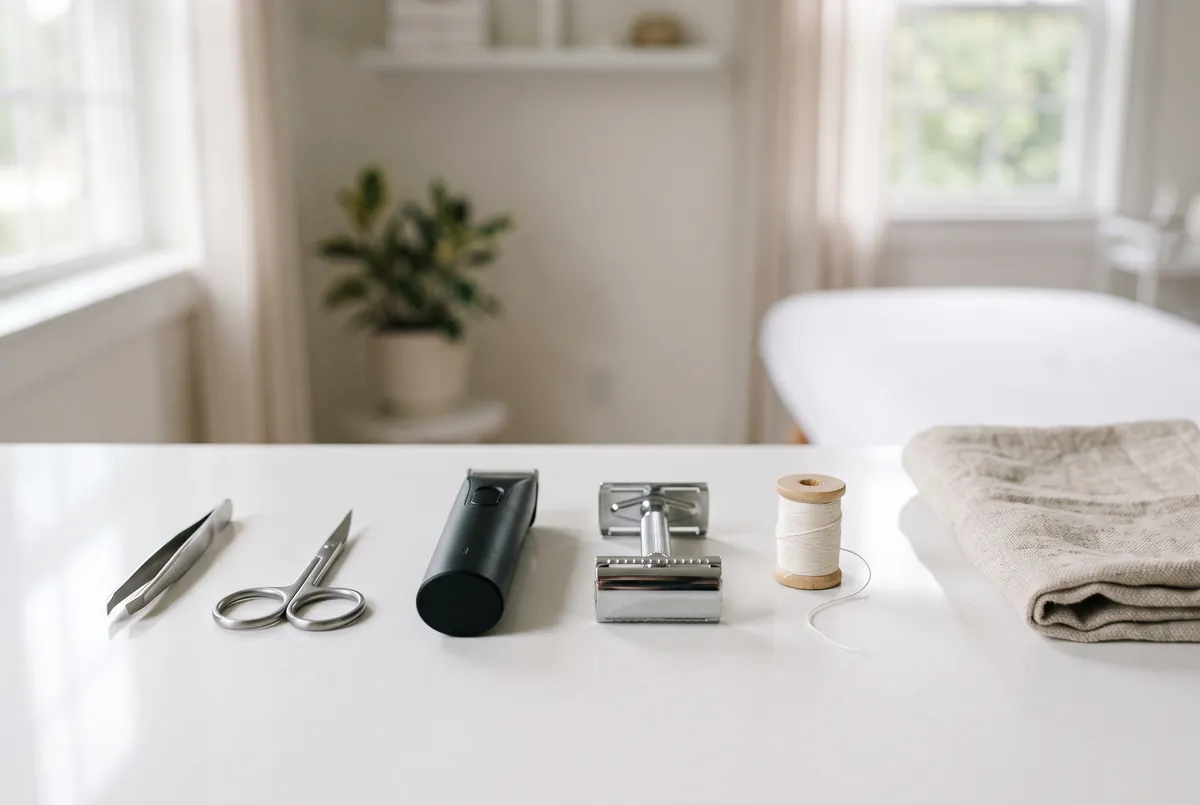
Being told not to wax is rarely the end of hair removal. It means choosing a method that does not pull on the surface of the skin, or one that pulls less. Trimming with scissors or an electric trimmer is the gentlest option and is suitable in almost every situation described in this guide, including during isotretinoin treatment and over veins and moles. Shaving removes hair at the surface without lifting skin, although it can irritate very dry or inflamed areas, so a sharp blade, a lubricating product, and light pressure matter. Neither method should be used over open skin, an active infection, or a fresh burn. For brows, careful tweezing of individual hairs is the standard substitute when wax is not an option.
Other methods need the same screening as wax. Sugaring is often described as gentler because the paste is used at a lower temperature and adheres less to live skin, but it still removes surface cells and can still lift thinned skin, so the contraindications above apply. Threading avoids product and heat but creates friction. Depilatory creams dissolve hair chemically and can burn skin that is already compromised by retinoids, peels, or sun, so they are a poor choice for exactly the clients who cannot wax. Laser hair removal has its own contraindication list, including recent sun exposure and certain medications, and is supervised according to state rules. The comparison of hair removal methods looks at each of these side by side.
Electrolysis is worth a separate word because it works differently. A fine probe is inserted into each follicle and a small amount of current treats the follicle directly, so the method does not depend on pulling against the skin surface. It is the only method the FDA accepts for permanent hair removal claims. That does not make it free of contraindications. Clients taking isotretinoin, clients with active infections, and clients with certain medical conditions are screened just as carefully, and a physician's input is sometimes needed. For someone who cannot wax an area repeatedly, for example a client on a long term topical retinoid who wants the upper lip clear, permanent removal by a licensed electrologist may be the more practical plan over time.
A Clear Next Step
If you are a client, the next step is practical. Before your appointment, check the labels of everything you put on the area to be waxed, write down your medications, and think back over recent procedures and sun exposure. Tell your practitioner all of it, even if it seems unrelated. If you take a prescription that affects the skin, bleeding, or healing, ask the prescriber whether waxing is appropriate and when. If a practitioner tells you to wait, that is a sign you are in careful hands. More background on preparing for and choosing waxing services is collected in the waxing section of this site.
If you are a student or a new practitioner, build screening into your routine until it is automatic: read the form, ask out loud, look at the skin, test when in doubt, and write down what you decided and why. Theory is the part of this work you can study at your own pace, and the waxing courses listed here are a good place to strengthen it. Online study builds knowledge. It does not replace the supervised, in person hours your state requires, and it does not replace a license. The habit of asking the right questions before the first strip is what protects your clients and your career.
State Requirements
State licensing guides
Hours, exams, fees, and the licensing board differ by state. Open your state for the current requirements.
Common Questions
FAQ
Not on the area where the product is applied. Retinoids change how the outer skin layer forms and holds together, which makes it likely that wax will lift skin along with the hair. Areas that have never been treated with the product may still be suitable. How long to pause before waxing is set by the prescriber for prescription retinoids and by the product instructions and wax manufacturer protocol for over the counter ones. Ask before stopping any prescribed treatment.
No. Oral isotretinoin makes skin thin and fragile over the whole body, so waxing is treated as an absolute contraindication on every area while taking it and for a period after the course ends. The prescribing physician or dermatologist decides when waxing can resume. Until then, trimming, gentle shaving, and careful tweezing of brows are the usual substitutes, and any other method should be discussed with the prescriber first.
There is no single answer, because peels differ widely in depth and the skin recovers at different speeds. The provider who performed the peel, together with the instructions for the peel product, sets the waiting period. A practitioner should not wax a peeled area until that clearance has been given and the skin looks and feels normal. The same applies after laser, microdermabrasion, dermaplaning, and microneedling.
No. Sunburned skin is inflamed and its outer layer is already damaged, so waxing can cause lifting, blistering, pain, and pigment changes. Wait until redness, tenderness, and peeling have fully resolved. Sun exposure after waxing is also a concern, so freshly waxed skin needs protection too. A severe burn with blisters, fever, or chills should be seen by a physician.
A patch of the outer skin layer comes away with the wax, leaving a shiny, raw, pink or red area that may sting. The practitioner should stop waxing that area, cool it with a clean compress, explain what happened, and give home care instructions. At home, keep it clean, do not pick at it, avoid active skincare and heat, and protect it from the sun. See a physician if pain, swelling, pus, or spreading redness develops.
Many can, but it is a relative contraindication, which means the client should ask their physician first. Diabetes can reduce sensation, slow healing, and raise infection risk, especially on the lower legs and feet. If the physician agrees, the practitioner tests wax temperature carefully, works in small sections, and gives clear aftercare. Any wound that is slow to heal after a wax needs prompt medical attention.
These are worked around, not waxed over. Wax can tear a raised mole or skin tag, and heat and pulling over a bulging vein can cause bruising and pain. The practitioner protects or avoids the spot, waxes the surrounding skin, and trims hair on the spot with scissors. A waxer does not diagnose skin growths. A mole that has changed, or leg veins with pain or swelling, should be checked by a physician.
A patch test is sensible for a first wax on sensitive or reactive skin, for anyone with a history of allergies to rosin, adhesives, or fragrance, and whenever a new wax formula is used. A small amount of wax is applied and removed, and the skin is observed for lifting and for delayed reactions. The waiting time before reading the result follows the wax manufacturer's instructions. A clean test does not override a contraindication such as retinoid use.
Keep Reading
Related Guides


