Waxing
Hard Wax vs Soft Wax: Which Is Better for Each Body Area

Quick answer
Hard wax sets on the skin and grips mainly the hair, so it is usually gentler on the bikini, underarms, face and short coarse hair. Soft wax stays tacky and is removed with a strip, gripping hair and the skin surface, so it covers legs, arms and backs faster and grabs fine hair well. Most skilled waxers use both in one appointment, choosing by body area and hair type.
Hard wax vs soft wax is the first choice behind every waxing service, even when the client never sees it being made. One wax hardens on the skin and comes off on its own, the other stays tacky and needs a cloth strip to lift it. That single difference changes how the service feels, which areas each wax suits, how much skin irritation follows, how fast the appointment runs and what a waxer has to master during training. Clients usually notice the result without knowing the cause: a bikini wax that felt surprisingly gentle, or a leg wax that was over before they settled into the bed.
I am Aida Khazieva, a licensed electrologist and cosmetologist with more than twenty years of work with hair removal clients. This guide looks at the same decision from two sides of the treatment bed. If you are a client, it explains what you will feel, what to ask for and when it is fine to let your waxer decide. If you are a student or a working practitioner, it covers the technique, the setup and the judgment calls behind choosing one over the other on a given body area. For a catalog of every wax formula on the market, my guide on types of wax for hair removal goes product by product. This one stays focused on the head-to-head decision.
The short answer: hard wax shrink-wraps the hair and grips it rather than the skin, so it is usually the gentler choice for the bikini, underarms, face and coarse hair. Soft wax with strips covers large areas quickly and grabs fine hair well, so it is often the efficient choice for legs, arms and backs. Many good waxers use both in a single appointment.
How Hard Wax and Soft Wax Work on the Skin
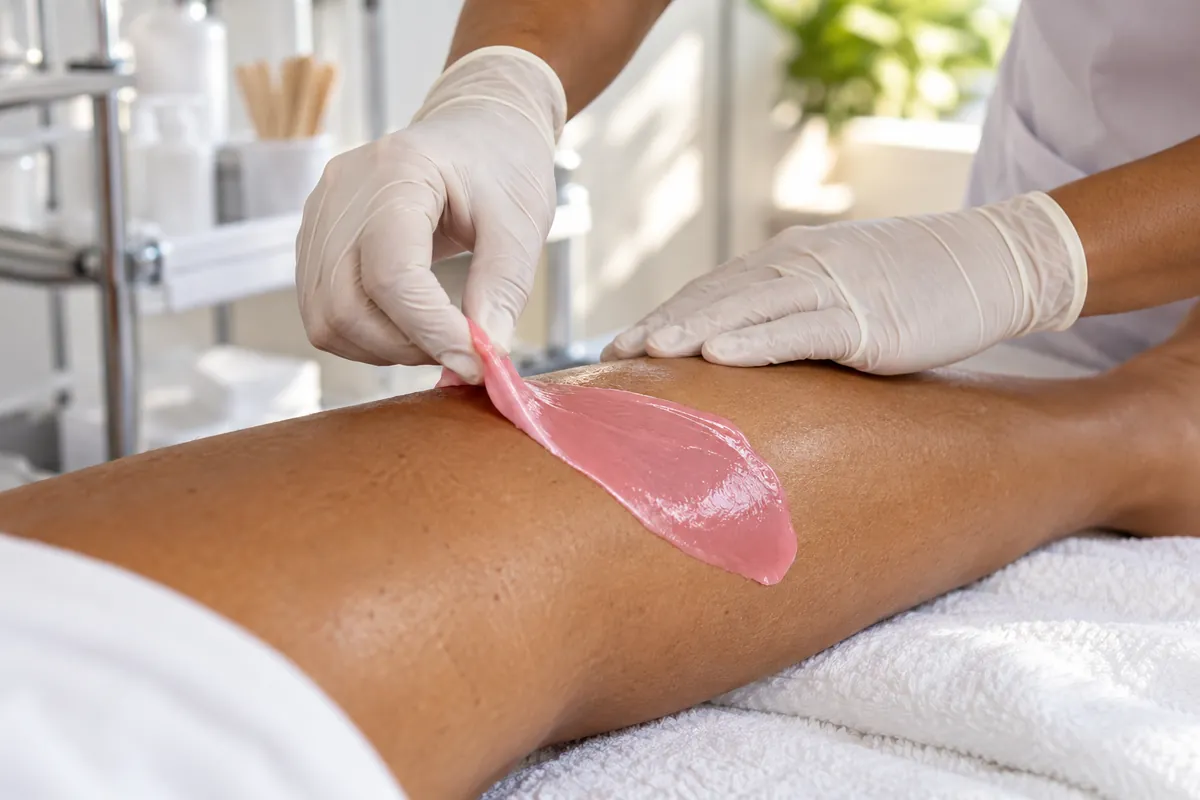
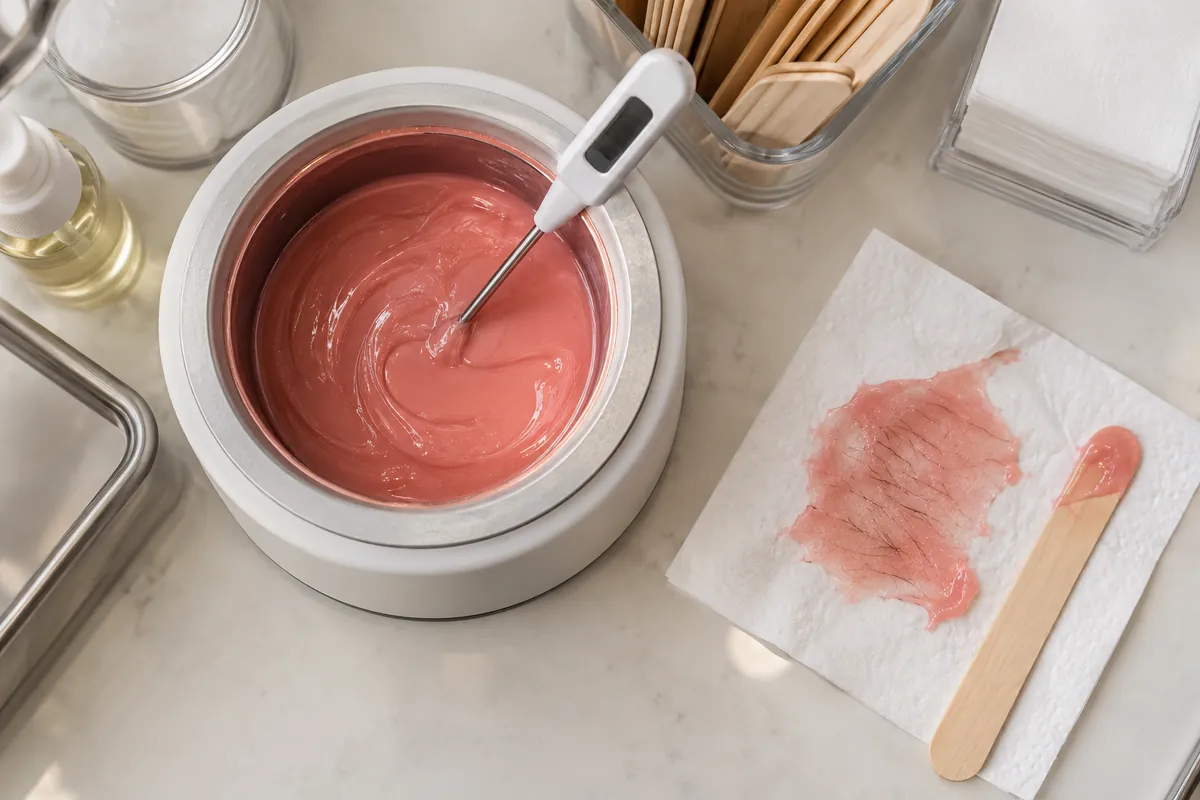
Hard wax and soft wax both remove hair from the root, but hard wax grips the hair as it cools and sets, while soft wax adheres to both hair and the top layer of skin until a strip pulls it away. That is the mechanical difference, and almost everything else follows from it. Hard wax, also called film wax or stripless wax, is applied warm in a thicker layer. As it cools it contracts slightly around each hair, then sets into a flexible patch. The waxer flicks up an edge, holds the skin taut and removes the patch by hand.
Soft wax, sometimes called strip wax, is spread in a thin film with a spatula or a roller head. It stays soft and sticky. A cloth or paper strip is pressed on top, rubbed in the direction of growth so the wax bonds to the strip, then pulled back against the direction of growth. Because soft wax never fully sets, it bonds to the hair and also to dead skin cells on the surface. That gives it a strong grip on very fine hair and a light exfoliating effect, and it also explains why it can feel harsher on thin, delicate or already irritated skin.
There is a third family, often marketed as polymer or flexible hard wax, which is a hard wax engineered to stay more elastic and set at a lower working temperature. For the purpose of this comparison it sits on the hard wax side: no strip, removal by hand, grip mostly on the hair. When a client tells me a salon used "the blue stuff" or "the pink stuff" with no strips, that is almost always a hard wax of some kind. When there was a strip, it was soft wax, even if the formula was labeled as creamy, sensitive or low temperature.
Hard Wax vs Soft Wax at a Glance
The fastest way to compare hard wax vs soft wax is side by side, area by area, because neither wax is better in every situation. The table below reflects how most trained waxers think about the choice in a standard US salon or studio. Individual products vary, and a skilled practitioner can get good results with either wax outside its usual zone, but these are the defaults you will see again and again in training and in practice.
| Factor | Hard wax (film, stripless) | Soft wax (strip) |
|---|---|---|
| How it is removed | Sets on the skin, removed by hand without a strip | Stays tacky, removed with a cloth or paper strip |
| What it grips | Mostly the hair | Hair and the surface layer of skin |
| Typical areas | Bikini, Brazilian, underarms, face, brows, coarse hair | Legs, arms, back, chest, large flat areas |
| Feel for the client | Warmer on application, usually gentler on removal | Thin and less warm, a sharper pull on removal |
| Re-passing the same spot | Usually acceptable with care | Avoided, because skin is lifted with each pass |
| Speed on large areas | Slower, smaller patches | Faster, long strips |
| Fine, short hair | Can miss very fine vellus hair | Strong grip on fine hair |
| Short coarse hair | Strong grip as it shrinks around the hair | Can break coarse hair if technique is off |
| Product waste | No strips, patches go straight to the trash | Strips add to waste and supply cost |
| Learning curve | Temperature, thickness and timing must be right | Strip angle and skin tension must be right |
Read the table as tendencies, not rules. The phrase "hard wax is less painful" is true for most clients on most sensitive areas, but a thick, overheated hard wax applied by a rushed hand can hurt more than a well-done soft wax strip. Equally, "soft wax is faster" assumes a waxer who knows how to lay strips in a logical pattern. Technique sits on top of the product every time, which is why the rest of this guide spends as much time on how each wax is used as on what it is.
Which Hurts Less, Hard Wax or Soft Wax
For most clients on sensitive areas like the bikini line, underarms and face, hard wax hurts less than soft wax because it pulls the hair without pulling as much on the skin itself. The pain of waxing comes mainly from two things: hair being pulled from the follicle and skin being tugged along with it. Hard wax reduces the second part. On the bikini area, where skin is thin and the hair is coarse and dense, the difference is often obvious to clients who have tried both.
On legs and arms the comparison is closer. The skin there is thicker and less reactive, the hair is often finer, and a soft wax strip pulled fast, low and parallel to the skin can feel like a quick, flat sting. Many clients tell me they barely notice the difference on their shins. Where they do notice it is on the inner thighs, the backs of the knees and around the ankles, where skin is thinner or more curved and hard wax tends to win again.
Pain also depends on factors that have nothing to do with the wax. Hair that is too long or too short, a recent sunburn, a hormonal phase that raises sensitivity, caffeine before the appointment and a tense client holding their breath all make a service feel worse. My guide on how to reduce discomfort during waxing covers those in detail. For this comparison, the practical point is this: if you are a nervous first-time client booking a bikini or underarm wax, it is reasonable to ask whether the studio uses hard wax for those areas. Most do.
The Best Wax for Each Body Area
Most practitioners choose hard wax for the face, underarms, bikini and Brazilian areas, and soft wax for legs, arms, back and chest, then adjust for the individual client's hair and skin. That pattern comes from geometry and skin thickness. Small, curved, sensitive areas reward a wax that grips only the hair and can be placed precisely. Large, flat, less sensitive areas reward a wax that can cover a lot of ground with each strip.
- Brows, upper lip, chin, sideburns: hard wax is the usual choice. Facial skin is thin, often treated with active skincare, and easily lifted by soft wax.
- Underarms: hard wax. Hair grows in several directions in a small hollow, and hard wax lets the waxer work in small sections that follow each growth pattern.
- Bikini line and Brazilian: hard wax in almost every professional setting. Coarse hair, thin skin and the need for precise placement all favor it.
- Full legs and half legs: soft wax for the large surfaces, often with hard wax for the knees, ankles and inner thigh.
- Arms: soft wax for the forearm and upper arm, hard wax for knuckles and fingers.
- Back and chest: soft wax for speed on broad areas, hard wax for coarse patches, the sternum and around the nipples.
- Stomach and treasure trail: either, chosen by hair coarseness.
Hair type can override the area default. A client with very fine, light leg hair may get a cleaner result from soft wax even on the inner thigh, because hard wax sometimes slides over the finest hairs. A client with short, coarse, dense hair on the back may do better with hard wax there, because a soft wax strip can snap coarse hairs at the surface instead of removing them. Good waxers look at the hair first and the menu item second. Once I see a client's hair after a quick visual check and a touch, the choice is usually clear within seconds.
Skin Sensitivity, Redness and Ingrown Hairs
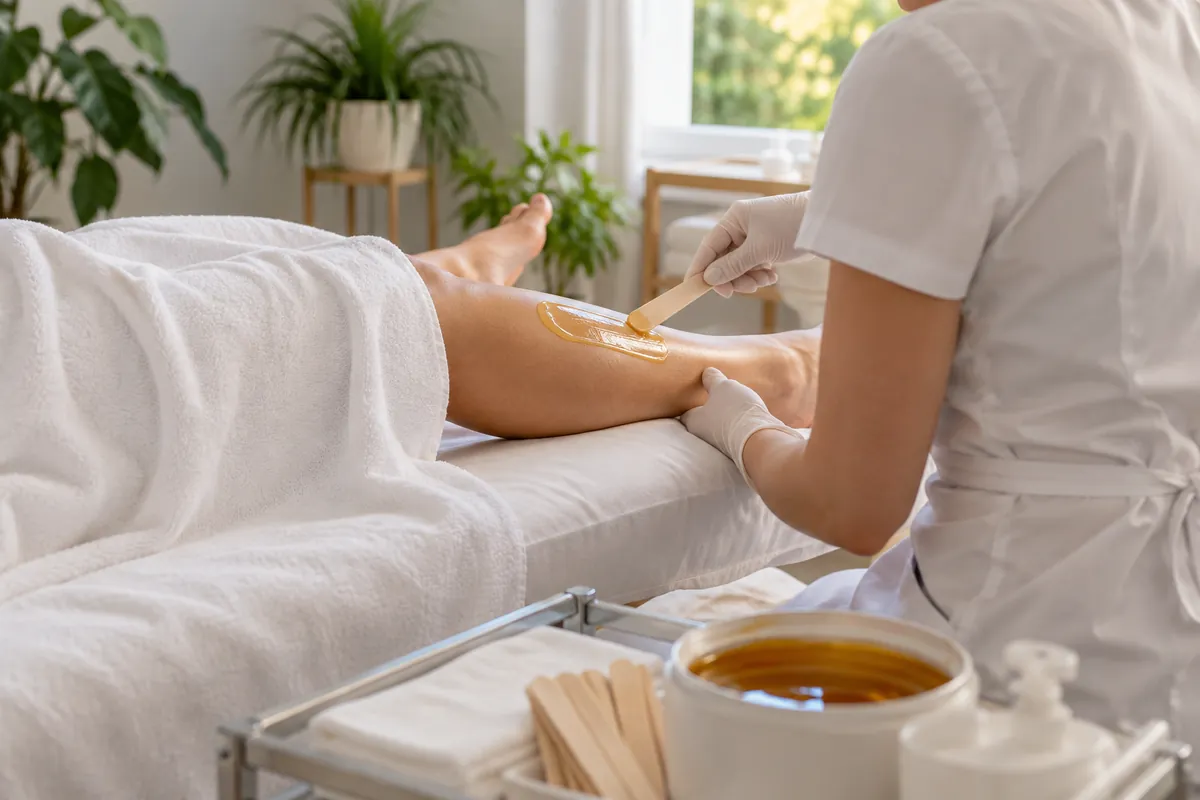
Hard wax is generally the safer choice for sensitive, reactive or thin skin because it lifts less of the skin surface, which means less redness and lower risk of lifting or bruising. Soft wax removes a thin layer of dead skin cells on each pass. On healthy legs that is harmless and can even leave the skin feeling smooth. On skin that is thin, sun-damaged, recently exfoliated or treated with retinoids, the same action can lift living skin and leave a raw, shiny patch that takes days to heal.
Redness after waxing is normal with either product and usually settles within hours. The pattern I see is that soft wax redness covers the whole waxed area evenly, while hard wax redness tends to show as small bumps at the follicles. Ingrown hairs are less about the wax choice and more about hair breakage and aftercare. A wax that snaps hairs instead of pulling them out cleanly sets up ingrowns, and both products can do that when technique is poor. My guide on ingrown hairs after waxing explains prevention between appointments.
There are clients who should not be waxed with either product until a medical issue is resolved: active skin infections, open wounds, recent cosmetic procedures, certain medications that thin the skin, and some conditions that affect circulation or healing. The full screening list lives in my guide on waxing contraindications. If you take prescription acne medication, use topical retinoids, or have a skin condition under treatment, ask your physician or dermatologist before booking, and tell your waxer every time, even if you mentioned it last visit.
The Client View: What You Will Feel With Each Wax
As a client, hard wax feels warm and thick going on, then firm as it sets, followed by a quick pull and pressure from the waxer's hand; soft wax feels thinner and cooler, then a flat, fast pull as the strip is removed. Neither should feel hot enough to burn. A properly heated wax is tested on the waxer's own wrist or the client's inner forearm before it touches the service area, and you are allowed to say "that is too hot" at any point.
Hard wax services tend to have a rhythm: apply, wait a few seconds, remove, press. The waxer works in patches the size of a large stamp or a small playing card, depending on the area. You may feel the edge being flicked up before the pull. Immediately after each removal, a good waxer presses a hand flat on the skin, which calms the sting. Soft wax services feel faster: a long stroke of wax, a strip pressed and rubbed, a pull, then the next section. On the legs the whole front of the shin can be done in a few strips.
There are a few things that should not happen with either wax. Wax should not drip or pool on the skin. A waxer should not double-dip a used spatula into the shared pot. Soft wax should not be applied twice over the same patch of skin in a way that pulls at already raw skin. Hard wax should not be left so long that it becomes brittle and cracks into pieces. If you notice these, it is a sign of rushed or untrained technique, and it is fine to ask questions. Clients who know what to expect make better decisions about where to book.

The Practitioner View: Technique Differences That Matter
For practitioners, hard wax rewards control of temperature, thickness and timing, while soft wax rewards control of strip angle, skin tension and speed. Both are learnable, and both punish shortcuts. In training, students usually find soft wax easier to start with because the motion is intuitive, then find it harder to master on curved or sensitive areas. Hard wax feels slower and fussier at first, then becomes the product they trust on the areas that make or break client retention, such as the Brazilian.
With hard wax, the key variables are a working consistency similar to warm honey, a patch thick enough to lift in one piece (often described as about the thickness of a coin), a defined lip at the leading edge to grab, and removal at the right moment: set but still flexible. Applied too thin, the patch tears. Applied too thick, it wastes product and takes too long to set. Left too long, it becomes brittle. Removal should be low and close to the skin, against the direction of growth, with firm skin tension right behind the pull.
With soft wax, the key variables are a thin, even film in the direction of growth, a strip rubbed firmly to bond, and a pull that is fast, low and parallel to the skin rather than upward. Pulling upward lifts skin and breaks hair. Skin tension must hold the area flat, especially on the thighs and upper arms where tissue moves. Soft wax residue is removed with a post-wax oil, not by re-stripping over the same skin. These are exactly the skills a structured waxing course drills, area by area, before a student practices on live clients under supervision.
How Hair Type and Length Change the Choice
Coarse, short or stubborn hair usually comes out more cleanly with hard wax, and very fine, soft or light hair usually comes out more cleanly with soft wax. Hard wax shrinks slightly as it sets, which helps it lock around thick hairs. Soft wax has a broader adhesive surface and bonds to fine hair that hard wax can slide over. This is why many leg services use soft wax on most of the leg, then switch to hard wax on stubborn patches near the knee or on the inner thigh where hair is coarser.
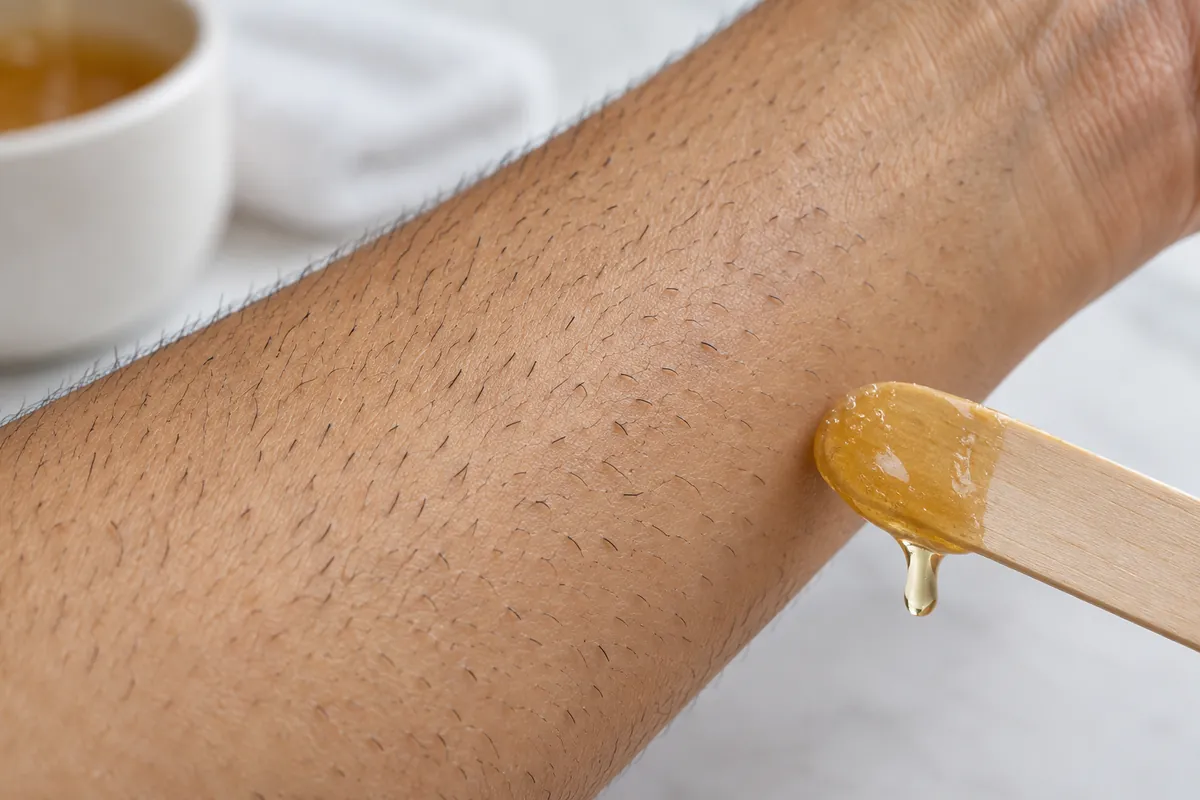
Hair length matters for both. Most waxers want hair long enough for the wax to grip and short enough not to tangle, which in practice is often described as roughly the length of a grain of rice. Hair that is too short slips out of both waxes. Hair that is too long tends to break with soft wax and tangle in hard wax. Many studios offer a quick trim before the service. Details by area are covered in my guide on how long hair should be for waxing.
Regrowth cycles also play a role. Clients who wax regularly gradually have hair that is finer and less dense in some areas, partly because some follicles are in different growth phases each visit. As a regular client's bikini hair softens over months, a waxer may find soft wax works on the outer edges where it did not at the first visit. The reverse also happens: a new client who has shaved for years arrives with blunt, coarse regrowth that responds best to hard wax at the first few appointments.
Speed, Cost and Hygiene in the Treatment Room
Soft wax is usually faster on large areas, hard wax usually uses more product per square inch but no strips, and both are hygienic when single-use applicators are used and never double-dipped. For a full leg, a skilled waxer with soft wax may clear long sections in a single strip, while hard wax would require many smaller patches. For a Brazilian, the speed difference largely disappears because the work is detailed either way.
Cost to the business depends on product prices, how efficiently each waxer applies the wax, and how much strip material is used. I will not quote numbers because supply costs vary widely by brand and region, but the pattern is predictable. Waste from soft wax comes from strips and residue. Waste from hard wax comes from overly thick patches and from melting more than needed. A waxer who measures how much they use on a typical service can usually cut waste with either product without changing the client experience.
Hygiene rules apply equally. A fresh spatula for every dip, or a single-use applicator system, is the professional standard, and many state boards set specific sanitation rules for waxing services. Pots are covered between services, the warmer is cleaned on a schedule, and anything that touches the client is disposed of or disinfected according to the rules that apply where you work. Regulations differ by state, so check your state board through the waxing licensing hub for the exact sanitation requirements and license type that apply to your practice.
When to Use Both in One Appointment
Using hard wax and soft wax in the same appointment is common and often gives the best result, with soft wax on large areas and hard wax on sensitive, curved or coarse spots. A full leg and bikini booking is the classic example. The legs are cleared with soft wax strips, the knees and ankles are tidied with small hard wax patches, and the bikini area is done entirely with hard wax. The client leaves with a smooth result and less irritation than if either product had been used for everything.
For practitioners, this requires two warmers set to different temperatures and a station layout that keeps both within reach without crossing clean and used items. It also requires a clear sequence. I usually start with the larger soft wax areas while the client is relaxed, then move to the smaller hard wax areas. Some practitioners prefer the opposite order so the most sensitive area is done first. Either works if you explain the sequence to the client so they know what is next.
For clients, it is normal to see both warmers in the room and to feel two different textures. You do not have to request this approach. Most well-run studios do it by default. If you are booking a combination service and the studio only offers one type of wax for everything, ask why. There may be a reasonable answer, for example a studio built around a single specialist product that performs well in both roles, but it is worth knowing before you lie down.

Common Mistakes With Each Wax
The most common hard wax mistakes are wrong temperature and wrong thickness, and the most common soft wax mistakes are pulling upward and re-waxing the same skin. I see these in students, in at-home waxing, and occasionally in busy salons where the schedule pushes speed over care. Each one leads to more pain, broken hair, redness or skin lifting, and each one is preventable.
- Hard wax too hot: runny wax spreads too thin, takes longer to set and can burn. Always test first.
- Hard wax too thin: the patch tears into pieces and hair is left behind.
- Hard wax left too long: the patch becomes brittle and cracks instead of lifting in one motion.
- Soft wax applied too thick: it clumps, smears and leaves heavy residue.
- Soft wax strip pulled upward: lifts skin and snaps hair instead of removing it from the root.
- Re-stripping the same area with soft wax: the most common cause of lifted skin on legs and arms.
- Weak skin tension with either wax: skin moves with the pull, which increases pain and bruising risk.
- Ignoring growth direction: applying or removing in the wrong direction breaks hairs and creates ingrowns.
For clients doing at-home waxing, soft wax kits are common because they are simple to use, and most at-home injuries I hear about come from overheating microwavable wax and from pulling strips upward. If you wax at home, start with a small area, test temperature on the inside of your wrist, keep skin tight and stop if the skin becomes shiny or raw. For sensitive areas like the bikini, a professional service with hard wax is usually a better first experience.
Learning Both Waxes as a Student or New Waxer
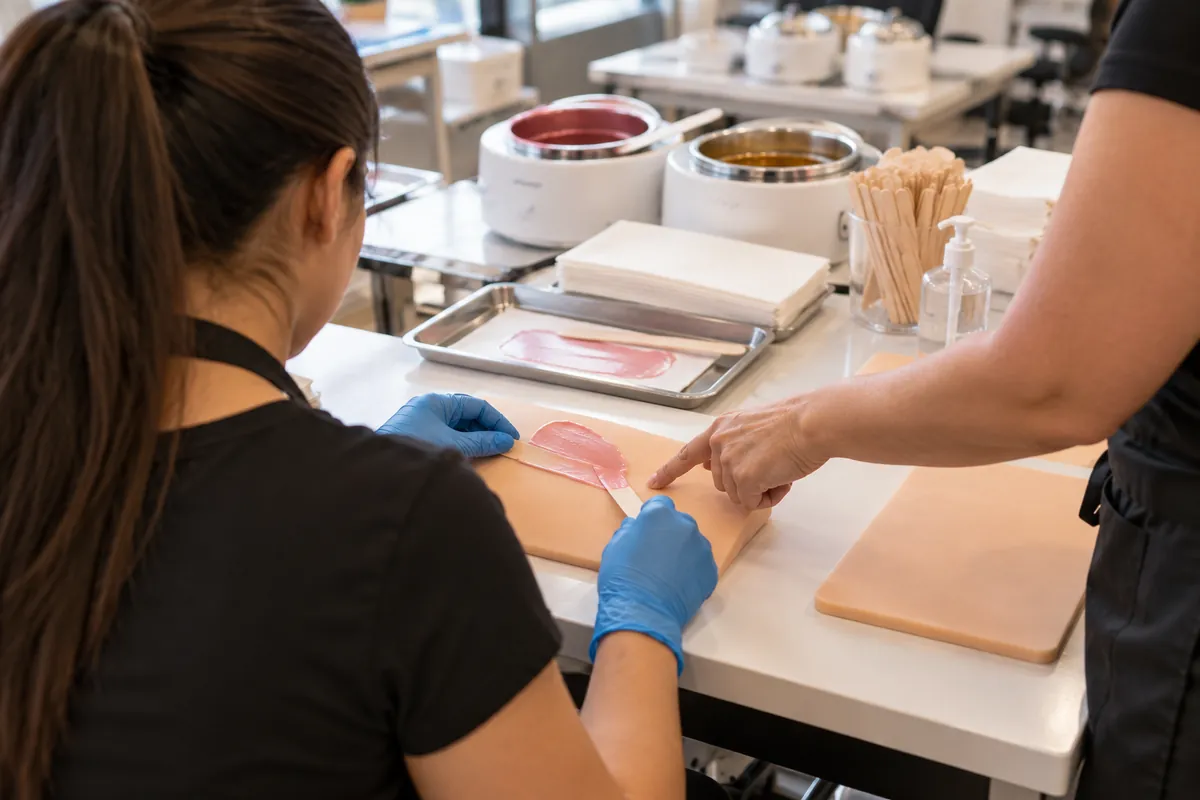
A competent waxer needs to be confident with both hard wax and soft wax, because clients come with every combination of hair, skin and service request. Specializing in only one limits the menu you can offer and the clients you can serve well. Most professional training introduces soft wax on legs and arms early, then moves to hard wax on the face and underarms, and finally builds toward bikini and Brazilian work once control is reliable.
Practice on a range of skin tones and hair types matters. Fine light hair on fair skin, coarse dark hair on deep skin, and everything in between each teach something different about product choice and pressure. Online theory can explain temperature, adhesion and growth patterns, but it does not replace supervised hands-on practice, and it does not replace the license your state requires. Requirements for who may perform waxing, and under which license, vary by state. My guide on how to become a waxing specialist explains the general path, and the waxing licensing hub lets you check your own state's rules.
Once you are licensed, keep a simple log of product choices by client: which wax you used on which area, how the skin reacted, and what you would change next time. Over a few months that log becomes a personal reference that is more useful than any product brochure. It also helps when a client returns after a long gap and you need to remember what worked for them.
One more habit separates waxers who grow with both products from those who stall: they change one variable at a time. If a hard wax patch keeps breaking, they adjust thickness first, then temperature, then timing, and they note which change fixed it. If soft wax keeps leaving residue, they check the film thickness before blaming the product. Switching brands every time something goes wrong teaches very little, because a new product brings a new set of variables. Mastery comes from knowing why a result happened, and that knowledge carries over to every wax you will ever use.
Questions Clients Can Ask About Wax Choice
Clients can and should ask which wax will be used on each area, why, and how the waxer checks temperature, because a good waxer will answer clearly and quickly. These questions are not rude. They show that you care about your skin, and they give the waxer useful context. A waxer who seems annoyed by them is giving you useful information too.
- Which wax do you use for this area, and why?
- Do you use both hard wax and soft wax, depending on the area?
- How do you test the temperature before applying?
- Do you use a new applicator for every dip?
- What should I avoid on my skin before and after the appointment?
- What should I do if I get redness or bumps afterward?
For a first Brazilian in particular, there are more detailed questions worth asking before you book, and I cover them in questions to ask before a Brazilian wax. After the service, follow the aftercare instructions for at least a day or two, avoid heat and friction, and watch for any skin reaction. My waxing aftercare guide covers what to do if you see bumps or prolonged redness.
Finally, give feedback during the service, not only afterward. If one area stings far more than the rest, say so. A waxer can switch from soft wax to hard wax on a spot, lower the temperature, reduce the patch size or improve skin tension right away. Clients who stay silent often walk out thinking waxing simply is not for them, when one small change would have made the next visit easy. Your waxer cannot feel what you feel, and good professionals welcome the information.

Your Next Step
If you are a client, the practical rule is simple: expect hard wax on your face, underarms and bikini, expect soft wax on your legs and arms, and expect a skilled waxer to mix both when it serves your skin. Ask questions, share your skincare and medical history, and book with a licensed professional who can explain their choices. If you are thinking about becoming that professional, start with structured training that teaches both waxes in depth, area by area, and check what your state requires before you work on paying clients. The waxing course covers the theory behind every technique in this guide, and the licensing hub shows you the rest of the path.
State Requirements
State licensing guides
Hours, exams, fees, and the licensing board differ by state. Open your state for the current requirements.
Common Questions
FAQ
Neither is better everywhere. Hard wax is usually better for small, sensitive or curved areas like the bikini, underarms and face, and for short coarse hair. Soft wax is usually better for large areas like legs, arms and back, and for very fine hair. Most experienced waxers use both, choosing by body area and hair type. If a studio uses only one for everything, ask how they handle areas where the other would normally be preferred.
For most clients, hard wax is less painful for a Brazilian because it grips the hair rather than the thin skin of the bikini area. It also lets the waxer work in small, precise sections that follow the growth direction. That is why hard wax is the standard choice for Brazilian waxing in most professional studios. Before your first one, read questions to ask before a Brazilian wax.
Some waxers use soft wax on the face, but hard wax is usually preferred because facial skin is thin and often treated with active skincare like retinoids or exfoliating acids. Soft wax bonds to the skin surface and is more likely to lift skin there. If you use any prescription skincare, tell your waxer and ask your dermatologist whether facial waxing is safe for you at all.
Using two waxes is a sign of careful technique. Soft wax clears large areas like the legs quickly, and hard wax handles sensitive or curved spots like the knees, ankles and bikini line with less irritation. Choosing by area usually means less redness and a cleaner result than using one product everywhere.
Hard wax can reduce ingrown hairs when it removes coarse hair more cleanly without breaking it, but the wax type matters less than technique and aftercare. Broken hairs, wrong pull direction and skipping exfoliation between appointments are the bigger causes. See my guide on ingrown hairs after waxing for prevention steps.
Most training programs start with soft wax on legs and arms because the motion is easier to learn, then introduce hard wax for the face, underarms and bikini. A working waxer needs both. Theory from a waxing course helps, but supervised practice and the license your state requires come first before working on clients. Check the waxing licensing hub for your state.
Hard wax is generally gentler on sensitive skin because it lifts less of the skin surface. It is not a solution for skin that is broken, sunburned, infected or treated with prescription retinoids. In those cases neither wax is appropriate until the skin has healed or your physician says it is safe.
Keep Reading
Related Guides


