Waxing
How Long Does Waxing Last? Timelines by Body Area and Tips

Quick answer
Most people stay smooth for a few weeks after a wax, and the full cycle before the next appointment is commonly three to six weeks. Legs often last longer, while the face and underarms show regrowth sooner. Results depend on body area, the hair growth cycle, hormones, shaving between visits, and technique. Electrolysis is the permanent option.
How long does waxing last? The honest answer I give in the treatment room is that most people enjoy smooth skin for a few weeks, and that the full cycle from one appointment to the next usually runs somewhere between three and six weeks. That range is wide on purpose. Waxing removes hair from the follicle, so the result depends on how quickly each follicle builds a new hair, and that speed is different on a lower leg, an underarm, and an upper lip. It is also different from one person to the next, and even from one season of life to the next in the same person.
I am a licensed electrologist and cosmetologist with more than twenty years of practice, and questions about timing come up at almost every waxing consultation. This guide explains why wax results vary, how long a Brazilian, leg, underarm, or face wax tends to last, how long hair needs to be to wax, how often you should wax, and what actually helps results last longer. I also compare waxing with shaving, sugaring, laser, and electrolysis, because a client who is tired of the regrowth cycle deserves to know there is a permanent option. The last sections are written for professionals who need clear words for these conversations.
The Short Answer: How Long Wax Results Last
When clients ask how long wax results last, they usually mean one of two things, and it helps to separate them. The first is the fully smooth phase, the stretch of time when you cannot see or feel any hair. For many people that phase lasts roughly two to three weeks on body areas, and somewhat less on the face and underarms. The second is the full regrowth cycle, the point where enough hair has returned, at enough length, to be waxed again. That is the number behind the common industry convention that most clients rebook every four to six weeks for body waxing.
Between those two points there is a middle phase that surprises first-time clients. Hair does not return all at once. A few fine hairs appear first, often scattered, soft, and lighter than what you remember. The area is no longer perfectly bare, yet it is nowhere near the dense growth you had before. Many regular clients find this phase easy to live with, which is one reason people who switch from shaving to waxing tend to stay. With shaving, stubble returns across the whole area in a day or two. With waxing, regrowth arrives gradually and with a soft tapered tip.
Why Results Vary: The Hair Growth Cycle
Every hair on the body moves through a repeating cycle. In the growing phase, called anagen, the hair is attached to its blood supply and gets longer. In the short transition phase, called catagen, growth stops and the follicle begins to shrink. In the resting phase, called telogen, the old hair sits loosely in the follicle until it sheds and a new hair begins underneath. At any moment, the hairs in one area are spread across all three phases. That single fact explains most of what clients experience after a wax, including why regrowth is staggered instead of uniform.
When I wax an area, I remove the hairs that are above the skin and long enough for the wax to grip. Hairs that were still forming below the surface on that day are untouched, because there was nothing to hold. Those hairs continue their journey and surface over the following days and weeks. This is why a client can leave perfectly smooth and then notice a light scattering of hair sooner than expected. The wax did not miss those hairs, and they did not grow back at record speed. They were simply on a different schedule than the hairs that were removed.
The length of each phase changes by body area. Scalp hair can stay in the growing phase for years, which is why it gets long. Body hair has a much shorter growing phase and a longer resting phase, which is why leg hair stops at a certain length and why legs usually stay smooth longer after a wax. Facial and underarm follicles tend to be more active and more responsive to hormones. If you want a deeper explanation of the phases and why they matter for permanent methods, I cover it in my guide to hair growth phases and how they affect treatment.

How Long Waxing Lasts by Body Area
Body area is the biggest predictor of how long a wax lasts, after the individual's own biology. Areas with coarse, hormonally driven hair and warm, moist skin tend to show regrowth sooner. Areas with a long resting phase tend to stay smooth longer. The table below gives the broad ranges that are commonly cited in the industry and that match what I see in practice. Treat them as typical windows for a client who waxes regularly. A first wax, or a wax after months of shaving, often sits at the shorter end of each range.
| Area | Typical smooth phase | Common rebooking rhythm | What affects it most |
|---|---|---|---|
| Legs | Often several weeks | About every four to six weeks | Shaving history, dry skin causing breakage |
| Arms | Often several weeks | About every four to six weeks | Fine hair that may be too short to grip |
| Bikini and Brazilian | Usually a few weeks | About every four to five weeks | Coarse hair, hormones, growth in many directions |
| Underarms | Roughly two to three weeks | About every three to four weeks | Active follicles, two growth directions, sweat |
| Eyebrows, lip, chin | Roughly two to three weeks | About every two to four weeks | Hormones, tweezing between visits |
| Back and chest | Often several weeks | About every four to six weeks | Dense coarse hair, friction from clothing |
How long does a leg wax last? Legs are usually the most rewarding area for a new client. The lower leg in particular has a long resting phase, so many people stay comfortably smooth for several weeks and rebook every four to six weeks. The main threat to a leg wax is breakage. Leg skin is often dry, and hair that has been shaved for years is blunt and stiff. If hairs snap at the surface instead of lifting from the follicle, stubble appears within days and the client believes the wax did not last. Good preparation and correct removal angle matter more on legs than people expect.
How long does a Brazilian wax last? For most regular clients, a few weeks of smoothness followed by soft regrowth, with appointments about every four to five weeks. Hair in the bikini area is coarse, it grows in several directions, and it responds to hormonal shifts, so the range between individuals is wide. The first Brazilian commonly has the shortest result because of all the hairs that were below the surface on the day. If you are preparing for that first visit, my first-time Brazilian wax guide walks through the appointment from booking to the days after.
How long does an underarm wax last? Usually less than legs. Underarm follicles are active, the hair is coarse, and it typically grows in at least two directions, which makes complete removal from the follicle harder. Most clients notice fine regrowth within two to three weeks and rebook every three to four weeks. The encouraging part is that underarms often respond well to consistency. Clients who stop shaving between visits frequently tell me the regrowth feels softer and looks less shadowed than it did when they shaved, even though the hair returns sooner than on other areas.
How long does a face wax last? Brows, upper lip, and chin generally have the shortest cycle, with many clients returning every two to four weeks. Facial follicles are strongly influenced by hormones, and the face is the area people inspect most closely in a mirror, so even a few fine hairs feel noticeable. Chin and jawline hair deserves a special mention. When it is coarse, dark, and persistent, waxing can become a frequent chore, and repeated removal on hormonally active facial hair is not always the best long-term plan. I return to that point in the comparison section below.

First Wax vs a Regular Schedule
The first wax is rarely the best wax, and I say that plainly at every first appointment. A new client usually arrives after years of shaving, which means the hair is at every possible stage and length. Some hairs are long enough to grip, some are barely through the skin, and many are still forming underneath. I remove everything the wax can hold, the client leaves smooth, and then the hidden hairs begin to surface. It is common for a first-time client to see light regrowth within a week or two and to wonder whether waxing works for them.
It does, but the benefit builds over a series. In my experience, most clients notice a real difference by about the third or fourth appointment on a consistent schedule. By then, more of the hairs are growing together, so more of them are present and at a good length on the day of the wax. The smooth phase stretches, and the regrowth that does appear tends to feel finer. Many long-term clients also describe sparser growth in some areas. I am careful with that claim: repeated removal can weaken some follicles over years, but waxing is not a permanent method and results differ widely.
Hormones, Age, Genetics, and Medication
Two clients can receive the same wax, on the same area, from the same professional, and have very different timelines. Genetics sets the baseline: hair density, thickness, color, and growth rate run in families. Hormones then adjust that baseline throughout life. Androgens stimulate coarse hair on the face, underarms, bikini area, chest, and abdomen. When androgen activity rises or the follicles become more sensitive to it, hair can grow faster and thicker in those areas, and a wax that used to last comfortably may start to feel short. The legs and arms are usually less affected than the face and bikini line.
I see these shifts at predictable moments. During pregnancy, many clients notice changes in hair growth along with more sensitive skin. Around perimenopause and menopause, clients often report new coarse hairs on the chin and upper lip while leg and underarm hair becomes finer. Clients with polycystic ovary syndrome frequently have persistent facial and body hair that returns quickly. Certain medications can also influence hair growth. None of this is something a waxing professional should diagnose. If hair growth changes suddenly, appears in a new pattern, or comes with other symptoms such as irregular cycles, a physician should evaluate the cause.
For hormonally driven hair, I set expectations early. Waxing will remove the hair that is present, and it will give a clean result for a time, but it does not change the signal that tells the follicle to produce another hair. A client with strong hormonal growth on the chin may need facial waxing every two weeks to stay comfortable, and that frequency can irritate the skin. This is one of the clearest cases where I recommend a conversation about permanent removal. I explain the background in more detail in my guide to hormonal hair growth and treatment options.

What Shaving Between Appointments Does to Your Results
Shaving between waxing appointments is the most common reason a client's results stop improving. A razor cuts the hair at the surface and leaves the follicle untouched, so it does nothing to the growth cycle itself. The damage is to the schedule. Shaving removes the hairs that were growing in on time, leaves them blunt, and resets their visible length to zero. When the client arrives for the next wax, those hairs are often too short to grip. I can only remove part of the growth, and the hairs I could not remove surface within days.
Shaving does not make hair grow back thicker or darker. That belief is one of the most persistent myths in hair removal. What changes is the tip. A hair that grows in naturally after waxing has a fine, tapered end, so it feels soft and looks lighter. A shaved hair has a flat, blunt end at its widest point, so it feels like stubble and casts more shadow under the skin. A client who shaves once between waxes feels that blunt regrowth and concludes that waxing has stopped working, when in fact the texture comes entirely from the razor.
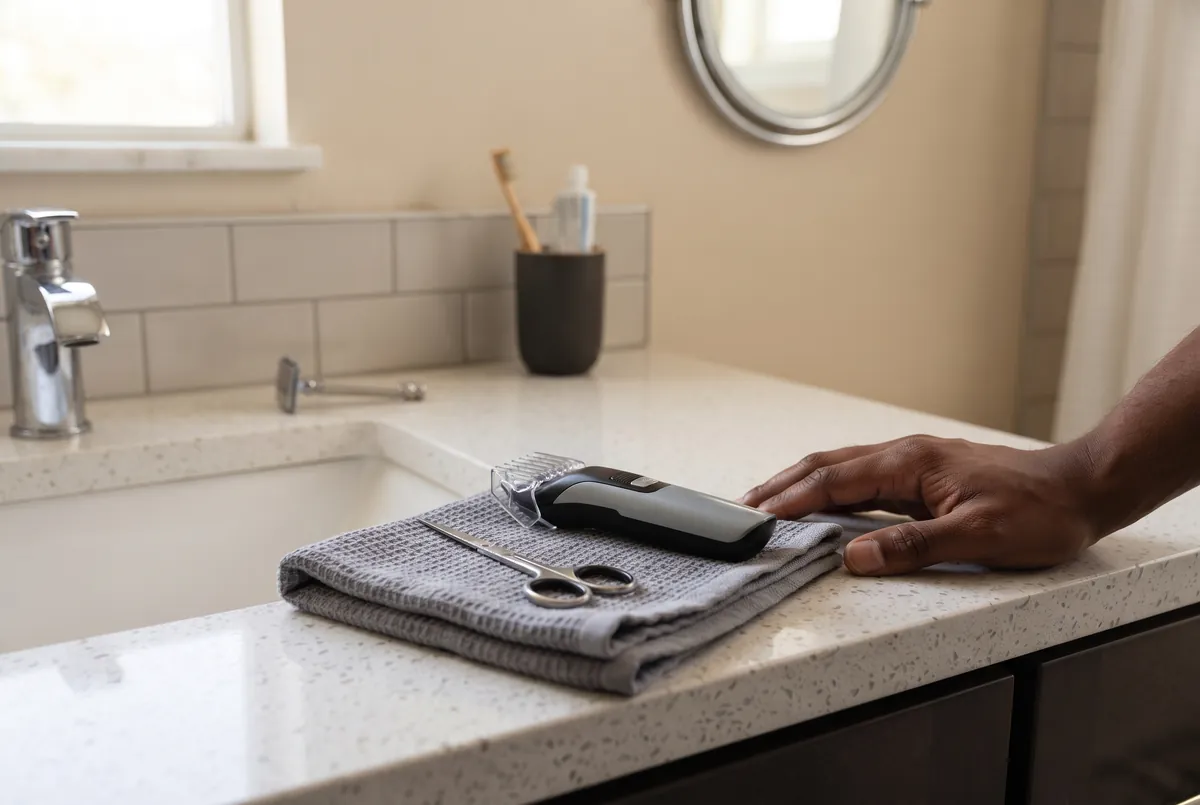
My advice for the in-between phase is simple. If a few early hairs bother you, leave them, or trim them carefully with small scissors or an electric trimmer without cutting to the skin. Do not tweeze them either. Tweezing removes individual hairs from the follicle and pushes those follicles onto their own separate schedule, which works against the synchronization you are trying to build. If there is an event you truly need to shave for, tell your waxing professional at the next visit. We can plan around it, usually by pushing the appointment a little later so the hair has time to reach a workable length.
Technique and Breakage: When a Wax Does Not Last
When a client tells me a wax lasted only a few days, my first suspicion is breakage. A hair that is removed from the follicle takes weeks to return. A hair that snaps at or just under the surface returns almost immediately, and it returns blunt, the same way a shaved hair does. From the client's side, both results look identical when they leave the room: smooth skin. The difference only shows up three or four days later. This is why technique has as much influence on how long waxing lasts as biology does, and why professional training matters.
Several technical errors cause breakage. Wax applied against the direction of growth, or removed in the wrong direction, bends the hair sharply and snaps it. Removing the strip upward, away from the body, instead of pulling parallel and close to the skin, does the same. Wax that is too cool drags and sets poorly around the hair, while wax applied too thickly or left to become brittle can crack and break hairs on removal. Skin that is not held taut moves with the strip, which reduces the clean pull on the follicle. Each of these can be corrected with practice and supervision.
The condition of the hair and skin also matters. Dry, brittle hair breaks more easily than hydrated hair, which is one reason I ask clients to moisturize regularly in the weeks between visits, though not on the day of the appointment. Residue on the skin, such as oil, lotion, or deodorant, prevents the wax from gripping, so proper cleansing and a light pre-wax product are part of the result. Wax choice plays a part too: coarse hair in sensitive areas usually releases better with hard wax. I compare formulas in my guide to the types of wax for hair removal.
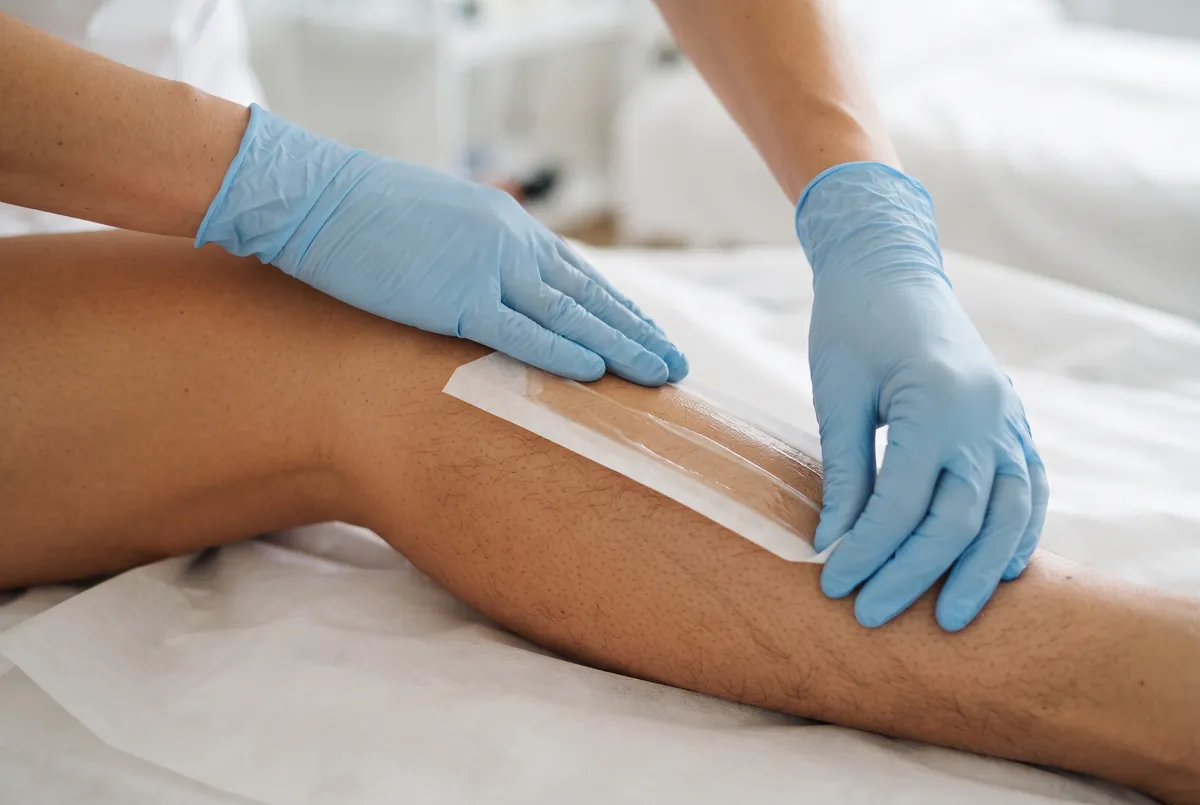
For students, I teach a simple way to check your own work. After removal, look at the strip or the hard wax piece. Hairs removed from the follicle often show a small bulb at the end, and they are close to full length. If the hairs on the strip look short and uniform with no visible root end, you are likely breaking them. Run a gloved fingertip against the direction of growth on the treated skin. A smooth feel means a clean removal. A faint sandpaper feel means hair was left at the surface. Find the cause before the client leaves.
How Long Hair Needs to Be to Wax
Hair needs to be long enough for the wax to wrap around it and hold. The commonly used guideline is about a quarter of an inch, which is roughly the length of a grain of rice. For someone who has been shaving, that usually means letting the hair grow for around two to three weeks before a first wax, depending on how fast their hair grows. Hair that is shorter than this tends to be left behind or broken. Fine hair can sometimes be removed when it is a little shorter, and coarse hair generally benefits from the full length.
Hair can also be too long. Very long hair tangles in the wax, pulls unevenly, and makes removal more uncomfortable than it needs to be. If the hair is well beyond the guideline, especially in the bikini area or underarms, trimming is sensible. Many studios prefer to do the trimming themselves so the length ends up right. If you trim at home, use a guard on an electric trimmer and stay on the longer side. A client who trims too short creates the same problem as a client who shaved: not enough hair for the wax to grip.
The length rule is the real reason behind the rebooking window. Four to six weeks is not an arbitrary sales rhythm. It is approximately the time it takes for most of the regrowth on the body to surface and reach a length the wax can grip, before the hairs become long and start moving into different phases again. Come in too early and part of the growth is too short. Come in too late and the synchronization you built begins to drift apart. When I choose an interval for a client, I am aiming for that window.
How Often Should You Wax? Finding a Rebooking Rhythm
How often should you wax depends on the area and on your own growth, but a workable starting plan is straightforward. Most clients rebook body areas such as legs, arms, back, and bikini every four to six weeks. Underarms usually do better on a slightly shorter rhythm, around three to four weeks. Facial areas are commonly maintained every two to four weeks. For the first three or four appointments I prefer clients to stay toward the shorter end of their range. It catches more hairs early in their growth and helps the area settle into a shared schedule faster.
After those first visits, I adjust. If a client arrives at five weeks and the hair is still sparse and short, we extend the interval. If a client arrives at five weeks with dense growth and tells me the last two weeks were uncomfortable, we shorten it. I look at what is on the skin, I ask when regrowth first became noticeable, and I write both answers in the client record. After a few visits a pattern appears, and the interval stops being a guess. This small habit of recording observations is one of the differences between a routine service and a professional one.

How to Make Waxing Last Longer
No product or trick changes your growth cycle, so any promise of doubling your results should be treated with caution. What you can control is how completely the hair is removed, how well the skin lets new hair through, and how consistent your schedule is. Those three things decide whether you land at the short end or the long end of your own natural range. The habits below are the ones I give clients, in the order I consider most useful. None of them is complicated, and together they make a visible difference over a series of appointments.
- Keep a steady schedule. Rebook before you leave and stay inside your window. Consistency is the single most reliable way to lengthen the smooth phase over time.
- Put the razor away. Do not shave or tweeze between appointments. Trim early hairs if you need to, and keep the length for your next visit.
- Arrive with the right length. About a quarter of an inch gives the wax something to hold, so more hairs are removed from the follicle and fewer break.
- Exfoliate gently and regularly. Once the skin has calmed after the wax, light exfoliation a few times a week keeps dead skin from trapping new hairs.
- Moisturize between visits. Hydrated skin releases hair more easily, and hydrated hair is less likely to snap. Skip heavy lotion on the day of the appointment.
- Come with clean skin. Oil, lotion, self-tanner, and deodorant on the area reduce grip and increase breakage.
- Choose a trained professional. Correct wax, temperature, direction, and skin support decide whether hair leaves from the root or snaps at the surface.
- Follow aftercare for the first day or two. Calm skin heals quickly and grows hair through cleanly, which protects the result of the service.
Aftercare protects the result in the first forty-eight hours, when follicles are open and the skin is more reactive. The general rules are to avoid heat, friction, heavy sweating, and fragranced products on the treated area, and to keep hands off. I do not repeat the full routine here because it has its own article: see my waxing aftercare guide for the day-by-day plan, including what to do about bumps and ingrown hairs. If you ever see spreading redness, pus, significant swelling, or pain that increases after the first day, contact a physician instead of waiting for it to pass.
Clients sometimes ask about lotions and serums sold as hair growth inhibitors. I stay cautious. Some clients like how they feel on the skin, and a well-formulated product may support smoothness and reduce ingrown hairs, but I do not promise that any cosmetic product will meaningfully extend the time between waxes. Comfort also affects consistency. Clients who dread the appointment tend to delay it, shave in the meantime, and lose their progress. If discomfort is what keeps you from a steady schedule, my guide on reducing waxing discomfort covers what helps.

Waxing Compared With Shaving, Sugaring, Laser, and Electrolysis
Waxing sits in the middle of the hair removal spectrum. It lasts far longer than anything that cuts or dissolves hair at the surface, and it is temporary compared with methods that treat the follicle itself. Knowing where each method stands helps clients choose on purpose. The table below summarizes how long results typically last and what kind of result each method can honestly claim.
| Method | How it works | How long results last | Type of result |
|---|---|---|---|
| Shaving | Cuts hair at the skin surface | Usually a day or a few days | Temporary, blunt regrowth |
| Waxing | Removes hair from the follicle with wax | Typically a few weeks | Temporary, softer tapered regrowth |
| Sugaring | Removes hair from the follicle with sugar paste | Typically a few weeks, similar to waxing | Temporary, softer tapered regrowth |
| Laser hair removal | Light energy targets pigment in the hair | Long-term after a series, with maintenance for many clients | Permanent hair reduction, depends on hair and skin color |
| Electrolysis | A fine probe treats each follicle individually | Permanent once a follicle is fully treated | Permanent hair removal, works on all hair colors |
Shaving is fast, inexpensive, and painless when done carefully, and for many people it is enough. Its weakness is duration. Because the hair is only cut, stubble returns quickly, and frequent shaving can irritate sensitive areas. Sugaring is the closest relative of waxing. It removes hair from the follicle using a paste made of sugar, water, and lemon, and its results last about as long as waxing because the biology is identical. The choice between them usually comes down to skin sensitivity, the professional's training, and personal preference, not to a difference in how long the results last.
Laser hair removal works differently. It uses light that is absorbed by the pigment in the hair, which damages the follicle. It requires a series of sessions and works best when there is contrast between hair and skin, so it is less effective on blonde, gray, red, or very fine hair. In the United States, laser devices are cleared for permanent hair reduction, which means a long-term decrease in the number of hairs, not a guarantee that no hair will return. Many clients are satisfied with the reduction and come back for occasional maintenance sessions.
Electrolysis is the permanent option. It treats one follicle at a time with a fine probe and a small amount of energy, and it is the only method the FDA accepts for permanent hair removal claims. It works on every hair color and skin tone because it does not rely on pigment. It takes a series of sessions, since each follicle must be treated in an active phase, and large areas require patience. For a chin, an upper lip, or a bikini line that a client is tired of waxing, it ends the cycle. I explain the timeline in how long electrolysis lasts.
Waxing suits clients who want weeks of smoothness and no long-term commitment, and I never push permanent removal on someone who is happy with a regular wax. There are situations, though, where I suggest looking beyond it. The first is coarse, hormonally driven facial hair that returns within days and requires constant attention. The second is a client who develops ingrown hairs or dark marks after every wax despite good technique and careful home care. The third is a client on medication or skincare that makes waxing unsafe, such as oral isotretinoin or strong topical retinoids on the area. In these cases more frequent waxing does not solve the underlying problem. A referral to a physician or dermatologist, or a consultation about electrolysis, serves the client better.

What Professionals Should Tell Clients
Most complaints about waxing not lasting come from expectations that were never set. If a client hears only "you will be smooth for weeks," then a few fine hairs in the second week feel like a failure. My rule for new professionals is to explain the timeline before the first strip, not after the first complaint. It takes two minutes. Tell the client that hair grows in cycles, that some hairs are below the skin today and will surface soon, that the first wax is the shortest, and that the result improves with a regular schedule.
Use ranges and avoid promises. "Most of my clients come back every four to six weeks" is accurate and leaves room for individual variation. "This will last six weeks" is a promise you cannot keep, because you do not control the client's hormones or habits. When a client asks why a friend's wax lasts longer, explain that body area, genetics, and hormones differ between people. Never suggest that the client did something wrong unless you have actually identified a cause, such as shaving between visits. Clients who feel blamed do not rebook, and clients who feel informed usually do.
Give the client three clear instructions to take home. First, do not shave or tweeze between appointments, and trim if something bothers you. Second, keep the skin moisturized and begin gentle exfoliation once it has calmed. Third, return within the agreed window. I say these aloud and I also provide them in writing, because people forget most of what they hear while getting dressed. Rebooking at the desk before the client leaves is part of the service, not a sales technique. A client without a next date drifts, and the razor fills the gap.
Handle early regrowth complaints with a process instead of an apology. Ask when the hair appeared, where, and what it feels like. Blunt stubble within a few days across the whole area points to breakage, and that is yours to fix: review your wax temperature, direction, and skin support, and offer to correct the area. Soft, scattered hairs after a week or two point to the growth cycle, which is normal, particularly after a first wax. Patchy regrowth in one zone usually means a direction of growth was missed. Record what you find in the client notes.
Training and Licensing for Waxing Professionals
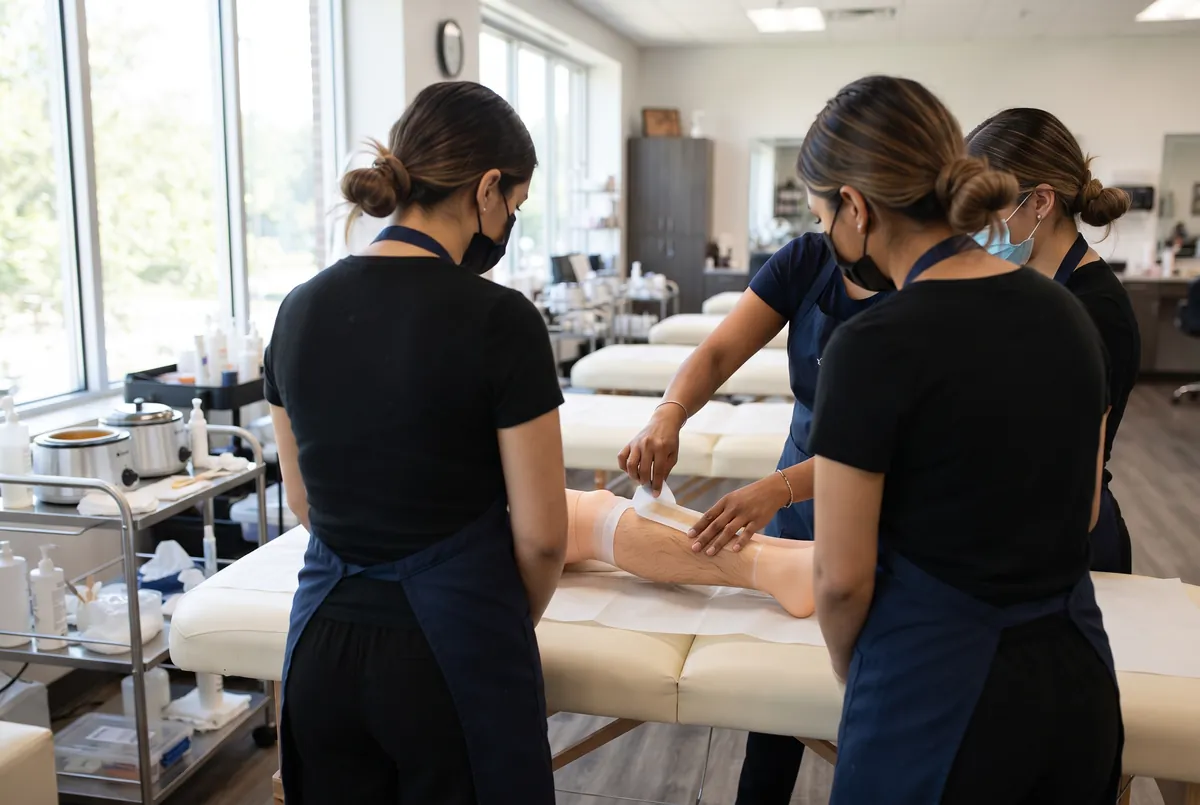
Everything in this guide that depends on the professional, such as choosing the right wax, reading the direction of growth, preventing breakage, screening for contraindications, and setting expectations, is learned through training and supervised practice. In most states, waxing for pay requires a license, usually in esthetics or cosmetology, and some states offer a specific waxing license. Requirements differ from state to state, and they change, so I do not list them here. You can look up your own state in the waxing licensing hub before you enroll anywhere.
Theory is a strong place to start. Understanding the hair growth cycle, skin anatomy, contraindications, and client communication makes hands-on training more productive, because you know why each step matters before you pick up a spatula. Online study can build that foundation at your own pace. It does not replace the in-person hours your state requires, and it does not replace a license. If you want structured theory before or alongside school, the waxing courses listed on this site are organized for that purpose.
Your Next Step
If you are a client, set your expectations by your own body and not by a chart. Let the hair reach about a quarter of an inch, book with a licensed professional, and commit to three or four appointments on a steady rhythm before you judge the result. Keep the razor and tweezers away from the area, moisturize, exfoliate gently, and tell your professional about any medication or changes in hair growth. If a small area keeps demanding attention every week or two, ask about electrolysis for that area and keep waxing the rest.
If you are a student or a new professional, practice explaining the growth cycle in plain language until it takes you under two minutes. Check your strips for breakage after every removal, record intervals and observations in your client notes, and rebook each client before they leave. Those habits do more for client retention than any product on your shelf. Then confirm what your state requires and plan your training around it. Clients stay with the professional who tells them the truth about how long waxing lasts and then delivers a clean, consistent result.
State Requirements
State licensing guides
Hours, exams, fees, and the licensing board differ by state. Open your state for the current requirements.
Common Questions
FAQ
Most people stay smooth for a few weeks after a wax, and the full cycle before the next appointment is commonly three to six weeks. Body areas such as legs often last longer, while the face and underarms usually show regrowth sooner. Your own result depends on the body area, your hair growth cycle, hormones, whether you shave between visits, and how cleanly the hair was removed from the follicle.
For regular clients, a Brazilian wax typically gives a few weeks of smooth skin followed by soft, gradual regrowth, and most people rebook about every four to five weeks. A first Brazilian often lasts a shorter time because many hairs were below the skin on the day of the service. Results usually improve after several appointments on a steady schedule.
A widely used convention is every four to six weeks for body areas, every three to four weeks for underarms, and every two to four weeks for the face. Stay toward the shorter end for the first few visits so more hairs come onto the same schedule. After that, your professional can adjust the interval based on how much regrowth is present and when you first noticed it.
About a quarter of an inch, roughly the length of a grain of rice. After shaving, that usually takes around two to three weeks of growth, depending on the person. Hair that is too short slips out of the wax or breaks at the surface, which leads to fast stubble. Hair that is much longer should be trimmed first, ideally by your waxing professional.
The two usual causes are the growth cycle and breakage. After a first wax, hairs that were below the skin surface appear within a week or two, and they feel soft and scattered. If the regrowth feels like blunt stubble across the whole area within days, hairs probably broke instead of leaving the follicle. Shaving shortly before the appointment can also leave hair too short to grip.
Many regular clients notice regrowth that feels finer and looks sparser after a long period of consistent waxing, and repeated removal can weaken some follicles over years. It varies widely between people and body areas, and hormonally driven hair often continues to return. Waxing is a temporary method. If you want hair gone for good, electrolysis is the permanent option.
It is better not to. Shaving does not make hair thicker, but it leaves blunt tips that feel like stubble and resets the hair length, so there may be too little to grip at your next wax. It also undoes the synchronization that makes results last longer. If early hairs bother you, trim them lightly and keep your appointment inside the usual window.
Keep a consistent schedule, avoid shaving and tweezing between visits, arrive with hair about a quarter of an inch long, moisturize daily, and exfoliate gently once the skin has calmed. Choose a licensed professional whose technique removes hair from the follicle without breakage. Follow the first-day aftercare rules so the skin heals cleanly.
Keep Reading
Related Guides


