Waxing
Cosmetology vs Esthetics: Which License Path Fits Waxing Work

Quick answer
If waxing and skin care are your real goal and your state offers a distinct esthetics track, an esthetics license is usually the faster, less expensive path. A cosmetology license makes more sense if you also want hair services. Where waxing fits varies by state, so confirm with your state board, knowing the waxing technique itself is the same either way.
If waxing is the service you actually want to offer, you have probably noticed that the path to get there is not always labeled "waxing license." In many states, waxing is one service among several covered by a broader cosmetology license, or by a narrower esthetics license. Which one you should pursue depends less on the word "waxing" and more on the full range of services you eventually want to offer.
What a cosmetology license typically covers
A cosmetology license is usually the broadest beauty license a state offers. Depending on the state, it can cover hair cutting and styling, chemical treatments and coloring, basic skin care and facials, and often waxing as well, all under one credential. The tradeoff is training length: cosmetology programs generally require more total hours than esthetics-only programs, because you are being trained across several service categories at once, not just skin and hair removal.
What an esthetics license typically covers
An esthetics license (sometimes called a skin care or esthetician license) is usually narrower and more focused: facials, skin treatments, and hair removal services including waxing, without the hair cutting, coloring, and chemical service training that a full cosmetology program includes. In states that offer a distinct esthetics track, it is often the faster route to a license if waxing and skin care, rather than hair services, are your actual goal.
Where waxing specifically fits
This is the part that varies most by state, which is exactly why we do not print a specific hour table in this article. Some states fold waxing into esthetics only. Some fold it into cosmetology only. Some license it under either path, or under a separate, narrower waxing-specific credential with lighter requirements than either full license. A few states have comparatively light or no dedicated licensing requirement for waxing specifically, though local business licensing and health rules can still apply. Because this differs so much by state and can change over time, always confirm the current rule directly with your state board rather than assuming the pattern in a neighboring state applies to you. Our waxing licensing guide tracks what we have verified state by state.
How to decide between the two paths
Start with the full menu of services you want to offer in five years, not just this year. If you only ever want to do waxing and basic skin treatments, and your state offers a distinct esthetics track, that is usually the faster and less expensive path. If you eventually want to cut hair, color, or offer chemical services alongside waxing, cosmetology is the path that gets you there in one credential instead of two. Some people do both over time, starting with esthetics and adding a cosmetology license later, or the reverse. There is no wrong order, just different tradeoffs in upfront time and cost.
What our waxing course covers either way
Regardless of which license path you choose, the technique itself is the same: hard wax and soft wax application, proper skin preparation, safe removal, body and facial areas, and aftercare guidance. Our online waxing course is built around that technique foundation so you arrive at whichever licensed program you choose already comfortable with the practical side, and can focus your in-person hours on the parts of the license that require supervised practice.
How much waxing practice each program really gives you
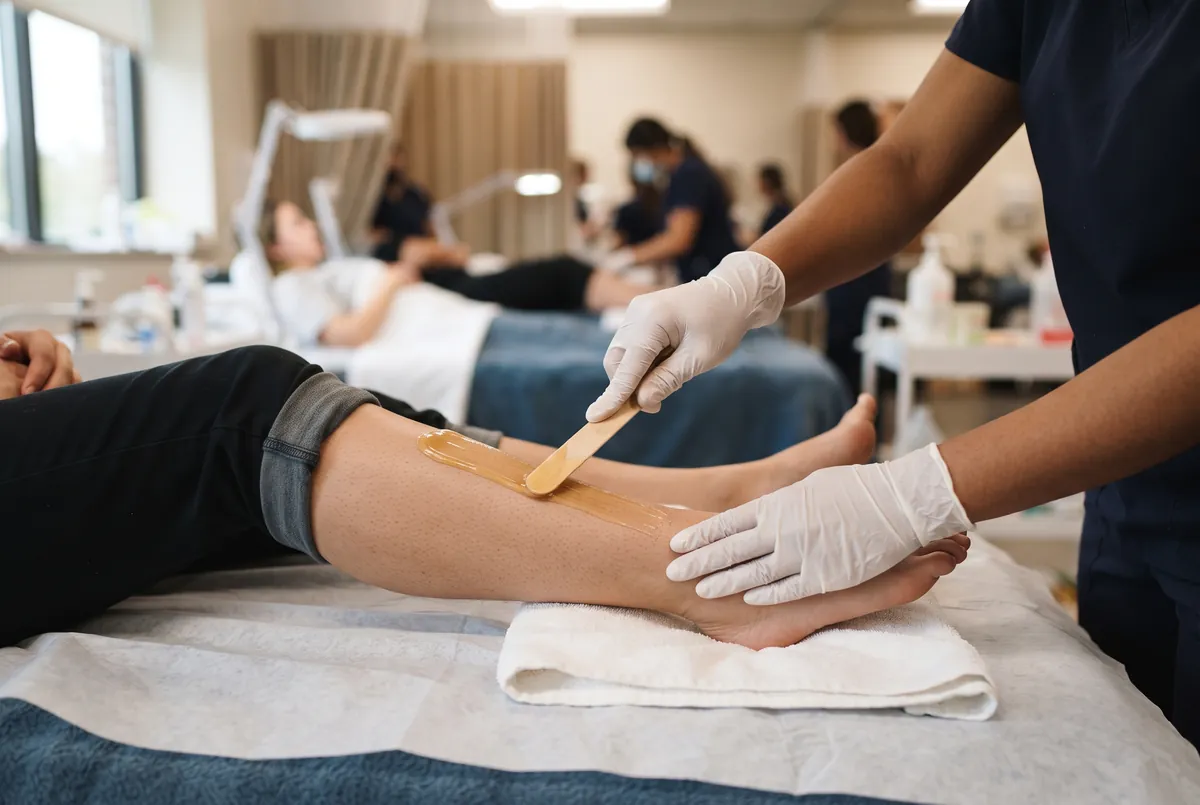
The license decides what you may legally do. The program decides how ready you are to do it. Those are separate questions, and for waxing the second one deserves more attention than it usually gets. In a cosmetology program, hair removal is one unit among many, competing for time with cutting, color, chemical texture, and nails. In an esthetics program, hair removal shares the schedule with facials, skin analysis, and makeup, which is a shorter list, so waxing usually receives a larger share of attention. Even so, the amount of supervised waxing a student performs varies widely from school to school under either license.
When you tour a school, ask specific questions. Which body areas do students wax on real clients in the student clinic? Is hard wax taught as well as soft wax? How many waxing services does a typical student complete before graduating? Are intimate services such as Brazilian waxing taught, demonstrated only, or left out? Many graduates of both program types tell me they left school having waxed brows, lips, and a few legs, and little else. That is enough to pass an exam. It is not enough to work a full day in a waxing studio.
Reading your state's scope of practice for hair removal
Every state defines in law or regulation what each license covers, and that definition is called the scope of practice. It is public, and you can read it yourself on the state board's website. Look for the definitions section, where terms like cosmetology and esthetics are spelled out, and search for the words waxing, depilatory, and hair removal. The wording tells you whether a license covers hair removal on the whole body or only certain areas, and whether it uses broad language such as "removal of superfluous hair by non-permanent means."
Pay attention to what the definition excludes. Waxing licenses and esthetics licenses cover temporary hair removal. They generally do not cover electrolysis, which is regulated separately in many states, or laser hair removal, which states often treat as a medical or specially regulated service. If your long-term plan includes permanent hair removal, read can estheticians do electrolysis before choosing a license, because the answer may point you toward an additional credential.
If the wording is unclear, email the board and ask the question in plain terms, for example: "Does a cosmetology license in this state permit full body waxing, including intimate areas?" Keep the written reply. Schools and employers sometimes repeat what was true years ago or in another state, and a reply from the board itself settles the matter.

Which license waxing employers look for
Open the job listings for waxing studios in your area and read the requirements line. In most markets you will see wording that accepts either license, something like "licensed esthetician or cosmetologist," because both typically authorize waxing. From a hiring manager's point of view, the legal requirement is that you hold a current license that covers the service in that state. After that, they care about how you wax.
That has a practical consequence. If two paths both lead to a license that permits waxing where you live, the hiring advantage comes from skill and not from the title. Many studios hold a practical interview in which you wax a model while a trainer watches your skin preparation, application, removal, and how you speak with the client. A cosmetologist with strong waxing technique will be hired over an esthetician with weak technique, and the reverse is equally true.
Spas and medical spas are a partial exception. Their menus lean toward skin treatments, so they often prefer estheticians, and a waxing specialist there is usually expected to perform facials as well. Salons with a hair focus may value a cosmetologist who can fill gaps in a hair stylist's schedule with brow and lip waxing. Think about which kind of business you want to walk into each morning. For a wider look at how the two professions differ day to day, see cosmetologist or esthetician: the difference.
Services that pair naturally with waxing under each license
Few specialists earn a living from waxing alone for an entire career. Most add services that the same clients already want, and the license you choose determines which add-ons are open to you. This is a better way to compare the two paths than counting hours, because it describes the working week you will have three years from now and the kind of client who will fill it.
- With an esthetics license: facials, skin analysis, exfoliation treatments, brow shaping and tinting, and in many states lash services. These suit a client who comes for a brow wax and stays for skin care. Some states also offer an advanced or master esthetics tier with a wider scope.
- With a cosmetology license: everything hair related, plus nails in most states, along with basic skin care and waxing. This suits a salon where a color client adds a brow or lip wax during processing time.
Lash extensions, brow lamination, tinting, and similar services are regulated differently from state to state, and some require their own specialty license or fall only under certain licenses. Check each service you plan to add, not only waxing. If skin care is where you see yourself, what an esthetician does gives a realistic picture of the daily work, and my guide on how to become a waxing specialist shows how waxing fits into a career built around hair removal.
Sugaring, threading, and other hair removal methods
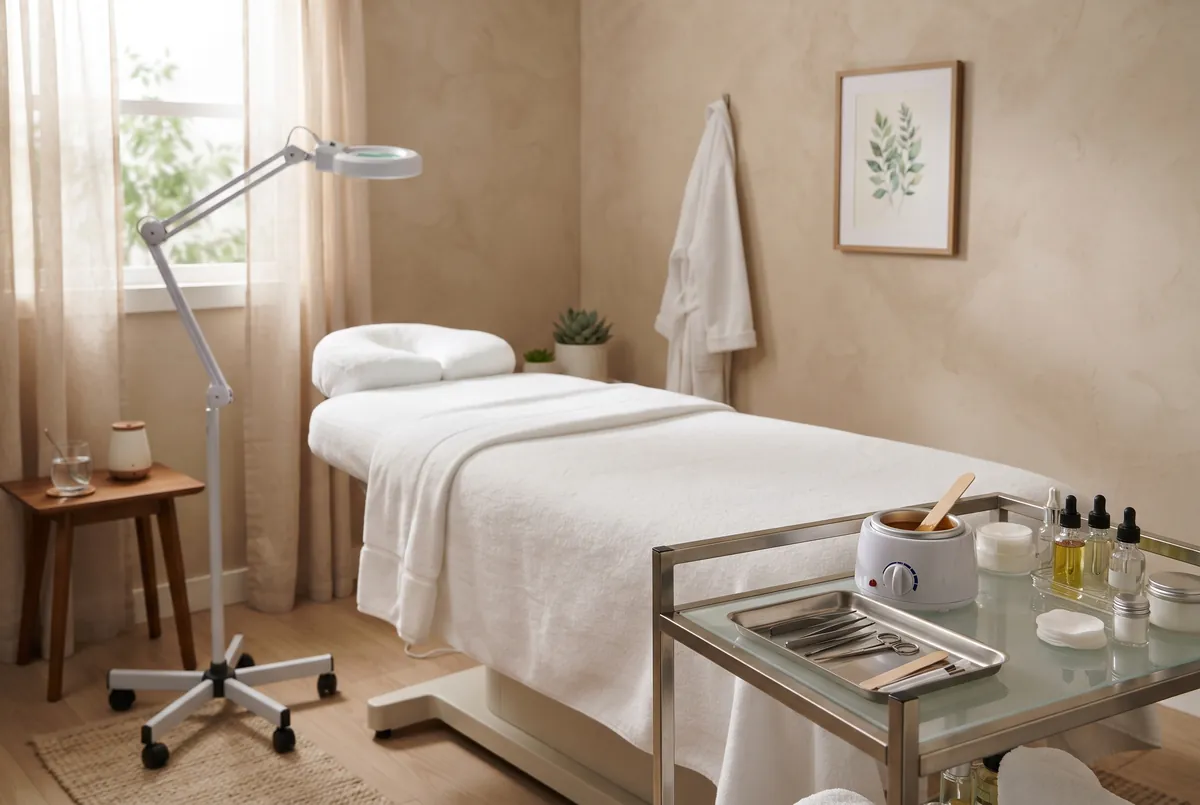
Clients ask for more than wax. Sugaring uses a sugar paste to remove hair from the root, and because it is a form of temporary hair removal performed on skin, states generally place it under the same licenses that cover waxing. Do not assume this, though. Read the scope wording or ask the board, especially if you plan to offer only sugaring and hope a lighter credential applies.
Threading is handled less consistently. Some states treat it like any other hair removal service that requires a license. Others have exempted threading from licensing altogether or created a separate registration for it. The reasoning is that threading uses no chemicals or heat, but exempt does not mean unregulated in every respect, since sanitation rules and local business requirements can still apply.
Tweezing, depilatory creams, and trimming generally sit inside the same scope as waxing. Whatever your license, the safety knowledge is shared: recognizing skin that should not be treated, asking about medications that thin or sensitize the skin, and preventing cross-contamination. Review the main reasons to decline a service in waxing contraindications: when not to wax, since those apply under either license and to every removal method that pulls hair from the follicle.
Building real waxing skill after you are licensed
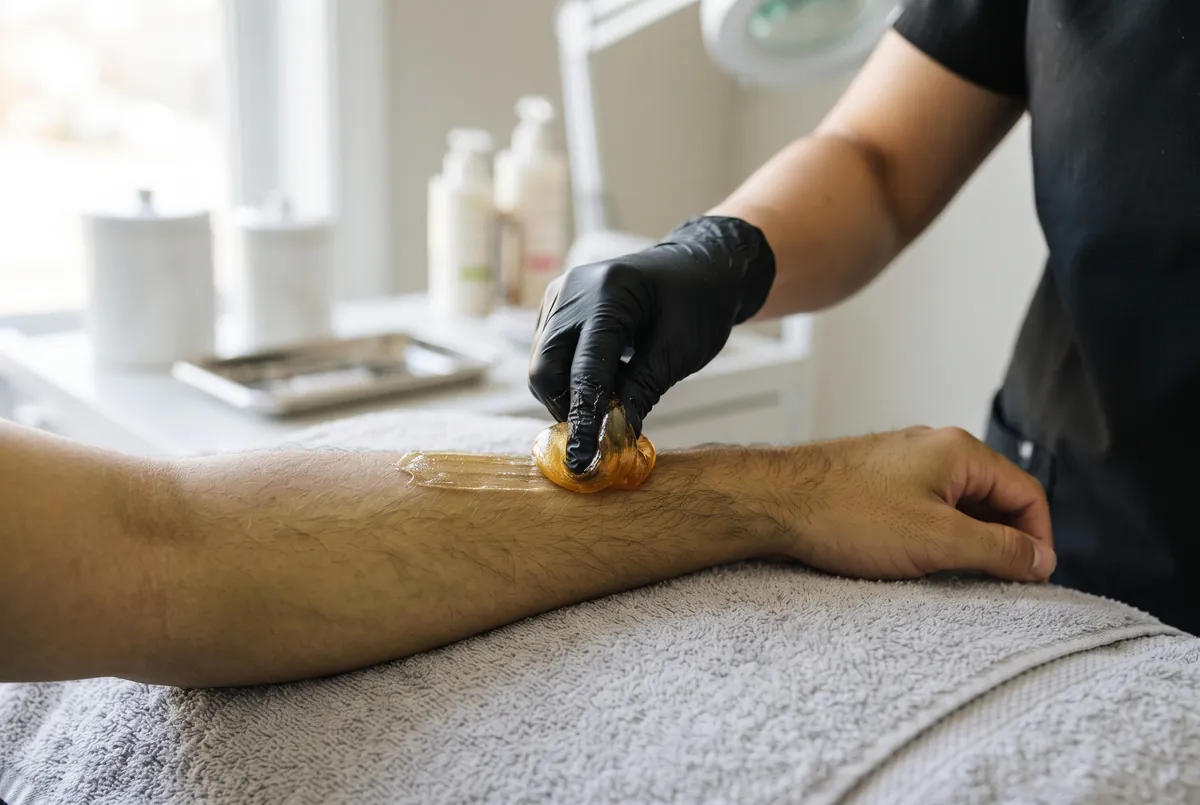
Whichever path you choose, expect to keep training after the license arrives. This is normal, and good employers plan for it. Waxing studios commonly put new hires through their own training before giving them a full book, and independent educators and wax manufacturers run hands-on classes in speed waxing, intimate waxing, and working with hard wax. These classes build skill. They do not expand your legal scope, and a certificate from a workshop is not a license.
A practical order that works for many people looks like this. Learn theory early, including skin structure, hair growth, wax types, contraindications, and sanitation, so that practice time is spent on your hands and not on vocabulary. Use school clinic hours to perform as many waxing services as the school allows, and volunteer for them. After licensing, choose a first job for the training and volume it offers. Then add advanced classes in the services your clients request most.
One caution about advanced classes. Choose them the way you would choose a school. Look for an instructor who is licensed, who teaches on live models, and who limits class size so every student is observed. Ask what you will perform with your own hands and what you will only watch. A class that is mostly a product demonstration can still be useful for learning a wax system, but it will not give you the repetitions that build speed. Those come from doing the same service many times with someone correcting you, which is why the first job matters as much as the license behind it.
A short decision checklist
If you are still undecided, work through these questions in order and write down the answers. The first one is a matter of fact that your state board can settle. The rest are about you, and they are worth answering honestly before a school's admissions office answers them for you. Admissions staff are helpful, but their job is to fill the program they offer, which may or may not be the program that fits your plan.
- Which licenses cover waxing in my state, and does a waxing-specific license exist?
- Do I want to offer hair services at any point? If yes, cosmetology belongs on the list.
- Do I want facials and skin treatments to be a large part of my work? If yes, esthetics fits better.
- Which program near me gives the most supervised waxing on real clients?
- What do local waxing employers list as accepted licenses?
- Am I likely to move, and how does each license transfer to that state?
Most people find that two or three of these answers point the same way. If they do not, choose the path that matches the work you would be happy doing on an ordinary weekday, because that is what a license commits you to. The time and cost of school pass quickly compared with the years you will spend using what you learned there.
State Requirements
State licensing guides
Hours, exams, fees, and the licensing board differ by state. Open your state for the current requirements.
Common Questions
FAQ
It depends on your state. Some states require it, others offer a lighter esthetics or waxing-specific path. See our state waxing guide for what we have verified.
In many cases yes, though the exact process (additional hours, exams, or a new application) depends on your state board. Confirm the upgrade path with your state before assuming it is automatic.
Esthetics programs are typically shorter than full cosmetology programs, since they cover a narrower range of services. Exact hours vary by state, so confirm current numbers with your state board before enrolling.
Yes. The course covers waxing technique, hygiene, and client safety at a level that applies whether you end up licensed as a cosmetologist or as an esthetician, since the hands-on skill itself does not change between the two paths. What differs is the licensing exam and hour requirements specific to your state, which you would need to confirm with your state board separately.
Only if you want services beyond what that narrower credential covers. If waxing is genuinely all you plan to offer and your state has a lighter, waxing-specific credential, going through the full cosmetology or esthetics track adds training time and cost you may not need. It becomes worth it once you want facials, skin treatments, or hair services that the narrow credential does not include.
Esthetics programs are generally built entirely around skin care, facials, and hair removal, so skin-specific training tends to be a larger share of the total program. Cosmetology programs cover basic skin care and facials as one part of a curriculum that also includes hair cutting, styling, and chemical services, so skin care is a smaller slice of a longer program. If deep skin care knowledge matters more to you than breadth, esthetics is usually the more concentrated route.
Yes. Even where licensing itself is light or absent, most cities and counties still require general business registration, and local health rules around sanitation and safe hair removal practice can still apply to the business itself. Do not treat a light licensing requirement as meaning no rules apply at all. Confirm both business and health requirements locally, separate from the professional license question.
It can. States differ in how they license waxing and in whether they recognize an out-of-state license through reciprocity, so a credential that satisfies your current state is not guaranteed to transfer cleanly if you move. If relocation is a realistic possibility, check the licensing rules of a likely future state before committing to one path over the other.
Most waxing studios accept either license, as long as it is current and covers waxing in that state. What usually decides a hire is a practical interview where you wax a model and a trainer evaluates your technique, sanitation, and client communication. Spas and medical spas more often prefer estheticians because they expect the specialist to perform facials and skin treatments as well.
In most states, yes, because sugaring is temporary hair removal performed on the skin and generally falls under the same scope as waxing. It is still worth confirming, since each state writes its own definitions. Read the scope of practice wording on your state board's site or ask the board directly, particularly if you plan to offer sugaring as your only service.
Not always. Many cosmetology and esthetics programs focus clinic practice on brows, lips, and legs, and treat intimate waxing as a demonstration or leave it out. Ask each school which areas students wax on real clients. Most specialists learn Brazilian waxing through employer training or an advanced hands-on class after licensing, within whatever their state's license permits.
Keep Reading
Related Guides


