Waxing
Chest and Back Waxing for Men: First Time Tips and Aftercare
Quick answer
For a first chest or back wax, let hair grow to about a quarter inch or trim it if much longer, avoid sun and strong exfoliants for a few days, skip caffeine and the gym on the day, and book a licensed waxer who works with men. Afterward, avoid heat, sweat and tight shirts for a day, then exfoliate gently a few times a week to prevent ingrown hairs.
Chest and back waxing is where most men start with professional hair removal, and it is also where most first-time mistakes happen. Men arrive with hair that is far too long, skin that has just been sunburned at the beach, or a plan to hit the gym straight after the appointment. They book a back wax and are surprised to find the shoulders and neckline are separate. Or they expect a quick rip and leave with red bumps across the chest because nobody told them about friction and sweat. Almost all of that is avoidable with a little preparation.
I am Aida Khazieva, a licensed electrologist and cosmetologist with more than twenty years of experience, and male clients have been part of my practice throughout. This guide focuses only on the chest, back, shoulders and stomach, and on what a man needs to know before his first appointment for those areas. For a broader overview of every area men wax, including the face, intimate areas and professional boundaries, read my waxing for men guide. Here we go deeper into the torso.
The short answer: for a first chest or back wax, let the hair grow to roughly a quarter inch or trim it down if it is much longer, avoid sun and strong exfoliants for a few days, skip caffeine and the gym on the day, and book a licensed waxer who works with men. Afterward, avoid heat, sweat and tight shirts for a day, then exfoliate gently to prevent ingrown hairs.
Why Men Wax the Chest and Back
Men wax the chest and back mainly for a cleaner look, for comfort in heat and during sport, and because shaving the back alone is nearly impossible and shaving the chest creates fast, itchy stubble. Waxing removes hair from the root, so regrowth takes longer and returns with finer tips than shaved hair. For men who care about how their chest and back look at the pool or the beach, or who simply dislike the feel of a hairy back under a shirt, that is a practical improvement.
Some men wax for a specific reason: a wedding, a vacation, bodybuilding or physique competitions, swimming or cycling, or a partner's preference. Others wax because they have a tattoo they want to show clearly. If that is you, read can you wax over a tattoo first, because fresh tattoos must heal fully before waxing. And some men wax only the back and shoulders while leaving the chest natural, which is a common and very reasonable approach.
There are also men who should think twice. If your back is prone to acne, if you have a skin condition on the chest or back, or if you take medication that affects skin healing, waxing may irritate the skin more than it helps. In those cases, talk to a dermatologist first. Waxing is a cosmetic service, not a treatment for any medical problem, and it should not be done over active breakouts, rashes or broken skin.
It also helps to decide what result you actually want before booking. Some men want a completely smooth torso. Others want a tidier, lighter look without looking waxed. A good waxer can do either, but the plan changes: full removal uses wax on every area, while a lighter look may combine waxing on the back with trimming on the chest. Tell the waxer the goal in plain words, such as "clean back, natural chest," and let them suggest how to get there.
What a Chest, Back and Full Torso Wax Cover
A chest wax usually covers the pectoral area and sternum, a back wax usually covers the upper and lower back, and shoulders, stomach, neck and arms are often listed separately or bundled in a full torso service. Menus vary from one studio to another, so check the wording. The most common surprise for first-time male clients is that the shoulders are not part of the back wax at some studios, which can leave a visible line of hair along the tops of the shoulders.
| Service | Usually includes | Often separate or add-on |
|---|---|---|
| Chest wax | Pectorals, sternum, area around the nipples | Stomach, shoulders, underarms |
| Stomach wax | Upper and lower abdomen, navel area | Treasure trail below the navel at some studios |
| Back wax | Upper and lower back | Shoulders, back of the neck |
| Shoulders | Tops of shoulders and upper arms near the shoulder | Often sold as an add-on to the back |
| Full torso (chest, stomach, back, shoulders) | All of the above, usually at a bundled price | Underarms, arms, neck |
When you book, ask three questions. Does the back wax include the shoulders? Does the chest include the stomach? Is the back of the neck included or done separately? If you want a clean, even result, the full torso is often the simplest choice and is frequently priced below the sum of its parts. If you only want the back tidied, say so clearly, and ask the waxer to blend the edges so there is no harsh line at the shoulders or neck.

Men First Time Waxing Tips for the Chest and Back
The most useful men first time waxing tips come down to hair length, skin condition, timing and honesty with your waxer. These four decide whether the appointment is smooth and fast or long and uncomfortable. They apply to every area, but on the chest and back they matter more, because the areas are large and the hair is often long, dense and coarse.
- Get the length right. Hair should be long enough to grip, often described as about a quarter inch, roughly the length of a grain of rice. If it is much longer, trim it with clippers the day before or let the waxer trim it. Never shave in the weeks before.
- Protect your skin. No sunburn, no tanning, no strong exfoliants or retinoid products on the area in the days before.
- Exfoliate gently a day or two before, not on the day itself.
- Skip caffeine and alcohol before the appointment; both can make skin more sensitive.
- Do not plan the gym, sauna, hot tub or a long run for the same day.
- Arrive with clean, dry skin, no lotion, oil or cologne on the area.
- Bring a loose, clean cotton shirt to wear afterward.
- Tell your waxer about medications, skin conditions and any past reaction to waxing.
Most of these are covered in more detail in how long hair should be for waxing and in the preparation section of the general waxing for men guide. What I add here is the order. Start with length, because it takes the longest to fix. If you shaved your chest recently, you may need to wait a few weeks before the hair is long enough. Then set the date, plan the day around it and prepare your skin in the final few days.
How Male Chest and Back Hair Behaves
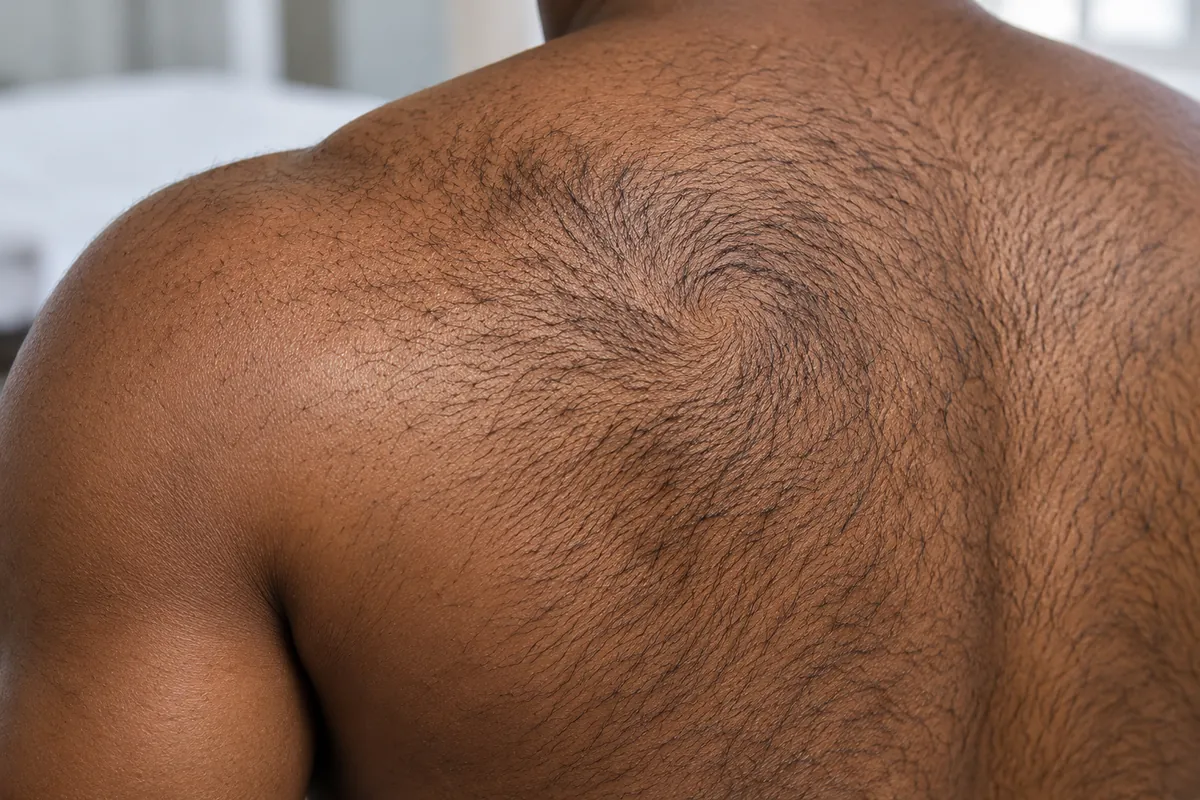
Male chest and back hair is usually coarser, denser and grows in more directions than leg hair, which affects how it is waxed and how it reacts afterward. On the back, hair often grows in swirls or in opposing directions on either side of the spine. On the chest, it usually fans outward from the sternum and changes direction around the nipples and toward the stomach. A good waxer reads these patterns before starting and works with small sections where directions change.
Skin on the back is thick, which is one reason the back is often less painful than men expect. The chest is more sensitive, especially over the sternum and around the nipples, where skin is thinner and closer to bone. The stomach, especially below the navel, is also sensitive for many men. The back of the neck and the tops of the shoulders fall in between.
Because the hair is coarse and dense, it often breaks if technique is off, and broken hairs are a common cause of ingrowns and bumps after a first chest wax. That is why waxers often choose hard wax for coarse patches and the sensitive center of the chest, and soft wax with strips for the broad flat areas of the back. For a full explanation of why, see hard wax vs soft wax. You do not need to choose yourself, but it is reasonable to ask which wax will be used where.
What Happens During a Chest and Back Wax
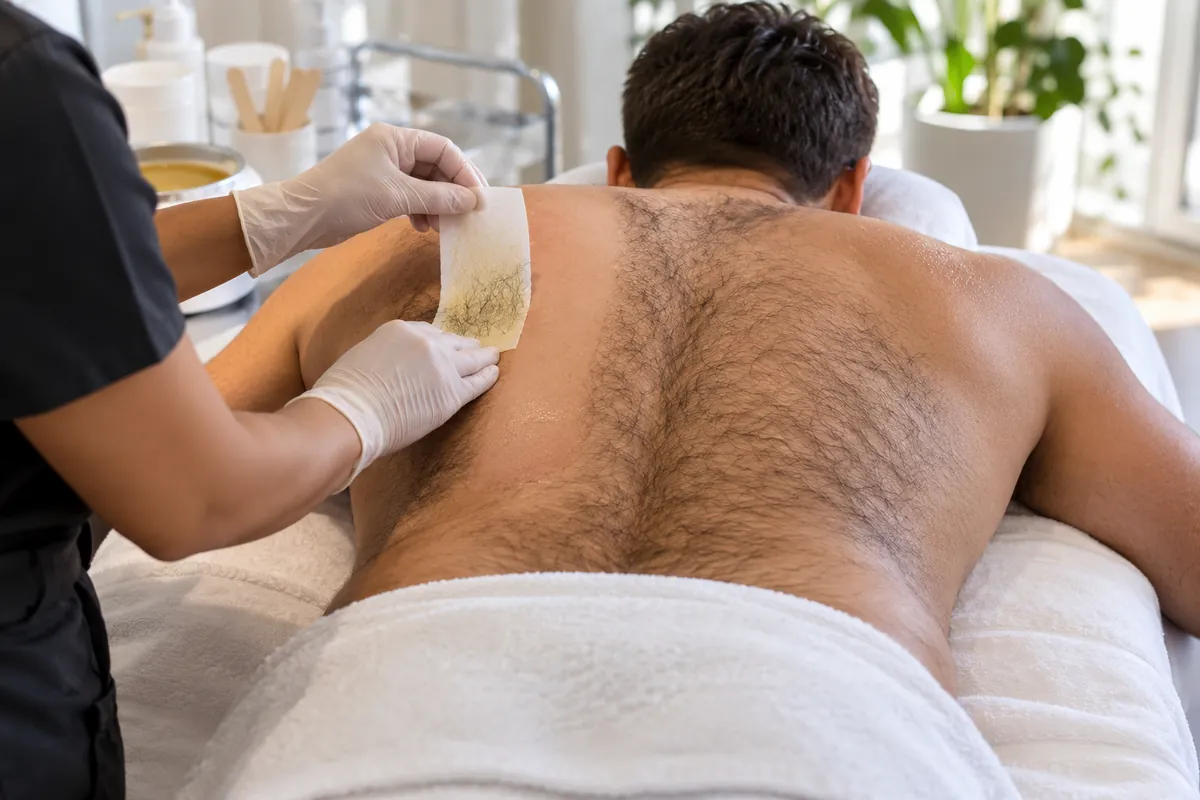
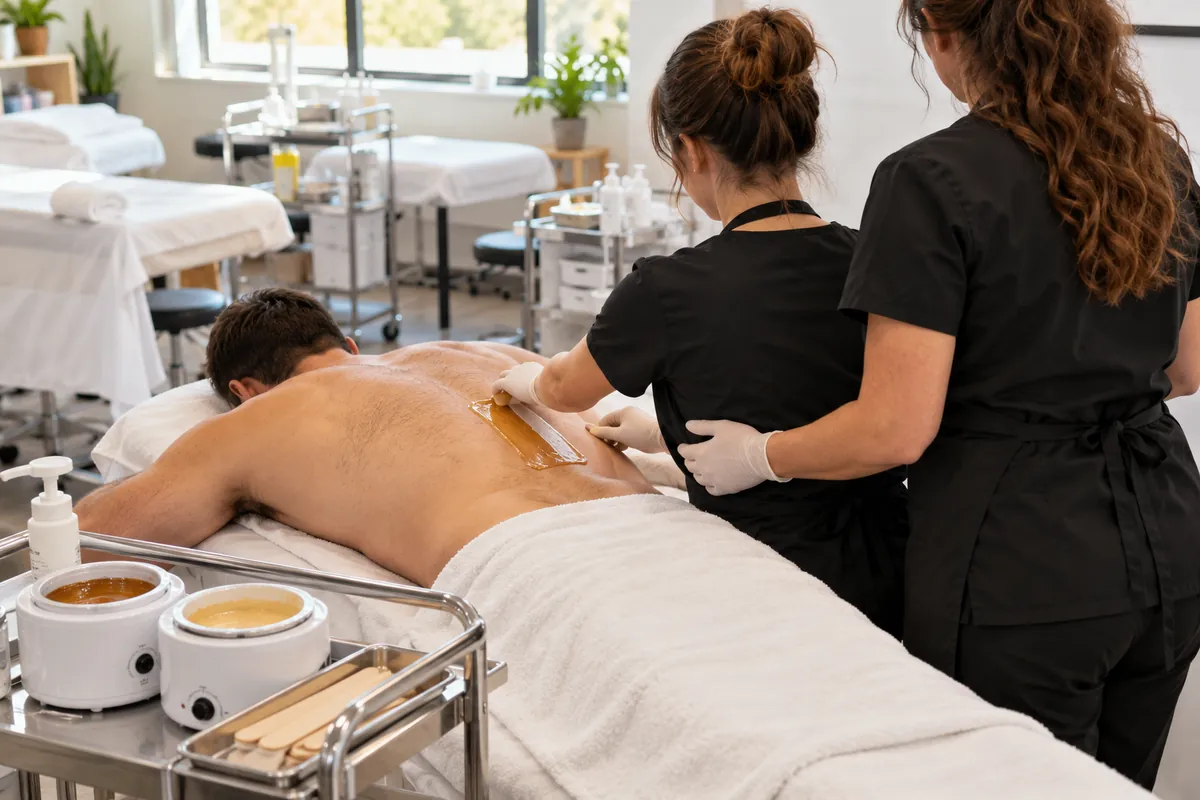
During a chest and back wax, the waxer checks your skin, trims the hair if needed, cleans the area, applies wax in sections following the growth direction, removes it against the direction of growth with firm skin tension, and finishes with a soothing product. You will usually lie on your front for the back and shoulders, then turn over for the chest and stomach. Some waxers prefer to start with the chest, others with the back. Both orders work.
On the back, soft wax strips cover large areas quickly. The waxer may ask you to move your arms forward or let them hang to stretch the skin. On the chest, smaller sections are common, and around the nipples and sternum many waxers switch to hard wax. You may be asked to hold the skin tight with your hand at certain points, especially on the chest and stomach. After each removal, the waxer usually presses a hand flat on the area for a moment, which calms the sting.
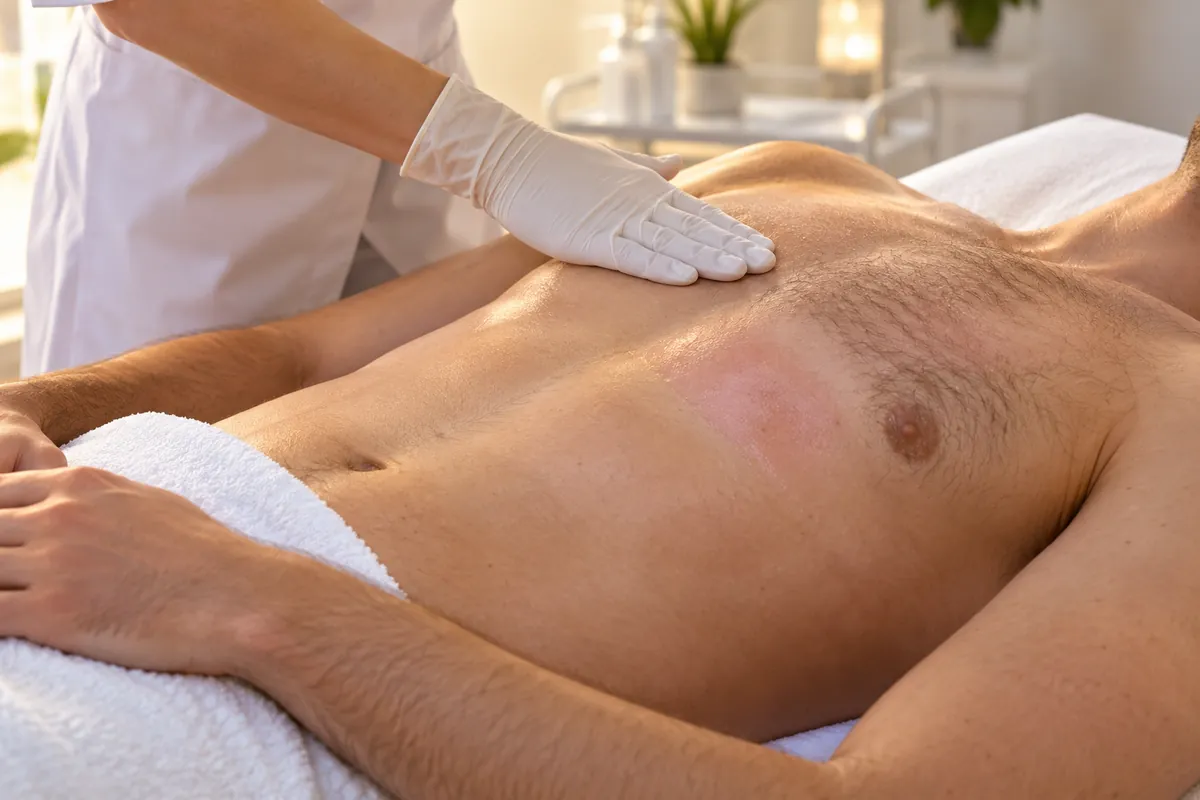
At the end, stray hairs are often removed with tweezers. The waxer then wipes off residue with a post-wax oil and applies a calming product. Expect visible redness and some small raised bumps at the follicles. On men with dense hair, these can look dramatic right after the appointment, especially on the chest. They usually settle within hours, sometimes by the next day. If you need to look your best for an event, do not book your first wax the day before.
A few small spots of blood at individual follicles are also common on a first chest wax, especially where hair is very dense and coarse. They come from strong hairs being pulled from deep follicles and usually stop on their own within minutes. The waxer will clean the area and apply a calming product. This is not a sign that something went wrong, but if bleeding continues or you take blood-thinning medication, tell the waxer before the appointment so they can decide whether waxing is suitable.
Shoulders, Neckline and Stomach: Getting the Edges Right
The edges of a chest or back wax, meaning the shoulders, the back of the neck, the sides of the torso and the line toward the stomach, decide whether the result looks natural or obviously waxed. A back that is smooth up to a sharp line with dense hair on the shoulders looks odd, and so does a smooth chest above a full stomach. Before the service, tell the waxer how you want the edges handled: full removal everywhere, a natural fade, or a clean stop at a specific point.
Many men choose to thin rather than remove completely at the edges. A skilled waxer can leave a softer transition by removing hair more sparingly near the boundary, or by trimming the remaining hair with clippers so the difference is less visible. On the neckline, the back of the neck is usually cleaned up to just below the hairline, but this is a style decision, and some men prefer it done by their barber instead. Say what you want, because the waxer cannot guess.
The stomach deserves its own decision. Some men want a smooth chest and a natural stomach, some want the line of hair below the navel kept, and some want everything removed. The skin below the navel is sensitive for many men, so if you are unsure, leave it for a later appointment. You can always remove more next time.
For the arms, underarms and hands, which some men add once they have waxed the torso, read the general waxing for men guide and, for the underarms specifically, waxing underarms the right way. Those areas need different technique and aftercare, and they are better added gradually than all at once on a first visit.
Pain: What a First Chest and Back Wax Feels Like
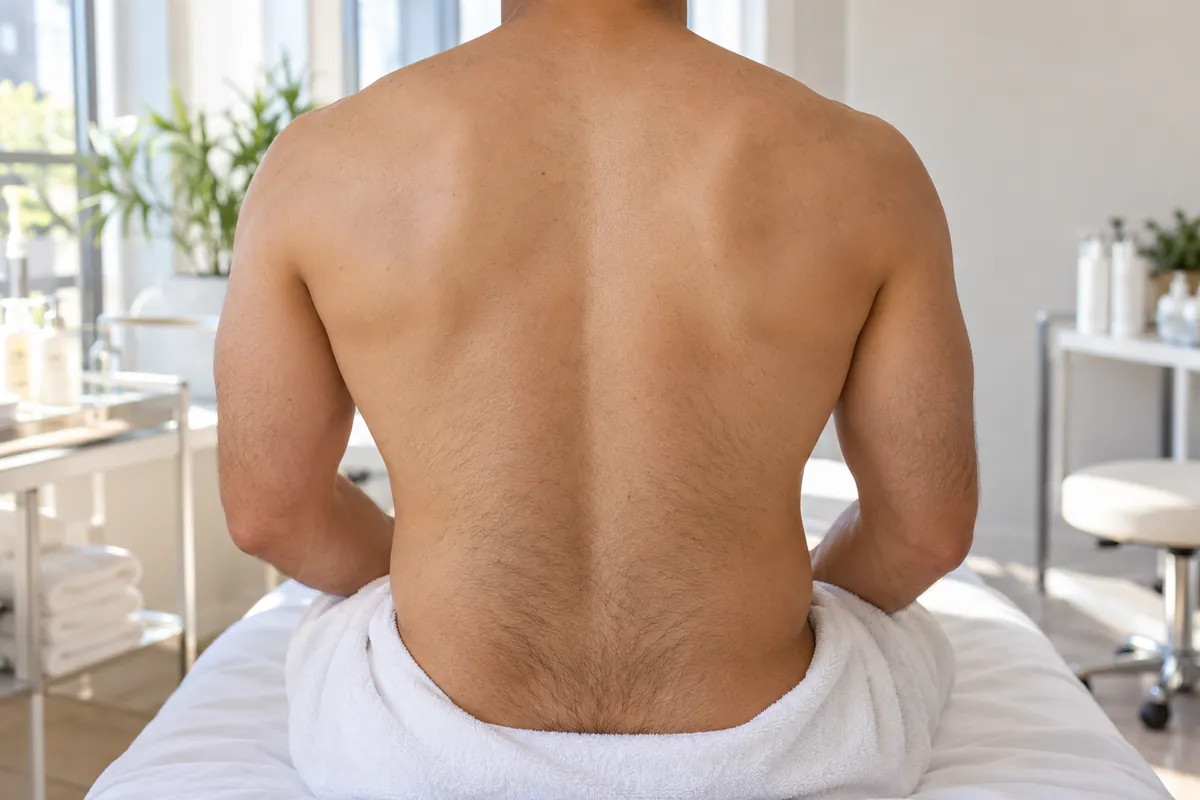
For most men, the back hurts less than expected and the chest, especially the sternum and around the nipples, hurts more, and the first appointment is usually the most uncomfortable. The first wax pulls out hair that has been growing for years, often thick and dense. With regular appointments, many men find the hair comes back finer in places and the sensation becomes easier to tolerate.
The feeling is a quick, sharp sting with each pull, followed by warmth. You can help by breathing out as the strip is pulled, keeping your muscles relaxed rather than braced, and holding skin tight when asked. Tell the waxer if anything is too hot or if you need a break. A professional will slow down or pause without making it awkward. If you feel faint, which occasionally happens with first-time clients, say so immediately so you can lie flat and rest.
Some men take an over-the-counter pain reliever before the appointment. Ask your pharmacist or physician whether that is suitable for you, especially if you take other medications. Do not drink alcohol before waxing to "numb" the pain; it can make you more sensitive and can increase bleeding at the follicles. For more practical tips, see does waxing hurt and how to reduce discomfort.
Aftercare for the First Two Days
For the first day or two after a chest or back wax, avoid heat, sweat, friction, sun and heavy products on the area, because freshly waxed follicles are open and easily irritated. That means no gym, no sauna or steam room, no hot tub, no swimming in pools or the ocean, no tanning and no tight synthetic shirts. A loose cotton T-shirt is best. A cool shower is better than a hot one.
Keep the area clean and dry. If your waxer recommends a calming product, use it. Avoid scented lotions, body sprays and cologne on the waxed area. Do not scratch or pick at bumps. If you have a back you cannot reach, a simple spray-on product or asking someone to help apply it is easier than trying to reach it yourself.
After a couple of days, start gentle exfoliation a few times a week with a mitt, a soft brush or a mild exfoliating product your waxer recommends. On the back this is easier with a long-handled brush. Exfoliation helps prevent ingrown hairs, which are the most common long-term complaint after chest and back waxing. If you work out regularly, read working out after waxing for how to return to training, and see the general waxing aftercare guide for the full routine.
Sleep can matter too. If you sleep in a heavy synthetic shirt or under warm bedding, the back can stay warm and damp overnight, which is exactly what irritated follicles do not need. For the first night, a clean, loose cotton shirt and fresh sheets reduce the chance of bumps the next morning. It sounds minor, but men who follow this small step often report calmer skin than after earlier appointments when they did not.
Ingrown Hairs, Folliculitis and Back Acne
Ingrown hairs and folliculitis are more common on the chest and back of men with coarse, curly hair, and they are best prevented with correct waxing technique, regular gentle exfoliation and loose clothing. An ingrown hair forms when a hair curls back into the skin or grows sideways under it instead of out through the follicle opening. Folliculitis is inflammation of the follicles, sometimes from bacteria, sometimes from friction and sweat. Both look like small red bumps, sometimes with a white head.
Men who already struggle with back acne should be cautious. Waxing over active breakouts is not a good idea, and the heat and friction of a back wax can make acne-prone skin worse for a few days. If you have regular breakouts on your back or chest, see a dermatologist before you start waxing, and ask whether your acne treatment makes waxing unsafe. Some prescription treatments make skin too fragile to wax at all. For more on this, see waxing contraindications.
For ingrown hairs that do appear, avoid picking or digging them out, which can cause infection and dark marks. Keep exfoliating gently and let them work their way out. If they become painful, inflamed or keep returning in the same spots, see a physician or dermatologist. My full guide on ingrown hairs after waxing explains prevention between appointments.

Regrowth and How Often to Book
Chest and back hair grows back gradually over weeks after waxing, and most men settle into a regular booking rhythm once they see how quickly their own hair returns. Hair grows in cycles, so not every follicle is at the same stage. That is why a few hairs appear within days, while most take longer. With consistent appointments, more of the hair tends to be in sync, and results look more even.
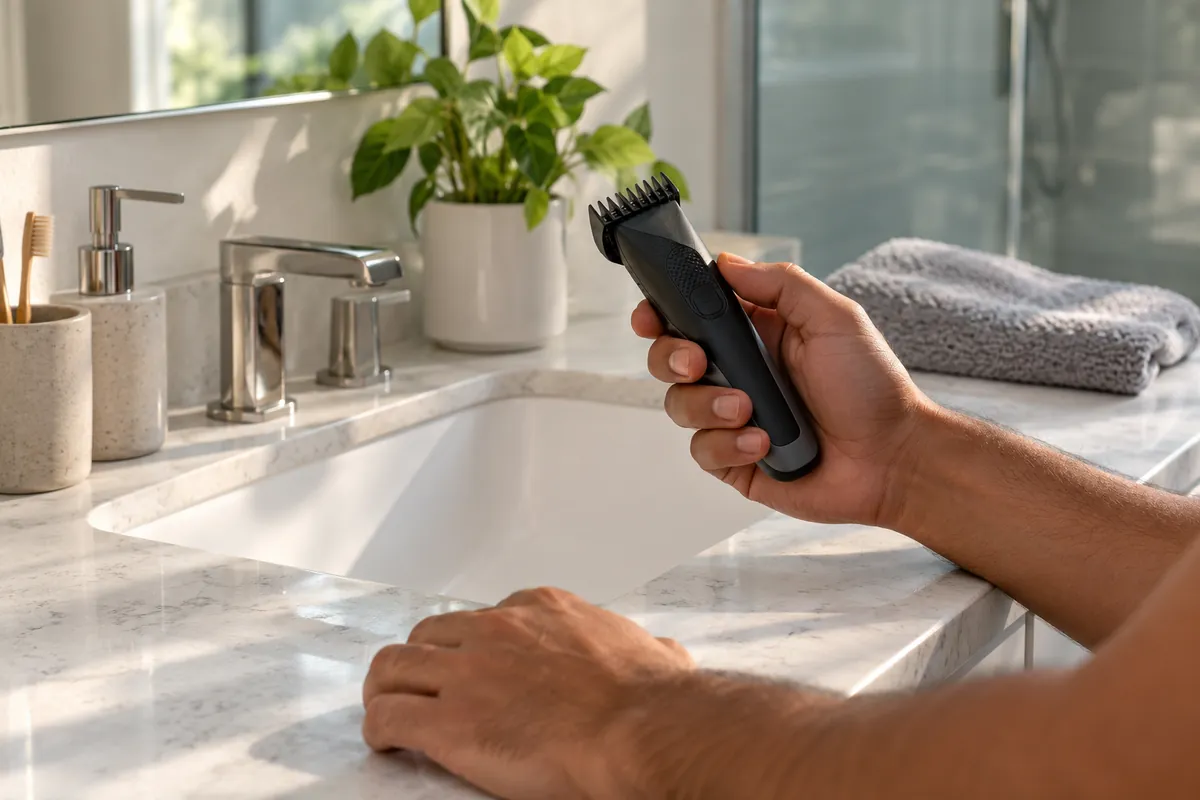
The most important scheduling rule is not to shave between waxes. Shaving cuts some hairs to the surface and leaves others under the skin, so at the next appointment the hair is uneven: some too short to grip, some long. If you need to tidy up between appointments, use a trimmer on a guard rather than a razor. For detailed timing and what affects it, read how long waxing lasts.
Many men wax seasonally, booking from spring through summer and stopping in the colder months. That is fine. Just know that the first wax after a long break will feel more like a first wax again, and plan it a few weeks before you need the result. If you are thinking about something more permanent for the back, which is a large area, read electrolysis for men or laser hair removal for men to see whether those methods fit your hair and skin.
Keep realistic expectations about change over time. Some men notice that regular waxing leaves the hair on parts of the back a little finer or sparser, while others see little change. Waxing is not permanent, and hormones, age and genetics continue to shape how chest and back hair grows. If you see hair spreading to new areas or changing quickly, that is worth mentioning to a physician, because it is usually normal but occasionally reflects a hormonal change.
Choosing a Waxer for Male Chest and Back Waxing
Choose a licensed waxer who regularly works with male clients and can explain their hygiene, wax choice and what their chest and back services include. Many studios welcome men, and some specialize in male waxing. A waxer used to male hair will work faster and more confidently on dense, coarse hair and will expect the redness and bumps that are common after a first chest wax, rather than being alarmed by them.
Ask whether they use a new applicator for every dip into the wax, whether they use both soft and hard wax, and whether the back service includes the shoulders. Watch for clean beds with fresh coverings, gloves and a tidy station. The professional standard is a calm, matter-of-fact service, with clear explanations and respect for your privacy. Who may legally wax, and under which license, varies by state, and you can check your state's rules on the waxing licensing hub.
If you feel uncomfortable at any point, you can stop the service. Professional waxers keep strict boundaries with every client. They explain each step, keep you covered where they are not working, and never comment on your body beyond what is needed for the service. If you want to read how professionals are trained to handle these situations, the waxing for men guide has a section on professionalism and boundaries.
Finally, think about scheduling for male clients. Many men prefer early morning or late evening appointments around work, and many book with an event in mind. Advise first-timers to book a few days ahead of any event, and suggest a follow-up date before they leave so regrowth is at the right length next time. A clear rebooking suggestion is a service to the client, not a sales tactic, because it saves them from shaving in between.

Waxing Your Own Chest or Back at Home
Waxing your own chest at home is possible with care, but waxing your own back is impractical and usually leads to patchy results, bruising or burns, so the back is best done professionally. The chest is visible and reachable, so with good preparation and a gentle approach you can manage it. The back is not, and many men who try with a partner's help end up with broken hair, missed patches and irritated skin because neither person knows how to hold the skin taut or pull at the right angle.
If you try home waxing on the chest, start with a small test area. Test the wax temperature on the inside of your wrist. Apply it thin in the direction of growth, hold the skin tight with your other hand, and pull fast, low and parallel to the skin, against the direction of growth. Never pull upward. Never wax the same patch twice in a row with strip wax. Stop if the skin looks shiny, raw or lifted. Microwave waxes are the most common cause of home burns, so heat carefully and stir before testing.
Many men find that a professional first wax, followed by home maintenance with a trimmer, is the most comfortable plan. Others find that once they see a professional chest and back wax, they never want to try it alone again. For comparing waxing with shaving, read waxing vs shaving.
If you share a home wax kit with a partner, never reuse wax that has touched skin, and do not share spatulas or strips. Hygiene rules that apply in a studio make sense at home too. Keep the kit clean, store it covered and throw away anything that has been in contact with skin.
For Waxers: Working on Male Chests and Backs
For practitioners, chest and back waxing on men rewards an efficient sequence, wide strips, strong skin tension and a calm, clear way of explaining each step. Broad flat areas such as the back suit soft wax applied thin, with strips laid in a pattern that follows changing growth directions. Coarse patches, the sternum and the area around the nipples suit hard wax. Long hair should be trimmed first to reduce pain and breakage. Ask the client to help with skin tension on the chest and stomach when needed.
Male first-time clients are often more nervous than they let on and less likely to ask questions. Explain what you will do before you start, warn them before each sensitive area and offer pauses. Give clear aftercare instructions, especially about the gym and heat, because many men plan a workout immediately after. These skills, along with sanitation and contraindication screening, are part of what a structured waxing course teaches. Theory builds understanding, but your state's license and supervised hands-on practice come first, so check the waxing licensing hub for what applies in your state.
Keep a short record of each client: hair density, which wax worked best on which area, any reactions, and the interval between visits. On male backs in particular, growth patterns are individual, and your notes from the first visit will save time on every visit after. Clients notice when their waxer remembers how they like the service done.
Your Next Step
If you are a man planning your first chest or back wax, start by checking your hair length, then choose a licensed studio that works with men, confirm whether the shoulders and stomach are included, and book a few days before any event. Arrive with clean skin and a loose shirt, tell the waxer about your skin and medications, and plan a quiet day without the gym or sauna. After a couple of days, start gentle exfoliation and keep up a regular schedule. If you would like to learn to provide this service, start with the waxing course and check your state's requirements on the waxing licensing hub.
After the first appointment, pay attention to three things: how long the redness lasted, whether any bumps or ingrowns appeared in specific spots, and when regrowth started to bother you. Share those with your waxer at the next visit. They are the details that let a professional adjust wax choice, technique and timing, and they turn a good first chest and back wax into an easy routine.
State Requirements
State licensing guides
Hours, exams, fees, and the licensing board differ by state. Open your state for the current requirements.
Common Questions
FAQ
Let the hair grow to about a quarter inch or trim it if much longer, avoid sun and strong exfoliants for a few days, skip caffeine and alcohol before the appointment, and do not plan the gym or sauna that day. Arrive with clean, dry skin and a loose cotton shirt. Tell the waxer about medications and skin conditions. Book a few days before any event in case of redness.
Most men find the back less painful than expected, because the skin is thicker there. The chest, especially the sternum and around the nipples, is usually more sensitive. The first appointment is the most uncomfortable, and many men find later visits easier. Breathing out with each pull and relaxing your muscles helps. See how to reduce waxing discomfort.
Many waxers want hair around a quarter inch long, roughly the length of a grain of rice. Hair that is too short slips out of the wax, and hair that is much longer can tangle and break. If your chest hair is long, trim it with clippers the day before or ask the waxer to trim it. Do not shave in the weeks before.
It is best to wait at least a day. Sweat, heat and friction on freshly waxed follicles increase the risk of irritation, bumps and folliculitis. When you return, wear loose, clean clothing and shower soon after training. Read working out after waxing for details.
Not always. Some studios include the shoulders in a back wax, and others list them as a separate add-on. The back of the neck is also often separate. Ask when you book, and if you want an even result, consider a full torso service or ask the waxer to blend the edges.
Wear loose clothing for a few days, avoid heat and sweat on the first day, and start gentle exfoliation a couple of days after the wax, repeated a few times a week. Do not pick at bumps. If ingrowns become painful or keep returning, see a dermatologist. My guide on ingrown hairs after waxing covers prevention.
Waxing is usually the better choice for the back, because shaving your own back is nearly impossible and stubble returns quickly. Waxing removes hair from the root, so results last longer and regrowth is softer. If you want a permanent result, ask about electrolysis for men, keeping in mind that the back is a large area to treat.
Book your first chest or back wax several days before a vacation, and ideally a few weeks earlier with a second wax closer to the trip. First appointments are the most likely to cause redness and bumps, and you will want the skin settled before sun and swimming. Read waxing before a vacation for timing around travel.
Keep Reading
Related Guides


