Waxing
Ingrown Hairs After Waxing: Causes, Prevention, and Treatment

Quick answer
Ingrown hairs after waxing form when a regrowing hair is trapped under dead skin or curls back into the skin. They usually appear a week or more after the appointment. Gentle exfoliation two or three times a week, daily moisturizing, loose clothing, and no picking prevent most of them. Painful, spreading, or recurring bumps need a physician.
Ingrown hairs after waxing are the complaint I hear most often from people who otherwise love the result. The skin is smooth for the first week or two, then small bumps appear along the bikini line, on the thighs, under the arms, or across the back, and some of them turn red, itchy, or sore. Many clients assume the wax was bad, the waxer was careless, or their skin simply cannot tolerate waxing. Sometimes technique is part of the story, but more often the cause is a combination of hair type, dry skin sitting over the follicle, friction from clothing, and what happens at home in the weeks between appointments. After more than twenty years as a licensed cosmetologist and electrologist, I can say that most cases improve noticeably once the client understands the mechanism and changes two or three habits.
This guide explains what an ingrown hair is, why waxing can trigger it, and how to tell a true ingrown hair from the ordinary bumps that show up right after an appointment. It then covers prevention step by step: preparation before the wax, care in the first days, exfoliation and moisturizing between visits, and clothing choices. You will also find a safe way to handle an ingrown hair that has already formed, signs that mean a physician should look at it, and a section for waxing professionals on technique and scope of practice. The information here is general education, not a diagnosis. Skin that is painful, spreading, or not healing needs a medical opinion.
What an Ingrown Hair Actually Is
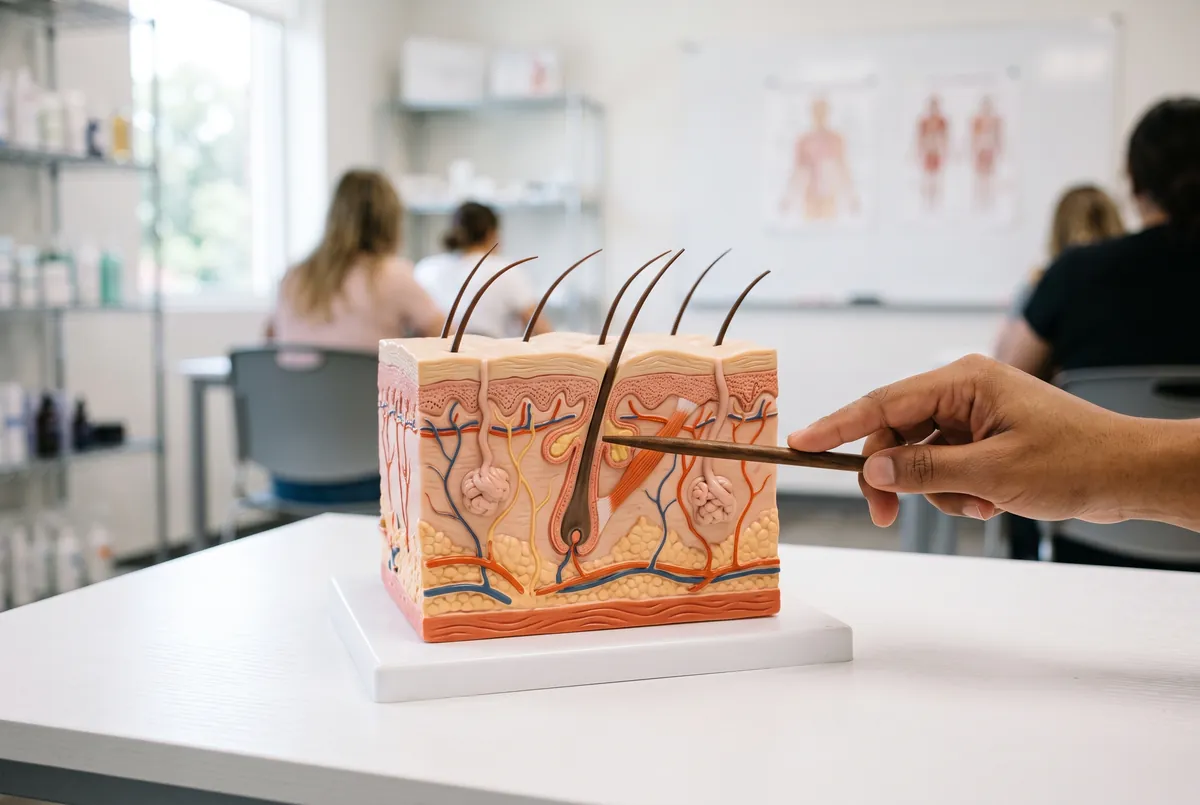
A hair grows from the base of the follicle, travels up a narrow channel, and exits through a small opening at the surface of the skin. An ingrown hair is a hair that fails to complete that trip in a straight line. There are two common versions. In the first, the hair never leaves the follicle: the opening is covered by a layer of dead skin cells, the growing hair cannot push through, and it curls or folds sideways under the surface. In the second, the hair exits normally, then curves back and re-enters the skin a short distance away. Hair with a natural curl does this more easily, which is why some people deal with ingrown hairs for years while others never see one.
The body treats a trapped hair like a splinter. The area around it becomes inflamed, and a small raised bump forms. Sometimes you can see the hair as a dark line or a small loop under a thin layer of skin. Sometimes the bump fills with fluid and looks like a pimple. On deeper skin tones the inflammation often leaves a dark mark that lasts much longer than the bump itself. None of this means the skin is dirty. Ingrown hairs are a mechanical problem first: a hair, a blocked or narrow exit, and the direction of growth. Infection can follow if bacteria get into the irritated follicle, which is the reason picking and digging make things worse.
The clinical name you may see for the curved, re-entering type is pseudofolliculitis. It is best known from the beard area in men who shave, but the same process happens on the bikini line, underarms, legs, and anywhere hair is coarse or curly. Understanding which of the two versions you tend to get helps with prevention. Hairs trapped under a layer of dead skin respond well to regular exfoliation and moisturizing. Hairs that exit and curl back in are driven more by hair shape and friction, so clothing choices and the removal method itself carry more weight.
Why Waxing Can Lead to Ingrown Hairs
Waxing removes the hair from below the surface, ideally with the root. The follicle is then empty for a while, and the opening at the surface can narrow or be covered over by normal skin shedding before the new hair arrives. The replacement hair starts from the base of the follicle with a fine, soft tip. A fine tip is good for how regrowth feels, but it is also weaker than the blunt end of a shaved hair, so it has a harder time breaking through a layer of dry, compacted skin. If the surface is not kept soft and clear during those weeks, the new hair meets a closed door and turns sideways.
Hair breakage is the second route. When wax is removed at the wrong angle, when the skin is not held taut, or when hair is too short or too brittle for the wax to grip properly, the hair can snap at or just below the surface instead of sliding out whole. A broken hair leaves a sharp end sitting inside the follicle. It continues to grow from that point, often at a slightly changed angle, and it is much more likely to pierce the follicle wall or catch under the skin. Clients usually notice this as bumps that appear within days of the appointment along with stubble that returns far too early.
Friction is the third factor, and it has nothing to do with the appointment itself. Tight waistbands, elastic leg openings, synthetic leggings, and seams press the regrowing hair flat against the skin and rub the surface all day. A soft new hair that is being pushed sideways for hours has every reason to grow along the skin instead of away from it. This is why ingrown hairs cluster in such predictable places: the crease of the bikini line, the inner thigh, the underarm fold, the back of the thigh where you sit, and the neckline under a collar.
Bumps After Waxing vs True Ingrown Hairs
Not every bump after a wax is an ingrown hair, and treating them all the same way leads to frustration. Timing is the simplest clue. Redness and small raised dots that appear within minutes or hours of the appointment are a reaction of the follicles to having the hair pulled out. The skin looks a little like plucked chicken skin, it may feel warm, and it normally calms down on its own over the first day or two. This is common on a first wax, on areas with dense coarse hair, and on sensitive skin. There is no hair trapped under the surface yet, because the new hair has not started growing.
Small pimple-like bumps, sometimes with a white head, that show up in the first few days point toward irritated or inflamed follicles, which is called folliculitis. Freshly emptied follicles are open and easy to irritate, and heat, sweat, friction, heavy products, or touching the area with unwashed hands can all set it off. Mild cases settle with gentle cleansing, loose clothing, and patience. True ingrown hairs arrive later. They appear when regrowth begins, usually a week or more after the appointment, and they tend to be scattered individual bumps where you can sometimes see or feel a hair under the skin.
| What you see | When it appears | Likely cause | What usually helps |
|---|---|---|---|
| Even redness and tiny raised dots across the waxed area | Minutes to hours after the wax | Normal follicle reaction to hair removal | Cool compress, soothing fragrance-free gel, loose clothing, time |
| Small pimple-like bumps, some with white heads | First few days | Irritated or inflamed follicles (folliculitis) | Gentle cleansing, no heat or sweat, no picking, physician if spreading or painful |
| Scattered single bumps with a visible hair or dark line under the skin | A week or more later, as hair regrows | True ingrown hairs | Warm compress, regular exfoliation, moisturizing, less friction |
| Itchy raised welts or a rash that follows the shape of the waxed area | Soon after the wax | Sensitivity to a wax ingredient or aftercare product | Stop the product, tell your waxer, see a physician if it is severe |
| Flat dark spots where bumps used to be | After bumps heal | Marks left by inflammation | Sun protection, no picking, dermatologist for stubborn marks |
Who Is Most Prone to Ingrown Hairs
Hair shape matters more than anything else. Curly, coiled, and coarse hair bends as it grows, so it is far more likely to curve back toward the skin or to grow sideways inside the follicle. Clients with tightly curled body hair, including many clients with Black, Latina, Middle Eastern, and South Asian heritage, often tell me they have fought ingrown hairs since their first shave. Fine, straight hair can still become trapped under dry skin, but it rarely re-enters the skin after exiting. If curly, coarse hair runs in your family, plan on a consistent prevention routine from the first appointment instead of waiting for bumps to appear.
Skin condition is the second factor. Dry skin that sheds slowly builds a compact layer over the follicle openings. Skin with a tendency to rough, bumpy texture on the upper arms and thighs has the same problem for a different reason: the follicle openings are already partly plugged. Very oily skin on the back and chest creates another version, where oil and dead cells block the opening together. Hormonal changes that make hair coarser, such as those linked to PCOS, often increase ingrown hairs on the chin, neck, and bikini line as well.
Habits fill in the rest of the picture. People who shave between waxing appointments cut the hair at an angle, create sharp tips, and throw the growth cycle out of step, so the next wax grips some hairs and breaks others. People who wear compression leggings or tight denim every day keep constant pressure on the regrowth. People who sit for long hours, cycle, or ride horses see ingrown hairs on the backs of the thighs and along the seat line. None of these habits is wrong. Knowing which ones apply to you simply tells you where to focus your effort.
How Technique and Wax Choice Affect Ingrown Hairs
A professional cannot change a client's hair type, but several things at the table are fully under the waxer's control. The first is hair length. Hair that is too short does not sit deep enough in the wax to be pulled out whole, so it snaps. Hair that is very long tangles, pulls unevenly, and also breaks. The practical target most professionals use is about the length of a grain of rice. When a client arrives with hair that is too short, the honest choice is to reschedule or wax only the areas that are ready, because forcing the service produces breakage and bumps that the client will blame on waxing itself.
Direction and skin support come next. Wax is applied in the direction of hair growth and removed against it, close and parallel to the skin, never lifted upward. The free hand holds the skin taut so the follicle stays straight while the hair slides out. Hair on the bikini line, underarms, and knees grows in several directions within a small area, so these zones are worked in small sections that each follow the local growth pattern. A waxer who rushes large patches across mixed growth directions will break a share of the hairs every time. If you are learning the craft, our guide to underarm waxing technique shows how sectioning works in practice.
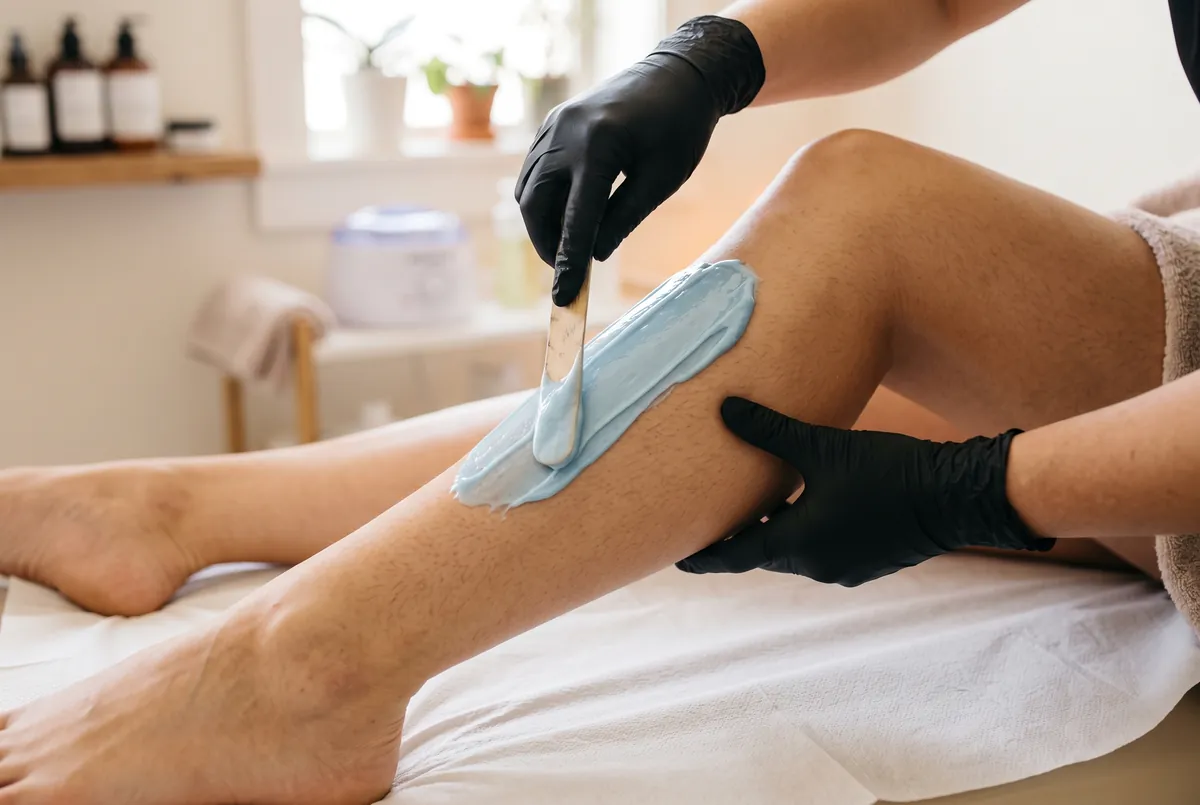
Wax choice matters on coarse hair and delicate skin. Hard wax shrinks around the hair as it sets and grips the hair more than the skin, which tends to give a cleaner pull on thick bikini, underarm, and facial hair. Soft strip wax is efficient on large areas with finer hair, such as legs and arms, but it adheres to the surface of the skin as well, so going over the same spot repeatedly irritates the follicles. Temperature and thickness count too: wax that is too cool or applied too thin becomes brittle and breaks hairs on removal. A detailed comparison is in our guide to the types of wax used for hair removal.
Hygiene is the last piece. Skin is cleansed before waxing so that oil, sweat, and product residue do not sit in open follicles afterward. Spatulas are not dipped back into the pot after touching skin. Gloves are worn and changed between clients. After the service, a light soothing product is applied and heavy, occlusive oils are kept to a minimum on areas that tend to break out. None of these steps is unusual. They are the baseline that state board sanitation rules are built around, and they are also the reason a professional wax typically causes fewer follicle problems than a rushed home attempt with a microwave kit.
Preparation Before Your Appointment
Prevention starts several days before you lie down on the table. Stop shaving and let the hair reach a length the wax can grip. If you are switching from shaving to waxing, the first appointment or two will be less tidy than later ones, because shaved hairs are at different points in their growth cycle and some will be too short on the day. Stay with the schedule your waxer recommends and avoid shaving in between. After a few cycles the hair grows in more evenly, and the number of broken hairs and early bumps usually drops. Our guide on how long waxing results last explains the cycle in more detail.
Exfoliate gently a day or two before the appointment, not on the same day. The goal is to lift hairs that are lying flat and to remove loose dead skin so the wax grips the hair cleanly. Scrubbing hard right before a wax leaves the skin sensitized and more likely to react. Moisturize daily in the week before, because supple skin releases hair more easily than dry, tight skin, then skip lotion and body oil on the day itself so the wax can adhere. Arrive with clean skin. A quick shower beforehand is ideal, particularly before underarm, bikini, or back waxing.
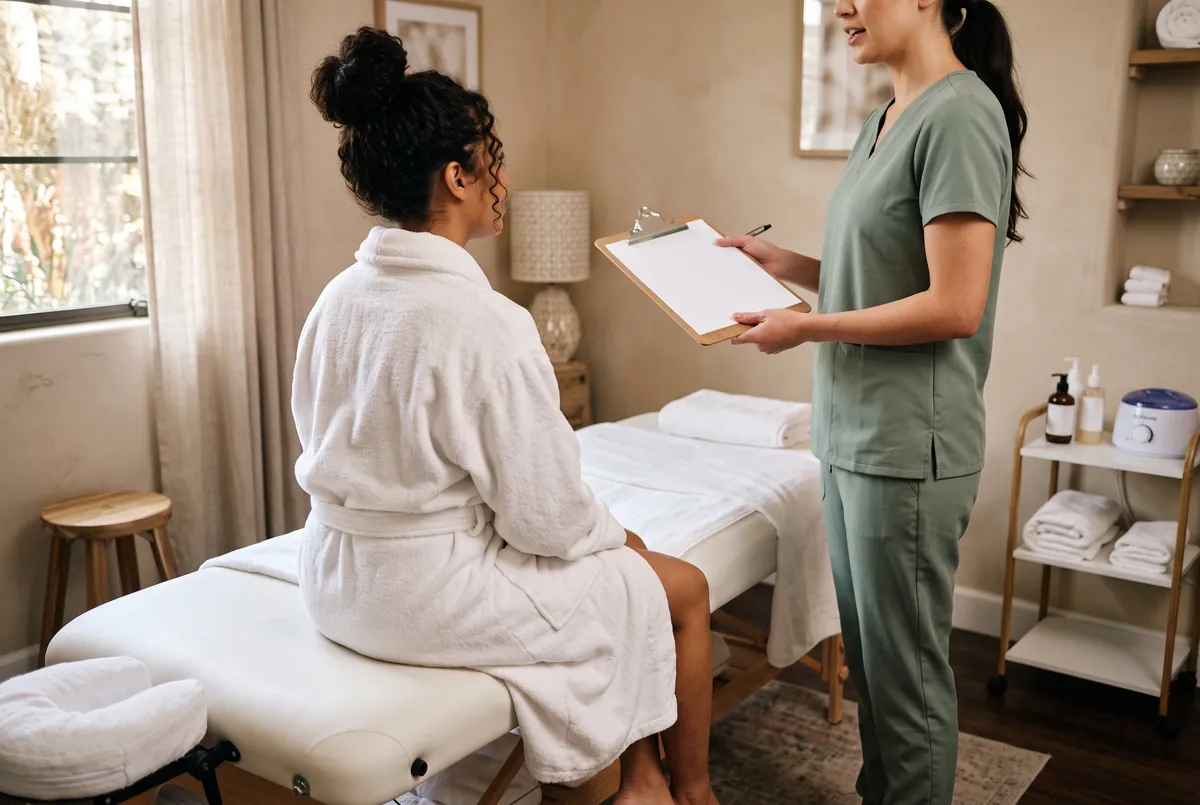
Tell your waxer about your skin and your medications before the service starts. Prescription retinoids, strong exfoliating acids, some acne treatments, recent sunburn, and recent peels can thin or sensitize the skin, and waxing over them can lift the surface layer. A professional will ask about these on an intake form, and the right answer may be to wait or to choose a different method. Also mention any history of ingrown hairs, dark marks after bumps, or keloid scarring. That history changes which wax is chosen, how many passes are made, and what the aftercare plan looks like.

The First Days After Waxing
For roughly the first day or two the follicles are open and the skin is more reactive than usual. The aim in this window is simple: keep the area cool, clean, dry, and free of friction. Skip hot baths, saunas, steam rooms, and hot tubs. Skip intense workouts, because sweat and rubbing fabric on freshly waxed skin are a reliable recipe for inflamed follicles. Avoid swimming pools and the ocean. Avoid sunbathing and tanning beds on the waxed area. Wear loose, breathable clothing. Wash with lukewarm water and a mild, fragrance-free cleanser, and pat dry with a clean towel instead of rubbing.
Keep your hands off the area. Touching freshly waxed skin to feel how smooth it is transfers oil and bacteria straight to open follicles. Hold off on deodorant with heavy fragrance immediately after an underarm wax if your skin is reactive, and avoid perfumed lotions, self-tanner, and thick body butters on the waxed area for the first day. A light, fragrance-free soothing gel or lotion is enough. Do not exfoliate yet. The skin has just lost a thin layer of surface cells along with the hair, and scrubbing it at this stage delays recovery.
If the area feels hot or looks red, a cool compress helps: a clean cloth dampened with cool water, laid on the skin for a few minutes. Do not apply ice directly. Redness that fades steadily over the first day or two is expected. Redness that spreads, skin that becomes increasingly painful, or bumps that fill with pus across a wide area are not part of normal recovery and should be seen by a physician. Let your waxer know as well. A good professional wants to hear about reactions, because the information guides the choice of wax and aftercare next time.

Exfoliation Between Appointments
Once the skin has settled, usually after the first couple of days, regular exfoliation becomes the most useful habit for preventing ingrown hairs. Its job is to keep the layer of dead cells over the follicle openings thin and loose, so that the fine tip of the new hair can pass through. Two or three times a week is a common rhythm. Daily scrubbing is too much for most skin and creates irritation that looks a lot like the problem you are trying to prevent. Start gently, watch how the skin responds over a couple of weeks, and adjust. The right amount is the least that keeps the surface smooth.
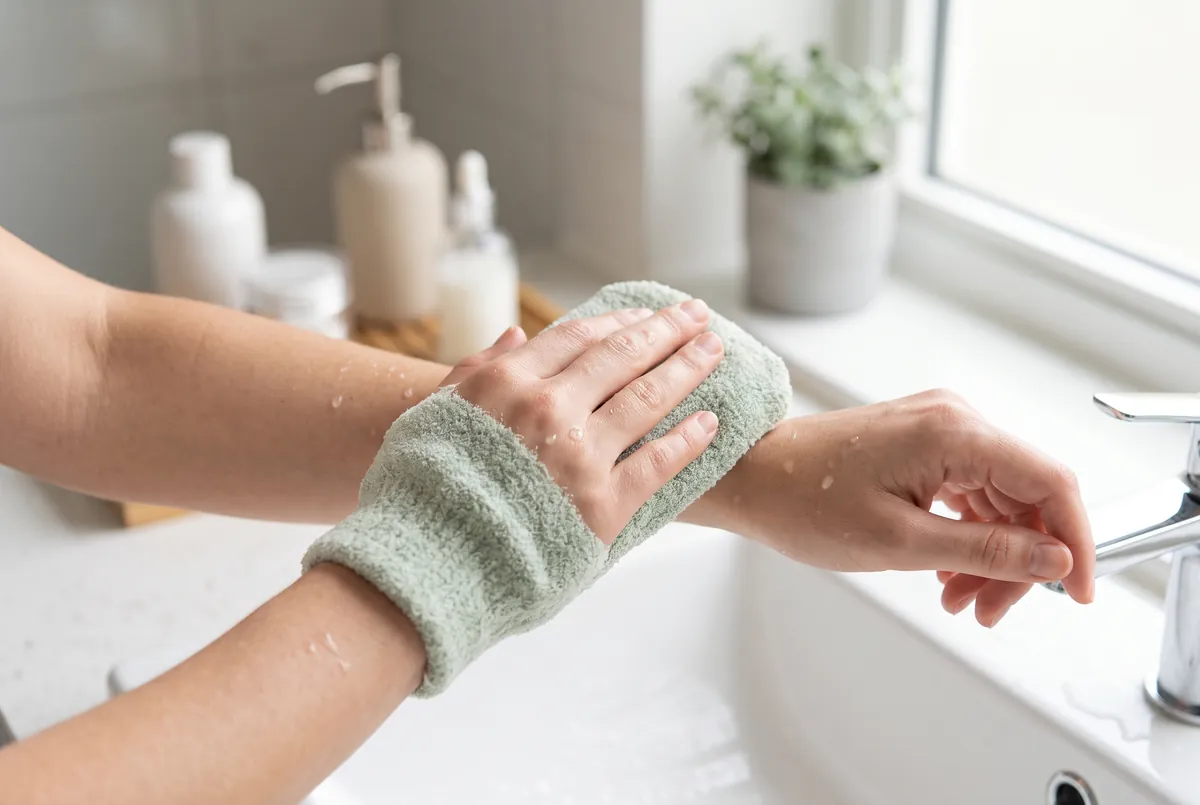
There are two approaches. Physical exfoliation uses texture: a soft mitt, a washcloth, a dry brush, or a fine-grained scrub. It works well on legs, arms, and the back, where skin is thicker. Use light pressure and small circular movements, and avoid scrubs with large, sharp particles that scratch. Chemical exfoliation uses ingredients that loosen the bonds between dead cells. Salicylic acid is oil soluble and works inside the follicle opening, which makes it a popular choice for ingrown-prone areas. Glycolic and lactic acid work on the surface and also help with dry, rough texture. These come as pads, lotions, serums, and body washes.
For the bikini line and underarms, I usually suggest a mild chemical exfoliant over a scrub, because the skin there is thin and folds on itself, and rubbing it adds to the friction problem. Apply it to clean, dry skin on the outer area only, never on mucous membranes. Expect a brief tingle. Burning, stinging that lasts, or peeling means the product is too strong or used too often. Do not layer several acid products together, and be careful about combining them with prescription skin treatments without asking your prescriber. Any area treated with exfoliating acids needs sun protection if it will be exposed.
Stop exfoliating a day or two before your next wax so the skin is calm on the day. People with eczema, psoriasis, very reactive skin, or a history of dark marks after irritation should introduce any exfoliant slowly and may do better with a soft washcloth and a good moisturizer alone. Products sold specifically as ingrown hair treatments are, for the most part, exfoliating acids combined with soothing ingredients. They can be useful, but they are not magic. Used on skin that stays dry and under tight clothing all day, they will not solve the problem on their own.
Moisturizing, Clothing, and Friction
Exfoliation without moisturizing is half a routine. Dry skin is stiff, and a stiff surface is harder for a fine hair to push through. A daily moisturizer keeps the outer layer flexible, so the hair can emerge and the dead cells shed in an orderly way. Choose a light, fragrance-free lotion that absorbs fully. On areas that tend to break out, such as the back, chest, and bikini line, avoid heavy butters and thick oils that sit on the surface and plug follicle openings. Apply after showering while the skin is still slightly damp. This single habit, done every day, often makes more difference than any specialty product.
Clothing is the factor clients underestimate. For the first few days after a wax and again in the second and third weeks, when regrowth is pushing through, give the area room. Cotton underwear with a soft leg opening causes less trouble than lace or tight elastic that sits exactly on the bikini crease. Loose trousers or skirts are easier on the thighs than compression leggings worn all day. If you train in tight synthetic gear, change out of it and shower soon after the workout instead of sitting in damp fabric. For men who wax the back or chest, a loose cotton shirt for the first days helps.
Consistency of the waxing schedule itself also reduces friction on the hair cycle. When appointments are spaced regularly, more hairs are in the same growth phase, they come out whole, and regrowth becomes finer and sparser over time for many people. Long gaps, shaving in between, and tweezing stray hairs all disturb that pattern. Tweezing deserves a special mention: pulling single hairs often breaks them below the surface, and a tweezed hair on the bikini line or chin is one of the most common starting points for a stubborn ingrown hair. If strays bother you, ask your waxer about a quick tidy visit.
How to Treat an Ingrown Hair That Has Already Formed
The safest treatment for a single ingrown hair is patient, gentle encouragement. Most will release on their own once the skin over them softens. The mistake that turns a small bump into a scar is digging: squeezing with fingernails, opening the skin with a needle or pointed tweezers, or scrubbing the spot raw. Each of these damages the follicle, pushes bacteria deeper, and greatly increases the chance of a dark mark afterward. If you remember one thing from this section, let it be that the bump is temporary and the mark from picking can last for months.
- Stop hair removal on that spot. No waxing, shaving, or tweezing over an inflamed ingrown hair until it has calmed.
- Apply a warm compress. Hold a clean washcloth soaked in comfortably warm water on the bump for several minutes, once or twice a day, to soften the skin over the hair.
- Exfoliate gently around it. A soft washcloth in small circles or a mild salicylic acid product helps loosen the layer covering the hair. Skip this step if the bump is open, very sore, or filled with pus.
- Moisturize with a light, fragrance-free lotion so the surface stays flexible.
- Release only a visible loop. If the hair has surfaced and you can see a loop sitting above the skin, you may lift the free end with clean, sterilized tweezers. Do not pull the hair out and do not break the skin to reach it.
- Keep friction off the area with loose clothing until the bump has flattened.
- Leave it alone if nothing is visible. A hair that is still under the skin is not ready, and forcing it causes more harm than waiting.
Lifting the loop without removing the hair may seem odd, but there is a reason. If you pull the hair out completely, the follicle has to start again from the base, and the next hair faces the same closed surface. If you simply free the tip and let the hair keep growing, it can be removed properly at your next wax, and the follicle opening stays clear in the meantime. Over-the-counter products can help with comfort and inflammation, and a pharmacist can advise on what is appropriate for the area. Do not put strong acids, alcohol, or toothpaste on an inflamed bump. Home remedies that sting are irritating the skin, not healing it.

Dark Marks and Scars From Ingrown Hairs
For many clients the bump is not the real problem. The flat brown or purplish mark that remains afterward is. Inflammation signals pigment-producing cells to make more pigment, and the darker the natural skin tone, the more readily this happens. These marks are not scars in the true sense and they do fade, but slowly, and every new ingrown hair in the same spot resets the clock. This is why prevention matters so much more than treatment on the bikini line and underarms, where marks build up over years of shaving, tweezing, and picking.
The helpful steps are unglamorous. Do not pick. Reduce friction. Keep up gentle exfoliation and daily moisturizing once the bump has healed. Protect exposed areas from the sun, because ultraviolet light deepens existing marks. Brightening body products exist, but skin in folds is delicate, and strong lightening agents used without guidance can irritate and make discoloration worse. If marks are widespread or do not fade, a dermatologist can assess them and discuss options that are appropriate for your skin tone. Raised, firm scars or keloids are a separate issue and should always be evaluated medically before any further hair removal in that area.
When to See a Physician or Dermatologist
Most ingrown hairs are a nuisance and resolve with the home care described above. Some situations need a medical opinion. See a physician if a bump becomes large, hot, very painful, or keeps growing, since this can indicate a deeper infection or a cyst that will not clear on its own. See one if redness spreads outward from the bump, if there is significant pus, if you develop a fever, or if red streaks appear near the area. People with diabetes, conditions that weaken the immune system, or circulation problems should have a lower threshold for getting skin infections checked.
A medical visit also makes sense for patterns, not only emergencies. Bumps that return in exactly the same place again and again, clusters of painful lumps in the groin or underarm folds, and ingrown hairs that keep appearing despite a careful routine all deserve a proper diagnosis. Several skin conditions look like ordinary ingrown hairs at first glance, and a waxer or esthetician is not qualified to tell them apart. A sudden increase in coarse hair growth on the face or body is another reason to talk to a physician, because the underlying cause may be hormonal and treatable.
Notes for Waxing Professionals
If you perform waxing for a living, ingrown hairs are a client retention issue as much as a skin issue. A client who gets bumps and hears no explanation assumes waxing is not for them and returns to the razor. Build the conversation into every first appointment. Ask about hair type, shaving and tweezing habits, past ingrown hairs, dark marks, medications, and typical clothing. Explain in two or three sentences why ingrown hairs happen and what the client can do. Then give the instructions in writing, because nobody remembers verbal aftercare once they have left the room. A short printed or emailed sheet covering the first two days and the exfoliation routine is enough.
Audit your own technique honestly when a client reports early stubble or bumps within days. Check whether the hair was long enough, whether the wax was at working temperature, whether you sectioned according to growth direction, whether your removal stayed parallel to the skin, and how many passes you made over the same spot. Inspect the strip or the hard wax after removal: hairs with a visible bulb came out whole, while blunt ends suggest breakage. For coarse, curly hair on the bikini line, slower work in smaller sections with hard wax nearly always produces a better result than speed.
Know where your scope of practice ends. Whether an esthetician, cosmetologist, or waxing specialist may extract an ingrown hair, and with what tools, depends on the state. Many boards restrict anything that pierces or cuts the skin. Diagnosing skin conditions and recommending prescription treatment are outside the scope of a beauty license everywhere. The safe professional position is to free only hairs that are already at the surface if your state allows it, to refuse to wax over infected skin, and to refer anything painful, cystic, or recurring to a physician. Waxing for pay requires the appropriate license in most states, and the requirements differ, so check the waxing licensing rules for your state.
Training shapes how well you handle all of this. Skin and hair anatomy, growth cycles, contraindications, sanitation, and client consultation are the theory behind every decision at the table, and they are worth studying properly. An online program such as our waxing course can build that theory and help you prepare, but it does not replace the in-person training hours your state requires or the license itself. Use online study to understand the why, then practice the hands-on skills under supervision in an approved program. If you are still choosing a path, read how to become a waxing specialist for an overview of the route.
When Waxing Is Not the Right Method for You
Some clients do everything right and still get ingrown hairs in one stubborn zone. In my practice this is most often the bikini line, the chin and neck, or the underarms on people with very coarse, curly hair. If a careful routine over several waxing cycles has not helped, it is reasonable to change the method for that area instead of continuing to fight it. Sugaring is one alternative some clients tolerate better, since the paste is removed in the direction of growth, though it is still a temporary method and curly hair can still become trapped. Our comparison of waxing and sugaring looks at the differences.
The option that addresses the cause is permanent removal. A follicle that no longer produces a hair cannot produce an ingrown hair. Electrolysis treats each follicle individually and is the only method the FDA accepts for permanent hair removal claims. It works on every hair color and skin tone, which matters for clients whose ingrown hairs come with dark marks. It takes a series of sessions and patience, so many people keep waxing large areas such as the legs and use electrolysis only for the small zone that causes trouble. Our guide to electrolysis for ingrown hairs explains how that treatment works and what to expect.
Your Next Step
If you are a client, pick the two habits from this guide that you are not doing yet and keep them up for the next two waxing cycles. For most people that means gentle exfoliation two or three times a week and looser clothing over the waxed area, plus leaving bumps alone. Tell your waxer what you are seeing so the technique can be adjusted too. If you are a professional or a student, review your consultation and aftercare routine, and strengthen the theory behind it. You can start with our waxing education hub and confirm your state's training and licensing requirements before you take paying clients.
State Requirements
State licensing guides
Hours, exams, fees, and the licensing board differ by state. Open your state for the current requirements.
Common Questions
FAQ
They are common, especially on the bikini line, underarms, and thighs, and in people with coarse or curly hair. They are not a sign that waxing was done on dirty skin. A few scattered ingrown hairs as the hair grows back can usually be managed with gentle exfoliation, daily moisturizing, and looser clothing. Many ingrown hairs after every appointment suggest that technique, hair length, or the home routine needs to change.
True ingrown hairs appear when the new hair starts to grow, which is typically a week or more after the appointment. Redness and small bumps that show up within hours are a normal follicle reaction, and pimple-like bumps in the first few days are usually irritated follicles. Each has a different cause, so the timing helps you choose the right care.
Wait until the skin has fully calmed, which for most people is after the first couple of days. Then exfoliate gently two or three times a week with a soft mitt, a washcloth, or a mild chemical exfoliant, and moisturize daily. Stop a day or two before your next appointment. Do not exfoliate skin that is broken, sunburned, or still sore from the wax.
Not if it is still under the skin. Digging for it damages the follicle and often leaves a dark mark or scar. Use warm compresses and gentle exfoliation until the hair surfaces. If a loop is clearly visible above the skin, you can lift the free end with clean tweezers, but leave the hair in place so the follicle opening stays clear until your next wax.
It can on coarse hair and delicate areas. Hard wax grips the hair more than the skin, so there is often less breakage on the bikini line, underarms, and face. Soft wax works well on large areas with finer hair. Technique matters more than the product: correct hair length, working with the growth direction, taut skin, and a removal that stays parallel to the skin.
The hair there is usually coarser and curlier than on the legs, it grows in several directions, and the area sits under elastic and seams all day. That combination of hair shape and friction makes it the most common site for ingrown hairs. Hard wax worked in small sections, cotton underwear, a mild chemical exfoliant on the outer area, and no tweezing between appointments usually help.
See a physician or dermatologist if a bump is large, very painful, hot, or growing, if redness spreads, if there is a lot of pus or you have a fever, or if lumps keep returning in the same place. People with diabetes or a weakened immune system should seek care early. A waxer or esthetician cannot diagnose skin conditions.
A consistent routine reduces them for most people, but as long as hair keeps regrowing, an ingrown hair is possible. Permanent hair removal with electrolysis removes the cause by stopping the follicle from producing hair, and it works on all hair colors and skin tones. Many clients keep waxing larger areas and choose electrolysis for the zones that keep producing ingrown hairs.
Keep Reading
Related Guides


