Waxing
Waxing vs Shaving: Which Is Better for Your Skin and Hair

Quick answer
Shaving cuts the hair at the skin surface, so it is painless and quick but lasts only days and can cause razor burn and bumps. Waxing pulls the hair out with its root, so the result lasts weeks and regrowth feels softer, with brief sharp discomfort. Neither is permanent, and many people use both on different body areas.
Waxing vs shaving is the first hair removal question most people ever ask, and it is usually answered by whoever happens to be selling one of the two. Razor brands say shaving is quick and painless. Wax studios say waxing lasts longer and leaves softer skin. Both statements are true, and neither one tells you which method fits your skin, your hair, and your week. I have been a licensed electrologist and cosmetologist for more than twenty years, and I have waxed clients who should have been shaving and sent home clients who should never have picked up a razor on that area again.
This guide compares the two methods the way I would in a consultation: what each one physically does to the hair, how long the result holds, what it feels like, which skin reactions belong to which method, and how the answer changes from legs to underarms to the bikini line to the face. It also covers how to move from shaving to waxing without a rough first appointment, and what to do when neither method solves the problem. Everything here is general education, not medical advice. A rash that does not settle, a painful lump, or sudden new hair growth belongs with a physician or dermatologist.
How Each Method Actually Removes Hair
Every difference between waxing and shaving comes from one fact: where the hair is separated from the body. A razor cuts the hair shaft at the surface of the skin. The follicle, the root, and the part of the hair that sits below the surface all stay exactly where they were. The hair keeps growing from the same point at the same pace, and what you feel a day or two later is the blunt, cut end of that same hair pushing back above the surface. Nothing has changed inside the skin. Shaving is a trim taken as close as a blade can get.
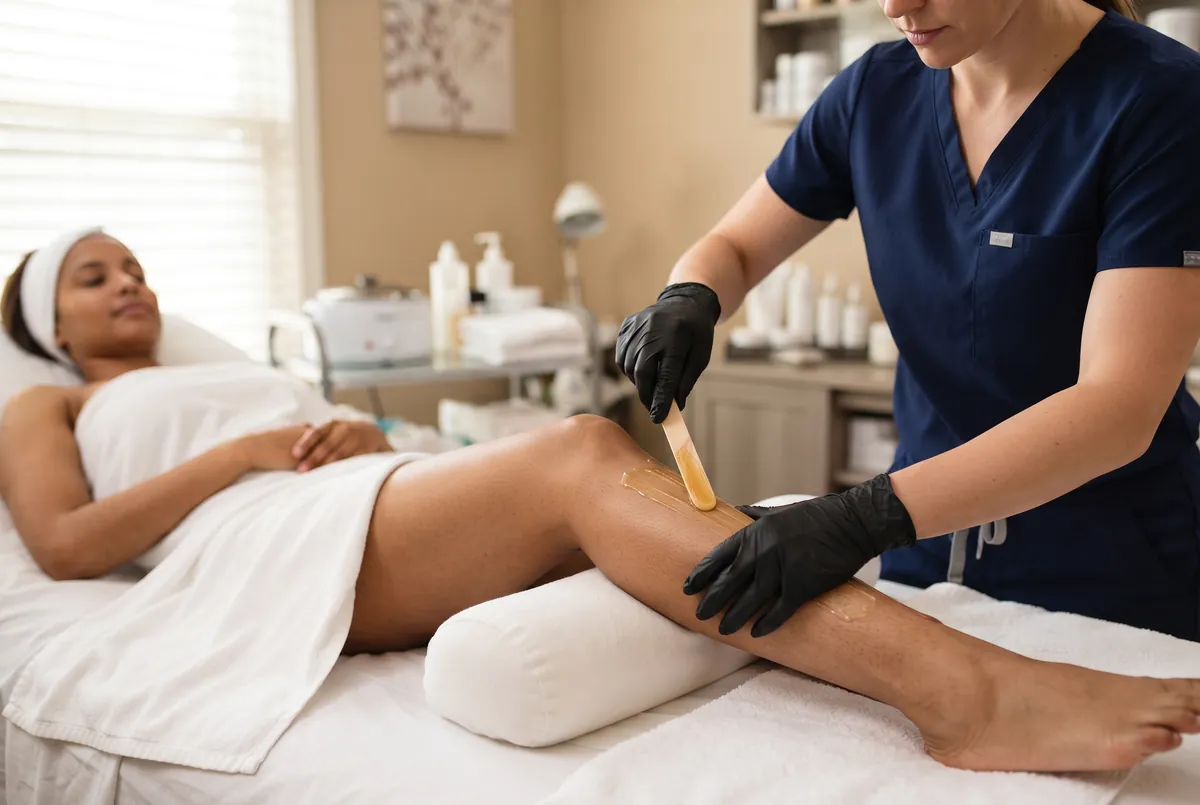
Wax works below the surface. Warm wax is spread over the area, it grips the hair, and when it is removed it pulls each hair out of the follicle with the root attached. The follicle is left empty and has to build a new hair from the beginning before anything shows on the skin again. That rebuilding is the reason a waxed area stays smooth far longer than a shaved one. The follicle itself is not destroyed, so the hair does return. Waxing is a temporary method that simply works at a deeper level than a blade.
There is a second difference that clients rarely think about. A razor also scrapes the surface of the skin on every pass, taking some of the outermost dead cells with it, which is why freshly shaved skin can feel both smooth and slightly raw. Wax, especially soft strip wax, also removes some surface cells along with the hair. Both methods exfoliate to a degree, and both can overdo it. Most of the irritation people blame on their skin being sensitive is really the result of that surface layer being disturbed too often or too roughly, whichever tool is doing it.
How Long the Results Last
Shaving gives a result measured in days. On areas with coarse, fast-growing hair, such as the underarms or the bikini line, many people feel stubble by the next day. On the lower legs the smooth feeling often lasts a little longer because the hair there tends to be finer and slower. The exact timing depends on the person, the area, and the hair, but the pattern is the same for everyone: the hair was never removed, only shortened, so it is back above the surface as soon as it grows the small distance the blade took off.
Waxing gives a result measured in weeks. After a wax the skin is free of visible hair until the follicles produce new hairs long enough to see, and the first hairs to appear are usually fine at the tip instead of blunt. Not all hairs grow in the same phase, though, which surprises first-time clients. Some hairs were just under the surface on the day of the wax and were too short to grip, so they appear within the first week or two. This is not the wax failing. It is a different group of hairs arriving on its own schedule.
With regular waxing on a consistent schedule, more of the hairs end up growing in step with each other, and the smooth period between appointments tends to feel longer and cleaner than it did after the first visit. Shaving between waxes undoes that, because it lets every hair carry on at its own pace and leaves you with a mix of lengths at the next appointment. I go through realistic timelines for each body area in the guide on how long waxing lasts, including why the first wax after years of shaving is the least impressive one.

Pain and Comfort: An Honest Comparison
Shaving done properly does not hurt. That is its single biggest advantage and the reason most people start with it. The discomfort from shaving arrives later and lasts longer: the sting of a nick in the shower, the burn when deodorant meets freshly shaved underarms, the itch as blunt hairs push back through the skin a few days on. None of these is severe, but they repeat every few days for as long as you keep shaving, and on some areas, the bikini line in particular, the itch of regrowth is the complaint I hear most often from clients who have decided to try waxing instead.
Waxing hurts, briefly. The sensation is a quick, sharp pull followed by warmth that fades within seconds, and it is concentrated in the appointment itself. Areas with coarse, dense hair and thin skin are felt the most. The first wax is almost always the most uncomfortable, because every hair is at full strength and the client is tense. People who continue usually tell me that later appointments are noticeably easier. Technique matters a great deal here: holding the skin taut, working in small sections, and removing the wax close and parallel to the skin all reduce what the client feels.
So the real comparison is not painless versus painful. It is a small amount of low-level irritation spread across many days versus a short, sharper discomfort every few weeks. Different people genuinely prefer different sides of that trade, and neither preference is wrong. If fear of the pain is the only thing keeping you from trying a wax, read my guide on how much waxing hurts and how to reduce it before you decide. Most of what makes a wax painful can be managed with timing, preparation, and a practitioner who works carefully.
Skin Reactions: What Each Method Tends to Cause
Shaving has its own set of skin problems. Razor burn is a red, stinging rash that appears soon after shaving, usually from a dull blade, too much pressure, dry shaving, or going over the same strip repeatedly. Nicks and cuts happen around the knees, ankles, and any place the skin folds. Razor bumps are small raised bumps that form when a cut hair curls and grows back into the skin or gets trapped just under the surface. They are especially common in people with curly or coarse hair, and on the neck, bikini line, and underarms, where the hair grows in several directions at once.
Waxing has a different set. Redness and small raised dots around the follicles are normal for a few hours and sometimes into the next day, particularly after a first wax. Follicles that have just been emptied are briefly open and easily irritated, so sweat, friction, and heavy products in the first day or two can lead to small whiteheads or bumps. Bruising can happen where the skin was not held firmly. The most serious waxing reaction is skin lifting, where the wax removes a thin layer of skin along with the hair. It is almost always linked to something that weakened the skin beforehand, such as retinoids, strong exfoliating acids, or a recent sunburn.
Ingrown hairs belong to both methods, but they form differently. A shaved hair has a sharp, angled tip that can pierce the skin beside the follicle as it grows. A waxed hair is new and fine, and it can fail to break through if dead skin has closed over the opening of the follicle. In my experience clients who are prone to razor bumps often see fewer of them once they switch to waxing and keep the skin gently exfoliated, but that is not guaranteed for everyone. If ingrowns are your main concern, the guide to ingrown hairs after waxing explains prevention and what not to pick at.
Regrowth Myths: Thicker Hair, Finer Hair, and Darker Skin
The most persistent myth in hair removal is that shaving makes hair grow back thicker, darker, or faster. It does not. A razor cannot reach the follicle, so it has no way of changing how the hair is produced. What changes is the tip. An uncut hair tapers to a fine point. A shaved hair has been cut straight across at its widest part, so the regrowth feels coarse to the touch and can look darker against the skin for a while because the blunt end is more visible. The hair itself is the same diameter and color it always was.
The matching myth on the waxing side is that waxing will eventually stop the hair from growing. Many long-term waxing clients do report that their hair seems sparser or finer after years of regular appointments, and I have seen areas that grow back more slowly over time. I never promise it. Waxing leaves the follicle alive and able to produce hair, and how any one person's hair responds over the years is not something a practitioner can predict. Anyone who sells waxing as a route to permanent hair removal is describing a different service than the one they are providing.
Clients also ask about dark patches, especially on the underarms and bikini line. Skin in these areas can darken after repeated irritation of any kind, and deeper skin tones are more prone to it. Frequent shaving with constant friction and low-level inflammation can contribute. So can a wax that was too hot, too aggressive, or done on skin that was not ready for it. The method matters less than how much irritation the skin goes through. Persistent or spreading discoloration is worth showing to a dermatologist, because irritation is only one of several possible causes.
Cost and Time: How the Pattern Differs
I do not quote prices in guides, because they vary by city, by studio, and by body area, and any figure I printed would be wrong for most readers. The pattern of spending is what matters. Shaving costs little each time and continues forever: blades or cartridges, shaving cream or gel, and replacement handles now and then. The price per shave is small, which makes the total easy to overlook. Blades that are replaced as often as they should be, which is more often than most people do it, add up over a year.
Professional waxing costs more per visit and happens far less often. You pay for the practitioner's time, training, and supplies, and a tip is customary in most US studios. Home waxing sits in between: there is an upfront cost for a warmer and wax or for ready-made strips, and then a lower running cost, with the trade that you are doing the work yourself and carrying the risk of a mistake. For a fair comparison, add up what you spend on shaving supplies over two or three months and set that against the cost of the waxing visits you would have in the same period at a studio near you.
Time follows the same shape. Shaving takes a few minutes, but it takes them again and again. People who shave their legs, underarms, and bikini line several times a week often do not realize how much shower time it adds up to. Waxing takes a block of time every few weeks, plus travel if you go to a studio, and then nothing in between. Clients with unpredictable schedules often prefer shaving because it needs no planning. Clients who dislike daily upkeep, or who travel often, tend to prefer waxing for exactly the opposite reason.

Waxing vs Shaving Side by Side
The table below pulls the main points together. It describes what is typical, not what is guaranteed, because hair and skin vary widely from one person to the next and from one body area to another. Use it to see where the two methods genuinely differ, then read the body area section that follows, because the better choice for your lower legs may well not be the better choice for your underarms or your face. A single person using both methods on different areas is common and perfectly sensible.
| Factor | Shaving | Waxing |
|---|---|---|
| Where the hair is removed | Cut at the skin surface | Pulled from the follicle with the root |
| How long it lasts | Days | Weeks |
| Feel of regrowth | Blunt, stubbly tips | Finer, tapered tips |
| Discomfort | Little during, itch and sting afterward | Sharp and brief during, little afterward |
| Typical skin reactions | Razor burn, nicks, razor bumps | Redness, follicle bumps, occasional bruising or lifting |
| Hair length needed | Any length | Enough length for the wax to grip |
| Skill needed | Low, easy to do at home | Higher, best done by a licensed professional |
| Spending pattern | Small and constant | Larger per visit, less often |
| Permanent result | No | No |
One row deserves a closer look: hair length. Shaving works on any hair at any time, which is why it remains the default for last-minute situations. Wax needs something to hold. If the hair is too short, the wax slides over it and leaves patches. If it is very long, the service is more uncomfortable and messier than it needs to be. That waiting period, where you have to let the hair grow before each appointment, is the part of waxing that new clients find hardest. I explain how to judge it in the guide on how long hair should be for waxing.
Which Method Suits Which Body Area
Legs are the area where either method works well for most people. The skin is fairly tough, the surface is large and mostly flat, and the hair is usually not as coarse as elsewhere. Shaving the legs is quick and low risk apart from nicks at the knees and ankles. Waxing the legs takes longer in the studio but then gives weeks without upkeep, which clients tend to value most in summer. People with very fine, light leg hair sometimes find waxing is more than they need. People with dense, dark hair that shows as dots under the skin a day after shaving usually notice the biggest improvement from waxing.
Underarms are where I see the strongest case for waxing. The hair is coarse and grows in more than one direction, the skin is thin and folded, and the area is exposed to sweat, friction, and deodorant all day. Daily shaving here is a common cause of irritation, bumps, and the shadow that remains visible under the skin even right after a close shave. Because wax removes the root, that shadow is gone until the hair regrows. The pull is sharp but the area is small and the service is over in minutes.
The bikini line is the area where shaving causes the most complaints. Coarse, curly hair, constant friction from underwear seams, and warmth make it the classic location for razor bumps and itchy regrowth. Many clients come to waxing specifically because of this. Waxing here should be done by someone trained, since the skin is delicate and the hair is strongly rooted. If you are deciding how much to have removed, my comparison of a bikini wax and a Brazilian wax explains what each service includes and how to ask for it.
The face needs its own answer. Facial skin is thinner, more reactive, and far more likely to be under treatment with retinoids, acids, or acne medication than the skin anywhere else. Waxing the upper lip, chin, or brows is fast and gives a clean result, but only on skin that is not being treated with products that make it fragile. Shaving facial vellus hair with a single small blade is also widely done and does not make the hair coarser. For a small number of dark, strong chin or lip hairs, neither method is satisfying for long, and that is the situation I return to near the end of this guide.
For men's backs, shoulders, and chests, the practical issue is reach and regrowth. Shaving your own back is awkward, and stubble across a large area under a shirt is uncomfortable. Waxing handles large areas in one appointment and the regrowth is softer. Arms are usually best left alone or waxed, because shaved arm hair returns as noticeable stubble. Men's beards are a different matter. Dense facial hair is deeply rooted, and waxing a full beard area is not something I recommend. Shaving or trimming remains the sensible method there.

When Shaving Is the Safer Choice
There are times when I tell a client not to wax, and for most of them shaving is the reasonable substitute. Wax grips the surface of the skin as well as the hair, so anything that has thinned or weakened that surface raises the risk of lifting. A razor used gently is far less demanding on fragile skin. The decision is made in the consultation, which is why a careful practitioner asks about medications and skincare before every first service and updates the answers at later visits.
- Retinoids and strong exfoliants: prescription or over-the-counter retinoids and regular use of exfoliating acids on the area to be waxed.
- Oral acne medication: isotretinoin makes skin fragile, and waxing should wait until the prescriber says the skin has recovered.
- Sunburn or recent heavy sun exposure: burned or peeling skin should not be waxed.
- Broken or inflamed skin: cuts, rashes, active infections, and flare-ups of conditions such as eczema or psoriasis on the area.
- Recent skin procedures: peels, resurfacing, and similar treatments on the same area.
- Hair that is too short: if the wax cannot grip, shaving and waiting is better than a patchy, irritating service.
Some medical situations call for a conversation with a physician before choosing either method. People with diabetes, circulation problems, or reduced sensation in the legs and feet should ask their doctor about hair removal, because small injuries can heal slowly. People taking blood thinners may bruise more easily from waxing and bleed longer from a nick. Varicose veins should not be waxed over. I cover the full screening list, with the reasoning behind each item, in the guide on waxing contraindications.

How to Shave Well If You Choose Shaving
Most shaving problems come from technique, not from shaving itself. Start with warm water. Hair that has been wet for a few minutes is softer and cuts with less drag, so shave toward the end of a shower, not at the start. Use a shaving gel or cream, not bar soap or water alone, so the blade glides instead of scraping. Use a sharp blade. A dull one tugs the hair and scrapes the skin, and it is the most common cause of razor burn I hear about. If the blade pulls or you need to press, it is past its useful life.
Use light pressure and short strokes, and rinse the blade often so it does not clog. Shaving in the direction the hair grows is gentler and is the better choice for anyone prone to bumps, particularly on the bikini line and neck. Shaving against the growth gives a closer result with more risk of irritation and ingrown hairs. Do not go over the same strip several times. Afterward, rinse with cool water, pat dry, and apply a plain, fragrance-free moisturizer. Wait before applying deodorant or scented products to freshly shaved underarms if they tend to sting.
Look after the razor as well. Rinse it thoroughly, let it dry, and store it somewhere other than a wet shower ledge, where blades dull and collect residue faster. Do not share razors. If you keep getting bumps in one area in spite of good technique, try shaving less often there, switch to a razor with fewer blades, or use an electric trimmer that leaves the hair very slightly above the skin. If none of that helps, the area may simply be one that does not tolerate a blade, and that is a good reason to consider waxing or a permanent method.
Switching From Shaving to Waxing
The switch begins with putting the razor away, which is the difficult part. The hair needs to grow long enough for the wax to hold, and for someone who has shaved every other day for years, that grow-out period feels much longer than it is. Plan it for a time when the area is covered anyway. Do not trim or shave in the days before the appointment to tidy up. When clients arrive with hair that is too short, I would sooner rebook them than give a patchy wax that puts them off the method for good.
Expect the first wax to be the least comfortable and the least perfect. Shaved hair is at full thickness with a blunt tip, and the hairs are at many different stages of growth. Some will be too short on the day and will show up within a week or two. Clients often read this as the wax not working. By the second and third appointments, with no shaving in between, more hairs are growing together, the pull is easier, and the result is cleaner. I ask new clients to judge waxing after three appointments, not after one.
Prepare the skin without overdoing it. Exfoliate gently a day or two before, not on the day. Arrive with clean, dry skin and no heavy lotion or oil on the area, since both stop wax from gripping. Wear loose clothing. After the service, treat the area as freshly sensitized skin for a day or so: avoid hot baths, heavy exercise, tight clothing, and sun on the waxed area, and keep your hands off it. The full routine, including when to start exfoliating again, is in my waxing aftercare guide.

Home Waxing vs a Professional Wax
Part of the appeal of shaving is that nobody else is involved, and home waxing kits promise the same independence with a longer-lasting result. On easy areas such as the lower legs, a careful person can get an acceptable result at home with ready-made strips. The risks rise quickly on other areas. Wax heated at home can be too hot. Wax pulled in the wrong direction, or pulled upward away from the skin, breaks hairs at the surface instead of removing them, which leads to stubble within days and more ingrown hairs. Bruising is common when the skin is not held taut.
A licensed professional brings three things a kit cannot. The first is the consultation, which catches the medication or product that makes waxing unsafe that day. The second is wax selection: soft wax for large areas, hard wax for coarse hair and delicate zones, each used at the right temperature. If you are curious about the difference, see the guide to types of wax for hair removal. The third is hygiene, including a fresh applicator for every dip into the pot, gloves, and a clean table. Ask about these when choosing a studio. A good one will be glad you asked.
In the United States, waxing for pay is a licensed service. Depending on the state, it falls under an esthetician license, a cosmetology license, or a dedicated waxing license, and the rules are set by each state board. That license is your assurance that the person holding the spatula has completed required training and passed an exam. You can look for licensed providers in our studio directory, and the display of a current license in the treatment area is something you are entitled to look for at any appointment.
Events, Travel, and Sport: Timing Your Choice
Timing is where the two methods differ most in practice. Shaving can be done on the morning of an event with a predictable result. Waxing should not be tried for the first time right before something important. Skin can stay red or bumpy for a day or more after a first wax, and you will not know how yours reacts until you have done it. If you want to be waxed for a wedding, a vacation, or a competition, have a trial appointment well ahead, then book the real one a few days before the date so the skin has time to calm.
For beach trips, waxing has a clear advantage, since it removes the need to shave daily in salt water, sand, and sun, a combination that makes razor irritation worse. Freshly waxed skin should be kept out of strong sun for the first day or two, so do not book the appointment for the morning of the flight. Swimmers, cyclists, runners, and gym regulars often prefer waxing because sweat and friction on shaved stubble are a steady source of chafing. Schedule the wax for a rest day, because sweat and tight sportswear on newly waxed skin invite bumps.

When Neither Method Is Enough
Some clients compare waxing and shaving for years when the honest answer is that neither is what they want. If the hair is a daily source of distress, if it returns as dark stubble on the chin or lip within a day of shaving, or if every method leaves the area inflamed, managing the hair temporarily may be the wrong goal. Waxing and shaving both leave the follicle fully able to produce hair. For someone who wants particular hairs gone for good, the conversation moves to methods that act on the follicle itself.
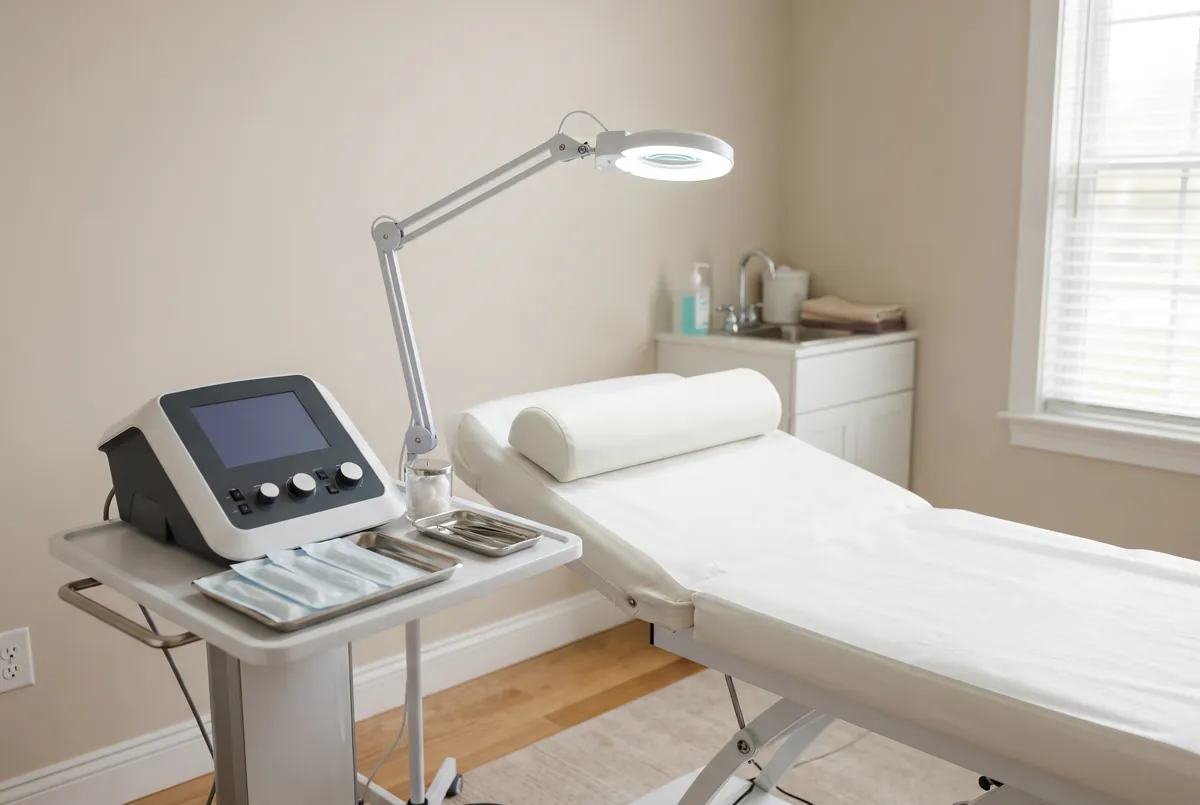
Electrolysis treats one follicle at a time with a fine probe and a small amount of electrical current, and it is the only method the FDA accepts for permanent hair removal claims. It works on any hair color and any skin tone, which makes it the usual answer for light, gray, or red hairs that lasers cannot target. It takes a series of sessions over time, and it is done by a trained electrologist. Laser hair removal offers long-term reduction for suitable combinations of hair and skin color. The guide to what electrolysis is and how it works covers the process from the first consultation.
One practical point if you are thinking about a permanent method: your choice of temporary method in the meantime matters. Electrolysis needs the hair to be present in the follicle and long enough to grasp, so waxing and tweezing between sessions work against the treatment, while shaving is usually allowed. Laser also needs the root in place, so shaving is the standard preparation and waxing is not. Coarse dark hair that appears suddenly, or in a male pattern on a woman's face, chest, or abdomen, should be discussed with a physician, since it can have a hormonal cause.
What Waxing Students Should Take From This Comparison
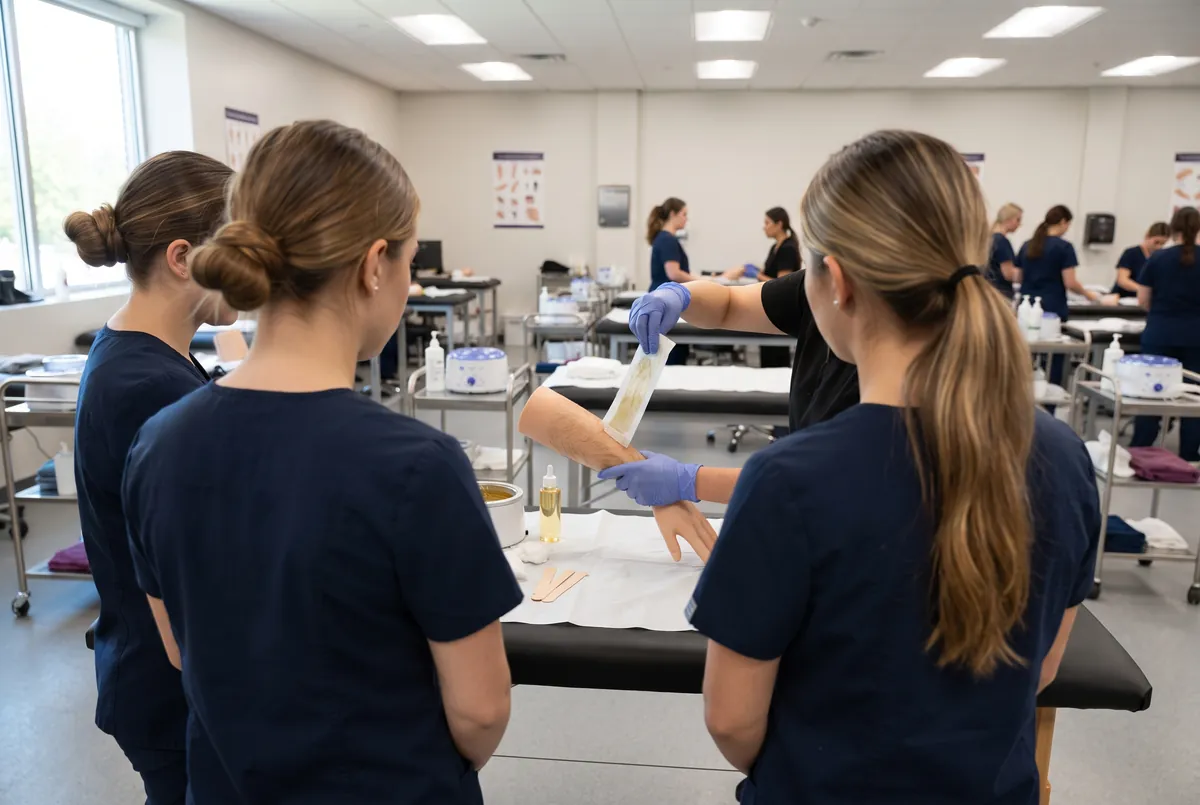
If you are training to wax professionally, this comparison is more than background reading. Nearly every new client you meet will be a person who shaves, and your first job is to explain honestly what will change and what will not. Set expectations for the first appointment: more sensation, some early regrowth, and a result that improves over the next visits. A client who has been told this in advance comes back. A client who was promised weeks of flawless skin from one visit and saw hairs in ten days does not, and tells friends why.
The second lesson is that recommending shaving is sometimes the professional thing to do. Turning away a client who is using a retinoid, has a sunburn, or has hair that is too short costs you one service and earns you trust. Learn to explain the reason in one or two plain sentences and to offer a date to come back. The third lesson is knowing where your own service ends. When a client describes a few stubborn chin hairs that waxing has never solved, the right answer is a referral to an electrologist, or your own further training if your state allows it.
Structured study helps with all three. Our waxing course covers hair growth, wax types, contraindications, and client communication as online theory you can study at your own pace. It prepares you for the conversation and the reasoning behind each decision. It does not replace the in-person training hours and the license your state requires before you may wax clients for pay. Those requirements differ from state to state, so check the waxing licensing guide for your state before you enroll in any program.
How to Decide: A Short Next Step
Choose shaving if you want a method with no appointment, no waiting for hair to grow, and no sharp discomfort, and your skin tolerates a blade without bumps or burning. It is also the right choice whenever your skin is under treatment that makes waxing unsafe, and while you are having electrolysis or laser. Choose waxing if you are tired of daily upkeep, if stubble and itching bother you, if shaving leaves bumps or shadow on the underarms or bikini line, and you can accept a short, sharp sensation every few weeks in exchange for smooth skin in between.
You do not have to pick one for the whole body. Many of my clients shave their legs, wax their underarms and bikini line, and have electrolysis on the face. If you want to try waxing, start with one area, commit to three appointments without shaving in between, and choose a licensed professional who asks about your skin before warming the wax. If you already know that temporary methods are not what you want, book an electrolysis consultation and ask what a realistic treatment plan looks like for your hair.
State Requirements
State licensing guides
Hours, exams, fees, and the licensing board differ by state. Open your state for the current requirements.
Common Questions
FAQ
Neither is better for everyone. Waxing removes the hair with its root, so the result lasts weeks and the regrowth feels softer, but it involves brief sharp discomfort and needs some hair length. Shaving is painless, quick, and possible at any time, but lasts only days and can cause razor burn and bumps. Many people use both on different body areas. The full method comparison also covers permanent options.
No. A razor cuts the hair at the surface and cannot affect the follicle that produces it. Shaved hair feels coarser because it has been cut straight across at its widest point, leaving a blunt tip instead of a natural taper. That blunt end can also look darker against the skin for a while. The thickness, color, and growth rate of the hair are unchanged by shaving.
New hair after a wax has a fine, tapered tip, so it feels softer than shaved stubble. Some long-term waxing clients also report sparser or finer growth over the years, and I have seen this in practice, but it is not guaranteed and varies by person. Waxing does not destroy the follicle, so it should never be sold as permanent. Only electrolysis is accepted by the FDA for permanent hair removal claims.
It is better not to. Shaving lets every hair grow at its own pace, so at the next appointment the lengths are uneven, some hairs are too short for the wax to grip, and the service feels closer to a first wax again. If a few hairs bother you between visits, ask your waxer for advice. The guide on how long waxing lasts explains why consistency improves results.
Long enough for the hair to be gripped by the wax, which for most people means a couple of weeks of growth or more, depending on the area and how fast the hair grows. Hair that is too short leaves patches. If you are unsure, your studio can tell you when you book. See how long hair should be for waxing for a simple way to check at home.
Both can cause them, in different ways. A shaved hair has a sharp tip that can grow back into the skin, which is why razor bumps are common on the bikini line and neck, especially with curly hair. A waxed hair can become trapped if dead skin covers the follicle opening. Gentle regular exfoliation and good aftercare reduce both. Read more in the guide on ingrown hairs after waxing.
Many people find waxing more comfortable in the long run for this area, because the coarse, curly hair and constant friction make razor bumps and itchy regrowth common after shaving. Waxing here is best done by a licensed professional, since the skin is delicate. If your skin tolerates shaving without bumps, there is no reason to change. Avoid waxing if the skin is irritated, broken, or sunburned.
Shave. Both electrolysis and laser need the hair root to be present in the follicle, and waxing or tweezing removes it. For electrolysis, the hair also needs to be long enough for the electrologist to grasp, so follow your practitioner's instructions on when to stop shaving before each session. For laser, shaving shortly before the appointment is the usual preparation. Your provider will give exact guidance for your treatment plan.
Keep Reading
Related Guides


