Waxing
Waxing for Men: Back, Chest, Brows, Prep, and Aftercare Guide

Quick answer
Men most often wax the back, shoulders, chest, brows, nose and ears. Male hair is often coarser, so professionals usually combine soft wax for large areas with hard wax for coarse patches. Let hair grow to about the length of a grain of rice, exfoliate gently a day or two before, and avoid sunburn and retinoids on the area.
Waxing for men used to be a quiet request, often booked under a partner's name or squeezed in at the end of the day. Today men book back, chest, shoulder, and brow waxing as routinely as a haircut, and many of them are athletes, swimmers, performers, or simply people who are tired of shaving a back they cannot reach. The service itself is the same basic skill as any body wax, but it is not identical. Male hair tends to be coarser and denser in many areas, men often arrive with little idea of what to expect, and the professional has to adjust wax choice, technique, and communication to match. After more than twenty years as a licensed cosmetologist and electrologist, I can say that the difference between a good and a poor first male wax is almost always preparation and explanation, not strength.
This guide is written for two readers at once. If you are a man thinking about your first wax, you will learn which areas are commonly waxed, how to prepare, what happens on the table, how to manage discomfort, and how to keep ingrown hairs and breakouts under control afterward. If you are a waxing professional who wants to serve more male clients, you will find notes on wax selection for coarse hair, working on large areas efficiently, screening, and keeping every appointment clearly professional. Both readers will find a section on when waxing stops being the best tool and permanent hair removal with electrolysis makes more sense.
Common Areas Men Wax and Why
The back is the classic male waxing request, and it makes sense: it is hard to reach, shaving it alone is nearly impossible, and regrowth after shaving feels prickly under a shirt. Back waxing usually includes the full back from the neckline down to the waistband, and many clients add the shoulders and the back of the upper arms, where hair often continues. The chest and stomach are the next most common. Some men want them completely clear for sport, stage, or photography. Others only want the hair thinned or tidied, which a good waxer can do by removing selected areas rather than everything.
Smaller facial areas bring in a steady stream of male clients who never considered body waxing. Brow cleanup between the brows and a light tidy under the arch keeps a natural look without the thin, arched shape many men worry about. Nose and ear waxing removes visible hair at the opening of the nostril and on the outer ear, and it is quick when done with the right tools and care. Arms, legs, and hands are requested by cyclists, swimmers, and bodybuilders. Men also book intimate waxing, which should be offered only by professionals trained and comfortable with it, under a clear menu and policy.
| Area | Typical reason men book it | Wax usually preferred | Practical note |
|---|---|---|---|
| Back and shoulders | Hard to shave, comfort under clothing, appearance | Soft strip wax for large zones, hard wax for coarse patches | Work in sections to keep the skin from overheating |
| Chest and stomach | Sport, stage, or a cleaner look | Soft wax or a pliable hard wax | Hair often grows in several directions, map it first |
| Brows | Tidy, natural shape | Hard wax | Remove only what the client agrees to, keep the brow full |
| Nose and ears | Visible hair at the openings | Hard wax on a small applicator | Only the outer opening, never deep inside |
| Arms and legs | Sport, swimming, cycling | Soft strip wax | Fast work, but watch for sensitive inner zones |
Clients sometimes ask whether they should wax everything at once on the first visit. I usually suggest starting with one or two areas, especially if the client has never waxed. That keeps the first appointment shorter, shows how the skin responds, and makes it easier to judge whether ingrown hairs or breakouts follow. Once a client knows how his skin behaves, combining back, shoulders, and chest in a single visit is efficient and common. For the professional, a short menu that lists male services by area, with clear descriptions of what each includes, answers most questions before they are asked and prevents awkward surprises on the table.

How Male Hair and Skin Differ
Hair growth in many men is shaped by androgens, the hormones that drive terminal hair on the chest, back, face, and shoulders. The practical result on the table is hair that is often coarser, darker, deeper rooted, and more densely packed than the fine body hair many female clients have. Coarse hair needs a wax that grips firmly around the shaft, and dense hair means more hairs leaving the skin in each pull. Both factors increase sensation and the risk of breakage if the technique is rushed. A strip pulled at the wrong angle through dense back hair can snap hairs at the surface, which looks fine that day and causes ingrown hairs two weeks later.
Growth direction is less predictable on men than most beginners expect. The chest often has swirls around the sternum and hair that changes direction across the pecs and toward the underarms. The back can grow outward from the spine, downward near the waist, and in a fan across the shoulders. Before applying anything, I run a hand lightly across each zone and watch how the hair lies. Waxing against the actual growth pattern, not the assumed one, is the single biggest factor in clean removal. Professionals who skip this mapping step are the ones who end up tweezing half of a back afterward.
Skin varies just as much. Facial skin in men who shave daily is used to friction but may be sensitized, and it can react to wax if the client shaved that morning or uses active products. Back skin tends to be thicker and oilier, which is one reason men are more prone to post-wax breakouts on the back and chest: open follicles and sebum make a friendly environment for bumps. Some men have many moles, skin tags, or sun damage on the shoulders, all of which must be worked around. None of this makes male skin fragile. It simply means the professional reads the skin before choosing the wax and the pace.
Hormones also explain why results differ from client to client. A man in his early twenties may still be developing body hair, so a back that waxes clean now may grow in fuller over the following years. An older client may notice hair increasing on the ears and nose while thinning elsewhere. Clients occasionally ask whether regular waxing makes hair grow back thicker. It does not: waxing removes the hair from the root and does not change the follicle's genetic programming. Many long-term clients actually notice finer, patchier regrowth over time, although that varies and should never be promised as a result.
Hard Wax vs Soft Wax for Men
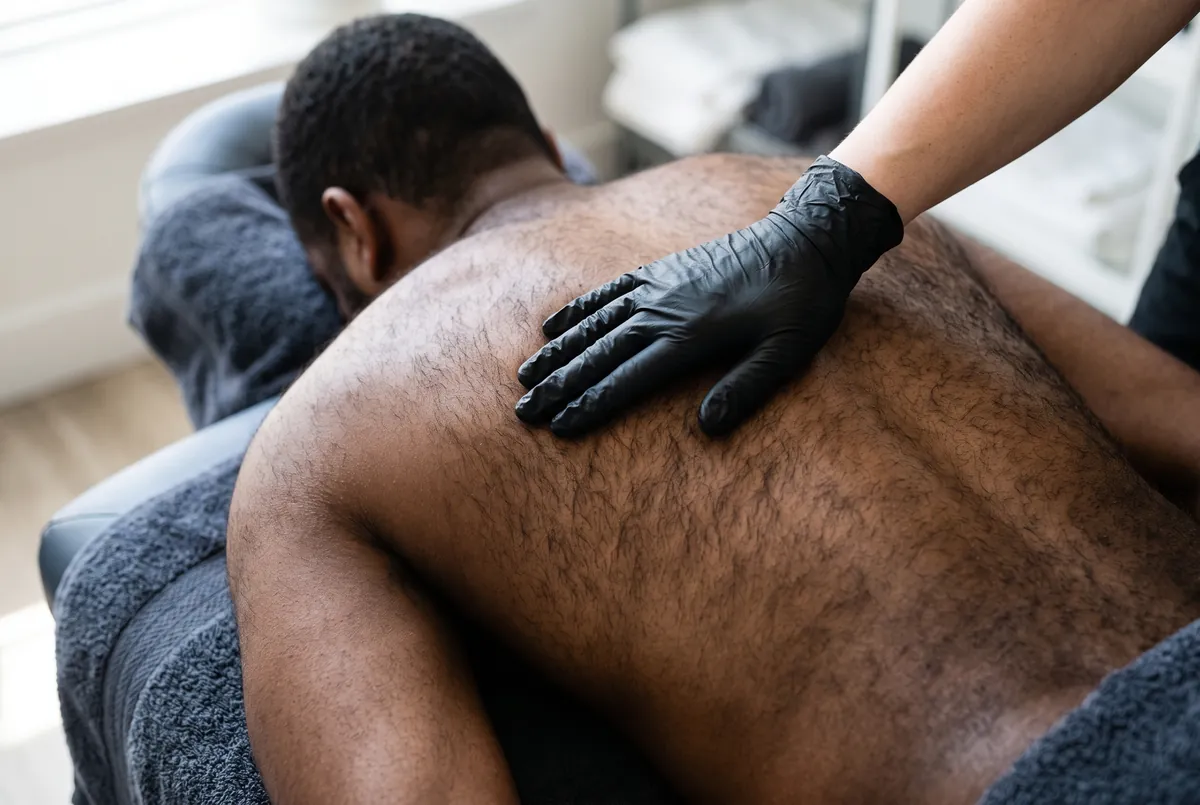
Soft wax, also called strip wax, is spread thin with a spatula or roller and removed with a cloth or paper strip. It adheres to both hair and the top layer of skin. Its strength is speed: on a large, relatively flat area like a back or a pair of legs, soft wax covers ground quickly and removes large amounts of hair in each pull. For many back and chest services it remains the practical workhorse. Its weakness is that it pulls on the skin as well as the hair, so it is less forgiving on sensitive zones, on skin that has been treated with actives, and on areas that are waxed twice in the same spot.
Hard wax is applied thicker, allowed to set, and removed without a strip. It shrinks around the hair as it cools and grips the shaft rather than the skin, which is why it is favored for coarse, stubborn hair and for small or sensitive areas: brows, nose, ears, underarms, and intimate zones. On coarse male hair, a good hard wax tends to reduce breakage because it encloses the hair firmly. Modern flexible hard waxes can also be used on the chest and even on sections of the back, although they take longer and use more product than strip wax on very large areas.
Most experienced male waxing professionals end up using both in a single appointment. A typical approach is soft wax for the broad expanse of the back and shoulders, then hard wax for the coarse patches near the neck, the spine, or the lower back, and for any touch-up zone where the skin has already been pulled once. On the chest, many professionals prefer hard wax around the nipples and sternum and soft wax across the flatter areas. There is no single correct formula. What matters is choosing on purpose, based on the hair and skin in front of you, rather than defaulting to whatever is already melted.
Temperature and technique matter as much as product. Wax that is too hot can burn, and on large areas the professional is working quickly, which makes temperature checks easy to skip. Test on your own inner wrist and then on a small patch of the client's skin before every service. Hold the skin taut, pull low and parallel to the skin rather than straight up, and remove in the direction opposite to growth for soft wax. Sugaring and film waxes are further options some professionals keep for clients with very reactive skin.

How to Prepare for Your First Wax
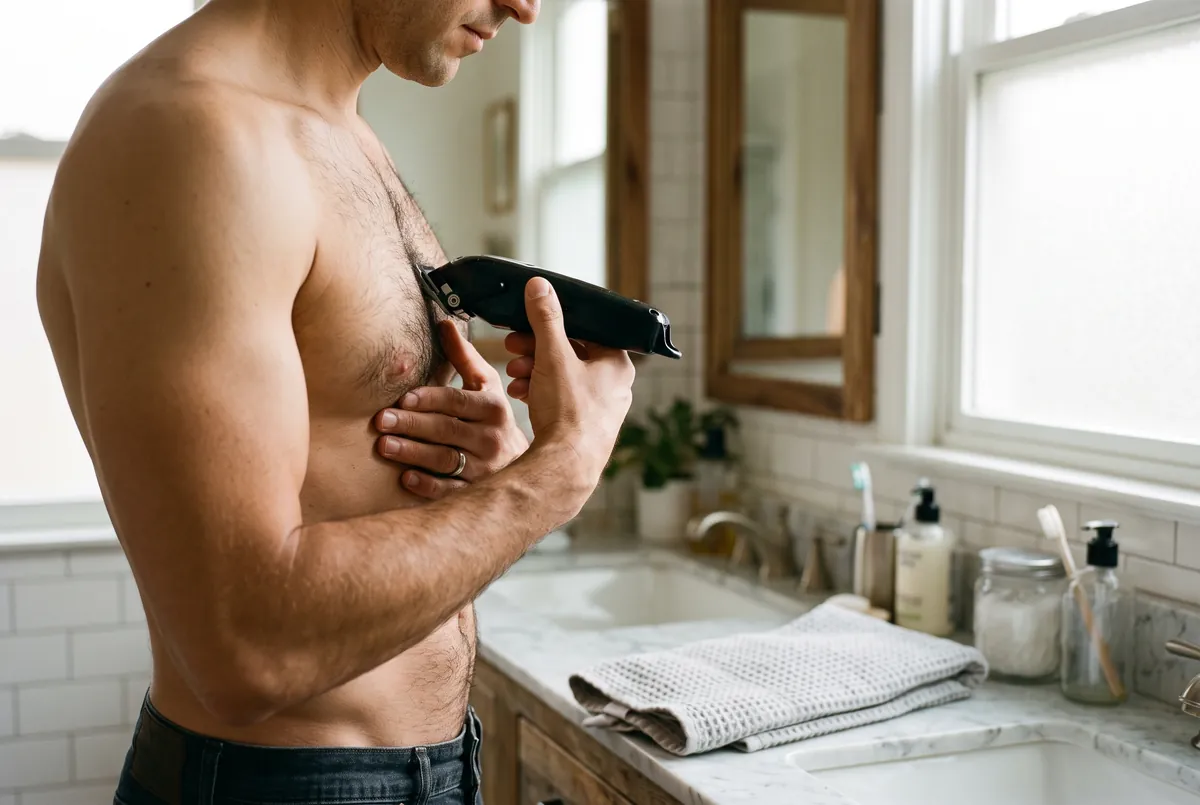
Hair length is the most common reason a men's first wax goes poorly. If the hair is too short, the wax has nothing to grip and many hairs are left behind. If it is very long, as is common on a back that has never been trimmed, the wax tangles, the pull hurts more, and hairs break. The usual guidance is hair roughly the length of a grain of rice. If you have been shaving, stop and let it grow out for a couple of weeks. If the hair is very long, trim it with clippers a day or two before the appointment, or ask the salon whether they trim at the start of the service.
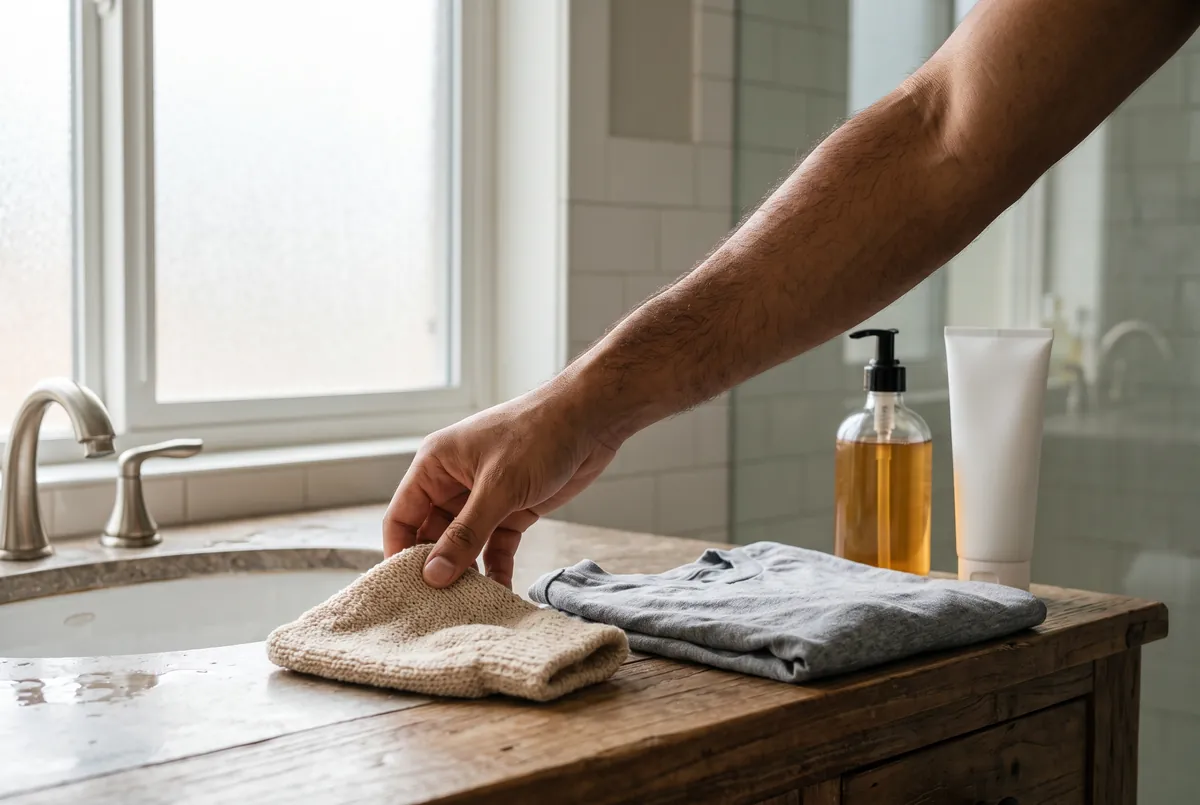
Skin preparation starts a few days ahead. Gentle exfoliation with a washcloth or mild scrub a day or two before the appointment lifts dead skin and helps hairs release cleanly. Do not exfoliate aggressively the day of the wax, and do not arrive with a fresh sunburn: wax on burned skin can lift the surface and leave raw patches. Stop retinoids and strong acid products on the area for the period your professional recommends, and tell them about any prescription skin medication, including oral acne medication, which can make skin too fragile to wax safely.
- Let hair grow to about the length of a grain of rice, and trim very long back or chest hair beforehand.
- Exfoliate gently a day or two before, not on the day of the appointment.
- Avoid sunburn, tanning beds, and self-tanner on the area before the service.
- Pause retinoids and exfoliating acids on the area, and disclose all prescription skin and acne medications.
- Shower before the appointment and skip lotion, oil, or heavy sunscreen on the area.
- Avoid caffeine and alcohol right before the visit if they make you more sensitive.
- Wear loose, soft clothing that will not rub freshly waxed skin on the way home.
- Arrive a few minutes early to fill out the intake form honestly.
The intake form is not a formality. It asks about medications, skin conditions, recent procedures, allergies, and previous reactions for a reason. Men sometimes leave boxes blank because they assume a supplement or a cream does not matter, or they forget a recent course of antibiotics or a prescription for acne. Tell your professional everything, even if it seems unrelated. It is far better to reschedule a service than to lose a patch of skin. Professionals should review every form out loud with a new client and ask follow-up questions, because men who are nervous about the service tend to rush through the paperwork.
Timing matters too. Avoid booking a first wax right before a wedding, a vacation, or a photo shoot. The first appointment gives the most redness and the highest chance of bumps, because every hair is in its fully established growth phase and the skin has not yet adjusted to regular removal. Book the first session well ahead of any event, see how your skin responds, and plan a second appointment closer to the date if needed. If you work outdoors or train hard, choose a day when you can skip heavy sweating for the rest of the day.
What Happens During a Male Waxing Session
A professional appointment begins with a short consultation. The waxer reviews the intake form, asks what result the client wants, and checks the area for cuts, sunburn, rashes, moles, or active breakouts. For the chest, this is also the moment to agree on the result: fully clear, cleared with the stomach left natural, or thinned. For the brows, the client and waxer agree on exactly what will be removed. A clear agreement at the start prevents the most common complaint after male waxing, which is a result that looks different from what the client pictured.
Next comes preparation. The client is given privacy to change and draped with a towel so only the area being treated is exposed. The skin is cleansed with a pre-wax cleanser to remove oil and sweat, then dried. Some professionals apply a light dusting of powder on oily skin or a thin pre-wax oil before hard wax, depending on the product. Very long hair is trimmed. The waxer then tests the wax temperature and maps the hair growth, working out how to divide the area into sections that follow the direction each patch of hair grows.
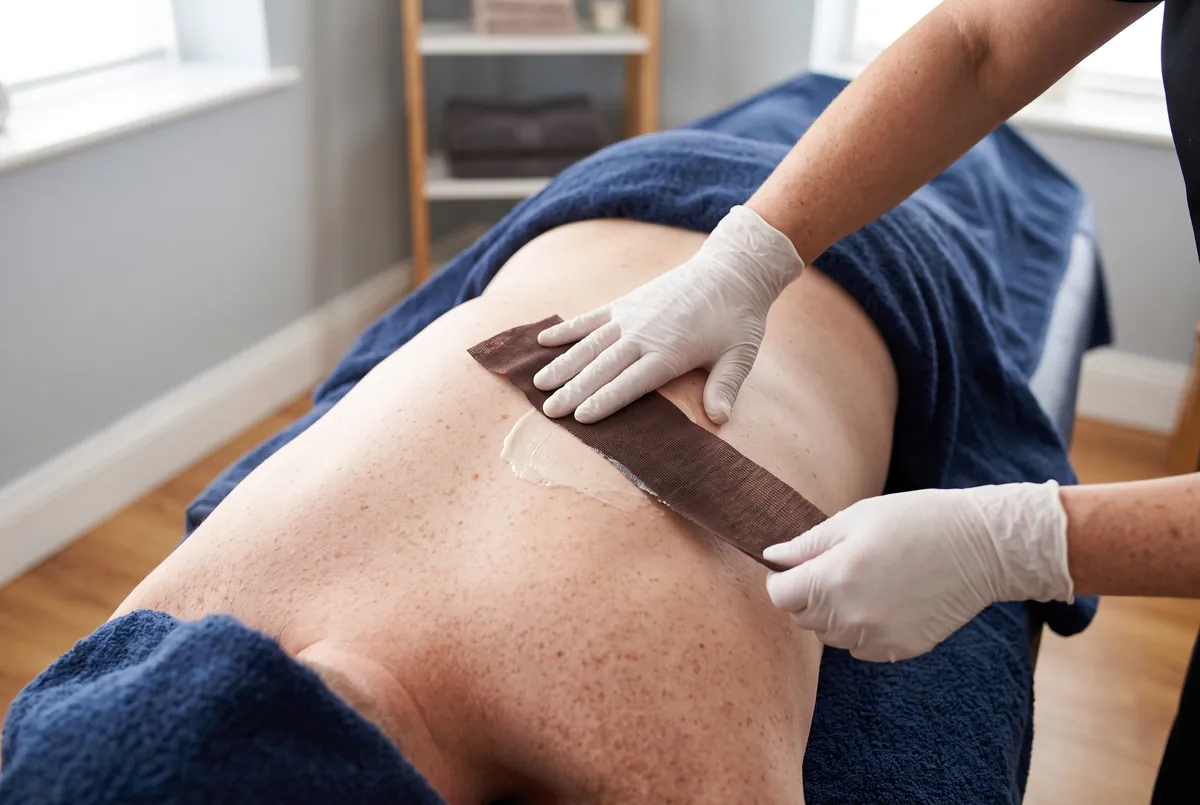
The removal itself follows a steady rhythm. On a back, the waxer typically works one section at a time, applying wax in the direction of growth, pressing, holding the skin taut, and removing quickly against the growth. After each pull, firm pressure with the palm on the area calms the sensation. Stray hairs are tweezed at the end rather than rewaxed repeatedly over the same skin. Sessions for a back or chest are usually shorter than first-time clients expect, and brows, nose, and ears are quick. The exact time depends on density, hair length, and whether several areas are combined.
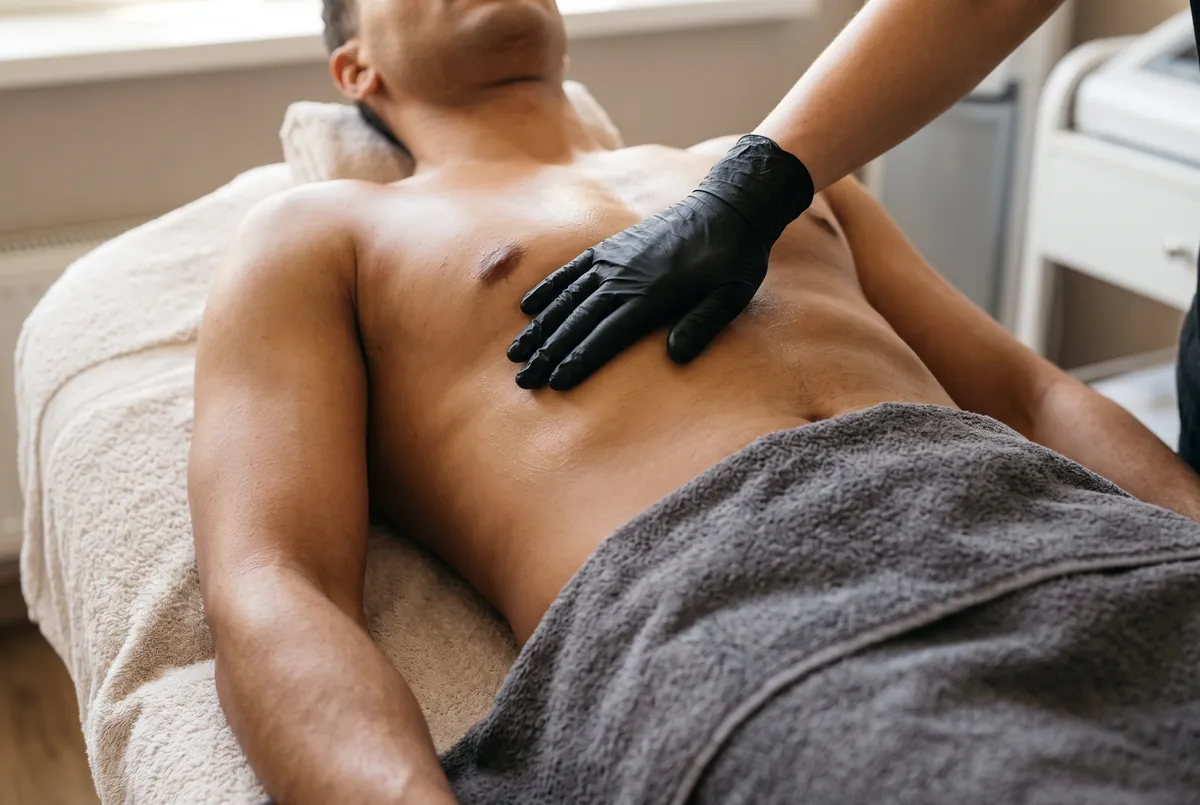
The appointment ends with post-wax care. The professional removes any residue with a post-wax oil or cleanser, applies a soothing product, and checks the skin for spots that need attention. This is also when a good waxer gives aftercare instructions and explains what to expect in the next few days, including the chance of red bumps on the back and chest. Before the client leaves, it is worth booking the next appointment, because regular timing makes the next wax easier and more comfortable than the first one.
Managing Pain and Discomfort
Male clients ask about pain more than anything else, and the honest answer is that waxing is uncomfortable, especially the first time, and becomes easier with regular appointments. The first session is usually the most intense because every hair is anchored in an established follicle and the client does not know what to expect. On the back, most men find the sensation brief and manageable. The chest and areas near the nipples tend to be more sensitive, and small facial zones like the nose sting but finish fast. Sensation varies by person, area, hair density, and stress level on the day.
Clients can do a few things to help. Book outside the days when you are sick, exhausted, or very stressed. Take slow, steady breaths and breathe out as the strip comes off, rather than holding your breath and tensing. Some people take an over-the-counter pain reliever beforehand, but check with your doctor or pharmacist if you have any health condition or take other medication, and tell your waxer what you took. Numbing creams exist, but ask your professional before using one, because some products interfere with how wax grips the hair and some are not appropriate for large areas.
Most of the pain control lies with the professional. Correct wax temperature, taut skin, a low and fast pull, immediate pressure after removal, and working in small enough sections all reduce sensation significantly. Talking the client through each step helps too, because surprise makes everything feel worse. I tell first-time male clients where I am about to work, give them a moment to breathe, and then pull. If a client needs a pause, we pause. Waxers who rush a nervous client or repeatedly rewax the same patch create both pain and irritation, and that client rarely comes back.
Regular appointments are the most effective long-term pain reducer. When waxing is repeated on a consistent schedule, more hairs are removed at an earlier stage and many clients notice finer regrowth, which usually makes later sessions easier. Waiting too long between visits, or shaving between waxes, resets the cycle. For a fuller explanation of what affects sensation and how both clients and professionals can reduce it, read our guide on how to reduce waxing discomfort.
Aftercare for Male Waxing
The first day after waxing is when the skin is most open to irritation. Follicles are empty, the top layer of skin has been lightly stressed, and friction, heat, and bacteria can cause bumps. For roughly the first day, avoid hot showers, saunas, steam rooms, hot tubs, swimming pools, heavy workouts, and tanning. Wear clean, loose, breathable clothing, and change out of sweaty gym wear promptly. Do not touch or scratch the area, and skip heavily fragranced products, deodorant sprays on the chest, and strong actives until the redness has settled.
Men who train or sweat heavily need to plan around this window. Sweat and tight synthetic shirts rubbing against a freshly waxed back or chest are a common cause of bumps. If you have an important workout, book the wax on a rest day. After the first day or two, gentle care resumes. Cleanse the area with a mild wash, moisturize with a light, non-comedogenic lotion, and begin gentle exfoliation a few days later, repeating it a couple of times a week to keep dead skin from trapping new hairs. Keep freshly waxed skin protected from strong sun.
For professionals, aftercare instructions should be given verbally and in writing, because men who are new to waxing often do not know that a gym session that evening can undo a good service. Recommend specific types of products rather than vague advice, and explain what normal redness looks like compared with signs of infection. Clients who understand why aftercare matters follow it more closely. Our full waxing aftercare guide covers the first hours, the first week, and how to handle common reactions in more detail.
Rebooking is part of aftercare. Most clients rebook when regrowth has reached a waxable length again, and staying on a regular schedule without shaving in between gives smoother results over time. How long smoothness lasts differs with hair growth cycles, area, and individual hormones. Our guide on how long waxing lasts explains the growth phases behind regrowth and how to choose a rebooking interval that fits your hair.
Ingrown Hairs and Folliculitis
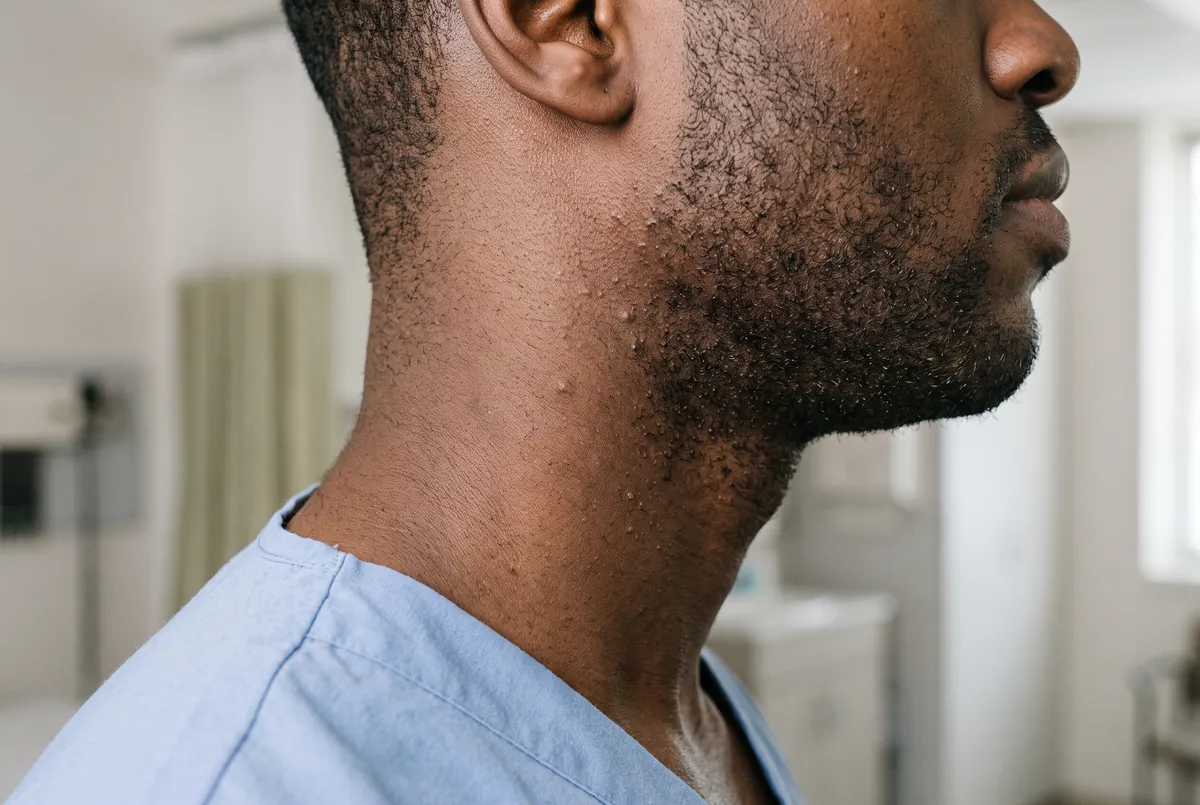
Ingrown hairs are the complaint I hear most from regular male waxing clients, and coarse, curly hair is the most likely to cause them. An ingrown hair forms when a regrowing hair curls back into the skin or cannot break through the surface, often because dead skin has sealed the follicle opening or because the hair broke below the surface during a previous wax. The result is a small bump, sometimes with a visible hair beneath it, that may be tender or itchy. Men with tightly curled hair on the face, neck, chest, or intimate areas are particularly prone to them.
Folliculitis is different, although it can look similar at first glance. It is inflammation of the hair follicles, often with small red bumps or pustules, and it can be triggered by bacteria, friction, sweat, or occlusion right after waxing. The back and chest are common sites in men because the skin is oily and often covered by tight clothing during workouts. Mild post-wax bumps usually settle within days with clean skin and loose clothing. Spreading redness, pus, warmth, pain, fever, or bumps that do not improve are signs to see a physician or dermatologist rather than treat at home.
Prevention works on both sides of the table. Professionals reduce ingrown hairs by mapping growth correctly, choosing a wax that removes coarse hair without breaking it, and avoiding repeated passes over the same skin. Clients reduce them by exfoliating gently between visits, keeping the skin moisturized so new hairs can break through, avoiding shaving between waxes, and never digging at a bump with fingernails or needles. If a hair is clearly visible at the surface, a clean, sterilized tool can lift it, but squeezing deep bumps risks infection and dark marks, especially on deeper skin tones.
Some men get ingrown hairs no matter how carefully they wax, usually because of hair shape rather than technique. For them, temporary removal keeps recreating the problem, since every new hair has a chance to curl back into the skin. This is one of the most common reasons clients move from waxing to permanent hair removal in a problem area. Electrolysis treats each follicle individually, so once a follicle is treated successfully, it cannot produce a new ingrown hair. Our guide on electrolysis for chronic ingrown hairs explains how that works and when to consider it.
When Men Should Not Wax
Waxing is safe for most healthy skin, but some situations make it risky, and a professional should decline or postpone the service when they apply. Many of these apply equally to women, but some come up more often with male clients because men are less likely to mention medications or recent skin treatments. The list below is general guidance. Your professional's screening, and advice from your own physician when you have a medical condition, always take priority.
- Current or recent use of oral isotretinoin or similar prescription acne medication, which can make skin too fragile to wax.
- Topical retinoids or strong exfoliating acids on the area without the recommended pause.
- Sunburn, windburn, or recent tanning on the area.
- Cuts, abrasions, rashes, active eczema or psoriasis flares, or open sores in the area.
- Active skin infections, including cold sores near the brows or nose.
- Recent laser, chemical peel, microdermabrasion, or other resurfacing treatment on the area.
- Raised moles, skin tags, or warts, which must be worked around, never waxed over.
- Varicose veins or very fragile skin on the area.
- Conditions that affect healing or circulation, such as diabetes, or blood thinners, which call for caution and sometimes a physician's advice first.
- Known allergy to wax ingredients such as rosin or certain resins.
For professionals, declining a service is a skill, not a failure. When a male client arrives with a sunburned back after a weekend at the lake, the right move is to explain why waxing today could lift the skin, offer to rebook, and document the conversation. Clients almost always respect a clear, calm explanation. Keep a written policy for contraindications so you are not making decisions on the spot under social pressure, and review medication questions again at each visit, since prescriptions change. If you are unsure whether a condition is safe to wax, ask the client to check with his physician first.
Skin tone deserves a mention here. Men with deeper skin tones are more prone to post-inflammatory hyperpigmentation, the dark marks that can follow irritation, ingrown hairs, or a wax that pulled too much skin. That does not mean they should avoid waxing. It means the professional should be especially careful with temperature, avoid repeated passes, favor hard wax on sensitive zones, and give clear instructions about not picking at bumps. Clients who already struggle with dark marks from shaving should mention it at the consultation so the plan can be adjusted from the start.
Professionalism and Boundaries for Waxing Professionals
Serving male clients well starts before the client walks in. Your service menu should name each male service clearly, state exactly what is included, and make clear what is not offered. Many professionals and salons choose to offer back, chest, brows, nose, ears, arms, and legs to men but limit or decline intimate male waxing, and that is a legitimate business decision. Others offer it with specific training and written policies. Whatever you decide, put it in writing on your menu and booking system, so clients know before they arrive and you are never negotiating scope on the table.
Draping and communication protect both the client and the professional. Leave the room while the client changes, give clear instructions about what to remove, and provide a towel or disposable cover so only the treatment area is exposed. Explain each step before you do it. Keep conversation professional and focused on the service. If a client makes an inappropriate comment or request, state calmly that it is outside the service, and end the appointment if it continues. You are never obligated to complete a service with a client who makes you feel unsafe, and a written policy that says so helps staff act quickly.
Safety policies deserve the same attention as technique. Many independent professionals require new male clients for intimate services to book with a verified phone number or a deposit, keep a colleague or front desk nearby during appointments, and use booking systems that allow them to flag or block clients. Document any incident in writing. None of this should make ordinary male clients feel suspected, and most never notice these systems exist. They simply allow you to build a men's clientele with confidence, which is good for business: male clients who find a professional they trust tend to be loyal and rebook on schedule.
Hygiene standards apply exactly as they do for any service, and male services can test them because back and chest waxes use a lot of product. Never double dip a spatula, use fresh linens and table paper for every client, wear gloves throughout, and discard strips and applicators after one use. On large areas it is tempting to reuse a strip until it stops gripping, and with some soft wax techniques a strip may be reused on the same client's same area, but never across areas that carry different risks. Your state board sets the sanitation rules, so follow the official standard, not a colleague's shortcut.

When Electrolysis Makes More Sense Than Waxing
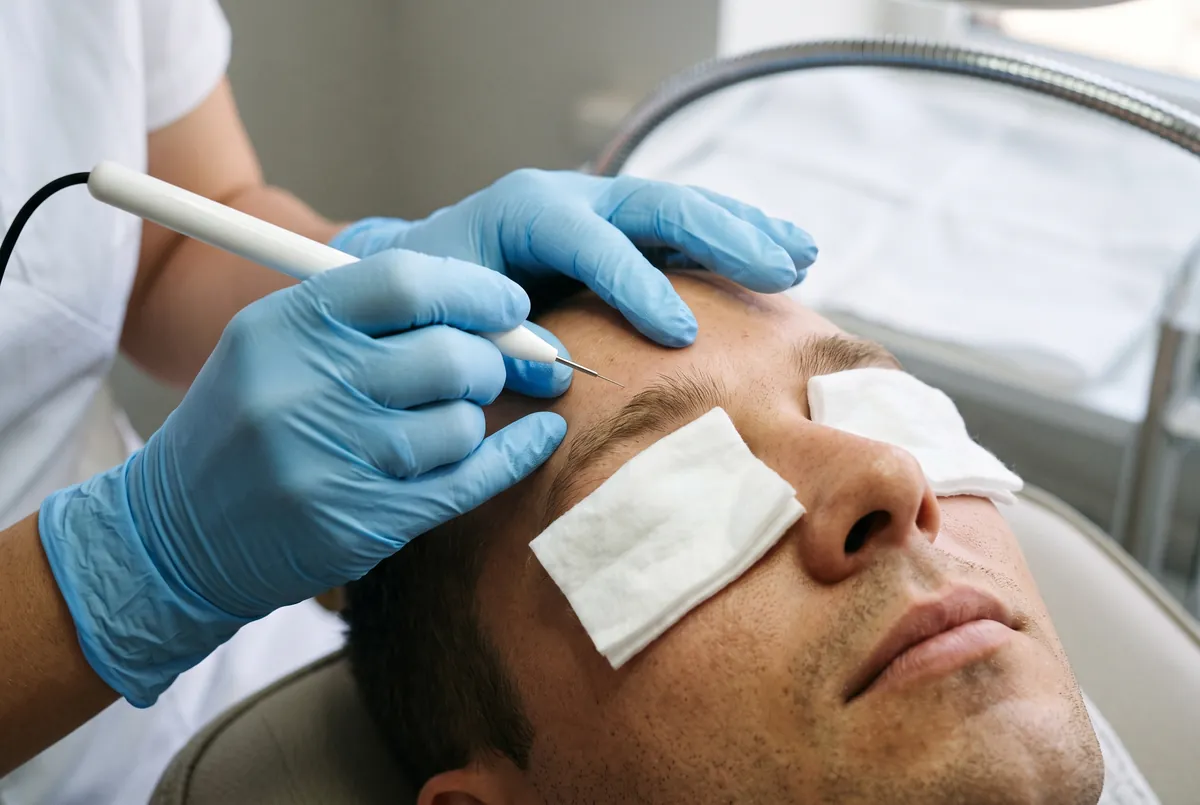
Waxing is excellent for large areas that a man wants kept smooth for a while, but it is temporary by nature. Hair regrows, and every wax repeats the same process. For some goals that is fine. For others, permanent removal is the better investment. Electrolysis is the only method the FDA accepts for permanent hair removal claims. It works one follicle at a time with a fine probe and a controlled current, which makes it slow for a whole back but ideal for small, specific areas where precision matters and every hair counts.
The areas where men most often switch from waxing to electrolysis are the ones where small numbers of hairs cause most of the annoyance. Hair between the brows is a classic example: waxing it every few weeks becomes a routine that electrolysis can end. Stray hairs on the cheekbones, the tops of the ears, the shoulders, or around a beard line are others. Men with chronic ingrown hairs along the neck, and men who want a permanently defined beard edge, are also common electrolysis clients. Electrolysis works on all hair colors, including gray and blond hair that laser cannot target reliably.
A combined approach suits many men. They continue waxing the back and chest, where speed matters and a temporary result is acceptable, and use electrolysis for the brows, ears, or stubborn stray hairs where they want the problem gone for good. For waxing professionals, this is a natural referral relationship or a next credential to pursue. Our guide on electrolysis for men explains which areas respond well and how treatment plans work, and whether estheticians can perform electrolysis covers the licensing side for professionals considering it.
Licensing and Training for Professionals Who Wax Men
If you want to offer male waxing as a professional, the first question is not technique but legal permission. In most US states, waxing for pay requires a license. Many states include waxing within the esthetician or cosmetology license, some offer a narrower waxing credential, and a few regulate it lightly while still applying sanitation and business rules. Training hours, exams, and fees vary by state and change over time, so I do not list them here. Our waxing licensing requirements by state track the current credential for each state and link to the official board for confirmation.
A licensing program teaches the foundation: skin anatomy, hair growth, contraindications, sanitation, and supervised practice on real clients. Most programs teach body waxing in general rather than male waxing in particular, so professionals who want to specialize usually build that skill after licensing through continuing education, mentoring, and practice. If you are still deciding which license to pursue, our overview of what an esthetician does day to day explains how waxing fits within the broader esthetics scope.
Online study works best as preparation and reinforcement. Before or alongside your state-approved program, a structured course such as our waxing course can help you understand hair growth phases, wax chemistry, contraindication screening, and aftercare so you arrive at hands-on training ready to practice rather than starting from zero. After licensing, the same theory helps you refine male waxing technique: reading growth patterns on the chest and back, choosing between hard and soft wax, and explaining each step to nervous first-time clients in plain words.
Your Next Step
If you are a man planning your first wax, choose one or two areas, let the hair grow to the right length, pause strong skin products, and book with a licensed professional who explains the process before starting. Plan the first appointment well ahead of any event and follow aftercare closely for the first day. If you are a professional, write a clear male services menu, keep both hard and soft wax ready, map every growth pattern before you apply, and confirm your state's licensing requirements before you take a single paying client. For stubborn small areas, remember that electrolysis can finish what waxing only repeats.
State Requirements
State licensing guides
Hours, exams, fees, and the licensing board differ by state. Open your state for the current requirements.
Common Questions
FAQ
The basic technique is the same, but male waxing often involves coarser, denser hair and larger areas such as the back and chest. That affects wax choice, section size, and pace. Many professionals use soft wax for broad areas and hard wax for coarse patches and sensitive zones. Hair growth direction on the male chest and back can also be irregular, so mapping it before applying wax is especially important.
Hair should be long enough for the wax to grip, usually about the length of a grain of rice. If you have been shaving, let the hair grow out for a couple of weeks first. If back or chest hair is very long, trim it with clippers a day or two before the appointment, or ask the salon whether trimming is included, because very long hair tangles and increases discomfort.
It is uncomfortable, especially the first time, but most men find back waxing manageable and quicker than they expected. The chest and areas near the nipples are usually more sensitive than the back. Regular appointments tend to make later sessions easier. Good technique, steady breathing, and correct preparation make a real difference, and a client who knows what to expect relaxes, which also lowers sensation.
Back and chest skin is often oily, and freshly emptied follicles combined with sweat, friction, and tight clothing can cause small red bumps. Avoiding workouts, saunas, and hot showers for about the first day, wearing loose clean clothing, and exfoliating gently between visits usually help. Bumps that spread, hurt, contain pus, or come with fever should be checked by a physician or dermatologist.
Both have a place. Soft strip wax is fast and efficient for large areas like the back, shoulders, arms, and legs. Hard wax grips coarse hair firmly with less pull on the skin, so it is preferred for brows, nose, ears, underarms, intimate areas, and coarse patches. Many professionals combine the two in one male waxing appointment, choosing by area rather than using one formula for everything.
Yes, these are common male waxing services. Brow waxing for men should keep a full, natural shape and remove only what the client agrees to. Nose and ear waxing removes visible hair at the outer openings only, never deep inside. For men tired of maintaining the brows every few weeks, electrolysis offers a permanent alternative for small areas.
In most states, yes. Waxing for pay is usually covered by an esthetician or cosmetology license, and some states offer a narrower waxing credential. Online study can prepare you, but it does not replace state-required in-person training or a license. Check the current rules for your state through our state licensing pages and confirm with your state board.
Keep Reading
Related Guides


