Cosmetology
Laser Hair Removal for Men: Areas, Sessions, Pain and Results
Quick answer
Laser hair removal for men works best on dark hair and is most requested for the back, shoulders, chest, neck and beard line. Lasers are cleared for permanent hair reduction, not total removal, so men usually need a series spaced weeks apart plus occasional maintenance. Gray, blond and red hairs do not respond, and tattoos must not be treated. Operator rules vary by state.
Laser hair removal for men has moved from a niche request to an ordinary part of the schedule in American clinics. Men book it for backs and shoulders they are tired of shaving or waxing, for chests and stomachs they want thinner instead of bare, for a neckline that breaks out in razor bumps every week, and for a beard edge they would like to stop maintaining. The technology is the same one used for women, but male hair is usually coarser, denser and more strongly driven by hormones, and that changes the plan, the number of visits and the conversation about what to expect.
I am Aida Khazieva, a licensed electrologist and cosmetologist with more than twenty years in hair removal. In this guide I cover how laser works on male hair, which areas respond well and which need caution, how the face and neck differ from the body, what a session feels like, how to prepare, and what the realistic long-term result is. I also explain who may operate a hair removal laser, because that depends on the state and may require medical supervision. This is general information, not medical advice.
How laser hair removal works on male hair
A hair removal laser sends a pulse of light into the skin at a wavelength that is absorbed by melanin, the pigment in the hair shaft. The pigment turns the light into heat, and the heat travels down the hair to the structures in the follicle that produce it. When enough heat reaches those structures while the hair is in its active growth phase, the follicle is damaged and produces a finer hair, a slower hair, or none. The surrounding skin is protected by cooling and by choosing settings that suit its tone.
Two facts follow from that mechanism. First, the laser needs contrast: dark hair against lighter skin is the easiest case, and gray, white, blond and red hairs have too little of the right pigment to absorb the energy. Second, only follicles in the growth phase respond at a given visit, and at any moment a large share of follicles are resting. That is why treatment is a series spaced weeks apart and never a single appointment. Male body hair often has a high proportion of thick, dark terminal hairs, which absorb energy well and often respond visibly in the first sessions.
The legal wording matters here. Hair removal lasers are cleared by the FDA for permanent hair reduction, meaning a long-term, stable decrease in the number of hairs regrowing after a treatment course. That is different from permanent hair removal, a claim the FDA accepts only for electrolysis. Most men finish a laser series with far less hair that is finer and slower, and then return for occasional maintenance. Men who expect every follicle gone forever need to hear this before they pay for a package.
Why men's treatment plans differ from women's
The first difference is hormonal. Androgens drive hair growth on the back, chest, shoulders, abdomen and face, and in men that stimulus is strong and continues throughout adult life. Follicles that were dormant can become active years later. So even after a successful series, a man may see some new growth over time that is not a failure of the laser. It is new follicles switching on. This is the main reason maintenance sessions are more common for men than for women treating the legs or underarms.
The second difference is area. A full back with shoulders is many times larger than an underarm, and the hair is dense. Sessions take longer, use more pulses, and produce more total heat in the skin, which affects comfort and aftercare. The third is the follicle itself. Beard and back follicles are deep and robust, and coarse hair absorbs a lot of energy, so settings have to be effective without overheating the skin. An operator used to fine female facial hair needs to adjust technique for a dense male beard.
The fourth difference is the goal. Many men do not want bare skin. They want a back that is hair-free but a chest that is simply lighter, or a beard that keeps its shape with a clean edge on the cheeks and neck. Thinning and shaping are legitimate goals and are handled by adjusting the number of sessions and the treated borders. A good consultation asks what you want to see in the mirror instead of assuming complete clearance.

The most requested areas for men
The back and shoulders are the classic request. Hair there is hard to reach, grows back quickly after shaving, and waxing such a large area every few weeks is painful and prone to breakouts. Laser tends to work well because the hair is usually dark and coarse. The upper back and shoulders can be stubborn, and they are also the area most associated with new growth later, so I tell men to plan for maintenance. The lower back usually clears more easily.
The chest and abdomen are next. Here the question is usually density. Some men want everything gone, and many want a natural look with less volume. Treating the whole area for a few sessions thins it evenly. Nipples, moles and tattoos are worked around or covered. Hair on the abdomen often runs into the pubic area, and the provider should agree with you in advance where the treated area ends so that the transition looks natural.
Arms, hands, legs and feet respond well where the hair is dark. Cyclists, swimmers and bodybuilders often ask for legs. Underarms are small, quick and popular for comfort and odor control. Buttocks and the area between them are requested for hygiene and comfort, and men who sit for long hours or have recurring irritation there often describe the result as a real quality-of-life change. Ears and nostrils are not suitable for typical laser handpieces, and hair there is better handled by other methods.
| Area | Typical goal | What to know |
|---|---|---|
| Back and shoulders | Full clearance or heavy reduction | Large area, dense hair, good early response, maintenance is common |
| Chest and abdomen | Thinning or clearance | Agree on borders in advance, work around nipples, moles and tattoos |
| Neck and beard line | Clean edge, fewer razor bumps | Reduction is long-lasting, so decide the line carefully |
| Underarms | Clearance | Small and quick, sensitive for a few seconds per pulse |
| Legs and arms | Thinning or clearance | Works best on dark hair, fine light hair responds poorly |
| Bikini area and buttocks | Hygiene and comfort | More sensitive, darker skin in the area needs adjusted settings |
Face, beard line and cheeks
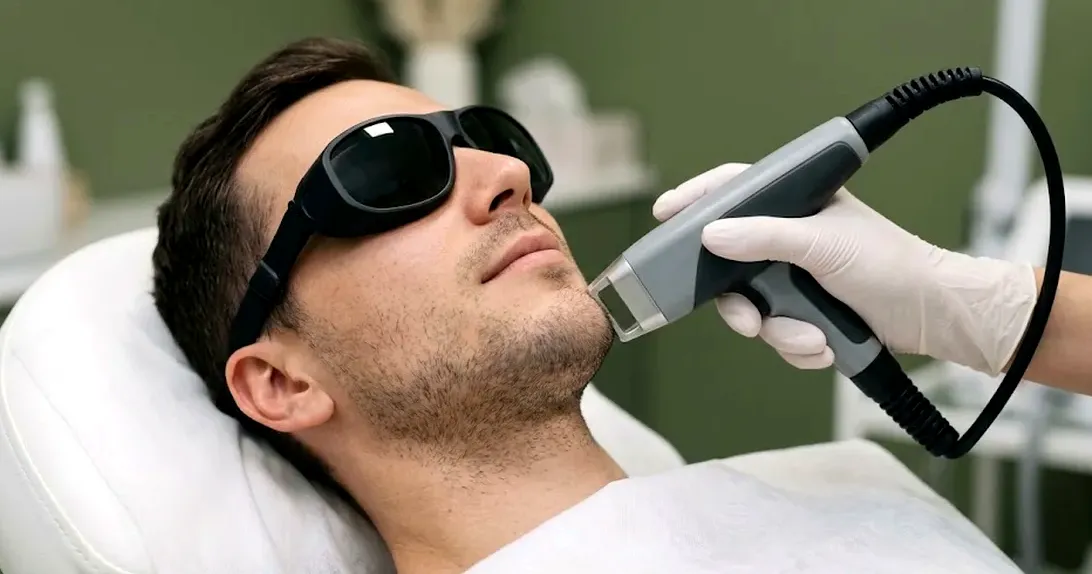
Facial work on men needs the most thought, because the result is long-lasting and beard fashion changes. The usual requests are to remove hair high on the cheekbones, to define the upper edge of the beard, to clean the neck below a chosen line, and to remove stray growth between the eyebrows or on the upper cheeks. Full beard removal is requested less often, mostly by men with severe shaving irritation or for personal reasons, and it is a major decision.
I ask every man the same question before facial treatment: would you be content with this line in ten years if you decided to grow a full beard? A cheek line set too low or a neckline set too high cannot easily be undone. A conservative line that follows the natural border is the safer choice, and it can always be moved later. The provider should mark the line with you looking in a mirror, sitting upright, before any pulse is fired.
Beard hair is dense and deep, and the face has many nerve endings, so this is the most uncomfortable area for most men, particularly the upper lip and chin. It also takes more sessions than body areas, because facial follicles are numerous, cycle quickly and are strongly hormone-driven. Lighter and gray beard hairs will not respond. Men with a salt-and-pepper beard should know that laser will take out the dark hairs and leave the gray ones, which can look odd. For those hairs, see the guide to electrolysis for gray hair.
Razor bumps and ingrown hairs on the neck
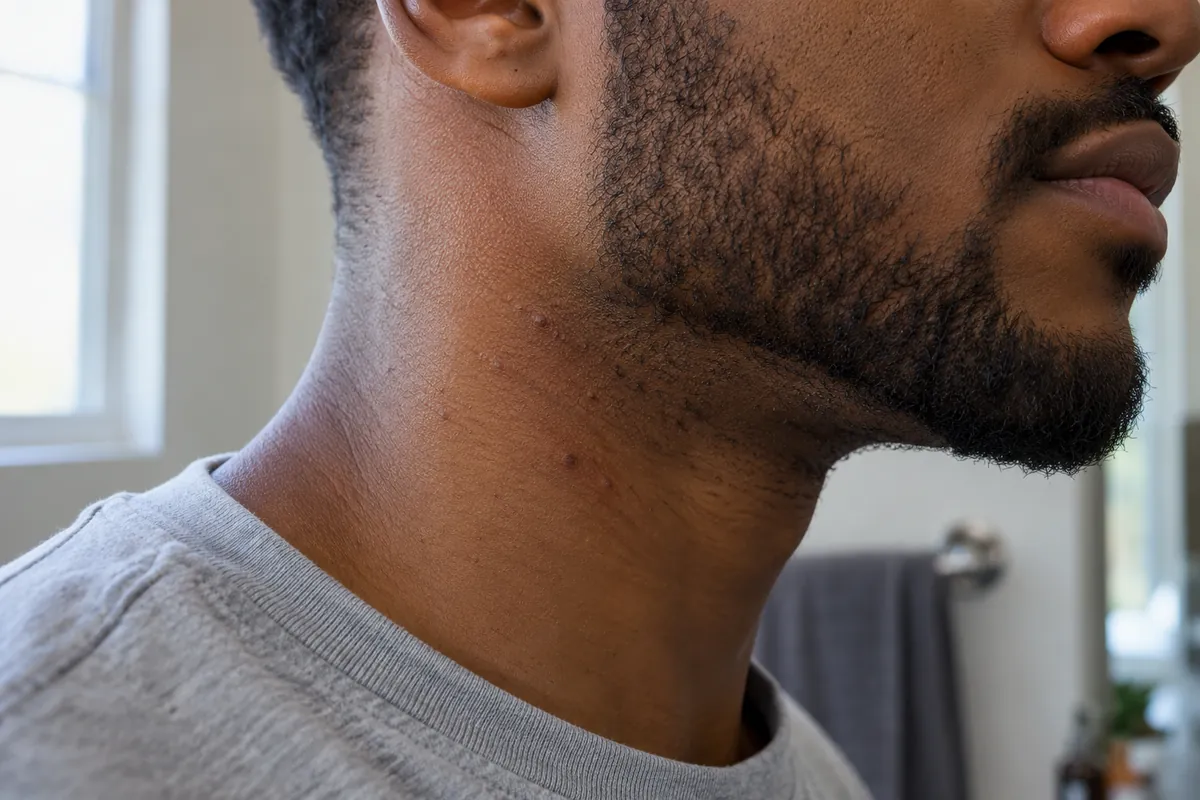
For many men the reason to start is medical discomfort more than appearance. Pseudofolliculitis barbae, the clinical name for razor bumps, happens when shaved hairs curl back into the skin or pierce the follicle wall and cause inflamed bumps, dark marks and sometimes scarring. It is especially common in men with tightly curled beard hair, including many Black men, and on the neck, where hair grows in several directions. Shaving more carefully helps some, but for others the problem returns with every shave.
Reducing the number and thickness of hairs reduces the number that can become ingrown, and dermatologists often suggest laser hair reduction for persistent razor bumps. The right device matters a great deal here. Darker skin has more melanin in the epidermis, which competes with the hair for the laser energy, so longer wavelengths such as the Nd:YAG are generally chosen for deeper skin tones, with conservative settings and strong cooling. A device and operator suited to light skin can burn dark skin. If you have a deep skin tone, ask directly which laser will be used and how much experience the provider has with skin like yours.
If the bumps are infected, painful or leaving scars, see a dermatologist before any hair removal. Active inflammation is treated first. Electrolysis is another route for ingrown hairs, particularly for small, stubborn patches and for hairs the laser cannot see, and my guide to electrolysis for ingrown hairs explains how that works. The related guide to electrolysis for the neck covers the area in more detail.
Bikini area and intimate zones
More men ask about the groin, pubic area, scrotum and the area between the buttocks than most people assume, and reputable clinics treat these requests as routine. Clinics name the services differently, so ask exactly which zones are included. Skin in this region is often darker than the surrounding skin and more sensitive, so settings are adjusted and a test spot is sensible. Not every clinic treats every zone, and some limit which staff perform intimate services.
Professional conduct in these appointments is specific and you can expect it. The provider explains the positioning in advance, uses draping so that only the area being treated is exposed, wears gloves, and keeps conversation neutral. You are entitled to ask who will perform the service and to request a different provider if you prefer. Clinics are equally entitled to end a session if a client behaves inappropriately. Clear expectations on both sides keep these appointments as uneventful as a back session.
How many sessions men need
Laser works on follicles in the growth phase, and different areas cycle at different speeds. A series is therefore planned as a number of sessions spaced several weeks apart, with shorter intervals for the face and longer ones for the body. Men generally need more sessions than women for the equivalent area, because of denser growth and stronger hormonal drive, and the face and upper back usually take the most. Your provider sets the plan after seeing your hair and skin, and adjusts it as the response becomes clear.
I avoid promising a number. What I describe is the pattern. After the first visit, treated hairs shed over the following weeks and the area looks patchy. With each visit the regrowth is thinner, lighter and slower. At some point the remaining hairs become too fine or too light for the laser to target, and further sessions give little additional change. That is the natural end of the series. The guide to how many laser hair removal sessions you may need explains the growth cycle and spacing in detail.
Maintenance follows. Many men come back once or twice a year for a touch-up on the back and shoulders or the neck. Changes in hormones, certain medications and anabolic steroid use can stimulate new growth, and it is worth telling your provider about them. If you see sudden, unusual hair growth without an obvious reason, mention it to a physician, since that is a medical question and not a cosmetic one.

Devices, skin tone and hair color
Three laser types dominate hair removal in the United States. The alexandrite has a shorter wavelength that is strongly absorbed by melanin and is typically used on lighter skin. The diode sits in the middle and is used across a broad range of skin tones with appropriate settings. The Nd:YAG has the longest wavelength, is absorbed less by skin pigment, and is generally the choice for brown and Black skin. Intense pulsed light is not a laser and is covered separately in my IPL hair removal guide.
The provider assesses skin using the Fitzpatrick scale, which classifies how skin responds to sun, and matches the device and settings to it. Recent tanning changes the assessment. A tan adds melanin to the epidermis and raises the risk of burns and pigment changes, so clinics postpone treatment on tanned skin. This matters for men who work outdoors or who train shirtless in summer. Planning a back series for the cooler months is often the practical answer.
Hair color sets the ceiling. Black and dark brown hair responds best. Light brown responds less. Blond, red, gray and white hairs respond poorly or not at all, regardless of the device or the number of sessions. A clinic that sells a full package to a man with a mostly gray chest is not being honest. For those hairs, and for finishing what laser leaves behind, electrolysis is the method that works on any color. I compare the two in the guide to electrolysis or laser hair removal.
Who should wait or avoid laser
A responsible clinic takes a health history before the first pulse. Laser is postponed or declined in several situations, and some of them call for a physician's opinion first. The list below is general, and each manufacturer and clinic has its own.
- A recent tan, sunburn or self-tanner on the area.
- Medications that make skin sensitive to light, including some antibiotics and acne drugs. Bring your medication list.
- Oral isotretinoin now or recently, until the prescribing physician clears treatment.
- Active skin infection, cold sores, open wounds, or a flare of eczema or psoriasis on the area.
- A history of keloid scarring or of pigment changes after skin injury, which needs careful assessment.
- Tattoos and permanent makeup in the treatment area. Laser must not be fired over tattoo ink.
- Moles and pigmented lesions, which are covered or avoided. Have any changing mole checked by a dermatologist first.
- Seizure disorders triggered by light, and certain medical conditions that affect healing, without medical clearance.
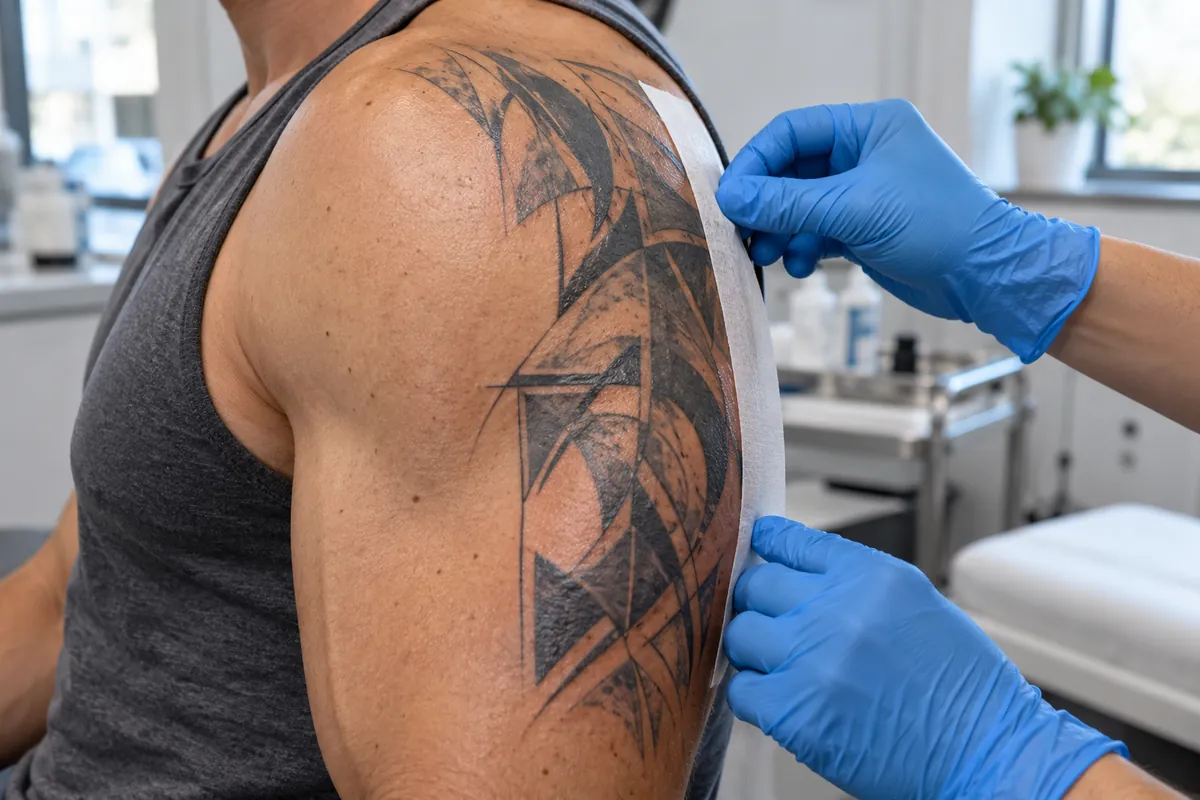
Tattoos deserve emphasis because so many men have them on the arms, chest and back. Tattoo pigment absorbs laser energy intensely, and firing a hair removal laser over ink can cause burns, blisters, scarring and damage to the tattoo. Providers work at a margin around the tattoo or cover it. Hair inside a tattooed area can be removed with electrolysis, which does not depend on pigment. If a clinic says it can simply laser over your tattoo, find another clinic.
Who is allowed to perform laser hair removal
Rules differ sharply from state to state. In some states laser hair removal is considered the practice of medicine and may be performed only by a physician or by specified licensed personnel under a physician's delegation and supervision. Other states license laser technicians directly, set training requirements, or allow estheticians or electrologists to operate lasers under defined conditions, often with a medical director. The level of supervision required, from on-site to available by phone, also varies.
As a client, ask three questions: who will operate the laser and what credential they hold, who the supervising physician or medical director is, and what the clinic does if there is a burn or other complication. A legitimate clinic answers clearly. As a student or working professional, check your state's rules before enrolling in any laser course, because a certificate does not grant legal authority to treat. My guide on how to become a laser hair removal technician explains the usual routes, and the esthetics licensing hub links to state boards.
How to prepare
Preparation starts weeks before the first appointment. Stop waxing, tweezing and epilating the area, because the laser needs the hair root in the follicle as its target. Shaving is fine and is in fact required. Keep the area out of the sun and do not use self-tanner. If you take any new medication, tell the clinic before you come in. A consultation with a test spot, done on a separate day, shows how your skin reacts and lets the provider choose settings with more confidence.
Shave the area the day before or as your clinic instructs. Hair above the surface absorbs energy, burns, and heats the skin from the outside, which hurts and can mark the skin. A close shave lets the energy travel down the stub of hair to the follicle. For the back, you will need help from a partner or a body shaver with a long handle, and some clinics offer to shave hard-to-reach areas for a fee. Shave carefully. Cuts and razor burn can mean those spots are skipped.
On the day, shower and arrive with clean skin: no deodorant on underarms being treated, no lotion, cologne or body spray on the area. Wear loose, soft clothing that will not rub afterward. Skip a hard workout right before, since hot, flushed skin is more reactive. Plan the rest of your day so that you do not need to go to the gym, a sauna or the beach after the appointment.

What a session feels like
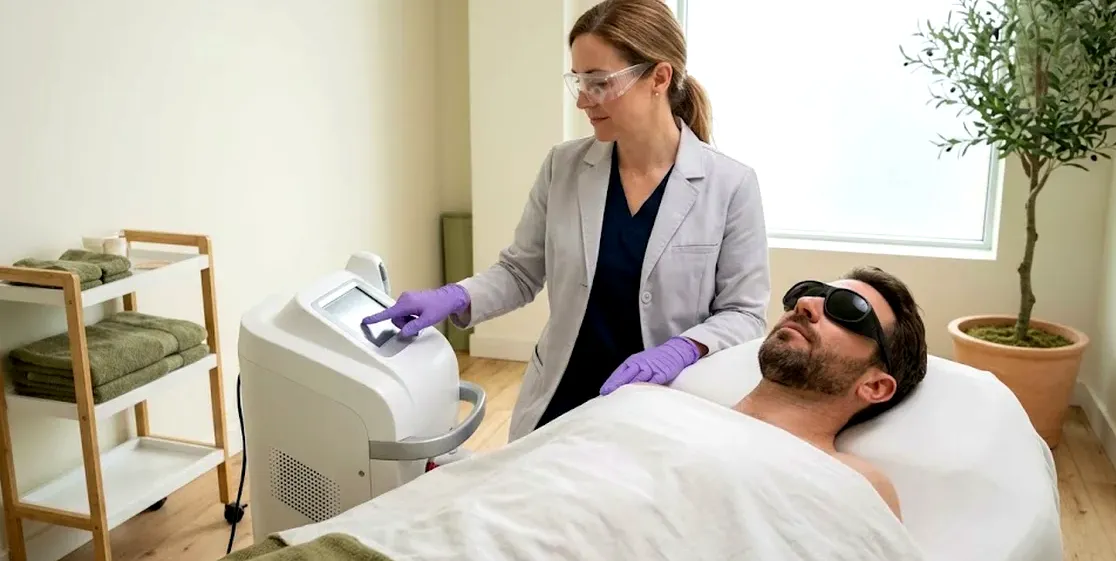
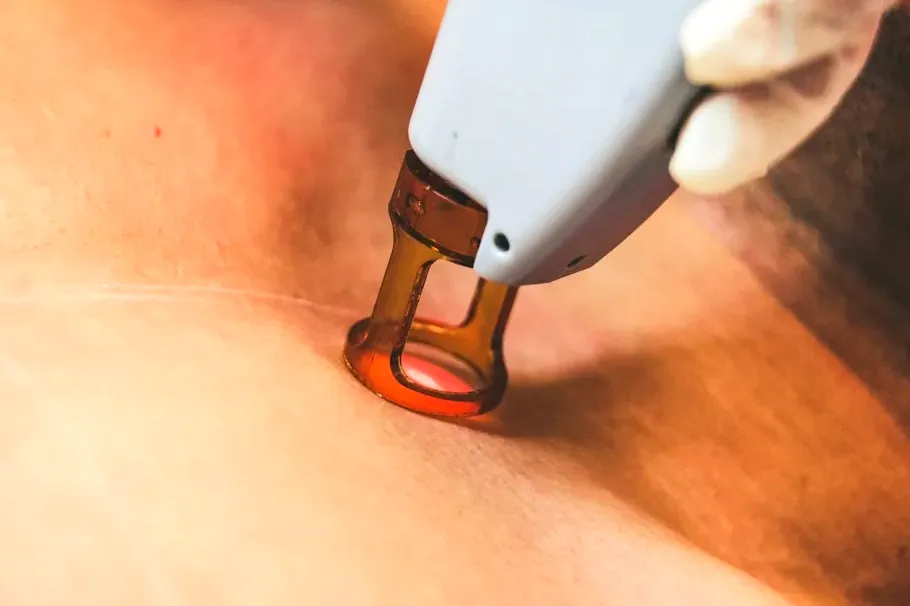
Both you and the operator wear protective eyewear matched to the laser's wavelength. The provider cleans the skin, may mark the borders, and applies gel if the device requires it. Each pulse feels like a quick snap of a rubber band with a flash of heat, followed immediately by cooling from the handpiece, a cold air stream or a cryogen spray. On dense areas the first session is the most intense, because there is more hair to absorb energy. As hair thins over the series, sessions get easier.
Sensitivity varies by area. The upper lip, chin, neck, underarms, nipple area, spine and intimate zones are the sharpest. The outer arms, lower legs and lower back are milder. A full back and shoulders can take the better part of an hour depending on the device, while underarms take minutes. Tell the operator how it feels. Adjusting the cooling, the pace or the settings within safe limits is normal, and a provider who ignores your feedback is a concern.
Some men ask about numbing cream for large areas. A topical anesthetic is a drug, and applying it over a large area such as the whole back is exactly the situation in which the FDA has warned of serious reactions. Do not use one on your own initiative. If numbing is discussed, it should be under the direction of a physician or other qualified prescriber, with the product label followed exactly. Most men manage a back session with cooling and short pauses.
Aftercare and side effects
Right after a session the skin is usually pink and warm, with small raised bumps around the follicles. This swelling around follicles is expected and usually settles within hours to a couple of days. Cool compresses wrapped in cloth help, as does aloe or a plain fragrance-free moisturizer. For the first day or two avoid hot showers, saunas, hot tubs, hard workouts and tight clothing over the area. Sweat, heat and friction on freshly treated follicles are the common cause of post-laser breakouts on the back and chest.
Sun protection lasts through the whole series. Keep treated areas covered or use broad-spectrum sunscreen, because sun on treated skin raises the chance of dark or light patches and a tan delays your next visit. Between sessions, shave as needed and do not pull hairs out. Over the following weeks the treated hairs work their way out, which can look like regrowth. Let them shed. The full routine is laid out in my laser hair removal aftercare guide.
Less common side effects include blisters, crusting, burns and changes in pigment, which are more likely with tanned skin, the wrong device for the skin tone or aggressive settings. There is also a rare effect called paradoxical hypertrichosis, in which hair in or next to the treated area becomes thicker or denser. It has been reported most often on the face, neck, shoulders and upper back, which are precisely the areas men ask for. Tell your provider if hair seems to be increasing at the edges. Contact the clinic promptly about blisters or worsening pain, and see a physician for signs of infection.
Laser compared with waxing, shaving and electrolysis
Shaving is cheap and immediate, and for the back it is awkward and short-lived, with stubble returning in days. Waxing gives a few weeks of smooth skin and is a reasonable choice for men who want an occasional clean back for a vacation. It hurts on large, dense areas and can cause folliculitis and ingrown hairs. My waxing for men guide covers what to expect. Keep in mind that you cannot wax during a laser series.
Laser costs more at the start and requires a commitment to a series, and it offers the longest-lasting reduction over large areas for men with dark hair. Electrolysis treats each follicle individually and is the only method recognized for permanent hair removal. It works on every hair color and skin tone, which makes it the answer for gray, blond and red hairs, for hair inside tattoos, for precise shaping of a beard line or eyebrows, and for the scattered hairs left after laser. Its limit is speed on large areas.
In practice the two are often combined: laser to reduce the bulk of dark hair on a back or chest, then electrolysis to finish what remains. The guide to electrolysis for men explains how that course is planned, and hair removal methods compared sets all the options side by side.

Choosing a clinic, and mistakes to avoid
Choose on competence, and treat price as a secondary factor. A good clinic offers a real consultation with a health history and a test spot, names the device it will use and why it suits your skin, explains who operates it and who supervises, and tells you plainly what result to expect on your hair color. It photographs the area at the start. It does not pressure you into a large prepaid package on the first visit, and it has a clear policy for what happens if you do not respond.
The mistakes I see most from clients are tanning during the series, waxing or plucking between sessions, arriving unshaved, stopping after two or three sessions because the area "looks done" during the shedding phase, and hiding medications or supplements. From providers, the mistakes are treating tanned skin, using the wrong wavelength on dark skin, setting a beard line without the client's input, and promising permanent total removal. Knowing both lists helps you recognize a careful practice.
On cost, I do not quote figures, because prices depend on the city, the device, the size of the area and who performs the treatment. Large male areas such as a full back are priced higher than small ones, and packages lower the price per session. Compare what is included: the consultation, the test spot, the number of sessions, the price of maintenance visits afterward, and the policy if you need to pause for a tan or a medication. A low price from a clinic that cannot name its device or its supervising physician is not a saving. Burns and pigment changes cost far more to treat than the difference between two quotes.

Your next step
Decide which areas matter most and what you want them to look like: bare, thinner or simply tidier. Check your hair color honestly, since the laser can only treat what is dark. Then book consultations with one or two clinics, ask who operates the laser and under what supervision, request a test spot, and plan the series for a season when you can keep the area out of the sun. If your hair is light or gray, or you want a guaranteed permanent result on a small area, speak to a licensed electrologist instead. The studio directory is a place to start.
If you are a professional thinking about serving more male clients, the demand is steady and men tend to be loyal once they trust a provider. Learn the differences in hair biology, be exact about borders on the face, keep your conduct in intimate services beyond question, and make sure your state permits you to operate the equipment under the supervision arrangement you have.
State Requirements
State licensing guides
Hours, exams, fees, and the licensing board differ by state. Open your state for the current requirements.
Common Questions
FAQ
Yes, for men with dark hair it works well and is particularly popular for the back, shoulders, chest, neck and beard line. Lasers are cleared for permanent hair reduction, which means a lasting decrease in density, not guaranteed total removal. Because male hair growth is strongly driven by hormones, most men need a longer series than women and occasional maintenance afterward.
It varies with hair density, hair color, skin tone and the device, so a provider sets the number after a consultation. The back and shoulders usually sit at the higher end of the range for body areas, with sessions spaced several weeks apart and maintenance once or twice a year for many men. See how many laser hair removal sessions for how the growth cycle shapes the plan.
It can be, because dense, coarse hair absorbs more energy, especially in the first sessions and on the face, neck and upper back. Most men describe a quick rubber band snap with heat, eased by the device's cooling. Sessions get easier as hair thins. Do not apply numbing cream over large areas on your own. Ask the clinic, and any anesthetic should be used under medical direction and according to its label.
Laser can define a cheek line, clean the neck below the beard, or reduce a full beard. Because the reduction is long-lasting, choose a conservative line you would still accept if you grew a full beard later. Gray and light beard hairs do not respond. For precise shaping or for those hairs, electrolysis for men is the better tool.
Often, yes. Fewer and finer hairs mean fewer ingrown hairs, and dermatologists frequently suggest laser hair reduction for persistent razor bumps on the neck. Men with brown or Black skin need a laser suited to deeper skin tones, such as an Nd:YAG, used by an experienced operator. See a dermatologist first if the bumps are infected, painful or scarring.
No. Tattoo ink absorbs laser energy strongly, and treating over it can cause burns, blisters, scarring and damage to the tattoo. Providers leave a margin around tattoos or cover them. Hair growing within a tattoo can be removed with electrolysis, which does not rely on pigment and does not affect the ink when performed correctly.
Some usually does. Treated follicles may produce finer, lighter hairs over time, and hormones can activate follicles that were dormant during the series. This is why maintenance sessions are common for men. A small number of people experience increased growth near treated areas, called paradoxical hypertrichosis. Tell your provider if you notice it.
It depends on the state. Some states treat it as a medical procedure performed by or under the supervision of a physician, while others license laser technicians or allow estheticians or electrologists to operate lasers under defined conditions. Ask any clinic who operates the laser and who supervises. For career routes, see how to become a laser hair removal technician.
Keep Reading
Related Guides


