Waxing
First Brazilian Wax: What to Expect, How to Prep, and Aftercare

Quick answer
For a first Brazilian wax, let the hair grow to about a quarter of an inch, skip shaving and home trimming beforehand, and pause retinoids on the area. Expect a sharp sting that fades within seconds, then some redness and small bumps afterward. The first visit is the hardest, so choose a licensed waxer who never double dips.
Booking a first Brazilian wax usually comes with more questions than any other beauty appointment: how long the hair should be, what actually happens in the room, how much it hurts, and whether it will feel awkward. After more than twenty years in hair removal as a licensed cosmetologist and electrologist, I can tell you that nervous first-timers are completely normal, and that a professional waxer expects every one of those questions and answers them without embarrassment. The more you know before you arrive, the calmer and quicker your appointment tends to be.
This guide walks you through a first Brazilian from start to finish: how it differs from a bikini wax, how to prepare in the days before, when to postpone or check with a doctor, what happens step by step on the table, how to reduce discomfort, how to care for your skin afterward and prevent ingrown hairs, how often to return, and how to recognize a waxer who takes hygiene seriously. It is written for clients, in plain terms, with the practical details I explain to first-time clients in my own practice. If you are considering a permanent option instead, later sections point you there as well.
What a Brazilian Wax Is, and How It Differs From a Bikini Wax
Studio menus use different names, but the services fall along a scale of how much hair is removed. A bikini line wax removes only the hair that would show outside standard underwear or a swimsuit, at the sides and top of the pubic area. A full bikini, sometimes called an extended bikini, goes further in from the sides and lower on the front while leaving hair in the center. A Brazilian removes hair from the entire pubic area, the labia, and usually the strip between the buttocks, with the option of leaving a small strip or triangle at the front. When a studio says bikini wax without more detail, ask exactly what it covers, because menus are not standardized.
| Service | Area treated | What remains | Good fit for |
|---|---|---|---|
| Bikini line | Hair outside the edges of standard underwear | Most of the pubic area | A gentle first wax, or a clean line for swimwear |
| Full or extended bikini | Sides and more of the front, deeper into the bikini area | A center area of your choosing | More coverage without full removal |
| Brazilian | Front, labia, and usually the area between the buttocks | Nothing, or a small strip or triangle | People who want the whole area smooth |
If you are unsure, it is perfectly reasonable to start with a bikini line or full bikini for your first visit and move to a Brazilian next time. That gives you a feel for the sensation and for your waxer before committing to the most detailed service. Many clients do the opposite and book the Brazilian straight away, which is also fine. The skin and hair in the deeper areas simply make it a longer and more sensitive appointment, so knowing what to expect matters more than which order you choose. Tell the studio it is your first time when you book, so they can allow a little extra time.
When you book, describe the result you want in plain words rather than relying on a menu name: everything removed, a small strip at the front, or a clean line with hair left in the center. Mention if you want the area between the buttocks included, since some studios list it separately. If you are not sure, say so. A good waxer will explain the options during the consultation and can leave more hair than planned on a first visit, because hair can always be removed next time but cannot be put back once it is gone. Nothing you ask about this is unusual to a professional.
Is a Brazilian the Right Method for You
Waxing removes hair from the root, so results last longer than shaving and regrowth usually feels softer than stubble. It suits people who want a smooth result for several weeks at a time and are willing to keep a regular schedule. It is less suitable for anyone whose skin reacts strongly to pulling, who gets frequent ingrown hairs even with good aftercare, or who cannot pause certain skin medications. Sugaring is the closest alternative. It uses a paste removed in the direction of hair growth, which some clients with sensitive skin tolerate better, and our deep bikini sugaring technique and safety guide explains how that service is performed.
Neither waxing nor sugaring is permanent. Laser hair removal reduces hair over a series of sessions but relies on pigment, so it works poorly on light, gray, or red hair. Electrolysis is the only method the FDA accepts for permanent hair removal claims. If you are waxing mainly because of coarse hair or recurring ingrown hairs and are tired of the cycle, our comparison of hair removal methods side by side shows where each one fits. For a first-timer, though, waxing is a low-commitment way to find out if you like the result before investing in anything longer term.
Hair and skin type shape the experience as well. Coarse, curly hair usually waxes cleanly because the wax has plenty to grip, but it is also more prone to ingrown hairs afterward, so aftercare matters more. Fine hair can break instead of coming out at the root if it is too short. Very dry or reactive skin may redden more, and people with deeper skin tones should be especially careful about irritation, because inflamed follicles can leave dark marks that fade slowly. None of this rules waxing out. It simply tells you and your waxer what to watch for from the first visit.

Hair Length: The Detail That Makes or Breaks the Appointment
The most common first-timer problem I see is hair that is too short. Wax needs enough length to grip, roughly a quarter of an inch, about the length of a grain of rice. Shorter hair slips out of the wax, so the waxer has to go over the area again or tweeze, which means more discomfort and a patchy result. If you have been shaving, stop and let the hair grow out. For most people that means at least two weeks of regrowth, sometimes a little more for fine hair. Book your appointment around that regrowth rather than around an event, and tell the studio when you last shaved so they can advise you honestly.
Very long hair causes the opposite problem. It tangles in the wax and pulls more than necessary, so your waxer will usually trim it first with clean scissors. Please do not trim at home the night before to be helpful. Clients almost always cut it too short, and then the appointment has to be moved. The only home grooming I suggest before a first Brazilian is none at all. Arrive with natural growth and let the professional decide what needs trimming. They see the whole area under good light and know exactly how much length their wax needs.
Preparing in the Days Before
Preparation starts earlier than most people expect, and most of it is about arriving with calm, healthy skin and the right hair length. None of it is complicated, but skipping a step is the usual reason a first appointment feels harder than it should. Here is the timeline I give first-time Brazilian clients, from about two weeks out to the moment you check in.
- Two weeks or more before: stop shaving, trimming, and using hair removal creams on the area, and review your medications and skincare against the list in the next section.
- The week before: avoid tanning beds and sunbathing on the area, and do not start any new skincare product there.
- A day or two before: exfoliate gently with a soft washcloth or mild scrub to loosen dead skin, then stop; do not exfoliate on the day itself.
- The night before: skip heavy lotions, oils, and body butters on the area, since they keep wax from gripping.
- The day of: shower with a gentle, unscented cleanser, wear clean cotton underwear and loose clothing, eat a normal meal, and go easy on caffeine and alcohol, which can make skin feel more sensitive.
- Before you leave home: if you want to take an over-the-counter pain reliever, ask your doctor or pharmacist first whether it is safe for you.
- At check-in: arrive a few minutes early to complete the intake form fully and honestly.
Timing within your menstrual cycle matters too. Many people find their skin more sensitive in the days just before and during their period, so if you can choose, a date later in your cycle often feels easier. Being on your period does not always mean cancelling. Many studios will wax you if you wear a fresh tampon or menstrual cup, while others prefer to reschedule, so check the policy when you book rather than at the front desk. Pads and period underwear do not work for this service, because the area needs to be fully accessible and clean.

When to Wait or Talk to a Doctor First
Some situations make waxing risky enough to postpone, and a good waxer will ask about them on the intake form. The biggest concern is skin lifting, where the wax takes a layer of skin along with the hair. It is more likely when skin has been thinned by retinoid products, acid exfoliants, or recent procedures. Answer every medication question honestly, including acne treatments, prescription creams, and anything you started recently. Leaving something off the form to avoid rescheduling is how preventable injuries happen, and an honest answer usually means a short delay rather than a cancelled plan.
| Situation | What to do |
|---|---|
| Oral isotretinoin now or in recent months | Do not wax; dermatology guidance is to wait at least six months after the last dose, so ask your prescribing doctor |
| Retinoid creams or acid exfoliants used on the area | Stop using them there and ask your waxer and doctor how far ahead to pause |
| Sunburn or recent tanning on the area | Wait until the skin has fully healed and calmed |
| Cuts, rash, active breakouts, or irritation | Postpone until the skin is clear |
| Eczema, psoriasis, or dermatitis flare in the area | Postpone, and see a dermatologist if the flare persists |
| Active genital herpes outbreak, or a history of outbreaks | Never wax during an outbreak; ask your doctor whether preventive medication before waxing makes sense for you |
| Diabetes, circulation problems, or blood thinners | Ask your physician first and tell your waxer |
| Pregnancy | Check with your obstetric provider; skin is often more sensitive |
| Recent laser, peel, or other procedure on the area | Follow the timing your provider gave you |
This is general information, not medical advice. If you have an unexplained rash, a bump or mole in the area that has changed, recurring painful cysts, or any skin condition you are unsure about, see a dermatologist or your physician before booking. A waxer is trained to spot reasons to postpone, not to diagnose, and a responsible one will send you to a doctor rather than wax over something they cannot identify. Bring any written instructions from your doctor to the appointment so your waxer can follow them exactly.

What Happens in the Room, Step by Step
Knowing the sequence ahead of time takes away most of the anxiety. Details vary by studio and by waxer, but a professional Brazilian appointment follows a clear order, and at every step you are allowed to ask questions or ask for a pause. Here is what a typical first appointment looks like from the moment you walk into the room until you leave with your aftercare instructions.
- Consultation: your waxer reviews your intake form, asks what shape you want, and briefly explains the process.
- Privacy: you are left alone to undress from the waist down, and many studios offer a disposable garment or a towel for coverage.
- Positioning: you lie on a treatment table covered with fresh paper, and the waxer knocks before coming back in.
- Cleansing: the area is wiped with a pre-wax cleanser to remove oils and sweat, and long hair is trimmed.
- Protection: a light oil or powder may be applied so hard wax grips the hair rather than the skin.
- Outer areas first: the waxer works in small sections, starting with the less sensitive sides and moving inward.
- Working inward: you may be asked to bend one knee out to the side or hold the skin flat with your hand, which makes removal quicker and more comfortable.
- The back strip: if it is included, you turn onto your side or change position briefly so this area can be done quickly.
- Finishing: stray hairs are tweezed and a soothing product is applied to calm the skin.
- Aftercare: you dress in private, then your waxer explains home care and suggests when to return.
Most first-timers worry about being seen, and it helps to understand how a professional looks at the area: as skin and hair, section by section, the same way a dental hygienist looks at teeth. Your waxer has performed this service many times, and nothing about your body will surprise them. What you should expect in return is a strictly professional manner, a heads-up before each new section, and respect for any request to slow down, change position, or stop. A first Brazilian usually takes longer than later visits because the hair is at mixed growth stages and the waxer is being extra careful, so leave some slack in your schedule.
Pain: What It Feels Like and What Actually Helps
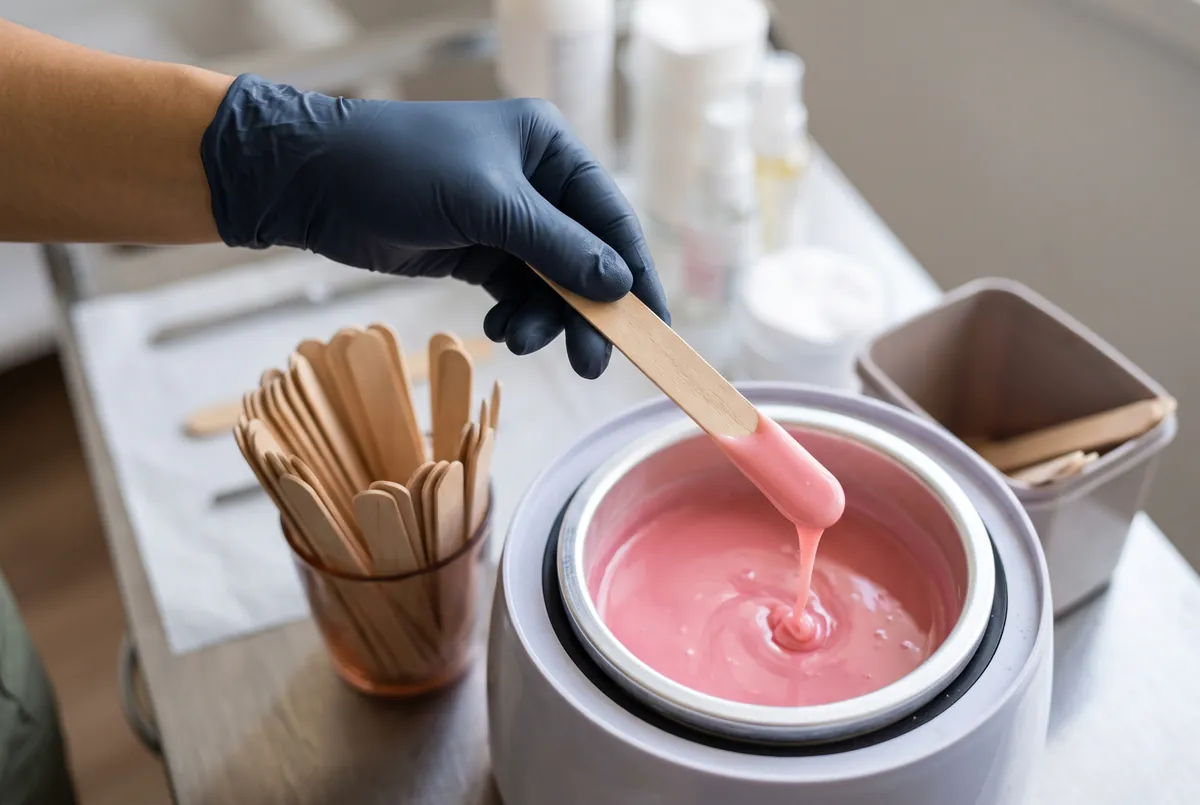
A Brazilian is the most sensitive standard waxing service, and the first one is usually the most intense because all the hair is removed at once, some of it coarse and some at different growth stages. Most clients describe a sharp sting that fades within seconds rather than a lasting pain. The front and the labia tend to feel most intense, while the outer areas are milder. Hard wax is usually gentler here than strip wax, because it grips the hair more than the skin, and our guide to types of wax for hair removal explains why. Skilled technique makes a big difference: small sections, firm skin support, and quick, low removal all reduce what you feel.
Your part matters too. Breathe out slowly as each section comes off instead of holding your breath. Keep your muscles relaxed, since tensing makes the skin harder to support. Hold the skin exactly where your waxer asks, and say so if you need a short break. When you can choose, avoid the most sensitive days of your cycle. Ask before using any numbing cream, because some formulas interfere with how wax grips. For most people the second and third appointments feel noticeably easier, partly because they know what is coming and partly because regrowth becomes more even over time.
It also helps to agree on how you will communicate before the waxer starts. Some clients like to hear a quick count before each removal, while others prefer no warning at all, so tell your waxer which you prefer. If a spot feels like burning rather than a quick sting, say so immediately, because wax that is too hot needs to be stopped, not endured. You can ask for a pause at any point, and you can ask to finish another day if you have had enough. A professional will stop cleanly and make sure the treated skin is soothed before you leave.
Aftercare for the First Few Days
Right after a Brazilian, expect redness, tenderness, and small raised bumps where hairs came out. On a first wax, especially with coarse hair, a few tiny pinpoint spots of blood can appear at individual follicles. All of this usually settles within hours to a day or two. What matters most in the first day or two is keeping the open follicles clean and free from friction and heat. That means loose clothing and clean cotton underwear, no tight leggings, no hot baths, saunas, or hot tubs, no swimming pools, and no hard workouts that leave you sweaty. Keep your hands off the area, even when it itches.
Intimate-area aftercare has a few details general guides often skip. Avoid scented soaps, bubble baths, and scented intimate products for a couple of days, since fragrance stings on freshly waxed skin. Many waxers suggest waiting about a day before sexual activity, because friction and bacteria can irritate open follicles. Skip self-tanner and sunbathing on the area until the skin has fully calmed. If you apply anything, choose a plain, fragrance-free soothing product your waxer recommends. Contact your waxer and see a doctor if you notice increasing pain, swelling, warmth, pus, or redness that spreads instead of fading.
Timing your first Brazilian around your plans prevents most aftercare problems. Do not book it the morning of a beach day, a pool party, a wedding, or a long flight in tight clothing. A few days of buffer lets redness and bumps settle before you wear a swimsuit or sit for hours. If the wax is for a specific event or trip, consider a first appointment several weeks earlier as a trial, so you learn how your skin reacts and can adjust your aftercare the second time. Your first shower afterward should be lukewarm, with a gentle cleanser, and you should pat the skin dry rather than rub it.

Preventing Ingrown Hairs Between Waxes
Ingrown hairs are the most common complaint after Brazilians, because pubic hair is often coarse and curly and the area is under constant friction from clothing. An ingrown hair forms when a regrowing hair curls back or gets trapped under dead skin instead of emerging. Prevention is mostly routine. Starting two or three days after your wax, exfoliate gently a few times a week with a soft washcloth, an exfoliating mitt, or a leave-on product with a mild acid made for the bikini area. Moisturize with something light and fragrance-free. Wear breathable fabrics when you can, and change out of sweaty workout clothes promptly. The goal is to keep the surface smooth enough that each new hair can break through on its own, without help from tweezers.
What you avoid matters as much. Do not shave between appointments, because shaving leaves blunt, sharp regrowth that is more likely to turn inward, and it resets your hair to the wrong length for the next wax. Do not dig at ingrown hairs with tweezers or needles; that is how minor bumps become infected or leave dark marks, especially on deeper skin tones prone to post-inflammatory hyperpigmentation. If a bump is painful, swollen, filled with pus, or keeps coming back in the same place, see a dermatologist rather than treating it at home. For a mild surface bump, a warm compress can help soften the skin so the hair releases on its own, with no squeezing.
For people who develop ingrown hairs no matter how carefully they care for their skin, it may be time to consider a different method for the most troubled spots. Electrolysis treats each follicle individually and permanently, which is why it is often used for stubborn ingrown hairs in the bikini area; our guide to electrolysis for ingrown hairs explains how that works. Some clients combine the two, waxing most of the area while clearing a few problem follicles with electrolysis, which reduces the number of ingrown hairs they deal with between appointments.

How Often to Book and What Changes Over Time
Most people return every three to five weeks, depending on how fast their hair grows. Hair grows in cycles, and at any moment some follicles are actively growing while others are resting, so your first wax removes only the hairs that were above the surface that day. That is why regrowth after a first Brazilian can look uneven, with some hairs appearing within a week or two. It is not a sign of a bad wax. Keeping a regular schedule gradually brings more of the hair into step, so later appointments tend to be quicker, cleaner, and more comfortable.
Waiting too long between visits means longer hair and more discomfort, while booking too soon means some hair will be too short to grip. Ask your waxer to suggest an interval once they have seen your regrowth pattern, and book your next visit before you leave so you are not tempted to shave in between. Some clients notice that their hair becomes finer or sparser in places after months of regular waxing, but this varies from person to person, and waxing is not a permanent method. If permanent results in the bikini area interest you, electrolysis is the method to research.
If you stop waxing for a while, your hair simply returns to its usual growth over the following weeks, and restarting later feels much like another first visit, with mixed lengths and a bit more sensation. Shaving once for a special occasion is not a disaster either, but it puts you back to the beginning on length, so you will need to wait again before your next appointment. Clients who treat their waxing dates like any other recurring appointment tend to have the easiest time, both in comfort and in how clean and even the results look.
How to Choose a Waxer You Can Trust
A first Brazilian is not the time to choose a studio only by price or distance. Start with the license. In most states, anyone waxing for pay must hold an esthetician, cosmetology, or waxing-specific license, and many state boards offer an online lookup where you can confirm it; our state-by-state waxing licensing guide shows which credential applies where you live. Then look for experience with this particular service. Ask how often the waxer performs Brazilians, which wax they use for the area, and how long they book for a first visit. Confident, specific answers are a good sign; vague ones are not.
Read reviews for details rather than stars. Comments about cleanliness, a calm manner, clear explanations, and little irritation afterward tell you more than generic praise. It is completely acceptable to book a short consultation first, or a smaller service such as an underarm or bikini line wax, to see the room and meet the waxer before booking the Brazilian. If you have a preference about your waxer's gender, say so when you book; studios handle this request routinely. And if something about the studio makes you uneasy on the phone or at the front desk, trust that feeling and look elsewhere. Studios that clearly explain their services, first-visit policies, and cancellation terms usually bring the same organized approach into the treatment room.
A good waxer also interviews you. On a first visit they should ask about medications, skincare, recent sun exposure, skin conditions, allergies, and any previous waxing experiences, and they should confirm the result you want before starting. Pay attention to how they explain the process. A professional describes what will happen in simple, matter-of-fact language, tells you how to reach them if your skin reacts afterward, and never rushes the consultation to stay on schedule. If you leave that first conversation feeling informed and relaxed, you have probably found the right person.

Hygiene Red Flags That Mean You Should Leave
You have every right to watch how your service is performed, and hygiene is the one area where I would tell a friend to walk out without a second thought. The most important thing to watch is double dipping: the waxer dips a spatula, applies wax to your skin, and then puts the same spatula back into the pot. That spatula has touched your body, and dipping it again contaminates wax that may later be used on someone else. It raises the risk of folliculitis and other skin infections, and a professional who respects clients simply never does it. You can also ask before the service starts whether they use a new spatula for every dip; a professional will answer without hesitation and will not be offended by the question.
- The same spatula goes back into the wax pot after touching skin
- The waxer works without gloves, or wears gloves already used for another task
- The table is not covered with fresh paper or a clean linen
- The wax pot is uncovered, dripping, or visibly contains hair or debris
- The skin is not cleansed before waxing begins
- The waxer does not check the wax temperature before applying it
- There is no intake form and no questions about medications or skin conditions
- Used spatulas or tools are left lying around the room
- Wax is applied over broken, irritated, or sunburned skin without comment
- The waxer seems rushed and skips explaining what comes next
If you see any of these, you can simply say you have changed your mind, get dressed, and leave. You do not owe anyone a longer explanation. Serious sanitation problems can be reported to your state's cosmetology or licensing board, which inspects salons and exists to protect clients. A good studio, by contrast, makes its hygiene visible: a fresh spatula for every dip, clean gloves, a covered pot, and a room that has clearly been reset since the last client. Those habits usually come with careful technique as well, because both reflect the same professional standards.

Before You Book Your First Brazilian
The short version: let your hair grow to about a quarter of an inch, pause retinoids and other risky products on the area, tell your waxer everything on the intake form, choose a licensed professional who never double dips, and plan a calm day or two of aftercare. Your first visit is the hardest one, and each appointment after it tends to be easier. If watching a skilled waxer at work ever makes you curious about the job itself, our guide on how to become a waxing specialist explains the licensing and training behind the service.
State Requirements
State licensing guides
Hours, exams, fees, and the licensing board differ by state. Open your state for the current requirements.
Common Questions
FAQ
About a quarter of an inch, roughly the length of a grain of rice. If you have been shaving, that usually means letting the hair grow for at least two weeks. Do not trim at home before the appointment; if the hair is too long, your waxer will trim it with clean scissors so the wax grips properly and the result is even.
No. Shaving cuts the hair too short for wax to grip, which leads to a patchy, more painful result. Stop shaving at least a couple of weeks before your first appointment and avoid shaving between waxes once you start. If you shaved recently, call the studio and move your appointment rather than arriving with stubble.
It feels more awkward in your head than in the room. Professional waxers perform this service constantly and treat it clinically, section by section. You undress in private, can use a disposable garment or towel for coverage, and should get a heads-up before each new area. You can ask questions, request a pause, or stop at any time.
A first Brazilian usually takes longer than later ones, because the waxer works carefully and the hair is at mixed growth stages. Ask the studio how long they book for a first-time Brazilian and leave extra time around it so you are not rushing afterward. Regular maintenance appointments tend to be noticeably quicker.
Many studios allow it if you wear a fresh tampon or menstrual cup, while others prefer to reschedule, so check the policy when you book. Pads and period underwear do not work for this service. Your skin may feel more sensitive around your period, so if you can choose, a date later in your cycle is often more comfortable.
For the first day or two, avoid hot baths, saunas, hot tubs, swimming pools, tight clothing, sweaty workouts, sunbathing, and scented products on the area. Many waxers also suggest waiting about a day before sexual activity. Wear loose clothing and cotton underwear, and keep your hands off the skin while it settles.
Most people return every three to five weeks, depending on how quickly their hair grows. Regular visits bring more of the hair into the same growth phase, so appointments become quicker and more comfortable over time. Book your next visit before you leave and avoid shaving in between so the hair is the right length.
Yes. Electrolysis is the only method the FDA accepts for permanent hair removal claims, and it works on all hair colors, including light and gray hair. It takes a series of sessions because each follicle is treated individually. Our guide to electrolysis for the bikini area explains what the process involves and how to plan it.
Keep Reading
Related Guides


