Career
What Do You Learn in Esthetician School? Curriculum Explained
Quick answer
Esthetician school teaches infection control, skin anatomy and physiology, skin analysis and disorders, product chemistry, facial treatments and massage, facial machines and electricity, waxing and other temporary hair removal, makeup, brow and lash basics, state law, and business skills, followed by supervised client work and state board exam preparation. Lasers, deeper peels, electrolysis, and injectables are not part of entry-level training.
People ask me what you learn in esthetician school expecting the answer to be "how to give a facial." That is part of it, and a smaller part than they imagine. An esthetics program is mostly about understanding skin well enough to make safe decisions: what you are looking at, what you may do about it under your license, what you must leave alone, and how to keep every tool and surface from carrying infection from one client to the next. The facial is where that knowledge shows. It is not where it starts.
This guide walks through an esthetics curriculum subject by subject, in roughly the order schools teach it, and explains why each piece is there. I also mark the line between what entry-level school covers and what comes only with advanced training afterward, because that line surprises many new graduates. Programs differ by state and by school, since each state board sets its own required subjects and training time. Treat this as a map of the common ground and check the specifics for your state before you enroll.
How an esthetics program is organized
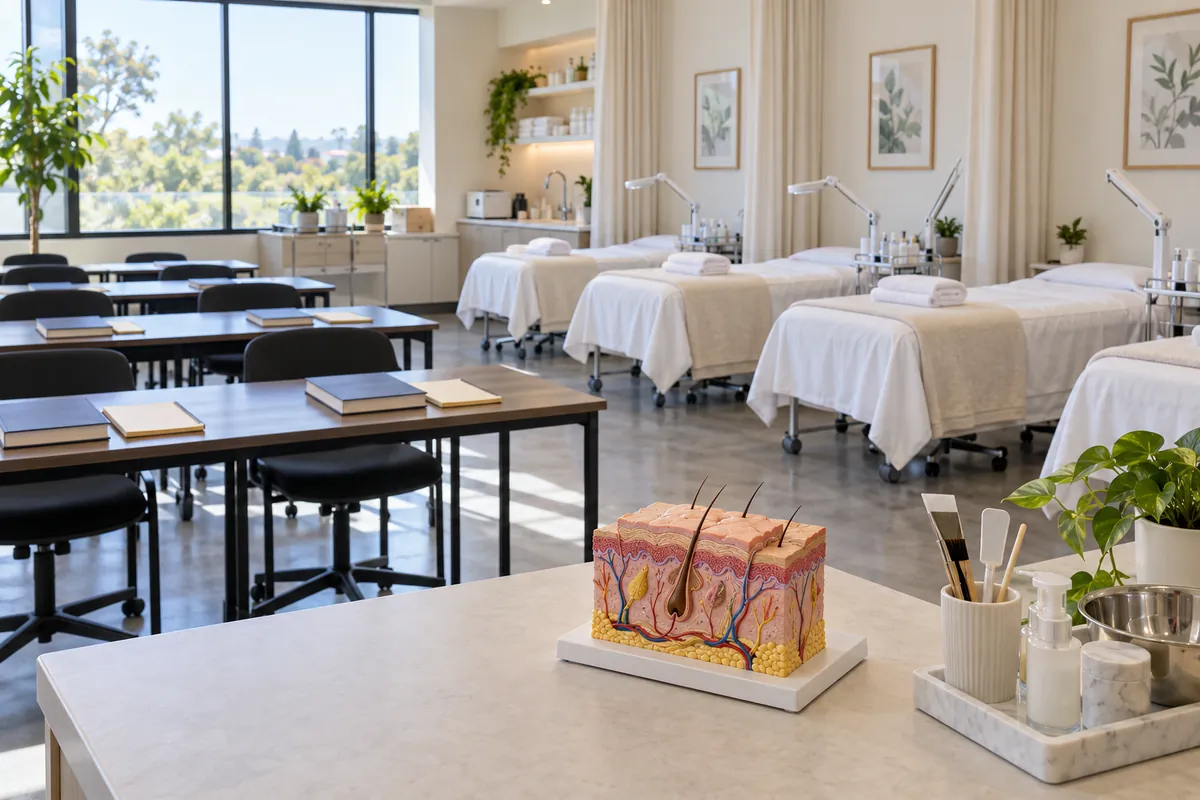
Most programs have three strands that run alongside each other. Theory is classroom learning from a textbook, lectures, and tests: sciences, sanitation rules, and state law. Practical training is supervised hands-on work, first on mannequins or classmates, where you learn each procedure step by step. Clinic work comes later, when you perform services on members of the public in the student spa while instructors check your work. Your state board specifies the total training time and often how it must be divided among subjects.
The typical rhythm is a classroom-heavy opening phase, sometimes called the freshman or core phase, in which you are not yet allowed to touch paying clients. You learn infection control, basic skin science, and the standard facial on your classmates. After passing the school's checks, you move to the clinic floor and split your time between continued theory and client services. The balance shifts toward practice as you go, and the final stretch is usually devoted to exam preparation.
It helps to know this structure in advance because it explains why the first weeks can feel far from the treatment room. Students arrive wanting to learn chemical peels and spend their opening days on handwashing procedure and bacteria classifications. That order is deliberate. Everything that follows assumes you can set up a station, protect a client, and recognize when a service should not happen. For the full path from enrollment to license, see how to become a licensed esthetician. This guide stays inside the classroom.
Infection control and sanitation: the first subject and the most tested
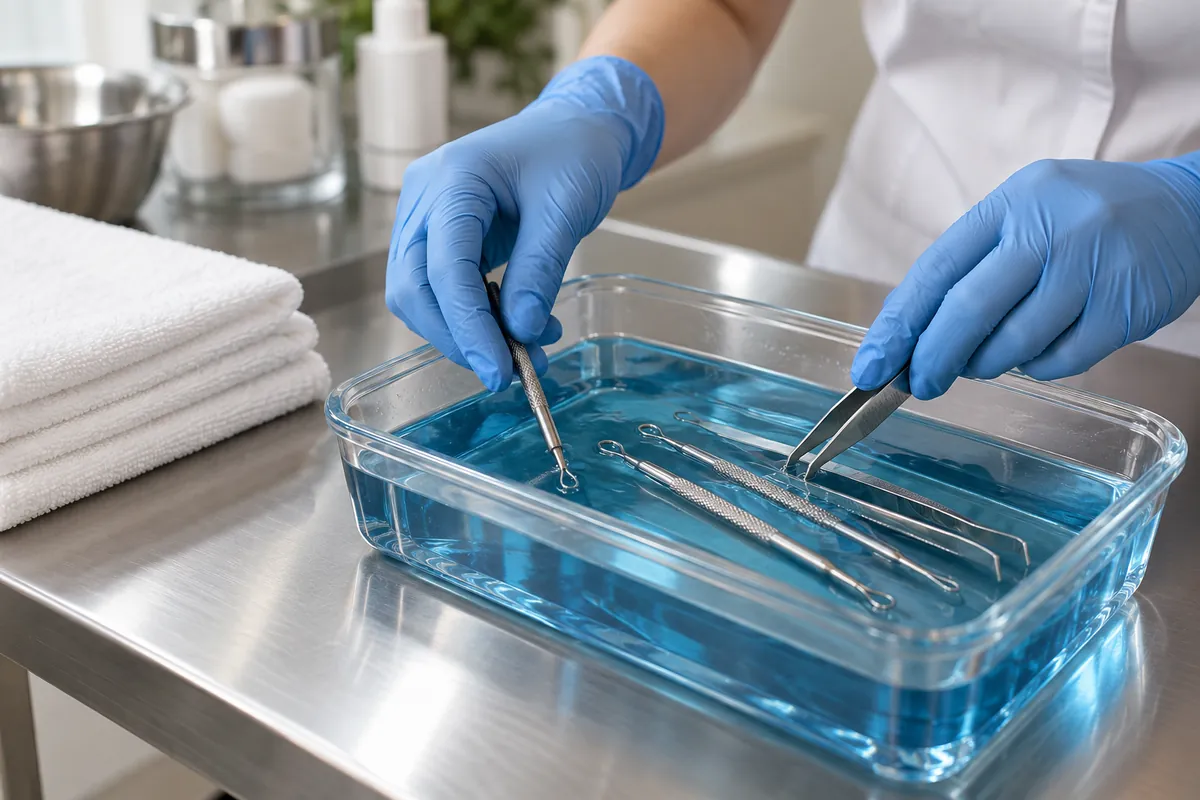
Every program begins with infection control, and state boards test it more heavily than any other topic. You learn the difference between cleaning, disinfecting, and sterilizing, and which level each tool and surface requires. You learn how pathogens spread: bacteria, viruses, fungi, and parasites, and the routes of transmission that matter in a treatment room, such as direct contact, contaminated implements, and broken skin. You learn how to read a disinfectant label, mix it correctly, and respect its contact time, which is the period the surface must stay wet for the product to work.
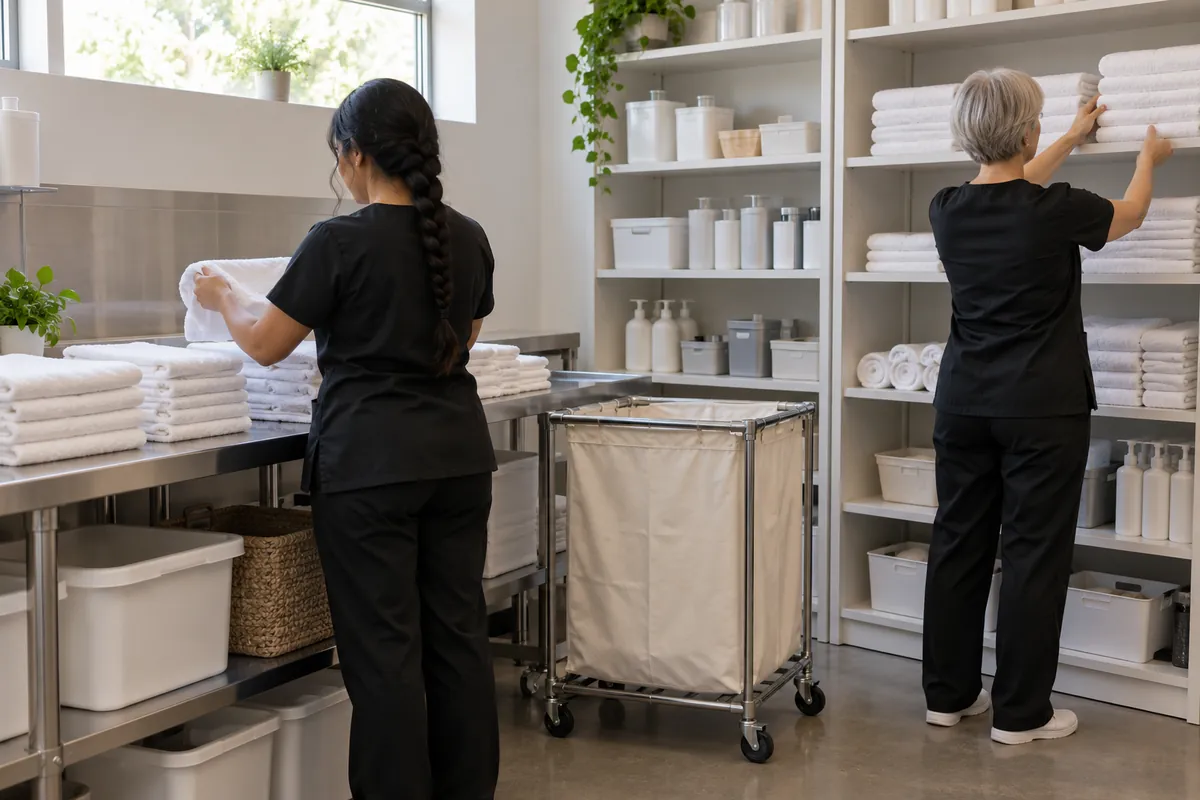
The practical side is drilled until it is automatic. Hand hygiene before and after every client. Single-use items such as wax applicators, cotton, and extraction lancets where permitted, discarded after one use. No double dipping into wax or product jars. Clean linens for every client and closed storage for clean implements. Correct handling of a blood exposure incident, which has a specific sequence of steps that practical exams commonly check. Instructors watch for these habits constantly, because a student who performs a lovely facial with a contaminated spatula has failed the service.
You will also study safety rules that come from outside the beauty board: handling and labeling of chemical products, reading safety data sheets, and the general principles of standard precautions used across personal care and health settings. New students sometimes find this dry. I tell them it is the part of the education that protects their license. A client can forgive a facial that was merely average. A board will not forgive a preventable infection.
Skin science: anatomy, physiology, and histology
The science core of esthetics is the structure and function of the skin. You study the layers of the epidermis and what happens in each: where new cells are formed, how they flatten and harden as they rise, and how the outermost layer sheds. You study the dermis beneath, with its collagen and elastin, blood supply, nerve endings, and the glands and follicles rooted there. You learn the functions of skin: protection, sensation, heat regulation, excretion, secretion, and absorption. Each one turns up again later when you learn why a treatment works or why it is unsafe.
This matters practically because an esthetician's legal scope is tied to anatomy. Entry-level estheticians generally work on the epidermis, the non-living outer layers. Knowing where that boundary lies, and what different treatments do relative to it, is what keeps a peel or an exfoliation within your license. You also learn how the barrier works: the mix of oil, sweat, and lipids on the surface, sometimes called the acid mantle, and what happens to skin when that barrier is stripped by harsh products or overtreatment.
Beyond the skin itself, programs include a survey of general anatomy and physiology, with emphasis on the systems you affect directly. You learn the bones and muscles of the face, neck, and shoulders, because massage movements follow muscle direction. You learn the main nerves and blood vessels of the face and the basics of the lymphatic system. Most programs add an overview of cells and tissues, the endocrine system and hormones, and nutrition as it relates to skin. It is an introduction, not a medical education, but it gives you the vocabulary to read ingredient research and talk with medical professionals.
Skin analysis, disorders, and contraindications
The skill clients are really paying for is assessment. In school you learn to classify skin by type, meaning the oil production pattern a person is born with, and to separate that from skin conditions, which change over time: dehydration, sensitivity, congestion, sun damage, signs of aging. You learn the Fitzpatrick scale, which describes how skin responds to sun exposure and helps predict the risk of pigment changes after treatments. And you practice analysis under a magnifying lamp and often a Wood's lamp, which uses filtered light to make certain conditions easier to see.
Then comes the study of disorders and diseases. You learn the terminology of lesions, the types of acne and how they are graded, common pigmentation disorders, inflammatory conditions such as eczema, psoriasis, and rosacea, contagious conditions, and the warning signs of skin cancer. The goal is recognition, not diagnosis. An esthetician does not diagnose or treat disease. What school teaches is how to notice that something is outside your scope, decline or adapt the service, and refer the client to a physician or dermatologist in appropriate words.
Linked to that is the client consultation. You learn to use an intake form, ask about medications, allergies, recent procedures, and home care, and identify contraindications, the conditions or circumstances under which a service should be changed or refused. Certain prescription medications, recent sun exposure, active infections, and recent cosmetic procedures are standard examples. Instructors will have you practice consultations on classmates until the questions feel natural. In my experience this is the area where good schools differ most from weak ones, and where graduates feel least prepared if it was rushed.
Chemistry and product ingredients
Esthetics chemistry is basic and useful. You learn what matter is made of, the difference between solutions, suspensions, and emulsions, and why an emulsion needs an ingredient to hold oil and water together. You learn the pH scale, where skin sits on it, and how acidic and alkaline products affect the skin's surface. That one concept explains a great deal of what you do later: why a cleanser can leave skin tight, how exfoliating acids work, and why you neutralize or remove certain products after a set time.
From there the course moves to cosmetic ingredients. You learn the main functional groups: cleansing agents, emollients, humectants, occlusives, exfoliants, antioxidants, and preservatives, with common examples of each. You learn the families of exfoliating acids and enzymes, what distinguishes them, and why concentration and pH together determine how strong a product is. You learn to read an ingredient list in order and to spot typical irritants and allergens. Good instructors make you analyze real product labels until the names stop looking like noise.
Schools usually teach with one or two professional product lines, and you will learn those lines' protocols in detail. That is practical, but remember that a brand's training is not the same as ingredient knowledge. A graduate who knows only "the blue bottle for oily skin" is stuck when the next spa uses different products. If your program leans heavily on brand protocol, put extra effort into the ingredient chapters yourself. Understanding what a product is made of is what lets you work with any line and answer clients honestly about what a product can and cannot do.
Facial treatments: the central practical skill
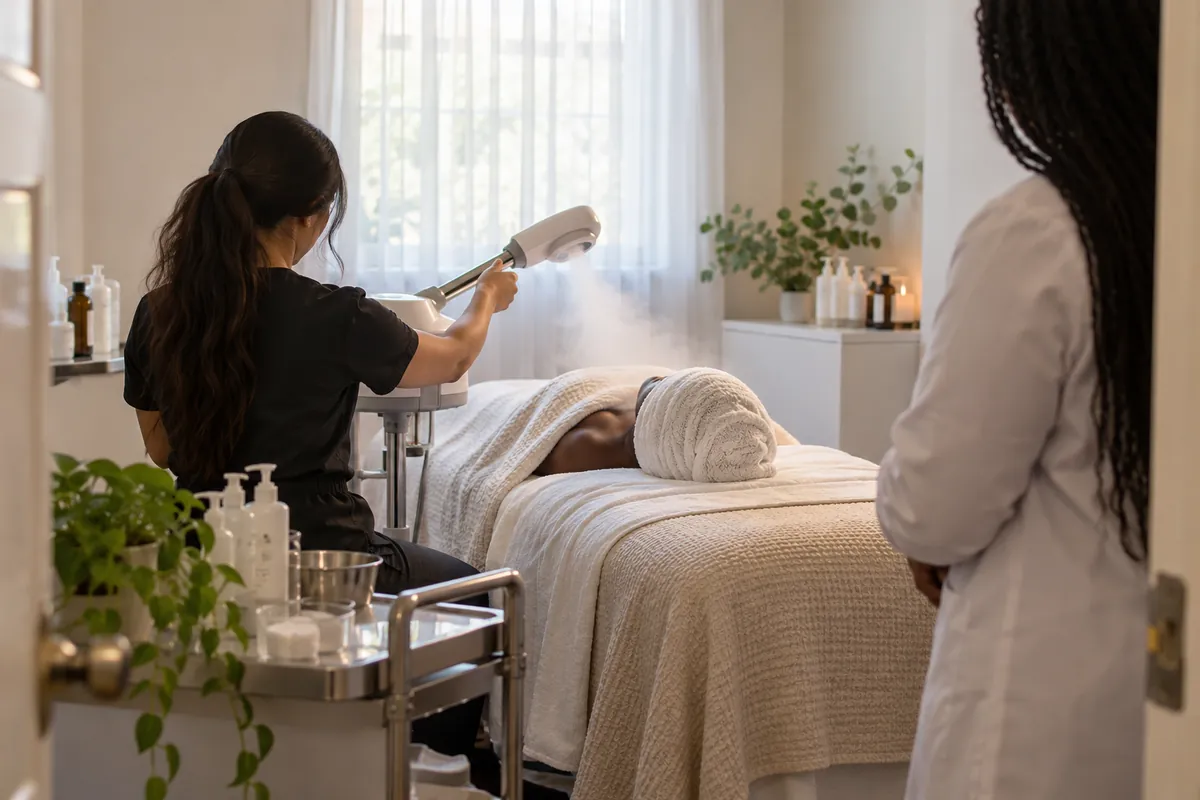
The standard facial is the backbone of the practical curriculum, and you will perform it more times than you can count. School teaches it as a sequence: room and station setup, client draping, cleansing, analysis, exfoliation, steam, extractions where appropriate, massage, mask, and finishing products including sun protection. Every step has a reason and a correct technique, and practical exams grade the sequence, the sanitation within it, and the client protection around it. Once the structure is memorized, you learn to modify it for dry, oily, sensitive, mature, and acne-prone skin.
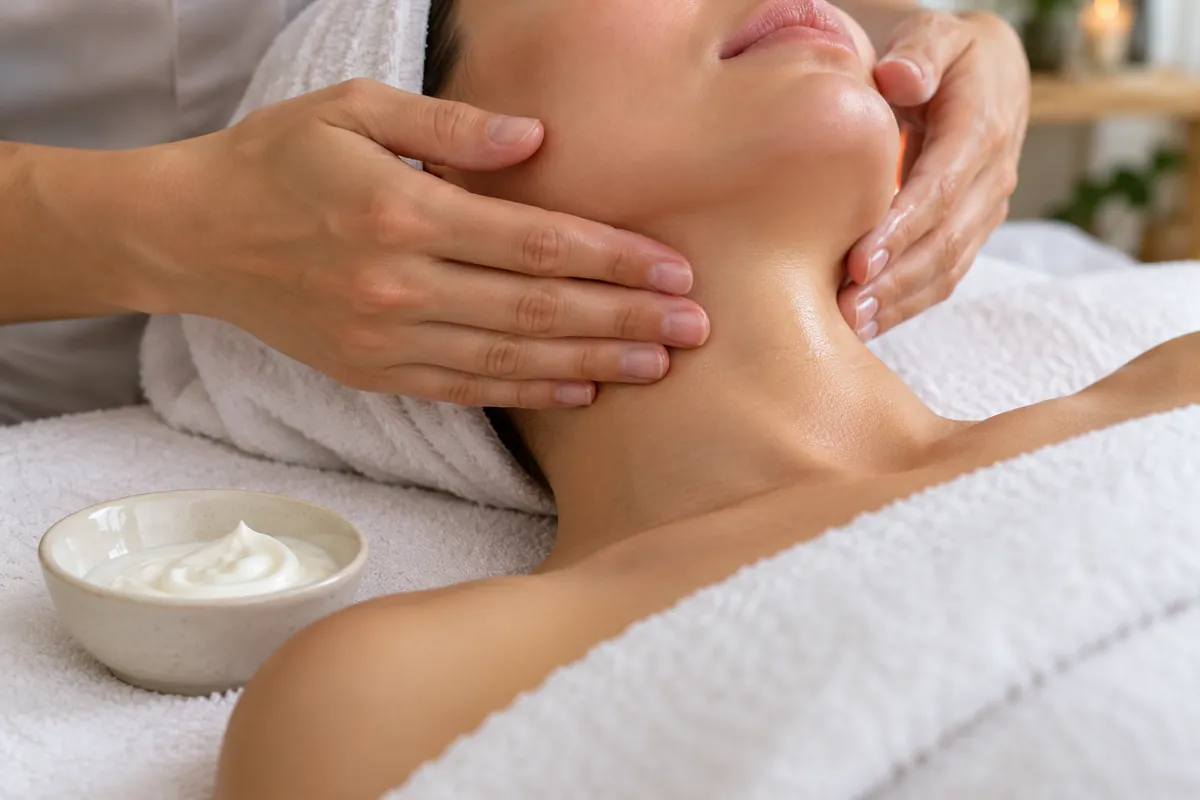
Massage has its own unit. You learn the classic movements, including gliding strokes, kneading, friction, tapping, and vibration, with the direction, pressure, and rhythm each calls for and the situations where massage should be reduced or skipped. Students are often surprised by how much hand conditioning this takes. Smooth, continuous contact without lifting the hands is hard at first, and instructors will correct your posture and stool height as much as your strokes, because poor body mechanics catch up with estheticians quickly.
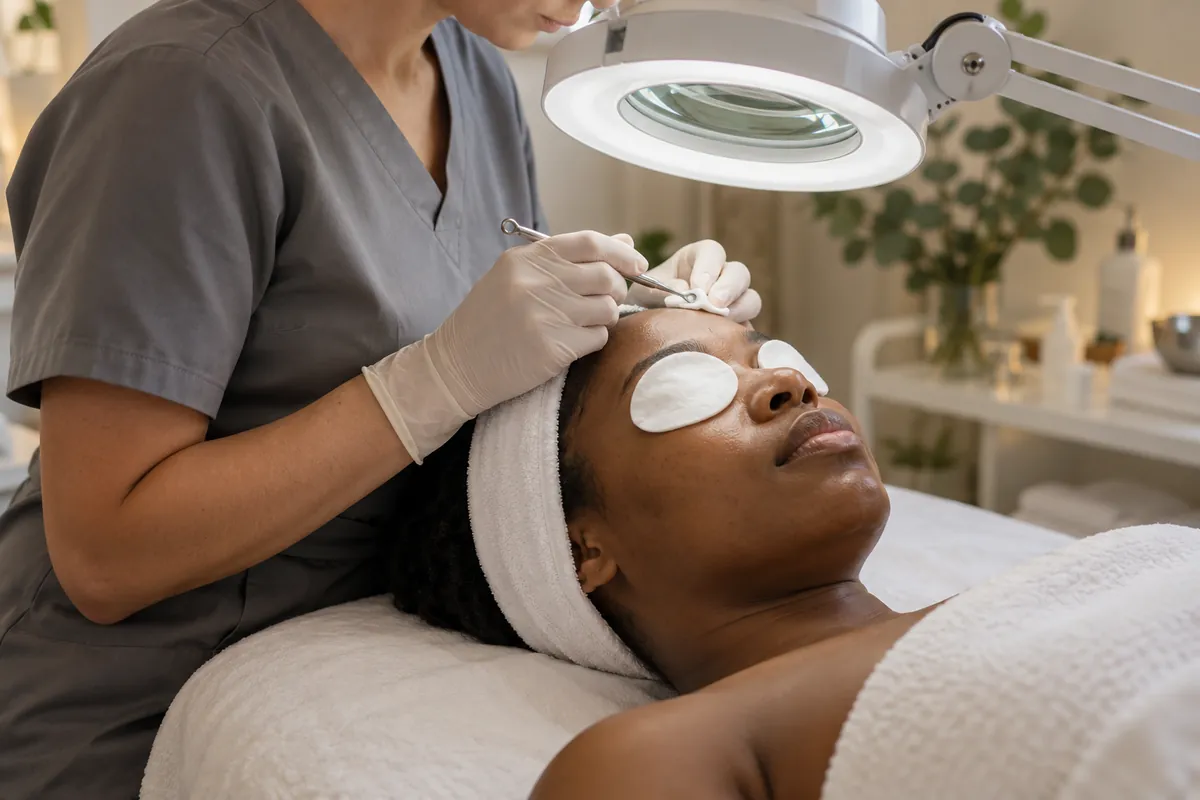
Extractions are taught carefully and within state rules. You learn how to prepare the skin, which lesions may be extracted and which must be left alone, how to apply pressure without bruising or scarring, and how to finish with products that calm the area. States differ on the use of lancets, so school teaches what your state allows. You also learn exfoliation methods: mechanical scrubs and brushes, enzymes, and superficial chemical exfoliants at the strengths permitted for entry-level practice. For an overview of treatment styles you will meet in the industry, see types of facials explained.
Machines and electricity
Before touching a device, you study electricity: basic terms, the types of current used in esthetics, and electrical safety. This is the chapter many students dread and the one that makes the equipment make sense. You learn which treatments use a direct current and which use an alternating current, what polarity means and why it matters for certain treatments, and which clients should not receive electrical modalities at all, for example people with pacemakers, certain metal implants, epilepsy, or pregnancy, depending on the device and current guidance.
Then you learn the standard equipment found on a multifunction facial unit. The steamer, used to warm and soften the skin's surface. The magnifying lamp and Wood's lamp for analysis. The rotary brush for mechanical cleansing. The vacuum and spray attachments. Galvanic current, used to help soften sebum before extractions or to assist product penetration. High frequency, used after extractions for its drying and germicidal effect on the surface. Many schools also introduce LED light therapy, microcurrent, and microdermabrasion, although whether those are part of the entry-level scope depends on the state.
What school gives you is the principle, the safety checklist, and enough supervised repetitions to operate each device competently. It rarely gives you depth. A graduate has typically used a high frequency electrode on a limited number of clients and understands why it is applied, but mastery comes with time on the job and manufacturer training. If devices interest you, guides such as the microcurrent facial guide show how much more there is to learn about a single modality after school.
Hair removal
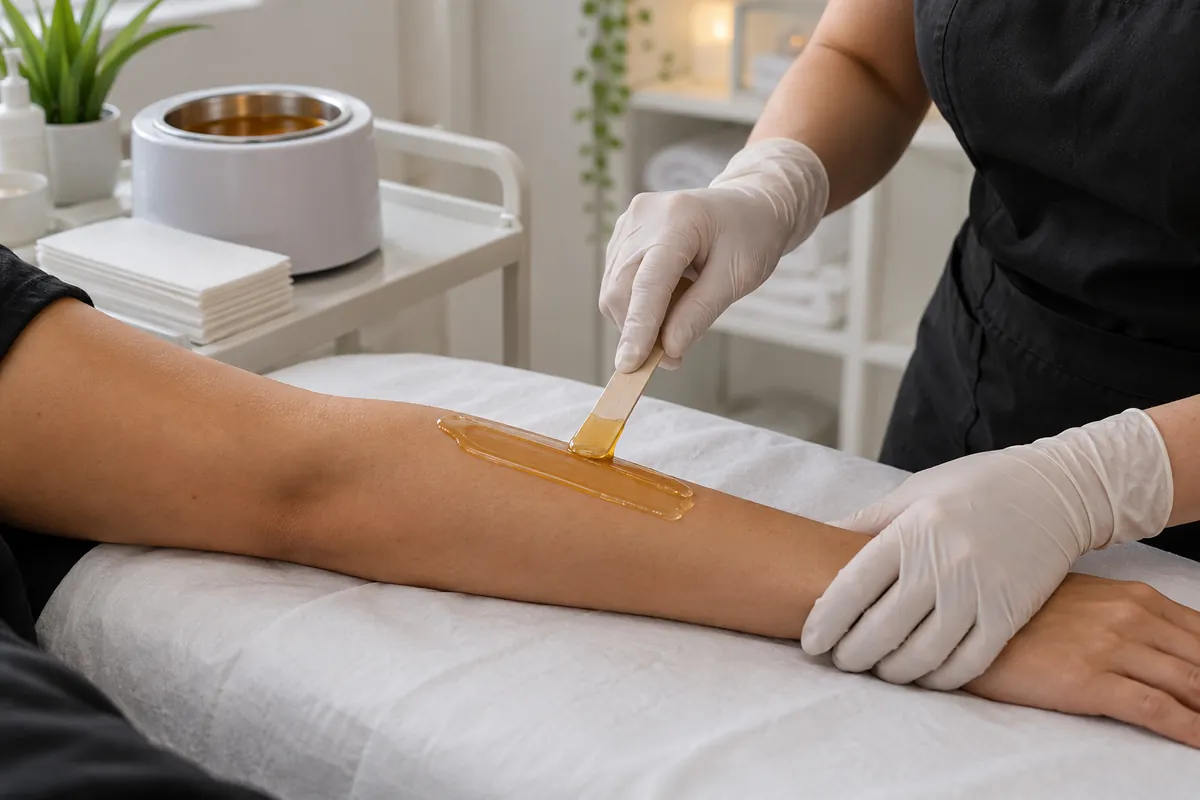
Hair removal is a required subject in esthetics programs, and for many graduates it becomes the service that fills the appointment book first. You begin with theory: the structure of the hair follicle, the growth cycle and its phases, and why hair returns after temporary removal. You learn the difference between temporary methods, which remove the hair shaft or pull the hair from the follicle, and permanent methods, which destroy the follicle's ability to grow hair. You learn the conditions and medications that make waxing unsafe, since lifting skin on a client who uses certain prescription products is one of the classic beginner injuries.
In practice, school concentrates on waxing. You learn soft wax with strips and hard wax without, temperature testing, application with and removal against the direction of growth, holding the skin taut, and aftercare. You practice eyebrows, lip, chin, underarms, arms, and legs on classmates and clinic clients, and you learn tweezing for finishing work. Bikini services are taught to varying degrees, and intimate waxing is often left to advanced classes or on-the-job training. Some programs add sugaring or threading, where state rules place them in the esthetics scope.
Two methods are usually mentioned in the textbook and not taught hands-on. Electrolysis, the only method the FDA allows to be marketed as permanent hair removal, is a separate license or certification in many states, with its own training requirements. Laser and light-based hair reduction are regulated differently again and often involve medical oversight. An esthetics diploma does not qualify you to perform either one. If permanent hair removal interests you, read can estheticians do electrolysis to see how the additional credential works.
Makeup, brows, and lashes
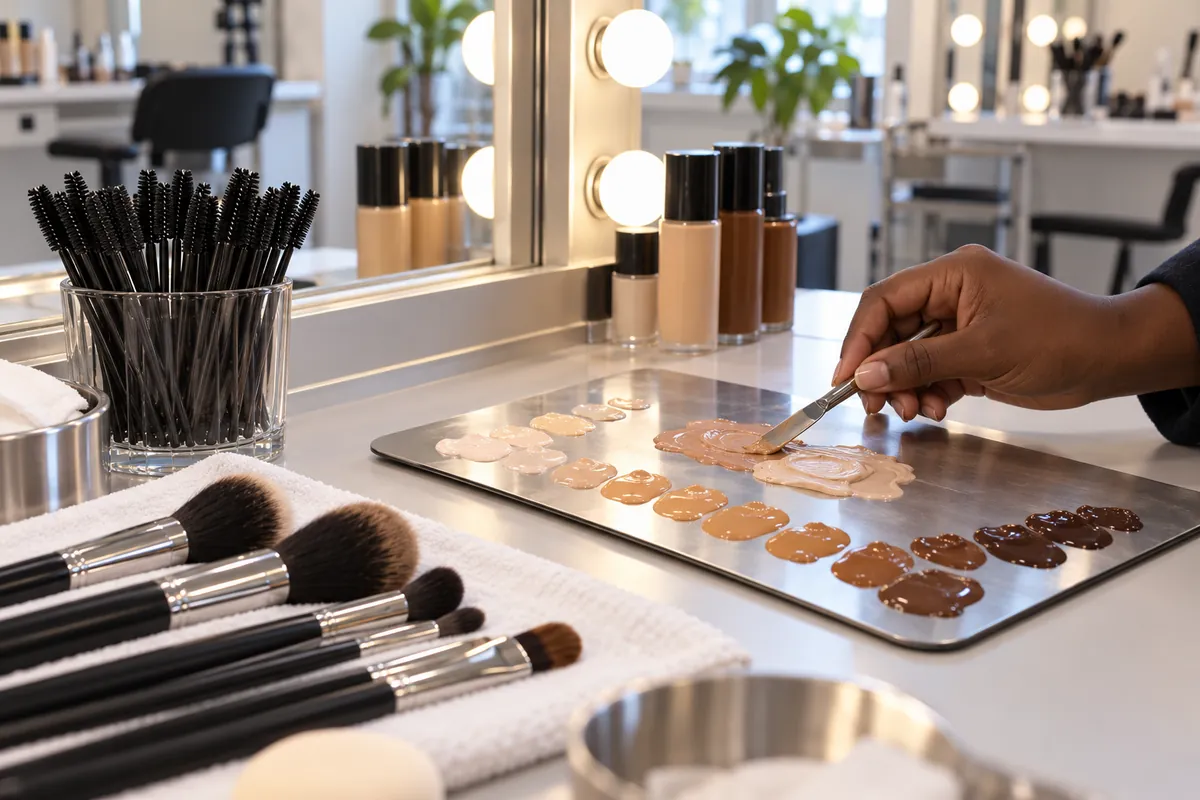
Makeup is part of nearly every esthetics curriculum, though the depth varies. The foundation is color theory: the color wheel, warm and cool undertones, and how complementary colors neutralize each other, which is the logic behind color correcting. You learn face shapes and how to balance features, foundation matching across a full range of skin tones, and standard applications for day, evening, and special occasions. A good program insists that you practice matching on classmates whose skin is very different from your own, because that is where beginners are weakest.
Sanitation carries into makeup with its own rules: disposable applicators for mascara and lip products, decanting product onto a palette instead of working from the container, sharpening pencils between clients, and cleaning brushes properly. These are examined as seriously as the application itself. You will also learn brow shaping as a design skill, measuring where a brow should begin, arch, and end for a particular face, then carrying out the shape with wax and tweezers.
Lash and brow services are where state rules diverge widely. Many programs teach strip and individual temporary lashes and the application of lash and brow tint where the state permits it. Semi-permanent lash extensions, lash lifts, and brow lamination may be within the esthetics scope, may require a separate specialty license or added training, or may be restricted, depending on the state. Permanent makeup and microblading are tattooing in most jurisdictions and are regulated outside the esthetics license altogether. School should tell you clearly where each service stands in your state.
State law, business skills, and professionalism
Every program teaches your state's laws and rules: who may perform which services, what a licensed establishment must have, how licenses are displayed and renewed, and what inspectors look for. Some states test this in a separate jurisprudence section. It is easy to treat this as paperwork. It is the definition of your job. Scope of practice questions come up weekly in a working esthetician's life, usually when a client or an employer asks for a service that sits near the boundary, and you need to know your answer without guessing.
The business unit is usually brief. It covers professional image and communication, the basics of employment models such as hourly, commission, and booth or suite rental, resume and interview preparation, retailing, record keeping, and an introduction to running a small business. Students tend to coast through it and regret that later. Retail recommendations and rebooking are a large part of income in most spa settings, and school gives you only a first taste. For the compensation models in depth, read booth rental versus commission.
Professionalism is taught mostly through how the school runs. Arriving on time and in uniform, keeping your station inspection-ready, speaking to clients respectfully, maintaining confidentiality about what clients tell you, and handling a complaint calmly are all graded informally every day. I pay attention to these habits when I meet new graduates. Technical skill can be trained quickly in a motivated person. Reliability and discretion are much harder to add later, and a school that enforces them is doing you a favor.
The clinic floor and state board preparation
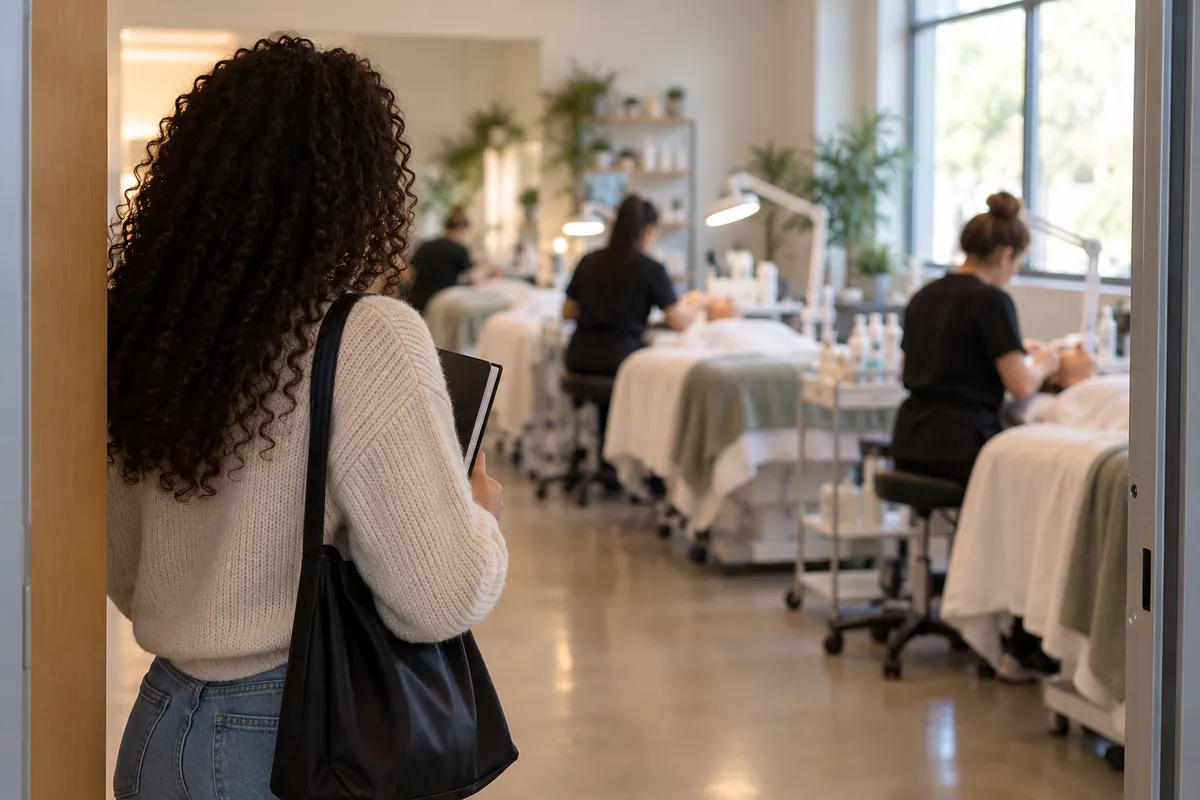
Once you are cleared to work on the public, the student spa becomes your main classroom. You greet a stranger, conduct a consultation, choose and justify a treatment to your instructor, perform it within the appointment time, recommend home care, and clean your room for the next client. Each of those steps was taught separately. Doing them together, on a real person with real concerns, is a different skill, and it is the one employers are hiring for.
You will see far more variety here than in class: mature skin, teenage acne, clients on medications you have to look up, clients who cannot lie flat, clients who talk the whole time and clients who fall asleep. You will have services that go wrong in small ways, such as a wax that is slightly too warm, a mask a client dislikes, or an extraction you should have left alone. With an instructor nearby, those are safe lessons. I encourage students to ask for the difficult clients on purpose. Nobody improves by performing the same relaxing facial on easy skin.
Most programs require you to complete set numbers or categories of services before graduating, as defined by the state or school. Keep your own record and watch for gaps. If you have done many facials and very few body waxing services, say so, and ask to be booked accordingly. Clinic time is also when you should practice speed. New estheticians are often surprised that a spa schedules less time per service than school allowed, and the adjustment is easier if you have already been timing yourself.
The last phase of school points at the licensing exam. Most states require a written theory exam, and many also require a practical exam in which you demonstrate set procedures on a mannequin or model while examiners score your steps. School prepares you for both. For the written portion, expect chapter reviews and timed practice tests covering infection control, skin sciences, chemistry, electricity, treatments, hair removal, and makeup. For the practical, expect mock exams run exactly like the real thing, with examiners who do not speak and a clock on the wall.
Practical exam preparation teaches a particular discipline. The exam does not judge how beautiful the facial is. It judges whether you followed the procedure safely: labeled supplies, a properly set up station, sanitized hands at the right moments, correct disposal of used materials, client protection, and completion within the time allowed. Students who are naturally gifted with their hands sometimes fail because they dropped an implement and kept using it. Students who follow the checklist calmly pass. My guide on how to pass the esthetician state board exam covers the preparation in detail.
This is where independent theory study has an honest use. Our online esthetics theory course covers the knowledge side of the curriculum in a self-paced format, and students use it to preview chapters before class or to review before the written exam. It does not provide the hands-on training or the required hours your state demands for a license. Those are completed in person at a licensed school. Requirements for your state are summarized in the esthetics licensing hub.
What comes only with advanced training
An esthetics diploma prepares you for entry-level practice and for the state exam. It is a beginning by design. Several of the services that attract people to the field are either outside the basic curriculum, outside the basic license, or taught so briefly that you will need further education to offer them responsibly. Knowing this before you enroll prevents disappointment. It also helps you plan your first two years after licensure, when continuing education is where your income and confidence grow.
| Area | Typically covered in entry-level school | Usually requires further training or a different credential |
|---|---|---|
| Exfoliation | Scrubs, enzymes, superficial chemical exfoliants as the state permits | Stronger or deeper peels, which are often limited to advanced licenses or medical settings |
| Devices | Steamer, galvanic, high frequency, often LED and microdermabrasion basics | Lasers, intense pulsed light, radiofrequency, microneedling, depending on state rules and supervision |
| Hair removal | Waxing and tweezing, sometimes sugaring or threading | Electrolysis and laser hair reduction |
| Lashes and brows | Temporary lashes, shaping, tinting where permitted | Lash extensions, lifts, lamination in states that require added training. Permanent makeup is regulated separately |
| Acne and corrective care | Recognition, basic treatment facials, referral | Structured acne programs and work alongside dermatology practices |
| Body treatments | Introductory wraps, scrubs, back facials in many programs | Specialized spa therapies and body contouring devices |
| Business | Employment models and retail basics | Pricing, marketing, bookkeeping, and client retention systems |
Some states offer a second-tier credential, often called a master or advanced esthetician license, with additional training that extends scope to more intensive treatments. Others have a single esthetics license and regulate advanced services through rules on medical supervision. The term "medical esthetician" is widely used in job listings, and in most states it is a job description, not a separate license. I explain that distinction in what is a medical esthetician. Injectables are medical procedures and are outside esthetics practice.
After licensure, education comes from several sources: product manufacturer classes, device manufacturer certifications, independent advanced academies, trade shows, and mentorship from senior colleagues. Quality varies. Before paying for an advanced class, confirm that the service is legal for your license in your state, since a certificate from a weekend course does not expand your legal scope. Then look at who is teaching, how much supervised hands-on time is included, and whether you will be able to practice the skill soon afterward, because techniques fade quickly without use.
Before you enroll: what surprises students and how to compare curricula
The first surprise is how much reading there is. The standard esthetics textbook is long, and tests come regularly. Students who expected a purely hands-on program can struggle in the opening months, especially with anatomy, chemistry, and electricity. The second surprise is how much cleaning there is. Laundry, disinfecting, restocking, and room turnover take a real share of every day, in school and afterward. The third is how physical the work is: hours of standing or sitting on a stool with arms extended, fine hand movements, and warm rooms.
The fourth surprise is practicing on each other. You will receive a great many facials and waxing services from classmates who are still learning, and your skin will sometimes complain about it. You will also need to be comfortable with touch, with seeing skin conditions up close, and with clients in states of undress for body services. Most people adapt within weeks. If any of that is a serious concern, raise it with the school before enrolling so you know how they handle it.
The last surprise is a pleasant one. Students often discover a part of the field they did not expect to like. Someone who enrolled for makeup finds she loves the problem solving of acne care. Someone drawn to facials turns out to be fast and precise at waxing. School exists partly to let you sample everything. Use the clinic floor to notice which services make time pass quickly, because that is usually where you should specialize. To see how these skills play out in a working day, read what an esthetician does.
That brings us to comparing schools. All licensed schools in a state must teach the board's required subjects, so the list of topics on the website will look similar everywhere. The differences are in depth and delivery. Ask to see the full course outline with the time assigned to each subject. Ask which machines students actually use and how many working units there are for the class. Ask how many clients the student spa sees in a typical week, since a quiet clinic floor means you graduate with few real services behind you.
Ask who teaches. Instructors who still see clients, or did so recently, bring current practice into the room. Ask how the school prepares students for the state exam and how its graduates perform on it. Accredited schools report licensure and completion outcomes. Ask whether the school teaches ingredient knowledge beyond its partner product line, and whether it covers the services that matter for jobs in your area, for example speed waxing where waxing studios are major employers.
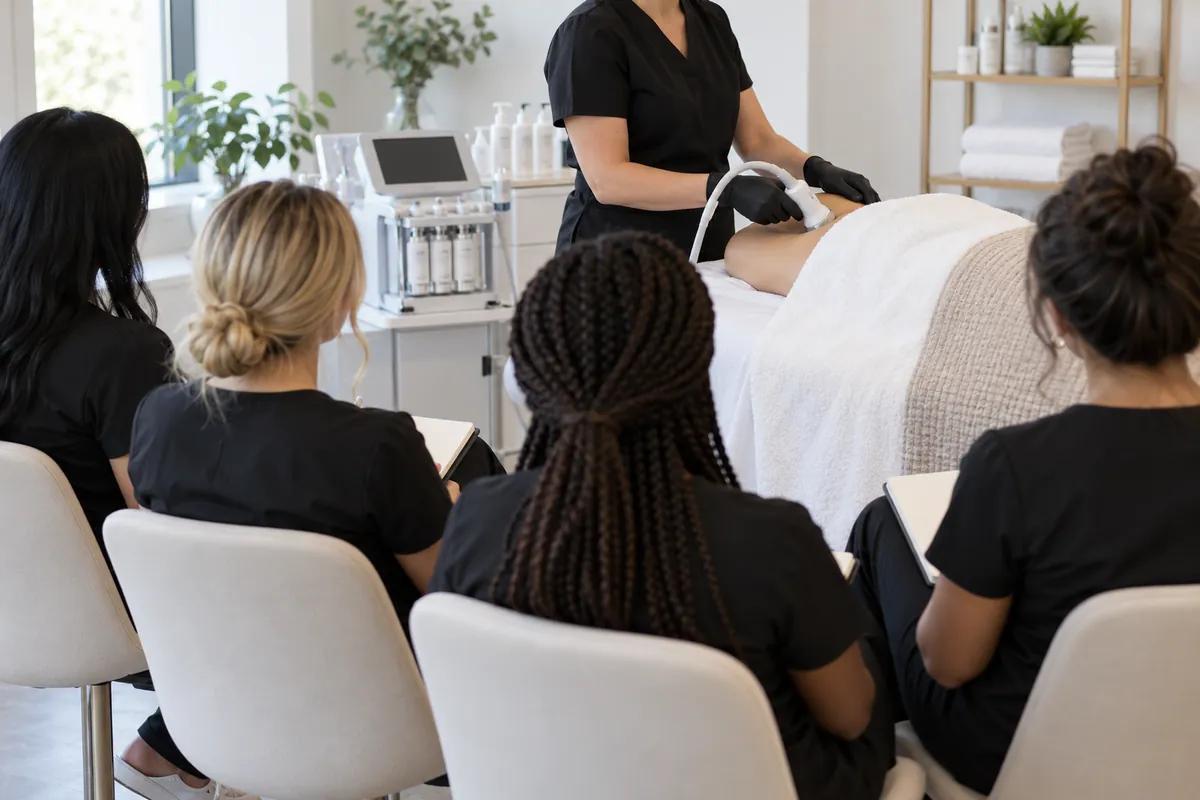
Finally, sit in on a class if the school allows it. Twenty minutes in the room tells you more than a brochure. Watch whether students are working or waiting, whether instructors are on the floor correcting technique, and whether sanitation is followed when nobody is being graded. If you want to test your interest in the subject matter before committing tuition, studying the theory first is a low-risk way to do it. Just keep the legal line clear: required training time is earned in person at a licensed school.
Your next step
If the curriculum described here sounds like something you want to spend months on, begin with your state's rules. The esthetics licensing hub points to the required training and exam structure for each state, and your state board's website has the final word. Then compare the course outlines of the schools near you against the questions above. Two schools teaching the same required subjects can produce very different graduates.
If you want a head start on the knowledge side, or you are still deciding, the esthetics theory course lets you study skin science, infection control, ingredients, and treatment theory at your own pace. Students who arrive at school already comfortable with the terminology have more attention left for their hands, and that is where school time is best spent. The course is preparation and reinforcement. The license itself comes from completing your state's in-person requirements and passing its exams.
State Requirements
State licensing guides
Hours, exams, fees, and the licensing board differ by state. Open your state for the current requirements.
Common Questions
FAQ
Programs cover infection control and sanitation, skin anatomy and physiology, skin analysis and disorders, basic chemistry and cosmetic ingredients, electricity and facial machines, facial treatments and massage, hair removal with an emphasis on waxing, makeup, brow and lash basics, state law, and introductory business skills. Each state board sets the required subjects and training time, so the exact outline differs from state to state and school to school.
The hands-on work is learnable for most people with practice. Students more often struggle with the volume of theory: anatomy, chemistry, electricity, and infection control are tested regularly and form most of the written licensing exam. The physical side, including long periods of standing and precise hand work, also takes adjustment. Steady weekly study and plenty of repetitions on the clinic floor matter more than natural talent.
Most programs teach the theory of exfoliation and superficial chemical exfoliants at the strengths the state permits for entry-level estheticians. Microdermabrasion is introduced in many schools where it falls within state scope. Stronger peels and more intensive resurfacing are generally reserved for advanced licenses, medically supervised settings, or post-graduate training. Ask each school which exfoliation services students actually perform on clients, not only which appear in the textbook.
No, not as part of standard entry-level training. Injectables are medical procedures outside esthetics practice. Laser and light-based treatments are regulated separately, with rules on training and medical oversight that vary by state. Some states offer an advanced esthetics credential that includes certain devices. If laser work is your goal, read about becoming a laser hair removal technician and check your state's requirements.
Usually not hands-on. Textbooks describe electrolysis as the permanent hair removal method, but performing it requires a separate electrology license or certification in many states, with its own training. A few schools offer electrology as a separate program. The electrolysis licensing hub shows how each state handles it. Esthetics school focuses on temporary methods such as waxing and tweezing.
You can study the theory online, and that helps with class preparation and the written exam. Whether any online time counts toward your required training depends on your state and on your licensed school offering an approved hybrid format. Hands-on training and clinic work must be completed in person. An independent theory course does not replace state-required hours. See can you become an esthetician online for the full picture.
Esthetics programs concentrate on skin: analysis, facials, hair removal, and makeup. Cosmetology programs are broader and longer, centered on hair cutting, coloring, and chemical services, with nails and a smaller unit on skin care. A cosmetology license generally allows basic skin services, but the skin training within it is less deep. If skin is your main interest, the esthetics curriculum gives it far more attention.
Nothing is required, but previewing the theory makes the first months easier. Skin structure, the vocabulary of infection control, and the pH scale are good starting points, since they return in every later unit. Reading ingredient lists on your own products is useful practice. Some students work through a theory course in advance so that lectures feel like review and their attention can go to hands-on technique.
Keep Reading
Related Guides


