Career
What Does an Esthetician Do? Duties, Services, and Scope
Quick answer
An esthetician is a state-licensed skin care professional who cleans, exfoliates, treats and protects the outer layers of the skin, removes unwanted hair, and teaches home care. Estheticians work on cosmetic concerns and do not diagnose or treat disease. The exact list of allowed services is set by each state board, so check your state's rules.
People ask me what an esthetician does more often than you would expect, and the question comes from very different places. A high school graduate wants to know if the job is more than facials. A career changer wonders whether it pays to spend months in school for it. A client who just had her first professional facial wants to know why the person working on her skin would not squeeze a cyst or recommend a prescription cream. The short answer is that an esthetician is a state-licensed skin care professional who cleans, treats, exfoliates and protects the outer layers of the skin, removes unwanted hair, and teaches clients how to care for their skin at home. The longer answer depends on the state, the setting and the person's training.
I have worked with skin and hair removal for more than twenty years as a licensed cosmetologist and electrologist, and I have trained many estheticians along the way. In this guide I will walk through what the job looks like hour by hour, which services are standard, where the legal limits sit, how the work changes between a day spa and a dermatology office, which skills separate a busy esthetician from a struggling one, and how to become one without wasting time or money. I will not print state training hours or fees, because they differ and they change. For those numbers, use our esthetics licensing hub by state, which links each state's rules.
The Short Definition, and Why It Varies
An esthetician, sometimes spelled aesthetician, works on the skin for cosmetic purposes. The core idea in almost every state is the same: estheticians care for the surface of the skin to improve its appearance and condition, and they do not diagnose or treat disease. The state board of cosmetology, or a similar licensing agency, defines exactly which services the license covers. That definition is called the scope of practice. It is written into state law and board rules, and it is the single most important thing to understand about this profession, because it decides what you are allowed to charge money for.
Because each state writes its own rules, two estheticians with the same school training can have different legal permissions. One state may allow a certain depth of chemical exfoliation or a specific device, while a neighboring state reserves it for a higher license tier or for medical providers. Some states offer a master or advanced esthetician license with a wider scope. Lash extensions, brow tinting and makeup can sit inside the esthetics license in one state and require separate rules in another. When someone online says "estheticians can do X," the honest reply is always "in which state?" The list of services below reflects what is common, not what is guaranteed everywhere.
A Typical Day in the Treatment Room
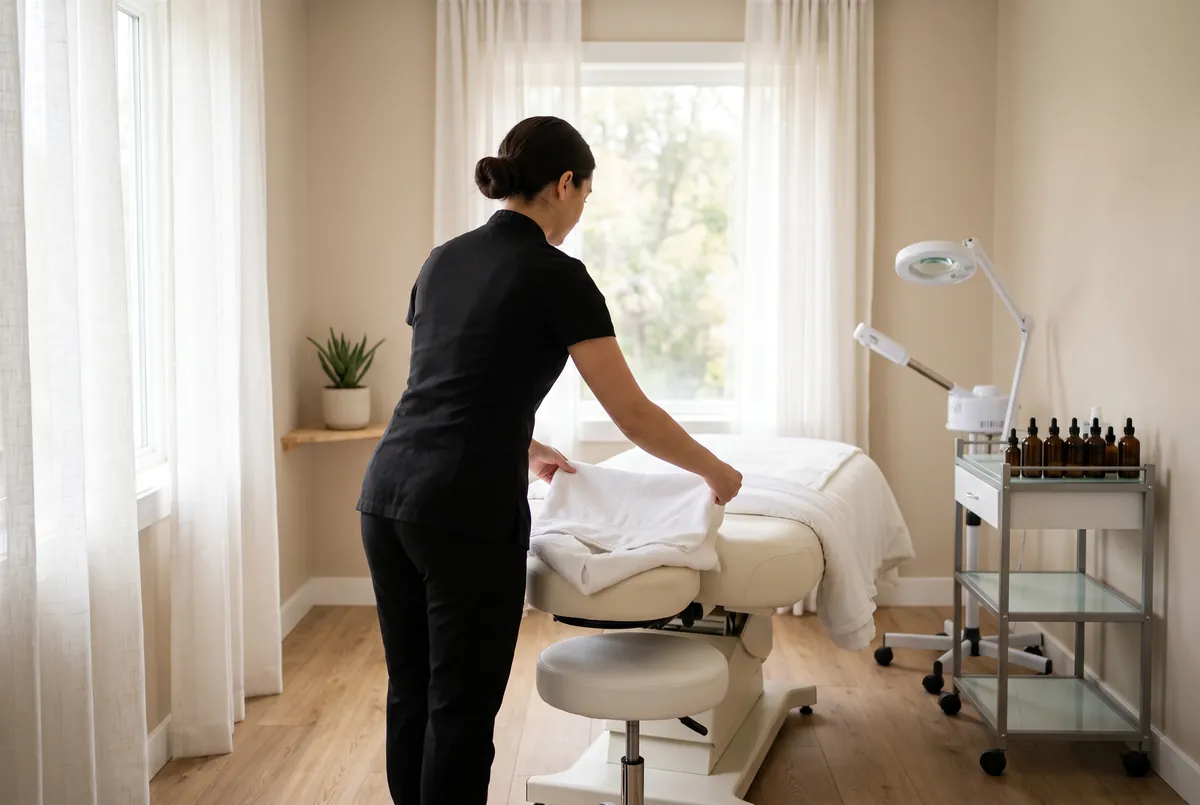
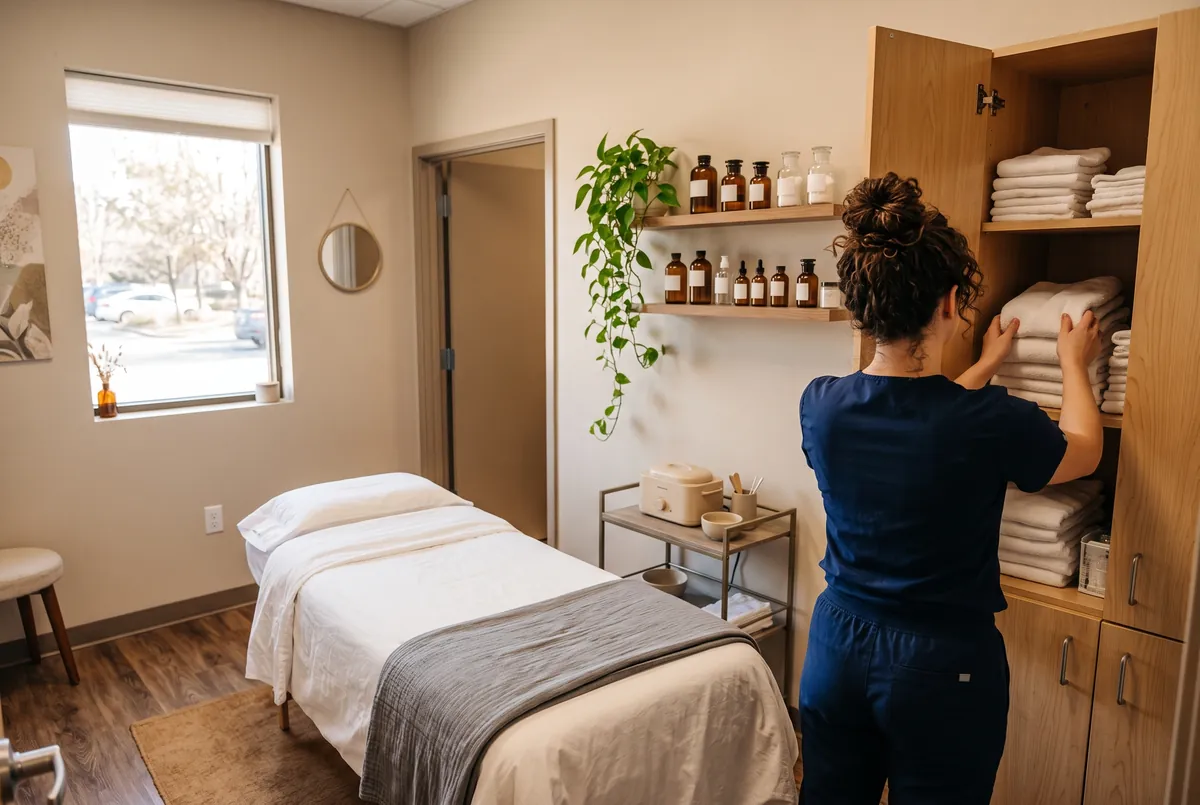
Most of an esthetician's day is not spent on the dramatic part of a treatment. It is spent on preparation, conversation, cleaning and documentation. A typical morning starts before the first client arrives: checking the schedule, reading notes from the client's last visit, turning on the steamer and wax heater, disinfecting surfaces, laying out clean linens and single-use supplies, and making sure every implement that needs disinfection has been processed. If the day includes waxing, the esthetician checks wax temperature and stocks spatulas so double dipping never becomes tempting on a busy afternoon.
Then the appointments begin. A realistic schedule mixes longer facials with short services such as brow waxing, lip waxing or brow tinting that fill gaps. Between each client, the room is reset: linens changed, surfaces disinfected, used implements removed, hands washed, fresh gloves put on. After each service the esthetician writes notes: what products were used, how the skin reacted, what the client was told to do at home, and what to try next time. At the end of the day there is laundry, restocking, final disinfection and often some social media or rebooking calls. In a small studio the esthetician also handles payments, inventory and marketing.
The pace depends heavily on the setting. In a busy waxing center an esthetician might see many short appointments back to back. In a dermatology office the day follows provider schedules and procedure calendars. In a luxury spa, fewer but longer services are the norm, and the esthetician may also do body treatments. What stays constant is that the work is physical. You stand or sit at a bed for hours, use your hands and wrists continuously, and lean over clients. Good posture habits and an adjustable stool are not luxuries in this job.
- Review the day's schedule and each returning client's notes before opening.
- Disinfect surfaces, prepare linens, and set up single-use supplies for the first service.
- Greet the client, update the intake form, and ask about medications, recent procedures and skin changes.
- Analyze the skin under good light and magnification, then explain the plan for today.
- Perform the service, checking comfort and skin response throughout.
- Give aftercare instructions, suggest home care only if it fits the client, and offer the next appointment.
- Write treatment notes, then fully reset and disinfect the room before the next client.

The Core Services Estheticians Perform
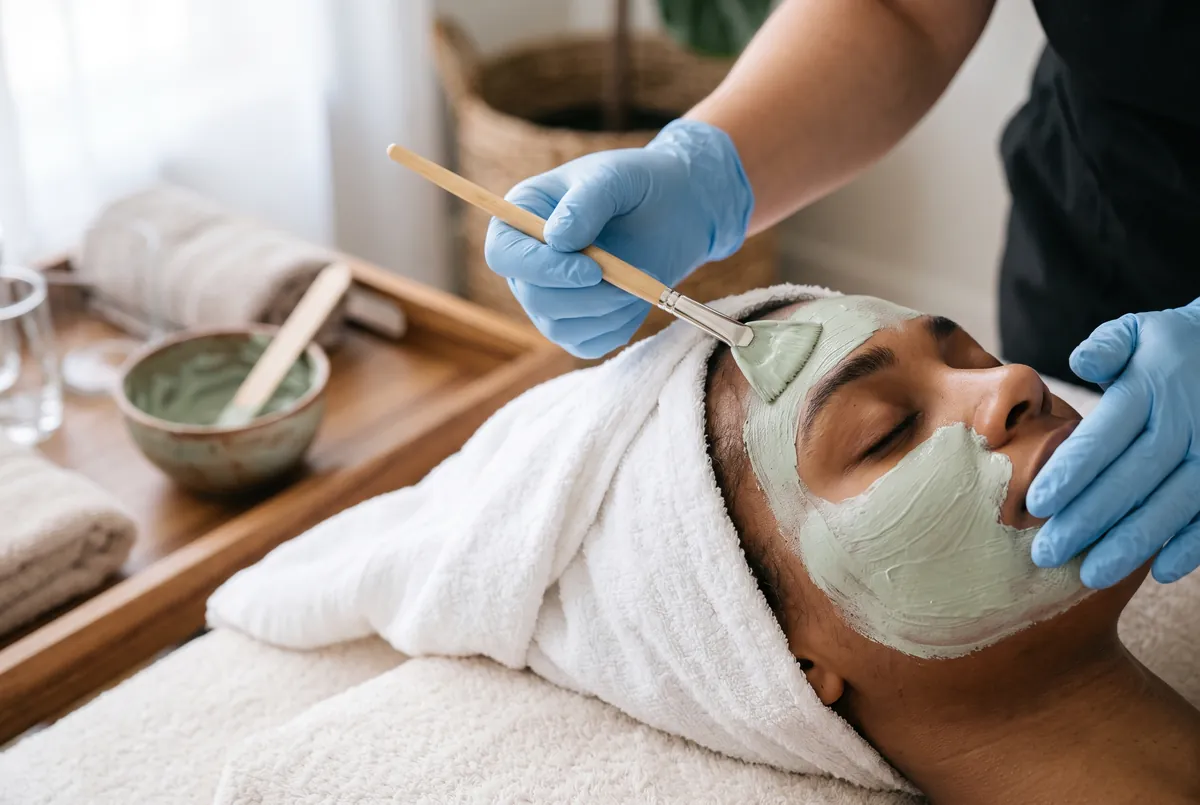
The foundation of esthetics is the facial. A professional facial usually includes cleansing, skin analysis, exfoliation, steaming or warm towels, extractions when appropriate, massage, a mask and finishing products with sun protection. That sounds simple, but a skilled esthetician adjusts every step for the skin in front of them. A reactive, sensitized skin gets a shorter, gentler routine with minimal friction. An oily, congested skin may get more time on deep cleansing and extractions. A mature, dry skin may get more massage and hydrating layers. The same menu item can look quite different from one client to the next.
Beyond facials, the common esthetics services include hair removal by waxing, and in many states tweezing and sometimes sugaring; brow shaping and brow and lash tinting where the state allows it; makeup application; body treatments such as scrubs, wraps and back facials; and surface-level exfoliation using manual methods, enzymes or chemical exfoliants within the depth the state permits. Many estheticians also offer device-based services that the state recognizes within scope, such as certain microcurrent, high frequency, galvanic or microdermabrasion treatments. Device rules are one of the areas where states differ most, so check yours before buying equipment.
| Service category | What the esthetician does | Common state variation |
|---|---|---|
| Facials | Cleansing, analysis, exfoliation, massage, masks, protection | Broadly allowed everywhere esthetics is licensed |
| Extractions | Removing blackheads and clogged pores from the surface | Lancet use and depth limits differ by state |
| Chemical exfoliation | Superficial peels on the outer layer of skin | Allowed strength and depth set by the state or a master license tier |
| Waxing and tweezing | Temporary hair removal on face and body | Some states license waxing separately as well |
| Brows and lashes | Shaping, tinting, lifts, extensions | Tinting and extensions are regulated differently across states |
| Makeup | Everyday, bridal or event application | Often within scope, sometimes also open to other licenses |
| Devices | Microdermabrasion, microcurrent, high frequency and similar | Many devices restricted or limited to medical settings in some states |
Notice what is missing from that list: anything that penetrates below the epidermis on purpose, injections, prescription drugs, and any claim to cure a medical condition. Those boundaries appear in some form in nearly every state's rules. I explain them in more detail in a later section, because a surprising number of new estheticians get into trouble not from bad technique but from offering a service their license never covered.
Extractions, Peels and the Limits of Exfoliation
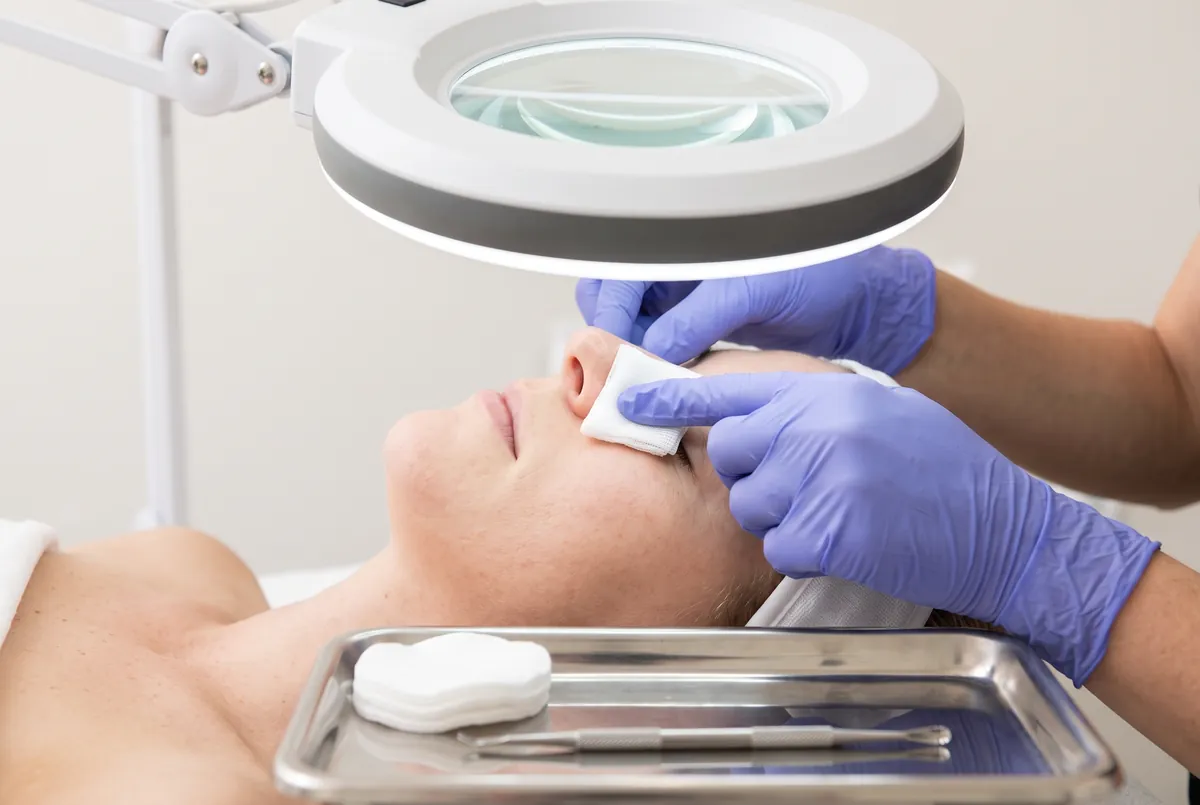
Extractions are one of the most requested parts of a facial and one of the most misunderstood. A trained esthetician removes open comedones (blackheads) and some closed comedones from the surface of the skin, usually after softening the skin with steam or a pre-extraction solution. Good extraction work uses gentle pressure with gloved fingers wrapped in gauze or with a comedone extractor, never nails, and it stops when the skin says stop. Some states allow estheticians to use a sterile lancet to open the surface of a closed comedone; others restrict or prohibit it. Deep, inflamed, painful cysts are not an esthetics job. They belong to a physician or dermatologist.
I teach students a simple rule: if you need to push hard, you are working on the wrong lesion or on skin that is not ready. Aggressive extraction causes broken capillaries, lingering marks and, on deeper skin tones, dark spots that can take a long time to fade. Clients sometimes ask for "everything to come out." The professional answer is that a few careful extractions per visit, combined with home care that keeps pores clear, gives a better result than one forceful session that leaves the skin inflamed for a week.
Chemical exfoliation follows the same logic. Estheticians commonly use alpha hydroxy acids, beta hydroxy acids, enzymes and blended superficial peels that work on the outermost layer of the skin. The state defines how deep the esthetician may go, sometimes by the effect on the skin, sometimes by product strength, sometimes through a master license. Medium and deep peels that reach living layers of the skin belong to medical providers. Even within legal limits, an esthetician must screen for contraindications: recent retinoid or prescription use, recent procedures, active infections, sunburn, certain medications, pregnancy considerations for some ingredients, and a history of pigment problems. Skipping that screening is how superficial peels turn into real injuries.
Hair Removal, Brows and Lashes
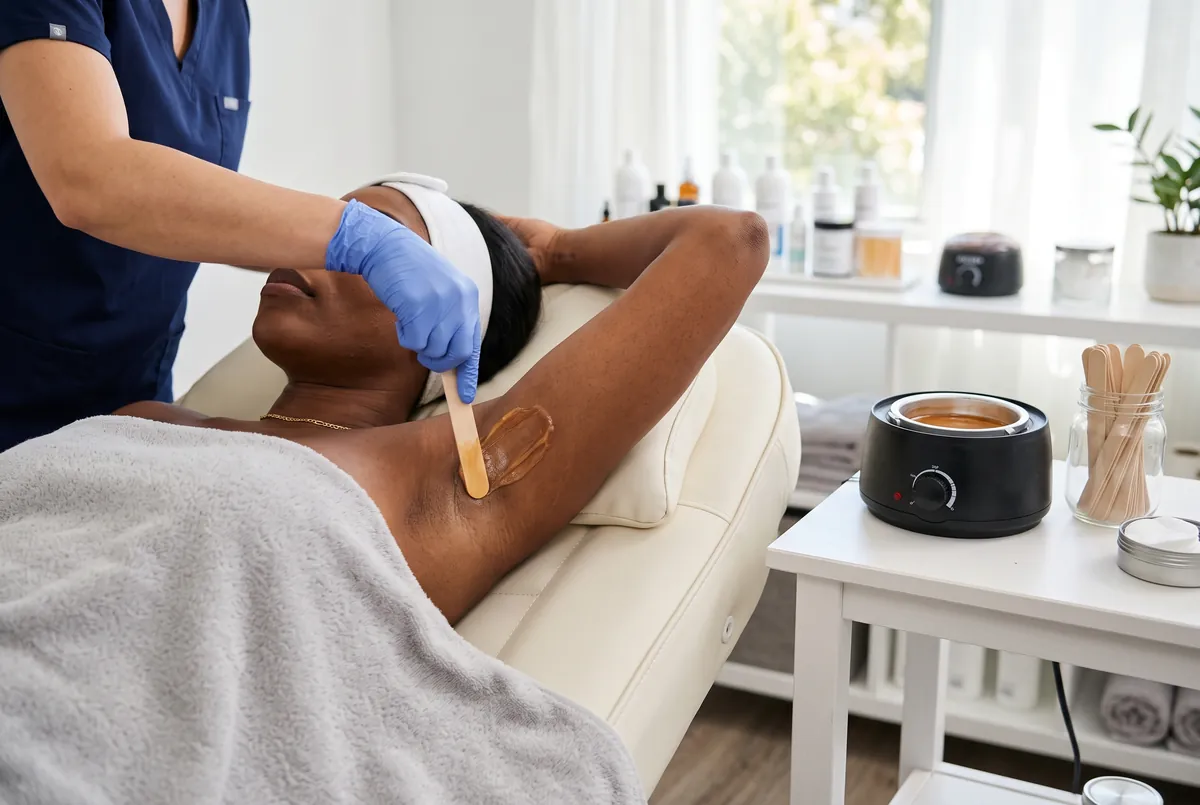
For many estheticians, waxing pays the bills. Facial waxing, brows, underarms, legs, backs and bikini services are short, repeatable and bring clients back on a regular cycle. A good waxer understands hair growth direction, skin tension, wax types (soft strip wax versus hard wax), temperature testing and aftercare. Waxing also has real contraindications: clients using certain topical retinoids or prescription acne medications, recent peels or laser treatments, sunburn, and some skin conditions can lift skin instead of hair. A careful intake question about medications saves both the client and the esthetician from a painful mistake.
Brow services are often the gateway for new clients. Shaping with wax and tweezers, brow tinting where permitted, and brow lamination in states that allow it bring people in every few weeks. Lash services such as tinting, lifts and extensions are popular too, but they are among the most variable areas of regulation. Some states place lash extensions inside the esthetics or cosmetology license, others have separate rules, and chemicals near the eye carry their own safety concerns. Always confirm your state's position before advertising lash work, and train in person with supervised practice.
Men are a growing part of hair removal clientele: backs, shoulders, chests, brows and grooming around the beard line. The technique is similar, but hair density, skin thickness and client expectations differ, and many men are first-time clients who need clear explanations. If that part of the market interests you, our guide to waxing for men covers the practical side, and our waxing course builds theory you can take into your hands-on training.
Scope of Practice: What Estheticians Cannot Do
The limits of esthetics are what separate it from medicine. Across the country, the most consistent restrictions are these: estheticians do not diagnose or treat disease, do not prescribe medication, do not inject anything, do not perform procedures intended to cut or penetrate below the epidermis, and do not advertise services as curing medical conditions. How each state words that line differs. Some use the phrase "beyond the epidermis," some list specific devices or services, and some rely on board opinions for new technologies. What does not differ is the principle: esthetics is cosmetic care of healthy skin.
Clients often blur this line, not the esthetician. A client with persistent acne may want an esthetician to "fix" it instead of seeing a doctor. A client with a rash may ask what cream to buy. The professional answer respects the boundary without dismissing the person: "I can help keep your skin clean and calm between visits, and I'd like a dermatologist to look at this, because it may need treatment I can't provide." In my experience clients trust you more, not less, when you say that clearly. It also protects your license and your liability insurance.
- Diagnosing skin conditions or naming a disease for a client.
- Prescribing or recommending prescription medications.
- Injections of any kind, including neurotoxins and fillers.
- Procedures designed to cut, ablate or penetrate below the epidermis.
- Medium or deep chemical peels reserved for medical providers.
- Laser, IPL and other energy devices, unless the state specifically allows them for estheticians under defined conditions.
- Advertising any service as a medical treatment or a cure.
Energy-based devices deserve a separate warning. Laser hair removal and IPL are handled very differently from state to state. Some states allow estheticians to operate them under physician supervision after additional training, some restrict them to medical professionals, and some require a separate credential. Microneedling and dermaplaning also sit in gray areas in some states. When a manufacturer or trainer tells you a device is "esthetician safe," that is a sales statement, not a legal opinion. Read your board's rules or ask the board directly in writing, and keep the answer.

Esthetician, Medical Esthetician, Dermatologist: Who Does What
These three titles get mixed up constantly, and the confusion creates unrealistic expectations on both sides of the treatment bed. A dermatologist is a physician who completed medical school and specialty training. Dermatologists diagnose and treat skin disease, prescribe medication, perform surgery and biopsies, and direct medical cosmetic procedures. An esthetician is a licensed skin care professional trained in a cosmetology or esthetics program, whose work is cosmetic and non-medical. A "medical esthetician" is usually an esthetician who works inside a medical practice, often under the direction of a physician or other licensed medical provider.
In most states "medical esthetician" is a job title rather than a separate license, and it does not expand the esthetician's legal scope by itself. Where a state has an advanced or master esthetician license, that tier may add specific services. In a medical setting the esthetician often prepares patients before procedures, performs facials and superficial treatments, supports post-procedure care, and educates patients on home routines, all within the practice's written protocols. The physician keeps responsibility for diagnosis and medical treatment. If you are curious about the hospital or clinic path, the state esthetics licensing pages show which states have a higher license tier.
| Role | Education route | Typical work |
|---|---|---|
| Esthetician | State-approved esthetics or cosmetology program, then state exam | Facials, waxing, superficial exfoliation, brows, lashes, makeup, education |
| Medical esthetician (job title) | Esthetics license, plus experience and post-license training; a master tier in some states | Clinical facials, pre and post procedure care under a medical provider's protocols |
| Dermatologist | Medical school and specialty residency | Diagnosis, prescriptions, surgery, medical cosmetic procedures |
Client Consultation and Skin Analysis
If you ask me which part of the job matters most, I will say the consultation. Technique can be taught in a classroom. Knowing what to ask, what to listen for and when not to treat takes practice. A proper consultation starts with an intake form covering medications, topical products, allergies, recent procedures, sun exposure, pregnancy where relevant, skin reactions in the past and the client's goals. Then comes the conversation, which is where the useful details surface: "I started a new acne cream last week," "I had a peel at another spa," "I'm going to the beach on Saturday."
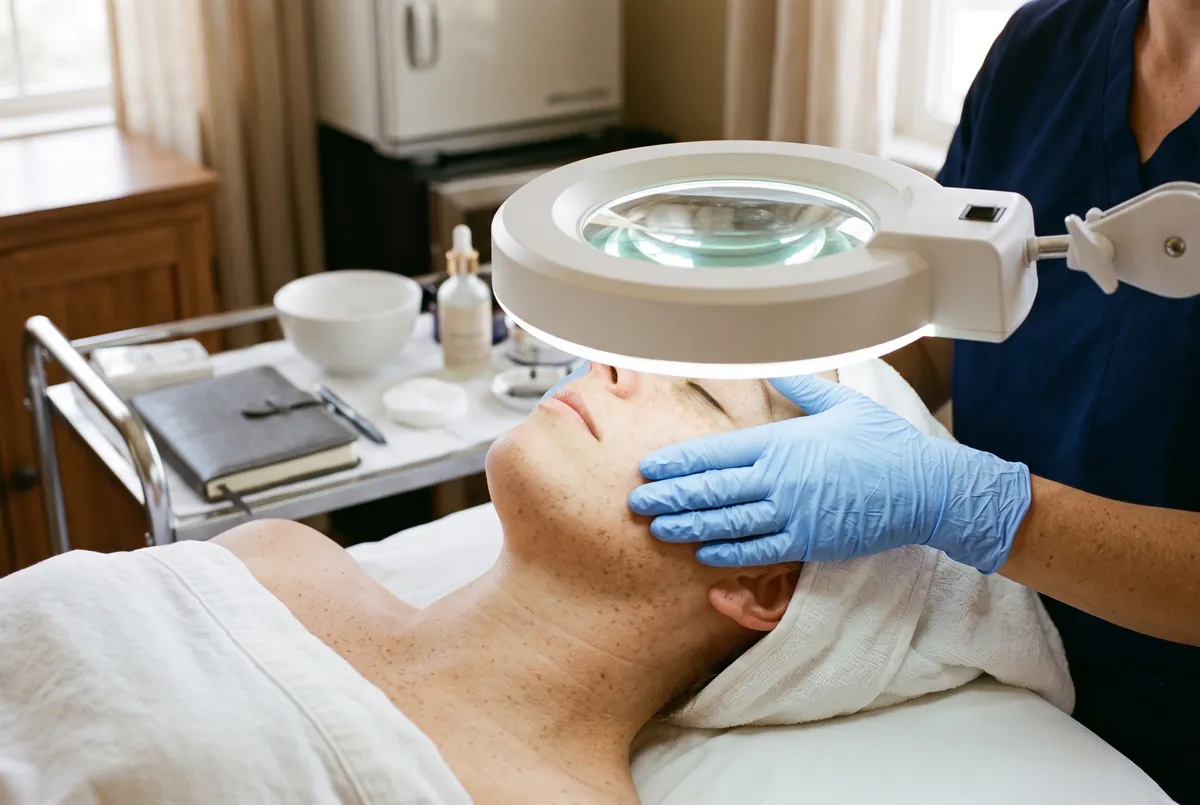
Skin analysis follows. The esthetician cleanses the skin and examines it under good light and magnification, looking at oiliness, dehydration, texture, congestion, sensitivity, pigmentation and visible sun damage. Many estheticians use a skin typing system, such as the Fitzpatrick scale, to estimate how skin may respond to heat, exfoliation and trauma. This is observation for cosmetic planning, not diagnosis. You describe what you see ("your skin looks dehydrated around the cheeks," "there's congestion along the chin") and you refer anything that looks abnormal.
The consultation is also where you set realistic expectations. One facial does not reverse years of sun damage. Hair that is waxed will grow back. Clients who understand what a service can and cannot do are happier and more likely to rebook. Write everything down. Treatment notes protect you if there is ever a complaint, and they make you better at your job, because the next visit starts from facts instead of memory.
Sanitation, Infection Control and Safety
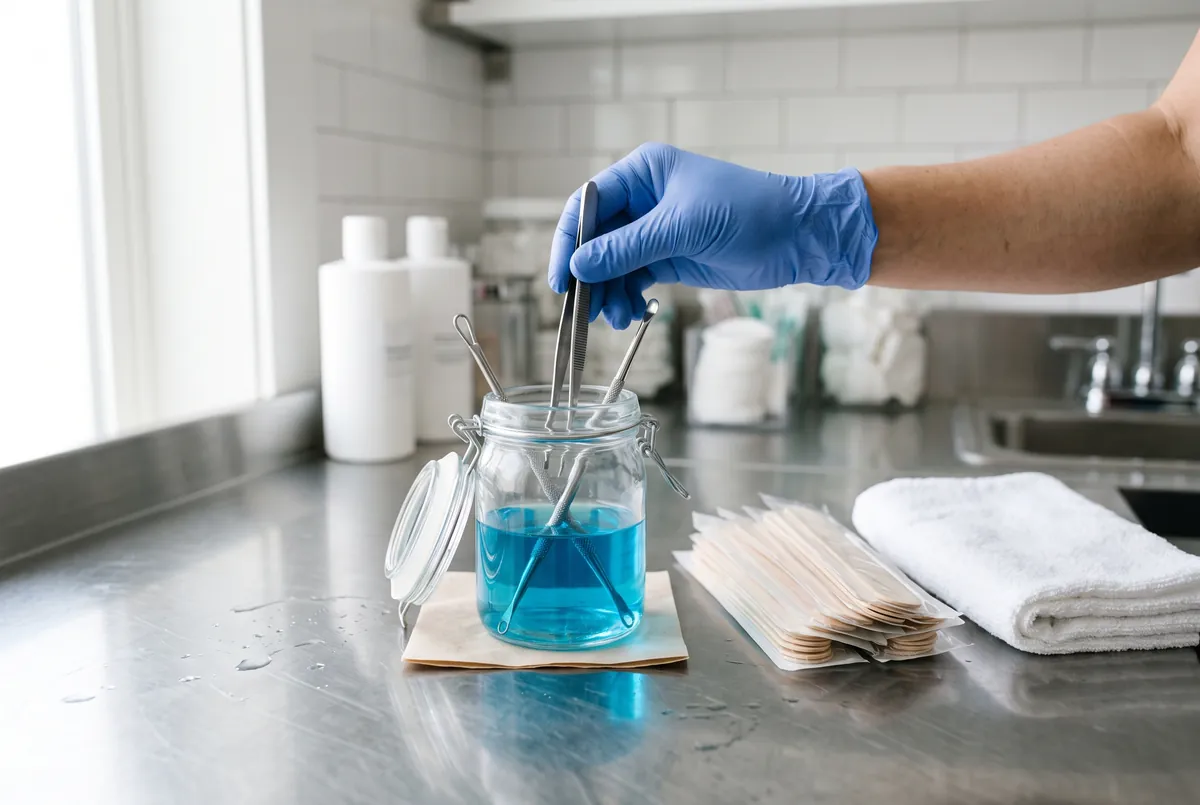
Sanitation is a large part of the state exam for a reason. Estheticians work on skin, sometimes on skin that is freshly exfoliated or has open pores, with implements that touch many people over a day. Infection control is the job, not an extra. The basic concepts are cleaning (removing visible debris), disinfecting (using an EPA-registered disinfectant with the correct contact time on nonporous tools and surfaces) and, where required, sterilizing. Single-use items such as spatulas, cotton, gauze, lancets and some brushes are discarded after one client. Wax is never double dipped.
Safety goes beyond germs. Estheticians handle acids, heat, electricity and chemicals near the eyes. They test wax temperature on their own wrist first, patch test tints and new products when appropriate, keep chemical exfoliant times strictly controlled, and have a plan for reactions: cool compresses, neutralizing steps where the product calls for them, and a clear line for when to stop and refer. Allergies, fainting clients and burns are rare, but a prepared esthetician knows what to do before it happens.
Inspectors from the state board can visit licensed establishments, and the details they look at are often small: labeled containers, disinfectant logs, covered trash, clean linens stored separately from used ones, and a license posted where the rules say it must be. Building these habits in school makes them automatic. Clients notice too. When a client watches you open a new pack of implements or change gloves before touching their face, it builds trust in a way no marketing can.
Where Estheticians Work
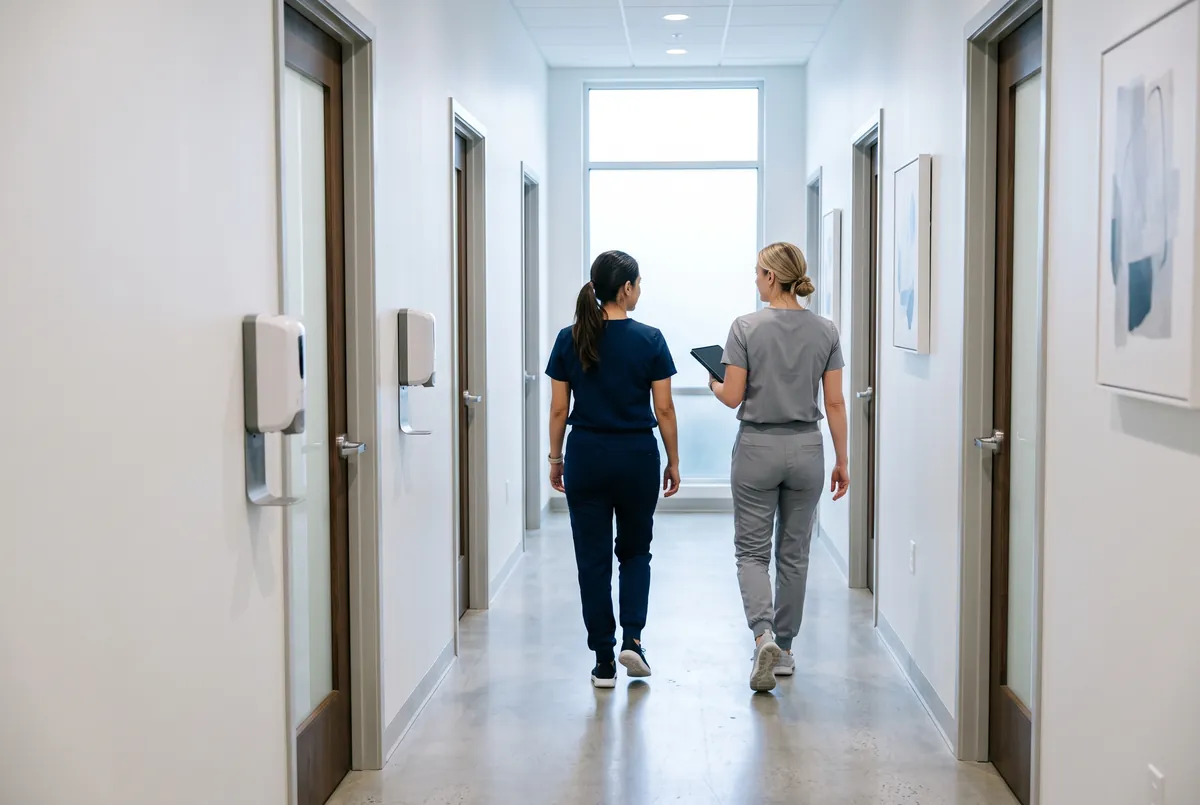
One reason people choose esthetics is flexibility of setting. The same license can lead to very different workdays. Day spas and resort spas focus on relaxation facials and body treatments, often with a steady flow of clients booked by the spa. Hair salons with skin rooms offer facials and waxing to existing salon clients. Waxing centers and brow bars run fast, high-volume schedules. Medical practices such as dermatology, plastic surgery and medical spas hire estheticians for clinical facials and pre and post procedure care. Some estheticians work for product brands in education, sales or retail counters.
Many experienced estheticians eventually work for themselves, renting a room or a salon suite or opening a small studio. Independence brings control over your schedule, services and prices, but also every business task: booking, marketing, taxes, insurance, supplies and cleaning. Before going independent, check your state's establishment license rules, because in many states the space where you work also needs its own license or must meet specific requirements. Our directory of esthetics and beauty schools can help at the training stage, and later you can browse professional studios to see how others set up their space.
There is no single best setting. New estheticians often benefit from starting where they can see many clients and learn from senior colleagues, even if the pay structure is not ideal. Commission, hourly, booth rent and hybrid models all exist, and what you earn depends on location, clientele, rebooking rate and retail sales. I will not quote salary figures here because they vary by region and change year to year. Ask working estheticians in your area and look at local job postings for a realistic picture.
Skills That Make an Esthetician Successful
Technical skill gets clients through the door once. What brings them back is a mix of habits that are easy to underestimate in school. The first is consistency: doing a service the same careful way every time, so the client knows what to expect. The second is communication: explaining what you are doing, checking comfort, and giving aftercare instructions the client will actually remember. The third is judgment: recognizing when a service should be postponed, modified or refused. A new esthetician who can say "not today, here's why" earns more long-term trust than one who says yes to everything.
Physical skills matter as well. Hand control and a light touch show up in extractions, brow shaping and massage. Stamina matters for back-to-back waxing. Time management matters because running late cascades through a whole day. Product knowledge matters, but clients can tell when a recommendation is driven by a sales target instead of their skin. Retail can be a healthy part of income if it is honest: recommend only what fits the client and their budget, and it is fine to suggest they keep using a product they already own if it works.
Finally, the business side. Even employed estheticians build a personal clientele, and that clientele follows good records, prompt follow-up and a reputation for cleanliness and honesty. Learning basic photography for before and after images (with client consent), keeping a simple booking system and responding politely to questions online all help. None of this is glamorous, but in my experience it separates estheticians who are fully booked from those who wait by the phone.
How to Become an Esthetician
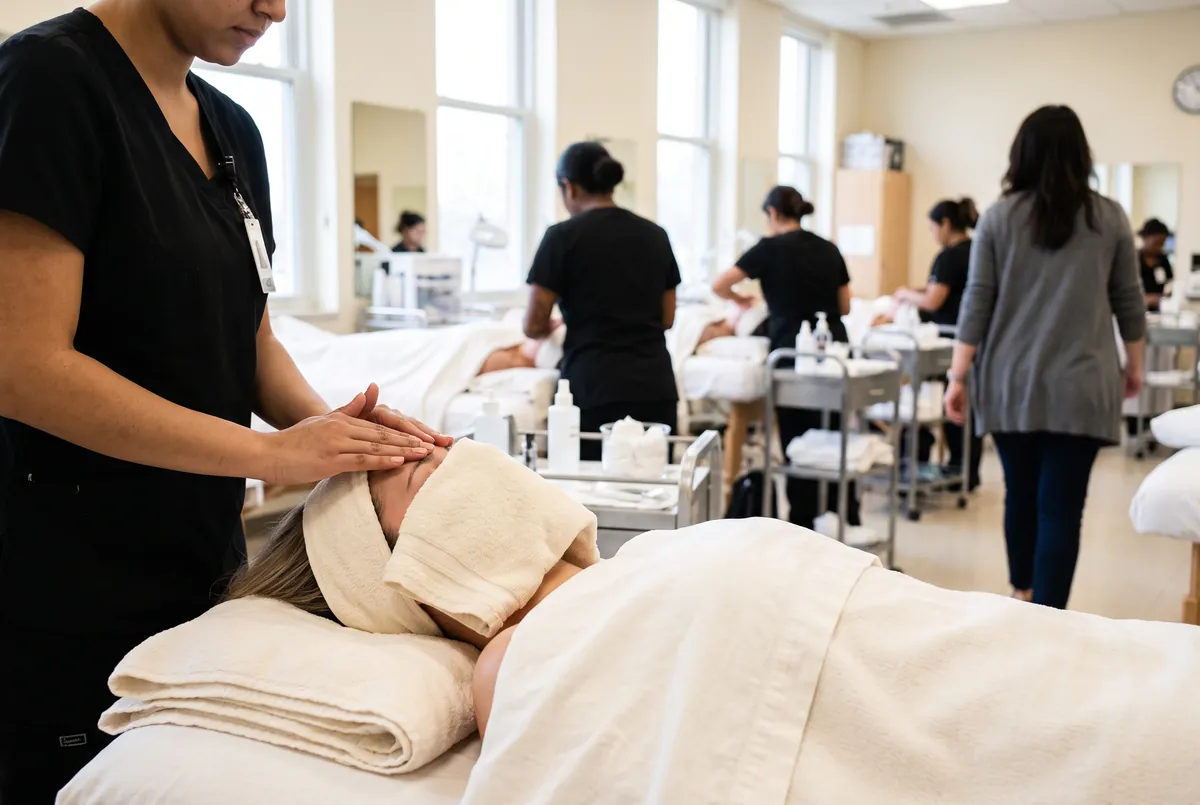
The route is similar in most states, even though the details differ. You complete a state-approved esthetics program, or a cosmetology program in states where that license covers esthetics. The program combines theory (skin anatomy, disorders you must recognize and refer, chemistry, infection control, laws and rules) with supervised hands-on practice on mannequins, classmates and supervised clients. The state sets the minimum training hours or equivalent, and those numbers vary, so check the requirements for your state on our esthetics licensing hub. Some states also require a minimum age or level of education.
After training, you take the state board exam, usually a written theory exam and, in many states, a practical exam where you perform services under observation. Passing leads to your license, which you must keep current through renewals and, in some states, continuing education. For a detailed step by step version, see our guide on how to become a licensed esthetician, and when exam time comes, our advice on how to pass the esthetician state board exam will help you prepare for both parts.
Online learning has a real and useful place here, but it has a limit. An online course can build theory, vocabulary, sanitation knowledge and exam readiness before or alongside school. It cannot replace the in-person training hours your state requires, and it cannot give you a license. Be skeptical of any program that promises you can become a licensed esthetician online only, or that a certificate lets you work without a license. Our esthetics theory course is designed as preparation and support, not as a substitute for a state-approved school.
Career Paths and Adding Specialties
An esthetics license is a starting point. Over time many estheticians specialize. Some focus on acne-prone skin and build long treatment programs with home care. Some become waxing specialists with a loyal, fast-moving clientele. Some move into medical settings, lash artistry, makeup for weddings and film, spa management, school instruction or product education. Teaching usually requires additional instructor training and its own license in many states. Each path rewards a slightly different personality, so it is worth trying a few services before committing.
Hair removal is one of the most natural additions. Waxing is already part of most esthetics training, and deepening that skill (advanced body waxing, male waxing, sugaring where permitted) can fill a schedule quickly. The other option I see more estheticians ask about is electrolysis, the only method the FDA accepts for permanent hair removal claims. Electrolysis is often regulated separately from esthetics, with its own license, training and exam in many states, while some states handle it differently. Whether your esthetics license covers it depends entirely on your state. Read our guide on whether estheticians can do electrolysis before assuming it is included.
For clients, adding electrolysis matters because it solves problems waxing cannot: stray chin hairs, eyebrow refinement, white or gray hairs that lasers do not target, and permanent results in small areas. For the practitioner, it adds a specialty that builds long-term client relationships, since treatment happens over a series of visits. If this interests you, explore the electrolysis theory course and the electrolysis licensing rules by state. The same principle applies: theory online, required practical training in person, and a license where your state demands one.
Is Esthetics the Right Fit for You
From what I have seen in students over the years, the people who thrive as estheticians share a few traits. They like working closely with people and are comfortable with physical proximity and quiet conversation. They are detail-oriented about cleanliness without being anxious about it. They enjoy learning, because ingredients, devices and rules keep changing. They are honest with clients even when the honest answer means less money today. And they are patient, because a full book of loyal clients is built over time, one good service at a time.
If you are still deciding, a practical next step is to book services as a client at a few different places: a day spa facial, a waxing center appointment, a medical spa consultation. Watch how the esthetician works, what they say and how the room is run. Then read your state's esthetics requirements on our licensing hub, compare schools near you, and consider starting theory with our esthetics course so your school hours are spent on hands-on skills rather than catching up on vocabulary.
State Requirements
State licensing guides
Hours, exams, fees, and the licensing board differ by state. Open your state for the current requirements.
Common Questions
FAQ
A typical day includes preparing and disinfecting the treatment room, consulting with clients and reviewing their intake forms, performing services such as facials, extractions, waxing, brow work and superficial exfoliation, giving aftercare instructions, writing treatment notes and resetting the room between clients. Independent estheticians also handle booking, payments, supplies and marketing. The mix of services depends on the setting, whether a day spa, waxing center, salon or medical practice.
Yes, extractions of surface blackheads and clogged pores are a standard part of esthetics in most states. The details differ: some states allow estheticians to use a sterile lancet on closed comedones and others restrict it. Deep, painful or inflamed cysts are outside esthetics and should be seen by a physician or dermatologist. Good extraction work is gentle and stops before the skin is damaged.
A dermatologist is a physician who diagnoses and treats skin disease, prescribes medication and performs surgery. An esthetician is a licensed skin care professional who provides cosmetic, non-medical care such as facials, waxing and superficial exfoliation. Estheticians do not diagnose or prescribe. When a client has a skin concern that looks medical, the esthetician refers them to a dermatologist. Some estheticians work inside dermatology practices under a provider's protocols.
Estheticians can usually perform superficial chemical exfoliation that works on the outer layer of the skin. How strong or deep that exfoliation may be is set by each state, and some states tie deeper services to an advanced or master esthetician license. Medium and deep peels are medical procedures. Check your state's rules on our esthetics licensing hub before adding peels to your menu.
It depends on the state. Laser and IPL rules vary widely: some states allow estheticians under physician supervision with extra training, others restrict them to medical professionals. Electrolysis is often a separate license with its own training and exam. Our guide on whether estheticians can do electrolysis explains the options, and the state pages show the specific rules.
The time depends on your state's required training hours and on whether you study full time or part time. After completing a state-approved program you must pass the state board exam, which usually includes written and often practical parts. Because requirements differ, check your state on our licensing hub. Online theory can help you prepare, but it never replaces the in-person hours your state requires.
You can study theory online, including skin science, sanitation and exam preparation, but you cannot earn an esthetics license online only. Every state that licenses estheticians requires approved training with hands-on practice and a state exam. Use an online course such as our esthetics theory course as preparation, then complete your practical training at a state-approved school.
No. An esthetician is licensed specifically for skin care services, while a cosmetologist's license usually covers hair, nails and basic skin care. In some states a cosmetology license includes esthetics services, in others the scopes differ in details. If you want to focus on skin, esthetics is the more specialized path. Our comparison of cosmetologist and esthetician breaks down the differences.
Keep Reading
Related Guides


