Cosmetology
Microcurrent Facial: How It Works, Results, Risks and Home Devices

Quick answer
A microcurrent facial passes a very low electrical current, measured in microamps, through the face with probes, conductive gloves or a handheld device. It involves no needles, heat or downtime. One session lasts a few days, and lasting change needs a series plus maintenance. Results are modest and temporary. People with pacemakers, epilepsy or pregnancy should not have it.
A microcurrent facial is a skin care treatment that passes a very low level electrical current through the face using two probes, conductive gloves, or a handheld device. The current is measured in microamps, far below the level that makes a muscle visibly twitch, and most people feel little or nothing. Clients book it for a face that looks a bit more lifted and rested: a clearer jawline, less morning puffiness, a brow that sits slightly higher. It involves no needles, no heat and no downtime, which explains why it has become one of the most requested add-ons in American spas and one of the best-selling categories of home beauty devices.
I am Aida Khazieva, a licensed electrologist and cosmetologist, and I have worked with electrical modalities in the treatment room for more than twenty years. This guide gives you the practical picture: how microcurrent is thought to work, what a professional session involves, how many treatments a realistic plan includes, who should not have it, and how home devices compare. I will also be direct about the limits, because microcurrent is often sold with promises it cannot keep. This is general information and not medical advice. If you have a medical condition or an implanted device, ask your physician first.
What a microcurrent facial is, and what it is not
Microcurrent belongs to a family of electrical treatments that estheticians and cosmetologists have used for generations. It delivers a gentle current through the skin and the tissues just beneath it. The current is too weak to cause the strong, visible muscle contractions you may have seen with electrical muscle stimulation devices used in fitness or physical therapy. That difference matters. A treatment that makes the cheek jump is working at a different intensity and is not what the beauty industry means by microcurrent, even though the two are constantly confused in marketing.
It also helps to separate microcurrent from other device treatments on a spa menu. Radiofrequency heats the deeper skin to stimulate collagen. Ultrasound treatments use sound energy. LED uses light. Galvanic treatments use a steady direct current, mainly to help certain water-based products move into the surface of the skin or to soften clogged pores. High frequency uses a glass electrode and is chosen mostly for breakout-prone skin. Microcurrent uses none of those mechanisms. Its target is the tone and resting look of the face, and it is frequently combined with the others in one appointment.
Finally, microcurrent is not a facelift and not a replacement for injectables or surgery. I say this in the first minute of every consultation. A facelift repositions tissue and removes excess skin. Neuromodulator injections relax specific muscles. Fillers add volume. Microcurrent does none of that. What it can offer, for a suitable client who keeps up with treatments, is a modest, temporary improvement in how firm and awake the face looks. Clients who understand that are happy with it. Clients who were promised a surgical result are not, and they should not have been promised one.
How microcurrent is thought to work
The body runs on tiny electrical signals of its own, and the idea behind microcurrent is that a current of similar scale can influence tissue without overwhelming it. The popular explanation is that the treatment "re-educates" facial muscles. Practitioners use two styles of movement to match that idea. Lifting movements glide or hold the probes in an upward direction along muscles that have lengthened with age, such as those of the cheeks and brow. Shortening or relaxing movements work on areas that are habitually tense, such as the frown lines between the brows. The muscle is gently positioned by the probes while the current flows.
A second explanation is cellular. Laboratory research that is cited in nearly every microcurrent training manual found that very low currents increased the production of ATP, the molecule cells use for energy, in animal tissue, while stronger currents did not. Manufacturers extend this to claims about collagen, elastin and repair in the human face. That is where I ask students to slow down. The laboratory findings are real, but well-designed studies on cosmetic facial results in people are limited and small. It is fair to say the mechanism is plausible and that many clients and practitioners see a visible effect. It is not fair to quote exact percentages of improvement as settled fact.
A third and less glamorous effect deserves credit: fluid movement. A microcurrent session involves slow, repeated strokes from the center of the face outward and down the neck, on well-hydrated skin. That pattern resembles lymphatic drainage massage. A good part of the immediate change clients see in the mirror, the reduced puffiness under the eyes and the sharper jaw, likely comes from moving fluid as much as from anything electrical. This also explains why the immediate effect fades within days, and why the treatment is built around repetition.
What it can and cannot do for your face
In my practice the changes clients notice most reliably are these: the face looks less puffy, especially in the morning and around the eyes; the outline of the jaw and cheekbone looks a little more defined; the brows appear slightly more open; and the skin has a healthy color after the session, since the massage component increases surface circulation. People who hold tension in the jaw or forehead often describe the face as feeling lighter. These are subtle changes. A friend might say you look rested without being able to name why.
What it will not do is equally important. Microcurrent does not remove loose skin, lift heavy jowls, erase deep folds, replace lost volume in the cheeks or temples, or treat sun damage, brown spots and broken capillaries. It does not shrink pores or treat acne. It does not affect bone or the fat pads whose descent accounts for much of an aging face. If a concern falls on that list, an honest practitioner refers the client to a dermatologist or plastic surgeon, or suggests another service, and does not sell a package of microcurrent sessions.
The best candidates are people with early to moderate changes: mild softening along the jaw, a tired look, fluid retention, slight drooping of the brow. People who already have very lax skin can still enjoy the treatment and the temporary freshness, but the visible difference will be smaller. Age alone is a poor guide. Lifestyle, sun history, weight changes and genetics matter more. Results also depend on the client keeping to the schedule, in the same way that fitness depends on continuing to exercise.
Who should not have a microcurrent facial
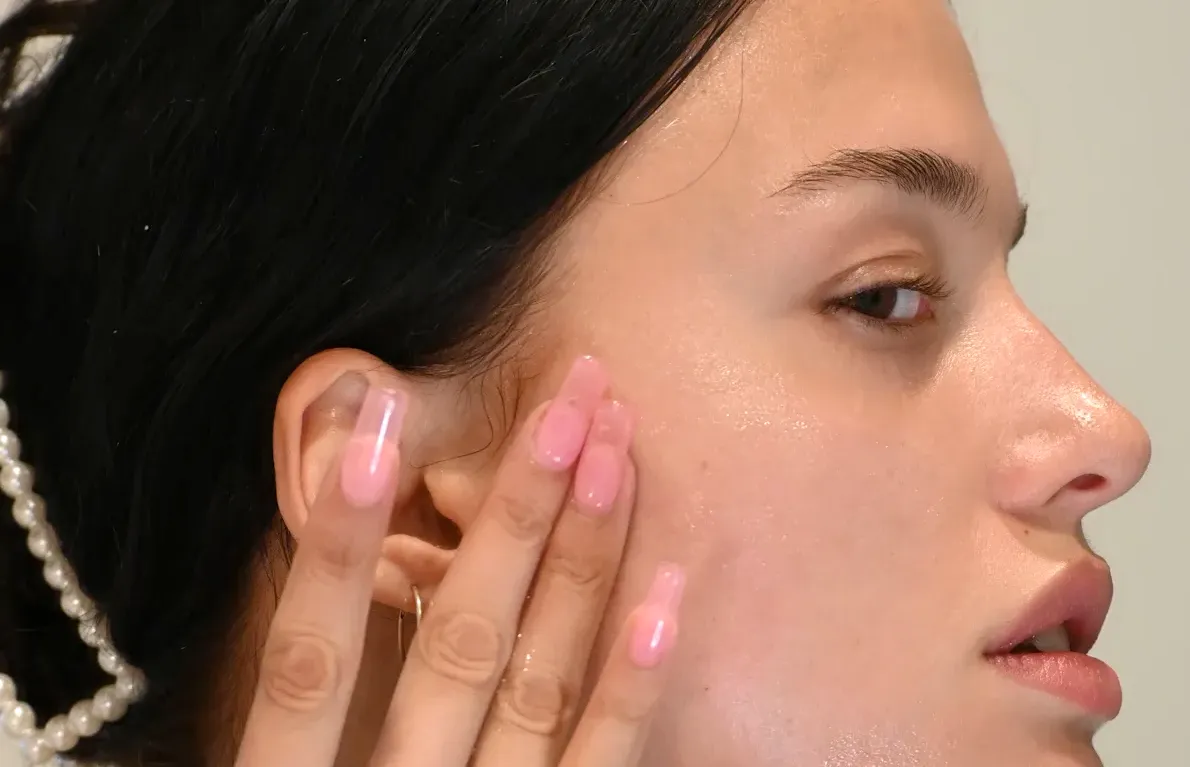
Microcurrent is gentle, but it is still an electrical current applied to the head and neck, and a list of contraindications applies to it as it does to every electrical modality. Device manufacturers publish their own lists, and practitioners follow both those and their training. The intake form exists to catch these before the client is on the table. The following are the standard reasons to decline or to require a physician's clearance.
- A pacemaker, implanted defibrillator, or any other implanted electrical device.
- Epilepsy or a history of seizures.
- Pregnancy. The treatment has not been studied in pregnancy, so it is avoided as a precaution.
- Active cancer or current cancer treatment, unless the oncology team approves.
- Heart conditions, unless a physician gives clearance.
- Metal implants, plates or pins in the face or neck. Ordinary dental fillings are generally fine, although some clients notice a metallic taste.
- Open wounds, active cold sores, infections, inflamed acne, sunburn or a rash on the treatment area.
- Recent facial surgery, or recent injectables in the area, until the surgeon or injector says it is safe.
- Thrombosis or other vascular problems in the head and neck.
Injectables cause the most confusion. Clients ask whether microcurrent will "undo" a neuromodulator or move filler. Practitioners and device makers generally advise waiting after injections before resuming microcurrent, and the specific waiting period is the injector's call, because they know which product was placed where. I ask clients to tell me about every injectable they have had in the past several months and to bring the injector's instructions. If they do not have instructions, we wait and they call the office. Guessing is not good enough when someone has paid for a procedure.
A few situations are not contraindications but change how I work. People with rosacea or very reactive skin may flush from the massage and the conductive gel, so I shorten the session and choose a plain gel. People with frequent migraines sometimes prefer to avoid the forehead and temples. Diabetes, thyroid conditions and any condition that affects nerves or sensation are worth a conversation with the client's physician before starting a series. When there is doubt, a short note from the doctor protects both the client and the practitioner.
What happens during a professional session
A professional appointment begins with a consultation and, at the first visit, before photos taken in consistent lighting. The skin is cleansed thoroughly, because oil and makeup interfere with conductivity. Many practitioners add a light exfoliation or an enzyme step so the surface is smooth. A water-based conductive gel is then applied generously to one section of the face at a time. The gel is not optional. Current needs a moist path to travel through, and dry spots are where clients feel prickling or a sharp zap.
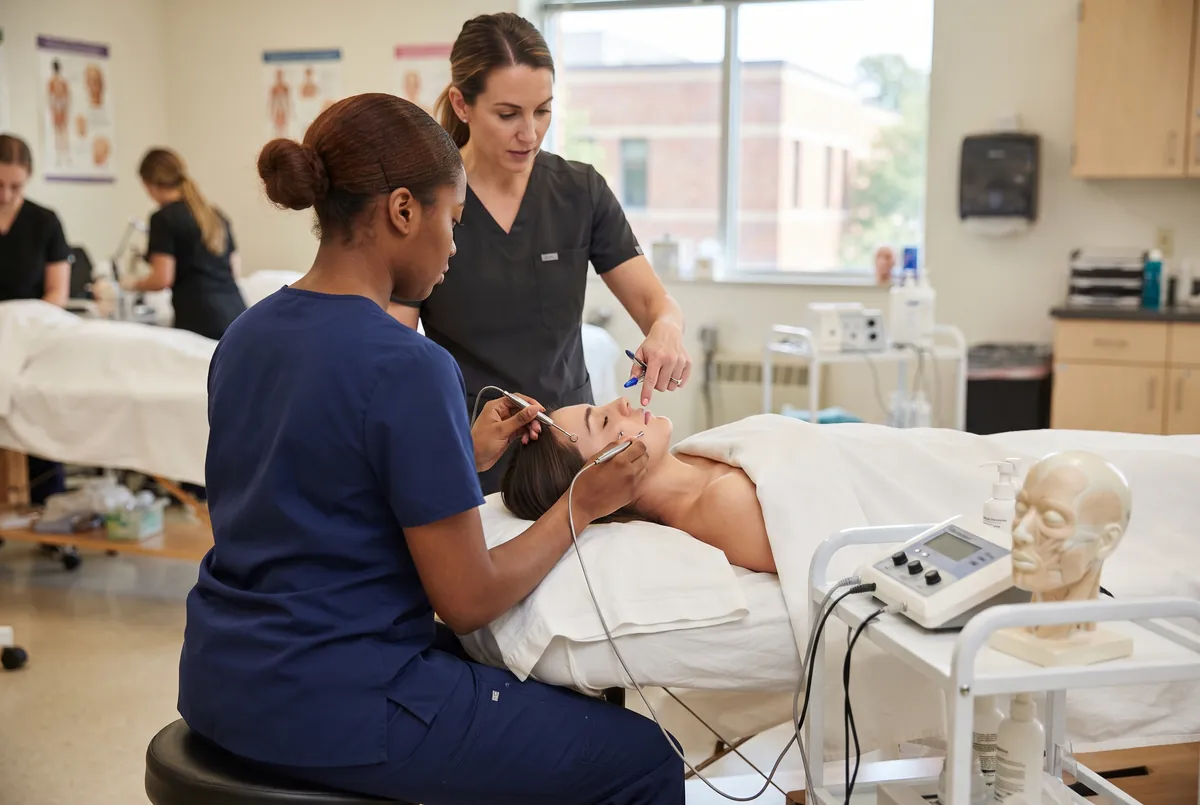
The practitioner then works through the face in a set order, usually starting at the neck and jaw and moving up to the cheeks, around the eyes and across the forehead. With a two-probe system, one probe anchors and the other glides or holds, and each movement is repeated several times before moving on. Some systems use conductive gloves so the hands themselves deliver the current during a massage. One side of the face is commonly finished first, and I hand the client a mirror at that point. The difference between the two sides is the most convincing explanation of the treatment I can give.
Most clients feel nothing, or a faint tingling when a probe passes over a nerve branch. A metallic taste and tiny flashes of light at the edge of vision when working near the eyes are well-known harmless effects of current near the nerves of the mouth and eye, and they stop when the probes move away. The session should never hurt. If it stings, there is not enough gel or the intensity is too high. The current portion typically runs somewhere between half an hour and an hour, and the visit ends with removal of the gel, a serum, moisturizer and sunscreen.
There is no recovery period. Clients can apply makeup and return to work. I suggest drinking water during the rest of the day, skipping alcohol that evening and avoiding a very salty dinner, simply because fluid retention hides the result. Mild redness from the massage fades within an hour or so. Occasionally a client feels tired or has a light headache after a first session. If that happens, the next session is shorter and gentler. Anything more than that, such as lasting twitching, pain or dizziness, means the treatment is not right for that person and a physician should be consulted.
How many sessions you need, and how often
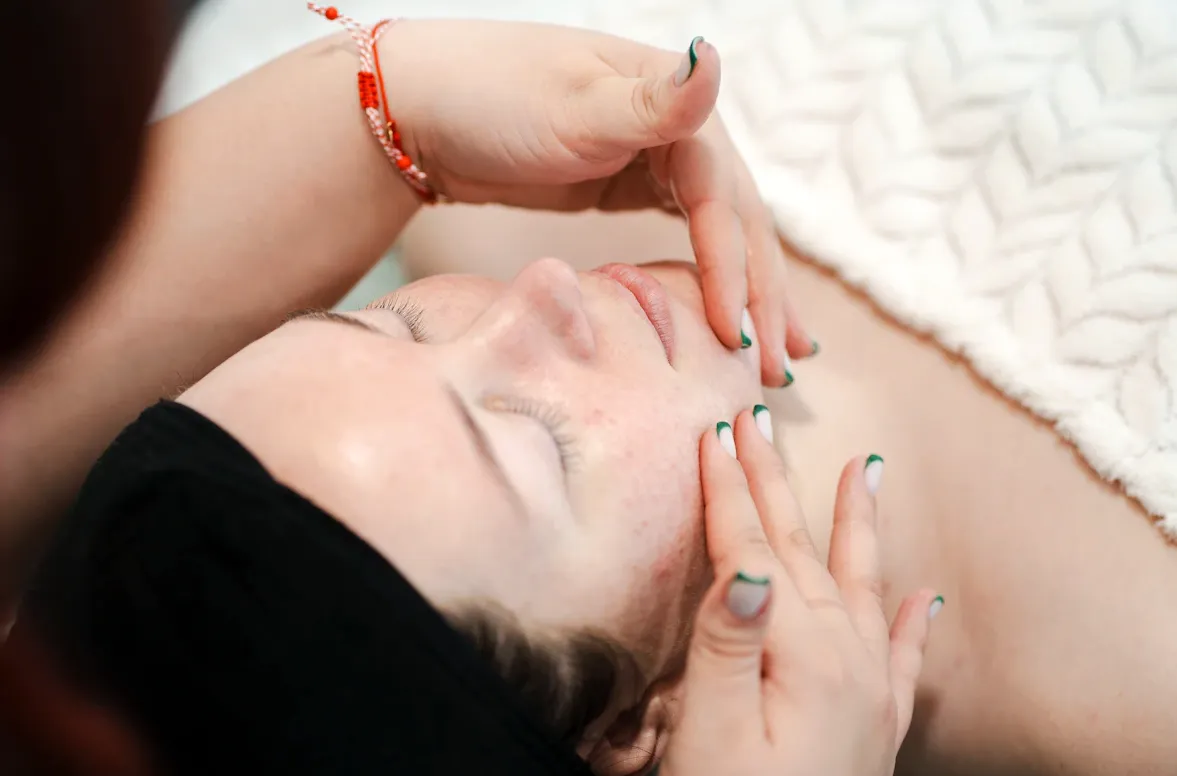
One session gives an effect that lasts a few days. That is useful before an event, and it is how many people first try the treatment. A lasting difference requires a series. Professional protocols generally start with a concentrated phase of frequent sessions over several weeks, on the theory that the effect is cumulative and each session builds on the last. After that comes maintenance, with a session every several weeks. The exact numbers come from the device manufacturer and from the practitioner's assessment, and they vary with age, skin condition and how the face responds.
I plan the first phase with the client and schedule a review at the halfway point. We compare photos taken in the same position and lighting as the first day. If there is a visible change, we continue. If there is none by the middle of a properly performed series, I say so and we stop. Some faces simply do not respond enough to justify the cost and time. No ethical practitioner sells a long prepaid package without a checkpoint, and you should be cautious of anyone who does.
When treatments stop, the face returns gradually to where it would have been. Nothing is damaged, and nothing "falls" as a rebound. The comparison I use is going to the gym. Muscle tone gained through regular work fades when the work stops, and that says nothing bad about exercise. Before starting, decide whether you are willing to keep up maintenance, whether in a treatment room or with a home device, because a single series followed by nothing is money spent on a temporary result.
At-home microcurrent devices compared with professional treatment
Home devices are the reason most people have heard of microcurrent. They are handheld units with two or more metal contact points, used over a conductive gel for a few minutes at a time. Some of them have FDA clearance as over-the-counter devices for facial stimulation. Clearance means the agency reviewed the device as substantially similar to one already on the market. It is not the same as FDA approval, and it is not a guarantee of any specific cosmetic result. Devices sold without clearance exist too, and I would not buy one.
The differences from professional equipment are practical. Professional machines offer a wider range of intensities, different waveforms and frequencies, and probes that let a trained person grip and position individual muscles. Home devices are deliberately limited in output so that an untrained user cannot easily misuse them, and they rely on simple upward glides. A professional session also includes skin preparation, massage and an expert eye on the face. The home device has one large advantage, though: you can use it several times a week. With a treatment whose effect depends on repetition, consistency counts for a great deal.
For many clients the sensible plan is a combination. A professional series establishes the result and teaches the client where and how to move, and a home device maintains it between maintenance visits. If you use a home device, follow the manufacturer's instructions on frequency and duration, since more minutes do not mean more lift. Use plenty of the recommended gel, keep the device moving or hold only as directed, stay away from the eyelids, the middle of the throat and any broken skin, and clean the contact points after each use. Stop if you get irritation that lasts.
One confusion comes up constantly in my treatment room. Stone rollers, gua sha tools, and vibrating massage bars are not microcurrent. They are massage tools. They feel pleasant, they can reduce morning puffiness by moving fluid, and they are safe for most people, but they deliver no current. Some products combine vibration, red light and microcurrent in one handle, and the packaging does not always make clear which feature is doing what. Read the specifications. If a device does not need a conductive gel, it is almost certainly not delivering microcurrent.


Side effects and common mistakes
Side effects are uncommon and usually mild. The most frequent is temporary redness or a slight tingling sensation during treatment. Some people react to an ingredient in the conductive gel with itching or small bumps, in which case a simpler gel solves it. Breakouts after a session are usually caused by a heavy gel or serum left on the skin, or by a device that was not cleaned. Brief muscle twitching can occur when the intensity is too high for the area. A feeling of fatigue or a mild headache after the first session is reported now and then and tends not to repeat.
The mistakes I see most often, in both new practitioners and home users, are predictable. Too little gel, which causes zapping and uneven conduction. Moving too fast, as if the device were a razor. Working downward out of habit instead of following the direction of lift. Pressing hard, which adds nothing and drags the skin. Turning the intensity up in the belief that stronger is better, when the entire principle of the treatment is a low current. And treating over active breakouts, which spreads bacteria along the path of the probes.
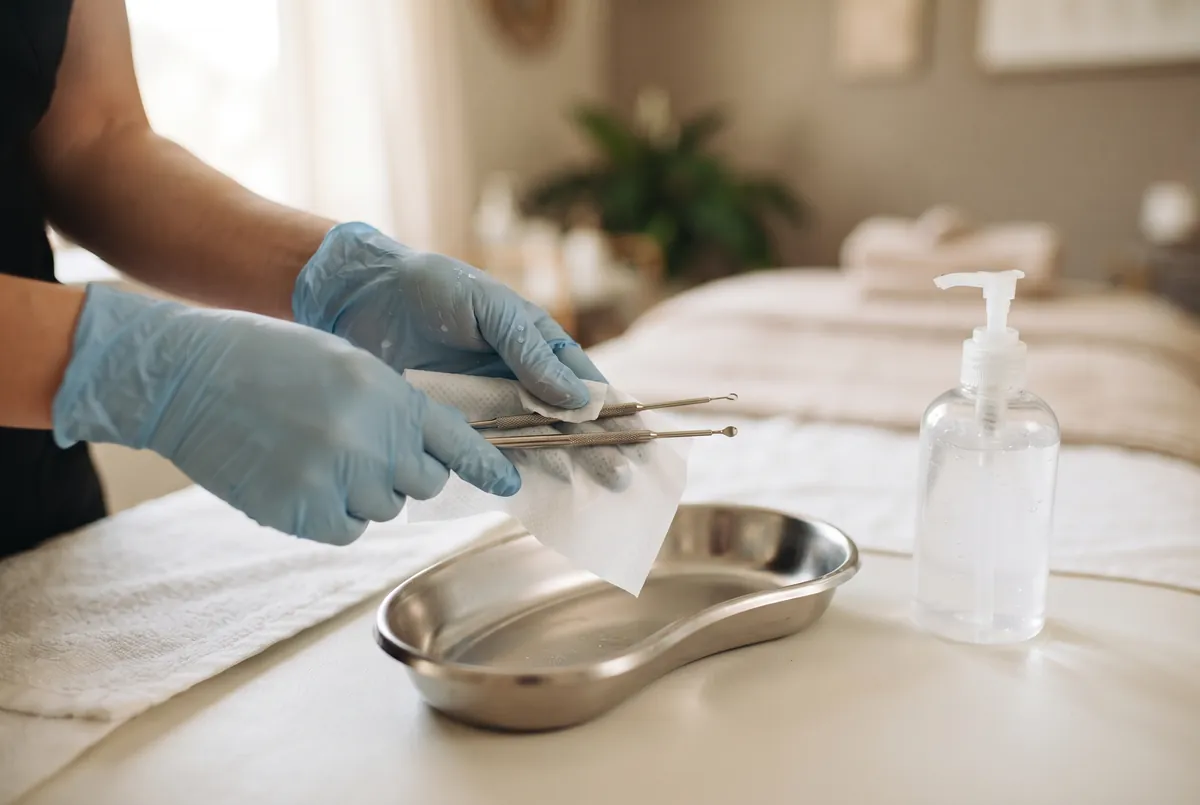
Hygiene deserves the same seriousness as with any tool that touches skin. In a professional setting, probes and electrodes are cleaned and disinfected between clients according to state board rules and the manufacturer's directions, and single-use items such as cotton tips are discarded. Gel is dispensed from a pump or with a clean spatula, never by dipping fingers into a jar. If you notice probes going from a drawer straight onto your face, or a jar of gel that every client's skin has shared, that tells you how the rest of the practice is run.
Combining microcurrent with other treatments
Microcurrent fits easily into a facial, and the order of steps matters. Cleansing and exfoliation come first so the current meets a clean, even surface. Extractions, if needed, are done before microcurrent, and inflamed areas are then avoided. Microcurrent follows on hydrated skin. A mask, LED light or a calming massage can close the appointment. I do not perform microcurrent immediately after an aggressive peel or on skin that is visibly irritated, because the gel and friction add stress to a barrier that needs rest. My overview of facial care basics and the order of treatments explains the general logic.
Clients who are in the middle of hair removal often ask about timing. After electrolysis, the treated follicles are tiny healing points, and I keep electrical facial treatments and massage off that area for several days. The electrolysis aftercare guide covers what skin needs during that window. After facial waxing, I wait until the skin is calm. Microcurrent before hair removal is generally not a problem. As with everything else, having one practitioner who knows your full schedule prevents treatments from working against each other.
Home care between sessions is simple and matters more than clients expect. Daily sunscreen protects the collagen you already have, which no device can replace. Adequate sleep and moderate salt and alcohol intake reduce the puffiness that masks definition. A basic routine of gentle cleansing, a moisturizer suited to the skin type, and a retinoid or antioxidant if your skin tolerates one, does more for the long-term quality of the skin than any gadget. Microcurrent works on tone. The surface still needs its own care.
Men, the neck, and different skin types
Microcurrent works the same way on men, with two adjustments. Facial hair interferes with contact, so the beard area needs to be freshly shaved or the treatment focuses on the upper face, and thicker gel application helps over stubble. Men also tend to ask for a result that looks defined without looking "done," and the jawline and under-eye area are the usual priorities. I find male clients are often the most consistent with a home device once they have been shown a short routine, perhaps because it fits neatly next to shaving.
The neck and the area under the chin respond well to lifting strokes along the sides, moving from the collarbone upward toward the jaw and ear. The center of the throat over the thyroid is avoided. The upper chest is not treated with facial microcurrent devices. Because the skin of the neck is thinner and often more reactive, I use a lower intensity there and watch for redness. Clients who spend hours looking down at a phone often carry tension in this area, and the massage component alone can be a relief.
Skin type changes the supporting products more than the current. Oily and breakout-prone skin needs a light, non-comedogenic gel that is removed completely afterwards, and active inflamed breakouts are a reason to postpone. Dry and mature skin benefits from a hydrating gel and a richer finish. Sensitive skin calls for a short first session and a fragrance-free gel, with a patch test of the gel if the client has a history of reactions. Microcurrent does not depend on pigment the way lasers and light do, so it is suitable for every skin tone.
How to choose a provider
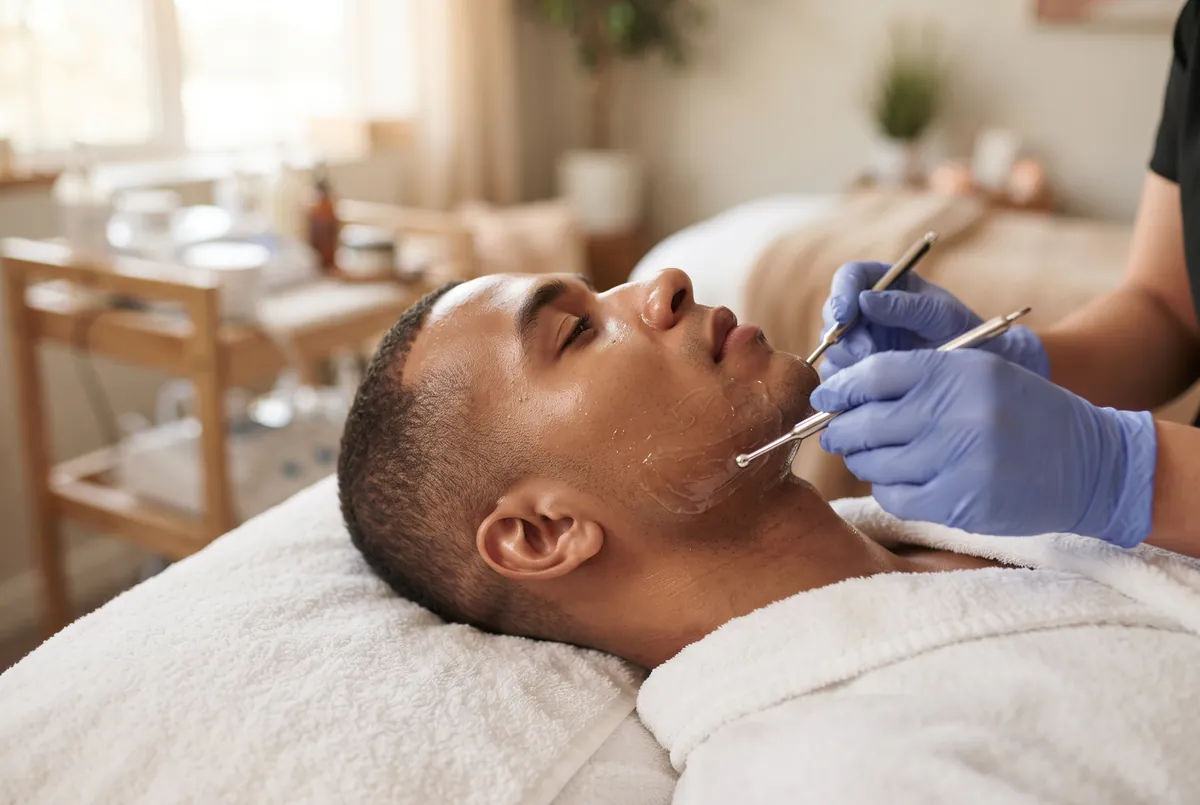
Start with the license. In the United States, facial treatments for compensation are performed by licensed estheticians or cosmetologists, or by medical staff in a medical office. Whether a specific electrical device falls within the esthetics scope, and whether extra training is required, is decided by each state board, and the rules are not uniform. You can look up how your state regulates the profession in the esthetician licensing requirements by state. A practitioner should be able to tell you their license type and number without hesitation.
Next, ask about the equipment and the training on it. Good questions include which device is used, whether the practitioner completed the manufacturer's training, how they clean the probes, how many sessions they recommend for a face like yours, and what they do if there is no visible change midway. Listen for a medical history intake that includes implanted devices, pregnancy, seizures and recent injectables. A practitioner who skips the intake, promises a "non-surgical facelift," or pushes a large prepaid package at the first visit has told you what you need to know. My guide on how to choose a cosmetologist lists more warning signs.
Pricing varies widely by region, by the type of practice and by whether microcurrent is a stand-alone service or an add-on to a facial, so I will not quote figures. What you can compare is value: the length of the hands-on current time, whether skin prep and finishing are included, whether before and after photos are part of the service, and whether a series includes a review point. A cheaper session that is fifteen rushed minutes with a home-grade device is not the same service as a full professional protocol.

Microcurrent for students and working professionals
For estheticians, microcurrent is a valuable service to add because clients return on a schedule and the treatment has no downtime to discourage them. Doing it well requires more than buying a machine. You need working knowledge of facial muscle anatomy, including where each muscle starts and attaches and which direction it pulls, because the movements follow those lines. You need to understand basic electricity as it applies to the skin: current, polarity, conductivity and why water-based products matter. And you need to be confident with contraindications, since you are the last check before current reaches a client.
Electrical theory and anatomy are covered in state-approved esthetics and cosmetology programs and tested on board exams, and they are well suited to studying in advance. The esthetics theory course and the cosmetology theory course on this site are designed for that preparation. They build knowledge. They do not replace the in-person hours your state requires or the license itself, and device-specific technique is learned hands-on, usually through the manufacturer's certification. If you are still deciding on a path, how to become a licensed esthetician lays out the steps.
My practical advice to new practitioners is to master one device and one protocol before adding variations. Practice on colleagues until your movements are slow, even and symmetrical, and photograph every model the same way. Learn to describe the treatment in plain terms and to say "this will not fix that" comfortably. Clients trust a practitioner who sets a modest expectation and then meets it. The fastest way to lose a microcurrent client is to oversell the first session.
Your next step
If you are curious as a client, book a single professional session with a licensed practitioner and ask for one side of the face to be completed first so you can see the difference yourself. Take your own photo before and the next morning. If you like what you see and are willing to maintain it, plan a series with a review point, or discuss a home device. If you have an implanted device, a seizure disorder, are pregnant, or are under treatment for a serious condition, speak with your physician before trying it in any form.
If you are a student or professional, begin with the anatomy and electrical theory, confirm what your state allows, and then choose equipment with solid training behind it. A treatment this gentle is forgiving to learn, and it rewards careful, consistent technique. Offered with honest expectations, a microcurrent facial earns loyal clients, which is the reason it has stayed on treatment menus for so long while other device trends have come and gone.
State Requirements
State licensing guides
Hours, exams, fees, and the licensing board differ by state. Open your state for the current requirements.
Common Questions
FAQ
Many clients see a modest, temporary improvement: less puffiness, a slightly more defined jawline and a more rested look. The mechanism is plausible, and part of the immediate effect comes from fluid movement during the treatment. Strong clinical evidence for lasting cosmetic change is limited, so it is best viewed as maintenance and not as a permanent fix. It does not remove loose skin, replace volume or match the results of surgery or injectables.
The effect of a single session generally lasts a few days. A series of sessions is thought to build a longer-lasting result, which is then kept up with maintenance treatments every several weeks or with regular use of a home device. When treatments stop, the face gradually returns to its usual state. Nothing is harmed by stopping. How long results hold varies with age, skin condition, lifestyle and how consistently the schedule was followed.
No. The current is very low, and most people feel nothing or a light tingling. Some notice a metallic taste or tiny flickers of light when the probes work near the mouth or eyes, which are harmless and stop when the probes move. A stinging or zapping feeling means there is not enough conductive gel or the intensity is too high, and the practitioner should correct it right away. There is no downtime afterwards.
Anyone with a pacemaker or other implanted electrical device, epilepsy or a history of seizures should not have it. It is avoided during pregnancy as a precaution, and during active cancer treatment unless the oncology team approves. People with heart conditions or metal implants in the face or neck need a physician's clearance. It is postponed over open wounds, cold sores, infections, inflamed acne and sunburn, and after recent injectables or surgery until the treating provider agrees.
Usually yes, but not right away. Practitioners and device makers generally advise waiting after injectable treatments before resuming microcurrent in the same area, and the right waiting period depends on the product and placement. Ask your injector for specific instructions and share them with your esthetician. If you do not have clear guidance, wait and call the injector's office. Tell your practitioner about any injectables from the past several months.
They can be, if you use them consistently and expect a subtle result. Home devices have a lower output than professional machines and rely on simple gliding movements, but they can be used several times a week, which suits a treatment based on repetition. Choose a device with FDA clearance, use it with the recommended conductive gel, follow the instructions on timing, and avoid the eyelids, the middle of the throat and broken skin.
Professional protocols usually begin with a concentrated phase of frequent sessions over several weeks, followed by maintenance every several weeks. The exact schedule comes from the device manufacturer and your practitioner's assessment of your face. Ask for a review point halfway through the first phase, with photos compared in the same lighting. If no change is visible by then, continuing is unlikely to be worth the cost.
In the United States, professional facial treatments are performed by licensed estheticians or cosmetologists, or by medical staff. Whether a particular electrical device is within the esthetics scope of practice, and whether additional training is required, is set by each state board. See the cosmetology licensing overview for how states regulate the field, and ask any provider for their license type and their training on the specific device.
Keep Reading
Related Guides


