Career
Esthetician State Board Exam: How to Pass Theory and Practical

Quick answer
Most states license estheticians through a written theory exam and, where required, a hands-on practical exam. Theory covers infection control, skin science, chemistry, electricity and services. The practical scores visible safety steps across timed sections. Rules vary by state, so follow your state board's candidate bulletin, study from its content outline, and rehearse with a labeled kit and a timer.
The esthetician state board exam asks a narrow question: can this person work on a stranger's skin without hurting them? Everything on the test, from the layers of the epidermis to the way you hold a spatula, traces back to that question. I am Aida Khazieva, a licensed electrologist and cosmetologist with more than twenty years in treatment rooms and classrooms, and I have helped many esthetics students get ready for their boards. The ones who pass comfortably are rarely the ones with the most beautiful facial massage. They are the ones who understood what the examiner is paid to look for and trained for exactly that.
This guide covers how to pass the esthetics state board exam from both sides: the esthetician written exam with its science heavy theory domains, and the esthetician practical exam with its sequence of timed skin care sections. You will also find kit labeling and sanitation advice, a way to rehearse timing, the mistakes that cost the most points, and what happens on test day, after a failed section and after a pass. One caution before we start. Hour requirements, fees, passing standards, exam length and retake rules are decided by each state, so you will not find those figures here. Look them up on your own state board's website and in our esthetics licensing requirements by state.
How the Exam Is Structured and Why Your State Decides the Details
Most states license estheticians through a two part examination. The theory part is a multiple choice test, normally taken on a computer in a proctored testing center. The practical part is a hands-on demonstration in which you perform a series of skin care tasks while an examiner marks a score sheet. Beyond that outline, almost everything changes from state to state. Some states test both parts, some have removed the practical and rely on the written exam alone, and some add a separate test on state law. A few require the two parts in a fixed order, while others let you book them however you like.
Many states use an exam developed by a national testing organization and delivered by a contracted vendor, while other states write and administer their own. That matters for your preparation, because a study guide written for one state's format can describe sections, supplies and rules that simply do not exist in yours. A classmate who moved from another state, a video from a school across the country, or a forum post from several years ago may all be accurate for someone else and wrong for you. Treat secondhand exam descriptions as background, never as instructions.
The document that settles every argument is the candidate information bulletin, sometimes called a testing information packet, published by your state board or its exam vendor. It lists who is eligible, how to apply, which content areas the written exam covers, which tasks the practical includes, what supplies you must bring and how they must be labeled. Download the current version before you open a textbook, and download it again shortly before your test date in case it was revised. I ask students to print it and mark it up with a pen, because reading on a phone encourages skimming and the details are the whole point.
Eligibility is part of the same homework. Every state requires a set amount of supervised training in a licensed school or an approved apprenticeship before it lets you test, and the amount differs widely. Online lessons are a good way to build and review theory, but they never replace the in-person hours your state requires, and no online certificate makes you eligible for the exam by itself. If you are still mapping out the whole path, our guide on how to become a licensed esthetician walks through school, hours, exam and license in order.

Is the Esthetician Exam Hard?
Students ask me this in almost every review class. My answer is that the esthetician exam is wide more than it is deep. No single question requires advanced science, but the questions come from every corner of the curriculum, including chapters that many students rushed through because they were eager to get to facials. Electricity, chemistry, bacteriology and the structure of the skin make up a large part of the theory test, and those subjects reward understanding. If you memorized a term without knowing what it does, a question that describes the concept in different words will feel like a trick, even though it is not.
The practical feels hard for a different reason. In a spa, a good facial is judged by how the client feels and how the skin looks afterward. In the exam room, nobody scores relaxation or glow. The examiner checks observable actions: did you sanitize your hands, did you take product out of the jar with a clean spatula, did you protect the client's hair and eyes, did you dispose of used materials correctly, did you finish inside the allowed time. A candidate with elegant hands who double dips one spatula can lose more than a plain, slightly stiff candidate who never breaks protocol.
What Is on the Esthetician Written Exam
The content outline in your bulletin shows the exact domains and how heavily each one is weighted in your state. Across the country the themes are similar. Expect a large block of scientific concepts, which includes infection control, basic human anatomy and physiology, skin histology, skin disorders, and chemistry. Expect a second large block on skin care services, which covers analysis and consultation, facial procedures, machines and electrical modalities, hair removal, makeup, and sometimes body treatments or lash and brow services where those fall within the state's scope. The table below summarizes what each area usually asks of you.
| Theory domain | What questions tend to ask | How to study it |
|---|---|---|
| Infection control | Levels of decontamination, standard precautions, handling of single-use and multi-use items, blood exposure steps | Write each procedure as numbered steps and recite it without notes |
| Skin anatomy and physiology | Layers of the epidermis and dermis, cells, glands, nerves, functions of the skin | Draw the skin from memory and label it, then check against the book |
| Skin disorders and analysis | Lesion types, acne grades, pigmentation, conditions that require referral, skin typing | Sort conditions into treat, modify or refer |
| Chemistry and ingredients | pH, emulsions, acids and alkalis, functional ingredient families, product selection | Group ingredients by what they do, not by alphabet |
| Electricity and machines | Types of current, polarity effects, steamer, brush, high frequency, light therapy, safety | Make one card per machine: purpose, effect, contraindications |
| Facial services | Order of a facial, massage movements, mask types, extractions, contraindications | Talk through a full facial step by step |
| Hair removal | Hair growth cycle, soft and hard wax, tweezing, client screening, aftercare | Link each contraindication to the reason behind it |
| Makeup | Color theory, face shapes, product hygiene, application order | Practice on paper face charts and review hygiene rules |
Infection control deserves the first and largest share of your study time. It appears as its own domain and then again inside nearly every other one, because a question about waxing or extractions is often really a question about contamination. Know the difference between cleaning, disinfecting and sterilizing, and which level applies to which kind of item. Know that porous single-use items such as cotton, wooden spatulas and sponges that cannot be disinfected are discarded after one client. Know what contact time means on a disinfectant label and why a tool that was dipped and pulled out immediately is not disinfected.
State law and rules may be folded into the theory exam or tested on their own, depending on where you live. These questions are about license categories, renewal, what an esthetician may and may not do, and how a salon or spa must be kept. Scope of practice is the area I see students get wrong most often, because the beauty industry talks about advanced treatments as though any licensed esthetician can perform them everywhere. That is not the case, and the rules differ between states. Our article on what a medical esthetician is and is not explains why that title does not expand a license.
The Theory Topics That Cost Students the Most Points
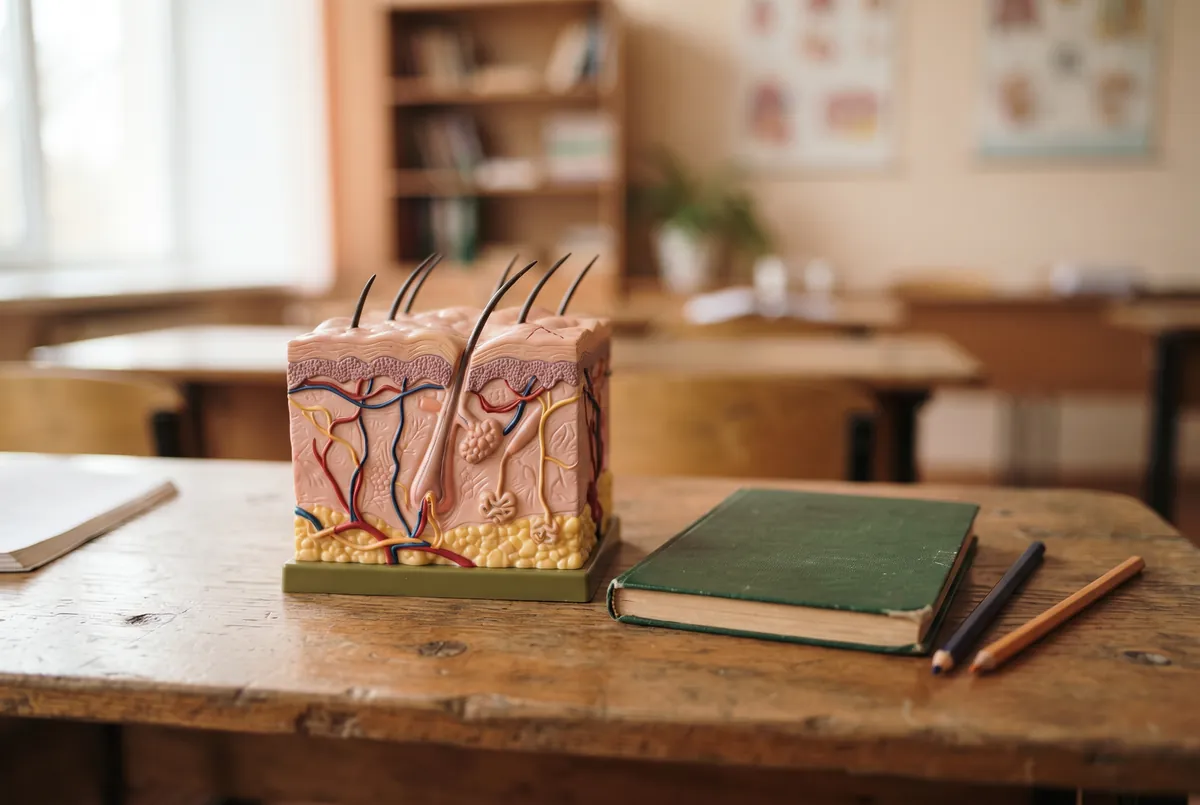
Skin histology is the first stumbling block. You should be able to name the layers of the epidermis in order from the surface down to the basal layer, say what happens in each, and place the papillary and reticular layers of the dermis beneath them. Learn which cells do what: keratinocytes build the protective barrier, melanocytes produce pigment, fibroblasts in the dermis produce collagen and elastin. Learn the two gland types, sebaceous and sudoriferous, and what each secretes. Questions rarely ask for a bare definition. They describe a function or a location and expect you to recognize the structure.
Skin disorders come next. Study primary lesions such as macules, papules, pustules, vesicles and wheals, and secondary lesions such as crusts, scales, fissures and scars, until you can tell them apart from a one line description. Learn the common conditions an esthetician sees, including acne, rosacea, eczema, psoriasis, hyperpigmentation and sun damage, and sort them by what you would do. An esthetician recognizes and refers. She does not diagnose. On the exam and in real practice, any lesion that is changing, bleeding, open, infected or unexplained goes to a physician or dermatologist, and the service on that area is postponed.
Chemistry frightens students more than it should. The exam stays at a practical level. Understand the pH scale, which end is acidic and which is alkaline, and where healthy skin's acid mantle sits relative to neutral. Understand what an emulsion is and the difference between oil in water and water in oil. Then learn ingredient families by their job: humectants draw water, emollients soften and fill, occlusives seal, surfactants cleanse, and exfoliating acids loosen the bonds between dead cells. When a question names an ingredient you have never seen, the family it belongs to usually gives the answer away.
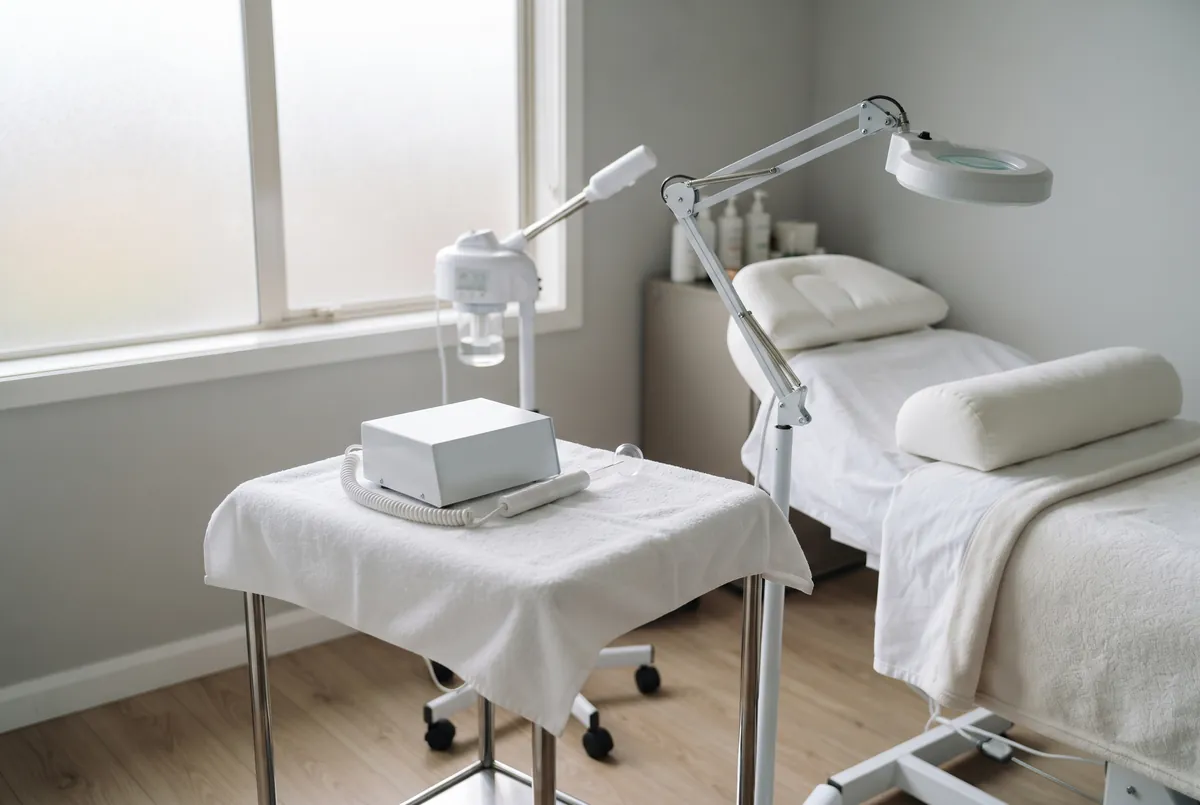
Electricity and machines are the chapter students skip and later regret. Learn the vocabulary first: conductor and insulator, direct and alternating current, and the units used to describe electrical pressure, flow, resistance and power. Then learn the modalities. Galvanic current is direct current with a positive and a negative pole, and each pole produces different effects on the skin. Desincrustation and iontophoresis are the two galvanic treatments you should be able to explain. High frequency uses glass electrodes and has a germicidal, stimulating effect. Microcurrent and light therapy are often covered too. For every machine, memorize the clients who should not receive it.
Hair removal and makeup theory feel easier, so students under study them. For hair removal, know the growth cycle (anagen, catagen, telogen), the difference between temporary and permanent methods, and the screening questions that protect a client from lifted skin. Medications and treatments that thin the skin, sunburn, irritation and broken skin are classic reasons to decline a wax. It is also worth knowing that electrolysis is the only method the FDA recognizes as permanent hair removal, a fact that appears in most textbooks. For makeup, review the color wheel, warm and cool tones, and above all the hygiene rules for testers and applicators.
An Esthetician Exam Study Guide You Can Follow Week by Week
A plan only works if it fits your actual life, so I do not hand students a fixed calendar. I give them a sequence, and they stretch it across the time they have. The sequence starts with a diagnosis, moves through the science heavy domains while your energy is highest, shifts to services and law, and ends with timed simulation. If your test date is close, shorten each stage but keep the order. If you have more time, repeat the middle stages for your weakest domains. The steps below are the version I use in my own review sessions.
- Take a cold practice test. Before any review, answer a full set of questions and tag every miss with its domain. The pattern of misses is your real syllabus.
- Rank the domains. Put the domains with the most exam weight and the most misses at the top. Those get your best hours of the day.
- Rebuild the science. Work through infection control, skin structure, disorders, chemistry and electricity with drawings, cards and spoken explanations.
- Connect science to services. For each service, list its purpose, steps, products, contraindications and aftercare on a single page.
- Read your state's law and rules. Use the official text from your board, since summaries age quickly when rules change.
- Simulate under time. Sit full length practice tests in one sitting, in a quiet room, with no phone and no notes.
- Review every error the same day. Write one sentence on why the right answer is right and why your choice was wrong.
- Taper before the test. In the last days, switch to light card review and sleep, and stop learning new material.
Active recall beats rereading every time. Reading a chapter again feels productive because the words look familiar, but familiarity is not the same as being able to produce the answer. Close the book and draw the skin. Cover the right column of your notes and say the contraindications aloud. Explain galvanic current to a friend or to an empty room. If you stall, you have found a gap, and that is useful. I tell students that ten minutes of struggling to remember teaches more than an hour of comfortable highlighting, and their practice scores usually confirm it within a couple of weeks.
If you like structured lessons, an online theory program can organize the material and give you questions to practice on. Our esthetics theory course was built for that purpose. Please keep its role clear in your mind. It supports the classroom and clinic training you receive at a licensed school, and it cannot stand in for the in-person hours your state requires before you may sit for the exam. Students who combine good school attendance with steady independent review tend to arrive at the testing center calm, because nothing on the screen is completely new to them.

What the Esthetician Practical Exam Looks Like
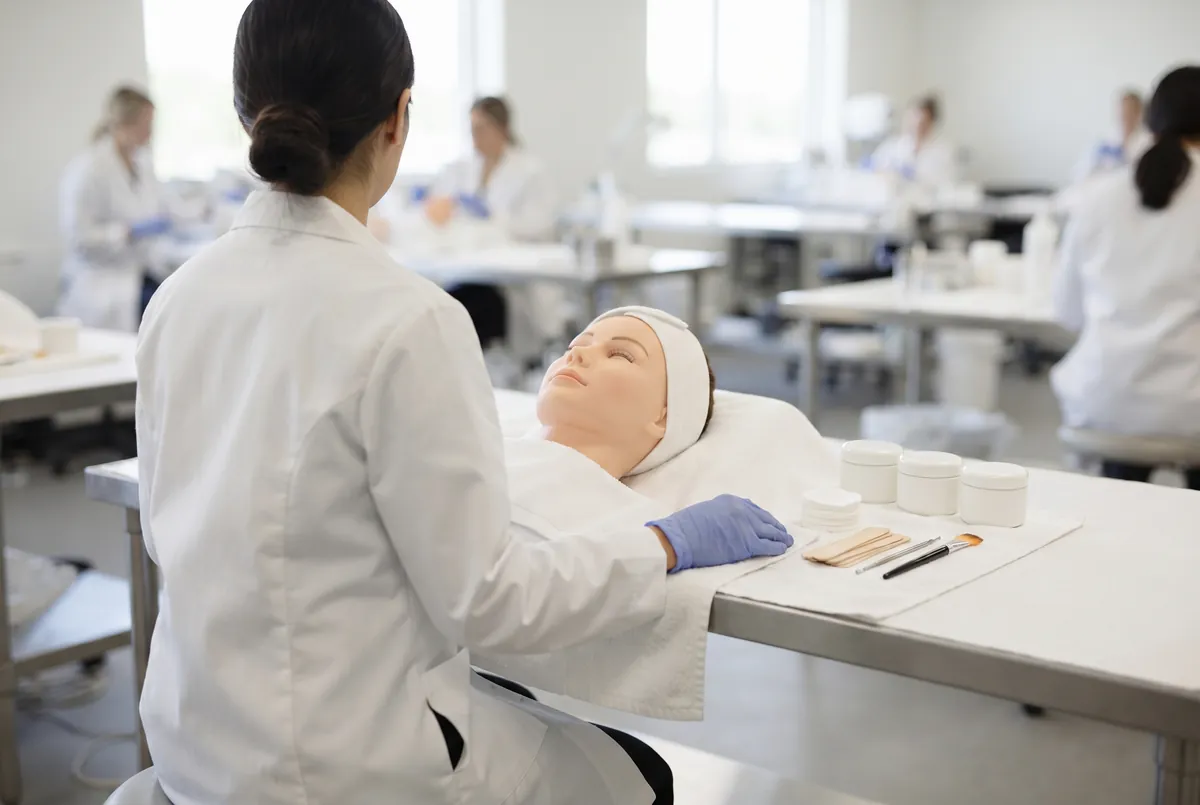
Where a practical is required, it is usually organized as a chain of separate sections, each announced by a proctor and each with its own time allowance. You work on a mannequin head or a live model, depending on your state, and you stay at one station with the supplies you brought. Examiners do not teach, coach or comment. They watch and mark. You are typically not told your score in the room. The sections below are the ones that show up most often in esthetics practicals, though the exact list, order and naming belong to your state's bulletin.
| Typical section | What the examiner is looking for |
|---|---|
| Setup and client protection | Disinfected work surface, sanitized hands, supplies laid out from labeled containers, hair covered, client draped |
| Cleansing | Product removed hygienically, eyes and lips handled gently, complete removal of cleanser |
| Exfoliation | Safe application away from the eyes, correct use of brush or product, thorough removal, steaming where required |
| Massage manipulations | Recognizable movements, continuous contact, controlled pressure, enough product for slip |
| Mask | Even application with a clean implement, eye protection, full removal, finishing products applied |
| Hair removal | Skin preparation, temperature test, direction of application and removal, skin held taut, aftercare |
| Makeup | Sanitary product handling, single-use applicators, balanced application, clean work area |
| Blood exposure procedure | Correct order of protective steps, disposal of contaminated materials, disinfection, hand hygiene |
Notice that the first row is not a service at all. Setup and client protection are scored, and they set the tone for everything after. Some exam formats also treat a later section as a new client, which means you clear the station, sanitize your hands and set up again with fresh supplies as though a different person had just sat down. Candidates who see setup as a formality tend to rush it, and then they carry an early contamination error through the rest of the exam. Practice your setup until it takes the same number of movements every time.
Because examiners score what they can see, make your safety actions visible. Sanitize your hands where the examiner has a clear view. Hold the spatula away from the jar for a moment after you scoop, so it is obvious that a clean implement went in and did not return. Place used items in the soiled container with a deliberate motion. None of this is theater. You are doing what you would do anyway, only clearly enough that a person standing a short distance away, watching several candidates at once, cannot miss it.
Cleansing, Exfoliation, Massage and Mask: The Facial Core
The facial sections reward a calm, repeatable routine. For cleansing, remove product from its container with a clean spatula or pump, warm it between your hands, and apply with upward and outward movements. Treat the eye area and lips with a lighter touch and the materials your bulletin specifies. Remove the cleanser completely with moistened cotton or sponges, working in a consistent pattern so that no zone is forgotten. Residue left along the hairline, around the nostrils or under the jaw is a common small deduction, and it is easy to avoid if you always finish with the same final sweep.
Exfoliation on the exam is about control, not strength. Whether your state asks for a scrub, an enzyme type product, a rotating brush or a simulated version of any of these, keep product away from the eyes, use light pressure and remove everything thoroughly. If towel steaming or a steamer is part of the section, test the temperature of a warm towel on your own inner wrist before it goes near the face, and keep the nostrils uncovered. In a real treatment room the same rule protects clients with sensitive or reactive skin, so the exam habit is worth keeping for the rest of your career.
Massage is where students want to show off, and where they should hold back. Examiners look for recognizable manipulations: effleurage (gliding strokes), petrissage (kneading), friction, tapotement (light tapping) and vibration. Use enough product that your hands glide without dragging the skin. Keep at least one hand in contact with the face throughout, and when you must lift off, do it gradually. Textbooks teach that massage follows the muscle from its insertion toward its origin, and theory questions ask about this too. Even rhythm and a clear sequence score better than a complicated routine that you cannot repeat the same way twice.
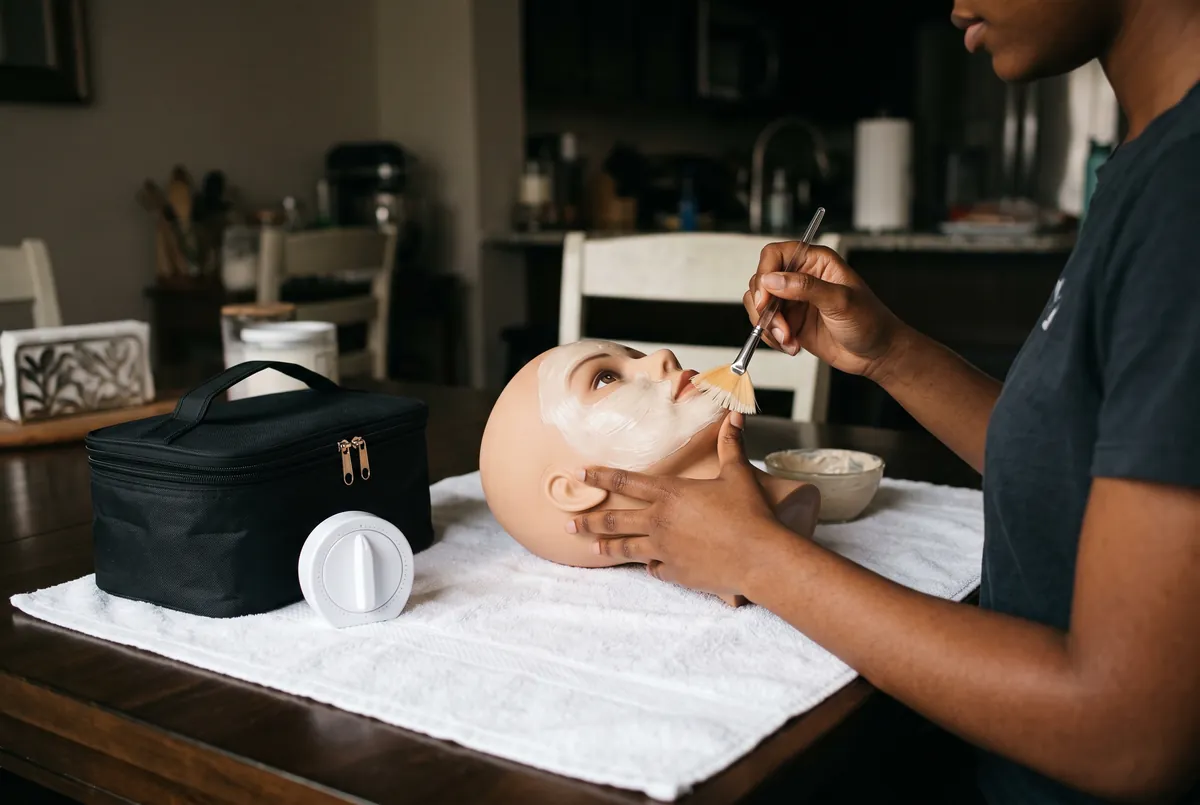
The mask section closes the facial. Apply the mask with a clean brush or spatula in an even layer, avoiding the eyes, nostrils and lips, and place eye pads if your bulletin calls for them. When the proctor instructs, remove the mask fully, then apply toner, moisturizer and sun protection or whatever finishing steps your state lists. Pay attention to the wording of your bulletin here, because some formats ask you to demonstrate application on only part of the face, and others expect the whole face. Finish by discarding used materials and tidying the station as the section requires.
Across all four sections, one rule decides more points than any technique: never return to a product container with something that touched the client. Each time you need more product, use a new clean spatula or dispense from a pump or tube. Put lids back on containers. Keep clean supplies and used supplies physically apart, and never rest a used implement on the clean side of the station. If you want a wider view of how a full professional facial is built outside the exam setting, our overview of facial care basics in a professional treatment gives useful context.
Hair Removal, Makeup and the Blood Exposure Procedure
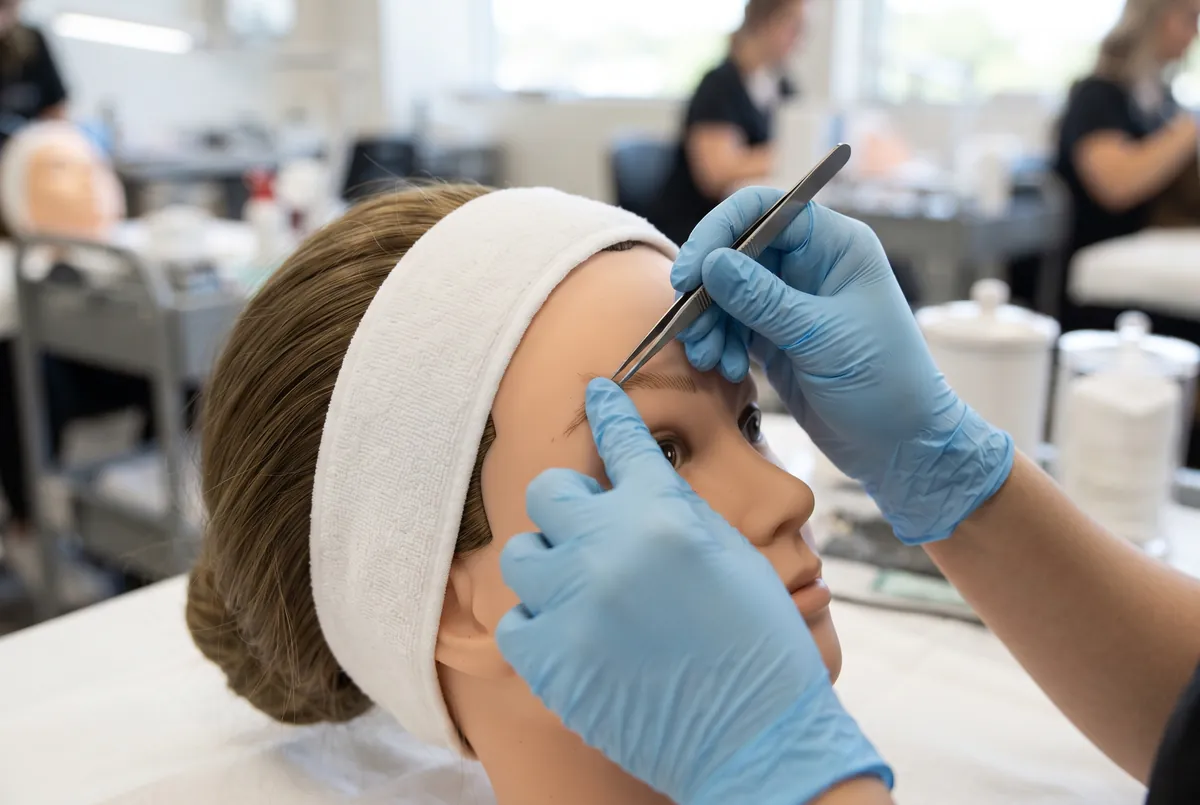
Hair removal on the practical is usually limited to a small facial area, most often the eyebrows, and sometimes the upper lip. You may be asked to tweeze, to wax, or to do both, and in some states the wax is simulated with another product so that no heated wax is present in the room. Start by cleansing the area and applying whatever pre-treatment product your bulletin lists. For tweezing, hold the skin taut and remove each hair in the direction it grows. Work with disinfected tweezers taken from a labeled clean container, and move them to the soiled container when you finish.
For waxing, the scored steps follow the logic of skin safety. Put on gloves if your bulletin requires them. Test the temperature on the inside of your own wrist before the product touches the client. Apply in the direction of hair growth with a fresh applicator, press the strip if you are using soft wax, hold the skin taut with your free hand, and remove against the direction of growth, close and parallel to the skin. Then apply a soothing product. One applicator goes into the wax one time. Our eyebrow waxing guide explains tension and temperature in more depth.
The makeup section is a hygiene test dressed as a beauty service. Nobody expects editorial artistry. Examiners want to see creams and liquids scooped or dispensed onto a clean palette, powders scraped or tapped out instead of touched directly with a used brush, pencils sharpened before use, and disposable wands for mascara and lip products. After that, they look for a balanced, blended result that suits the model or mannequin. Read your bulletin for the list of products you must apply and the order, since a missed product is a missed line on the score sheet no matter how polished the rest looks.
The blood exposure procedure is often a section of its own, performed as a simulation, and it is graded strictly because it concerns bloodborne pathogens. The general order taught in schools is consistent: stop the service, put on gloves if you are not already wearing them, clean the injured area, apply antiseptic, cover the wound with a dressing, place all contaminated disposable materials in a bag and then into a second bag or the container your state specifies, disinfect the implements and surfaces involved, remove gloves and clean your hands. Your bulletin gives the exact wording and order your examiner will use, so memorize that version.
Kit Labeling and Sanitation
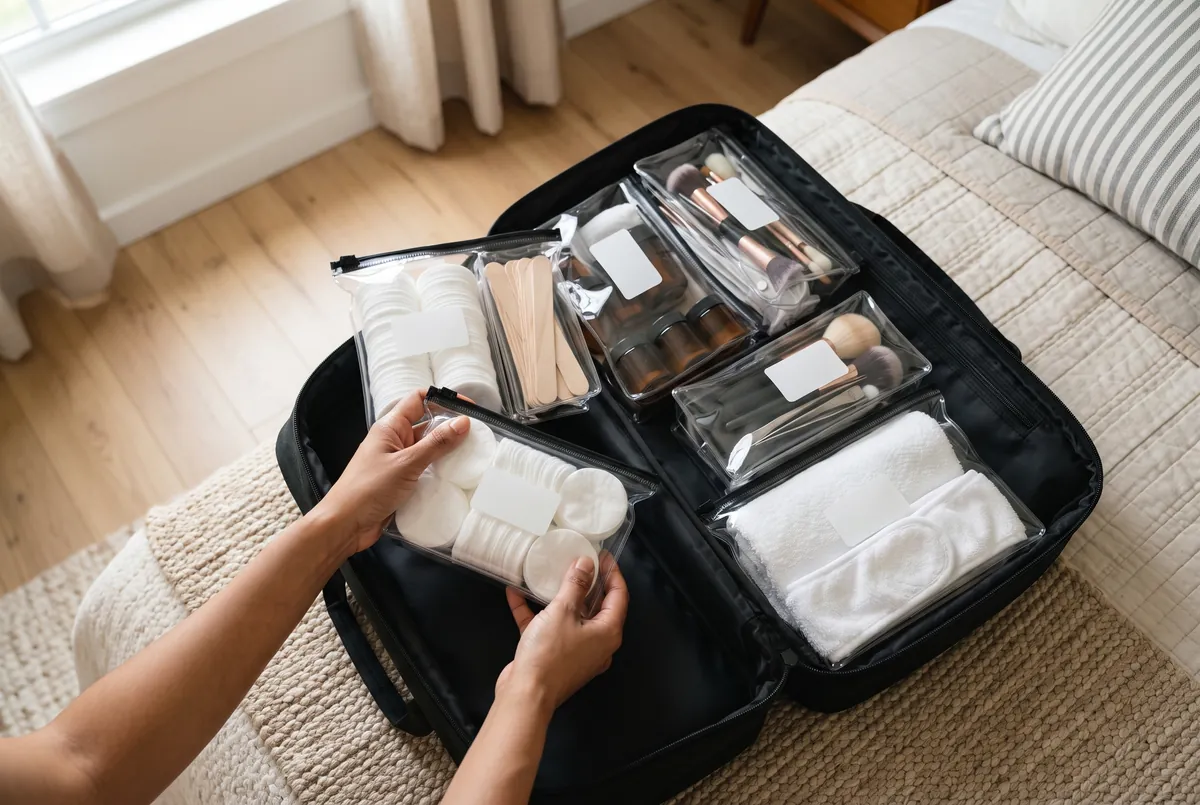
Your kit is inspected with the same seriousness as your technique. Most bulletins say how products and containers must be labeled, and they usually require labels in English that state what the item is. Many also require manufacturer labels on disinfectants and hand sanitizer, and some prohibit particular items such as aerosols or certain sharp tools. Prepare labels at home with a label maker or a permanent marker and clear tape, and check that they survive being handled with damp hands. A smudged or peeling label on exam day creates doubt about an item that may be perfectly fine.
The list below is a general picture of what esthetics kits tend to contain. Use it to understand the categories, then build your actual kit line by line from the official list for your state. If the official list is silent about an item, do not bring it. If it names an item you have never used, find out what it is and practice with it long before the exam. Schools often sell or rent exam kits, which is convenient, but you are still the one responsible for checking every piece against the current bulletin.
- Hand and surface hygiene: hand sanitizer, disinfectant of the type your state requires, paper towels, and gloves in your size.
- Containers for used items: bags or covered containers marked for soiled linens, items to be disinfected, and trash, as your bulletin names them.
- Client protection: headband or hair covering, towels, drape, and eye pads.
- Facial products: cleanser, exfoliant, massage cream, mask, toner, moisturizer and sun protection, each in a labeled container.
- Single-use supplies: cotton rounds, swabs, sponges, tissues, wooden spatulas and disposable applicators, stored covered and clean.
- Hair removal supplies: tweezers, wax or the simulated product your state permits, strips, applicators, pre and post treatment products.
- Makeup supplies: foundation, powder, blush, eye and lip color, palette, brushes and disposable wands.
- First aid items: antiseptic, adhesive dressings and the bags required for the blood exposure section.
- Documents: admission notice and the government issued photo identification your state accepts.
Pack by section, in the order the sections are performed. One pouch for setup and draping, one for cleansing, one for exfoliation, and so on through to blood exposure. When the proctor announces a section, you lift out one pouch and everything you need is in your hands. This layout also protects your sanitation score, because clean items stay sealed until the moment they are used. Bring more single-use supplies than you think you need. Dropping a spatula is not a problem if a clean one is within reach, and it becomes a real problem if it was your last.
Timing Practice That Matches the Real Exam
Look up the time allowed for each section in your bulletin and write it at the top of a practice sheet. Then run each section with a timer and record how long you actually take. Do this several times before you try to speed anything up, because your first job is to find out where the minutes go. In my experience most of the lost time is not in the service. It is in searching the kit, opening stubborn lids, fixing a slipping headband, and hesitating over what comes next. Those are organization problems, and they respond quickly to practice.
Rehearse the full chain, not only single sections. The practical is long, and concentration drops toward the end, which is exactly where makeup and blood exposure often sit. Ask a classmate or family member to act as proctor, reading the instructions from your bulletin in a neutral voice and calling start and stop. Work in silence, in your exam attire, with your packed kit. If your school runs mock boards, attend every one, and ask the instructor to mark you the way an examiner would. Feedback on small habits you no longer notice is worth more than any amount of solo practice.
If your state uses live models, include your model in rehearsal. Check your bulletin for model requirements, which can cover age, identification, skin condition and whether the model may be a licensed professional or a student. Choose someone reliable, with skin that tolerates the products, and with enough brow hair for the hair removal section if that is tested on the model. Do a patch test of your products ahead of time. Explain that the model must stay quiet and may not help or advise you in any way. Arrange a backup person if you can, since a missing model can mean a forfeited appointment.
Common Reasons Candidates Fail
After many years of watching students prepare, I can predict most failures before the exam happens, because the same patterns repeat. They have little to do with ability. They come from habits that were never corrected, from chapters that were never studied, and from nerves that were never rehearsed. Read the list below honestly and mark the items that sound like you. Then give those items the majority of your remaining practice time. Improving a weakness by a small amount usually gains more points than perfecting something you already do well.
- Double dipping: returning a used spatula or applicator to a product or wax container.
- Forgotten hand hygiene: skipping hand sanitizing at the start of a section or after touching hair, face, phone or floor.
- Mixing clean and soiled: resting used tools on the clean side of the station or storing them with clean supplies.
- Label problems: unlabeled, mislabeled or unreadable containers in the kit.
- Weak client protection: uncovered hair, missing drape or product near the eyes.
- Skipped temperature test: applying wax or a hot towel without checking it first.
- Incomplete removal: leaving cleanser, exfoliant or mask on the skin when the section ends.
- Working outside the instructions: starting early, continuing after time is called, or performing a step the proctor did not ask for.
- Neglected theory chapters: electricity, chemistry and state law left for the last night.
- Misread questions: choosing a true statement that does not answer what was asked.
Two of these deserve extra comment. The first is working from salon habit. Students who already assist in a spa often fail sections they perform every day at work, because at work they skip visible sanitation steps that the exam scores. If you have real world experience, treat the exam protocol as a separate choreography and learn it from zero. The second is the long gap. Students who finish school and then wait many months before testing lose both theory and hand routine. Schedule your exam as early as your state allows and your preparation supports.
Test Day: From the Night Before to the Last Section
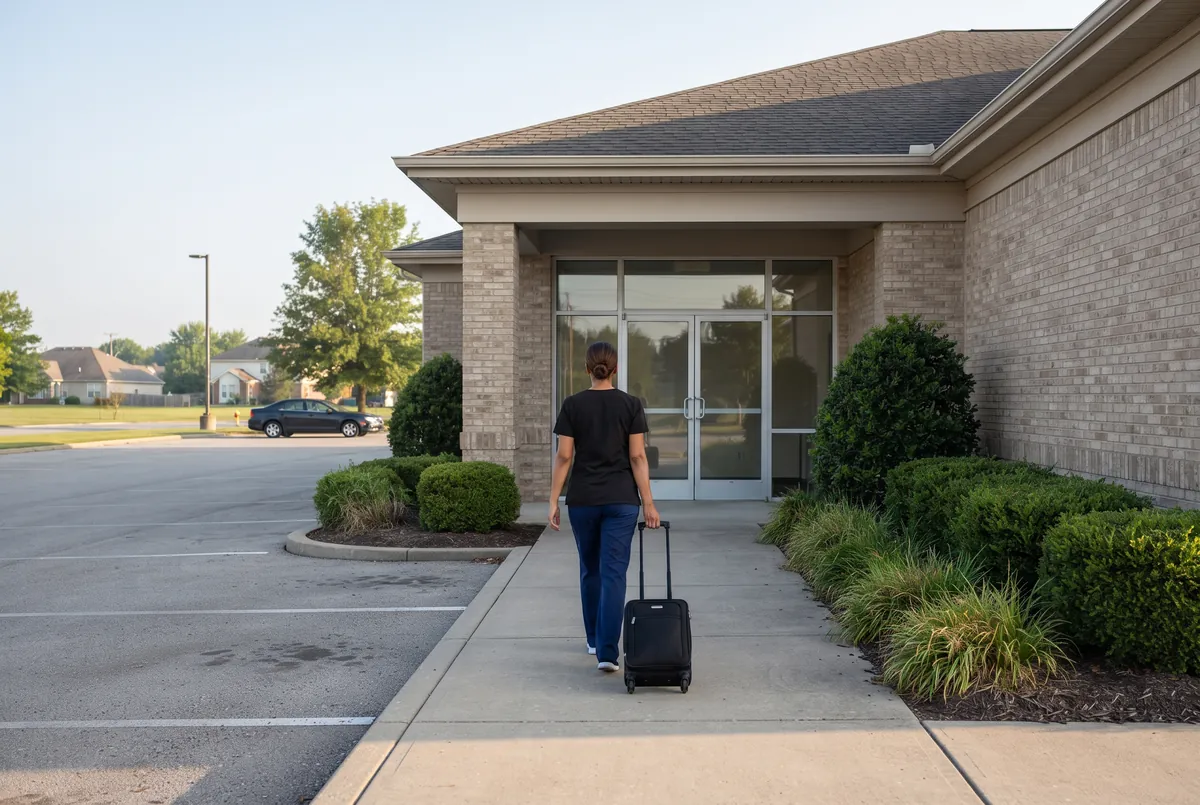
The evening before, lay out your exam attire, identification and admission notice, and check your kit against the official list one final time. Your bulletin will say what to wear and what to leave at home. Many testing sites restrict phones, smart watches, notes, bags and jewelry, and some have rules about clothing that shows a school name. Confirm the address, the travel time and where you will park. Then stop studying. A rested mind reads questions more accurately than a tired one that reviewed flashcards until late at night.
For the written exam, arrive early, complete check in, and use any tutorial screen to get comfortable with the software. Read each question to its final word before looking at the options. Answer in your head first when you can. If a question stalls you, choose your best option, mark it for review if the system allows that, and keep moving so that easy questions later in the test are not lost to the clock. When two options both look right, prefer the one that protects the client's safety or stays within an esthetician's scope, since that is the principle the exam is built on.
For the practical, listen to every instruction to the end before you move. Proctors usually read a script, and the script tells you what to do, what not to do and when to stop. Keep your eyes on your own station. The candidate next to you may be in a different section, may be making a mistake, or may have a different model situation, so copying their pace is risky. If your mind goes blank, sanitize your hands. It is almost never wrong, it buys a few seconds, and the physical routine tends to bring the next step back.
Retakes and What Happens After You Pass
Not passing a part of the exam is disappointing, and it is also ordinary. Many working estheticians needed a second attempt at one section. In a number of states you repeat only the part you did not pass, though the waiting period, the number of attempts allowed, the cost of each attempt and any requirement for extra training after repeated failures are set by the state. Read the retake section of your bulletin before you do anything else. Then study your score report. It commonly shows results by content area or by practical section, which tells you precisely where to aim your next round of preparation.
Passing the exam is followed by paperwork. In most states you still need to apply for the license itself or wait for the board to issue it, and you may not perform paid services until it is active. After that come renewal dates and, in many states, continuing education. If you expect to relocate, read about esthetician license reciprocity between states early, since transferring a license depends on your training hours and exam history. Keep copies of your score reports, school transcript and license in a safe place.
Some readers are preparing for a different license or are still choosing between two. If you are enrolled in a full cosmetology program, the exam you will take covers hair and nails as well as skin, and I have written a separate guide on how to pass the cosmetology state board exam. If you have not yet decided which path suits you, the comparison below may help you see how the two licenses differ in training, scope and daily work before you commit to a program.
Your Next Step
Choose three small actions and complete them this week. First, download the current candidate bulletin for your state and read the eligibility, content outline and supply sections with a pen in your hand. Second, take one full practice theory test without preparing, and sort your misses by domain. Third, set up your station at home and run the setup, cleansing and blood exposure sections against a timer. These three steps will show you where you stand more honestly than any amount of worrying. For your state's official board and its current rules, start from our esthetics licensing hub and follow the link for your state.
State Requirements
State licensing guides
Hours, exams, fees, and the licensing board differ by state. Open your state for the current requirements.
Common Questions
FAQ
It is broad more than it is difficult. The theory part draws on every chapter, with strong emphasis on infection control, skin science, chemistry and electricity, and the practical part scores visible safety steps under time limits. Candidates who study from their state's content outline and rehearse the practical sequence with a timer and a labeled kit usually find it demanding but predictable. Most failures come from sanitation errors and neglected chapters, not from lack of skill.
The written part usually covers infection control, anatomy and physiology, skin structure, skin disorders and analysis, chemistry and ingredients, electricity and machines, facial services, hair removal, makeup and state rules. Where a practical is required, it commonly includes setup and client protection, cleansing, exfoliation, massage, mask, hair removal, makeup and a blood exposure procedure. The exact content is set by each state, so use your official candidate bulletin as the final word.
Each state sets its own passing standard, and it may be different for the written and practical parts. Because these standards can be revised, a number you find on a forum or a prep website may not apply to you. Check your state board or its exam vendor directly. The esthetics licensing pages on this site point to the official board for each state.
No. Many states test both theory and practical skills, but some have removed the practical and license candidates on the written exam alone, and formats continue to change. Do not assume your state matches a neighboring one or the state where your instructor was licensed. Your state board's current candidate bulletin will say which parts you must pass and in what order.
Online study can prepare you for theory questions, but it does not make you eligible to test. States require a set amount of supervised, in-person training at a licensed school or an approved apprenticeship, and online theory never replaces those hours. Use online lessons as support for your school training, and confirm eligibility rules with your state board before paying for any program.
There is no single right length, because it depends on how recently you finished school and how strong your theory is. A better measure is performance: keep studying until your timed practice tests are consistently comfortable across every domain, including electricity, chemistry and state law. Short daily sessions with active recall work better than occasional long ones, and scheduling the exam soon after school keeps the material fresh.
Follow your state's bulletin exactly. It will describe acceptable attire, the identification you must show, the supplies required for each section and how containers must be labeled. Many sites restrict phones, notes and certain tools. Pack your kit by section in clear pouches, bring extra single-use supplies, and test every product at home so nothing leaks or fails at your station.
In many states you repeat only the part you did not pass, but waiting periods, attempt limits and fees vary, and some states ask for additional training after repeated failures. Read the retake rules in your bulletin, study your score report to find the weak areas, and ask your school about mock boards or supervised practice. Rebook once you are prepared, since long gaps make both theory and hand skills fade.
Keep Reading
Related Guides


