Cosmetology
Types of Facials Explained: How to Choose One for Your Skin
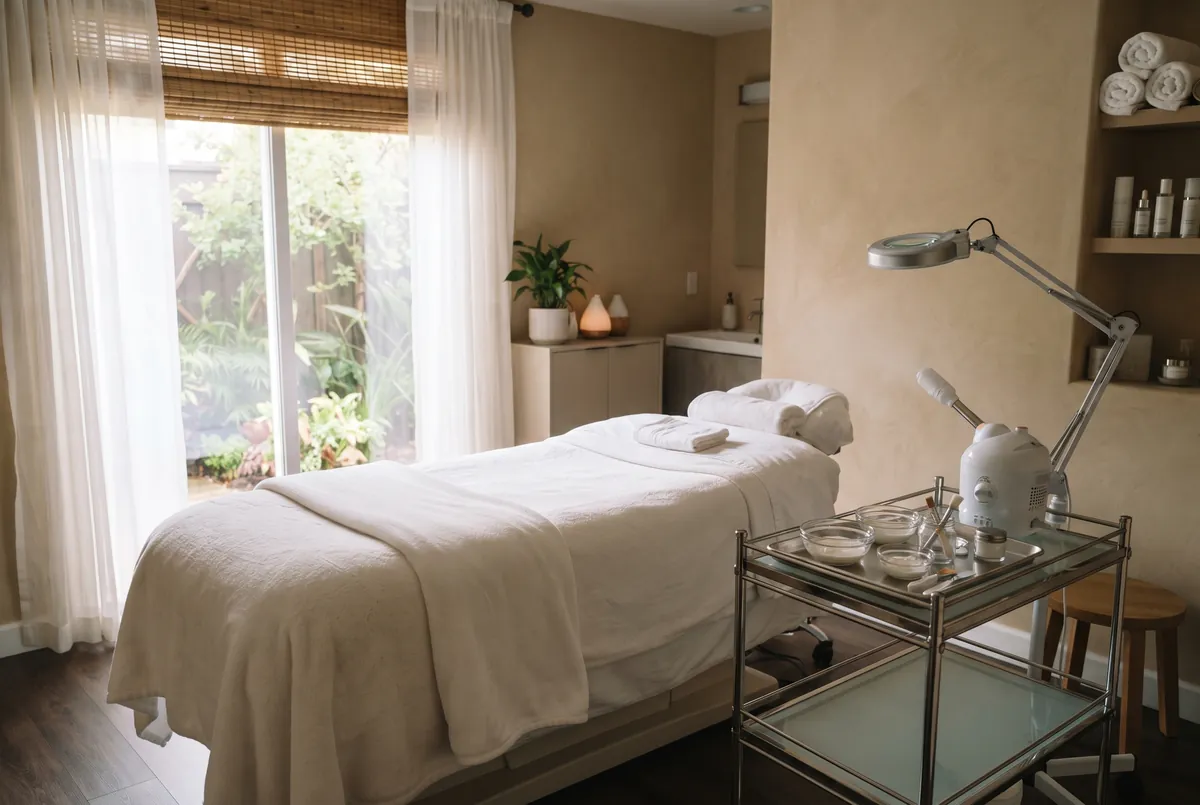
Quick answer
Most spa facials come down to a handful of methods: physically clearing pores with extractions, dissolving dead cells with acids or enzymes, hydrating the upper skin layers, and devices such as ultrasound, LED light or microcurrent. Choose by skin condition, not by menu name. For most healthy skin, a professional facial about every four to six weeks is a sensible rhythm.
A spa menu can list a dozen facials with names that tell you almost nothing: signature, deep cleansing, oxygen, glow, clarifying, hydradermabrasion. Behind those names there are really only a handful of working methods, and each one does a different job on the skin. Some physically clear pores. Some dissolve dead cells with acids or enzymes. Some push water and active ingredients into the upper layers, and some use devices such as ultrasound, LED light, or microcurrent. Once you know which method sits behind the name, choosing gets much easier.
I have performed and taught facials for more than twenty years, and the most common mistake I see is clients booking by name or by price instead of by skin condition. This guide explains the main types of facials offered in US spas and clinics, who each one suits, how a session runs step by step, how often to book, what aftercare looks like, and when a facial is the wrong tool and a dermatologist is the right one. It is general education, not a diagnosis of your skin.
What a Facial Actually Is and What It Can Change
A facial is a professional skin treatment performed by a licensed esthetician or cosmetologist. In almost every version it includes the same backbone: cleansing, skin analysis, some form of exfoliation, optional extractions, a treatment step such as a mask or device, and finishing products with sun protection. What changes from one type to another is the method used for exfoliation and the treatment step, and that is the part that should be matched to your skin.
It helps to be realistic about what this category of service works on. A facial acts on the surface of the skin: the outer layer of dead cells, the contents of the pores, the water content of the upper layers, and surface circulation. That is enough to make skin clearer, smoother, more even, and more comfortable, and to make your home products work better. It is not enough to cure inflammatory acne, remove deep wrinkles, lift sagging tissue, or erase melasma. Those belong to medical care or to more intensive procedures.
There is a second benefit that clients underestimate: a trained person looks at your skin under magnification in good light. In my practice a large part of the value of a first appointment is the analysis. I can tell a client that the "blackheads" on the nose are normal sebaceous filaments, that the tight shiny forehead is dehydration and not oiliness, or that a spot needs a dermatologist and not an extraction. If you want to see how that analysis fits into the wider job, read my guide on what an esthetician does day to day.
The Main Types of Facials at a Glance, Starting With the Classic
Most services on a US spa menu fall into one of the groups below, or combine two of them. A "signature" or "custom" facial usually means the esthetician picks from these methods after looking at your skin, which is often the best option if you do not know what to book. The table gives a quick orientation, and the sections after it explain each type in practical detail.
| Type of facial | Main method | Best suited to | Use caution if |
|---|---|---|---|
| Classic (European) facial | Cleansing, steam, manual exfoliation, massage, mask | Normal, combination, first-time clients | Skin is very reactive to heat or steam |
| Deep cleansing or acne facial | Softening of pores and manual extractions | Oily, congested skin with blackheads and closed comedones | There are many inflamed or cystic breakouts |
| Hydrating facial | Gentle exfoliation, humectant serums, occlusive mask | Dry, dehydrated, tight, travel-stressed skin | Almost none, when products are fragrance-light |
| Enzyme or light acid facial | Fruit enzymes or low-strength acids | Dull, uneven, mildly congested skin | You use retinoids or have a damaged barrier |
| Hydradermabrasion | Water-based suction tip with serums | Congestion plus dehydration, event prep | Active rosacea flare, fragile capillaries |
| Microdermabrasion | Mechanical abrasion with crystals or a diamond tip | Thicker, rough, sun-weathered skin | Sensitive, thin, or acne-inflamed skin |
| Ultrasonic facial | Vibrating metal spatula on wet skin | Sensitive or mildly congested skin, maintenance | Implanted electronic devices, per device guidance |
| LED light facial | Panels of colored light, no heat injury | Add-on for redness or breakout-prone skin | Light-sensitizing medication or conditions |
| Firming facial with microcurrent or massage | Low-level current or manual lifting massage | Tired, dull skin, mild loss of tone | Pacemakers, pregnancy, per device guidance |
Notice that nothing in the table is ranked from weak to strong. A stronger treatment is not a better one. The right facial is the mildest method that solves the problem in front of us, and for many clients that is a well-performed classic facial with careful extractions and a mask chosen for their skin on that particular day, with nothing added for show.
The classic facial, often called a European facial, is the service the rest of the menu is built on. It runs through a double cleanse, skin analysis, steam or a warm compress, exfoliation with a scrub, enzyme, or mild acid, optional extractions, facial massage, a mask, and finishing products. Nothing in it is aggressive, which is exactly why it suits most skin types and most first-time clients. It is also the service that state board practical exams are built around.
What clients feel most is the massage, and it is not there only for relaxation. Manual massage increases surface circulation, moves fluid, relaxes the muscles of the jaw and forehead, and helps the products that follow spread evenly. I shorten or skip massage on skin with active breakouts, because working oil and friction across inflamed spots can make them worse. On dry or mature skin I make it the longest step of the session.
A classic facial is the right choice when your skin has no single dominant problem: a little congestion on the nose and chin, some dullness, mild dryness on the cheeks. It is also the right choice when you are unsure. An esthetician who starts with the classic protocol can add a targeted step in the same session once the skin has been examined, which is safer than committing to an intensive treatment sight unseen.
Deep Cleansing and Acne Facials: Extractions Done Properly
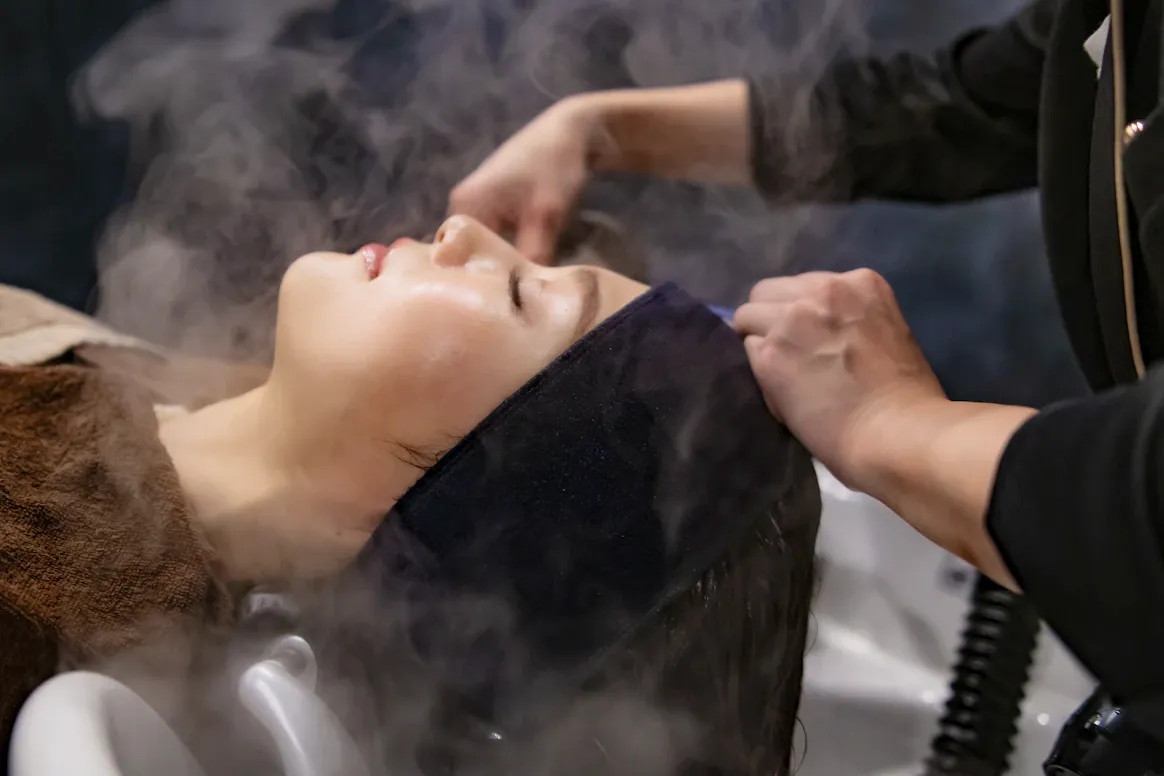
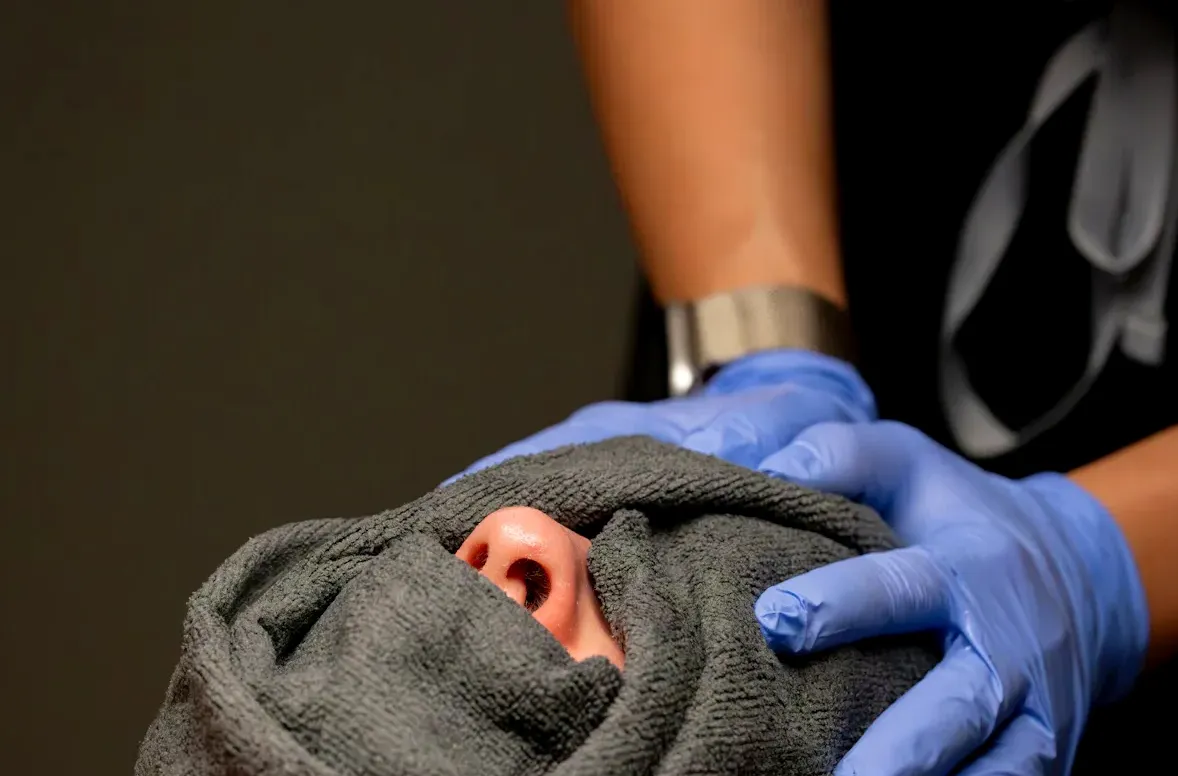
A deep cleansing facial is built around extractions. After cleansing, the skin is softened with steam, a warm towel, or a desincrustation product that loosens the hardened oil in the pores. Then the esthetician removes blackheads and closed comedones by hand, using gloved fingers wrapped in gauze or cotton, sometimes with a comedone extractor. A calming, antibacterial, or clay mask follows, and many rooms finish with high frequency or LED light to settle the skin.
Manual extraction is the most thorough way to clear dense congestion, and it is also the step with the widest gap between good and bad work. Done properly, pressure is gentle, comes from two sides, follows the direction of the pore, and stops if the plug does not release. Done badly, it bruises the tissue, ruptures the follicle wall under the skin, and leaves marks that last far longer than the blackhead would have. Ask how long the esthetician has been doing extractions and whether they will leave a spot alone if it is not ready.
This facial suits oily and combination skin with blackheads, clogged pores, and the small flesh-colored bumps called closed comedones. It is not a treatment for moderate or severe inflammatory acne. Deep, painful, cystic lesions should not be squeezed in a spa at all, and widespread inflamed breakouts are a reason to see a dermatologist first. A good esthetician will work around inflamed areas, treat only what is safe, and tell you plainly when the skin needs medical care alongside or instead of facials.
Hydrating Facials for Dry and Dehydrated Skin
Dry skin and dehydrated skin are different things, and a hydrating facial treats both. Dry skin produces too little oil. Dehydrated skin lacks water, and it can be oily at the same time. That is the client who says her face is shiny by noon yet feels tight after washing. A hydrating facial uses very mild exfoliation, layers of water-binding ingredients such as hyaluronic acid and glycerin, and a mask or cream that seals the water in so it does not evaporate within the hour.
The most useful version of this service repairs the skin barrier rather than only wetting the surface. When the barrier is damaged, usually from over-exfoliating at home, harsh cleansers, or a cold dry winter, the skin stings with products that never bothered it before. In that state I remove every strong step: no scrubs, no acids, no steam, minimal extractions. The session becomes cleansing, a soft enzyme if the skin allows it, a long calming mask, and barrier-supporting lipids. The result is less dramatic on the day and far better two weeks later.
Hydrating facials are also the safest choice before an event, because they carry almost no risk of redness or purging. Clients with sensitive or rosacea-prone skin usually do best with this type, provided the products are low in fragrance and essential oils and the esthetician avoids heat. Always mention products that have made you react in the past. A patch test behind the ear or on the jawline is a reasonable request if you have a history of reactions.
Enzyme, Acid, and Microdermabrasion Facials
Exfoliating facials remove the outer layer of dead cells so the skin reflects light evenly and products penetrate better. There are three ways to do it. Enzymes, usually from papaya, pineapple, or pumpkin, digest the protein that holds dead cells together and are the gentlest route. Low-strength acids, such as lactic, mandelic, glycolic, or salicylic, loosen the bonds between cells and can reach into the pore. Mechanical methods, such as scrubs and microdermabrasion, physically abrade the surface.
An enzyme facial is my usual choice for dull, sensitive, or first-time skin, because enzymes work only on dead cells and stop when they run out of material. A light acid facial goes a step further and suits uneven tone, rough texture, and mild congestion. This is different from a medium or deep chemical peel. Estheticians work with superficial exfoliation within their state's scope of practice, and deeper peels belong in a medical setting. Concentration and acidity limits differ from state to state.
Microdermabrasion uses a diamond-tipped wand or a stream of fine crystals with suction to polish the surface. It gives an immediate smoothness that clients with thicker, sun-weathered, or rough skin enjoy. It is a poor fit for thin, reactive, or couperose skin and for inflamed acne, where the abrasion and suction can spread irritation and leave redness. I use it far less than I did early in my career, because gentler methods now give similar brightness with less risk.
Whichever exfoliating facial you choose, home care has to match it. The most common injury I see from exfoliation does not happen in the treatment room. It happens when a client has an acid facial on Saturday and goes back to her retinoid, scrub, and exfoliating toner on Sunday. Pause your active products before and after as your esthetician advises, and wear broad-spectrum sunscreen daily, because freshly exfoliated skin burns and pigments more easily.
Device-Based Facials: Hydradermabrasion, Ultrasonic, LED, and Microcurrent
Hydradermabrasion is the generic name for facials that use a handpiece with a spiral tip, water-based solutions, and suction. The tip loosens debris with mild acids, vacuums the pores, and then infuses serums. Clients like it because it is comfortable, has no downtime, and leaves the skin clear and plump on the same day. It clears light to moderate congestion well. Dense, deep comedones still need manual extraction, and the suction should be kept low on skin with fragile capillaries.
An ultrasonic facial uses a flat metal spatula that vibrates at high frequency. Glided across wet skin at an angle, it shakes loose dead cells and surface oil without squeezing, and turned over, it can be used to help press serums into the surface. It is one of the gentlest cleansing methods, so I use it on sensitive skin, on clients who cannot tolerate steam, and as maintenance between deeper cleanings. On its own it will not empty stubborn, hardened plugs.
LED light is usually an add-on rather than a full facial. The client lies under a panel of red, blue, or near-infrared light for several minutes. There is no heat injury and no downtime. Blue light is used on breakout-prone skin and red light on redness and tired skin. The effect of a single session is modest, and benefits come from repeated use, so treat it as a pleasant supporting step, not the reason to book. Clients on light-sensitizing medication should check with their doctor first.
Microcurrent facials use very low-level electrical current delivered through two probes or conductive gloves, with the aim of improving muscle tone and giving a temporary lifted look. Most clients feel nothing or a faint tingle. Results are subtle and short-lived after one session, and they build with a series. Microcurrent and other electrical devices are generally avoided for clients with pacemakers or other implanted electronic devices, epilepsy, or pregnancy, following the device manufacturer's guidance.
Devices do not replace skill. The best machine in an untrained hand gives a mediocre or risky result, and which devices an esthetician may legally operate depends on the state. If you are a student comparing programs, look at how much supervised device time they include, and check your state's rules through the esthetics licensing hub before paying for any advanced device certificate.
How to Choose a Facial for Your Skin Type and Goal
Start with your main complaint, not your skin type label. Skin types are a rough sketch, and most people are a mix. Write down the one thing you most want to change, then the two things that have gone wrong in the past, such as "I got red for three days" or "I broke out after a facial." That short list tells an esthetician more than "combination skin" ever will, and it lets them rule out methods before you are on the bed.
- Blackheads and clogged pores: deep cleansing facial with manual extractions, or hydradermabrasion for lighter congestion.
- Tightness, flaking, or stinging: hydrating, barrier-focused facial with no acids and no steam.
- Dullness and rough texture: enzyme or light acid facial, with strict sun protection afterward.
- Redness and easy flushing: gentle hydrating facial, ultrasonic cleansing, cool compresses, no heat or strong massage.
- Occasional hormonal breakouts along the jaw: classic facial with careful extractions and a calming mask, plus a conversation about home care.
- Tired look and mild loss of tone: classic facial with extended massage, or a microcurrent series.
- Big event in a few days: hydrating facial only, nothing new and nothing that can cause redness.
- Many inflamed or painful breakouts: dermatologist first, facials later as support.
Skin tone matters as well. Deeper skin tones are more prone to post-inflammatory hyperpigmentation, which means dark marks after irritation. That makes rough extractions, aggressive microdermabrasion, and strong acids a higher risk, and it makes gentle, consistent treatment the better strategy. An esthetician experienced with a range of skin tones will choose conservative settings and build up slowly instead of chasing a dramatic first result.
Season plays a part too. I schedule stronger exfoliating facials in fall and winter, when clients spend less time in direct sun, and I lean toward hydration, calming, and antioxidant treatments in summer. Skin also behaves differently across the menstrual cycle, during pregnancy, and around menopause, so a facial that suited you last year may not be the one you need now. Expect a good esthetician to reassess at every visit instead of repeating a fixed protocol.
What Happens During a Facial and What It Feels Like
A first appointment starts with a short intake form and conversation. Expect questions about medications, allergies, recent procedures, pregnancy, your home routine, and what you want from the visit. This is not paperwork for its own sake. Retinoids, blood thinners, recent sun exposure, and certain health conditions change what is safe to do. If nobody asks you anything before starting, treat that as a warning sign about how the room is run.
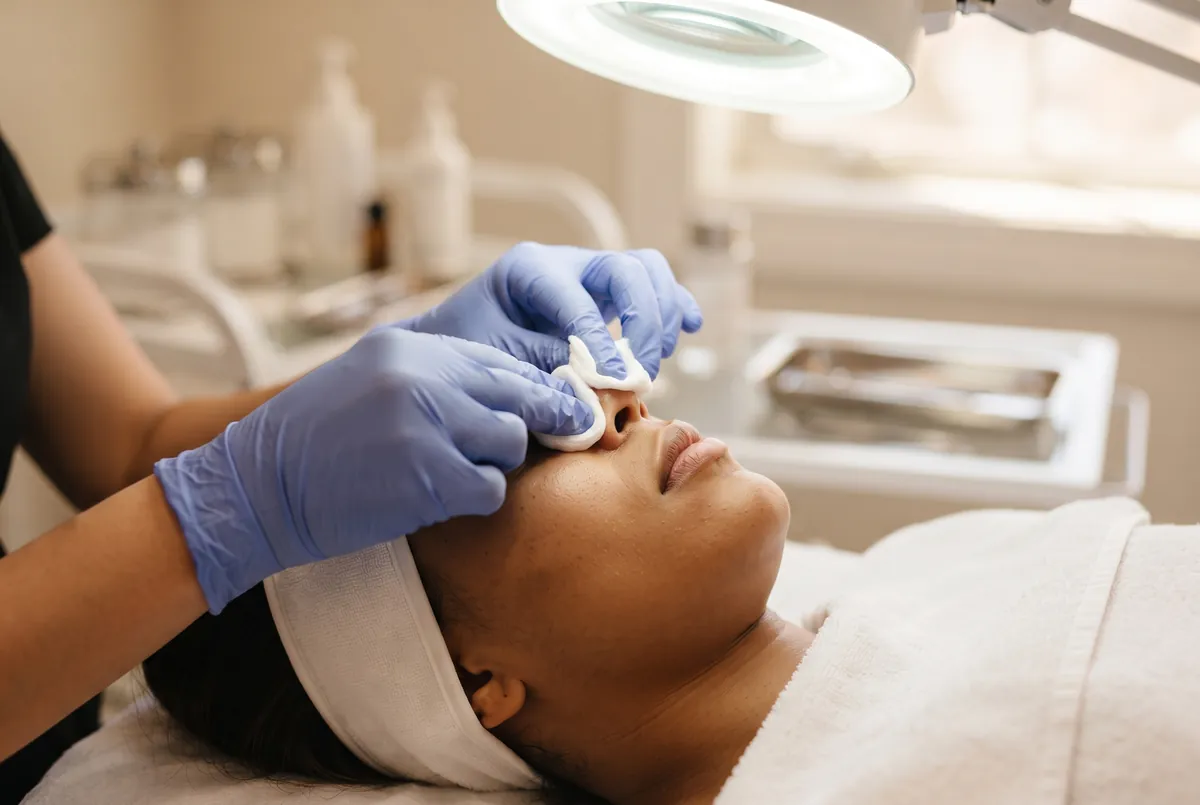
Next comes cleansing and analysis. Makeup, sunscreen, and surface oil come off in two passes. Then the esthetician looks at the skin under a magnifying lamp, often with your eyes covered. They are checking oil distribution, pore content, hydration, sensitivity, pigmentation, and anything that should not be touched. A professional will tell you what they see in plain language and say which type of facial they recommend and why, even if it differs from what you booked.
Then the skin is prepared and exfoliated. Depending on the type, that means steam, a warm towel compress, an enzyme, a light acid, an ultrasonic spatula, or a hydradermabrasion pass. Extractions follow if they are needed and safe. This is usually the only uncomfortable part, and it should be brief and tolerable. You are allowed to ask the esthetician to ease off or to skip an area, and a professional will respect that without argument.
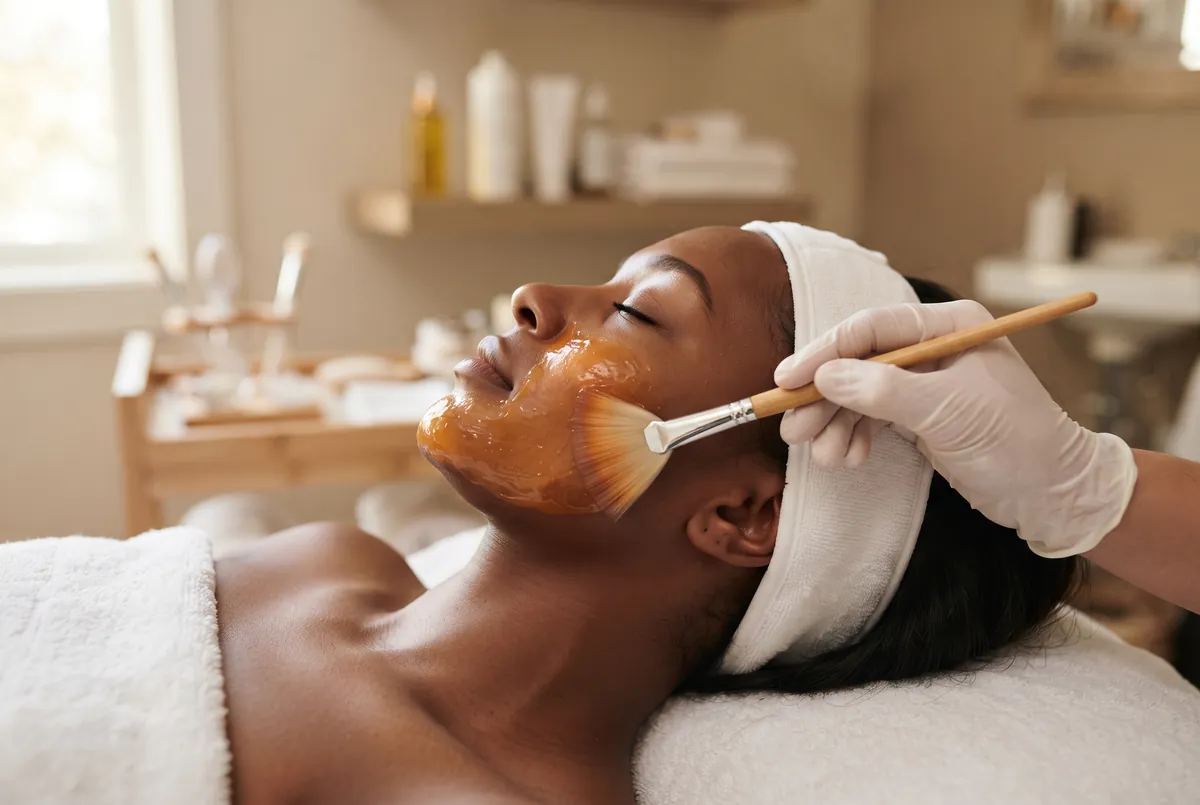
The last third of the session is the calm part: massage where appropriate, a mask matched to the skin, and then serum, moisturizer, and sunscreen. Many rooms add LED light or a cool compress here. A full facial commonly takes about an hour, and express versions are shorter. Before you leave you should get clear aftercare instructions and honest advice on home care, without pressure to buy a shelf of products. For a broader look at the craft, see facial care basics in a professional's hands.
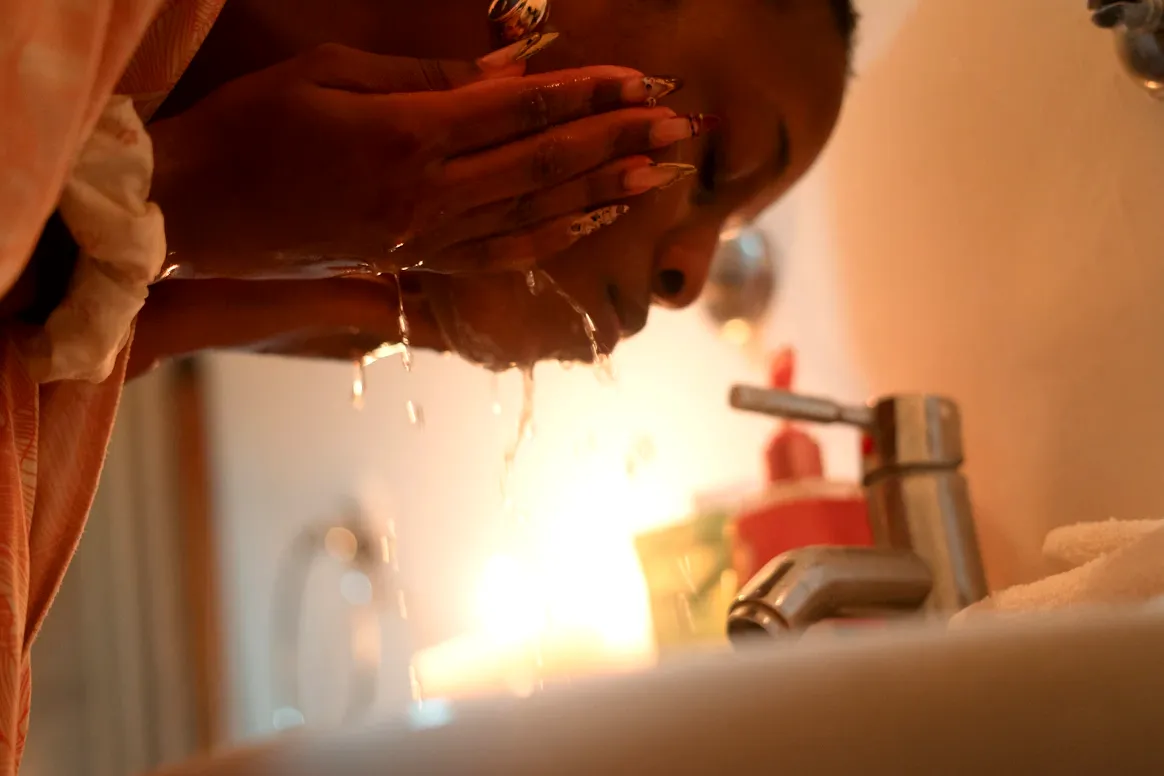
Most of a facial should feel pleasant or neutral. Enzymes can produce warmth or mild itching, light acids tingle for a minute or two, and hydradermabrasion feels like a small wet vacuum moving across the face. Extractions sting briefly, most of all around the nose and on the chin. Sharp pain, burning that keeps building, or a feeling that the skin is being scraped are not normal. Say so immediately, because a product can be neutralized or removed within seconds.
Afterward, expect some pinkness for a few hours after extractions or exfoliation, and occasionally small red marks where stubborn pores were cleared. Hydrating and LED facials usually leave no visible signs at all. Some clients notice a few small breakouts in the days after a deep cleansing facial, as congestion that was already forming comes to the surface. That should be minor and short. A widespread rash, swelling, hives, or blistering is a reaction, not a "purge," and needs a call to the spa and, if it is severe, medical attention.
How Often to Get a Facial
For most healthy skin, a professional facial about every four to six weeks is a sensible rhythm. That interval follows the natural renewal cycle of the outer skin layer, which takes roughly a month and slows with age. Oily, congested skin sometimes benefits from closer visits at the start, until the pores are under control, and then moves to a maintenance schedule. Dry and sensitive skin often does well with visits spaced further apart and focused on hydration.
More is not better. I regularly see clients who combine frequent facials with daily acids and scrubs at home, and their skin ends up red, shiny, and reactive, with more breakouts than before. That is a damaged barrier, and the treatment is to stop and let it rebuild. If budget is limited, a quarterly facial at the change of each season combined with a simple, consistent home routine gives better skin than monthly facials on top of chaotic home care.
Age changes the plan more than the frequency. Teenagers usually need gentle cleansing facials, education about not picking, and a referral when acne is inflammatory. In the twenties and thirties the focus is often congestion, early sun damage, and stress-related dullness. From the forties onward, dryness, uneven tone, and loss of firmness take over, and hydrating, massage-based, and gentle exfoliating services earn their place. No age makes a facial mandatory, and none makes it pointless.

How to Prepare for a Facial and Care for Skin Afterward
Preparation is mostly about what to stop. In the days before your appointment, pause scrubs, exfoliating acids, and retinoids according to your esthetician's or prescriber's advice. Avoid sunburn and tanning beds. Do not wax, thread, or shave the face immediately beforehand, since freshly depilated skin is more reactive to acids and steam. Men are often asked to shave the evening before instead of that morning, so the skin has time to settle.
Bring information rather than a perfect face. A list of the products you use, including prescriptions, is more helpful than arriving with clean skin, because the esthetician will cleanse you anyway. Mention allergies, including nuts, latex, aspirin sensitivity, and fragrance. Mention pregnancy or breastfeeding, cold sores, recent injectables or fillers, and any procedure done by a dermatologist or surgeon in recent months. If you get cold sores, ask your doctor about prevention before treatments that involve exfoliation around the mouth.
Plan the hours after the appointment as well. Skip the gym, sauna, and hot yoga for the rest of the day, because sweat and heat on freshly treated skin invite irritation. If you can, go home without applying makeup. Schedule the facial at a time when you can simply leave the skin alone that evening, wash it gently, and go to bed on a clean pillowcase.
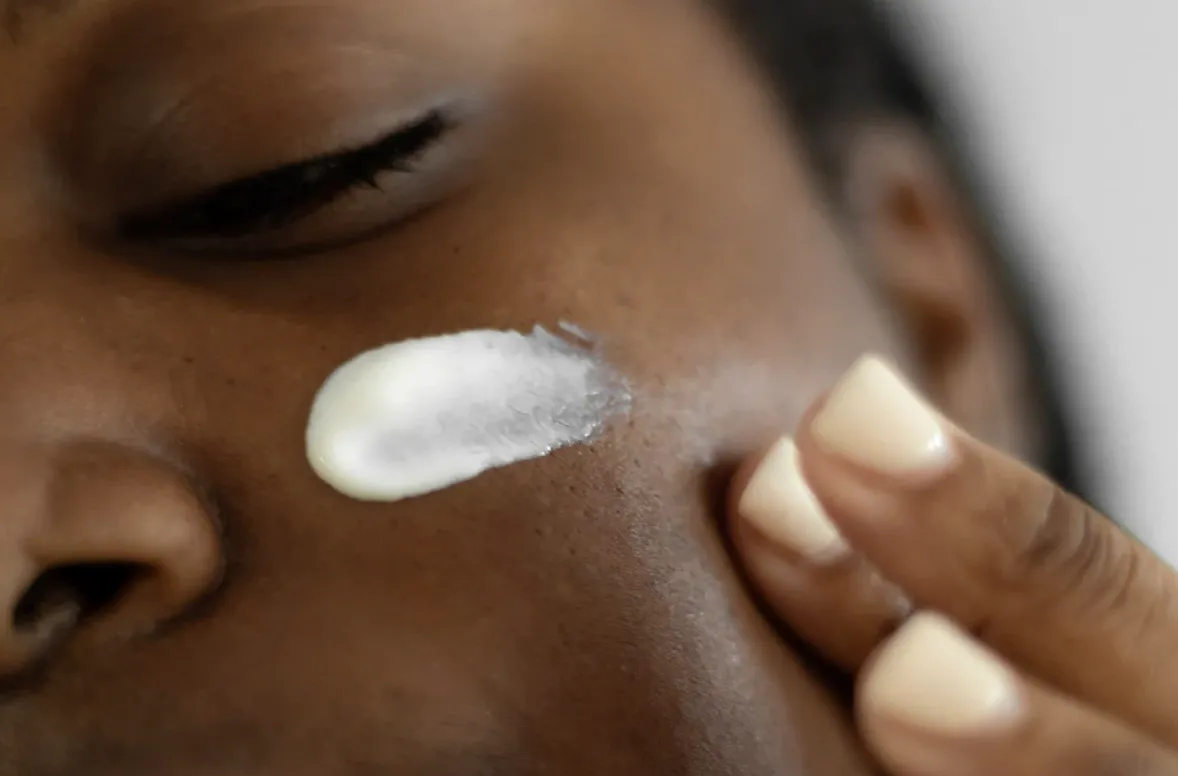
For the first twenty-four hours, keep things plain. Wash with lukewarm water and a mild cleanser, pat dry, and apply the moisturizer your esthetician recommended. Do not touch, pick, or "finish" extractions at home, even if you see something that looks ready. Avoid makeup for the rest of the day if possible, and avoid heat, heavy exercise, swimming pools, and direct sun. Use a broad-spectrum sunscreen of SPF 30 or higher the next morning and every morning after.
For the rest of the week, hold off on exfoliating acids, scrubs, retinoids, and at-home devices until the skin feels completely normal, or as long as you were told. After a hydrating facial that may be only a day. After an acid facial or microdermabrasion it is longer. Do not book waxing, threading, or laser treatments on the face in the days right after an exfoliating facial. Light flaking a few days after an acid treatment is expected. Moisturize and leave the flakes alone.
The facial sets the skin up, and the routine keeps the result. Three products do most of the work at home: a gentle cleanser, a moisturizer suited to your skin, and a daily sunscreen. Anything beyond that, such as a vitamin C serum, a retinoid, or an exfoliant, should be added one at a time so you can tell what helps and what irritates. I would rather a client leave with one well-chosen product than with six she will use for two weeks.
When a Facial Is Not the Right Choice
Some conditions call for postponing a facial or changing it. Active cold sores, impetigo, pink eye, or any contagious skin infection mean rescheduling. Sunburn, open wounds, and fresh irritation should heal first. A flare of eczema, psoriasis, or rosacea on the face is a reason to skip stimulating steps and, often, to wait. Recent facial surgery, laser resurfacing, medium or deep peels, and injectables each come with their own waiting period, which should be set by the provider who performed them.
Medication matters more than most clients expect. Oral isotretinoin, topical prescription retinoids, some antibiotics, and other light-sensitizing or skin-thinning drugs change how skin reacts to exfoliation, extraction, heat, and light. Blood thinners make bruising from extractions more likely. None of this automatically rules out every facial, but it narrows the safe options, and your esthetician can only adjust if they know. When in doubt, ask the prescribing doctor what is allowed.
Pregnancy is not a reason to give up facials, though the menu shrinks. Gentle cleansing, hydration, and massage are generally considered fine. Many spas avoid electrical devices, certain acids, retinoids, and strong essential oils during pregnancy as a precaution, and it is reasonable to check with your obstetric provider if you are unsure. Hormonal pigmentation is common in pregnancy, so daily sun protection becomes even more important than usual.
Finally, some skin problems are simply outside the scope of a facial. See a dermatologist for painful cysts and nodules, acne that leaves scars, sudden widespread rashes, a mole or spot that is changing, bleeding, or not healing, persistent facial redness with burning, and pigmentation that keeps spreading. An ethical esthetician refers these out. Being told "this needs a doctor" is a sign you found a good one.
Common Myths and Mistakes About Facials
The first myth is that pores open and close. Pores have no muscles. Steam and warmth soften the oil inside them, which makes extraction easier, and cold temporarily reduces surface redness, but neither changes pore size. Pores look smaller when they are empty and when the skin around them is well hydrated and protected from sun damage. No facial shrinks them permanently, and a provider who promises that is selling something.
The second myth is that a facial has to hurt, peel, or leave you red to be effective. Discomfort is a side effect, not a measure of quality. Some of the most useful treatments I perform, such as barrier-repair facials, feel like very little is happening. The opposite myth is just as wrong: that facials are only pampering. A properly chosen series can clear congestion, even out texture, and calm reactive skin in ways home care alone often cannot.
The mistakes I see most often are practical ones. Clients try something new and strong right before an event. They book the same facial for years while their skin changes. They pick at their skin after extractions. They hide medications because they seem unrelated. They judge a facial by how many steps or machines it includes, and they choose a provider by price alone. Each of these is easy to avoid once you know to look for it.
Who Performs Facials, What to Check, and How Professionals Learn
In the United States, facials are performed by licensed estheticians and cosmetologists, and in medical offices by staff working under a physician's supervision. Every state sets its own training hours, exam, and scope of practice, so what an esthetician may do in one state, such as certain peels or devices, may be restricted in another. You can look up a license on your state board's website, and the license should be displayed at the workplace.
Beyond the license, watch how the visit begins. Good signs are an intake form, questions about medications and allergies, hand washing and fresh gloves for extractions, clean linens, disinfected or single-use implements, and an esthetician who explains what they are doing. Poor signs are no consultation at all, heavy product pressure, promises of permanent results, and willingness to squeeze deep inflamed lesions. If you are comparing titles, my guide on the difference between a cosmetologist and an esthetician explains who is trained in what.
For stronger treatments, such as deeper peels, laser, and prescription-level acne care, look to a dermatology practice or a medical spa with real physician oversight. Estheticians who work in those settings are often called medical estheticians, although in most states that is a job description and not a separate license. I explain the distinction in what a medical esthetician is and does.
If reading about methods makes you want to perform them, the path runs through a state-approved esthetics or cosmetology program, the required number of supervised training hours, and your state's licensing exams. Skin analysis, sanitation, product chemistry, contraindications, massage, extractions, and basic electrical devices are all part of the core curriculum, and they are tested in both written and practical form in most states.
Theory can be studied ahead of time, and doing so makes school much easier. Skin anatomy, ingredient families, and contraindications are learned from books and structured lessons, and students who arrive knowing them spend their floor time on technique instead of vocabulary. Online study builds that foundation. It does not replace the in-person hours or the license your state requires, and no legitimate course will claim it does. Our esthetics theory courses are built for exactly that preparation.
Start by checking your own state's requirements in the esthetics licensing guide, then read the step-by-step overview of how to become a licensed esthetician. When you compare programs, ask how many real clients students treat before graduating and how much time is spent on extractions and skin analysis, because those two skills separate a competent facialist from someone who only follows a protocol card.
Your Next Step
If you are a client, pick your one main skin concern, book a consultation or a custom facial with a licensed esthetician, and tell them everything you use and take. Let them choose the method after looking at your skin, start gently, and judge the result over two or three visits combined with steady home care and daily sunscreen. If something on your face is painful, scarring, or changing, begin with a dermatologist instead.
If you are thinking about performing facials for a living, look up your state's rules, build your theory early, and choose a school that gives you real hands-on hours. The methods in this guide are learnable, and clients stay for years with a professional who can explain honestly which type of facial their skin needs and which it does not.
State Requirements
State licensing guides
Hours, exams, fees, and the licensing board differ by state. Open your state for the current requirements.
Common Questions
FAQ
A classic or custom facial is the safest starting point. It includes cleansing, skin analysis, gentle exfoliation, optional extractions, massage, and a mask, and the esthetician can adjust each step after examining your skin. Avoid booking strong acid treatments or microdermabrasion for a first visit, because nobody yet knows how your skin reacts. Tell the esthetician about your home routine and medications so they can choose a mild, suitable approach.
Both follow the same basic order, but the focus differs. A classic facial balances cleansing, exfoliation, massage, and a mask, with only light extractions. A deep cleansing facial spends most of its time softening the pores and manually removing blackheads and closed comedones, and it usually shortens or skips massage. Choose the classic version for general maintenance and the deep cleansing version when congestion is your main concern.
For most people, about every four to six weeks works well, since that roughly matches the renewal cycle of the outer skin layer. Congested skin may need closer visits at first, and dry or sensitive skin often does better with longer gaps. If monthly visits are not practical, a facial at each change of season plus a simple, consistent home routine still gives good results.
A facial can clear blackheads and clogged pores and calm mild breakouts, and regular treatments help many clients keep congestion under control. It does not cure inflammatory acne. Painful cysts, nodules, widespread inflamed breakouts, or acne that leaves scars need a dermatologist, who can prescribe treatment. Facials can then support that care, with the method adjusted to your medication. An honest overview of scope is in what an esthetician does.
A few small spots in the days after a deep cleansing or exfoliating facial can happen, because congestion that was already forming moves to the surface. It should be minor and settle quickly. Widespread redness, itching, swelling, hives, or many new inflamed bumps suggest irritation or an allergic reaction to a product. Contact the spa, stop using new products, and see a doctor if the reaction is severe or does not improve.
They do different jobs. Hydradermabrasion is comfortable, has no downtime, and handles light to moderate congestion while adding hydration. Manual extraction is slower and less pleasant, but it is more thorough for dense, hardened blackheads and closed comedones. Many estheticians combine the two in one session. The better choice depends on how congested your skin is and how sensitive it is to suction and pressure.
Generally yes, with adjustments. Gentle cleansing, hydrating masks, and massage are commonly offered during pregnancy. Many spas avoid retinoids, certain acids, electrical devices such as microcurrent, and strong essential oils as a precaution. Tell your esthetician that you are pregnant when you book, and ask your obstetric provider about anything you are unsure of. Wear sunscreen daily, because pregnancy makes pigmentation more likely.
Licensed estheticians and cosmetologists perform facials, and each state sets its own training, exam, and scope of practice rules. Some treatments, such as deeper peels or certain devices, are restricted to medical settings in many states. You can verify a license through your state board. State-by-state requirements are summarized in our esthetics licensing hub and, for cosmetologists, the cosmetology licensing hub.
Keep Reading
Related Guides


