Electrolysis
Can Estheticians Do Electrolysis? State Rules and the Path In

Quick answer
It depends on the state. Many states license electrology as its own profession, so an esthetics license alone does not allow electrolysis there. California, for example, states that estheticians and cosmetologists may not perform it. To add electrolysis, complete the training, in-person hours and exam your state requires. Online theory helps but never replaces those hours.
Can estheticians do electrolysis? It is one of the questions I hear most often from esthetics students, newly licensed estheticians and spa owners who want to add permanent hair removal to their menu. The honest answer is that it depends on the state where you work, and in many states the answer for someone holding only an esthetics license is no. Electrology is often licensed as its own profession, with its own training requirements, its own exam and sometimes its own board. An esthetics license, even a good one earned at a strong school, usually does not reach into that territory. In other states the rules are looser, and a few states do not license electrology at all, which creates a different set of problems.
I have worked as a licensed electrologist and cosmetologist for more than twenty years, and I have watched many talented estheticians lose time and money because they assumed their license covered more than it did. This guide explains why electrolysis is regulated differently from facials and waxing, the main ways states handle it, what an esthetician can legally offer instead, and the practical path to adding an electrology credential. It also covers the business side, safety and insurance, and why online theory is valuable but never replaces the in-person hours your state requires. For state by state details, I will point you to our electrolysis licensing hub rather than print numbers that change.
The Short Answer: It Depends on Your State
There is no single national rule for who may perform electrolysis in the United States. Each state decides through its own laws and regulations, and the approaches differ widely. In states that license electrology as a separate profession, performing electrolysis requires an electrology or electrolysis license, and an esthetics license alone does not authorize it. California is a clear example: its Board of Barbering and Cosmetology licenses electrologists separately, and its published guidance for estheticians states that estheticians and cosmetologists may not remove hair by electrolysis. You can see how that state frames the requirement on our California electrolysis licensing page.
Other states place electrology under a different agency entirely. Florida, for example, regulates electrolysis through an Electrolysis Council connected to the Board of Medicine, not through the cosmetology board that licenses estheticians. Massachusetts licenses electrologists through its Division of Professional Licensure. At the other end of the spectrum, some states do not issue a dedicated state electrolysis license at all. New York is the best known example, which I cover later because "no state license" does not mean "no rules." The point for an esthetician is simple: your esthetics license tells you nothing about electrolysis until you check what your own state says about electrology specifically.
When clients or students ask me the question in one sentence, I answer in one sentence: an esthetician can perform electrolysis when the esthetician also holds whatever electrology credential the state requires, or works in a state where electrology is not separately licensed and every local rule is satisfied. In practice that means many estheticians who offer electrolysis are dual licensed. They hold an esthetics license for skin care and a separate electrology license for permanent hair removal, and they keep both current.
Why Electrolysis Is Licensed Differently From Other Hair Removal
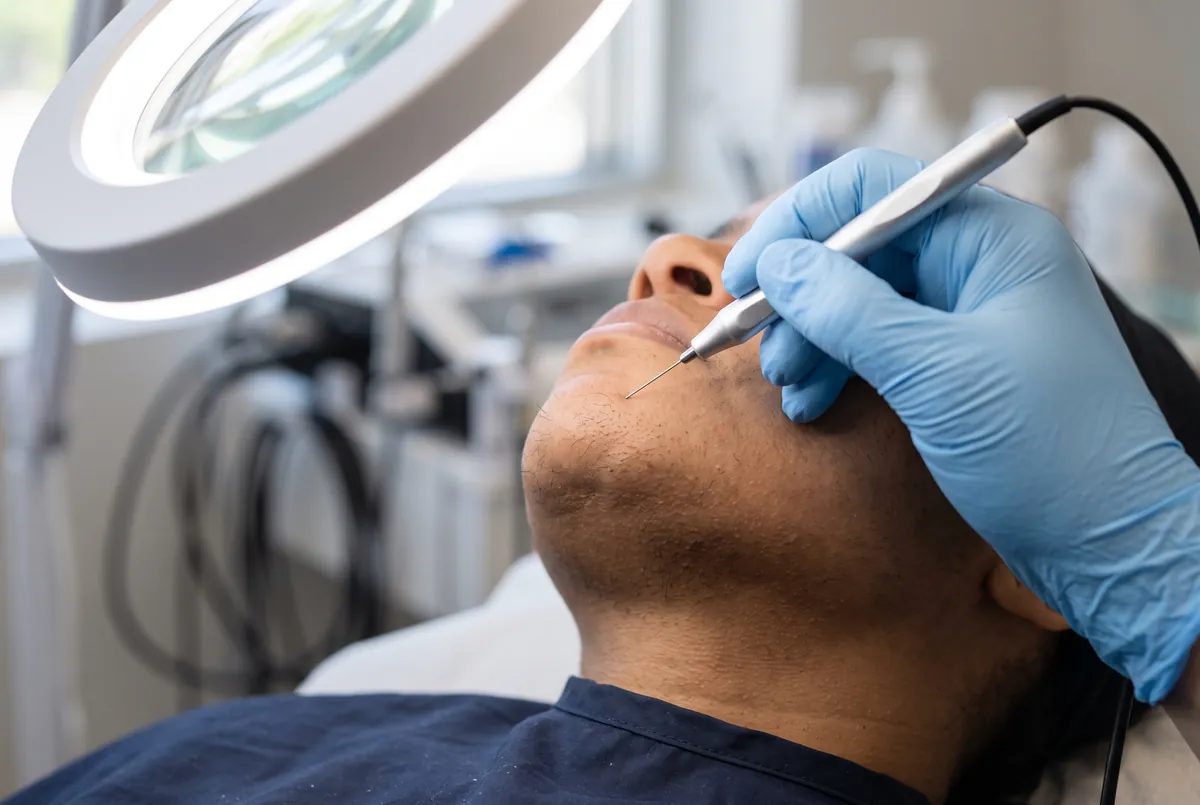
Most hair removal an esthetician performs works on the surface or pulls the hair out. Waxing, sugaring and tweezing remove the hair shaft and root, but they leave the follicle capable of producing new hair. Electrolysis is different in kind. The practitioner inserts a very fine sterile probe, often called a needle, into the natural opening of each hair follicle, following the direction of hair growth, and delivers a controlled electrical current. That current, whether it is shortwave thermolysis, galvanic electrolysis or the blend of the two, is meant to damage the tissue that regenerates the hair. Done correctly across a full treatment plan, it produces permanent hair removal one follicle at a time.
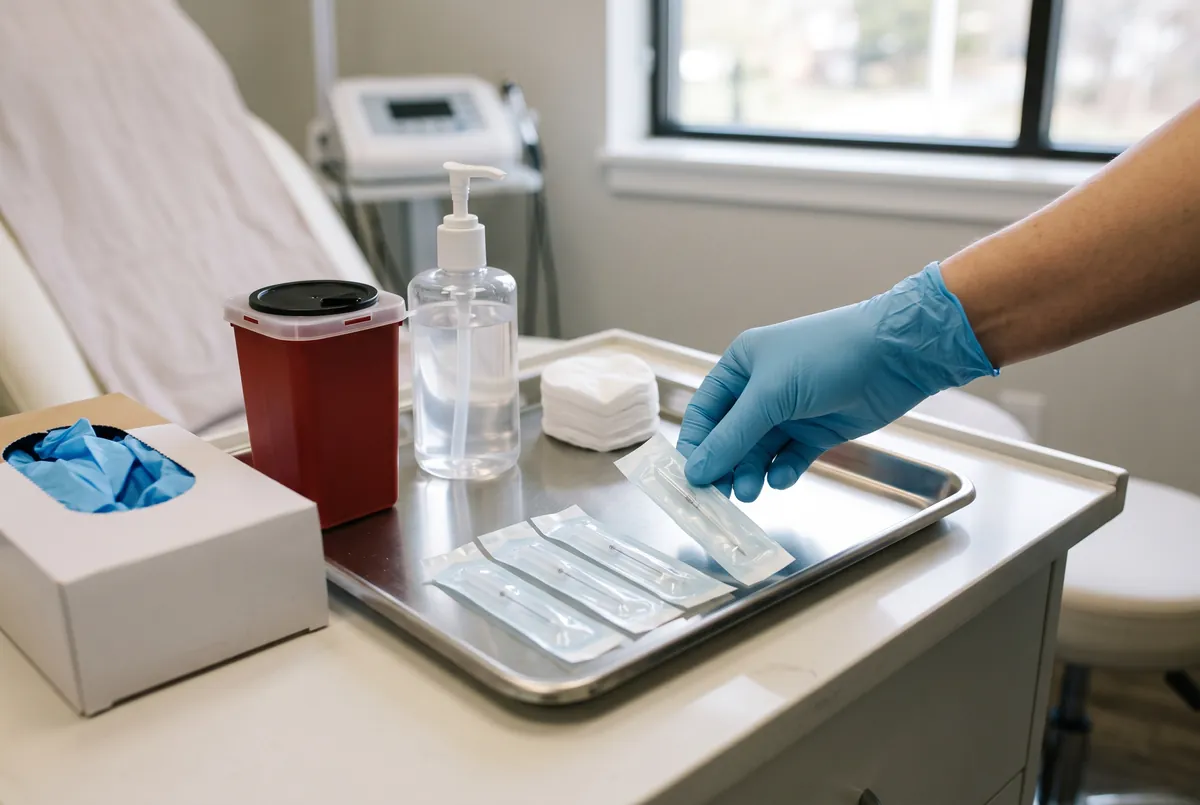
That mechanism is why regulators treat electrology seriously. The probe enters the skin, even though it travels through an existing opening rather than piercing fresh tissue. Current is applied below the surface. Errors in depth, angle, intensity or timing can cause burns, pitting, scarring, hyperpigmentation or infection, and some clients have medical conditions or implanted devices that change what is safe. Sterile technique is not optional, since single use probes and proper disinfection protect against bloodborne pathogen exposure. All of this is a different level of risk than a facial or a leg wax, and states that license electrology usually require training focused specifically on it.
There is also the question of outcomes. Electrolysis is the method the FDA accepts for claims of permanent hair removal, while laser and light based devices are generally described as permanent hair reduction. That distinction gives electrolysis real value for clients with white, gray, red or blond hair, and for areas where laser is not a good fit. It also means the promise to the client is bigger, so the training behind that promise needs to be thorough. When a state creates a separate electrology license, it is saying that permanent hair removal with electric current is its own discipline, not an add-on to general skin care.
Three Common Ways States Handle Electrology
When I help students research their state, I sort the answers into a few broad models. These are not official categories, and a state can change models when its legislature acts, but they help you understand what you are reading on a board website. The details inside each model, including training hours, exam format, age requirements and renewal rules, vary from state to state, which is why I do not print them here. Our state pages keep those details in one place, and each one links to the agency that has the final word.
- Separate electrology license. The state issues a distinct electrologist or electrolysis license with its own training and exam. Sometimes a dedicated board or council oversees it, sometimes the cosmetology board handles it alongside other licenses, and sometimes a health or medical agency does. An esthetics license alone does not authorize electrolysis here.
- Electrology tied to another license or supervision. Some states connect electrology to an existing credential, for example by requiring a cosmetology or esthetics license before electrology training, or by allowing it only under certain supervision arrangements. Reading the exact wording of the rule matters a great deal in these states.
- No dedicated state electrology license. The state does not issue an electrolysis license. Practitioners may still face city or county health rules, business licensing, infection control requirements and general consumer protection law, and professional training remains strongly recommended.
The first model is the one most estheticians run into, and it is the one that causes the most confusion. A student finishes esthetics school, sees electrolysis mentioned in a textbook chapter on hair removal, and assumes the license includes it. Textbooks often introduce the concept so estheticians can answer client questions and make referrals, but a chapter in a book is not a scope of practice. Your scope comes from your state's statute and board rules, and in separate license states those rules place electrolysis outside esthetics.
The third model deserves a warning of its own. When a state does not license electrology, some people read that as permission to start working after a weekend class. Legally it may be possible, but the client does not care whether the state requires a license when a poorly placed insertion leaves a scar. Liability insurers, landlords and medical referral partners often expect proof of real training. In those states I encourage practitioners to hold themselves to the standard of a licensed state, including full theory, supervised hands-on practice and, if they choose, a voluntary professional certification.
What an Esthetics License Usually Covers for Hair Removal
It helps to be clear about what estheticians typically can do, because the list is long and valuable. In most states an esthetics license covers skin care services such as cleansing, exfoliation, facials, masks, extractions within the rules, and makeup, along with temporary hair removal such as waxing and tweezing. Many states also allow sugaring and threading under the esthetics or cosmetology umbrella, though a few regulate threading differently. Device rules vary, and some states restrict certain devices to a master esthetics tier or to medical settings. If you want a wider overview of daily esthetician work, our guide on what an esthetician does covers the full scope.
The table below shows the general pattern I see when comparing an esthetics license with an electrology license in states that license both. It is a simplified picture, not legal advice. Individual states add exceptions, rename services or split them across license tiers, so treat it as a map for your research rather than a final answer, and always confirm the details with your own state agency.
| Service | Typical esthetics license | Typical electrology license |
|---|---|---|
| Facials, exfoliation, skin analysis | Usually included | Usually not included |
| Waxing and tweezing | Usually included | Sometimes included, varies by state |
| Sugaring and threading | Often included, varies by state | Varies by state |
| Electrolysis (galvanic, thermolysis, blend) | Not included where electrology is separately licensed | Core scope of the license |
| Laser or light based hair reduction | Varies widely, often medical supervision or separate rules | Varies widely, often separate rules |
| Diagnosing skin or hormonal conditions | Not included, refer to a physician | Not included, refer to a physician |
Notice that laser hair reduction is not the same question as electrolysis. Some estheticians assume that if they can operate a laser in a medical spa, they can also perform electrolysis. The two are regulated separately in most places. Laser rules often revolve around medical supervision and delegation, while electrology rules revolve around the electrology license itself. Being trained on one tells you nothing about your legal right to perform the other, and each needs to be checked on its own terms.
One more common gray zone is the "medical esthetician" title. Estheticians working in dermatology or plastic surgery practices sometimes assume the medical setting stretches their scope. In most states it does not, and electrolysis is a good example. If your state requires an electrology license, working under a physician generally does not replace it unless the specific state rule says so. Our guide on what a medical esthetician is explains why the title describes a setting rather than a separate license in most states.
Electrologist vs Esthetician: How the Two Roles Compare
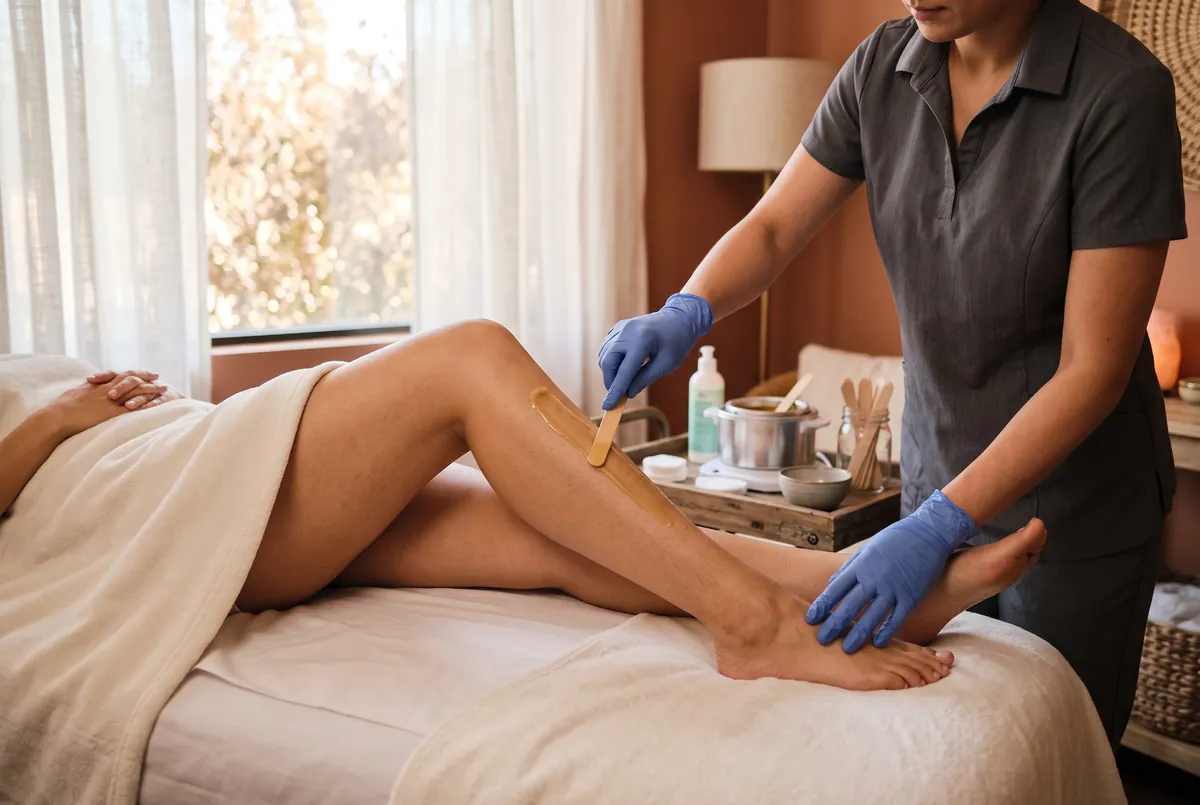
People often search for "electrologist vs esthetician" because they are deciding which career to pursue first. The two professions overlap in some skills, such as client consultation, skin assessment, sanitation and a calm treatment room manner, but their daily work looks quite different. An esthetician's day might include a series of facials, a few brow and lip waxes, a back treatment and product recommendations. The pace varies and the services are relatively short, with many different protocols in a single day. The work is broad, and the esthetician's skill shows in how well each service is matched to the client's skin.
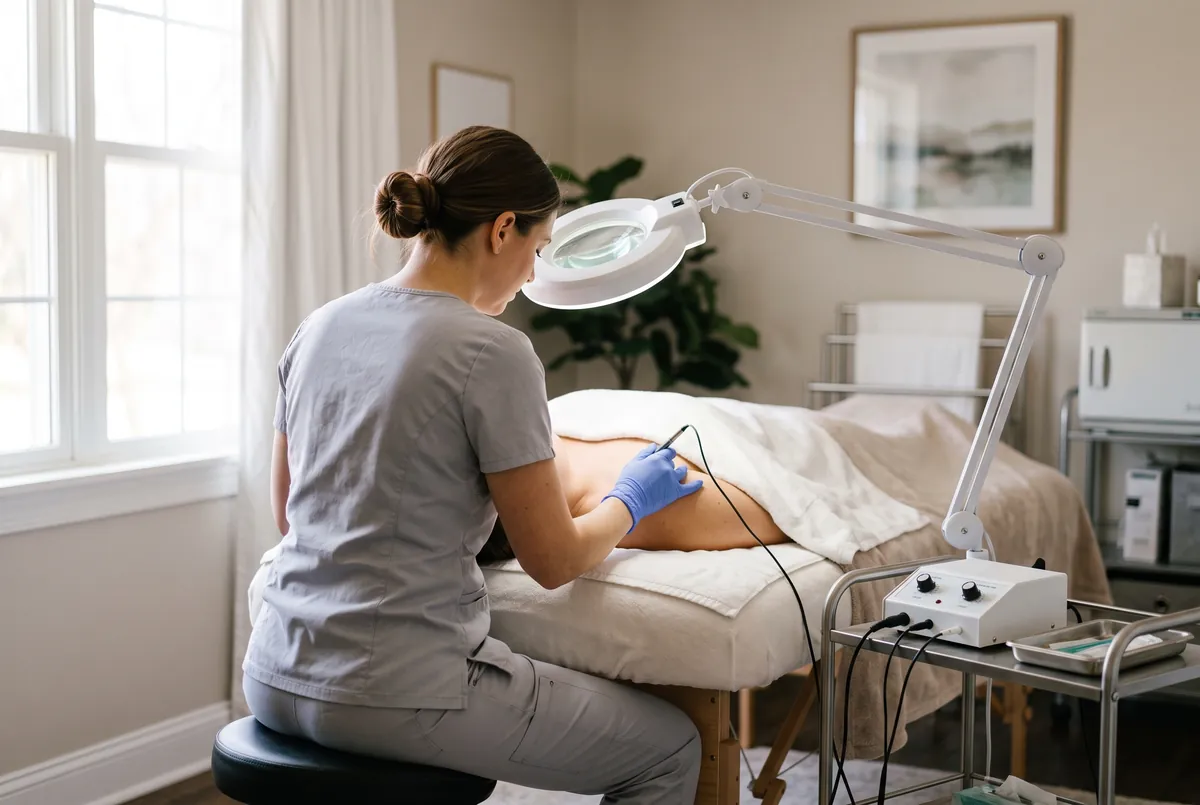
An electrologist's day is narrower and deeper. Appointments are often scheduled in blocks of time, and the practitioner spends that time under magnification treating individual follicles. The work demands steady hands, patience, excellent eyesight with the right lighting, and a precise sense of insertion depth and current. Clients return on a schedule over months, sometimes longer for large areas or hormonal hair growth, so the relationship is ongoing. Many electrologists see the same clients regularly, including clients with PCOS, transgender and nonbinary clients, and people with gray or light hair that laser cannot address well.
The credentials differ too. The esthetician license comes from esthetics school and a state exam that covers skin science, sanitation and practical services. The electrologist license, where one exists, comes from electrology training and an electrology exam that goes deep into hair growth cycles, follicle anatomy, electricity and modalities, contraindications and sterilization. Neither exam substitutes for the other. For someone who already holds an esthetics license, the good news is that the skin science and sanitation foundation carry over well, so the electrology training builds on familiar ground.
Can a Cosmetologist Do Electrolysis?
The same logic applies to cosmetologists. A cosmetology license is broad, and in many states it includes esthetics services, waxing and nail care along with hair. That breadth leads some cosmetologists to assume electrolysis falls inside it. In states that license electrology separately, it usually does not. California's rules again make the point directly, since both estheticians and cosmetologists are excluded from electrolysis there and must hold an electrologist license to perform it.
In some states, a cosmetology or esthetics license is actually a stepping stone toward electrology, because the state requires one of those licenses before a person may train or qualify as an electrologist. That is still a separate credential at the end of the process. The cosmetologist does not perform electrolysis on the strength of the cosmetology license alone. They complete the additional electrology training and meet the electrology requirements, and only then does the scope expand. I am a cosmetologist and an electrologist myself, and I hold those as two distinct credentials for exactly this reason.
If you are a barber, nail technician or massage therapist wondering the same thing, the answer follows the same pattern. Your license covers what your state's statute and rules say it covers, and electrolysis is rarely part of those scopes. Always look for the electrology section of your state's rules first, because that section will define who may perform the service, and everything else follows from it.
How to Check Your State's Rules Before You Offer Electrolysis
Checking your state's rules takes an hour or two if you know where to look, and it can save you from a disciplinary action, a denied insurance claim or a client complaint that turns into something bigger. I recommend doing it in writing, keeping copies of what you find, and asking the agency directly when the wording is unclear. Boards generally answer scope questions by email or phone, and a written answer is worth keeping in your files.
- Open your state's page on our electrolysis licensing hub to see whether the state issues an electrolysis license and which agency oversees it.
- Go to that agency's official website and find the statute and administrative rules for electrology. Read the definition of electrology or electrolysis and the section that says who may perform it.
- Read your esthetics or cosmetology scope of practice in the same way, looking for any mention of electrolysis, electric current, needles or permanent hair removal.
- Note any requirements for the facility, such as a separately licensed establishment, a sterilization method or specific equipment.
- Check city or county rules, especially health department or business licensing requirements, which can apply even where the state does not license electrology.
- If anything is unclear, email the agency with a specific question and save the reply.
- Call your liability insurer and confirm that electrolysis is covered under your policy for your credential and your state.
Pay attention to the date on everything you read. Rules change when legislatures pass bills or boards update regulations, and third party websites, including school marketing pages, sometimes lag behind. The official agency site is the source of truth. Our state pages note the governing agency so you can go straight to it, and each one reminds readers to confirm with that agency before enrolling or opening a practice.

What "No State License" Really Means
Estheticians in states without a dedicated electrolysis license sometimes believe the question is settled in their favor. It is more nuanced. New York is a well known example of a state that does not issue a statewide electrolysis license, and our New York electrolysis page reflects that. Even so, local health departments, business licensing offices and building rules can apply to a practice that uses sterile probes and electrical equipment. Consumer protection law still applies to what you advertise, and general negligence law still applies if a client is harmed.
A second issue is movement between states. If you train and practice in a state without a license and later move to a state that licenses electrology, your experience may not count the way you hope. Many licensing states do not automatically recognize out-of-state work, and some look closely at whether your training came from an approved school. Keeping careful records of your training, including hours, dates, the school or instructor and what you practiced, makes any future application much easier.
The third issue is reputation. Clients looking for permanent hair removal often research practitioners carefully, and they ask about training, sterilization and experience. Physicians who refer patients for electrolysis, such as those treating hormonal hair growth, tend to look for practitioners with formal credentials. In an unlicensed state, a voluntary certification and a documented training history are the signals that set you apart. They are not legally required, but they answer the questions serious clients and referral partners ask.
The Path to Adding Electrology as an Esthetician
For most estheticians who want to offer electrolysis legally, the path is to earn an electrology credential alongside the esthetics license. The exact steps depend on the state, but the general sequence looks similar in most places that license the profession. You start with theory, move into supervised hands-on training in an approved setting, complete the hours your state requires, sit for the required exam, and apply for the license. After that, you set up your treatment room to meet the facility and sterilization rules and confirm your insurance.
Theory comes first because electrology depends on understanding what you cannot see. You need to know the hair growth cycle and why only follicles in active growth respond well, the anatomy of the follicle and how it changes by body area, how galvanic current creates lye in the follicle, how thermolysis generates heat, how the blend combines them, and how skin type, hair type and area affect settings. You also need contraindications, such as implanted electronic devices, certain skin conditions and medications, and when to ask a client to check with a physician before treatment.
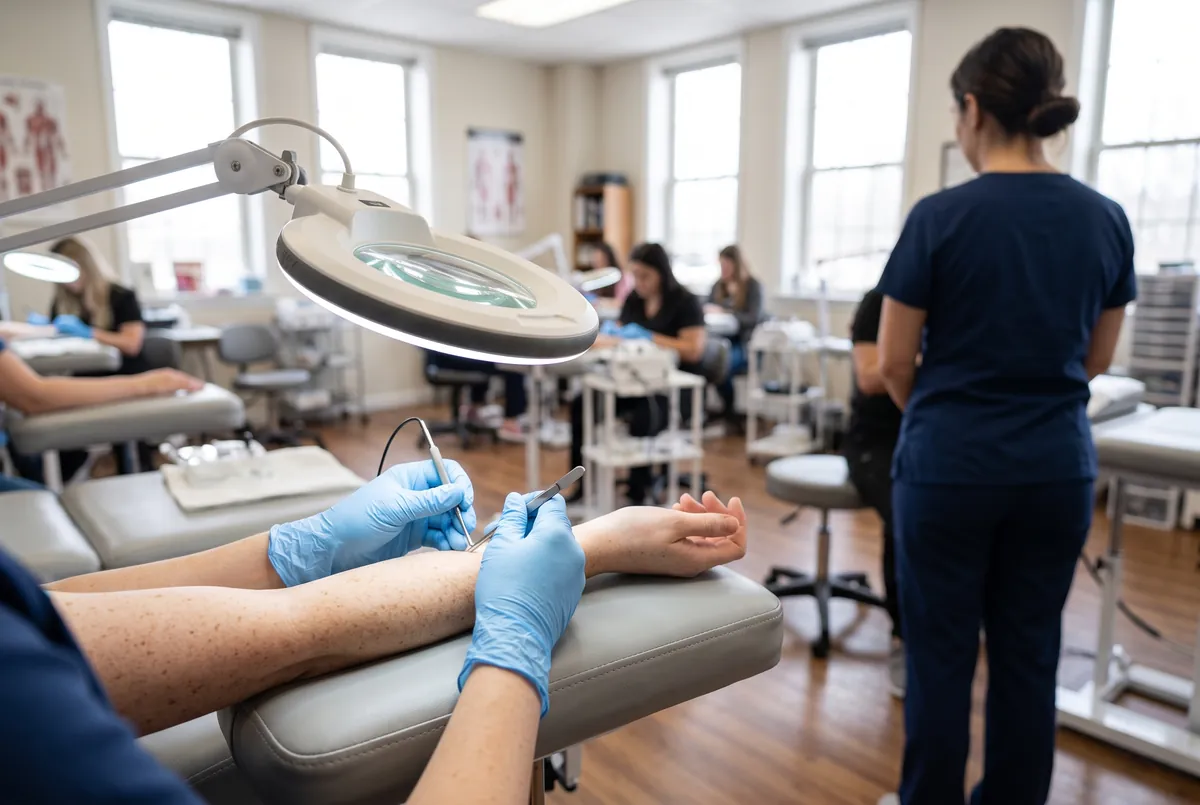
Hands-on training is where the real skill forms. Insertion is a motor skill learned by repetition under supervision: finding the follicle opening, matching the angle of the hair, reaching the right depth, applying current for the right time and releasing the hair without traction. Most students need many supervised hours before their insertions become consistent. States that license electrology set a minimum number of training hours and specify where they must be completed, and those numbers differ significantly between states. Check the requirement for your state on its page in our licensing hub and confirm it with the board.
After training, you prepare for the state's required exam. Formats vary: some states use a written exam, some add a practical, and some accept or require a national exam. Study the areas the exam covers, practice with timed questions, and review sterilization and contraindications carefully, since those areas carry real safety weight. Then you apply for the license with the documentation the state asks for, which often includes proof of training, exam results and fees. Only after the license is issued do you begin treating paying clients.
Estheticians who already work in the industry have a few advantages on this path. They are comfortable with consultations, intake forms and sanitation routines, they already have clients who may want electrolysis, and they understand skin reactions. What they usually lack is insertion skill, knowledge of electricity and modalities, and familiarity with the long treatment plans electrolysis requires. I encourage estheticians not to rush the hands-on stage just because the rest feels familiar. The probe is the new skill, and it deserves full attention.
Where IBEC Certification Fits In
The International Board of Electrologist Certification, known as IBEC, offers a voluntary professional credential for electrologists. It is not a state license, and in most states it does not replace one. Some states, however, reference an IBEC exam in their licensing process, and Florida's page on our site notes an IBEC exam requirement there. For practitioners in unlicensed states, IBEC certification can serve as an independent marker of competence. For licensed practitioners, it is an additional professional credential that some clients and referral partners recognize.
For an esthetician adding electrology, I think of IBEC as optional in most places and useful in some. If your state requires or accepts it as part of licensing, it becomes part of your path automatically. If it does not, consider it after you have your license and some real experience, when the exam will reinforce what you already practice. Eligibility requirements and exam content are set by the certifying body, so check them directly. Our guide on the IBEC certification exam explains what the credential is, who tends to pursue it and how it relates to state licensing.
Be careful with any course that sells a "certification" as though it were a license. Private certificates from a training company show that you completed a course. They can be valuable for learning, but they do not create legal authority to perform electrolysis in a state that licenses electrology. When a program advertises certification, ask whether it is approved by your state, whether its hours count toward your license, and whether graduates become eligible for the state exam. If the answers are vague, the certificate is educational only.

Online Theory and In-Person Hours: What Counts
Many estheticians want to start with online study because it fits around a working schedule. That is a sensible choice for theory. Hair growth biology, modalities, electricity, contraindications, sterilization and client consultation can all be learned well from a structured online program, and arriving at school with that foundation means you spend your in-person hours on the probe instead of on basics. Our online electrolysis course is built for exactly that purpose, and I designed it around what I wish my own students had known before their first supervised insertion.
What online study cannot do is replace the in-person training hours your state requires, or the license itself. Insertion is a physical skill that must be learned on real skin under a qualified instructor, and states that license electrology specify how and where training hours must be completed. Online theory builds understanding; supervised practice builds competence; the license grants legal authority. No online course, including ours, is a shortcut around any of those three. In states without a dedicated license, a thorough online course can form a large part of your professional preparation, but you still need hands-on practice before treating clients.
A practical way to combine the two is to finish the theory before you enroll in or begin the hands-on portion, then review it again during your practical training when the concepts suddenly make more sense. Our guide on whether to start with electrolysis school or online theory first compares the two sequences in detail, including how each one fits different schedules and states.
Business Benefits of Combining Esthetics and Electrolysis
When estheticians do add a properly earned electrology credential, the combination works well as a business. The two services support each other. Facial clients often mention stray chin hairs or upper lip hair that keeps coming back after waxing, and an esthetician who is also an electrologist can offer a permanent solution without sending the client elsewhere. Electrolysis clients, in turn, often want skin care between sessions, especially on the face, and a dual licensed practitioner can provide both with a consistent plan.
Electrolysis also brings a different kind of client relationship. Because treatment plans run over months, electrolysis clients return regularly, and that predictability helps with scheduling and planning. Many of these clients are highly motivated, including people managing hormonal hair growth, clients with gray or light hair who could not get results from laser, and transgender clients pursuing facial hair removal. They tend to value expertise, privacy and a practitioner who listens. An esthetician who already offers a calm, clean treatment room is well placed to serve them.
There are also realistic limits to plan around. Electrolysis equipment, sterilization supplies and single use probes are an investment, and building an electrolysis clientele takes time. Pricing is usually by time rather than by area, which requires clear communication so clients understand why plans differ. Some practitioners find the long, focused sessions tiring at first. I suggest starting electrolysis with existing clients who already trust you, keeping careful records of each session, and building your schedule gradually instead of converting your whole menu at once.
Marketing needs care too. In a licensing state, advertise electrolysis only after you hold the license, and use accurate language about what electrolysis can do. Avoid promises about a fixed number of sessions, since the number depends on hair type, area, hormones and how consistently the client returns. Explain that electrolysis is the method the FDA accepts for permanent hair removal claims, and that permanence is achieved follicle by follicle over a full treatment plan. Honest expectations lead to satisfied clients who stay through the plan and send their friends.

Safety, Insurance and Legal Risk
Performing electrolysis without the required license exposes an esthetician to several kinds of risk at once. The first is regulatory: boards can discipline license holders for practicing outside their scope, and consequences can include fines, probation or action against the esthetics license you worked hard to earn. The second is financial: professional liability policies usually cover services within your licensed scope, and an insurer may deny a claim that arises from a service you were not authorized to perform. The third is the client's health, which matters most of all.
Safe electrolysis rests on a few pillars. Sterile single use probes and proper sterilization of reusable items, correct hand hygiene and gloves, an intake that screens for contraindications, a patch test when appropriate, conservative settings on new clients and new areas, and clear aftercare instructions. You also need to know when not to treat. Signs of infection, a changing mole in the treatment area, unexplained sudden hair growth or a medical condition you do not understand are reasons to pause and suggest the client see a physician or dermatologist. Electrologists do not diagnose, and sudden hair growth in particular can have medical causes that deserve evaluation.
Insurance deserves a direct conversation. Before your first electrolysis client, call your insurer and ask whether electrolysis is covered under your policy, what credential they require, and whether your state's rules affect coverage. Some policies written for estheticians exclude electrolysis entirely; others cover it only for licensed electrologists. Get the answer in writing. If you work in a spa or medical practice, confirm how the employer's coverage applies and whether your own policy is still needed.
Finally, protect yourself with documentation. Keep intake forms, consent forms, treatment records with settings and areas treated, and aftercare instructions for every client. Record reactions and how you handled them. Good records help you adjust treatment plans, answer client questions accurately and respond to any complaint calmly and factually. They are also a habit that boards and insurers expect from licensed practitioners.
Over the years I have heard the same misunderstandings again and again. Clients often assume that anyone who does waxing can also do electrolysis, and they may book with a spa that advertises "hair removal" without asking which methods and credentials are involved. New estheticians sometimes believe that a weekend workshop certificate plus an esthetics license adds up to legal authority. Spa owners occasionally assume that their establishment license covers every service a staff member learns. None of these assumptions hold in states that license electrology separately.
Another frequent mistake is buying equipment before checking the law. An esthetician sees a machine advertised, buys it, takes a short course and only then discovers that the state requires a separate license with training through an approved program. The equipment then sits unused for months. Research the rules first, choose training that counts toward your state's requirements, and only then decide on equipment, ideally with guidance from your instructor about which modalities suit the work you plan to do.
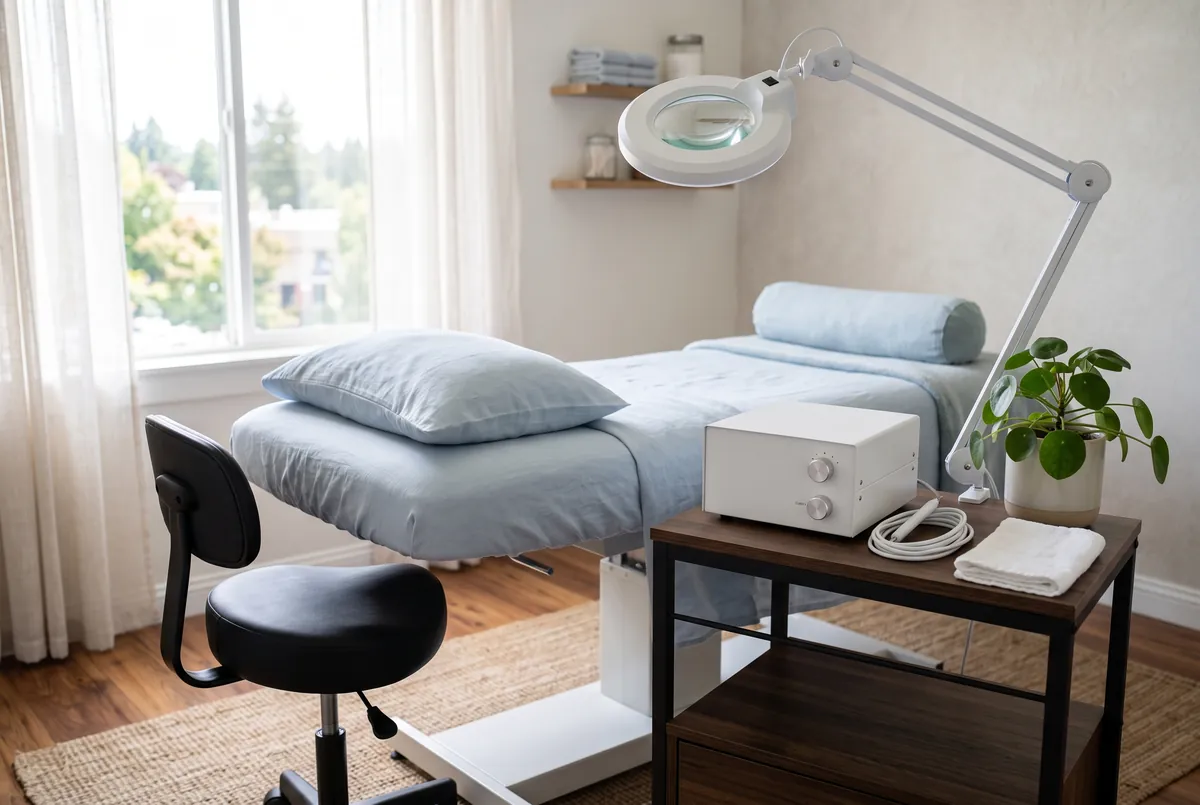
A quieter mistake is underestimating how different the work feels. Estheticians used to varied, shorter services sometimes find that long electrolysis sessions under magnification require new stamina and posture habits. Set up your treatment room with an adjustable chair and stool, a good magnifying lamp, and a bed at the right height. Take short breaks between clients. These details keep your hands steady and your back healthy, which directly affects the quality of your insertions over a career.
Your Next Step
If you are an esthetician wondering whether you can offer electrolysis, start with your state. Look it up on our electrolysis licensing hub, read the electrology rules from the official agency, and confirm anything unclear in writing. If your state licenses electrology separately, plan for approved training, the required in-person hours, the exam and the license, and build your theory foundation early so that your hands-on time goes further. If your state does not license electrology, train to the standard of a licensed state anyway, because your clients deserve it and your future career may take you across state lines. Either way, the combination of esthetics and electrolysis, earned properly, is one of the most rewarding paths in this field.
State Requirements
State licensing guides
Hours, exams, fees, and the licensing board differ by state. Open your state for the current requirements.
Looking for a practitioner or a program near you? Browse electrologists by state and city or beauty schools by state.
Common Questions
FAQ
In states that license electrology separately, no. An esthetics license covers skin care and usually temporary hair removal such as waxing, while electrolysis requires an electrology or electrolysis license. California, for example, states that estheticians and cosmetologists may not perform electrolysis. A few states do not issue a dedicated electrolysis license, and local rules still apply there. Check your state on our electrolysis licensing hub and confirm with the official agency.
Usually it is. Where states regulate electrolysis, they typically issue a distinct electrologist or electrolysis license with its own training, exam and renewal requirements, sometimes through a different agency than the one that licenses estheticians. Many practitioners who offer both services are dual licensed, holding an esthetics license and an electrology license side by side and renewing each one on its own schedule.
Generally not on a cosmetology license alone in states that license electrology. A cosmetology license is broad, but electrolysis is usually defined as its own scope. Some states require a cosmetology or esthetics license before electrology training, yet the cosmetologist still needs to complete that training and earn the electrology credential. Read your state's electrology rules first, since they define who may perform the service.
An esthetician provides skin care such as facials, exfoliation and usually waxing, with a broad menu of shorter services. An electrologist specializes in permanent hair removal with a fine probe and electric current, treating one follicle at a time over a plan of many sessions. The licenses, exams and training differ, though skin science and sanitation overlap. Many practitioners, including me, hold both.
It depends on your state's required training hours, how the program schedules them, and exam and application timing. Required hours vary widely between states, so any single number would mislead you. Check your state's page on our licensing hub, confirm with the board, and ask schools how they structure the hours. Studying theory online first, for example with our electrolysis course, can make the in-person portion more productive.
You can learn the theory online, and that is a smart way to begin. You cannot replace the supervised in-person hours or the license your state requires. Insertion is a physical skill learned on real skin under a qualified instructor, and states that license electrology set how and where those hours are completed. In states without a license, you still need hands-on practice before treating anyone.
In most states, IBEC certification is voluntary and does not replace a state license. Some states reference an IBEC exam as part of their licensing process, so check your state's rules. In states without a dedicated license, IBEC certification can show clients and referral partners that you meet a recognized professional standard. Eligibility and exam content are set by the certifying body, so check them directly.
In states that license electrology, it can be treated as unlicensed practice or practice outside scope. Consequences may include fines and disciplinary action against the esthetics license, and a liability insurer may deny coverage for a claim. The client also faces real risk of burns, scarring or infection from untrained technique. Earn the required credential first, and confirm coverage with your insurer before your first electrolysis client.
Keep Reading
Related Guides


