Career
How to Become a Licensed Esthetician: Complete Career Guide
Quick answer
To become a licensed esthetician, complete a state-approved training program, pass a licensing exam with written and practical parts, apply for your license, and then choose where to practice. Hours, exam format, and renewal rules vary by state. Full-time students often finish training in a few months, part-time students closer to a year, and most states require in-person hours.
Deciding to become an esthetician usually starts with one honest question: is this a real career, or just a certificate people hang on a wall and never use. Having trained beauty professionals for two decades and watched this industry from the inside, I can tell you it is a real career, but only if you go in with accurate expectations about the training, the exam, the cost, and what the first year actually looks like once you are licensed. This guide walks through the entire path the way I would explain it to someone sitting across from me, not the polished version you get from a school's marketing page.
Esthetics sits at the intersection of skincare science and hands-on service work. It is licensed at the state level, which means the exact hours, exam format, and renewal rules differ depending on where you live. What does not change from state to state is the basic shape of the path: complete a state-approved training program, pass a licensing exam that tests both knowledge and hands-on skill, apply for your license, and then choose where you want to practice. This article covers that path in detail, along with realistic timelines, costs, and the career options that open up once you are licensed.
What an Esthetician Actually Does Day to Day
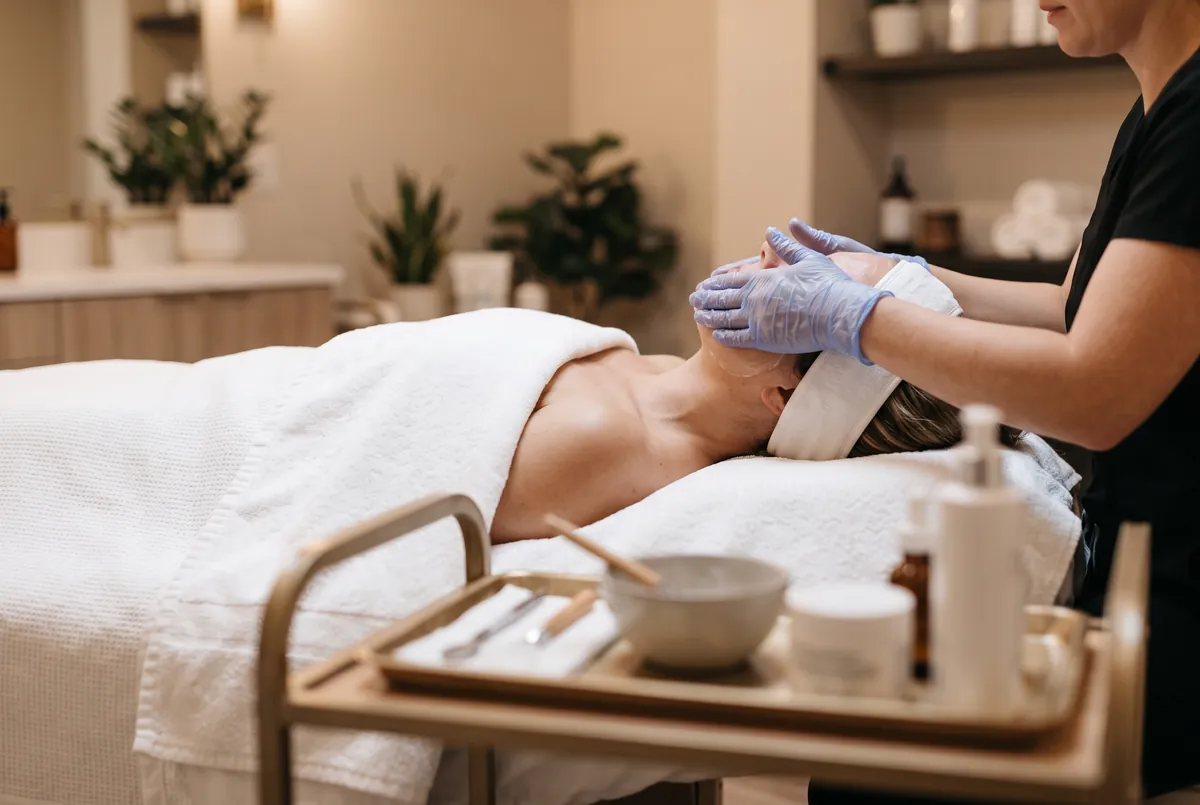
An esthetician's scope of practice is narrower than a cosmetologist's and focused almost entirely on skin. Depending on the state and the setting, a typical day can include facials, chemical exfoliation and peels within the license's approved depth, extractions, microdermabrasion, waxing, lash and brow tinting, and skincare consultations that lead into product recommendations and treatment plans. In a medical setting, an esthetician often works alongside a physician, nurse practitioner, or dermatologist, handling the pre and post care around procedures the license itself does not cover, like injectables or laser work, which stay with the supervising provider.
The job is part technical skill and part client relationship. You are reading skin condition, adjusting a treatment plan on the fly, and building the kind of trust that brings someone back every four to six weeks for years. New estheticians are sometimes surprised by how much of the job is communication: explaining why a client's skin is reacting a certain way, setting realistic expectations about how many sessions a concern will take to improve, and knowing when to refer someone to a dermatologist instead of treating something cosmetically. If you want the deeper distinction between this license and the broader cosmetology license, our guide on the difference between a cosmetologist and an esthetician breaks down exactly where the scopes overlap and where they diverge.
Estheticians also carry real responsibility around safety. Skin has contraindications, conditions or medications that make a treatment inappropriate or risky, and a good program spends real time on this rather than rushing straight to technique. Screening a client properly before a chemical peel or an aggressive extraction session is not a formality, it is part of the actual skill of the job.
Is Esthetics a Good Fit for You? An Honest Self-Check
Before you look at a single school, it helps to be honest about the parts of the job nobody puts in the brochure. Esthetics is physical work. You spend most of a shift standing or leaning over a treatment bed, your hands repeat the same motions for hours, and your posture decides whether your back and wrists still feel fine years from now. The work is also close. You are inches from a client's face, touching skin that is often the thing they feel most self-conscious about, so warmth and discretion matter as much as technique. Schedules tend to follow client demand, which means evenings and weekends are often the busiest hours, especially early in a career.
There is a business side too. In many settings a meaningful part of an esthetician's income comes from rebooking clients and recommending home care products, and people who dislike any kind of recommendation conversation sometimes struggle with that part. On the other hand, if you enjoy science, like watching a skin concern improve over months, pay attention to small details like sanitation and timing, and have the patience to build a client list slowly, esthetics tends to reward exactly those traits. None of these are requirements you must meet before enrolling. They are simply the daily realities worth weighing against what you imagine the job to be.
The Real Step-by-Step Path to Licensure
Here is the path stripped of marketing language, in the order it actually happens. The details inside each step change from state to state, but the sequence itself is remarkably consistent, and knowing it in advance helps you spot a school or course that is skipping a step or promising something your state board will not accept for licensing, now or later.
- Check your state's specific requirements first. Every state licensing board sets its own required training hours, minimum age, education prerequisites, and exam format. Requirements vary by state, typically several hundred hours of state-approved training, but the exact number, the minimum age to enroll, and whether a high school diploma or GED is required all depend on where you live and plan to work. Our esthetics licensing by state hub lists the specific board and requirement page for every state we cover, so you are working from your actual state's rules rather than a national average.
- Enroll in a state-approved esthetics program. This can be a dedicated esthetics school, a cosmetology school with an esthetics track, or in some states a community college program. The program has to be approved by your state board specifically, not just accredited in a general sense, or the hours will not count toward your license.
- Complete your required training hours. This includes theory, science, and safety instruction along with supervised hands-on practice on real skin. Full-time programs usually run several months, part-time and evening programs longer. Some states also allow an apprenticeship path under a licensed supervisor instead of, or alongside, classroom hours, so ask your board what alternatives exist.
- Register for and pass the state licensing exam. Most states use a two-part exam, a written portion covering theory, science, sanitation, and safety, and a practical portion where you demonstrate actual skills like a facial or extraction technique in front of an evaluator, sometimes on a live model. A number of states use a standardized exam administered by a national testing body while others run their own version, so confirm the format with your board before you schedule.
- Submit your license application. Once you pass, you file paperwork with your state board, pay the licensing fee, and provide proof of your completed hours and exam results. Processing time varies by state and by season, application volume tends to spike right after school graduation cycles.
- Choose where you will practice. With license in hand, you can go to work in a spa, a medspa, a dermatology office, a skincare studio, or eventually build an independent client base of your own.
The one step people most often try to skip or shortcut is step one, actually reading their specific state's requirements before enrolling anywhere. It is worth doing before you spend a dollar on tuition. Some boards also ask about criminal history or require a background check as part of the application, so if anything in your history or your paperwork is unclear, contact the board directly, ask your question in writing, and keep a copy of the answer.
What You Actually Study in Esthetics School
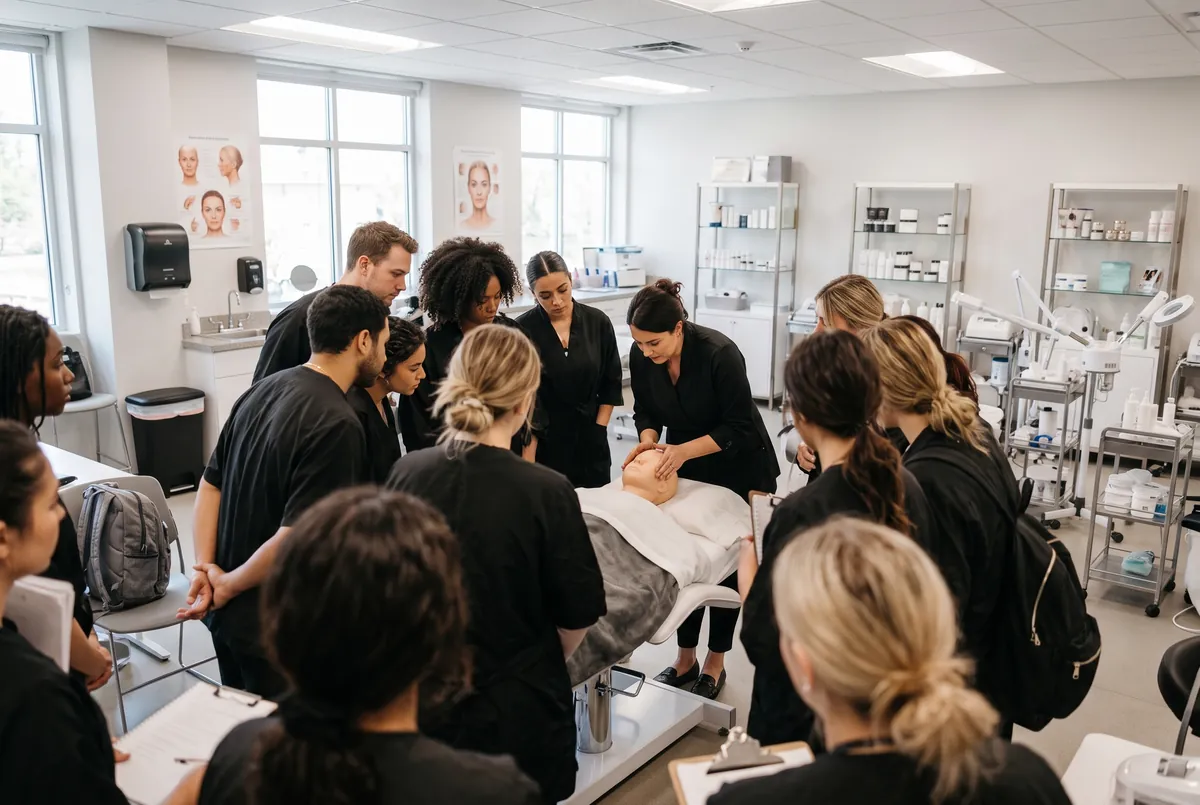
School catalogs describe the curriculum in broad terms, so here is what the hours usually cover in practice. The exact mix, and how many hours go to each area, is set by your state board, but most approved programs build around the same core subjects, split between classroom theory and practical work on mannequins, on classmates, and eventually on real clients in a supervised student clinic.
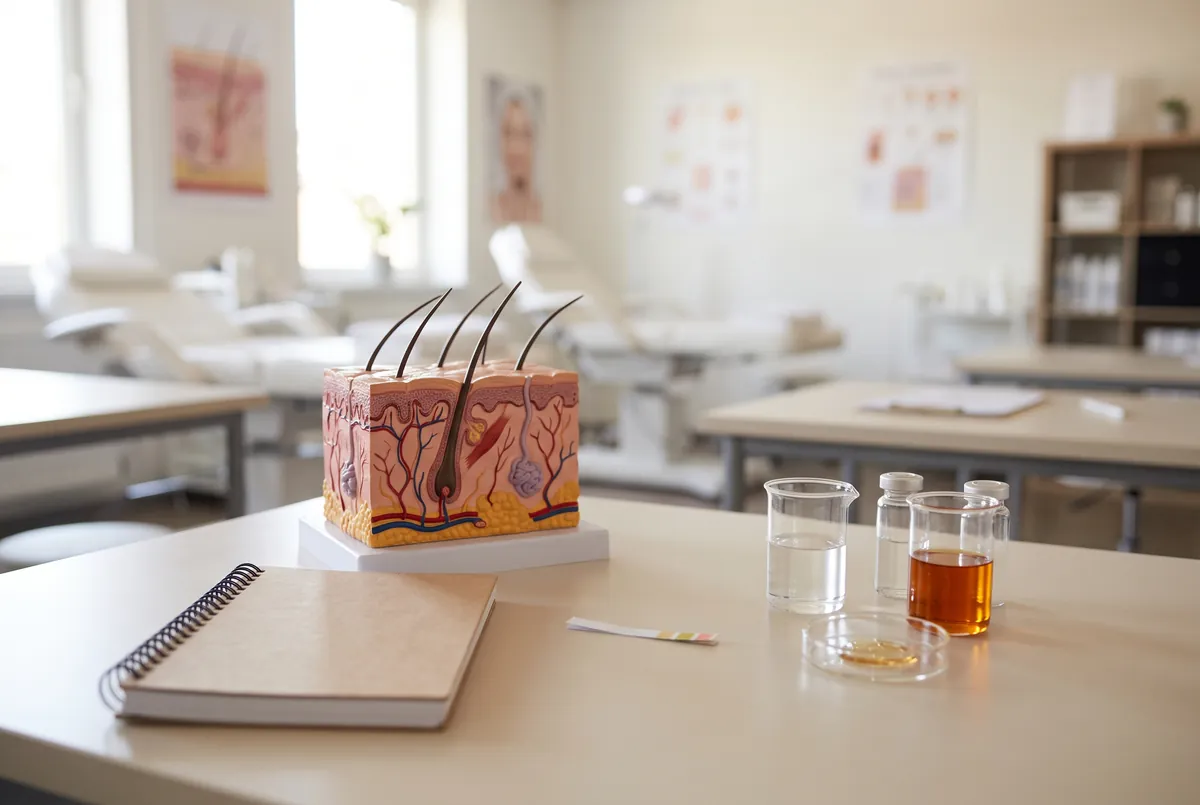
- Skin anatomy and physiology. The layers of the skin, how cells renew, how oil and sweat glands work, and how skin changes with age, sun exposure, and hormones. Every treatment decision rests on this.
- Skin disorders and conditions. Recognizing acne types, rosacea, pigmentation concerns, and lesions that need a physician's eye. The goal is recognition and referral, never diagnosis.
- Infection control and sanitation. Cleaning, disinfection, single-use items, and the state rules you will be tested on. Students often underestimate how much of the exam this area touches.
- Chemistry and product ingredients. pH, exfoliating acids, and how to read an ingredient list so you can match products to skin instead of guessing.
- Facial treatments and massage. The full facial sequence, extractions, masks, and massage movements, practiced until the order becomes second nature.
- Devices and electrical safety. Basic electricity and the devices your state allows within the esthetics scope, such as steamers and high frequency units.
- Hair removal and tinting. Waxing and tweezing, and in many states lash and brow tinting.
- Consultation and makeup. Intake forms, contraindication screening, treatment planning, and basic makeup application.
- State law and business basics. Scope of practice, license rules, record keeping, and the fundamentals of retail and client retention.
Two areas deserve more attention than students usually give them. The first is contraindications, because knowing when not to perform a peel or an extraction is what keeps clients safe once nobody is supervising you. The second is the student clinic. Those supervised hours on real clients, with real skin concerns and real appointment times, are where technique starts turning into judgment. If a program offers extra clinic floor time, take it, even when it feels repetitive, because that repetition is exactly what makes your first paid appointments feel familiar.
How Long It Realistically Takes
Timelines depend heavily on your state's required hours and whether you attend full-time or part-time. A full-time student can often finish the training portion in a few months, while someone attending evenings and weekends around a job should expect closer to a year. Add time on either end for enrollment and orientation before class starts, and for exam scheduling and application processing after you finish, since testing dates are not always immediately available and processing backlogs happen.
A realistic total timeline, from the day you enroll to the day you hold an active license, usually falls somewhere between several months and just over a year depending on your state and your schedule. If anyone promises you a guaranteed number of weeks regardless of state, that is a sales pitch, not a fact, since your state board sets the floor on hours and no school can shrink that requirement.
Something worth planning for that most guides skip: finishing your hours and passing your exam is not the same as feeling confident with real paying clients. Give yourself a few extra weeks after licensure to build speed and comfort on actual skin types and concerns beyond what you practiced on in school, ideally at a job or under a mentor who reviews your work rather than jumping straight into fully independent practice.
What It Actually Costs
Cost is one of the areas where I will not give you an invented number, because it varies too much to be useful as a single figure. Tuition depends on the school, the state, whether the program is a dedicated esthetics track or bundled into a longer cosmetology program, and whether you attend a private beauty school or a public community college. On top of tuition, budget for a kit of required tools and products, textbooks, the state exam fee, the license application fee, and often liability insurance once you start practicing. Some states also charge a separate fee for fingerprinting or a background check as part of licensing.
A community college route is generally the more budget-friendly option where it is available, while private beauty schools tend to run higher but sometimes offer faster scheduling or evening tracks that fit around a job. Ask any program directly for its full cost breakdown, including hidden fees for kits, retesting if you do not pass the exam on the first attempt, and any late program fees, before you sign anything. Financial aid, payment plans, and in some cases workforce development grants are available at many schools, so it is worth asking what a program offers before assuming tuition has to be paid up front.
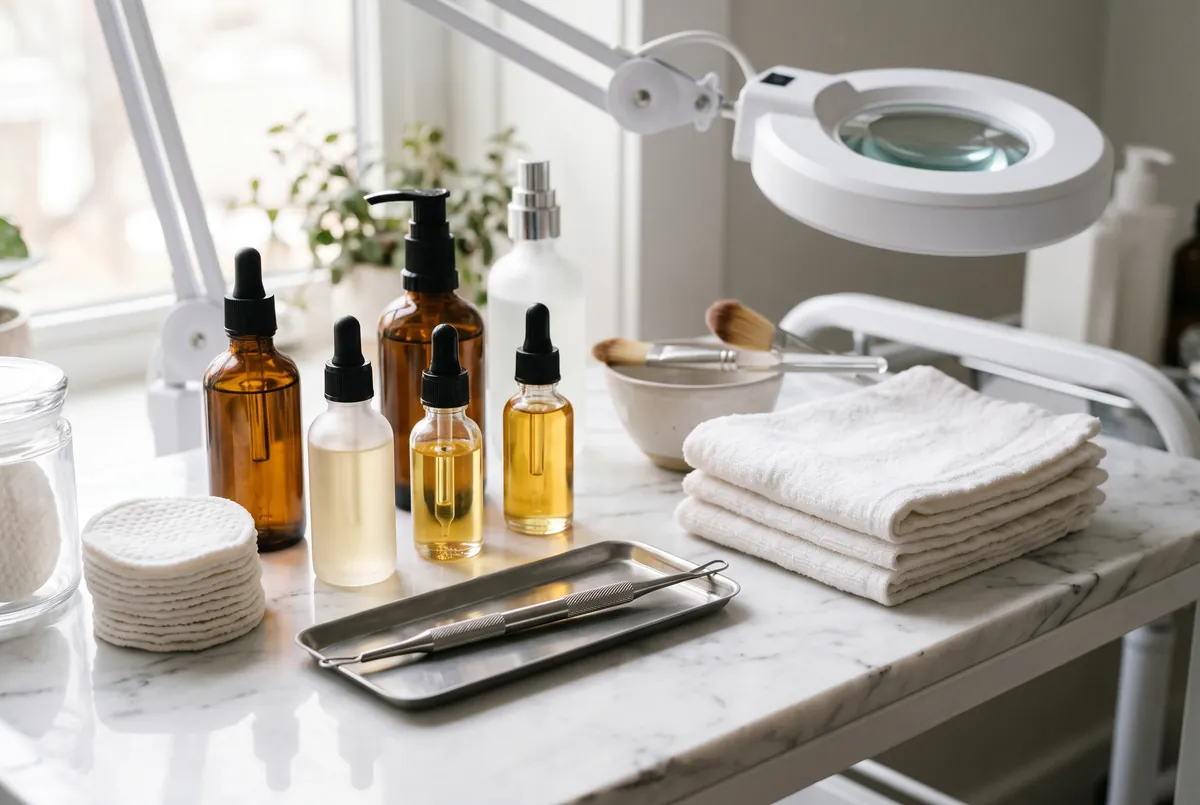
Choosing a Program: In Person, Online, or a Combination
Almost every state that licenses estheticians requires supervised hands-on training hours completed in person, because the exam includes a practical demonstration that no amount of video watching can prepare you for on its own. This matters because it shapes what an honest program can and cannot promise you. If a school or course claims you can become a fully licensed esthetician with zero in-person hours, in a state that requires them, that claim is not accurate and you should walk away.
Where online coursework genuinely helps is on the theory side. A strong online esthetics course, like the one we offer at our esthetics course, can carry you through anatomy, skin science, sanitation, product chemistry, and safety protocols on your own schedule, at your own pace, before or alongside your in-person hours. That preparation tends to make the hands-on portion of training go faster and land better, since you are not learning the theory and the technique at the same moment under time pressure. What it does not do, and what we are direct about, is replace the required in-person hours themselves in a state that mandates them. Think of a solid online theory course as the foundation you build before stepping into a treatment room, not a substitute for stepping into one at all.
When you are comparing in-person schools, look past the glossy brochure and ask about class sizes, how much one-on-one instructor time you actually get during hands-on hours, what the pass rate on the state exam has been for recent graduates, and whether the school helps with job placement afterward. Our school finder lists real programs by location if you are trying to compare options near you rather than starting from a generic search.
- Approval: is this exact program approved by my state board, and how are my hours documented if I ever need to prove them to another state?
- Full cost: what does the price include, and what costs extra, such as kit replacements, exam fees, or retake fees?
- Real clients: how much of the hands-on time happens on real clients rather than mannequins?
- Missed hours: how are missed hours made up, and is there a deadline to finish?
- Exam support: what does the school do for students who do not pass the practical exam the first time?
If you are torn between the esthetics license and the broader cosmetology license because you are drawn to skin work but also curious about hair and nails, our guide on cosmetologist versus esthetician is worth reading before you commit to a program, since switching tracks mid-training usually costs you time and money. And if online learning as a concept is new to you and you want to understand how it actually works day to day before enrolling in anything, our explainer on how online cosmetology training works covers the same mechanics that apply to esthetics theory courses.

The State Exam: Written and Practical
The licensing exam is the part that makes most students genuinely nervous, and it deserves real preparation. The written portion typically covers skin anatomy and physiology, product ingredients and chemistry, sanitation and infection control, and state-specific laws and safety regulations. Most schools build practice tests into the curriculum for exactly this reason, and it is worth taking every practice exam seriously rather than treating it as busywork.
The practical portion is where nerves matter most. You will typically demonstrate a facial treatment, sanitation setup, and sometimes an additional procedure like waxing or extraction, in front of a live evaluator, occasionally on a live model. Evaluators are grading against a checklist, not general impressions, so the fastest way to prepare is to practice the exact sequence and setup your specific exam format requires, not just general technique. Ask your instructor for the actual scoring rubric if your program does not hand it out automatically, and run through the full sequence, start to finish, enough times that it feels close to automatic before exam day.
- Get the candidate handbook early. Your board or its testing provider publishes the exam content outline, the supply list, and the rules for exam day. Read it months ahead, not the week before.
- Pack your kit exactly to the list. Missing or unapproved items can cost you points or keep you from testing, so label containers if your state requires it.
- Rehearse with a timer. Practical sections are usually timed, so practice the full sequence at exam pace, including setup and cleanup.
- Confirm the model rules. If your state requires a live model, check the eligibility rules and have a backup person ready.
- Study the written exam by topic. Use the content outline to find weak areas, which are often sanitation rules and state law rather than technique.
- Plan the day itself. Know the testing location, the identification you need, and the arrival time, so the exam is the only thing on your mind.
If you do not pass on the first attempt, most states allow a retake after a waiting period, sometimes for an additional fee. It happens, it is not a sign you should give up, and most programs will help you figure out specifically what to work on before you go back in. Ask for the score report or evaluator notes if your state provides them, since they usually show exactly which section cost you points.
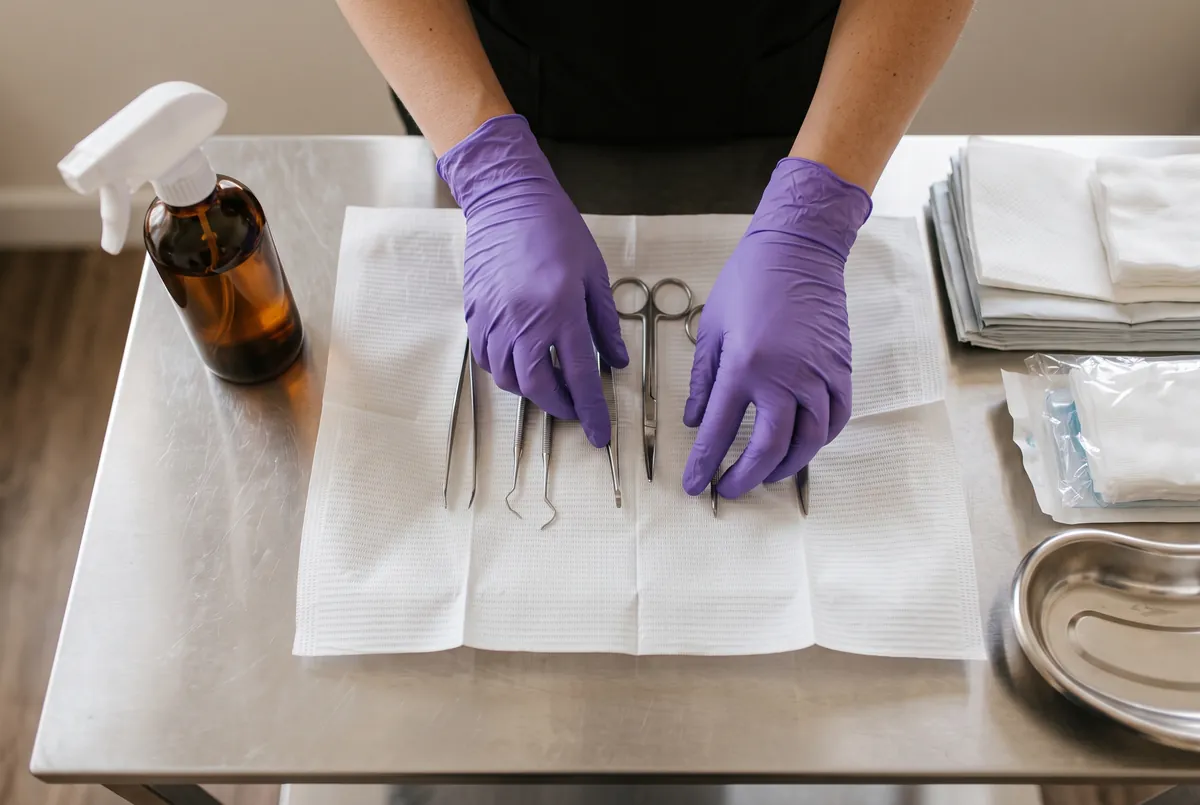
Specializations and Career Paths After Licensure
A fresh esthetics license is a starting point, not the finish line, and the range of paths from there is wider than most people expect going in. Most new estheticians start in one of the settings below, learn what kind of work and clients they enjoy most, and then move toward a specialty over the next few years rather than choosing one on the first day.
- Day spa or skincare studio. The most common first job, offering steady client volume and a chance to build speed and confidence across a wide range of skin types before specializing further.
- Medspa work. Estheticians in medical spa settings often handle pre and post care around laser, injectable, and other device-based treatments performed by a supervising physician, nurse practitioner, or physician assistant. This setting usually pays a premium over a traditional spa but often expects additional employer-provided training on top of the base license.
- Dermatology or plastic surgery office esthetics. Working alongside medical providers on pre and post procedure skincare, often with a more clinical, results-driven client base.
- Waxing as an add-on service. Many estheticians build a waxing menu alongside facials, since the two services complement each other well for client retention and scheduling. Our guide on cosmetology versus esthetics for waxing work covers which license path fits if waxing is your main interest.
- Product specialist or brand educator. Some licensed estheticians move toward skincare brand education, training other professionals or retail staff on product lines rather than performing treatments full time.
- Independent practice. After building experience and a client base, many estheticians eventually rent a suite or open their own studio, taking on the business side, pricing, scheduling, marketing, along with the technical work.
Adjacent licenses can also expand what you offer. Some estheticians later add a cosmetology license to broaden their service menu, or pursue electrology training if permanent hair removal interests them, since the two skills complement each other well in a skincare-focused practice. If you are exploring the broader cosmetology track, our cosmetology course covers that path. Each additional license has its own training and exam requirements, so treat it as a separate goal rather than an add-on.
It is also worth knowing that a few states license a second, more advanced tier, often called a master esthetician license, which requires additional training and allows a broader scope for certain advanced treatments. Separately, the phrase medical esthetician is widely used for estheticians who work in dermatology offices and medspas, although in most states it describes a work setting rather than a separate license. If that direction appeals to you, our guide on what a medical esthetician actually is explains how the title works and what extra training employers tend to look for.

Job Outlook: Where Demand Is Actually Growing
The general trend in this field over the past several years has been steady, real growth, driven by a few clear forces rather than a fad. Medspas have opened at a fast pace across the country, aging demographics have pushed sustained demand for anti-aging and corrective skincare, and younger consumers have normalized regular preventive skincare in a way that did not exist at the same scale a decade ago. Industry trend reports have generally described skincare specialist employment as growing faster than the average for all occupations over the coming years, which lines up with what we see anecdotally in how quickly medspas and skincare studios are hiring in most metro areas.
Pay varies enormously by setting, location, and how much of your income comes from service versus retail commission or tips, which is exactly why we are not going to hand you a single invented number here. What we can say honestly is that estheticians who build technical range, add specialty certifications over time, and move from high-volume chain settings toward medical or boutique environments tend to see meaningfully better long-term earning potential than those who stay in a single entry-level role. Client retention and repeat bookings matter more to your actual income than almost anything else, since skincare is a relationship business, and a strong esthetician with loyal returning clients will consistently outearn a technically identical one who has to constantly find new business.
For a first job, look beyond the obvious listings. Dermatology practices, plastic surgery offices, and medspas sometimes hire newly licensed estheticians into junior roles where the on-the-job training is excellent, while day spas and skincare studios usually offer the most client volume. Some estheticians start part time in one setting while building a small base of their own clients on the side, where their license and local rules allow it. Whichever route you take, choose the place where someone experienced will actually watch your work and give you honest feedback during the first months.
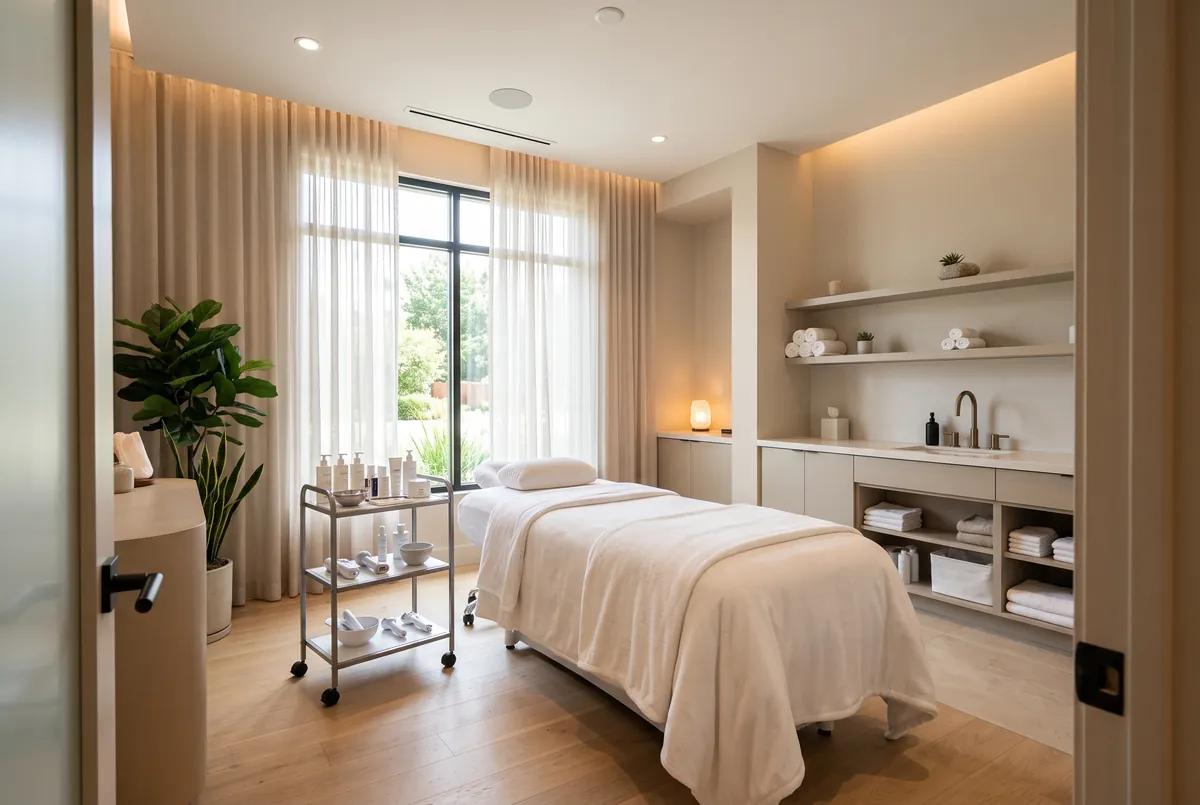
Your First Year as a Licensed Esthetician
The first year after licensure is when most of the real learning happens, and it rarely looks like school. Clients arrive with combinations of concerns you never saw in the student clinic, schedules run late, and you will be tempted to say yes to every service to fill your book. Protect yourself early. Carry professional liability insurance, whether your employer covers you or you buy your own policy, and read exactly what it covers before you add anything new to your menu. Keep a written intake form and treatment notes for every client, including the products used and how the skin responded, because those notes are how you plan the next visit and how you protect yourself if a reaction ever happens.
Pay structure deserves a clear look before you accept a position. Some settings pay hourly, some pay commission on services and retail, some combine the two, and booth or suite rental puts you in charge of your own pricing and costs. Each one rewards different habits. In commission settings, rebooking at checkout and honest home care recommendations have a direct effect on your income. In rental arrangements, marketing, scheduling, and bookkeeping become part of your workweek, which is a very different job from performing treatments alone.
Finally, build speed without rushing. Treatments that felt comfortable at student pace will need to fit a real appointment length, and speed comes from repetition, not from skipping steps. Ask a senior colleague to watch a full treatment during your first months and tell you where the time goes. Photograph your own setup and workflow now and then, and take skin photos only with written client consent, so you can see how your technique changes over the year. The estheticians I have seen build the strongest careers treated this year as an extension of their training rather than proof that training was over.
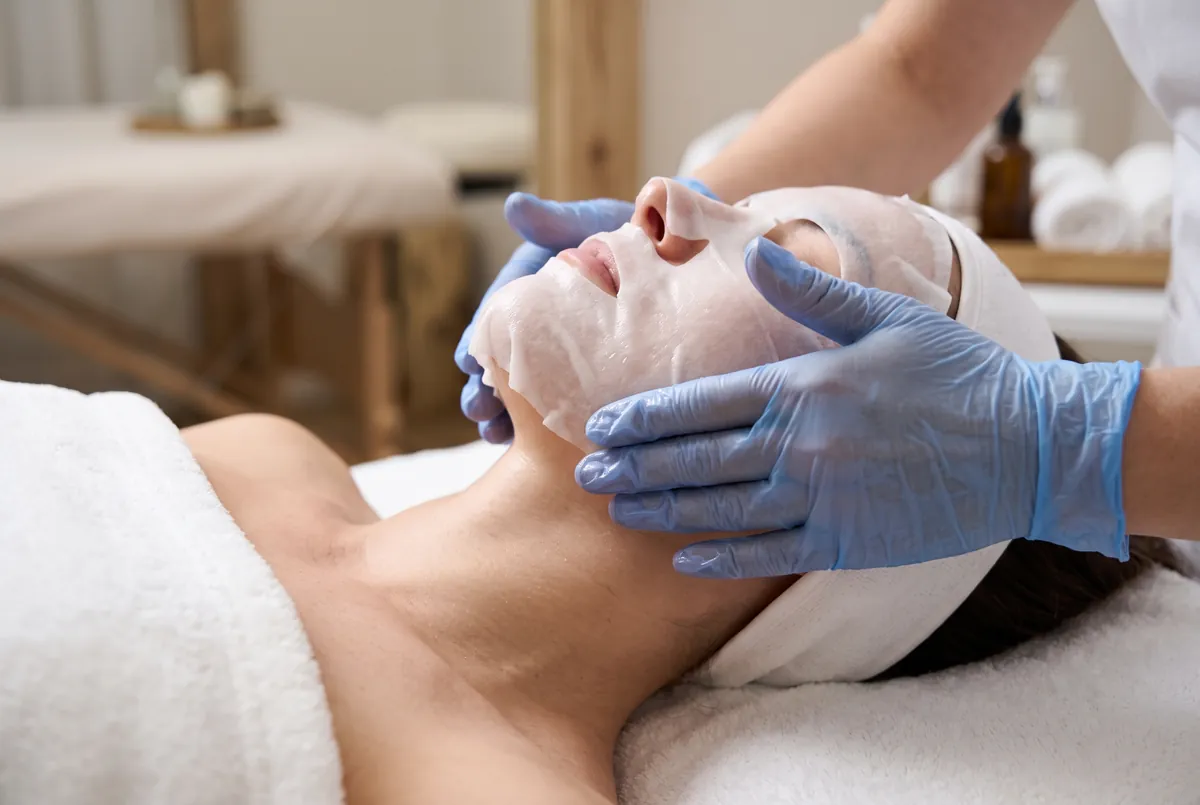
License Renewal, Continuing Education, and Moving States
An esthetics license is not a one-time document. Most states require renewal on a regular cycle, and many attach continuing education requirements to that renewal, sometimes with specific topics such as infection control or state law. The cycle length, the fee, and the hours all vary by state, and some states have no continuing education requirement at all, so check your own board's renewal page the week your license arrives and put the deadline on your calendar. Letting a license lapse can mean late fees, and in some states a license that stays expired long enough has to be reinstated through a longer process.
Moving is the other situation that catches estheticians off guard. There is no single national esthetics license, so a license from one state does not automatically let you work in another. Many states offer licensure by endorsement or reciprocity for applicants who already hold an active license, but the conditions differ: some want proof that your original training hours meet their minimum, some require their own law exam, and some ask for verification sent directly from your original board. If a move is even a possibility, keep copies of your transcript, your hour records, and your exam results somewhere safe.
Common Mistakes New Estheticians Make
After watching students and new graduates for two decades, the same handful of mistakes come up again and again, and most are avoidable if you know to watch for them. None of them are about talent. They come from rushing decisions, skipping research, or assuming the license itself guarantees a steady book of clients. Read them as a checklist before you enroll and again after you pass the exam.
The first is choosing a school based purely on price or location without checking its actual exam pass rate or asking recent graduates how prepared they felt. The second is treating the licensing exam as an afterthought instead of practicing the exact practical sequence your state's exam requires, start to finish, until it feels automatic. The third is jumping into a full client schedule immediately after licensure without giving yourself a short runway to build speed and confidence, which tends to produce more stress and lower quality work than pacing yourself for the first few weeks. The fourth is skipping continuing education once licensed, treating the license as a finish line rather than the floor it actually is, when the estheticians who keep learning new techniques and certifications are consistently the ones whose income grows fastest.
The fifth, and the one I see cost people the most money, is not reading their own state's specific requirements before enrolling anywhere, and instead assuming a friend's experience in a different state applies to them. It almost never does. Always start from your own state board's page, which you can find through our esthetics licensing hub, before comparing schools.

Where to Go From Here
Becoming a licensed esthetician is a real, achievable career path, but it rewards people who go in with accurate information rather than a shortcut mindset. Check your specific state's requirements first, choose a training program that is honest with you about hands-on hours rather than promising something no program can legally deliver, and treat the licensing exam as something worth genuinely preparing for rather than a formality. Once you are licensed, the career opens into a wide range of settings, from day spas to medspas to eventually your own studio, and the professionals who keep learning after licensure are consistently the ones who build the strongest, most sustainable careers.
If you want to start building your theory foundation now, our esthetics course is a solid place to begin studying skin science, sanitation, and product knowledge before or alongside your in-person training hours. When you are ready to check the specific requirements where you live, our esthetics licensing by state hub has the real, current information for your state, and our school finder can help you compare in-person programs near you.
State Requirements
State licensing guides
Hours, exams, fees, and the licensing board differ by state. Open your state for the current requirements.
Common Questions
FAQ
It depends on your state's required training hours and whether you study full-time or part-time. Full-time students often finish training in a few months, while part-time students should expect closer to a year. Add time for exam scheduling and license application processing on top of the training itself. Check your specific state's requirements through our licensing hub for an accurate estimate.
No, not in states that require supervised in-person training hours, which is most states, because the practical portion of the licensing exam tests hands-on skills that cannot be demonstrated through video alone. Online coursework can effectively cover the theory portion of your training, but it does not replace the required in-person hours where your state mandates them.
A cosmetologist trains broadly across hair, skin, and nails, while an esthetician's license is narrower and focused specifically on skin. Our full guide on the difference between the two covers exactly where the scopes overlap and diverge. If skin is your main interest, the esthetics license is usually the more focused and faster path.
Yes, in most states. Renewal typically happens on a set schedule and often requires completing a certain number of continuing education hours. Requirements vary by state, so check with your specific state board rather than assuming a general timeline applies to you.
Generally not on their own. A standard esthetics license does not cover device-based treatments like laser or injectables. In medical settings, estheticians often support these procedures with pre and post care, while the procedure itself stays with a supervising physician, nurse practitioner, or physician assistant, depending on state rules.
Yes, it is one of the more common paths into independent beauty business ownership, since many estheticians eventually rent a treatment suite or open a studio after building experience and a client base. Our guide on business structure for independent beauty professionals is a useful next read once you are licensed and thinking about going independent.
Keep Reading
Related Guides


