Career
How to Become a Laser Hair Removal Technician: Honest Guide
Quick answer
There is no national license for laser hair removal technicians. Each state decides who may operate the laser, under what supervision and with what training. Confirm the rule with your state medical board and licensing board first, then earn any required base license, complete hands-on laser and safety training, and start work under supervision.
People ask me how to become a laser hair removal technician almost as often as they ask about my own field. I should be clear about where I stand before I answer. I am an electrologist and cosmetologist, not a laser technician. I have never built a career on firing a laser. What I have done for many years is work next to laser providers, share clients with them, send people to them when laser is the better first step, and finish the hairs that laser could not clear. That gives me a close view of the job, of the people who do it well, and of the students who spent money on a certificate that their state did not recognize.
This guide is the honest version of that view. The short answer is that there is no single national path. Each state decides who may operate a hair removal laser, under whose supervision, and with what training, and the answers differ more than most beginners expect. So the first step is always legal research, not enrollment. After that the route usually runs through a base license where one is required, a laser course with real hands-on practice, laser safety training, a period of supervised work, and a job in a medical spa, dermatology office or dedicated laser clinic. I will walk through each part, including the parts that training school brochures tend to skip.
What a Laser Hair Removal Technician Does Day to Day
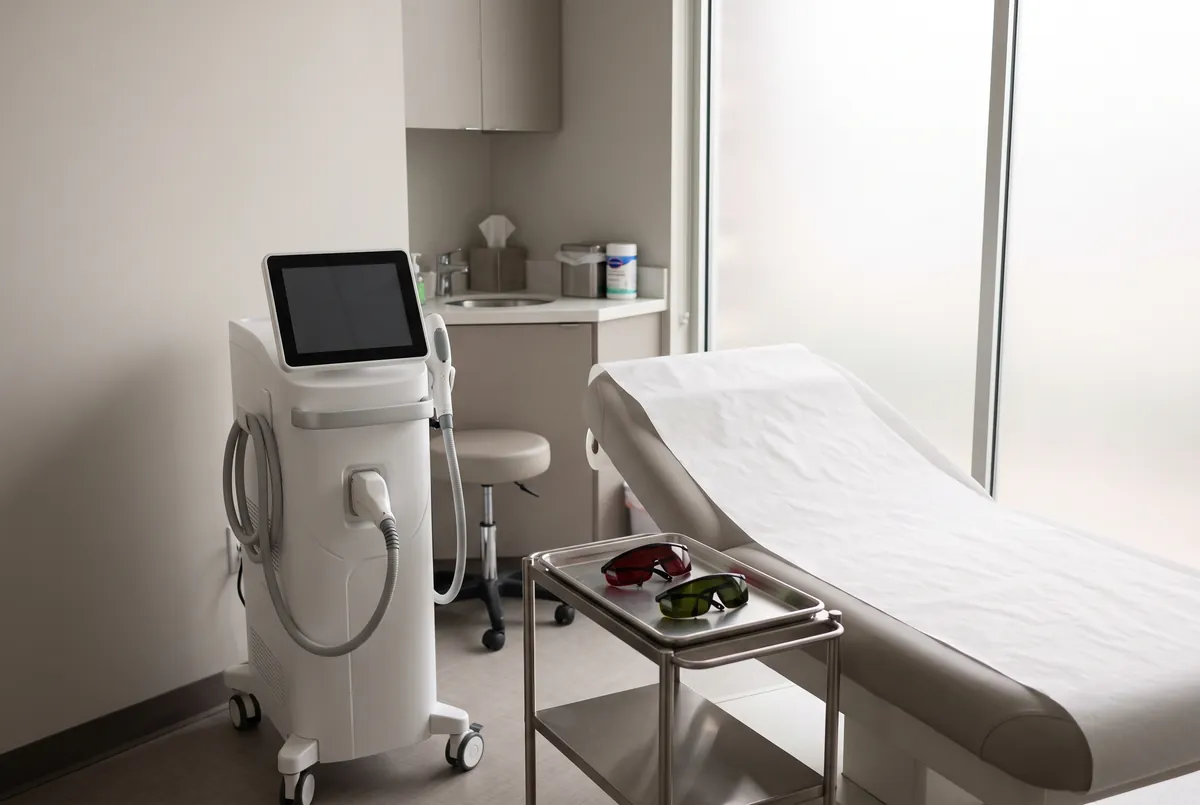
From the outside the job looks like moving a handpiece across skin. In practice the handpiece is the smallest part of it. A typical appointment starts with paperwork and conversation: reviewing the client's health history, asking what has changed since the last visit, checking for new medications, recent sun exposure or self tanner, and looking at the skin under good light. The technician confirms that the area was shaved as instructed, cleans the skin, and marks the treatment zone if the clinic uses a grid. Everyone in the room puts on eye protection matched to the device before it is switched to ready. Only then does the technician select settings within the clinic's written protocol and begin.
During treatment the technician watches the skin constantly. They are looking for the expected response around the follicles and for any sign that the skin is taking too much heat. They ask the client how each pass feels, adjust cooling, overlap pulses in a consistent pattern so that no strip is missed and none is treated twice, and stop when something looks wrong. Afterward they cool and soothe the skin, explain aftercare, book the next visit at an interval that suits the body area, and write chart notes: device, settings, area, skin response, anything unusual. Good notes are what allow the next appointment, or the next technician, to continue safely.
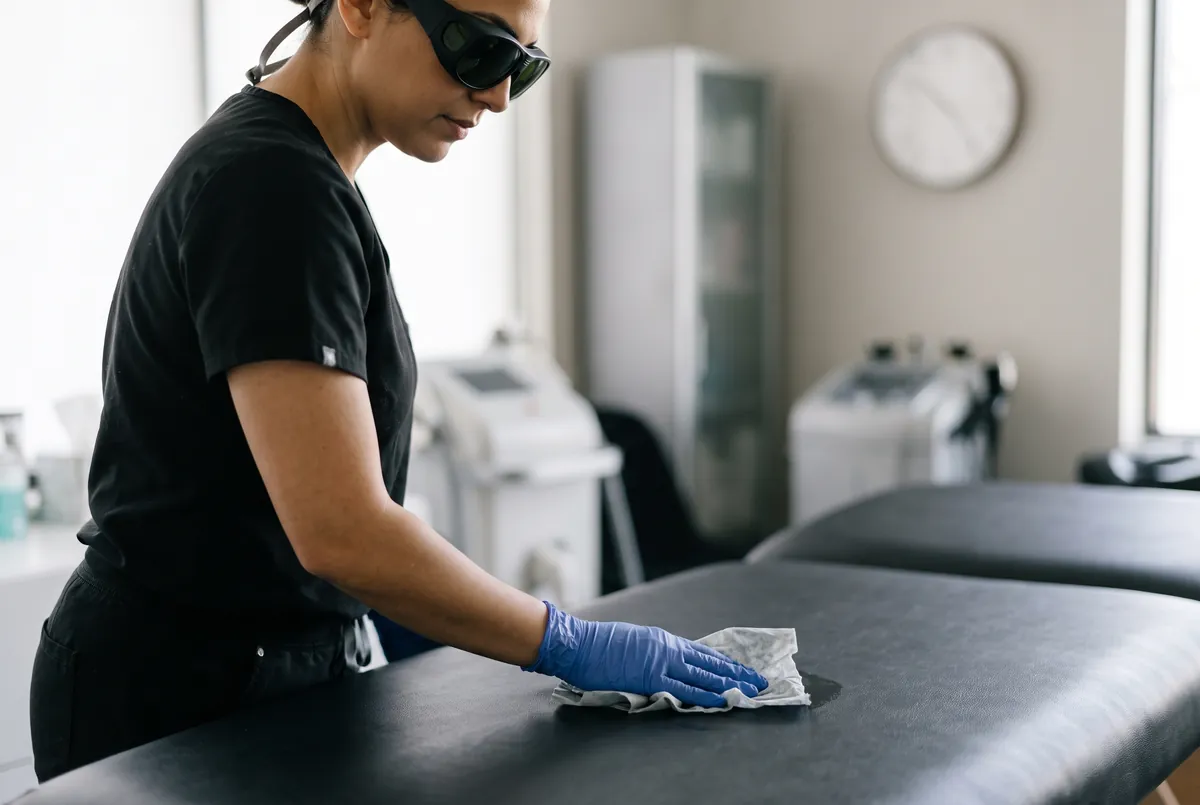
Between clients there is room turnover, disinfection of the handpiece tip and surfaces, restocking, and device checks. Many technicians also run consultations, which means explaining realistic outcomes to people who have often been promised too much by advertising. A fair share of the work is saying no or not yet: no to treating over a fresh tan, not yet for a client who started a photosensitizing medication, no to white or very light hair that the laser cannot target. In a busy clinic the day is back to back, physically repetitive and heavily scheduled. People who enjoy it tend to like routine, precision and steady client relationships over a long series of visits.

The Fact That Shapes Everything: Rules Vary by State
There is no federal license for laser hair removal technicians. The Food and Drug Administration regulates the devices: it clears them for sale and for specific uses. It does not decide who may hold the handpiece. That decision belongs to each state, and states have made very different choices. This is the single most important thing to understand before you spend anything on training, because a course that qualifies someone to work in one state may qualify you for nothing where you live.
In broad terms, states fall into a few patterns. Some treat laser hair removal as the practice of medicine and limit it to physicians and other licensed medical professionals, or allow it only when a physician delegates the procedure and supervises it under specific conditions. Some have created a dedicated credential, such as a laser technician or laser hair removal registration or certificate, with its own training, apprenticeship style levels and oversight by a health or radiation agency. Some allow licensed estheticians, cosmetologists or electrologists to perform laser hair removal after additional approved training, sometimes with a medical director involved. And a number of states have rules that are thin, scattered across several agencies, or written before these devices became common.
Even inside one pattern the details matter. "Physician supervision" can mean the doctor must be in the building, or reachable by phone, or must examine each new client before the first treatment. "Delegation" can require written protocols and documented training for the person receiving the delegated task. The agency in charge may be the medical board, the nursing board, the cosmetology board, the health department, a radiation control program, or a combination. I am deliberately not printing a state by state list here. These rules get revised, summaries on training school websites are often out of date, and I would rather you read the current rule from the source than trust a table, including one of mine.
Here is how I suggest doing that research. Start with your state medical board's website and search for laser, light based devices, delegation and medical spa. Many medical boards publish a position statement or a frequently asked questions page on cosmetic lasers. Then check the board that regulates estheticians and cosmetologists, and the electrology board if your state has one, for a scope of practice statement about lasers and intense pulsed light. If the two sources seem to disagree, or if you find nothing, email both and ask a narrow question: may a person with a named license, or with no license, perform laser hair removal in this state, and under what supervision and training requirements. Keep the replies.

Can Estheticians, Cosmetologists and Electrologists Do Laser Hair Removal?
This is the question I hear most from licensed professionals, and the truthful answer is: in some states yes, in some states only under medical delegation, and in some states no. An esthetics license generally covers cosmetic care of the outer skin. Whether a hair removal laser fits inside that scope is something each state answers for itself. Where it is allowed, there is nearly always a condition attached, such as approved laser training, a separate certificate, a supervising physician, or all three. Where it is not allowed, no amount of private training changes that. A certificate cannot widen a license.
Cosmetologists are usually in the same position as estheticians, because skin services under a cosmetology license tend to mirror esthetics scope. Electrologists sit in an interesting spot. A few states fold laser hair removal into electrology regulation and let licensed electrologists add it after extra training, while others keep the two completely separate. If you hold or plan to hold one of these licenses, read the general background first, then your state's specifics. Our hubs for esthetician licensing by state, electrolysis licensing by state and cosmetology licensing by state explain the base licenses. For laser itself, treat the medical board as an equal authority.
People without any license sometimes ask if they can go straight into laser. In states with a dedicated laser credential, that may be exactly how the system is designed: you train, register at an entry level, and work under a more senior person until you qualify for the next level. In states that restrict laser to medical professionals, the realistic route is a nursing or other medical license, which is a much bigger decision. And in states that tie laser to an esthetics or similar license, the base license comes first. If that is your situation, our guide on how to become a licensed esthetician covers that stage in detail, so I will not repeat it here.
License vs Laser Hair Removal Certification
Much of the confusion in this field comes from one word. "Certification" is used for at least three different things. The first is a certificate of completion from a private training school: proof that you attended a course. The second is a credential from a private professional organization, earned by passing its exam. The third, in some states, is an official state certificate or registration that you must hold to work legally. Only the third is a legal permission. The first two can be valuable evidence of training, and some states or employers require them as part of qualifying, but by themselves they do not authorize anyone to treat a client.
A license or state registration is issued by a government agency, has legal requirements behind it, can be verified by the public, and can be disciplined or revoked. A private certificate has none of those features. Schools know that "become a certified laser technician" sounds official, and some lean on that. When you read a course page, translate the wording: "certified" by whom, recognized by which state agency, for which legal purpose. If the honest answer is that the certificate is the school's own document, it may still be worth having, but only if your state lets someone in your position perform the service in the first place.

The Typical Path, Step by Step
Because the legal starting point differs, no single checklist fits every reader. Still, most people who end up working as laser hair removal technicians pass through the same stages in roughly the same order. Treat the list below as a map of the stages, and let your state's rules decide which ones apply to you and what each must contain.
- Confirm your state's rules. Find out who may perform laser hair removal, what supervision is required, which agency is in charge, and what training or credential the state recognizes. Get it in writing from the agency.
- Earn the base license if one is required. Depending on the state this could be an esthetics, cosmetology or electrology license, a nursing or other medical license, or no base license at all.
- Complete a laser training course with supervised hands-on practice. Classroom or online theory first, then real treatments on real people under an instructor, on real devices.
- Complete laser safety training. Some states and many employers want a specific laser safety component covering hazards, eyewear, room controls and incident response.
- Apply for the state credential if your state has one. Submit proof of training, pay the fee, and wait for approval before you treat clients.
- Work under supervision. Start in a clinic with a medical director or senior provider, written protocols and someone experienced who checks your work.
- Build experience across skin types, body areas and devices. Keep a personal log of treatments and what you learned from each.
- Maintain the credential. Renew on time, complete any continuing education, and retrain when the clinic changes devices.
The order matters more than people think. I have met students who did step three first because a school had a class starting the following week, then discovered at step one that their state wanted a base license they did not have, or a course from an approved provider list that their school was not on. The training was not useless, but it had to be repeated or supplemented at their own cost. A week of patience at the start is cheap compared with that.
What Laser Training Covers
A sound course begins with basic laser physics, taught for practical use. Students learn that a laser produces light of a specific wavelength, that different wavelengths are absorbed by different targets in the skin, and that hair removal relies on pigment in the hair shaft absorbing light and converting it to heat that damages the follicle. They learn the working vocabulary of settings: energy delivered per area, how long each pulse lasts, the size of the treated spot, and how cooling protects the surface. The purpose is to understand why changing one setting changes what the skin experiences, so that settings are chosen by reasoning within protocol, and never by copying a number from the last client.
Next comes skin and hair biology. Hair grows in cycles, and laser works best on follicles in the active growth phase, which is why treatment happens as a series spaced weeks apart. Students learn why coarse dark hair responds well and why white, gray, red and very light blond hair responds poorly or not at all: there is too little of the right pigment for the light to find. They also learn skin structure, how the skin's own pigment competes with the hair for the laser's energy, and why that competition is the main source of risk. Hormonal causes of hair growth are covered so that technicians can explain why some clients need maintenance or a different method.
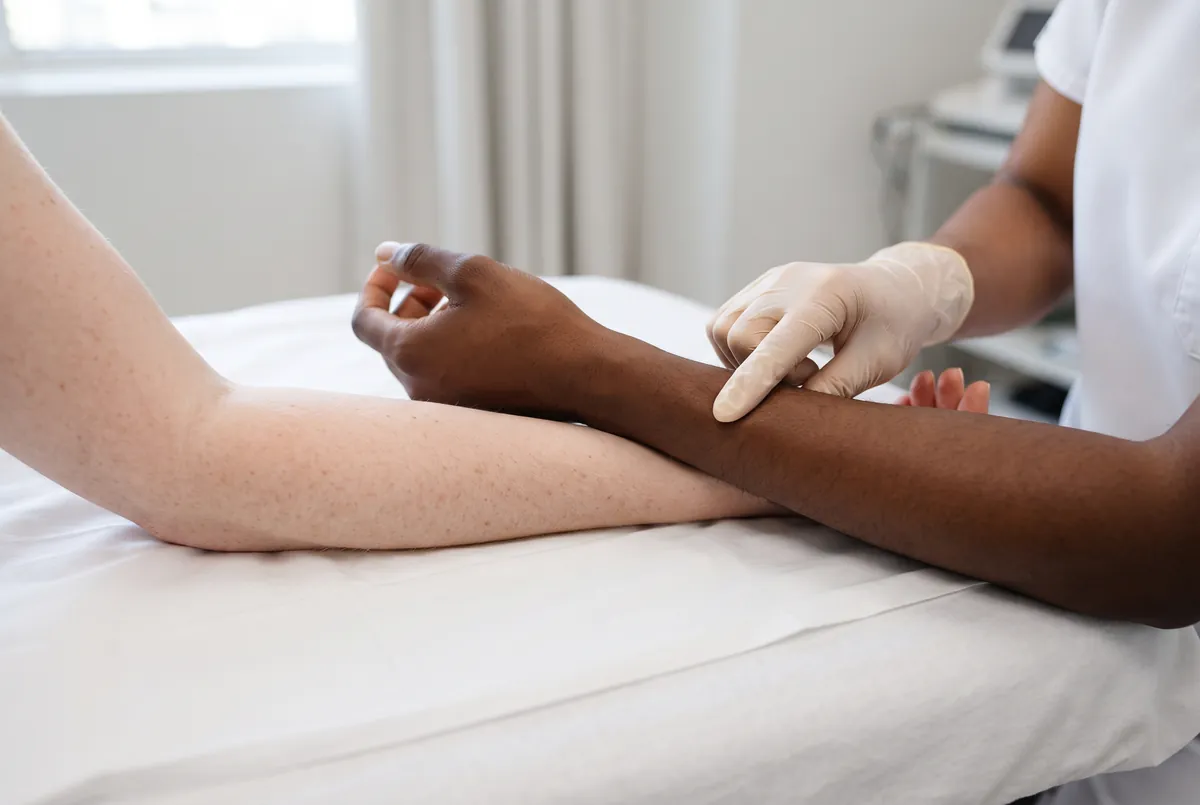
Skin typing is a core skill. The Fitzpatrick scale sorts skin into six types by how it reacts to sun, from skin that always burns to deeply pigmented skin that rarely burns. Technicians use it, together with a careful look at the actual skin and questions about ancestry and tanning history, to choose a suitable device and conservative starting settings. Good courses teach the limits of the scale as well. People are often typed lighter than they really are, a tan changes the picture, and darker skin needs both the right wavelength and an operator with experience. Our guide on electrolysis for dark skin explains why some clients with deeper skin tones choose a method that does not depend on pigment at all.
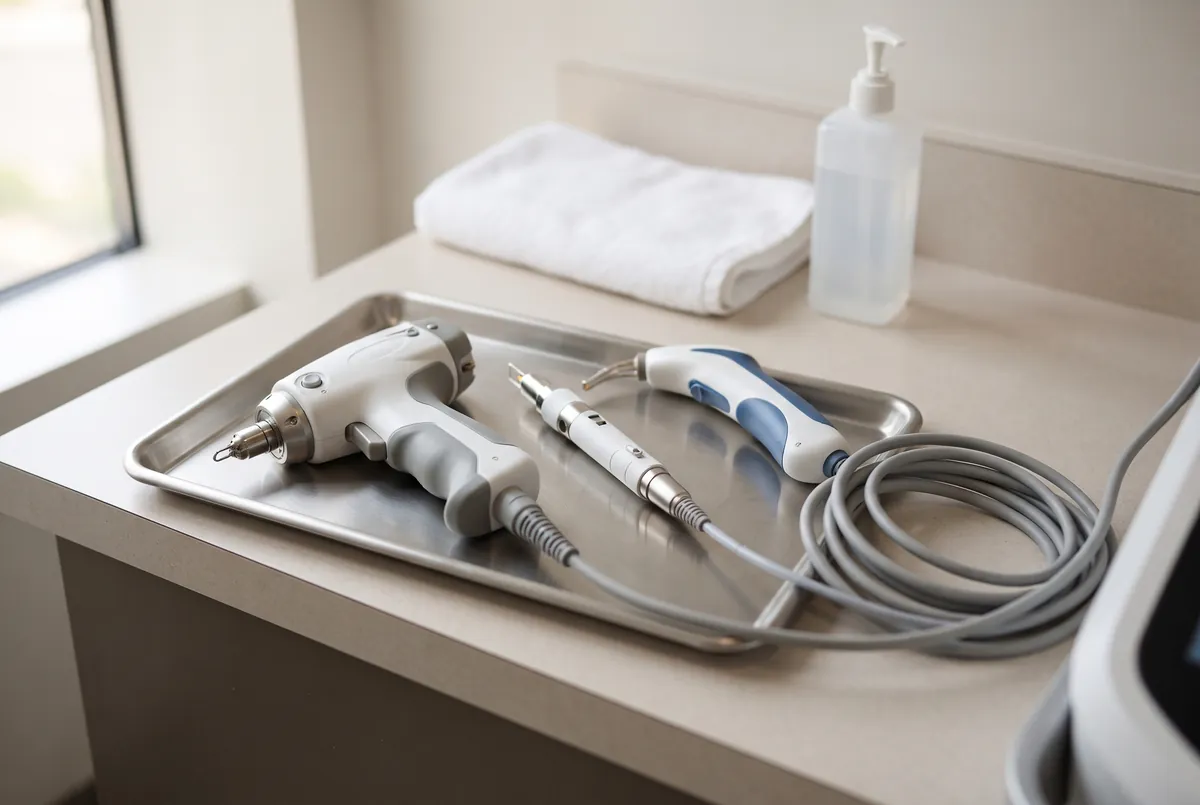
Device types come next. The three laser families most often used for hair removal are alexandrite, diode and Nd:YAG. Alexandrite has the shortest wavelength of the three and is strongly absorbed by pigment, which makes it effective on lighter skin with dark hair and riskier on darker skin. Nd:YAG has the longest wavelength, is absorbed less by surface pigment and reaches deeper, so it is generally the preferred choice for darker skin types. Diode sits between them and is used across a fairly wide range. Students also meet intense pulsed light, which is a broad spectrum light source, not a true laser, and which some states regulate in the same way and some differently.
Safety training has its own block, and it should be thorough. Eye safety comes first: a hair removal laser can cause permanent eye injury to the client, the operator or a bystander, including from reflected light. Students learn that protective eyewear is specific to wavelength, how to read what a given pair protects against, and why the pair from the next room may offer no protection at all. They learn room controls such as covered windows, warning signs on the door, no reflective surfaces near the treatment field, and a locked or attended entrance. They also cover fire risk, smoke and odor from vaporized hair, device maintenance checks, and the role of the person designated as responsible for laser safety in the facility.
Then come the clinical decisions. Students learn to take a health history, recognize contraindications, and know which answers mean the supervising provider must decide. Common reasons to postpone or decline include a recent tan or self tanner, medications that make skin sensitive to light, active infection or broken skin in the area, tattoos or permanent makeup in the treatment field, and a history that suggests abnormal scarring. Pregnancy is generally a reason clinics defer treatment. Students practice test spots: treating a small patch at conservative settings and waiting to see the skin's response before committing to a full area. A test spot is cheap insurance, and experienced technicians still use it for every new client and every new device.
Finally, complications. Honest courses spend real time here. Burns and blisters, darkening or lightening of the skin, scarring, and, less often, an unexpected increase in fine hair near the treated area are all recognized risks. Students learn what the normal response looks like, what an early warning looks like, how to stop, cool and document, and when the client must be seen by the supervising physician or a dermatologist. They also learn what is outside their role. A technician does not diagnose a mole, a rash or a hormone problem. A technician notices, declines to treat over it, and refers. That habit protects clients and careers.
Skills and Temperament That Fit the Job
The technicians I have seen thrive share a particular mix of traits. They are careful by nature. They follow the protocol on the fortieth client of the week exactly as they did on the first, and they do not round corners when the schedule runs late. They are observant: they notice that a client's skin looks a shade warmer than last month, or that the hair in one zone is finer than it was. They are comfortable saying no to a paying client and explaining why without drama. And they keep records properly, because in a regulated, supervised service the chart is part of the treatment.
Communication counts as much as technique. Laser clients often arrive embarrassed about hair, anxious about pain, and carrying expectations set by advertising. A good technician can explain in plain words that laser reduces hair over a series of visits, that results vary with hair color, skin tone and hormones, and that some regrowth or maintenance is normal. They treat intimate body areas with complete professionalism and make consent and draping routine. They handle disappointment honestly when a client turns out to be a poor candidate. If you already enjoy the client side of esthetics, described in our guide to what an esthetician does, these skills carry over directly.
There is a physical side as well. Sessions involve standing or leaning for long stretches, repeating the same arm movement, wearing tinted eyewear that changes how you see color, and working in a closed room with cooling systems running and the smell of singed hair. Large areas such as full legs or backs take concentration from start to finish. People with wrist, shoulder or back problems should think about how they will set up the bed height and their own posture. None of this is unusual for hands-on beauty and clinical work, but it is better to hear it before you train than to discover it in your first full week.

Where Laser Technicians Work and What Affects Pay
Most positions fall into three settings. Medical spas combine cosmetic medical services with spa style service and usually have a medical director, nurses or other providers, and one or more laser rooms. Dermatology and plastic surgery offices offer hair removal as one service among many clinical ones, with physicians on site and a more medical rhythm to the day. Dedicated laser hair removal clinics, including multi-location chains, focus on volume: standardized protocols, tight schedules, package sales and clear performance targets. Each setting teaches different things, and many technicians move between them over a career.
In a physician's office you tend to see more complex clients and learn more medicine by proximity, and the title and duties may overlap with the role described in our guide on what a medical esthetician is. In a medical spa you are more likely to be cross-trained on other devices and services your license allows. In a high-volume laser clinic you build speed and consistency quickly, and you learn to work inside a sales structure, which suits some personalities and wears on others. Ask in interviews who the supervising provider is, how often they are present, and who you call when something does not look right.
Self-employment is the setting people ask about most and the one with the most legal strings. Where laser is a delegated medical act, an independent technician generally cannot open a laser business alone. Some states restrict who may own a practice that offers medical services, and a medical director arrangement has to be real, with actual oversight, to satisfy regulators. Devices are a major capital expense with service contracts and consumable parts, and insurers want to see credentials and protocols before they write a policy. Independent laser practice is possible in some places for some license types, but it is a later career step that needs a lawyer familiar with your state, not a first job.
I am not going to print wage figures. Published numbers for this job mix nurses, estheticians and registered laser technicians, mix hourly wages with commission, and age quickly. What I can describe reliably is what moves pay up or down. The biggest factor is the license behind the laser. In many clinics a nurse who performs laser treatments is paid on a nursing scale, while a technician working under delegation is paid on a different one, even when the treatments look similar. In states with tiered laser credentials, moving up a level usually changes both responsibility and pay.
The second factor is how compensation is structured. Laser clinics commonly combine an hourly base with commission on treatments, on packages sold, or on both, and sometimes with bonuses tied to rebooking. Two offers with the same hourly rate can produce very different income depending on client volume and the commission formula. Ask for the structure in writing, ask what a typical technician's week looks like after the first few months, and ask what happens to your pay on slow days. Location matters too: demand, cost of living and the number of competing clinics all shape local pay.
The third factor is range. A technician who can safely treat all skin types, who is trained on more than one device, and who can also perform other services within their license is more useful to an employer than one who covers a single machine. Experience with complications handled well, a steady rebooking rate and clean charting all count when raises are discussed. For a wider view of how pay is built in neighboring roles, including commission and tips, see our guide on how much estheticians earn.
Pros and Cons of the Career
Every hands-on profession has a gap between the brochure and an ordinary weekday. I have watched colleagues build long, satisfying careers in laser, and I have watched others leave within a year. The table below summarizes what both groups tend to mention, so you can weigh it against your own preferences before you commit real time and money to laser training.
| Pros | Cons |
|---|---|
| Steady demand for hair reduction across many client groups | Legal access to the job depends on your state and may require a license you do not have |
| Fast treatment of large areas, so results are visible to clients within a series | Repetitive work with tight scheduling in high-volume clinics |
| Clinical environment with protocols and medical colleagues | Real risk of burns and pigment changes if judgment slips |
| Clear ways to grow: more devices, more skin types, senior or training roles | Sales targets and package quotas in some workplaces |
| Skills that pair well with esthetics, electrolysis or nursing | Not every client is a candidate, and some results need maintenance |
| Long client relationships over a course of visits | Independent practice is restricted or complex in many states |
Laser vs Electrolysis as a Career
Since this is my side of the fence, I will be careful to be fair. The two methods are different tools. Electrolysis treats one follicle at a time with a fine probe and works on any hair color and any skin tone, because it does not rely on pigment. It is the only method the FDA accepts for permanent hair removal claims. Laser devices are cleared for permanent hair reduction, meaning a long-term, stable decrease in regrowth after a treatment series, not a guarantee that every hair is gone for good. Laser covers large areas quickly. Electrolysis is slower and finishes what laser cannot. For the client's view of that choice, see electrolysis or laser hair removal.
As careers they feel different. Laser work is device centered and protocol driven, usually inside a medical structure with supervision, and in many states it is closed to people without a medical license or a specific laser credential. Electrolysis is a manual craft. The practitioner's hand, eyesight and insertion technique determine the result, appointments are long and quiet, and clients often stay with one electrologist for many months. In states that license electrology, it is its own profession with its own school hours and exam, and electrologists commonly run independent practices. In states that do not license it, the rules are different again, which our electrolysis licensing hub explains state by state.
The equipment economics differ too. A hair removal laser is an expensive machine that needs servicing, and it is usually owned by a clinic. An epilator is a far smaller investment, which is one reason so many electrologists are self-employed. Neither model is better. One suits people who want to be part of a clinical team with a steady flow of booked clients. The other suits people who want to own a small practice and are patient enough for slow, exact work. If the second description sounds like you, read how to become an electrologist from scratch before deciding.
Many practitioners end up offering both, where their state allows it, and I think that combination serves clients best. In my own work I regularly see people who had a full laser series and were left with scattered light, fine or hormonally driven hairs, and electrolysis clears those. I also send people with large areas of dense dark hair on light skin to laser first, because it would be unkind to charge them for months of probe work that a laser can reduce in a handful of visits. A technician who understands both methods gives better advice than one who has only a single tool to recommend.
How to Vet a Laser Training Program
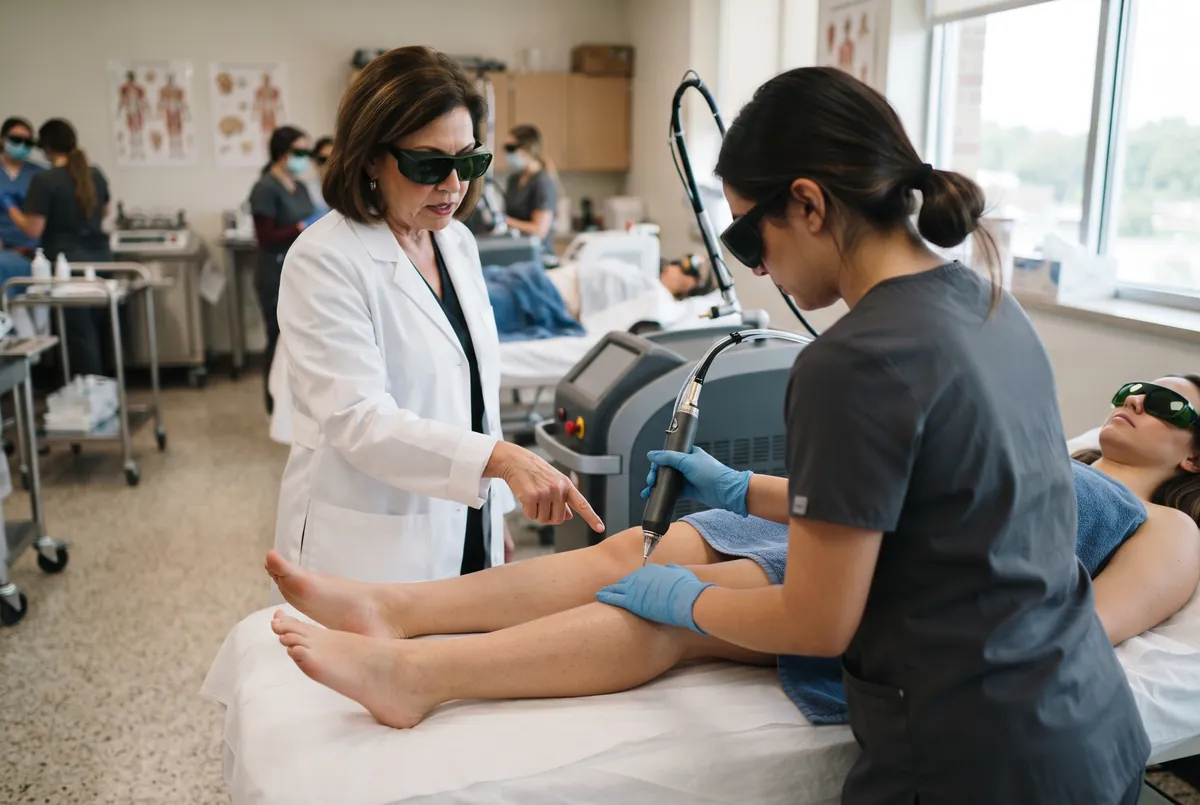
Once you know what your state requires, choosing a course becomes a matter of matching, then of quality. Matching means the course satisfies the legal requirement that applies to you: the right content, the right number of supervised treatments if your state specifies them, and approval by the right agency if your state approves providers. Quality means that you will leave able to treat safely, which is a higher bar than a completed attendance sheet. These are the questions I would ask any school before paying a deposit.
- Is this course approved or recognized by the agency that regulates laser hair removal in my state, and can you show me where that approval is listed?
- How much of the course is hands-on treatment that I perform myself, as opposed to watching demonstrations?
- How many different skin types and body areas will I treat under supervision?
- Which device types will I use: alexandrite, diode, Nd:YAG, intense pulsed light?
- Who are the instructors, what licenses do they hold, and do they currently treat clients?
- How many students share one device and one instructor during practical sessions?
- Does the course include a separate laser safety component, and is it documented on the certificate?
- How are complications, contraindications and emergency steps taught?
- What exactly will my certificate say, and which employers or agencies accept it?
- What is the refund policy if I learn that my state will not accept the course?
Listen to how the school answers, as well as to what it says. A solid program will tell you plainly when it cannot help: "our course does not meet that state's requirement" or "in your state you would need a medical license first." A weak one changes the subject to how quickly you can finish. Ask to speak with someone who completed the course and now works in your state. Ask whether models are provided for practical sessions or whether you must bring your own, since that affects how varied your practice will be. Our school directory is a starting point for finding licensed beauty and electrolysis programs, and the same vetting habits apply to each of them.
Red Flags and Common Mistakes
Some warning signs show up again and again in the stories students tell me. Be cautious with any program that promises you can work "in all states" or "anywhere" after its course, because no private course can deliver that. Be cautious with a fully online course marketed as complete qualification. Theory can be taught well online, but nobody learns to read skin response through a screen. Be cautious when a school will not say who regulates laser in your state, when it guarantees a job or an income, when there is pressure to sign today, and when it describes its own certificate as a license.
Workplaces have red flags too. A clinic that tells you its medical director "never needs to come in" may be operating outside the supervision rules of its state, and you would share the consequences. A clinic with one device that it uses on every client regardless of skin tone is asking for injuries. Missing or mismatched eyewear, no written protocols, no test spots, no consultation before a first treatment, and charts that consist of a signature and a date are all signs of a place where a new technician will learn bad habits and carry real personal risk. It is acceptable to walk away from an offer for these reasons.
The most common mistake beginners make is the one I described earlier: paying for training before checking the law. The second is assuming that an esthetics or cosmetology license automatically includes laser. The third is treating the certificate as the finish line. New technicians who stop studying after the course tend to plateau, while those who keep asking the supervising provider questions, read the device manuals and review their own charts improve quickly. A fourth mistake is moving states without checking the new state's rules, on the assumption that experience transfers. Sometimes it does. Sometimes the new state does not allow your license type to do laser at all.
Other mistakes show up in the treatment room. One is copying settings from a previous client or from a colleague's notes without reassessing the person in front of you. Skin changes with season, sun and medication, so every visit starts with fresh questions and a fresh look. Another is overpromising. Telling a client that laser will remove all hair forever sets up a complaint and misstates what these devices are cleared to claim. A third is being reluctant to refer. Clients with light hair, with hormonal growth patterns or with a small number of stubborn hairs are often better served by electrolysis, and our overview of hair removal methods compared can help you explain the options without favoring your own machine.

The Legal Gate: What Online Courses Can and Cannot Do
This site offers online theory courses, so I want to be precise about where online study fits. Online study is a good way to build knowledge: skin and hair biology, how light interacts with tissue, contraindications, safety principles, client communication, the vocabulary you need to follow a hands-on class from the first hour. It lets you arrive at practical training prepared, which makes those expensive supervised hours far more productive. It is also a sensible way to explore whether the field interests you before you commit to a full program.
What online study cannot do is stand in for anything your state requires in person. If your state requires a license, online theory does not replace the school hours or the exam. If it requires a set amount of supervised treatments, a registered apprenticeship or training from an approved provider, those must be completed as written. If it requires physician supervision or delegation, no course removes that condition. There is no shortcut around these gates, and anyone selling one is selling you a problem. Use online learning for what it does well, and get the legal qualification through the route your state has set.
Your Next Step
If you take one action after reading this, make it the research step. Write to your state medical board and to the board that licenses estheticians, cosmetologists or electrologists, ask who may perform laser hair removal and under what conditions, and save the answers. That single afternoon will tell you which of the paths in this guide is yours: a base license first, a dedicated laser credential, a medical route, or a decision that another hair removal specialty suits your state and your goals better. Then choose training that matches the rule, with as much supervised hands-on practice as you can get.
While you wait for replies, build the foundation that every route shares. Skin and hair biology, sanitation, client consultation and contraindications are the same knowledge base whether you end up holding a laser handpiece or an electrolysis probe. Our online esthetics course and online electrolysis course cover that theory at your own pace. They are preparation and continuing education. They do not replace state-required school hours, supervised practice or a license, and I would not want you to think otherwise. Start with the law, add the knowledge, then get your hands trained by people who do this work every day.
State Requirements
State licensing guides
Hours, exams, fees, and the licensing board differ by state. Open your state for the current requirements.
Common Questions
FAQ
It depends on the state. Some states limit laser hair removal to physicians and other licensed medical professionals, or allow it only under physician delegation and supervision. Some issue a dedicated laser technician or laser hair removal credential. Others allow licensed estheticians, cosmetologists or electrologists to perform it after additional training. There is no federal license for operators. Ask your state medical board and the board that regulates esthetics, cosmetology or electrology for the current rule in writing before you train or accept a job.
In some states yes, usually with extra approved training and often with a supervising physician or medical director. In other states an esthetics license does not include lasers at all, and private training does not change that. The answer comes from your state's scope of practice rules, not from a school. Read the general background in our esthetician licensing hub, then confirm the laser question directly with both the esthetics board and the medical board in your state.
No. A certificate from a private school shows that you completed its course. A license, registration or state certificate is issued by a government agency and is what gives legal permission to practice. Some states require a specific state credential for laser hair removal, and some accept or require private training as one part of qualifying. A private certificate alone never authorizes you to treat clients in a state where your license type is not allowed to perform the service.
There is no single timeline, because the path depends on your state and your starting point. Someone who already holds a license that their state accepts for laser may only need a laser course, safety training and supervised practice. Someone who first needs an esthetics, cosmetology, electrology or nursing license has that whole program ahead of them. States with tiered laser credentials add time working under a senior person. Map the required steps for your state first, then ask each school and agency for realistic timing.
You can learn the theory online: laser and skin basics, the Fitzpatrick scale, contraindications and safety principles. You cannot learn to operate a device safely without supervised practice on real people, and online study never replaces state-required in-person hours, supervised treatments, physician supervision or a license. Treat online courses as preparation and continuing education. Be wary of any program that presents an online certificate as full qualification to work.
The two are described differently for a reason. Electrolysis is the only method the FDA accepts for permanent hair removal claims, and it works on any hair color and skin tone. Laser devices are cleared for permanent hair reduction, meaning a long-term decrease in regrowth after a series of treatments. Many clients do very well with laser and then use electrolysis for the remaining hairs. Our guide on electrolysis or laser hair removal compares the two for clients.
In certain states licensed electrologists may add laser hair removal after additional training, sometimes with medical oversight. In other states the two services are regulated separately and an electrology license gives no access to lasers. Some states do not license electrology at all. If you are an electrologist or plan to become one, check your electrology board's position and your medical board's position together. Many practitioners who are allowed to offer both find that the combination serves clients well.
Look first for a match with your state's rules: recognition by the right agency and the content your state requires. Then look for quality: substantial hands-on treatment that you perform yourself, practice on a range of skin types, more than one device type, instructors who currently treat clients, a documented laser safety component, and real time spent on complications. Avoid programs that promise you can work in every state, guarantee a job, or describe their own certificate as a license.
Keep Reading
Related Guides


