Cosmetology
IPL Hair Removal: How It Works, Results, Risks and Home Devices
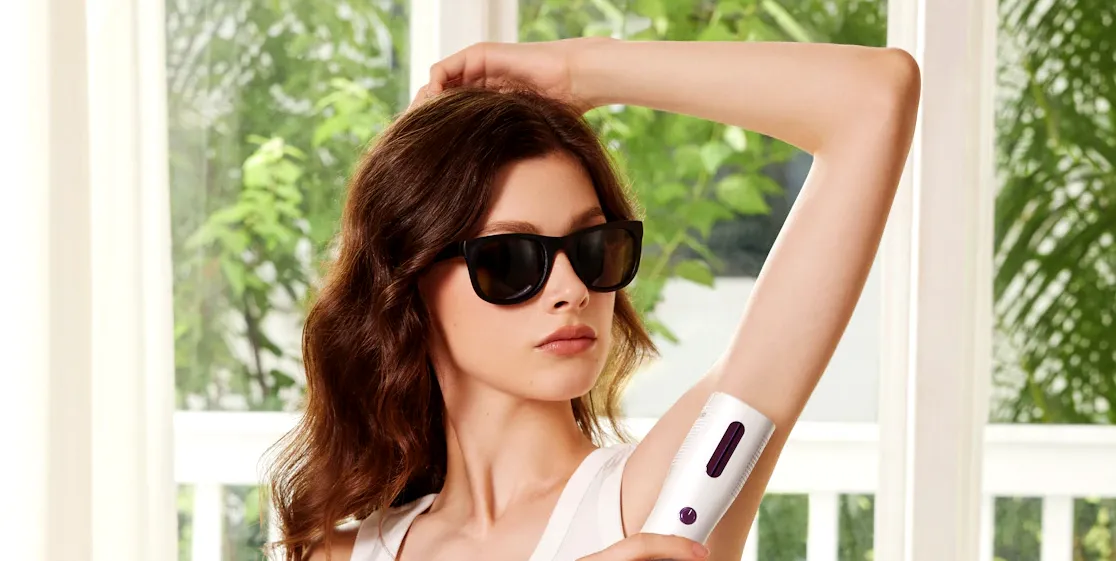
Quick answer
IPL stands for intense pulsed light. It is not a laser, but it works on the same principle: light is absorbed by pigment in the hair, turns into heat, and damages the follicle. IPL needs contrast and works best on dark hair against lighter skin. It does not treat blond or gray hair, and it can burn skin with a lot of pigment.
IPL hair removal is the method most people meet first, usually as a handheld device sold for home use or as a lower-priced package at a salon. IPL stands for intense pulsed light. It is not a laser, although it works on the same principle: light is absorbed by the pigment in the hair, turns into heat, and damages the follicle so that it grows a finer hair, grows more slowly, or stops producing visible hair for a long time. Used on the right person it can thin out hair considerably. Used on the wrong person it does nothing, or it burns.
I have worked in hair removal for more than twenty years, mostly with electrolysis, and a large share of my clients come to me after IPL or laser. Some are happy with the reduction and want the remaining hairs finished. Others spent a year flashing blond or gray hair that light could never treat. This guide explains how IPL works, how it differs from laser and electrolysis, who is a good candidate, what a session and a home routine look like, what the risks are, and how to decide whether it is the right tool for you.
How IPL Hair Removal Works
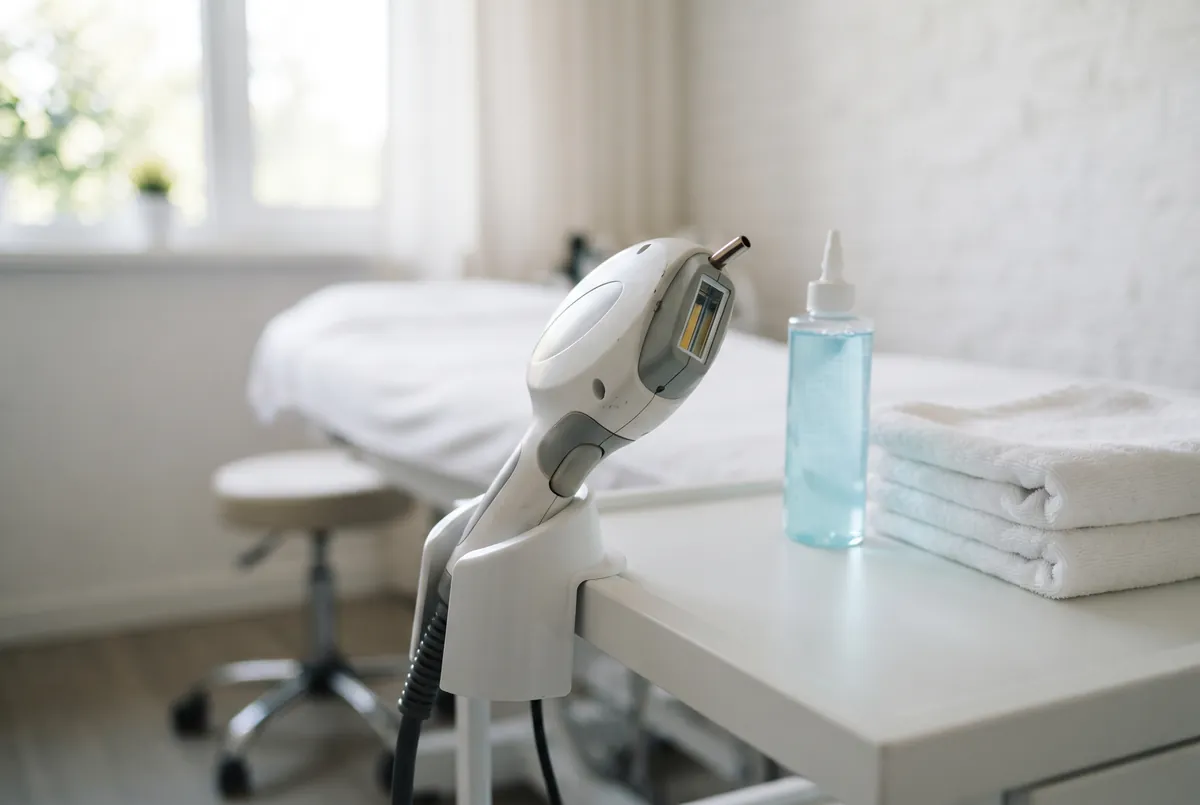
An IPL device contains a flashlamp that produces a bright burst of broad-spectrum light, similar in principle to a camera flash but far more powerful. Filters cut off the shorter wavelengths that would only heat the skin surface, and the remaining light passes through a glass or crystal window onto the skin. Each flash covers a relatively large rectangle, which is why IPL can treat legs or a back quickly.
The target is melanin, the brown-black pigment that colors hair. Dark pigment in the hair shaft and bulb absorbs the light and converts it to heat. If enough heat builds up and spreads to the cells around the lower follicle that are responsible for regrowth, those cells are damaged. The technical name for this is selective photothermolysis: choosing a wavelength and pulse length that heat the target more than the tissue around it.
Two practical facts follow from that mechanism. First, the hair itself is the conductor of heat, so a follicle must contain a pigmented hair at the moment of the flash. That is why you shave before a session and never wax or tweeze: shaving leaves the pigmented root in place, while waxing removes the very thing the light needs. Second, skin also contains melanin. The more pigment in the skin, whether natural or from a tan, the more light the skin absorbs before it reaches the follicle, and the higher the risk of a burn.
Hair grows in cycles. Each follicle moves through an active growth phase, a short transition phase, and a resting phase, and neighboring follicles are at different points at any given time. Light-based methods affect follicles best during active growth, when the hair is firmly attached and richly pigmented at the root. Only part of the hair in any area is in that phase on a given day. This is the reason no light-based method works in one visit, and why sessions are spaced weeks apart. I explain the cycle in more depth in the guide to hair growth phases and treatment timing.
IPL vs Laser Hair Removal: The Real Differences
A laser emits a single wavelength of light in a tight, coherent beam. The common hair removal lasers are alexandrite, diode, and Nd:YAG, and each wavelength has a known behavior in skin. IPL emits a wide band of wavelengths at once, scattered rather than focused. Think of a laser as a spotlight tuned to one color and IPL as a filtered floodlight. Both can heat a pigmented hair, but the laser delivers its energy more precisely.
In practice that difference shows up in three ways. Professional lasers generally produce stronger and more consistent reduction in fewer sessions than IPL. Lasers also offer safer options for deeper skin tones, especially the long-wavelength Nd:YAG, which largely bypasses pigment in the upper skin. IPL, with its mix of wavelengths, puts more energy into the skin surface and is less forgiving on darker or tanned skin. On the other side, IPL devices cost less to buy and run, which is why IPL sessions and home devices are cheaper.
| Feature | IPL | Laser | Electrolysis |
|---|---|---|---|
| Energy source | Broad-spectrum filtered light | Single-wavelength light | Electrical current through a fine probe |
| Target | Pigment in the hair | Pigment in the hair | The individual follicle, any color |
| Best candidates | Dark hair, light to medium skin | Dark hair, wider skin tone range with the right laser | Any hair color and any skin tone |
| Gray, white, red, light blond hair | Does not respond | Does not respond | Responds |
| FDA wording | Permanent hair reduction (for cleared devices) | Permanent hair reduction | Permanent hair removal |
| Speed on large areas | Fast | Fast | Slow, hair by hair |
| Home version | Widely sold, lower energy | Rare | Not comparable to professional work |
Be careful with marketing language. Some salons advertise "laser hair removal" while using an IPL machine, because customers search for the word laser. Ask directly what the device is, what type of light it emits, and whether the operator has experience with your skin tone. Neither technology is a scam and neither is magic. They are tools with different strengths, and I compare them with electrolysis in more detail in electrolysis or laser hair removal: how to choose.
Who Is a Good Candidate for IPL and Who Is Not
The ideal IPL client has dark brown or black hair and fair to light-medium skin that is not tanned. Practitioners describe skin with the Fitzpatrick scale, which runs from type I, very fair skin that always burns, to type VI, deeply pigmented skin that rarely burns. IPL is most comfortable on the lighter half of that scale. Olive and light brown skin can sometimes be treated with conservative settings and specific filters by an experienced operator. Dark brown and black skin carries a high risk of burns and pigment changes with IPL and is better served by an Nd:YAG laser or electrolysis.
Hair color matters just as much. Gray and white hair contain no melanin and do not respond at all. Red hair contains a different pigment that absorbs this light poorly. Light blond and fine, pale vellus hair, the "peach fuzz" on the face, are also poor targets. I meet many women who have used a home device on a few pale or gray chin hairs for months with no change. For those hairs electrolysis is the method that works, and I cover it in electrolysis for gray and white hair.
Hormones influence results too. Hair on the female face, neck, chest, and abdomen is often driven by androgens, and conditions such as polycystic ovary syndrome keep stimulating new follicles even while existing ones are treated. IPL can reduce density in these areas, but regrowth is more common and maintenance is usually needed. If facial hair appeared or increased suddenly, or comes with irregular periods, acne, or scalp hair thinning, see a physician before investing in any hair removal course. More on this in PCOS and unwanted hair.
Some people should not have IPL at all, or should wait. The list below is general. A professional consultation and your own doctor's advice take priority over any article.
- Tanned or sunburned skin, including self-tanner on the treatment area.
- Very dark skin tones, unless a qualified provider recommends a more suitable laser instead.
- Pregnancy: most providers and device makers advise postponing, as a precaution.
- Light-sensitizing medications, such as certain antibiotics, isotretinoin, and some herbal supplements. Ask the prescriber.
- Tattoos, permanent makeup, dark moles, and birthmarks in the area. These absorb light strongly and must be avoided or covered.
- Active skin problems where you want to treat: infection, cold sores, eczema or psoriasis flares, open wounds.
- A history of keloid scarring, light-triggered conditions, or seizures triggered by flashing light.
- Skin cancer history or suspicious lesions in the area: get a dermatologist's clearance first.
What Results to Expect and How Permanent They Are
The honest word for IPL results is reduction. In the United States, light-based devices that meet the standard are cleared for "permanent hair reduction," which the FDA defines as a long-term, stable decrease in the number of hairs regrowing after a treatment course. It does not mean every hair is gone forever. Electrolysis is the only method recognized for permanent hair removal. A good IPL outcome is an area with noticeably fewer hairs, and the ones that remain are finer, lighter, and slower to grow.
Results vary by body area. Underarms, the bikini line, and lower legs usually respond well, because the hair there is dark and coarse and the skin is often lighter than the hair. Arms and thighs respond less predictably when the hair is fine. The face is the most difficult zone: facial hair is frequently hormonal, fine hairs are mixed in with coarse ones, and the skin is exposed to sun every day. Male beard and back hair is dense and deep, and IPL usually thins it instead of clearing it.
There is also a rare but real effect called paradoxical hypertrichosis, in which fine hair near the treated area becomes darker and denser after light-based treatment. It has been reported mostly on the face and neck, and more often in people with olive or darker skin and hormonal hair growth. Nobody can predict it for an individual, which is one reason I advise against flashing fine facial down that barely shows. Treat only hair that is dark enough to be a real target.
Expect to maintain. After a completed course most people need an occasional touch-up session, because dormant follicles wake up over time and hormones recruit new ones. Home devices in particular give results that fade when you stop using them regularly. If your goal is to be completely and permanently free of hair in a defined area, such as the chin or upper lip, plan on electrolysis either from the beginning or to finish what light could not, as described in electrolysis after laser hair removal.
How Many IPL Sessions You Need and How to Space Them
Because only part of the hair is in active growth at any time, IPL is done as a series. In a salon, a course typically consists of several sessions on each area, often around six or more, followed by maintenance visits as needed. The exact number depends on hair color and thickness, skin tone, the body area, hormonal factors, and the power of the device. Be wary of anyone who guarantees a fixed number in advance. A provider can give a reasonable range after seeing your hair and skin.
Spacing follows the hair cycle of each area. Facial hair cycles faster, so sessions there are usually closer together, often about a month apart. Body areas such as legs and back cycle more slowly and are spaced further apart, commonly six to eight weeks or more as the course progresses. Coming too early wastes a session on follicles that have nothing new to treat. Coming much too late lets treated areas fall out of sync. Follow the schedule your provider sets and adjust it based on when new growth appears.
After each session, treated hairs do not vanish on the spot. Over the following one to three weeks they are pushed out of the follicle and shed, which can look like the hair is still growing. You can shave during this time, and gentle exfoliation in the shower helps the shed. Then there is a quiet period, and then the next group of follicles produces new hair. The change you are looking for is cumulative: each round should bring back less hair than the one before.
A Professional IPL Session, Step by Step
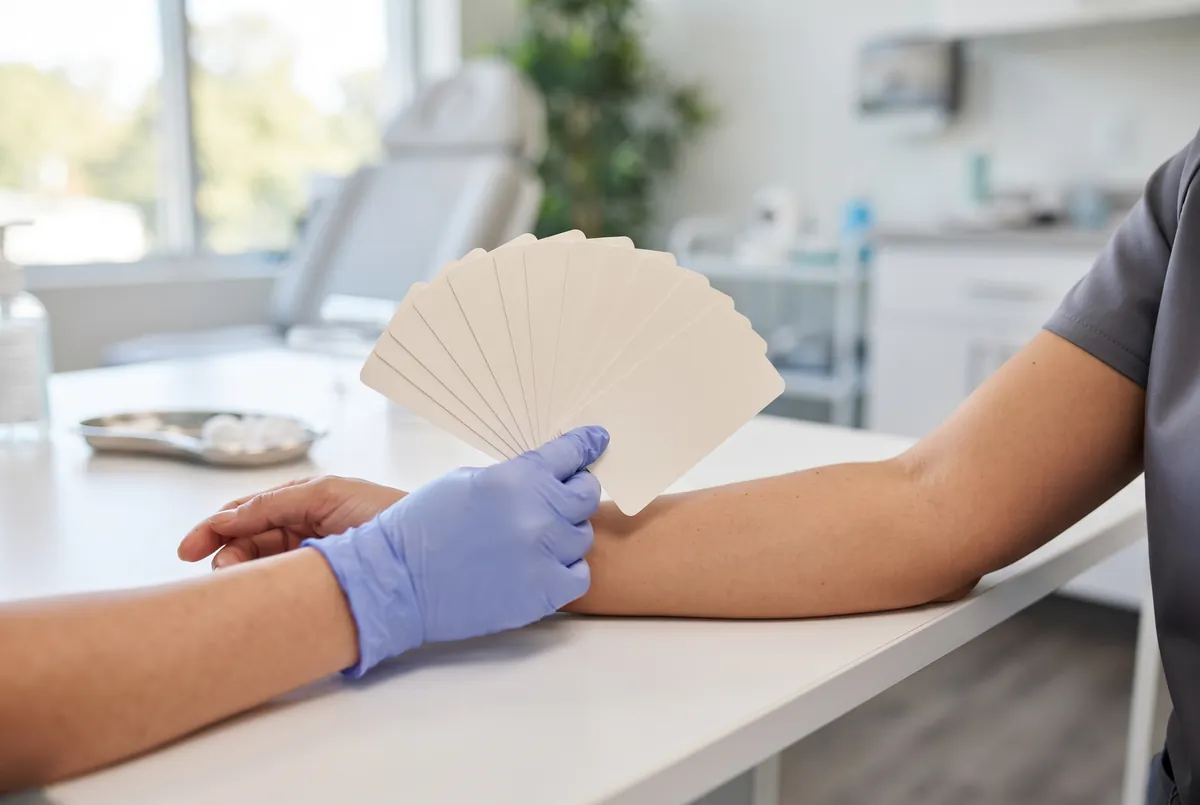
Everything starts with a consultation. A responsible provider asks about your health, medications, sun exposure, history of scarring or pigmentation problems, and previous hair removal. They look at the hair and skin in each area, explain realistic results, and perform a patch test: a few test flashes on a small spot, checked after the interval their protocol requires. A salon that skips the questionnaire and the patch test and goes straight to a full treatment is cutting corners where burns happen.
Prepare in the weeks before. Stop waxing, tweezing, threading, and epilating the area for about four weeks, so the roots are in place. Stay out of the sun and tanning beds and do not use self-tanner on the area. Shave the area the day before or the morning of the session, so that light goes into the follicle and not into hair lying on the surface, which would scorch the skin. Arrive with clean skin and no deodorant, perfume, lotion, or makeup on the treatment zone.
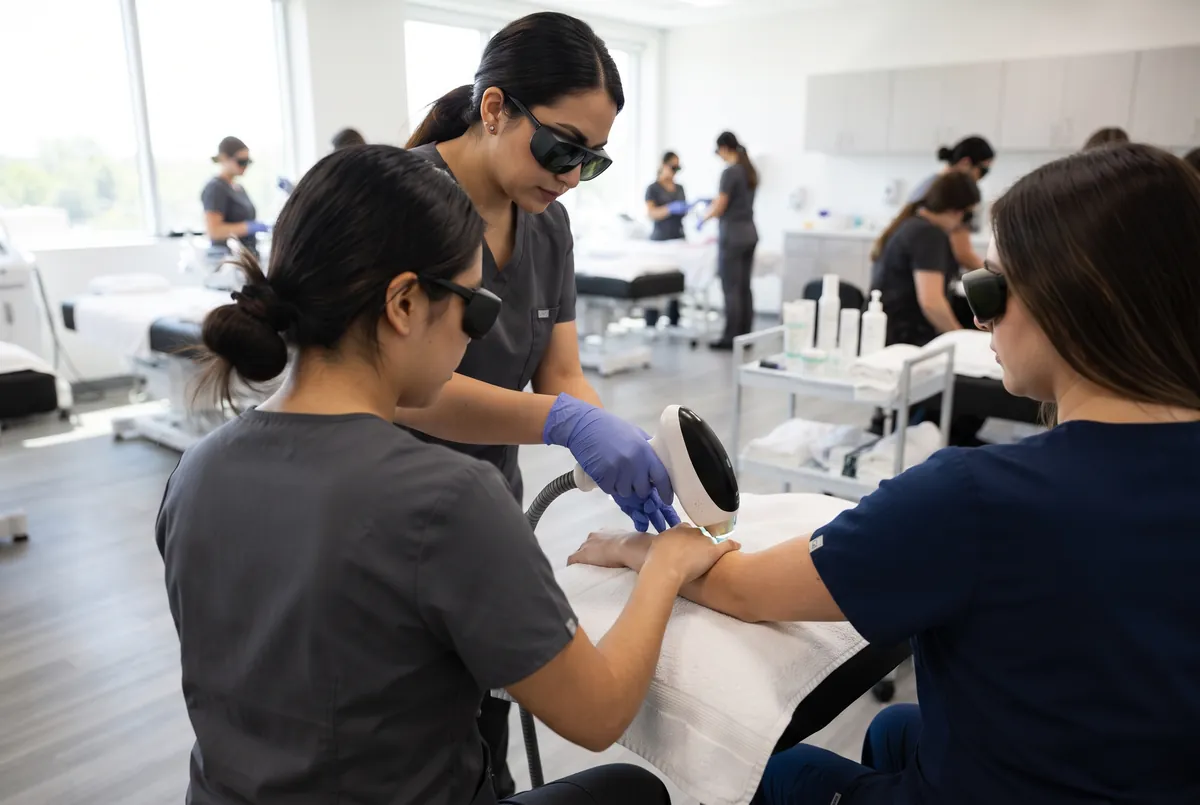
In the room, you and the operator both put on protective eyewear rated for the device. Dark surface marks such as moles are covered. A thin layer of clear, cool gel is spread on the skin so the handpiece glides and light passes evenly. The operator places the window flat on the skin, fires a flash, moves one position over, and repeats in rows without overlapping. Many machines chill the window to protect the surface. Each flash feels like a warm snap of a rubber band, sharper where hair is dense.
Afterward the gel is wiped off and a soothing product is applied. Mild redness and slight swelling around each follicle, which looks like goosebumps, are the normal response and usually settle within hours to a day or two. Small areas such as the upper lip or underarms take a few minutes. Full legs or a back take considerably longer. You can return to normal activity right away, with the aftercare rules below.
Does IPL Hair Removal Hurt?
Most clients describe IPL as uncomfortable but tolerable. The usual comparison is a rubber band snapping against the skin, followed by a moment of heat. The sensation is strongest where hair is dark, coarse, and dense, and on thin skin over bone: the bikini line, underarms, upper lip, and shins. It becomes milder from session to session as the hair thins, because there is less pigment absorbing energy.
Several things lower discomfort. Contact cooling in the handpiece, cold gel, and cold air all help. A close shave matters, since stubble on the surface burns and stings. Many women find treatments more painful in the days just before and during their period, so scheduling around that helps. Topical numbing creams should be used only if your provider approves, on limited areas, exactly as directed, because applying anesthetic cream over large areas of skin carries real medical risk.
Pain is also a safety signal. A flash that feels like a strong burn, pain that lingers for more than a few seconds, or skin that turns gray, white, or blisters means the setting is too high for your skin. Tell the operator immediately. With home devices, drop to a lower level or stop. Putting up with severe pain to "get better results" is how burns and pigment marks happen.
Aftercare, Sun Rules, and Side Effects
For the first day or two, treat the area like mildly sunburned skin. Cool it with a clean cold compress if it feels hot, and use a plain fragrance-free moisturizer or aloe gel. Avoid hot showers and baths, saunas, steam rooms, swimming pools, and hard workouts that cause sweating and friction. Skip deodorant on freshly treated underarms until the next day if you can. Do not scratch, scrub, or pick at the skin, and do not apply acids, retinoids, or perfumed products until it is fully calm.
Sun is the main enemy of a light-based course. Tanned skin absorbs more of each flash, and freshly treated skin pigments easily in sunlight. Keep the area out of direct sun for at least two weeks before and after each session, or longer if your provider advises, and use a broad-spectrum sunscreen of SPF 30 or higher on any treated skin that is exposed. This is the practical reason many people start a course in fall and finish before summer.
Expected side effects are short-lived: redness, mild swelling around follicles, warmth, and occasional itching. Less common effects include temporary darkening or lightening of the skin, crusting, and blisters, which point to a burn. Pigment changes usually fade over weeks to months but can last longer, especially on deeper skin tones. Scarring is rare and is nearly always linked to burns, wrong settings for the skin type, treatment over a tan, or picking at blisters.
Contact your provider if redness lasts beyond a few days, and see a physician promptly for blisters, open sores, signs of infection such as spreading redness, pus, or fever, or any pigment change that does not improve. Do not continue the course until the skin has fully healed and the cause has been identified. A responsible provider will lower settings, change technology, or stop altogether instead of pushing through.
At-Home IPL Devices: Do They Work?
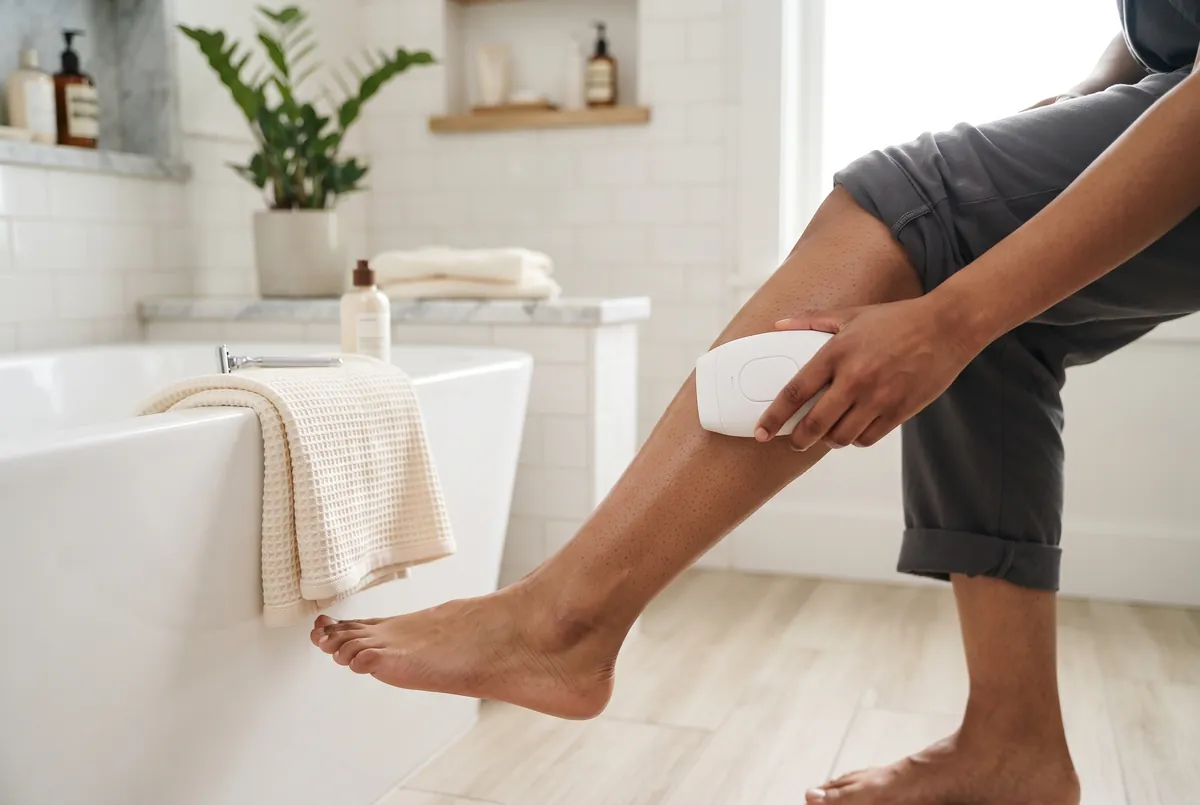
Home IPL devices work on the same principle as salon machines, at a much lower energy level. That lower output is what makes them reasonably safe to sell to the public, and it is also why results are slower and more modest. For a person with dark hair and light skin who uses the device consistently and correctly, a real reduction in hair density and thickness is realistic. A complete, lasting clearance from a home device alone is not.
If you buy one, choose a model that is FDA-cleared, has a built-in skin tone sensor that blocks flashes on skin that is too dark, and comes with a clear chart of suitable hair and skin colors. Read that chart honestly. Do a test flash on each new area and wait a day before treating the whole zone. Start at a low intensity and increase only while the sensation stays mild. Shave first, work in orderly rows on clean dry skin, and do not go over the same spot repeatedly in one session.
Follow the manufacturer's schedule, which usually calls for frequent sessions during the first couple of months and occasional maintenance afterward. Consistency in that initial phase decides the outcome. Irregular use, with a session here and there when you remember, is the most common reason home IPL "does not work." The second most common reason is the wrong hair color: no setting on any home device will treat gray, white, red, or light blond hair.
Use extra caution on the face. Most home devices are meant for use below the cheekbones only, and men's beards are usually excluded by the instructions because the hair is too dense. Stay away from the brows and eye area entirely. Women with hormonal chin and neck hair often find that home IPL changes little or seems to stimulate fine growth around the area. For a comparison of home tools with professional treatment, see home hair removal devices versus a professional.
Common Mistakes and What to Do If IPL Is Not Working
Most disappointing outcomes trace back to a short list of errors. People wax or tweeze between sessions and remove the target. They treat tanned skin, or tan right after. They attend irregularly, so each session hits a random set of follicles. They expect light to act on pale hair. They judge the result after two sessions. And in salons, some operators use the same cautious setting for an entire course, which keeps clients comfortable but never delivers enough energy to disable the follicle.
If you have completed several properly spaced sessions and see little change, stop and reassess before buying more. Check whether the hair is truly dark enough. Ask the provider what settings were used and whether they were raised as your skin tolerated. Consider whether a hormonal cause is feeding new growth, and see a physician if that seems likely. Ask whether a true laser suited to your skin tone would do better. For small or stubborn areas, or light hair, move to electrolysis.
Combining methods is often the smartest plan. A common sequence in my practice is light-based reduction for large, dense, dark areas such as legs, underarms, or bikini, followed by electrolysis to clear what remains: the sparse, finer, or lighter hairs that no longer hold enough pigment for light to work. Electrolysis treats each follicle directly with a fine probe, so color does not matter. The complete overview is in what electrolysis is and how it works.

Choosing an IPL Provider and Understanding Cost
Who may operate IPL and laser devices in the United States depends entirely on the state. Some states treat light-based hair removal as a medical procedure that requires a physician's delegation and supervision. Others allow licensed estheticians, cosmetologists, electrologists, or certified laser technicians to perform it under defined conditions. Before booking, ask what license or certification the operator holds, who supervises the practice, and what training they have on that specific machine.
Good providers behave in recognizable ways. They take a medical history and ask about sun and medications. They patch test. They tell you plainly if your hair or skin is a poor match and suggest a different method instead of selling a package anyway. They give you eyewear, adjust settings to your response, write down the parameters used at each visit, and give written aftercare. They do not promise permanent removal, a guaranteed number of sessions, or results on gray and blond hair.
On cost, I will not quote figures, because prices differ widely by region, body area, device, and provider type. In general IPL sessions are priced below laser sessions, and both are sold per area, with large zones costing more than small ones. Packages lower the per-session price but tie you to one provider, so I suggest paying for a single session or a small set first. A home device is a one-time purchase that suits ongoing maintenance on legs and underarms better than it suits a full clearance.
Compare the total, not the session price. A cheaper method that needs many more sessions plus lifelong maintenance may cost more over time than a more effective one. For small areas where every hair matters, such as the chin, electrolysis is often the more economical route in the end because finished follicles stay finished. To see how pricing for that method is structured, read how much electrolysis costs and why.

For Students and Professionals: Where IPL Fits in a Career
Beauty students often ask me whether they should learn light-based hair removal or electrolysis. They are different skills with different legal frameworks. Light-based work is fast and popular, but the right to perform it varies by state and often depends on a medical director. Electrolysis has its own license in many states, a slower pace, and a client base that light cannot serve: people with gray, blond, or red hair, deeper skin tones, hormonal facial hair, and those finishing after laser.
Many successful practitioners offer both, or work beside someone who does, and refer clients honestly between methods. Understanding skin typing, the hair cycle, contraindications, and burn prevention is essential in either field. Theory can be studied in advance, but it does not replace the supervised, in-person training hours and licensing your state requires. Start with the overview of how to become a laser hair removal technician, and check electrology rules in the electrolysis licensing hub.
Your Next Step
Look at the hair you want to treat in daylight. If it is dark and your skin is light to medium and untanned, IPL can reasonably thin it, and a professional consultation with a patch test is the right first move. If the hair is gray, white, red, or pale blond, if your skin is deep brown or black, or if the area is small and you want it clear for good, skip IPL and ask about a suitable laser or electrolysis instead.
Whatever you choose, go in with accurate expectations: a series of sessions, strict sun avoidance, reduction and not total removal, and some maintenance afterward. If you want to compare every option side by side before deciding, read hair removal methods compared, and if you are considering a career in this field, explore our electrolysis theory course as a starting point.
State Requirements
State licensing guides
Hours, exams, fees, and the licensing board differ by state. Open your state for the current requirements.
Common Questions
FAQ
IPL offers long-term hair reduction, not complete permanent removal. After a full course, treated areas usually have fewer hairs, and the remaining ones are finer and slower growing. Some follicles recover over time and hormones can activate new ones, so occasional maintenance sessions are normal. Electrolysis is the only method recognized by the FDA for permanent hair removal, and many people use it to finish the hairs that remain after IPL.
A laser emits one precise wavelength in a focused beam, while IPL emits a broad band of filtered light. Both heat pigment in the hair to damage the follicle. Professional lasers are generally more precise and effective per session and offer safer options for deeper skin tones. IPL is less expensive and widely available for home use, but it is less forgiving on darker or tanned skin and often needs more sessions.
No. IPL depends on dark melanin pigment in the hair to absorb light. Gray and white hair have no pigment, red hair has a pigment that absorbs this light poorly, and light blond hair has too little. No device setting changes that. For these hair colors, electrolysis is the effective option because it treats the follicle directly regardless of color. See electrolysis for gray hair for details.
IPL carries a higher risk of burns and pigment changes on dark brown and black skin, because pigment in the skin absorbs the light before it reaches the follicle. Most home devices block use on deep skin tones for this reason. People with darker skin are usually better served by an Nd:YAG laser operated by an experienced provider, or by electrolysis, which is safe for every skin tone. Read more in electrolysis for dark skin.
It varies with hair color and thickness, skin tone, body area, hormones, and device power. Professional courses commonly involve around six or more sessions per area, spaced several weeks apart to follow the hair growth cycle, with maintenance afterward. Home devices call for frequent use during the first couple of months and periodic touch-ups after that. A provider can estimate a range after examining your hair and skin, but nobody can guarantee an exact number.
Shave. Shaving removes the hair above the skin and leaves the pigmented root in the follicle, which is what the light needs to target. Waxing, tweezing, threading, and epilating pull the root out, so there is nothing to absorb the light. Stop those methods about four weeks before a course and for its whole duration. Shave the day before or the morning of each session.
Professional IPL is used on both, with care. At home, most devices allow use on the female face below the cheekbones and on the bikini line, but not near the eyes, on the brows, on mucous membranes, or on men's beards. Facial hair is often hormonal and fine, so results are less predictable there, and fine facial down should not be treated. Follow the device manual exactly and patch test first.
Rarely, light-based treatment is followed by darker, denser growth of fine hair in or near the treated area. This is called paradoxical hypertrichosis. It has been reported mainly on the face and neck and in people with hormonal hair growth and olive or darker skin. If you notice it, stop treating that area and consult your provider. Electrolysis is typically used to clear hair that has been stimulated this way.
Keep Reading
Related Guides


