Electrolysis
Insurance for Electrologists: Coverage Types and What to Ask

Quick answer
Most electrologists carry professional liability for treatment claims and general liability for accidents in the studio, and many add property coverage for equipment, plus cyber or workers' compensation as needed. Read the services listed, exclusions and claim type, tell your agent about changes in how you work, and keep consent forms and treatment records organized.
Insurance for electrologists usually starts with professional liability coverage, which responds to claims that your treatment injured a client, and general liability coverage, which responds to accidents such as a client slipping in your studio. Depending on how you work, you may also need property coverage for your epilator and furnishings, business interruption coverage, product liability for anything you sell, cyber coverage for client data, and workers' compensation if you have employees. Some states, landlords, schools and studios require certain coverage; many simply expect it.
I am not an insurance agent, and nothing here replaces advice from a licensed agent or broker who can read your actual policy. What I can share is what two decades of running an electrolysis practice taught me about the questions to ask, the gaps that catch practitioners by surprise, and the paperwork habits that make a policy useful when you need it. Electrolysis is a low-risk service when done well, but it uses electricity and a probe inside the follicle, and that is exactly why the right coverage matters.
Why Electrologists Need Insurance
Every electrolysis treatment carries a small chance of an outcome a client is unhappy with. Even with careful technique, a client might develop more redness or scabbing than expected, temporary pigment changes, or, rarely, scarring. Sometimes the cause is the treatment; sometimes it is the client's skin, a medication they did not disclose, or aftercare they did not follow. Either way, a client who is upset may file a complaint with the board or bring a claim against you, and defending a claim costs money even when you did nothing wrong.
That is the core reason for professional liability insurance: it can pay for your legal defense and for settlements or judgments covered by the policy, within its limits. Without it, those costs come from your savings or your business. For a solo practitioner, even one claim could be serious. Insurance turns that uncertain risk into a predictable yearly cost.
There are practical reasons too. Many landlords and suite rental companies ask tenants to carry liability insurance and to name the landlord on the policy. Many spas, medical offices and salons require independent practitioners to show proof of coverage before working on their premises. Schools may require insurance for students or instructors. Some states require certain coverage as a condition of licensing or business registration. Check your state and local rules; our electrolysis licensing hub is the place to start.
New practitioners sometimes delay insurance until they have a full client book, reasoning that a few clients a week carry little risk. I see it differently. Your first months are when your technique is least practiced and your judgment about difficult skin is least developed, so the chance of an unexpected reaction is, if anything, higher. Arrange coverage before your first paying client, even if you start part-time, and make it part of your opening checklist next to your license and your sterilization setup.
Professional Liability Coverage
Professional liability, sometimes called malpractice or errors and omissions coverage, responds to claims arising from the professional service itself. For an electrologist that typically means allegations that a treatment caused a burn, scarring, infection, pigment change or other injury, or that you failed to warn a client properly. It usually covers legal defense costs and any covered settlement or judgment up to the policy limits.
The most important thing to confirm is that the policy names electrolysis as a covered service. Some beauty policies list many services but treat electrolysis differently, exclude it, or classify it under a higher risk category. Do not assume, and do not rely on a sales summary or a website description of the program. Ask the agent to show you where electrolysis appears in the policy wording or the declarations. If you also offer other services, such as waxing, facials or laser where your license allows it, make sure every one of them is listed. A service missing from the policy may not be covered at all.
Also ask which modalities are covered. A policy may describe electrolysis generally, which should include galvanic, thermolysis and blend, but if you use any newer device or technique, confirm it fits the policy's description. If you perform any services in coordination with medical providers, such as pre-surgical hair removal for gender-affirming care, ask whether that work is covered under your policy or whether the medical provider's coverage applies. Our guide on gender-affirming electrolysis covers the clinical side of that work.
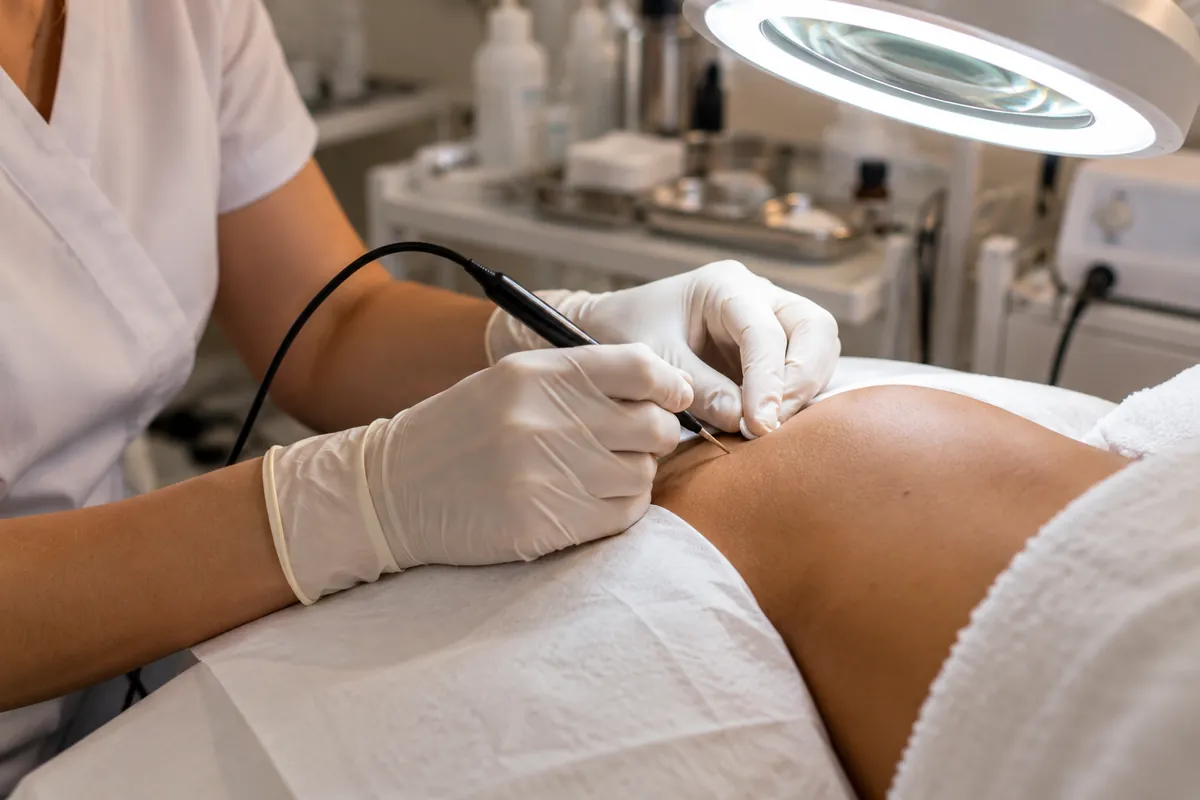
General Liability Coverage
General liability insurance covers a different set of risks: bodily injury or property damage that happens at your business but does not arise from your professional service. A client trips over a cord, a chair collapses, a hot sterilizer tray falls on someone's foot in the waiting area. A delivery person slips on a wet floor near your entrance. It can also cover certain claims of damage to someone else's property, and some policies include coverage for advertising injury, such as a claim that your marketing used someone else's image without permission.
Many practitioners buy professional and general liability together in one beauty or personal care package. That is often convenient and economical, but read both parts. The general liability portion may have its own limits, its own exclusions and its own conditions. If a landlord asks you to name them as an additional insured, that request usually concerns general liability, and the agent will issue a certificate showing it.
If you work in a shared building, the landlord's own insurance covers the building, not you. If you damage the premises, for example through a water leak from equipment you installed, you may be responsible, which is where coverage for damage to rented premises comes in. Ask whether your policy includes it and at what limit. Small details like this become important only when something goes wrong, which is why it pays to ask before.
| Coverage type | What it generally responds to | Example for an electrologist |
|---|---|---|
| Professional liability | Injury or harm alleged from the service | A client claims scarring after treatment |
| General liability | Accidents on premises not caused by the service | A client trips over a cord in the waiting area |
| Damage to rented premises | Damage you cause to space you rent | A sterilizer leak damages the suite floor |
| Product liability | Harm from products you sell | A client reacts to an aftercare product you sold |
| Property coverage | Loss of your equipment and contents | Your epilator is stolen or damaged in a fire |
| Business interruption | Lost income after a covered event | You cannot work for weeks after a covered fire |
Property and Equipment Coverage
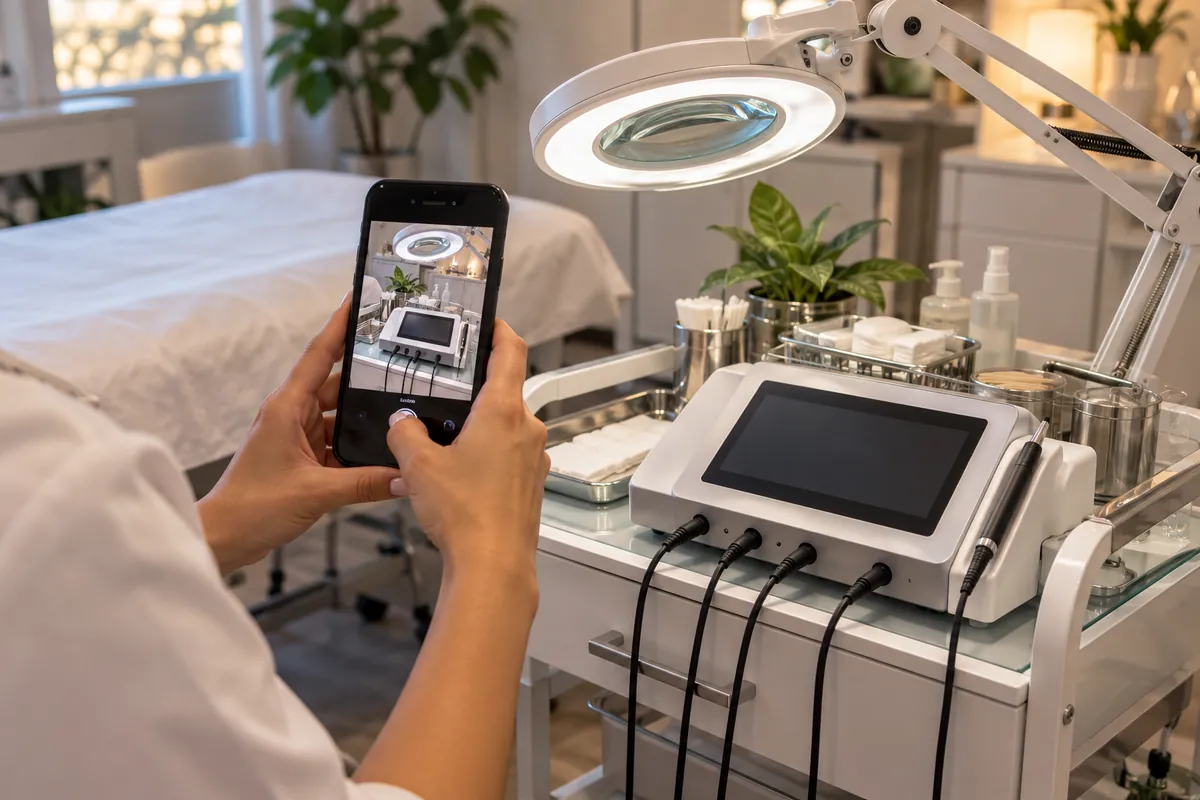
Your epilator, magnifying lamps, treatment bed, autoclave and other equipment represent a significant investment, and some of it is hard to replace quickly. Property coverage, sometimes included in a business owner's policy, can pay to repair or replace them after covered events such as fire, theft, water damage or vandalism. If you work from a rented suite, the landlord's policy almost certainly does not cover your contents.
Ask how property is valued. Replacement cost coverage pays what it costs to buy new equivalent equipment, while actual cash value coverage subtracts depreciation, which can leave you well short of what a new epilator costs. Ask about equipment breakdown coverage too, which addresses mechanical or electrical failure that standard property policies may exclude. For a practitioner who relies on one or two machines, a breakdown can stop the business until repair or replacement.
If you carry equipment to clients' homes, a medical office or a trade show, ask whether it is covered away from your studio. Some policies limit coverage for property in transit or at other locations. Keep a list of your equipment with serial numbers, purchase dates, receipts and photos, stored somewhere other than the studio. If you ever make a claim, that list makes the process much faster.
Update the inventory whenever you buy or retire equipment, and include smaller items that add up: magnifiers, lamps, chairs, a sterilizer, linens, supplies kept in stock, and the computer or tablet you use for bookings and records. A claim for a lost studio is rarely about a single machine. It is about everything needed to reopen, and an accurate list helps you recover all of it rather than only what you remember.
Other Coverage to Consider
Business interruption, or business income, coverage can replace lost income and pay certain ongoing expenses if a covered event such as a fire forces you to close temporarily. It is often tied to property coverage, so it may only respond if the cause of closure is a covered property loss. Read the waiting period and the length of time the coverage pays. For a solo practitioner whose income stops the moment the studio closes, this coverage can be the difference between a hard month and losing the business.
Product liability coverage matters if you sell aftercare products, skincare or anything else. If a client has a reaction to a product you sold, a claim may come to you as the seller. Some beauty policies include it, others do not. Cyber liability coverage responds to data breaches, such as a stolen laptop with client health histories or a hacked booking system. Because electrolysis records often contain health information, data protection deserves attention; see our sibling guide on consent forms and client records for record keeping practices.
If you hire employees, workers' compensation insurance is generally required by state law, with rules that vary by state. It covers employees' work-related injuries and illness. Commercial auto coverage may matter if you use a vehicle for business, since a personal auto policy might not cover business use. Some practitioners also look at disability insurance for themselves, because an injury to your hands, back or eyes can stop your income. Our sibling guide on electrologist ergonomics covers how to reduce those risks.
How the Way You Work Changes What You Need
An employed electrologist working in a clinic or spa is often covered by the employer's policy. But being covered for the employer's benefit is not always the same as being personally protected. Ask your employer for written confirmation of what covers you, whether the policy names employees as insureds, and whether you have coverage for anything you do outside that workplace. Some employed practitioners buy an individual professional liability policy for extra protection or for side work.
Independent practitioners who rent a suite or booth need their own coverage almost always. The studio's or landlord's policy protects the studio, not your services. Expect to provide a certificate of insurance and to name the landlord as an additional insured. If you work in more than one location, such as your own suite and a medical office one day a week, tell your agent so that every location is covered.
Home-based practitioners face particular gaps. Homeowner's and renter's policies commonly exclude or limit business activity, which may leave both liability and equipment uncovered. Practitioners who travel to clients' homes have risks related to unfamiliar premises and equipment in transit. Students and apprentices should ask whether their school's or sponsor's policy covers them during supervised treatments. Our guide on home studio vs renting a suite covers the broader trade-offs.
- Employee in a clinic or spa: confirm in writing what the employer's policy covers and whether you need your own.
- Suite or booth renter: own professional and general liability, landlord as additional insured, contents coverage.
- Home studio: business coverage separate from homeowner's or renter's insurance, and check local rules.
- Mobile or multi-location: every location and equipment in transit listed with the agent.
- Student or apprentice: confirm coverage under the school or sponsor during supervised treatments.
- Employer: workers' compensation as your state requires, plus coverage for staff services.

How to Read an Insurance Policy
Insurance documents are dense, but a few parts carry most of the meaning. The declarations page lists the named insured, the policy period, the coverages purchased, the limits and the deductibles. The insuring agreement explains what the policy promises to pay. Definitions explain what key words mean, and those definitions often decide whether a claim is covered. Exclusions list what is not covered. Conditions explain your duties, such as reporting claims promptly.
Pay attention to limits. A policy usually has a per-claim limit, sometimes called each occurrence, and an aggregate limit, the most it will pay in the policy period. Ask whether defense costs are paid in addition to the limits or reduce them. If defense costs reduce the limits, a long legal process can leave less money available to resolve the claim itself. Deductibles or retentions are the amount you pay before the policy responds.
Understand whether a professional liability policy is written on an occurrence basis or a claims-made basis. An occurrence policy generally covers incidents that happened during the policy period, even if the claim arrives years later. A claims-made policy generally covers claims made while the policy is active, for incidents after a retroactive date. With claims-made coverage, switching insurers or retiring can leave a gap unless you arrange tail coverage or prior acts coverage. Ask your agent to explain how your policy works in your situation.
Look for endorsements, too. An endorsement is a written change to the standard policy that adds, removes or modifies coverage. It might add a service, name an additional insured, extend coverage to a new location, or introduce an exclusion. Endorsements are often listed at the end of the policy or on the declarations page, and they can change the meaning of everything before them. If an agent mentions that something was "added by endorsement," ask to see the exact wording and keep it with your policy.
Questions to Ask an Insurance Agent
Work with a licensed agent or broker who understands beauty and personal care businesses, and ask them to put answers in writing. Explain exactly what you do: electrolysis modalities, treatment areas, any other services, where you work, whether you sell products, whether you employ anyone, and whether you work with clients referred by medical providers. The more precise your description, the more accurate the coverage.
Ask how the policy handles board complaints. Some professional liability policies include limited coverage for legal costs related to defending your license before the board, which is a separate process from a lawsuit. Ask about claims involving minors, because electrolysis is sometimes performed on teenagers with parental consent, and our guide on electrolysis for teenagers discusses that area. Ask whether coverage requires you to follow specific infection control or record keeping practices.
Compare more than price. Two policies at different costs may have very different covered services, limits, exclusions and defense terms. A cheaper policy that excludes electrolysis, or has low limits, is not a bargain. If you are unsure, ask the agent to explain the differences side by side, and do not sign until you understand them.
- Is electrolysis listed by name as a covered service, and which modalities are included?
- Are all my other services listed as well?
- Is the professional liability coverage occurrence or claims-made, and what is the retroactive date?
- What are the per-claim and aggregate limits, and do defense costs reduce them?
- What is the deductible or retention?
- Does the policy help with costs of a board complaint?
- Are all my work locations and equipment in transit covered?
- Is product liability included if I sell aftercare products?
- Are students, apprentices or employees covered when they treat clients?
- What must I do, and how quickly, if a client complains or an incident happens?

Common Coverage Gaps
The first and most serious gap is a service not listed on the policy. Practitioners add services over the years, such as a new skin treatment or a waxing service, without telling their agent. If a claim involves an unlisted service, coverage may be denied. Review your list of services against the policy every year and before adding anything new.
The second gap involves locations. A policy may cover your main studio but not a second location, a client's home, or a temporary space at an event. The third gap is equipment: no property coverage at all, actual cash value instead of replacement cost, or no protection for equipment breakdown. The fourth gap appears when switching claims-made policies or retiring without tail coverage, leaving past treatments without protection against claims that arrive later.
The fifth gap is working outside your scope. Insurance generally covers you for services within your legal scope of practice. If you perform something your license does not allow in your state, the policy may not respond, and the board may treat it as a separate violation. The sixth gap is assuming someone else's policy covers you, for example an employer's, a landlord's or a school's, without written confirmation. Each of these gaps is easy to close with a phone call; each is expensive to discover after a claim.
Risk Management That Supports Your Coverage
Insurance responds after something goes wrong. Good habits reduce how often things go wrong and make any claim easier to defend. Start with the consultation. A thorough health history, signed consent, and a clear explanation of expected reactions and aftercare reduce surprises. When a client knows that mild redness and small scabs can occur and how to care for them, they are less likely to be alarmed when it happens.
Document every treatment: date, area, modality, settings, duration, skin response and aftercare given. If a client later claims an injury, these notes show what you did and when. Keep sterilization records for your autoclave, including routine monitoring where your rules require it; our sibling guide on autoclave and sterilization for electrolysis explains the essentials. Keep your license, continuing education and insurance current, because a lapse in any one of them can complicate a claim.
Use test patches or short first sessions where appropriate, especially for clients with sensitive skin, darker skin prone to pigment changes, or a history of reactions. Photograph the treatment area before beginning a course of treatment, with written consent, so you have a record of the skin's starting condition. Stop treatment when you see signs of overtreatment, and document why. These habits make you a better practitioner and a lower insurance risk at the same time.
What to Do If a Client Complains or Is Injured
If a client contacts you about a reaction or injury, respond promptly, calmly and with care. Ask what they are experiencing, when it started, and what aftercare they have followed. Offer to see them so you can look at the area, and suggest they see a physician or dermatologist if there are signs of infection, worsening pain, spreading redness, or anything beyond the normal healing you described. Write down the conversation the same day. Note the date, the time, what the client described, what you advised, and any photos the client shares with permission. Keep the tone of the note factual and neutral, because it may be read later by your insurer or the board, and plain facts are what help everyone understand what happened.
Be careful about what you say. Being kind and concerned is right; making statements about fault or promising compensation before speaking with your insurer may affect your coverage. Many policies require you to report incidents or potential claims promptly, sometimes even before a formal claim is made. Read your policy's conditions and call your agent or insurer when an incident occurs that could become a claim. Delayed reporting is one of the most common reasons coverage problems arise.
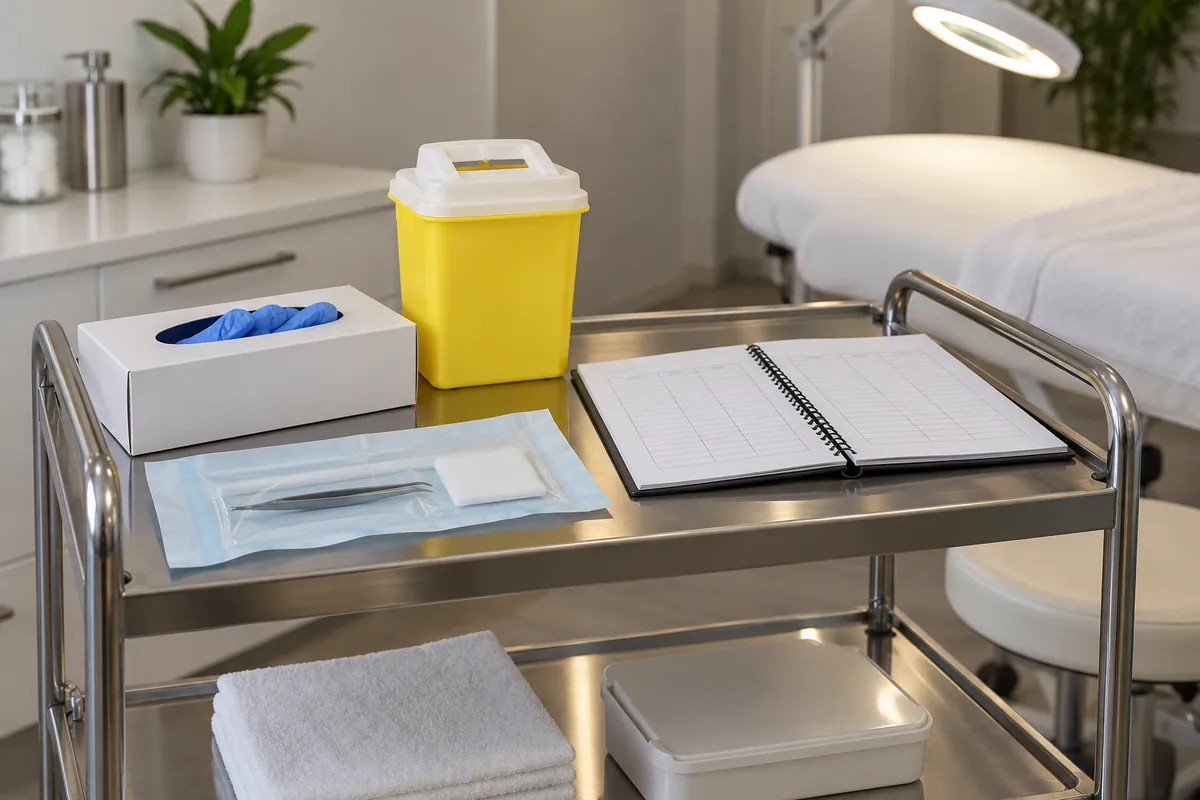
Preserve everything: the client's file, consent form, treatment notes, photos, sterilization records for that day, and any messages. Do not alter records after the fact; if you need to add a note, add it as a dated addendum. If the client files a board complaint, notify your insurer and consider professional advice before responding. A calm, documented, honest approach serves you far better than a defensive one.
- Listen, ask about symptoms and aftercare, and offer to see the client.
- Recommend a physician or dermatologist when signs go beyond normal healing.
- Write a dated note of every conversation.
- Read your policy's reporting conditions and notify your insurer promptly.
- Avoid statements about fault or offers of payment before speaking with the insurer.
- Preserve all records without altering them; add dated addenda only.
- Notify your insurer if a board complaint is filed.

Reviewing and Renewing Your Coverage
Set a yearly reminder before your renewal date to review your insurance. Compare your current services, locations, equipment and staff against the policy. If anything changed, tell your agent before renewal. Update your equipment inventory, especially after buying a new epilator. Ask whether limits still fit your practice and whether any new endorsements are available that address risks you face.
Keep certificates of insurance on file and send updated ones to landlords, studios and partners each year without waiting to be asked. Keep copies of all policies, including expired ones, because a claim may arrive years after the treatment. If you change insurers, ask how prior acts will be handled under the new policy and whether you need tail coverage from the old one, particularly for claims-made professional liability.
Major life and business changes also call for a review: moving to a new state, opening a second location, hiring your first employee, starting to teach, or adding a new service. If you plan to train students or apprentices, our sibling guides on becoming an electrology instructor and the electrolysis apprenticeship route explain the roles; ask your agent how coverage applies before anyone else treats your clients.

Documents to keep ready for your insurer
Insurance works best when your paperwork is organized before anything goes wrong. Keep a folder, paper or digital, with your current policy and its endorsements, your license and renewal receipts, proof of continuing education, your signed consent forms, your treatment records, equipment maintenance and sterilization logs, and any lease or agreement with a host salon or suite. If a client complains, the insurer will ask for these, usually quickly, and a well kept file helps them help you. It also shows that you run a careful practice, which can matter at renewal.
Update the folder whenever something changes: a new service, a new location, a new employee, a new device. Tell your insurer or agent about changes in writing and keep the reply. A policy written for one setup may not respond to another, and finding out after a claim is too late. Review the declarations page each year, confirm that your name, address, services and dates are correct, and read the exclusions again. Even experienced practitioners find surprises when they read slowly. If anything is confusing, ask your agent to explain it in plain language and note the answer.
Be careful with informal arrangements, too. If you share space with another professional, borrow equipment, or let a friend help at the front desk, ask what that means for coverage. Verbal agreements do not appear in a policy, and an insurer will look only at what is written. Put arrangements in writing, ask the agent whether they change your risk, and file the answer with your policy.
Finally, treat the renewal as a conversation rather than a bill. Before paying, describe how your practice changed over the year and ask whether the coverage still fits. A few minutes of review can reveal that a service you added is not listed, or that a limit no longer suits your volume of clients. Small corrections cost little compared with an uncovered claim. Keep notes of each call and email so that nothing depends on memory.
If you ever stop practicing or take a long break, do not simply let the policy lapse without asking about it. Some coverage types protect you for past work only if you keep a particular option in place. Ask your agent what happens to claims that arrive after the policy ends, and keep your records for as long as your state and insurer advise.
Your Next Step
Pull out your current policy, or if you do not have one, write a one-page description of your practice: services, modalities, locations, equipment, products sold and any staff. Take that page to a licensed agent who works with beauty and personal care businesses and ask the questions in this guide. Confirm with your state board and local licensing office whether any coverage is required where you work, starting with our state electrolysis licensing guides.
If you are still training, it is worth understanding insurance before you open your doors. Our electrolysis course covers the theory of safe practice that underpins any good insurance relationship, alongside the in-person training and license your state requires. Estheticians weighing similar questions can read our sibling guide on esthetician liability insurance.
State Requirements
State licensing guides
Hours, exams, fees, and the licensing board differ by state. Open your state for the current requirements.
Looking for a practitioner or a program near you? Browse electrologists by state and city or beauty schools by state.
Common Questions
FAQ
It depends on where and how you work. Some states or localities require certain coverage, and many landlords, studios, spas and medical offices require proof of liability insurance before you can work there. Even where it is not required, most practitioners carry professional and general liability coverage. Check your state board and local rules, starting with our electrolysis licensing hub.
Professional liability responds to claims that your electrolysis treatment itself caused harm, such as scarring or pigment changes. General liability responds to accidents on your premises that are not caused by the service, such as a client tripping over a cord. Most practitioners need both, often bought together in a beauty or personal care package.
Not always. Some policies list electrolysis explicitly, some exclude it, and some classify it differently from other beauty services. Ask the agent to show you where electrolysis appears in the policy wording or declarations. If you offer other services as well, confirm each one is listed.
You may be, but get written confirmation of what the employer's policy covers, whether employees are named as insureds, and whether anything you do outside that workplace is covered. Some employed electrologists buy their own professional liability policy for extra protection or for side work.
A claims-made policy generally covers claims made while the policy is active, for incidents after a retroactive date. If you cancel, switch insurers or retire, a claim arriving later about a past treatment might not be covered unless you arrange tail or prior acts coverage. Occurrence policies work differently. Ask your agent which type you have.
Often it does not, or only in a limited way. Homeowner's and renter's policies commonly exclude or limit business activity, which can leave liability and equipment uncovered. Ask your agent about business coverage for a home studio. Our home electrolysis studio legal checklist covers other things to check.
Respond calmly, ask about symptoms and aftercare, offer to see the client, and recommend a physician or dermatologist if signs go beyond normal healing. Write a dated note of the conversation, read your policy's reporting conditions, and notify your insurer promptly. Avoid admitting fault or offering payment before speaking with the insurer, and do not alter records.
Generally no. Policies usually cover services within your legal scope, and performing services outside it can lead to denied coverage and separate action by the board. Confirm your scope with your state board before adding any new service, and tell your agent before you begin offering it.
Keep Reading
Related Guides


