Electrolysis
Electrolysis for Trans Women: Gender Affirming Hair Removal Guide
Quick answer
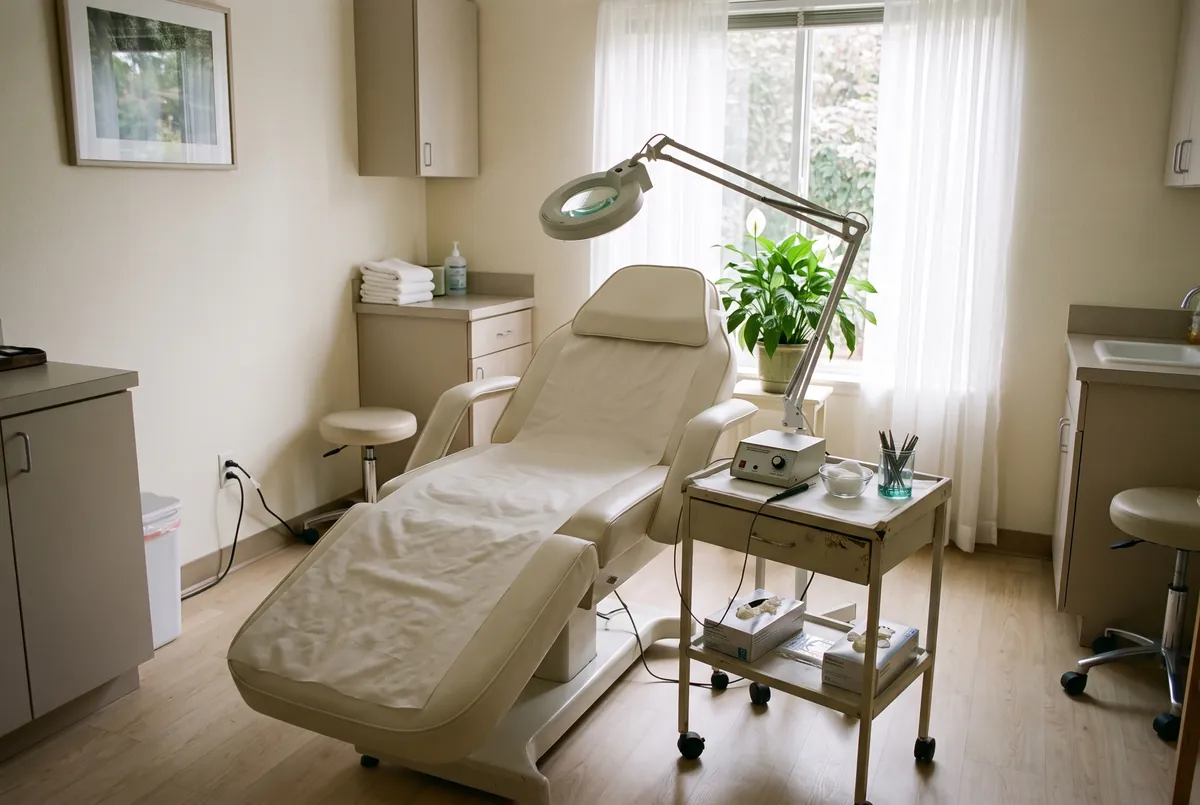
Electrolysis is often the core of gender-affirming hair removal for trans women because it is the only method the FDA accepts for permanent removal claims and it treats gray, white, blond, and red hairs that laser misses. Hormone therapy rarely clears an established beard. Full facial clearing is a long project measured in many months, so choose an experienced, affirming electrologist.
Clients often come to me after months of shaving twice a day, covering shadow with makeup, and reading forum threads that contradict each other. Electrolysis for trans women is not a special procedure with its own rules. It is the same follicle-by-follicle technique used on every face, applied to a situation that asks more of the practitioner: dense, coarse beard hair, long sessions, a client who may be living with daily dysphoria, and sometimes a surgical deadline. After more than twenty years as a licensed electrologist, I can say that the technical side and the human side matter equally here, and a practitioner who handles only one of them well is not the right fit.
This guide covers gender affirming hair removal from a practitioner's point of view: why electrolysis is so often needed even after laser and hormones, how facial clearing works, what timelines look like without false promises, how to manage pain, how to find an affirming electrologist, what to know before gender-affirming surgery, and how insurance questions usually go. There is also a section for trans men and nonbinary clients. This is general information, not medical advice. Your prescribing clinician, your surgeon, and a dermatologist when needed are the right people for medical decisions, and I point out where each of them comes in.
Why Electrolysis Is Often the Core of the Plan
Electrolysis is the only hair removal method the FDA accepts for claims of permanent hair removal. A fine probe slides into the natural opening of each follicle, and a small, controlled amount of energy destroys the tissue that produces the hair. Because it works on the follicle directly, it does not depend on hair color, skin tone, or hair thickness. That independence is the reason it shows up in almost every trans woman's hair removal plan at some point, even when laser does a large share of the early work.
Laser targets pigment. On a dark, coarse beard over lighter skin, it can reduce density quickly. Most faces are not uniform, though. Many of my clients have dark hair on the cheeks, lighter or reddish hair at the chin, fine blond hair on the upper lip, and a growing number of white or gray hairs scattered through the beard. Laser has little or nothing to aim at in those lighter hairs, and adding more laser sessions does not change that physics. Electrolysis treats them exactly the way it treats dark hair.
There is a second reason. Laser gives long-term reduction rather than guaranteed permanence, and some follicles can recover or new ones can activate later. For a client whose goal is a face that needs no shaving at all, the last stretch of the work almost always falls to electrolysis. In my experience the real question is rarely laser or electrolysis. It is how much of each, in what order, and on which parts of the face, decided after someone has actually looked at your hair and skin.
What Hormone Therapy Does and Does Not Change
Clients are often told, by friends or by the internet, that estrogen will take care of the beard. It usually does not. Feminizing hormone therapy lowers the influence of testosterone on hair follicles, and over time many people notice body hair becoming finer, lighter, and slower to grow. Facial hair that developed during a testosterone-driven puberty behaves differently. Those follicles are well established, and hormones may soften them a little or slow them down, but they rarely disappear without direct treatment.
What hormones can do is make the work steadier. When testosterone is suppressed, fewer new follicles tend to switch on, and the ones already present may grow a little slower and finer. For the electrologist, that can mean each session shows more visible progress because the target is not moving as much. This is a pattern I see in practice, not a guarantee, and it depends on the person, the regimen, and time. Any question about your regimen, dose, or lab results belongs with your prescribing clinician, never with your electrologist.
You do not need to wait for hormones before starting electrolysis. Some clients begin before hormones, some at the same time, and some years later. What matters is that your electrologist knows the general picture, because a change in hormone therapy can change how active the hair is during a course. Hormones also do not restore pigment, so gray, white, and blond hairs stay unresponsive to laser whether or not you are on hormones. For more on how hormones drive hair growth in general, see how hormonal hair growth affects electrolysis treatment.
Laser, Electrolysis, or Both: Building a Facial Plan
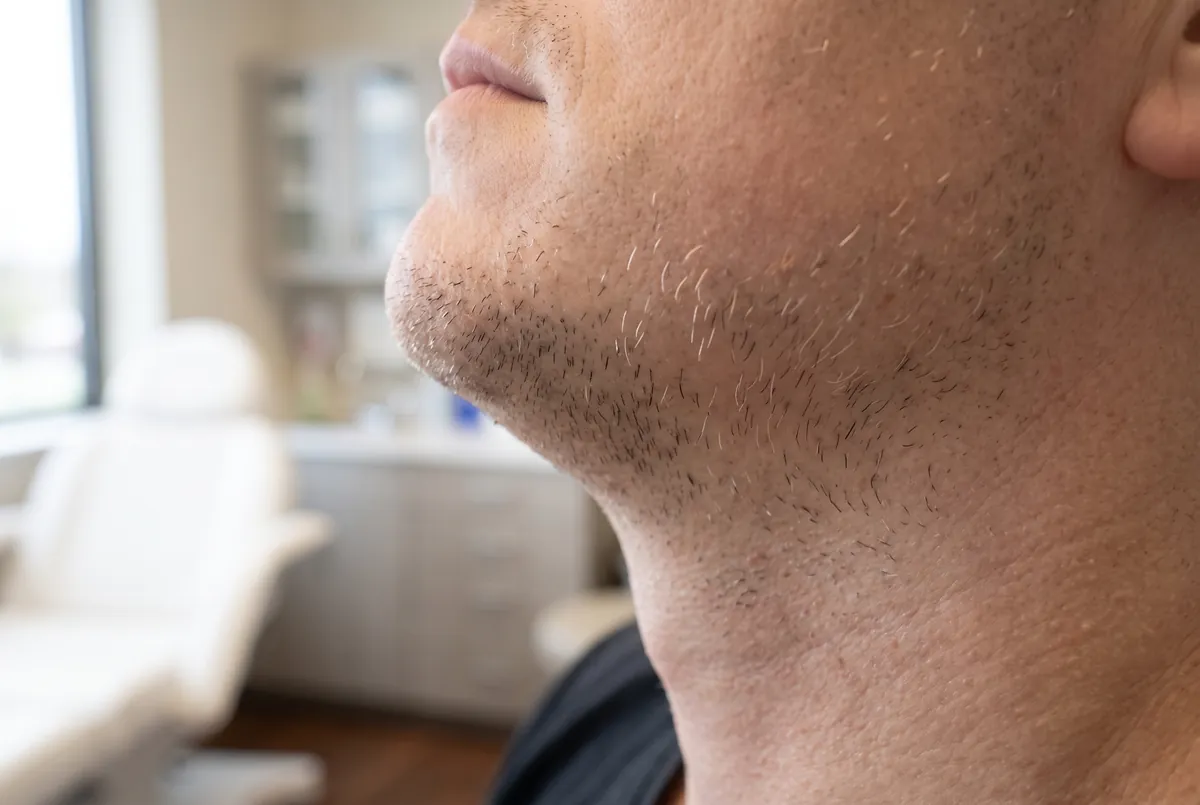
When the hair and skin allow it, many trans women combine the two methods. The logic is simple: laser reduces the bulk of dark, coarse hair faster per session, and electrolysis handles whatever laser cannot reach. The usual order is laser first, then electrolysis, but a good plan depends on a real assessment of your face, not a standard script. At a consultation I look at hair color zone by zone, skin tone, density, how much gray is present, and how the client weighs time against budget. These are the patterns I see most often:
- Mostly dark, coarse hair on lighter skin: laser can reduce density first, and electrolysis clears what remains.
- Dark and light hair mixed on the same face: laser on the dark zones, electrolysis on the lighter hair from the start, often running in parallel.
- Mostly blond, red, gray, or white hair: electrolysis from the beginning, since laser has little to target.
- Dark hair on darker skin: electrolysis is safe on every skin tone, while laser needs a provider experienced with darker skin and the right device, a question for a qualified laser provider or dermatologist.
- A client who prefers to skip laser for any reason: electrolysis alone can clear a face, it simply takes more hours of work.
Two cautions from practice. First, a small number of people develop new hair growth near a laser-treated area, a documented but uncommon effect called paradoxical hypertrichosis, so it is worth asking a laser provider about it before starting. Second, stop tweezing. Pulling hairs between laser sessions or before electrolysis can distort the follicle and make later probe insertion less accurate. If you have already finished laser and some light hairs remain, that is expected and not a failure of your laser provider. Those remaining hairs are the natural hand-off point to electrolysis.
The general principles of facial work, from finer probes to lower settings near delicate skin, are covered in my guide to electrolysis for the face, so I will not repeat them here. What changes when the goal is clearing a full beard is scale. A typical facial client might come in for a small cluster of coarse chin hairs. A beard has far more follicles, packed densely, often growing at sharp angles along the jaw and neck. That scale shapes everything else in this guide: session length, scheduling, pain planning, and how you measure progress.
How Facial Clearing Works, Session to Session
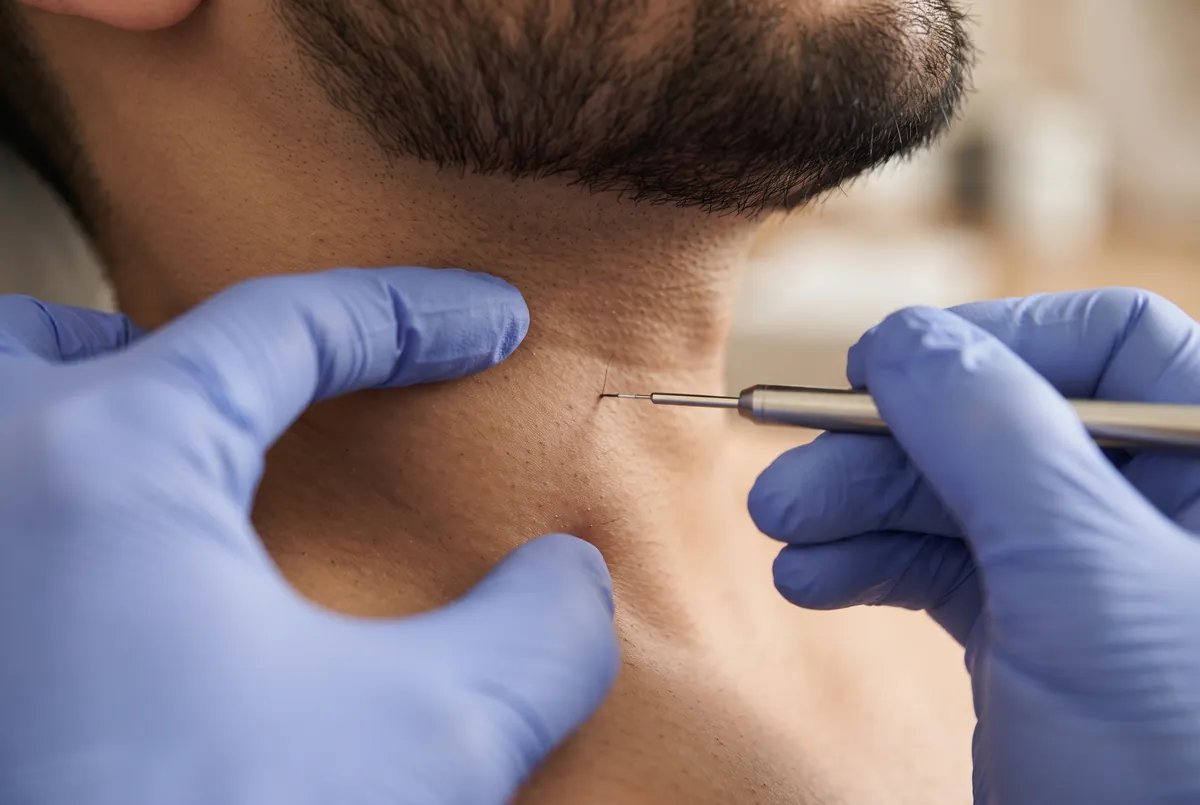
Each hair needs its own insertion, which is why sessions for gender affirming hair removal tend to run much longer than a typical upper lip appointment. Clients often book extended sessions, and some studios offer two electrologists working at the same time on different sides of the face to cover more follicles in one visit. Early sessions usually aim at clearing: treating every visible hair in a chosen area, so that what comes back afterward is either regrowth from follicles that need another pass or hair that was resting during the last visit.
Hair grows in cycles, and at any moment only part of the follicles in an area have a visible hair. The practitioner can only treat what they can see. That is why early sessions feel like progress followed by apparent regrowth: new hairs surface from follicles that were dormant, and some treated follicles need a second treatment because a deep, coarse beard hair does not always yield to one. Over time the regrowth gets finer, lighter, and sparser. That thinning trend, not a smooth face after one visit, is the real sign that clearing is working.
Your electrologist needs hair long enough to see its angle and lift it out after treatment. Most will ask you to stop shaving for a short period before each appointment and will tell you exactly how much growth they prefer. More growth is not automatically better, because very long hair on a dense area can hide the direction each hair exits the skin. Many practitioners work section by section, clearing one area fully before moving to the next, so you can keep shaving the rest of your face in between visits.
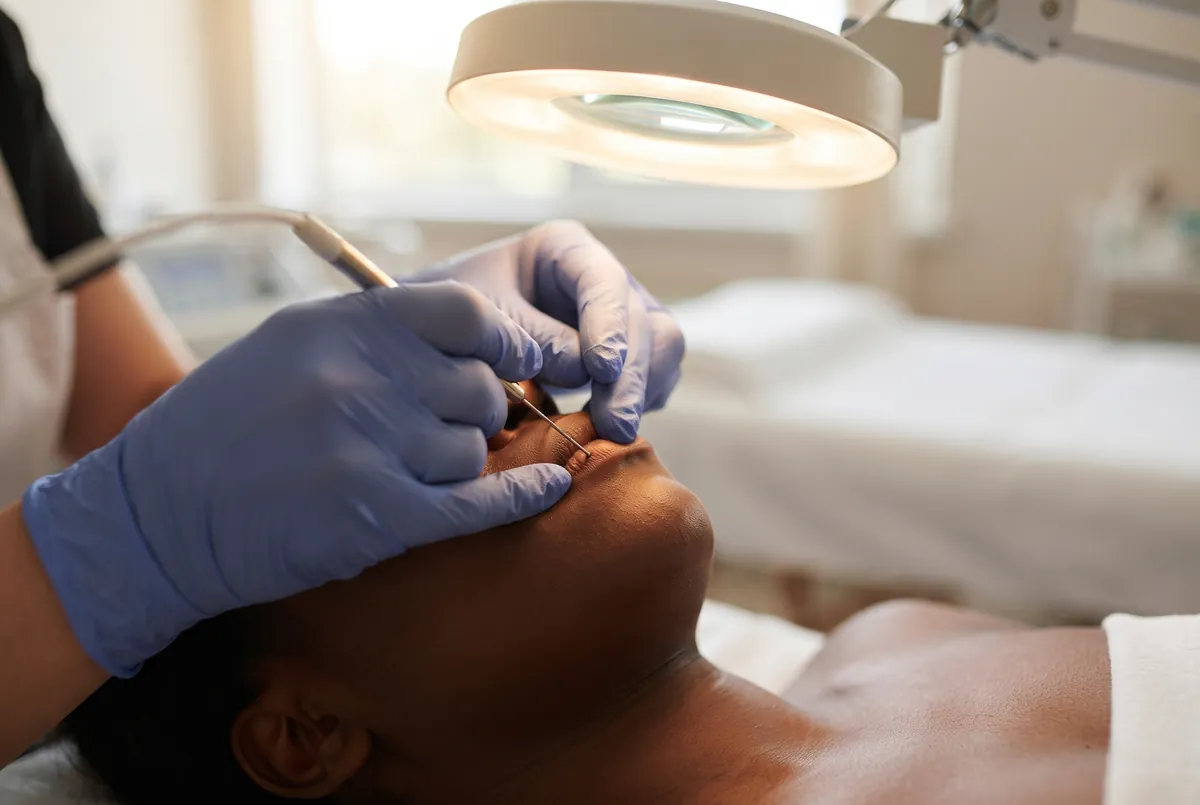
A typical clearing session in my studio follows the same rhythm. The skin is cleansed, the client reclines under magnification, and we agree on the zone and on signals for a break. Each hair gets a probe inserted along its natural angle, a short application of energy, and then a gentle lift with tweezers. When the follicle has been treated correctly, the hair slides out without resistance. If it grips, that tells the practitioner the energy or placement needs adjusting, and pulling it out anyway would only mimic tweezing. At the end, a soothing product goes on, and we talk through how the skin responded so the next visit can start from real information.
Beard follicles are often deep, and years of shaving, tweezing, or waxing can leave some of them curved or distorted. That is where modality and technique matter. Thermolysis, blend, and flash settings each have strengths on this kind of hair, and many practitioners switch between them depending on the zone and how a particular client's skin responds. You do not need to become an expert, but it helps to understand what your electrologist is doing and why. The differences are laid out in galvanic vs thermolysis vs blend explained.
Realistic Timelines Without False Promises
This is the question I get most, and the honest answer is that full facial clearing is a long project measured in many months, often longer, rather than weeks. Anyone who promises a firm finish date before examining your face is guessing. The total depends on how dense and coarse the beard is, how much of it is light or gray, whether laser reduced the bulk first, how often you can come in, how long each visit lasts, and how well your skin tolerates the work. Two clients with similar-looking beards can finish at very different points.
What clients can usually expect is a recognizable shape to the process. Early on, sessions are long and the face seems to regrow quickly as dormant hairs surface. In the middle stretch, the time needed per visit starts to drop because fewer follicles are active and the regrowth is finer. Near the end, visits turn into shorter touch-ups that catch the last stragglers and the occasional newly active follicle. The spacing between appointments usually widens as you go. This general pattern looks like this:
| Stage | What usually happens | What helps most |
|---|---|---|
| Early | Long sessions, fast apparent regrowth as resting follicles surface | A consistent schedule, no tweezing, careful aftercare |
| Middle | Regrowth becomes finer and sparser, less time needed per visit | Staying consistent, reporting any skin reaction early |
| Late | Short touch-ups for stragglers and newly active follicles | Wider spacing, far less shaving between visits |
| Maintenance | Occasional visits if new follicles activate later | Telling your electrologist about any hormone changes |
Consistency beats intensity. A client who comes in on a steady schedule tends to finish sooner than one who books a very long session and then disappears for months, because untreated hairs keep cycling in the meantime. I would rather see regular appointments that your skin, your energy, and your budget can sustain than a dramatic start that burns out. If your circumstances change, tell your electrologist and adjust the plan together instead of stopping entirely. Even a slower schedule keeps the progress you have already made.
To judge whether the course is on track, look at trends over several visits, not at any single morning in the mirror. Regrowth that comes back finer, lighter, and more scattered is a good sign. So is a session that takes noticeably less time than one a few months earlier on the same zone. Warning signs deserve a conversation: the same coarse hairs returning unchanged visit after visit, scabbing that lingers or leaves marks, or skin that never seems to fully settle between appointments. None of these automatically means the practitioner is doing something wrong, but each is a reason to review settings, spacing, or technique together.

Managing Pain During Long Sessions
Beard electrolysis is uncomfortable, and I do not pretend otherwise. The upper lip is usually the most sensitive zone, the chin and jawline can be intense on coarse hair, and the neck often feels milder. Sensation differs from person to person and from day to day. Fatigue, stress, caffeine, and dehydration can all make a session feel harder than the last one. A good practitioner adjusts settings, takes breaks, checks in with you regularly, and never treats pushing through pain as a badge of toughness.
Topical numbing products are widely used, but they need respect. Both over-the-counter and prescription-strength products carry risks when applied over large areas, left on for long periods, or covered with plastic wrap without medical guidance. Ask a physician or pharmacist which product is appropriate for you, how much to use, and how long to leave it on, and then follow those instructions exactly. Some clients ask a dentist or physician about local anesthesia for the upper lip. That is a medical decision made with a licensed medical professional, not a service an electrologist can provide.
Non-drug strategies help more than people expect. Eat before your appointment, drink water, and try not to arrive exhausted. Bring headphones and something to listen to. Slow breathing through the insertions, a cool compress between passes, and short breaks during long sessions all make a difference. Tell your electrologist which zones hurt most, so they can alternate sensitive and easier areas instead of spending a whole hour on your upper lip. More about what the sensation feels like and why it varies is in does electrolysis hurt, and how to make it easier.
Pain tolerance also changes over the course. Early sessions on dense, coarse hair tend to be the hardest, partly because the hairs are at their thickest and partly because everything is new. As regrowth becomes finer, many clients find the work easier to sit through. If a session is ever more painful than you can manage, say so. Stopping early and coming back is always better than tensing through a session, because tension makes the skin harder to work on and makes the next appointment feel worse before it starts.

Protecting Your Skin Between Sessions
After a facial session, expect redness and small raised bumps that usually settle within hours to a day or so. Coarse beard hair sometimes needs more energy, and a long session covers a lot of skin, so some clients see tiny pinpoint scabs over the following days. They are part of normal healing, and picking them is the fastest way to turn a temporary mark into a lasting one. Clean hands, a gentle cleanser, and whatever soothing product your electrologist recommends are usually all you need.
Clients with darker skin tones can be more prone to temporary hyperpigmentation after any skin trauma, electrolysis included. That is not a reason to avoid treatment, since electrolysis is safe on every skin tone, but it is a reason to choose a practitioner who adjusts settings carefully, spaces out work on the same patch of skin, and takes sun protection seriously. Sun on freshly treated skin raises the risk of marks for everyone. Once the skin has calmed, a broad-spectrum sunscreen on treated areas belongs in your daily routine for the whole course.
Makeup is the other big question. Most practitioners ask you to keep makeup off freshly treated skin for a short period so the tiny openings can close, and I know how hard that is for clients who rely on concealer to feel safe in public. Plan sessions around your schedule where you can. If something looks wrong, such as redness that spreads, swelling that worsens, or signs of infection, contact your electrologist and a physician. The full picture of normal and abnormal reactions is in electrolysis side effects and risks, and daily routines are in the electrolysis aftercare guide.

Coping With Grow-Out Days
For many trans women, the hardest part of electrolysis is not the probe. It is the days before each appointment, when hair has to grow so the electrologist can see it. For someone who shaves carefully to manage dysphoria, walking around with visible stubble can feel like a step backward, even when you know it is temporary. I think every practitioner who works with trans clients should acknowledge this openly rather than treating it as a minor inconvenience, and should help plan around it.
There are practical ways to make it easier. Schedule appointments right after weekends or days off, so the grow-out falls on days you spend at home. Ask whether your electrologist can work area by area, so you only need to grow out the section being treated that day. Some clients use color-correcting makeup over grown-out areas in the days before, as long as the skin is thoroughly cleansed before the session. If your electrologist needs only a short amount of growth, an early morning appointment may shorten the stretch you spend unshaven in public. A good practitioner will work with you to find a schedule that fits your life.
Keep the direction of travel in mind. Each grow-out period tends to be a little easier than the last as density drops, and a moment usually comes when you realize you skipped shaving one morning without thinking about it. Emotional support matters too. If dysphoria is affecting your daily life, a gender-affirming therapist or a support group can help carry that weight while the physical work continues. Your electrologist is part of your support team, but they are not a substitute for mental health care when you need it.
Choosing an Affirming, Experienced Electrologist
Technical skill and respect are both non-negotiable. An affirming practitioner uses your name and pronouns without being reminded, has intake forms that ask for the name you use, treats you in a private room, and does not make your identity the topic of conversation. They are also honest about their experience. Beard clearing is a specialty within facial electrolysis, with long sessions, dense coarse hair, and skin that has been shaved for years, so ask directly how much of this work they do. Questions worth asking at a consultation:
- Do you regularly clear full beards, not only a few chin hairs?
- Do you open a new sterile, single-use probe for each session?
- Which modalities does your machine support, and how do you choose between them for coarse and fine hair?
- Can you book extended appointments, and how are long sessions priced?
- Have you done pre-surgical hair removal to a surgeon's written specifications?
- How do you adjust when my skin reacts strongly, and what aftercare do you recommend?
- Can I start with a short test session before committing to a long appointment?
Licensing rules for electrologists are set state by state, and they differ in required hours, exams, and even whether a separate electrology license exists at all. Rather than rely on a studio's website, check your state's current requirements on the electrolysis licensing hub. The consultation itself is also a fair test. Notice whether the practitioner asks about your goals, medications, and skin history, and whether they answer your questions without rushing or overpromising. If something feels off in the first visit, it is completely fine to keep looking.
Some red flags are worth naming plainly. Be cautious with anyone who promises a finish date or a fixed number of sessions before examining your face, anyone who reuses probes or opens them out of your sight, and anyone who dismisses your pain or tells you marks and lingering scabs are simply the price of results. Repeated misgendering after you have corrected someone is also a legitimate reason to leave, however skilled they are with a probe. You are going to spend many hours in this chair, and feeling respected there is part of the treatment, not a bonus.

Hair Removal Before Gender-Affirming Surgery
Some gender-affirming surgeries use skin that will end up in a place where hair growth would cause real problems later. For that reason, surgeons often require permanent hair removal on specific areas before certain procedures. The key word is specific. Each surgeon and surgical team sets their own requirements: which areas, whether laser is acceptable or electrolysis is required, how far ahead of surgery the work must be finished, and how they want it documented. Those details are not something an electrologist, a friend, or an article can decide for you.
Your surgeon's instructions are the protocol. Ask the surgical team for written guidance, including a diagram if they use one, and bring it to your electrologist. A qualified electrologist follows those boundaries exactly and does not substitute personal opinion about which areas matter. If anything in the instructions is unclear, the answer is to call the surgeon's office, not to guess. Clients sometimes receive conflicting advice from forums and friends who had a different surgeon; none of that replaces what your own surgical team tells you.
Because hair grows in cycles and some follicles need more than one treatment, pre-surgical hair removal takes time. Start as early as your surgeon's guidance allows and leave a buffer before your date, since incomplete clearance can mean a postponed surgery. This work can feel sensitive and intimate, so choose a practitioner with specific experience in pre-surgical clearing, a private setting, and a calm, professional manner. Pain management for sensitive areas is a conversation to have with a physician before your first session, not something to improvise on the day.

Insurance and Paying for Treatment
Insurance coverage for gender affirming hair removal varies widely. It depends on your specific plan, your employer, your state, and how the treatment is documented. Some plans treat hair removal required before surgery as part of medically necessary surgical preparation, some also consider facial hair removal, and some cover neither. Two people insured by the same company can get different answers because their plans are written differently. Nothing here is a promise that your plan will pay. These are the questions I suggest clients work through:
- Ask your plan for its written policy on gender-affirming care and whether hair removal is included.
- Ask what documentation it requires, such as a letter from your surgeon or clinician, and whether prior authorization is needed.
- Ask whether the provider must be in network and whether a licensed electrologist, rather than a physician, can be reimbursed.
- Ask your electrologist whether they bill insurance or provide itemized receipts you can submit yourself.
- Keep copies of every letter, approval, denial, and receipt in one place.
Many independent electrologists do not bill insurance directly, so you may pay at the time of service and seek reimbursement afterward. Studios price in different ways, often by time, so ask how sessions are billed and whether extended appointments are priced differently. Budget in hours of work rather than number of visits, because a beard clearing plan is built on time. If a claim is denied, ask your plan about its appeals process. LGBTQ+ health centers and community organizations often know how plans in your area handle these requests.
For Trans Men and Nonbinary Clients
Electrolysis is not only for trans women. Testosterone typically increases facial and body hair, and many trans men welcome that change. Some also want control over where the hair grows: a clean neckline, a defined cheek line, clearing between the brows, or reducing hair in places where it feels out of place for them. Electrolysis treats one follicle at a time, so it can shape a pattern precisely instead of reducing everything evenly across an area the way laser does.
For nonbinary clients, goals vary widely, and the best practitioners do not assume. Some want a fully clear face, some want partial reduction, and some want to soften one specific zone. The consultation should start with what you want, not with what the practitioner imagines someone who looks like you would want. Precision shaping also has a practical side: while testosterone or other hormone changes are active, new follicles can keep appearing, so a shaped line may need periodic touch-ups to stay crisp.
Some surgeries for trans men and nonbinary people, including procedures that use skin from a donor site, can also require hair removal beforehand. The same rule applies: your surgeon's protocol decides which areas and how, and your electrologist works to it. Testosterone can also increase acne for some people, and an electrologist will usually work around active breakouts rather than through them. Tell your practitioner about any skin changes since starting hormones so they can adjust settings and scheduling.
Your Next Step
If you are ready to start, book a consultation with an electrologist who does beard clearing regularly, bring your questions and any surgeon's instructions, and ask for a test session. Tell them about your hormone therapy and skin history, agree on a realistic schedule, and give the process a few months before judging progress. Your clinician manages hormones, your surgeon sets surgical requirements, and your electrologist does the careful, patient work in between. When those three roles stay clear, the whole process runs more smoothly.
If you are a student or practitioner who wants to serve trans clients well, the foundation is strong technique combined with respectful practice. Theory can start online, but hands-on hours and licensing follow your state's rules, and no online course replaces them. Our electrolysis course overview explains how training fits together. Gender affirming hair removal is some of the most rewarding work in this profession, and clients remember the practitioner who made the process feel safe.
State Requirements
State licensing guides
Hours, exams, fees, and the licensing board differ by state. Open your state for the current requirements.
Looking for a practitioner or a program near you? Browse electrologists by state and city or beauty schools by state.
Common Questions
FAQ
The technique is the same, but beard hair is coarser and denser, sessions are longer, and the upper lip is often very sensitive, so many clients find beard clearing more demanding than occasional chin work. Adjusted settings, regular breaks, and a pain plan agreed with a physician or pharmacist make a real difference, and early sessions on the thickest hair are usually the hardest.
Yes. Electrolysis destroys follicles directly, so it works with or without hormones. Some clients start before hormones, some at the same time, and some years later. Hormones may make regrowth slower and finer over time, which can make progress steadier, but they rarely clear an established beard on their own. Tell your electrologist if your hormone therapy changes during the course.
It depends on your hair and skin. If most of your beard is dark and your skin is lighter, laser can reduce density first and electrolysis finishes the rest. If much of your hair is blond, red, gray, or white, laser has little to target, so starting with electrolysis makes more sense. A consultation that looks at your face zone by zone is the only reliable way to decide.
Yes. Electrolysis does not rely on pigment, so gray, white, blond, and red hairs are treated the same way as dark ones. This is one of the main reasons trans women with lighter or graying beards need electrolysis even after laser. More detail is in our guide to electrolysis for gray hair.
Your electrologist will tell you the exact amount they prefer, and it is usually a short grow-out rather than a long one. The hair needs to be visible so they can see its angle and remove it after treatment. Too much growth on a dense area can make the work harder, so follow their specific instruction rather than a general rule.
Usually yes, on areas that are not about to be treated. Many electrologists work section by section, so you can keep shaving the rest of your face and only grow out the area scheduled for the next visit. Avoid tweezing and waxing entirely, since pulling hairs can distort follicles and removes the visible hair your practitioner needs to find them.
Sometimes, and it varies by plan, employer, and state. Some plans cover hair removal that a surgeon requires before surgery when it is properly documented, and some also consider facial hair removal. Ask your plan for its written policy, required documentation, prior authorization rules, and whether a licensed electrologist can be reimbursed, and keep copies of everything.
Follow your surgeon. The surgical team's written protocol decides which areas need clearing, how far ahead the work must be done, and whether laser is acceptable. A qualified electrologist works to those instructions exactly. If anything is unclear or seems inconsistent, call your surgeon's office for clarification before treatment continues.
Keep Reading
Related Guides


