Electrolysis
Electrolysis for Teenagers: Age, Consent, and Safety Guide

Quick answer
There is no single national minimum age for electrolysis in the United States. State rules and each practice's policy decide, and minors generally need a parent or guardian to sign consent, often with the adult present. Treated follicles stay hair free, but puberty can activate new follicles later, so occasional touch-ups in later years are common.
Electrolysis for teenagers is a topic I am asked about by parents far more often than by teens themselves. The call usually starts the same way: a daughter has dark hair on her upper lip and someone at school said something about it, or a son has eyebrows that meet in the middle and has started shaving the gap with a razor. The parent wants to know three things. Is my child old enough? Is it safe? Will it actually last, given that puberty is not finished? I have worked as a licensed electrologist and cosmetologist for more than twenty years, and I have treated many young clients alongside their parents. The honest answers are more nuanced than a simple yes or no, and this guide lays them out.
I wrote this for two readers at once. Parents will find what the rules generally look like in the United States, when a physician should be involved before any hair removal, how a consultation with a minor is run, and which questions to ask a practice. Teens will find a plain description of what the treatment feels like, what it can and cannot promise during puberty, and how to fit it around school and sports. Electrolysis is the only method the FDA accepts for permanent hair removal claims, which is why families consider it in the first place. Everything here is general education, not legal or medical advice, and health questions belong with a pediatrician or dermatologist.
What Age Can You Get Electrolysis, and Is Parental Consent Required?
There is no single national minimum age for electrolysis in the United States. Electrology is regulated state by state, and the states do not treat it the same way. Some license electrologists through a dedicated board, some fold the work into a cosmetology or medical framework, and some do not license it at all. Rules about treating minors, where they exist, sit inside those state frameworks or inside general rules about services for people under eighteen. That is why two families in two different states can receive two different answers to the same question, and both answers can be correct for where they live.
On top of state rules, every practice sets its own policy. Some electrologists treat young teens with a parent present. Some prefer to wait until the mid-teen years. Some do not work with minors at all, often because of their insurance terms or simply because they are not comfortable doing so. None of these positions is wrong. A practice is allowed to be more cautious than the law requires, and many are. When a parent asks me about the electrolysis minimum age, I explain my own policy and then tell them to confirm the rules for their state with the board that oversees electrology there. The electrolysis licensing hub on this site is a good starting point for finding which body that is.
In practice, the number on a birth certificate matters less to me than three other things. The first is whether the hair is the kind electrolysis can treat well, meaning visible terminal hair and not fine pale fuzz. The second is whether the young person wants the treatment for themselves. The third is whether they can lie still, follow simple aftercare, and tell me honestly how the sensation feels. A mature thirteen-year-old who asked for help can be an easier client than a reluctant sixteen-year-old who was brought in. Readiness is individual, and a good consultation is where it gets assessed.
As a general rule across the country, a minor cannot consent to a cosmetic procedure alone. Practices that treat clients under eighteen typically require a parent or legal guardian to sign the consent and health history forms, and many want that adult physically present, at least for the consultation and the first sessions. Some keep that requirement for every visit with younger teens and relax it for older ones once a routine is established. The exact wording of the rule, the age cutoffs, and what counts as acceptable consent differ by state and by practice, so ask the practice directly and check with your state board. I am deliberately not listing legal specifics here because they vary and they change.
Parental consent for electrolysis is more than a signature. The adult who signs should understand what the treatment is, how many visits it realistically involves, what the skin will look like afterward, and what the limits are during puberty. I also expect the parent to complete the health history with the teen, not for the teen. Parents frequently do not know every product their child puts on their face, and teens frequently do not know the name of a prescription they take. Filling the form out together catches both gaps. If parents share custody or guardianship, it is sensible to sort out between yourselves who is authorized to sign before the appointment, and to bring any documentation the practice asks for.
There is a second half to consent that the law does not capture well: the teen's own agreement. I will not treat a young person who does not want to be there, even if the parent has signed every form. I ask the teen directly, in plain words, whether this is something they want. If the answer is hesitant, I suggest a short test patch or simply going home to think about it. Nothing is lost by waiting a few months. A great deal can be lost if a teenager learns that their body is something adults make decisions about without them.

Why Teenagers Ask for Permanent Hair Removal
The most common request I see from teenage girls is the upper lip, followed by the chin and the sides of the face. Dark hair on light or olive skin shows clearly, and it often appears early in puberty, sometimes before a first period. For boys and girls alike, the second big request is the space between the eyebrows. Family background plays a large part in all of this. In many families, visible facial hair on women and a strong single brow are simply the inherited pattern, and the teen in front of me looks exactly like a parent or grandparent did at the same age.
Then there are the social reasons, which are usually the real trigger for the phone call. Teens get teased. A comment in a hallway or under a photo online can stay with a young person for years. Athletes notice hair more because of uniforms: swimmers, gymnasts, dancers, wrestlers, and runners spend a lot of time in clothing that shows skin, in front of teammates and spectators. Some teens have already tried to solve the problem alone, with a parent's razor, with tweezers for an hour in the bathroom, or with a depilatory cream that burned. By the time a family reaches me, the hair itself is often a smaller problem than the amount of daily attention it is consuming.
Puberty, Hormones, and What "Permanent" Means for a Teen
This is the section I most want parents and teens to read carefully, because it shapes every expectation. Electrolysis works one follicle at a time. A very fine probe slides into the natural opening of the follicle, a small amount of current is applied, and the cells that grow the hair are destroyed. Once a follicle has been properly treated, sometimes after more than one pass, it stops producing hair. That is true at fifteen exactly as it is at forty. Because the probe follows an opening that already exists, the skin around the follicle is left intact when the work is done correctly.
What is different in a teenager is the number of follicles that have not switched on yet. Puberty is a process that runs over years, and during it new follicles may keep activating in the same area. So a teen can finish the upper lip, enjoy clear skin for a good while, and then see a few new dark hairs appear later. Those are not the treated hairs coming back. They are different follicles that were producing invisible vellus hair at the time of treatment and have since been activated by hormones. Electrolysis can only treat hairs that exist. It cannot treat a follicle before it shows itself.
I explain it to teens this way: the treated hairs stay gone, but your body may not be finished deciding where hair will grow. That means two practical things. First, the overall course can be longer and more spread out than for an adult with a stable pattern, with a main phase of regular visits followed by occasional touch-ups in later years. Second, nobody can honestly promise a teenager that a zone will be hair-free forever after a fixed number of appointments. What I can promise is that every follicle we finish is one that will not need shaving, plucking, or hiding again.
When to See a Pediatrician, Endocrinologist, or Dermatologist First
Most teen hair growth is normal development plus family genetics, and it needs no medical workup. Some patterns do deserve a physician's attention before, or alongside, any hair removal. I am not able to diagnose anything, and no electrologist should try, but I do notice patterns and I say so to the parent directly. The signs that make me recommend a medical visit are these: hair that appears suddenly or spreads quickly over a short period, growth that is heavy in several areas at once such as the face, chest, abdomen, and back in a girl, periods that are very irregular or absent well after they first started, severe or stubborn acne together with the hair, noticeable thinning of scalp hair, and rapid unexplained weight change.
The usual first stop is the pediatrician or family physician, who can decide whether a referral to a pediatric endocrinologist, a gynecologist, or a dermatologist makes sense. One possibility doctors consider in teenage girls with excess hair and irregular cycles is polycystic ovary syndrome. It is evaluated carefully in adolescents because irregular periods and acne are also common in ordinary puberty. That is a judgment for a physician, not for a parent with a search engine and not for me. I describe how hair treatment and medical care fit together in my guide to PCOS and unwanted hair.

Is Electrolysis Safe for Teens?
Performed by a trained practitioner with sterile single-use probes and correct settings, electrolysis is considered a safe method for healthy teenage skin, just as it is for adults. The treatment acts inside the individual follicle and does not depend on skin color or hair color, so it suits teens of every skin tone and hair type, including blond, red, and very fine dark hair that light-based devices handle poorly. The normal short-term reactions are the same at any age: redness, mild swelling around the treated follicles, and sometimes tiny pinpoint scabs that fall away without help when they are left alone.
The risks are also the same as for adults, and they come mostly from poor technique or poor aftercare: overtreatment that leaves marks, infection from touching or picking, and temporary dark or light spots, which are more likely in deeper skin tones and after sun exposure. With teens I add two specific concerns. One is picking, because a bored hand in a classroom finds every scab. The other is active acne, which I cover below. I describe the full range of reactions and how to tell normal from not normal in my guide to electrolysis side effects and risks.
How a Consultation With a Minor Works
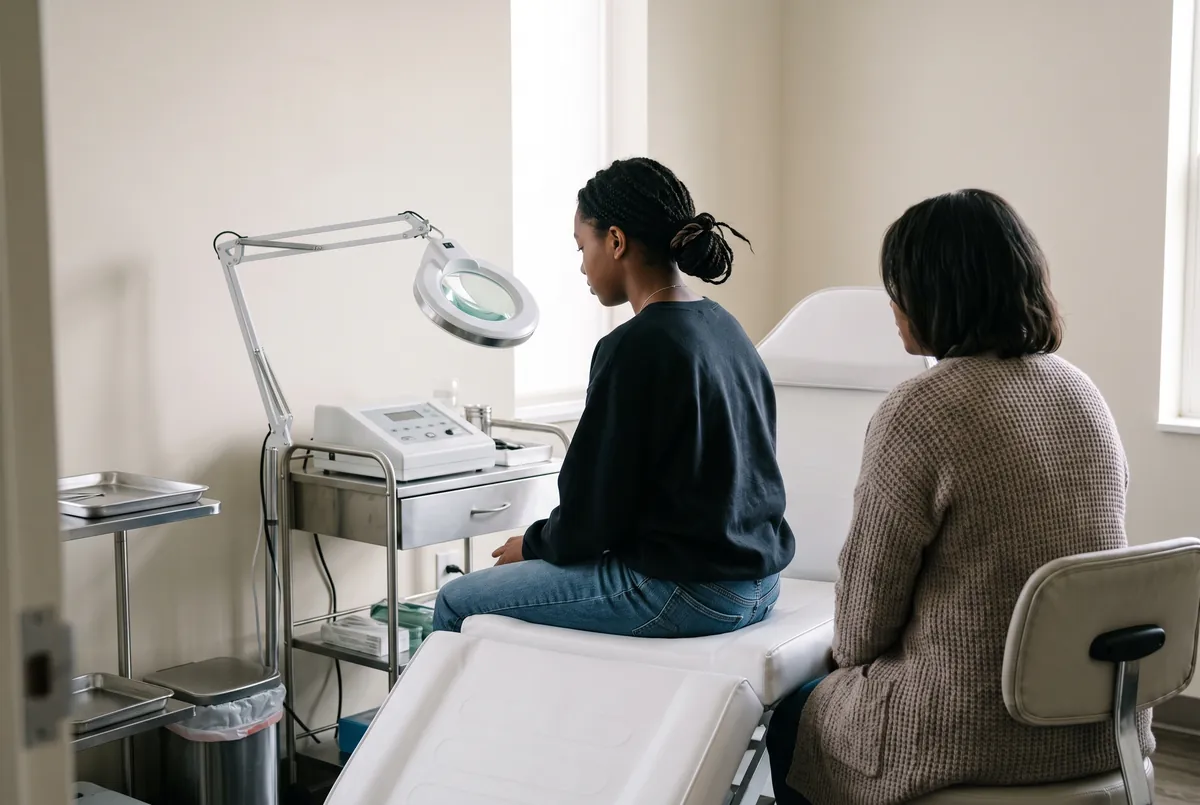
A consultation with a teen takes longer than one with an adult, and I schedule it that way. The parent and teen come in together. I start by talking to the teen, not about the teen. I ask what bothers them, how long it has bothered them, and what they have already tried. Parents often want to answer, and I gently hold the space so the young person can speak. The way a teen describes the problem tells me a lot: whether the concern is theirs, how much distress it carries, and whether their expectations are realistic.
Next comes the health history, completed by parent and teen together. I ask about medical conditions, medications including acne prescriptions and hormonal contraception, allergies, skin products, previous hair removal, and how the skin usually heals. For girls I ask, in a matter-of-fact tone, whether periods have started and whether they are regular, because it helps me decide if a physician should be involved. I explain why I am asking so the question does not feel intrusive. Then I look at the area under magnification: the type of hair, the density, the direction of growth, the condition of the skin, and any signs of ingrown hairs or irritation from earlier methods.
If everyone is comfortable, I offer a short test treatment: a few minutes on a small part of the area. This lets the teen feel exactly what it is like, lets me see how the skin reacts over the following days, and gives the family something real to base a decision on. Nobody has to commit at the consultation. Many families go home, watch how the test area heals, talk it over, and call back a week or two later. I consider that a sign of a good decision process, not hesitation.
Pain Tolerance and Why First Sessions Are Short
Electrolysis has a sensation. Most clients describe a quick sting or a brief warmth in each follicle, lasting about as long as the current is applied. The upper lip, especially the center under the nose, is among the more sensitive spots on the face, and it happens to be the most common teen request. Younger clients vary widely. Some shrug the feeling off, and others find the first minutes hard, mainly because they are tense and anticipating something worse. Sensitivity is also higher for many girls in the days around a period, which is worth knowing when choosing appointment dates.
For that reason I keep a teen's first sessions short, often just a brief block of work with pauses built in. A short session that ends on a good note is worth more than a long one that ends in tears, because the second kind teaches a young person to dread the next appointment. As tolerance and confidence grow, the sessions can lengthen. I also give the teen direct control: we agree on a hand signal that means stop, and I stop immediately every time it is used. Knowing they can end the sensation at will makes most teens able to tolerate far more than they expected.
Common Treatment Areas for Teens
In my practice, teen work is almost entirely on the face and hands. The upper lip leads by a wide margin. The hair there is usually fine to medium, dark, and relatively shallow, which responds well, but the skin is sensitive and reacts visibly for a day or so. I work in a scattered pattern so that no small patch of skin takes too much in one visit, and I thin the area gradually. The gradual approach has a social benefit too: nobody at school sees a sudden change, and the hair simply seems to fade over a few months. Details specific to this zone are in my guide to electrolysis for the upper lip.
The chin, jawline, and sideburn area come next. Coarse hairs here are more often connected to hormones, so this is the zone where I am most likely to ask whether a physician has been consulted. Many teens arrive after months of tweezing, which distorts follicles and can leave dark marks and ingrown hairs. The first instruction I give is to stop plucking and switch to trimming or careful shaving between sessions. A plucked hair is not there for me to treat, and plucking keeps the skin irritated.
The area between the eyebrows is the most satisfying teen treatment I do. The zone is small, the result is immediately visible, and it is a request I hear from boys as often as girls. I am conservative with the rest of the brow on a young face. Brow fashion changes, faces mature, and hair that is permanently removed from under or above the brow at fourteen cannot be put back at twenty. I clear the center, tidy obvious strays, and leave shape decisions for later. The reasoning is explained in my guide to eyebrow shaping with electrolysis.
Electrolysis Compared With Laser, Waxing, Shaving, and Tweezing for Teens
No single method is right for every teen, and I say so in consultations. The table below summarizes how I think about the common options for a young client. It is a general comparison, and individual skin and hair can change the picture, so treat it as a starting point for a conversation with a practitioner and not as a ranking.
| Method | How long it lasts | What suits a teen | What to watch for |
|---|---|---|---|
| Electrolysis | Permanent for each treated follicle | Small facial areas with visible dark or light hair, any skin tone | Needs repeated visits, has a sensation, new follicles may activate during puberty |
| Laser hair removal | Long-term reduction, not described as permanent removal | Larger areas with dark hair on lighter skin, where a practice accepts minors | Depends on hair and skin color, hormonal areas may regrow, policies for minors are often strict |
| Waxing | Weeks | Occasional use on brows or lip for a teen who tolerates it | Not for skin on acne medications, can cause irritation, breakouts, and ingrown hairs |
| Shaving or trimming | Days | Any area, low risk, easy to stop, compatible with electrolysis between sessions | Needs a clean sharp razor and a gentle technique, stubble returns quickly |
| Tweezing or threading | Weeks | A few stray brow hairs | Distorts follicles over time, causes ingrown hairs and marks, interferes with electrolysis |
| Depilatory cream | Days | Rarely my first suggestion for a teen face | Chemical irritation and burns on sensitive facial skin, always patch test as directed |
Laser comes up in almost every conversation with parents. It covers large areas quickly and works best on dark hair against lighter skin. It is cleared for long-term hair reduction, not for permanent removal claims, and results on the hormonally driven facial hair of a teenage girl can be unpredictable. Fine or light hair is a poor target for it. Many laser providers set their own age limits or require a physician's involvement for minors. For a few dark hairs on the lip or between the brows, electrolysis is usually the more precise tool. My comparison guide on electrolysis or laser hair removal goes through the trade-offs in detail.
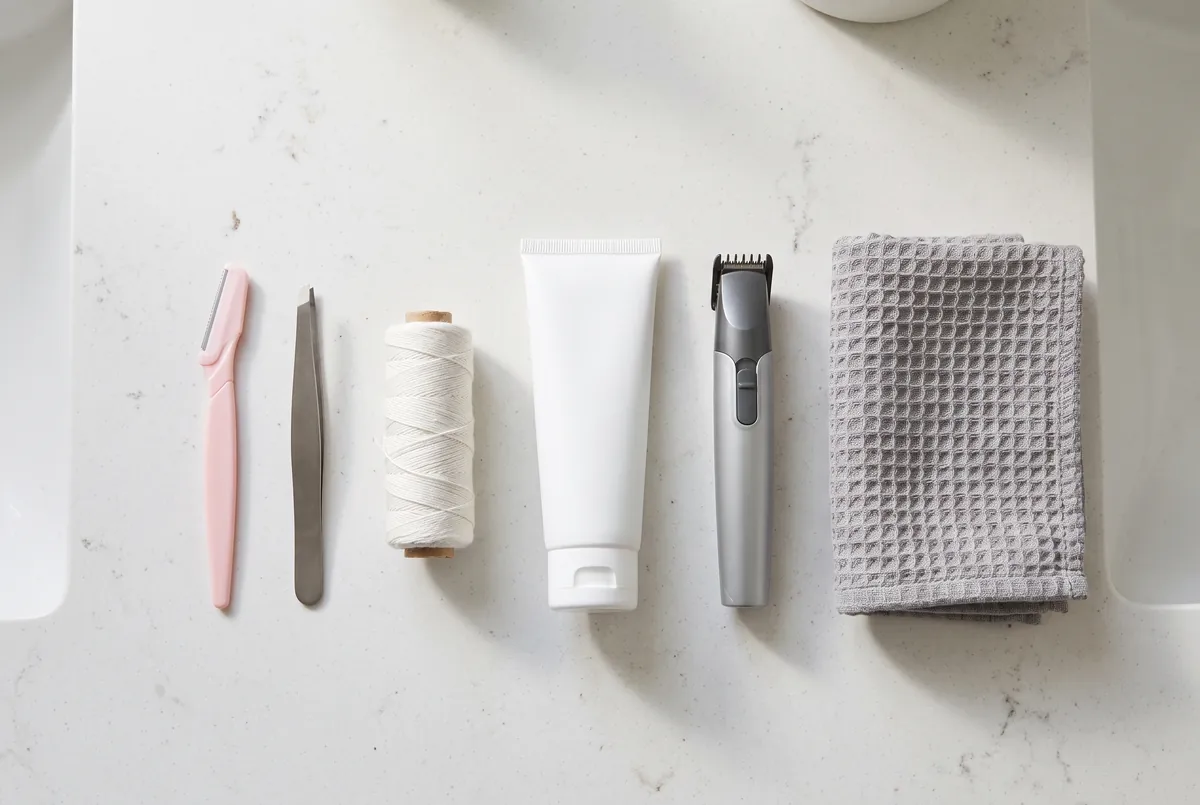
Shaving deserves a defense, because many parents arrive believing it makes hair grow back thicker or darker. It does not. A razor cuts the hair at the surface and leaves a blunt tip, which feels coarser than a tapered one, but the follicle is unchanged. For a teen who is not ready for electrolysis, or who is waiting for a medical evaluation, a small facial razor or an electric trimmer used gently on clean skin is a safe and reversible choice. It is also the method I ask clients to use between sessions.
Teen Skin, Acne, and Acne Medications
Acne is the most common skin issue I see in teen clients, and it changes how I plan treatment. I do not insert a probe into or right next to an inflamed pimple, a cyst, or broken skin. Doing so hurts more, heals worse, and risks spreading bacteria. On a face with mild, scattered breakouts I simply work around the active spots and treat the clear skin. On a face where the treatment zone itself is heavily inflamed, I postpone and suggest the family see a dermatologist first. Clearing the acne makes electrolysis easier, and in some teens the breakouts along the chin are being fed by ingrown hairs from plucking, which improves once the plucking stops.
Acne medications matter even more than the acne. Oral isotretinoin is a common reason to postpone electrolysis, because it changes how the skin behaves and heals. How long to wait after finishing a course is a decision for the prescribing physician, and I ask for that guidance before I treat. Topical retinoids and other prescription or over-the-counter acne products, such as those that peel or dry the skin, can leave it thinner and more reactive. The prescriber may advise pausing them on the treatment area for a period around each session. Some oral antibiotics used for acne increase sun sensitivity. None of this is something a parent or teen should adjust without asking the physician who prescribed it.

Aftercare Around School and Sports
Aftercare for a teen is the same in principle as for an adult: keep the area clean, keep hands off, avoid heat, sweat, and sun for the first day or so, and let any tiny scabs fall off without help. The difficulty is fitting those rules into a teenager's week. A flushed upper lip in first period feels like a much bigger event to a fifteen-year-old than it does to an adult at the office. Planning the timing solves most of it. My full routine is in the electrolysis aftercare guide, and the teen-specific version looks like this.
- Pick the right day. A late afternoon appointment before a free evening, or a Friday or Saturday slot, gives redness time to settle before school. Avoid the day before photos, a dance, a performance, or a competition.
- Skip practice that day. Heavy sweating right after treatment irritates open follicles. Plan sessions on rest days, or after practice instead of before it.
- Stay out of the pool for a bit. Chlorinated pools, hot tubs, lakes, and the ocean are best avoided until the skin has settled. Swimmers should schedule around meets and ask the practitioner how long to wait for their skin.
- Watch the gear. Chin straps, helmets, mouthguards, wrestling headgear, and face masks rub on freshly treated skin and carry bacteria. Clean the gear and give the area a break where possible.
- Hands off. No touching, rubbing, or picking in class. Tiny scabs are part of healing and leave no trace when they are left alone.
- No makeup or concealer for the first day, unless the practitioner approves a specific product. Clean hands and clean pillowcases help too.
- Sun protection. Outdoor sports mean sun. Once the skin has calmed, use a broad-spectrum sunscreen on the area every day, because sun on healing skin is the main cause of dark marks.
- Between sessions, trim or shave only. No tweezing, waxing, or threading on the area being treated.
Parents have a quiet role here. A teen will not always remember instructions given while lying under a lamp, so I hand the written aftercare sheet to both of them and ask the parent to check in for the first couple of days without hovering. If redness or swelling is increasing after a few days instead of fading, if there is pus, spreading warmth, or pain, or if a mark does not improve over time, call the practitioner, and see a physician if it looks infected. These outcomes are uncommon with good technique and sensible aftercare, but everyone should know what to look for.

How to Choose a Practitioner and What Parents Should Ask
Choosing an electrologist for a minor uses the same checklist as for an adult, with a few additions. Start with credentials. In states that license electrologists, confirm that the license is current through the state board. In states that do not, ask about formal training and any voluntary professional certification. Then look at the practice itself: sterile, single-use, pre-packaged probes opened in front of you, gloves, clean surfaces, good magnification and lighting, and a written health history form. A consultation should be offered before any treatment, and it should not feel rushed. You can browse practices in the studio directory on this site as a starting point, and then verify each one yourself.
The additions for teens are about attitude. Ask whether the practitioner regularly works with young clients and what the policy on parental presence is. Watch how they speak to your child during the consultation. A good practitioner addresses the teen directly, explains without talking down, never comments on the hair in a way that adds shame, and makes it clear that the teen can stop at any time. Be cautious with anyone who sells a large prepaid package to a family on the first visit, promises a fixed number of sessions, or guarantees that no hair will ever grow in the area again. With a body still in puberty, nobody can honestly make that promise. The questions below are the ones I would ask if I were on the other side of the desk, and a practice that works well with minors will answer all of them without discomfort.
- Do you treat clients under eighteen, and what is your policy on age, consent forms, and a parent being present?
- Are you licensed in this state, or if the state does not license electrologists, what training and certification do you hold?
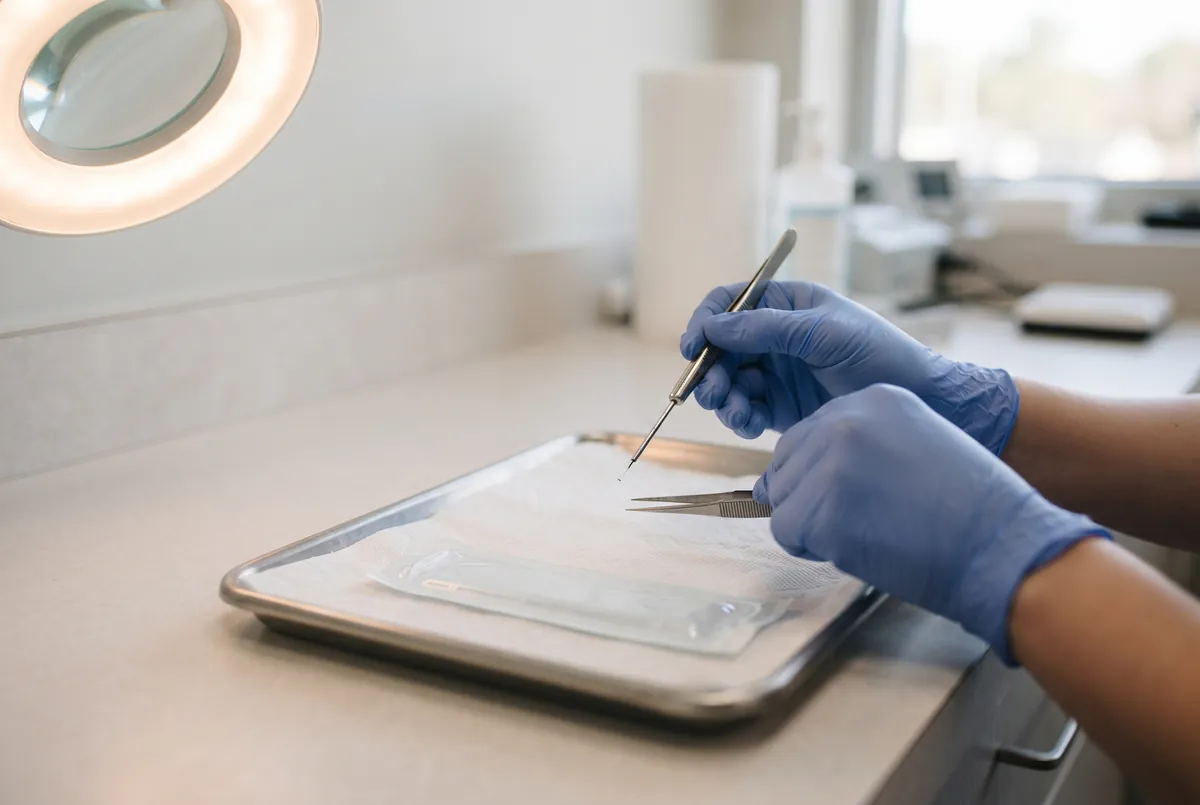
- Do you use sterile, single-use probes, and can we see one opened?
- Can we start with a short test treatment and see how the skin heals before deciding?
- How long will the first sessions be, and how will you handle it if my child wants to stop?
- Given my child's age, what can we realistically expect, and how do you explain new growth during puberty?
- Do you see anything in the growth pattern that makes you think we should see a physician first?
- How do you work around acne, and what do you need from our dermatologist about current medications?
- What does aftercare involve, and how should we schedule around school, sports, and swimming?
- How are sessions billed, by time or by area, and is there any obligation to buy a package?
The Emotional Side: Talking About Hair Without Adding Shame
Body hair is normal, and facial hair on girls is far more common than teenagers believe, because everyone who has it is quietly removing it. I say this to every young client, because the first thing many of them need is to hear that nothing is wrong with them. Wanting the hair gone is also normal. Both statements are true at once, and a teen should not have to choose between accepting their body and being allowed to change something that bothers them every morning in the mirror.
For parents, the hardest part is often knowing when to speak. If your teen has raised the subject, take it seriously and avoid the reflex of saying that nobody notices. They notice, and that is enough. If your teen has not raised it, be careful about raising it yourself. A parent who points out a daughter's upper lip, however kindly, can create a worry that was not there. A gentler path is to make the topic available, for example by mentioning that there are safe ways to deal with unwanted hair if that ever becomes something they want, and then leaving the decision with them.
Teasing and bullying deserve their own response, separate from the hair. Removing the hair may end one source of comments, and that relief is real, but a teen who is being targeted needs adults at home and at school to deal with the behavior as well. I also keep an eye on how much weight a young client puts on the treatment. If a teen seems convinced that life will be entirely different once a few hairs are gone, or if distress about appearance is intense, constant, or spreading to other features, I mention it privately to the parent and suggest a conversation with the pediatrician or a counselor.

Your Next Step
If your teen has asked for help with unwanted hair, start with a conversation at home about what bothers them and what they hope for. If the growth is sudden, heavy, or comes with irregular periods or severe acne, book a pediatrician visit first. Then check how your state regulates electrology, shortlist two or three practices that accept minors, and book a consultation with a test treatment. Bring the list of questions above, every skincare product and prescription your teen uses, and enough time to avoid rushing. Let your teen make the final call. Treated carefully and at the right moment, electrolysis for teenagers removes a daily worry for good, one follicle at a time, and it should leave a young person feeling more in charge of their own body, not less.
State Requirements
State licensing guides
Hours, exams, fees, and the licensing board differ by state. Open your state for the current requirements.
Looking for a practitioner or a program near you? Browse electrologists by state and city or beauty schools by state.
Common Questions
FAQ
There is no single national minimum age for electrolysis in the United States. Each state regulates electrology in its own way, and each practice sets its own policy for minors. Some electrologists treat young teens with a parent present, and others wait until the mid-teen years or do not treat minors at all. Readiness matters more than a specific birthday: the teen should have visible terminal hair, want the treatment personally, and be able to lie still and follow aftercare. Ask the practice about its policy and confirm state rules through your state board.
When a trained practitioner uses sterile single-use probes and appropriate settings, electrolysis is considered safe for healthy teen skin, and it works on every skin tone and hair color. Normal reactions are short-lived redness, slight swelling, and sometimes tiny scabs. The risks come mainly from poor technique, picking, sun exposure on healing skin, and treating over active acne. Certain medical conditions and medications call for a physician's clearance first. Tell the practitioner about any reaction that worries you.
As a general practice, minors need a parent or legal guardian to sign the consent and health history forms, and many practices want the adult present for the consultation and at least the first sessions. Some require a parent at every visit for younger teens and relax this for older ones. The exact rules depend on the state and the individual practice, so ask before you book and check with your state board. A careful practitioner will also ask the teen directly whether they want the treatment, and will not proceed without that agreement.
A follicle that has been properly treated does not produce hair again, and that is true at any age. What can happen during puberty is that new follicles in the same area become active later, so new hairs appear where there were none before. These are not the treated hairs returning. For that reason a teen's course often includes a main phase of regular visits and occasional touch-ups in later years. Each visit then deals with less hair than the one before.
It depends on the medication, and the prescribing physician should decide. Oral isotretinoin is a common reason to postpone electrolysis, and the prescriber advises when treatment can begin after a course. Topical retinoids and drying or peeling acne products can make skin more reactive, so the physician may suggest pausing them on the treated area around sessions. List every acne product on the health history form and never stop or change a prescription without asking the doctor. The electrologist will also work around active, inflamed breakouts.
For small facial areas such as the upper lip, chin, or the space between the brows, electrolysis is usually the more precise choice, and it works on any hair and skin color. Laser covers larger areas faster and suits dark hair on lighter skin, but it is cleared for long-term reduction, not permanent removal claims, and hormonally driven facial hair can respond unpredictably. Many laser providers have strict policies for minors. Ask each provider about its own rules before comparing.
Most clients feel a quick sting or brief warmth in each follicle. The upper lip is one of the more sensitive areas, and teens vary a lot in tolerance. I keep first sessions short with pauses, agree on a stop signal, and lengthen the appointments only as the teen becomes comfortable. Arriving rested and fed, avoiding caffeine, and choosing dates away from a period can help. Numbing products should be discussed with the teen's physician or pharmacist first. More comfort options are in my guide on whether electrolysis hurts.
Keep Reading
Related Guides


