Electrolysis
How to Become an Electrology Instructor: Steps and Requirements
Quick answer
Becoming an electrology instructor usually means holding an active electrology license, documenting practical experience, completing instructor training where required and passing a board exam or review. Rules differ by state, and some states regulate electrology education little or not at all. Ask your board for the current instructor requirements before you plan your path.
Becoming an electrology instructor means moving from doing electrolysis well to helping other people learn to do it safely. In states that regulate electrology education, that usually involves holding an active electrology license, building a period of documented practical experience, completing some form of instructor training, and passing an instructor exam or application review set by the board. The exact requirements differ from state to state, and in some states electrology instruction sits under a cosmetology or health board rather than a dedicated one, so your own board's rules are the starting point.
I have trained students and mentored new practitioners alongside my own clinical work for many years, and the shift surprised me. Skill at the treatment table does not automatically become skill at the front of a classroom. Teaching electrolysis asks you to explain what your hands now do without thinking, to spot a mistake in someone else's insertion before it causes harm, and to stay patient with the hundredth repetition of the same correction. This guide walks through the path, step by step, from practitioner to electrology educator.
What an Electrology Instructor Actually Does
An electrology instructor teaches the theory and practice that students need to pass their state exam and, more importantly, to treat clients without injuring them. In a typical program that includes lectures on skin and hair anatomy, the hair growth cycle, the three modalities (galvanic, thermolysis and blend), electricity basics, infection control and sterilization, contraindications, and client consultation. It also includes the clinic floor, where students practice insertions on models or clients under direct supervision.
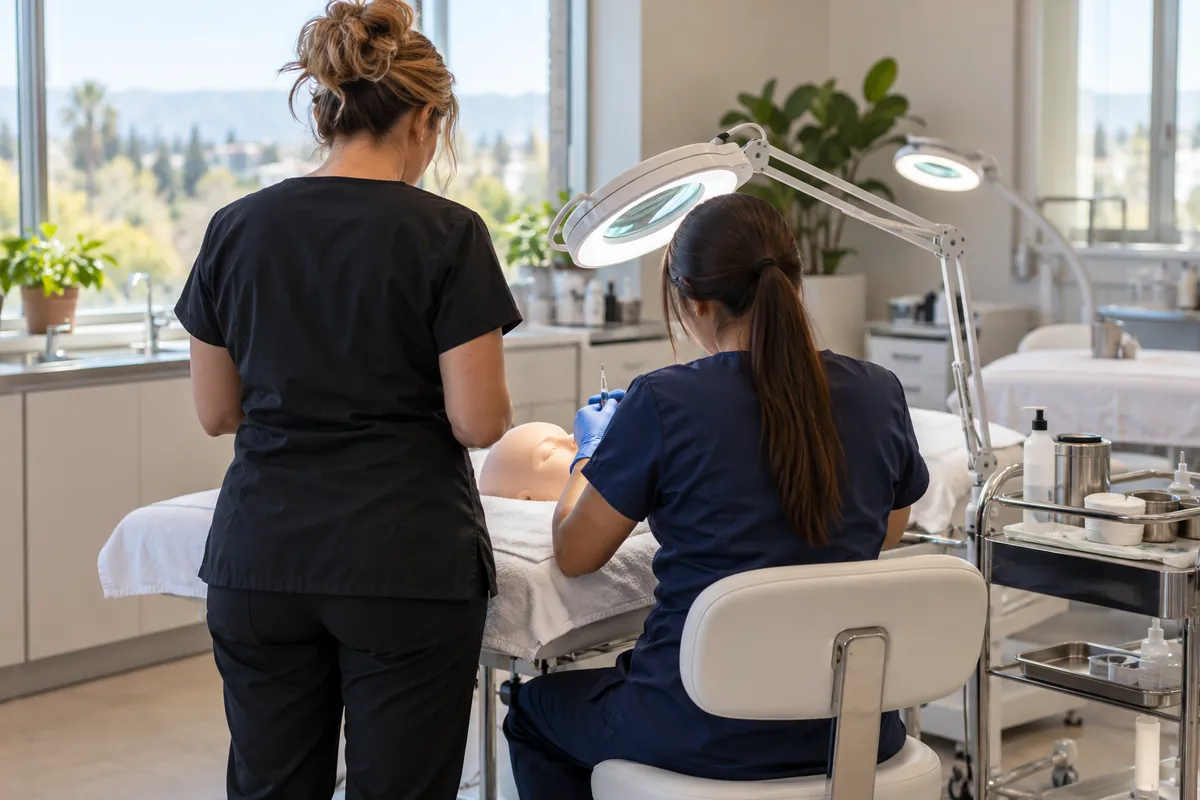
The supervised clinic is where an instructor earns their keep. You stand beside a student, watch the angle and depth of each insertion, listen for the client's reaction, check the settings, and step in before an error turns into a burn, a scar or pigment change. You also correct habits: a student who tilts their wrist, who lifts the probe too slowly, or who works too far from the light. Many of these corrections happen in seconds and require you to see small details at a glance.
Beyond teaching, instructors handle a lot of administrative work. You may track student hours, complete competency checklists, grade written and practical tests, prepare students for the board exam, and keep records that the school and the state can inspect. In a small school you may also help with curriculum, sterilization schedules, equipment upkeep and student advising. Teaching electrolysis is a mix of clinical judgment, communication and paperwork, and you need some comfort with all three.
Is Teaching Right for You?
Before investing in instructor training, ask yourself honest questions. Do you enjoy explaining things, or do you find it tiring? Can you watch someone do a task slowly and imperfectly without taking over? Do you remember what it felt like to struggle with your first insertions, or has that faded? Good instructors keep a clear memory of being a beginner, because that memory shapes how they explain things.
Consider temperament too. Electrolysis students make mistakes that can affect a real person's skin. You need to stay calm and clear in that moment, stop the student without humiliating them, and turn the event into a lesson. You also need to say difficult things: that a student is not ready for a certain area, that their technique has a recurring flaw, or that they need more practice before an exam. Avoiding those conversations is not kindness. It sends unprepared practitioners into the world.
Finally, look at your practical situation. Teaching jobs in electrology are less common than in cosmetology, because there are fewer electrology programs. Some instructors work in a dedicated school, some teach part-time in a program attached to a larger beauty or health school, and some teach privately or run their own small program. Each path has different requirements and a different balance between teaching and clinical work. Knowing which one you want will shape every step that follows.
- You still enjoy explaining the basics, even after years in practice.
- Your own technique is consistent and you can describe why you do each step.
- You can stop a mistake firmly and calmly without embarrassing the student.
- You are comfortable with record keeping, grading and scheduling.
- You are willing to keep learning, including about teaching methods, not only electrolysis.
- You accept that teaching may reduce your treatment hours and income at first.
The Building Blocks of Instructor Requirements
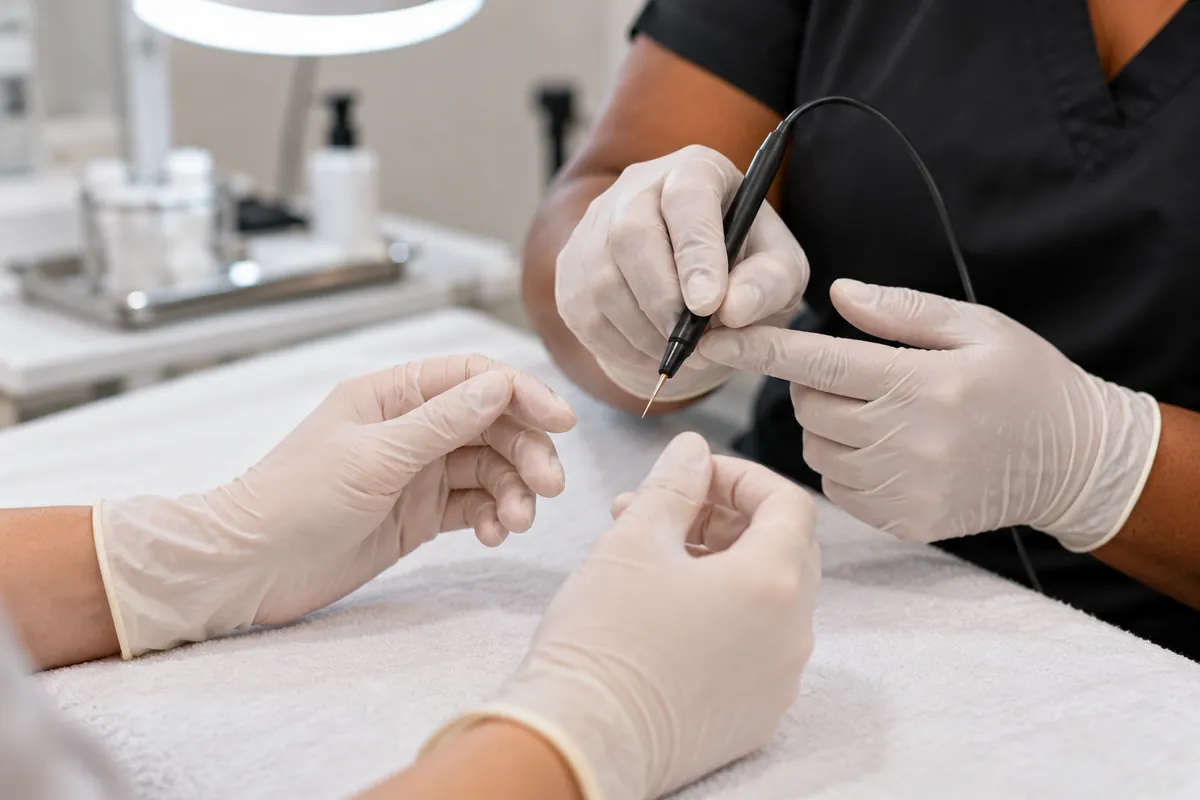
Even though states differ, instructor requirements tend to be built from the same pieces. The first is an active electrology license in good standing. Boards generally do not let someone teach a profession they are not licensed to practice. The second is practical experience: a period of working as a licensed electrologist before you are allowed to teach. Boards express this in different ways, such as years of licensure or documented hours of practice, so read the wording carefully.
The third piece is instructor training. Some boards require a set amount of teacher training, delivered through an approved school or program, often covering lesson planning, teaching methods, classroom management, student evaluation and the state's own laws and rules. Some accept prior teaching credentials or education coursework in place of part of it. The fourth piece is an exam or review. That might be a written instructor exam, a practical teaching demonstration, a jurisprudence test on state rules, or simply an application reviewed by the board.
There are often smaller requirements as well: a minimum education level, an application fee, a background check, proof of current CE, or ongoing continuing education specific to instructors after you are licensed. Not every state uses every piece, and the details change over time. I recommend making a table of these building blocks for your state, filling in what the board requires for each, and noting the source page so you can check it again later.
| Building block | What to look for in your board's rules |
|---|---|
| Active electrology license | Whether it must be current, in good standing, and from this state |
| Practical experience | How experience is measured and documented |
| Instructor training | Required content, approved providers, any substitutions allowed |
| Exam or review | Written, practical, jurisprudence or application review |
| Other conditions | Education level, background check, fees |
| Keeping it active | Instructor renewal cycle and continuing education |
Step 1: Strengthen Your Own Practice First
The foundation of teaching is a technique you understand thoroughly. Many experienced electrologists work by feel, and their results are excellent, yet they struggle when a student asks why. Spend time breaking down your own work. Why do you hold the probe holder the way you do? How do you judge insertion depth on a fine hair compared with a coarse one? How do you decide when to change modality or adjust timing? Write the answers down in plain language.
Next, close the gaps you know about. If you have mostly worked in one modality, study the others well enough to teach them. If you rarely treat certain areas, such as the bikini line or the neck, get more experience there, because students will ask. Refresh your theory too: anatomy, physiology, electricity and infection control are often taught from textbooks, and students notice quickly when an instructor is vague on them. Our online electrolysis theory course can be a useful structured review of those foundations.
Keep your clinical record clean. Boards may check your disciplinary history, and schools will certainly ask for references. A practitioner with a reputation for careful sterilization, honest consultations and good records is far easier to place as an instructor. If you have been delaying your own continuing education, catch up first; our guide on electrolysis continuing education explains how to build a sensible plan.

Step 2: Document Your Experience Carefully
If your board requires a period of experience before teaching, you will likely need to prove it. Start gathering documents early, because reconstructing years of work later is harder than it sounds. Useful records include your license history, employment letters from studios or clinics where you worked, tax documents showing self-employment in electrology, and in some cases appointment records that show a steady practice over time. Check exactly what the board accepts.
If you have practiced in more than one state, gather proof from each. Some boards accept out-of-state experience; others count only experience in their own state, or treat it differently. Experience gained before you were licensed, such as student clinic hours, usually does not count toward instructor experience. If you were licensed but inactive for a period, that time may not count either. These details can delay an application by months if you discover them late.
While you gather records, keep a teaching log, even before you are an official instructor. Note when you trained a new colleague, supervised an assistant, gave a talk, or mentored someone informally. Some programs and employers value this evidence of teaching interest, and it will help you write a strong application and cover letter later. It also helps you notice which parts of teaching come naturally and which need work.
Step 3: Complete Instructor Training
Where instructor training is required, it is usually completed through a school or program the board approves. The content generally covers how adults learn, lesson planning, writing objectives, lecturing and demonstrating, managing a classroom and clinic floor, student assessment, giving feedback, record keeping, and the state's laws and rules for schools. Some programs include supervised student teaching, where you teach real classes under an experienced instructor.
If there is no electrology-specific instructor program near you, find out whether your board accepts training from a cosmetology instructor program or an education program. In many states instructor training for beauty professions shares a common core. Our guide on becoming a cosmetology instructor explains that broader model, which is worth reading if your board groups the professions together.
Choose a program the way you would advise a student to choose a school: check approval status with the board, ask about practice teaching time, ask who the instructors are, and read the schedule closely. A program that lets you teach several real lessons with feedback is worth more than one that is mostly reading. Treat the student teaching portion seriously, because it is the closest preview you will get of the job itself.

Step 4: The Instructor Exam and Application
In states with an instructor exam, the format varies. Some test teaching methods and state rules in writing. Some ask you to deliver a short lesson or demonstration while examiners evaluate how clearly you explain, how well you demonstrate, and how you check understanding. Some include a jurisprudence section focused on school regulations and student records. Read the candidate information for your state carefully, and if a practice exam or content outline is offered, use it.
Preparing for a teaching demonstration is different from preparing for a practitioner exam. You are judged on your ability to teach, not just your technique. Practice explaining a single concept, such as how the blend method combines current types, in a set amount of time, with a clear opening, a demonstration, a check for understanding, and a summary. Rehearse in front of a colleague or record yourself. Most people discover they talk too fast and assume too much prior knowledge.
Assemble the application with care. Missing documents are the most common reason for delays. Make copies of everything you submit, note the date, and follow up if you do not hear back within the time the board suggests. If your state has no instructor exam and simply reviews applications, the quality and completeness of your documents carries the whole decision. Our sibling guide on the electrology state board exam may also help you remember what your future students will face.
- Confirm the current instructor requirements on your board's website.
- Collect license verification and proof of experience.
- Complete approved instructor training, if required, and keep the certificate.
- Register for any instructor exam and study the published content outline.
- Rehearse a timed teaching demonstration with feedback.
- Submit the application with copies of every document.
- Track the application and respond quickly to any request for more information.
Teaching Theory vs Teaching Hands
Electrology instruction has two halves that demand different skills. Theory teaching is about clarity and structure. You need to explain how current flows, why lye forms in galvanic work, how heat coagulates tissue in thermolysis, and why the hair growth cycle affects treatment plans. Visual aids, simple analogies and frequent short quizzes help. Students retain far more when they connect theory to something they will see on the clinic floor.
Practical teaching is about observation and timing. You watch a student's posture, hand position, probe angle, insertion depth, and the client's skin response, often all at once. You need to know when to let a student find a small error on their own and when to stop them immediately. A good rule is to intervene at once for anything that risks the client's safety, and to use guided questions for everything else, so the student learns to notice the problem themselves.
Most instructors are stronger at one half than the other. If you are a natural lecturer, practice clinic supervision deliberately, ideally by shadowing an experienced instructor on the floor. If you are a strong clinician who feels awkward lecturing, prepare short scripts and visual aids until the classroom feels comfortable. Both halves improve with practice, and students benefit enormously from an instructor who connects them.
Safety Responsibilities of an Instructor
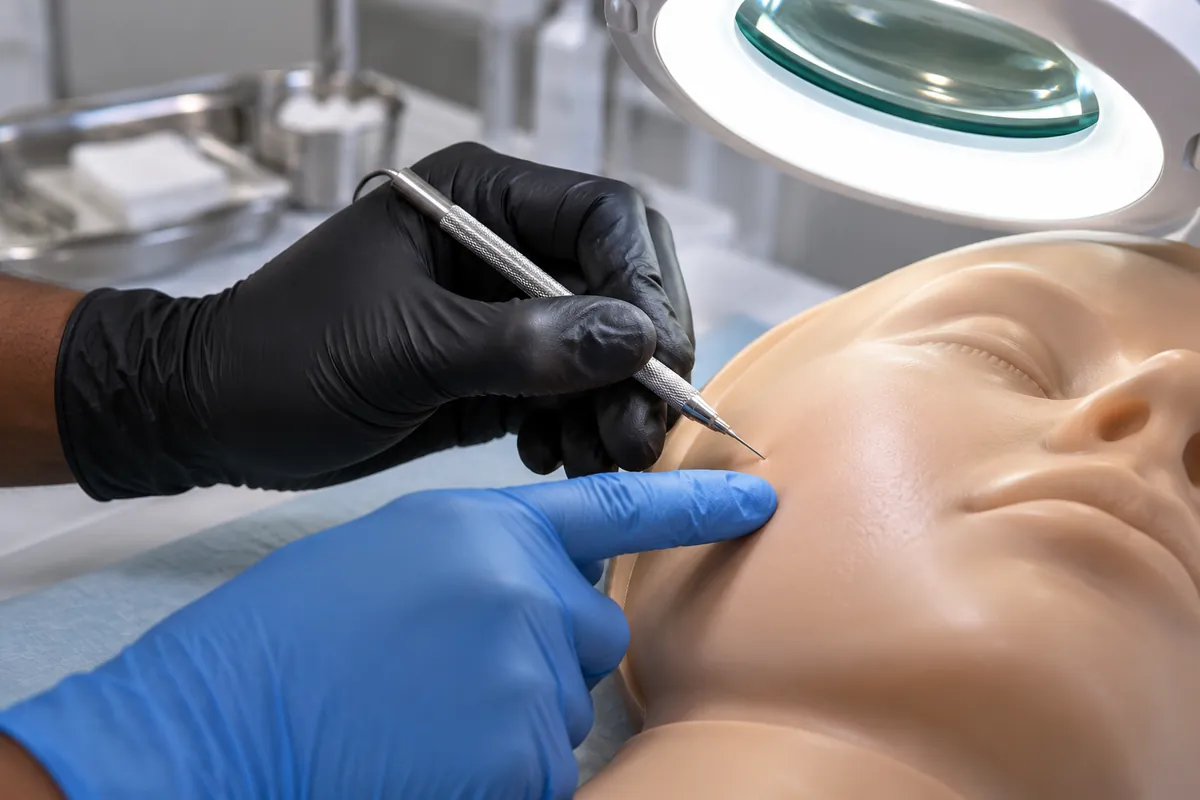
When a student treats a client in a school clinic, the instructor shares responsibility for the outcome. That changes how you work. Before any student touches a client, you confirm that the consultation and health history are complete and that no contraindication was missed. You check sterilization records and the setup of the station. You make sure the client understands they are being treated by a student under supervision, which schools typically document in a consent form.
During treatment you watch the skin continuously. Students often focus so hard on the hair that they miss signs of overtreatment, such as excessive redness, blanching or a raised wheal that grows. You also watch the client, who may be too polite to say a sensation is too strong. After treatment you check aftercare instructions, documentation and probe disposal. Our guide to electrolysis contraindications for practitioners is a useful teaching reference for consultation training.
Infection control deserves particular attention, because students copy what they see. If you cut a corner once, a whole cohort may learn to do the same. Model every step correctly: hand hygiene, glove changes, single-use probes, sharps disposal, surface disinfection and correct handling of sterilized instruments. Teaching safety is not a lecture you give once; it is the standard you hold every hour on the floor.
Where Electrology Instructors Work
The most traditional setting is a licensed electrology school or a dedicated electrology program within a larger school. These positions can be full-time or part-time, and some combine teaching with clinic management. Because electrology programs are fewer than cosmetology programs, openings may be limited in your area, so watch for them over time and stay in touch with programs near you. Our directory of beauty and electrology schools can help you find programs to contact.
Some instructors teach continuing education instead of entry-level programs. That might mean workshops for licensed electrologists on specific techniques, modalities or client populations. The requirements to offer CE are set separately, often through the board's provider approval process, and differ from the requirements to teach in a licensed school. Others run their own private schools, which brings its own licensing, curriculum approval and business demands well beyond instructor licensing.
Manufacturers and distributors sometimes hire experienced electrologists to train buyers on equipment. This work is often more about product use than full professional training, and it may not require an instructor license. Mentoring is another path: in some states that recognize apprenticeship routes, experienced practitioners supervise trainees under board rules. Our sibling guide on the electrolysis apprenticeship route explains how that model works and how it differs from school teaching.

The Trade-Offs Compared With Full-Time Practice
Teaching brings real benefits. Many instructors describe deep satisfaction in watching a nervous student become a confident practitioner. Teaching also sharpens your own work, because explaining a technique forces you to examine it. A school schedule may be more predictable than a client book, and some positions include benefits that self-employed practitioners pay for themselves. Teaching can also extend a career when the physical demands of a full treatment schedule become harder.
The costs are real too. Income from teaching may be lower than what a busy practitioner earns, depending on the school and your own client base; there is no single number, so compare carefully using actual offers. Your treatment hours shrink, and clients may drift if you cannot see them consistently. Paperwork increases. You will deal with student frustration, attendance problems and exam stress. And you carry responsibility for client safety in someone else's hands.
Many electrologists find a balance by teaching part-time while keeping a reduced client schedule. That protects their clinical skill, which students benefit from, and keeps income from relying on one source. If you choose this route, protect your energy: teaching days and treatment days both require focus, and stacking them back to back without breaks wears practitioners down. Our sibling guide on electrologist ergonomics is worth reading for anyone combining clinic and classroom work.
Getting Your First Teaching Position
Start by reaching out to programs before you finish your instructor requirements. Introduce yourself, ask whether they need substitute instructors, guest speakers or clinic assistants, and ask what they look for in new staff. Schools often hire people they already know. Offering to give a guest talk on a topic you know well, such as consultations for clients with hormonal conditions, is a low-pressure way to show how you teach.
Prepare a teaching portfolio. Include your license verification, instructor credential if you have one, a short biography focused on experience, a sample lesson plan, a list of topics you are comfortable teaching, and any evidence of teaching or mentoring. If you have built a professional portfolio of your clinical work, our guide on building an electrology portfolio covers how to present it responsibly, including client privacy.
In the interview, expect to be asked how you would handle a student who is struggling, a student who is careless with sterilization, and a client complaint during a student treatment. Have honest, specific answers that describe what you would actually do, step by step, rather than general statements about caring for students or valuing safety. Some schools will ask you to teach a short sample lesson on the spot. Treat it like your instructor exam demonstration: clear opening, demonstration, check for understanding and summary. Show that you can teach, not only that you know the material.
Ask about practical details before accepting an offer. Which modalities and which epilators does the school use? How many students will you supervise on the clinic floor at once? Who is responsible for sterilization logs and equipment maintenance? Is there a written curriculum, or will you be expected to build lessons from scratch? How are student hours and competencies recorded? The answers tell you how much preparation the role really needs and whether the school's standards match your own. A position that looks attractive on paper can be exhausting if the clinic floor is understaffed.

Mistakes New Electrology Instructors Make
The most common mistake is teaching too much at once. Experienced electrologists know so much that they pour it all into the first week. Beginners need a few steps done correctly before they can absorb nuance. Teach the grip, posture and basic insertion first, and add modality adjustments and difficult areas only when the foundation is steady. The second mistake is taking over. When a student struggles, it is tempting to grab the probe and finish the hair. Sometimes that is necessary for safety, but if it becomes a habit, the student never learns.
A third mistake is vague feedback. "That was a bit deep" helps less than "You inserted past the bulb; next time stop when you feel the slight give and watch the hair's exit angle." Specific feedback is faster to act on. A fourth mistake is inconsistent standards, such as allowing one student a shortcut in sterilization that you correct in another. Students notice, and it undermines trust. A fifth is neglecting your own clinical skills. Instructors who stop treating clients for years can lose touch with the realities students will face.
Finally, new instructors sometimes forget the exam. Students need to pass the state board exam to work, and it has its own format and expectations. Teach to real competence first, but also make sure students practice the specific tasks and timing their exam requires. A capable student who fails the exam because of unfamiliar procedures is a failure of instruction, not of the student.
One more trap is comparing students to yourself. You may have learned quickly, or you may have forgotten how long your own early months took. Students arrive with different backgrounds: some come from cosmetology or esthetics and already handle clients easily, while others come from unrelated careers and need time just to feel comfortable touching someone's face. Pace each student by what they can do safely, not by the calendar or by your memory of your own training. Patience here is not softness; it is how careful practitioners are made.
Keeping Your Instructor Credential Active
Instructor credentials, where they exist, usually have their own renewal cycle. Some boards require continuing education specific to teaching, such as courses on teaching methods or school regulations, in addition to or instead of practitioner CE. Some require that your practitioner license stay active as well. Missing either can put your teaching at risk. Track both renewal dates and requirements together, using the same system you use for your own license.
Beyond requirements, keep growing as an educator. Observe other instructors, ask colleagues to observe you, and ask students for honest feedback at the end of each course. Read about adult learning and about how manual skills are taught in other fields. Some of the best teaching ideas I have used came from watching how other hand-skill trades train apprentices. Keep your clinical skills current as well, because students can tell when an instructor's examples come from yesterday rather than years ago.
Stay connected with graduates when you can. Hearing what they struggled with in their first year of practice tells you what to change in your teaching. If many graduates say they felt unprepared for consultations with clients who have medical conditions, for example, add more practice there. Over time, this feedback loop turns a good instructor into a great one.

Building a lesson plan that students can follow
New instructors often know the work but struggle to teach it in a sequence a beginner can absorb. Start each lesson with a clear outcome: by the end, the student should be able to do or explain one specific thing. Break the content into short steps, demonstrate once at normal speed, once slowly with commentary, then let the student try while you watch. Plan questions that check understanding, not only repetition. Keep a note of what went smoothly and what confused the group, then adjust the next lesson. Over a term this feedback loop makes your teaching sharper than any textbook can.
Consider how students differ. Some learn by watching, others by reading, others by repeating. Offer a handout, a demonstration and a practice task for the same skill. Give feedback that is specific, such as the angle of the probe or the order of steps, and balance corrections with something the student did well. Be especially patient with infection control and consent, which students sometimes treat as paperwork. Your calm, consistent standard on these topics teaches more than any lecture. Ask your board or school what lesson documentation they expect, and keep copies of what you build.
Finally, plan for your own development as a teacher. Ask a colleague to sit in on a lesson and give frank feedback, read how experienced instructors structure their classes, and keep practicing the clinical skills you teach. Students notice quickly when an instructor stops working with real clients, and your credibility rests on both teaching skill and current practice.
Your Next Step
Find your state board's rules on electrology instruction this week. If your board has a separate instructor license, write down each building block it requires and where you stand on each. If your state does not regulate electrology instruction separately, find out what schools in your area expect from instructors, and what the board requires to offer continuing education. Start your document folder now, even if you plan to apply years from now.
Then make your own technique teachable. Review your theory, write out the reasoning behind your steps, and look for small chances to teach: a newer colleague, a guest talk, a mentoring relationship. Our electrolysis course can serve as a structured theory refresher, and the state licensing guides will keep you pointed at the rules that actually apply to you.
State Requirements
State licensing guides
Hours, exams, fees, and the licensing board differ by state. Open your state for the current requirements.
Looking for a practitioner or a program near you? Browse electrologists by state and city or beauty schools by state.
Common Questions
FAQ
It depends on the state. Some states issue a dedicated electrology instructor license, some use a general instructor license that covers several beauty professions, and some do not regulate electrology instruction separately. Even where no instructor license exists, schools set their own hiring standards. Check your board's current rules through our electrolysis licensing hub before planning your path.
Boards that set an experience requirement define it in their own terms, such as years of active licensure or documented practice. There is no national standard, so the answer comes from your state's rules. Beyond the legal minimum, I recommend teaching only once your technique is consistent across modalities and treatment areas, because students need a dependable model.
Often, yes, but the requirements are different. Offering CE that counts toward renewal usually depends on the board's rules for approved providers or acceptable content, not on holding an instructor license. Some boards require pre-approval of each course. Check with your board before advertising a course as eligible for renewal credit.
Usually not in depth. Instructor training focuses on how to teach: lesson planning, demonstrations, assessment, feedback, classroom management and school regulations. It assumes you already know electrolysis. That is why strengthening your own technique and theory before applying matters so much.
Many instructors do exactly that, and students benefit from an instructor whose clinical work is current. Plan your schedule carefully so teaching and treatment days do not exhaust you, and make sure any employment agreement with a school allows outside practice. Keep both your practitioner and instructor credentials active if your state issues both.
No. Online study can strengthen your theory and help you prepare, but instructor credentials where they exist require an active license, documented experience, and whatever training and exams your board sets. Online theory never replaces state-required in-person hours or licensing for practitioners or instructors.
For most new instructors it is supervising the clinic floor: watching several things at once, deciding instantly whether to intervene, and giving clear feedback without taking over. It improves with practice. Shadowing an experienced instructor before teaching alone is one of the best ways to prepare.
Keep Reading
Related Guides


