Cosmetology
High Frequency Facial: Benefits, Risks and How to Use a Wand
Quick answer
A high frequency facial passes a mild, rapidly alternating current through a gas-filled glass electrode, creating gentle warmth and a small amount of ozone at the skin surface. Estheticians use it mainly after extractions on oily, breakout-prone skin. The effect is temporary and clinical evidence is limited. It is not used with pacemakers, pregnancy or epilepsy, or over alcohol-based products.
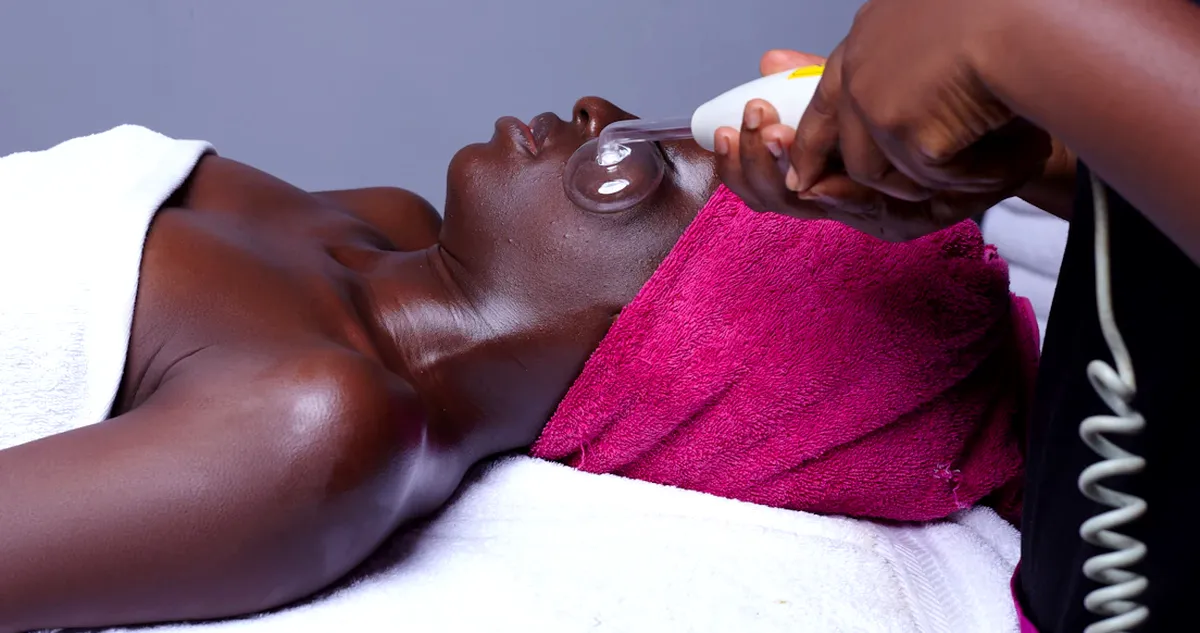
A high frequency facial uses a glass electrode filled with gas that glows violet or orange and buzzes softly as it moves over the skin. The device passes a mild, rapidly alternating electrical current through the electrode, which creates gentle warmth at the surface and a small amount of ozone where the glass meets the air on the skin. Estheticians have used it for generations, most often right after extractions on oily and breakout-prone skin, because the skin tends to look calmer and drier afterward. It is one of the oldest electrical tools in the treatment room and it has returned to attention through inexpensive home wands.
I am Aida Khazieva, a licensed electrologist and cosmetologist, and I have used high frequency in facial work for more than twenty years. In this guide I explain what the device does and what it does not do, how a professional session runs, who should avoid it, and how to use a home wand without hurting your skin. I am also direct about the evidence, which is thinner than the marketing suggests. This is general skin care education. It is not a diagnosis, and persistent acne or any skin condition belongs with a dermatologist.
What a high frequency facial is
The high frequency machine is sometimes called a violet ray or a Tesla current device, and in parts of Europe it carries the name of the French physician who studied these currents in the nineteenth century. All of these refer to the same principle: an alternating current that changes direction so rapidly that it does not make muscles contract. The current is high in frequency and voltage and very low in amperage. What the client feels is warmth, a light tingling, and sometimes a tiny prickle from sparks.
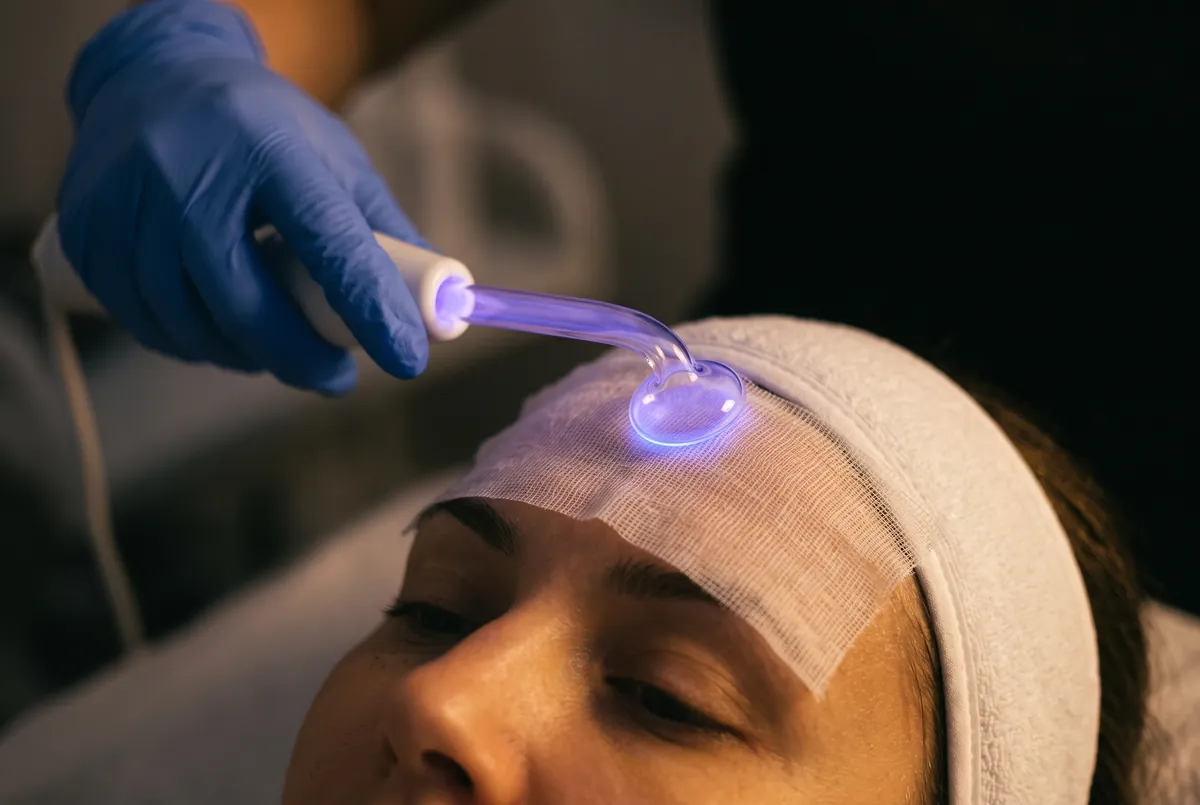
The current is delivered through a hollow glass electrode that plugs into a handpiece. The glass is filled with a small amount of inert gas. When the device is on, the gas ionizes and glows. Argon-filled electrodes glow violet to blue, and neon-filled electrodes glow orange to red. When the electrode touches or hovers just above the skin, a little energy is released at the surface. Where there is a tiny air gap, the discharge converts some oxygen to ozone, which is the source of the faint, sharp smell clients notice.
In a spa, high frequency is rarely a whole service. It is a step inside a facial, usually a few minutes long, placed after cleansing and extractions or used over a finishing product. On a menu it may appear as an add-on or be folded into an acne or deep cleansing facial. If you want to see where it sits among other options, my guide to the types of facials explains the main methods behind spa menu names.
How it works, and what the evidence says
Three effects are traditionally attributed to high frequency. The first is thermal: the current produces mild heat in the surface tissue, which increases local circulation and leaves the skin slightly pink and warm. The second is the ozone and the electrical discharge at the surface, which esthetics textbooks describe as germicidal, meaning that it reduces bacteria on the skin. The third is a drying, calming effect on oily and freshly extracted skin, which is the reason for its place right after extractions.
Here I have to be straightforward. These effects are taught in every esthetics program and are consistent with what practitioners observe, but the clinical research behind them is limited. There are few well-designed modern studies of cosmetic high frequency devices for acne or aging. So I describe it to clients as a supportive step with a long track record in practice and modest expectations, not as a proven treatment. Anyone who tells you a glass wand cures acne, regrows hair or erases wrinkles is going beyond what is known.
It is also worth being clear about ozone. The amount produced at the skin by a cosmetic electrode is small. Ozone is a lung irritant when inhaled in quantity, and the FDA takes a cautious view of ozone-generating devices for that reason. A few minutes of facial work in a ventilated room is a different situation from breathing ozone deliberately, but it is one more reason to keep sessions short and not to hold the electrode under the nose.
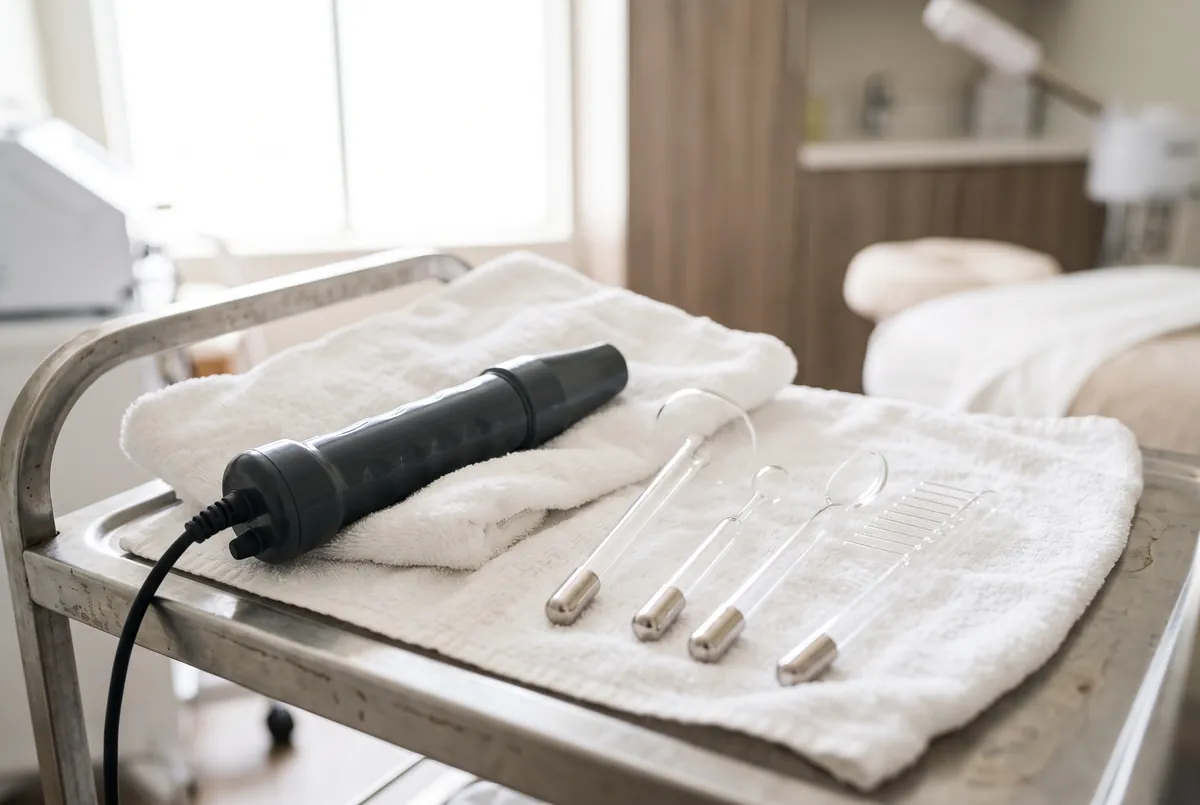
Violet and orange electrodes: argon and neon
Clients often ask what the color means. The traditional teaching is that violet, argon-filled electrodes are chosen for oily, congested and breakout-prone skin, and orange, neon-filled electrodes for dry, mature or sensitive skin. Many home wand listings repeat this as fact and add detailed claims for each color. In practice the electrical output of the device is the same, and the difference between the gases in terms of effect on skin is not well established by research.
I use both and do not promise clients a different outcome from one color or the other. What changes the treatment far more is the technique: whether the glass is in full contact or lifted slightly, how long each area is treated, the intensity setting, and what is on the skin underneath. If you are buying a home device, the color of the gas is one of the less important things to worry about. The quality of the build, the stability of the output and the clarity of the instructions matter more.
Electrode shapes and techniques
The mushroom electrode, a flat disk on a stem, is the workhorse for the face. It covers the cheeks, forehead and chin in slow circles. A smaller mushroom or a rounded tip handles the sides of the nose and the chin crease. The spot electrode, with a narrow tip, is held briefly over an individual blemish. The spoon or tongue shape follows curves such as the under-eye border and the sides of the nose. The comb or rake electrode is made for the scalp, and a roller is sometimes used on the body.
There are three classic techniques. In direct application, the practitioner glides the electrode over the skin in contact, often over a layer of gauze or a suitable product, which gives the mildest and most even effect. In sparking, the electrode is lifted a tiny distance from the skin over a blemish so that small sparks jump the gap for a second or two. This concentrates the effect and is used sparingly. In indirect application, the client holds a metal-coiled glass electrode in one hand while the practitioner massages the face, so that the current passes through the client to the practitioner's fingertips. It is used for a gentle warming, stimulating effect on dry skin.
Working through gauze deserves a mention, because clients are sometimes puzzled by it. A single layer of dry gauze over the face creates a thin, even air space between the glass and the skin. That increases the surface discharge slightly and lets the electrode glide without dragging on freshly extracted skin. It is a standard method taught in school, and the choice between gauze, a product layer or bare skin depends on the skin and on the manufacturer's instructions.
What it can realistically help
The most reliable use is after extractions. Skin that has been steamed and had comedones removed is pink, slightly swollen, and open at the follicles. A few minutes of high frequency leaves it looking calmer and feeling drier and tighter, and many clients notice that the spots worked on settle faster over the next days. The same reasoning applies to an occasional pimple: a brief spot application during a facial can help it dry down, though this is experience speaking more than controlled research.
Oily skin often looks more matte for a day or two after treatment. Dull skin can look brighter because of the temporary increase in circulation. Some practitioners use high frequency over a serum or cream at the end of a facial, on the idea that warmth and circulation help the product settle. I treat that as a pleasant finishing step and do not claim deeper penetration. On the scalp, the comb electrode is used in some salons for an oily or flaky scalp as part of a scalp treatment.
What it will not do is equally important. It will not clear moderate or severe acne, which involves hormones, oil production, bacteria and inflammation deep in the follicle. It will not remove blackheads, shrink pores permanently, lift sagging skin or erase wrinkles. It will not regrow hair lost to pattern baldness. For firmness, treatments that actually heat the dermis are a different category, which I explain in the guide to radiofrequency skin tightening.
Who should not have a high frequency facial
High frequency is mild, but it is an electrical current, and a set of contraindications applies to it as to every electrical modality. An esthetician reviews these on the intake form before using the machine, and the same list applies to a wand used at home. If any of the following applies to you, skip the treatment or get a physician's clearance first.
- A pacemaker, implanted defibrillator or any other implanted electronic device.
- Pregnancy. Electrical modalities are avoided as a precaution.
- Epilepsy or a history of seizures.
- Heart conditions or uncontrolled high blood pressure, unless a physician approves.
- Metal implants, plates or pins in the head or neck. Ask about braces and extensive dental metalwork.
- Active cancer or current cancer treatment, without the oncology team's approval.
- Rosacea, visible broken capillaries, or very reactive, flushed skin, where heat and stimulation tend to make redness worse.
- Open wounds, sunburn, active cold sores, skin infections, or inflamed cystic acne on the area.
- Recent chemical peel, laser, microneedling or waxing on the area, until the skin has recovered.
- Reduced skin sensation, where the client cannot feel heat or tingling normally.
Two practical safety rules sit alongside that list. First, the client removes metal jewelry, and the practitioner avoids contact between the electrode and metal. Second, nothing flammable goes on the skin beforehand. High frequency produces small sparks, so alcohol-based toners, astringents and other flammable products must not be on the face when the electrode is used. This rule is in every esthetics textbook, and it applies at home as well, where people are more likely to have just used a toner or a hair product.
What happens in a professional session
A typical facial that includes high frequency begins with a consultation and skin analysis under a magnifying lamp. The esthetician cleanses the skin, exfoliates with an enzyme or a mild scrub suited to the skin, and softens it with steam or warm towels. Extractions follow where needed, done with gloved fingers wrapped in gauze or with a sterile extractor. Then the skin is wiped with a non-alcohol antiseptic or toner and blotted dry.
High frequency comes next. The esthetician selects an electrode, tests the device on their own hand, places a finger on the glass as it first touches your skin to prevent a spark, and then lifts the finger and starts to glide. The electrode moves slowly over each zone, and the intensity is turned up gradually to a level you feel as warmth and tingling. Blemishes may get a second or two of sparking. The whole step usually takes a few minutes for the face. Before lifting the glass off the skin, the practitioner places a finger on it again or turns the device down.
After that the facial continues with a calming mask, serum, moisturizer and sunscreen. The electrode is cleaned and disinfected according to the manufacturer's directions and state sanitation rules before it is stored. If you have never had a professional facial, my guide on what to expect at your first facial walks through the full appointment.

What it feels like, and side effects
Most clients describe gentle warmth and a fine tingling, with a low buzzing sound and the faint, clean smell of ozone. With the electrode in full contact there is almost no sensation. When the glass lifts slightly, you feel tiny prickles. Sparking over a blemish feels like a quick series of small static snaps. None of it should hurt. If it does, the intensity is too high or the electrode is being held away from the skin for too long, and you should say so.
After treatment the skin may be a little pink and feel tight or dry for a few hours. That is expected. Side effects are uncommon and nearly always come from overuse: redness that lasts, dryness and flaking, irritation, or in rare cases a small superficial burn or mark from prolonged sparking in one spot. People with reactive or rosacea-prone skin are more likely to flush. Any blister, lasting dark mark or worsening redness should be shown to the esthetician and, if it does not settle, to a dermatologist.
How often, and how long results last
Inside a professional facial, high frequency is used whenever the skin calls for it, which for oily and congested skin can be every visit. For most people that means every four to six weeks, the usual rhythm for facials. During a period of frequent breakouts, an esthetician may suggest closer visits for a while and then return to maintenance. The guide on how often you should get a facial explains how to set that rhythm for your skin.
The visible effect is short-lived. The matte, calm look lasts a day or a few days. High frequency does not change how much oil your skin makes or how your follicles shed cells, so it cannot give lasting results by itself. Its value is as one part of a routine that also includes appropriate cleansing, exfoliation, sun protection and, for acne, treatment directed by a dermatologist. Clients who understand that are pleased with it. Clients who expect a cure are disappointed.
At-home high frequency wands
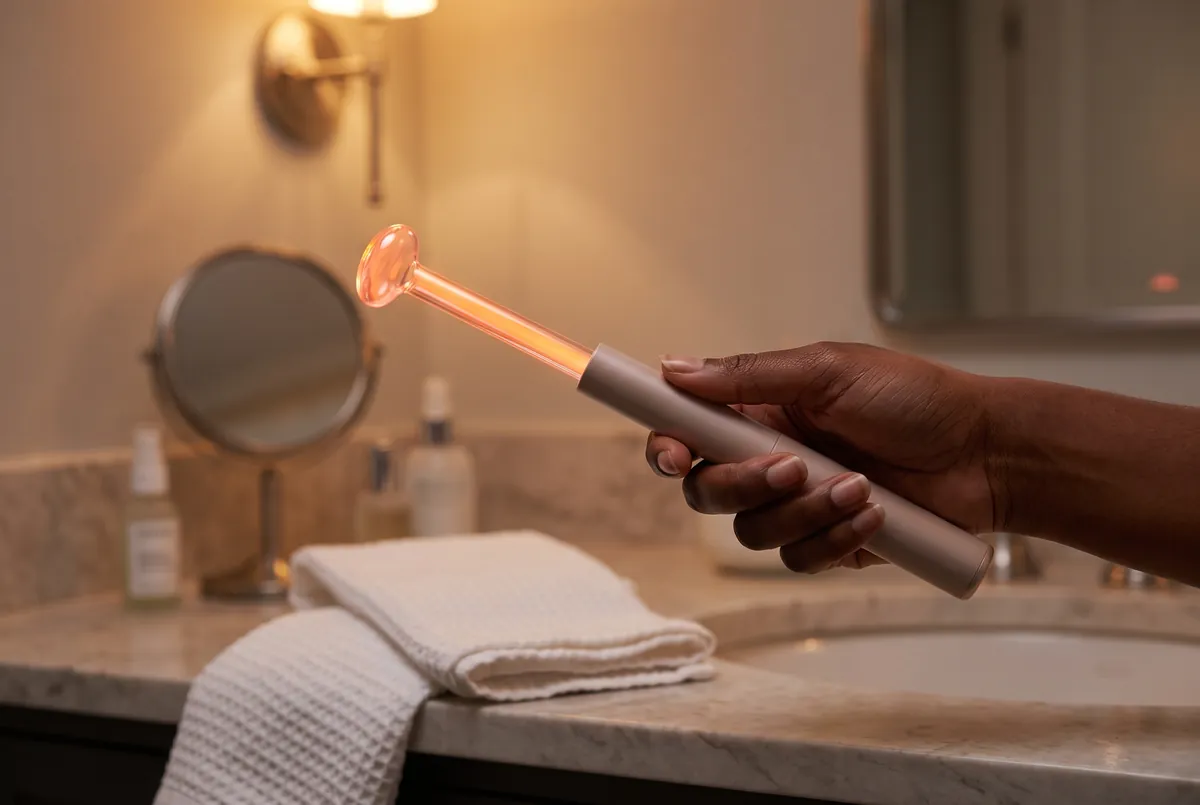
Home wands are small, lower-powered versions of the professional machine, sold with a few glass electrodes. Quality varies widely. Some are made by established companies with clear manuals and safety certifications. Many are unbranded imports with vague instructions, inconsistent output and fragile glass. Before buying, look for a named manufacturer, a real manual with contraindications, electrical safety certification, and a way to contact the company. Be skeptical of listings that promise to cure acne, regrow hair or remove wrinkles.
If you decide to use one, follow the manual first, and treat the following as general good practice. Start with clean, completely dry skin and no alcohol-based or flammable product on it. Remove jewelry. Insert the electrode with the device off, set the intensity to the lowest level, and touch the glass to the skin before turning it up. Keep the electrode moving in slow circles and spend only a short time on each zone. Keep the whole session brief, and use it no more often than the manual directs.
Afterward, apply a plain moisturizer, and sunscreen in the morning. Wipe the electrode as the manual instructs once it has cooled, let it dry, and store it in its case, since the glass is thin and breaks easily. Do not use a cracked electrode. Do not use the wand in the bathtub or with wet hands, around the eyes unless the manual allows it, over the front of the neck near the thyroid, or on children. Do not share electrodes between people without disinfecting them.
The mistakes I see from home users are predictable. They use the wand daily at high intensity and end up with a dry, irritated barrier and more breakouts. They spark the same pimple again and again and leave a mark. They use it on rosacea and wonder why they are redder. They apply it over a toner that contains alcohol. Or they rely on it for acne that needs medical care. A wand used gently a few times a week on suitable skin is unlikely to cause harm. Used aggressively, it causes the problems it is supposed to prevent.
High frequency by skin type and concern
Oily and combination skin with blackheads and occasional pimples is the skin this tool was made for. It tolerates the drying effect well, and the step fits naturally after extractions. I use direct application over the whole oily zone and a second or two of sparking on individual blemishes that have come to a head. Teenagers with ordinary breakouts can have it as part of a gentle cleansing facial with a parent's consent, although the more valuable part of that visit is teaching them not to pick and how to wash their face properly.
Dry and mature skin needs a lighter hand. The drying effect that helps an oily forehead is unwelcome on a dry cheek, so I shorten the time, keep the electrode in full contact over a hydrating product if the manufacturer permits, or choose the indirect method, where the client holds the electrode and my hands do the work. The aim is a mild warming effect and nothing more. On mature skin I am clear that this is a comfort step, and that firmness and lines are not what the device addresses.
Sensitive, reactive and rosacea-prone skin is where I most often leave the machine off. Heat and stimulation are common triggers for flushing, and a few minutes of high frequency can leave such skin red for the rest of the day. Deeper skin tones tolerate high frequency well in general, with one caution: prolonged sparking on a blemish can leave a small mark that turns into a dark spot, so on skin that pigments easily I keep spot work very brief. Men's skin, which is often thicker and oilier, responds like any oily skin, and the electrode should stay off a freshly shaved, irritated beard area.
Combining high frequency with other treatments
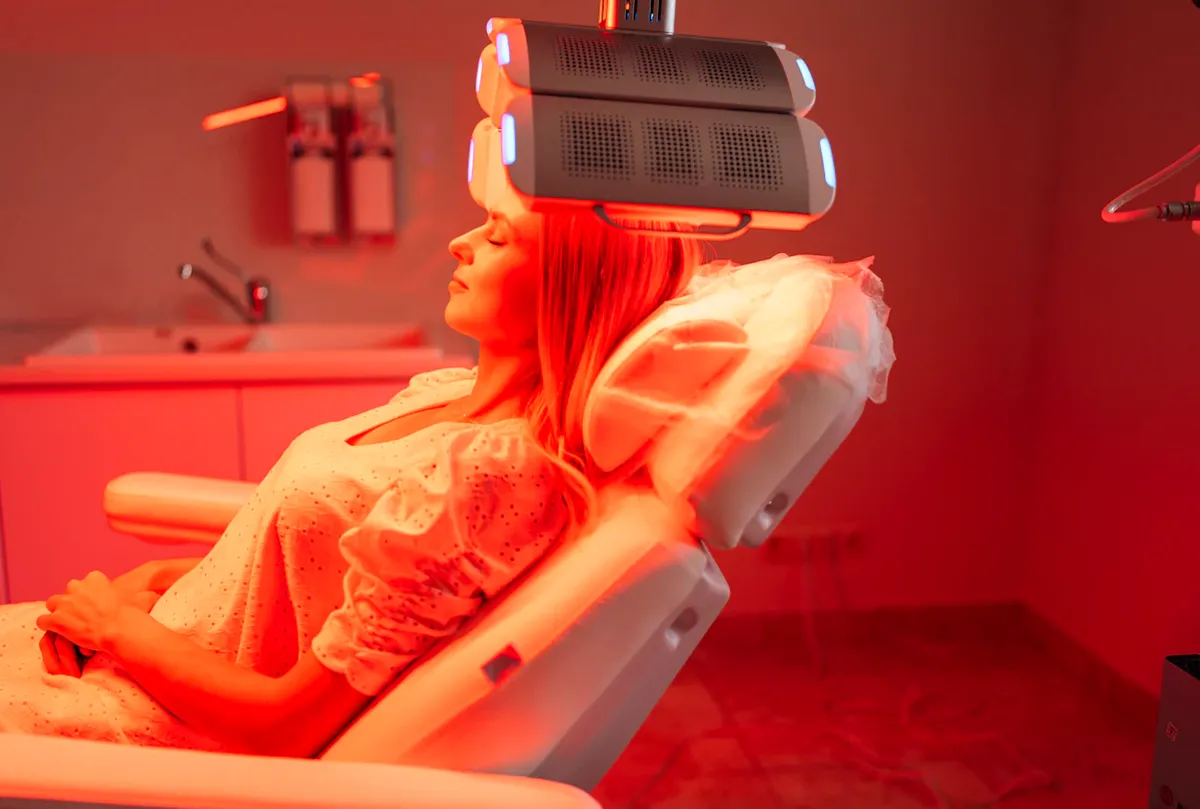
High frequency pairs naturally with extractions, enzyme exfoliation and calming masks. It is also frequently combined in one facial with LED light. Blue LED light is used for acne-prone skin and red for a calming, supportive effect, and the two modalities do not interfere with each other. Many estheticians follow high frequency with a few minutes under an LED panel while the mask sits.
It should not be stacked on the same day with treatments that already stress the skin: chemical peels, microdermabrasion at an aggressive setting, microneedling, laser or waxing of the face. Retinoids and strong acids in the home routine make skin more reactive, so tell your esthetician what you use. Clients sometimes ask whether high frequency and microcurrent are the same. They are not. Microcurrent uses a very low current aimed at muscle tone and has nothing to do with the glass electrode. My microcurrent facial guide covers that treatment.
Professional treatment compared with a home wand
People often ask whether a home wand makes the professional step unnecessary. The two serve different purposes. In a treatment room, high frequency follows a proper skin analysis, exfoliation and extractions, which are the parts of the facial that do most of the work on congestion. At home the wand is used alone, on skin that has only been washed. The table sums up the practical differences.
| Point | Professional session | Home wand |
|---|---|---|
| Power and consistency | Professional machine with stable, adjustable output | Lower power, quality varies widely by manufacturer |
| What comes before it | Skin analysis, exfoliation, extractions | Usually cleansing only |
| Screening | Intake form and contraindication check by a licensed professional | The user must read the manual and screen themselves |
| Technique | Direct, indirect and sparking methods chosen for the skin | Mostly direct contact, with a higher risk of overuse |
| Hygiene | Electrodes disinfected between clients under state rules | Depends on the user cleaning and storing the glass correctly |
| Best use | Part of a regular facial for oily or congested skin | Occasional maintenance between facials on suitable skin |
Hygiene deserves its own word. A glass electrode touches skin that may have open follicles or blemishes, so it has to be cleaned after every use. In a licensed establishment that means cleaning and disinfecting according to the manufacturer's directions and the state board's sanitation rules, without submerging the metal end, and storing the electrode dry in a closed container. At home, wipe the cooled glass as the manual instructs and never share it with family members without disinfecting it first. Glass that is chipped or cracked goes in the trash.
Common myths
The first myth is that high frequency kills acne for good. It may reduce surface bacteria briefly and help a blemish dry, but acne begins deeper and returns unless its causes are addressed. The second is that it regrows hair. The scalp comb may make an oily scalp feel fresher, and there is no good evidence that it reverses hair loss. If you are losing hair, a dermatologist can identify the cause and discuss treatments that have been studied.
The third myth is that it tightens skin and removes wrinkles. The temporary plumpness after treatment comes from warmth and circulation. The fourth is that more is better, which leads to daily use and long sessions. The fifth is that the tingling means it is working and that no sensation means the device is broken. In full contact the sensation is minimal by design. The sixth is that the glow comes from ultraviolet light that tans or damages skin. The glow is ionized gas, and the electrode is not a tanning lamp, though the device should still be used only as directed.
Who performs it, and notes for students
In the United States, high frequency is a standard part of esthetics and cosmetology education, and it is commonly within the scope of practice of licensed estheticians and cosmetologists. Scope is still defined state by state, and boards differ in how they treat electrical devices and what training they expect. Check your own state's rules instead of assuming. The esthetics licensing hub and the cosmetology licensing hub link to each board.
As a client, you can ask whether the person treating you is licensed and can verify it on the state board's website. Look for the basics of safe practice: an intake form, clean equipment, gloves during extractions, and an esthetician who explains what the device is before it touches your face. The guide to facial care basics describes what a professional facial should include.
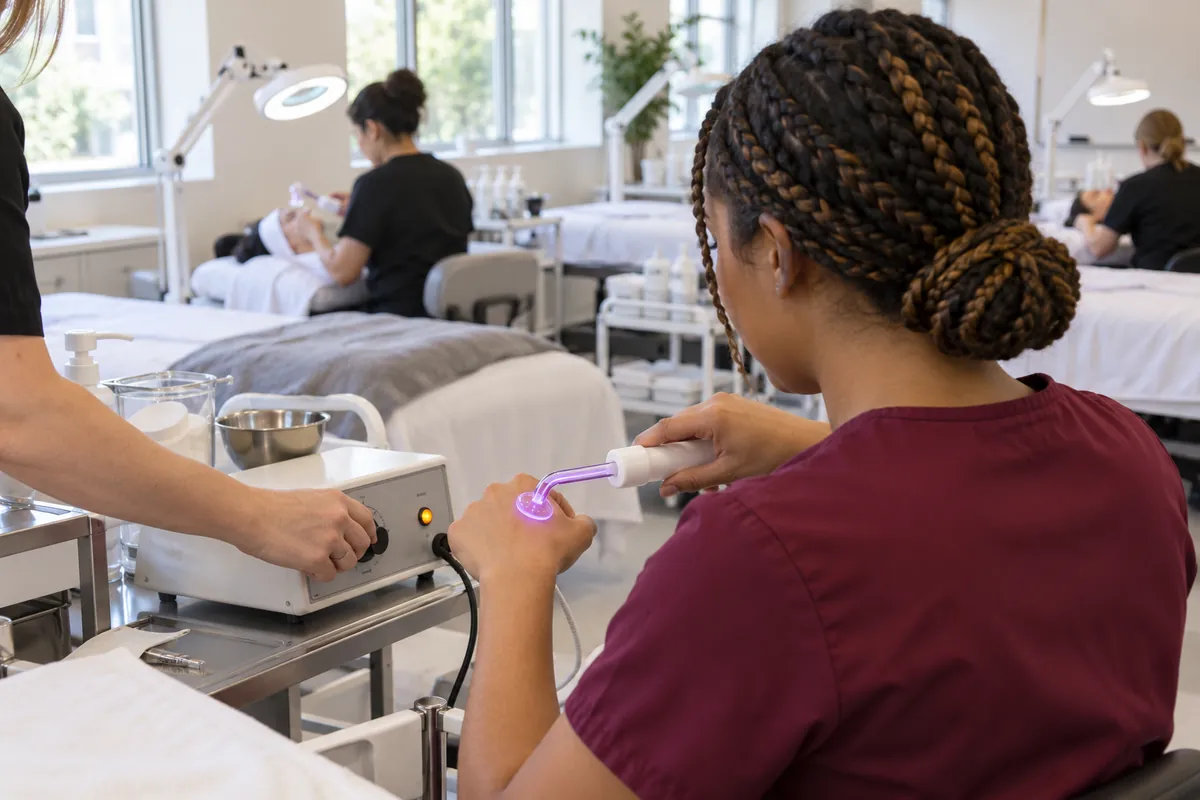
For students, high frequency is usually the first electrical modality you practice, and it teaches habits that carry over to every device: screening for contraindications, testing on yourself first, controlling the moment of contact, never working over flammable products, and disinfecting between clients. Learn the theory of electricity well, because exam questions on current types and electrode use are common. The esthetics course here covers that theory, and it supports the in-person hours and practical training your state requires without replacing them. For a view of the whole job, see what an esthetician does.
Aftercare
Aftercare is the same as for the facial it was part of. For the rest of the day, keep your hands off your face and skip makeup if you can, particularly after extractions. Avoid hot showers on the face, saunas, steam rooms and intense workouts until the next day. Use a gentle cleanser and a simple moisturizer in the evening, and hold off on scrubs, acids and retinoids for a couple of days or as your esthetician advises. Apply broad-spectrum sunscreen every morning.
Change your pillowcase that night, and do not pick at any spots that were treated. If your skin feels tight, a plain hydrating serum or moisturizer is enough. Redness that lasts into the next day, a burning sensation, blisters or new dark marks are not expected, and you should contact the esthetician. See a dermatologist if acne is painful, cystic, leaving scars or not improving with good skin care, because that needs medical treatment and no facial device will resolve it.

Your next step
If you are curious about high frequency as a client, the simplest way to try it is to book a deep cleansing or acne facial with a licensed esthetician and ask whether it is included. Go through the intake form honestly, mention any implants or medical conditions, and pay attention to how your skin looks over the following three days. If you like the result, it can stay in your regular facial. If you are thinking of a home wand, buy from a manufacturer you can identify, read the manual, and start low and brief.
If you are a student or a new esthetician, practice contact control and timing until they are automatic, and learn to explain the device in two honest sentences. Clients respond well to a professional who says what a tool can do, what it cannot, and why it is being used on their skin today. That habit will serve you with every device you add later.
State Requirements
State licensing guides
Hours, exams, fees, and the licensing board differ by state. Open your state for the current requirements.
Common Questions
FAQ
It passes a mild, rapidly alternating current through a gas-filled glass electrode, producing gentle warmth and a small amount of ozone at the skin surface. Estheticians use it mainly after extractions and on oily, breakout-prone skin, which tends to look calmer and more matte afterward. The effect is temporary and supportive. Strong clinical evidence for most advertised claims is limited.
It can help individual blemishes dry down and leave freshly extracted skin calmer, which is why it is a traditional step in acne facials. It does not treat the causes of acne and will not clear moderate or severe breakouts. Painful, cystic or scarring acne needs a dermatologist. Think of high frequency as a small addition to a proper routine and not as the treatment itself.
For healthy skin and a suitable client it has a long record of safe use when performed correctly. It should not be used on people with pacemakers or other implanted electronic devices, during pregnancy, or with epilepsy, and it is avoided on rosacea, broken capillaries and inflamed or broken skin. It must never be used over alcohol-based or flammable products because the electrode produces small sparks.
Violet electrodes are filled with argon gas and orange electrodes with neon. Tradition assigns violet to oily and blemished skin and orange to dry or mature skin. The electrical output of the device is the same, and research does not clearly show different effects from the two gases. Technique, timing and intensity influence the result far more than color.
Follow the manual for your device, and stay at or below the frequency it gives. In general, brief sessions a few times a week on clean, dry skin are better tolerated than daily use, and overuse causes dryness, irritation and more breakouts. Stop if your skin becomes red or tight, and do not use a home wand if any of the contraindications apply to you.
No. With the electrode in contact you feel warmth and a faint tingling. When it is lifted slightly or used to spark a blemish, you feel small static-like prickles for a second or two. If it stings or burns, tell the esthetician so the intensity can be lowered. Afterward the skin may be slightly pink and tight for a few hours.
There is no good evidence for either. The scalp comb may leave an oily scalp feeling fresher, and the face may look briefly plumper from warmth and circulation, but the device does not reverse hair loss or lift skin. For firmness, see the guide to radiofrequency skin tightening, and for hair loss, consult a dermatologist.
Licensed estheticians and cosmetologists commonly perform it, and it is a standard part of their training. Scope of practice is set by each state board, and rules on electrical devices differ, so professionals should confirm their own state's position. Clients can verify a license with the state board. The esthetics licensing hub links to each state's requirements.
Keep Reading
Related Guides


