Cosmetology
First Facial: What to Expect Before, During and After
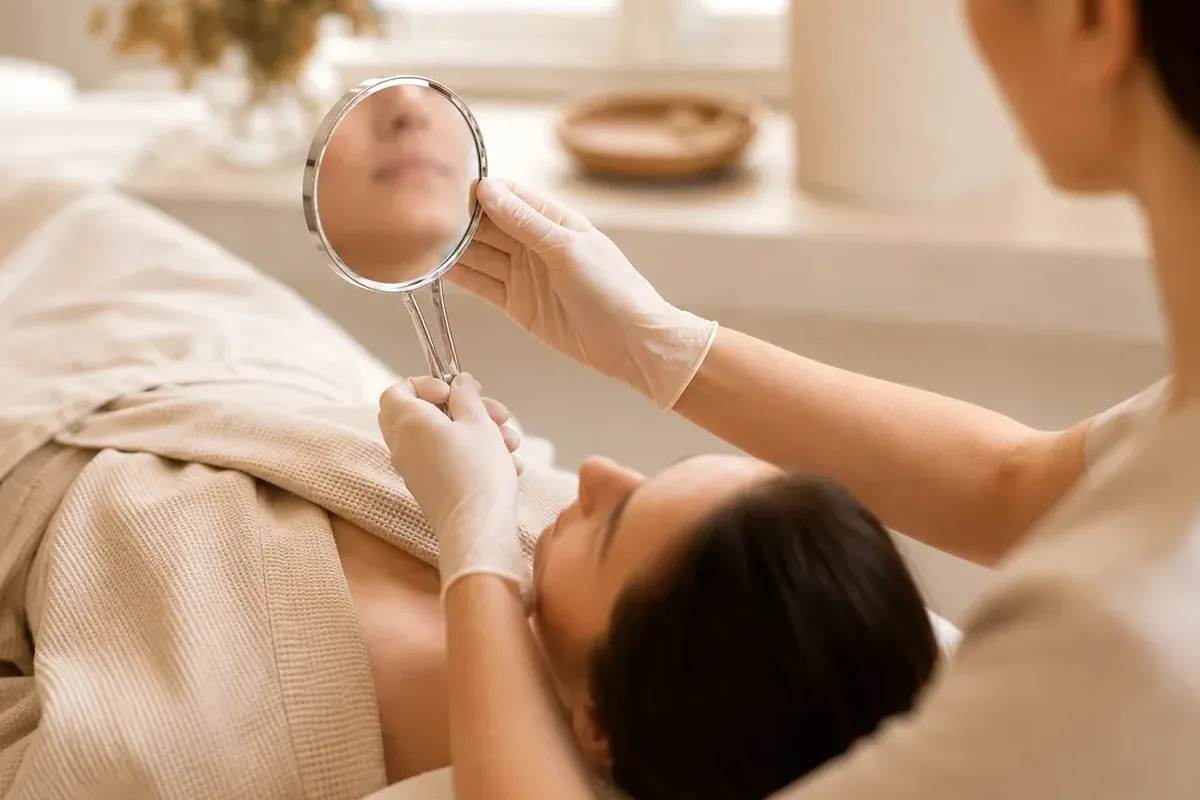
Quick answer
A first facial starts with a consultation and skin analysis, then moves through the treatment steps, which can include extractions and a mask. A facial clears what is inside the pores and makes them look smaller for a while, but it does not change pore size permanently. In the US, facials are performed by licensed estheticians and, in most states, licensed cosmetologists.
A first facial makes many people nervous for reasons that have little to do with skin. They do not know what to wear, whether to arrive with makeup, whether extractions will hurt, how red they will be afterward, or what the person leaning over them is going to think of their pores. I have given first facials to teenagers, to brides a month before the wedding, and to people in their sixties who had never let a professional touch their face. Nearly all of them leave saying the same thing: it was far less intimidating than they imagined.
This guide walks through a first facial from the booking call to the week after, in the order you will experience it. I explain what the esthetician is doing at each step and why, what sensations are normal, how your skin is likely to react over the next few days, and which mistakes first-timers make most often. I also cover how to check that the person treating you is licensed and works cleanly, because that matters more than the brand of products on the shelf.
What a professional facial actually is
A facial is a structured skin treatment performed by a licensed esthetician or cosmetologist. The classic version, often called a European or deep cleansing facial, follows a familiar sequence: cleansing, skin analysis, exfoliation, steam or another softening step, extractions if needed, massage, a mask, and finishing products with sunscreen. Each step prepares the skin for the next one. Other facials build on this base by adding a device, such as an ultrasonic spatula, LED light, high frequency, or a hydradermabrasion machine, or by using a professional-strength exfoliant.
It helps to understand what a facial is not. It is not a medical treatment, and an esthetician does not diagnose skin diseases or prescribe medication. Persistent, painful, or scarring acne, rashes that do not resolve, changing moles, and sudden skin changes belong with a dermatologist. A good esthetician knows where that line is and will tell you when something needs a medical opinion. Many of my long-term clients see both of us, and the two kinds of care work well together when each stays in its role.
For a first visit, I almost always recommend a classic facial with gentle manual extractions over anything aggressive. The goal of the first appointment is to learn how your skin behaves: how it reacts to steam, to exfoliation, to touch, and how quickly redness settles. That information shapes everything that follows. If you want a fuller picture of the services involved, I describe them in my overview of what professional facial care includes.
Booking the appointment and choosing who does it
When you call or book online, say that it is your first facial. A studio that knows this will schedule enough time for a consultation and will not put you into a treatment designed for regular clients. Mention any skin condition you already know about, any prescription skin medication, pregnancy, and any important event coming up. If you have a wedding, photos, or an interview, book the first facial at least a couple of weeks ahead. Skin can flush or break out lightly after a first treatment, and you want that behind you.
In the United States, facials are performed by licensed estheticians and, in most states, by licensed cosmetologists. The license is issued by a state board after required training hours and exams, and the requirements differ from state to state. You are entitled to ask what license your provider holds, and you can verify it on the state board website. If you are curious about what each license allows, I compare them in my guide to the difference between a cosmetologist and an esthetician.
Reviews and photos are useful, but watch for the right details. Look for comments about cleanliness, about the provider explaining what they were doing, and about gentle handling during extractions. Be cautious about studios that advertise guaranteed results or push long packages before they have seen your skin. If you are searching from scratch, our directory of studios is one place to start, and a short phone call with a few questions will tell you more than any advertisement.

How to prepare in the week before
Preparation is mostly about not irritating your skin in advance. In the days before a first facial, pause strong at-home exfoliants: scrubs, peeling pads, and acid toners. If you use a retinoid, ask the studio when to stop. A common recommendation is to pause it several days before, and prescription users should mention it at booking so the esthetician can plan a gentler treatment. If you take or have recently taken oral isotretinoin, say so clearly, because many exfoliating and extraction steps are postponed for a period after that medication.
Avoid sunburn and tanning beds. Sunburned skin cannot be treated, and you will be rescheduled. Do not wax, thread, or use hair removal cream on the face in the day or two before, since freshly waxed skin is too sensitive for exfoliation and steam. Men should shave the evening before or several hours ahead, not right before the appointment, so that the skin is not freshly scraped when products go on. Injectables are another timing question: if you have had filler or botulinum toxin recently, ask your injector when facial massage is safe.
On the day itself, arrive a few minutes early with a clean face if that is convenient, though you do not need to. Makeup will be removed as the first step either way. Wear a top with a wide or loose neckline, or one that is easy to remove, because the treatment usually includes the neck and upper chest and you will be given a wrap or tucked under a blanket. Leave necklaces and earrings at home. Contact lens wearers may be more comfortable in glasses, which come off at the table.
The consultation and skin analysis
Expect to fill out an intake form. It asks about allergies, medications, medical conditions, pregnancy, recent cosmetic procedures, and your current routine. This is not paperwork for its own sake. An allergy to nuts, aspirin, shellfish, or latex can rule out specific products. Blood thinners make bruising more likely. Certain medications make skin more reactive to exfoliation and light. Answer honestly, including about things that feel unrelated. Everything you write is used to keep you safe, and a professional keeps it confidential.
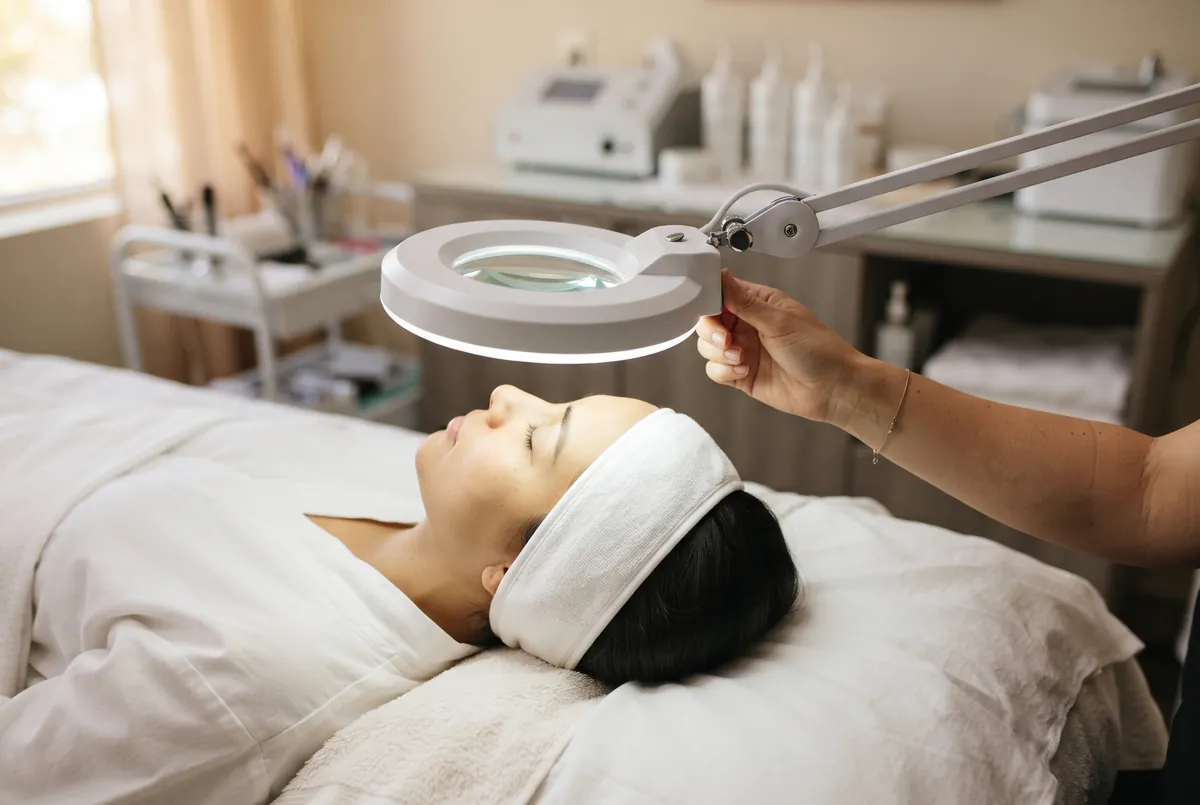
After the form comes a short conversation. I ask what bothers the client most, what they have tried, how their skin feels by midday, and how it reacts to sun and new products. Then the client lies down, I cleanse the face, and I look at the skin under a magnifying lamp. Some studios also use a special light that shows oil and dryness patterns. I am looking at pore size, oil distribution, dehydration, sensitivity, congestion, and any spot that should be shown to a dermatologist.
This is the moment many first-timers dread, because they expect judgment. There is none. An esthetician sees every kind of skin every day, and clogged pores are ordinary. What I say out loud during analysis is information, not criticism: where the skin is oily, where it is dry, what I plan to do, and what I plan to skip. If your provider says nothing at all, ask. You are allowed to know what is happening on your own face.
The first facial step by step
The details vary by studio and by skin, but a classic first facial follows a predictable order. Knowing it in advance removes most of the uncertainty. The whole appointment usually takes about an hour, sometimes a little more with the consultation.
- Cleansing: makeup, sunscreen, and surface oil are removed, usually in two passes, with a cleanser chosen for your skin type.
- Skin analysis: the esthetician examines clean skin under a magnifying lamp and confirms the plan with you.
- Exfoliation: a gentle enzyme, a mild acid, or a fine scrub loosens dead surface cells so that pores release more easily.
- Softening: warm steam or a softening product is applied for several minutes to prepare the pores. Sensitive or redness-prone skin gets less heat or none.
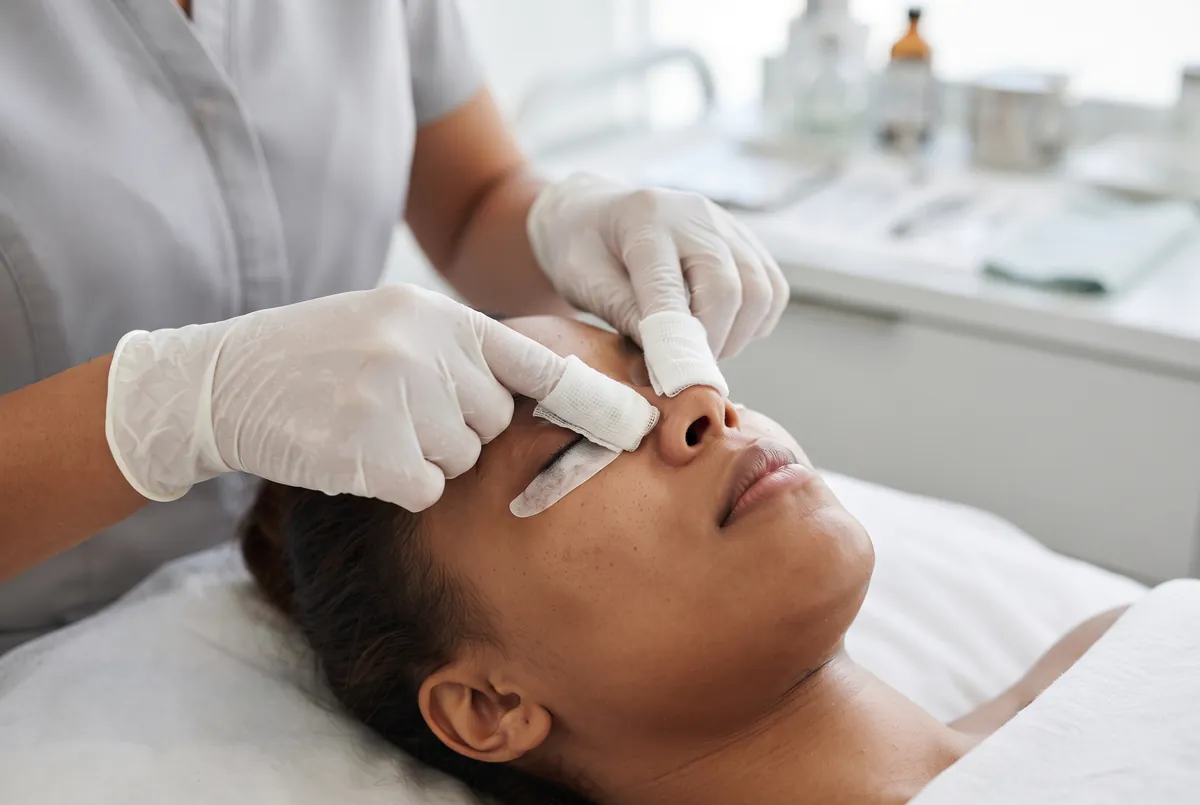
- Extractions: blackheads and other clogged pores are cleared with gloved, wrapped fingers or a sterile tool. Not every pore is treated, and inflamed spots are often left alone.
- Calming step: an antiseptic or soothing product is applied, sometimes with a high frequency device that feels like a light tingle.
- Massage: face, neck, and shoulders are massaged, unless the skin is too inflamed for it.
- Mask: a clay, gel, or cream mask chosen for your skin rests for several minutes while you relax.
- Finishing products: toner, serum, moisturizer, and sunscreen are applied, and the esthetician explains aftercare.
A few of these steps deserve more explanation, because they are where first-timers have the most questions. Exfoliation in a first facial should be mild. You may feel warmth or a light tingle from an enzyme or acid product for a minute or two. Tell the esthetician if it stings or burns, and it will be removed. Strong chemical peels are a separate service that I do not combine with a first visit. I want to see how skin reacts to a gentle exfoliant before I consider anything stronger.
Steam is pleasant for most people and uncomfortable for a few. If you feel short of breath, too hot, or claustrophobic under the steamer, say so, and it can be moved farther away or switched off. Clients with rosacea, visible broken capillaries, or very reactive skin often do better with a warm compress or a softening gel instead. Steam does not "open" pores in a mechanical sense, since pores have no muscles. It softens the oil plug and the surrounding skin so that extractions require less pressure.
Massage and mask are the part clients remember. The massage relaxes the facial muscles, boosts circulation, and helps the skin calm down after extractions. During the mask, many studios add a hand or scalp massage, and some estheticians step out for a few minutes to let you rest. Falling asleep is common and completely fine. The finishing step always ends with sunscreen during daylight hours, because freshly exfoliated skin is more vulnerable to sun.
Extractions: the part everyone asks about
Extractions are the manual removal of clogged material from pores. The esthetician wears gloves, often wraps the fingertips in gauze or cotton, and applies gentle, even pressure around the pore. Some use a sterile metal tool for stubborn spots. On well-prepared skin, a blackhead releases with light pressure. The sensation ranges from nothing at all on the forehead to a sharp pinch around the nose and on the chin, where the skin is thicker and nerve endings are dense. Each pinch lasts a second.
How much it hurts depends on your skin, the time of the month for some women, how well the softening step worked, and the esthetician's touch. It should be tolerable. Your eyes may water during work around the nose, which is a reflex and not a sign that anything is wrong. You can ask for a pause at any time, and you can ask to skip extractions entirely. A first facial without extractions is still a complete facial, and for sensitive or dry skin it is often the right choice.
A careful professional does not chase every pore. Deep, inflamed, painful bumps under the skin should not be squeezed, because pressure can push inflammation deeper and raise the risk of marks. Tiny white bumps called milia sit under a layer of skin and need a different approach that not every state allows estheticians to perform. If the extraction portion of your facial goes on longer than feels reasonable, or if the pressure feels rough, speak up. More extractions do not mean a better facial.
What it feels like for different skin types
Oily and combination skin usually has the most to extract, so the middle of the appointment takes longer and is felt more, especially on the nose and chin. The reward is visible: skin looks clearer and feels smoother for days. Dry skin often has little congestion, and the treatment leans toward gentle exfoliation, massage, and a rich hydrating mask. Clients with dry skin tend to describe the whole facial as relaxing from start to finish, with only brief tingling during exfoliation.
Sensitive skin needs the most caution. Redness appears quickly and stays longer, products that other people never notice can sting, and heat makes everything more reactive. For a sensitive first-timer I shorten or skip steam, use the mildest exfoliant I have, limit extractions, and choose a calming mask. Acne-prone skin sits somewhere else again: the esthetician works around inflamed spots, keeps massage light or leaves it out to avoid spreading irritation, and focuses on calming and antibacterial steps.
Mature skin is often drier and thinner, so it bruises and marks more easily under pressure. The emphasis moves toward hydration, massage, and gentle exfoliation. Teenagers are a group of their own: their skin is oily and resilient, but they are often anxious and embarrassed. With a teen I keep the first visit short, explain every step, and spend time teaching a simple home routine, because what they do daily matters more than what I do in one hour.
What your skin looks like right after
Most people leave a first facial with a mild flush and skin that feels very clean and soft. If you had extractions, expect redness and possibly slight swelling at those spots, strongest on the nose, chin, and anywhere there were many clogged pores. On fair or sensitive skin, small red marks can stay visible for a day or two. On deeper skin tones, redness is less obvious, but the skin is just as sensitive, and gentle handling matters because irritation can leave darker marks that take time to fade.
The skin is usually not coated in makeup when you leave, and I advise clients to keep it that way for the rest of the day. For that reason, schedule a first facial at a time when you can go home afterward instead of heading to an important meeting or a date. A late afternoon or early evening appointment works well: you go home, keep your hands off your face, sleep, and wake up to calmer skin. Bring a hat if you will be walking in strong sun.
You may also notice that your skin feels tight or slightly dry for a day, particularly after a clay mask or an exfoliating step. A plain moisturizer solves this. Some clients feel a little oily instead, because massage and warmth stimulate the skin for a short time. Both reactions settle on their own. What you should not see is blistering, raw or weeping patches, hives, or swelling of the lips or eyes. Those are not normal responses, and I cover what to do about them below.
The days after: aftercare and normal reactions
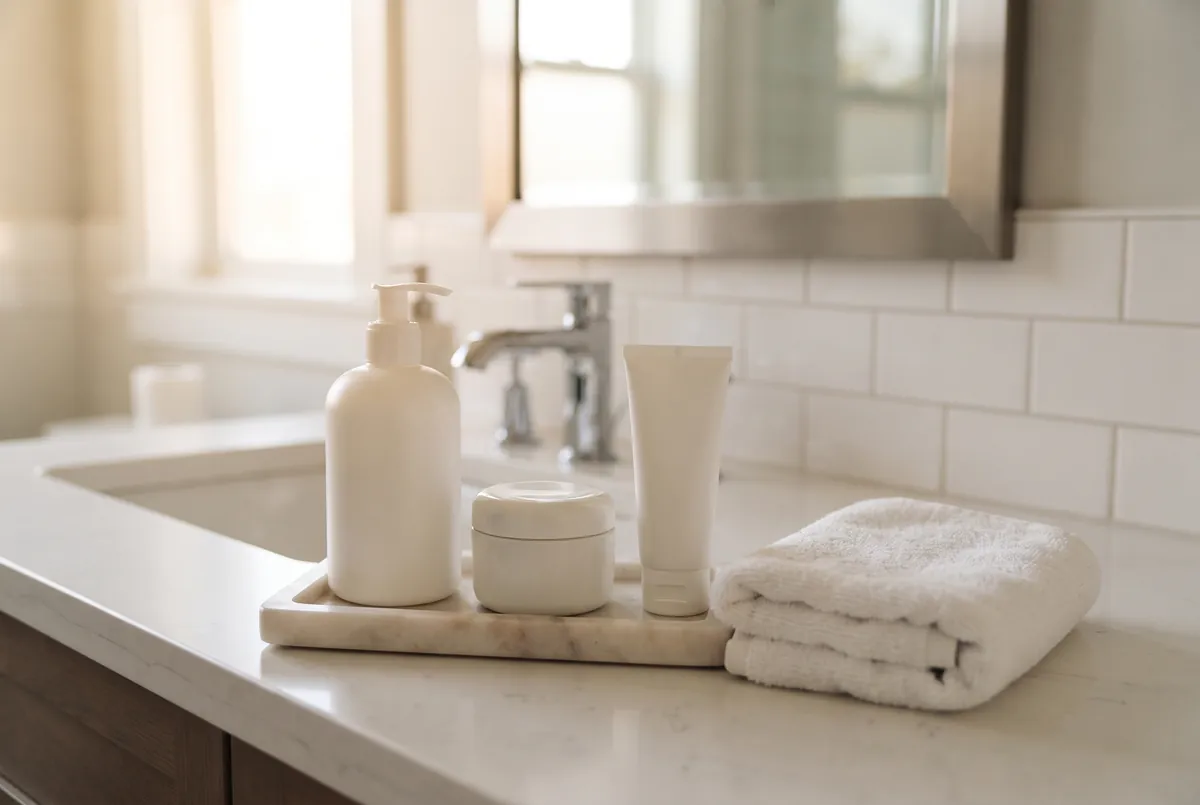
For the first day, keep everything gentle. Do not touch or pick at your face, and wash your hands before applying anything. That evening, rinse with lukewarm water or a mild cleanser and apply a simple moisturizer. Skip scrubs, acids, retinoids, and at-home devices for a few days, or for as long as your esthetician advises. Avoid heavy workouts, saunas, steam rooms, and hot yoga for the first day, since heat and sweat irritate freshly treated skin. Change your pillowcase that night. It is a small step that helps.
Sunscreen is the non-negotiable part. Exfoliated skin burns and discolors more easily, so use a broad-spectrum sunscreen every morning and avoid deliberate sun exposure for the following week. Makeup can usually go back on the next day, applied with clean brushes or sponges. If you color or bleach facial hair, wax, or thread, wait several days. Swimming pools and hot tubs are best postponed for a day or two because chlorine and warm shared water are hard on open pores.
Some people break out a little in the days after a first facial. Deep cleansing and massage can bring congestion that was already forming to the surface sooner. These spots are usually small, appear in areas where you normally break out, and clear within about a week. Leave them alone. If you instead develop many new bumps in places where you never break out, or an itchy rash, that points to irritation or a reaction to a product, and you should call the studio and describe what you see.
Results: what one facial can and cannot do
One facial gives you clean pores, smoother texture, and a few days of skin that looks brighter and takes makeup better. It also gives you something less visible and more valuable: a professional assessment of your skin and a home routine built for it. What one facial cannot do is clear acne, erase dark marks, remove wrinkles, or permanently shrink pores. Skin renews itself in cycles of roughly a month, and oil glands keep producing. Lasting change comes from consistent daily care, sun protection, and periodic professional treatments over months.
That is why estheticians commonly suggest returning about every four to six weeks, which roughly follows the skin's renewal cycle. It is a guideline, not a rule. Oily, congested skin may benefit from closer visits at first, and dry or sensitive skin may do well with a facial once a season. Budget matters too, and a client who comes four times a year and follows a sensible home routine will have better skin than one who comes monthly and sleeps in makeup. I would rather a client spend on daily sunscreen first and facials second.
Pay attention to how the esthetician talks about results. An honest professional describes what improved, what will take time, and what is outside the scope of a facial. Product recommendations are a normal part of the visit, and many are useful, but you are never obligated to buy on the spot. Ask which one product would make the biggest difference, and start there. A provider who respects that answer is one worth returning to.
How to tell the studio works cleanly
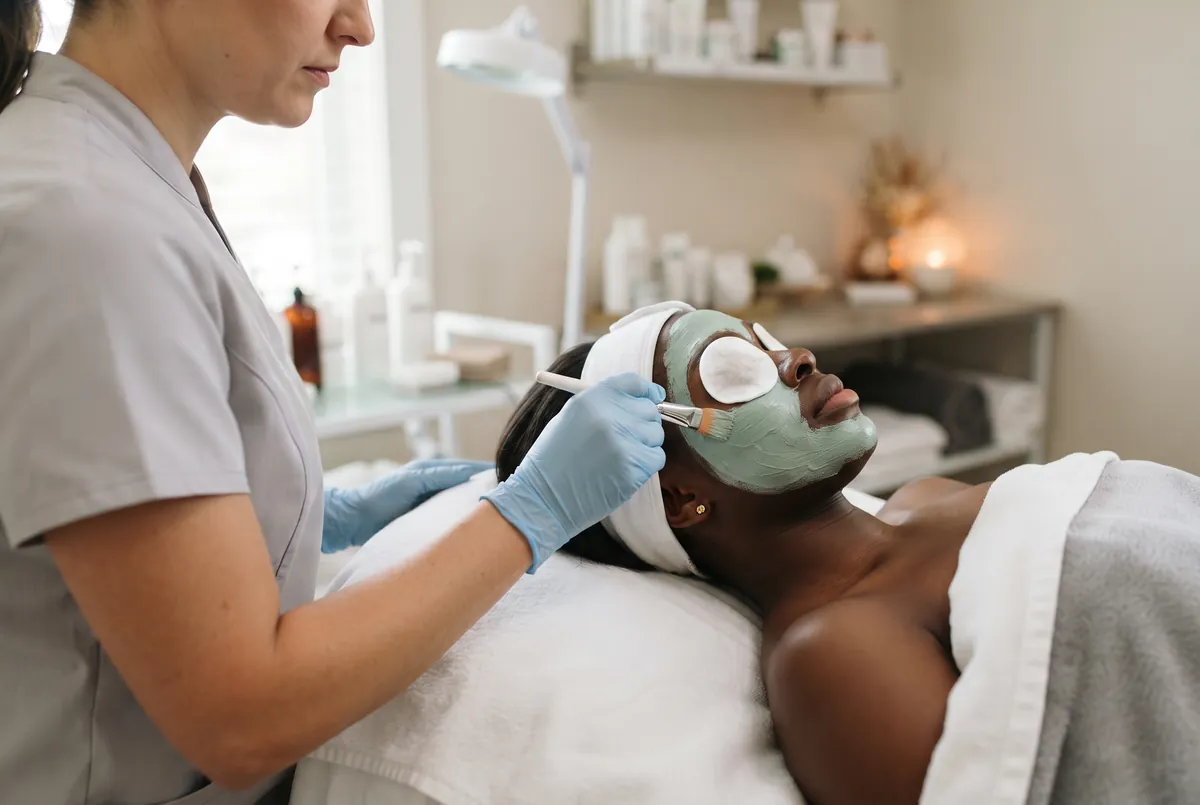
You can judge a lot from the table. Linens, the headband, and the wrap should be fresh for you. The esthetician should wash hands before starting and put on new gloves for extractions. Any metal tool should come out of a sealed pouch or a closed, clean container, and anything that cannot be disinfected, such as cotton, gauze, sponges, and wooden spatulas, should be single-use and thrown away in front of you. Products should come from pumps or be scooped with a clean spatula, never with fingers.
The license should be displayed where clients can see it. State boards require this in most places, and the same boards set the sanitation rules that licensed professionals are trained and tested on. If you do not see a license, ask. It is a normal question. You can also look up a provider on the board's website, and our esthetician licensing pages link to the board for each state. For more on judging a provider, see my checklist on how to choose a cosmetologist.
Some services advertised as facials go beyond what an esthetician's license allows in a given state. Deeper peels, microneedling, laser treatments, and anything that involves needles or injections are regulated differently across the country, and many of them require medical supervision. If a studio offers these, ask who performs them and under what license. I explain how those roles are divided in my guide to what a medical esthetician is. For a first facial, none of them are necessary.
Common fears and why most of them fade
The first fear is pain. Apart from a few seconds of pinching during extractions, a facial is comfortable, and most of it is relaxing. The second is embarrassment about skin. Estheticians chose this work because they like solving skin problems, and a face with congestion is simply a face with something to do. The third is breaking out afterward. A few small spots can happen and pass quickly, and they are far less dramatic than people fear. The fourth is being pressured to buy. You can say that you want to think about it, and a professional accepts that.
Some worries are about the unknown mechanics. People ask whether they have to undress: you remove your top or lower it, and you are covered by a wrap and a blanket the whole time. They ask whether they have to talk: no. Some clients chat and some say nothing for an hour, and both are fine. They ask whether steam will be suffocating, whether the lamp will be blinding (your eyes are covered with pads), and whether they can use the restroom in the middle. Yes, you can ask for a pause at any time.
Another common worry is that once you start getting facials, your skin will "need" them and get worse without them. That is a myth. A facial does not create dependence. If you stop, your skin simply returns to whatever your daily care and your biology produce. What does change is your standard: after seeing how your skin looks when it is properly cared for, you notice more when it is not.
Mistakes first-timers make
The most common mistake is doing too much beforehand. People scrub hard, use a peel pad, or try to squeeze blackheads the night before so that their skin looks "better" for the esthetician. They arrive irritated, and I have to work more gently than I planned. Come as you are. The second mistake is leaving things off the intake form: a retinoid, an acne prescription, an allergy, a recent peel or laser treatment somewhere else. Each of those changes what is safe to do.
The third mistake is booking the first facial the day before a big event. Give yourself a buffer of a couple of weeks, and if the event matters, do a trial facial even earlier. The fourth is staying silent during the treatment. If something burns, if pressure is too strong, if you are cold or need a break, the esthetician wants to know. The fifth happens afterward: picking at extraction spots, applying a strong active product that night, going to a hot workout, or skipping sunscreen the next morning.
A subtler mistake is judging the whole experience by the first week. A first facial is a starting point. The esthetician is learning your skin, and you are learning what professional care feels like. If the provider listened, worked cleanly, and explained things, give the plan a few visits before deciding whether it works. If they rushed, hurt you, or dismissed your questions, try someone else. The relationship matters as much as the technique.
Combining a first facial with waxing or other services
Clients often want to book brow or lip waxing in the same visit to save time. It can be done, with attention to order and to the products used. Waxing removes a thin layer of surface cells along with hair, so waxed skin should not then be exfoliated or steamed. Many estheticians wax at the end of the facial on areas that received no exfoliant, or suggest a separate day. If you use a retinoid, facial waxing may not be safe at all until you have stopped it for a period. My guide to eyebrow waxing covers that timing.
Add-ons such as LED light, a hydrating ampoule, or a scalp massage are low risk and can be included from the first visit. Stronger additions, including chemical peels, dermaplaning, and microdermabrasion, are better saved for later, once your esthetician knows how your skin responds. Stacking several exfoliating services in one appointment is how first-timers end up with raw, peeling skin. One mild exfoliation per visit is enough at the beginning.
If the experience makes you curious about the profession
A surprising number of estheticians trace their career to one good facial. If you find yourself more interested in what the esthetician is doing than in relaxing, it is worth knowing how the path works. Esthetics is a licensed profession in nearly every state. You complete a state-approved program with required in-person hours, then pass the board exams. The number of hours and the exam format vary, and the details are on our state-by-state esthetics licensing pages.
Online study has a place in that path, as support for theory: skin anatomy, ingredients, sanitation, and exam preparation. It does not replace the hands-on hours a state requires, and no online course leads to a license by itself. Our esthetics theory courses are designed to be used alongside or ahead of in-person schooling, and the school directory lists programs by state. If you only want great skin, you can ignore all of this and simply enjoy the appointment.

Your next step
Book a classic facial with a licensed esthetician, tell them it is your first, and schedule it for a day when you can go home afterward. Pause strong actives beforehand, bring your product and medication list, and speak up during the treatment. Afterward, keep your routine gentle, wear sunscreen, and watch how your skin behaves for a week. Then decide on the next visit with real information instead of guesswork. A first facial should leave you with cleaner skin, a clearer plan, and the feeling that someone competent was paying attention.
State Requirements
State licensing guides
Hours, exams, fees, and the licensing board differ by state. Open your state for the current requirements.
Common Questions
FAQ
Expect a short intake form and consultation, then about an hour on the treatment bed: cleansing, skin analysis under a magnifying lamp, gentle exfoliation, steam or another softening step, extractions if needed, massage, a mask, and finishing products with sunscreen. Most of it is relaxing. Extractions can pinch briefly. You will leave with clean, slightly flushed skin and aftercare instructions for the following days.
Most of a facial is comfortable. The only part that can hurt is extractions, which feel like quick pinches, strongest around the nose and chin. Exfoliating products may tingle or feel warm for a minute or two. Tell your esthetician if anything stings, burns, or feels too rough. You can pause or skip extractions at any time, and the facial is still worthwhile without them.
Either is fine. The esthetician removes makeup and sunscreen as the first step, so you do not need to arrive bare-faced. What matters more is what you avoid in the days before: strong scrubs, acid products, sunburn, and facial waxing. If you use a retinoid or a prescription acne medication, ask the studio in advance when to pause it.
A mild flush is common and usually fades within hours. If you had extractions, small red marks or slight swelling at those spots can last a day or two, especially on fair or sensitive skin. Plan to go home afterward and skip makeup for the rest of the day. Blistering, hives, swelling of the lips or eyes, or redness that spreads and feels hot are not normal and need prompt attention.
A few small spots in the days after a first facial can be normal, since deep cleansing and massage may bring existing congestion to the surface sooner. They usually appear where you normally break out and clear within about a week. Many new bumps in unusual places, or an itchy rash, suggest irritation or a product reaction. Call the studio, and see a physician if it worsens.
A common guideline is about every four to six weeks, which roughly follows the skin's natural renewal cycle. It is flexible. Congested or oily skin may benefit from closer visits at first, while dry or sensitive skin may do well with a facial once a season. Consistent daily care and sunscreen matter more than frequency, so set a schedule that fits your skin and your budget.
For the first day, do not pick at your skin, wear heavy makeup, work out hard, or use saunas, steam rooms, or hot tubs. For several days, skip scrubs, acids, retinoids, and facial waxing unless your esthetician says otherwise. Avoid deliberate sun exposure for about a week and use a broad-spectrum sunscreen every morning. Keep your routine to a mild cleanser and a plain moisturizer.
In the United States, facials are performed by licensed estheticians and, in most states, licensed cosmetologists. Licenses are issued by state boards after required training hours and exams, and the rules vary by state. You can ask to see the license and verify it on the board's website. Our esthetics licensing pages link to each state's requirements.
Keep Reading
Related Guides


