Cosmetology
Back Facial: What It Is, Steps, Benefits and Aftercare
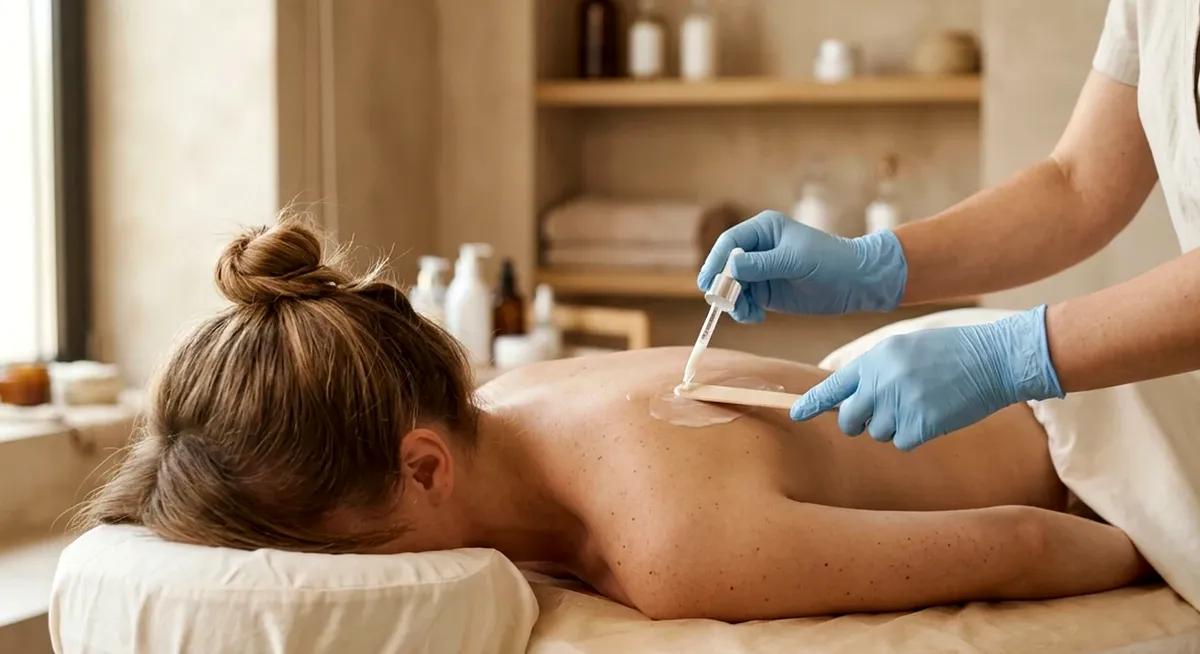
Quick answer
A back facial is a professional skin treatment for the back and shoulders that follows the steps of a facial: cleansing, exfoliation, steam or warm towels, extractions where needed, a mask, and hydration. It suits blackheads, clogged pores, and mild breakouts. Deep, painful, or scarring acne needs a dermatologist. For maintenance, every four to six weeks is a sensible rhythm.
A back facial is a professional skin treatment for the back and shoulders that follows the same logic as a facial for the face: deep cleansing, exfoliation, steam or another softening step, extractions where they are needed, a mask, and hydration. Spas sometimes list it as a back treatment or a "bacial". It exists for a simple reason. The back has a large number of oil glands, it sits under clothing and sweat most of the day, and it is the one part of the body most people cannot see or reach properly. Congestion and breakouts build up there unnoticed.
I am Aida Khazieva, a licensed electrologist and cosmetologist with more than twenty years in the treatment room. I have performed back treatments on brides before open-back dresses, on athletes who live in sweaty gear, on teenagers embarrassed at the pool, and on many men who had never had any skin service before. This guide explains what a back facial involves step by step, what it can and cannot do for back acne, who should skip it, how to prepare, how to care for the skin afterward, and how to choose a licensed provider.
What a back facial is
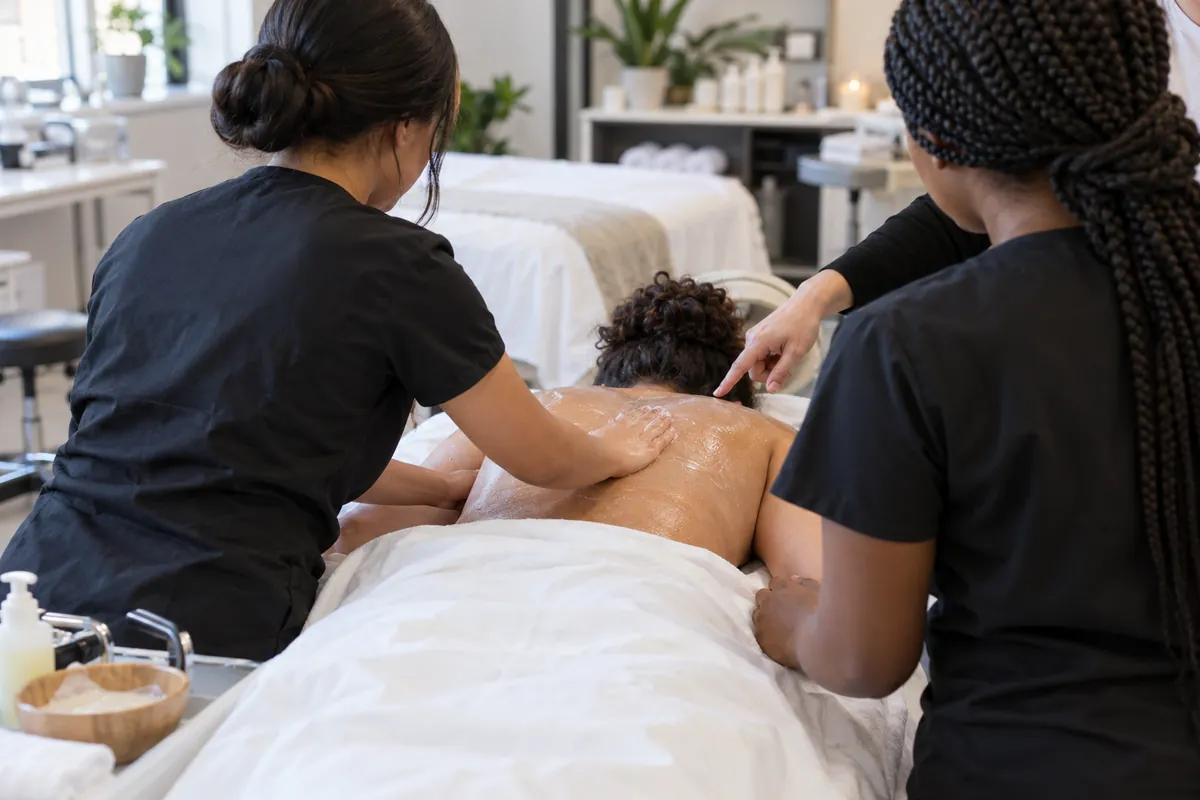
A back facial treats the skin from the base of the neck to the waistline, including the shoulders and often the backs of the upper arms. A session usually runs somewhere between forty-five minutes and an hour and a quarter, depending on how much extraction work is needed and whether extras such as a light peel, LED light, or high frequency are added. The client lies face down on a treatment bed, draped so that only the back is exposed, and the esthetician works under a bright lamp with magnification.
The service has two versions in practice. One is corrective: aimed at clogged pores, blackheads, whiteheads, mild breakouts, rough texture, and dullness. The other is closer to a spa ritual: cleansing, a scrub or enzyme, a warm mask, and a long massage, with little or no extraction. Many menus do not make the difference clear. If your goal is clearer skin, say so when you book and ask whether extractions are included, because a relaxation back treatment will feel lovely and change very little about congestion.
People book a back facial for a few common reasons: persistent small bumps and blackheads across the shoulders, breakouts that flare with exercise or hot weather, an event with a low-cut or backless outfit, a beach vacation, or simply because the back has never been properly cleaned by anyone. It is a cosmetic service. It supports healthy skin and can improve mild congestion, and it is not a medical treatment for inflammatory acne.
How back skin differs from facial skin
The skin of the back is thicker than facial skin, with a denser dermis and a sturdier surface layer. The upper back and shoulders carry many large oil glands, which is why oil, sweat, and dead cells so readily combine into plugs there. The lower back has fewer glands and is usually drier. Because the skin is thicker, comedones on the back can sit deeper and be more stubborn than on the face, and inflamed spots can be larger and slower to settle.
That sturdiness cuts both ways. Back skin generally tolerates stronger exfoliation than the face, so products with salicylic acid or other exfoliating acids can often be used at strengths that would be too much for cheeks. On the other hand, the back is slower to heal. Marks left by breakouts tend to linger for months, and the shoulders and upper back are among the areas where raised scars and keloids form more easily in people who are prone to them. Rough extraction on the back is therefore a real risk, not a minor one.
The environment is different too. A face is exposed to air most of the day. A back sits under fabric, a bra band, a backpack strap, or the back of a chair, with heat, sweat, and friction held against it. Hair conditioner and styling products rinse down over it in the shower. And because you cannot see it, you rarely cleanse it as carefully as your face or notice a problem early. A large part of a good back treatment is identifying which of these everyday factors is feeding the congestion.
The back is also not one uniform zone. The shoulders and the area between the shoulder blades are the oiliest and the most congested in nearly every client. The lower back tends to be drier and is more often affected by friction from waistbands than by clogged pores. The backs of the upper arms have their own typical problem, the small rough bumps of keratosis pilaris. The chest, which some studios include as an add-on, has thinner skin than the back and is the area where raised scars form most readily, so it calls for the lightest touch of all. A thoughtful esthetician adjusts products and pressure as they move from one zone to the next.

What a back facial can and cannot treat
A back facial is well suited to non-inflamed congestion: blackheads, closed comedones, enlarged-looking pores on the shoulders, rough or bumpy texture, and dull, flaky skin. Exfoliation and careful extraction clear the plugs, and a suitable mask calms the area and reduces surface oil for a while. Clients with occasional mild breakouts usually see smoother skin and fewer new spots when treatments are combined with a consistent routine at home.
It can also help with the look of the skin in general. A back that has been exfoliated and hydrated reflects light more evenly, which matters for events and photographs. Mild discoloration left by old spots can fade somewhat faster with regular exfoliation and strict sun protection, though it takes time and never happens in a single visit. Rough bumps on the backs of the arms, often keratosis pilaris, can be softened with exfoliation and moisturizing, with the understanding that the tendency itself is inherited and returns without upkeep.
The limits are equally important. Deep, painful nodules and cysts, widespread inflamed acne, and acne that leaves scars are medical conditions that need a dermatologist. An esthetician should not try to extract them. Sudden breakouts of small, uniform, itchy bumps across the chest and back may be a form of folliculitis, sometimes linked to yeast, which does not respond to ordinary acne care and needs a medical diagnosis. Established scars, whether indented or raised, are also beyond what a facial can change.
I tell clients to think of a back facial as one part of a plan. For mild congestion, it may be the main part. For moderate or severe acne, it is a supporting service that should be coordinated with whatever a physician has prescribed. A provider who promises to cure back acne in a set number of visits, or who discourages you from seeing a dermatologist, is working outside their scope.
Who should skip or postpone a back facial
Some situations call for waiting. Sunburn or a fresh tan on the back, open wounds, rashes, an active skin infection, shingles, or cold-sore-type lesions in the area are all reasons to reschedule. So is a new tattoo on the back that has not fully healed. Skin that has recently been waxed, lasered, or treated with a chemical peel needs time to recover first. If you are unwell with a fever, stay home, both for your own comfort and for the sake of the people in the studio.
Medications and health conditions shape the treatment even when they do not rule it out. Prescription retinoids and oral acne medication such as isotretinoin make the skin fragile, so extractions and exfoliation must be reduced or avoided, and many providers will ask for your prescriber's guidance. Blood thinners increase bruising. Diabetes and immune conditions slow healing and raise infection risk. A tendency toward keloids is a reason to avoid extractions on the shoulders and upper back altogether. Put all of this on the intake form.
Pregnancy does not prevent a back treatment, but it changes it. Lying face down becomes uncomfortable and then inadvisable as pregnancy advances, so the esthetician will position you on your side or seated with support. Certain active ingredients and electrical modalities are typically avoided during pregnancy. Hormonal breakouts on the back are common at this time, and gentle cleansing with pregnancy-appropriate products is usually the right level of intervention. Check with your physician if you are unsure about any product.

How to prepare
Preparation is light. Shower the morning of your appointment and skip body lotion, oil, and self-tanner on your back. Avoid sunbathing and tanning beds for at least a week beforehand. Stop using exfoliating acids, scrubs, and retinoid products on your back for several days before the visit unless your provider tells you otherwise. Do not pick or squeeze spots in the days before. If you have someone wax or laser your back, schedule that separately, with enough days in between for the skin to settle.
- Wear a loose, clean, breathable top, ideally one you do not mind getting a little product on.
- Bring a list of your medications and the body wash, lotion, and hair products you use.
- Arrive without perfume or body spray on the torso.
- Plan your workout before the appointment, not after it.
- Tie long hair up, or bring a clip, so it stays off your back afterward.
- Tell the esthetician about any area that is painful, itchy, or new.
If back hair is dense, mention it when you book. Thick hair makes it harder for products to reach the skin and for the esthetician to see pores clearly. Some men trim the back a day or two beforehand. I do not recommend shaving on the same day, because freshly shaved skin stings with exfoliants. Waxing should be done on a different day entirely. My waxing guide for men covers back waxing and how to time it around other skin services.
A back facial step by step
The appointment opens with a short consultation: what bothers you, what you use, your health history, and how your skin reacts to products. You are then left alone to undress to the waist and lie face down under a sheet or towel. Women can keep a bra on if they prefer, though it will usually need to be unhooked. The esthetician returns, adjusts the drape and the face cradle, and looks at the skin under the lamp before touching it. That first look sets the plan.
Cleansing comes first, often twice. The first cleanse removes sweat, sunscreen, and surface oil. The second, often with a product chosen for your skin, prepares the surface. Exfoliation follows. Depending on the skin, this may be an enzyme product that loosens dead cells, a mild acid, a gentle scrub, or a combination. On congested, oily shoulders I usually favor salicylic acid, because it is oil-soluble and works inside the pore. On a dry or sensitive back I keep exfoliation light.
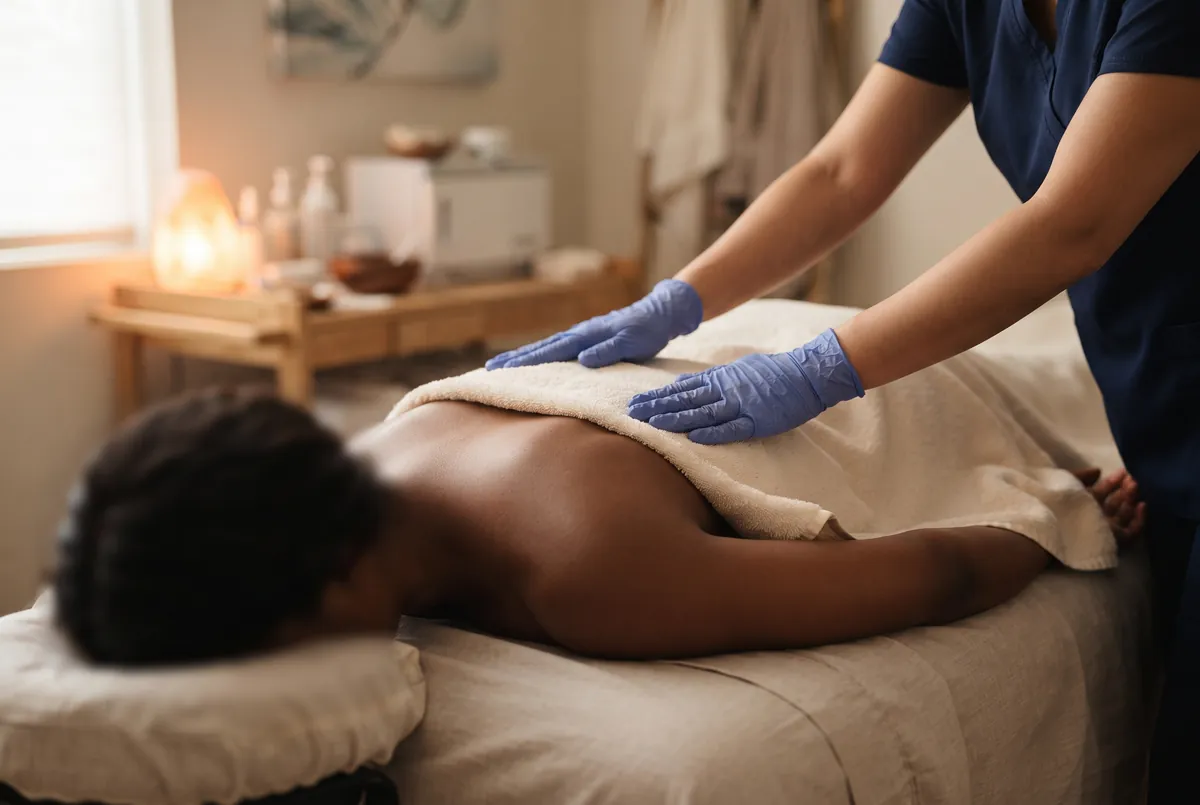
Next the skin is softened so that plugs release more easily. Many estheticians use a steamer directed across the back, or warm, damp towels laid over the area for several minutes. Softening products that loosen the contents of pores may be applied under the towels. This step is comfortable and is usually the point at which clients begin to relax. The warmth should be pleasant, never hot enough to redden the skin strongly.
Extractions follow where needed, and they are the heart of a corrective treatment. I describe them in detail in the next section. Afterward, an antiseptic or calming product is applied. Some providers use high frequency at this point, a glass electrode that passes a mild current over the skin and produces a tingling, warm sensation, used for its antibacterial and calming effect. Others use blue or red LED light. Neither is essential, and both are optional additions that depend on the studio's equipment and your skin.
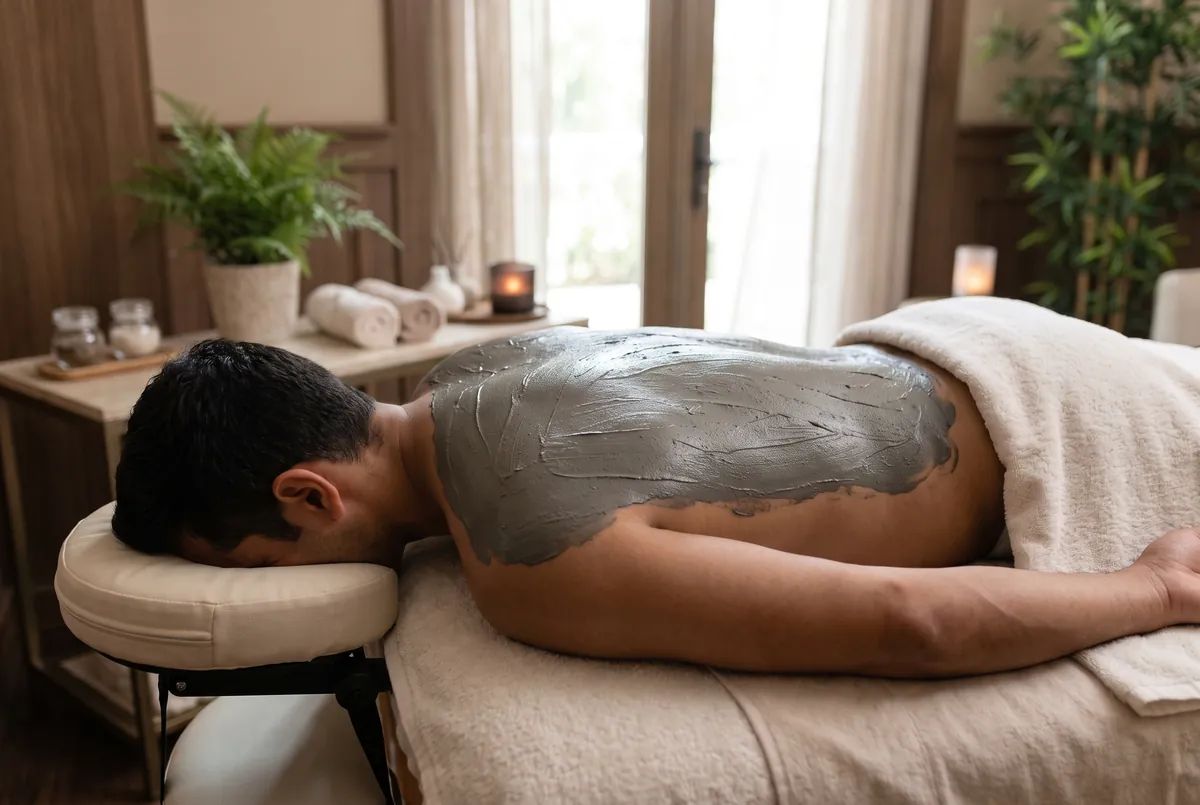
A mask comes next. Clay or sulfur-based masks absorb oil and calm congested skin. Hydrating or soothing masks suit dry and irritated backs. While the mask sets, many estheticians massage the arms, neck, or scalp. After the mask is removed, the skin is toned, a light non-comedogenic moisturizer is applied, and sunscreen is added if your back will be exposed that day. Shoulder and back massage is often included in relaxation versions, and kept brief or skipped after heavy extractions so freshly opened pores are not worked with oils.
Extractions on the back
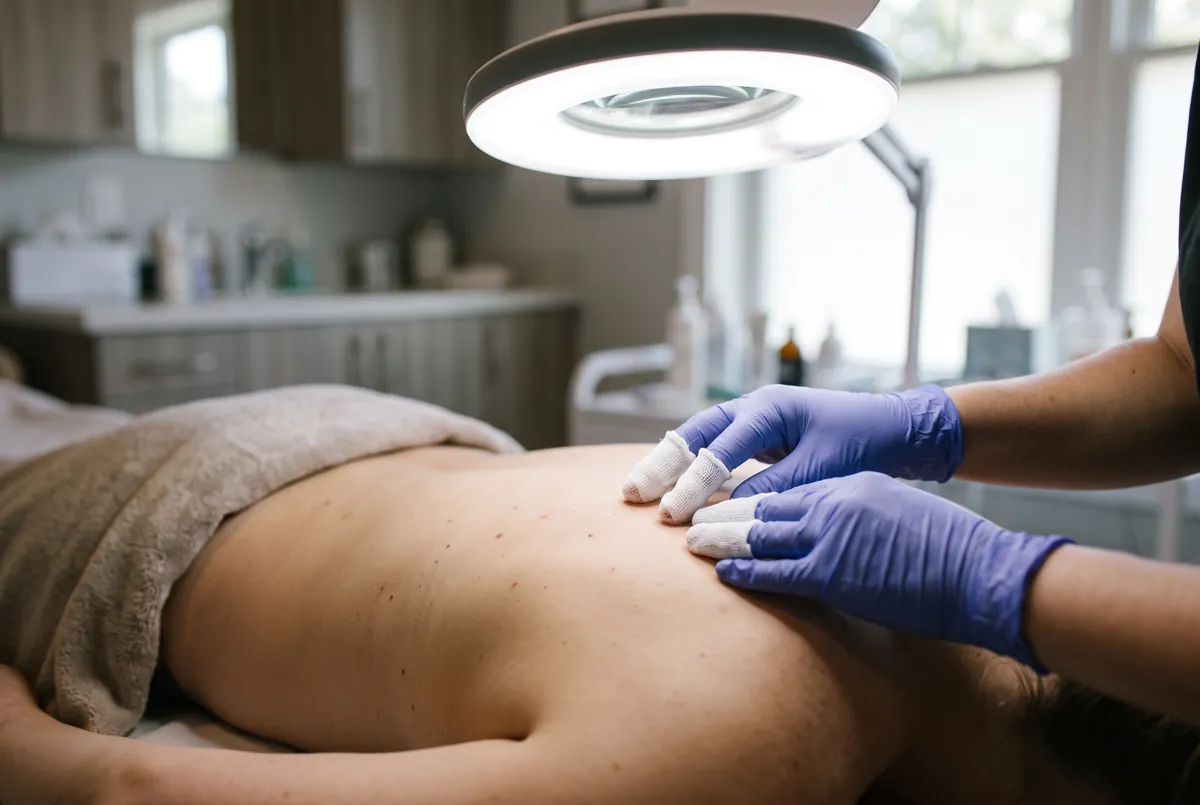
Extraction means manually clearing a clogged pore. After the skin has been softened, the esthetician applies gentle, even pressure around the pore with fingers wrapped in gauze or cotton, or with a sterile comedone extractor, so that the plug of oil and dead cells slides out. Open comedones, the dark-topped blackheads, usually release easily. Closed comedones, the small flesh-colored bumps, sometimes need a tiny opening made first, which some states allow estheticians to do with a lancet and others do not.
On the back, good extraction takes patience. The plugs can be deeper and firmer than on the face, and the area is large. I work in sections, from the shoulders down, and I leave anything that does not release with moderate pressure. Forcing a deep plug ruptures the wall of the follicle under the skin, which turns a quiet comedone into an inflamed spot and can leave a mark that lasts for months. On the back, where marks linger, restraint is a skill.
What it feels like: pressure, and brief, sharp pinches in places. Most clients find the back less sensitive than the nose or chin. Tell the esthetician if a spot is very painful, because that often signals inflammation that should be left alone. Deep, sore lumps under the skin are not extracted in a spa setting. Trying to open them risks spreading the inflammation and scarring. They are a reason for a dermatology referral.
Hygiene matters more here than at any other step. The esthetician should wear gloves, use sterilized or single-use tools, change gauze frequently, and apply an antiseptic afterward. Because you cannot see what is happening behind you, a good provider narrates: what they are seeing, what they are about to do, and what they are leaving alone and why. If you would like to see the condition of your back, ask for a photo on your own phone before and after.
Extraction is not always the best tool. When a back is covered in many small closed comedones, or when the skin marks easily, I often rely more on chemical exfoliation and less on manual work. A light professional peel with salicylic or another suitable acid, where state rules and training allow it, loosens plugs across the whole area at once and avoids hundreds of individual pressure points. The trade-off is a few days of dryness or light flaking and strict sun protection afterward. Many clients do best with a combination: a peel-based visit to clear the general congestion, followed by targeted extraction of whatever remains at the next appointment.
Back acne: what helps and when to see a dermatologist
Back acne forms the same way facial acne does. Oil and dead skin cells block a follicle, bacteria that normally live on the skin multiply in the blocked pore, and inflammation follows. Hormones drive oil production, which is why back breakouts are common in the teenage years, in young men, and around hormonal shifts. Genetics play a large part. What makes the back distinctive is the list of triggers that keep heat, sweat, and friction on the skin.
The term for breakouts caused by pressure and rubbing is acne mechanica. Backpack straps, sports pads, tight synthetic shirts, weight benches, and car seats on long drives can all contribute. Sitting in sweaty clothes after exercise is one of the most common triggers I see. Hair products are another. Conditioners and styling oils run down the back in the shower and leave a film. Rinsing the back last, after the hair, and clipping conditioned hair up while you wash your body often makes a visible difference.
For mild back acne, regular professional treatments plus a home routine with a salicylic acid or benzoyl peroxide body wash, both available over the counter, is a reasonable approach. Note that benzoyl peroxide bleaches towels and clothing. Give any routine several weeks before judging it. See a dermatologist if breakouts are painful or deep, if they are leaving scars or dark marks, if they cover a large area, if they appeared suddenly, or if nothing has improved after a couple of months of consistent care.
If you are already under a dermatologist's care, tell both professionals about each other. Prescription treatments change what is safe in the treatment room. A client on a topical retinoid needs gentler exfoliation, and a client on isotretinoin generally should not have extractions or peels until the prescriber says the skin is ready. In those cases a calming, hydrating back treatment with no aggressive steps can still be worthwhile for comfort.

Aftercare
Right after a back facial, the skin is usually pink, and spots that were extracted can look more noticeable for a day or two. That is expected. For the first twenty-four hours, wear a clean, loose cotton top, and avoid workouts, saunas, hot tubs, swimming pools, and very hot showers. Sleep on a clean sheet. Do not let anyone massage the area with oil, and keep fragranced body lotion and perfume off it. If you had heavy extractions, give the skin two days before returning to intense exercise.
For the rest of the week, cleanse the back gently once or twice a day with the wash your esthetician recommended, pat dry with a clean towel, and apply a light, non-comedogenic moisturizer. Hold off on scrubs, exfoliating acids, and retinoids for several days. Keep your hands off: picking at a healing spot on the back is a common cause of lasting marks. Sun protection matters as much as on the face. Exfoliated skin burns more easily, and sun darkens the marks that breakouts leave behind.
It is common to see a few new small spots in the week after a first treatment, especially if the skin was very congested. This usually settles. Signs that something is wrong are different: spreading redness, warmth, increasing pain, pus, or a rash of itchy bumps over the treated area. If you notice those, contact the studio and see a physician. A reaction to a product can also show up as itching or hives within hours, and you should mention any history of sensitivities before the next visit.
How often to book, and home care between visits
For maintenance, a back facial every four to six weeks is a sensible rhythm, similar to facial care for the face. For active congestion, some estheticians suggest a short series of treatments closer together at the start, then a move to a maintenance interval as the skin clears. Many clients book seasonally instead: before summer, before a vacation, or a couple of weeks ahead of a wedding. For an event, schedule the treatment about a week or two in advance, not the day before, so any redness has time to fade.
What you do between visits has more effect than the treatments themselves. The basics are simple and unglamorous. Shower soon after sweating. Wash your back after rinsing out conditioner. Use a body wash suited to your skin, with a long-handled soft brush or a clean washcloth to reach the middle of the back, and replace or launder it often. Wear breathable fabrics for exercise. Change bed sheets weekly, more often in hot weather. Choose lotions and sunscreens labeled non-comedogenic.
Applying leave-on products to your own back is awkward. Sprays and lotion applicators with a long handle solve the problem for people who live alone. Avoid harsh scrubbing with loofahs and stiff brushes on breakouts. It does not clear pores, it spreads irritation, and it can make inflamed acne worse. Gentle, regular exfoliation with a chemical exfoliant does more than force ever will.
The mistakes I see most often are easy to fix. People scrub harder when they break out, which inflames the skin further. They use a rich body butter or a heavy, oily sunscreen on a back that is already congested. They reuse the same damp towel or shower pouf for weeks. They pick at what they can reach in the mirror and leave marks on the shoulders. And they give up on a new body wash after one week, long before it could have shown any effect. Changing those habits costs almost nothing and frequently does as much as the professional treatment.

Men, teenagers, athletes, and event preparation
Men make up a large share of back facial clients. Male skin is typically oilier, the back is broader, and hair adds to the mix. For many men a back treatment is their first visit to an esthetician, and they are often self-conscious. A professional sets the tone: private changing, careful draping, a clear explanation of each step, and no commentary about the skin beyond what is useful. If you are nervous about a first visit, tell the studio when you book, and they will walk you through it.
Teenagers can benefit from gentle back treatments, with a parent's consent as the studio and state require. I keep extraction conservative in this age group, focus on teaching a simple routine, and encourage a dermatology visit early if the acne is inflammatory, because preventing scars is far easier than treating them later. Teen athletes in particular need practical advice about showering after practice and washing gear.
For weddings and other events with an open-back outfit, plan ahead. A single treatment a week or two before the day gives a smoother, brighter surface. If there is real congestion or discoloration to work on, start several months ahead with regular visits. Do not try a new peel, a new product, or a first-ever extraction session in the final days before an event. Skin that reacts needs time you will not have.
Choosing a provider and understanding cost
In the United States, facials for the face and body are performed by licensed estheticians and, in most states, licensed cosmetologists. The license is issued by the state after required training and exams, and scope of practice differs from state to state, including which exfoliation methods and tools are permitted. You can verify a license on the state board's website. Our esthetics licensing hub links to state requirements, and my guide to what an esthetician does explains the scope in plain terms.
When you call a studio, ask whether the back treatment includes extractions, how long it lasts, and whether the esthetician regularly treats back congestion. Ask how they handle clients on acne medication. During the visit, look for the same hygiene you would expect for a facial: fresh linens or disposable sheets, gloves for extractions, sterilized or single-use tools, and clean hands. Advice on evaluating providers generally is in how to choose a cosmetologist, and our studio directory can help you find professionals.
Prices vary by region, studio type, and treatment length, so I will not quote figures. A back facial is often priced close to a facial of similar duration, with add-ons such as peels or LED charged separately. For moderate acne, a medical spa or dermatology office may offer treatments beyond an esthetician's scope under medical supervision. My guide to what a medical esthetician is explains how those settings differ from a day spa.

For students and professionals: adding back treatments
For estheticians, back treatments are a practical addition to a menu. They bring in clients who do not book facials, particularly men and athletes, and they fill appointment slots before summer and wedding season. The work is more physical than a facial. You stand and reach across a wide surface, so bed height and posture matter for your own back. Budget more product, more towels, and more time for cleanup than for a face.
Communication is the skill that distinguishes a good body treatment. The client cannot see you, so describe each step before you do it, check on pressure and temperature, and drape with care. Keep notes and photographs with consent, because progress on the back is otherwise invisible to the client. Know where your scope ends: refer cystic or scarring acne, suspicious moles, and unexplained rashes to a physician, and document that you did.
If you are considering this career, a state-approved esthetics or cosmetology program is where hands-on skills such as extraction are taught and supervised. Our esthetics course builds the theory behind skin analysis, exfoliation, and sanitation, and how to become a licensed esthetician outlines the path. Online theory supports your training. It does not replace the in-person hours or exams your state requires. You can browse programs in our school directory.
Your next step
If your back has blackheads, small bumps, or mild breakouts, book a corrective back facial with a licensed esthetician, ask for extractions, and start the simple habits above the same week. If your breakouts are deep, painful, or scarring, start with a dermatologist and add professional skin care alongside. And if you are a student or a working esthetician, practice the service on classmates and colleagues until your draping, pacing, and communication are as good as your extractions.
State Requirements
State licensing guides
Hours, exams, fees, and the licensing board differ by state. Open your state for the current requirements.
Common Questions
FAQ
A back facial is a professional skin treatment for the back and shoulders that follows the steps of a facial: cleansing, exfoliation, steam or warm towels, extractions where needed, a mask, and a light moisturizer. It targets clogged pores, blackheads, mild breakouts, rough texture, and dull skin in an area that is oily, covered by clothing, and difficult to reach and care for by yourself.
It can help mild back acne and congestion by clearing clogged pores, reducing surface oil, and setting up a better home routine. It is a cosmetic service, not a medical treatment. Deep, painful nodules or cysts, widespread inflamed breakouts, and acne that leaves scars need a dermatologist, and an esthetician should not attempt to extract those. Professional treatments work best alongside consistent daily care.
For maintenance, every four to six weeks is a reasonable rhythm. For active congestion, an esthetician may suggest a few treatments closer together at first and then a longer interval once the skin is clearer. Many people book seasonally, before summer or a vacation. For an event, schedule the treatment a week or two ahead so any redness from extractions has time to fade.
Most of it is comfortable and relaxing. Extractions involve pressure and occasional short, sharp pinches, and most clients find the back less sensitive than the nose or chin. Tell your esthetician if a spot is very painful, since that can mean inflammation that should be left alone. Mild pinkness afterward is normal and typically fades within a day or two.
Wear a loose, clean, breathable top that is easy to remove and comfortable to put back on over freshly treated skin. You will undress to the waist in private and lie face down under a sheet or towel. Women can keep a bra on, though it is usually unhooked. Bring a hair clip if your hair is long, and avoid perfume or lotion on your torso.
Wait at least twenty-four hours, and closer to two days after heavy extractions. Sweat, heat, and friction from clothing and equipment can irritate freshly treated skin and opened pores. Also avoid saunas, hot tubs, swimming pools, and very hot showers for the first day. Plan your workout before the appointment, shower, and arrive with clean skin.
Yes, and men are a large share of back facial clients. Male skin tends to be oilier and the back is a common site of congestion and breakouts. If back hair is dense, mention it when booking. Trimming a day or two beforehand helps products reach the skin. Waxing should be scheduled on a separate day, as explained in my waxing guide for men.
Licensed estheticians and, in most states, licensed cosmetologists perform facials for the face and body. Each state sets its own training requirements and scope of practice, including which tools and exfoliation methods are allowed. You can verify a license with the state board. See our esthetics licensing hub for state-by-state information.
Keep Reading
Related Guides


