Cosmetology
How Often Should You Get a Facial? A Schedule by Skin Type

Quick answer
For most skin, a facial every four to six weeks is a reasonable place to start. The right interval depends on your skin type, the kind of facial, your goal, and your home care between visits. Gentle, hydrating facials can be frequent, while peels and microdermabrasion are done in spaced series. Tightness, stinging, and persistent redness are signs to slow down.
How often should you get a facial? The short answer most licensed estheticians give is about once a month, and for a lot of people that is a reasonable place to start. The longer answer is that the right interval depends on your skin type, the kind of facial, what you are trying to change, and how much care your skin gets at home between visits. A client with congested, oily skin and a client with dry, reactive skin should not be on the same calendar, even if they book the same service on the menu.
I am Aida Khazieva, a licensed electrologist and cosmetologist with more than 20 years in the treatment room. In this guide I explain how I build a facial schedule for a real person: where the monthly guideline comes from, when to come more often, when to come less, how to tell that you are overdoing it, and how to keep results going when your budget or your calendar does not cooperate. This is general education, not a diagnosis. Persistent acne, sudden rashes, and changing moles belong with a dermatologist.
The Short Answer: Every Four to Six Weeks for Most Skin
For healthy adult skin with no major concerns, a professional facial every four to six weeks is the interval you will hear from most estheticians, and it is the one I use as a default. It is frequent enough that pores do not have time to become heavily congested between visits, and it is spaced widely enough that the skin fully settles after exfoliation and extractions before the next round. It also happens to match how most people actually live: once a month is easy to remember and easy to put on a calendar.
That default is a starting point, not a rule. In my practice I adjust it after the first two or three visits, once I have seen how a client's skin responds. Some people look clear and calm for seven or eight weeks after a facial and gain nothing from coming sooner. Others are visibly congested again by week three. The goal is not to hit a number. The goal is to book the next visit shortly before the skin starts sliding back, so each appointment builds on the last one instead of starting over.
It also helps to separate two kinds of schedules. A maintenance schedule keeps skin that is already in good shape looking that way, and monthly or a little less often is usually enough. A corrective schedule is a temporary series aimed at a specific problem, such as active congestion or dullness after a long period of neglect, and it may be tighter for a couple of months before it relaxes into maintenance. Mixing these two up is the source of most confusion about facial frequency.
The monthly guideline is tied to how skin renews itself. New cells form in the lower layer of the epidermis, travel upward, flatten, and are eventually shed from the surface. In a young adult this journey takes roughly a month. It slows with age, which is one reason mature skin tends to look duller and feel rougher, and why it holds on to surface dryness longer. A facial timed about once per cycle helps clear what has accumulated on the surface and in the pores during that cycle.
I want to be honest about the limits of this explanation. The skin cycle is a useful way to think about timing, but it is not a precise clock, and nobody's skin resets on day 28. Sebum production, hormones, climate, stress, sleep, and the products you use every day all influence how quickly skin gets congested or dehydrated again. That is why two clients of the same age can need very different intervals. The cycle explains why monthly is a sensible default. Your own skin decides whether the default fits.
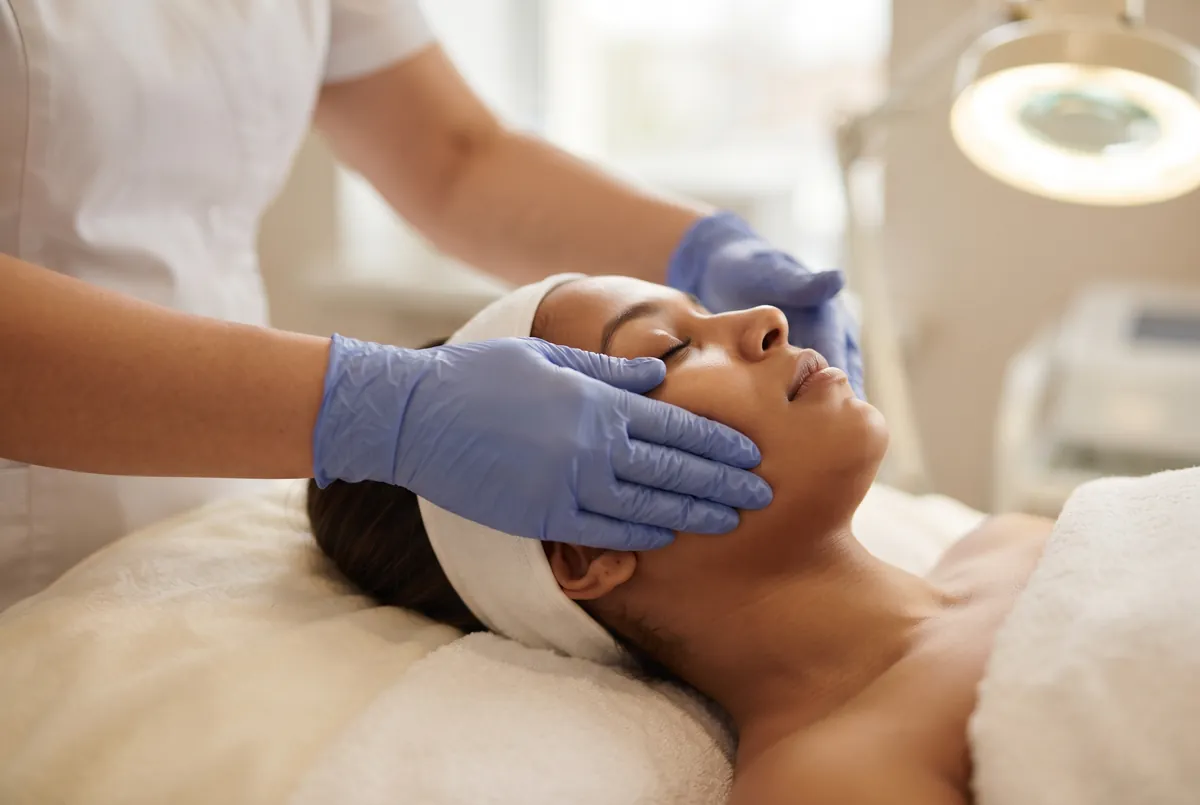
How Often to Get a Facial by Skin Type
Skin type is the first thing I look at when I set an interval. The table below shows the ranges I typically start from. Treat them as starting points for a conversation with your own esthetician, not as prescriptions. A good professional will move you up or down the range based on what they see on the table, and they should be able to explain why.
| Skin type or situation | Typical starting interval | Why |
|---|---|---|
| Normal or combination skin | Every 4 to 6 weeks | Enough to keep pores clear and tone even without stressing the barrier |
| Oily, congested skin | Every 3 to 4 weeks, sometimes tighter during a short corrective series | Pores refill faster, so longer gaps mean heavier extractions each time |
| Dry or dehydrated skin | Every 4 to 6 weeks, with gentle, hydrating protocols | The focus is replenishing and supporting the barrier, not deep cleansing |
| Sensitive or reactive skin | Every 6 to 8 weeks | Skin needs longer to settle, and fewer active steps per visit |
| Mature skin | Every 4 to 6 weeks | Slower renewal benefits from regular, mild exfoliation and massage |
| Teen skin | Occasional visits, guided by breakouts and a parent's consent | Simple cleansing and education matter more than a strict calendar |
Oily and congested skin is where clients most often wait too long. If you only come in when your nose and chin are packed with blackheads, every facial turns into a long extraction session, the skin is redder afterward, and the experience is less pleasant. Coming a little more often means each visit is lighter. Many of my oily-skinned clients are surprised that a tighter schedule actually feels gentler, because there is simply less to remove each time.
Sensitive skin is the opposite case. People with easily flushed, stinging, or reactive skin sometimes believe that more professional care will toughen it up. It does not work that way. A compromised skin barrier needs time and a calm routine more than it needs frequent treatment. For these clients I stretch the interval, cut the number of active steps, skip steam or keep it very short, and choose soothing masks. If redness is persistent or comes with bumps and burning, I refer to a dermatologist to check for rosacea before continuing.
Dry and dehydrated skin often gets confused with sensitive skin, and the two can overlap, but the logic is different. Dry skin lacks oil and dehydrated skin lacks water, and both tend to love regular hydrating facials with gentle enzyme exfoliation, massage, and occlusive masks. The interval can stay near monthly as long as the protocol is mild. What I avoid with this group is stacking strong acids or aggressive scrubs on a tight schedule, because that strips the little protection the skin has.

How Often by Goal: Acne, Aging, Dullness, Maintenance
The second thing that sets frequency is what you want the facials to do. For breakout-prone skin, an esthetician may suggest a short corrective series with visits closer together, focused on deep cleansing, careful extractions, and calming steps. Once the skin is clearer, the interval lengthens to maintenance. An esthetician works on the surface: clogged pores, oil, texture. Moderate to severe acne, cysts, and acne that scars need a dermatologist, and facials then become support for medical treatment, not a replacement for it.
For early signs of aging and dullness, consistency matters more than intensity. Regular facials with mild exfoliation, massage, and hydrating or antioxidant products keep the surface smooth and help your home products absorb evenly. In my experience a client who comes every five or six weeks for a year looks better than a client who books three intensive treatments in one month and then disappears. Skin responds to steady, repeated care, much like fitness responds to regular training instead of one heroic workout.
For uneven tone and post-breakout marks, facials are often combined with a series of superficial peels or other exfoliating treatments. These have their own spacing rules, covered in the next section, and they come with a firm requirement for daily sunscreen. If discoloration is extensive, patchy on both cheeks, or getting darker, see a dermatologist first to check for melasma or another condition that needs a medical plan.
For pure maintenance and relaxation, you have the most freedom. If your skin is in good shape and you mainly enjoy the reset, anywhere from monthly to once a season can work. A seasonal facial, four times a year, is a realistic minimum that still does something useful: your esthetician can check how your skin has changed, adjust your home routine for the weather, and clear the congestion that builds up slowly.

How Often by Type of Facial, Age, and Stage of Life
Not every service called a facial has the same intensity, so not every facial follows the same calendar. A classic facial with cleansing, gentle exfoliation, steam, extractions, massage, and a mask is the one the four to six week guideline was built around. Gentle add-ons such as LED light therapy, hydrating masks, or lymphatic massage do not stress the skin much and can be done more often if you enjoy them and your esthetician agrees.
Exfoliating treatments are a different matter. Superficial chemical peels and microdermabrasion remove part of the outer layer on purpose, and the skin needs recovery time before it is exfoliated again. These are usually done as a short series with gaps of a few weeks, then paused. Dermaplaning is typically spaced about a month apart because it removes surface cells along with fine hair. Stronger peels, laser, and microneedling fall outside routine esthetic facials in many states and are spaced much further apart, on the advice of the provider performing them.
What matters most is that the total load on your skin stays reasonable. A monthly facial plus a peel series plus a strong retinoid at home plus an exfoliating toner every night is too much for most faces, even if each item is fine alone. Tell your esthetician everything you use and every treatment you have had recently, including waxing and injectables. A professional who knows the full picture can space things so they help each other instead of piling up.
Teenagers do not need a strict facial schedule. What helps most at that age is a simple home routine, a gentle approach to breakouts, and learning not to pick. An occasional professional facial with careful cleansing can be useful when pores are very congested, and it is a good chance for a teen to hear skincare advice from someone who is not a parent. A minor needs a parent or guardian's consent, and acne that is inflamed, painful, or leaving marks should be seen by a dermatologist early.
Men's skin tends to be thicker and oilier, and shaving adds regular friction, ingrown hairs, and irritation along the beard area. The frequency logic is the same as for anyone with oily or combination skin: about monthly, tighter if congestion returns fast. In my practice, men are more likely to book only when something is wrong. I encourage the opposite approach, because a predictable schedule keeps ingrown hairs and clogged pores from building into a problem in the first place.
Mature skin benefits from regularity more than any other group. Renewal slows, the surface holds on to dry cells longer, and the skin becomes thinner and less tolerant of rough handling. A monthly or six-week rhythm with mild exfoliation, massage, and rich hydration keeps texture and comfort steady. I am careful with heat, strong acids, and vigorous extractions on thin or fragile skin, and I always ask about medications, since some of them make skin more delicate or more sensitive to exfoliation.

Signs It Is Time to Book
Your skin gives clearer signals than any calendar. Learn to read a few of them and you will know whether your current interval is right. These are the signs I ask clients to watch for between visits:
- Blackheads and small bumps are visible again on the nose, chin, or forehead, and makeup no longer sits smoothly over them.
- Skin looks dull or gray in daylight even when you are rested and hydrated.
- Texture feels rough or flaky, and your moisturizer seems to sit on top instead of sinking in.
- You notice more shine by midday than you did in the weeks after your last facial.
- You are tempted to squeeze or pick at clogged pores yourself.
- The season has changed and your usual products suddenly feel too heavy or too light.
- An important event is coming up in a week or two and you want your skin calm and even.
If these signs show up well before your next scheduled visit, the gap is probably too long for now. If you reach your appointment and your skin still looks as good as it did a week after the last one, you can try stretching the interval by a week or two. I ask clients to take a quick photo in the same window light every couple of weeks. It sounds fussy, but memory is unreliable, and a few photos make it obvious when skin starts to slide.
One sign should not send you to a facial at all: a sudden, angry flare with heat, swelling, oozing, or a rash you cannot explain. That is a reason to pause all treatments and products you recently started and to see a physician or dermatologist. A facial on inflamed, infected, or broken skin can make things worse, and a responsible esthetician will decline to work on it until it has been evaluated.
Can You Get Facials Too Often?
Yes. More is not better with skin. The outer layer of the epidermis is a protective barrier, and every exfoliating step, every round of steam, and every extraction asks something of it. With enough recovery time, the skin comes back smoother and stronger. Without it, the barrier thins out and stops holding water well. Clients who over-treat often come to me convinced they need something stronger, when what their skin actually needs is a few quiet weeks.
The signs of over-treatment are fairly consistent. Skin feels tight right after cleansing, stings when you apply products that never bothered you before, looks shiny but feels dry, flushes easily, or breaks out in small, uniform bumps. Some people also notice that their skin has become oilier, because stripped skin tends to compensate. If you see this pattern, stop all exfoliation at home, keep to a mild cleanser, a plain moisturizer, and sunscreen, and tell your esthetician before the next appointment.
Over-treatment rarely comes from facials alone. It usually comes from the combination of professional treatments with enthusiastic home use of acids, retinoids, scrubs, cleansing brushes, and peel pads. A good schedule accounts for both. When a client starts a prescription retinoid, for example, I lengthen the gap between visits, drop the exfoliating step from the facial, and avoid waxing the face entirely until their prescriber says otherwise.

Home Care Between Visits Sets the Real Schedule
A facial is roughly an hour of professional care. Everything else is what you do at home, twice a day, every day. That ratio is why home care has more influence on your skin than any appointment interval. A client with a steady, simple routine can stretch visits to six or eight weeks and still look great. A client who sleeps in makeup and skips sunscreen can come every three weeks and never get ahead.
The routine I recommend to most clients is not complicated. Cleanse gently in the evening to remove sunscreen, makeup, and the day's oil. Use a moisturizer suited to your skin type. Apply broad-spectrum sunscreen every morning, whatever the weather. Add one active product at a time if you have a specific goal, and give it several weeks before judging it. That is the foundation. Serums, masks, and tools are optional extras on top, and none of them makes up for skipping the basics.
I also ask clients to leave extractions to professionals. Squeezing at home pushes debris deeper, spreads bacteria, breaks capillaries around the nose, and leaves marks that take months to fade. If you find yourself picking a week before every appointment, that is useful information: your interval is too long, or your home routine is not controlling oil well enough. Tell your esthetician so the plan can change. For a fuller picture of what happens in the treatment room, see my guide to facial care basics and what a cosmetologist actually does.
Home care in the days around a facial matters too. In the two or three days before your visit, skip scrubs, peel pads, and strong retinoids so your skin arrives calm. For a couple of days afterward, keep things gentle, avoid heavy sweating, hot tubs, and direct sun, and do not exfoliate. Your skin has just been thoroughly worked on. Let it rest and it will hold the result longer.
Seasons, Travel, and Big Events
Skin behaves differently across the year, and your schedule can follow it. In hot, humid months many people produce more oil and sweat, wear more sunscreen, and clog faster, so slightly more frequent deep-cleansing facials make sense. In cold, dry months, indoor heating and wind pull water out of the skin, and the emphasis shifts to hydration, barrier support, and gentler exfoliation. The interval may stay the same while the content of the facial changes.
Summer also changes what treatments are wise. Strong exfoliation leaves skin more vulnerable to the sun, so I schedule peel series and other resurfacing work for fall and winter when clients spend less time outdoors, and keep summer facials focused on cleansing, calming, and hydration. If you spend your weekends at the beach or on a boat, tell your esthetician. It changes the plan more than almost any other lifestyle detail.
For weddings, reunions, photo shoots, and other big dates, timing is everything. Do not try anything new right before the event. Start regular facials a few months ahead so your esthetician knows how your skin responds, and book the last one about a week before the date, using a protocol you have already had. That gives any redness from extractions time to fade. A brand-new peel or an unfamiliar product two days before a wedding is a gamble I advise against every time.
Fitting Facials Around Waxing, Peels, and Other Services
Many clients get more than one service on their face: brow or lip waxing, facials, a peel series, perhaps electrolysis on the chin. Each of these affects the surface of the skin, so the order and spacing matter. The general principle is not to stack two treatments that both remove or stress the outer layer on the same patch of skin on the same day, unless a professional has planned it that way.
Facial waxing lifts some surface cells along with the hair, so I avoid waxing skin that was just exfoliated with acids or microdermabrasion, and I do not apply strong exfoliants to freshly waxed skin. If a client wants both a brow wax and a basic facial in one visit, I plan the sequence so the waxed area is not steamed, massaged, or exfoliated afterward. Anyone using a retinoid should tell the esthetician before any facial waxing, because that skin can lift. My waxing aftercare guide explains what freshly waxed skin needs.
Electrolysis and facials also need a little planning. After electrolysis, the treated follicles need a few days to settle, so I schedule facials for a different week or work around the treated area. Injectables and other medical procedures have their own waiting periods, set by the provider who performed them. When in doubt, ask that provider how long to wait before a facial with massage, and pass the answer to your esthetician.
A Realistic Schedule on a Budget
Monthly facials are not in everyone's budget, and I would never tell a client that skin care is pointless without them. If you can afford a facial only a few times a year, spend those visits wisely. Book at the change of seasons, ask for a thorough skin analysis, and use the appointment to update your home routine. A professional who sees you four times a year can still catch problems early and keep you from wasting money on products that do not suit you.
Another approach is to alternate. Book a full facial every other visit and a shorter express service in between, if your spa offers one. Or do a short corrective series when your skin needs it most, such as after summer, and then stretch to maintenance. Memberships and prepaid packages can lower the per-visit price, but read the terms before you sign. A package only saves money if the schedule it locks you into is one your skin and your calendar can actually keep.
Beauty schools are a good option that many people overlook. Student clinics offer facials performed by students under the supervision of licensed instructors, usually at a lower price than a spa. Services take longer and the menu is basic, but the fundamentals are done carefully because students are graded on them. You can look for programs through our beauty school directory.

Who Should Be Setting Your Schedule
A facial schedule is only as good as the person designing it. In the United States, facials are performed by licensed estheticians and licensed cosmetologists, and each state sets its own training and scope of practice. You can ask to see a license, and most states let you verify one online. Requirements differ from state to state, so I link to the state-by-state details in our esthetics licensing hub instead of quoting numbers here.
Beyond the license, look at how the professional works. A good esthetician asks about your health, medications, allergies, and home routine before touching your face. They explain what they are doing and why, they recommend an interval and give a reason for it, and they adjust when your skin changes. They also know the edge of their scope and refer you to a dermatologist when something looks medical. My guide on how to choose a cosmetologist goes through these checks in detail.
Be cautious when a schedule seems designed around sales. Pressure to prepay for a large package on the first visit, a recommendation for weekly intensive treatments with no clear end point, or a long list of products you supposedly cannot do without are all reasons to slow down. A trustworthy professional is comfortable telling you that your skin is doing well and you can come less often. I say that to clients regularly, and they stay with me longer because of it.
It is also worth understanding who does what. Estheticians focus on the skin, while cosmetologists are trained across hair, skin, and nails, and some treatments marketed as facials in medical settings are performed under physician supervision. If you are curious about the roles, I explain them in what an esthetician does and in my overview of what a medical esthetician is.

Common Scheduling Mistakes
The mistake I see most is the emergency-only pattern. A client books when their skin is at its worst, feels great for two weeks, and then vanishes until the next crisis. Each visit becomes a rescue operation with heavy extractions, and there is never a chance to work on anything beyond damage control. A modest, regular schedule costs about the same over a year and produces far better skin.
The second mistake is copying someone else's routine. A friend's monthly peel or a schedule seen on social media was built, at best, for a different face. Skin type, climate, medications, and budget all differ. Use other people's experiences as questions to bring to your esthetician, not as instructions. The same goes for this article: the ranges here are where the conversation starts.
The third mistake is changing too many things at once. If you start facials, a new cleanser, a new serum, and a new sunscreen in the same week, nobody can tell which change helped and which caused the breakout on your jaw. Introduce one new thing at a time, give it a few weeks, and keep notes. This patience pays off faster than it sounds, because you stop repeating expensive experiments.
The last one is treating a missed appointment as failure. Life interrupts every schedule. If you skip a month or three, simply book the next visit and tell your esthetician how your skin has been. A good professional adjusts the protocol to where your skin is now. There is nothing to make up and no need to double the frequency afterward to compensate.

How to Tell Your Schedule Is Working
Give any new schedule about three visits before you judge it. One facial can make skin look fresh for a week or two, but it cannot show you a trend. After three visits at a steady interval, compare your photos and ask a few plain questions. Are pores clearer at the appointment than they used to be? Is there less to extract each time? Does your skin feel comfortable between visits, without tightness or midday shine getting worse?
If the answers are yes, hold the interval or try lengthening it slightly and see whether results hold. If congestion is back long before each visit, shorten the gap or review the home routine first, since that is usually the weaker link. If your skin is more irritated than when you started, lengthen the gap and simplify the protocol. Adjusting in small steps, a week at a time, tells you more than dramatic changes do.
Expect the right interval to change over time. Pregnancy, new medications, a move to a different climate, a stressful year, and plain aging all shift what skin needs. I revisit the schedule with long-term clients at least once a year, and often at each change of season. A schedule is a tool that serves your skin, and it should be updated whenever your skin tells you something new.
Your Next Step
If you have never had a regular schedule, start simple: book one facial with a licensed esthetician or cosmetologist, ask for a skin analysis, and ask them directly how often they would see you and why. Rebook before you leave, keep to a basic routine at home, take a photo every two weeks, and reassess after the third visit. You can find local providers through our studio directory.
If this topic interests you from the other side of the treatment bed, learning to assess skin and plan treatment schedules is a core part of esthetics training. Online theory is a useful way to build knowledge of skin science and protocols, but it never replaces the in-person hours and the license your state requires. You can explore the theory side in our esthetics courses and read the full path in how to become a licensed esthetician.
State Requirements
State licensing guides
Hours, exams, fees, and the licensing board differ by state. Open your state for the current requirements.
Common Questions
FAQ
For most healthy adult skin, every four to six weeks is a sensible starting point, because it roughly follows the skin's renewal cycle and gives the skin time to recover between visits. Oily, congested skin may benefit from slightly shorter gaps for a while, and sensitive skin usually does better at six to eight weeks. The best interval is the one your esthetician adjusts after seeing how your skin responds over two or three visits.
It depends on the facial. Gentle, hydrating, or calming treatments can be done that often for a short period if a professional recommends it, for example during a corrective series for congestion. Facials with strong exfoliation, long steaming, or heavy extractions every two weeks are too much for most people and can weaken the skin barrier. Tightness, stinging, and lingering redness are signs to slow down.
Yes. A seasonal facial still clears slow-building congestion and gives a licensed professional the chance to analyze your skin and update your home routine. You will not get the cumulative effect of a monthly schedule, so your daily care matters even more. Cleanse gently, moisturize, and wear sunscreen every morning, and use the appointments to check that your products still suit your skin.
Book your last facial about a week before the event, and make it a treatment you have had before. That leaves time for any redness from extractions to fade. Avoid trying a new peel, a new product line, or a new provider in the final days. If the event is months away, start regular visits early so your esthetician learns how your skin reacts. For choosing a provider, see how to choose a cosmetologist.
A solid home routine does most of the work, and for some people it is enough. A professional facial adds things that are hard to do safely at home: a trained skin analysis, controlled exfoliation, proper extractions, and a plan matched to your skin. It also catches problems early. The two work together. Facials without home care fade fast, and home care without any professional input often involves a lot of guessing.
For mild breakouts and clogged pores, an esthetician may suggest a short series of closer visits focused on deep cleansing and careful extractions, then a move to monthly maintenance once skin is clearer. Moderate to severe acne, painful cysts, or acne that leaves scars should be evaluated by a dermatologist. Facials can support medical treatment, but tell your esthetician about any prescription products, since some of them change what is safe to do.
Often, yes. Skin renewal slows with age, so regular mild exfoliation, massage, and hydration become more valuable, and a steady four to six week rhythm suits many mature clients. At the same time, thinner skin tolerates heat, strong acids, and rough extractions less well, so the protocol should become gentler. Review your schedule with your esthetician yearly and whenever your health or medications change.
Facials are performed by licensed estheticians and licensed cosmetologists. Each state sets its own training requirements and scope of practice, so what a provider may do varies by location. You can ask to see a license or verify it with the state board. For state-by-state details, see our esthetics licensing hub and cosmetology licensing hub.
Keep Reading
Related Guides


