Career
Esthetician Continuing Education: Rules, Options and Planning

Quick answer
Some state boards require continuing education before an esthetician can renew a license and others require none. Check your own board for hours, topics and accepted providers, and keep every certificate. Beyond renewal, choose courses in skin science, safety and services you actually plan to offer, and confirm that your scope of practice allows them.
Esthetician continuing education is any structured learning you complete after licensing to keep your skills current, meet your state's renewal rules where they apply, and grow into new services. Some state boards require a set amount of continuing education, often called CE, before you can renew. Others require none at all. Either way, the estheticians who build steady, trusted practices keep learning on purpose, because skin science, devices, ingredients and client expectations change faster than any initial program can cover.
I am Aida Khazieva, a licensed cosmetologist and electrologist with more than twenty years of practice, and I have taken, taught and turned down a great many post-licensing courses. This guide covers how esthetician CE generally works, the difference between mandatory hours and advanced trainings, how to spot reputable courses and avoid expensive dead ends, how to stay inside your scope of practice, and how to track everything so renewal is never a scramble. Rules vary widely by state, so I will not print hour counts or deadlines here. Use the esthetics licensing hub to find your board and its current requirements.
Does Your State Require Continuing Education for Estheticians?
The honest answer is: it depends entirely on your state. Some boards require estheticians to complete a specific number of CE hours during each renewal cycle, sometimes with part of those hours in required topics such as infection control, safety or state law. Other boards renew an esthetics license with only an application and a fee. Some have changed their rules in recent years, and a few apply different requirements to master or advanced esthetician licenses where those exist. Because of this, a friend licensed in another state is not a reliable source on your obligations.
The only reliable source is your state board's own website and the rules it publishes. Look for a page on renewal or continuing education and read three things: whether CE is required, which topics or providers count, and how you prove completion. Some boards accept courses from any provider as long as the content is relevant. Others accept only courses from providers they have approved, and hours from an unapproved provider may not count no matter how good the class was. That last detail is where many estheticians lose money.
If your state requires no CE at all, that does not mean learning is optional in practice. It means the responsibility shifts entirely to you. Clients increasingly arrive having read about ingredients and devices online, and they expect their esthetician to know more than they do. Insurers may also ask about your training in specific services, and employers often require proof of training before you perform advanced treatments on their clients. So even in a state with no CE rule, plan your learning as if one existed.
When you read your board's rules, also note how renewal works in practice. Some boards ask you to enter course details online, some ask only for a yes or no attestation, and some require you to upload certificates. Knowing the method early tells you what your records must look like. If you plan to let your license go inactive for a period, check whether CE is still needed during inactivity or only when you reactivate, since that also differs between states.
Mandatory CE Hours vs Advanced Training
It helps to separate two kinds of learning that often get mixed up. Mandatory CE is whatever your board requires to renew. It tends to focus on safety, sanitation, law and ethics, and sometimes general skin science. Advanced training is learning you choose to expand your services or deepen a skill, such as chemical exfoliation, lash and brow work, specific device trainings, or advanced acne care. Some advanced trainings also count as CE in states that require it, but many do not, and a certificate from an advanced course does not by itself change what your license allows you to do.
This distinction matters because the two serve different goals. Mandatory CE protects your license. Advanced training builds your income and client results. If you treat every course as a box to tick for renewal, you will tend to choose the cheapest and fastest options, and your skills will stay flat. If you chase only exciting advanced trainings, you may reach renewal time and find that none of them were from an approved provider. A good plan covers both: required hours handled early and properly, and one or two deliberate skill investments each cycle.
| Question | Mandatory CE | Advanced training |
|---|---|---|
| Main purpose | Keep the license renewable | Add services, improve results |
| Who sets the content | State board rules | You, based on your goals |
| Typical topics | Infection control, law, safety | Peels, devices, acne, lashes, brows |
| Does it count for renewal? | Yes, if the provider and topic qualify | Only if the board accepts it |
| Does it expand scope? | No | No, scope is set by law |
The last row of that table is the one I repeat most to newer estheticians. No course, certificate or diploma expands your legal scope of practice. Your scope is defined by your state's laws and board rules for your license type. A course can teach you how a device works, but if your state does not allow estheticians to use that device, the certificate does not change that. Always check scope before you enroll, not after.
Check Scope of Practice Before You Enroll
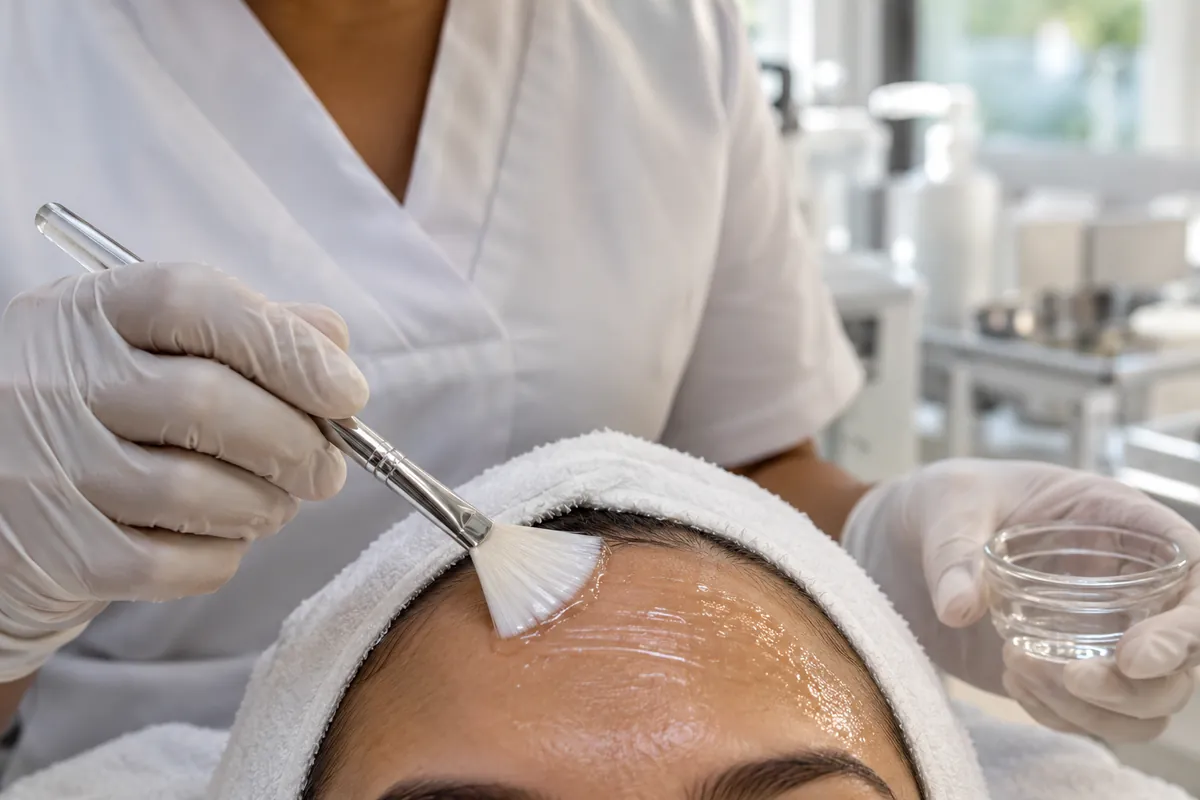
Many of the most heavily marketed esthetician trainings sit close to the edge of what the license allows. Advanced peels, microneedling, energy-based devices, injectables-adjacent services and some laser or light treatments are regulated very differently from state to state. In some states, a service may be allowed for estheticians, allowed only under medical supervision, allowed only for a different license, or not allowed at all outside a medical practice. A training company in another state may not know, or may not mention, the rules where you work.
Before enrolling in any course that teaches a service you do not already perform, find out whether your state allows estheticians to offer it and under what conditions. Your board's website, published rules, and sometimes official advisory statements are the sources to check. If the answer is unclear, contact the board in writing and keep the reply. An esthetician who builds a service on an assumption, then learns it was outside scope, can face disciplinary action and lose insurance coverage for that service, which is far more costly than the course.
If you are curious about work in medical settings, my guide on what a medical esthetician is explains how those roles usually depend on the setting and supervising provider rather than a separate certificate. That context helps you judge whether a medical esthetics training will actually open doors in your state or simply add a line to your resume.
How to Choose Reputable Continuing Education Courses
The quality range in post-licensing education is enormous. Some courses are taught by experienced practitioners with clear objectives, hands-on supervision and honest discussion of risks. Others are product sales presentations with a certificate attached. A few are outright scams. Because there is no single national standard, you have to evaluate each course yourself. I use a short set of questions, and I suggest you write them down and ask them before every purchase.
- Who teaches it, and can I verify their license and practical experience?
- Is the provider approved by my state board, if my state requires approval for CE credit?
- Are the learning objectives written clearly before I enroll?
- How much of the course is hands-on, and how many students per instructor?
- Does the course discuss contraindications, complications and when to refer to a physician?
- Is it tied to buying a specific product line or device?
- What exactly do I receive at the end, and does it state hours, topics and dates?
- Can I contact past students independently, not just read testimonials on the provider's site?
The question about product ties deserves extra attention. Brand education can be excellent and is often how estheticians learn to use a professional line correctly. But a course that only teaches one brand's protocol tends to present that brand as the answer to every skin concern. That is useful product training, not broad skin education. Balance brand courses with neutral ones that teach skin physiology, ingredient chemistry and assessment, so you can judge any product on its merits.
Watch for red flags. A course that guarantees income, promises mastery in an unrealistically short time, refuses to name its instructors, pressures you with countdown timers, or claims to be accepted by every state board deserves skepticism. So does a provider that cannot explain how your hours will be documented. If a course is good, the provider will be happy to answer detailed questions before you pay.

Online vs In-Person Continuing Education
Online learning has made theory far easier to access. You can study skin anatomy, ingredient chemistry, contraindications, sanitation updates and business topics at your own pace, often for less than an in-person class. For many required CE topics, especially law, safety and infection control, online formats can work very well, provided your board accepts online hours. Some boards accept them fully, some limit how many online hours count, and some require specific topics in person.
Hands-on skills are different. You cannot learn to judge pressure, read skin response during a peel, or handle a device safely from video alone. For any service that involves touch, heat, chemicals or electrical current, look for training with supervised practice on real skin and direct feedback from an instructor. Online theory can prepare you so that your in-person time is spent practicing rather than listening, which is how I prefer to teach. Our esthetics course is designed as that kind of theory foundation. It does not replace state-required hours, practical training or your license.
A practical way to combine both: take the theory online first, with notes and a quiz, then book hands-on time once you understand the why behind each step. You will get more out of the practical day, ask better questions, and be able to compare what the instructor demonstrates with what you studied. If an in-person course offers no pre-reading at all, ask for it. A serious instructor will usually have materials ready.
Live virtual classes sit between the two. They let you ask questions in real time and sometimes include demonstrations on camera, which helps with theory and with understanding a sequence of steps. Some boards treat live virtual hours like in-person hours, others treat them like recorded online courses, and some have their own category. If the difference matters for your renewal, ask the board how it classifies the format before you register, and make sure the certificate states the format clearly.
Building a CE Plan for Your Renewal Cycle
Most problems with continuing education come from leaving it until the last weeks before renewal. At that point you take whatever is available, often from an unapproved provider, and you learn little. A simple plan at the start of each cycle prevents that. Write down your renewal date, the required hours and topics if any, and two or three skill goals tied to your clients and your income. Then schedule courses across the cycle rather than stacking them at the end.
- Find your license expiration date and renewal cycle on your board's website.
- List any required CE hours and mandatory topics for your license type.
- Note whether courses must come from board-approved providers.
- Choose one or two skill goals based on what your clients ask for most.
- Check scope of practice for any new service before enrolling.
- Schedule required topics early in the cycle.
- Schedule advanced training when you can practice right afterward.
- Save every certificate and receipt in one folder the day you receive it.
Linking skill goals to client demand keeps your spending sensible. If many of your clients come in for breakouts, deeper acne education is a better investment than a trendy device that you would use rarely. If you work with clients who have darker skin tones, training focused on pigmentation risk and safe exfoliation across skin types will improve results and reduce complications. Look at your appointment book, not social media, to decide where to spend.

Tracking CE Hours and Keeping Records
Many boards use an honor system at renewal: you attest that you completed the required CE, and the board audits a portion of licensees afterward. If you are audited, you must produce proof. If you cannot, the consequences can range from a fine to delays in renewal, depending on the state. Even if your state does not audit often, good records protect you, and they also help when you apply for jobs, insurance, or licensing in another state.
My system is simple. I keep one folder, digital and backed up, for each renewal cycle. Every certificate goes in as a PDF the day I receive it, renamed with the date, provider and topic. Next to the folder I keep a spreadsheet with columns for date, course title, provider, whether the provider is board-approved, hours, topic category, format (online or in person) and where the certificate is saved. At any moment I can see how many qualifying hours I have and which topics are still missing.
- Course title exactly as it appears on the certificate.
- Provider name and, if required, approval or provider number.
- Date or dates completed.
- Hours credited, as printed on the certificate.
- Topic category, matching your board's categories if it uses them.
- Format: online, live virtual, or in person.
- File name and location of the certificate.
- Receipt, for your business expense records.
Keep records for longer than one cycle. Audit windows can reach back after renewal, and the exact period varies by state. A practical rule is to keep at least the current and previous cycle, and longer if your board specifies. Never rely on a provider to keep your certificates for you. Companies close, change platforms and delete accounts, and a certificate you cannot download is the same as one you never earned.
A certificate is your evidence, so check it before you leave the class or close the browser tab. A useful certificate shows your full name as it appears on your license, the course title, the provider's name, the completion date and the number of hours credited. If your board requires approved providers, it should also show whatever approval or provider identifier the board uses. Some boards want the topic category stated as well. If any of these details is missing or wrong, ask the provider to correct it right away, while they still remember you and the class.
For in-person trainings, a sign-in sheet or attendance record may also matter, especially for hands-on hours. Keep any handouts, agendas or course outlines alongside the certificate. These help if an auditor, employer or insurer asks what the course actually covered. They also make a handy reference when you update your own protocols months later and cannot quite remember a detail the instructor stressed.
Be careful with certificates that list only vague titles such as skin care update with no description. They may be harder to defend in an audit if the board asks how the content relates to required topics. When choosing between two similar courses, prefer the one whose documentation is clear and specific.
Continuing Education When You Move or Hold More Than One License
If you hold licenses in two states, or plan to move, CE gets more complicated. Each board sets its own rules, so hours that count in one state may not count in the other, and each license renews on its own schedule. Some estheticians end up taking separate required courses for each state, especially on state law topics. Track each license in its own folder and spreadsheet tab so the requirements never blur together.
When applying for a license in a new state, the board may ask about your training and work history, and sometimes about recent CE. Organized records make that application smoother. My guide on esthetician license reciprocity by state covers the transfer process itself. For CE specifically, assume nothing carries over until the new board confirms it.
If you also hold a cosmetology or electrology license, check each separately. A course that counts for one profession may not count for another, even with the same board. Electrologists have their own considerations, which I cover in the guide on electrolysis continuing education.
Communication with the board itself is part of good record keeping. If you ever ask the board whether a course counts, do it in writing and save the reply with that cycle's certificates. A phone answer is easy to misremember and impossible to show an auditor. The same goes for any extension or exception the board grants, for example after illness or a family emergency. Keep the written approval with your CE folder so the explanation is ready if anyone asks later.

Advanced Training Topics Worth Considering
Which advanced trainings pay off depends on your clients, your setting and your state's scope rules. Still, some topics hold their value across most practices because they improve every service rather than adding one new menu item. Skin assessment and analysis is the first. The more precisely you read skin, the better every treatment plan, product recommendation and referral becomes. Courses that teach structured consultation, recognizing conditions that need a dermatologist, and documenting findings are worth more than they look.
Chemical exfoliation, where allowed, is another durable skill, but it rewards depth over speed. Understanding acid types, skin preparation, contraindications and post-care matters more than memorizing a single protocol. My guide on types of chemical peels gives a starting overview. Acne care, sensitive and reactive skin, and pigmentation across all skin tones are similar: topics where deeper knowledge reduces complications and keeps clients loyal.
Device trainings, such as microcurrent, high frequency or radiofrequency, can add services but require attention to contraindications and to your state's rules on which devices estheticians may use. Business skills also count as advanced training in my view, even when they do not count for CE: pricing, client retention, consultation and record keeping. Many talented estheticians struggle not because of technique but because they never learned to run the business side of their work.
Getting Real Value From Each Course
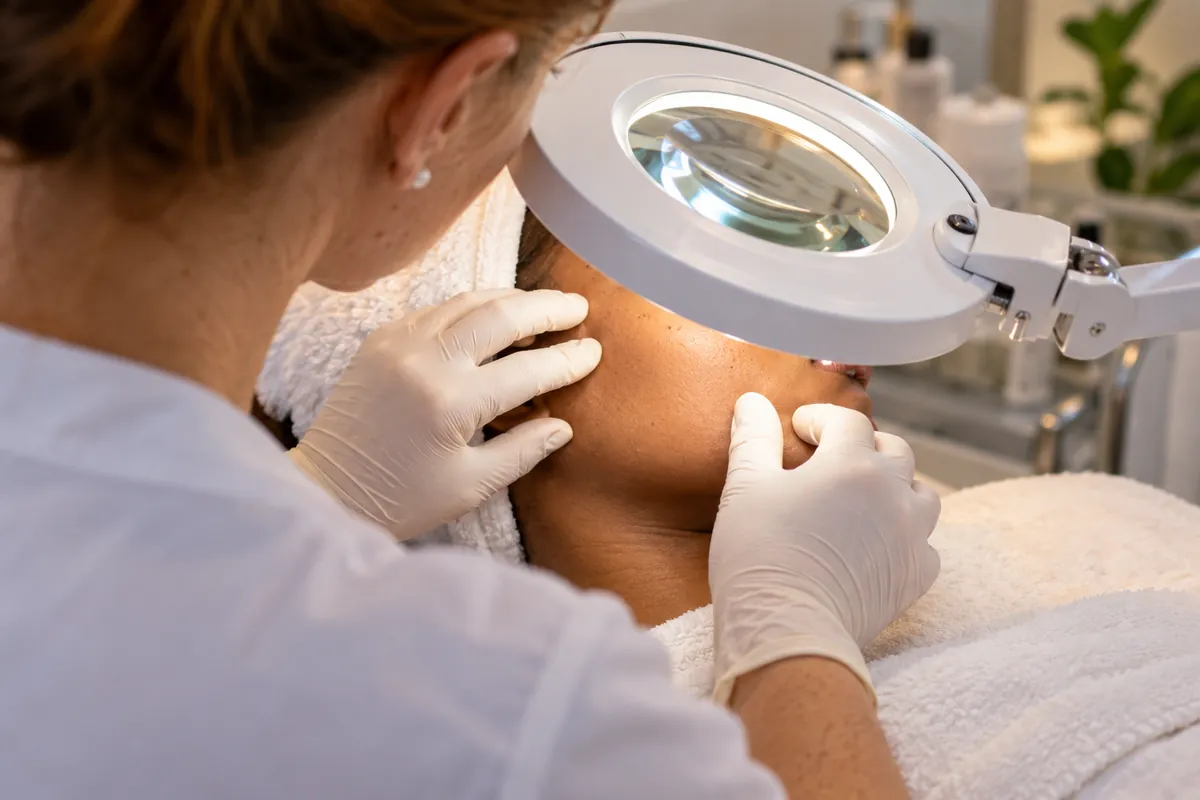
A course only pays off if it changes what you do on Monday morning. Before the class, write down what you want to be able to do afterward and two or three questions you need answered. During the class, take notes in your own words, and ask about edge cases: what to do when a client reacts unexpectedly, which skin types need adjustments, when to stop and refer. Instructors often share their most useful knowledge in answer to specific questions rather than in the slides.
After the class, practice deliberately. Book models, perhaps colleagues or friends who understand they are helping you learn, and run the full protocol including consultation, consent, aftercare instructions and a follow-up check. Take notes on each session. Only offer the service to paying clients once you have repeated it enough to feel steady and you have checked that your insurance covers it. That last step is often forgotten and is covered in my guide on esthetician liability insurance.
Update your written protocols and consent forms to reflect what you learned. If the course changed your approach to a contraindication, the change needs to appear in your intake form and your client records, not only in your memory. This is how continuing education turns into safer, more consistent practice for the whole studio.
Share what you learned with the people you work with, where it fits. Explaining a new contraindication or aftercare step to a colleague is one of the fastest ways to test whether you really understood it. In a shared studio it also keeps everyone consistent, so a client hears the same advice no matter who treats them. If you notice that something taught in a course contradicts your existing studio protocol, raise it and look at the evidence together before changing anything, rather than quietly doing it a different way.
CE for Employees vs Independent Estheticians
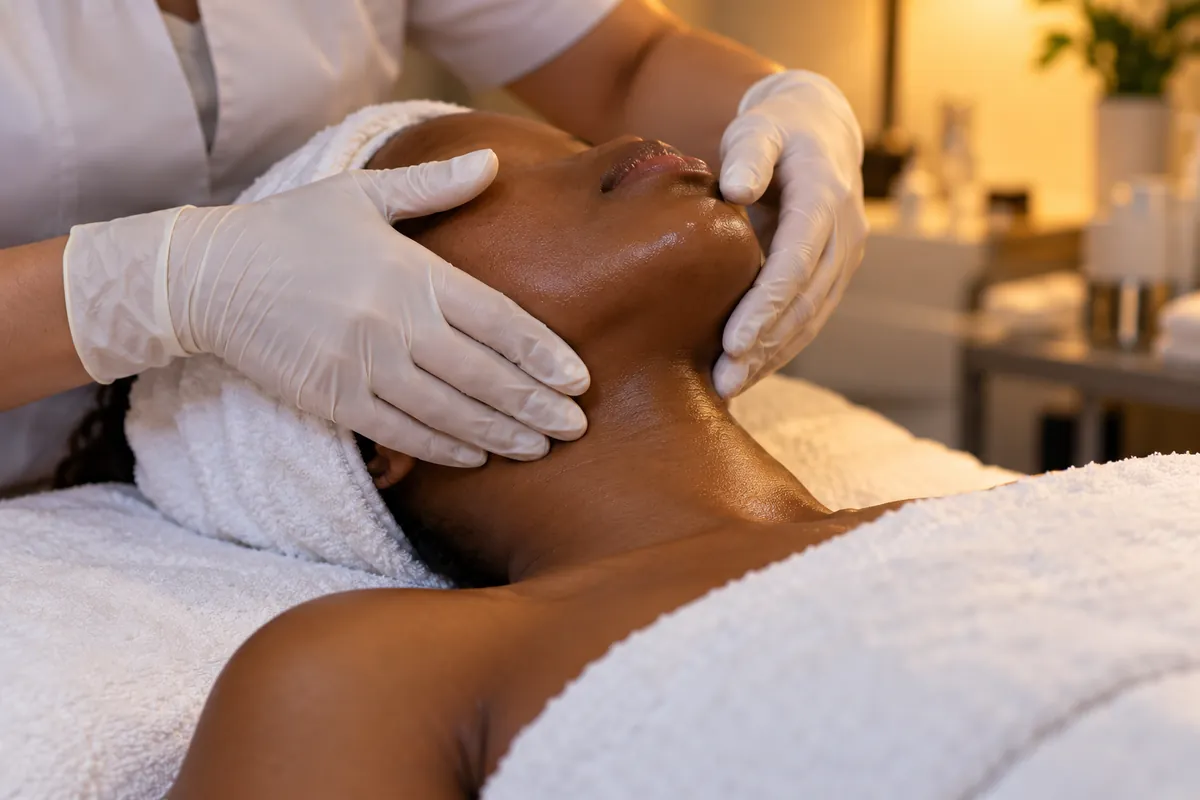
Your work setting changes how continuing education feels day to day. If you work as an employee in a spa, medical office or salon, your employer may provide regular training, often on the products and devices the business uses. That training is valuable and usually free to you, but it is shaped by the employer's menu and brands. It may or may not count toward your board's CE requirement, and the employer may keep the records rather than handing you certificates. Ask for copies of anything that could count, and save them in your own folder.
Employer training also has limits. It rarely covers topics outside the business's current services, so an esthetician who learns only in-house can find their skills narrow after a few years. If you ever change jobs, you want a record of broad, transferable learning, not only one company's protocol. A sensible balance is to accept every useful in-house training and add at least one independent course each cycle that you choose for your own long-term goals.
Independent estheticians, including booth renters and studio owners, carry the whole responsibility. No one reminds you of renewal dates, recommends courses or pays for training. On the other hand, you choose exactly what to learn and can build a specialty around your clientele. Independent practitioners also need to think about how new skills affect insurance, consent forms and pricing, because there is no employer handling those details. My guide on booth rental vs commission covers the broader trade-offs of each setting.
Common Continuing Education Mistakes
Over the years I have watched colleagues lose money, time and occasionally license standing through avoidable CE mistakes. None of them are complicated. They happen because continuing education feels like paperwork rather than part of the job, so it gets less attention than it deserves. Here are the patterns I see most often.
- Taking courses from a provider the board does not accept, then discovering it at renewal.
- Completing the right number of hours but missing a required topic such as state law.
- Losing certificates because they lived only in an email inbox or a provider account.
- Paying for an advanced training in a service the state does not allow estheticians to perform.
- Assuming hours from one state count in another after a move.
- Stacking every course in the last weeks of the cycle and learning very little.
- Adding a new service to the menu before checking insurance coverage.
- Treating brand product training as complete skin education.
Most of these come down to checking before paying and saving records immediately. If you build those two habits, the rest of continuing education becomes a matter of choosing good courses and practicing what you learn. It also helps to read your board's newsletters or announcements when they come out, since changes to CE rules are often published there first and colleagues tend to hear about them late.
What a Useful CE Certificate Should Show
A certificate is your evidence, so check it before you leave the class or close the browser tab. A useful certificate shows your full name as it appears on your license, the course title, the provider's name, the completion date and the number of hours credited. If your board requires approved providers, it should also show whatever approval or provider identifier the board uses. Some boards want the topic category stated as well. If any of these details is missing or wrong, ask the provider to correct it right away, while they still remember you and the class.
For in-person trainings, a sign-in sheet or attendance record may also matter, especially for hands-on hours. Keep any handouts, agendas or course outlines alongside the certificate. These help if an auditor, employer or insurer asks what the course actually covered. They also make a handy reference when you update your own protocols months later and cannot quite remember a detail the instructor stressed.
Be careful with certificates that list only vague titles such as skin care update with no description. They may be harder to defend in an audit if the board asks how the content relates to required topics. When choosing between two similar courses, prefer the one whose documentation is clear and specific.

Budgeting for Continuing Education
Course prices vary widely, and I will not quote numbers because they change and differ by region and format. What I can say is that the cost of a course is rarely just the tuition. Add travel, time away from paid appointments, product or device purchases, model supplies, and possibly new insurance coverage. When you compare options, compare the total cost against a realistic estimate of how often you will use the skill, not against the most optimistic income the course advertises.
Set aside a small amount from each month's income for education so that courses do not become an emergency expense. If you are an employee, ask your employer whether they cover or share training costs, especially for brand education tied to products they sell. Many employers do, at least partly. If you are self-employed, keep receipts, since education expenses may be deductible as business costs; a tax professional can tell you what applies in your situation.
Finally, do not overlook low-cost learning that keeps you sharp between formal courses: professional association materials, reputable dermatology patient resources, manufacturer safety data, and study groups with colleagues. These do not usually count as CE, but they keep your knowledge current and help you judge which paid courses are worth taking.
One more budgeting habit: before you register, ask whether the course fee includes the materials, the certificate and any practice supplies, and whether there is a refund or transfer option if you get sick. Hidden extras and strict no-refund policies are common in this field. Knowing the full terms in advance lets you compare courses fairly and avoid paying twice for the same training.

Your Next Step
Open your state board's website today, find your esthetics license renewal page, and write down three facts: your renewal date, whether CE is required, and whether providers must be approved. Then set up one folder and one spreadsheet for this cycle, and choose a single advanced topic tied to what your clients ask for most. If you need a theory foundation first, explore our esthetics course, and use the esthetics licensing hub to confirm your state's rules.

State Requirements
State licensing guides
Hours, exams, fees, and the licensing board differ by state. Open your state for the current requirements.
Common Questions
FAQ
It depends on the state. Some boards require a set number of CE hours each renewal cycle, sometimes in specific topics such as infection control or state law. Others require no CE for estheticians. Rules change, so check your own board's current renewal page through our esthetics licensing hub rather than relying on advice from colleagues in other states.
Many boards accept online continuing education, but some limit how many online hours count or require certain topics in person. Some also require that courses come from board-approved providers. Confirm both the format and the provider with your board before paying, and keep the certificate showing date, hours and topic.
Not by itself. Your scope of practice is set by state law and board rules for your license type. A certificate shows you completed training, but it does not make a service legal for estheticians in your state. Check scope with your board before enrolling in training for any service you do not already perform.
Keep them at least through your current and previous renewal cycles, and longer if your board specifies an audit period. Store digital copies in a backed-up folder and log each course in a spreadsheet with provider, date, hours and topic. Do not rely on course providers to keep your records for you.
Verify the instructor's license and experience, check whether the provider is approved by your board if required, read the learning objectives before enrolling, and ask how much hands-on practice is included. Be cautious of courses that guarantee income, promise mastery very quickly, or exist mainly to sell a product line or device.
Topics that improve every service tend to hold their value: skin analysis, acne care, sensitive and reactive skin, pigmentation across skin tones, and chemical exfoliation where your state allows it. Business skills such as consultation, pricing and record keeping also pay off, even when they do not count toward CE.
Sometimes, but never assume it does. Each license has its own rules, even under the same board. Track each license separately and confirm with the board which courses count for which license. Electrologists can see my guide on electrolysis continuing education for that profession's considerations.
Keep Reading
Related Guides


