Cosmetology
Types of Chemical Peels: Light, Medium and Deep Peels Explained

Quick answer
Chemical peels are grouped by depth. Light peels stay within the epidermis and use glycolic, lactic, mandelic or salicylic acid, with little or no downtime. Medium peels, usually TCA, reach the upper dermis and bring about a week or more of peeling. Deep phenol peels are performed by physicians only. What estheticians may perform depends on each state.
Types of chemical peels are sorted by one thing above all: how deep the solution reaches into the skin. A light peel works within the epidermis, a medium peel reaches the upper dermis, and a deep peel goes further still. Depth decides almost everything a client cares about, including what the peel can improve, how the skin looks during the following week, who is legally allowed to perform it, and how much can go wrong. The name of the acid matters less than people think. The same acid can behave as a mild refresher or as a serious resurfacing treatment depending on strength, pH, the number of layers, and the time it stays on the skin.
I am Aida Khazieva, a licensed electrologist and cosmetologist with more than twenty years in the treatment room. In this guide I explain the main peel categories the way I explain them to clients and students: what each acid is good at, what recovery really looks like day by day, who should skip peels, and where the scope of an esthetician ends and the work of a physician begins. Nothing here is a diagnosis. If you have a skin condition, a history of scarring, or you take prescription medication, the decision about peeling belongs in a conversation with a dermatologist.
What a chemical peel actually does to skin
A chemical peel is a controlled injury. A solution is applied to clean skin, it loosens or destroys cells to a planned depth, and the skin answers by shedding the damaged layer and building a new one. With the lightest peels the injury is so shallow that many clients never see visible flaking. The bonds between dead surface cells loosen, the dull top layer releases faster than it would on its own, and the skin looks smoother and more even for a few weeks. With stronger peels the injury reaches living tissue, the skin visibly darkens, tightens and sheds, and the repair process includes new collagen in the dermis.
This is why I ask students to stop thinking about peels as products and to think about them as wounds of different sizes. A small wound heals fast and forgives mistakes. A larger wound gives a bigger change, but it also depends heavily on the health of the person, their skin tone, their habits in the sun, and the care they give the skin at home. The skill in peeling is matching the size of the injury to the problem and to the person. Using a stronger peel than the concern requires does not give a better result. It only adds downtime and risk.
It also helps to separate chemical peels from the two other things clients call "a peel." Mechanical exfoliation, such as scrubs and microdermabrasion, removes surface cells by friction and has no chemical action. Enzyme treatments use fruit or bacterial enzymes that digest loose surface protein, and they are the gentlest option of all, often suitable for skin that cannot tolerate acids. Both have their place in a facial, and I use them often. Neither one reaches living layers of the skin, so neither can do what a true medium depth chemical peel does for sun damage or acne marks.
The three depths: light, medium, and deep
Every chemical peel falls into one of three depth groups. Light peels, also called superficial peels, stay within the epidermis. Medium peels pass through the epidermis into the upper part of the dermis. Deep peels reach the middle of the dermis. The deeper the peel, the more it can change, the longer the recovery, and the smaller the group of people who are good candidates. The table below is the summary I draw on a whiteboard for new esthetics students before we talk about any single acid.
| Depth | Typical agents | What it is used for | Visible recovery | Who performs it |
|---|---|---|---|---|
| Light (superficial) | Glycolic, lactic, mandelic, salicylic acid, light Jessner's solution, low strength TCA | Dullness, rough texture, clogged pores, mild uneven tone, fine surface lines | None to a few days of dryness and light flaking | Licensed estheticians and cosmetologists within state limits, medical offices |
| Medium | Trichloroacetic acid (TCA), often combined with Jessner's solution or glycolic acid | Sun damage, more visible lines, some acne marks, blotchy pigment | About a week or more of darkening, tightness and sheet-like peeling, then lingering pinkness | Physicians and medical providers under physician oversight |
| Deep | Phenol based formulas | Deep wrinkles, severe sun damage | Weeks of healing, redness that can last months | Physicians only, with monitoring |
Two points in that table surprise people. First, the same acid can appear in more than one row. TCA is the best example: a weak solution in a single coat behaves as a light peel, and a stronger solution in several coats behaves as a medium peel. Second, the last column is a legal question as much as a skill question. In the United States each state sets its own scope of practice, and the rules for what an esthetician may apply differ widely. I will come back to this, because it is the part of peeling that students most often get wrong.
Alpha hydroxy acid peels: glycolic, lactic, and mandelic
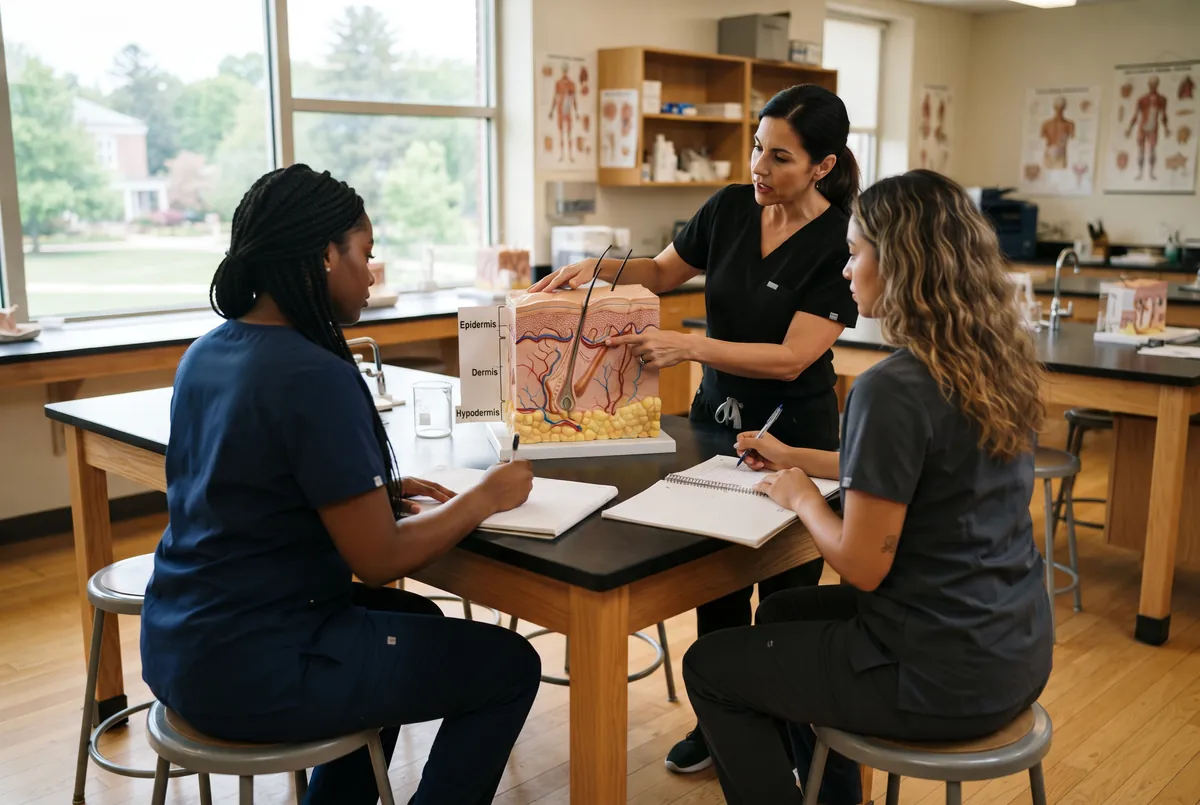
Alpha hydroxy acids, usually shortened to AHAs, are water soluble acids that loosen the connections between dead cells on the skin surface. They are the most common light peels in spas and esthetics practices. The three you will meet most often are glycolic, lactic and mandelic acid. They belong to the same family, but they do not feel the same on the skin, and choosing among them is one of the first real judgment calls an esthetician learns to make.
Glycolic acid has the smallest molecule of the group, so it moves into the skin quickly. That speed is its strength and its weakness. On resilient, sun damaged, thicker skin it gives a clear smoothing and brightening effect, and a series can soften the look of fine surface lines. On thin, reactive or darker skin the same speed can mean stinging, redness and uneven penetration, which is the usual route to dark marks after a peel. Glycolic peels must be neutralized or rinsed at the right moment, and the timing is watched by eye, not only by the clock.
Lactic acid is a larger molecule and enters the skin more slowly. It also helps the skin hold water, so clients often describe the result as soft and comfortable instead of tight. I reach for lactic acid when the main complaints are dryness, a dull tone, and a rough feel, and when the client has never had a peel before. It is a forgiving way to learn how a particular person reacts. The trade is that it does less for oily, congested skin than other options do.
Mandelic acid is the largest and slowest of the three. Because it penetrates gradually and evenly, it is the AHA I trust most on skin that marks easily, including many medium and deep skin tones, and on skin that flushes with almost anything. It also has a mild effect on oil and breakouts, which makes it useful for adults who have both sensitivity and occasional acne. Mandelic peels are rarely dramatic. Their value is that they can be repeated in a series with a low chance of irritation, and steady, uneventful progress is what gives an even tone.
Salicylic acid, Jessner's solution, and retinoid peels
Salicylic acid is a beta hydroxy acid, and the important difference from the AHAs is that it dissolves in oil. An oily, clogged pore is a difficult place for a water soluble acid to work. Salicylic acid can mix with the sebum inside the pore opening and loosen the plug of dead cells and oil that forms blackheads and whiteheads. It also has a calming quality on inflamed skin. For these reasons it is the classic light peel for oily and acne-prone clients, and it pairs well with professional extractions done at a separate visit.
A salicylic peel behaves differently on the table. It is usually self-limiting, and as the carrier evaporates it can leave a fine white powder on the skin. New practitioners sometimes mistake that powder for frosting, the white color that signals protein damage with stronger peels. It is only crystallized acid, and it wipes away. Clients feel a brief sting followed by a slightly numb feeling. Peeling afterwards tends to be fine and dry, most visible around the nose and mouth. Salicylic acid is related to aspirin, so anyone with an aspirin allergy needs a different peel, and it should not be spread over large body areas.
Jessner's solution is a long-established blend that combines salicylic acid, lactic acid and resorcinol in an alcohol base. It is applied in layers, and depth is controlled by the number of coats. One or two coats give a light peel with a few days of flaking. More coats take it further and produce real sheets of peeling skin, which is why modified versions and layering rules are taught carefully. Jessner's solution is also used by physicians as a first step before TCA, because it thins the surface barrier and lets the TCA enter more evenly. Whether an esthetician may use it at all depends on the state.
Retinoid peels work on a different principle from acids. Instead of dissolving bonds between cells within minutes, a vitamin A derivative is applied as a tinted layer and left on the skin for hours before the client washes it off at home. The retinoid speeds up cell turnover from below. Nothing much happens on the day of treatment. Around the second or third day the skin starts to feel tight and then sheds, sometimes in fine flakes and sometimes in larger pieces, for several days. Clients are often surprised by how late the peeling starts, so I always describe the calendar before they leave.
The appeal of this category is a visible renewal without the sharp burning sensation of an acid peel. The limits are just as clear. Prescription strength retinoids are drugs in the United States, so the stronger versions belong to medical offices, while spa versions use cosmetic forms of vitamin A such as retinol. Retinoids are not used during pregnancy or while trying to conceive, and anyone in that situation should ask their physician before any vitamin A treatment. Skin that is already irritated by a home retinoid needs a pause before a professional one, not a second layer on top.
Medium and deep peels: TCA and phenol
Trichloroacetic acid, known as TCA, is the standard agent for medium peels. It does not loosen cells the way an AHA does. It coagulates protein, and you can see this happen: the skin turns white in a pattern called frosting. The evenness and density of the frost tell the provider how deep the peel has reached. TCA cannot be neutralized once it has reacted with the skin, so there is no undo step. Everything depends on preparation, the strength chosen, the number of coats, and the judgment of the person holding the applicator. That is the reason medium peels sit in medical hands.
A medium peel can do things a light peel cannot. It can improve visible sun damage, fade blotchy pigment that sits in the epidermis, smooth lines that are more than surface deep, and soften some shallow acne scarring. The price is a real recovery. For roughly a week the face looks worse before it looks better: swelling for the first days, then the skin darkens to a brown, leathery layer, cracks around the mouth, and comes away in sheets. New skin underneath is pink and tender, and that pinkness can take weeks to settle. Clients need to plan time away from cameras, meetings and sunlight.
Medium peels also carry more risk. Infection, a flare of cold sores, lasting redness, light or dark patches, and scarring are all possible, and the risk of pigment change rises with deeper skin tones. A careful provider reduces these risks with screening, weeks of skin preparation, and close follow-up, but cannot remove them. If someone offers a medium depth TCA peel in a setting with no medical oversight, no consultation, and no written aftercare, I tell clients to walk away. A good result from this type of peel starts long before the acid touches the skin.
Deep peels use phenol based formulas and reach the middle of the dermis. They produce the most dramatic smoothing of deep wrinkles of any peel, and one treatment is normally the whole course, because the change is long lasting. They are also a different kind of event from anything done in a spa. Phenol is absorbed through the skin and can affect the heart, so the procedure is done by a physician with heart monitoring, in sections, with time between sections. Sedation or anesthesia is common. Healing takes weeks, redness can last for months, and the treated skin often ends up permanently lighter.
Because of that lightening, deep peels have traditionally been offered mainly to people with fair skin, where the change in color is less visible. People with heart, kidney or liver conditions may not be candidates at all. Many physicians now choose laser resurfacing for the same concerns, since depth can be controlled more precisely. I mention deep peels in every class for one reason: students and clients need to know the category exists, so that they recognize how far it is from the peels offered in an esthetics practice and never confuse the two when reading online.
How a professional chooses the right peel
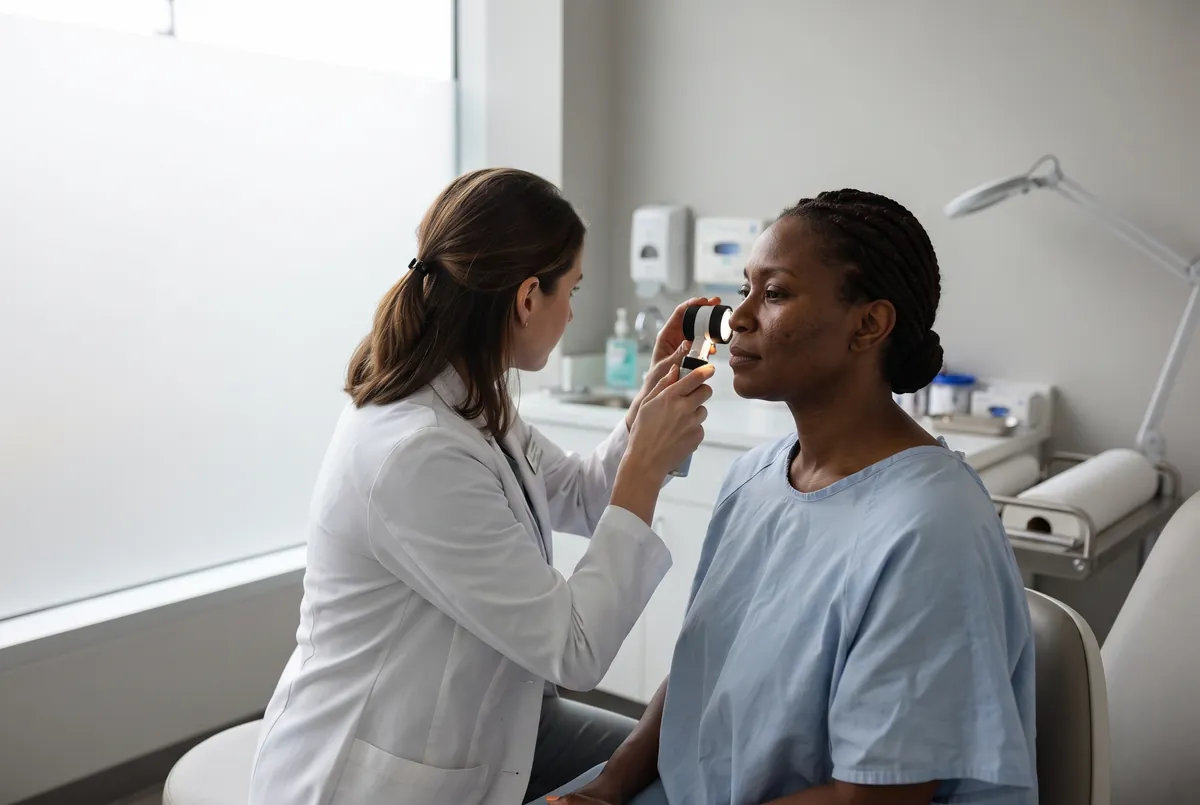
Peel selection starts with the main concern, written down in the client's own words. Congestion and breakouts point toward salicylic acid. Dryness and dullness point toward lactic acid. Sensitivity and a tendency to mark point toward mandelic acid or an enzyme treatment. Surface roughness and early sun damage on sturdy skin point toward glycolic acid. Deeper lines, established sun damage and scars are a referral to a dermatologist or plastic surgeon, because the honest answer is that light peels will not reach them. I say this plainly at the consultation so that nobody pays for six treatments expecting a change that was never possible.
The second factor is skin tone. Professionals use the Fitzpatrick scale, which groups skin from type I, very fair skin that always burns, to type VI, deeply pigmented skin that rarely burns. The darker the natural tone, the more active the pigment cells, and the more likely they are to answer irritation with dark patches called post-inflammatory hyperpigmentation. This does not mean people with brown or black skin cannot have peels. It means the peel should be gentle, gradual and well prepared, with slow acids such as mandelic and salicylic preferred, and with any medium depth work left to a physician who treats skin of color regularly.
The third factor is what the client already uses and takes. Home retinoids, exfoliating acids, benzoyl peroxide, recent waxing, laser treatments, and facial shaving all make the surface more permeable, and a peel on top of them goes deeper than planned. Certain prescription drugs change how skin heals. Oral isotretinoin is the best known, and providers ask clients to wait after finishing it before peeling, with the length of the wait decided by the prescriber. A history of cold sores matters as well, since any peel around the mouth can trigger an outbreak, and physicians often prescribe an antiviral beforehand.
The last factor is life outside the treatment room. A person who works outdoors, a swimmer, someone leaving for a beach vacation next week, or someone who will not wear sunscreen every day is a poor candidate for anything beyond the mildest treatment, no matter how suitable their skin looks. Freshly peeled skin burns and pigments easily. I would much sooner postpone a peel by a month than repair dark patches for a year. Many practitioners schedule their stronger peel series for fall and winter for this reason, although daily sun protection matters in every season.

Who should not get a chemical peel
Contraindications fall into two groups: reasons to wait and reasons to choose something else. Screening for them is not paperwork for its own sake. Nearly every bad peel outcome I have seen in other people's clients traced back to something that a five minute conversation would have caught. A responsible practitioner asks about all of the following and declines or postpones when the answer calls for it.
- Sunburn, windburn, or a fresh tan on the area to be treated.
- Open cuts, active cold sores, infected or cystic acne, or any rash, eczema or dermatitis flare on the area.
- Recent oral isotretinoin, or current use of prescription retinoids on the area without a pause approved by the prescriber.
- Waxing, threading, laser treatment, microneedling or dermabrasion on the same area in the recent past.
- A history of keloids or abnormal scarring, especially for anything deeper than a light peel.
- Pregnancy or breastfeeding, for salicylic, retinoid and all medium or deep peels, unless a physician approves a specific treatment.
- Allergy to aspirin (for salicylic acid) or to any listed ingredient.
- Recent facial surgery or radiation treatment to the area.
- Unrealistic expectations, or an inability to avoid the sun and follow aftercare for the weeks that follow.
Some conditions are not a firm no but call for a slower plan and often a physician's opinion first. Rosacea is the common one: many people with rosacea flush and burn with glycolic acid yet tolerate enzyme treatments or very mild mandelic or lactic applications. Melasma is another. It can look better after a careful series and then return darker if the skin was irritated or exposed to sun, so it is best managed together with a dermatologist. Diabetes, autoimmune conditions and medications that suppress the immune system all affect healing and should be discussed with the treating doctor.
Hair removal deserves its own mention because clients often book several services close together. Waxing lifts surface cells along with the hair, and waxing over recently peeled skin can lift living skin too. My guide to waxing contraindications explains the spacing. Electrolysis treats one follicle at a time and leaves tiny healing points, so I do not peel an area that was treated with electrolysis within the past several days, and I do not perform electrolysis on skin that is still shedding from a peel. Planning both services with one practitioner avoids most conflicts.
Preparing your skin and what happens at the appointment
Preparation is the quiet half of the result. For a light peel it can be simple: a gentle cleanser, a plain moisturizer, and daily broad spectrum sunscreen for a few weeks beforehand, so the skin arrives calm and intact. For a planned series, many practitioners also add a mild acid or retinoid product at home in the weeks before the first treatment. Skin that is already used to gentle exfoliation takes the peel more evenly, and the client finds out in advance whether their skin tolerates that family of ingredients.
For clients with deeper skin tones or a history of dark marks, physicians frequently prescribe a pigment-calming routine before a peel, and strict sunscreen use is not optional. For medium peels, preparation is directed by the physician and may include a prescription retinoid, a lightening agent, and an antiviral for anyone prone to cold sores. In the last several days before any peel, the usual instruction is to stop home acids, retinoids and scrubs, skip waxing and facial shaving close to the appointment, and arrive with clean skin and no makeup.
A patch test is worth the small delay when someone has reactive skin, known allergies, or no history with acids. A small amount of the solution is applied to a discreet area, commonly near the jaw or behind the ear, and the skin is checked over the following day or two. A patch test cannot predict everything, since a full face application covers thinner and thicker zones, but it catches true intolerance before it becomes a full face problem. I would never talk a nervous first-time client out of one.
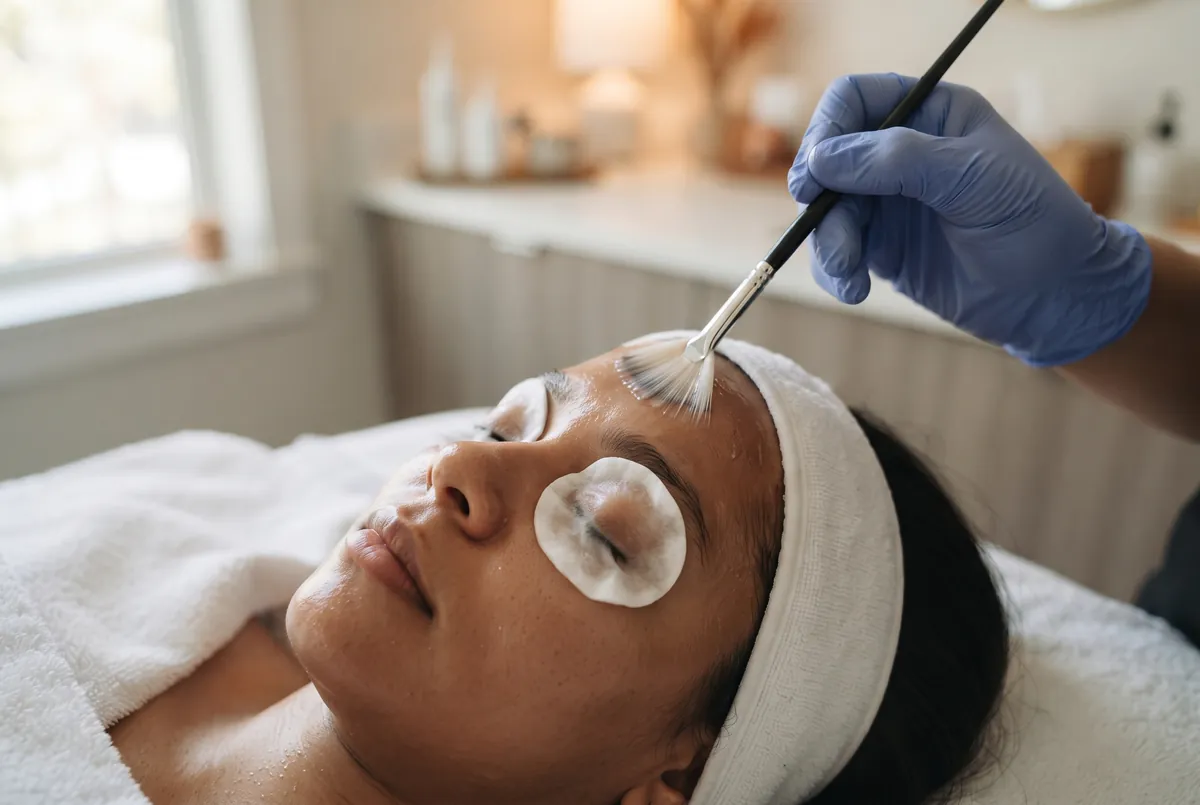
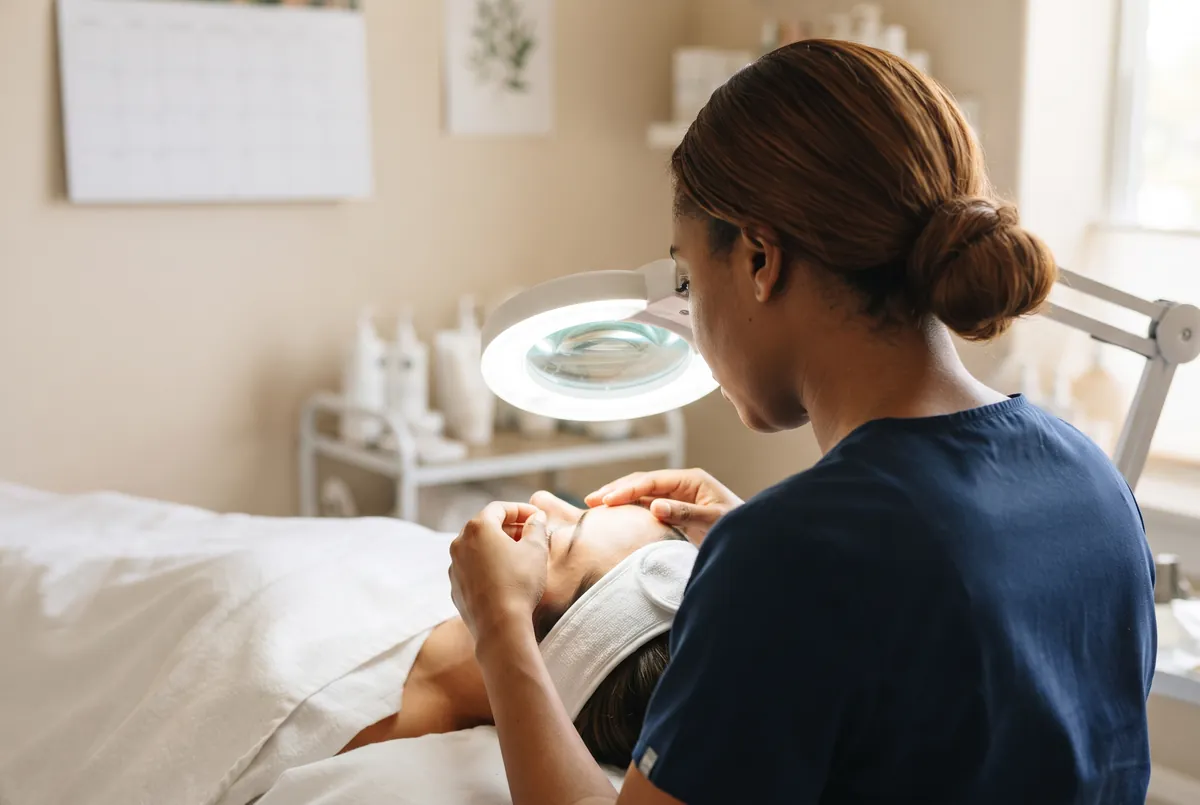
A light peel appointment follows a predictable order. The skin is cleansed thoroughly, then degreased with a prep solution so the acid meets an even, oil-free surface. Skipping this step is a common cause of patchy results. The corners of the eyes, the creases beside the nose and the corners of the mouth are protected with a thin layer of ointment, because solution pools there. The acid is then applied with a fan brush, gauze or cotton in a set sequence, usually starting with the sturdier forehead and cheeks and finishing with the thinner areas around the mouth and eyes.
While the solution is on the skin, the practitioner watches and asks. Mild tingling, warmth, itching and a prickly sting that rises and then levels off are expected. A small handheld fan makes it much easier to tolerate. What I watch for is redness that deepens quickly in one area, swelling, a burning feeling that keeps climbing, or white patches with a product that should not frost. Any of those ends the peel early. A client should never be told to push through severe pain to "let it work." Timing is a maximum, not a goal.
Ending the peel depends on the agent. Glycolic and other AHA peels are neutralized with a buffering solution or rinsed thoroughly with cool water. Salicylic acid and Jessner's solution are generally self-limiting and are either left or gently removed according to the manufacturer's directions. Retinoid peels stay on and are washed off at home hours later. The appointment finishes with a soothing product and a generous layer of sunscreen. The acid contact time is only a few minutes, so most of the visit is consultation, preparation and aftercare instruction.

Recovery day by day and aftercare rules
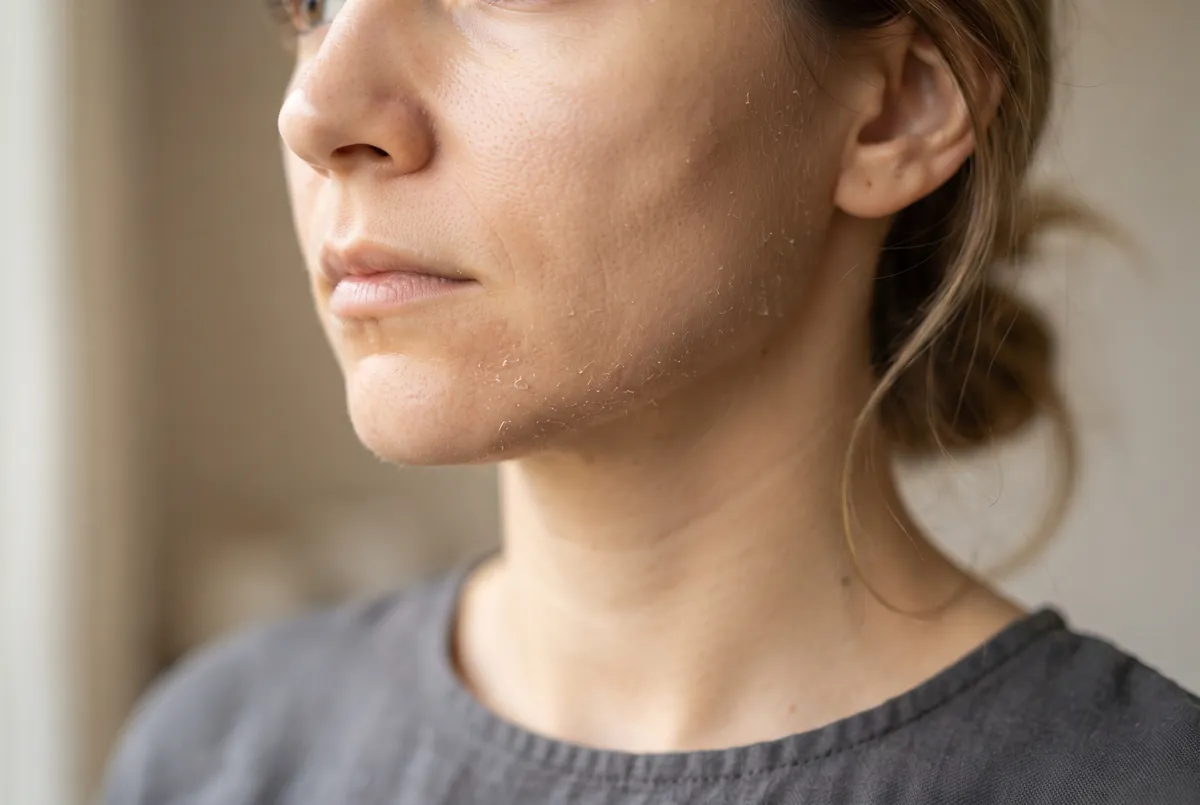
After a light peel, the first day usually brings mild pinkness and a tight, clean feeling, a little like the day after a windy walk. On the second and third days the skin feels dry, and fine flaking may appear, mostly around the mouth, nose and chin where the face moves the most. By the end of the first week the surface is smoother and reflects light more evenly. Plenty of clients never flake at all. Visible peeling is not a measure of whether the peel worked, and chasing more peeling by asking for a stronger product is a mistake.
After a medium peel, the calendar is longer and the physician's instructions take priority over anything written here. In general the face is swollen and feels sunburned for the first couple of days. The skin then darkens, stiffens and begins to crack and lift, usually starting around the mouth. Peeling continues for several days. Underneath, the new skin is smooth, pink and delicate. Makeup is normally allowed once peeling has finished, and the pinkness fades gradually over the following weeks. Follow-up visits are part of the treatment.
The rule that applies to every depth is to keep your hands off. Picking or pulling a flap of peeling skin tears it away from skin that is not ready to be exposed, and that is how a routine peel turns into a scar or a dark mark. If a loose piece bothers you, trim it with small clean scissors and leave the attached part alone. Sleep on a clean pillowcase, keep hair products away from the face, and resist the urge to scrub the flakes off in the shower.
Aftercare for a light peel is deliberately boring. Wash with cool or lukewarm water and a mild, non-foaming cleanser, using fingertips only. Pat dry. Apply a simple moisturizer as often as the skin feels tight. For the first several days leave out everything active: no retinoids, no exfoliating acids, no vitamin C if it stings, no scrubs, brushes or washcloths, and no at-home devices. Reintroduce your regular products one at a time once flaking has stopped and the skin feels normal to the touch, usually after about a week.
Sun protection is the part that decides whether the peel leaves you with clearer skin or new pigment. Use a broad spectrum sunscreen every morning, reapply when you are outdoors, and add a hat and shade. This matters most in the first weeks, while the new surface has less natural protection, and it matters for every skin tone. Heat counts too. For the first couple of days skip hot yoga, saunas, steam rooms, very hot showers and hard workouts that leave the face flushed, since heat and sweat on freshly peeled skin can cause irritation and blotchy color.
Know the signs that mean a call to the practitioner or a physician instead of patience. Increasing pain after the first day, swelling that gets worse, yellow crusting or oozing, blisters, a cluster of small painful sores near the lips, fever, or dark or white patches appearing as the skin heals all need to be looked at. Early treatment of an infection or a cold sore flare prevents scarring. A responsible practitioner gives every client written instructions and a way to reach them, and wants to hear about a problem on day two, not at the next appointment.
How often to peel, and at-home peels compared with professional ones
Light peels work as a series. A single treatment gives a short-lived glow, and a planned course gives a lasting change in texture and tone. Practitioners commonly space light peels a few weeks apart, long enough for the skin to finish one renewal cycle and rebuild its barrier, and then move to occasional maintenance. The exact rhythm depends on the acid, the strength, the client's skin and the product manufacturer's protocol. Medium peels are spaced many months apart, if they are repeated at all. A deep peel is typically done once.
More is not better. Skin that is peeled too often or too strongly becomes thin-feeling, shiny, red and reactive, stings with plain moisturizer, and breaks out in small bumps. That is a damaged barrier, and the fix is to stop all exfoliation for weeks. I reassess the skin before every treatment in a series. If it looks stressed, we skip the acid that day and do a hydrating facial. Clients sometimes feel shortchanged in the moment, and thank me at the next visit.
Products sold for home use and products sold to professionals can list the same acid and still be very different. Home exfoliants are formulated at lower strengths and a gentler pH so that a mistake in timing has small consequences. Professional peels are stronger and more acidic, and they assume a trained person is watching the skin and knows when to stop. A well-chosen home acid used a few times a week is a perfectly good way to maintain results between appointments. It is maintenance, though, and it does not replace a professional series when there is a real concern to treat.
The danger is in the middle ground: professional strength acids sold online to anyone. The FDA has warned consumers about high concentration chemical peel products sold without professional supervision, after reports of serious burns. I have seen the results in my own practice, in clients who came for help after a home TCA or strong glycolic application left burns, scabs and months of discoloration. The usual story is the same each time: no patch test, too much product, too long, and no plan for what to do when it started to hurt. If a product can frost your skin, it does not belong in a bathroom cabinet.
If you use home exfoliants, follow three rules. Introduce one product at a time and give it a few weeks before judging it. Never stack several acids and a retinoid on the same night because each one seemed mild alone. And tell your esthetician exactly what you use, with product names, before any professional treatment. Most over-processed skin I see was caused by a pile of small things, each of them reasonable on its own.
Who can legally perform chemical peels in the US
There is no single national rule. Each state licensing board defines what an esthetician or cosmetologist may do, and the definitions differ in real ways. Many states limit estheticians to superficial exfoliation of the outermost layer of the skin and prohibit anything that affects living tissue. Some set limits on acid strength or pH, some name specific acids that are off limits, and some have an advanced or master esthetician license with a wider scope. Medium and deep peels are medical procedures everywhere. Check your own state through the esthetician licensing requirements by state before you buy a single professional product.
Students often ask whether working in a medical office changes the rules. The term medical esthetician is a job description, not a separate license in most states, and what an esthetician may do under a physician's delegation is again decided state by state. My guide on what a medical esthetician is covers how that setting works. For a wider view of the profession, including where peels fit among facials, extractions and hair removal, see what an esthetician does day to day.
Training for peels has two layers. The first is the state-required program and license, with its in-person hours and practical exam. Nothing replaces that, and no online course is a shortcut around it. The second is ongoing education: skin histology, acid chemistry, the Fitzpatrick scale, contraindications, and manufacturer certification for the specific lines you use. Theory is well suited to online study, which is why I built the esthetics theory course and the cosmetology course to prepare students for school and the board exam. The steps to the license itself are laid out in how to become a licensed esthetician.

Common myths about chemical peels
The first myth is that a peel has to peel. Visible shedding depends on the agent, the depth and the individual, and light peels regularly improve texture with no flaking anyone would notice. The second myth is that stronger is better. The right peel is the mildest one that addresses the concern, repeated consistently. The third is that peels thin the skin. Over-exfoliation damages the surface barrier, which is a real problem, but a properly spaced series does not wear the skin away. The outer layer renews itself continuously, and that renewal is exactly what a peel is using.
Another common belief is that peels are unsafe for dark skin. The accurate version is that darker skin has a higher risk of pigment change from irritation, so it needs slower acids, careful preparation, strict sun protection and an experienced provider. Many people with brown and black skin get excellent results with mandelic and salicylic series. The last myth is that a peel shrinks pores permanently. Pore size is largely inherited. Peels clear the material that stretches pores and makes them visible, so pores look smaller while the skin is kept clear, and they return to their usual appearance when care stops.
Your next step
If you are a client, start with a consultation instead of a product. Bring a list of everything you use on your face and every medication you take, say what bothers you most, and ask the practitioner which peel they would choose, why, and what the week afterwards will look like. A good answer includes the option of doing nothing yet. Begin with a light peel, protect the skin from the sun, and judge the result after a series. For lines, scars or pigment that a light peel cannot reach, book a dermatologist.
If you are a student or a working professional, learn your state's scope of practice first, then the science, then the products. Read the board's own language, keep it in your records, and build your service menu inside it. My overview of facial care basics shows how peels fit into a complete treatment plan, and the school directory can help you find an in-person program near you. Peeling rewards patience, both in the skin and in the person learning to do it.

State Requirements
State licensing guides
Hours, exams, fees, and the licensing board differ by state. Open your state for the current requirements.
Common Questions
FAQ
Chemical peels are grouped by depth. Light or superficial peels work within the epidermis and use agents such as glycolic, lactic, mandelic and salicylic acid. Medium peels reach the upper dermis and usually use trichloroacetic acid, sometimes after Jessner's solution. Deep peels use phenol based formulas and reach the middle of the dermis. Light peels have little or no downtime and can be performed by licensed skin care professionals within state limits. Medium and deep peels are medical procedures performed by or under a physician.
Salicylic acid is the usual first choice because it dissolves in oil and can work inside a clogged pore, loosening the mix of sebum and dead cells that forms blackheads and whiteheads. Mandelic acid is a gentler alternative for sensitive skin or skin that marks easily. A peel series works best alongside a consistent home routine. Painful, cystic or widespread acne should be seen by a dermatologist first, since peels alone will not control it and peeling over inflamed skin can make marks worse.
After a light peel most people have a day or so of pinkness and tightness, then possible dryness and fine flaking for a few days. Many return to normal activities the same day. A medium peel involves about a week or more of swelling, darkening and sheet-like peeling, followed by pinkness that fades over the following weeks. A deep peel takes weeks to heal, with redness that can last for months. Your provider's written instructions always take priority over general timelines.
They can be, with the right approach. Deeper skin tones have more reactive pigment cells, so irritation is more likely to leave dark patches. The safer plan is a gentle, gradual series with slower acids such as mandelic or salicylic, good preparation beforehand, and strict daily sunscreen afterwards. Medium depth peels carry a higher risk of pigment change and should only be done by a physician experienced with skin of color. Ask any provider how often they treat skin like yours before you book.
In most states, licensed estheticians and cosmetologists may perform superficial peels that act on the outermost layer of the skin. The details differ from state to state. Some boards limit strength or pH, some restrict particular acids, and some offer an advanced license with a wider scope. Medium and deep peels are medical procedures in every state. Check the current rules with your own state board before offering or booking the service.
Light peels are usually done as a series spaced a few weeks apart, followed by occasional maintenance treatments. The spacing gives the skin time to complete a renewal cycle and rebuild its barrier. The exact schedule depends on the acid, its strength, your skin and the manufacturer's protocol. If your skin becomes shiny, tight, red or stings with plain moisturizer, that is a sign of over-exfoliation, and the right response is to pause all acids until it recovers.
For the first several days avoid retinoids, exfoliating acids, scrubs, cleansing brushes, waxing and any at-home devices on the treated area. Skip saunas, steam rooms, very hot showers and intense workouts for the first couple of days. Do not pick or pull at flaking skin. Stay out of direct sun and wear a broad spectrum sunscreen every day. Call your practitioner or a physician if you notice worsening pain, swelling, blisters, oozing, crusting or sores near the lips.
No. Home exfoliating products made for consumers are formulated at lower strengths so that small mistakes have small consequences. Professional strength acids, especially TCA and high strength glycolic acid, can cause chemical burns, scarring and lasting discoloration when used without training, and the FDA has warned consumers about such products sold directly to the public. Use consumer products as directed for maintenance, and leave professional peels to a licensed practitioner or physician.
Keep Reading
Related Guides


