Career
Electrology State Board Exam: Written and Practical Prep Guide

Quick answer
The electrology state board exam usually has a written theory test and a practical exam where you show setup, infection control and treatment technique. Formats, models, kits and retake rules vary by state, so download your board's candidate materials and content outline first. Study by content area with timed practice questions, rehearse the full practical sequence under realistic conditions, and pack your kit from the official list.
The electrology state board exam is the gate between finishing your training and legally treating clients in a state that licenses electrolysis. For most candidates it has two parts: a written theory exam and a practical exam where you demonstrate setup, infection control and treatment technique while an examiner watches. Neither part is designed to trick you. Both are designed to confirm that you can work safely without supervision. When I prepare students for this exam, the ones who struggle are rarely the least talented. They are the ones who studied hard but never rehearsed the full sequence under exam conditions.
This guide explains the state exam in general terms, how to prepare for the written and practical parts, and what to expect on exam day. It is not about the voluntary national certification; that is a separate credential covered in our IBEC certification exam guide. Every state that licenses electrology writes its own rules on eligibility, exam format, models, scoring and retakes, and some states do not license electrolysis at all. Always confirm the current details on your state page in our electrolysis licensing hub and in the candidate materials your board or its testing provider publishes.
What the electrology state board exam is for
A state license exists to protect the public. Electrolysis involves inserting a probe into the follicle and applying current, which carries real risks if done poorly: burns, scarring, pigment changes, infection, and transmission of bloodborne disease through poor sterilization. The state board exam is the board's way of checking, in a standardized setting, that a candidate understands those risks and can prevent them. That is why safety and infection control usually carry so much weight, and why a candidate can fail for a single serious safety error even if the rest of the performance is strong.
It helps to read the exam through that lens. The examiner is not grading your speed or how many hairs you remove. They are asking: Does this person keep the field clean? Do they handle sharps safely? Do they screen the client? Do they choose sensible settings? Do they insert correctly and stop when something is wrong? When you prepare with those questions in mind, many details of the exam make sense and become easier to remember.
It also helps to understand that the exam measures minimum competence, not mastery. Passing does not mean you know everything about electrolysis, and the exam does not expect that. It expects a solid, safe foundation you will build on with experience. Seeing it that way takes away some of the pressure. You are not trying to prove you are the best electrologist in the room, only that you can be trusted to work safely on your own.
Eligibility and the application process
Before you can sit for the exam, you normally need to meet your state's eligibility rules. These usually involve completing a required number of training hours at an approved school or through an approved apprenticeship, and submitting proof of that training with an application. Some states also have requirements about age, education level, background checks or documentation of identity. Because these details differ widely and change over time, do not rely on what a classmate from another state did. Read your own board's current rules.
If accommodations are needed for a disability or medical condition, request them through the official process as early as possible. Testing providers usually require documentation and time to arrange accommodations, and requests made close to the exam date may not be processed in time. Ask about the process when you first apply rather than after you schedule.
The application step often takes longer than candidates expect. Your school may need to certify your hours, the board needs to review the file, and only then will you receive authorization to schedule. In some states the exam is administered by the board itself; in others, a separate testing provider runs the written exam, the practical exam, or both. Start the paperwork as early as your rules allow, keep copies of everything, and note any deadlines for scheduling after you receive approval. If you trained through an apprenticeship, our electrolysis apprenticeship guide covers how those hours are typically documented.
- Confirm your state licenses electrology and read its current exam rules.
- Check that your training hours and school or sponsor are approved for eligibility.
- Gather documents: proof of hours, identification, any required forms and fees.
- Submit the application and keep copies of everything you send.
- Wait for authorization, then schedule the written and practical exams as instructed.
- Download and read the candidate information materials in full.
- Arrange a model or kit for the practical exam if your state requires one.

The written exam: typical content areas
The written exam tests the theory behind safe electrolysis. The exact topics and their weight are set by your state or its testing provider, and many publish a content outline in the candidate materials. That outline is your most important study document. Read it line by line and use it to organize your notes. In general terms, electrology written exams tend to cover the areas below, though not every state covers all of them, and the balance between them varies.
- Infection control: cleaning, disinfection and sterilization, bloodborne pathogens, sharps handling, personal protection.
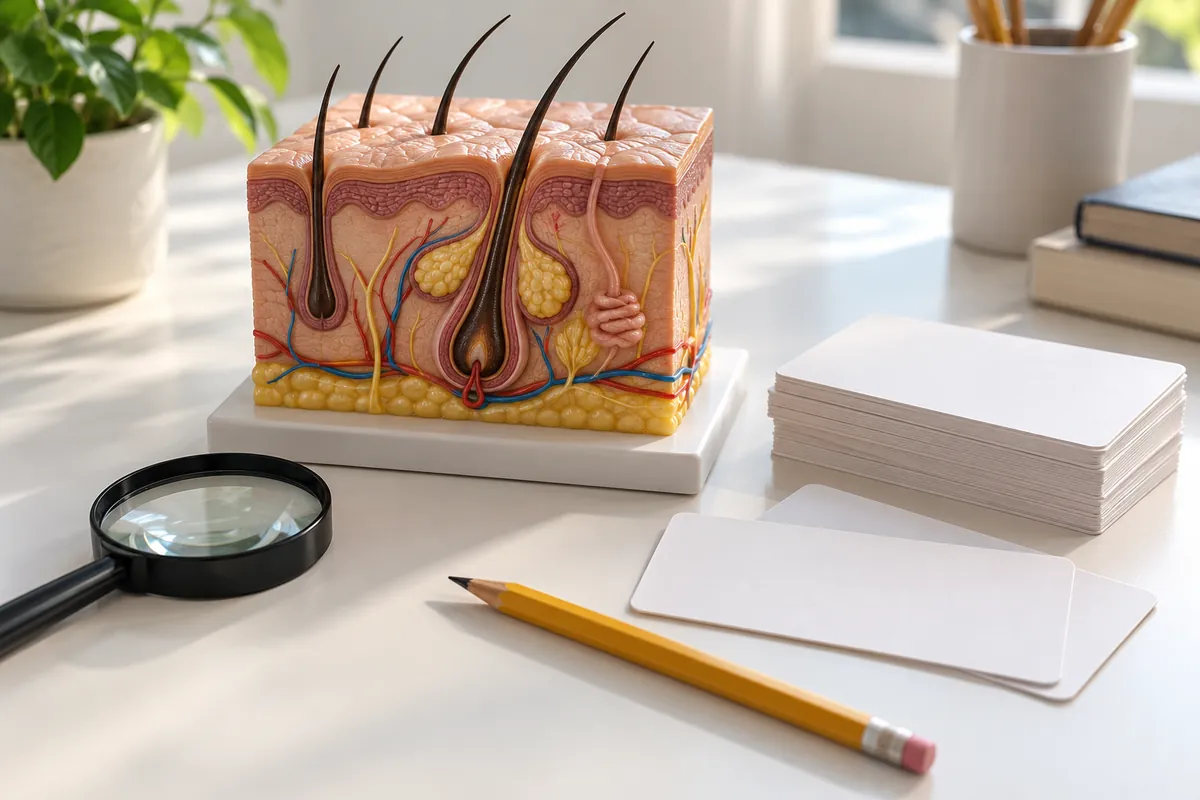
- Skin and hair anatomy and physiology: skin layers, follicle structure, hair growth cycles, types of hair.
- Electricity and modalities: galvanic, thermolysis and blend, current, intensity and timing concepts, equipment safety.
- Treatment technique: probe selection, insertion angle and depth, epilation, treatment planning.
- Client assessment: consultation, medical history, contraindications, when to refer to a physician.
- Skin reactions and aftercare: normal reactions, complications and how to prevent them.
- Causes of hair growth: hormonal and other factors relevant to the profession, in general terms.
- Laws and rules: your state's practice act, scope, record keeping and professional conduct.
Pay special attention to the laws and rules section. It is easy to neglect because it feels less interesting than anatomy or electricity, but questions about scope of practice, record keeping, license display and sanitation rules are usually straightforward points if you have read your state's regulations. Some states provide the rules document directly on the board website. Read it twice: once to understand it, and once to make a list of anything that surprised you.
How to study for the written exam
Begin with the content outline and turn it into a study plan. Assign each content area to specific days, and give extra time to the areas that carry more weight or that you find hardest. Short daily sessions work better than long weekend marathons, because the material builds on itself. Anatomy and growth cycles explain why timing matters, which explains why certain modalities suit certain hair, which explains treatment planning. Study in that order and the connections hold.
Active study beats rereading. After each topic, close the book and explain it aloud as if to a client or a new student. Write your own questions and answer them a few days later. Draw the follicle from memory and label its parts. Sketch how current flows in each modality and what it does to tissue. If your school or the testing provider offers practice questions, use them under timed conditions and review every wrong answer until you understand why the correct choice is correct. Our articles on hair growth phases and galvanic, thermolysis and blend are useful refreshers for two of the most tested theory areas.
Watch for the style of questions. Licensing exams often present a scenario and ask for the best or first action. Two answers may both be true, but only one is the safest or most appropriate first step. When you practice, ask yourself why each wrong option is wrong. This trains the judgment the exam is really testing. Avoid memorizing answers from unofficial question dumps; they may be outdated or wrong, and they do not teach the reasoning you need.
Online theory courses can help structure this part of your preparation. Our electrolysis course covers the theory topics most exams draw on. It does not replace the in-person training hours your state requires for eligibility, and it does not substitute for the practical skills you can only build with supervised hands-on work. Use it to strengthen understanding, then confirm everything against your state's own outline and rules.

The practical exam: what examiners usually look for
The practical exam is where many candidates feel the most pressure. Its exact format is set by each state. In some states you perform treatment on a live model; in others, part of the exam may use a mannequin or a demonstration of procedures. The time allowed, the areas treated, the equipment you bring, and the scoring rules all differ. Read the candidate materials until you could explain them to someone else, because a single missed instruction, such as a required item in your kit, can cost points before you even start.
Even with that variation, practical exams in electrology usually look at a common set of skills. Examiners watch how you prepare the station, how you handle hand hygiene and gloves, how you open and handle sterile items, how you protect the client, whether you perform a consultation or confirm the client is suitable for treatment, how you position the client and light the area, how you insert the probe and apply current, how you remove the hair, how you handle used sharps, and how you finish with aftercare and cleanup. Often each step is scored against a checklist, and some errors may be marked as critical.
| Phase | What examiners typically watch | Common candidate mistakes |
|---|---|---|
| Setup | Clean station, disinfected surfaces, organized supplies | Clutter, missing items, contaminated clean area |
| Infection control | Hand hygiene, gloves, opening sterile items properly | Touching nonsterile surfaces with gloved hands |
| Client care | Consultation or screening, draping, positioning, comfort | Skipping screening, poor positioning |
| Technique | Probe choice, insertion angle and depth, settings | Forcing insertions, pulling resistant hairs |
| Sharps and waste | Safe probe removal and disposal | Recapping by hand, leaving probes on the tray |
| Finish | Aftercare, cleanup, records if required | Rushing cleanup, forgetting aftercare |
How to prepare for the practical exam
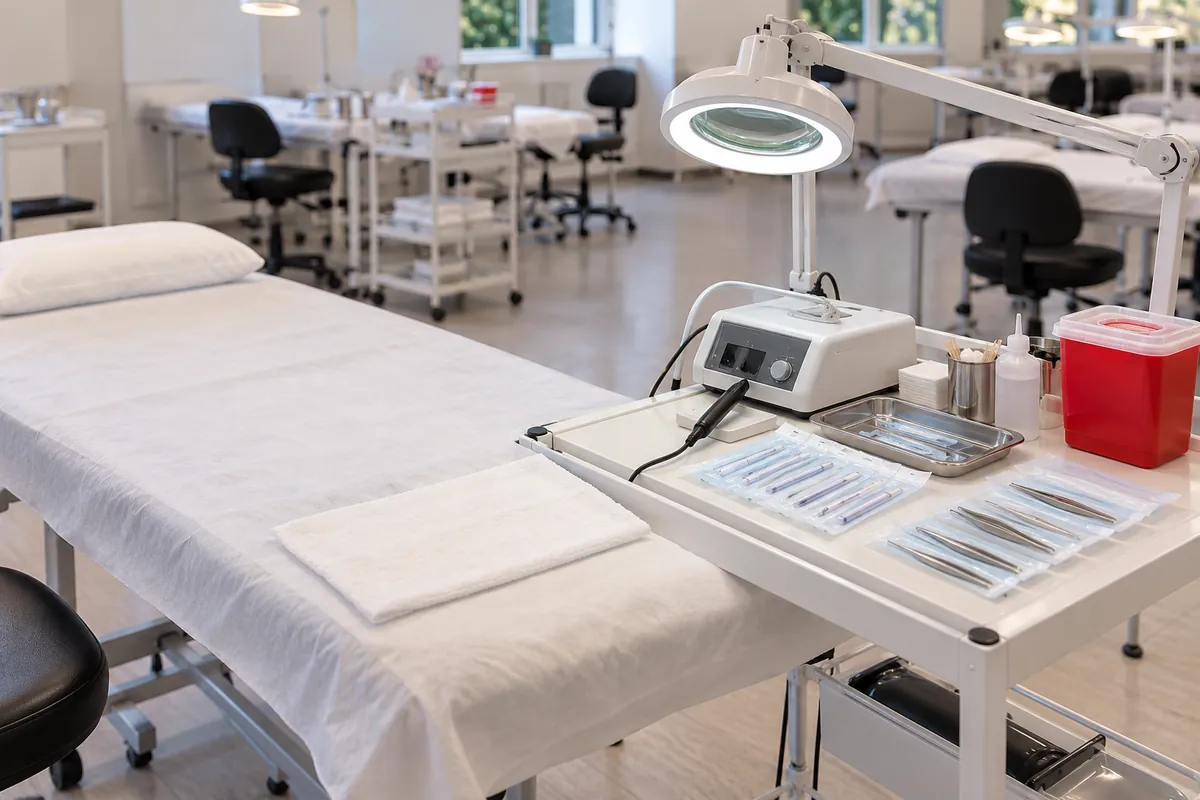
The best preparation for the practical exam is repeated rehearsal of the full sequence, from walking up to the station to the final cleanup, under realistic conditions. Many candidates practice insertions endlessly but rarely practice setup, glove changes and sharps disposal at the same pace and in the same order the exam requires. Those steps carry points, and nerves make people skip them. Write your own step-by-step script based on the candidate materials and your school training, then run it until it becomes automatic.
Time yourself. If the exam has a time limit, practice with a timer, and note where you lose minutes. Usually it is setup and searching for items, not treatment. Organize your kit so each item has a fixed place and you can reach it without thinking. Practice with the same type of equipment you will use on exam day; if you will bring your own epilator, practice on it, and if the testing site provides equipment, find out what kind and practice on something similar if possible.
Practice the transitions, not just the steps. The moments between phases, such as finishing setup and starting the consultation, or removing gloves after treatment and beginning cleanup, are where candidates most often forget something. Say each transition aloud during rehearsal: gloves off, hands cleaned, new gloves on. Rehearsing transitions makes the whole sequence feel continuous and reduces the risk of skipping a scored step under pressure.
Ask an instructor or experienced electrologist to watch a full run and grade you against a checklist, the way an examiner would. Fresh eyes notice habits you cannot see: touching your face with gloved hands, reaching across the sterile field, leaving a used probe on the tray. Then fix one habit at a time. If you trained in a program that offers mock exams, take every one. Our guide on electrolysis insertion technique for beginners is a good review of insertion basics before a final practice round.
Choosing and preparing a model
If your state requires a live model, choose that person carefully. The candidate materials usually describe what the model must have, such as sufficient hair in a particular area, and what disqualifies them, such as certain skin conditions or recent hair removal in the treatment area. A suitable model is calm, reliable, available on the exam date, and has hair that is appropriate for the work you must demonstrate. Ideally, they have been treated before so they know what the sensation is like and will not flinch or move suddenly.
Prepare your model as carefully as your kit. Explain the rules: arrival time, what to bring, how long they may need to stay, what they can and cannot do with the treatment area beforehand, and what they should avoid saying or doing during the exam. Confirm that they meet any health or eligibility requirements stated in your materials. Have a backup model if possible, because illness or a last-minute change can otherwise cost you the exam date. Thank them properly afterward; it is a real favor.
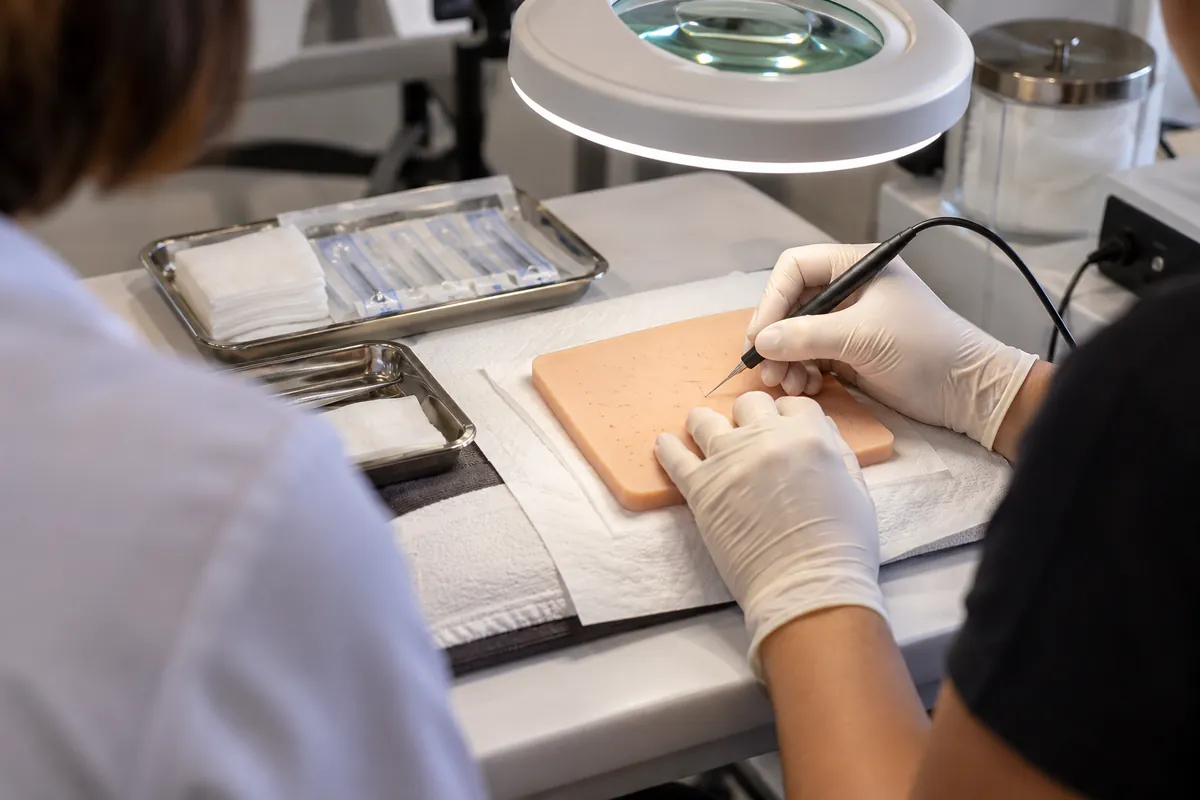
Practice on your model before the exam, if your timeline allows, and if doing so does not conflict with any rules about recent treatment of the exam area. Practicing on the actual model helps you learn their skin, their hair, and how they react. Keep the session gentle and professional. If your state does not use a live model, find out exactly what is used instead and practice with the same type of material.
Building your exam kit
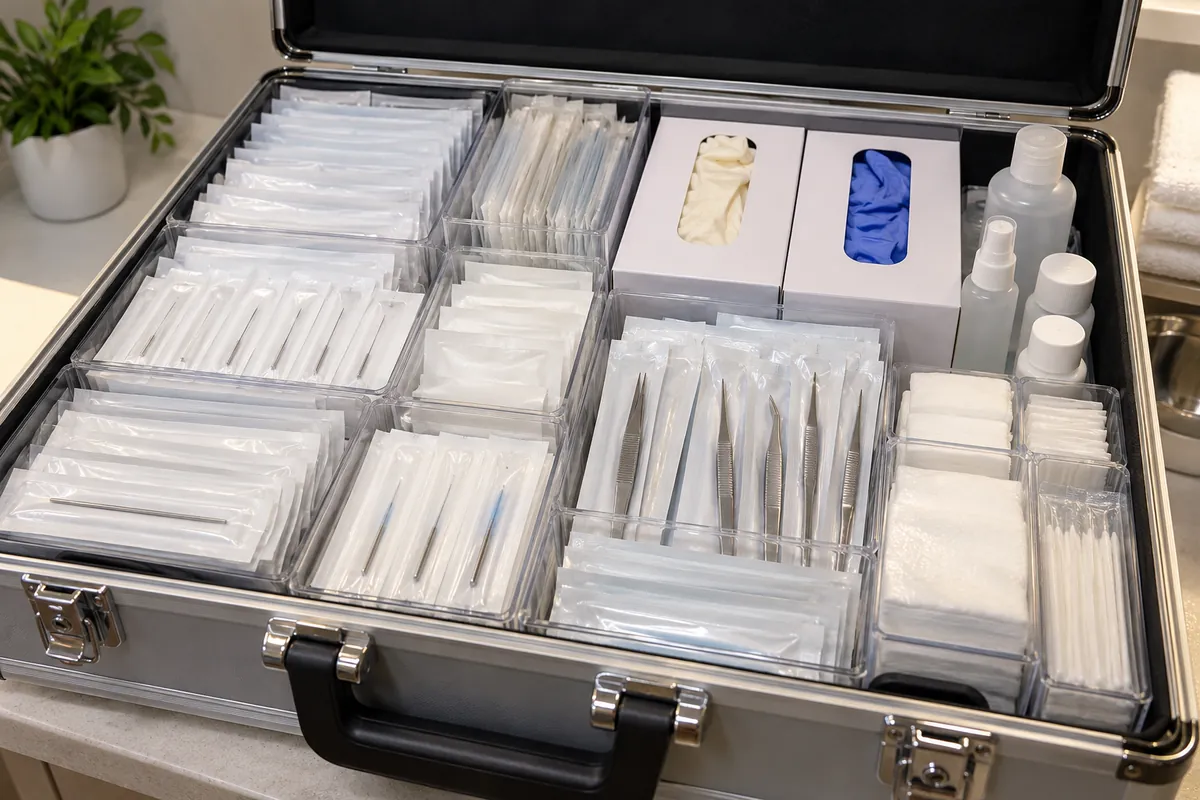
Many states require candidates to bring their own supplies for the practical exam, and the candidate materials usually list them. Treat that list as mandatory. Missing items can lead to point deductions or even prevent you from testing. Pack early, check every item against the list, and pack again the night before. Label your kit case with your name if allowed. Use only new, sealed sterile items and bring extras, since you may drop a probe or contaminate a glove.
- Every item on your state's official supply list, checked twice.
- Sealed sterile probes in the sizes you plan to use, plus spares.
- Sterilized tweezers in sealed pouches, plus a backup set.
- Gloves in your size, more pairs than you think you need.
- Approved disinfectant, antiseptic and aftercare products as allowed.
- Table covering, linens or drapes if required.
- A sharps container if you must provide one.
- Identification and admission documents the materials ask for.
- Your own equipment, cords and adapters if you bring an epilator.
Organize the kit in the order you will use it, with clean supplies separate from anything that will become dirty. Some candidates use clear bags or small bins for each phase: setup, treatment, finish. This saves time and reduces the chance of reaching across the clean field. Make sure every product container is properly labeled according to your state's rules, because unlabeled containers are a common deduction in many licensing exams. Infection control is central to the practical, and our guide to autoclave and sterilization for electrolysis is a good final review of the principles behind every item in that kit.
Exam day: what to expect
On exam day, logistics are part of the test. Plan your route, check parking or transit, and aim to arrive early with your model and kit. Bring every document your materials require, including identification that matches your application exactly. Expect a check-in process, rules about personal items, and possibly a waiting period. Eat beforehand, bring water if allowed, and wear comfortable, professional clothing that meets any dress code in the materials.
During the written exam, read each question fully before looking at the options. Answer the questions you know first, mark difficult ones if the format allows, and return to them. Do not change answers without a clear reason. During the practical, listen carefully to the examiner's instructions and follow them exactly. Work steadily rather than fast. If you make a mistake, such as touching a nonsterile surface, correct it properly according to your training, for example by changing gloves, rather than hoping it was not noticed.
Nerves are normal. Shaky hands and a racing heart do not mean you will fail. Slow, deep breathing between steps helps, and so does narrating steps silently to yourself in the order you practiced them. Remember that examiners have seen many nervous candidates. They are looking for safe, correct practice, not perfect calm. A candidate who works carefully and deliberately while visibly nervous often scores well.

Results, retakes and getting licensed
How and when you receive results depends on your state and testing provider. Some written exams give a preliminary result at the end of the session; practical results may take longer. Passing both parts usually allows you to complete your license application, which may involve additional paperwork, fees, or other steps. Do not start treating clients until the license is actually issued and you have confirmed the rules for displaying it.
Keep copies of your results, application and license documents together in a safe place, along with records of your training hours. You may need them later for renewals, for applying in another state, for insurance, or for employment. Setting up a simple file now saves considerable trouble years down the line.
If you do not pass, you are far from alone, and the process is designed to allow retakes. Read the score report carefully. Many reports break down performance by content area or by practical step, which tells you exactly where to focus. Check the retake rules, including any waiting period, additional fees, or limits on attempts. Then build a shorter, targeted study plan for the weak areas, and run full mock practicals again if the practical was the issue. Many candidates pass comfortably on a second attempt once they focus on the specific gaps.
Be kind to yourself after a failed attempt. Take a day or two off, then return with a plan. Talking through the experience with an instructor often reveals a simple fix, such as a missed step or a time management problem, that is easy to correct before the retake.
Once licensed, the learning continues. Many states require continuing education to renew a license, and many electrologists choose further credentials such as national certification. If you plan to move later, licenses do not automatically transfer between states; our guide on electrolysis license reciprocity explains the general process. For ongoing learning, see electrolysis continuing education.
Common reasons candidates fail
From what I have seen with students over the years, failures rarely come from lack of talent. They come from preparation gaps. On the written exam, the common causes are not studying the state laws and rules, relying on memorization without understanding, and not practicing scenario questions. On the practical, the common causes are infection control breaks, missing kit items, not following the examiner's instructions, running out of time because setup was slow, and handling sharps unsafely. Each of these is preventable.
Some candidates also fail because of how they interpret instructions. If the examiner asks you to demonstrate a specific step, do exactly that step, in the way your materials describe, even if your school taught a slightly different routine. When in doubt during preparation, follow the written candidate materials over habits or advice from others. The materials are what examiners score against.
Another pattern is preparing alone. Candidates who study only by themselves often miss their own blind spots. A study partner, an instructor's mock exam, or a review group can catch them. Finally, some candidates leave the application too late and end up testing at a rushed time, or wait too long after training and forget practical routines. Plan the timeline so you test while your training is fresh and you have time for at least a few full rehearsals. Our article on how long it takes to become an electrologist helps put that timeline in context.
The final week before the exam
The last week is for consolidation, not for new material. Reread your own error notes, the questions you missed in practice tests, and any topic you keep confusing, such as the difference between current types, or the order of steps in a client consultation. Do not cram a new textbook chapter on the night before. Tired candidates make careless mistakes on questions they actually know. I ask students to build a one-page sheet of the facts they personally find slippery and to read it each morning. Writing it by hand helps it stick, and the act of choosing what belongs on the page is itself a form of review.
Practical preparation in the final week should be rehearsal under exam conditions. Set up your kit exactly as you will on the day, work through the required sequence from handwashing to cleanup, and have someone time you and watch for missed steps. Confirm the date, address, arrival time, accepted identification and what you may bring, using the instructions from your board or testing provider rather than hearsay. Plan your route and parking. Prepare your clothing the night before, including closed-toe shoes if your board requires them. Removing small logistical worries leaves your attention for the work itself.
- Reread personal error notes and weak topics
- Rehearse the full practical sequence with a timer
- Check that every kit item is clean, packed and complete
- Confirm identification, confirmation letter and exam location
- Plan sleep, food and travel time
- Keep the day before light
Managing nerves and attention on exam day
Nerves are normal, and a little adrenaline helps. The trouble starts when worry makes you rush or skip steps you perform correctly every day in the studio. Before the written part, breathe slowly, read each question fully, and answer the ones you are sure of first. If you are unsure, mark the question and return to it instead of burning time. Watch for absolute words in the answer choices, and pay attention to what the question actually asks: the safest action, the first action, or the most likely cause. Misreading the question causes more wrong answers than missing knowledge does.
During the practical, narrate silently to yourself. A calm internal list such as hands washed, gloves on, area cleansed, probe inserted, current applied, hair released, check skin, helps you keep the sequence even when your hands shake. If you make a mistake, stay calm and correct it according to protocol rather than pretending it did not happen. Examiners generally notice how you respond to a slip. Keep your workspace tidy as you go, because disorder at the table often leads to an error in infection control. Treat the model with the same courtesy and communication you would show a paying client.
If the result is not what you hoped for
Failing a section of a licensing exam feels personal, but it is a data point. Ask your board for the format of any score report, note which areas were weak, and build the retake plan around those areas. Some candidates failed the written part because they memorized answers instead of understanding principles; others failed the practical because of a single skipped safety step. Neither is permanent. Check your board's rules on waiting periods, retake fees and any limit on attempts, since those vary by state. Then write down what you will do differently, set a date, and keep practicing.
The temptation after a failed attempt is to retake as quickly as possible. A short pause for focused review usually works better than a rushed second try with the same preparation. Revisit your theory with fresh materials, ask your instructor or a licensed colleague to watch your practical sequence and give blunt feedback, and spend extra practice time on whichever step cost you points. Keep your records of study hours and practice sessions, in case your board asks. If your program offers exam preparation support, use it. Many successful electrologists passed on a second attempt after fixing a single habit.
Your next step
Start today with two concrete actions. First, open your state page in our electrolysis licensing hub, follow the link to your board, and download the current candidate materials and content outline. Second, put the exam date, application deadlines and a weekly study plan on your calendar. If you want structured theory review, our electrolysis course covers the topics most state exams draw on, alongside, not instead of, the in-person training your state requires. Then rehearse the full practical sequence until it feels routine.
State Requirements
State licensing guides
Hours, exams, fees, and the licensing board differ by state. Open your state for the current requirements.
Common Questions
FAQ
No. The state board exam is part of getting a license to practice legally in a state that regulates electrology. IBEC certification is a voluntary national credential that some electrologists add for recognition. Some states may reference national exams in their rules, so check your board. Our IBEC certification guide explains the national credential separately.
Content varies by state, but written exams typically cover infection control and sterilization, skin and hair anatomy, hair growth cycles, electricity and modalities, treatment technique, client assessment and contraindications, skin reactions and aftercare, and state laws and rules. Your state or its testing provider usually publishes a content outline, which should be the backbone of your study plan.
It depends on your state. Some practical exams use live models, while others may use mannequins or other formats for some or all of the test. When a model is required, the candidate materials usually describe who qualifies. Read them carefully, choose a reliable model who meets every requirement, and arrange a backup if possible.
It depends on how recently you finished training, how comfortable you are with theory and how much practical rehearsal you need. Most candidates benefit from a structured plan over several weeks rather than cramming. Base the plan on your state's content outline, schedule regular timed practice, and include several full practical rehearsals before the date.
Most states allow retakes, though rules on waiting periods, fees and number of attempts vary. Read your score report to see which content areas or practical steps were weak, then build a focused plan for those gaps. Many candidates pass on a later attempt once they target specific problems instead of restudying everything.
Online theory can help you understand and review the material, but states that license electrology generally require in-person training hours at an approved school or program, including supervised hands-on practice, before you can test. An online course does not replace those hours or the license. Check your state's eligibility rules on our licensing hub.
Safety. Infection control, sterile handling, sharps disposal, client screening and protection, and correct insertion technique usually matter more than speed or the number of hairs removed. Many practical exams use checklists, and some errors may be treated as critical. Rehearse the full sequence until each safety step is automatic.
No. Electrolysis regulation varies across the US. Some states have a dedicated electrology license with its own exams, some regulate electrolysis under another license or board, and some do not license it specifically. Check your own state's rules on our licensing hub before planning your training and exam timeline. A: Sometimes, but state rules differ. Some boards accept education from other states or require you to meet their own hour and course standards first. Contact the board in the state where you plan to work, ask in writing what they accept, and compare it to the licensing hub for your state before you pay any fees.
Keep Reading
Related Guides


