Electrolysis
Electrolysis License Reciprocity: Moving to Another State
Quick answer
An electrologist license does not transfer between states. In a licensing state you apply for a new license, usually by endorsement, and the board compares your training hours, exam, practice history, and license standing. Some states have no dedicated electrologist license, so moving from one of those into a licensing state is the hardest case. You cannot treat clients until licensed.
Electrolysis license reciprocity is one of the least understood parts of this profession, and I say that as someone who has answered the same question from colleagues for more than twenty years: "I am moving, can I just transfer my electrologist license to another state?" The honest answer is that a license does not travel the way a driver's license does. Each state decides for itself if electrolysis is a licensed profession at all, which board oversees it, how much training it expects, and which exam it accepts. A move therefore means a new application to a new authority, and the result depends on how closely your background matches what that authority asks of its own graduates.
This guide explains how a move works in practice for an electrologist. It covers the three directions a move can take, the difference between reciprocity, endorsement, and licensure by examination, what boards usually compare, which documents to collect before you pack, what to do when your training hours fall short, and how to stay legal while the application is pending. It also covers the CPE credential, insurance, and the local business rules that come with relocating a practice. I do not print hour counts, fees, or processing times here because they change and differ by state. For those, open the state pages in our licensing hub and confirm every detail with the board itself.
Why an Electrologist License Does Not Simply Transfer
There is no national electrologist license in the United States. Regulation of personal care and health related occupations belongs to the states, and each legislature made its own choice about electrolysis. Some states wrote a dedicated electrologist license into law, with required training, an exam, and renewal rules. Other states never created one, so there is no state board application for the profession at all. Nothing in federal law forces these states to recognize each other's decisions. When you cross a state line with your probes and your epilator, the license in your wallet stays tied to the state that issued it, and the new state looks at you as an applicant, not as a license holder.
The second reason is that the licensing states do not agree with each other. Training requirements differ widely from one state to the next, and the differences are large enough that a graduate who fully met the standard at home can be well short of the standard somewhere else. The regulator also differs. On our own state pages you can see that electrolysis licensing in California sits with the Board of Barbering and Cosmetology, while Florida and Ohio place electrologists under medical boards. A cosmetology board and a medical board tend to ask different questions, use different forms, and move at a different pace, even when the underlying idea is the same.
The third reason is the exam. Some licensing states write their own test, some rely on a national exam, and some accept more than one option. If the state you trained in used a test that your destination does not recognize, the new board may ask you to sit its exam even though you have been working safely for years. None of this is a judgment on your skill. It is the result of a profession regulated in separate pieces. Once you accept that the move is a fresh application measured against local rules, the process becomes much easier to plan, because you stop waiting for a transfer that does not exist and start building a file.
The Three Directions a Move Can Take
Before you read a single form, work out which kind of move you are making. I sort every relocation question into one of three directions, because the work involved is completely different for each. The first is a move from one licensing state to another licensing state. The second is a move from a licensing state to a state that does not regulate electrolysis as its own profession. The third, and the hardest by a wide margin, is a move from an unregulated state into a licensing state. The electrolysis licensing hub with a page for every state separates the two groups, so start there and find both your current state and your destination.
| Direction of the move | What the new state usually wants | Typical difficulty |
|---|---|---|
| Licensing state to licensing state | Application by endorsement or reciprocity, license verification from your current board, proof of training and exam, sometimes proof of work experience | Moderate, mostly paperwork if your training matches |
| Licensing state to a state with no dedicated license | No state electrologist application, but local business, zoning, and health rules still apply | Low on licensing, moderate on business setup |
| State with no dedicated license to a licensing state | Proof that your education meets the board's standard, often added school hours and an exam | High, plan for training and testing |
Examples from our own state pages make the three directions concrete. California and Florida both appear in the list of states with a dedicated electrologist license, so an electrologist moving between them is in the first group. Texas and New York appear in the list of states without one, so a Florida licensee moving to Texas is in the second group, and a practitioner who trained and worked only in New York and now wants to open in California is in the third. These lists reflect what our pages show today. Laws change, so treat the lists as a starting map and confirm the current status with the state board or state health department before you make decisions about a lease or a job.
One more point about direction: the label "unregulated" is narrower than it sounds. A state without a dedicated electrologist license has simply not created that specific credential. It may still regulate the room you work in, the way you dispose of sharps, the business you register, or the title you advertise under. Some states also fold hair removal services into another license in ways that are not obvious from the name. So the question to ask a state is never only "do you license electrologists?" It is "who, if anyone, has authority over a person performing electrolysis for pay here, and what do they require?" The answer may come from a board, a health department, or a city office.

Reciprocity, Endorsement, and Licensure by Examination
Three terms appear on board websites, and people use them loosely. Reciprocity, in its strict sense, means a mutual arrangement: two states agree that each will accept the other's licensees. True two-way agreements are uncommon in electrology, partly because so few states have closely matching requirements. When a board uses the word reciprocity today, it often means something broader, a route for people already licensed elsewhere. Read the rule itself, not just the heading on the web page, because the heading tells you very little about what you must prove.
Endorsement is the more common mechanism. Under endorsement the new board does not rely on an agreement with your old state. It reviews your individual record and decides if your education, exam, and license history are equivalent to, or stronger than, what it requires of its own applicants. If they are, it issues a license without making you repeat school. Endorsement is a one-way judgment about you. That is why two electrologists from the same state can get different answers from the same board: one trained under an older, shorter curriculum, the other finished a longer program or has many more years of documented practice.
Licensure by examination is the standard route for new graduates, and it is the fallback when endorsement does not fit. The board reviews your training, admits you to its exam if the training qualifies, and licenses you once you pass. An experienced electrologist can land here for several reasons: the home state had no license to endorse, the original exam is not recognized, or the license lapsed long ago. Being sent down this route is not a penalty. In some states it is a perfectly reasonable path, especially when your school hours already satisfy the requirement and the only missing piece is a test you are well prepared to pass.
Some boards add a fourth option built on work history. Instead of asking only about school hours, they allow a period of lawful practice in another state to count toward eligibility. Our California page, for instance, lists out-of-state practice as one of the qualifying paths alongside an approved school and an approved apprenticeship. Where such a path exists it can rescue an application that would otherwise fail on hours, but the board decides how the experience must be documented and how recent it must be. Do not assume your destination has this option. Look for it in the application instructions, and if it is not mentioned, ask the board in writing.
What Boards Usually Compare
When an application from a licensed electrologist lands on a reviewer's desk, the comparison follows a predictable pattern. The first item is training hours. The board looks at the total number of hours on your school transcript and often at how those hours were divided between theory and supervised clinical practice. It compares that record with its own requirement. If your program was shorter than the destination's standard, the reviewer has to decide if anything else in your file can make up the difference. If your program was longer, this part is usually settled quickly. The transcript matters more than the diploma, because the diploma rarely shows the breakdown.
The second item is the exam. The reviewer wants to know which test you passed to earn your original license and if the board treats that test as equivalent to its own. A written theory exam alone may not satisfy a state that also tests practical skills, and a state specific exam may not be recognized elsewhere. Some boards will also ask you to pass a short test on their own laws and rules, regardless of how you were licensed. That kind of jurisprudence test is about local statutes, sanitation rules, and scope of practice, and it is reasonable: those are the things that truly differ from the place you are leaving.
The third item is practice history. Many boards ask how long you have held a license and if you have been actively working. Years of continuous practice show that your training was more than a classroom exercise, and several endorsement rules give experience real weight. Expect to prove it. A sentence on a resume is not enough. Boards commonly want letters from employers, tax or business registration records for the self employed, or an affidavit on their own form. Gaps in practice matter as well. An electrologist who stopped working for a long period may be asked for refresher training or continuing education before a license is issued.
The fourth item is standing. The new board will ask your current board, directly, if your license is active and if there has ever been discipline, a complaint that led to action, or an unpaid fine. A license in good standing is the foundation of every endorsement application. If your license has expired, renew or reinstate it before you apply elsewhere if your state allows it, because an expired license often cannot be endorsed at all. If there is a past disciplinary matter, disclose it and attach an explanation. Boards are far more willing to work with an applicant who is open about an old problem than with one whose verification letter reveals a surprise.
A few other items appear often enough to mention. Many boards have a minimum age and a general education requirement such as a high school diploma or its equivalent, and they will want proof. Some require a criminal background check or fingerprints. Some ask for a current course in infection control or bloodborne pathogens, or for proof of continuing education. If you trained outside the United States, expect a request for a credential evaluation and certified translations. None of these is specific to electrology, but each can stall an otherwise clean file if you discover it after you have already moved.
Documents to Gather Before You Move
Most delays in a relocation come from paper, not from the board's decision. The slowest pieces are the ones that other institutions must send on your behalf, so request them first. I tell colleagues to build two folders, one physical and one digital, as soon as a move becomes likely, even before they know which city they will land in. Schools close, owners retire, and records get archived. A transcript that takes one phone call today can take months of searching once the school no longer exists, and in that situation you may need to contact the state agency that oversees private schools to locate the records.
- License verification (certification letter): an official statement from your current board confirming your license number, issue date, status, and discipline history. Most boards want it sent directly from board to board, not handed over by you.
- School transcript: an official transcript showing total hours and, ideally, the split between theory and clinical practice, plus the dates of attendance and graduation.
- Diploma or certificate of completion: a copy for your own file and for boards that request it.
- Exam records: proof of which exam you passed and when, requested from the board or testing organization that holds the score.
- Proof of work experience: employer letters on letterhead, business registration and tax records if self employed, or the board's own affidavit form.
- Identification and education: government photo ID, proof of legal name changes, and high school diploma or equivalent if required.
- Continuing education certificates: every certificate you hold, organized by date.
- Professional credentials: a copy of your CPE certificate if you hold one, and membership records from professional associations.
- Insurance history: proof of current professional liability coverage and a claims history letter if the new insurer asks.
The license verification deserves extra attention because it is the document people misunderstand most. A photocopy of your wall license does not count. The receiving board wants a statement that comes from the issuing board, under seal or through an official online system, so that it cannot be altered. Your current board will have its own request form and usually a fee. If you have held licenses in more than one state over your career, the new board may want a verification from each of them, including states where the license has lapsed. List every license honestly. Boards share information, and an omitted license looks worse than an expired one.
Proof of experience is where self employed electrologists struggle. If you have run your own studio for years, there is no employer to write a letter. Think about what an outside reviewer would find convincing: a business registration showing the date you opened, tax filings that show income from the practice, a lease or a local permit for the treatment space, liability insurance certificates for each year, and a signed statement describing your services and typical schedule. Keep client information out of anything you send. A board does not need names or treatment records, and you have a duty to protect that privacy. Dates, business documents, and your own sworn statement do the job.

What to Do When Your Hours Fall Short
The most common obstacle in a licensed to licensed move is a gap between the hours you trained and the hours the new state requires. It happens to very capable electrologists, because the state they started in simply set a lower number. A gap is not the end of the application. It is the beginning of a conversation with the board about how the difference can be closed. The answer varies by state, and it is always found in the statute, the rules, or a written reply from board staff, never in a forum thread or in what a colleague remembers from her own move years ago.
There are a few usual ways a gap gets closed. Some boards allow documented work experience to substitute for missing school hours, using a formula written into their rules. Some require you to complete the missing hours at a school the board approves, which means enrolling as a student for a limited block of training. Some will credit hours from a related license, such as esthetics or cosmetology, toward part of the requirement. And some offer no substitution at all, so the only way in is to satisfy the full requirement and pass the exam like a new applicant. Ask which of these applies before you assume the worst or the best.
If additional school hours are required, choose the school with care. The hours only count if the program is approved by the destination board, so confirm approval with the board, not just with the school's admissions office. Ask the school how it handles transfer students, how it evaluates your existing transcript, and if it can enroll you for only the hours you lack. A school directory can help you find programs to call, but approval status and electrolysis hours must be verified directly. Get the school's evaluation of your transcript in writing before you pay a deposit.
This is also the place for a plain statement about online study. Online theory is useful. It refreshes anatomy, skin and hair biology, electricity, modalities, and infection control, and it prepares you for a written exam after years away from textbooks. It does not count as the supervised, in-person clinical hours that a licensing state requires, and it does not replace a license. If a board tells you that you need more hands-on hours at an approved school, no online certificate changes that. Use online study for what it does well, and complete the required in-person training in the way the board specifies.

Moving From an Unregulated State Into a Licensing State
This is the hardest direction, and it catches people off guard. An electrologist can work for many years in a state with no dedicated license, build a loyal clientele, and be very good at the work, then learn that a licensing state has nothing to endorse. Endorsement compares one license with another. If there was never a license, the comparison has no starting point. The board falls back on the question it asks every new applicant: did this person complete education that meets our standard, and can they pass our exam? Years of practice may help in some states, but they do not create a license out of nothing.
What you trained with matters enormously here. If you attended a formal school program with a transcript showing hours of theory and supervised clinical practice, the board has something to evaluate, and it may credit some or all of that education. If your training was a short private course, an informal apprenticeship with no records, or manufacturer training on a specific machine, the board may not be able to credit any of it. In that case the realistic path is to enroll in an approved program in the new state. That is hard to hear after a long career, and I would rather you hear it early than after you have signed a lease.
There are ways to make this direction less painful. If you live in an unregulated state today and think you may ever move, choose your education as if you were going to be licensed: a structured program, documented hours, and records you keep permanently. Keep proof of every year of lawful practice. Consider sitting for a recognized national certification exam while the material is fresh. If you are just starting out, the guide on how to become an electrologist from scratch explains how training choices made in the first year affect your options later. A file built this way gives a future board real evidence to weigh.
Moving to a State Without a Dedicated License
The move in the opposite direction looks easy, and on the licensing side it usually is. If your destination does not issue an electrologist license, there is no board application, no endorsement review, and no state exam for the profession. Our page on electrolysis rules in Texas is an example of how we describe such a state: no dedicated state license, with a reminder to check city and county requirements. That reminder is the important part. The absence of a state license shifts the regulation to other places, and you have to find them yourself, because no single office will hand you a complete list.
Start with the local level. Cities and counties may require a general business license, a certificate of occupancy for the treatment space, or a health department inspection for any business that pierces or treats skin. Ask the state health department if it has rules on sharps disposal and sterilization that apply to you. Ask the cosmetology or medical board, in writing, to confirm that electrolysis is outside its licensing requirements, and keep the reply. Rules about who may perform hair removal can be worded broadly, and a written confirmation protects you if someone questions your right to practice later.
My strongest advice for this direction is about the license you are leaving behind. Do not let it lapse just because the new state does not ask for one. An active license in good standing is the single most valuable thing you can carry if you ever move again, because it keeps the endorsement route open. Find out what your original state requires to renew from out of state, including continuing education and any practice requirement, and keep meeting it. Letting a license expire and trying to revive it years later is far harder than renewing on schedule. Clients in an unregulated state also notice a practitioner who chose to stay licensed and certified when nothing forced her to.
Working Legally During the Gap
Between the day you arrive and the day your new license is issued there is a gap, and it is the financially hardest part of a move. The rule in a licensing state is simple: you cannot perform electrolysis on clients until that state has licensed you. A pending application is not permission. A license from another state is not permission. Working "just for friends" or "just for free" does not change the legal picture in most places, because the rule is about performing the service, not about being paid. Unlicensed practice puts clients at risk of an uninsured injury and puts your application at risk of denial.
Ask the board directly if it offers any temporary or provisional permit for endorsement applicants. Some boards do, often with conditions such as supervision by a local licensee, and many do not. If a permit exists, read its limits carefully: where you may work, under whom, and when it ends. If no permit exists, plan the gap as a period without hands-on income. Apply as early as the board allows, ideally before you leave your current state, so that the waiting happens while you can still work legally where you are. Keep practicing in your home state until the last practical day if your license there is active.
There is still useful, legal work to do during the gap. You can set up the business side: registration, lease negotiations, equipment installation, a booking system, a website, and intake forms. You can work in a role that does not involve performing the service, such as front desk or consulting on office systems for an established practice, provided you do not treat anyone. You can study for the exam or the state law test. You can meet local dermatologists, endocrinologists, and gender care providers who refer clients for permanent hair removal. If you hold another active license in the new state, you may work within that license's scope, but only within it.
That last point deserves care. Holding an esthetics or cosmetology license in the new state does not automatically allow you to perform electrolysis there while you wait. In states with a dedicated electrologist license, electrolysis is generally reserved to that license. The guide on whether estheticians can perform electrolysis goes through the scope question in detail. If you hold more than one beauty license and plan to move all of them, the sibling guides on cosmetology license reciprocity and esthetician license reciprocity cover those applications, which run on separate tracks and often through a different board.
The CPE Credential: Portable, but Not a License
The Certified Professional Electrologist credential, usually written CPE, is the best known national certification in this field. It is earned by passing an exam through the American Electrology Association's certification board, and it is kept current through continuing education. Because it is issued by a professional body and not by a state, it goes with you wherever you move. For an electrologist who expects to relocate, that portability is the whole appeal: it is one piece of your professional identity that does not depend on the state you live in.
Be clear about what it does and does not do. In a licensing state, the CPE does not authorize you to practice. Only the state license does that. A board may view the credential favorably, some states use the same organization's exam as their licensing exam, and some rules mention national certification as one factor in an endorsement review. Those are possibilities to check, not promises. In a state without a dedicated license, the CPE carries a different kind of weight. It gives clients, landlords, insurers, and referring physicians an independent measure of your knowledge in a place where no state credential exists.
I recommend the CPE most strongly to two groups. The first is electrologists working in unregulated states, because a recognized exam result and a record of continuing education are concrete evidence if they later apply in a licensing state. The second is anyone whose original licensing exam was a state specific test that other boards may not know. In both cases the credential adds a documented, national reference point to the file. It is also a healthy professional habit. Continuing education keeps you current on sterilization standards, equipment, and skin response, which matters to clients in every state, licensed or not.

Moving the Practice Itself: Insurance and Local Rules
A license is only one part of relocating. If you own your practice, the business has to move too, and it does not transfer any more smoothly than the license does. Start with professional liability insurance. Policies are written for a specific location, a specific scope of services, and the laws of a specific state. Tell your insurer about the move before it happens. Ask if the policy can be rewritten for the new state, what proof of licensure it will need there, and how coverage works for claims that arise from treatments performed before the move. Do not cancel the old policy until you understand that last point.
Next comes the business entity. A sole proprietorship, a limited liability company, or a corporation formed in one state does not automatically have the right to operate in another. You may need to register in the new state, form a new entity, or close the old one, and each choice has tax consequences. This is a question for an accountant or attorney who works with small businesses in the destination state. You will also need new local registrations: a city or county business license, a sales tax account if you sell aftercare products, and a fictitious name filing if you trade under a studio name.
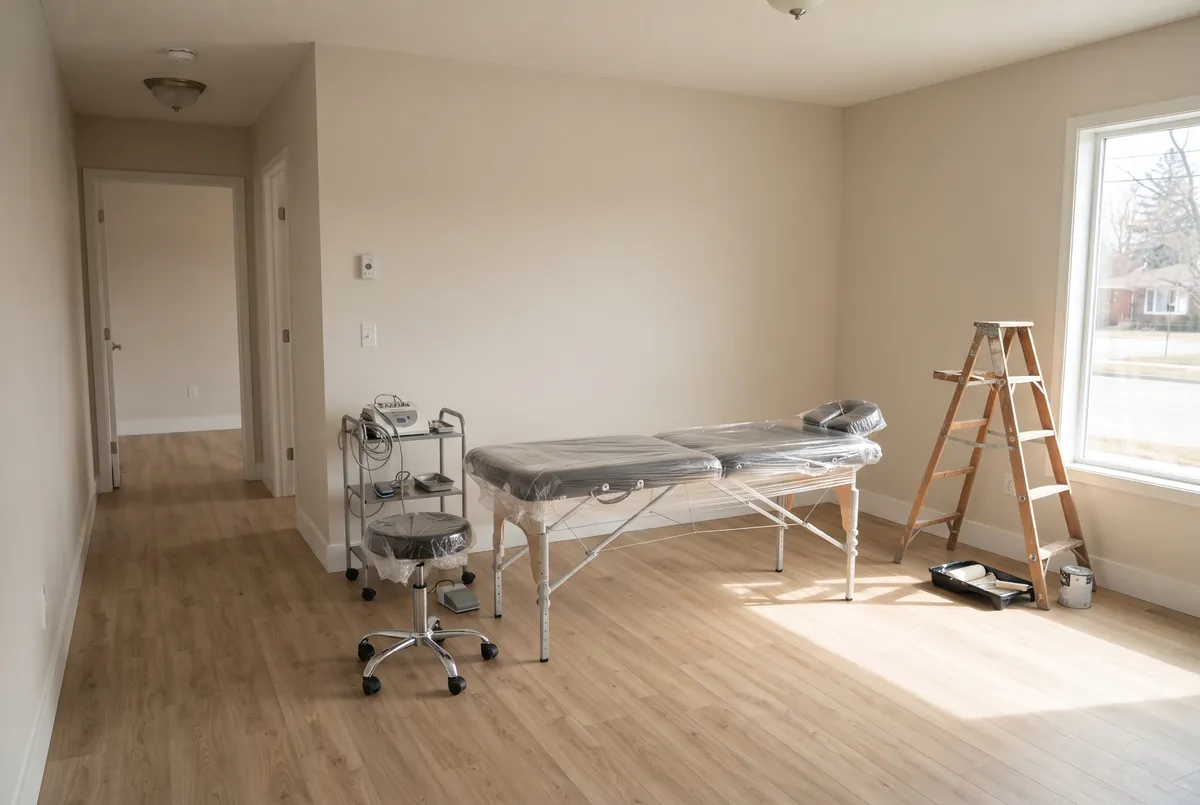
The treatment space has its own rules. Some licensing states license the establishment separately from the practitioner and inspect it before you open. Requirements can cover a hand sink in the room, surfaces that can be disinfected, sterilization equipment, sharps containers, and a contract for medical waste pickup. If you plan to work from home, zoning and homeowner association rules come into play as well. The legal checklist for a home electrolysis studio covers those questions in order. Ask about establishment rules before you sign a lease, because a room that cannot pass inspection is an expensive mistake.
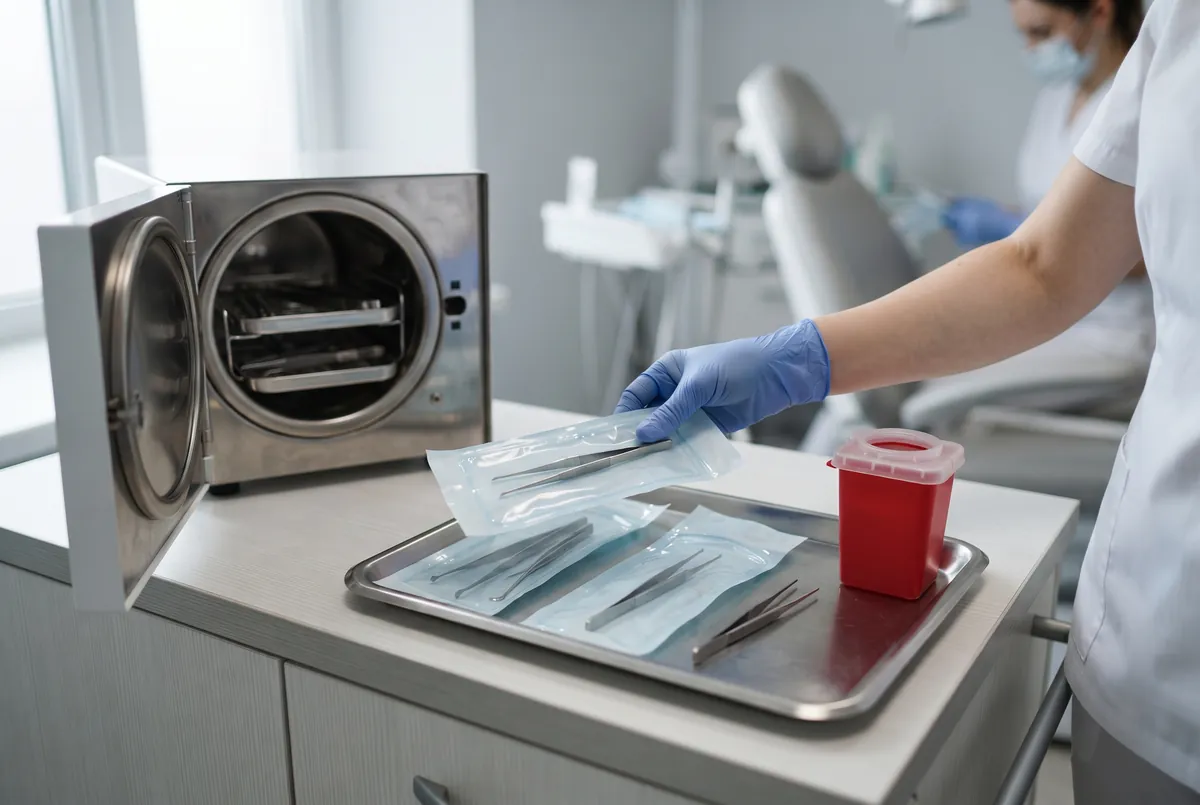
Finally, think about your clients on both ends. Electrolysis is a long course of treatment, and the people you leave behind are in the middle of it. Give them notice, a written summary of their treatment settings and progress if they want one, and referrals to practitioners you trust. Store or transfer client records according to the rules of the state you are leaving, and keep them secure. In the new state, your equipment, sterilization routine, and forms may need to be adjusted to local requirements. Have your epilator and autoclave serviced after the move, and run your sterilizer through its monitoring routine before the first client lies on the table.
Step-by-Step Checklist and a Realistic Timeline
Every move is different, but the order of the steps is nearly always the same. I describe the timeline in qualitative terms on purpose. Processing speed depends on the board, the season, how complete your file is, and how quickly third parties respond, and no article can promise a date. What you can control is sequence. The steps that depend on other institutions go first, the steps that cost money and cannot be undone go last, and nothing that involves touching a client happens before the license is issued. Use the list below as a working plan and adjust it to what your destination board tells you.
- As soon as a move is likely: identify which direction your move takes, read your destination's page in the licensing hub, then read the board's own statute, rules, and application instructions.
- Contact the board in writing: describe your license, training, and exam, and ask which route applies to you, which documents are required, and if any temporary permit exists. Save every reply.
- Request third-party documents: license verification from every state where you have held a license, official transcripts, and exam score reports. These take the longest, so order them first.
- Assemble your own documents: identification, education proof, experience evidence, continuing education certificates, and credential copies.
- Close any gap: if the board requires added hours, an exam, or a state law test, schedule them, and confirm any school is board approved before enrolling.
- Submit a complete application: one full packet is faster than a partial one followed by corrections. Keep copies and proof of delivery.
- Keep your current license active: renew on schedule and continue working where you are licensed for as long as you can.
- Prepare the business: insurance, entity registration, local licenses, the treatment space, and any establishment inspection.
- Wait for the license in hand: confirm it appears in the board's public lookup, then schedule your first clients.
- After opening: note the renewal date and continuing education rules for every license and credential you now hold.
In qualitative terms, a move between two licensing states with matching requirements and a clean file is the shortest case, and it is mostly a matter of waiting for verifications and a review. A move that requires an exam takes longer, because exam dates are set by the board or testing company and you must be approved before you can sit. A move that requires additional school hours is the longest, since you have to enroll, attend, finish, and then apply. If you take one planning rule from this section, start the paperwork well before the moving truck, and assume that the slowest document sets the pace for the entire file.
People also lose time to avoidable mistakes. They send copies where originals or sealed documents were required. They leave a question blank instead of writing that it does not apply. They forget a license held long ago in another state. They rely on a phone conversation and have nothing in writing when a different staff member reads the file. They pay for a course before confirming the board will credit it. A careful applicant treats the instructions as a checklist, answers every question fully, and follows up politely at reasonable intervals. Reviewers handle a large number of files, and a complete, well organized one is simply easier to approve.
Your Next Step
If a move is on your horizon, do three things this week. Open the licensing hub, find your current state and your destination, and decide which of the three directions you are facing. Request your license verification instructions and an official transcript, so the slowest documents are already in motion. Then write to the destination board with the questions above. If your theory needs refreshing before an exam, our online electrolysis theory course is built for that purpose, with the clear understanding that it supports your preparation and does not replace in-person hours or a state license. A move handled in this order is slow, but it is rarely a surprise.
State Requirements
State licensing guides
Hours, exams, fees, and the licensing board differ by state. Open your state for the current requirements.
Looking for a practitioner or a program near you? Browse electrologists by state and city or beauty schools by state.
Common Questions
FAQ
Not in the literal sense. A license stays with the state that issued it. In a new licensing state you apply for a new license, usually through endorsement or reciprocity if you already hold one elsewhere, or through examination if you do not qualify for those routes. The board compares your training, exam, experience, and standing with its own requirements. The outcome depends on that comparison, so read the destination board's rules and ask staff in writing which route fits your background before you plan around a specific opening date.
Reciprocity, strictly speaking, is a mutual agreement between two states to accept each other's licensees. Endorsement is an individual review: the new board looks at your record and decides if it is equivalent to its own standard, with no agreement between states required. In electrology, endorsement is the more common mechanism, and many boards use the two words interchangeably. What matters is the list of things you must prove, which you will find in the application instructions and the board's rules, not in the name of the route.
Our licensing hub separates states with a dedicated electrologist license from states without one. Texas, New York, and Pennsylvania are examples our pages list in the second group, while California, Florida, and Ohio are examples in the first. Laws change, and a state without a dedicated license may still regulate the service through local business, health, or zoning rules. Check your state's page in the hub, then confirm the current position with the state board or health department before you rely on it.
It depends on the state, and you should prepare for a demanding answer. Endorsement compares licenses, so without a license the board usually reviews you as a new applicant and looks at your formal education and exam. Some states give weight to documented practice and some do not. If your training came from a structured program with a transcript, the board has something to credit. If it did not, you may need to complete an approved program in the new state before you can apply.
In a state that licenses electrologists, no. A pending application and a license from another state do not authorize you to perform electrolysis there. Some boards issue a temporary or provisional permit with conditions, and many do not, so ask. Without a permit, use the waiting period for legal tasks: setting up the business, preparing the room, studying for any required exam, and building referral relationships. Apply as early as the board allows so that most of the waiting happens while you are still working in your current state.
No. The Certified Professional Electrologist credential is a national professional certification, and it goes with you when you move, but it is not a state license. In a licensing state you still need that state's license to treat clients. A board may consider the credential as part of its review, and some states use the same organization's exam for licensure, which you should confirm with the board. In a state without a dedicated license, the CPE is a useful independent proof of knowledge for clients and insurers.
Ask the board how a shortfall can be made up, because the options differ. Some boards allow documented work experience to offset missing hours, some require the remaining hours at a board approved school, some credit hours from a related license, and some require the full standard with no substitution. Get the answer in writing. If you need school hours, confirm with the board that the program is approved and ask the school to evaluate your transcript before you enroll. Online theory helps you prepare but does not count as in-person clinical hours.
In most cases, yes. An active license in good standing keeps the endorsement route open if you move again, and it is far easier to renew on schedule than to reinstate a lapsed license later. This matters most when your new state has no dedicated electrologist license, because the old license may be the only state credential you hold. Check what your original state requires for renewal from out of state, including continuing education, and keep meeting those requirements for as long as you may need the license.
Keep Reading
Related Guides


