Electrolysis
How to Choose an Electrolysis School: What to Check First
Quick answer
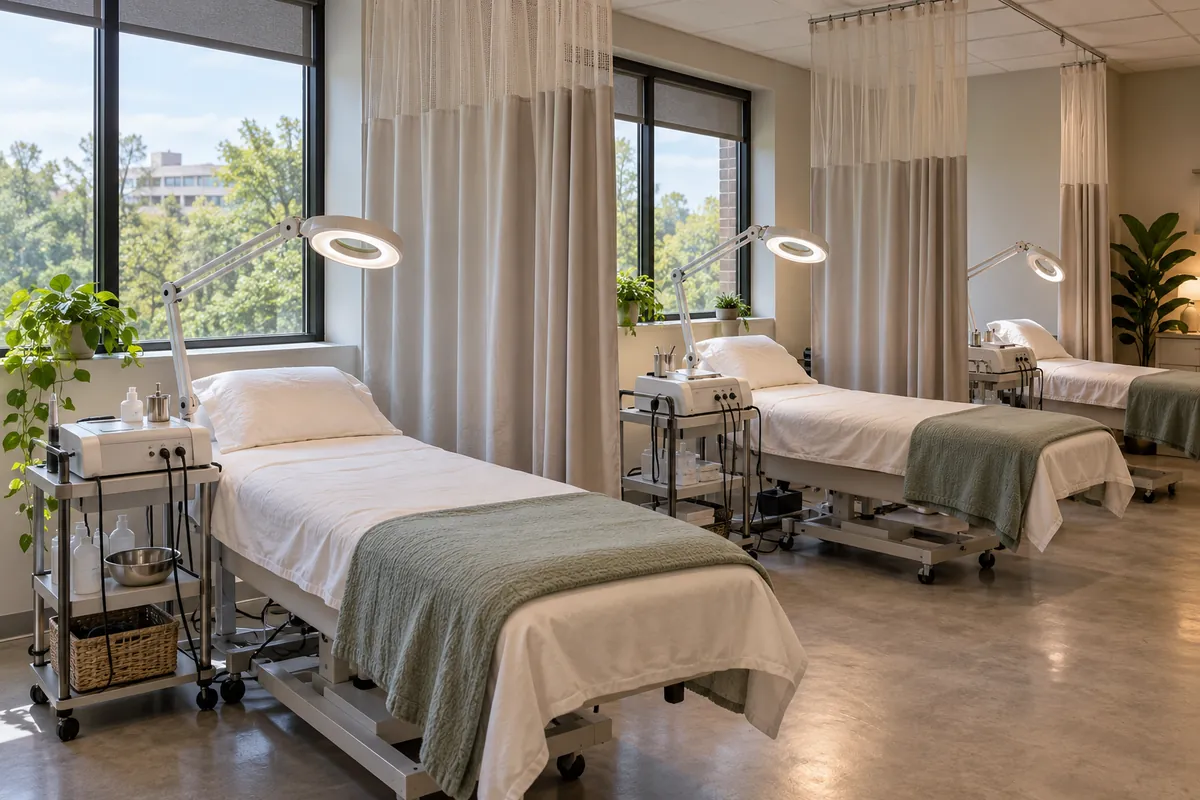
Choose an electrolysis school by first confirming with your state board that the program is approved for licensure where you plan to work. Then compare supervised hands-on practice on real clients, the modalities and body areas you will treat, instructor experience, equipment and sanitation, schedule, and the full itemized cost. Tour while the student clinic is running and speak with recent graduates before you sign anything.
Most people start by typing "electrolysis school near me" into a search bar, and most are surprised by how short the list is. Electrology is a small profession, schools are few, and in many parts of the country the nearest program is a long drive or a temporary move away. That scarcity changes how you should choose. With hair or esthetics programs you can compare several campuses in one afternoon. With electrolysis you may be comparing two or three schools in different cities, and the wrong choice costs months of your life and a tuition bill you cannot get back.
I have trained, worked beside, and later hired electrologists for more than twenty years, and I can usually tell within the first hour of watching someone work what kind of school they came from. Good schools produce graduates who insert calmly, read skin, and know why they picked a setting. Weak schools produce graduates who memorized exam answers and are afraid of the upper lip. This guide is the checklist I would hand a friend: what to verify before anything else, what to look at on a tour, which questions get honest answers, and which warning signs mean you should keep looking.
Start with your state, not with the school
The first question is not which school is best. It is which schools count in the state where you plan to work. Electrology is regulated state by state. Many states license electrologists through a board of cosmetology, a medical board, a health department, or a dedicated electrology council, and each of those sets its own rules about approved programs, required training, and exams. Some states have no electrology license at all, which creates a different set of decisions. A beautiful school that your state board does not recognize can leave you with a certificate you cannot use toward a license.
So before you fall for a website, read the rules for your state. Our state-by-state electrolysis licensing hub is the fastest way to see how your state handles approved schools, required training, and examinations, and each state page points to the official regulator. Then confirm on the regulator's own site, because rules change and the board is the only source that matters when your application is on someone's desk. If you are not sure whether your state licenses the profession at all, the sibling guide on whether you need a license to do electrolysis walks through the main patterns.
People who plan to move deserve a special warning. If you train in one state and intend to work in another, the destination state decides whether your education counts. Some states accept out-of-state training that meets their own standard, some ask for extra documentation, and some require additional training or an exam. Ask the destination board in writing before you enroll anywhere, and keep the reply. The school's admissions office will often say "our graduates work all over the country," which may be true and still tells you nothing about your particular state.
Verification takes less than an hour and saves the most expensive mistake in this whole process. Start on the website of your state's regulator and look for a list of approved or licensed electrology schools. Many boards publish one. If the school you are considering appears there under the same name and address, save a copy of the page. If you cannot find a list, call or email the board and ask a plain question: is this school, at this address, currently approved to provide electrology training that qualifies for licensure in this state.
Notice the words that schools use about themselves. "Licensed," "approved," "accredited," "certified," and "registered" mean different things. A school can hold a state license to operate as a private postsecondary school, which is about consumer protection and business practices, and that is separate from the licensing board accepting its curriculum toward your professional license. Accreditation by a recognized accrediting agency is a third thing, and it matters mostly for federal financial aid. None of these substitutes for the others. Ask the school which ones it holds, then check each claim with the body that grants it.
Also check standing, not only existence. Ask the board whether the school has any open disciplinary matters, and search the school's legal name along with the name of the state's postsecondary education agency. A school that changed owners or moved recently should be able to show that its approval followed it to the new owner and address. Approval that is "in process" or "being renewed" is a reason to wait. I have seen students finish programs during a lapse and spend months sorting out whether their training counted.

Clinical hours: the part that makes you an electrologist
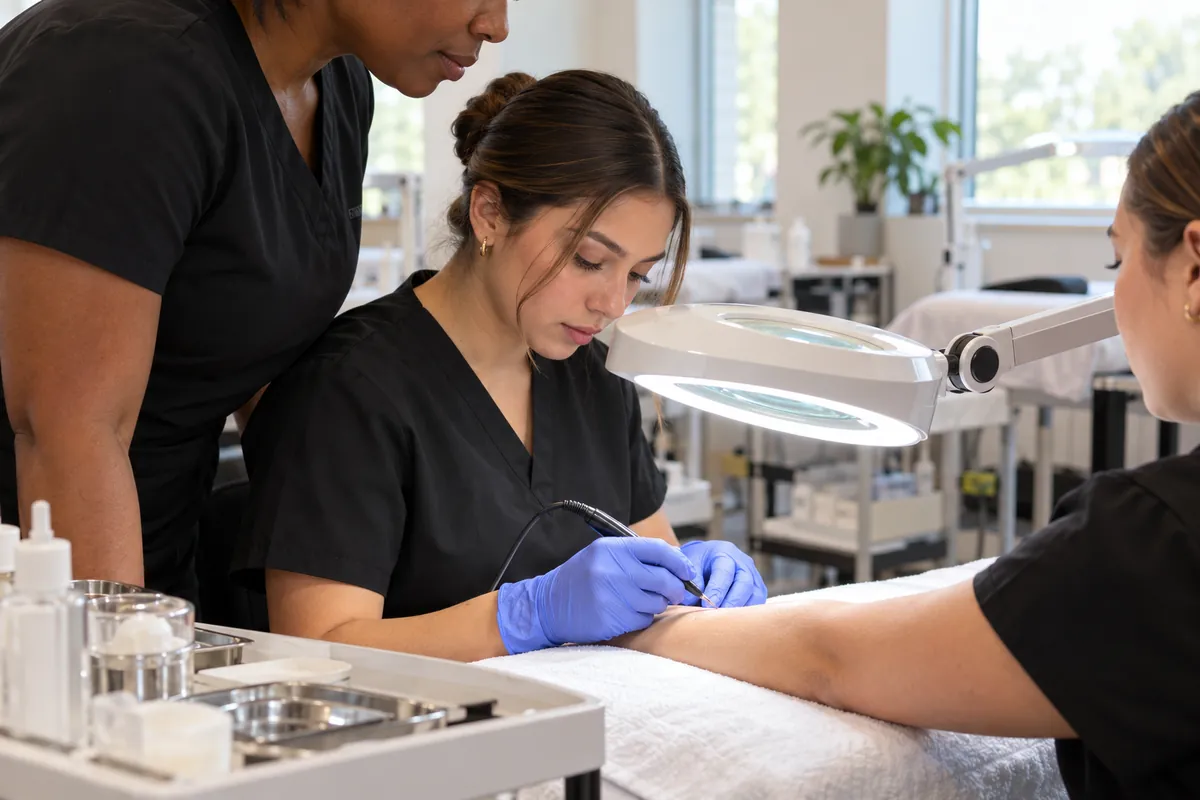
Electrolysis is a hand skill. Theory explains why the current destroys the follicle, but only repetition under supervision teaches your hand to find the follicle, slide in without resistance, and stop at the right depth. So the most important thing a school sells is supervised practice on real people. When you compare programs, look past the total length and ask how the training divides between classroom theory and hands-on clinic time, and how much of that clinic time is spent treating actual clients instead of watching demonstrations.
Ask where the clients come from. A healthy school runs a student clinic that the public books at a reduced rate, which means a steady flow of different skin types, hair types, and body areas. A school with no client flow leaves students practicing on each other. Practicing on classmates is a normal and useful first stage, but if it is the only stage, you will graduate having treated the same few forearms and legs. Ask directly: by the end of the program, how many different clients does a typical student treat, and on which areas.
Then ask about variety by area and hair type. Coarse chin hair in a client with a hormonal pattern, fine upper lip hair, curved follicles in tightly curled hair, underarms, bikini line, eyebrows, and the beard area of a transgender client all behave differently. A graduate who has only worked legs and arms will meet the face on their first paid day, on the area where clients are most anxious and the skin is least forgiving. A good program rotates students deliberately and tracks which areas each student has completed.
Supervision quality matters as much as quantity. Ask how many students one instructor supervises on the clinic floor at a time, and what "supervised" means in practice. In strong programs the instructor is moving between stations, looking through the student's magnification, correcting hand position, and checking the skin reaction. In weak programs the instructor is at a desk in another room and available "if you need anything." A beginner does not know what they need. They need someone to see the mistake they cannot feel yet.
Which modalities the school teaches
There are three recognized modalities of electrolysis: galvanic, thermolysis, and blend. Galvanic uses direct current to create a chemical reaction in the follicle. Thermolysis uses high-frequency current to produce heat. Blend combines the two. Each has situations where it shines, and a working electrologist should be able to choose among them based on the hair, the skin, and the client's tolerance. If you want the background before you tour, our guide to galvanic, thermolysis, and blend explains how each works.
Ask every school which modalities students actually perform on clients, not which ones appear in the textbook. Some programs teach thermolysis almost exclusively because it is fast and suits a busy clinic. Others lean heavily on blend. Neither is wrong, but a graduate who has only ever used one modality is limited when a client's skin or hair does not respond well to it. You also need to know what your state's practical exam, if it has one, expects you to demonstrate. Training that does not match the exam means paying for extra preparation later.
Go one level deeper and ask how the school teaches students to choose settings. The answer you want sounds like a process: start conservatively, test, watch the skin, feel how the hair releases, adjust. The answer you do not want is a chart taped to the machine that says which numbers to use on which area. Charts are a crutch. Skin moisture, hair diameter, and follicle depth vary from person to person, and the whole craft is learning to read those variables. A school that teaches reasoning produces electrologists who can work on any machine.
Equipment and the training environment
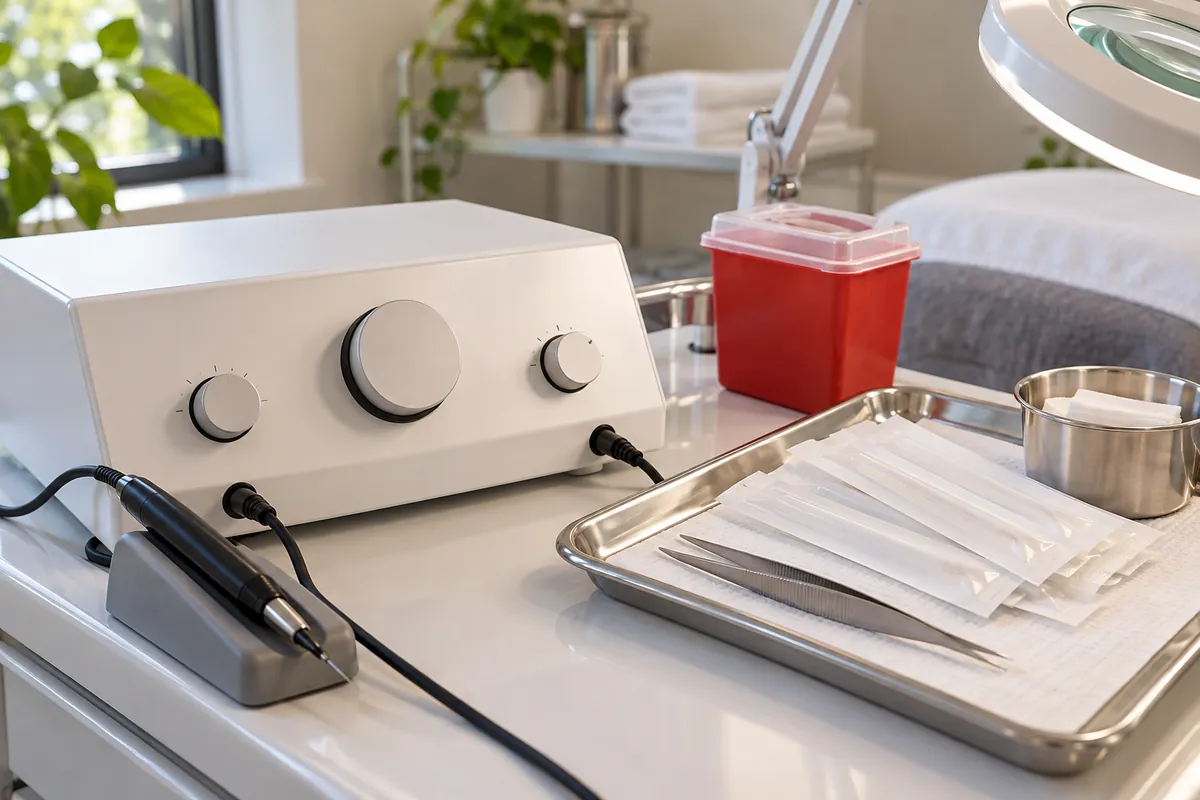
You do not need a school full of the newest machines. You need working, well-maintained epilators of the kind used in real practices, enough of them that students are not waiting for a turn, and ideally more than one type so you learn that principles carry over between brands. Ask what machines are on the floor, whether students rotate between them, and whether both older manual-style units and computerized units are available. Learning on a simple machine first often builds better understanding than starting on one that automates every decision.
Look closely at magnification and lighting, because they shape your posture and your accuracy for the rest of your career. Schools may use magnifying lamps, loupes, or stereo microscopes. Ask whether students get to try more than one, since many practices today use loupes or microscopes and employers notice graduates who are comfortable with them. Check the treatment tables and operator stools too. Adjustable furniture is how you learn ergonomic habits, and a school that seats students on fixed chairs is teaching them to hunch.
Sanitation is where a tour tells you the truth. Electrolysis involves a probe that enters the follicle, so infection control is central to the profession. Look for single-use sterile probes opened in front of the client, a sharps container at every station, a functioning sterilizer for reusable instruments such as tweezers with a routine for monitoring it, hand-washing sinks that are actually used, and surfaces that are disinfected between clients. If the student clinic is sloppy about this, the school is teaching sloppy habits, and your state inspector will not be as forgiving later.
Finally, ask what you are expected to buy. Many programs require a student kit: probes in several sizes, tweezers, sometimes loupes, textbooks, and uniforms. A kit is normal. What you want is a written, itemized list and a clear statement of whether the kit is included in tuition or billed separately, and whether you may source items yourself. For how the whole budget typically breaks down, see our companion guide on what to expect from electrolysis school cost.
Instructor experience: who will actually teach you
In a small profession, one instructor can make or break a program. Ask who teaches the clinical portion, how long they have practiced as a licensed electrologist, and whether they still treat clients. An instructor who has years of chair time has seen the cases that textbooks skip: the client whose skin reacts on the third visit, the distorted follicle after years of tweezing, the regrowth pattern that means the insertions were shallow. That experience is what turns a correction into an explanation you remember.
Check credentials through the state, not the brochure. In states that license electrologists, you can usually look up a practitioner's license status on the regulator's public search. Some states also have a separate instructor license or instructor requirements, so ask the board what an electrology instructor must hold and confirm that the school's instructors hold it. Voluntary professional certifications exist in the field as well. They show commitment to continuing education, but they are an addition to a state license, never a replacement.
Ask about continuity. Who covers the clinic floor when the lead instructor is sick or on vacation? How long has the current instructor been with the school? High turnover is a quiet warning sign, because each new instructor restarts the relationship and often the method. And ask to meet the instructor before you enroll, not just the admissions representative. Ten minutes of conversation shows you whether this person explains things clearly and whether they welcome questions. You will spend months being corrected by them, so temperament counts.
The theory curriculum and how it is delivered
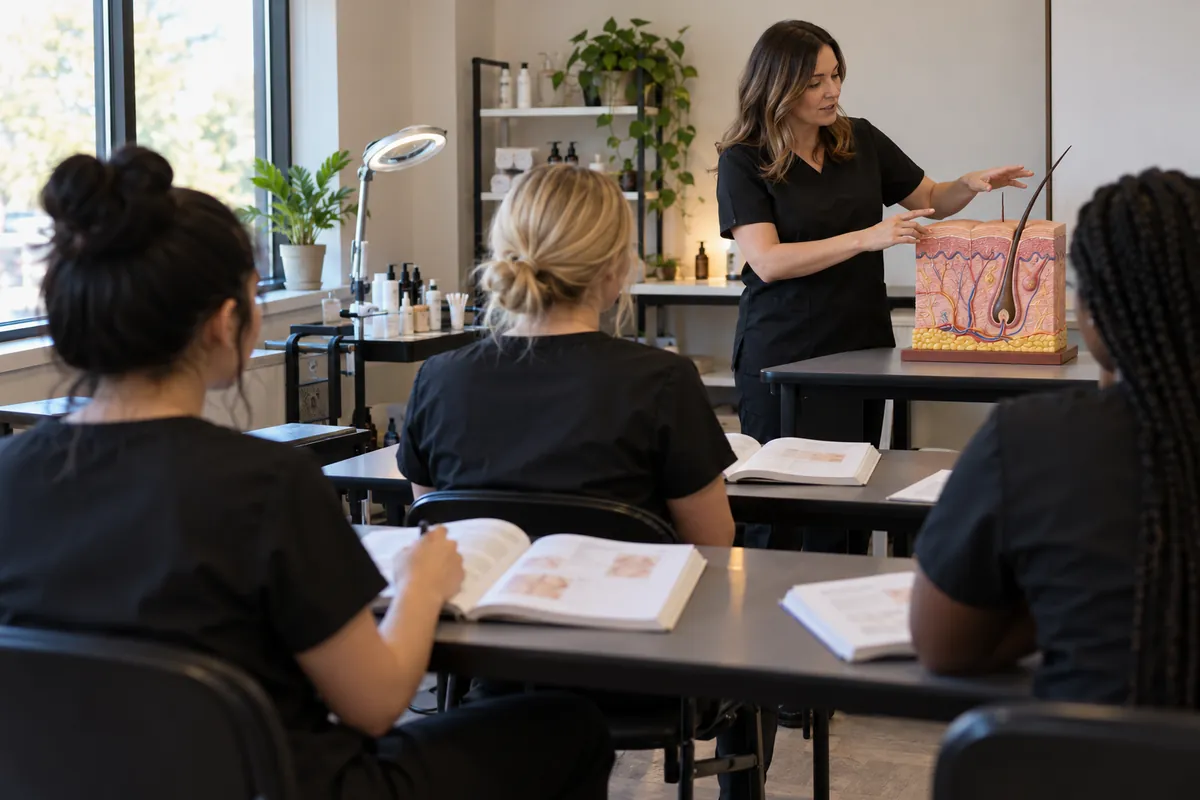
A complete electrology curriculum covers more than hair removal. Expect anatomy and physiology of the skin and hair, the hair growth cycle, the endocrine system and hormonal causes of hair growth, basic electricity as it applies to the epilator, bacteriology, infection control and sterilization, skin conditions and contraindications, client consultation and record keeping, and the laws and rules of your state. Ask for the syllabus. A school that cannot produce a week-by-week outline is improvising.
Ask how theory is delivered and tested. Some schools teach theory in a classroom, some offer part of it online where the state allows, and many use a mix. What matters is that theory is tied to what you do in clinic that week, and that the school tests you regularly instead of saving everything for the end. Ask whether the program prepares you for the specific written exam your state uses, and how graduates have done on it. If the school quotes a pass rate, ask how it was calculated and over what period.
Many students find the theory load heavier than expected, especially those who have been out of school for years. That is one reason people study theory ahead of time. A structured online electrolysis theory course lets you learn the anatomy, hair biology, electricity, and sanitation concepts at your own pace, so that when you reach the clinic floor your attention goes to your hands. To be clear about its limits: online theory does not replace the in-person training hours your state requires, and it does not grant a license. It makes the required training easier to absorb.
Schedule, format, and the distance problem
Because schools are scarce, logistics decide more enrollments than quality does. Be honest about what you can sustain. Ask whether the program runs full time, part time, evenings, or weekends, and whether you can switch tracks if your work schedule changes. Ask about the attendance policy in detail: what happens if you miss a week for illness, whether missed clinic time can be made up, whether make-up time costs extra, and whether there is a deadline by which you must finish. State boards count hours precisely, and so do schools.
If the school is far from home, compare the real options. Some students commute a long distance a few days a week. Some rent a room near the school and attend in an intensive block. Some relocate temporarily. Intensive formats get you finished sooner but compress the learning, and hand skills benefit from sleep and repetition over time. If you choose an intensive program, ask how the school structures the days so that students are not doing clinic work while exhausted, and plan extra practice after you graduate, within whatever your state allows.
Ask whether any portion may be completed remotely and get the answer in terms of your state's rules. Where a state permits part of the theory to be delivered by distance learning, a hybrid program can cut travel substantially. Where it does not, a school offering "mostly online" training for a license is offering something the board may not accept. The timeline varies a great deal with format and state requirements, and our guide on how long it takes to become an electrologist explains what speeds it up and what slows it down.
Questions to ask on a school tour
A tour is an interview, and you are the one hiring. Go on a day when the student clinic is running, arrive a little early, and watch before you talk. Then ask the same questions at every school so you can compare answers side by side. Write the answers down in front of the person. People are more careful with their words when they see a pen moving. These are the questions I would bring.
- Approval: Which state body approves this program for licensure, and where can I verify that today?
- Clinic time: How is the program split between theory and supervised hands-on practice, and when do students start working on clients?
- Client flow: Where do practice clients come from, and what happens on days when few are booked?
- Areas: Which body areas will I have treated by graduation, and is facial work guaranteed?
- Modalities: Which modalities will I perform on clients, and do they match the state practical exam?
- Supervision: How many students does one instructor supervise on the floor at a time?
- Instructor: Who teaches clinic, what license do they hold, and do they still treat clients?
- Equipment: Which machines and which types of magnification will I learn on?
- Costs: May I see an itemized list of tuition, kit, books, fees, and exam costs in writing?
- Refunds: What is the written refund and withdrawal policy, and what happens to my completed hours if I leave?
- Exam: How do you prepare students for the licensing exam, and how have recent graduates done?
- Graduates: May I speak with two or three recent graduates of my choosing?
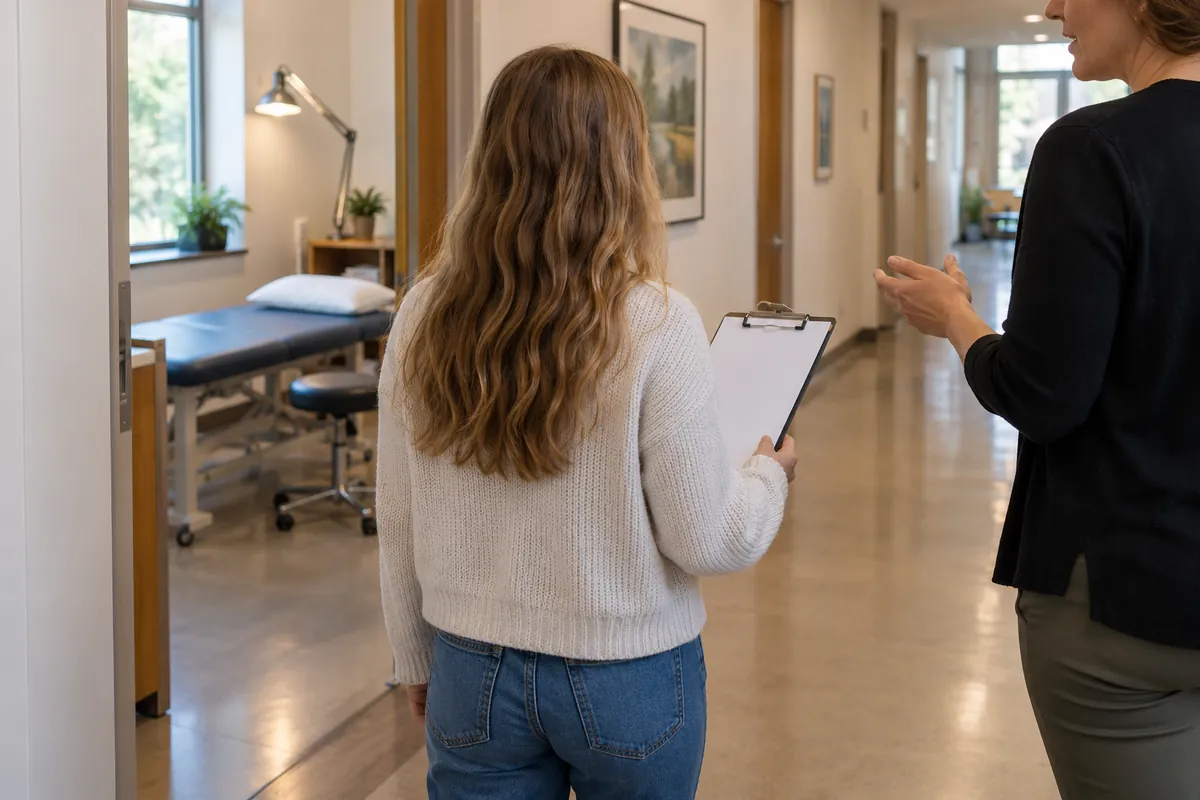
Pay attention to how the answers are given, not just what they are. A confident school answers plainly, admits its limits ("we mostly teach thermolysis and blend, galvanic alone is covered briefly"), and hands you documents without being pushed. A weak school answers a different question from the one you asked, gets vague about numbers of clients, or says the director will get back to you and then does not. If you can, talk to a current student out of earshot of staff and ask one thing: what do you wish you had known before you enrolled.
Red flags that should make you pause
The clearest red flag is a promise that sounds too convenient. Be careful with any program that claims you can become a licensed electrologist entirely online in a state that requires in-person training, that says its certificate "works in every state," or that describes its own certificate as a license. A license comes from a state. A school can only prepare you for it. Equally suspicious is a promise of specific income after graduation. Earnings depend on your location, schedule, pricing, and how fast you build a clientele, and nobody can guarantee them.
Pressure is the second category. Legitimate schools have enrollment dates, but they do not need you to sign today. Watch for "only one seat left" urgency, discounts that expire at the end of the tour, reluctance to let you take the enrollment agreement home, and requests for a large non-refundable payment before you have seen the refund policy. Read the whole agreement, including what happens if the school closes or the instructor leaves mid-program. If something was promised verbally, ask for it to be added in writing.
The third category is what you see with your own eyes. An empty clinic on a weekday, with no clients and students scrolling on phones, means you will not get the practice you are paying for. Dusty machines, probes that are reused, no sharps containers, or tweezers sitting in an open jar mean poor standards. An instructor who is rarely present, a school that will not let you observe, or one that cannot connect you with a single recent graduate is hiding something. Reviews can help, and our guide on how to evaluate electrolysis course reviews explains how to tell real ones from marketing.
Reading the price and the contract
Tuition figures are hard to compare because schools bundle differently. One quote includes the kit, books, and exam preparation, another lists tuition alone and adds the rest later. Ask every school for the total cost to complete the program and sit for the exam, itemized, and compare totals. Then add your own costs: travel or housing, lost work hours, state application and exam fees, and the equipment you will need afterward. I am deliberately not printing numbers here, because they vary widely by state and by school and go out of date quickly.
Ask how you can pay. Some schools qualify for federal student aid, which depends on accreditation and program length, and many small electrology programs do not. Others offer payment plans, and some private lenders or workforce programs may help. A payment plan run by the school is not the same as a loan from a lender, so read who you owe and what happens if you withdraw. If the school mentions scholarships or grants, ask for the application details in writing instead of taking it as a general reassurance.
The refund policy deserves its own careful reading. Life interrupts long programs: a family illness, a job change, a move. You need to know how much you would owe if you left at different points, and whether the hours you completed will be certified so another school or the board can credit them. States often regulate school refund policies, and the state's postsecondary education agency can tell you the minimum protections. A school that follows the rules will have a clear, boring, written policy and will not mind you reading it slowly.

Talk to graduates and working electrologists
The best information about a school comes from the people it produced. Ask the school for graduate contacts, but also find some on your own. Search for licensed electrologists in the area, look at where they trained, and send a short, polite message asking whether they would share ten minutes about their school. Most electrologists remember how hard it was to get clear information and are generous with newcomers. Ask what the school did well, what they had to learn on their own afterward, and whether they would enroll again.
Local practice owners are another honest source. They see the results. Ask an owner which schools' graduates they would hire and why. You will often hear something specific, such as "their graduates are solid on sanitation but slow on the face," and that tells you what to supplement. While you are at it, consider booking a treatment for yourself with a graduate of the school you are considering. Lying on the table, you feel insertions the way a client does, and you learn what good technique feels like. That experience will make you a better student.
Use these conversations to check your own expectations about the work too. If you have not yet spent time with a practicing electrologist, do it before you pay a deposit anywhere. The job is quiet, precise, and repetitive in a way some people love and others find draining. Our guide on what an electrologist does describes a normal working day, and it is worth reading before you commit months of training to it.
When there is no good school nearby
Sometimes the honest result of your research is that the nearest approved school is far away, or that the only nearby program is one you do not trust. You still have options. First, widen the map and look at approved schools in neighboring states, then ask your own board whether it accepts that training. Second, ask your board whether the state permits any alternative route, such as an apprenticeship under a licensed electrologist. Some states do and many do not, and only the board can tell you.
Third, use the waiting time well. If the next start date is months away, or you need to save for a temporary move, you can build the theory foundation now so the in-person period is shorter on stress and richer in practice. Study skin and hair anatomy, the growth cycle, how each modality works, and infection control. Get treatments yourself. Visit a practice. Students who arrive with the vocabulary already in place spend their clinic time on technique instead of on catching up with the textbook.
What you should not do is settle for an unapproved shortcut because it is closer. A weekend workshop, a machine manufacturer's training day, or an online certificate may all teach something real, but none of them replaces a state-approved program where a license is required. If you spend money there first, you will spend it again at an approved school. Choose the route your board recognizes, even when it is the inconvenient one, and plan the logistics around it.

Compare your shortlist, then prepare for day one
Once you have toured or interviewed two or three schools, put the answers in a simple table with one column per school and one row per question from the tour list. Seeing the answers next to each other removes the glow of a friendly admissions conversation. Usually one school is clearly stronger on the things that matter most: verified approval for your state, real client flow, facial work, close supervision, and an instructor with long chair experience. Everything else, including the building, the website, and the brand of machine, is secondary.
Weigh the factors in a sensible order. Approval in your state is pass or fail: a school that fails it is off the list no matter how good it looks. After that, I would rank supervised practice on real clients first, the instructor second, and modality and area variety third. Schedule and distance come next, because a program you cannot attend consistently will not make you good. Price belongs last among schools that pass the earlier tests. The cheaper program is not cheaper if you graduate unable to work on a face.
If two schools are close, choose the one where you felt comfortable asking questions. Learning a hand skill as an adult means being corrected many times a day, and it goes better in a room where that feels normal. And if neither school satisfies you, it is fine to wait a term, visit again, or look farther afield. You will carry the habits you form in school for the rest of your working life, and waiting for the right program is a small cost compared to unlearning bad ones.
Once you have enrolled, the weeks before a program starts are useful if you treat them as preparation. Read your state's rules once more so you know exactly what the board will ask for at the end: transcripts, hour certifications, exam applications, and any background or health documentation. Create a folder, paper or digital, and keep every document the school gives you, starting with the signed enrollment agreement. Students who track their own hours and paperwork from the first day rarely have problems at licensing time.
Prepare your body and your eyes. Have your vision checked and tell the optometrist you will be doing fine close work under magnification, since a small correction makes a large difference at the table. Start paying attention to how you sit. Electrologists work for long stretches with arms slightly raised and head tilted forward, and neck and shoulder strain is the profession's most common complaint. Gentle strengthening and stretching before school begins makes the first weeks of clinic much more comfortable.
And begin the theory. Even an hour a few evenings a week on skin structure, the hair growth cycle, and basic electrical concepts will change how the first month feels. Terms like papilla, anagen, and high frequency will already mean something when the instructor uses them, and you will be able to ask better questions. That is the single cheapest way to get more value out of the tuition you are about to pay.

Your next step
Choosing an electrolysis school comes down to a short sequence. Read your state's requirements on the electrolysis licensing hub and confirm them with the regulator. Verify that each school on your list is approved for licensure where you will work. Tour during clinic hours with the question list above, and write the answers down. Talk to graduates. Compare totals, not headline tuition. Then pick the program with the strongest supervised practice that you can realistically attend.
While you wait for a start date, you can begin with theory today. Our electrolysis theory course covers the science, safety, and terminology that schools and state exams build on, in a format you can study around work and family. It does not replace your state's in-person hours or its license, and it is not meant to. It is meant to make you the student who walks into clinic already understanding what the instructor is talking about, so every supervised hour goes into your hands.

State Requirements
State licensing guides
Hours, exams, fees, and the licensing board differ by state. Open your state for the current requirements.
Looking for a practitioner or a program near you? Browse electrologists by state and city or beauty schools by state.
Common Questions
FAQ
Start with your state regulator, since many boards publish a list of approved electrology schools. Professional associations in the field also keep school directories, though some listings are paid placements, so treat them as a starting point. Because schools are scarce, widen your search to neighboring states and then ask your own board whether it accepts that training. Our electrolysis licensing hub shows how each state handles approved programs.
What you need first is approval by the licensing authority in the state where you will work, because that decides whether your training counts toward a license. Accreditation by a recognized accrediting agency is a separate matter that mainly affects eligibility for federal student aid. A school can have one without the other. Ask the school which approvals it holds, then confirm each one with the body that grants it.
Theory can often be studied online, and some states allow schools to deliver part of the theory by distance learning. The hands-on clinical training cannot be done online, and states that license electrologists require in-person supervised practice. An online course is a good way to prepare, but it never replaces required hours or grants a license. See school or online theory first for how to combine the two properly.
After confirming state approval, look at supervised practice on real clients. Ask how much of the program is hands-on, where clients come from, whether you will treat faces as well as bodies, and how many students one instructor supervises. A school with steady client flow and an instructor who is physically present on the clinic floor will prepare you far better than one with a nicer building and an empty clinic.
Costs vary widely by state, program length, and what the school includes, so any single figure would mislead you. Ask each school for an itemized total covering tuition, kit, books, fees, and exam preparation, then add travel, housing, lost income, and state application and exam fees. Our guide on electrolysis school cost explains each category so you can build a realistic budget.
In states without a license, training is not legally mandated in the same way, but it matters just as much for safety and for your reputation. Choose a program that would satisfy a licensing state, with real supervised clinical practice, since you may move later and clients deserve a properly trained practitioner. Check local business and health regulations as well, because cities and counties may still have rules that apply to your practice.
It helps most students. Arriving with a grasp of skin and hair anatomy, the growth cycle, basic electricity, and infection control frees your attention for the hand skill, which is the hard part. A structured electrolysis theory course is one way to do that. Keep in mind that pre-study does not reduce the in-person hours your state requires unless the board specifically says so.
The theory is manageable for anyone willing to study steadily, though the anatomy and electricity sections surprise people who expected a beauty course. The hand skill takes longer. Accurate insertions under magnification feel awkward for weeks before they become natural, and that is normal. Students who practice consistently and accept correction do well. If you are still deciding on the profession itself, read is electrology a good career first.
Keep Reading
Related Guides


