Electrolysis
Galvanic vs Thermolysis vs Blend: Electrolysis Methods Explained
Quick answer
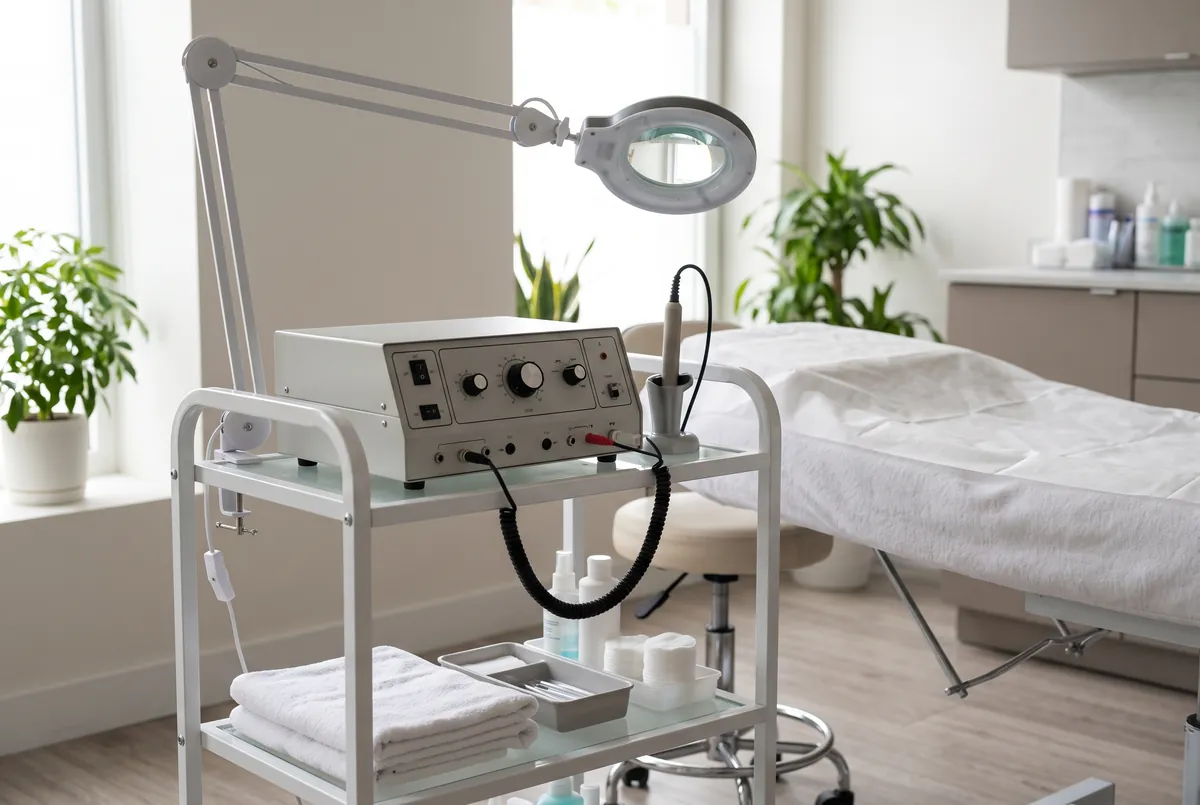
Galvanic, thermolysis, and blend are all true electrolysis and differ in the energy used. Galvanic destroys the follicle chemically with direct current and is the slowest, thermolysis uses high-frequency heat and is fastest, and blend combines both for coarse or curved follicles. No modality is best for everyone, so a good practitioner matches it to each hair.
Galvanic vs thermolysis vs blend is usually the first technical question a new client or a new student asks me, and it is a good one. All three are electrolysis. All three put a fine probe into a single follicle and destroy the tissue that grows hair. What differs is the kind of energy, how it damages the follicle, how fast it works, how it feels, and which hair and follicle types it handles best. After more than twenty years of working with all three, I think the modality matters less than most online debates suggest and more than most clients realize, because the right choice depends on the specific hair in front of the practitioner.
This guide explains each modality in plain terms: galvanic, thermolysis, flash thermolysis, and the blend. It covers how each one destroys the follicle, relative speed, sensation, the hair types and body areas each suits, how probe choice fits in, a side-by-side comparison table, what to ask your electrologist, and what students actually learn about modalities in training. I keep to well-established principles and avoid invented numbers, because settings are always adjusted to the individual client, the machine, and the practitioner's training.
What All Three Modalities Have in Common
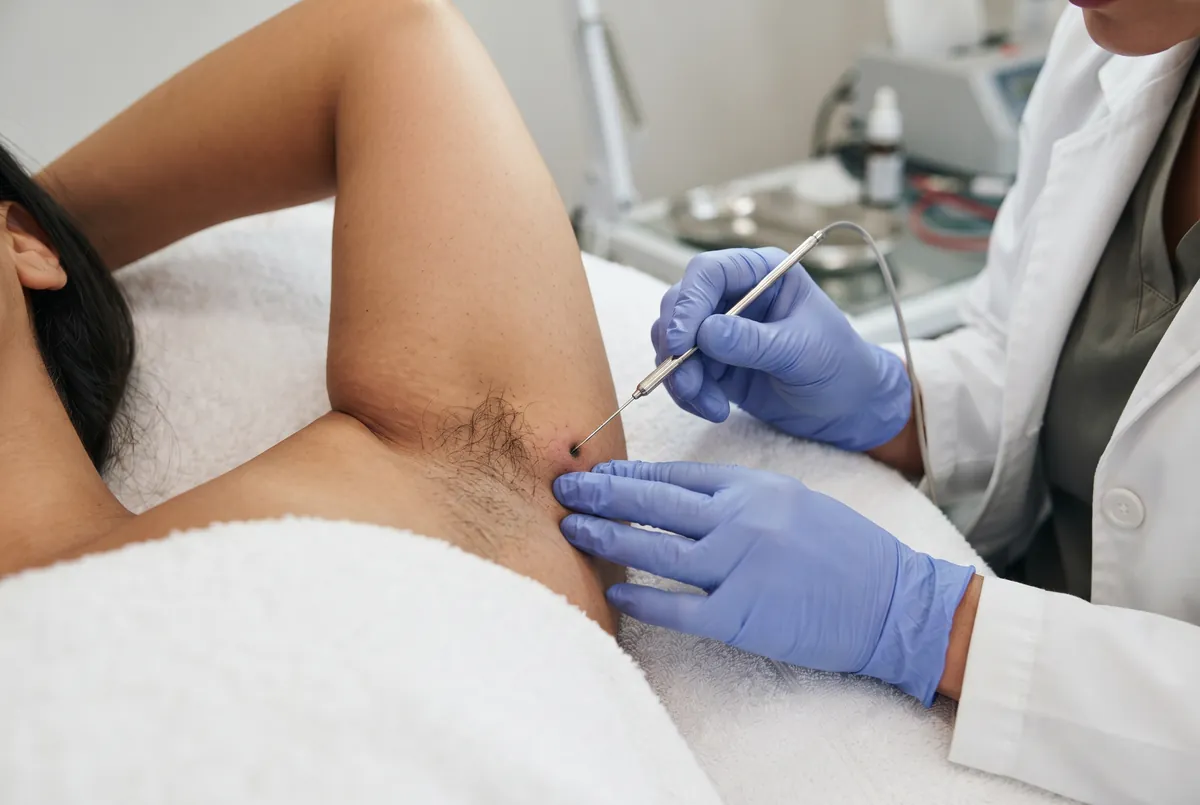
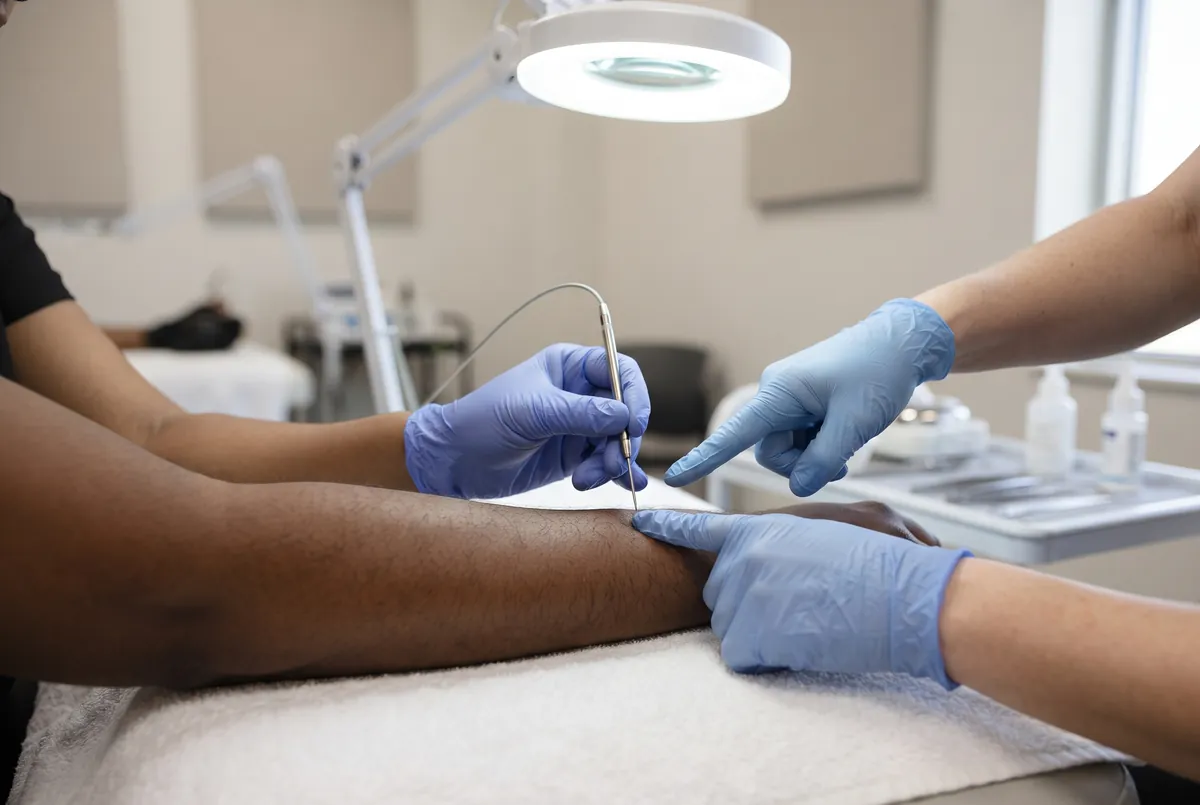
Every electrolysis modality works on the same basic idea. The practitioner slides a fine probe into the natural opening of the follicle, alongside the hair, down to the area where the hair is produced. Energy is then delivered through the probe to destroy the growth tissue in and around the base of the follicle. The skin is not pierced in the way a needle pierces during an injection; a correct insertion follows the path the hair already takes to the surface. When the follicle is treated properly, the hair slides out without resistance.
Because the energy works on the follicle directly, none of the modalities depend on pigment. Dark, blond, red, gray, and white hair are all treated the same way, on any skin tone. That independence is part of why electrolysis is the only hair removal method the FDA accepts for claims of permanent hair removal. It also means results in every modality depend on the same fundamentals: accurate insertion depth and angle, enough energy delivered to the right place, and treating hairs during the active growth phase, when the follicle is most vulnerable.
This is the point I make to every student. A practitioner with excellent insertion technique can get good results with any of the three modalities, and a practitioner with poor insertions will struggle with all of them. The modality is a tool that shapes how energy acts once it is in the follicle. It does not fix a probe placed at the wrong depth or angle. With that in mind, here is how each one actually works.
Galvanic Electrolysis: Chemical Destruction
Galvanic electrolysis is the oldest of the three modalities and the one that gives the whole field its name. It uses direct current, the steady one-directional kind. The probe acts as the negative electrode, and the client holds or wears a positive electrode, often a metal bar or a pad, to complete the circuit. When current flows, it breaks down the salt and water naturally present in the tissue around the probe, and a small amount of sodium hydroxide, commonly called lye, forms along the probe inside the follicle, together with tiny amounts of hydrogen gas.
That lye is what destroys the follicle. It is caustic, and it chemically breaks down the growth tissue it contacts. Because it is a liquid chemical rather than a zone of heat, it can spread through the moist tissue of the follicle and reach areas the probe tip does not touch directly. This is the main strength of galvanic work: it is forgiving of curved, distorted, or irregular follicles, such as those damaged by years of tweezing or waxing, where a straight probe cannot follow the follicle's exact shape.
Lye also works best in moist tissue, and the lower part of the follicle naturally holds more moisture than the upper part near the skin surface. That gradient is useful: the chemical action is strongest deep in the follicle, where the growth tissue sits, and weaker near the surface. The tradeoff is time. Galvanic is the slowest modality per follicle, because the lye has to accumulate before it does its work. Historically, some practitioners used several probes at once to make galvanic work practical on larger areas, an approach known as multi-needle galvanic.
Clients commonly describe galvanic sensation as a slow, building sting or ache that grows while the current flows, rather than a sudden snap. The practitioner controls the current and how long it runs on each follicle. When galvanic is overdone, too much lye can reach the surface, which can produce a moist, weepy reaction around the follicle opening that heals more slowly than typical redness. Pure galvanic is used less often today as a full-area method, but its chemistry is the foundation of the blend and remains valuable for stubborn, distorted follicles.
Thermolysis: Destruction by Heat
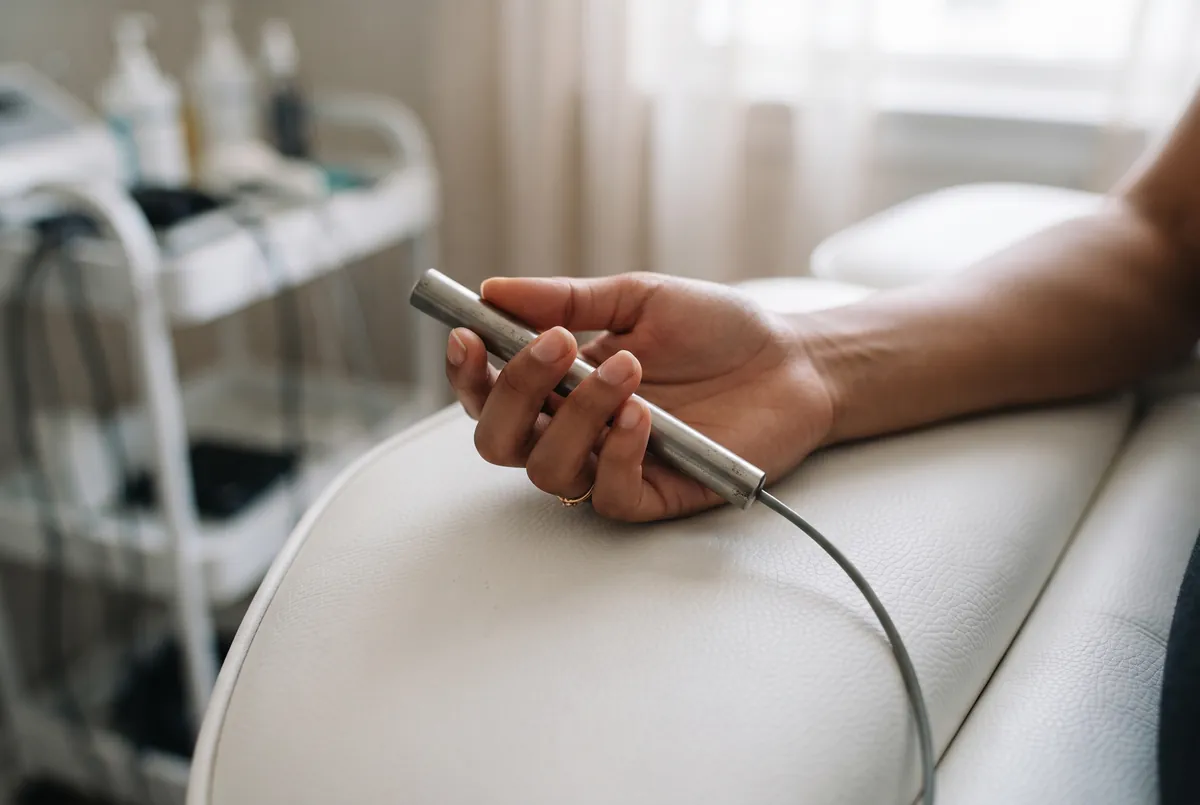
Thermolysis, also called shortwave or radio frequency electrolysis, uses high-frequency alternating current instead of direct current. The rapidly alternating energy makes the water molecules in the tissue around the probe vibrate, and that vibration produces heat. The heat coagulates the growth tissue at the base of the follicle, destroying it. No chemical is produced, and no electrode needs to be held by the client, because the energy radiates from the probe into the surrounding tissue rather than traveling through the body to a second pole.
The heat pattern is concentrated at the tip of the probe and extends upward along it as energy continues, in a shape often described in training as a teardrop. That concentration is both a strength and a limitation. It makes thermolysis fast, far faster per follicle than galvanic, and precise when the probe tip sits exactly at the base of a straight follicle. It also means the destruction happens mainly where the tip is. If the follicle is curved, or the probe stops short of the base, part of the growth tissue can be missed, and the hair may regrow.
Heat also dries the tissue it acts on, which is one reason the practitioner has to judge intensity and timing carefully. Too little energy and the follicle survives. Too much, or energy delivered too close to the surface, and heat can reach the skin, causing surface damage such as a whitened ring at the follicle opening, a scab, or in the worst case small pitted marks. Thermolysis can be timed manually with a foot pedal or automatically by the machine, and many practitioners rely on it heavily for its speed, especially on fine to medium hair and on large areas.
Flash Thermolysis: Very High Intensity, Very Short Time
Flash thermolysis is a technique within thermolysis rather than a separate kind of energy. Instead of moderate intensity for a longer application, the practitioner uses very high intensity for a very short application, a fraction of a second. The idea is to deliver enough heat to destroy the growth tissue before that heat has time to travel up the probe toward the skin surface. Done well, it is fast and keeps surface heating low. Many modern machines offer variations on this principle, such as sequences of very short pulses, under brand-specific names.
Flash works best on fine to medium hair in straight follicles, which is why it is so often used on the face: the upper lip, cheeks, and other areas where hair is finer and follicles are shallower. Because the energy acts for such a short time and so close to the tip, the insertion has to be very accurate. There is little room for the heat to spread and compensate for a probe that stops short or sits at a slight angle. That is why flash is often called the most technique-dependent approach, and why training programs usually introduce it after the basics of standard thermolysis.
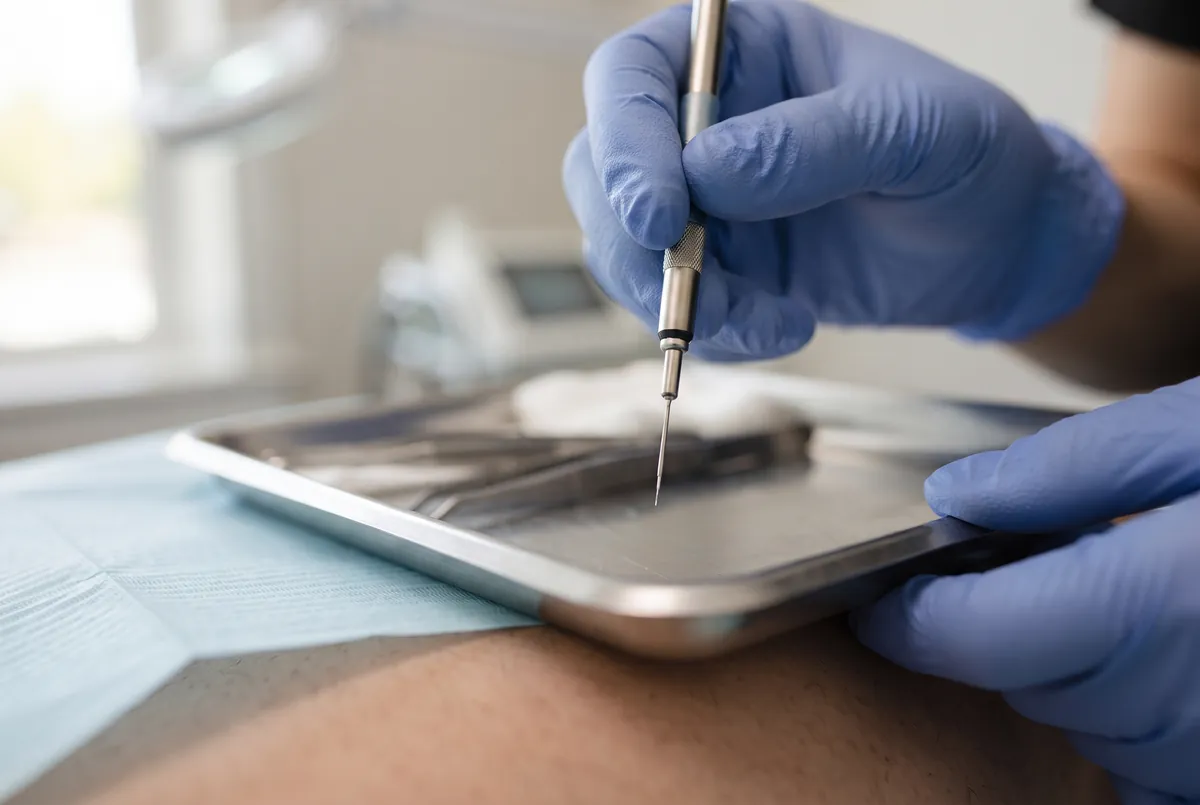
Flash thermolysis is commonly paired with insulated probes, which carry a coating along most of the shaft and leave only the tip exposed. The insulation keeps energy away from the upper follicle and the skin surface and concentrates it where it is needed. Clients often describe flash as a very brief, sharp prick. Some find it easier than longer applications because it is over so quickly; others find the intensity sharper. As with every modality, the practitioner adjusts based on how the client and the skin respond.
The Blend: Heat and Chemistry Together
The blend combines galvanic direct current and thermolysis high-frequency current through the same probe, usually at the same time or in an overlapping sequence. It was developed to get the thoroughness of galvanic chemistry without its slowness. The galvanic component produces lye in the follicle, and the thermolysis component heats it. Heated lye acts faster and more aggressively than lye at body temperature, and the heat also agitates the tissue, helping the lye spread through the follicle more quickly.
In speed, the blend sits between the two parent modalities: faster than galvanic alone, slower than thermolysis alone. In reach, it keeps much of galvanic's advantage, because lye can still move through a curved or distorted follicle rather than acting only at the probe tip. That combination is why many practitioners reach for the blend on coarse, deep, or curly hair, on follicles distorted by years of tweezing or waxing, and on areas such as the chin, the bikini line, and the underarms, where deep terminal hair is common.
Blend training often introduces the idea of a unit of lye, a way of relating current and time to the amount of chemical action a follicle receives. It gives practitioners a structured way to think about how much galvanic action a given hair needs, and how to adjust current and time together rather than randomly. Clients commonly describe blend sensation as warmth combined with a building sting. Because it runs longer per follicle than thermolysis, sessions cover fewer hairs per minute, which is a real consideration when budgeting time for a large area.
Blend machines differ in how they combine the two currents. Some run both simultaneously for the full application, some start one before the other, and some let the practitioner set each component independently. The underlying principle is the same, and a practitioner trained in blend theory can adapt to different machines, though each unit takes some getting used to. This is one reason I tell new practitioners to learn the theory before buying equipment, rather than letting a machine's presets decide how they work.
How Probe Choice Fits With Each Modality
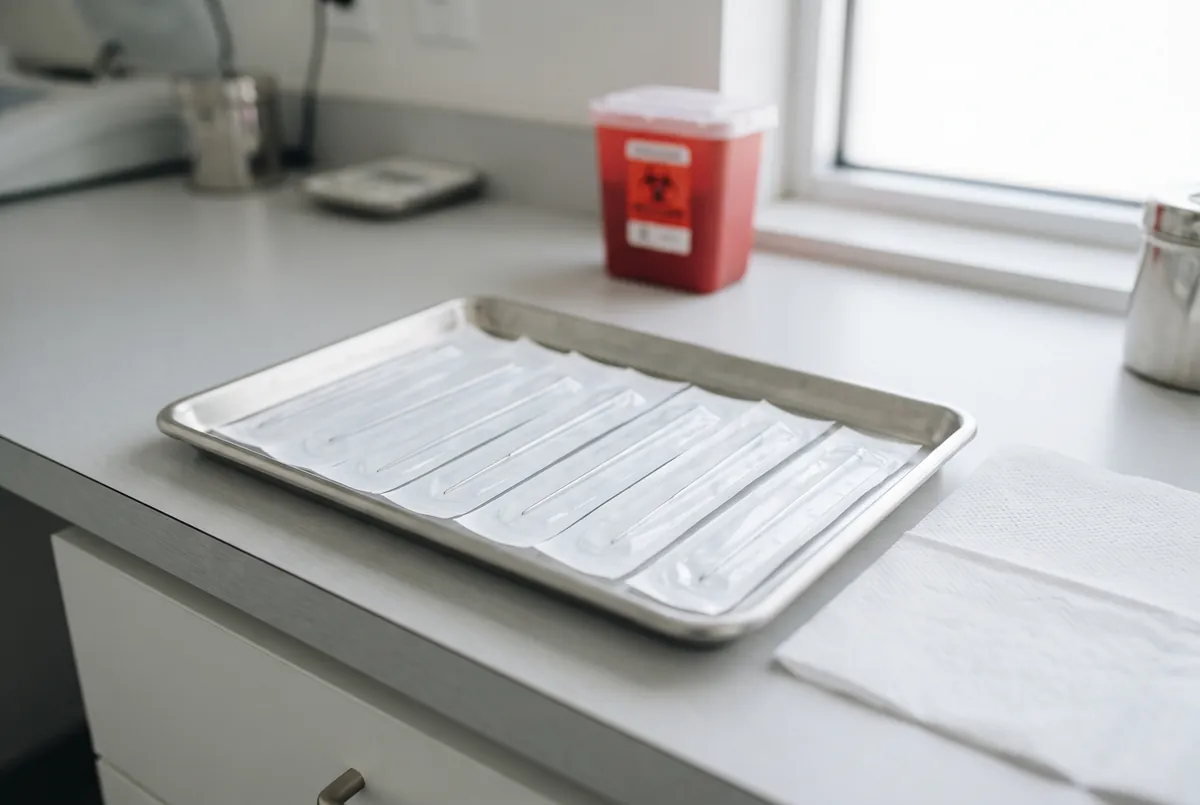
The probe, often called a needle, is how the energy reaches the follicle, so it interacts with every modality. Probes come in different diameters matched to hair thickness and follicle size, in one-piece and two-piece designs, in plain stainless steel or gold-plated versions, and in insulated or uninsulated forms. I will not repeat the details of materials, diameters, and sterile handling here, since they are covered in depth in the electrolysis needles guide. What matters for this article is how probe type pairs with modality.
Insulated probes concentrate energy at the exposed tip, which suits thermolysis and especially flash, where the goal is to keep heat away from the upper follicle and the skin. Many practitioners use uninsulated probes for galvanic and blend work, because the chemical action along the length of the probe inside the follicle is part of how those modalities reach irregular follicle shapes. These are common pairings, not fixed rules, and manufacturer guidance and your training take precedence for any specific machine and probe line.
Probe shape matters too. An electrolysis probe has a smooth, slightly rounded tip designed to glide into the follicle opening alongside the hair, not a sharp point designed to pierce skin. One-piece probes taper gradually and feel firmer in the hand, while two-piece probes join a finer blade to a thicker shank and flex a little more. Practitioners develop preferences for how each behaves on straight versus curved follicles and on fine versus coarse hair, in every modality. Neither design is better in general; what counts is consistent, accurate insertion with the probe you know well.
Diameter matters in every modality. A probe that fills the follicle opening well tends to deliver energy more evenly and comfortably, while one that is too thin for a coarse hair can concentrate energy in a way that raises discomfort and the risk of surface reaction. A probe that is too thick for a fine hair is uncomfortable and harder to insert accurately. Matching diameter to hair, and changing probes mid-session when the hair changes, is one of the quieter marks of an experienced practitioner.
Galvanic vs Thermolysis vs Blend: Side-by-Side Comparison
The table below summarizes the four approaches using well-established characteristics rather than specific settings or times, which always depend on the client, the hair, the machine, and the practitioner. Read it as a map of tendencies, not a rulebook. In real practice, the choice often changes from one zone of the body to the next, and sometimes from one hair to the next within the same session.
| Feature | Galvanic | Thermolysis | Flash thermolysis | Blend |
|---|---|---|---|---|
| Type of current | Direct current | High-frequency alternating current | High-frequency alternating current, very short and intense | Both, through one probe |
| How the follicle is destroyed | Chemical action of lye | Heat coagulation | Rapid heat coagulation at the tip | Heated lye plus heat |
| Relative speed per follicle | Slowest | Fast | Fastest | Moderate |
| Client electrode needed | Yes | No | No | Yes |
| Commonly described sensation | Slow building sting or ache | Quick heat or sting | Very brief sharp prick | Warmth with building sting |
| Tolerance for curved or distorted follicles | High | Lower | Lowest | High |
| Hair types it often suits | Coarse, deep, distorted, stubborn follicles | Fine to medium, straight follicles, large volumes | Fine to medium hair in straight, shallower follicles | Coarse, deep, curly, or distorted hair |
| Typical sign of overtreatment | Moist, weepy reaction at the surface | Whitening, scabbing, or surface burn | Surface heat damage if placement is shallow | Either type, depending on the balance |
One caution about reading this table. Lower tolerance for distorted follicles does not mean thermolysis cannot treat coarse or curly hair. Skilled practitioners clear coarse beards and bikini lines with thermolysis every day, often by adjusting insertion technique and energy carefully. Likewise, galvanic being the slowest does not make it obsolete. Each modality has a place, and a well-trained practitioner understands all of them well enough to choose on purpose rather than by habit.
Which Modality Is Best? The Honest Answer
Clients ask me this all the time, and professionals have debated it for decades. Advocates of the blend point to its thoroughness on coarse and distorted hair. Advocates of thermolysis point to speed, which means more follicles treated per appointment and often a shorter course overall on the right hair. Advocates of galvanic point to its gentle action near the skin surface. Each side is describing something real. The honest answer is that the best modality is the one that fits the hair being treated and that the practitioner performs with skill and consistency.
In practice, the factors that matter most are the follicle and the practitioner. A straight, fine follicle on the upper lip responds beautifully to flash. A deep, curved follicle in the bikini line, distorted by years of waxing, is often better suited to blend or galvanic. A client with a large area of medium hair and limited time may benefit most from thermolysis. A practitioner who is highly skilled in thermolysis and less practiced in blend may get better results with thermolysis, even where blend might be the textbook choice, and the reverse is true as well.
What I would be wary of is any practitioner who insists one modality is the only correct one for every client, or who dismisses questions about why they use a particular approach. Good electrologists can explain their reasoning in plain language. They also watch how the hair releases and how the skin responds, and they adjust. A course that is going well shows regrowth becoming finer and sparser over time, regardless of which modality is behind it.
Regrowth deserves its own word, because clients often blame the modality when a treated hair returns. Some regrowth happens with every modality. A follicle may receive slightly too little energy, the probe may stop a little short of the base, or the hair may have been in a later growth stage when the follicle was less vulnerable. Those hairs usually come back finer and weaker, and the next treatment finishes them. When the same hairs return unchanged session after session, the conversation should be about insertion, energy, and timing first, and only then about whether a different modality would suit that hair better.
Matching Modality to Hair Type and Body Area
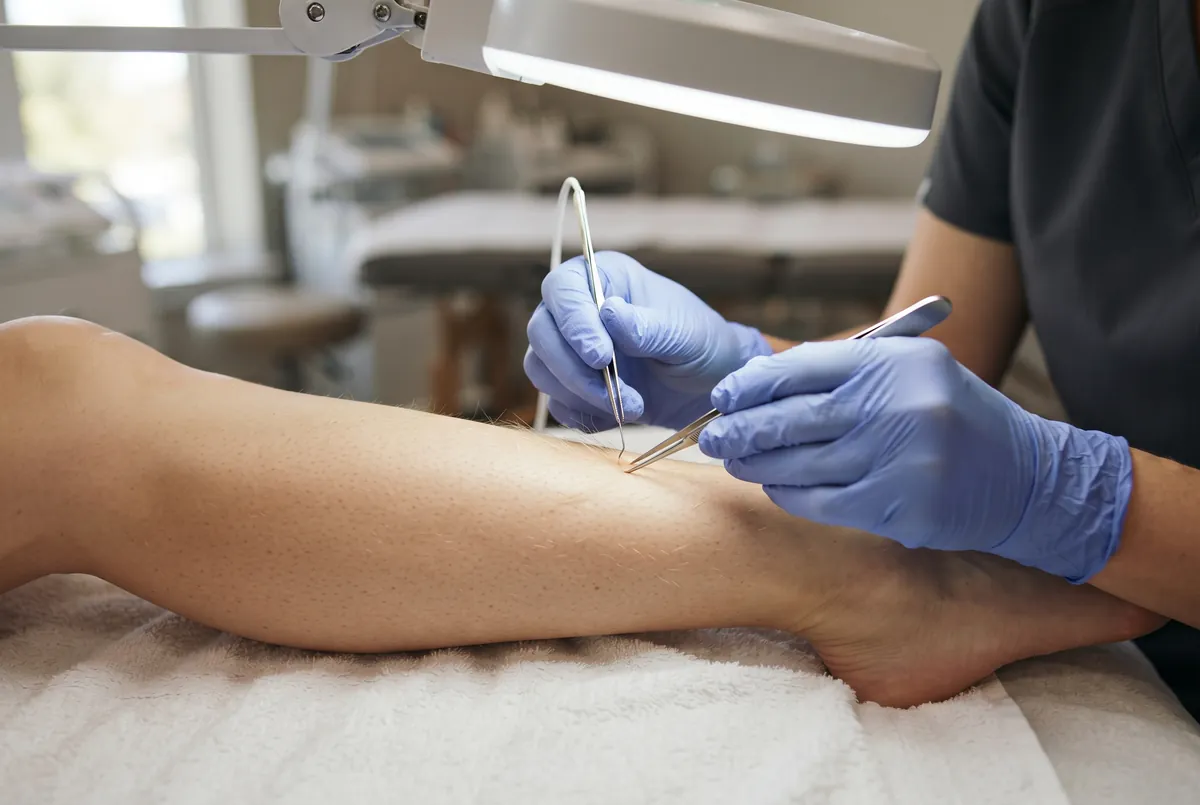
Modality choice becomes practical when you look at specific areas. The face often involves finer hair, shallower follicles, and skin that is very visible, so thermolysis and flash are common choices, with blend used on coarse chin hairs or deep terminal hair. Eyebrows and the area between them call for precision above all. The underarms and bikini line often have deep, coarse, sometimes curly hair, and follicles that may be distorted by previous waxing or shaving, which is where blend and galvanic tend to earn their place.
Larger body areas such as the legs, arms, and back raise the question of time. Thermolysis, including faster techniques, can make these areas practical within a reasonable number of appointments, while slower modalities may be reserved for stubborn or distorted follicles within the area. Full beard clearing for trans women is a good example of mixing modalities: dense, coarse hair across a large facial area, where many practitioners combine thermolysis for volume with blend for deeper or more stubborn hairs. I cover that work in detail in the gender affirming electrolysis guide.
Ingrown hairs and follicles distorted by repeated tweezing or waxing deserve a special mention. These follicles often do not run straight down from the skin, so a heat pattern concentrated at the probe tip may miss part of the growth tissue. Modalities with a chemical component can reach around those bends more reliably. That is one reason clients with chronic ingrowns often do well with blend or galvanic work. More on that problem is in electrolysis for ingrown hairs.
Sensation and Skin Response by Modality
Sensation varies more between people and between body areas than between modalities, but each modality does have a typical character. Galvanic tends to build slowly while the current runs. Thermolysis is quicker and more heat-like. Flash is over almost immediately but can feel sharp. Blend combines warmth with a building sting. The upper lip and bikini line tend to be more sensitive than the legs or arms with any modality, and fatigue, stress, and hormonal changes can all make a session feel harder than usual.
Practitioners adjust for comfort within each modality: lowering intensity and extending time, switching between modalities for a sensitive zone, taking breaks, or changing probe diameter. A client who finds one approach hard to tolerate should say so, because there is often a workable alternative. Small changes, such as a slightly larger probe that fills the follicle better, can make a noticeable difference in comfort. More detail on what the sensation feels like and how to reduce it is in does electrolysis hurt, and how to make it easier.
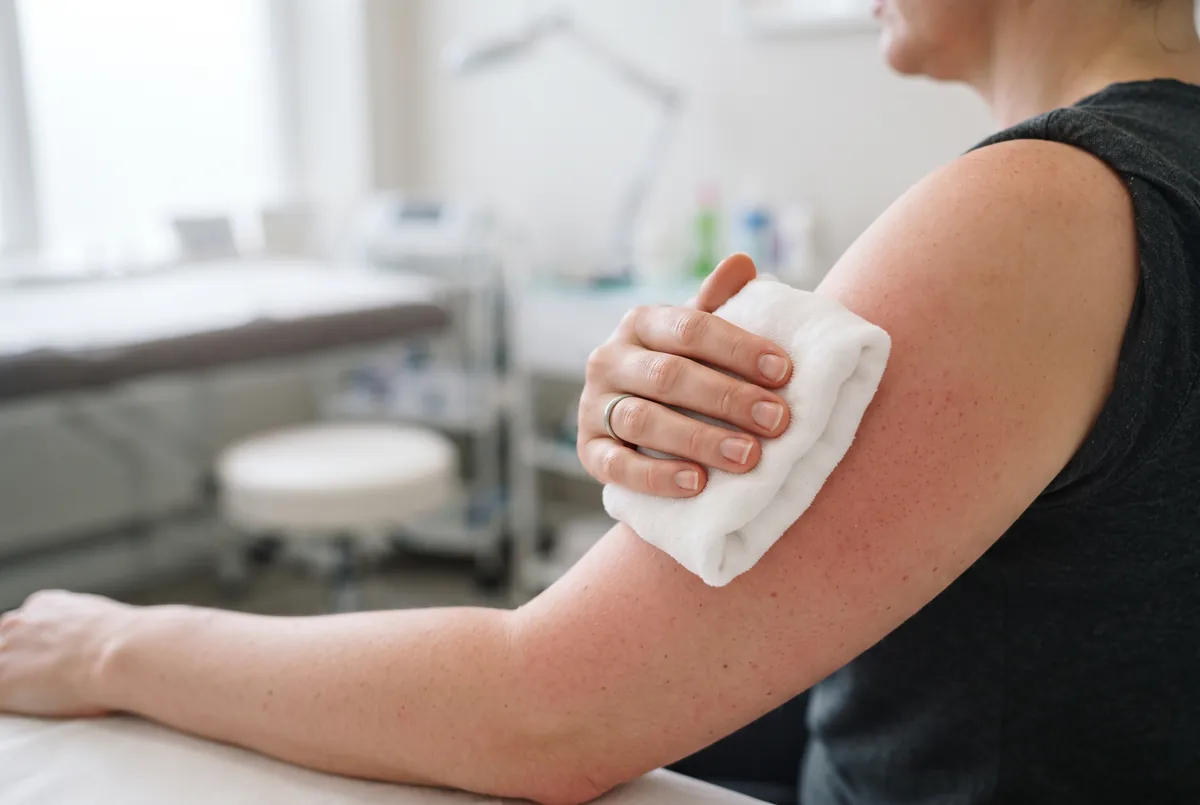
Normal skin response after any modality includes redness and small raised bumps that usually settle within hours to a day or so, and sometimes tiny pinpoint scabs on coarse hair. Abnormal responses differ somewhat by modality, as the comparison table shows, but the principle is the same: overtreatment, whether chemical or thermal, can damage the surface and increase the risk of marks. Clients with darker skin tones may be more prone to temporary hyperpigmentation after any skin irritation, which calls for careful settings and good sun protection. The full picture is in electrolysis side effects and risks.
What a Client Should Ask About Modalities
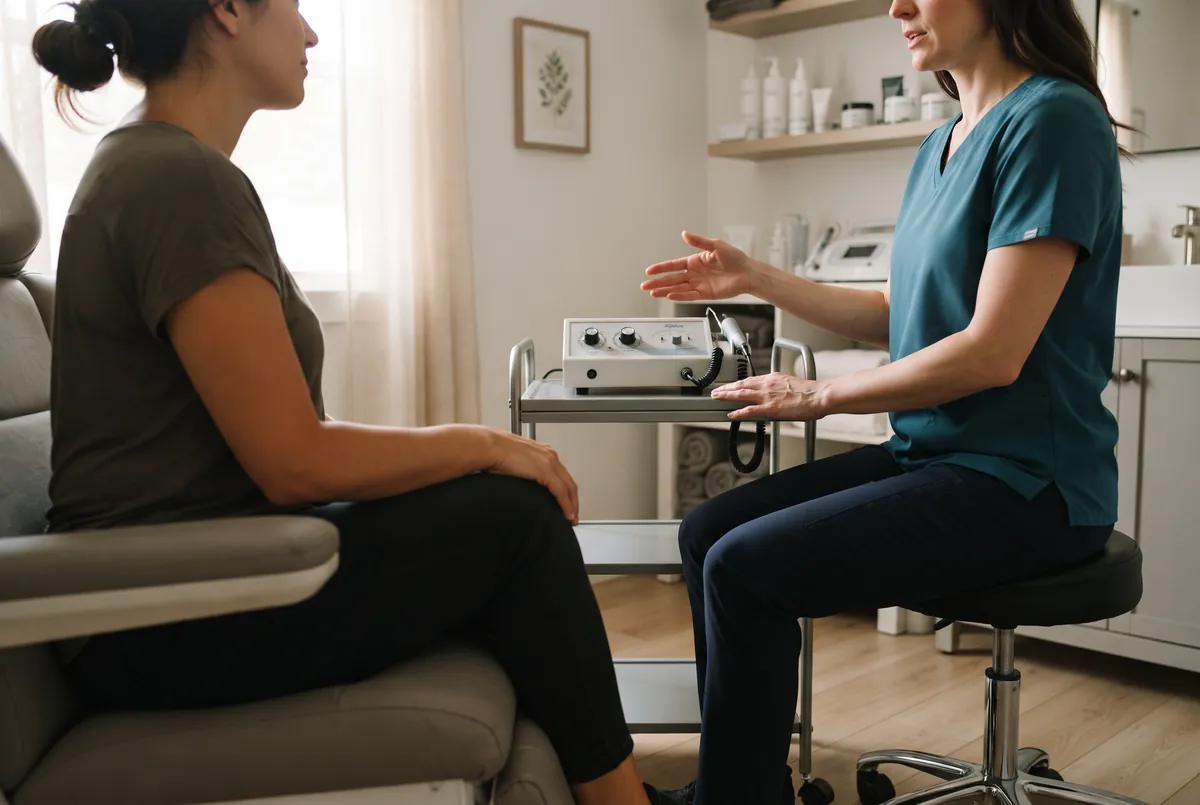
You do not need to understand electrical engineering to be a well-informed client. A few direct questions at a consultation tell you a lot about how a practitioner works and whether they choose their approach on purpose. A good electrologist will welcome these questions and answer them without jargon or defensiveness. If a question seems to annoy them, that reaction is useful information too. These are the ones I suggest:
- Which modality do you plan to use on my area, and why that one for my hair?
- Do you switch modalities within a session when the hair changes, for example from fine to coarse?
- Which modalities does your machine support, and which are you most experienced with?
- What type and size of probe will you use, and is it a new sterile probe opened for my session?
- How do you judge that the energy is right, for example whether the hair releases without resistance?
- What skin reaction should I expect afterward, and what would be a reason to call you?
- How do you adjust settings for my skin tone and sensitivity?
- Can we start with a short test session on a small area?
Listen for reasons rather than slogans. An answer that explains the choice, such as using the blend on a bikini line because the hairs are deep and waxing has distorted some follicles, with thermolysis reserved for finer hair at the edges, shows a practitioner thinking about your hair. An answer that amounts to the machine doing everything automatically tells you much less. Automation is fine, but the practitioner should still understand and explain what the machine is doing.
Common Misconceptions About Modalities
The first misconception is that galvanic is outdated. It is the oldest modality and slower than the others, but its chemistry lives on in every blend treatment, and pure galvanic still has a place for stubborn, distorted follicles and for practitioners who specialize in it. Age is not the same as obsolescence. The second is that thermolysis is harsh or scarring by nature. Thermolysis at correct settings with accurate insertions is routinely safe; surface damage comes from energy delivered in the wrong place or in the wrong amount, which is a technique problem, not a property of the modality.
A third misconception is that the blend is automatically more permanent than anything else. The blend is thorough on coarse and distorted hair, but a follicle destroyed by thermolysis is just as permanently destroyed as one destroyed by the blend. Permanence comes from destroying the growth tissue, whatever energy does it. A fourth is that a newer machine with more modes guarantees better results. Features help a skilled practitioner work more precisely, but presets cannot see a curved follicle or judge how a client's skin is reacting. The machine delivers energy; the practitioner decides where, how much, and for how long.
The last misconception is about devices rather than modalities. Some consumer products pass current through tweezers or a pad that grips the hair above the skin. They are not the same as probe electrolysis, and none of the modalities described in this guide work that way. Galvanic, thermolysis, flash, and blend all require a probe placed inside the follicle, because that is the only way to deliver energy to the growth tissue itself. If a device never enters the follicle, it is not doing what an electrologist does.
What Students Learn About Modalities in Training
For students, modalities are one of the core subjects of electrology training. Theory usually starts with the basics of electricity: direct versus alternating current, how a circuit is completed, and what current, intensity, and time mean in practice. From there, students learn the chemistry of galvanic action and lye formation, how high-frequency energy produces heat in tissue, the heat pattern around the probe tip, and how the blend combines both. Hair and skin anatomy, the growth cycle, and follicle depth and angle tie the theory to what happens under the magnifier.
Practical training is where theory becomes skill. Students practice insertions under supervision, learn to calibrate intensity and time for each modality, and learn to recognize both undertreatment, where the hair grips, and overtreatment, where the skin reacts. They learn probe selection, sanitation and sterilization, sharps disposal, client consultation, and contraindications. A good program has students work with more than one modality, so they can choose on purpose later instead of defaulting to whatever their first machine offered.
Online theory can be a strong start, especially for understanding the science of each modality before touching a machine. It does not replace the hands-on, supervised hours your state may require, and it never replaces a license where one is required. Licensing rules for electrology vary widely from state to state, so check your state's current requirements on the electrolysis licensing hub. Our electrolysis course overview explains how theory and practical training fit together, and if you are preparing for a professional certification exam, the IBEC certification exam guide covers what that involves.
Your Next Step
For clients, the practical takeaway is simple: choose a practitioner who can explain which modality they will use on your hair and why, who is willing to adjust, and who shows good insertion technique, since the hair lifting out without resistance is the best sign. For students, learn the theory of all three modalities thoroughly, then build hands-on skill with each under supervision, in line with your state's licensing rules. Galvanic, thermolysis, and blend are tools, and the practitioner who understands all of them will serve every client better.
State Requirements
State licensing guides
Hours, exams, fees, and the licensing board differ by state. Open your state for the current requirements.
Looking for a practitioner or a program near you? Browse electrologists by state and city or beauty schools by state.
Common Questions
FAQ
Galvanic uses direct current to create lye inside the follicle, which destroys it chemically. Thermolysis uses high-frequency alternating current to heat and coagulate the growth tissue. The blend combines both through one probe, so heated lye works faster than galvanic alone while still reaching into curved follicles. All three are true electrolysis and do not depend on hair color or skin tone.
Thermolysis, and especially flash thermolysis, is the fastest per follicle, because heat destroys the growth tissue very quickly. The blend is slower than thermolysis and faster than galvanic, which is the slowest modality. Faster per follicle does not always mean a shorter course, since results also depend on insertion accuracy, the hair type, and how consistently you attend appointments.
Neither is better for every client. The blend is often preferred for coarse, deep, curly, or distorted follicles because its chemical action reaches around bends. Thermolysis is often preferred for fine to medium hair in straight follicles and for large areas, because it is faster. A skilled practitioner chooses based on the hair in front of them and their own training.
They feel different rather than one being clearly worse. Galvanic is commonly described as a slow, building sting while the current runs, while thermolysis feels like a quicker flash of heat. Individual sensitivity, the body area, and the practitioner's settings matter more than the modality. If one approach is hard to tolerate, ask whether another modality or a setting change could help.
Flash thermolysis uses very high intensity for a fraction of a second, so the growth tissue is destroyed before heat travels toward the skin. It works best on fine to medium hair in straight, shallower follicles, which makes it common on the face. It demands very accurate insertions and is often paired with insulated probes that concentrate energy at the tip.
The bar, or a pad, is the positive electrode that completes the direct current circuit used in galvanic and blend electrolysis. Without it, the current cannot flow and no lye forms in the follicle. Thermolysis alone does not need it, because its high-frequency energy radiates from the probe into the tissue rather than traveling to a second electrode.
Yes, and experienced practitioners often do. A session on the chin might use flash or thermolysis on finer hairs and switch to blend for a few deep, coarse ones. Changing modality, intensity, or probe size as the hair changes is a sign of a practitioner who is reading each follicle rather than running one setting for everything. Ask your electrologist to explain what they change and why.
Most thorough programs teach the theory of galvanic, thermolysis, and blend, and give supervised practice with more than one, though content varies by school and state. Online theory can build understanding, but it does not replace required in-person hours or a license. See the electrolysis course overview for how training is structured.
Keep Reading
Related Guides


