Career
Electrologist vs Laser Technician: Which Career Fits You

Quick answer
An electrologist does slow, precise, permanent hair removal one follicle at a time, usually under a state electrology license, with modest equipment and often in their own practice. A laser technician treats large areas quickly for long-term hair reduction, usually as a clinic employee on costly equipment, under rules that vary by state and often involve medical oversight. The better career depends on your temperament, state, and wish for independence.
People comparing a career as an electrologist with a career as a laser technician usually start from the client's question: which method works better. That is the wrong starting point for a career decision. Both methods have a real place in hair removal, and both will be in demand for a long time. What differs is the working life behind each one: how you train, who regulates you, whether you are likely to be an employee or your own boss, how much the equipment costs and who owns it, what your hands and eyes do all day, and what the job looks like after ten years.
I am a licensed electrologist and cosmetologist, and over more than twenty years I have worked alongside laser technicians, referred clients to them, and treated the hair their lasers could not reach. I have a clear affection for my own profession, and I will try to be fair to both. This guide compares the two careers on the points that affect your daily life and your future, without quoting salaries or hour requirements, because those depend on your state and employer and change often. Where rules matter, I will tell you where to check them.
The short version
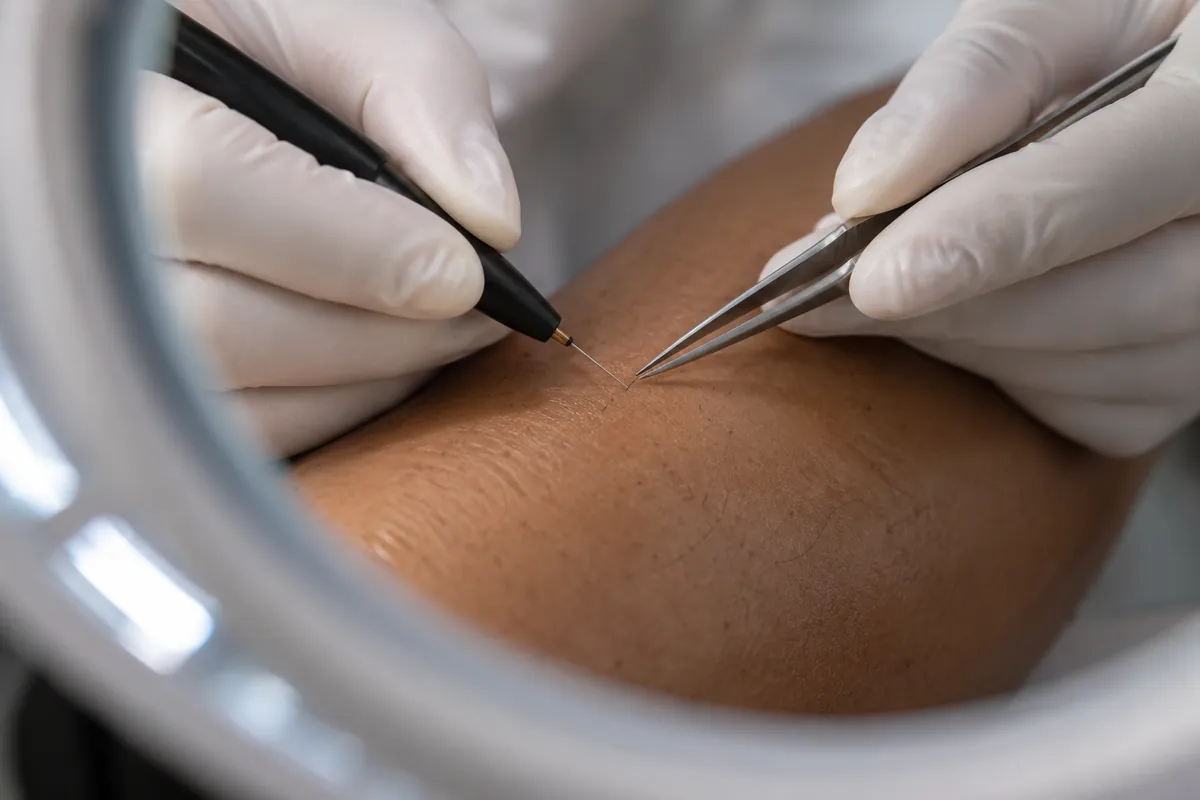
An electrologist treats one follicle at a time with a fine probe and a small electrical current. The work is slow, exact, and permanent, and it suits every hair color and skin tone. The typical electrologist holds a state license specific to electrology where the state offers one, works in a small private room, and very often owns the practice. The equipment is modest in cost. Clients come regularly for many months, so the relationships are long and personal.
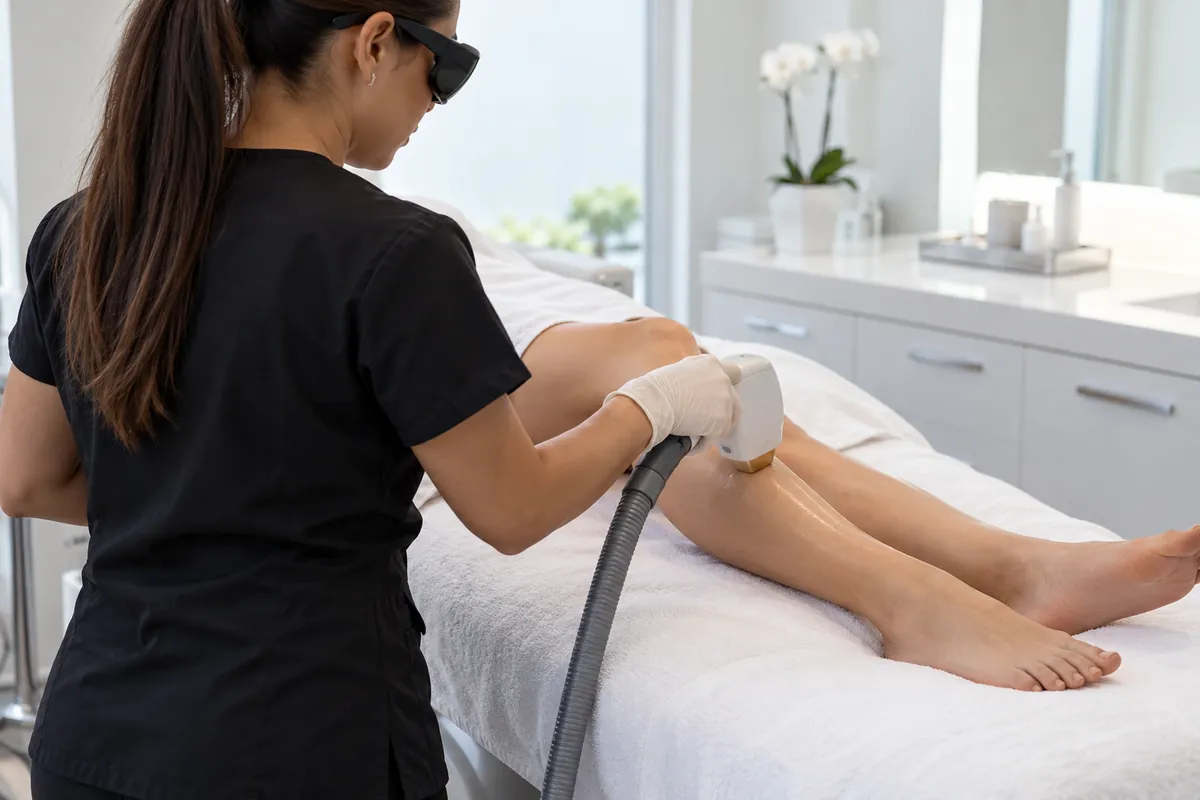
A laser technician treats an area of skin with pulses of light that are absorbed by pigment in the hair. The work is fast, covers large areas, and delivers long-term hair reduction for clients whose hair and skin suit the device. The typical laser technician is an employee of a medical spa, dermatology or plastic surgery practice, or a hair removal chain, working on equipment the business owns. Who may operate a laser, and under what supervision, is decided state by state and often involves the medical board.
| Point of comparison | Electrologist | Laser technician |
|---|---|---|
| What you do | Insert a probe into each follicle and apply current | Apply light pulses across an area of skin |
| Result you can offer | Permanent hair removal, any hair color or skin tone | Long-term hair reduction, depends on hair and skin contrast and device |
| Regulation | State electrology license in many states | Varies widely, often tied to medical oversight |
| Typical workplace | Small private practice, often your own | Medical spa, clinic, or chain, usually as an employee |
| Equipment investment | Modest, usually owned by the practitioner | High, usually owned by the business |
| Pace of sessions | Slow and detailed, hair by hair | Fast, area by area |
| Client relationship | Frequent visits over a long period | A set series, then occasional maintenance |
How the two methods shape the job
The physics behind each method explains most of the career differences, so it is worth a few paragraphs. In electrolysis, the practitioner slides a probe into the natural opening of a follicle and delivers current that destroys the cells responsible for growing hair, by heat, by a chemical reaction, or by both. Nothing about the process depends on the color of the hair or the skin. Electrolysis is the method the FDA recognizes for permanent hair removal. The price of that precision is time: every hair gets its own insertion.
A laser works by selective absorption of light. The pigment in the hair absorbs the energy, converts it to heat, and damages the follicle. This is efficient on dark, coarse hair and far less effective on blond, red, gray, or white hair, which lack the pigment the light needs. Because skin also contains pigment, treating darker skin tones safely requires the right type of device, careful settings, and a trained operator. Laser devices are cleared for permanent hair reduction, which means a stable long-term decrease in regrowth, not the removal of every hair.
From these differences come two different jobs. The electrologist is a craftsperson whose skill sits in the fingers and the eye: finding the follicle angle, feeling the depth, choosing current that works without marking the skin. The laser technician is an operator and assessor whose skill sits in judgment: evaluating skin type and hair, screening for risks such as recent sun exposure or certain medications, choosing device settings, and delivering even, safe coverage. Both require knowledge of skin and hair biology. They feel very different to do for eight hours.
Training: what you study and for how long
Electrology training is its own program. In states that license the profession, you complete a state-approved electrology course that combines theory with supervised clinical practice, then pass the state's examination. The theory covers skin and hair anatomy, the hair growth cycle, the endocrine system, electricity, bacteriology and sterilization, and state law. The clinical part is long by design, because insertion skill cannot be rushed. The length of the program differs greatly between states, so I will not quote one. You can see your state's requirement on the electrolysis licensing hub.
Laser training is usually shorter and is often layered on top of another credential. Depending on the state, the person operating a hair removal laser might be a nurse, a physician assistant, a licensed esthetician or electrologist with additional laser training, or a certified laser technician working under a physician's delegation. Courses typically cover laser physics, tissue interaction, skin typing, device parameters, eye and fire safety, contraindications, and supervised hands-on treatments. Because states define the requirements so differently, the same certificate can qualify you in one state and mean little in another.
The practical consequence is this. For electrolysis, the path is narrow but clear: find the approved school, complete the program, pass the exam. Schools are few, which can mean travel. For laser, there are many courses and they are easier to find, but the burden is on you to confirm with your state exactly which credential and which supervision arrangement make it legal for you to fire the device. Our guide on how to become a laser hair removal technician walks through that verification process step by step.
Theory overlaps more than people expect. Hair growth cycles, follicle anatomy, skin types, hormonal causes of hair growth, contraindications, and infection control are common ground. That is why a solid theory foundation is a good investment whichever direction you choose. Our online electrolysis theory course covers that core science in depth. As always, it prepares you for the classroom and exam side and does not replace the supervised in-person training or the license your state requires for either profession.
When you compare training options, ask the same questions of both. How much supervised hands-on practice on real people is included, and on which skin types and body areas? Who teaches, and what license do they hold? Does this specific program satisfy the regulator in the state where you will work? What will you be legally allowed to do the day after you finish? A program that answers those four questions clearly, in writing, is worth considering. A program that answers with enthusiasm about the industry and little detail about your state is selling a certificate, and a certificate by itself does not make a career in either field.
Licensing and legal scope
Electrology has a recognizable licensing structure in many states: a named license, a defined scope of practice, a board or council that issues it, and continuing education or renewal requirements. A number of states do not license electrologists at all, and in those states other rules, such as local health regulations, may still apply. Where a license exists, it generally lets you practice independently within your scope, which is what makes solo practice so common. Our sibling guide on whether you need a license to do electrolysis explains the patterns.
Laser hair removal is regulated far less uniformly. Many states consider the use of a laser on skin to be a medical act, or place it under rules written by the medical board. In those states a physician may need to own or direct the practice, examine clients first, be on site, or be available, and the technician works under delegation. Other states have created specific laser licenses or allow certain licensed professionals to perform the treatment with defined training. A few have relatively little regulation. The details shift, so always read the current rules from your own state's regulator.
Two career effects follow. First, independence. An electrologist in a licensing state can usually open a practice alone. A laser technician in a medically supervised state usually cannot, and needs a relationship with a physician or an employer who has one. Second, portability. Moving between states can be complicated in both fields, but in laser work your legal ability to practice may change entirely at the state line. If you expect to relocate, check the destination state before you invest in either path.

Daily work: what the hours feel like
An electrologist's day is quiet. You greet a client, review their notes, position them, clean the skin, and then work under magnification for the length of the appointment, which may be a brief touch-up or a session lasting an hour or more. Your posture is still, your hands make the same small movements over and over, and your attention stays on a field the size of a coin. Between clients you clean the room, process instruments, and write notes. Many electrologists describe the work as absorbing, almost meditative. People who need movement and variety can find it confining.
A laser technician's day is quicker and more physical in a different way. Appointments are shorter for the area covered: you consult or confirm screening, check that the area is shaved and the skin is suitable, set parameters, fit eye protection for the client and yourself, and treat in overlapping passes. You are on your feet more, moving around the table, handling a handpiece, and turning clients. A busy clinic may schedule many clients in a day. There is more variety of bodies and areas, and less time with each person.
The mental load differs too. In electrolysis, the risk in any single insertion is small and you get continuous feedback: you see the skin, feel the hair release, and adjust. In laser work, each pulse covers more tissue, so the judgment made before you start, about skin type, tanning, medications, and settings, carries more weight. Laser technicians rely on protocols, test spots, and careful screening. Neither is more stressful in general. Some people prefer steady fine control, others prefer decisive assessment followed by efficient execution.
Documentation and sanitation exist in both jobs with different emphasis. The electrologist's infection control centers on sterile single-use probes, sterilized tweezers, gloves, and sharps disposal, since the probe enters the follicle. The laser technician's safety routine centers on eye protection for everyone in the room, device checks, cooling, room safety, and thorough screening records. If you want a fuller picture of the electrology side, read what an electrologist does in a typical day.
Clients: who comes to each and why
Electrolysis clients tend to arrive with a specific, often long-standing concern. Facial hair related to hormonal changes, PCOS, or menopause is a large share of many practices. So is gender-affirming hair removal, including facial work and preparation of surgical sites when a surgeon requests it. Then there are clients with gray, blond, or red hair that laser cannot treat, clients with darker skin who were advised against certain lasers, people shaping eyebrows permanently, and people finishing the sparse hairs that remain after laser.
These clients see you often, for a long time. You learn about their lives, and they trust you with something they may never have discussed with anyone. The emotional side of the work is real: many clients carry shame about their hair, and part of your job is making the room feel safe. For the right person this is the best part of the profession. It also means you need patience and discretion, and the ability to stay kind on a day when you are tired.
Laser clients are more varied and often more casual in motivation. Many want convenience: legs, underarms, bikini, backs, and chests cleared of dense dark hair without the daily shave. The series is shorter and visits are spaced further apart. Clinics often sell packages, so part of the job in many workplaces is consultation that leads to a sale. Some technicians enjoy that. Others dislike sales targets. Ask about expectations for selling before you accept a laser position, because it varies a lot between employers.
The two client groups overlap constantly, and that is why the professions cooperate more than they compete. A common path is laser first for large areas of dark hair, then electrolysis for the light, fine, or stubborn hairs that remain. A good laser technician refers those clients onward, and a good electrologist tells a client honestly when laser would clear a large area faster. We describe that handoff in electrolysis after laser hair removal.
Equipment investment and who owns it
This is the starkest difference between the two careers. A professional epilator, a treatment table, a stool, magnification, a sterilizer, and supplies are within reach of an individual practitioner. Consumables are inexpensive: probes, gloves, and basic skin care. Maintenance is minimal. A well-made epilator can serve for many years. This low barrier is the main reason so many electrologists own their practices, and why a part-time practice in a single rented room can be financially sensible.
A professional hair removal laser is a major capital purchase, commonly financed or leased, with service contracts, replacement parts, and consumables on top. Treating a full range of skin tones well may call for more than one wavelength or device. The room must meet safety requirements, and insurance is priced accordingly. Add the medical oversight many states require, and you can see why lasers are usually owned by clinics, physician practices, and chains, and why technicians are usually hired to run them.
For your career, this means the question "do I want to own a business" is closely tied to the choice of method. If independence is your goal and your capital is limited, electrology offers a realistic route to ownership early on, and our guide on how to start an electrolysis business lays out the steps. If you would rather have an employer handle equipment, rent, marketing, and compliance while you focus on treatments and take home a paycheck, laser employment fits that preference well.

Where you work and how you are paid
Electrologists work in solo practices, shared suites, rooms rented within salons or medical offices, and occasionally as employees of dermatology or surgery practices. Self-employment is common. That means your income depends on your pricing, the hours you fill, and your costs, and it grows as your clientele grows. It also means you handle your own taxes, insurance, and time off. The first year or two of a new practice can be lean while the schedule fills, and steadier after that because clients return so regularly.
Laser technicians are more often employees, paid hourly or by salary, sometimes with commission on packages or products. Employment brings a predictable paycheck from the first week and, depending on the employer, benefits. It also brings a schedule set by someone else, performance metrics, and a ceiling that depends on the employer's pay structure. Experienced technicians can move into lead, training, or management roles, or into device company positions as clinical trainers.
I am not going to put figures on either path. Published wage data rarely separates these two occupations cleanly, and what an individual earns depends on region, setting, hours, and for electrologists on business skill. What I can say from experience is that the shape of the income differs: laser employment tends to start steady and rise in steps, while an electrology practice tends to start low and rise with your client base. If you want to think through the electrology side, read is electrology a good career.
Schedule and lifestyle follow from the setting. A self-employed electrologist chooses her own hours, and many build a week around school pickups, a second job, or simply the times of day when their concentration is best. The cost of that freedom is that an empty slot earns nothing, and vacations are unpaid. A laser technician in a clinic usually works shifts set by the employer, often including evenings and weekends when clients are free, with paid time off where the employer provides it. Think honestly about which arrangement your household needs right now. A parent who needs flexibility and a person who needs a guaranteed paycheck this month may reasonably choose differently, even with identical talents.
Physical demands and safety for the practitioner
Electrology asks for stillness and fine vision. The classic strains are in the neck, shoulders, upper back, and eyes, from leaning toward magnification with arms raised for long periods, and in the hands from repetitive pinching motions. Good ergonomics help enormously: an adjustable table and stool, magnification set at the right distance, regular micro-breaks, and a schedule that does not stack long sessions back to back. People with unsteady hands or vision that cannot be corrected for close work will find the job hard.
Laser work asks for standing, reaching, and repetitive arm movement with a handpiece that has some weight to it. Strain tends to show up in the wrist, shoulder, and lower back. Protective eyewear matched to the device is mandatory every time the laser is in use. Treatment can produce a plume and an odor from vaporized hair, so ventilation and clinic safety protocols matter. Neither career is physically heavy in the way hair styling or massage can be, but both reward people who take posture seriously from the first day.
Both jobs also carry the ordinary risks of close contact work with the public. Electrologists handle sharps and may encounter small amounts of body fluid at the follicle, so standard precautions and proper sharps disposal are part of every session. Laser technicians manage burn risk for clients and optical risk for everyone in the room. Good training in either field spends real time on these topics, and a program that rushes through safety is a program to avoid.

Long-term prospects
I cannot predict the market, and I distrust anyone who gives precise forecasts. What I can describe are the structural reasons each career is likely to last. Electrolysis remains the method for permanent removal regardless of hair color, and no light-based device has changed that. As more people have laser treatment, more people are left with light or sparse hairs that only electrolysis can finish. Demand from clients with hormonal hair growth and from transgender clients is steady. And in many areas there are few electrologists, with a number of experienced practitioners approaching retirement.
Laser hair removal is a large, visible consumer service offered by many clinics and chains, and technicians who are skilled across skin types are valued. The technology keeps evolving, so the job involves learning new devices over time. The risks to a technician's career are different in nature: regulatory changes in a state can alter who may operate a device, employers can change pay structures, and competition between clinics can put pressure on prices and on sales targets.
Skills age differently in the two fields. An electrologist's hand skill deepens for decades and belongs to the practitioner, independent of any brand of machine. Many electrologists work well into later life, often part time, because the work is light and the clients are loyal. A laser technician's value rests on judgment, safety record, and versatility across devices and skin types, which also grows with experience and can lead toward training, management, or clinical specialist roles.
Continuing education looks different as well. Electrologists refine technique through advanced classes, professional association meetings, and voluntary certifications, and they keep up with developments in probes, magnification, and epilator design. Many states with a license require continuing education for renewal, so check your state page. Laser technicians are typically retrained each time a clinic acquires a new platform, often by the manufacturer's clinical staff, and they need to stay current with their state's rules on delegation and supervision. In both fields the practitioners who keep learning are the ones who are still enjoying the work, and still in demand, many years in.
Doing both: the combined path
You do not have to choose forever. Many of the strongest hair removal professionals I know hold an electrology license and are also trained and legally permitted to perform laser in their state. For the client this is ideal: one practitioner can clear large dark-haired areas with light, then finish with electrolysis, and can give unbiased advice about which method fits. For the practitioner it widens employment options and makes a practice more resilient.
Whether and how you can combine them depends on your state. In some states an electrology license is one of the recognized routes into laser practice with additional training. In others, laser work requires medical supervision regardless of what other license you hold. Some states require separate credentials for each. Check before assuming that one license opens the door to the other. Estheticians often ask a related question, and we answer it in can estheticians do electrolysis.
If you plan to do both, the order matters. Electrology training is the longer and more demanding of the two, and it gives you the deepest understanding of the follicle. People who start with electrolysis usually find laser theory straightforward afterward. Starting with laser gets you working sooner where the state allows it, and you can add electrology later while employed. Either order works. What does not work is collecting certificates without confirming that each one lets you practice legally where you live.

How to decide which career fits you
Start with temperament. If you enjoy fine, patient handwork such as detailed crafts, and you can sit quietly with one person for an hour while concentrating, electrology will likely suit you. If you prefer a faster rhythm, more clients in a day, and standing work with technology, laser may fit better. Then consider independence. If owning a small practice on your own terms is a central goal, electrology makes that achievable. If you want stable employment with someone else carrying the business risk, look at laser roles.
Next, look at your state and your local market. Read the electrology rules on the licensing hub and the laser rules from your state regulator. Count the approved electrology schools within reach and the laser employers nearby. In some regions there is one overworked electrologist with a waiting list and a dozen laser clinics. In others it is the reverse. A career that looks ideal in general can be impractical where you live, and a path you had not considered can turn out to be wide open.
Finally, test before you commit. Book a session of each as a client and pay attention to what the practitioner is actually doing. Ask an electrologist and a laser technician whether you may ask a few questions about their work. Most are glad to talk for a few minutes. Ask what they like least. If the least-liked part of one job sounds tolerable to you and the least-liked part of the other sounds unbearable, you have your answer more reliably than from any comparison table.

Misconceptions that mislead career changers
The first is that laser has made electrolysis obsolete. It has not. The two methods do different things, and the growth of laser has created more finishing work for electrologists. The second is the reverse belief, common among electrologists, that laser "does not work." It works well for suitable clients when operated properly, and saying otherwise costs you credibility. A professional in either field should be able to describe the other method accurately and refer without defensiveness.
The third is that a weekend laser certificate is a license. In many states it is not, and the legal right to treat depends on supervision and credentials the certificate cannot provide. The fourth is that electrology is too slow to earn a living. Hour for hour the work is slow, but overhead is low, clients return for months, and the practitioner usually keeps what the practice earns. The fifth is that either job is easy money. Both take real training, real care for safety, and a few years of experience before you are truly good.

Your next step
If electrology is pulling at you, begin with your state. Look up the requirements on the electrolysis licensing hub, find the approved schools you could attend, and start the theory now so that your supervised hours are spent on technique. Our electrolysis course is built for that preparation, and the follicle science in it will serve you equally if you add laser later. It does not replace state-required in-person training or licensure.
If laser is the better fit, your first task is the same in spirit: read your state's rules on who may perform laser hair removal and under what supervision, then choose training that satisfies them and talk to local employers about what they require. And if you cannot decide, remember that the foundations overlap and the professions feed each other. Starting with one does not close the door on the other, and many of the best careers in hair removal include both.
State Requirements
State licensing guides
Hours, exams, fees, and the licensing board differ by state. Open your state for the current requirements.
Common Questions
FAQ
Neither is better in general. Electrology suits people who like precise handwork, long client relationships, and the possibility of owning a small practice with modest equipment. Laser suits people who prefer a faster pace, technology, and employment in a clinic where the business owns the device. Your state's rules and your local job market should weigh as heavily as your preferences, so check both before deciding.
Electrology programs in licensing states are generally the longer of the two because of the supervised clinical practice needed to develop insertion skill. Laser courses are usually shorter but are often added to another license or performed under medical supervision. Requirements for both differ by state, so I do not quote hours. See the electrolysis licensing hub for electrology and your state regulator for laser rules.
In some states, yes, with additional laser training, and in some an electrology license is a recognized route into laser practice. In other states laser treatment is treated as a medical procedure that requires physician supervision or a different credential regardless of your electrology license. Always confirm with your state's regulator before offering laser services. A course certificate alone does not establish your legal right to treat.
It depends on setting and stage of career, and reliable side-by-side data is scarce. Laser technicians are usually employees with a steady wage, sometimes with commission. Electrologists are often self-employed, so income starts lower while the clientele builds and then depends on pricing, hours, and overhead. Comparing a paycheck with business income is not like for like, so think about which income pattern suits your circumstances.
No. Laser provides long-term hair reduction and depends on pigment in the hair, so it is ineffective on gray, white, blond, and most red hair. Electrolysis works on any hair color and skin tone and is the method the FDA recognizes for permanent hair removal. Many clients use both, with electrolysis finishing what laser leaves, as described in electrolysis after laser hair removal.
Electrology, in most cases. The equipment is affordable for an individual, the practice fits in one room, and in licensing states an electrologist can usually practice independently. A laser business requires a costly device, service contracts, a compliant room, and in many states a supervising physician. Our guide on starting an electrolysis business covers the electrology route.
Not for electrology in most licensing states, where you qualify through an approved electrology program and exam. For laser, it depends entirely on the state. Some restrict the treatment to medical professionals or require direct physician supervision, while others allow trained non-medical licensees or certified technicians. Read your state's current rules before enrolling in any laser course.
Yes, and it is a sensible way to test your interest. Skin and hair anatomy, growth cycles, hormonal causes of hair growth, contraindications, and infection control are shared ground. An online electrolysis theory course covers this foundation. It prepares you for formal training and exams but does not replace in-person hours or grant a license in either field.
Keep Reading
Related Guides


