Career
Becoming an Electrologist as a Second Career: A Realistic Guide

Quick answer
Becoming an electrologist as a second career is realistic at almost any adult age if your near vision can be corrected for magnified work and your hands are reasonably steady. You complete the training and exam your state requires, usually studying theory around your current job and attending in-person clinical practice part time. Expect a gradual first year in which repeat clients build your schedule step by step.
A large share of the people who ask me about becoming an electrologist are not eighteen and choosing a first job. They are nurses who are tired of night shifts, office workers who want to do something with their hands, estheticians who keep hearing clients ask about permanent hair removal, parents returning to work after years at home, and people in their fifties who want a quieter profession they can practice for a long time. Electrology has always drawn career changers, and in my experience they often become the steadiest practitioners in the field.
A second career is a different project from a first one, though. You have bills, a family schedule, habits of thinking from another profession, and a body that has opinions about sitting still for hours. You also have things a younger student does not: patience, experience with people, and a clear idea of what you want from work. This guide is written for that situation. It covers what carries over from your previous life, how to study while still employed, what the work asks of you physically, and what the first year realistically looks like, without promised incomes or invented timelines.
Why electrology attracts career changers
The profession has several features that suit people starting again. The work is quiet and one to one. There is no team to manage, no sales floor, and no open-plan office. You can practice in a single room with modest equipment, which makes self-employment realistic without large loans. Hours are flexible once you have clients, so the job can be shaped around family or a gradual exit from another career. And the skill does not expire. Good electrologists keep working, often part time, well past the age when other jobs become physically difficult.
There is also the nature of the result. Electrolysis is the method the FDA recognizes for permanent hair removal, and clients arrive with a problem that has often bothered them for years: facial hair linked to hormonal conditions, hair that laser could not treat, or hair removal as part of a gender transition. You see their relief over months. Many career changers tell me that this is what they were missing before: work where the benefit to another person is visible and lasting.
I do not want to oversell it. The training takes commitment, schools are scarce in many regions, the early months of practice are slow, and the work is repetitive in a way that does not suit everyone. If you have not yet seen what a working day involves, read what an electrologist does and, better still, book a session yourself with an experienced practitioner. A second career is too costly to choose from a description alone.
Is it too late to start?
This is the question behind most of the others, and my answer after more than twenty years in the profession is that age by itself is rarely the obstacle. I have seen people begin in their forties, fifties, and later and build solid practices. What matters is a specific set of abilities: near vision that can be corrected well enough for work under magnification, hands steady enough for fine movements, the stamina to sit with good posture, and the willingness to be a beginner again in front of an instructor who may be younger than you.
Maturity is an advantage with clients. People seeking electrolysis are often embarrassed and guarded. Many are more comfortable with a practitioner who has some life behind them, who does not react to what they see, and who speaks plainly. A client in menopause dealing with new chin hair, for instance, frequently prefers someone who understands that stage of life. Your years are part of what you offer, provided your technique is sound.
What age does change is the arithmetic. If you start at twenty-five, a long training and a slow first two years are a small fraction of your career. If you start at fifty-five, you want to know that the path is efficient and that the income will arrive in time to matter. That is a reason to plan carefully, to choose a location model with low overhead, and to be honest about how many years you intend to work. It is not a reason to rule yourself out.
Transferable skills from your first career
Almost every previous occupation contributes something, and knowing what you already have tells you where to focus your study time. Electrology draws on four broad abilities: fine motor control, comfort with science and safety procedures, skill with people in vulnerable moments, and the discipline to run appointments and records reliably. Few beginners have all four. Most career changers arrive strong in two and need to build the others. Here is how common backgrounds map onto the work.
- Nursing and other healthcare roles: infection control, anatomy, charting, calm with anxious people, and respect for scope of practice. The new part is the hand skill and running a small business.
- Esthetics, cosmetology, and waxing: skin knowledge, client care, sanitation habits, and often an existing clientele who already ask about permanent hair removal. The new part is electricity, insertion technique, and a slower, more precise pace.
- Dental hygiene and dental assisting: fine instrument work in a small field under magnification, sterilization routines, and ergonomic awareness. This background transfers remarkably well.
- Office, administrative, and finance work: scheduling, record keeping, budgeting, and written communication, which are exactly what a solo practice needs and what many skilled practitioners lack.
- Teaching, counseling, and social work: listening, explaining clearly, and building trust over time, which is the heart of long-term client relationships.
- Crafts, jewelry, sewing, laboratory, and electronics work: steady hands, patience with tiny repeated movements, and comfort with tools and settings.
- Retail and hospitality: service instincts, handling complaints gracefully, and stamina for a full day of dealing with the public.
- Parenting and caregiving: patience, time management under pressure, and a tolerance for repetition that should not be underestimated.
Make your own two-column list: what I bring, and what I need to learn. Be specific. "Good with people" is vague. "Fifteen years of explaining procedures to nervous patients" is a skill you can use in a consultation on your first day. The second column matters as much. A former accountant may need extra hours of hand practice. A former esthetician may need to slow down and study electricity seriously instead of assuming it resembles other beauty equipment. Knowing your gaps in advance lets you ask a school the right questions.
One habit from a first career sometimes has to be unlearned: speed. Many professions reward getting through a workload fast. Electrology rewards accuracy first, and speed arrives only as a side effect of thousands of correct repetitions. Career changers who were high performers elsewhere can find the early weeks humbling, because their hands will not do what their mind already understands. That gap closes with practice. It closes faster for people who accept it calmly than for those who fight it.

What will be new, whatever your background
Three things are new to nearly everyone. The first is the insertion: sliding a very fine probe into a follicle along its natural direction, to the right depth, without the client feeling a prick. It is unlike any other hand skill, and it is learned only through supervised repetition on real skin. The second is working with electrical current as a tool, understanding how intensity and time combine, and reading the skin's response to adjust settings. The third is sustained work under magnification, which changes your posture and how your eyes tire.
The theory surprises people as well. A proper electrology curriculum covers the structure of the skin and hair, the hair growth cycle, the endocrine system and hormonal causes of hair growth, basic electricity, bacteriology, sterilization, skin conditions, contraindications, and state law. Adults who have not studied in years sometimes worry about this more than about the hands. In my experience mature students do well with theory, because they study consistently and ask questions when something is unclear.
Theory is also the part you can begin on your own schedule, before you leave a job or commit to a school. Our online electrolysis theory course is organized for that purpose: it lets you learn the science and safety concepts in the evenings and find out whether the subject holds your interest. I need to be plain about its limits. An online course does not replace the in-person training hours your state requires, and it does not give you a license. It prepares you so that the in-person hours go toward your hands.
The path in outline
The route into the profession depends on your state. In many states you must complete a state-approved electrology program with supervised clinical practice and pass an examination to receive a license. Some states have no electrology license, and a few have their own arrangements. Start by reading your state's page on our electrolysis licensing hub, then confirm with the regulator it names. I do not print hour requirements or fees here, because they vary by state and change over time.
Ask your state board one extra question that matters to career changers: whether any of your existing education or licensure counts. In some states, people who already hold a related license may find that part of their prior training is recognized, and in others nothing transfers. Do not assume either way, and get the answer in writing. A nurse, an esthetician, and a cosmetologist can each receive a different answer from the same board, and the answer can save or cost you months.
Once you know the requirement, the remaining steps are practical: find approved schools within reach, compare them, arrange your finances and schedule, complete the program, pass the exam, and decide how you will begin working. Our sibling guide on how to choose an electrolysis school gives you a checklist for comparing programs, and how long it takes to become an electrologist explains what lengthens or shortens the timeline.

Studying while you are still working
Most career changers cannot simply stop earning, so the central problem is fitting training around a job. Split the problem in two. Theory is flexible and can be done at home in small pieces. Clinical practice is fixed: it happens at the school, on the school's schedule, with an instructor present. So the question to ask every school early is which schedules they offer for the hands-on portion: full time, part time, evenings, weekends, or intensive blocks, and whether you can change tracks if your work situation shifts.
For theory, short regular sessions beat occasional long ones. Adult memory responds well to repetition spread over time, so half an hour on most days does more than one long weekend session. Choose a fixed slot, such as early morning before the household wakes or the first half hour after dinner, and protect it. Study the foundations in a sensible order: skin and hair structure first, then the growth cycle, then electricity and modalities, then sanitation and contraindications. Each layer makes the next easier.
For the clinical portion, talk to your employer sooner than feels comfortable. Many people are surprised to find some flexibility available: compressed weeks, a temporary reduction in hours, unpaid leave, or using accumulated vacation for an intensive block. If your current job cannot bend, a part-time evening or weekend program stretches the calendar but keeps your income. There is no shame in the slower route. Hand skills settle with time and sleep, and students in part-time programs often finish with very solid technique.
Protect your energy. Clinical practice after a full workday is tiring in a specific way, because it requires fine concentration when your eyes and attention are already used up. Eat before class, keep caffeine moderate so your hands stay steady, and do not schedule clinic on the same day as your most demanding work commitments if you have a choice. Tell your family which evenings are taken for the next months and ask for concrete help. People around you can support a plan they can see on a calendar.

Planning the money honestly
A second career needs a budget with three parts: the cost of training, the cost of living while your income is reduced, and the cost of starting to work afterward. For training, ask schools for an itemized total and add travel or temporary housing if the school is far away. Our guide on what to expect from electrolysis school cost explains each category. I am not giving figures, since they differ too much between states and schools to be useful.
The second part is the one people underestimate. If you reduce your hours to attend clinic, or leave your job for an intensive program, work out how many months of expenses you need in reserve, and then add the first months of practice, when income is still small. A partner's income, savings, part-time work in your old field, or a phased exit from your current job can each cover the gap. What does not work is assuming that a full schedule of clients will appear the week after you are licensed.
The third part depends on how you begin. Working in an established practice requires almost no capital. Renting a room and buying your own equipment requires more, though far less than most businesses. Keep overhead low in the first year so that slow weeks are an inconvenience instead of a crisis. If you carry significant debt or are close to retirement, speak with a financial professional about your personal situation before you commit. I can describe the profession. I cannot advise on your finances.
Look into help with funding before assuming you must pay everything from savings. Some schools offer payment plans. Depending on the school and your circumstances, workforce retraining programs, veterans education benefits, or professional association scholarships may apply, and a school that participates in federal student aid will tell you so. Eligibility rules differ and I cannot predict what you will qualify for, so ask each school and your state workforce agency directly. An employer in a related field, such as a dermatology office or a spa that wants to add electrolysis, will occasionally support training for a current staff member. That conversation costs nothing to start.
The physical demands, plainly described
Electrology is not heavy work, and that is part of its appeal for a later-life career. Nobody lifts, and you sit for most of the day. But it is physically specific. You hold a nearly still position, leaning slightly toward magnification, with your forearms raised and your fingers making small, controlled movements for long stretches. The usual complaints are stiffness in the neck, shoulders, and upper back, tired eyes, and fatigue in the hands. These are manageable, and they are much easier to prevent than to fix.
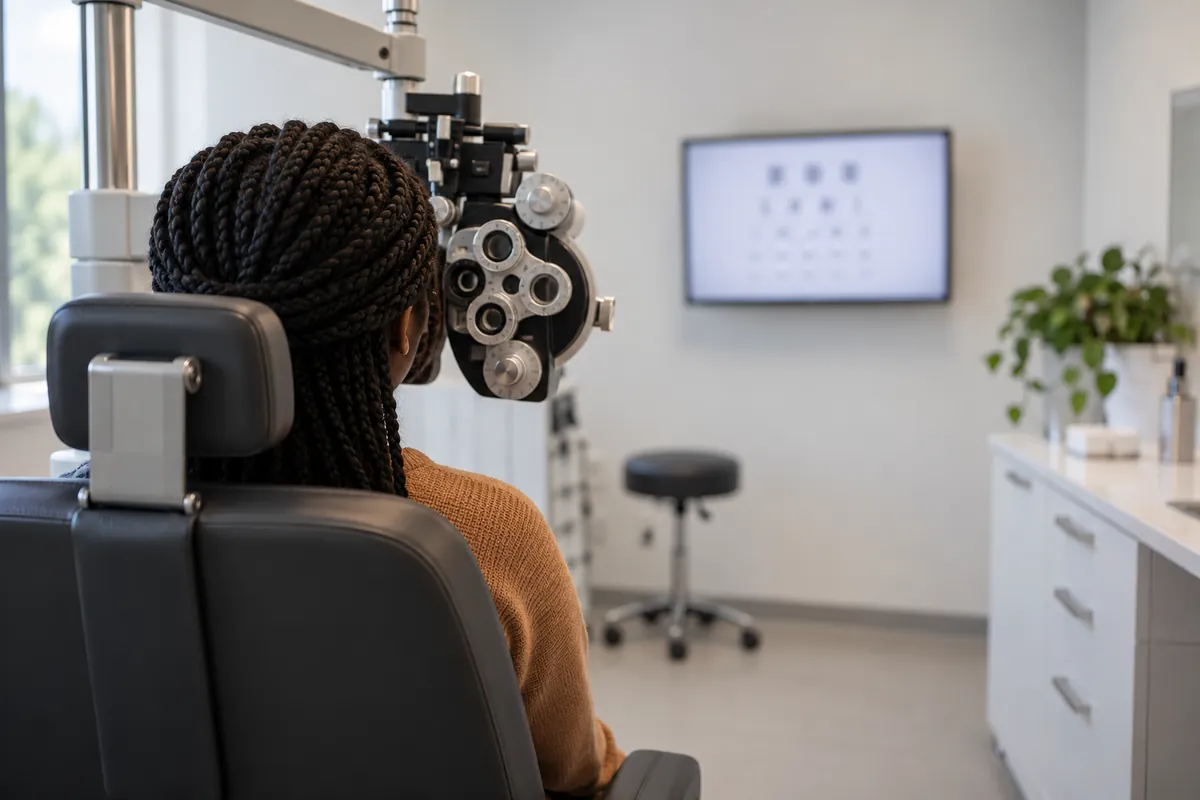
Vision comes first. Most adults past their mid-forties need correction for near work, and that is entirely compatible with electrology. Practitioners use magnifying lamps, loupes, or microscopes, and each works with different kinds of prescription lenses. Discuss your working distance with your eye care professional. Many electrologists have glasses made specifically for the table. If you have an eye condition that affects fine detail or depth perception, ask your eye doctor directly whether sustained work under magnification is advisable for you.
Hands come second. A slight natural tremor is common and usually does not prevent good work, because technique includes bracing the hand against the client's skin for stability. Conditions that affect grip, sensation, or joint comfort in the fingers and wrists deserve an honest conversation with your physician before you invest in training. Electrology involves a sustained light pinch on the probe holder and tweezers, and comfort matters over years. This is general information, and your own doctor is the right person to assess your situation.
Posture is the third and the one you control most. Learn from the first day to bring the client to you instead of bending to the client: raise or lower the table, move the stool, reposition the area. Sit with your feet supported and your back upright. Take a short break between clients to stand, roll your shoulders, and look at something far away to rest your eyes. Regular general exercise, especially for the upper back and core, makes a noticeable difference. Students who build these habits in school carry them through an entire career.

Being a student again
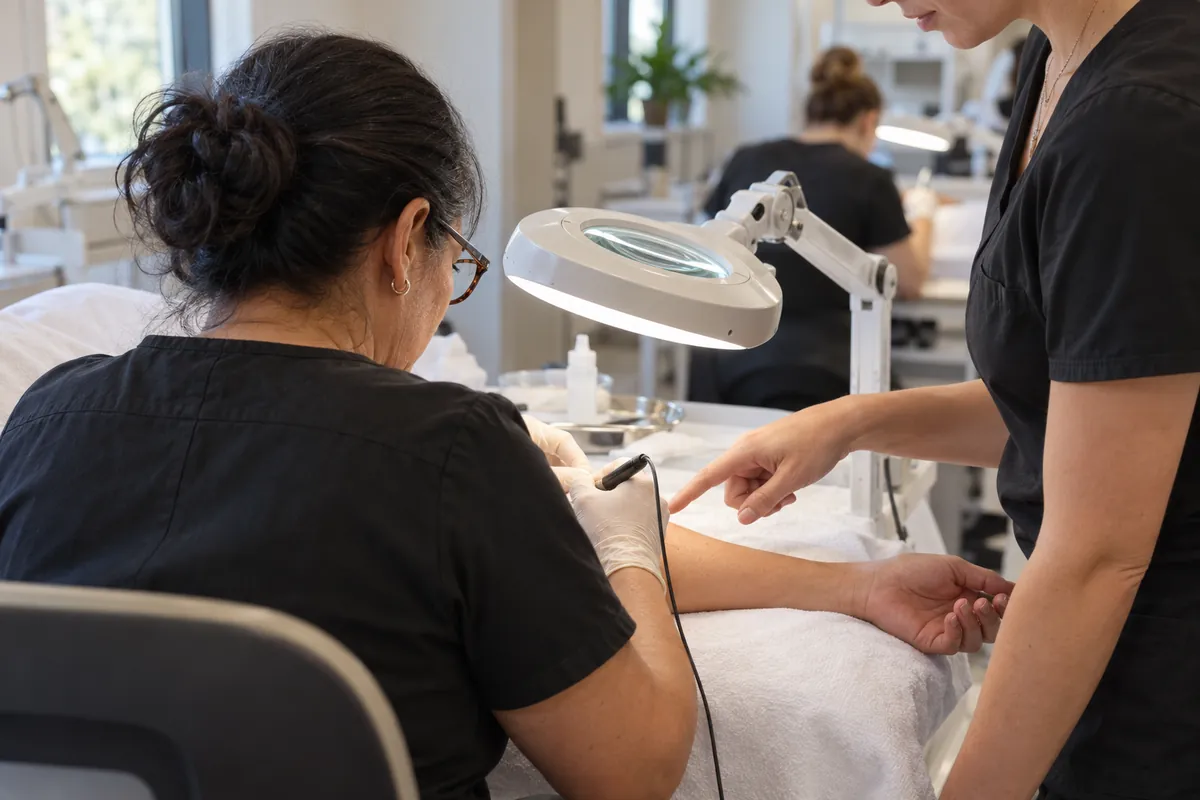
Returning to a classroom as an adult brings its own adjustments. You may be older than your classmates and sometimes older than your instructor. You are used to being competent, and now you will be visibly clumsy at something for a while. The students who handle this best treat it with humor and curiosity. They ask the instructor to watch their hands, they request correction instead of waiting for it, and they do not compare their third week with someone else's third month.
Use your adult advantages deliberately. Keep a small notebook and after every clinic session write down what you worked on, which settings you used, what went well, and one thing to improve next time. Review it before the next session. This habit, which younger students rarely keep, speeds learning considerably and later becomes the basis of good client records. Ask to practice on as many different areas and hair types as the school allows, and say yes to the difficult ones while an instructor is beside you.
Volunteer as a model too. Being treated by classmates and instructors teaches you how an insertion should feel, which sensations are normal, and how much reassurance a client needs. You will also learn how the skin heals on the following days. Adult students sometimes hold back from this out of modesty, and it is a loss. An electrologist who has been on the table explains treatment far more convincingly than one who has only read about it.
A realistic first year after licensing
The first year is a building year, and it helps to know its shape in advance. In the early months you will be slower than experienced colleagues and you will second-guess your settings. Your schedule will have gaps. Clients will come from people you know, from local search listings, and from other professionals you have introduced yourself to. Because electrolysis requires a series of visits, each client who stays adds a recurring appointment to your week, so the schedule fills by accumulation instead of by sudden jumps.
Somewhere in the middle of the year, most new practitioners notice two changes. Their hands become more automatic, so sessions are less tiring and more productive. And the first clients start to show clearly visible results, which brings referrals. This is when confidence arrives, and it is also when to resist raising your workload too fast. Add hours gradually and keep reviewing your notes. How quickly this stage comes varies with your location, your hours, and how much you worked during training, so I will not attach months to it.
Financially, plan for the practice to cover its own costs before it pays you well. Many career changers keep part-time work in their previous field through the first year, and I think that is wise. It removes pressure, and pressure is the enemy of good technique and honest consultations. A practitioner who needs every booking is tempted to overpromise. One who has a cushion can tell a client the truth about how long treatment takes and earn their trust for the whole series.
Expect some emotional weather. There will be a week when a client's skin reacts more than you expected, or someone does not rebook, or you wonder whether you should have stayed where you were. Every electrologist I know had those weeks. Keep a colleague or former instructor you can call, join a professional association, and reread your early notes to see how far you have come. Our guide with advice for beginner electrologists covers the working habits that carry people through this stage.
Use what your first career taught you. Former administrators tend to have their booking, reminders, and records running smoothly from the first week. Former nurses write careful intake notes and spot contraindications early. Former teachers explain the hair growth cycle so clearly that clients understand why regular visits matter, and those clients keep coming. Former retail and hospitality workers know how to make a nervous person feel welcome in the first minute. Each of these directly improves the number that matters most in a young practice, which is how many first-time clients return for the next appointment. Your previous profession is not wasted. It is the reason you may get established sooner than a younger graduate with the same hand skill.

Employee first or your own practice?
New licensees have two broad ways to begin. One is to work in an established setting: another electrologist's practice, a dermatology or plastic surgery office, or a medical spa that offers electrolysis. The other is to open your own room straight away. For a career changer, the first option offers something valuable: volume. You treat many clients quickly, under someone else's roof and reputation, and you see how a functioning practice runs. The trade-offs are less control and a smaller share of what clients pay.
Opening your own practice immediately suits people who bring strong business experience from their first career, who have a ready source of clients such as an existing esthetics clientele, or who live where there are no practices to join. Keep it small: a room rented within another business or a modest suite, a reliable machine, and limited hours at first. Our guide on how to start an electrolysis business walks through the steps in order, from legal setup to the first month.
A combination works well for many people: a few days a week in an established practice for experience and steady income, and one or two days building your own clientele, if your agreement with the employer permits it. Read any contract carefully for terms about client lists and competing work. Whatever you choose, think of the first arrangement as temporary. The aim of year one is to become good and to learn what kind of practice you want, and the long-term structure can follow from that.
Mistakes career changers make
The most common is quitting a job too early, before confirming the state requirements, the school's approval, and the true length and schedule of the program. The second is choosing a school only because it is nearest or fastest. A weak program costs you more time afterward than it saved. The third is skipping the visit to a working electrologist. People fall in love with the idea of the profession and discover in the clinic that they dislike sitting still, or that close work strains their eyes more than expected.
Another mistake is treating online study as a substitute for licensed training. Theory courses are valuable preparation, but no online program makes you an electrologist where your state requires in-person hours and an exam. Be wary of any offer that suggests otherwise. A related error is assuming that a previous license covers electrolysis. Scope of practice is defined by each state, and performing a service outside your license can put that license at risk.
The last is impatience with yourself. Adults who were experts in a previous field often expect to be good quickly and judge themselves harshly when they are not. Hand skill develops on its own schedule. If you practice consistently, accept correction, and keep notes, you will improve steadily. Whether the whole move is right for you is a fair question to keep asking, and is electrology a good career can help you weigh it calmly.

A sensible sequence for the next few months
If you are seriously considering the change, do the low-cost, reversible steps first. Have your eyes checked. Book an electrolysis session for yourself and ask the practitioner about her work. Read your state's requirements and ask the board whether any of your prior training counts. Begin theory study in the evenings to test your interest and build the foundation. None of these steps requires leaving your job, and each one gives you real information.
Then move to the committed steps. Visit and compare approved schools. Build the three-part budget. Talk with your family about the schedule and with your employer about flexibility. Choose a start date that gives you time to save and to finish most of the theory beforehand. Decide in advance how you intend to work in the first year, at least provisionally, so you can make contacts during training. People who follow this order rarely regret the change, because by the time they pay tuition they already know what they are walking into.

Your next step
Start with the facts for your state on the electrolysis licensing hub, and write down exactly what the regulator requires. Then begin the part you can do tonight. Our electrolysis theory course lets you study skin and hair science, electricity, modalities, and infection control at your own pace while you keep your current job. It supports your state's in-person training and exam, and it never replaces them. If the subject still fascinates you after a few weeks of study, that is a strong sign that the second career you are considering is the right one.
State Requirements
State licensing guides
Hours, exams, fees, and the licensing board differ by state. Open your state for the current requirements.
Common Questions
FAQ
Age alone is rarely the barrier. People begin in their forties, fifties, and later and practice successfully. What matters is near vision that can be corrected for work under magnification, reasonably steady hands, the stamina to sit with good posture, and willingness to learn a new hand skill from the beginning. Have your eyes checked first, and speak with your physician if you have any condition affecting your hands, neck, or back.
Yes, in part. Theory can be studied at home on your own schedule, and many people complete it in the evenings. The hands-on clinical training must be done in person at an approved school, so you need a program with part-time, evening, weekend, or intensive options, or some flexibility from your employer. Ask each school which schedules it offers before you plan anything else.
It depends entirely on your state. Some boards recognize part of a related license holder's prior education, and others require the full electrology program regardless of background. Ask your state regulator in writing and keep the response. Do not assume your current license already covers electrolysis, since scope of practice is defined state by state. The licensing hub lists each state's regulator.
The timeline depends on your state's training requirement, whether you attend full time or part time, how far the school is, and exam scheduling. A part-time route alongside a job takes longer than a full-time one. Because the range is wide, I do not give a single figure. Our guide on how long it takes to become an electrologist explains the factors.
It is not heavy work, but it is physically specific. You sit nearly still under magnification with your arms slightly raised, which can strain the neck, shoulders, upper back, eyes, and hands if you ignore ergonomics. An adjustable table and stool, proper magnification, short breaks between clients, and regular exercise prevent most problems. Many electrologists work comfortably into later life by keeping these habits.
I will not give a number, because earnings depend on your location, pricing, hours, overhead, and whether you are employed or self-employed. The first year is usually a building period in which income grows gradually as repeat clients accumulate. Many career changers keep part-time work from their previous field during that time. Plan a financial cushion so that slow weeks do not push you into poor decisions.
Working in an established practice first gives you client volume and a view of how a practice runs, at the cost of lower earnings per hour. Opening your own room suits people with business experience or an existing clientele. A mix of both is common. If you choose to open, how to start an electrolysis business explains the steps in order.
No. Where a state licenses electrologists, it requires in-person supervised training in an approved program and usually an examination. An online course teaches theory and can make your formal training easier and your exam preparation stronger, but it cannot replace required hours or issue a license. Use online study as preparation, and confirm every requirement with your state regulator.
Keep Reading
Related Guides


