Career
Do You Need a License to Do Electrolysis? State Rules Guide

Quick answer
In most US states you need a state license to do electrolysis on other people, earned through approved in-person training and an examination. Some states have no dedicated electrology license, but local business, zoning, and health rules can still apply. Practicing without a required license risks fines, legal action, uninsured liability, and problems obtaining a license later. Always confirm the rules with your state board.
Do you need a license to do electrolysis? In most of the United States, yes. The majority of states treat electrology as a regulated profession and require anyone who performs it on the public to hold a state license, earned through approved training and an examination. A smaller group of states does not license electrologists as a separate profession. Even there, "no electrology license" rarely means "no rules": business licensing, health regulations, insurance requirements, and the scope of other licenses can all still apply. The only reliable answer is the one for your own state.
I am Aida Khazieva, a licensed electrologist and cosmetologist with more than twenty years in practice. I have trained students from many states, and the licensing question is always the first one we settle. This guide gives the general picture: who regulates electrolysis, what a license usually involves, how states without a dedicated license differ, what other beauty or medical licenses do and do not cover, and what practicing without a required license puts at risk. It is general information, not legal advice. For the specific rules where you live, use our electrolysis licensing hub and confirm with the state board.
Why electrolysis is regulated at all
Electrolysis involves inserting a fine probe into a hair follicle and applying electrical current to destroy the tissue that grows the hair. Done correctly, it is safe and it is the only method the FDA accepts for a claim of permanent hair removal. Done poorly, it can cause burns, pitting, scarring, changes in pigment, and infection. The instrument enters the follicle and may contact body fluids, which brings sterilization and bloodborne pathogen precautions into every session. Those facts are why legislatures in most states decided the public should be protected by a licensing standard.
A license is the state's way of confirming three things before a practitioner works on the public: that she completed a defined amount of training, that she demonstrated knowledge and often practical skill on an examination, and that she is accountable to a board that can investigate complaints and discipline unsafe practice. From the client's side, the license means there is somewhere to turn if something goes wrong. From the practitioner's side, it is the legal basis for charging for the service and for obtaining professional insurance.
Regulation in this field is entirely a state matter. There is no national electrology license and no federal rule that says who may perform the treatment. Each state writes its own law, or chooses not to. That is the root of all the variation described below, and it is why advice from a practitioner in another state, or from a general article, should always be checked against your own state's current statute and board rules before you rely on it.
States that license electrologists
In a licensing state, the law defines electrology, reserves its practice to license holders, and names the agency that administers the license. That agency differs from state to state. In some states it is a board of cosmetology or a combined board for barbering and cosmetology. In others it is a dedicated electrology board or advisory council, sometimes housed within the state medical board or the department of health. A few place it under a general professional licensing department. Which body is in charge affects the flavor of the rules, particularly on infection control and on laser.
The requirements follow a common pattern even though the details differ. A candidate completes a set amount of in-person training at a school or program the state accepts, covering both theory and supervised practice. She meets basic conditions such as a minimum age and level of general education. She passes an examination, written and in some states practical as well. She submits an application with documents and a fee. Once licensed, she renews at intervals and, in many states, completes continuing education.
The size of each requirement varies a great deal. The amount of required training in particular ranges from relatively short programs to very long ones, and fees and renewal cycles differ as well. I do not print those numbers, because they are revised from time to time and a stale figure can send someone to the wrong program. Each state page in the licensing hub summarizes the current requirements and points to the board. Read your own state's page before you speak with any school.

What getting licensed usually involves
The first element is training the state will accept. This is where people most often go wrong. A state may require that training come from a school it has approved or licensed, and it may specify the curriculum in detail. A course that is perfectly good education but is not on the state's accepted list will not qualify you. Before enrolling anywhere, confirm with the board that the program satisfies the requirement. The sibling guide on how to choose an electrolysis school explains how to check a program against your state's rules.
The second element is the examination. Many licensing states use a written exam on theory: anatomy of skin and hair, the growth cycle, electricity and modalities, bacteriology, sterilization, and contraindications. Some add a practical exam where the candidate demonstrates setup, infection control, and treatment. Some states use a national examination from a professional testing board, and others use their own. Our guide to the IBEC certification exam describes the national exam and how states use it.
The third element is the application and what follows it. Expect to supply proof of training, exam results, identification, and a fee, and in some states a background check. After the license is issued, it must be kept current. Letting a license lapse and continuing to work is treated as unlicensed practice in the same way as never having had one. For the time and money these steps take, see the sibling guides on how long it takes to become an electrologist and what electrolysis school costs.
States without a dedicated electrology license
Not every state licenses electrologists. In some, the legislature has never created a specific license for the profession, and no state board examines or registers electrologists as such. People sometimes describe these as places where "anyone can do electrolysis." That description is too loose to be safe. The absence of an electrology license is one fact. What other laws say about the activity is a separate question, and it has to be answered state by state and sometimes city by city.
Several layers can still apply. A business offering services to the public generally needs local business registration and must comply with zoning. A health department may regulate establishments that perform procedures involving skin penetration or potential contact with body fluids. A state's definitions of cosmetology, esthetics, or the practice of medicine may be written broadly enough to touch hair removal by certain methods. Workplace rules on bloodborne pathogens apply to businesses with employees. And professional liability insurers set their own conditions, usually including evidence of proper training.
For a practitioner in such a state, I recommend treating the lack of a license as a reason for more care, not less. Without a state exam to prove competence, the burden of showing clients and referral sources that you are properly trained falls on you. Thorough training, written infection control procedures, good records, and insurance are the foundation. Many practitioners in these states also earn the voluntary Certified Professional Electrologist credential from the national association, which gives the public a recognized benchmark even though it is not a license.
For a client in such a state, the practical point is that you cannot look up a license, so you must ask more questions. Where did the practitioner train, and for how long? Does she use sterile, single-use probes? Does she carry liability insurance? Does she hold a professional credential? A competent electrologist answers these comfortably. Vague answers are a reason to keep looking, and the same questions are worth asking even where a license exists.
Does another license cover electrolysis?
This is one of the most frequent questions I hear from estheticians and cosmetologists, and the answer is: usually not automatically. In many licensing states electrology is its own license with its own training, and an esthetics or cosmetology license does not include it. In some states, the scope of cosmetology or esthetics has historically included or been linked with electrolysis, sometimes with added training. The wording of each state's law decides it. Our guide on whether estheticians can do electrolysis looks at this question in detail.
Medical licenses raise a similar question from the other direction. Physicians generally have broad authority over procedures on the body, and some states address whether nurses or other clinicians may perform electrolysis under their own license or under delegation. That does not mean every licensed clinician is trained in it. Electrolysis is a specific manual skill that is not part of standard medical or nursing education, and a clinician who wants to offer it still needs proper training, whatever the law permits.
Laser and light-based hair removal are a separate matter again. People often assume that an electrology license covers lasers, or that being allowed to use a laser means being allowed to do electrolysis. Neither follows. States regulate laser devices under their own rules, frequently involving medical supervision or a distinct credential, and a few combine the two fields under one board with separate requirements for each. If you plan to offer both services, look up both sets of rules independently.
Home use, friends, and students in training
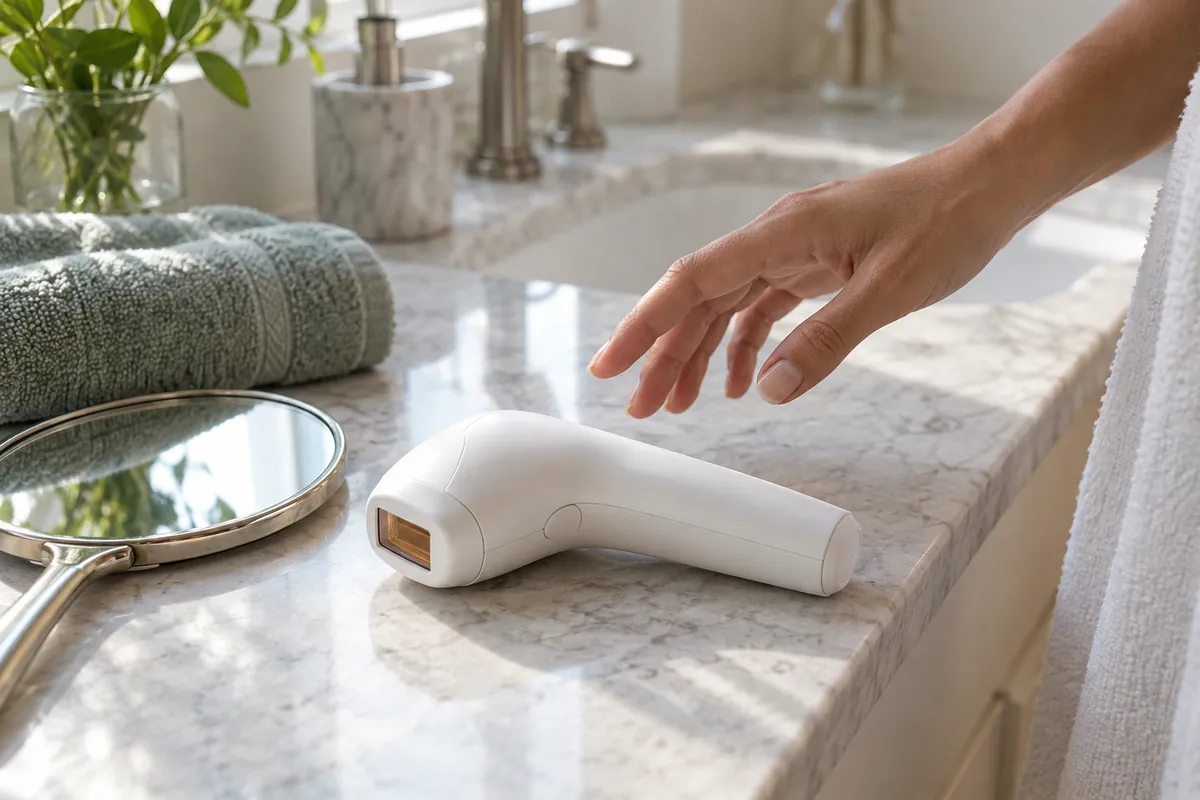
Licensing laws are aimed at services provided to other people, typically for compensation. Treating your own hair with a consumer device is a different situation, and it is generally not what these laws address. Whether it is a good idea is a separate question. Home devices sold to consumers are far less capable than professional epilators, self-insertion is very difficult on most areas of the face and body, and the risk of skin damage from poor technique is real. Our guide on home electrolysis devices versus a professional discusses the practical limits.
Treating friends or family is where people drift into trouble without realizing it. In a licensing state, performing electrolysis on another person can fall under the legal definition of practicing the profession. Some laws turn on whether payment is involved, and others do not. "I am only doing it for friends" and "I am not charging" are not safe assumptions. If you are not licensed and not a student working under supervision in an approved program, do not treat other people until you have read exactly how your state defines the practice.
Running a licensed practice from home is another topic entirely. Many electrologists work from a home studio, and it can be a good arrangement. It usually requires the practitioner's own license plus compliance with rules for the premises, which may include a separate establishment license, an inspection, zoning approval, and requirements such as a dedicated room and sink. Our home electrolysis studio legal checklist walks through those items.
Students obviously have to work on real people before they are licensed. Licensing laws allow for this through the school setting. In an approved program, students practice on models and, in a school clinic, on members of the public, under the supervision of a licensed instructor and within the rules the state sets for schools. That supervised context is what makes the practice lawful. Some states issue a student permit or require the school to register its students with the board.
The permission stops at the school door. A student who takes equipment home and treats neighbors for a small fee is not covered by the school's supervision, however far along she is in the program. I have had students ask whether they could "get a head start" on building a clientele before their license arrived. The answer is no, and the reason is not only legal. Early independent work without an instructor nearby is when bad habits and skin damage happen, and a complaint at that stage can follow a person into her license application.
Some states provide for a temporary permit, an apprenticeship route, or supervised work between graduation and licensure. Others have nothing of the kind. If your state offers such an arrangement, its conditions will be spelled out by the board, and you should follow them exactly. If you cannot find it in writing from the board, assume it does not exist. A school or an employer telling you informally that "everyone does it" is not a defense.

What unlicensed practice risks: the legal side
In a state that requires a license, practicing without one is a violation of state law. The consequences depend on the state and on the circumstances, and they can be serious. Boards and state agencies can issue cease and desist orders and impose civil fines, sometimes for each separate violation. In many states unlicensed practice of a regulated profession is also a criminal offense, and how it is classified varies. I am not going to list penalties by state, because they differ and change. The point is that this is not a technicality.
Enforcement usually starts with a complaint. A dissatisfied or injured client, a competitor, a former employee, or an inspector visiting the premises for another reason can report unlicensed activity. Advertising makes it easy to document, since a website or social media page offering electrolysis is evidence in itself. People sometimes assume that a small, quiet practice will never be noticed. In a service where clients return many times and talk to one another, that is not a realistic assumption.
The consequences extend to others as well. A salon or clinic owner who allows an unlicensed person to perform electrolysis on the premises can face action against the establishment license and against her own professional license. An employer who assures you that the business license "covers" you is usually mistaken. In licensing states, the individual performing the service must hold the individual credential. If you are offered a position on that basis, ask the board before you accept.
What unlicensed practice risks: insurance, liability, and your future
Legal penalties are only part of the exposure. Professional liability insurance for electrologists is normally written on the condition that the practitioner is properly licensed where a license is required. Someone practicing without one may be unable to obtain coverage, or may find that a policy she did obtain does not respond to a claim. That leaves her personally responsible if a client is burned, scarred, or develops an infection. One injury claim without insurance can cost far more than any training program.
A second consequence is the effect on later licensure. License applications commonly ask whether the applicant has ever practiced the profession without a license or been disciplined by any board, and boards can deny or condition a license based on the answer. A person who treats clients illegally for a year and then decides to become licensed may find that the year counts against her. Dishonesty on an application is a separate and serious problem of its own. The safest history is a clean one.
Third, there is the client. Licensing requirements exist because inadequate training produces real injuries, and most of the people harmed by unlicensed work never file a complaint. They simply live with the marks. I have seen clients come to me after work done by someone untrained, with pitting or pigment changes on the upper lip that needed a dermatologist's attention. If your skin shows signs of infection, scarring, or pigment change after any hair removal treatment, see a physician or dermatologist. For anyone tempted to start early, that client is the reason not to.
Finally, there is your reputation. This profession runs on referrals, from clients, from estheticians, from laser clinics, and from physicians. None of those sources will send people to someone who cannot show a license where one is required. Building a practice outside the rules means building it without the referral network that sustains every established electrologist I know. Even leaving the law aside, it is a poor business plan.
Licenses for the premises, inspections, and renewal
In many states the practitioner's license is not the only one involved. The place where electrolysis is performed may need its own establishment, shop, or facility license, with standards for the room, hand washing facilities, sterilization equipment, and waste disposal. Inspectors may visit before opening and periodically afterward. If you rent a room inside a licensed salon, find out whether the salon's license covers your service or whether you need your own. If you work from home, expect additional local requirements.
Infection control rules are usually part of the same framework. States commonly specify how instruments must be cleaned and sterilized, how probes and sharps must be handled and discarded, and what records must be kept. These rules are not paperwork for its own sake. They are the reason clients heal predictably. A practitioner who holds a license but ignores sanitation rules can be disciplined just as an unlicensed person can be penalized, and a pattern of violations can end in suspension or revocation.
A license also has to be maintained. Renewal periods, fees, and continuing education requirements differ by state. Put the renewal date in your calendar the day you are licensed, and keep certificates from every continuing education course. Working on an expired license is unlicensed practice in the eyes of most boards, and reinstating a lapsed license can involve extra fees or conditions. This is an easy problem to avoid and an irritating one to fix.

License, certificate, certification: not the same thing
Much confusion comes from three words that sound alike. A license is legal permission from a state to practice. A certificate is a document from a school or course stating that you completed its program. A certification is a credential from a professional body stating that you met its standard, usually by examination. Each has value, and only one of them is the state's permission. Advertising for courses sometimes blurs the difference, so it helps to see them side by side.
| Document | Who issues it | What it means | Does it allow you to treat clients in a licensing state? |
|---|---|---|---|
| State license | State board or agency | Legal authorization to practice electrology in that state | Yes, in that state only |
| School diploma or completion certificate | Electrology school | You finished the school's program and its hours | No. It is evidence toward a license application |
| Online course certificate | Course provider | You completed theory study | No. It does not replace in-person hours or a license |
| National exam result | Testing body | You passed an exam some states use for licensing | No. The state still has to issue the license |
| Voluntary professional certification | Professional association | You met a recognized professional standard | No. It complements a license and is useful where none exists |
| Establishment license | State or local agency | The premises meet the required standards | No. It covers the place, not the person |
I say this plainly about our own program. The online electrolysis theory course on this site teaches the science of the profession and helps students prepare for written examinations. It gives you knowledge and a completion certificate. It does not provide state-required in-person hours, and it does not license anyone. I built it to make hands-on training more productive and to let people study from home, and I would rather lose an enrollment than have a student misunderstand what it can do.

If you move or work across state lines
Because each license is valid only in the state that issued it, moving means dealing with a second state's rules. Some states have a process for recognizing a license from elsewhere, usually by comparing your training and examination with their own standard. If your original training was shorter than the new state requires, you may have to add hours or take an exam. If you move from a state with no license to one that has one, you will normally have to meet the full requirement, and your experience may or may not count for anything.
Until the new state has licensed you, you may not practice there, even if you have been licensed and working elsewhere for many years. That surprises experienced practitioners more than anyone. The same applies to occasional work across a border, such as seeing clients one day a week in a neighboring state. You need that state's license for that day. Our guide to electrolysis license reciprocity by state explains how transfers generally work and which documents to gather before a move.
If you live in a state without a license and think you might ever relocate, plan for it now. Choose training that would stand up to a stricter state's review, keep detailed records of your hours and curriculum, and consider sitting for a recognized examination or professional certification. None of that guarantees a smooth transfer, but it gives a future board something concrete to evaluate, and it can spare you from starting school again from the beginning.
How to check the rules for your state
Whether you are a prospective practitioner or a client, the checking process is similar, and it takes less time than people expect. The steps below go from the general to the authoritative. Start with a summary to orient yourself, then confirm with the primary source, because boards update their rules and the board's own statement is what counts if there is ever a dispute. Keep notes of what you find and when you found it.
- Read the summary for your state in the electrolysis licensing hub to learn whether a license exists and which agency administers it.
- Go to that agency's official website and find the current statute, rules, and application forms for electrologists.
- Check the definition of the practice, including whether it depends on compensation and whether it mentions specific methods or devices.
- Note the training requirement and whether the school must be state-approved, then verify any school you are considering against the board's list.
- Find the establishment rules: whether the premises need a separate license or inspection, and what applies to home studios.
- Look up local requirements with your city or county: business license, zoning, and health department registration.
- Ask the board in writing about anything unclear, especially scope questions involving another license or laser devices.
- If you are a client, use the board's public license lookup, where one exists, to confirm that a practitioner's license is active.
If your state turns out to have no electrology license, do steps five through seven anyway. The local and health layers still matter, and a written answer from the relevant agency about what is required to perform electrolysis in your location is worth having in your files. Then set your own professional standard through training, credentialing, and insurance, as described earlier. The public cannot tell the difference between "not required" and "not qualified" unless you show them.
Common misunderstandings
"I took a course, so I am certified to practice." A course certificate shows that you studied. In a licensing state it is not permission to treat clients, however thorough the course was. "The salon has a license, so I am covered." An establishment license covers the premises. The person performing electrolysis needs her own credential. "I am an esthetician, so hair removal is in my scope." Waxing may be. Electrolysis often is not, and the answer depends on your state's wording.
"My state has no license, so there are no rules." Local business, zoning, and health requirements usually still apply, and so do the practical demands of insurance and client safety. "I am not charging, so it does not count." Some states define the practice without reference to payment. "I was licensed in my old state, so I can work while my application is pending." Not unless the new state has given you a permit that says so. Each of these beliefs is common, and each has led people I have met into avoidable trouble.
The opposite misunderstanding exists too: that licensing is an impossible barrier. It is a defined process with clear steps. Thousands of people complete it, including career changers, parents studying part-time, and practitioners moving from other fields. It takes planning and patience, and it gives you something of real value: the legal right to practice, access to insurance, the trust of referral sources, and the confidence of knowing your training met a recognized standard.

Your next step
In most states you need a license to do electrolysis on other people, and in the rest you still need to meet local rules and a professional standard that protects your clients and yourself. Practicing without a required license risks fines, legal action, uninsured liability, and your chance of being licensed later. The way forward is simple and entirely within reach: find out exactly what your state requires, train in a way the state accepts, and do not treat the public until the license is in your hands.
Start by opening the electrolysis licensing hub and reading your state's page, then confirm it with the board. While you compare approved schools, you can begin the theory at home with our online electrolysis course, which prepares you for the knowledge side of training and for written exams without claiming to replace hands-on hours. Done in that order, the licensing question stops being an obstacle and becomes the first completed step of a real career.
State Requirements
State licensing guides
Hours, exams, fees, and the licensing board differ by state. Open your state for the current requirements.
Common Questions
FAQ
In most states, yes. The majority license electrologists and require approved training and an examination before you may treat the public. Some states do not have a dedicated electrology license, though local business, zoning, and health rules can still apply. There is no national license, so the answer depends on where you practice. Look up your state in the electrolysis licensing hub and confirm with the state board.
Often not. In many states electrology is a separate license with its own training and exam, and an esthetics or cosmetology license does not include it. In some states the scopes overlap or an added qualification exists. The wording of your state's law decides it, so ask your board in writing. Our guide on whether estheticians can do electrolysis explains the patterns.
In a state that requires a license, it is a violation of state law. Depending on the state, consequences can include cease and desist orders, civil fines, and criminal charges. Beyond that, liability insurance may be unavailable or may not respond to a claim, leaving you personally responsible for any injury, and a history of unlicensed practice can count against you when you later apply for a license.
Be very careful. In licensing states, performing electrolysis on another person can meet the legal definition of practicing the profession, and some laws do not depend on whether you are paid. Unless you are a student working under supervision in an approved program, or you have confirmed in writing that your state permits it, do not treat other people before you are licensed.
No. An online certificate shows that you completed theory study. A license is legal permission from a state, and in licensing states it requires in-person training hours and an examination that no online course can replace. Online theory is valuable preparation and review. It is not authorization to treat clients, and any provider suggesting otherwise should be treated with caution.
Licensing laws are generally directed at services performed on other people, so self-treatment with a consumer device is usually a different matter. It is still worth caution for practical reasons: home devices are much less capable than professional equipment, and self-insertion carries a real risk of skin damage. Our guide on home devices versus a professional covers the trade-offs.
Check city, county, and health department requirements for your business and premises, obtain thorough training with supervised hands-on practice, arrange professional liability insurance, and set up written infection control procedures. Consider a voluntary professional certification so clients and referral sources have a recognized benchmark. If you might move to a licensing state later, keep detailed records of your training hours and curriculum.
In licensing states, most boards offer a public online lookup where you can search a practitioner's name and see whether the license is active. The license is also normally displayed in the treatment room. Where no license exists, ask about training, sterile single-use probes, insurance, and professional credentials. A qualified electrologist will answer these questions readily.
Keep Reading
Related Guides


