Electrolysis
PCOS and Unwanted Hair: Why Electrolysis Actually Works
Quick answer
Electrolysis works on PCOS hair because it destroys each follicle directly, regardless of hair color or what triggered its growth. PCOS cases usually need more sessions, since new follicles keep activating while androgen levels stay elevated, and laser often disappoints on finer or lighter hair. Most people run electrolysis alongside PCOS medication, then shift to occasional maintenance visits.
If you have polycystic ovary syndrome and you have spent years plucking, waxing, shaving, or bleaching hair on your chin, jawline, upper lip, or abdomen, you already know the frustrating part: it never really stops. New coarse, dark hairs keep showing up in the same places, sometimes faster than you can keep up with them. That is not a personal failure of whatever method you tried. It is a direct result of what PCOS does to your hormones, and it is also exactly the kind of pattern that electrolysis, as a method, is built to handle. This guide walks through why PCOS causes this specific kind of hair growth, why electrolysis works differently than laser or temporary removal for this exact situation, what a realistic treatment plan looks like, and how to think about cost, pain, and medication timing along the way.
I am writing this from the practitioner's side of the treatment chair. Hormonal hair growth is a frequent reason women look for an electrologist, and PCOS comes up often in first consultations, usually after years of trying other methods. The goal here is not to sell a method but to explain the mechanics honestly, so you can walk into a consultation knowing what to ask, what a realistic plan sounds like, and which promises should make you cautious. Everything below about PCOS itself is general information, and the medical side of the condition always belongs with your physician.
What PCOS-Related Hair Growth Actually Is
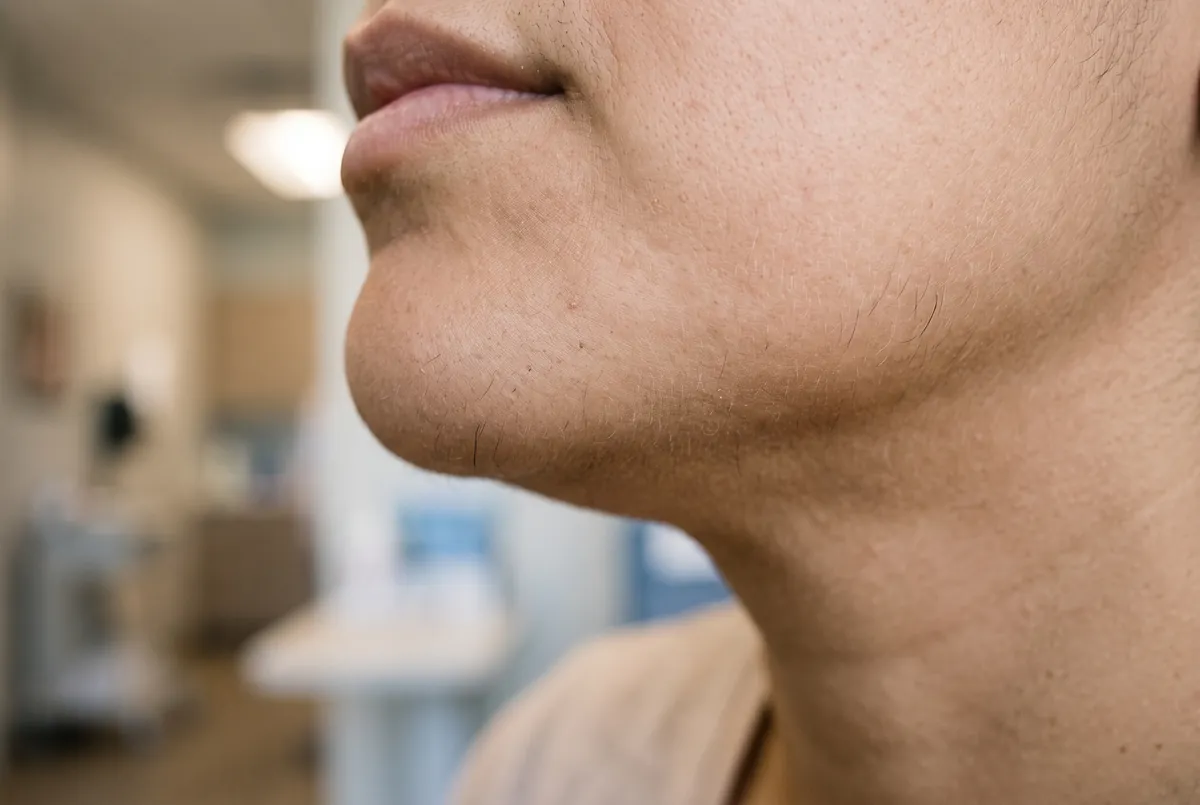
Polycystic ovary syndrome is a hormonal condition, and one of its more visible effects is elevated androgen activity, hormones that are present in every woman's body in small, normal amounts but that run higher than typical in many people with PCOS. Excess androgens can push hair follicles in certain areas to behave the way follicles typically behave on men: producing thicker, darker, coarser hair instead of the fine, barely visible hair (sometimes called vellus hair) that would otherwise grow there. This pattern has a clinical name, hirsutism, and PCOS is one of its most common underlying causes in women of reproductive age.
The mechanism is not a defect in your skin or a sign that something is wrong with the follicle itself. It is a hormonal signal telling the follicle to grow differently than it would under lower androgen levels, and as long as that signal is present, existing follicles keep producing coarse hair and new follicles can switch on that were not active before.
This is different from ordinary body hair variation. Most people have some fine hair on the chin or upper lip that is barely noticeable. What PCOS tends to produce instead is hair that is visibly darker, thicker, and more prominent against the surrounding skin, in a pattern that keeps evolving rather than settling into a fixed, predictable amount. That evolving quality is the single most important thing to understand before choosing a hair removal method, because it changes what "success" looks like and how long a treatment plan realistically needs to run.
Why It Shows Up Where It Does
Androgen-sensitive hair follicles are not spread evenly across the body. They cluster in specific zones: the chin, jawline, and upper lip most commonly, but also the chest, the midline of the abdomen (sometimes described as a line running from the navel downward), the lower back, and sometimes the inner thighs. If you have PCOS and you have noticed hair in more than one of those areas, that is a recognized pattern, not something unusual about your particular case. It is also worth knowing that the pattern can shift over time. Hair that was manageable on the chin at twenty-five can spread to the jawline or neck by thirty, simply because androgen levels and follicle sensitivity are not static. This is one of the reasons a one-time cosmetic fix rarely satisfies someone with PCOS for long. The treatment area itself can expand as the underlying hormonal picture continues.
This is also a good moment to be direct about scope. If excess hair growth is a new development, or if it is showing up alongside irregular periods, persistent acne, or unexplained weight changes, an actual PCOS diagnosis or evaluation belongs with a physician, not with a hair removal provider. Our related guide on hormonal hair growth and electrolysis goes into more depth on hormonal causes of hirsutism generally, including causes beyond PCOS. What this article focuses on is what happens once PCOS is already part of the picture and you are deciding how to manage the hair itself.
This Is Not Medical Advice
Everything in this guide about PCOS itself is general background, not a diagnosis tool or a substitute for a physician's evaluation. PCOS is diagnosed through a combination of symptoms, bloodwork, and sometimes imaging, and it is managed medically, often by a gynecologist or endocrinologist, through options that can include hormonal birth control, anti-androgen medication, or medication that addresses insulin resistance, depending on your specific presentation and goals. Electrolysis has a clear, useful role in this picture, but that role is limited to the hair that is already on your skin. It does not diagnose PCOS, and it does not treat the hormonal condition itself. Anyone offering electrolysis in a way that suggests otherwise is overstating what the procedure does.
Why Laser Often Struggles With This Pattern
Laser hair removal works by targeting melanin, the pigment in the hair shaft, and using heat absorbed by that pigment to damage the follicle. That mechanism depends on strong contrast: the more melanin in the hair relative to the surrounding skin, the more effectively a laser can lock onto it. This is exactly where PCOS-pattern hair creates a problem. A meaningful share of PCOS-related facial and body hair is finer or lighter than a laser needs for reliable results, especially in the early stages of a new area activating, and even coarser PCOS hair can include a mix of terminal (thick, pigmented) and finer strands in the same patch of skin. Laser tends to perform best on hair that is thick and dark against lighter skin. It performs less predictably on fine, light, gray, or red hair, and PCOS hair growth frequently includes exactly that kind of variation, particularly as new, not-yet-fully-coarse follicles activate.
There is a second issue specific to PCOS: because androgen activity can keep switching on new follicles throughout a laser course and afterward, a laser series that successfully reduces the hair present at the time of treatment does not stop new follicles from becoming active later. Laser is generally described, accurately, as a permanent hair reduction method rather than permanent removal, and that distinction matters more for a hormonally driven pattern than for ordinary body hair, because the "reduction" achieved in a course can be partly offset by new growth activated after the fact. None of this means laser is never useful for someone with PCOS. Some people do a laser course first on coarse, dark, established hair and get real reduction from it. It means laser alone is a poor match for the full pattern PCOS tends to produce over time, and it is worth going in with that expectation rather than being surprised later.
Why Electrolysis Fits a Hormonal, Moving Target
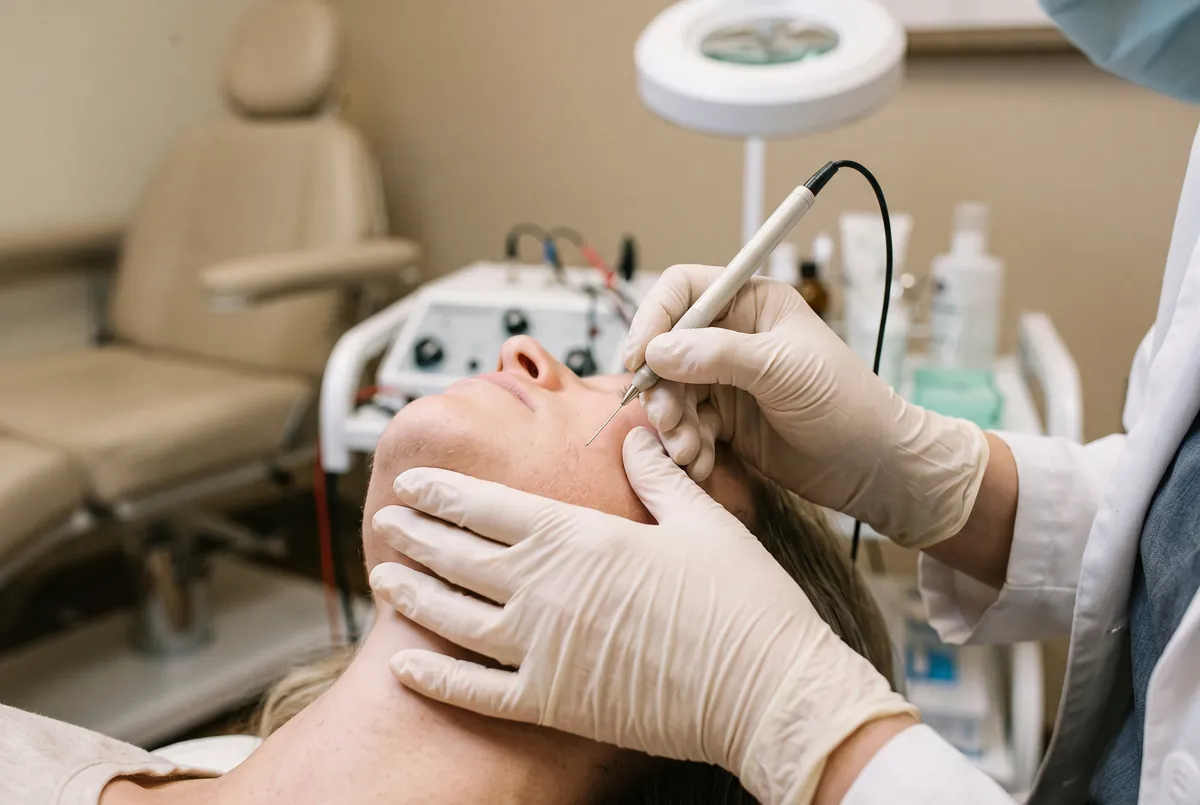
Electrolysis works on a completely different mechanism. A fine probe is inserted into the individual hair follicle, and a small electrical current delivers energy directly to the structures in the follicle responsible for producing hair. There is no reliance on pigment or hair color at all, which means electrolysis works the same way on coarse dark hair, fine light hair, and even gray hair, an important detail for a pattern like PCOS hirsutism where hair color and thickness can vary hair by hair, even within the same small patch of skin. The FDA classifies electrolysis, not laser, as a permanent hair removal method, specifically because the follicle is treated individually and destroyed rather than merely suppressed.
That follicle-by-follicle approach is also the direct answer to the "moving target" problem PCOS creates. Because electrolysis treats hairs individually rather than working on the entire visible area at once, a practitioner can simply keep treating new hairs as they appear over time, for as long as new follicles keep activating. This is fundamentally different from a laser course, which is built around a fixed number of sessions targeting the hair present when the course starts. Electrolysis does not assume the hair situation is static. It is built to be revisited, which is precisely what a hormonally active condition like PCOS requires. None of this makes electrolysis a faster fix. It generally is not the fastest option for a large area of coarse, dark hair in someone without a hormonal driver. What it offers instead is a method that keeps working correctly even as the situation changes, which for PCOS is worth more than speed.
Where Temporary Methods Still Fit
Shaving, waxing, threading, and depilatory creams all still have a place for someone with PCOS, particularly on areas not yet being treated with electrolysis, or during the early period after a diagnosis when you are still deciding on a longer-term plan. There is nothing wrong with continuing to wax or shave an area while a different area gets electrolysis treatment first, and many clients do exactly that, starting with whichever area bothers them most and expanding coverage over time as budget and scheduling allow.
Threading and tweezing carry one specific caution worth knowing: repeatedly plucking the same hair over a long period can, in some people, eventually make the hair grow back finer or can irritate the follicle, though it does not stop the follicle from producing hair the way electrolysis does. None of the temporary methods correct the underlying hormonal cause, and none of them are permanent, which is the whole reason people with PCOS eventually look for something else.
What a Realistic Treatment Timeline Looks Like
Setting accurate expectations up front is one of the most important things a practitioner can do for a PCOS client, because a course built around unrealistic timing tends to feel like a failure even when the treatment itself is working correctly. Electrolysis, for any client, is a gradual process. Hair grows in cycles, and only hair that happens to be in an early active growth phase at the time of a session responds best to treatment, which is why any electrolysis course, hormonal or not, is built around repeated visits over months rather than one appointment. For a client without a hormonal driver, sessions typically get closer together at the start and spread out as visible hair decreases, eventually tapering into occasional maintenance.
For someone with PCOS, that same general shape applies, but the tapering-off stage tends to arrive later and involves more total visits, because new follicles keep entering the picture on top of the ones being treated. A practitioner experienced with hormonal hair growth will generally frame the goal less as "finish by this date" and more as "get the visible area under control, then keep it under control while your hormonal picture is still active." That framing is more honest, and it is also more useful, because it sets you up to feel like the treatment is succeeding at each stage rather than measuring every visit against a finish line that a hormonal condition makes hard to predict in advance.
Why PCOS Clients Often Need More Sessions
The core reason is straightforward: electrolysis treats hair that is present and active at the time of a session, and PCOS keeps introducing new active follicles for as long as androgen levels stay elevated. In a client without a hormonal cause, the visible number of active hairs in a treatment area tends to decline steadily and predictably as sessions continue, because no new source of hair is being added. In a PCOS client, the count of active hairs can decline in one part of the treated area while new hairs are activating in another part of the same area, or a nearby area, at the same time. That does not mean progress isn't happening. Hair that has already been treated is gone permanently once its follicle is destroyed. It means the finish line keeps a bit of distance from you until the underlying hormonal activity settles down, whether through age, through effective medical treatment, or through natural changes over time.
This is also why an experienced practitioner will typically ask about your PCOS history, and about any medication you are on for it, during a first consultation rather than after several sessions in. Knowing that hormonal activity is a factor from day one lets a practitioner set your session schedule, and your own expectations, around the actual pattern you are dealing with instead of a generic timeline that was never designed for it. For a broader look at how session counts are estimated for hair growth generally, our guide on how many sessions electrolysis takes covers the baseline factors that apply to everyone, on top of which the hormonal factor described here gets layered.
Pain and Sensitivity Considerations
Electrolysis involves a brief sensation at each insertion, often described as a quick pinching or heat sensation, and how noticeable that sensation is varies a lot from person to person and even area to area on the same person. The upper lip and chin, two of the areas most commonly affected by PCOS-pattern hair, tend to be reported as more sensitive than areas like the arms or legs, simply because facial skin generally carries more nerve endings. This is not unique to PCOS clients, but it is worth mentioning because these are exactly the areas most PCOS treatment plans focus on first.
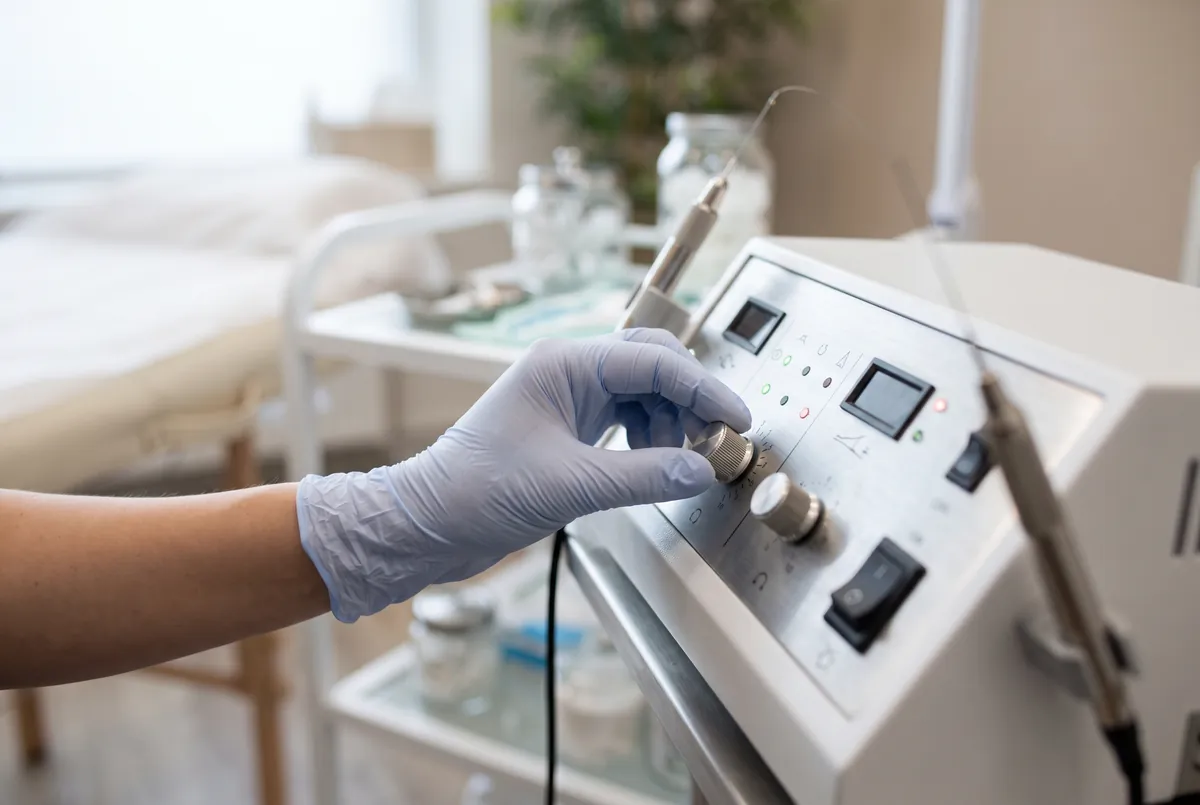
There is also a PCOS-specific wrinkle worth knowing about: skin in androgen-affected areas can sometimes be a bit more reactive immediately after treatment, showing temporary redness or small bumps that settle within a day or so, similar to what happens with ordinary hormonal hair growth generally. A practitioner can adjust machine settings, treatment pace, and aftercare recommendations based on how your skin responds, and it is entirely reasonable to ask for a slower pace or smaller treatment area per session if the sensation is more than you expected. For more detail on sensitivity itself, independent of PCOS, our guide on electrolysis for sensitive skin covers how practitioners typically adjust for reactive skin. None of this is a reason to avoid the procedure. It is a reason to communicate clearly with your practitioner about what you are feeling, session by session, especially early on while you are both still calibrating.
How Electrolysis Interacts With PCOS Medication
Many people with PCOS are on some form of medication intended to manage the condition, most commonly hormonal birth control to regulate androgen levels and cycles, an anti-androgen medication such as spironolactone prescribed by a physician specifically to reduce excess hair growth, or medication addressing insulin resistance, which can also affect androgen activity indirectly. None of these medications are a reason to avoid electrolysis, and electrolysis is not a reason to avoid or delay medication your physician has recommended. The two approaches work on different timelines and different parts of the same problem, and running them in parallel is standard practice.
What is worth telling your electrolysis practitioner is simply that you are on one of these medications, and roughly when you started, because it gives them useful context for how your hair growth might behave over the coming months. If a physician starts or adjusts a medication meant to reduce androgen-driven hair growth, and your active hair count starts to drop a few months later, that is useful information for your electrolysis practitioner too, since it may mean your course can move into its tapering stage sooner than originally planned. Being transparent about medication in both directions, your physician knowing you are also doing electrolysis, and your electrolysis practitioner knowing what medication you are on, keeps both parts of your care working with the same picture instead of guessing.
The Waiting Window While Medication Works
One detail that surprises a lot of people starting anti-androgen medication for PCOS is how long it takes to see an effect on visible hair. Medication that lowers androgen activity does not make existing coarse hair disappear. What it can do, gradually, is slow how quickly new hair grows and sometimes cause existing hair to become finer over time, but that kind of change is typically measured in months, not weeks, and it varies significantly from person to person. This means there is a real waiting window, often stretching across several months of a new medication regimen, during which the hair you already have is still very visibly there, and hair removal is still doing the actual visible work while the medication works on the underlying cause in the background.
This is exactly the situation electrolysis is suited for, because you are not stuck choosing between "start hair removal now" and "wait for the medication to work first." Running both at once means you get visible management of the hair you actually have to deal with today, while the medication does its slower work on reducing future growth. If your physician later confirms that androgen levels have come down and new hair growth has genuinely slowed, that is useful, welcome news for your electrolysis practitioner too, since it usually means your course can shift toward maintenance sooner than it would have otherwise.

Choosing a Practitioner Who Understands PCOS
Not every electrolysis practitioner has deep experience with PCOS clients specifically, and it is a completely reasonable question to ask directly at a first consultation: how much experience does this practitioner have working with hormonally driven hair growth, and PCOS specifically. A practitioner with that experience will typically be upfront that your course may run longer than a standard estimate, will ask about medication and diagnosis history as a normal part of intake rather than treating it as an unusual request, and will talk about maintenance as an expected part of the plan rather than a sign that something went wrong. Someone who instead promises a fixed, short timeline without asking any of these questions is either inexperienced with this specific pattern or not being fully candid about what a hormonal case actually involves.
It is also worth asking how a practitioner adjusts machine settings and pace for sensitive facial areas, since the chin and upper lip come up so often in PCOS treatment plans specifically. A good consultation should leave you with a clear sense of realistic timing, an honest cost range, and a comfortable feeling that you can speak openly about your diagnosis and medication without it being treated as unusual. If you are exploring options in your area, our directory of licensed electrologists by state is a starting point for finding practitioners, and our page on state licensing requirements for electrolysis explains what training and credentials to look for wherever you live.
Cost Expectations, in General Terms
Electrolysis pricing structures vary by practitioner and by region, and are usually built around session length or the amount of treatment area covered rather than a flat per-course price, since no two clients need the same number of sessions. For a PCOS client specifically, the honest way to think about cost is less "what does a course cost" and more "what does an ongoing relationship with a practitioner cost over the months, and sometimes years, it takes to get an area under control and then keep it that way."
Front-loading the budget conversation at your first consultation, and asking your practitioner to walk through how pricing works for their practice specifically, tends to produce far less frustration than discovering the real total cost gradually, session by session. If a quoted price for your specific situation sounds unusually low, it is worth asking directly what session count and what areas that price actually assumes, since a number that looks appealing upfront sometimes turns out to cover far less than what a PCOS pattern actually requires.
Maintenance After Hormones Stabilize
Once your PCOS is being actively managed, whether through medication, lifestyle changes your physician has recommended, or simply the way hormone levels shift with age, the rate at which new follicles activate generally slows down. This is usually the point where a course shifts from regular, closely spaced sessions to occasional maintenance visits spaced weeks or months apart, catching the rare new hair rather than working through an actively growing area. Many long-term PCOS clients keep a standing, infrequent maintenance appointment on the calendar indefinitely, simply because hormone levels can shift again later in life, whether from a change in medication, a life stage like pregnancy or perimenopause, or simply natural variation. That is not a sign the earlier course failed. It is a normal, expected part of managing a condition that itself does not follow a fixed timeline.
The Emotional Side of PCOS Hair Growth
It is worth saying plainly that visible hair growth from PCOS carries a real emotional weight for a lot of women, on top of everything else PCOS can involve, from irregular cycles to weight changes to fertility concerns. Facial hair in particular gets tangled up with how people feel seen in daily life, and it is common for someone to describe hair removal as one of the few parts of managing PCOS that feels genuinely within their control, at a point where a lot of the rest of the condition can feel slower or harder to influence. A regular electrolysis schedule can offer exactly that kind of tangible, visible progress, even while medical treatment for the underlying hormonal picture takes its own, often much slower, course in parallel. That is a legitimate reason to prioritize hair removal, not a superficial one, and a good practitioner will treat it that way rather than minimizing it.
From the practitioner's side, that means a few things should be standard. Treatment happens in a private room, the conversation stays on your goals rather than on how the hair looks, and you set the pace, including how much of an area gets treated in a single visit. Some clients prefer to talk through every step, others prefer quiet, and both are completely fine. If hair growth is weighing on your mood or making you avoid people and places you used to enjoy, mention that to your physician as well, since that part of living with PCOS deserves support too, not only the hair itself.
Common Myths About PCOS and Hair Removal
- "If the cause is hormonal, hair removal won't really work." Not true for electrolysis specifically. Each treated follicle is permanently destroyed regardless of what triggered its activity in the first place. What the hormonal cause changes is how many new follicles keep appearing over time, not whether treatment on existing follicles actually holds.
- "You have to get your PCOS fully under control before starting electrolysis." Not necessary. Most people run electrolysis and PCOS medical treatment side by side, and there is no medical reason to wait for one before starting the other.
- "Laser is always the better first option because it treats larger areas faster." Not for PCOS-pattern hair specifically. Laser depends on pigment contrast that fine or lighter PCOS-related hair often lacks, and it does not address new follicles activated after a course ends, both of which matter more for hormonal hair growth than for hair without a hormonal driver.
- "PCOS hair growth will eventually just stop on its own." Not reliably, and not on a predictable timeline. It can slow with effective medical treatment or with natural changes over time, but that is a gradual, individual process, not something to plan hair removal around waiting for.

Before Your First Visit
- If you have not been formally diagnosed and suspect PCOS, start with a physician, an evaluation for the hormonal cause comes first
- Bring or note any current medication related to PCOS, including hormonal birth control or anti-androgen prescriptions
- Be ready to talk openly about which areas bother you most, so the plan can prioritize accordingly
- Ask directly about the practitioner's experience with PCOS and hormonal hair growth specifically
- Ask for a realistic session estimate and an honest cost range rather than a single flat number
- Stop tweezing, waxing, and threading the area you want treated, since your practitioner needs those hairs present to treat them
- Ask how many days of regrowth your practitioner wants before the appointment, so there is enough hair to work with
- Do not stop or delay medical treatment for PCOS because you have started electrolysis, the two work together, not instead of each other
The tweezing point is the one I repeat most often. Plucking the same hairs over and over can distort the follicle and, over time, make it harder to reach cleanly with a probe, and every hair you pluck the night before a session is a hair that cannot be treated at that session. Trimming or shaving between visits keeps the area manageable without disturbing the follicle underneath. If you are not sure how much growth your practitioner wants before an appointment, ask when you book, because it can vary with the area and the stage of your treatment plan.

Where to Go From Here
PCOS-driven hair growth is a real, ongoing hormonal pattern, not a cosmetic problem with a one-time fix, and the method you choose should match that reality. Electrolysis is built to keep working correctly as new follicles activate over time, which is exactly what a hormonal condition like PCOS calls for, and it can run alongside whatever medical treatment your physician has you on rather than waiting for one to finish before the other starts. If you are thinking about electrolysis as a career and want to understand hair growth cycles and hormonal patterns like this one in more depth, our online electrolysis course and state licensing guides are a good place to start.
If you are a client, the next practical step is a consultation. Our guide on how to prepare for your first electrolysis session walks through what happens at that first visit, and if sensation is your main worry, what electrolysis actually feels like explains how practitioners keep treatment comfortable. Bring your medication list, your questions about timing and cost, and an honest description of which areas bother you most. A practitioner who listens carefully to all three is a good sign that the plan you get will fit your actual situation rather than a generic template.

State Requirements
State licensing guides
Hours, exams, fees, and the licensing board differ by state. Open your state for the current requirements.
Looking for a practitioner or a program near you? Browse electrologists by state and city or beauty schools by state.
Common Questions
FAQ
It works the same way on both. Electrolysis destroys the follicle directly with electrical current rather than relying on hair color or thickness, so it treats PCOS-related hair just as effectively as hair without a hormonal cause. What differs is how many total sessions a PCOS case needs, since new follicles can keep activating over time.
Laser targets pigment in the hair shaft, and PCOS-related hair is often finer or lighter, especially early on, than the coarse dark hair laser works best on. Laser also does not address new follicles that activate after a course ends, which happens more with an ongoing hormonal driver like PCOS than with hair growth that has no hormonal cause.
There is no fixed number that applies to everyone, and any specific figure quoted before an actual consultation should be treated skeptically. PCOS cases generally need more total sessions than hair growth without a hormonal cause, because new follicles keep activating for as long as androgen levels stay elevated. A practitioner can give you a realistic range only after seeing your specific pattern.
Most people run both at the same time, since medication that reduces androgen-driven hair growth typically takes months to show any effect on visible hair. Waiting for medication to work first usually just means going longer without addressing hair that is already there.
PCOS itself does not make electrolysis more painful. Sensation depends more on the treatment area, the chin and upper lip tend to be more sensitive than other areas regardless of the cause of the hair, and on individual pain tolerance. A practitioner can adjust settings and pace based on how you respond.
No. Hair that has already been treated is permanently gone, regardless of what continues to happen hormonally elsewhere. New follicles that activate later simply need their own separate treatment, which is exactly what ongoing sessions and later maintenance visits are for.
Not necessarily forever at the same intensity. Most PCOS clients move from frequent sessions during the active phase to occasional, infrequent maintenance visits once hormonal activity settles, whether through medical treatment, age, or other factors. Some keep a light maintenance schedule indefinitely simply because hormone levels can shift again later in life.
It is best not to tweeze, wax, or thread an area that is being treated with electrolysis. Those methods remove the hairs your practitioner needs to see and treat, and repeated plucking can distort the follicle, which makes later insertions harder. Trimming or shaving is usually the better way to keep the area tidy between visits, since it leaves the follicle untouched. Ask your practitioner how much regrowth they want before each appointment.
Keep Reading
Related Guides


