Cosmetology
Cosmetology State Board Exam: How to Pass the Written and Practical

Quick answer
To pass the cosmetology state board exam, prepare for its two parts separately: a multiple choice written exam heavy on infection control, safety and state law, and a practical exam where an examiner scores how safely and cleanly you work. Build a study plan, rehearse the practical on a mannequin with your full kit, and check your state's rules on format and retakes.
The cosmetology state board exam is the last gate between finishing school and working legally behind the chair. By the time students reach it, most of them already know how to cut, color, wrap and give a facial. What trips people up is different: a written test full of infection control and law questions phrased in unfamiliar ways, and a practical exam where an examiner scores how safely and cleanly you work, not how pretty the finished style looks. I have been a licensed cosmetologist and electrologist for more than twenty years, and I have watched talented students fail a section they could have passed with a better plan, while quieter students with average hands passed on the first try because they prepared for the exam itself.
This guide explains how to pass the cosmetology state board exam in a practical, step by step way: how the written and practical parts differ, what topics usually appear, how to build a study plan, how to prepare your practical kit, what to rehearse on the mannequin, why candidates lose points, what to expect on test day, and what to do if you fail a section. Exam formats, fees, passing scores, retake rules and the school hours you need before you can sit for the exam are all set by each state, so I will not print numbers that may not apply to you. Instead, I point you to the cosmetology licensing requirements by state, where each state page lists its own rules.
How the Cosmetology State Board Exam Is Built
In most states the licensing exam has two separate parts. The first is a written exam, often called the theory exam, which is a multiple choice test usually taken on a computer at a testing center. The second is a practical exam, where you perform a set of services on a mannequin (and in some states on a live model) while an examiner watches and scores each step. Some states give both parts on the same day, others schedule them separately, and a few states have changed or dropped parts of the practical in recent years. The order matters too: in some states you must pass the written part before you can book the practical, and in others you can take them in any order.
The two parts test different things. The written exam checks whether you understand the science and rules behind the work: why a disinfectant must stay in contact for a certain time, what happens chemically when you relax hair, which skin conditions mean you should refuse a service, and what your state law says about licenses and salon operation. The practical exam checks whether you can apply those rules with your hands under pressure: setting up a clean station, protecting the client, mixing and applying products correctly, and cleaning up without cross contamination. Passing one part does not guarantee the other, which is why you should prepare for each separately rather than treating the exam as one event.
Many states use national exams developed by the National-Interstate Council of State Boards of Cosmetology (NIC), delivered through a third-party testing vendor. Other states write their own exams or use a different vendor. Even among NIC states, details such as which practical services are tested, whether a state law section is added, how you register and what you bring can differ. Your most reliable source is the candidate information bulletin published by your state board or its testing vendor. Download the newest version before you study, and check it again before you buy supplies, because bulletins do get updated.
Start With Your State's Rules, Not a Generic Checklist
The single most useful thing you can do in the first week of exam prep is to read your state's official exam materials from start to finish. Online checklists, including this one, can tell you what is typical, but only your state board can tell you what is required. Look for four things: the eligibility rules (how many school hours or apprenticeship hours you need before applying, and whether your school must certify them), the content outline for the written exam, the list of services and steps for the practical exam, and the kit list with any banned items. Mark anything that surprises you, because surprises are exactly where points get lost.
Eligibility deserves special attention. Every state requires a set amount of training at a licensed school or through an approved apprenticeship before you can test, and the number varies widely. Some states let students take the written exam shortly before graduation, while others require the full program to be complete and documented. If you trained in another state or another country, the rules for transferring hours or qualifying by endorsement are different again. Our guide to cosmetology license reciprocity between states covers that path, and your state page on the licensing hub links to the official board so you can confirm the current requirements.
I also tell students to be honest about the legal line between study and training. Online programs and apps can build your theory knowledge, help you memorize terms and give you practice questions, and that is genuinely useful for the written exam. They never replace the in-person school hours your state requires, and they do not qualify you to sit for the exam on their own. If someone promises you a license through online study alone, walk away. The exam exists because the state wants proof that you trained under supervision on real services.
Is the Cosmetology State Board Exam Hard?
Students ask me this more than any other question, and the honest answer is that it is fair but unforgiving. It is not designed to trick you, and the content is the same content your school taught. What makes it feel hard is the combination of breadth and precision. The written exam pulls from every chapter you studied, including the ones you skimmed because they felt less exciting than color or cutting, such as bacteriology, electricity and business law. The practical exam rewards consistency: an examiner is not grading your creativity, they are checking whether each required safety and procedure step happened in the right order.
From what I have seen, the students who struggle most fall into a few groups. Some are strong in the salon but test anxious, so they freeze on wordy questions. Some learned a technique one way in school and never practiced the exam version of it, which is often more rigid. Some did most of their practical work with an instructor nearby and never rehearsed alone with a time limit. And some simply waited too long after finishing school, so the theory faded. None of these problems is about talent. Each one has a specific fix, and the rest of this guide is organized around those fixes.
It also helps to reframe what passing means. You do not need a perfect score on either part. You need to reach your state's passing standard, and on the practical that usually means not missing the critical safety steps that carry heavy penalties. A calm candidate who never skips a hand wash or a disinfection step and finishes every service on time is in a much stronger position than a nervous perfectionist who runs out of time polishing a pin curl.
What the Written Exam Usually Covers
Exact weighting depends on your state and exam provider, and your candidate bulletin will show the domains and their approximate share. In general, though, the cosmetology written exam leans heavily on scientific concepts and safety rather than on styling. Infection control and safety tend to be a large share of the questions everywhere, because protecting the public is the whole reason the license exists. After that come hair and scalp science, chemical services, skin and nail basics, and the rules that govern your license. The list below shows the topic groups that appear most often across states, so you can map them against your own outline.
- Infection control and safety: the difference between cleaning, disinfecting and sterilizing, contact time, EPA-registered disinfectants, blood exposure procedures, single-use items and safe handling of chemicals.
- Basic science: bacteriology, anatomy and physiology basics (bones and muscles of the head and hands, skin layers, hair structure), and basic chemistry such as pH, oxidation and product ingredients.
- Hair care and chemical services: hair analysis, porosity and elasticity, coloring and lightening, permanent waving, chemical relaxing, strand tests and patch tests.
- Hair cutting and styling principles: elevation, guidelines, sectioning, thermal tools and safe temperatures.
- Skin and nail services: skin disorders that require referral, facial basics, temporary hair removal, and nail diseases and disorders you must not service.
- Electricity and light: basic electrical safety and the principles behind tools used in the salon.
- Laws and rules: license categories, renewal, scope of practice, salon inspections and your state's specific regulations, sometimes tested in a separate section.
Pay attention to the phrasing of questions about contraindications. The written exam loves scenarios where a client arrives with a condition and you must choose whether to proceed, modify or refuse and refer. The safe answer is almost always the one that protects the client and sends a possible medical issue to a physician or dermatologist. In real practice I follow the same rule: a cosmetologist can recognize warning signs but does not diagnose. If you study with that mindset, many tricky questions become straightforward.
A Study Plan for the Written Exam
The best time to start studying for the written exam is while you are still in school, but most people start seriously in the final weeks of their program. Either way, a plan with a clear structure beats open-ended reading. I suggest working from your state's content outline, not from the textbook's chapter order. Rank each domain by two factors: how much of the exam it covers and how weak you feel in it. Heavy and weak domains get the most time. Light and strong domains get a quick review near the end so they stay fresh. The table below shows a simple phased approach that you can stretch or compress depending on how much time you have before your test date.
| Phase | Focus | How to study |
|---|---|---|
| Diagnose | Find your weak domains | Take a full practice test cold, then sort every missed question by domain |
| Rebuild | Infection control, chemistry, anatomy basics | Reread the chapter, make flashcards for terms, explain each concept out loud in your own words |
| Apply | Chemical services, skin and nail disorders, contraindications | Scenario questions, compare similar terms side by side, write out the steps of each service |
| Law | Your state's rules and regulations | Read the state law booklet or rules summary directly, not a secondhand summary |
| Simulate | Timing and stamina | Full-length timed practice tests in a quiet room, reviewing every wrong answer the same day |
| Maintain | Keep everything fresh | Short daily flashcard sessions and one mixed practice set every few days until test day |
Short, frequent sessions work better than long weekend marathons. Most of the written exam is vocabulary and concepts, and memory holds onto those best when you review them repeatedly over days and weeks. Twenty or thirty focused minutes of flashcards on a busy day is more useful than skipping several days and then cramming. Keep one deck just for words you keep confusing, such as disinfection versus sterilization, or the different layers of the skin, and review that deck every day until the confusion disappears.
When you review a wrong practice answer, do not stop at learning the right letter. Ask yourself why each wrong option is wrong. This habit trains you to read the real exam carefully, because many questions have two answers that look reasonable, and the difference is one word such as "always", "first" or "most". Students who only memorize answers to practice questions often do fine on the practice bank and then feel lost when the real exam words the same concept differently.
Study groups help if they stay structured. Two or three classmates quizzing each other on the outline, taking turns explaining a domain, can expose gaps faster than solo reading. A group that turns into a chat about salon jobs does not help. If you studied your theory through an online program, use it for what it does well: organized chapters, practice questions and review. Our explainer on how online cosmetology training works covers where online theory fits and where it stops, and again, it never replaces your required in-person hours.

How to Handle the Written Exam on the Day
Test-taking technique can add real points without any new knowledge. Read the whole question, including the last line, before looking at the answers. Many cosmetology questions set up a scenario and then ask something narrower than you expect, such as the first action rather than the best overall treatment. Then try to answer in your head before reading the options. If your answer is among them, it is probably correct. If it is not, read each option carefully and eliminate the ones that are clearly unsafe or out of scope for a cosmetologist.
Watch for absolute words. Options that say "never" or "always" are sometimes correct in infection control, because some rules really are absolute (for example, you do not reuse single-use items). In other areas, absolute options are often wrong because real practice has exceptions. Similarly, when two answers seem correct, look for the one that is safer for the client, more consistent with the law or more complete. Examiners write questions to reward the professional who protects the public first.
Pace yourself. Check how much time and how many questions your exam has in your candidate bulletin, and do a rough calculation so you know how long each question can take on average. If a question stumps you, answer with your best guess, flag it if the system allows, and move on. Returning to flagged questions with fresh eyes often helps, and leaving a question blank never earns points. Change an answer only when you find a clear reason, such as a word you misread, not just because a second doubt appeared.
Anxiety deserves a plan of its own. If you tend to panic, practice the physical routine you will use in the exam: slow breaths, shoulders down, reading the question once more before answering. Doing this during your timed practice tests makes it automatic. If you have a documented condition that affects testing, check your state or testing vendor's process for testing accommodations well ahead of time, because approval can take a while and usually must happen before you schedule.
What Examiners Watch on the Cosmetology Practical Exam
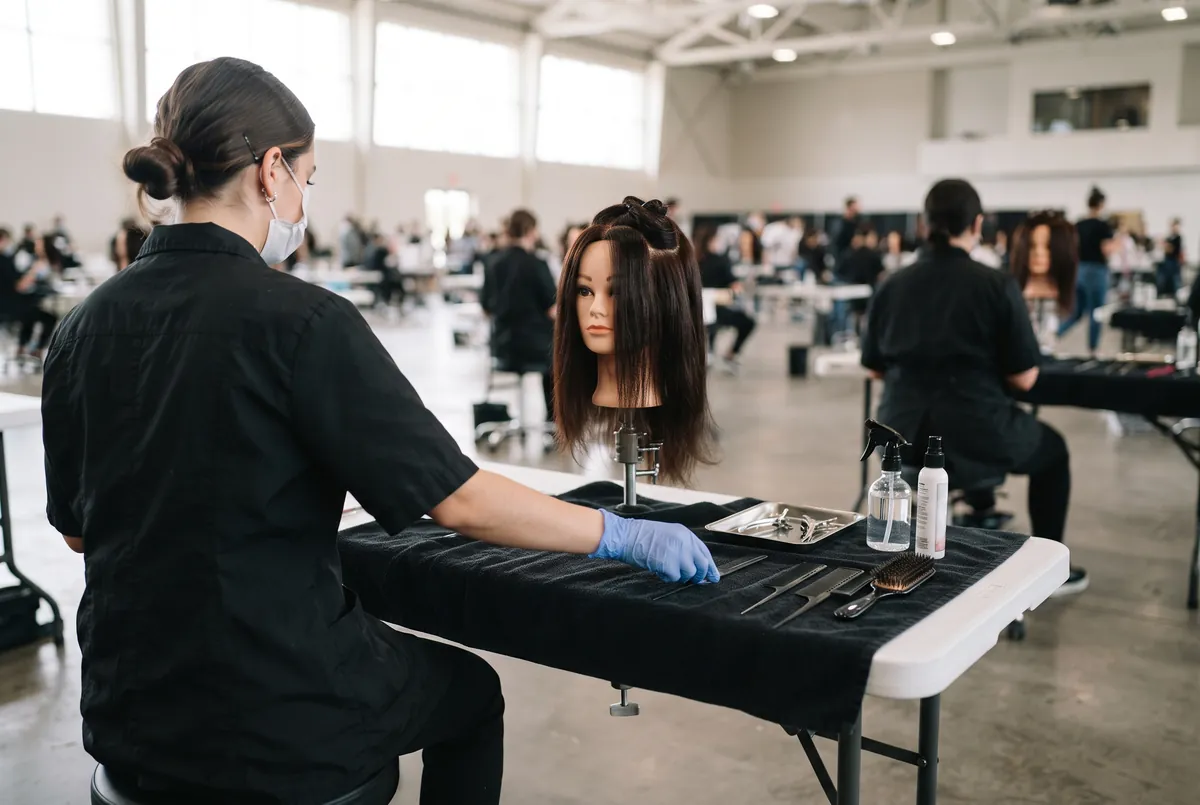
The cosmetology practical exam is where many strong students are surprised. Examiners work from a scoring sheet, and each service is broken into steps: setup, client protection, the procedure itself, and cleanup. Infection control steps appear throughout, not only at the beginning. In many exam formats you are scored on whether you performed a step, not on artistic quality, and some safety errors can cost an entire section. That is why a technically beautiful finger wave may still fail if you forgot to sanitize your hands before starting or placed a dropped comb back on the station.
Services commonly tested include some combination of haircutting, thermal styling, chemical waving or relaxing with a simulated or actual product, hair color or lightening application, a basic facial or makeup application, manicure with a polish application and nail care, and temporary hair removal such as eyebrow tweezing or waxing. Your bulletin will list exactly which services apply in your state, whether some are simulated with water instead of chemicals, and whether you work on a mannequin, a mannequin hand, or a live model. Prepare only for the list your state publishes, but prepare every item on it equally.
Examiners also watch how you communicate. Some formats ask you to explain steps aloud or act as if you are talking to a client, for example announcing a patch test or asking about allergies. Others ask you to follow verbal instructions from a proctor, such as starting and stopping on command. Practicing with a friend reading instructions to you in the exam style is one of the most effective ways to get used to this. Students who only practiced silently with music on sometimes miss an instruction because they are in their own flow.
If eyebrow shaping or waxing is part of your practical, the exam version will focus on safe steps: cleansing, protecting the eyes, testing wax temperature on your inner wrist, applying in the direction of growth and removing against it while holding the skin taut, then applying an appropriate aftercare product. For a deeper look at safe technique on the brow area, see our eyebrow waxing guide, which walks through temperature, tension and common errors in detail.
Building Your Practical Exam Kit
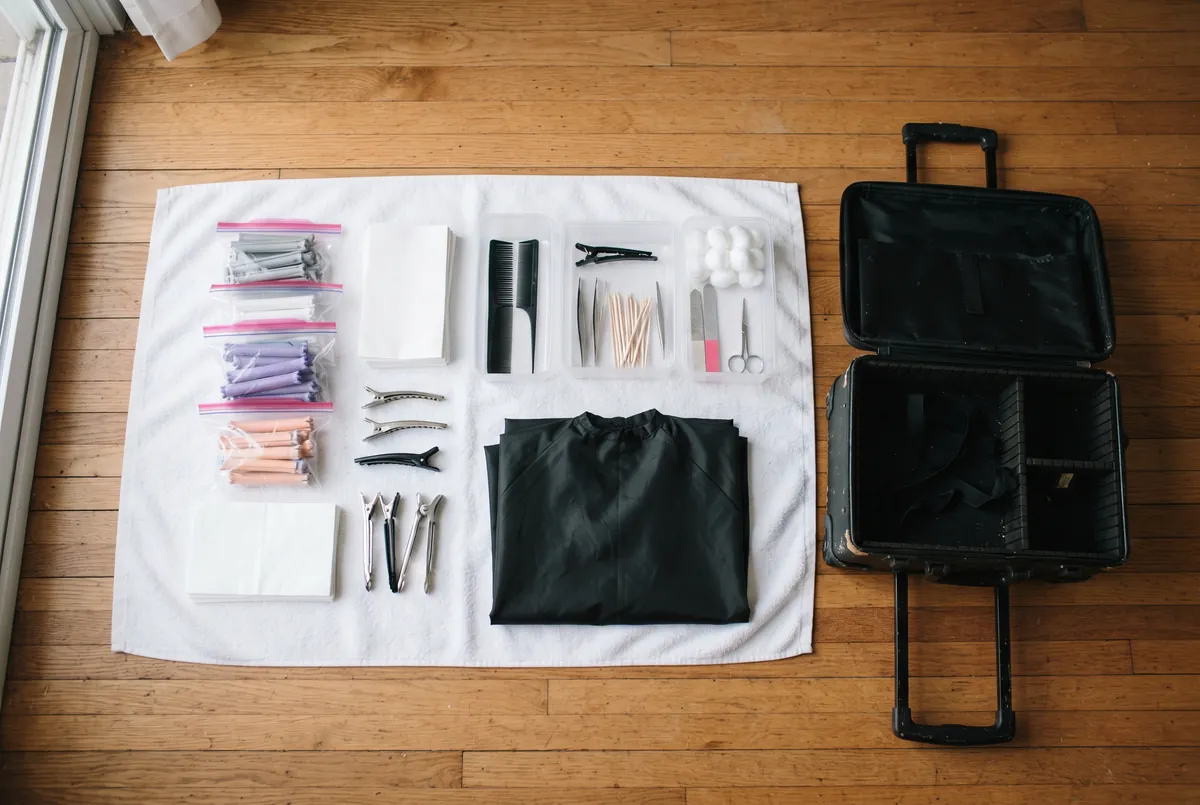
A well prepared kit takes pressure off everything else. Your state or testing vendor publishes an official kit list, and it usually specifies not just what to bring but also how items should be labeled and packed, and what is not allowed. Many states forbid certain items in the exam room, such as notes, phones, or pre-mixed products, and some require products in their original containers. Build your kit directly from the official list, then practice with exactly that kit so nothing feels unfamiliar on the day. The checklist below shows the general categories most kits include, but always follow your own state's list over this one.
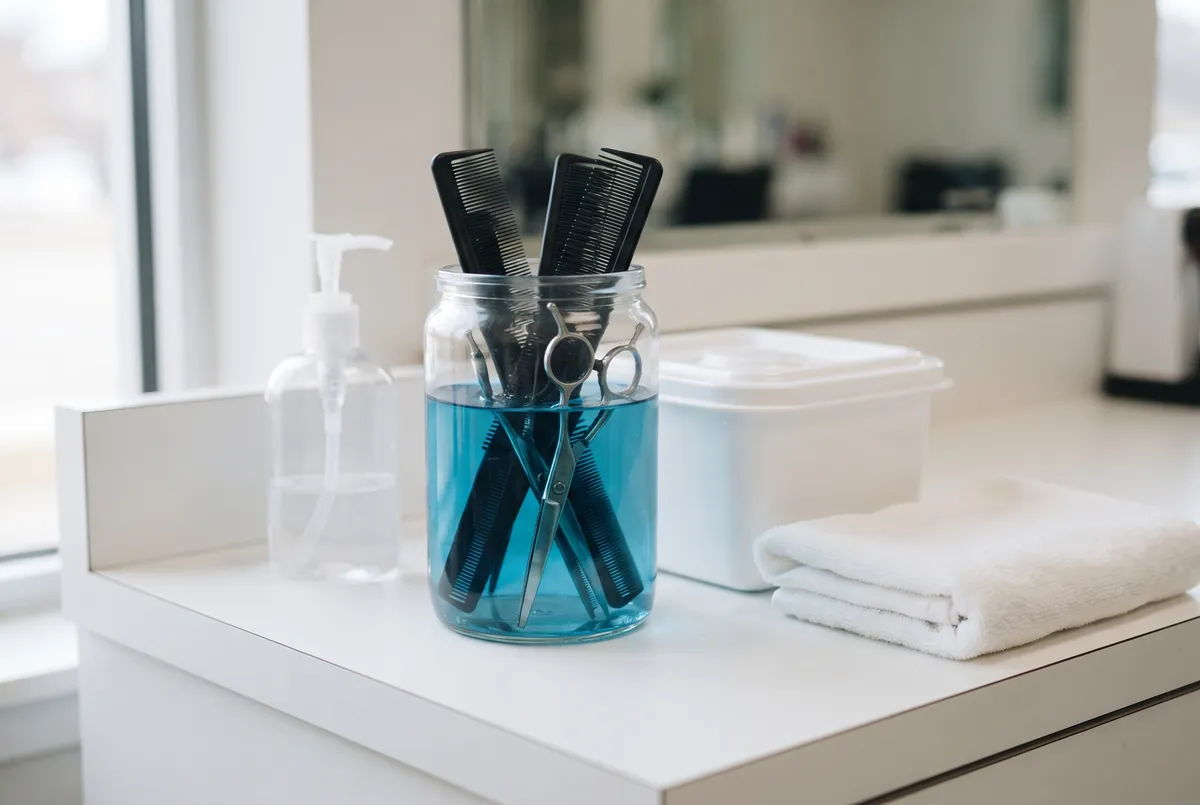
- Infection control supplies: EPA-registered disinfectant as required, hand sanitizer, gloves, paper towels, and separate clean and soiled containers or bags as specified.
- Mannequin equipment: an approved mannequin head (and hand if required), a clamp or stand, and any hair length or condition the bulletin specifies.
- Cutting and styling tools: shears, combs, brushes, sectioning clips, spray bottle and thermal tools if your exam includes them.
- Chemical service supplies: rods, end papers, applicator bottle or bowl and brush, protective cream, cotton, and color or chemical products as directed.
- Skin and nail supplies: cleansers, cotton pads, tweezers, wax and applicators if tested, nail implements, files, buffers and polish as listed.
- Client protection: capes, neck strips, towels, and anything the bulletin requires for draping.
- Paperwork: your admission letter or confirmation, valid government photo ID, and any documents your state requires on the day.
Organize your kit by service, not by item type. I recommend small clear bags or bins, one per service, packed in the order you will use them. When the proctor announces a service, you should be able to pick up one container and have everything for that service in hand. Label containers in the way the bulletin requires, because some states insist on specific labels for clean, soiled or disinfected items. Replace anything worn out: a dull shear, a clip that does not close, or a sticky nail polish can make you look careless even if your technique is solid.
Test every product before the exam. Wax should melt properly in your warmer, color bottles should not leak, and your spray bottle should mist evenly. Check expiration dates. If a mannequin head has been used heavily in school, consider a fresh one if your exam allows, because tangled or damaged hair makes sectioning and wrapping harder under time pressure. Finally, pack the kit a few days early and do one complete dress rehearsal with it, so any missing item shows up while you still have time to buy it.
Mannequin Practice and Timing
The practical exam is timed, and most candidates underestimate how the clock changes their hands. A roller set you can do comfortably in class may feel very different when a proctor announces the time remaining. The goal of practice is to make every service routine enough that the clock does not matter. Start by writing out the exam steps for each service in the exact order your bulletin lists them, then practice with the list in front of you until you no longer need it. Include the infection control steps as separate lines, because those are the ones people skip when they feel rushed.
Once you know the order, time yourself. Check your bulletin for how much time each service allows, then practice until you can finish comfortably inside that limit, with a small cushion for cleanup and checking your work. Record where time goes. Most students discover that setup and transitions eat more time than the service itself. That is good news, because transitions are easy to speed up with a better kit layout and repeated rehearsal, while technical speed takes longer to build.
Practice under exam conditions at least several times before the real day: the same kit, the same mannequin, a table the size of a typical exam station, a timer, and a friend or classmate reading the instructions aloud. Do full sequences, not single services, because fatigue and nerves build over the length of the exam. If your school offers mock boards, take every one you can. The feedback from an instructor acting as examiner is some of the most valuable preparation you can get, because they will mark you down for the small habits you no longer notice.
Pay special attention to the services you perform least often in school. Many students spend most of their clinic time on cuts and color, and then realize a week before the exam that they have not wrapped a full perm or done a manicure with polish in months. Rotate through every tested service in your practice, and give extra repetitions to the ones you like least. In my own experience, the service you avoid is usually the one where a small mistake appears on exam day.
Finally, practice the cleanup. At the end of each service, many exam formats expect you to dispose of single-use items correctly, put used tools in the designated container, and leave the station ready for the next step. Doing this quickly and calmly shows the examiner exactly what they want to see: a professional who keeps a safe workplace without being reminded.
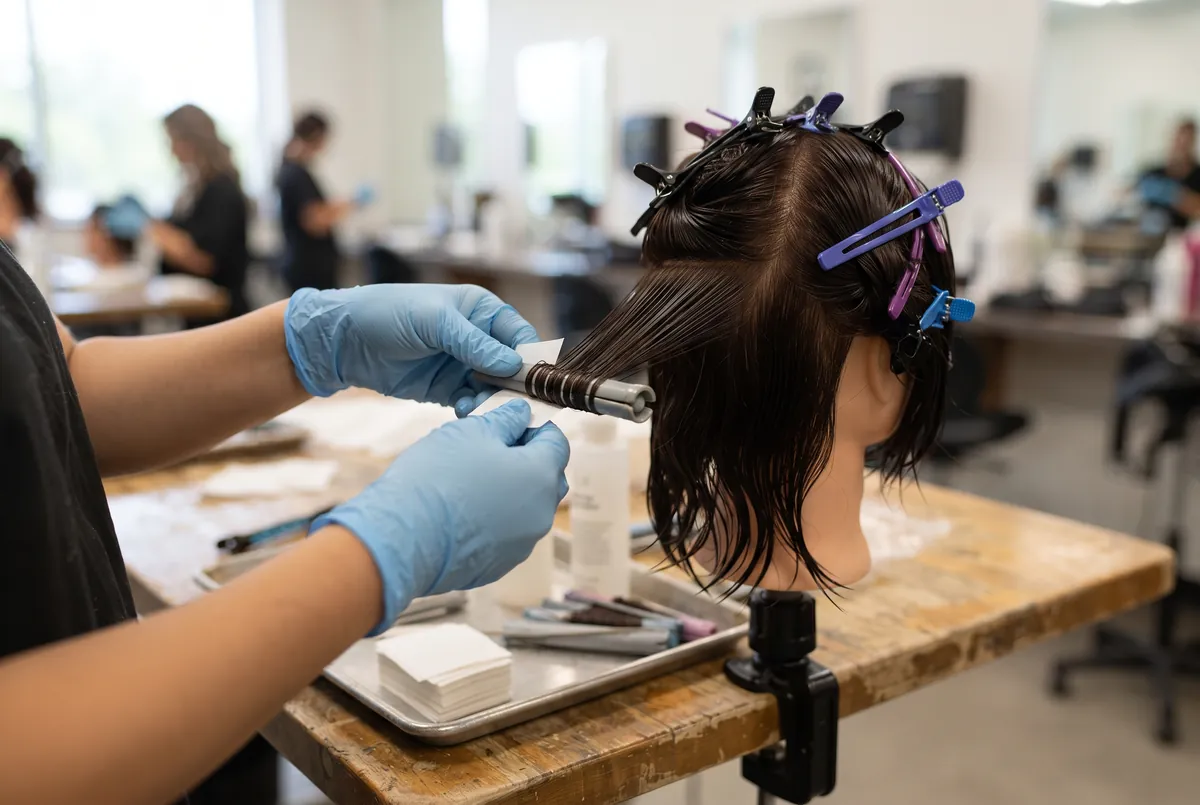
Common Reasons Candidates Fail
Across the years, I have noticed that failures on the cosmetology state board exam come from a short list of repeat problems. None of them is about lacking talent. They come from gaps in preparation, habits that were never corrected in school, or nerves that were never rehearsed. If you recognize yourself in any item below, that is where to focus your remaining study time. Fixing one of these patterns is usually worth more than another hour of polishing a skill you already do well.
- Skipping infection control steps under pressure: forgetting to sanitize hands, not disinfecting an implement, or reusing a dropped tool.
- Poor station setup: missing supplies, no clear separation between clean and used items, or a cluttered table that slows every transition.
- Running out of time: spending too long on one service and rushing or leaving the next one incomplete.
- Not following the exam version of a service: doing the technique the way a salon would, instead of the step order the bulletin requires.
- Missing verbal instructions: starting early, not stopping when told, or not stating a required client safety step aloud.
- Weak law and rules knowledge: losing easy written points on state regulations that were only lightly covered in school.
- Reading questions too fast: choosing an answer that is true but not what the question asked.
- Kit problems: banned items, missing labels, leaking bottles or equipment that fails on the day.
- Waiting too long after school: letting theory fade for months before scheduling the exam.
Look at how many of these are about process rather than skill. That is encouraging, because process can be fixed in weeks. Write your own personal risk list from the items above, based on honest feedback from your instructors and your mock board results, and build your last weeks of practice around those risks. When a classmate or instructor watches you, ask them to focus only on your risk list, not on how the finished style looks.
One more pattern deserves mention: overconfidence from strong salon skills. Students who already work in a salon as assistants, or who did hair for friends for years, sometimes assume the practical will be easy. Then they fail because their salon habits do not match the exam's safety sequence. If that sounds like you, treat the exam like a separate skill. You are not proving you are a good stylist. You are proving you can follow a safety protocol exactly, every time.
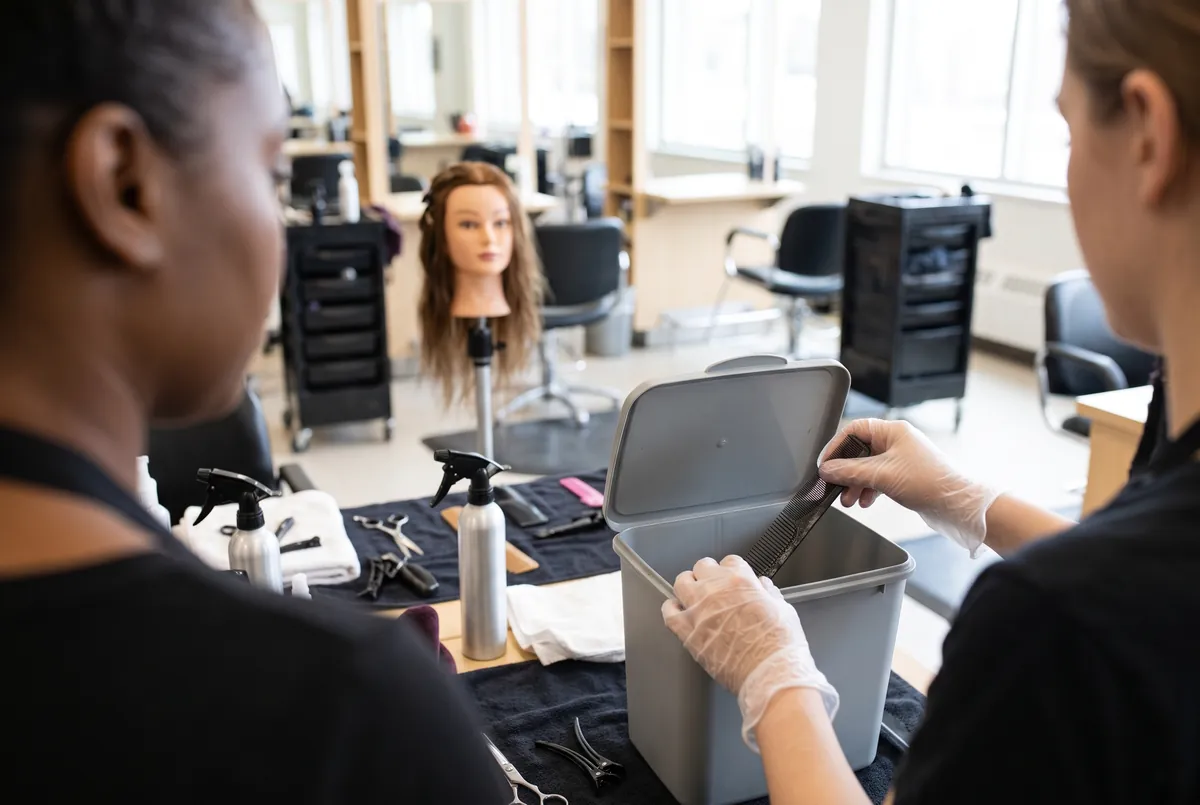
What to Expect on Test Day
Test day starts the night before. Pack your kit, your admission documents and your ID and leave them by the door. Check the location, parking and arrival time listed in your confirmation, and plan to arrive early, because late candidates are often not admitted. Eat a normal meal, sleep as much as you can, and avoid a last-minute cram session that keeps you up late. Your knowledge is already in place at this point, and rest will help you use it.
At check-in, expect an identity check and a review of the rules. For the written exam at a testing center, you will usually store personal items in a locker and may be scanned or searched. For the practical exam, your kit may be inspected, and banned items may be removed or cause problems, so do not bring anything you are unsure about. Listen carefully to the opening instructions. Many practical exams follow a strict sequence with announcements at the start and end of each service, and you cannot work ahead.
During the practical, work at your practiced pace. If you make a mistake, such as dropping a tool, follow the correct procedure calmly: leave it or place it in the soiled container and take a clean replacement. Examiners often care more about how you recover from an error than about the error itself. If you finish a service early, use the time to check your station and review your steps silently, not to redo work that is already acceptable. Overworking can create new problems.
If you have a live model, prepare them too. Tell them what to expect, ask them to follow the instructions for arrival and clothing, and make sure they meet any requirements about hair condition or skin. A model who shows up late or with a condition that prevents the service can end your exam before it starts. Many candidates prefer to arrange a backup model when their state allows live models.
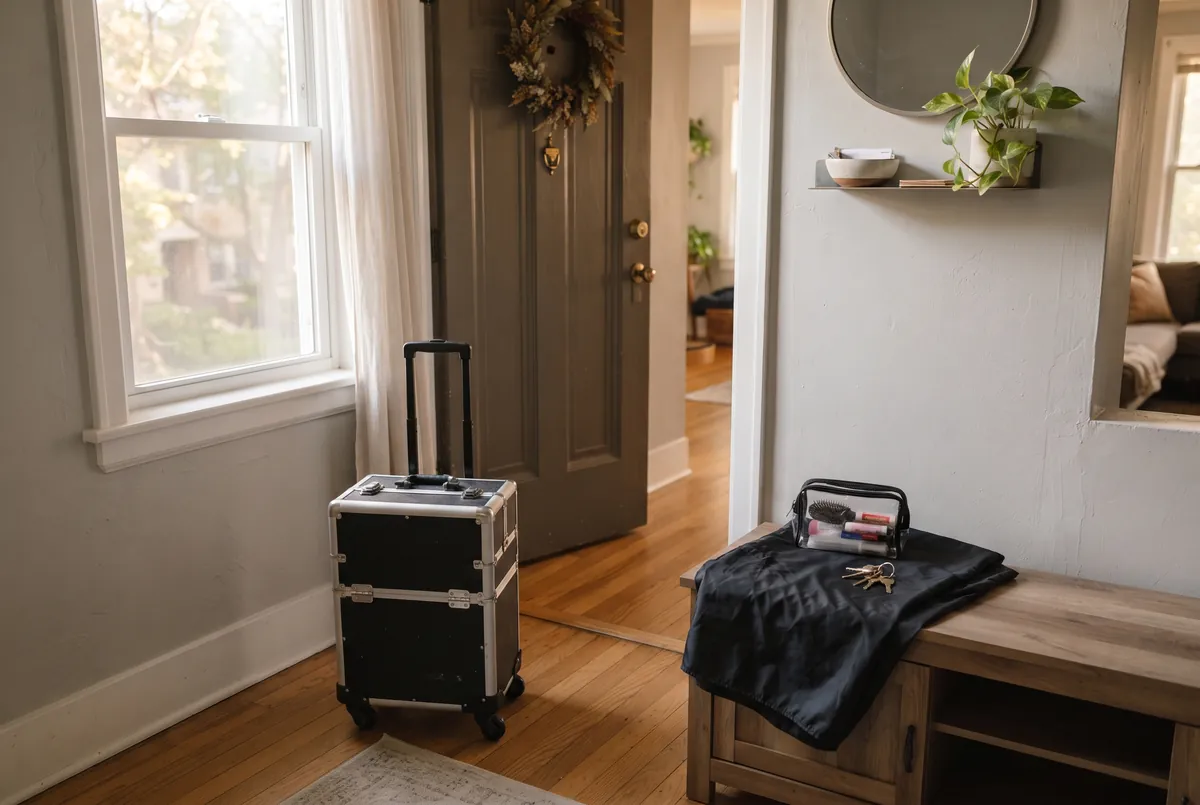
What to Do If You Fail a Section
Failing one part of the cosmetology state board exam is common and fixable. In many states you only retake the section you failed, not the whole exam, although rules differ. How long you must wait, how many attempts you get, what you pay for each retake, and whether you need additional training after several failures are all set by your state. Some states require candidates who fail repeatedly to complete more school hours before testing again. Check your state page and your testing vendor's retake policy before you do anything else, so your plan matches the rules.
Next, read your score report carefully. Many exam providers show performance by content domain for the written exam, or by service for the practical, even if they do not show individual questions. That report is the most valuable study guide you will ever get, because it tells you exactly where the gap was. Rebuild your plan around the weak areas, using the same phased approach described earlier, and do not spend equal time on everything again. For a practical failure, write down everything you remember about the service where you lost points, while the memory is fresh.
Then address the mindset. A failed section often feels like a verdict on your ability, but it is usually a signal about preparation or nerves. Talk to your instructors. Many schools welcome graduates back for extra practical sessions or mock boards, and some offer review classes. Reschedule as soon as your state allows and you feel ready, because theory and practical routines fade with time, and a long gap tends to add anxiety rather than reduce it.
After You Pass: Getting Licensed and Starting Work
Passing both parts of the exam is usually not the final step. In most states you then apply for or activate your license, pay a license fee, and wait for the board to issue it before you can legally work. Some states issue the license quickly after passing results are sent, others take longer. Until your license is active, check whether your state allows any form of temporary work permit, and do not take paying clients without proper authorization. Your state page lists the steps after the exam and links to the official board.
Once licensed, remember that the license must be renewed on a schedule, and many states require continuing education to renew. Keep copies of your license and your exam results, and note your renewal date. If you plan to move, research reciprocity and endorsement early, because transferring a license is easier when your records are complete. For a full picture of the career path from school to first job, see our step by step guide on how to become a cosmetologist, which covers what comes after licensing, from salon interviews to specialization.
If you are still in the planning stage and wondering how to pay for school before you ever reach the exam, our guide to cosmetology school cost and financial aid explains what drives tuition and what aid options to ask about. Choosing a program with strong exam preparation, including mock boards and practical coaching, can save you the cost and stress of retakes later. You can also browse cosmetology and beauty schools to compare programs in your area.
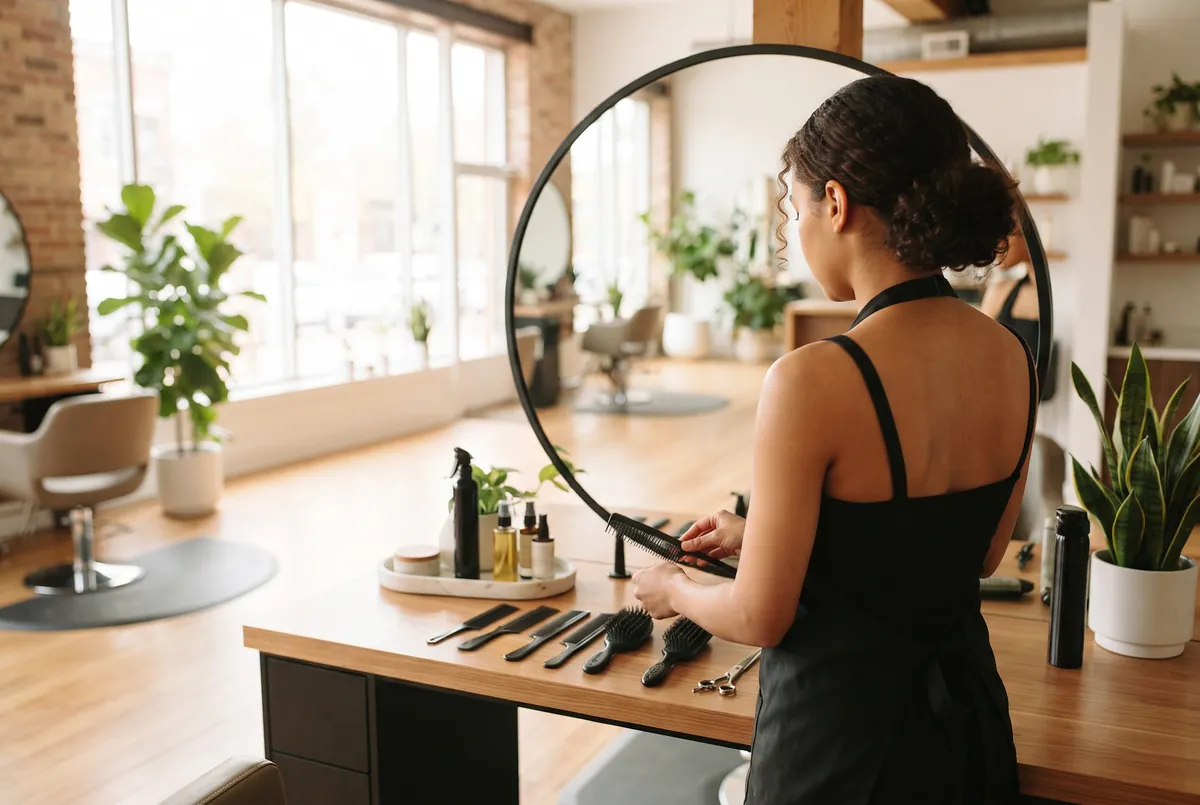
Your Next Step
If your exam is coming up, do three things this week. Download your state's current candidate bulletin and kit list. Take one full practice written test to find your weak domains. And do one timed practice run of your practical services with your actual kit. Those three actions will show you, more clearly than any article, where your time should go. If you want structured theory review alongside your school training, our cosmetology theory course organizes the core science and safety topics in one place. It supports your preparation but does not replace your state's required in-person hours.
State Requirements
State licensing guides
Hours, exams, fees, and the licensing board differ by state. Open your state for the current requirements.
Common Questions
FAQ
It is fair but demanding. The written part draws on every chapter you studied, including infection control, chemistry, anatomy basics and state law, and the practical part scores each safety and procedure step under a time limit. Most candidates who fail do so because of skipped sanitation steps, poor timing or weak law knowledge, not lack of talent. A structured study plan, repeated timed practice and mock boards make it very manageable.
Most written exams focus on infection control and safety, basic science such as bacteriology, anatomy and chemistry, hair care and chemical services, skin and nail basics, and your state's laws and rules. The exact domains and their weight depend on your state and exam provider, so use the content outline in your official candidate bulletin as your study map.
You perform a set of services, usually on a mannequin and sometimes on a live model, while an examiner scores each step from a checklist. Tested services vary by state and may include cutting, styling, chemical waving or relaxing, color application, facials, manicures and temporary hair removal. Setup, client protection, infection control and cleanup are scored throughout, not only at the start.
Passing scores are set by each state and can differ between the written and practical parts. Because these standards can change, check your state board or testing vendor bulletin rather than relying on a number you read online. You can find each state's official board through our cosmetology licensing hub.
Online study can help you prepare for the written exam, but it does not make you eligible to test. Every state requires a set amount of supervised training at a licensed school or approved apprenticeship before you can sit for the exam, and online theory never replaces those in-person hours. Confirm your state's eligibility rules before enrolling anywhere.
As soon as your state allows and you feel ready. Theory fades and practical routines loosen with time, so a long gap usually makes the exam harder. Some states let students take the written part near the end of their program, while others require full completion first. Check your state's rules and schedule early, since testing dates can fill up.
Read your score report to see which domains or services were weak, check your state's retake policy, and build a focused plan around those gaps. In many states you only retake the failed section, but waiting periods, fees and attempt limits vary. Ask your school about extra practical sessions or mock boards, and reschedule while the material is still fresh.
Bring exactly what your state's official kit list requires, packed and labeled as instructed, plus your admission documents and a valid photo ID. Many states ban certain items, require products in original containers, or specify how clean and used items must be separated. Test every product and tool at home before exam day so nothing fails at the station.
Keep Reading
Related Guides


