Career
How to Become a Cosmetology Instructor: License and Training
Quick answer
To become a cosmetology instructor you normally need an active practitioner license first, then whatever your state adds on top: often work experience, an instructor training program, an instructor exam, and continuing education. Requirements differ by state and by license type, so confirm them with your state board. Training covers lesson planning, classroom management, demonstrating technique, and grading practical work.
If you are researching how to become a cosmetology instructor, you probably already hold a license, have spent real time with clients, and have noticed that you enjoy explaining a technique almost as much as performing it. That instinct matters, but it is only the starting point. Teaching in a licensed beauty school is a regulated role in most states, with its own credential, its own training, and often its own exam. I have worked as a licensed cosmetologist and electrologist for more than twenty years, and I have watched excellent practitioners struggle in a classroom while quieter, more methodical colleagues turned into the instructors students remember for the rest of their careers.
This guide covers the path from licensed practitioner to licensed instructor for cosmetology, esthetics, waxing, and electrology. It explains the building blocks that states combine in different ways, what instructor training actually teaches, what the job looks like day to day, and how to get hired for a first teaching position. I do not print hour counts, years of experience, or fees, because those figures differ from state to state and change over time. For exact requirements, use your state board's website together with our cosmetology licensing hub by state, which names the agency that regulates you.
What a Beauty School Instructor Actually Does
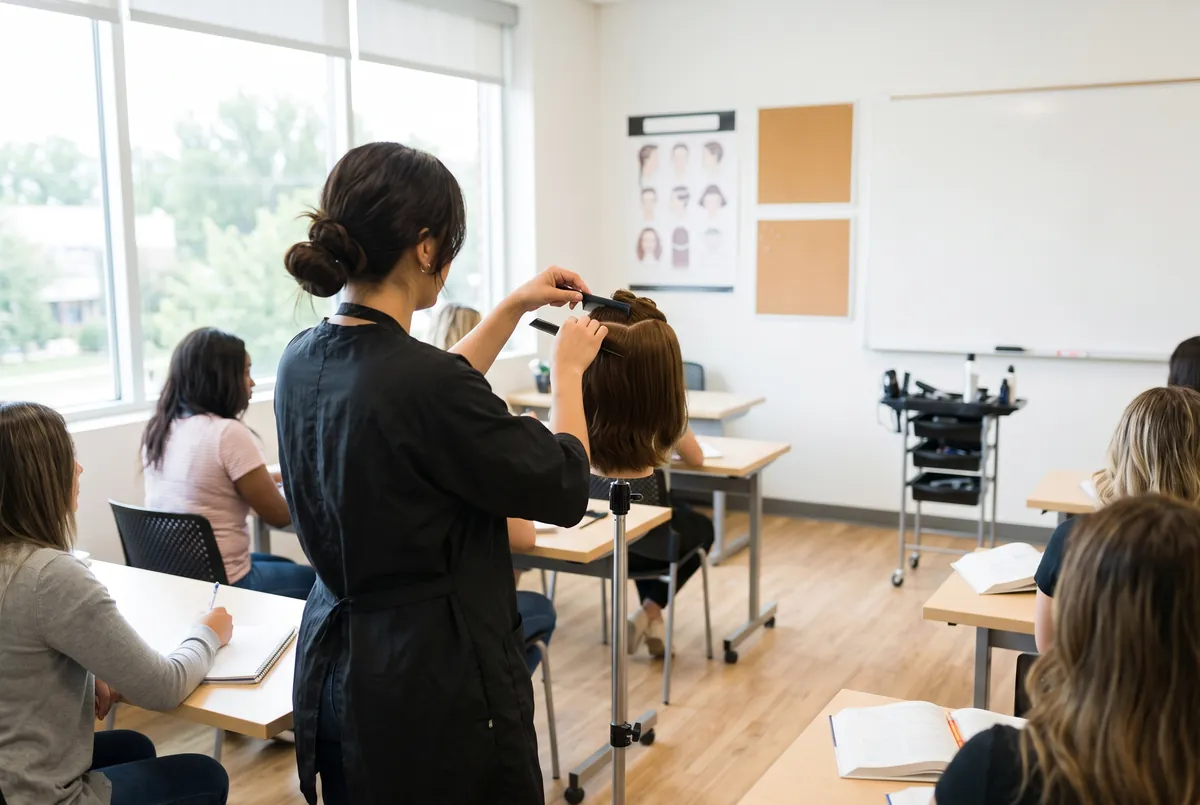
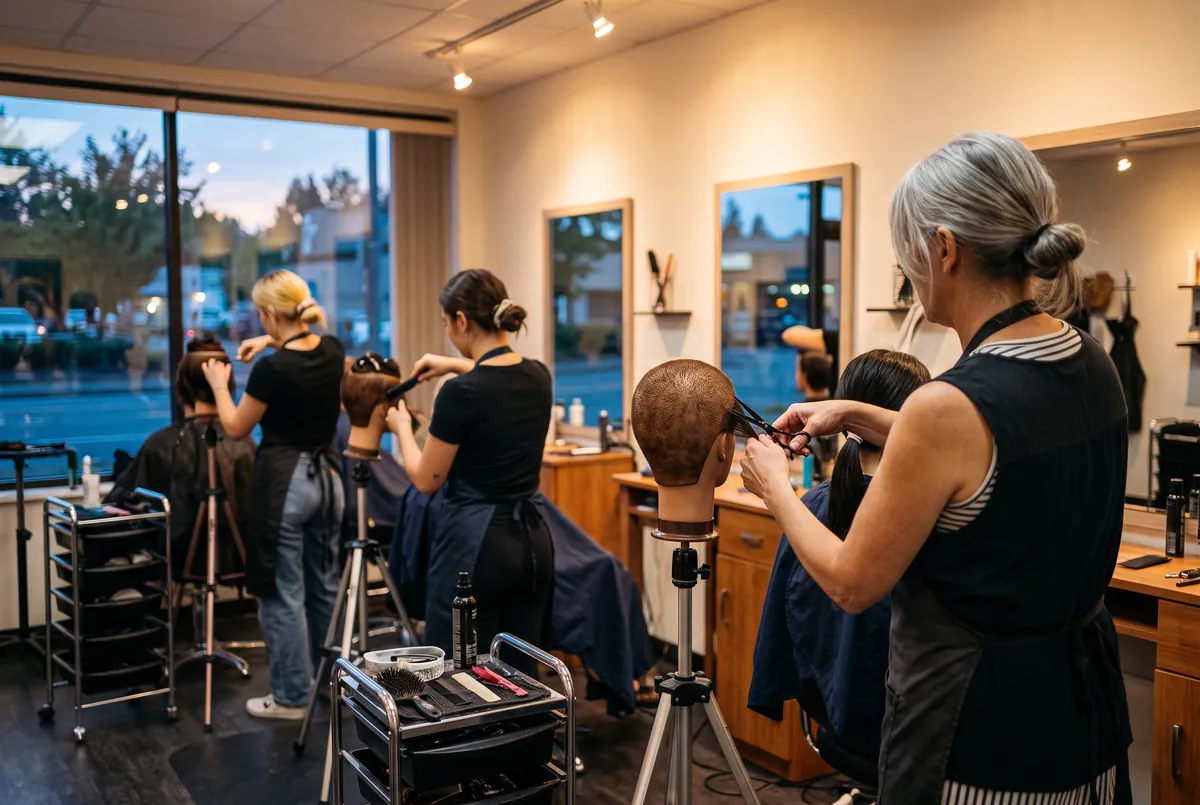
An instructor in a licensed beauty school does three jobs at once. The first is teaching theory: infection control, anatomy, chemistry, electricity, state law, and the reasoning behind every service. The second is teaching practical skill, which means demonstrating a technique, breaking it into steps a beginner can follow, and then watching thirty pairs of hands attempt it. The third is supervising the student clinic floor, where students work on paying members of the public under the school's license. On the clinic floor the instructor is the licensed professional responsible for client safety, so every consultation, formula, and finished service passes under their eyes before the client leaves.
Behind those visible tasks sits a large amount of record keeping. State boards rely on schools to document each student's clock hours or credits and the practical operations they completed, and instructors are usually the people who verify those records day by day. Instructors also write and grade tests, score practical evaluations against a rubric, document attendance problems, hold progress conversations, and prepare students for the licensing exam. Many new instructors are surprised by how much of the job happens with a pen, a spreadsheet, or a gradebook, and how little of it involves doing hair or skin with their own hands.
The role is also different from being a brand educator or a salon trainer. A manufacturer's educator teaches product knowledge and advanced technique to people who are already licensed, usually in short classes. A salon trainer coaches new hires to the standards of one business. A school instructor teaches people who have never held shears or a probe, and takes them from zero to the minimum competence the state requires for a license. That is slower, more repetitive, and more structured work. It suits people who are patient with fundamentals, and it frustrates people who mainly want to share advanced tricks.
Instructor License Types: Cosmetology, Esthetics, Waxing, Electrology
States organize instructor credentials in different ways. Some issue one instructor license that lets the holder teach the subjects covered by their own practitioner license. Others issue separate credentials by field, such as a cosmetology instructor license, an esthetics instructor license, a nail instructor license, or a barber instructor license. A few states use different words entirely, like teacher, educator, or master instructor, and some have more than one level of instructor credential. The name matters less than the scope: what you are allowed to teach, in what kind of school, and under what supervision.
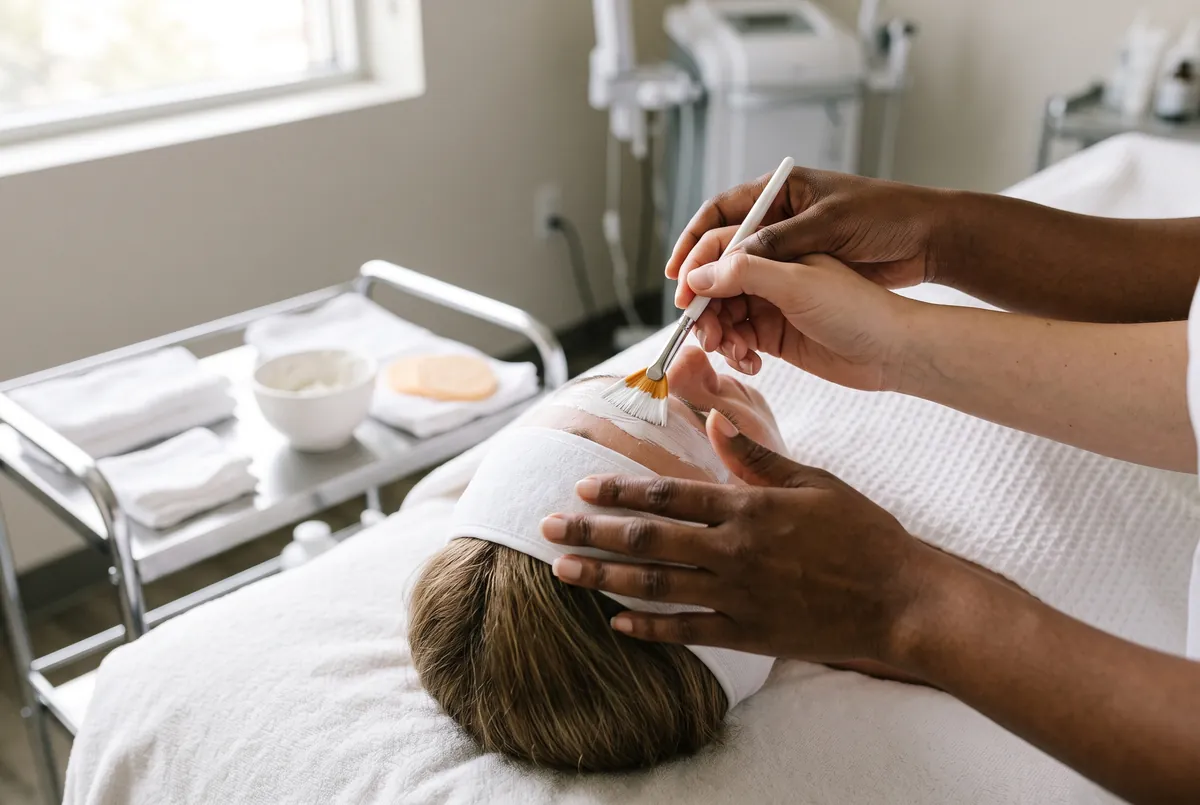
A useful general rule is that you teach within the scope of the license you hold as a practitioner. A cosmetology instructor typically teaches the full cosmetology curriculum, which in many states includes hair, basic skin care, nails, and temporary hair removal. An esthetics instructor teaches the skin care curriculum, and that is usually where waxing instruction lives, since most states do not have a stand-alone waxing instructor credential. If skin is your field, start with how the practitioner side works in our guide on how to become a licensed esthetician, then compare the instructor rules on your state's page in the esthetics licensing hub.
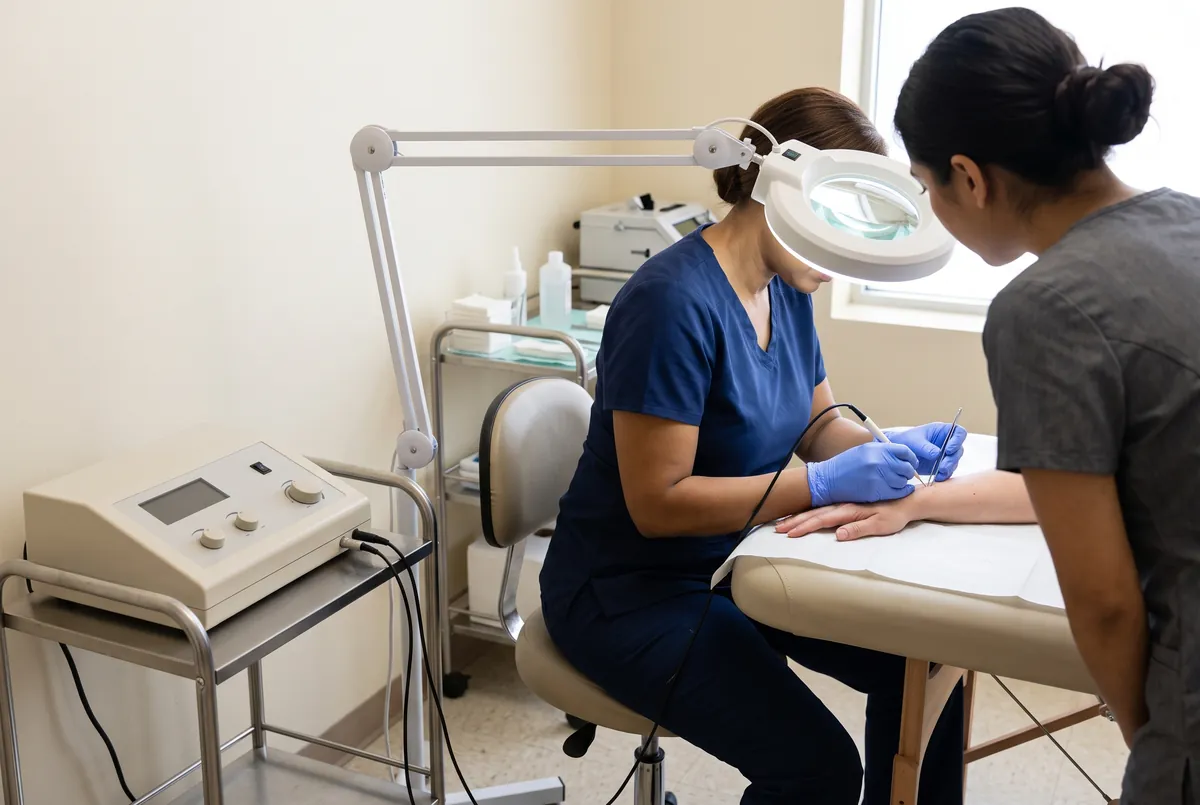
Electrology is its own case. Only some states license electrologists at all, and the ones that do often regulate the profession through a different board than cosmetology, sometimes a health or medical board. Where an electrology instructor credential exists, it is usually tied to an active electrologist license and experience in practice, and electrology schools are far fewer than cosmetology schools. That makes teaching positions rare but also hard to fill. If you are an electrologist thinking about teaching, read your state's page in the electrolysis licensing hub and then contact the board directly, because instructor rules for small professions are sometimes buried in regulations rather than listed on a clear web page.
The Building Blocks States Use for Instructor Licensing
Although the details differ, state rules for instructor licensing are built from a small set of recurring pieces. Some states require all of them, some require only a few, and some let you trade one for another, for example accepting documented work experience in place of part of the instructor training. Once you recognize the pieces, reading your own state's rules becomes much easier, because you are only checking which pieces apply and in what amount. These are the ones I see most often:
- An active practitioner license in good standing in the field you want to teach, issued by the state where you will teach or accepted by it.
- Work experience as a licensed practitioner, which some states require outright and others accept as a substitute for part of the training.
- An instructor training program completed at a school the state approves for that purpose, with a set number of hours or credits.
- An instructor examination, which may include a written test on teaching methods and, in some states, a practical demonstration of teaching.
- General education prerequisites, such as a high school diploma or an equivalency credential.
- An application with a fee, and in some states background questions or other screening.
- Continuing education for renewal, sometimes with topics specific to teaching rather than to services.
The practitioner license is the one piece nobody skips. If you are not licensed yet, the instructor path starts with becoming licensed, which I cover step by step in the practitioner guide linked near the end of this article. Good standing matters as much as the license itself. Boards generally look at whether the license is current, whether there is any disciplinary history, and whether renewals were completed on time. A practitioner who has let a license lapse and reinstated it should check whether that gap affects eligibility before paying for instructor training.
Work experience is the piece that varies most. In some states you can enter instructor training soon after getting your practitioner license. In others you need documented time working with clients first, and the state may ask for proof such as employer letters, tax records, or an establishment license in your name. From a practical point of view I would want experience before teaching even where the law does not demand it. Students ask questions that the textbook does not answer: what to do when a client's hair lifts unevenly, how to handle a client who faints, how to tell a regular that a service is not right for them. Those answers come from years with real clients.
Instructor training itself is usually delivered by a beauty school that holds state approval to offer it, and the trainee is often called a student instructor or instructor trainee. Much of the time is spent inside real classrooms and on the real clinic floor of that school, working under a licensed instructor who supervises your teaching. Some states allow part of the theory to be completed online through an approved provider. That depends entirely on the state, and the approval has to come from the board, not from the course seller. An online course in teaching methods can deepen your knowledge, but it never replaces state-required hours unless the board itself says it counts.
How to Read Your Own State's Rules
Because every state writes its own rules, the only reliable source is the board that will issue your credential. Start by finding the instructor section of the board's website, then find the actual statute or regulation it refers to. Summary pages are helpful, but the regulation is what the staff will apply to your file. Read it with a notebook and write down each requirement as a separate line, along with the document that proves you meet it. If a requirement is worded in a way you do not understand, email the board and keep the reply. A written answer from the agency is worth far more than a confident answer from a forum.
Pay attention to a handful of questions that change the plan. Does your state issue a separate instructor credential for your field, or one general credential? Is there more than one route, such as a training route and an experience route? Does the state require training to be completed inside the state? Is there an exam, who administers it, and does it have a practical part? Does the credential allow you to teach in any licensed school, or are there additional requirements for public high schools and technical colleges, which sometimes ask for a state teaching certificate on top of the board credential?
If you hold an instructor credential in one state and plan to move, do not assume it transfers. States treat incoming instructors in the same varied way they treat incoming practitioners: some recognize an equivalent credential, some ask for an exam, and some ask for additional training. You will normally need the practitioner license in the new state first, so the two transfers have to be planned together. The patterns are similar to those described in our guide to cosmetology license reciprocity by state, and the same advice applies: start the paperwork before you move, and request license verifications early because they take time.

What Instructor Training Actually Teaches
People often expect instructor training to be an advanced technical course. It is not. It assumes you can already perform the services and spends its time on a different skill set: how adults learn, how to plan and deliver a lesson, how to manage a room, how to assess work fairly, and how to supervise a clinic floor safely. Good programs feel closer to teacher education than to beauty school. The best way to judge a program is to ask how much of the time you will spend actually teaching under supervision, compared with reading about teaching in a workbook.
Lesson planning is the foundation. You learn to write a lesson with a clear objective that a student can demonstrate, such as performing a specific haircut to a stated standard or listing the steps of disinfection in order. You learn to sequence a lesson: a short opening that connects to what students already know, a demonstration or explanation, guided practice, independent practice, and a check for understanding at the end. You also learn to plan for time. A lesson that works on paper falls apart if the demonstration runs long and practice gets squeezed, so trainees rehearse with a clock until their pacing is reliable.
Classroom management is the part that practitioners underestimate. A beauty school class mixes recent high school graduates, parents returning to work, and career changers, often with very different reading levels and confidence. Training covers how to set expectations on the first day, how to handle lateness, phones, and side conversations without humiliating anyone, how to keep stronger students busy while weaker ones catch up, and how to document behavior problems according to school policy. It also covers professional boundaries. Students are adults and often close to your age, and an instructor who becomes everyone's friend usually loses the ability to grade honestly.
Demonstrating technique is a skill of its own. When you work on a client, your hands move faster than you can explain, and half of your decisions are automatic. In front of students you have to slow down, position your body so the class can see your hands, name each step before you do it, and explain why you are doing it that way. Training teaches you to break a service into small stages, to demonstrate one stage and let students practice it before moving on, and to repeat a demonstration from a different angle for students who learn by watching. In electrology and esthetics, where the work area is small, this includes using magnification, cameras, or small groups so that every student can see the insertion or the extraction clearly.
Grading practical work fairly is harder than it sounds. Trainees learn to score against written criteria instead of a general impression, using a rubric that lists what must be present: correct setup, client protection, sanitation steps, technical accuracy, timing, and cleanup. This protects students from favoritism and protects you when a grade is challenged. It also mirrors the way state practical exams are scored, where candidates lose points for skipped procedural steps more often than for the look of the finished service. Our guide on how to pass the cosmetology state board exam explains that scoring logic from the candidate's side, and a good instructor teaches to it from the first week.
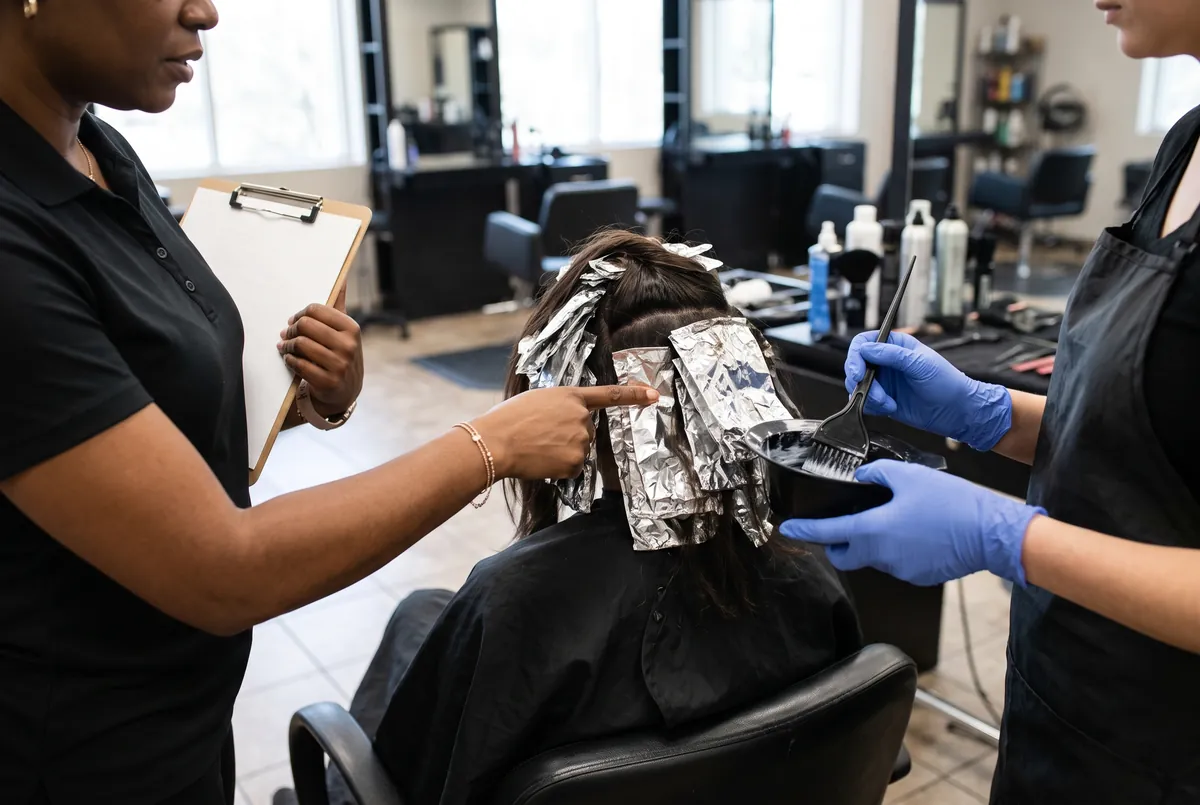
Clinic floor supervision ties everything together. Trainees learn how to assign services so that each student gets the variety the state requires, how to check a consultation before the service starts, how to approve a color formula or a treatment plan, when to step in with their own hands and when to coach from the side, and how to do a final check before the client pays. They also learn the paperwork: service tickets, client records, incident reports, and the daily record of each student's completed operations. The instructor on the floor carries responsibility for members of the public, so this part of training is where safety habits are set.

The Instructor Exam and Application
Many states require an instructor exam, and some do not. Where one exists, the written portion usually tests teaching rather than services: lesson planning, teaching methods, learning styles, classroom management, assessment, record keeping, and the state's laws for schools. Some states add a practical portion in which the candidate presents a short lesson or demonstration to examiners, who score the structure of the lesson and the clarity of the teaching. Some states use an exam from a national testing organization, and others write their own. The candidate information bulletin published by the board or its testing provider tells you the format, the content outline, and what to bring.
Prepare for the written exam the way you would tell your future students to prepare: from the published content outline, with timed practice, reviewing each wrong answer until you understand it. Practitioners with long experience sometimes fail because they answer from habit instead of from the textbook model of teaching that the exam uses. If your state has a practical teaching demonstration, rehearse a complete short lesson out loud, with a timer, in front of someone who will interrupt you with questions. Bring a written lesson plan if the bulletin asks for one, and follow your own plan, since examiners often compare what you wrote with what you delivered.
The application usually asks for proof of your practitioner license, proof of completed instructor training or qualifying experience, exam results where required, identification, and a fee. Some states want the school to submit your training record directly. Keep copies of everything, including your own log of training hours signed by your supervising instructor. Do not begin teaching on your own until the credential is issued and visible in the state's license lookup. Some states allow a trainee or temporary status that lets you teach under supervision while your file is processed, and some do not, so ask the board which applies before a school puts you in front of a class alone.

What the Daily Job Looks Like
A typical day in a full-time program starts before students arrive. You set up the classroom, check that the supplies for the day's practical are ready, and look over your lesson plan. The morning might be a theory block: a lecture with questions, a short quiz, and a demonstration that connects the chapter to a real service. After that comes guided practice, where you circulate between stations, correct body position and tool handling, and repeat parts of the demonstration for small groups. You are on your feet and talking for most of it, and your attention is split across the whole room rather than focused on one client.
Clinic floor shifts feel different. Clients arrive with appointments or as walk-ins, students perform consultations, and you check each one before work begins. Through the shift you move from chair to chair or room to room, approving formulas, checking sections, watching timing, and stepping in when a service is going wrong. A color that is processing too fast, a wax that is too hot, a student who has frozen in front of a difficult client: each one needs a calm decision in seconds. At the end you inspect the finished work, sign the student's record for that service, and make sure stations are disinfected properly.
The rest of the day is quieter and less visible. You enter attendance and grades, update each student's record of hours and completed operations, write up any incident, and prepare for tomorrow. There are staff meetings, advising sessions with students who are falling behind, and difficult conversations about attendance or professionalism. Depending on the school, you may also help with admissions tours, open houses, or mock board exams. Schools run day, evening, and sometimes weekend schedules, so your hours depend on the cohort you are assigned. Ask about this in the interview, since an evening program changes family life as much as a salon schedule does.
Who Teaching Suits, and Who It Does Not
Teaching suits practitioners who get real satisfaction from someone else's progress. If you are the person in the salon who new hires come to with questions, and you find yourself explaining why a technique works instead of only fixing the problem, that is a good sign. Patience with repetition matters. You will teach the same basic haircut, the same facial sequence, or the same insertion technique to every new class, and the hundredth time has to be as clear as the first. Organization matters too, because a classroom exposes poor planning immediately, in a way that a one-on-one appointment never does.
It also suits people who are comfortable with authority and with being disliked occasionally. An instructor has to fail work that does not meet the standard, send a student home for violating policy, and refuse to sign off on hours that were not earned. Students who are paying tuition can push back hard. Practitioners who built their careers on being warm and accommodating with clients sometimes find this the most difficult adjustment. The warmth is still valuable, but it has to sit alongside firmness, since the license the student eventually receives will put the public in their hands.
Teaching is a poor fit if your main motive is to escape clients, or if you measure a good day by the work your own hands produced. You will spend most of your time watching imperfect work and resisting the urge to take over. It is also a poor fit if you dislike paperwork or resist following a set curriculum. Schools must teach what the state requires, in a documented way, and an instructor who improvises around the curriculum creates problems for students at exam time. Strong opinions about technique are welcome, but students first need the standard method the exam and the textbook expect.
Trade-Offs Compared With Working Behind the Chair
Moving from services to teaching changes how you are paid, how your body feels at the end of the day, and how you grow professionally. Neither path is better in general. They reward different things, and many people end up combining them. The table below summarizes the differences I hear about most from colleagues who have done both. Treat it as a description of typical patterns, not a promise, because schools differ from each other as much as salons do.
| Aspect | Working with clients | Teaching in a school |
|---|---|---|
| How you are paid | Commission, hourly plus tips, or your own prices as a renter, so income moves with your bookings | Usually an hourly wage or salary set by the school, more predictable and without tips |
| Schedule | Shaped by client demand, often evenings and weekends | Shaped by the school calendar and the cohort you teach |
| Physical load | Long hours of fine, repetitive hand and shoulder work | Standing, walking, and talking for most of the day, with less repetitive strain on the hands |
| Source of satisfaction | Finished results and loyal clients | Student progress, exam passes, and graduates who succeed |
| Main pressure | Filling the book and keeping clients happy | Managing a group, documentation, and school targets |
| Skill growth | Speed and advanced technique | Communication, assessment, and leadership |
Pay deserves an honest word. An established practitioner with a full book and strong retail and rebooking habits can earn more from services than a school pays its instructors, and a newer practitioner with a thin book may find a teaching wage more stable. I will not quote numbers, because they depend on your state, the school, your experience, and whether the position is full-time. Ask each school for its pay range and benefits in writing, and compare that with your real service income after expenses. Our guide on how much cosmetologists earn and what drives it helps you calculate the service side of that comparison properly.
Benefits and stability can tilt the comparison. Some schools, particularly larger private schools and public technical colleges, offer benefits that independent practitioners have to fund themselves, while small schools may offer very little. The work is also gentler on the hands and wrists, which matters to practitioners who have developed strain after many years of services. On the other side, a teaching wage does not grow the way a clientele can, and the role offers less freedom. You follow the school's curriculum, schedule, and policies, and your results are judged partly by measures you do not fully control, such as attendance and exam outcomes.
There is one more trade-off that people rarely mention: skill drift. An instructor who stops taking clients gradually loses speed and falls behind on current techniques and products, and students notice. The best instructors I know protect some regular contact with real clients or advanced education so their teaching stays current. Schools value this too, since an instructor with fresh salon or clinic experience prepares students for the workplace they will actually enter, and can speak credibly about pricing, consultations, and client retention.

Teaching Part-Time Alongside Your Clients
For many practitioners the most realistic arrangement is a mix. Schools often need part-time instructors for evening or weekend cohorts, for specific subjects, or as substitutes when a full-time instructor is out. That lets you keep the clients you spent years building and add a predictable block of teaching income. It also lets you test the role before you give up anything. A season of two evenings a week tells you more about whether you like teaching than any amount of reflection, and it gives a school the chance to see how you handle a class before offering more hours.
The combination has to be scheduled with care. Put your teaching hours on fixed days and rebuild your client schedule around them, instead of squeezing clients into gaps and arriving at school tired and late. Tell regular clients about the change well in advance and offer them specific alternative times. Be honest with yourself about total load: teaching is tiring in a different way from services, and a full client day followed by an evening class is hard to sustain for long. If you rent a booth or a suite, check that your reduced hours still cover rent comfortably in a slow month.
Watch for conflicts of interest and read your agreements. Schools commonly have policies about instructors recruiting students as assistants, selling products to students, or sending clinic clients to their own business. Your salon agreement may have its own clauses about outside work. None of this is a barrier if you ask openly and keep the two roles separate. Also confirm with your state board whether a part-time or substitute instructor needs the full instructor credential. In most cases anyone who teaches students for credit toward licensing hours does, and a school that suggests otherwise is asking you to carry a risk that belongs to them.
How to Get Your First Teaching Job
Start with the schools that already know you. The school where you trained, the school where you complete instructor training, and schools whose graduates you have hired or mentored are the most likely to give a new instructor a chance. Many instructors are hired by the school where they did their trainee hours, because the staff has already watched them teach. Treat instructor training as a long interview: arrive early, volunteer for the less popular tasks like inventory and mock exams, and ask the lead instructor for honest feedback on your lessons. You can also browse our directory of beauty and electrolysis schools to build a list of schools within commuting distance.
Understand the kinds of employers before you apply. Private beauty schools, both independent and franchise, hire the most instructors and usually require the board's instructor credential. Franchise schools tend to have a set curriculum and their own educator training on top of the license, which gives a new instructor structure, as I describe in the guide on whether beauty school franchises are worth it. Community and technical colleges often post instructor positions through a formal public hiring process and may have extra education or credential requirements. Public high school career programs commonly require a teaching certificate for career and technical education from the state education agency, which is a separate process from the board license.
Prepare an application that shows teaching ability, not only technical skill. Alongside your resume and license numbers, bring one complete written lesson plan, a sample practical rubric, and a short list of what you have already taught: salon training sessions, mentoring an assistant, a class at a trade event, or your trainee teaching hours. Expect a teaching demonstration. Many schools ask candidates to teach a short lesson to staff or to a real class, and they watch your structure, your pacing, and how you respond to questions more than your flair. Choose a narrow topic you can finish in the time given, and end with a quick check that the audience learned it.
Ask questions that reveal how the school treats its instructors. How many students will you supervise at once on the clinic floor, and does that match the state's ratio rules? Is preparation and grading time paid? Who writes the curriculum, and how much freedom do you have within it? What support does a new instructor get in the first months? How does the school handle a student who should not be passed? The answers tell you whether the school values education or mainly enrollment. A school that pressures instructors to pass weak students or to ignore attendance rules puts your own credential at risk.

Mistakes I See on the Way to Teaching
Most problems on this path come from assumptions: assuming the rules are the same as in a neighboring state, assuming skill with clients equals skill with students, or assuming a school has checked the legal details for you. Each of these is easy to avoid with a little reading and a few direct questions. These are the mistakes I see most often among practitioners moving toward an instructor license:
- Paying for instructor training before confirming with the board that the program and the school are approved for the instructor credential in your field.
- Relying on requirements quoted by a school, a blog, or a colleague from another state instead of reading the current regulation.
- Teaching students for licensing credit before the instructor credential, or a permitted trainee status, is actually issued.
- Treating instructor training as a technical refresher and neglecting lesson planning, assessment, and record keeping.
- Demonstrating at salon speed, so students see a finished result but cannot follow the steps.
- Taking over a student's work on the clinic floor instead of coaching, which leaves the student without the practice they paid for.
- Grading by overall impression instead of written criteria, which leads to disputes and inconsistent standards.
- Giving up all client work at once, then discovering that full-time teaching is not what they expected.
The speed problem is worth dwelling on, because almost every new instructor has it. After years with clients, your hands know things your mouth has never had to say. Record yourself demonstrating a basic service and watch it as if you were a beginner. You will see moments where your fingers adjust tension, change the angle of the tool, or reposition the client without a word of explanation. Those silent adjustments are exactly what students need to hear. Writing them into your lesson plan as spoken cues is the single most useful exercise I can recommend to a practitioner preparing to teach.
The second mistake that deserves attention is believing that an online certificate can stand in for a state credential. There are useful online courses on teaching methods, and they can make you a better instructor. But a certificate from a private course is not an instructor license, and it does not count toward state-required training unless your board approves it for that purpose. The same principle applies to your future students: online theory supports their learning, and it never replaces the supervised, in-person hours their state requires for a license. An instructor who is clear about that line protects both the students and the school.
Keeping the Credential Active and Growing as an Educator
An instructor credential has to be renewed, and the terms depend on the state. Some states renew it together with the practitioner license, some renew it separately, and many require continuing education, sometimes with a portion devoted to teaching methods. Schools accredited by an agency recognized by the U.S. Department of Education may also have their own expectations for instructor development, set by the accrediting agency. Keep a folder with every certificate, and note which hours count toward which credential, because a class on a new color line and a class on assessment methods may fall into different categories.
Growth in education follows a few common directions. Within a school, experienced instructors move into lead instructor, curriculum, or education director roles, and some move into school administration or compliance. Outside schools, teaching experience is valued by product companies that hire educators, by salons and clinics that need in-house trainers, and by organizations that run continuing education. Some instructors eventually open their own school, which is a business and regulatory project on a different scale. Whatever the direction, the habits that matter stay the same: keep your technical skills current, collect feedback from students and peers, and revise your lessons every time you teach them.

Your Next Step
Begin with the free steps. Open your state's page in our licensing hub, go from there to the board's website, and read the instructor section of the regulations line by line. Write down which building blocks apply to you: experience, training, exam, or a combination. Then talk to two or three instructors about what their week is really like, and ask a local school whether you can observe a class and a clinic floor shift. If the work still appeals to you after that, confirm an approved training program with the board in writing, keep part of your clientele while you train, and treat every hour of trainee teaching as an audition for your first job.
State Requirements
State licensing guides
Hours, exams, fees, and the licensing board differ by state. Open your state for the current requirements.
Common Questions
FAQ
It depends on your state and on where you are starting. You first need a practitioner license, and some states then require a period of work experience before you can qualify. Instructor training programs have a state-set length where they are required, and part-time enrollment stretches that on the calendar. Add time for the exam, if your state has one, and for the board to process your application. Check the current rules on your state board's website through our cosmetology licensing hub, then ask approved schools how long their recent trainees took.
In most states, yes. Teaching students who are earning hours toward a license usually requires an instructor credential issued by the state board, in addition to your active practitioner license. The name and structure of that credential vary: some states issue one instructor license, others issue separate ones by field. A few states handle instructor qualification differently. Do not rely on a school's assurance alone. Read the regulation or ask the board in writing which credential you need before you teach a class on your own.
Only to the extent your state board allows. Some states permit part of the theory to be completed online through an approved provider, while practice teaching normally takes place in a real classroom and clinic under a licensed instructor. A private online course in teaching methods can improve your skills, but it does not count toward state-required training unless the board approves it. No online certificate is an instructor license, so confirm approval with the board before you pay for any program.
Yes, where the state offers an instructor credential for that field. Many states have an esthetics instructor license or a general instructor license that covers the scope of your own practitioner license, and waxing is usually taught under esthetics or cosmetology. Electrology instructor credentials exist only in some of the states that license electrologists, and they are often managed by a different board. Start with your state's page in the electrolysis or esthetics licensing hub and then contact the board directly.
Not necessarily. Instructors are usually paid an hourly wage or a salary, which is more predictable than service income but does not include tips and does not grow with a clientele. A practitioner with a full book can earn more from services, and a practitioner with a thin or unstable book may do better teaching. Benefits, schedule, and physical strain also belong in the comparison. Ask schools for their pay range in writing and compare it with your own income after expenses.
In many cases, yes, and I recommend it as a first step. Schools often need part-time instructors for evening or weekend classes and as substitutes. You normally still need the full instructor credential to teach students for licensing credit, even for a few hours a week. Fix your teaching days first, rebuild your client schedule around them, and read both your school's policies and your salon or rental agreement for rules about outside work and conflicts of interest.
Many states require one, and some do not. Where an exam exists, the written part focuses on teaching methods, lesson planning, classroom management, assessment, and school law, and some states add a practical teaching demonstration. The board or its testing provider publishes a candidate bulletin with the format and content outline. Study from that outline with timed practice, and rehearse a full short lesson aloud if a demonstration is required. Your state board's website lists which exams apply.
Not automatically. Each state decides how it treats instructors licensed elsewhere. Some recognize an equivalent credential, some require an exam, and some require additional training. You will usually need the practitioner license in the new state as well, so plan both transfers together and request license verifications early. Our guide to license reciprocity by state explains the general patterns, and the receiving state's board gives the final answer.
Keep Reading
Related Guides


