Waxing
How to Become a Waxing Specialist: Licensing, Training, and Skills

Quick answer
Most states have no license called waxing specialist, so you become one by earning the credential your state attaches to waxing, usually an esthetician or cosmetology license and sometimes a waxing-only credential. Complete an approved program, pass the state exam, and get licensed before charging. Then build hard and soft wax technique, sanitation habits, and a client base that rebooks.
Waxing is one of the most frequently booked services in any spa or salon, and it is often the first hands-on skill new beauty professionals want to build a career around. The job title "waxing specialist" sounds simple. The path to it is not, because in most US states there is no license with that exact name. You become a waxing specialist by earning whichever credential your state attaches to waxing, and then by building technique, speed, judgment, and a client list that returns every few weeks. After more than twenty years as a licensed cosmetologist and electrologist, I have watched many talented people stall in exactly that gap between holding a license and having a full book.
This guide covers the whole route: how states license waxing differently, how to choose between esthetics, cosmetology, and a waxing-only credential, what the training and exam path looks like, which technical skills separate a competent waxer from a sought-after one, how to screen clients safely, and how to build a client base in the setting that suits you. If you are just beginning to practice and want a first-months plan, read where to start as a beginner waxer alongside this one. Here I go further into licensing decisions, advanced technique, consultation, and the business of keeping a schedule full.
What a Waxing Specialist Actually Does
From the outside, waxing looks like one repeated motion: spread, press, pull. In practice, the removal is a small part of the appointment. A waxing specialist greets and screens the client, reviews medications and skin history, decides whether the service is safe that day, chooses the wax formula and temperature for that area and hair type, prepares and drapes, works section by section while reading how the skin responds, tweezes stray hairs, applies soothing products, explains home care, and books the next visit. Between clients the room is fully reset: linens changed, surfaces disinfected, used supplies discarded, and the wax pot checked. On a busy day that cycle repeats many times, and the quality of every step shows up in whether the client comes back.
The work is also physical. You stand for most of the day, lean over a table, and use your hands and wrists in repetitive motions. Good specialists learn early to raise the table to the right height, keep the trolley within reach so they are not twisting, and switch sides of the table instead of stretching across it. The emotional side matters just as much. Many clients arrive nervous, especially for intimate or facial services, and they judge you on calm, clear communication as much as on smooth skin. People who enjoy precise handwork, like talking with a steady stream of different personalities, and can keep a strict routine without getting bored tend to do very well in this role.
How States License Waxing: Three Different Models
Waxing is regulated at the state level, and states have settled on three broad approaches. The most common is to treat waxing as part of esthetics or cosmetology, so you need one of those full licenses to wax for pay. California and Texas work this way: neither offers a standalone waxing license, as our California waxing license requirements and Texas waxing license guide explain. A smaller group of states offers a dedicated waxing credential with a narrower scope and a shorter program; New York and Virginia are two examples. Some states split the rules further, treating facial waxing and body waxing differently, and a few regulate waxing lightly while still applying sanitation and local business rules.
Hour requirements, exam formats, and fees differ widely between these models and change over time, so I do not print numbers here that could be outdated by the time you read this. Our waxing licensing requirements by state track the current credential type, training hours, exam, and board for every state, and each page points you to the official board for final confirmation. Before you spend money on any program, confirm three things with your board: which license covers waxing, whether facial and body waxing are treated the same way, and whether the school you are considering is approved for that specific license.
| Licensing model | What it usually covers | Main advantage | Main limitation |
|---|---|---|---|
| Esthetician license | Facial and body waxing plus skin care services such as facials | Broad scope, widely preferred by spas | Longer program than a waxing-only credential |
| Cosmetology license | Hair, skin, and nail services, usually including waxing | Widest service menu under one license | Longest program, much of it unrelated to waxing |
| Waxing-only credential (some states) | Hair removal by waxing, sometimes with related methods | Shortest legal route where it exists | Narrow scope, fewer equivalents in other states |

Choosing Your Route When You Have a Choice
If your state offers only one path, the decision is made for you. When a waxing-only credential exists alongside esthetics and cosmetology, the shortest option is not automatically the best. I ask students to picture their service menu five years from now. If it is waxing and nothing else, the narrow credential gets you working sooner with less tuition. If you can see yourself adding facials, chemical exfoliation, brow and lash services, or makeup, an esthetics license covers far more of that menu and spares you a second round of school later. If hair services also interest you, cosmetology gathers everything under one license, at the cost of the longest training.
Employers are the second factor. Many spas and medical spas prefer estheticians, because one person can fill a schedule with facials and waxing, which makes staffing easier. High-volume waxing studios may hire anyone legally licensed to wax in that state. Portability is the third factor. A waxing-only credential exists in only some states, so if you might move, a full esthetics or cosmetology license is more likely to have a comparable counterpart elsewhere. Our guide to license reciprocity between states explains how transfers usually work and why they are rarely automatic.
- Look up which credentials cover waxing in your state, including any split between facial and body waxing.
- Write down every service you might realistically offer within five years, not only this year.
- Read job listings from the employers you would actually apply to and note which license they ask for.
- Consider how likely you are to move to another state during your career.
- Compare total program length and tuition for the realistic options, then confirm school approval with the board.
The Training Path From First Class to First Paycheck
Whatever the license, the sequence looks similar. You enroll in a program approved by your state board, complete the required supervised training hours, pass the state examination, apply for your license, and only then start charging for services. Most programs combine theory on skin anatomy, hair growth, infection control, and state law with hands-on practice, first on classmates or models and later on members of the public at a supervised student clinic. You can compare programs in our directory of beauty schools by state, but always verify a school's approval status with the board itself.
The exam deserves more preparation than students expect. Many states give a written theory test that leans heavily on sanitation, disinfection, contraindications, and state rules, and some add a practical exam where you set up a station, drape a model or mannequin, and demonstrate a service while an examiner watches your infection control as closely as your technique. Students who struggle on practical exams rarely struggle because of the wax. They lose points because they touched a clean item with a dirty glove, skipped a hand-washing step, or disposed of something in the wrong place. Rehearse the full procedure from setup to cleanup, out loud, until the order of steps is automatic.
After licensure, the first year is really an apprenticeship with a paycheck. Your speed will be slower than that of experienced colleagues, and your technique on difficult areas will still be developing. Choose a first job where someone senior can watch you work, answer questions about unusual skin, and correct habits before they harden. Keep a notebook of every tricky case: what you saw, what you did, and what you would do differently next time. That record turns a year of work into a year of structured learning, and it becomes the reference you rely on for the rest of your career.
Hard Wax and Soft Wax: Skills Beyond the Basics
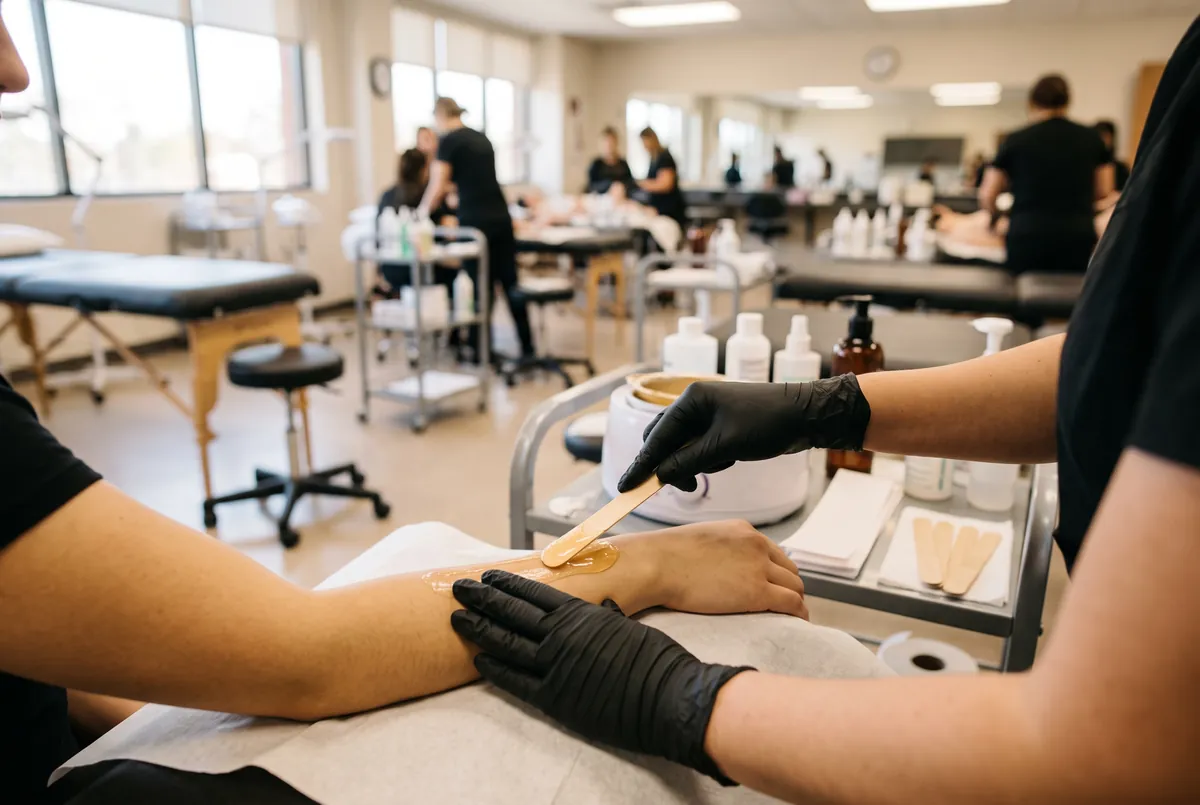
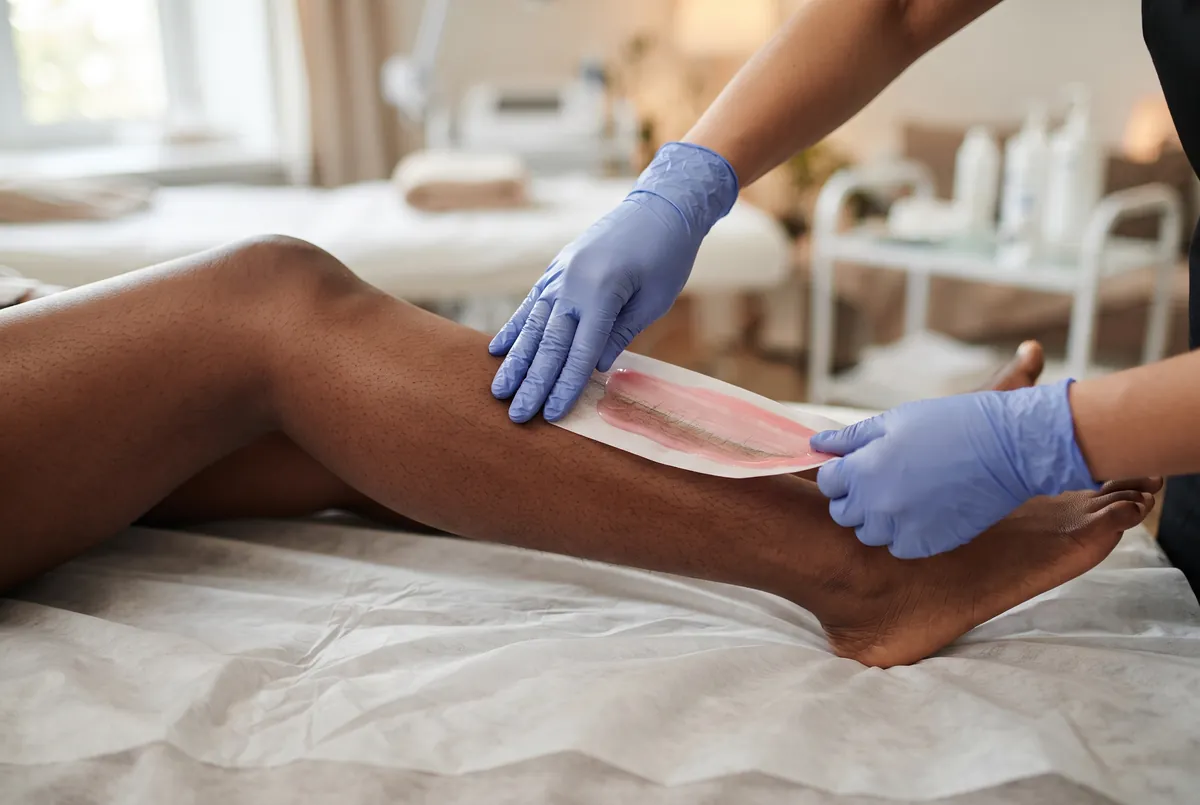
Every waxing program teaches the difference between hard wax, which sets on the skin and is lifted off without a strip, and soft wax, which is spread thin and removed with a cloth or paper strip. What separates a specialist is how precisely you control each one. With soft wax, the goal is a thin, even film spread in the direction of growth, a strip pressed firmly with the heel of the hand, and a fast removal kept low and parallel to the skin against the direction of growth. Pulling upward instead of along the skin is a common cause of bruising and lifting on delicate areas. Soft wax also adheres to the top layer of skin, so repeated passes over the same spot invite irritation.
Hard wax rewards a different kind of attention. It should be warm enough to flow off the spatula like thick honey but comfortable when tested on the inside of your own wrist. You apply it against the growth with firm pressure so it wraps each hair, then smooth it with the growth, leaving a slightly thicker edge where you will grip. Timing matters: lift too early and it tears, wait too long and it turns brittle and snaps. The right moment is when it has set but still feels pliable. For coarse hair on the underarms or bikini area, hard wax usually gives a cleaner result with less irritation, which is why most specialists keep both types running during the day.
Beyond the two basic types, you will meet formulas for sensitive skin, stripless wax designed for faster body work, and wax blended for coarse or very short hair. Learn how each one behaves at different temperatures and in a warm or cool room, because the same product acts differently in July and in January. Skin tension is the other skill that takes years to perfect. Your free hand should anchor the skin firmly just behind the area you are about to remove, and on curved areas you may need the client's help holding a fold flat. Loose skin makes removal more painful and raises the risk of bruising, no matter how good the wax is.
Experienced waxers also assess the hair before any wax touches the skin. Run a gloved finger against the growth to feel how coarse it is, look closely for spots where the direction changes, and check the length across the whole area rather than in one place. Mapping the direction first lets you plan sections that follow the growth instead of fighting it. Hair that is too long should be trimmed; hair that is too short in patches may call for a different formula or a frank conversation about rebooking. Two minutes of assessment prevents most of the broken hairs and repeat passes that make clients think waxing always hurts.

Body Areas in Order of Difficulty
Most programs move from forgiving areas to demanding ones, and it helps to understand what each area actually teaches. Legs and arms build speed, strip handling, and consistent tension over large surfaces. Underarms teach you to read hair that grows in several directions within a small space, which is excellent training for the bikini area. Facial waxing, including brows, upper lip, and chin, is less about strength and more about precision: a brow shape that is slightly off is visible to everyone the client meets, and facial skin reacts more easily to heat and active skincare. Back and chest waxing, most often requested by male clients, tests your stamina and your ability to manage dense, coarse hair across a large area without overworking the skin.
Bikini and Brazilian services sit at the top of the difficulty scale. Hair there is coarse and changes direction constantly, the skin is thin, and the client is at their most vulnerable. Excellent Brazilian technique combines correct draping, small sections, confident skin support, and a steady, professional explanation of what you are doing next. Specialists who handle this service well build loyal clients quickly, because people are reluctant to switch once they have found someone they trust. To see the service from the client's side, read our first Brazilian wax guide for clients, which is the explanation I want every nervous first-timer to have before walking in.
Brow work deserves a special mention, because clients often book it on its own and return for it frequently. Learn brow mapping based on the client's bone structure, work conservatively, and remove less than you think on a first visit. You can always take more hair next time, but overwaxed brows take months to grow back, and that client will describe the result to everyone who asks. Male clients bring their own considerations too: many want a natural, groomed look rather than a sculpted shape, and some come in for back or shoulder waxing after years of shaving, so expect coarser regrowth on the first visit. Explain that difference ahead of time, because a client who expects the first session to feel like the fifth may never book a second one.
Sanitation Habits That Protect Clients and Your License
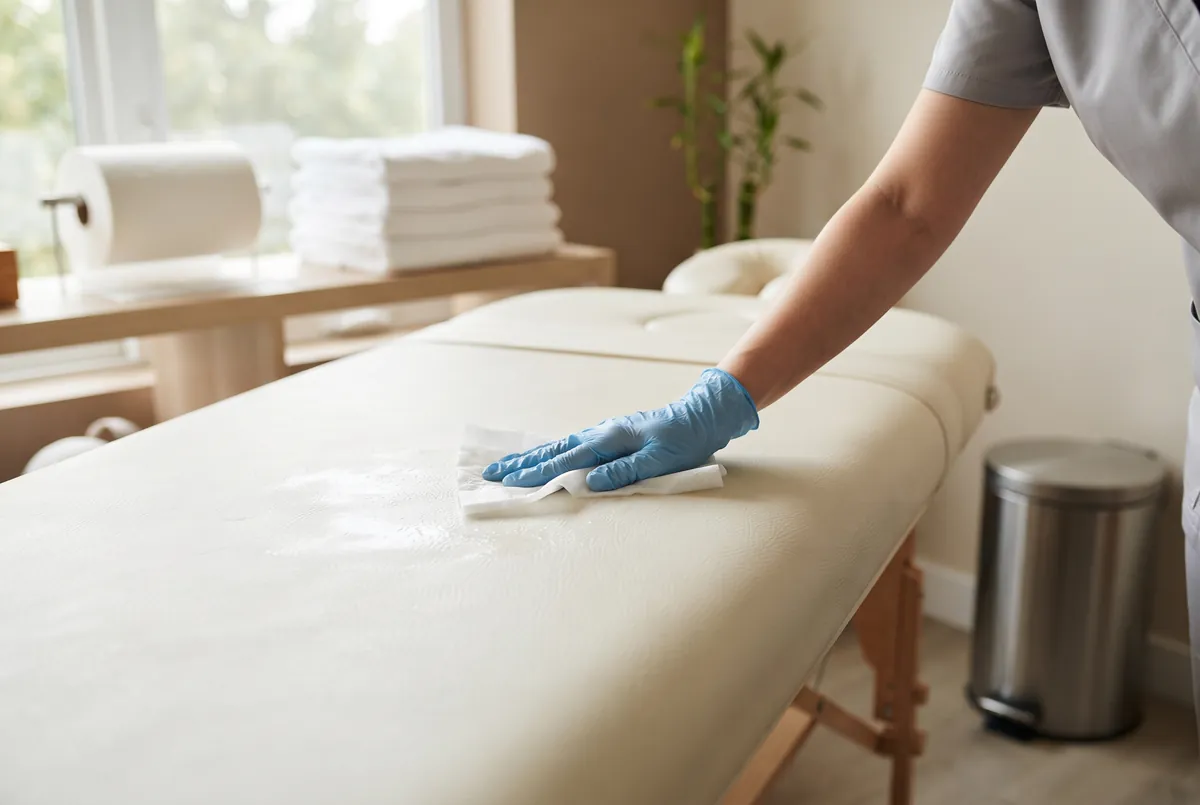
Sanitation is the part of waxing most likely to cost you a license, and it is the part clients now watch most closely. The core rule is simple: nothing that has touched a client goes back into anything that will touch another client. That means a fresh spatula for every dip, with no double dipping even on the same client, because a used applicator carries skin cells and body fluids into the pot. Gloves go on before you touch the skin and are changed whenever they touch something that is not clean. The table gets fresh paper or clean linen for each client, and reusable tools such as tweezers and scissors are cleaned and disinfected between every use according to your state's rules.
- A fresh spatula for every dip into the pot, and a lidded warmer kept clean of drips and debris
- New gloves for each client, changed again after touching anything that is not clean
- A pre-wax cleanser on the skin before any wax is applied
- Fresh table paper or linens and clean towels for every client
- Tools cleaned, then disinfected with an EPA-registered disinfectant as your state requires
- Lined, covered waste bins and a clear plan for any item that contacts blood
- A room reset routine you follow in the same order every time
Know your state's rules in writing, not from memory, because boards differ on details such as how tools must be stored after disinfection and how long a disinfectant must stay wet on a surface. Inspectors can arrive unannounced, and the problems they find are often small: an uncovered waste bin, a disinfectant mixed incorrectly, a used implement left on a counter. Build your routine so that the correct choice is also the easy one. Keep fresh spatulas within reach on the trolley, use a foot-operated trash lid, and keep a written setup checklist in the room until you no longer need to look at it.
Contraindications and the Consultation
A thorough consultation is how you avoid injuring someone. Before the first service, and briefly before every visit after that, ask about medications, skincare products, recent treatments, sun exposure, and skin conditions. The most serious risk is skin lifting, where wax removes a layer of skin along with the hair and leaves a raw patch that can scar or darken. It happens most often on skin thinned by retinoid products or recent exfoliating treatments. Dermatology guidance is not to wax during oral isotretinoin treatment and for at least six months after stopping it. Topical retinoids, prescription acne creams, and strong acids used on the area also call for a pause before waxing that area, timed with the client's doctor.
- Oral isotretinoin now or in recent months: do not wax, and refer the client to the prescribing doctor
- Topical retinoids, prescription acne creams, or chemical peels on the area: postpone waxing that area
- Sunburn, recent tanning, or windburn on the area: wait until the skin has fully calmed
- Open cuts, rashes, active breakouts, or a cold sore near the lip: postpone and avoid the area
- A flare of eczema, psoriasis, or dermatitis in the treatment zone: wait, and suggest a dermatologist
- Diabetes, circulation problems, or blood thinners: proceed only with extra caution and physician input where appropriate
- Recent laser, microneedling, or other skin procedures: follow the timing given by that provider
Your job is to recognize warning signs and postpone, not to diagnose. If a client has a rash you cannot identify, a mole that has changed, or a skin reaction that keeps recurring, the right words are simple: I cannot wax this area today, and I would like you to have a dermatologist look at it. Clients respect that far more than a service that goes wrong. Document every answer on the intake form, have the client sign it, and update it at least once a year or whenever their medications or skincare change. Good records also protect you if a reaction happens later and questions come up about what was disclosed.
Building a Client Base That Rebooks
Waxing has a built-in advantage over many beauty services: hair grows back, so satisfied clients return on a regular cycle. Your client base grows fastest when you protect that cycle. Before the client leaves, recommend a specific interval based on how their hair grows and offer to book it on the spot. Clients who leave without a next appointment often drift back to shaving, or to whichever studio has an opening the week they remember. Explain why consistency matters: hair removed on a regular schedule tends to come back more evenly, and most clients find later appointments more comfortable than the first. When you present rebooking as part of the result rather than a sales pitch, most people agree.
New specialists should also choose a focus. Generalists compete with every salon in town. A specialist known for gentle Brazilians, for brows, for sensitive and reactive skin, for men's back and chest waxing, or for clients with hormonal hair growth such as PCOS gives people a clear reason to choose you and to recommend you. Build relationships with nearby professionals whose clients need what you offer: hairstylists, lash artists, nail technicians, dermatology offices, and fitness studios. Ask satisfied clients to leave an honest review, and never post invented reviews or borrow someone else's. Photos for social media should show your room, your tools, and non-intimate results, always with written consent.
Track the few signals that tell you if your book is healthy: how many first-time clients return for a second visit, how many regulars keep their interval, and where new clients heard about you. If first-timers are not coming back, the problem is usually the experience, not the marketing: a rushed consultation, unclear aftercare, a room that felt cold, or a waxer who seemed hurried. Fix that before spending money on advertising. A simple follow-up message a day after a first visit, asking how the skin feels, catches small problems early and shows the client that you care about the result beyond the appointment itself.
Pricing is part of client building, too. Research what licensed specialists with similar experience charge in your area, and price by area and time rather than guessing. Resist the urge to discount heavily to fill your first months, because clients who come only for a low price tend to leave for the next promotion, and raising rates later is harder than starting fairly. A modest introductory offer for a first visit, paired with a clear standard price for returning clients, attracts people who value the service. Review your prices once a year as your speed, skill, and demand grow.

Work Settings and What Each One Teaches You
Most waxing specialists start as employees of a salon, a day spa, a medical spa, or a waxing-focused studio, and some later move into a rented suite or their own studio. The financial differences between these setups are covered in our comparison of waxing business models from salon to independent suite. Here I want to focus on what each setting teaches you, because your first two years should build skill and reputation, not only income. The right first workplace is the one that makes you better at the work, even if another offer looks slightly more attractive on paper.
- Waxing-focused studio: high volume and strict timing build speed and consistency quickly, with less variety beyond waxing
- Full-service salon: a mixed clientele and referrals from stylists, with waxing as one service among many
- Day spa: longer appointments, a calmer pace, and waxing combined with facials and body treatments
- Medical spa or dermatology practice: clients on active skincare and medications, and close contact with medical staff
- Rented suite or own studio: complete control, plus full responsibility for marketing, supplies, insurance, and compliance
At interviews, ask practical questions: how many minutes are booked for each service, which wax products are used, who trains new staff, how sanitation is checked, and whether there is a senior specialist you can shadow. A studio that books a Brazilian in a very short slot for a brand-new graduate is setting you up for rushed work and unhappy clients. A spa that invests in onboarding, even at a lower starting rate, can be the better choice for your long-term skill and reputation. Ask as well how clients are assigned, since a fair booking system matters when you are trying to build your own regulars inside someone else's business.

How Our Online Waxing Course Fits the Path
I built our online waxing course to cover the knowledge side of the job in depth: wax types and how to choose them, body and facial technique explained step by step, skin preparation, contraindications and consultation, sanitation standards, and how to build a service menu and set prices. It works well in two situations. The first is before or during beauty school, so the theory is already familiar when you reach supervised practice and you can spend those hours refining your hands instead of catching up on concepts. The second is for licensed estheticians and cosmetologists who received limited waxing instruction and want a structured refresher before adding more waxing to their menu.
To be completely clear about the limits: an online course does not replace the supervised training hours your state requires, and it does not give you a license to wax for pay. Only a board-approved program and a state license do that, in the states where waxing is licensed. Treat online study as preparation that makes your in-person training more productive and your exam less stressful, and check your state's page in our licensing hub before you plan a timeline. If anyone promises you a way to wax legally for pay without meeting your state's requirements, treat that as a warning sign, not a shortcut.
To get the most from online study, work through it with your hands busy. After each technique lesson, rehearse the spreading and removal motions on a practice pad or mannequin arm, and never work on paying clients before you are licensed. Write your own step-by-step setup and cleanup checklist from the sanitation module and compare it with your school's protocol once you start. Bring your questions about contraindications to your instructors. Students who arrive with specific questions get far more out of supervised hours than students who arrive hoping school will explain everything from zero.

Growing Past the Basics
After your first year or two, look at what clients ask for that you cannot yet offer. Many waxing specialists add sugaring, which uses a paste removed in the direction of growth and appeals to clients with sensitive skin. Others add brow tinting and lamination, lash services, or facials if their license covers them. Some upgrade from a waxing-only credential to a full esthetics license once they see how many of their clients also want skin care. Clients who tire of repeated temporary removal, especially for coarse facial hair or chronic ingrown hairs, sometimes ask about permanent options, which is where electrolysis becomes a natural next credential for a hair removal professional.
Protect your body as carefully as your skills, because waxing is repetitive work. Adjust the table height for every client, keep your wrist neutral during strip removal, stand close enough that you are not reaching, and stretch your hands and shoulders between appointments. Specialists who ignore ergonomics often develop wrist and back pain that limits how many clients they can see. Continuing education, whether or not your state requires it for renewal, keeps your technique current as products and client expectations change, and it is often where you meet the colleagues who later refer clients to you.
Your Next Step
Start with facts, not assumptions. Open your state's page in our waxing licensing hub, note which credential covers waxing and whether facial and body waxing are treated differently, and compare approved schools against that requirement. While you plan, study the theory so you arrive at school ready to practice. A waxing career rewards people who are careful, consistent, and kind to nervous clients, and every one of those qualities can be built from the first day of training.
State Requirements
State licensing guides
Hours, exams, fees, and the licensing board differ by state. Open your state for the current requirements.
Common Questions
FAQ
In most states, yes. Waxing for pay is usually performed under an esthetician or cosmetology license, and some states offer a narrower waxing-only credential. A few states regulate waxing lightly, but local business and health rules still apply. Requirements change, so check your state in our waxing licensing hub and confirm with the state board before you work on paying clients.
It depends on which credential your state attaches to waxing. A waxing-only credential, where one exists, is the shortest route. A full esthetics program takes longer, and cosmetology takes the longest because it also covers hair and nail services. Add time for the state exam and license processing, then a first year of building speed. Your state's licensing page lists the current hour requirement.
It is broader, not automatically better. An esthetician license lets you add facials and other skin care, is widely preferred by spas, and is more likely to have a counterpart if you move to another state. A waxing-only credential gets you working sooner with less tuition if waxing is truly all you want to do. Choose based on the service menu you expect to offer in five years.
You can learn the theory online, and a good course makes your in-person training more productive. You cannot legally skip the supervised hours or the license your state requires. In most states, charging for waxing without the proper license can lead to fines. Use online study as preparation, then complete an approved program and pass your state exam.
They are difficult in different ways. Soft wax demands a thin, even layer and a fast, low, parallel removal, and mistakes show up as irritation or lifting. Hard wax requires close control of temperature, thickness, and timing, because it tears if lifted too early and snaps if left too long. Most specialists master both and choose by area, hair type, and skin sensitivity.
Most specialists would say the Brazilian. The hair is coarse and changes direction, the skin is thin, and the client needs calm, professional communication throughout. Brows are a close second for a different reason: small errors are highly visible and take months to grow out. Both services build loyal clients once you perform them well and consistently.
Usually through an employer's existing clientele first, then through rebooking and referrals. Book each client's next visit before they leave, choose a focus clients can remember you for, build referral relationships with nearby beauty and wellness professionals, and ask satisfied clients for honest reviews. A consistent, careful experience drives growth more reliably than advertising does.
Some states require continuing education for license renewal and others do not, so check your board's renewal rules for the license you hold. Even where it is not required, ongoing training on new wax formulas, advanced areas such as Brazilians and brows, and updated sanitation standards keeps you safer, more confident, and more competitive with experienced colleagues.
Keep Reading
Related Guides


