Cosmetology
Foreign Cosmetology License in the USA: How Recognition Works
Quick answer
A foreign cosmetology license is not valid in the United States, and there is no national license. Each state board decides how much of your training and experience abroad it will credit, usually based on translated documents and a credential evaluation from an approved agency. Most applicants must still pass the state exam, and some must complete additional training at a licensed school first.
A foreign cosmetology license in the USA does not let you work on its own. No US state automatically recognizes a beauty license or diploma issued in another country, and there is no national license to apply for. What your training can do is count: many state boards have a process for evaluating education and experience obtained abroad and deciding how much of their requirement it satisfies. Depending on the state and your documents, the result ranges from permission to sit for the state exam straight away, to completing additional training first, to starting a full program.
I know this road personally. I trained abroad and built my career in the United States after immigrating, and I have since helped many internationally trained cosmetologists, estheticians, and electrologists make sense of the same process. This guide explains how state boards generally evaluate foreign training, what a credential evaluation is, how translations work, where extra hours or exams come in, and the obstacles that slow people down. It covers professional licensing only. It is not immigration or visa advice, and questions about your right to work in the US belong with a qualified immigration attorney.
The short answer: your training may count, your license does not transfer
It helps to separate two ideas that people often merge. A license is legal permission from a specific government to practice within its borders. Your home country's license, or its equivalent, authorized you there. It has no legal effect in an American state. Training and experience are different. They are facts about you that a state board can examine and, under its rules, credit toward its own requirements. The entire process is about getting a board to give your background as much credit as its rules allow, and then meeting whatever remains.
For many internationally trained professionals, what remains includes the state's licensing examination. Boards generally want every licensee, wherever trained, to demonstrate knowledge of the infection control standards, safety practices, and laws that apply in that state. Experienced practitioners sometimes feel insulted by this. I understand the feeling, and I would encourage you to set it aside. The exam is not a judgment of your skill. It is the common gate everyone passes through, including people who trained in the next state over.
The honest range of outcomes is wide. Some applicants with well-documented training and several years of practice are approved to test with little or no additional schooling. Some are told to complete a specified number of additional hours at a licensed school. Some, especially where documents are thin or the state does not have a pathway for foreign training, need to enroll in a full program. You cannot know which applies to you from an article. You can know how to find out efficiently, and that is what the rest of this guide is for.
How beauty licensing works in the United States
Professional licensing in the beauty field is a state matter. Each state has its own board or agency, its own statute and rules, its own required training, its own fees, and its own application forms. Fifty states, plus the District of Columbia and the territories, means dozens of separate systems. A license from one state does not authorize work in another. Americans who move across state lines go through a transfer process themselves, which I describe in cosmetology license reciprocity by state. Your situation is related but different, because your starting point is outside the system entirely.
The professions are also divided differently from what you may be used to. In most states, a cosmetology license covers hair services, with basic skin and nail care included. Esthetics, meaning skin care, facials, waxing, and makeup, is usually a separate license with a smaller training requirement. Nail technology is commonly separate again. Electrology, permanent hair removal by electrolysis, is licensed in many states and not regulated as its own profession in others. Barbering has its own license. Your foreign qualification may span several of these categories or sit between them.
This matters at the very first step. In many countries, "cosmetologist" describes a skin care specialist, sometimes with medical or paramedical training, and the word has little to do with hair. In the United States, "cosmetologist" primarily means a hair professional. If your background is skin care and you apply for a cosmetology license because the word matches your diploma, you may be applying for the wrong license, with a much larger training requirement built around haircutting and chemical services. Match your actual training to the American license category, not the title. The comparison in cosmetologist or esthetician: the difference will help.
How state boards generally evaluate foreign training
Boards handle international applicants in a few broad ways. I describe the patterns without assigning them to particular states, because rules are amended and the only current source is the board itself. The first pattern is evaluation for exam eligibility. The board, often with the help of an outside credential evaluation agency, compares your documented training to its own requirement. If the training is judged equivalent, you are approved to take the state exam. If it falls short, the board states the deficiency.
The second pattern credits work experience. Some states allow documented, lawful practice in the profession to make up for some missing training hours, using a formula in their rules. Proof matters here: letters from employers, tax or business records, and license histories, all translated. The third pattern routes you through a school. In some states the board does not evaluate foreign training directly. Instead, a licensed school assesses your transcript and skills, grants what credit state rules permit, and enrolls you for the remainder.
The fourth pattern is no special pathway. A few states have no provision for foreign training, or accept it only in very limited circumstances. There, the practical choice is completing a program in that state or first getting licensed in a state with a workable pathway and transferring later, which has its own conditions. Across all four patterns, the examination is nearly always required, and some boards add a jurisprudence test on state law or a refresher course. Some may also request an interview or further information before deciding.
Start by choosing the state
Everything depends on which board you are dealing with, so the first decision is where you will live and work. If that is already settled, go directly to that state's board. If you have some freedom, for example because family is in more than one place or you have not yet moved, it is reasonable to compare how two or three states treat foreign training before you decide. The differences can amount to many months of schooling. Start from our licensing hubs for cosmetology and esthetics to see each state's basic structure, then read the board's own pages.
On the board's website, look for terms such as "foreign-trained applicants," "international applicants," "out-of-country," or "training outside the United States." Sometimes the information sits under reciprocity or endorsement, and sometimes it is a separate application form. If you cannot find it, write to the board. Keep the message short and factual: the license you are seeking, the country where you trained, the length and type of your program, your years of practice, and a direct question about what the process is and which documents and evaluation agencies they accept.
Boards are government offices with limited staff, and replies can be slow. Be patient and polite, and follow up in writing if you hear nothing. Do not rely on what a friend was told several years ago or in a different state, and be careful with advice from online groups, where people sincerely repeat rules that have changed or never applied to your case. I have seen applicants spend money on an evaluation from an agency their board did not accept, because a forum post said it was fine. Get the instructions from the board first, then act.

The documents boards usually ask for
Requirements vary, but international applicants are commonly asked for the same core set. Gathering them takes longer than anything else in the process, especially if schools or authorities in your home country must issue or certify them. Start as early as you can, ideally before you leave or while someone at home can still visit offices on your behalf. The list below is the general pattern, and your board's own checklist always takes priority over it.
- Diploma or certificate from your professional training program, showing the school, the program, and the completion date.
- Transcript or curriculum breakdown listing subjects studied and the hours or credits for each. This is the document evaluators rely on most, and the one people most often lack.
- Proof of licensure or registration in your home country, if the profession is licensed there, or an official statement that no license exists for it.
- Proof of work experience: employer letters on letterhead with dates and duties, business registration if you were self-employed, and supporting tax or payroll records where available.
- General education records, such as a secondary school diploma, since many states have a minimum education requirement that may also need evaluation.
- Identity documents and any identification numbers the application asks for.
- Certified English translations of everything not in English.
- A credential evaluation report from an agency the board accepts, where required.
- Name change records, such as a marriage certificate, if your documents show different names.
The transcript deserves special attention. US boards measure training largely in hours per subject. A diploma that says only that you completed a course tells them almost nothing. If your school did not issue an hourly breakdown, ask it for an official letter or a copy of the curriculum that lists each subject and the time devoted to it, signed and stamped. If the school has closed, find out which authority holds its records, such as an education ministry or a regional archive. Evidence of the official national curriculum for that qualification can sometimes help an evaluator.
Many boards and agencies want documents sent directly from the issuing institution in a sealed envelope, or verified by the institution, instead of handed over by the applicant. Read the instructions on this point carefully before you request anything, because a school abroad may be willing to prepare documents only once. Keep certified copies of everything for yourself. Never send your only original unless the instructions leave no alternative, and if you must, use a tracked delivery service and keep scans.

Credential evaluation and translations: what boards accept
A credential evaluation is a report by a specialized private agency that examines your foreign educational documents and describes them in American terms. For licensing purposes, the useful type is a detailed, course-by-course style report that lists what you studied and for how long, so the board can compare it with its curriculum. A general report stating only that you hold the equivalent of a vocational certificate is rarely enough. The board, or its application instructions, will tell you which type it needs.
Boards do not accept reports from just any agency. Many specify a list of approved evaluators, and a number of them refer to membership in NACES, the National Association of Credential Evaluation Services, as the standard. Some agencies offer evaluations designed specifically for cosmetology and barbering boards. The rule to follow is simple: use an agency your board names, and order the exact report type it requires. Check as well whether the agency must send the report directly to the board.
The process is straightforward but slow. You apply to the agency, pay its fee, and submit your documents and translations according to its instructions. The agency may verify your credentials with the school or the education authority in your country, which can take time and occasionally stalls if the institution does not respond. Fees and processing times differ by agency and service level, so compare the approved options. An evaluation is an opinion for the board to consider. The board makes the decision, and it may accept the evaluator's conclusions fully or in part.
Translations come next. Every document in another language needs an English translation, and boards and evaluation agencies set standards for it. Typically the translation must be complete, word for word including stamps and seals, and accompanied by a signed statement from the translator affirming competence in both languages and the accuracy of the work. Some boards require a professional translation company or a translator with specific credentials. Many do not allow you to translate your own documents or to use a relative, even if your English is excellent.
Consistency of names causes more trouble than language. Transliteration from non-Latin alphabets can produce several spellings of the same name, and your passport, diploma, and US identification may not match. Ask the translator to use the spelling that appears on your current official identification and to note the original spelling. If your name changed through marriage or for any other reason, include the legal record of the change. A board reviewer who sees two names and no explanation will pause the file.
Professional terminology is the other trap. Subject names on beauty transcripts do not always have neat English equivalents, and a literal translation can make a relevant subject look unrelated. A course in skin care techniques might be rendered in a way that suggests medicine, or the reverse. A translator familiar with educational documents will handle this better than a general one. Review the translation yourself before submission. You know what you studied, and you can ask for corrections where an English term misrepresents the content, as long as the translation stays faithful to the original.
When the board asks for additional hours
If your evaluated training is less than the state requires, or does not cover certain required subjects, the board will tell you what is missing. Sometimes it is a total: you need more time overall. Sometimes it is subject-specific: your program lacked instruction the state mandates, often in infection control, state law, or a service category that was not part of your foreign qualification. Either way, the usual remedy is to complete the deficiency at a school licensed in that state.
Contact several licensed schools and explain that you are an internationally trained applicant with a deficiency letter from the board. Not every school accepts students for partial programs, and those that do set their own tuition for it. Ask how they schedule such students, whether part-time attendance is possible, and what they charge. Some schools have real experience with international students and can be a great help with paperwork. For what schools ask of any incoming student, see cosmetology school requirements.
I would ask you to look at additional hours differently from how most experienced professionals first see them. Yes, they cost time and money, and it is frustrating to sit in a classroom after years of practice. They are also your orientation to American practice: the product lines used here, the consultation style clients expect, the state's sanitation procedures as inspectors enforce them, and the exact routine of the practical exam. People who use that time actively, asking instructors how things are done locally, pass the exam more easily and settle into American salons faster.
The state exam: what internationally trained professionals should expect
Most states require a written theory examination, and many also require a practical examination. The written exam is multiple choice and covers the scientific and safety foundations of the profession along with the services within its scope. Much of the content will be familiar from your training. Some of it will not be, because it reflects American standards: specific infection control terminology and procedures, federal safety agencies and their roles, and the way US textbooks organize the material.
Language is the largest practical hurdle. Exam questions use precise technical English, and a practitioner who is fluent in conversation may still be slow with terms for anatomy, chemistry, and disinfection. Some states offer the written exam in languages other than English or permit an interpreter or a translation dictionary under set conditions, and others do not. Ask your board and its exam provider what accommodations exist. Whatever the answer, begin building your English technical vocabulary early. You will need it with clients, employers, and inspectors as well.
The practical exam, where required, rewards procedure over artistry. Examiners score whether you set up correctly, sanitize your hands at the right moments, label and dispose of supplies properly, protect the model or mannequin, and complete each task in the time allowed. Skilled professionals fail it by working the way they always have at home instead of the way the candidate instructions specify. Read those instructions line by line and rehearse with a timer. My guide on how to pass the cosmetology state board exam explains the preparation.
This is where structured theory study in English helps. Our online courses in cosmetology theory and esthetics theory present the material the way American curricula do, in plain English, at your own pace, so you can learn the terminology and standards the written exam expects. To be clear about their limits: these courses do not count as training hours, do not make you eligible for an exam, and are not a license. Eligibility comes only from the board. The courses are a way to prepare for what the board will test.
Typical obstacles and how people get past them
The same handful of problems appear again and again. None of them is unusual, and each has a known way through. The table summarizes them. Read it as a checklist of things to look into now, while you still have time to fix them. Most applicants meet two or three of these, and almost nobody meets all of them, so do not let the length of the list discourage you.
| Obstacle | Why it happens | What usually helps |
|---|---|---|
| No hourly transcript | Many schools abroad issue only a diploma | Request an official curriculum letter with subjects and hours from the school or the authority that holds its records |
| School closed or unreachable | Private schools close, records move | Contact the education ministry or archive, and gather the official program standard and any secondary evidence |
| Profession defined differently | Foreign "cosmetology" is often skin care, sometimes with medical elements | Apply for the US license that matches your actual services |
| Short courses and private certificates | Training was through brief private courses, not a formal program | Expect limited credit, document work experience, and ask whether experience can substitute |
| Name mismatches | Transliteration and name changes | Consistent spelling in translations plus legal name change records |
| Wrong evaluation agency or report | Ordering before reading board instructions | Confirm the approved list and report type first |
| Language on the exam | Technical English differs from everyday English | Early terminology study and checking available language accommodations |
| Slow responses | Boards and foreign institutions work at their own pace | Start early, follow up in writing, keep a log of every contact |
A specific word on training that included medical content. In some countries, skin care specialists are trained alongside nurses or hold a paramedical qualification, and they perform procedures such as injections or deeper peels. In the United States, those procedures are the practice of medicine or nursing and are outside the scope of cosmetology and esthetics licenses. A beauty board will credit the portions of your training that correspond to its curriculum, and the rest will not expand what your license allows. If your background is in healthcare, recognition of that qualification is a separate matter handled by healthcare licensing bodies.
There is an emotional obstacle too, and I mention it because I have felt it. Being treated as a beginner after years of respected work is hard. You may assist in a salon where you could teach the owner. Clients may assume less of you because of your accent. It passes. Your experience shows quickly once you are licensed, and clients value the precision and discipline that many training traditions abroad instill. The paperwork period is temporary, and it does not measure your worth as a professional.
What you can and cannot do while the process runs
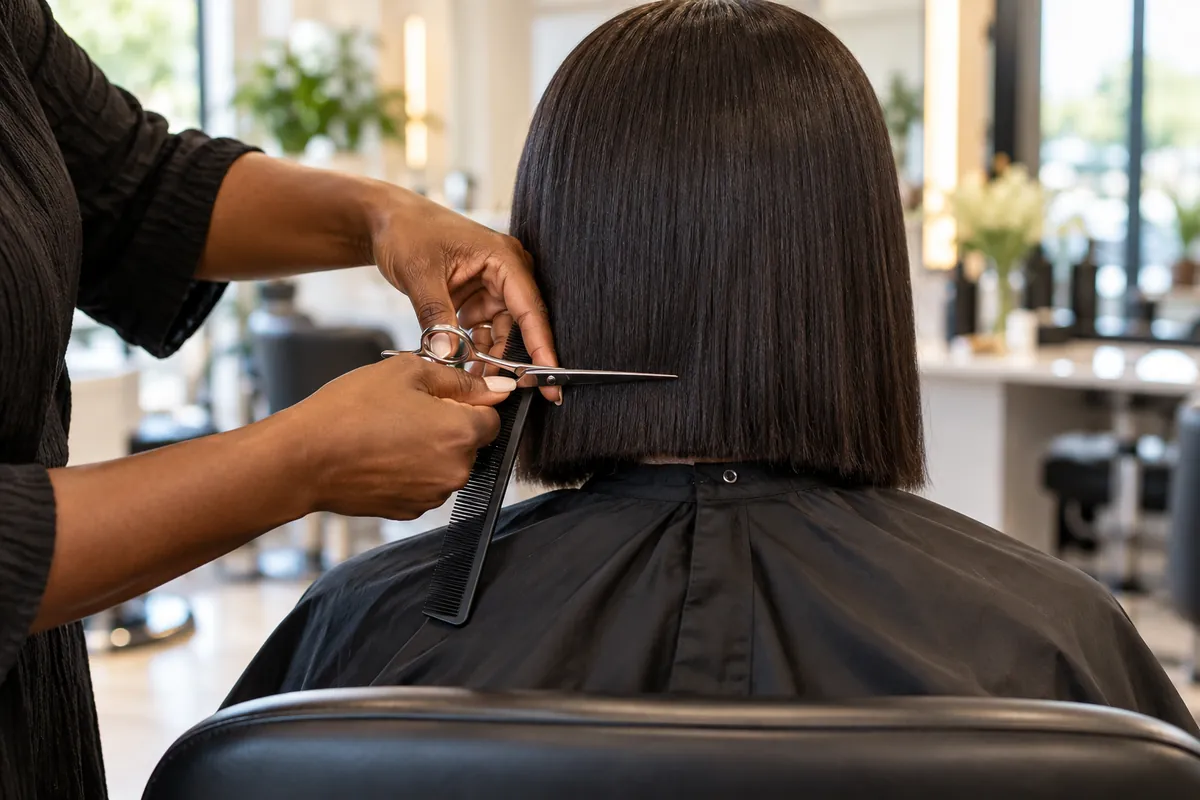
Until a state issues your license, you may not perform licensed services for pay in that state. That includes working from home for acquaintances, which many newcomers do without realizing it is unlawful. I understand the pressure to earn. Unlicensed practice can lead to penalties and can count against you when the board reviews your application, since boards ask about it. It is the one shortcut that can damage the whole plan.
There is useful work you can do in the meantime, provided you are otherwise permitted to work in the United States, which is a question for an immigration attorney and not for me. Salons and spas hire for reception, inventory, cleaning, and assistant duties that do not involve regulated services. What an unlicensed assistant may do differs by state, so ask the employer and check the board's rules. Such a job teaches you how American salons operate: booking systems, client expectations, tipping customs, retail, and the vocabulary of the workplace. Some states also issue temporary permits or allow supervised work for applicants at certain stages. Ask the board whether anything of that kind exists.
Use the waiting time to prepare. Study theory in English. Read your state's laws and rules for your profession, which are public and are tested in many states. Visit salons and spas as a client to observe how services are delivered and priced. Build a simple portfolio of your work. Improve your professional English with the phrases used in consultations. People who do this arrive at the exam and the first job ready, while those who only wait for the mail start from zero on the day the license comes.
Notes for estheticians and electrologists
Estheticians. If you trained abroad in skin care, the esthetics license is usually your category. Boards will look for instruction corresponding to their curriculum: skin science, infection control, facials, hair removal by waxing, makeup, and state law. Training in devices or procedures beyond the entry-level American scope may not be credited and will not widen your license. Scope differs by state, and some states have an advanced esthetics credential. Start at the esthetics licensing hub and read about American practice in how to become a licensed esthetician.
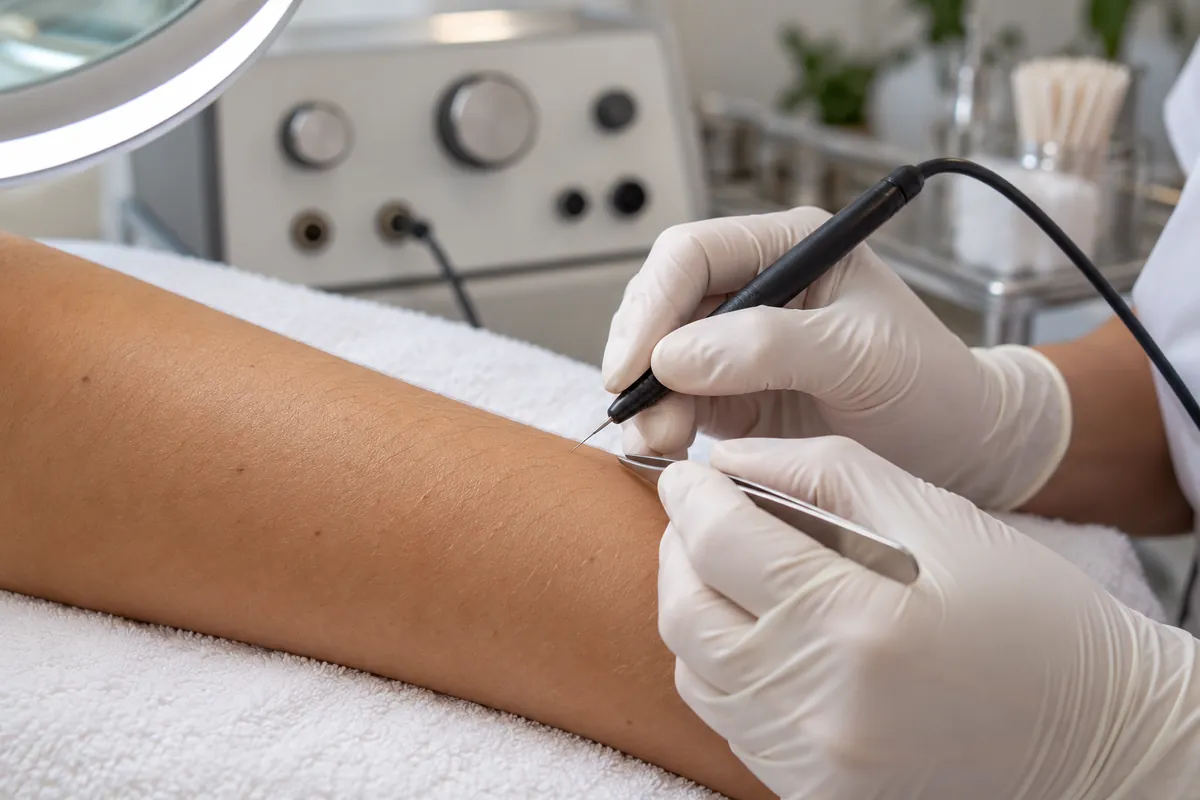
Electrologists. Electrolysis is the method the FDA allows to be marketed as permanent hair removal, and it is my own first profession. Regulation is uneven. Many states license electrologists, with their own training requirements and examinations, and others do not regulate electrology as a separate profession, in which case different rules, or none specific, may apply. Where a license exists, boards treat foreign electrology training with the same general approach described above: documents, evaluation, possible additional training, and an exam. The electrolysis licensing hub shows each state's position.
Electrologists from abroad should also know that equipment, probe types, and terminology can differ from what they trained on, and that American infection control standards for a procedure involving probe insertion are strict and specific. Voluntary professional certification exists in the field as well. It is not a license, though some employers and clients value it. If you are preparing for an American electrology exam, studying the theory in English first is very helpful, and our electrolysis theory course was written for that purpose, with the same limits as the others: preparation, not licensure.
A step-by-step plan to start
Here is the order I recommend. It is arranged so that slow steps begin first and nothing is paid for before you know it is required. Your board may combine or reorder some steps, for instance by asking for the evaluation before the application or along with it, so treat this as a working outline and adjust it to the written instructions you receive from the state.
- Identify your US license category by the services you were trained in: cosmetology, esthetics, electrology, nails, or barbering.
- Choose the state and locate its board. Read every page that mentions foreign or out-of-country training.
- Write to the board with a brief description of your training and ask for the process, the forms, the accepted evaluation agencies, and the translation standards.
- Request documents from home at once: diploma, hourly transcript or curriculum letter, license verification, employer letters, and general education records.
- Order certified translations that meet the board's and the agency's standards, with consistent name spelling.
- Order the credential evaluation from an accepted agency, in the report type required, sent as the board instructs.
- Submit the application with fees and all supporting material, and keep copies of everything.
- Begin theory study in English and read the state's laws and rules while you wait for a decision.
- Complete any deficiency the board identifies at a licensed school in that state.
- Schedule and take the exams once approved, after timed practice for the practical portion.
- Receive the license, then begin working, and note the renewal date and any continuing education requirement.
Keep a single folder, paper and digital, with every document, receipt, tracking number, and email. Write down the date and the name of the person each time you speak with the board, the agency, or a school. Applications can stretch across many months, staff change, and a clear record lets you answer any question quickly. This habit will serve you again if you ever move to another state, where the new board will ask for much of the same material. My reciprocity guide covers how license transfers between states work once you hold a US license.

After the license: settling into American practice
A license opens the door, and then you build a clientele like every new licensee. Your experience will shorten that period. For a first position, look for a salon or spa where you can learn local habits while your skills speak for themselves. Pay structures here, including commission, hourly, and booth or suite rental, may be unfamiliar, and it is worth understanding them before signing anything. See booth rental versus commission for a plain comparison.
Expect differences in client culture. American clients generally expect a thorough consultation, an explanation of what you are doing, and clear options. Tipping is customary in most service settings. Online reviews carry weight. Your language skills are an asset: many communities are glad to find a professional who speaks their language and understands their hair or skin and their preferences, and that can become the foundation of your clientele while you grow more comfortable in English.
Keep your license in good standing. Know the renewal cycle and whether your state requires continuing education. Update the board when your address changes. If you plan to add a second license, for instance an esthetician adding electrology, check the requirements early. Internationally trained professionals who get through this process often become some of the most respected practitioners in their communities, partly because of the determination it took.
Your next step
Today, do two things. Find your state on the licensing hub for your profession, cosmetology, esthetics, or electrolysis, and from there go to the board's own website and locate its instructions for foreign-trained applicants. Then send the request to your school at home for an hourly transcript, since it is the slowest and most important document. Those two actions start the process, and neither one requires a fee.
While the paperwork travels, begin studying the theory in English. The cosmetology theory course and the esthetics theory course will familiarize you with the terminology and standards that American exams and workplaces use. They are study tools only. They do not replace any training your state requires, and only the board can approve you to test or to practice. I made this journey myself, and I can tell you that the process is slow, it is manageable, and there is steady work on the other side of it.
State Requirements
State licensing guides
Hours, exams, fees, and the licensing board differ by state. Open your state for the current requirements.
Common Questions
FAQ
No. A license or diploma issued in another country does not authorize you to practice in any US state. Each state issues its own license. Many state boards will evaluate your foreign training and experience and credit it toward their requirements, after which you typically must pass the state's licensing exam. The amount of credit, and whether additional training is needed, depends on the state and on your documents.
Not necessarily. Some applicants with well-documented training and experience are approved to take the state exam without further schooling. Others are asked to complete a specified deficiency at a licensed school, and some need a full program, particularly where records are incomplete or the state has no pathway for foreign training. Only the board in your state can tell you, after reviewing your documents. Start at the cosmetology licensing hub.
It is a report from a private agency that reviews your foreign education and describes it in US terms, often subject by subject. Many boards require one for international applicants and accept reports only from agencies they approve, frequently those belonging to NACES. Confirm with your board which agencies and which type of report it accepts before paying, since a report from the wrong agency may be rejected.
In some states, yes. Certain boards allow documented professional experience to offset part of a shortfall in training hours, according to formulas in their rules. You will need proof, such as employer letters with dates and duties, business registration, or tax records, with certified translations. Other states credit only formal education. Ask the board whether experience is considered and what evidence it accepts.
It depends on the state. Some states offer the written exam in certain languages besides English or permit an interpreter or translation aid under specific conditions, and others test in English only. Check with your board and its exam provider. Even where another language is available, learning the English technical vocabulary is worthwhile, since you will use it with clients, employers, and inspectors.
Most likely esthetics. In the United States, a cosmetology license is centered on hair services, with skin care as a smaller part, and esthetics is the dedicated skin care license. Applying for the license that matches your actual training usually means a smaller requirement and more relevant credit. Review the esthetics licensing hub and confirm the category with the board before submitting documents.
You may not perform licensed services for pay until the state issues your license. If you are otherwise authorized to work in the US, you may be able to hold a non-service role such as receptionist or assistant, within the limits your state sets for unlicensed staff. Some states have temporary permits for applicants. Ask the board. Questions about work authorization itself should go to an immigration attorney.
An online course cannot grant eligibility, replace required hours, or act as a license. It can help you prepare. Theory courses in English teach the terminology, infection control standards, and curriculum structure that US written exams are built on, which is often the main gap for experienced practitioners trained elsewhere. Use them for exam preparation and professional vocabulary, alongside the official process with your state board.
Keep Reading
Related Guides


