Cosmetology
Cosmetology School Requirements: What You Need to Enroll

Quick answer
To get into cosmetology school you generally need to meet a minimum age set by your state or the school, show proof of education such as a high school diploma or equivalency, provide government photo ID, complete an application, and arrange payment or financial aid. Applicants under eighteen need a parent or guardian signature. Exact ages and education rules vary by state, so check your state board.
Cosmetology school requirements are simpler than most people fear, and they come from two different places, which is why the answers you find online seem to contradict each other. Your state sets rules about who may train for and hold a cosmetology license: typically a minimum age and a minimum level of education. Each school then adds its own admission policy on top, covering documents, an interview or tour, payment arrangements, and sometimes an entrance assessment. A school can be stricter than the state. It cannot be looser if it wants its graduates to qualify for a license.
I am a licensed cosmetologist and electrologist, and I have helped many prospective students sort out what they need before their first admissions appointment. This guide covers the requirements to get into cosmetology school in the order you will meet them: age, education, identity documents, the enrollment steps, questions about criminal history and health, and what changes for transfer students and people educated abroad. I do not print specific ages, hour totals, or fees, because they differ by state and change over time. For those, use the state pages linked throughout.
Two sets of rules: the state's and the school's
Start by separating the two layers. The state board of cosmetology, or whatever the licensing agency is called in your state, publishes the conditions for a license. These usually include a minimum age, a minimum education level, completion of an approved program or apprenticeship, and a passing exam result. Some of these conditions apply at enrollment, some at the time you sit for the exam, and some at the time the license is issued. That timing matters. In some states a person can begin training before reaching the age required to be licensed.
The school's layer is admission policy. Schools decide which documents they collect, whether they interview applicants, whether they require a campus tour, whether they test basic reading and math, and what payment arrangements must be in place before your first day. Schools that participate in federal student aid programs must also follow federal rules about who can be admitted as a regular student, which is one reason accredited schools ask for proof of high school completion even in states where the board's own education requirement is lower.
The practical consequence: when you read that a state requires one thing and a school's website says another, both can be true. Follow the stricter one for admission, and keep the state's rules in view for licensure. Before you call any school, read your state's entry on the cosmetology licensing hub so you know the baseline. Then every school's answer has a context, and you can tell a legal requirement from a school preference.
The same two layers exist if you train through an apprenticeship in a state that allows one. The state defines who may register as an apprentice, usually with age and education conditions similar to those for school students, and the sponsoring salon adds its own expectations as an employer. An apprentice is typically registered with the board before any training time counts, so the paperwork comes first there as well. If you are weighing that route, read cosmetology apprenticeship vs beauty school alongside this guide, because the entry conditions and the daily reality are quite different from a classroom program.
Age requirements
Every state sets a minimum age connected to cosmetology licensing, and the number is not the same everywhere. Many states place it in the mid to late teens. The detail that trips people up is where the age applies. Some states state a minimum age to enroll in a program. Others state a minimum age to take the exam or to receive the license, which means a younger student may be allowed to start training as long as they will reach the required age by the end. Schools often set their own minimum as well, and it can be higher than the state's.
High school students have additional options in many areas. Career and technical education programs, sometimes run by the school district and sometimes in partnership with a college, let students begin cosmetology training while still enrolled in high school. Dual enrollment arrangements with community colleges exist in some states too. These programs have their own entry rules, usually tied to grade level and school approval, and the training time earned can count toward the state requirement when the program is state approved.
If you are under eighteen, expect a parent or legal guardian to be involved. A minor generally cannot sign a binding enrollment agreement alone, so schools ask a parent or guardian to sign as well, and they may ask that adult to attend the admissions meeting. There is no upper age limit anywhere. I have trained alongside students in their fifties and sixties, and schools welcome them. If you are an older applicant, the age question is irrelevant. The education documents are the part that sometimes takes effort to locate.

Education: diploma, GED, and the alternatives
The most common education requirement is a high school diploma or a recognized equivalent, such as a GED or another state-approved high school equivalency credential. Most accredited schools ask for it, and many states require it for licensure. Some states set the bar lower, at completion of a certain grade level, and a few handle it through an equivalency test. Because of the federal aid rules mentioned above, you will find that many schools require a diploma or equivalent regardless of what the state's licensing rule says.
Proof matters as much as the credential. Schools typically accept a copy of the diploma, an official transcript showing the graduation date, or the official record of your equivalency exam. Homeschooled applicants are generally accepted when their education meets the home state's homeschool law, and the school will tell you what documentation it needs, often a parent-issued transcript or a state form. Be careful with online programs that sell a diploma quickly for a fee. Schools and boards can refuse credentials from unrecognized providers, and discovering that after you enroll is painful.
If you did not finish high school, you still have routes. The most direct is to earn an equivalency credential first, which adult education centers in most communities help with at low or no cost. Some schools admit students without a diploma under special provisions, sometimes alongside an approved career pathway program, and some states allow enrollment based on a lower grade level. These exceptions are narrow and their rules are specific, so ask the school to show you the policy in writing and confirm with your state board that a license will be available to you at the end.
If your records are old or lost, start early. Request a transcript from the high school or the district records office, or a duplicate of your equivalency record from the state agency that holds it. Name changes since graduation are common, so have the document that links your names, such as a marriage certificate or court order. I have seen start dates slip by a full term because a transcript request was made in the final week.
The documents you will be asked for
Admissions offices ask for a fairly standard set of papers. Gather them before your appointment and the process moves quickly. The exact list depends on the school and on whether you are applying for financial aid, so treat the following as the usual core and ask the school for its own checklist. Most admissions offices will email it to you before the appointment if you ask.
- Government-issued photo identification. A driver's license, state ID card, or passport is typical.
- Proof of age. Often the photo ID is enough. Some schools ask for a birth certificate.
- Proof of education. Diploma, official transcript, or high school equivalency record.
- Social Security number or other taxpayer identification, where applicable. Needed for financial aid and commonly requested for state registration. Ask what alternatives exist if you do not have one.
- Proof of name change. Only if your documents show different names.
- Parent or guardian signature and ID. For applicants under eighteen.
- Financial aid paperwork. If you plan to use federal aid, your completed FAFSA and any documents the aid office requests to verify it.
- Transcripts of prior beauty training. If you are transferring hours from another school or state.
- Translated and evaluated foreign records. If your education was completed outside the United States.
- Application form and any registration fee. The fee and whether it is refundable should be stated in writing.
Bring originals and copies. Schools keep copies in your student file, and in many states they must submit some of this information to the board when they register you as a student. Check that your name is spelled the same way on every document. A mismatch between your school record and your identification can cause trouble months later, when you apply for the exam and the testing provider compares your ID with the name the school reported.

Enrollment, step by step
The process follows a similar path at most schools. First comes an inquiry and a tour. You see the classrooms and the student salon, meet an admissions representative, and receive the catalog. Use this visit to ask questions, and keep in mind that the representative's job includes filling seats. A good one will give you time and written information. Take the catalog home. It contains the policies that will govern your time there, including attendance, grading, conduct, and refunds.
Second is the application itself: a form, your documents, and sometimes a short interview or written statement about why you want to train. Some schools give a basic skills assessment in reading and math. It is rarely competitive. The aim is to confirm you can handle the textbook and the measuring and mixing involved in chemical services. If you are nervous about tests, ask what it covers and whether you can retake it.
Third is the financial meeting. You review the total cost, decide how you will pay, and, at a school that participates in federal aid, complete the aid process with the financial aid office. Fourth, you sign the enrollment agreement, which is a contract. It states the program, the start date, the total charges, the schedule, the expected completion date, and the refund policy if you withdraw. Read it at home before signing. Fifth, in many states the school registers you with the board as a student, and some states issue a student permit or registration number. Then you attend orientation, receive your kit, and start.
Class start dates vary. Some schools begin new groups every few weeks, others only a few times a year, and public programs may fill early and keep waiting lists. If you have a target start date, work backward from it and allow time for transcript requests and aid processing. To compare schools before you apply, see my checklist in how to choose a cosmetology school, and browse the school directory for programs in your area.

Financial arrangements before you start
Schools do not usually require proof of wealth, but they do require a payment plan to be in place before the first day. That can be payment in full, a school installment plan, federal student aid if the school is eligible to offer it, private loans, scholarships, workforce funding, or a combination. Federal aid is available only at schools that are accredited by a recognized agency and approved to participate, so if you are counting on it, confirm the school's status first. The aid process starts with the FAFSA.
Federal aid has its own eligibility conditions, separate from the school's admission rules. They relate to things such as citizenship or eligible noncitizen status, enrollment in an eligible program, and a valid Social Security number in most cases. The financial aid office will explain what applies to you. An applicant who does not qualify for federal aid can still be admitted to a school and pay by other means. Aid eligibility and admission are two separate matters.
Ask early what is due before the first class. A registration or application fee and a deposit toward the kit are common. Ask what happens to those payments if you change your mind before starting, and get the cancellation terms in writing. I cover the money side in depth, including grants, loans, and questions to ask the aid office, in cosmetology school cost and financial aid.
Public workforce programs are worth a separate inquiry. Local workforce development offices, vocational rehabilitation agencies, and programs for veterans and military spouses sometimes fund approved training for people who qualify, and cosmetology programs are often on their lists of eligible providers. These programs have their own applications and waiting periods, and approval usually has to be in place before you enroll, not after. If you think you might qualify, contact the agency at the same time you contact schools, and ask each school whether it is an approved provider for that funding.
Criminal history and background questions
This is the topic people are most afraid to ask about, and asking early is the best thing you can do. Most schools do not run a criminal background check for admission. The issue arises at licensing. Many state boards ask on the license application whether you have been convicted of a crime, and they have authority to review the answer. A conviction is not an automatic bar in most states. Boards generally look at what the offense was, how it relates to the work, how long ago it happened, and what you have done since.
Many states have also adopted reforms that limit how licensing boards may use old or unrelated convictions, and a number offer a way to request a determination before you invest in training. Where that process exists, you submit your record to the board and receive an answer on whether it would disqualify you. If your state offers it, use it before you enroll. It costs far less than completing a program and learning at the end that there is a problem.
Two rules apply everywhere. First, answer application questions truthfully. Boards treat a false or incomplete answer more seriously than many of the underlying offenses, and records are easy to check. Second, read the question exactly as written, because states ask about different things: some about felonies only, some about any conviction, some within a certain period. If you are unsure how to answer, contact the board directly or speak with an attorney. School staff can describe what they have seen, but they do not make the licensing decision and cannot promise an outcome.

Health, physical demands, and accommodations
There is no general medical exam for entry to cosmetology school in most places. A few programs, particularly those run by public colleges, may ask for immunization records or similar health forms as part of the institution's standard admission, and a small number of states have had specific health documentation rules for licensure. Ask the school whether any health paperwork is required so you are not surprised at registration.
What matters more is whether the work suits your body. Students spend long periods standing, hold their arms raised, perform fine repetitive hand movements, keep their hands in water, and work with color, lighteners, waving solutions, acetone, and fragranced products. If you have a history of back, shoulder, or wrist problems, chronic hand dermatitis, asthma, or known sensitivities to hair or nail chemicals, speak with your physician before enrolling and spend a day in a salon to see how you react. This is general information and not medical advice. Your physician knows your case.
Students with disabilities have rights to reasonable accommodations in education, and schools should have a process for requesting them. Accommodations can include extra time on written tests, seating and station adjustments, or assistive tools. Testing providers for the state exam have their own accommodation request procedures, with deadlines. Pregnancy does not prevent enrollment, though you should discuss chemical exposure and long standing with your physician and ask the school about its leave of absence policy, since interrupted attendance affects your completion date.
A word on allergies, since I am asked often. Reactions to hair color ingredients, to the monomers in nail products, and to latex or glove materials do occur among students and working professionals, and they can develop over time with repeated contact. Schools teach glove use, ventilation, and skin protection for this reason. If you already know you react to a product family, tell the school before enrolling and ask how they would handle it, since some required services cannot be completed without handling those products. A dermatologist or allergist can advise you on your own risk.
Language, citizenship, and immigration status
Instruction in most schools is in English, and the textbook is dense with technical vocabulary. Some schools serve students in other languages, most commonly Spanish and in some regions Vietnamese or Korean, and a number of states offer the written licensing exam in more than one language. If English is your second language, ask the school what language support it provides and check which exam languages your state offers. Building the vocabulary before you start makes a marked difference, and I recommend it to every non-native speaker I advise.
Citizenship is generally not a condition for attending a private beauty school, but the surrounding rules are complicated and I will not pretend to cover them. Eligibility for federal financial aid depends on citizenship or eligible noncitizen status. Whether a person on a particular visa may study in a vocational program, and whether they may work afterward, are immigration questions. State licensing applications differ in what identification numbers they ask for. If your status is anything other than citizen or permanent resident, get advice from a qualified immigration attorney before enrolling, and ask the state board what it requires for the license application.
People who trained or held a license in another country face a related but different question: whether any of that training can count. Some states have a process for evaluating foreign education and experience, and others require you to complete training in the state. The sibling guide foreign cosmetology license in the USA explains how that usually works and which documents to prepare.

Transfer students and people returning after a break
If you started cosmetology training elsewhere and want to finish at a new school, the requirement list grows by one item: an official record of your completed hours. The process usually involves the previous school sending a transcript, and in many states the board must certify or approve the hours. The new school then decides how many it will accept, and schools are not always obliged to accept all of them. Ask before you enroll how many of your hours will count and get the answer in writing.
Hours earned in another state add a layer, because the two states may require different totals and different subject breakdowns. The receiving state's board determines what it recognizes. Hours can also age. Some states limit how long uncompleted training remains valid, so a person returning after several years may find that part of it no longer counts. If your previous school has closed, the state agency that oversees schools usually holds the student records, and the board can tell you where to request them.
One more caution for transfer students: an unpaid balance at your previous school can hold up the release of your records. Policies on this differ and some states restrict the practice, so ask the old school what it needs from you and ask your state board what your rights are. Resolve it before you commit to a start date at the new school.
Requirements that apply after you are admitted
Getting in is the first set of requirements. Staying in good standing is the second, and applicants should know about it before they sign. Schools enforce attendance closely because the state counts your time. You clock in and out, and absences beyond what the contract allows can extend your program and sometimes trigger additional charges. Ask how the school handles missed time, what counts as an excused absence, and what the make-up policy is.
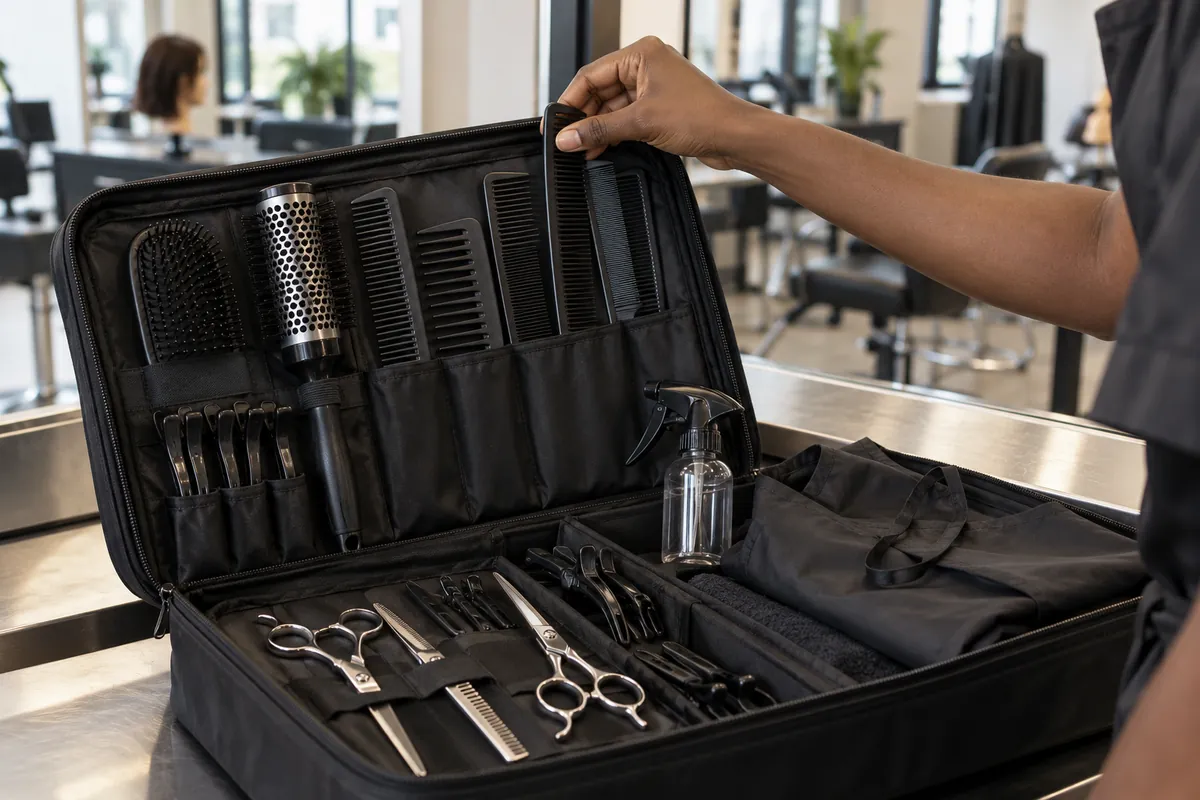
Schools that offer federal aid must also monitor satisfactory academic progress, which combines grades and pace of attendance. Falling below the standard can put aid at risk. There will be a dress code, often all black or a school uniform, with closed-toe shoes, and rules about hair, nails, and jewelry that relate to safety and professionalism. You will be required to bring your complete kit every day and to keep it sanitary.
Conduct rules cover phone use, behavior toward clients and classmates, and substance use. Most schools require students to perform services on the public, including services they may not enjoy, as a condition of completing the program. If you have a full-time job or caregiving duties, be realistic about whether you can meet the attendance rules on the schedule you choose. The sibling guide cosmetology school while working full time is about exactly that problem.
What differs by state, and how to check
Nearly every number in this subject is set by the state: the minimum age and whether it applies at enrollment or licensure, the education level, the amount of training required, whether apprenticeship is allowed, whether students must register with the board, the exam format and languages, the fees, and how criminal history is reviewed. States also differ in which license types exist. Some offer separate hair-only or natural hair licenses with different entry rules.
The reliable source is the board itself. Go to your state board's website and find the page for cosmetology license applicants and the page for students or schools. Read the statute or rule on qualifications if it is linked. Then compare what you read with what the school told you. If they differ, ask the school to explain, and if the explanation is unclear, call or email the board. Board staff answer these questions every day.
To save time, our state pages summarize the requirements and link to the official sources. Start at the cosmetology licensing requirements by state and open your state. If you might move during or soon after training, read the destination state's page too. Requirements that look similar on the surface can differ in ways that affect whether your training is accepted. The larger sequence from this point to an active license is laid out in how to become a cosmetologist.

How to prepare before you apply
You can make admission and the first months much easier with a few weeks of preparation. Put your documents in order first: identification, education records, name change papers. If you need an equivalency credential, begin that now. If you have a criminal record, find out whether your state offers an advance determination and request it. If you plan to use federal aid, complete the FAFSA early, since processing takes time.
Next, prepare for the academic load. The early weeks of cosmetology school are heavy on theory: infection control, anatomy, the structure of hair and skin, and basic chemistry. Students who meet this vocabulary for the first time in class often feel overwhelmed, and students who have seen it before settle in quickly. Our online cosmetology theory course is designed for that head start. It teaches theory only. It does not count toward your state's required in-person training and it does not replace school or the license.
It also helps to know what most often delays an application, so you can avoid it. The usual causes are a transcript that has not arrived, a name on the identification that does not match the education record, a financial aid file waiting on a verification document, a parent who was not available to sign for a minor, and a transfer record held up at the previous school. None of these are serious, and each can cost you a start date if discovered late. Ask the admissions office for a written list of what is still missing from your file and a deadline for each item.
Finally, prepare your life. Arrange childcare and transportation for the schedule you plan to keep. Talk with your employer about hours. Build a small cash reserve for the kit, supplies, and slow weeks. Visit at least two schools so you have a comparison. I have watched well-prepared students with modest natural ability pass the board on their first attempt, and gifted students with chaotic logistics drop out partway. Preparation is the one requirement no school lists, and it has the largest effect on whether you finish.

Your next step
Open your state's page on the licensing hub and write down three things: the age rule and when it applies, the education requirement, and whether the state asks about criminal history. Then collect your photo ID and proof of education in one folder. With those in hand, book tours at two schools, ask each for its admission checklist and catalog, and take the enrollment agreement home to read. If everything lines up, you can apply with confidence. If something does not, you have found it before paying, which is when it is cheapest to fix.
State Requirements
State licensing guides
Hours, exams, fees, and the licensing board differ by state. Open your state for the current requirements.
Common Questions
FAQ
Most schools ask for a minimum age set by the state or the school, proof of education such as a high school diploma or equivalency, government-issued photo ID, a completed application, and a payment or financial aid arrangement. Applicants under eighteen need a parent or guardian to sign. Some schools add an interview or a basic skills assessment. State rules differ, so check yours on the cosmetology licensing hub.
It depends on the state and the school. States set a minimum age for licensure and sometimes for enrollment, often in the mid to late teens, and some allow younger students to begin through high school career and technical programs. Schools can set a higher minimum than the state. There is no maximum age. Look up your state's rule and ask the school for its own policy.
Usually, yes. Most accredited schools require a diploma or recognized equivalency, partly because of federal student aid rules, and many states require it for a license. Some states set a lower grade-level requirement, and some schools have narrow provisions for students without a diploma. If you have neither, earning an equivalency credential first is the most dependable route.
In most cases you can enroll, because schools rarely screen for this. The question is licensing. Many state boards ask about convictions and review them individually, considering the offense, its relevance, and the time passed. Some states let you request a determination before you train. Contact your board before enrolling, and always answer application questions truthfully.
Requirements vary. A Social Security number is needed for federal financial aid in most cases, and many schools and state applications request one. Some states and schools accept alternative identification for enrollment or licensure. If you do not have one, ask the school and your state board what they accept, and consult a qualified immigration attorney about your specific situation.
Most schools have no competitive entrance exam. Some give a short assessment of reading and basic math to confirm you can manage the textbook and product measurements, and some conduct an interview. Public college programs may use the college's standard placement process. Ask each school what it uses and whether you can prepare or retake it.
Often, with conditions. You need an official record of your hours from the previous school, and in many states the board must certify them. The new school decides how many it accepts, and hours from another state may be evaluated against different rules. Some states limit how long old hours stay valid. Get the accepted number in writing before you enroll.
Collect your documents, complete financial aid forms if you are using aid, arrange your schedule, and begin learning theory vocabulary. Studying infection control, anatomy, and hair structure ahead of time makes the first weeks far easier. An online cosmetology theory course can help with that preparation, though it does not replace state-required in-person training.
Keep Reading
Related Guides


