Electrolysis
Numbing Cream for Electrolysis: What Works, Safety and Alternatives
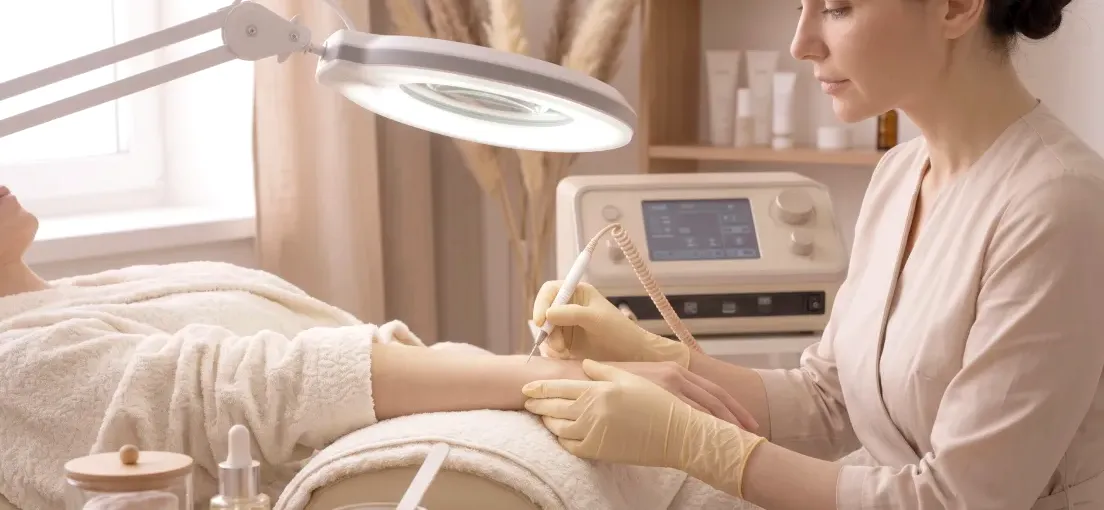
Quick answer
A numbing cream can make electrolysis more tolerable on sensitive areas such as the upper lip or bikini line, but it rarely removes sensation completely. It is a drug, so follow the product label and ask a pharmacist or physician first. Large areas, wraps and longer contact raise the risk of serious reactions. Cooling, slow breathing, short sessions and skilled technique also reduce discomfort.
Numbing cream for electrolysis is one of the first things new clients ask me about, usually before they ask how many sessions they will need. The honest answer is that a topical anesthetic can take the edge off for some people and some body areas, it does nothing dramatic for others, and it is never the only tool available. Electrolysis treats one follicle at a time with a fine probe and a brief pulse of current, so the sensation is a quick sting or a flash of heat that repeats. Most clients tolerate it without any product. A smaller group, especially on the upper lip and bikini line, wants help, and that is a reasonable thing to want.
I am Aida Khazieva, a licensed electrologist and cosmetologist with more than twenty years at the treatment table. In this guide I explain what numbing creams are, what the common ingredients do, why the choice of product belongs to you and your pharmacist or physician and not to your electrologist, and what else lowers discomfort just as reliably. I do not give dosing advice here, and no article should. For any numbing product, follow the label exactly and ask a pharmacist or physician whether it is right for you.
Why electrolysis stings, and why it differs so much between people
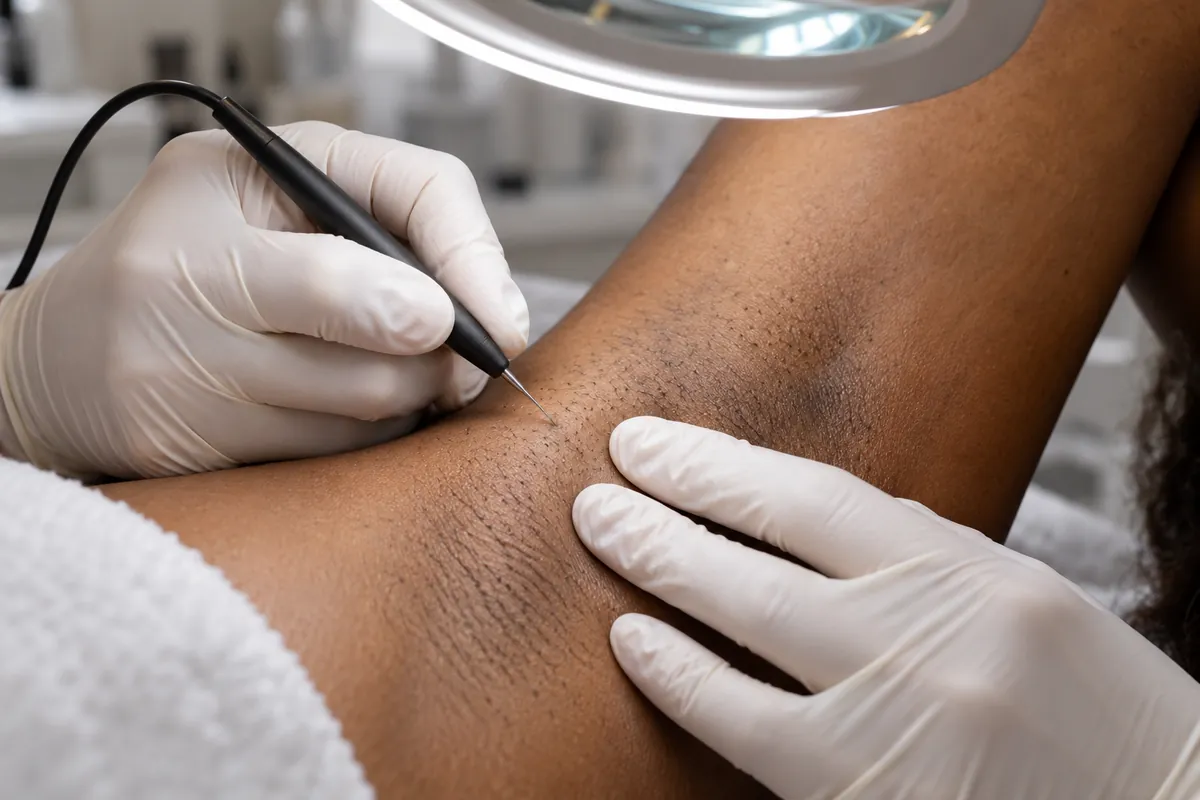
To understand what a numbing cream can and cannot do, it helps to know where the sensation comes from. The electrologist slides a very fine probe into the natural opening of the follicle, alongside the hair. Done correctly, the insertion itself is barely felt, because the probe does not pierce the skin. The sting comes a moment later, when the current is released at the base of the follicle. With thermolysis the feeling is a quick flash of heat. With galvanic current it is a slower, building warmth. Blend combines both. Each follicle takes a second or a few seconds, and then the sensation stops completely until the next one.
How strong that sting feels depends on things that have little to do with courage. Nerve endings are denser on the upper lip, around the nostrils, on the bikini line and on the underarms than on the forearm or lower leg. Coarse, deep hairs need more energy than fine ones. Skin that is dry, sunburned, freshly shaved with a dull blade, or irritated by acids reacts more sharply. Sleep, stress, caffeine, hunger and the menstrual cycle all shift the pain threshold from one visit to the next. I have clients who doze during a chin session in one week and flinch at every insertion two weeks later.
The practitioner matters as well. Accurate insertions, the lowest effective energy, good skin stretch and a sensible working rhythm reduce discomfort more than most clients expect. A poorly placed probe heats the skin near the surface instead of the base of the follicle, and that hurts more and heals worse. This is why I tell people who found electrolysis unbearable somewhere else to try one short session with a different professional before they conclude that the method is not for them. My guide on whether electrolysis hurts goes through the sensation area by area.
What a numbing cream is and how it works
A numbing cream is a topical anesthetic: a drug in a cream, gel or ointment base that is absorbed through the outer skin and temporarily blocks the nerve signals that carry pain. The effect is local and it wears off. These products are medicines, which is easy to forget when they sit on a shelf next to moisturizers or are advertised for tattoos and waxing. They have active ingredients, concentration limits, directions, warnings and people who should not use them, just as an oral pain reliever does.
Intact skin is a good barrier, and that is the central difficulty for any topical anesthetic. The drug has to pass through the outer layer to reach nerve endings below it, which takes time and works unevenly. Thin skin absorbs faster than thick skin. Mucous membranes and broken or inflamed skin absorb far faster, which is exactly why labels restrict where these products may go. Because of that barrier, a cream dulls the surface more than the depth. Electrolysis delivers its energy at the base of the follicle, below the surface, so many clients describe the result as "less sharp" and not as "numb."
That gap between expectation and result causes most of the disappointment I see. People imagine the kind of numbness they get at the dentist, where an injection blocks a whole nerve. A cream does not do that. A realistic expectation is that the sting becomes more tolerable on sensitive areas, that the effect varies from visit to visit, and that for some people it barely changes anything. Knowing this in advance prevents the common and risky reaction of using more product, more often, on more skin, in the hope of forcing a stronger effect.
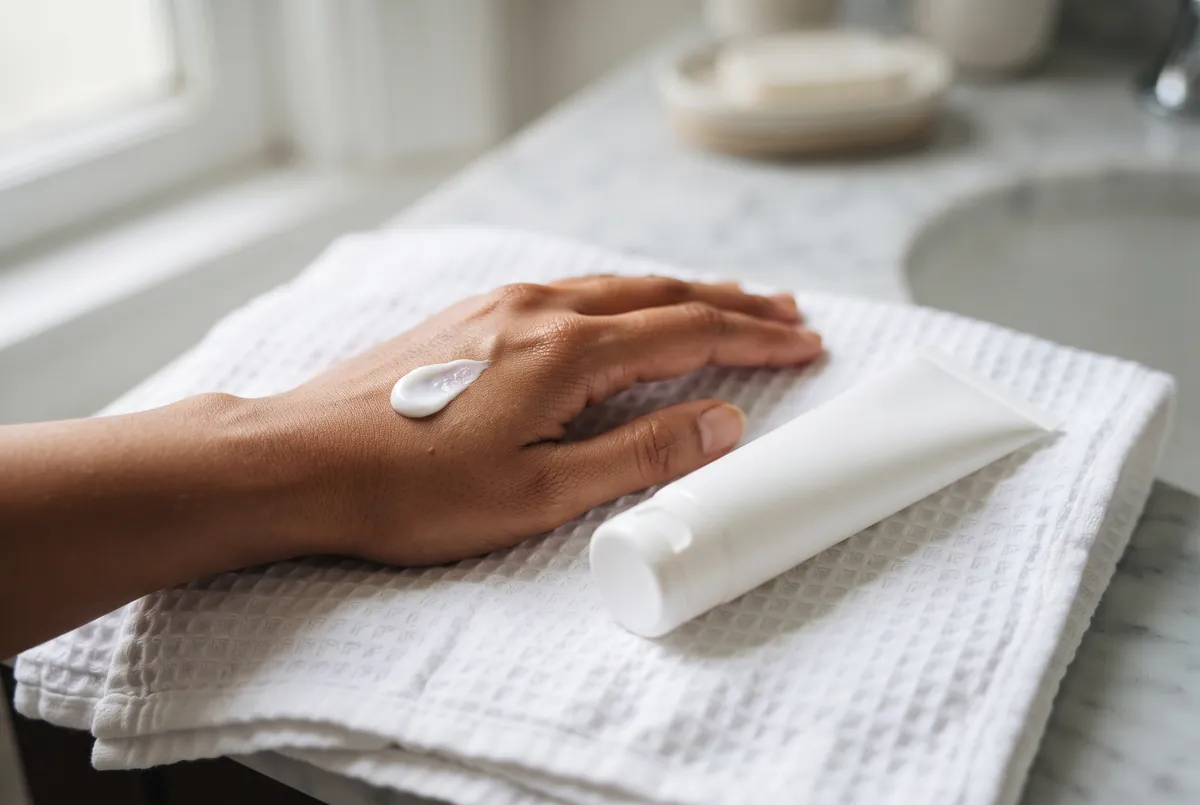
The common active ingredients
Most numbing products that clients bring up contain one or more of a small group of local anesthetics. I describe them here so that you can read a label and have a better conversation with a pharmacist. This is general information, and it is not a recommendation of any ingredient or product for you.
| Ingredient | How it is commonly sold in the US | What to know |
|---|---|---|
| Lidocaine | Over the counter creams and gels at limited strengths, and prescription products at higher strengths | The most widely used topical anesthetic. Risk rises with the amount, the size of the area, and anything that increases absorption |
| Lidocaine with prilocaine | Prescription cream | Prescribed by a physician or other licensed prescriber, with specific instructions. Prilocaine is linked to a rare blood disorder called methemoglobinemia |
| Benzocaine | Over the counter sprays, gels and creams | A common cause of allergic skin reactions, and also associated with methemoglobinemia |
| Tetracaine | Usually in combination products, some of them compounded | Compounded high-strength mixtures have been the subject of FDA safety warnings |
Two points from that table deserve attention. First, "over the counter" does not mean harmless. It means the product can be used safely without a prescription when the directions are followed. Second, products marketed online for tattoos, piercings, waxing or laser sometimes contain anesthetic concentrations above what is generally permitted for over the counter sale in the United States. The FDA has warned consumers about such products and has sent warning letters to companies selling them. A cream bought from an unknown marketplace seller, with a label you cannot verify, is the one I worry about most.
People with a known allergy to a local anesthetic, including a past reaction at the dentist, need to mention that to a pharmacist or physician before using any of these. The anesthetics fall into chemical families, and an allergy to one may or may not extend to others. That is a medical judgment. The same applies to children and teenagers, to pregnancy and breastfeeding, and to anyone with heart rhythm problems, liver disease, or a history of blood disorders. In each case the answer comes from a clinician who knows your history.
Safety: where numbing creams go wrong
Serious problems with topical anesthetics are uncommon, and they are almost always linked to the same few mistakes. The drug is absorbed into the bloodstream through the skin. When too much is absorbed, it can affect the heart and the nervous system. The FDA has described cases of irregular heartbeat, seizures, breathing difficulty, coma and death connected to numbing products used before cosmetic procedures. Those reports are the reason professionals take a cautious tone on a subject that sounds minor.
The factors that drive absorption up are well known. Covering a large area of skin is the first. Leaving the product on longer than directed is the second. Wrapping the area in plastic film or a dressing, when the label does not instruct it, is the third, and applying heat is the fourth. The fifth is applying the product to skin that is broken, irritated, freshly shaved to the point of nicks, or inflamed. A client preparing both full legs for a long session by coating them thickly and wrapping them in kitchen film has combined nearly every one of these.
The practical rule is short. Use only a product whose label you can read and trust. Follow that label exactly for where, how much, how long and how often. Do not cover or heat the area unless the label or your prescriber says to. Do not layer different numbing products. If you want to treat a large area, or you are unsure about anything on the label, ask a pharmacist or physician before the appointment. Those conversations are quick, and pharmacists answer this question often.

Who can recommend or apply numbing cream: scope of practice
Clients are often surprised when their electrologist will not hand them a tube or name a brand. The reason is scope of practice. In the United States, each state decides whether electrologists are licensed at all and what they may do. Selecting a drug for a client, advising on how to use it, or applying it to the client's skin can fall outside an electrologist's scope in many states, even when the product is sold over the counter. Prescription anesthetics require a licensed prescriber everywhere. Some states permit more in a medical setting under physician supervision, and some address the question directly in board rules.
Because the rules differ so much, I do not print a list of what is allowed where. If you are a client, expect your electrologist to say something like: "You are welcome to use a numbing product if your pharmacist or physician says it is fine for you. Apply it yourself, following the label, and tell me what you used." That is a professional answer. If you are a practitioner, read your state board's rules and ask the board in writing when they are unclear. The electrolysis licensing hub lists how each state regulates the profession and where to find the board.
Be careful with any studio, in any beauty field, that applies an unlabeled numbing cream from a jar, mixes its own, or offers injections of local anesthetic outside a medical practice. Injected anesthesia is a medical procedure. It is sometimes arranged for large electrolysis clearances, for example before gender-affirming surgery, and in those cases a physician or other qualified medical provider administers it within their own license. An electrologist does not inject anything.
What your electrologist can and should do is ask. A good intake form includes questions about numbing products, allergies, medications and medical conditions. Before each session I ask whether anything was applied to the area, because it changes how I read the skin. Numbed skin gives me less feedback from the client, so I rely more on what I see: the release of the hair, the look of the follicle opening, and the amount of redness. A client who says nothing about the cream removes one of my safety checks.
Does numbing cream affect the electrolysis treatment itself
A topical anesthetic does not change how the current destroys the follicle, and it does not make the treatment less permanent. What it changes is the surface of the skin and the feedback loop between client and practitioner. Creams leave a film. If that film is still on the skin when work begins, the probe can slip, the follicle openings are harder to see, and the moisture balance at the surface is different. That is why the product has to be removed completely and the skin cleansed before the first insertion.
Some anesthetic creams cause temporary paleness or redness of the skin where they were applied. Lidocaine with prilocaine is known for blanching. This is expected and passes, but it makes it harder for me to judge the skin's reaction to treatment during the session. I work more conservatively on skin whose color I cannot read normally. There is also a behavioral effect: a numbed client may ask for higher settings or a much longer session because it feels easy. The follicle does not need more energy because the nerve endings are quiet, and overtreatment is what produces scabs and marks.
For those reasons I prefer that a new client has at least one short session without any product. It tells both of us what the baseline sensation is on that area with my settings. Many people discover that the treatment is more manageable than they feared and decide not to bother with a cream at all. Others confirm that the upper lip is their limit and go to a pharmacist with a specific question. Either result is better than guessing in advance.
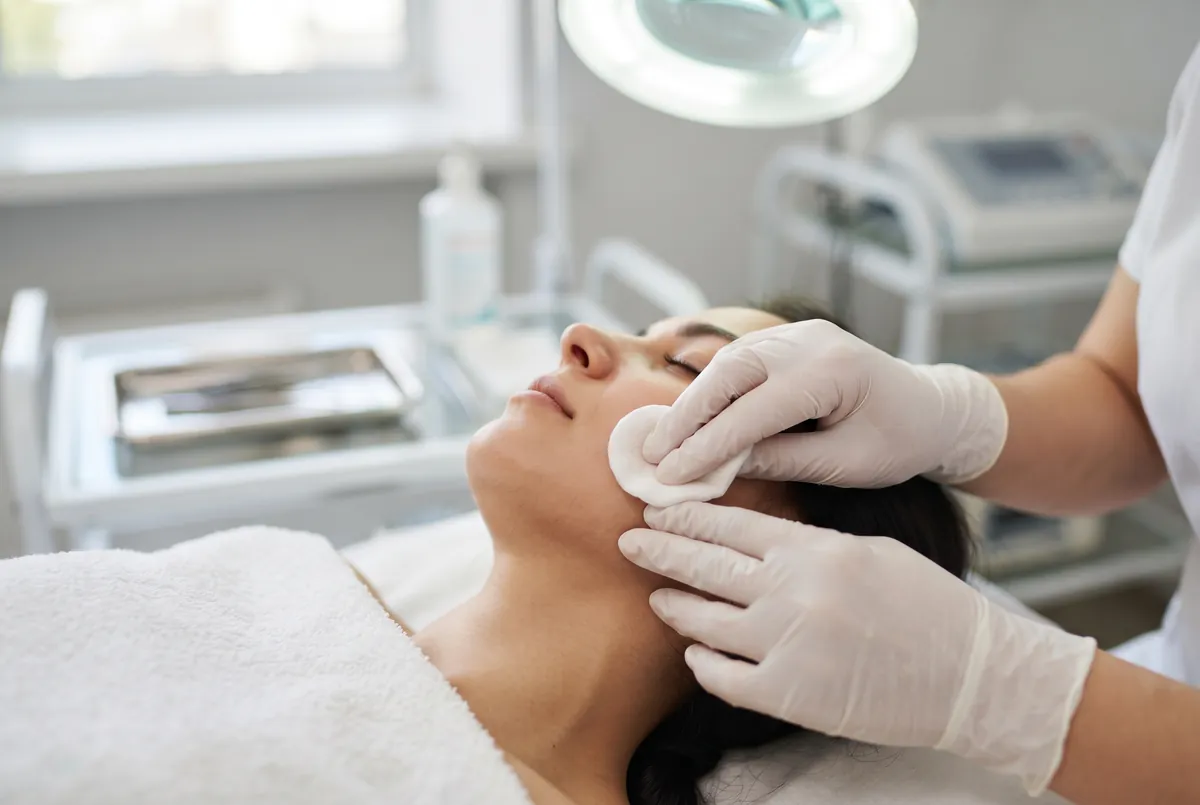
Area by area: where clients ask for numbing most
The upper lip leads every list. The skin is thin, nerve endings are dense, and the area just under the nose makes eyes water by reflex, which clients often mistake for pain. Numbing products have particular restrictions near the mouth, nostrils and eyes, because mucous membranes absorb quickly and nobody wants an anesthetic swallowed or in the eye. That makes the lip an area where label directions and a pharmacist's advice matter more than usual. I cover technique and timing for this area in the guide to electrolysis for the upper lip.
The bikini line and the more intimate areas come second. Skin folds, warmth and moisture raise absorption, and the inner areas are close to mucous membranes, where most over the counter products should not be used at all. This is also an area where clients are tempted to cover a lot of skin. If you are planning bikini work and want a numbing product, have the conversation with a pharmacist or physician first and describe exactly which area you mean. My guide to electrolysis for the bikini area explains how sessions there are usually divided into smaller sections.
Underarms are sensitive but small, and many clients find that cooling and short passes are enough. The chin and neck vary: hormonal hair there is coarse and deep, so the sensation is stronger than the thin skin of the cheeks, but most people adapt within a few visits. Legs, arms, the back and the chest are the least sensitive and the largest, which is the worst combination for a cream. The benefit is small and the area is big. For these zones I steer clients toward non-drug methods and sensible session lengths.
Reducing discomfort without medication
Everything in this section is available to every client, costs almost nothing, and has no drug risk. In my experience these measures together do more than a cream for most people. Start with the day itself. Sleep reasonably the night before. Eat a normal meal a couple of hours ahead, because low blood sugar makes people jumpy and light-headed. Drink water through the day. Hydrated skin conducts current more evenly, which lets the electrologist work at lower settings, and well-moisturized skin in the days before a session makes insertions smoother.
Cut back on caffeine before the appointment. Coffee, energy drinks and strong tea make the nervous system more reactive, and many clients notice a clear difference when they skip the cup right before a session. Alcohol the night before does not help either, since it dehydrates and tends to make skin more reactive. If your cycle affects your sensitivity, and for many people it does, try to book away from the days just before and at the start of a period.
In the room, cooling is the simplest tool. A cold pack wrapped in a clean cloth, or a chilled roller, applied for a short time before and between passes dulls the surface and calms redness afterward. Breathing matters more than it sounds. People hold their breath when they expect a sting, the muscles tighten, and everything feels sharper. Slow breathing out during the pulse changes that. Distraction works too: music, a podcast, conversation, or a stress ball in the hand. Some clients like a vibrating device held near the area, which gives the nerves a competing signal.
Session design is the last lever. Shorter appointments are easier to tolerate than long ones, especially at the start. Moving between two areas, such as lip and chin, gives each a rest. Agree on a hand signal for a pause so you do not have to talk while someone is working near your mouth. Tell your electrologist a number from one to ten now and then. I adjust timing, intensity and modality based on that feedback, and I cannot adjust for what I am not told.
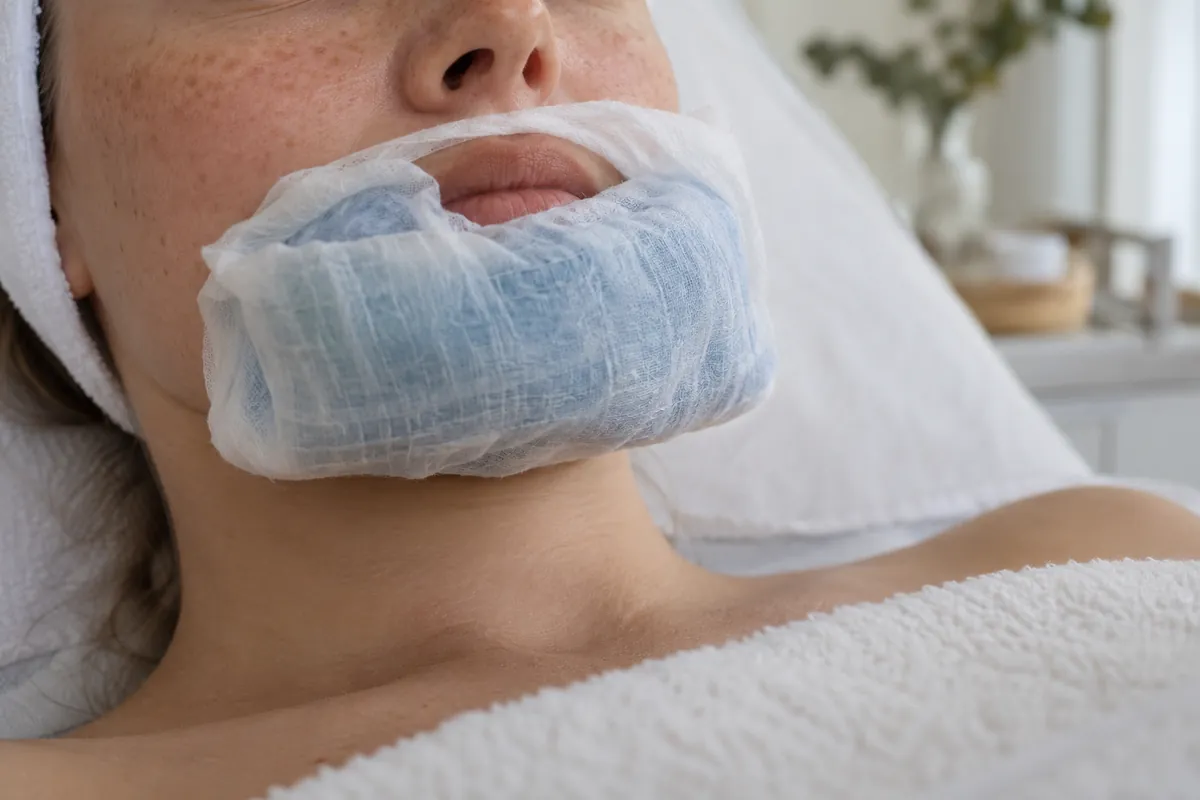
What about over the counter pain relievers
Clients regularly ask whether to take a pill before the session instead of using a cream. Some people do take a common over the counter pain reliever beforehand, and some find it helps a little with the lingering soreness afterward. I cannot tell you which one to take or whether you should, and neither can any electrologist. Those drugs have their own cautions involving the stomach, kidneys, liver, bleeding risk, blood pressure, pregnancy and interactions with other medications. The right source is the label and a pharmacist or your physician.
What I can say from the treatment side is that a pain reliever does not turn off the sting of the current. At best it softens the overall experience. I also ask clients never to combine remedies on their own initiative: a pill, a cream, a glass of wine "to relax" and a long session is a combination nobody has evaluated for you. Sedatives, leftover prescription painkillers and anything borrowed from a relative are a firm no. If your anxiety about pain is so strong that you are considering those, tell your electrologist. We can shorten sessions, start with a less sensitive area, and build tolerance step by step.
What a skilled electrologist does to keep you comfortable
Comfort is a technical skill, and it is one of the things that separates an experienced electrologist from a beginner. The first element is insertion accuracy. A probe that follows the follicle to the correct depth delivers energy where it is needed and spares the surface. The second is probe choice. Diameter is matched to the hair, and insulated probes, which are coated except at the tip, concentrate the energy at the base of the follicle and reduce sensation at the skin surface for many clients. My guide to electrolysis needles explains the options.
The third element is modality and settings. Fast thermolysis with very short pulses feels different from blend, and different clients prefer one or the other on different areas. A good practitioner finds the lowest energy that releases the hair without resistance and stays there. The explanation of how the three methods differ is in my guide to galvanic, thermolysis and blend. Modern computerized epilators offer finer control over pulse length and intensity than older machines, which widens the range of comfortable settings.
The fourth element is rhythm and communication. I space insertions so that heat does not accumulate in one small patch. I stretch the skin firmly, which both opens the follicle and dulls sensation. I warn before I move to a more sensitive spot. And I watch the client's hands and shoulders, which tell me about tension before the client says a word. None of this appears on a price list, but it is the reason some clients never ask about numbing at all.
Questions to ask at the consultation
A consultation is the right moment to settle the comfort plan, before you are lying under the lamp. Bring your medication list and be ready to describe how you usually handle pain, for example at the dentist or during waxing. Then ask direct questions. The answers tell you a lot about how the practitioner works.
- What does treatment on my area usually feel like, and how long would you make my first session?
- Which modality and probe type do you plan to use, and can you adjust them if I am uncomfortable?
- What is your policy on numbing products? Do you want me to tell you what I used and when?
- How do you want the skin prepared, and should the product be removed before I arrive or at the studio?
- What comfort measures do you offer in the room, such as cooling or breaks?
- Is there anything in my health history or medications that means I should speak to a physician first?
- What reaction is normal afterward on my skin type, and when should I call you?
Notice what a careful practitioner will not do. They will not promise a painless treatment. They will not tell you how much cream to apply or for how long. They will not hand you an unlabeled product. They will tell you to check with a pharmacist or physician, and they will ask you to report what you used. If you have not chosen a provider yet, the studio directory is a starting point, and the guide on preparing for your first electrolysis session covers the rest of the checklist.
When a physician needs to be involved
Some situations call for a medical opinion before any numbing product, and a few before electrolysis itself. Talk to a physician first if you have a heart rhythm disorder or heart disease, significant liver or kidney disease, a seizure disorder, a history of methemoglobinemia or G6PD deficiency, or a past allergic reaction to any local anesthetic. The same goes for pregnancy and breastfeeding, where the question of topical anesthetics belongs with your obstetric provider. My guide on electrolysis and pregnancy covers the treatment side of that decision.
Medications matter too. Certain heart drugs and some other prescriptions interact with local anesthetics or raise the risk of rare reactions. You do not need to work out which ones. Give the pharmacist your complete list, including supplements, and ask. People with skin conditions on the treatment area, such as eczema, psoriasis, open sores or an active infection, should not apply an anesthetic there, and usually should not have electrolysis on that patch until it has healed.
There is also the client for whom large-area work is medically or personally urgent and ordinary comfort measures are not enough. For them, a physician can discuss prescription options and how to use them safely, and some medical practices coordinate with electrologists for long sessions. That arrangement is legitimate when each professional stays within their own license. It should always start with the prescriber and never with a product ordered online.

Skin care before and after as part of comfort
Skin in good condition hurts less and heals faster. In the week before a session, moisturize the area daily with a plain product and drink enough water. Stop scrubs, acids and retinoids on the area a few days ahead, and stay out of the sun, because sunburned or freshly tanned skin is more reactive. Do not wax, tweeze or thread, since the hair must be present in the follicle. If the area is shaved between sessions, do it a few days before so that the hairs are long enough to grasp.
On the day, arrive with clean skin and no makeup or heavy lotion on the area. If you used a numbing product with your pharmacist's or physician's agreement, tell the electrologist the product name and the time you applied it, and let them see the skin before work begins. Do not reapply in the middle of a session to "top up." Skin that has just been treated has open follicles, and applying a drug to it is exactly the broken-skin situation the labels warn about.
Afterward, the numbness wears off and the area may feel warm and tender for a few hours. That is normal. Cool compresses wrapped in cloth, clean hands, no makeup on the area for the rest of the day, and no heat, sweat or sun for a day or two keep it comfortable. Pinpoint scabs can appear on body areas and should be left to fall off on their own. The full routine is in my electrolysis aftercare guide, and people with reactive skin will find extra detail in the guide to electrolysis for sensitive skin.

Myths and mistakes I see most often
The first myth is that stronger is better. Clients hunt online for the highest percentage they can find, assuming a professional-grade result. Higher concentrations sold outside normal channels are precisely the products regulators have warned about, and strength is only one variable in how much drug reaches your blood. The second myth is that a thick layer under plastic film is the "proper" way. Occlusion is a medical instruction that belongs to specific products and specific directions. Used on your own initiative over a large area, it is the pattern behind the serious incidents.
The third myth is that electrolysis without numbing is unbearable. Most of my clients have never used a cream. The sensation is real, brief and manageable for the majority, and it typically eases as the hair gets finer over a course of treatment. The fourth is that the electrologist is being unhelpful by refusing to recommend a product. They are following their license. A practitioner who respects that limit is showing you how they handle every other safety rule too.
The mistakes are more practical. Clients apply a product and do not mention it. They apply it to skin they nicked while shaving that morning. They combine a cream with a pain reliever and a sedative. They use a friend's prescription tube. They apply it near the eyes or inside the nostrils for facial work. Or they arrive with the cream still on, expecting the electrologist to work through it. Each of these is easy to avoid once you treat the cream as a medicine.
Notes for electrology students and new practitioners
If you are training, learn the pharmacology basics even though you will not be dispensing anything. You need to recognize the ingredient names, know why occlusion and large areas are dangerous, and know the early signs of anesthetic toxicity and of an allergic reaction, so that you can stop a session and call for help. Know where your state draws the line on recommending, selling or applying topical anesthetics, and keep the board's wording on file. The state licensing pages are a good place to start that reading.
Build the question into your intake form and into your routine before every session: "Did you apply anything to the area today?" Document the answer. Write a short, neutral policy for clients that says you do not supply or recommend numbing products, that clients who choose to use one should consult a pharmacist or physician and follow the label, and that they must tell you what they used. Then invest in the skills that actually lower pain: insertion accuracy, probe selection, settings, skin stretch and pacing.
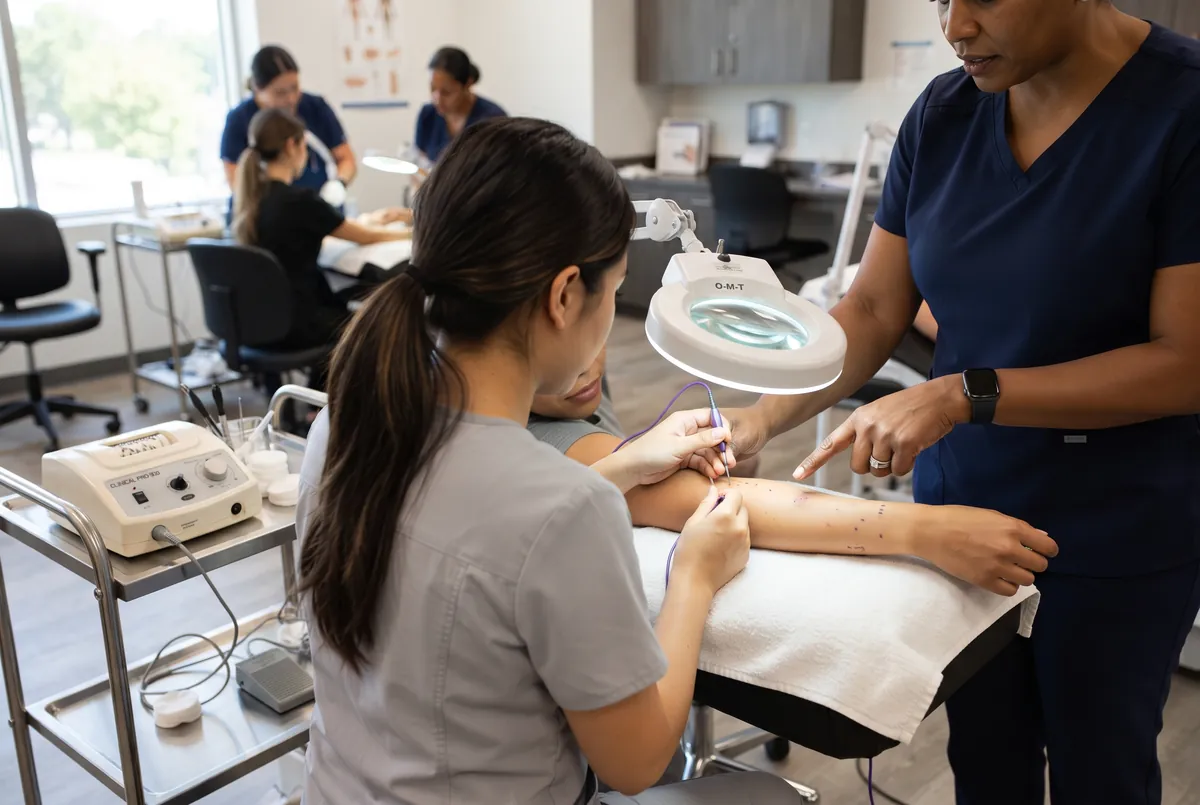
Those skills come from supervised practice on real skin. Theory helps you understand why a follicle reacts the way it does, and the electrolysis course on this site is built for that purpose, but online study never replaces the in-person training hours and licensing steps your state requires. Comfort technique in particular is learned with an instructor at your shoulder, watching your insertions and correcting them one at a time.
Your next step
If you are a client, book a consultation and one short session on your most bothersome area without any product, using the preparation steps above. Judge the sensation for yourself. If you still want help afterward, take the specific question to a pharmacist or physician: which product, if any, is appropriate for this area and for your health history. Follow the label, apply it yourself, remove it as directed, and tell your electrologist exactly what you used.
If you are a student or a working professional, write your numbing policy this week, check it against your state board's rules, and add the question to your intake form. Then keep refining the technical side of comfort, because that is the part of the client's experience you control completely. Clients remember the practitioner who made a sensitive treatment tolerable, and they stay through the full course that permanent hair removal requires.

State Requirements
State licensing guides
Hours, exams, fees, and the licensing board differ by state. Open your state for the current requirements.
Looking for a practitioner or a program near you? Browse electrologists by state and city or beauty schools by state.
Common Questions
FAQ
Many clients do, and it can make sensitive areas such as the upper lip or bikini line more tolerable. A numbing cream is a drug, so the decision should be made with a pharmacist or physician who knows your health history and medications. Follow the product label exactly, apply it yourself, and tell your electrologist what you used and when. For a description of what treatment feels like without it, see does electrolysis hurt.
In many states that falls outside an electrologist's scope of practice, even for over the counter products, and prescription anesthetics always require a licensed prescriber. Rules vary by state, and some medical settings operate differently under physician supervision. Expect a careful electrologist to ask you to apply any product yourself after checking with a pharmacist or physician. The electrolysis licensing hub explains how states regulate the profession.
I do not give dosing advice, and you should be cautious of any beauty professional or website that does. The amount, the size of the area, the time on the skin and whether to cover it are set by the product label or by your prescriber. Using more, covering a larger area, wrapping it or leaving it on longer raises the amount absorbed into your blood and the risk of serious side effects. Ask a pharmacist or physician.
Usually not. A cream dulls the surface of the skin, while the current works at the base of the follicle, so most clients describe the result as less sharp instead of numb. The effect also varies between people, areas and visits. Combining realistic expectations with cooling, slow breathing, shorter sessions and a skilled practitioner gives better results than relying on a product alone.
Large areas are where the risk is highest, because more skin means more drug absorbed. The FDA has warned about serious reactions, including irregular heartbeat and seizures, when numbing products were applied over large areas, left on too long, or covered with wraps. Legs and backs are also among the least sensitive areas for electrolysis. If you believe you need numbing for a large area, speak to a physician first.
That is a question for your obstetric provider or physician, not for an electrologist. Do not use any numbing product during pregnancy or breastfeeding without medical advice. Many providers also modify or postpone electrolysis itself during pregnancy. My guide on electrolysis and pregnancy explains the usual precautions on the treatment side.
Sleep well, eat beforehand, drink water, skip caffeine before the appointment, and keep the skin moisturized in the days leading up to it. In the room, use a wrapped cold pack, slow breathing, music or conversation, short sessions and agreed pauses. Ask your electrologist about probe type and modality, since insulated probes and adjusted settings help many clients. Afterward, follow the electrolysis aftercare guide.
It does not change how the current destroys the follicle. It can leave a film that has to be removed before treatment, it can temporarily change skin color so that reactions are harder to read, and it reduces the feedback you give your electrologist. For those reasons, always say what you used, and do not ask for higher settings or much longer sessions simply because the area feels quiet.
Keep Reading
Related Guides


