Electrolysis
Low Maintenance Hair Removal: Methods Ranked by Long-Term Effort

Quick answer
The best low maintenance hair removal methods are electrolysis for permanent results on smaller areas and laser hair removal for long-term reduction on dark hair over larger areas, followed by waxing or sugaring every few weeks if you want temporary smoothness without daily effort. Shaving and depilatory creams are the highest maintenance because results last only days.
"Low maintenance" means something different to everyone who asks me about hair removal. For one client, it means never thinking about the upper lip again. For another, it means a routine that takes five minutes in the shower and no appointments at all. For a busy parent, it may mean one salon visit every month instead of shaving every other morning. Before choosing a method, it helps to define which kind of low maintenance you actually want, because the answer changes the recommendation completely.
I have spent more than twenty years as a licensed electrologist and cosmetologist, and a large part of that work has been helping people step off the treadmill of constant shaving, plucking and rebooking. This guide ranks hair removal methods by the effort they demand over time: daily, weekly, monthly and over the years. It covers what each method costs you in time, skin irritation and planning, and how to combine methods so the total effort stays as low as possible.
Short answer: the best low maintenance hair removal methods are electrolysis for permanent results on smaller areas and laser hair removal for long-term reduction on dark hair over larger areas, followed by waxing or sugaring every few weeks if you want temporary smoothness without daily effort. Shaving and depilatory creams are the highest maintenance because results last only days.
What Low Maintenance Really Means in Hair Removal
Low maintenance hair removal is a method that keeps you smooth with the fewest repeat actions, appointments and aftercare steps over the long term, not simply the method that is quickest on any one day. Shaving takes two minutes, but you repeat it constantly. Electrolysis takes longer per visit, but the visits eventually stop. Those two facts point in opposite directions, so it is worth measuring maintenance in a few different ways.
I ask clients to think about four kinds of effort. The first is frequency: how often you must repeat the method to stay smooth. The second is appointment burden: how many times you have to book, travel and sit in a chair. The third is in-between care: growing hair out, exfoliating, avoiding sun or managing ingrown hairs. The fourth is lifetime horizon: whether the effort ever ends. A method can score well on one and badly on another.
For example, waxing is low frequency compared with shaving, but it requires appointments and a grow-out period. Laser has moderate appointment burden for a limited period, then occasional maintenance. Electrolysis has many appointments early on and none at all once the follicles are treated. Shaving has no appointments but the highest frequency forever. Once you see the trade-offs this way, the choice becomes personal rather than confusing.
A final factor is predictability. Some people value knowing exactly what will happen, even if it means more frequent effort. Others are happy to invest heavily now for a simpler future. Neither is wrong. The aim of this guide is to show you honestly where each method sits, so the choice you make matches your schedule and patience.
Best Low Maintenance Hair Removal Methods, Ranked by Effort
The best low maintenance hair removal methods, ranked from least to most ongoing effort, are electrolysis, laser hair removal, waxing and sugaring, epilators, threading, depilatory creams and shaving. The ranking reflects effort after the method has been established, not the effort of getting started, which is highest for the permanent and long-term options.
| Method | Ongoing effort once established | Appointments needed | In-between care | Does the effort ever end? |
|---|---|---|---|---|
| Electrolysis | Very low after the treatment series | Many at first, then none for treated follicles | Trim or shave only, no plucking | Yes, for treated follicles |
| Laser hair removal | Low, with occasional touch-ups | A series, then maintenance | Shave before visits, avoid tanning | Partly, reduction rather than removal |
| Waxing | Moderate, every few weeks | Regular, ongoing | Grow hair out, exfoliate | No |
| Sugaring | Moderate, every few weeks | Regular, ongoing | Grow hair out, exfoliate | No |
| Epilator at home | Moderate, every week or two | None | Exfoliate, watch for ingrowns | No |
| Threading | Moderate, small areas only | Regular, ongoing | Minimal | No |
| Depilatory cream | High, every few days | None | Patch test, avoid irritation | No |
| Shaving | Highest, every day or two | None | Manage razor bumps | No |
Notice that the two methods at the top require the most commitment at the start. That is the central trade-off of low maintenance hair removal: you pay with effort early so you can pay less later. If you cannot commit to a series of appointments right now, a mid-table method such as waxing or sugaring may be the lowest maintenance option that fits your real life.
For a side-by-side look at how each method works mechanically, see our comparison of hair removal methods.
One more nuance about the ranking: it assumes the method suits your hair and skin. Laser drops to the bottom of the list for someone with light blonde or gray hair, because it will never reduce growth enough to cut effort. Waxing drops for someone on medications that make skin fragile, because each visit risks lifting skin and creating recovery work. Electrolysis drops for someone who wants to clear entire legs in a short time, because the hours involved are substantial. So read the table as the typical order, then adjust it to your own situation with a qualified practitioner who has actually looked at your hair under good light.

Electrolysis: The Lowest Long-Term Effort
Electrolysis is the lowest long-term effort hair removal method because, once each follicle has been treated successfully, that hair does not need to be removed again. It is the only method the FDA accepts for permanent hair removal claims, and it works on every hair color and skin tone.
The catch is the front-loaded effort. An electrologist treats one follicle at a time, and hair grows in cycles, so you need a series of sessions spaced over months. The number of sessions depends on the area, how dense the hair is, your hormones and whether the hairs were tweezed or waxed for years before. During the series, you trim or shave between visits but avoid plucking, because the electrologist needs the hair present to treat it.
From a maintenance point of view, electrolysis is ideal for areas where a limited number of hairs cause a disproportionate amount of daily effort. Chin hairs that you check in the car mirror, a few dark hairs on the upper lip, stray brow hairs, nipple or navel hairs and bikini edges all fall into this category. Clearing those areas once removes a small but constant task from your life.
On large areas like full legs or the back, electrolysis is possible but slow. Many people use laser to reduce the bulk of dark hair first and electrolysis to finish what remains. That combination often delivers the lowest total maintenance over a decade. Our guide on choosing between electrolysis and laser explains how to decide.
What does the series feel like in practice? Early sessions are usually the busiest, because many follicles are in active growth at once and the area may look as if nothing has changed. Over the following months, regrowth becomes sparser and finer, sessions get shorter and the spacing between them stretches out. Clients often tell me the turning point is the first week they forget to check the area in the mirror. That is the real measure of low maintenance: not a smooth day after an appointment, but a long stretch where the area simply stops being a task on your list.
Laser Hair Removal: Long-Term Reduction With Occasional Touch-Ups
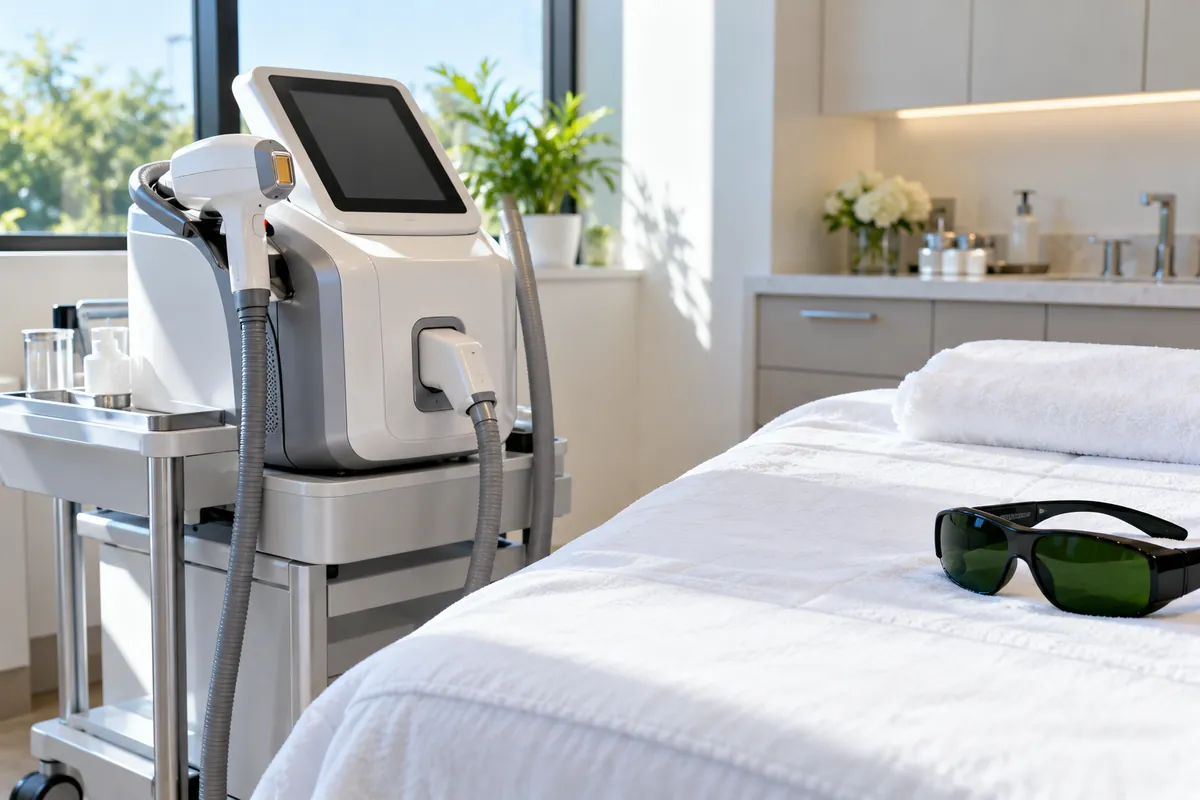
Laser hair removal is a low maintenance option for people with dark hair on lighter skin because a series of treatments reduces hair growth significantly over large areas, leaving occasional touch-up sessions rather than constant removal. It is cleared as permanent hair reduction, which is not the same as permanent removal.
For legs, underarms and the bikini area on suitable hair, laser can turn a daily shaving habit into an occasional quick shave or no shaving at all for long periods. The effort during the series is real: you shave before each session, avoid sun exposure and tanning, avoid waxing and plucking, and book appointments at the spacing your provider recommends. After the series, many people need periodic maintenance, especially if hormones activate new follicles.
Laser is less useful for fine, light, red, gray or white hair, because it needs pigment in the hair to work. On those hairs, laser maintenance never really ends, since the hairs keep growing. Our guide on how many laser hair removal sessions you may need explains what affects the length of the series and when maintenance sessions come in.
If you are weighing laser against permanent removal, also read our sibling article on permanent versus long-lasting hair removal, which explains the regulatory difference between "removal" and "reduction" and why it matters for maintenance expectations.
Waxing and Sugaring: The Middle Ground
Waxing and sugaring are the middle ground of low maintenance hair removal, because removing hair from the root keeps skin smooth for weeks rather than days, without the commitment of a permanent treatment series. For many people, a regular appointment every few weeks is a comfortable rhythm.
Both methods pull hair out from the follicle, so regrowth takes longer than after shaving. With consistent appointments, many clients notice that regrowth feels softer and patchier over time, partly because hair cycles become more synchronized and some follicles are weakened by repeated removal. That does not make waxing permanent, but it can make the routine easier over months.
The maintenance burden comes from two sources. First, you need hair long enough for the wax or paste to grip, which means a short period of visible stubble before each visit. Second, you need to exfoliate gently between visits to limit ingrown hairs. Our guide on how long waxing lasts explains the regrowth timeline in detail, and our sibling guide on waxing versus sugaring for clients compares the two experiences.
From a lifestyle point of view, waxing and sugaring are excellent when you want predictable smoothness and do not mind recurring appointments. They are less suitable if your schedule is unpredictable, if you travel constantly, or if you hate the grow-out phase. They also do not suit everyone medically; certain medications and skin conditions make waxing unsafe, so a consultation matters.
There is also a practical difference between the two. Wax is heated and often removes hair against or with the growth depending on the product, while sugar paste is used at body temperature and removed in the direction of growth. Some clients find sugaring gentler on sensitive areas, which can mean less recovery time after each visit, and that counts toward maintenance too. Others prefer the speed of hard wax on small areas. If you are comparing salons, ask which product they use for each area and why. A provider who can explain that choice clearly is usually one who will keep your routine comfortable and predictable.
Home Methods and Their Hidden Effort
Home hair removal methods like shaving, depilatory creams and epilators feel low maintenance because they need no appointments, but their hidden effort is frequency, irritation management and time spread across hundreds of small sessions each year.
Shaving is fast and painless, but stubble can return within a day or two, especially on coarse hair. Razor bumps, ingrown hairs and nicks add extra steps. For many men and women, shaving is the default simply because it is familiar. Our guide on waxing versus shaving compares the two in more depth.
Depilatory creams dissolve hair at the surface and slightly below it. Results may last a little longer than shaving, but the creams can irritate skin, need patch testing, and require careful timing. On the face and bikini area, they cause reactions often enough that I rarely recommend them as a long-term routine.
Epilators pull hairs from the root using rotating tweezers. Results last similarly to waxing, and there are no appointments. The trade-off is discomfort, a fairly slow process on large areas and a higher chance of broken hairs and ingrown hairs if technique is poor. Some people love epilators; others try once and give up.
Home light devices are marketed as low maintenance, but they need consistent use over a long period, only work on suitable hair and skin combinations, and generally deliver less than professional treatment. Home electrolysis devices exist too, but they are hard to use correctly on yourself. Our article on home electrolysis devices versus a professional explains why.

Low Maintenance Choices by Body Area
The lowest maintenance hair removal choice depends on the body area, because the number of hairs, their thickness and how visible they are decide whether permanent, long-term or temporary methods give the best return on effort.
- Face (lip, chin, jaw, neck): electrolysis for permanent results on a limited number of hairs; threading for temporary control. Laser only when hair is dark and skin is light.
- Eyebrows: threading or tweezing for shaping; electrolysis to permanently clear strays outside your chosen line.
- Underarms: laser for dark hair; electrolysis for light hair or remaining strays; waxing for temporary smoothness.
- Bikini line: laser or electrolysis for long-term results; waxing or sugaring every few weeks; avoid frequent shaving if you get bumps.
- Legs: laser for dark hair; waxing or sugaring for temporary results; shaving if you prefer no appointments.
- Arms: sugaring or shaving; permanent treatment rarely worth the effort unless hair is dark and dense.
- Chest and back (men): laser for reduction; waxing for temporary results. Our sibling guide on chest and back waxing for men covers that option.
The pattern here is that small areas with a few visible hairs are the strongest candidates for permanent removal, while large areas often favor laser or a regular root-removal routine. The face is special because even a handful of hairs can feel like a daily problem. For many clients, clearing the chin and lip permanently is the single biggest reduction in their grooming time.
If you are unsure where to start, list the areas you remove hair from in order of how often you think about them. The area at the top of that list is usually the best place to invest in a longer-lasting method.
Visibility matters as much as size. A few dark hairs on the chin take seconds to remove but demand attention every day, because they are noticeable at conversation distance and in photos. Fine hair on the forearms covers a large area but rarely affects how you feel. In my practice, the clients who report the biggest change in daily life are not usually the ones who cleared the largest areas. They are the ones who removed the small, visible hairs that kept pulling them back to the mirror and the tweezers. Keep that in mind when you decide where to spend time and budget first.
Time, Cost and Planning Over the Years
Over the years, the lowest maintenance method is usually the one that ends, because a permanent or long-term treatment series has a finish line, while temporary methods repeat indefinitely. Prices vary too widely by city and provider for me to quote meaningful numbers, but the structure of the costs is predictable.
Temporary salon methods have a steady, recurring cost: every visit costs roughly the same, and you keep paying for as long as you want the result. Home methods have a low recurring cost but a high recurring time investment. Laser and electrolysis have a higher cost during the treatment period that tapers off. Laser often needs occasional maintenance; electrolysis needs none for successfully treated follicles, though hormones can activate new ones.
A practical way to plan is to estimate your effort over five years rather than one. Count the number of times you would shave, the number of salon visits you would book and the time spent recovering from irritation. Then compare that to a treatment series that ends. This exercise often shows that permanent removal of small areas is more practical than people assume, and that large areas of fine hair are rarely worth a permanent investment.
For a detailed look at how electrolysis is priced (per minute, per session or in packages), see our electrolysis cost guide. The same thinking applies to laser packages: ask what is included and what maintenance looks like after the series.

Combining Methods for the Lowest Total Effort
Combining methods often gives the lowest total hair removal effort, because each method can handle the hair type and area where it performs best, and together they shorten the overall timeline.
The most common combination I see is laser followed by electrolysis. Laser reduces most of the dark, coarse hair on larger areas. Electrolysis then removes the hairs laser cannot target: fine, light, red or gray strands and stubborn hairs that remain. Another practical combination is electrolysis on the face with waxing or sugaring on the body. Clients get permanent results where it matters most visually, while keeping a simple routine elsewhere.
There are a few rules for combining. Do not wax or pluck an area while it is in an active laser or electrolysis series, because both treatments need the hair in the follicle. Shaving or trimming between sessions is usually fine. Tell every provider what else you are doing, including home devices and topical products. And space treatments on the same area so skin has time to recover.
Timing the switch from one method to another also matters. If you have waxed an area for years and want to move to electrolysis or laser, stop waxing a few weeks ahead so hair is present for treatment, and shave if you need smooth skin in the meantime. If you are moving from laser to electrolysis, ask your electrologist when to start, because skin may need a little time after the last laser visit. These small transitions are where many people lose momentum, so plan them on a calendar rather than leaving them to chance. A clear handover between methods keeps the overall plan short and avoids months of half-finished results.

When a Low Maintenance Method Is Not Right for You
A low maintenance method is not right for you when your skin, medications, hair type or health situation make it unsafe or ineffective, so a consultation should always come before you commit to a series or a recurring routine.
Waxing and sugaring may be unsuitable if you use oral retinoids, certain prescription topicals, or have active skin infections, sunburn or very fragile skin. Laser may be unsuitable for some skin tones and is not effective on light hair. Electrolysis may need to be postponed during certain medical situations, and some people with implanted electrical devices need guidance from their physician before treatment. Pregnancy changes the picture for several methods.
If new hair growth appears suddenly, spreads quickly or comes with other symptoms such as irregular periods or acne, see a physician before choosing a long-term plan. The hair may be a sign of an underlying condition that deserves medical evaluation. Hair removal can still help, but it should run alongside medical care, not replace it.
Choosing a Provider for a Low Maintenance Plan
Choosing the right provider is part of making hair removal low maintenance, because a skilled, licensed practitioner reduces the number of sessions, the risk of complications and the need for corrections later.
For electrolysis, look for a licensed electrologist in states that license the profession, and ask about modalities, probe hygiene and how they plan session spacing. For laser, ask who performs the treatment, what supervision is required in your state and how they assess your hair and skin. For waxing and sugaring, look for a licensed esthetician, cosmetologist or specialty waxing professional, and pay attention to hygiene: no double-dipping, clean linens and gloves.
Licensing rules vary by state. Some states license waxing under esthetics or cosmetology, and a few have separate specialty licenses. You can check requirements on our waxing licensing hub and our electrolysis licensing hub, then confirm details with your state board.
- Ask whether the method suits your specific hair color, thickness and skin tone.
- Ask how many sessions or visits a typical plan includes and what happens afterward.
- Ask what you should and should not do between sessions.
- Ask what reactions are normal and when to call.
- Confirm the practitioner's license and training for that specific service.

For Beauty Professionals: Honest Advice and Common Myths
Beauty professionals who explain low maintenance honestly build longer client relationships, because clients who understand the real effort of each method trust the plan and stick with it. Overpromising "one session and done" creates disappointed clients and bad reviews.
Honesty also protects your schedule. A client who expects a finite series and sees steady progress keeps booking. A client who expected a miracle cancels after the second visit and tells friends the method does not work. Setting expectations clearly at the consultation, writing down the plan and showing progress at each visit are simple habits, but they make the difference between a revolving door and a loyal client base that refers others.
When a client asks for the lowest maintenance option, I walk them through the front-loaded effort of permanent methods and the ongoing effort of temporary ones. I show them which areas will give the biggest reduction in daily effort and which ones are better left to simple shaving. Most clients appreciate this, and many choose a combination that fits their budget and patience.
If you are building a career in this field, learning both permanent and temporary methods gives you more to offer clients at every stage. Our online electrolysis course and online waxing course teach theory you can build on. Online study helps you prepare and understand techniques, but it never replaces the in-person training hours and license your state requires.
The most common myths about low maintenance hair removal are that laser is permanent removal, that shaving makes hair grow back thicker and that waxing eventually stops hair growth completely. Believing these myths leads people to the wrong method and more effort than necessary.
Laser is cleared as permanent hair reduction, not permanent removal. Many people enjoy long-lasting results, but some regrowth and maintenance is common. Shaving does not change the follicle; regrowth feels coarse because the cut tip is blunt, not because the hair is thicker. Waxing over many years may weaken some follicles, but it does not reliably stop growth, and no one can promise that it will.
Another myth is that home devices are equal to professional treatment. Home devices can help some users, but they are designed with lower power for safety and still depend on suitable hair and skin. A final myth is that electrolysis is only for the face. It works on any body area; the question is simply whether the time needed for large areas fits your goals.
A quieter myth is that the lowest maintenance method is always the most expensive one. Sometimes it is the cheapest: trimming fine arm hair with an electric trimmer once in a while can be the most sensible choice of all. Low maintenance is about the right effort for the right area, not about the most advanced technology. Treat marketing that promises permanent smoothness for everyone with healthy caution, and ask what the result will look like on your hair specifically.


A Realistic Year With Each Routine
A realistic year shows the difference between low and high maintenance hair removal more clearly than any table, because it reveals how small repeated tasks add up. Picture someone who shaves their legs and underarms every other day, plucks chin hairs most mornings and waxes the bikini line before trips. None of these tasks feels large, yet together they fill hundreds of small moments, plus the irritation, bumps and last-minute rushes before events. Now picture the same person a year into a plan: laser has thinned the leg and underarm hair so shaving happens occasionally, electrolysis has cleared most of the chin hairs, and the bikini line is on a steady sugaring schedule.
The second year looks very different from the first. The early months of the plan were busier, with more appointments than before. But the daily mirror checks for chin hairs fade, travel packing gets simpler and the tweezers stop living in the car. This is the pattern I see most often in clients who commit to a plan. The workload shifts from constant small tasks to a defined set of appointments, and then it shrinks. That is what low maintenance looks like in real life.
Your Next Step
Your next step is to list the areas where hair removal takes up the most time or mental energy, then match each one to the method that ends or reduces that effort. For a few visible facial or body hairs, book a consultation with a licensed electrologist. For large areas of dark hair, talk to a qualified laser provider. For everything else, choose a steady waxing, sugaring or shaving routine that you can actually keep.
Low maintenance is not a single product or method. It is a plan that puts the most effective tool on each area, accepts a little effort at the start and then lets you stop thinking about hair removal for most of your week.
If you are still deciding, start small. Treat one area with a longer-lasting method, see how it changes your routine and then decide whether to expand. Most people find that one well-chosen area makes a surprising difference.

State Requirements
State licensing guides
Hours, exams, fees, and the licensing board differ by state. Open your state for the current requirements.
Looking for a practitioner or a program near you? Browse electrologists by state and city or beauty schools by state.
Common Questions
FAQ
The best low maintenance hair removal methods are electrolysis, which permanently removes treated hairs, and laser, which reduces dark hair over larger areas with occasional touch-ups. Waxing and sugaring sit in the middle, keeping skin smooth for weeks between appointments. Shaving and depilatory creams demand the most ongoing effort because results last only days.
Electrolysis lasts the longest because successfully treated follicles cannot regrow hair, and it is the only method the FDA accepts for permanent hair removal claims. Laser offers long-term reduction, often with maintenance. Waxing and sugaring last weeks, while shaving and creams last days. Hormonal changes can activate new follicles at any time, regardless of method.
Laser is low maintenance after the treatment series for people with dark hair on lighter skin. During the series, you shave before visits, avoid sun and tanning and stop waxing or plucking. Afterward, many people need occasional touch-ups. It is not low maintenance for light, gray or red hair, because those hairs do not respond well.
For most people, yes. Waxing removes hair from the root, so smoothness lasts for weeks instead of days, and regrowth often feels softer over time. The trade-offs are regular appointments, a short grow-out period before each visit and gentle exfoliation to limit ingrown hairs. Shaving is quicker per session but much more frequent.
For a limited number of visible facial hairs, electrolysis is usually the lowest maintenance option over time, because treated hairs do not return. Threading is a good temporary choice between decisions. Laser works on dark facial hair with light skin, but it is less effective on fine, light or gray hairs common on the face.
Yes, and combining often gives the best result. A common plan is laser for large areas of dark hair, then electrolysis for the light or stubborn hairs that remain. Avoid waxing or plucking any area in an active laser or electrolysis series, because both need hair present in the follicle. Shaving between sessions is usually fine.
You should always choose a licensed provider for professional services. Electrolysis, waxing and laser are regulated differently in each state, and some services require specific licenses or supervision. Check our electrolysis licensing hub and your state board to see what applies where you live.
Keep Reading
Related Guides


