Cosmetology
How to Become a Cosmetologist: A Step-by-Step Career Path
Quick answer
To become a cosmetologist, read your state's rules first, complete a state-approved program with its required training hours, pass the state board exam, and wait until your license is active before working for pay. Requirements vary by state, and no online course can issue a license, though online theory helps you prepare. Most cosmetologists work as generalists before specializing.
Becoming a cosmetologist in the United States follows a path that looks simple on paper: finish a state-approved program, pass the state board exam, get your license, and start working. In practice, each of those steps hides decisions that shape how much you pay, how long it takes, how confident you feel on your first day behind the chair, and how quickly your income grows afterward. I have spent more than twenty years in this industry as a licensed cosmetologist and electrologist, and most of the expensive mistakes I see happen before a new professional ever touches a paying client, usually when someone picks a school without asking the right questions or never reads their own state's rules.
This guide walks through the whole career path in order, from understanding what the license actually lets you do to choosing a specialization once you are working. If you want a broader picture of whether the profession suits you at all, start with our overview of what to know before choosing cosmetology as a profession. Here the focus is practical and sequential: what to do first, what to check, what to ask, and where people lose time or money. Every state licenses cosmetologists separately, so I point you to the state pages for exact requirements instead of quoting figures that change from one state to the next.
What a Cosmetologist Does and What the License Covers
A cosmetology license is the broadest license in the beauty field. In most states it covers hair cutting and styling, hair coloring and lightening, chemical texture services such as permanent waving and relaxing, basic skin care and facials, manicures and pedicures, and in many states temporary hair removal such as waxing and tweezing. That breadth is the main difference from the narrower licenses. An esthetician focuses on skin, a nail technician on nails, and a barber on cutting and grooming, often with more emphasis on clipper work and shaving. If you already know you only want to work with skin, a narrower license may be faster and cheaper to earn, so it is worth deciding this before you enroll anywhere.
For most cosmetologists, the day-to-day reality is mostly hair, because that is where steady, repeat demand lives. A typical salon day might include consultations, cuts, color and color corrections, blowouts, and a few chemical services, with product recommendations woven into each appointment. What the license does not cover matters just as much. Cosmetologists do not diagnose skin conditions and do not perform injectables, and in most states that regulate it, they cannot perform electrolysis without a separate electrology license. Laser and some advanced device work are regulated differently from state to state, sometimes with medical supervision required. Knowing these boundaries early helps you choose a program and a career direction that match what you actually want to do every day.
One more thing surprises people: the scope written into your state's law can be wider than what a salon will let a new graduate do. A salon may keep you on shampoos, blowouts, and assisting for a while as you prove your skills, even though your license technically allows color and chemical work. That is normal. It is part of how the profession continues training people after school, and the salons that do it well produce stylists who are confident with complex services later, instead of stylists who learned color correction on a paying client who then left an angry review.
Step 1: Read Your State's Rules Before You Choose a School
Cosmetology is regulated by each state, not by a national agency, so the first real step is reading the rules where you plan to work. Each state board sets its own minimum training hours, minimum age, education prerequisites, exam format, and renewal cycle. Some states also allow an apprenticeship route inside a licensed salon instead of school, and others do not. Our cosmetology licensing hub by state has a page for every state and the District of Columbia, and each page names the board you will deal with. For example, California cosmetology license requirements are handled by the Board of Barbering and Cosmetology, while the Texas cosmetology license path runs through the Texas Department of Licensing and Regulation.
When you read your state page, write down a short list: the required hours, whether any of those hours can be completed as theory outside the classroom, whether an apprenticeship route exists, which exams are required, and whether the state has a separate test on its own laws and rules. Then confirm everything on the board's own website, because rules do change. Several states have revised their required hours in recent years, and school marketing does not always keep up. If you might move within a few years, also read the rules in the state you might move to. Transferring a license is possible, but it is rarely automatic, and the details depend on both states.
Pay attention to the prerequisites too. States set a minimum age and a minimum level of education for licensing, and schools may set their own admission rules on top of that. Some high schools and regional technical centers offer cosmetology training that counts toward state hours, which can give a teenager a real head start. Adults who left school early should check whether their state accepts an equivalency diploma or partial secondary education, since that answer decides whether you can enroll right away or need to finish another credential first.

Step 2: Choose a State-Approved Program
Your training has to happen in a program your state board approves, and that is the one thing you cannot compromise on. Beyond that, you have real choices. Private beauty schools, including large franchise academies, usually offer frequent start dates and full-time or part-time schedules. Some community colleges and technical colleges run cosmetology programs, sometimes as a certificate and sometimes connected to an associate degree, often on a semester calendar with fewer start dates and waiting lists. In states that allow it, an apprenticeship lets you train inside a licensed salon under a licensed mentor, which usually takes longer on the calendar but can let you earn something while you learn.
Two separate labels get mixed up during school tours. State approval means the board recognizes the program's hours for licensing. Accreditation by an agency recognized by the U.S. Department of Education is what makes a school eligible to offer federal student aid. A program can be state-approved without being accredited, which may be fine if you are paying out of pocket, but it matters a great deal if you need grants or loans. Ask both questions directly and get the answers in writing, because a friendly admissions representative saying yes on a tour is not the same as a document you can check later.
Bring a list of questions to every school you visit and ask the same ones everywhere, so you can compare answers side by side instead of relying on which tour felt nicest. Take notes during each visit, because after a few tours the details blur together, and the school with the most polished lobby is not always the one with the best training. These are the questions I would ask if I were choosing a school today:
- What share of last year's students finished the program, and how many passed the state exam on their first attempt, according to the school's published figures?
- How are clinic floor hours scheduled, and what happens to my practice time when the clinic is slow?
- What is the policy for missed hours, and how are makeup hours scheduled and charged?
- What exactly is in the student kit, and can I use tools I already own?
- Who teaches theory, and how much individual feedback will I get on practical work?
- What exam preparation is included, and do students get a full mock practical exam?
- What is the total cost in writing, including kit, books, fees, and exam costs?
- What is the refund policy if I have to withdraw partway through?
Visit in person and watch a clinic floor session if the school allows it. A short visit to the floor tells you more than any brochure. Look at whether instructors are walking the floor and correcting technique or sitting at the front desk, whether sanitation is visibly practiced between clients, and whether students are busy with real clients or standing around waiting for walk-ins. A quiet clinic floor can mean fewer real clients for you to practice on, and that gap shows up later, when you walk into your first salon job and meet hair types and requests you never saw in school.

Step 3: Get the Most Out of Your Training Hours
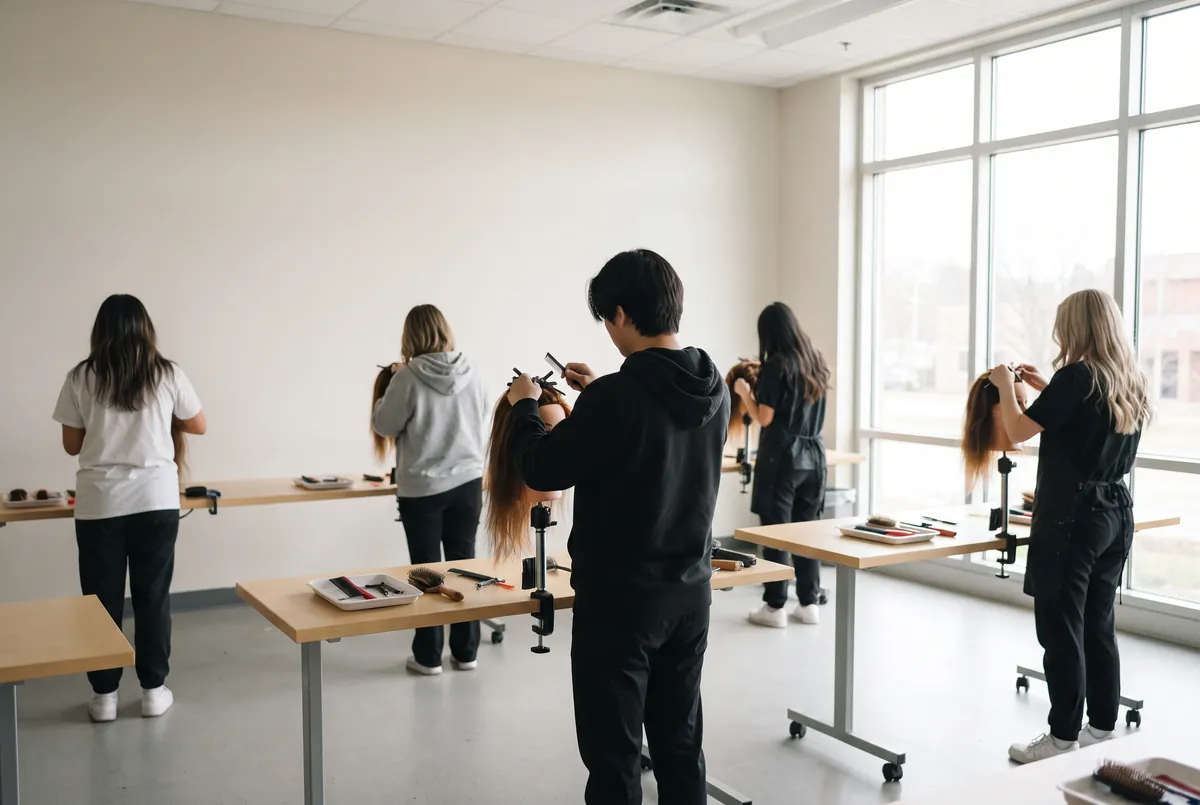
Cosmetology programs split time between theory and practical work. Theory covers infection control and sanitation, hair and scalp structure, skin and nail anatomy, the chemistry of color and chemical texture services, electrical safety for tools, and your state's laws and rules. Practical training usually starts on mannequin heads and moves to real clients on the school's clinic floor under instructor supervision. How long this takes on the calendar depends on your state's hours and on whether you attend full-time or part-time, which our guide on the factors behind a cosmetology school timeline explains in more detail, including makeup hours and transfers.
The students who come out strongest treat school as the start of their clientele, not as a hurdle to clear. They ask to be put on difficult services, like color corrections and curly or coily cuts, instead of quietly avoiding them. They photograph their finished work with client permission and build a simple portfolio from the first month. They practice timing, because in a salon a haircut that takes far too long costs you money even when it looks good. And they learn to run a proper consultation, since a clear conversation about what the client wants, and what their hair can realistically do, prevents most of the complaints I hear about new professionals.
Keep your own record of your hours alongside the school's official record. Schools track clock hours carefully, since the board relies on those records, but mistakes and disputes do happen, especially if you transfer schools, change schedules, or take a leave. A simple personal log with dates and the type of work you did protects you and makes the application stage smoother. If you miss time, ask right away how makeup hours work. In most states the required total is fixed, so missed hours have to be made up before you are eligible to test, no matter how good your technique is.
Study your theory as you go, not only at the end. Theory feels abstract when you are excited to cut and color, but it is exactly what the written exam tests, and it is what keeps clients safe. When you learn why lightener swells the cuticle, or why certain disinfectants need a specific contact time, you make better decisions on the floor. I encourage students to connect each theory chapter to a real service they did that week. That habit turns memorized facts into working knowledge you will still use years after the exam.

Step 4: Prepare for the State Board Exam
After you finish your hours, or in some states when you are close to finishing, you become eligible for the licensing exam. Most states require a written theory exam, and many also require a practical exam where you perform set procedures on a mannequin within a time limit while an examiner watches your technique and sanitation. Many states use exams developed by the National Interstate Council of State Boards of Cosmetology, known as NIC, while others use their own exam or a testing company. Some states have dropped the practical portion, and some add a short test on state law. Your state page lists which exams apply to you, and the board or testing provider publishes the details.
The written exam is less about creative styling and more about safety and science: infection control, disinfection procedures, chemical reactions, anatomy, and client protection. Students who struggle with it usually studied what they enjoyed instead of what is tested. Build your study plan around the content outline your state or its testing provider publishes, take timed practice tests, and review every wrong answer until you understand why it was wrong. In my experience with students, short daily sessions over several weeks work far better than a few long cramming nights right before the test date.
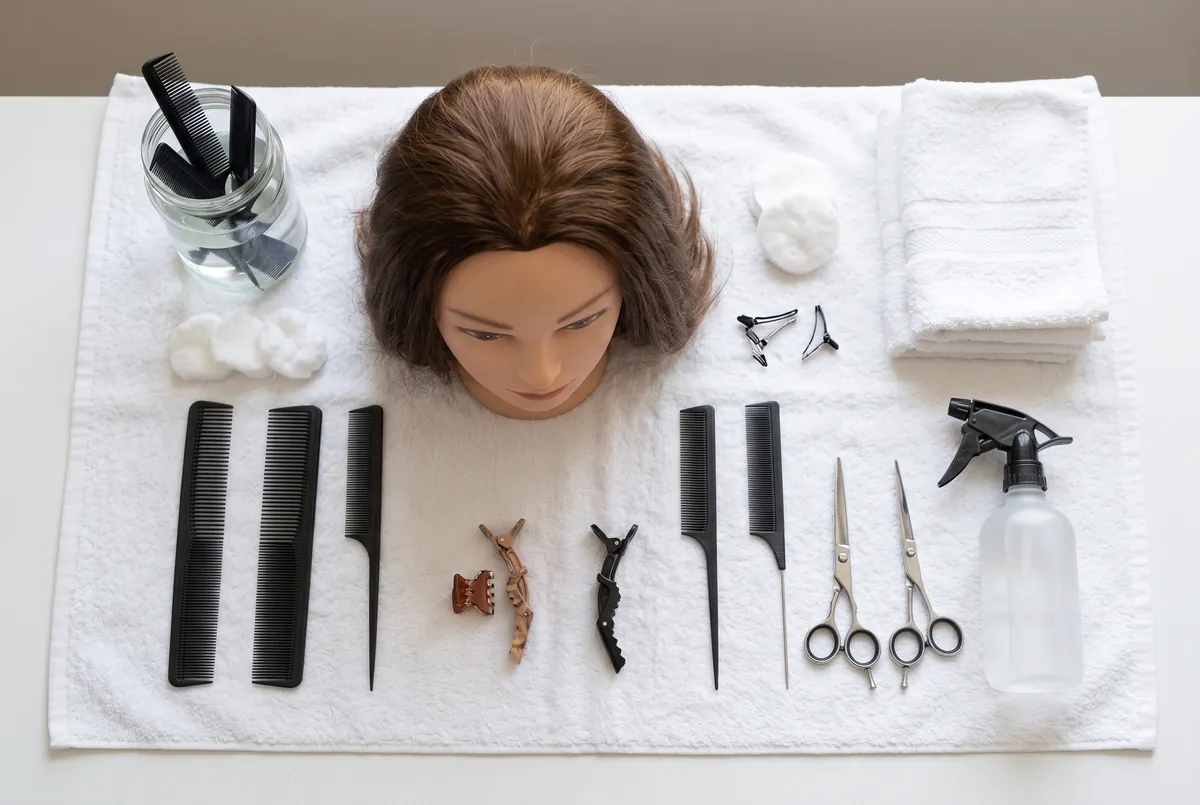
The practical exam is mostly about procedure and sanitation. Examiners watch whether you disinfect tools correctly, protect the mannequin or model, set up your station in the required order, and follow the sequence the exam expects. Talented stylists often lose points on setup and infection control, not on the haircut itself. Practice the full exam routine with a timer, pack your kit the same way every time, and use a checklist so nothing is missing. Ask your school to run a complete mock practical under exam conditions before your real date.
If you do not pass one portion on the first attempt, you are not starting over. States generally let you retake the portion you failed, usually with a new fee and sometimes a waiting period, and the score report shows which areas were weak. Use it. Most retakes I have seen succeed because the student finally studied the specific weak areas rather than rereading the whole textbook from the beginning.
Step 5: Apply for Your License and Wait Until It Is Active
Once you pass, you apply to the state board for your license, unless that application was already submitted when you registered for the exam, which is how some states handle it. Expect to provide proof of completed hours from your school, exam results, identification, an application fee, and answers to background questions. Some states ask about past convictions, and in many states a conviction does not automatically disqualify you, although it can add review steps. Read each question carefully and answer honestly, since an incomplete or inaccurate application is a frequent reason approvals take longer than expected.
Do not start taking paying clients until your license is issued and shows as active in your state's online license lookup. Some states offer a temporary permit or similar work authorization between the exam and the license, and some do not. Working without an active license, even for a few weeks at a friend's salon, can bring fines for you and for the salon, and it can complicate your record later. While you wait, prepare your resume, organize your portfolio photos, research salons, and set up interviews so you can start working the week your license becomes active.
This is also the moment to think about insurance and paperwork if you plan to work independently early. An employee is usually covered under the salon's policies, but a booth renter or independent stylist often needs professional liability coverage, a business license from the city or county, and sometimes a separate establishment license for the space. The rules differ by location, so ask your state board and your local licensing office what applies before you rent anything or sign a lease.
Step 6: Land Your First Job
Your first job shapes your skills more than your school did, so choose it for training value, not only for pay. New cosmetologists usually start in one of a few settings, and each one teaches something different. Some full-service salons run structured assistant programs where you shampoo, blow dry, and assist a senior stylist before building your own clientele. Chain and value salons usually put you on the floor quickly with walk-in traffic, which builds speed and confidence. Spas and resorts lean toward skin, nails, and event styling. Booth or suite rental comes later for most people, once they have enough regular clients to cover rent.
| First job setting | What you learn | What to watch for |
|---|---|---|
| Assistant program in a full-service salon | Advanced color and cutting under a mentor, high client care standards | Lower pay at the start and a slower path to your own clients |
| Chain or value salon | Speed, volume, and handling many hair types quickly | Short service times can limit detailed or creative work |
| Spa or resort | Skin, nail, and event styling in a calm service style | Hair work may be a smaller part of the job |
| Booth or suite rental | Pricing, marketing, scheduling, and full creative control | You pay rent and supplies even in slow weeks |
Expect a practical interview. Many salons ask candidates to perform a haircut, blowout, or color application on a model while a manager watches, then talk through their choices. Bring a model you have worked on before, arrive with clean and organized tools, and treat the consultation as part of the test. From what I have seen over the years, attitude, reliability, and willingness to learn weigh heavily in hiring decisions, because technique can be taught and reliability is much harder to teach. Ask each salon what ongoing education they offer, since a salon that keeps training its stylists is investing in your growth.
Read any employment or rental agreement carefully before you sign. Look for how commission or pay is calculated, who owns the client list if you leave, whether there is a non-compete clause and what it covers, who pays for product and color, and how schedules are set. These details decide your real income far more than the headline pay rate. If something in the agreement is unclear, ask for it in writing, and do not be embarrassed to have someone you trust read it before you commit.

Step 7: Choose a Direction and Specialize
Most cosmetologists become generalists first and specialists later. After a period of steady work you will notice which services you are best at, which ones clients request you for, and which ones you genuinely enjoy. That is the moment to invest in advanced education. Common directions include color and lightening, precision cutting, curly and textured hair, extensions, bridal and event styling, and men's cutting where your license allows it. Others move toward the skin side of the license with facials and waxing, and some eventually add a separate license, such as esthetics or electrology, to offer services the cosmetology license does not cover.
Specializing is not only about skill. It changes who finds you. A stylist known for curly hair or for blonding attracts clients who search for that specific service, sometimes from farther away, and those clients tend to stay loyal once they trust you. When you choose a specialty, look at local demand as well as your own interest. A specialty with plenty of clients and few skilled providers nearby is a stronger business bet than one where every salon on your street already advertises the same thing. Talk to suppliers and local educators, who often know which services are underserved in your area.
If the skin side of the license interests you more than hair, look carefully at your state's scope before investing. Some advanced skin treatments sit outside the cosmetology license, and some states restrict certain peels or devices to other license types or to medical settings. Hair removal is a common crossover. Waxing and tweezing are often within cosmetology scope, while electrolysis, the only method the FDA accepts for permanent hair removal claims, usually requires its own license in the states that regulate it. That makes it a natural second credential for cosmetologists who enjoy detailed, one-on-one work and want a service that clients return for over many months.

What Shapes Your Income in the First Years
Income in cosmetology varies more than in many careers because it depends on how you are paid and how quickly you build a clientele. Hourly or commission employees have predictable costs but share each ticket with the salon. Booth and suite renters keep more of each service but pay rent no matter how busy they are. Tips can be a meaningful part of take-home pay in hair services. Retail sales, rebooking habits, and the number of clients who return on schedule often matter more than your price per service, especially during your first few years behind the chair. For a closer look at the moving parts, see our guide on how much cosmetologists earn and why it varies.
The factors that make the biggest difference early on are mostly within your control: rebooking clients before they leave the chair, showing up on time every day, keeping a consistent schedule so clients can find you, and asking happy clients to refer friends. Location and specialization set the ceiling, but habits decide how close to that ceiling you get. Expect the first stretch to be a building period. Filling a book takes time, and planning your finances around that reality prevents a lot of stress and rushed decisions, like underpricing or moving into rental too early.
For realistic numbers in your area, go to neutral sources rather than school marketing. The U.S. Bureau of Labor Statistics publishes wage data for hairdressers, hairstylists, and cosmetologists by state and metro area, and local salons will often tell you honestly how their pay structure works if you ask during an interview. Keep in mind that published wage data may not capture tips or the income of independent renters very well, so treat it as a starting point for your own planning, not a promise of what you will earn.

Where Online Theory Fits, and Where It Stops
Online study can make the path easier, but it cannot replace the path. Your state's required hours have to be completed through a board-approved program, and in most states that means supervised, in-person practical training. Some states allow part of the theory portion to be delivered online by an approved school, and a few are more flexible than others, but no legitimate online course can give you a cosmetology license on its own. If a website promises a license, or suggests that its certificate lets you work on paying clients without school and a state exam, walk away.
Where online theory genuinely helps is before and during school. Students who arrive already understanding infection control, hair structure, color theory, and the chemistry of chemical services spend their school hours on technique instead of catching up. That is the role of our online cosmetology foundations course: to build the theory you will use in school and on the written exam, not to replace any board-required hours. It also helps career changers test whether they actually enjoy the material before committing to a full program, which is a much cheaper way to find out than dropping out halfway through school.
A good way to use online theory is as a companion. Watch the lesson on a topic the night before your school covers it, then practice it in class the next day with an instructor watching. Review the relevant module again before the written exam. Used this way, online study shortens the learning curve without touching the legal requirements. If you are unsure how your state treats a particular course, ask your state board directly whether it counts toward licensing hours before you pay for it.
Keeping Your License Active and Moving Between States
A cosmetology license is not a one-time achievement. Every state requires renewal on a set cycle, usually with a fee, and many require continuing education hours, sometimes including specific topics like infection control or state law. Put your renewal date in your calendar the day your license is issued, and keep certificates from every class you take. Letting a license lapse can mean late fees, extra paperwork, or in some states retesting if it stays expired long enough, and working on an expired license carries the same risks as working without one.
If you move, your license does not automatically move with you. Each state decides how it treats cosmetologists licensed elsewhere. Some offer licensure by endorsement or reciprocity when your training meets their standard, some require a state law exam, and some ask you to make up missing hours or take their exams. We explain the common patterns in our guide to cosmetology license reciprocity by state. Start the transfer process before you move, since approvals take time and you will want to work as soon as you arrive in your new state.
Mistakes I See New Cosmetologists Make
After years of training and mentoring beauty professionals, I see the same handful of mistakes again and again. None of them are about talent, which is good news, because planning and habits are easier to fix than talent. Most of them come from rushing: rushing to finish school, rushing to start earning, or rushing to look established before the skills are there. Read this list before you enroll and again before you graduate:
- Choosing a school on price or location alone, without checking exam results, clinic traffic, and the total cost in writing.
- Treating theory as boring filler, then struggling on a written exam that is mostly safety and science.
- Avoiding hard services in school, like color corrections and textured hair, and meeting them for the first time with a paying client.
- Taking clients before the license is active, even informally at home.
- Moving into booth rental before having enough regular clients to cover rent in a slow month.
- Paying for many advanced classes at once instead of mastering one specialty well.
- Ignoring hand, back, and posture care until pain starts limiting how many clients you can see.
The last point deserves emphasis because nobody warns students about it. Cosmetology is physical work, often standing for long days with your arms raised and your wrists turning. Good shears that fit your hand, a chair set to the right height for each client, supportive shoes, and short stretching breaks between appointments are part of a long career, not luxuries. If you develop persistent wrist, shoulder, or back pain, see a physician early rather than working through it, since small problems are much easier to treat than chronic ones.
A quieter mistake is measuring yourself against social media. Many of the flawless before and after photos you see were taken under studio lighting, edited, or chosen from many attempts, and some show services that took far longer than a real salon schedule allows. New professionals who compare their everyday work to those images either lose confidence or rush into advanced services before they are ready. Compare yourself to your own work from a few months ago instead, and ask a senior stylist you respect for honest, regular feedback on your cuts and color.
Your Next Step
Start with the step that costs nothing: open your state's page in our licensing hub, confirm the requirements with the board, and write down the hours, exams, and routes available to you. Then shortlist schools, visit them with the questions above, and get total costs in writing before you sign anything. If you want a strong theory base before you enroll or while you are in school, our foundations course is built for exactly that role. The path to a cosmetology license is long enough that it rewards planning, and every step you take with good information saves you time and money later.
State Requirements
State licensing guides
Hours, exams, fees, and the licensing board differ by state. Open your state for the current requirements.
Common Questions
FAQ
It depends on your state's required training hours and on whether you attend full-time or part-time. Full-time students complete the same hour requirement faster on the calendar than evening or weekend students. After school, you also need time to schedule and pass the exam and for the board to process your application. Check your state's page in our licensing hub for the current hour requirement, then ask each school how long their recent students actually took to finish.
No. Online courses can teach theory, and some states let approved schools deliver part of the theory portion online, but every state requires a board-approved program that includes supervised, hands-on training, followed by the state exam. No online course can issue a cosmetology license. Use online study to prepare for school and the written exam, and be wary of any program that promises a license without in-person training.
Requirements vary by state and by school. Many schools ask for a high school diploma or an equivalency credential, and each state sets its own minimum age and education rules for licensing. Some states accept partial secondary education. If you are still in high school, ask whether a local technical center offers cosmetology training that counts toward state hours, since some do. Confirm the rules on your state board's website before you apply.
The written exam is challenging for students who focus only on styling, because most questions cover infection control, chemistry, anatomy, and safety. The practical exam is demanding mainly because of timing and strict sanitation steps. Students who study the published content outline, take timed practice tests, and rehearse a full mock practical usually feel well prepared. If you fail one portion, most states let you retake that part rather than starting over.
Many students do, often by choosing a part-time schedule. You cannot perform licensed services for pay outside school until your license is active, but jobs that do not require a license in your state, such as salon front desk or retail work, can be a smart choice. They teach you how a salon runs, introduce you to potential employers, and sometimes lead to an assistant position once you are licensed.
A cosmetologist holds a broad license that usually covers hair, basic skin care, and nails, while an esthetician specializes in skin care services such as facials, exfoliation, and often waxing. Esthetics programs are generally shorter because the scope is narrower. The right choice depends on which services you want to perform every day. Our guide on the difference between a cosmetologist and an esthetician compares the two licenses in detail.
There is no upper age limit for cosmetology school or licensing, and career changers often do well. They tend to be organized, comfortable talking with clients, and clear about what they want. The main thing to plan for is the physical side of the work, so think about stamina, posture, and specializations that suit your body. Studying theory online first is a low-risk way to confirm your interest before committing to a full program.
Keep Reading
Related Guides


