Electrolysis
Electrolysis and Acne: Can You Treat Breakout-Prone Skin?
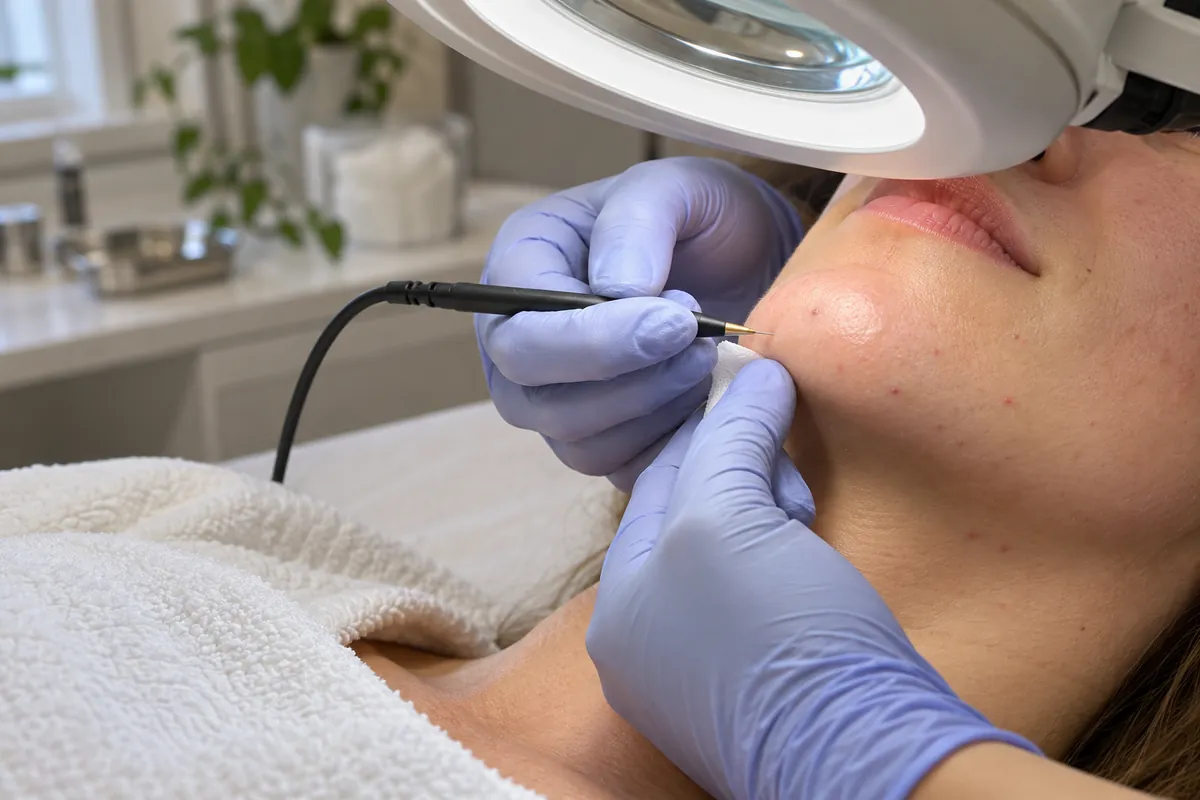
Quick answer
You can usually have electrolysis with acne because it treats one follicle at a time. Blackheads, closed comedones without redness, and old marks are worked around. Red, tender, or pus-filled spots are skipped until fully healed, and an area with dense active acne is postponed. Small bumps after a session are normal healing and fade within days.
Electrolysis and acne meet more often than people expect. The areas where unwanted hair bothers clients most, the chin, upper lip, jawline, and neck, are the same areas where adult and hormonal breakouts cluster. So two questions come up in my treatment room every week. The first: can you get electrolysis with acne? The second, usually from someone a few sessions in: why am I breaking out after electrolysis? The short answer to the first is yes, selectively. Calm skin and quiet clogged pores do not stop treatment, but an inflamed follicle is skipped until it heals.
The reason is mechanical. Unlike waxing, which pulls on a whole patch of skin, electrolysis sends a fine probe into one follicle at a time. That precision is an advantage for breakout-prone skin, because an electrologist can leave out a single pimple and treat the healthy follicles around it. It is also the reason an inflamed follicle is off limits: the probe would enter exactly where the skin is already compromised. This guide explains what can be treated, what must wait, how acne medications change the plan, and how to tell ordinary post-session bumps from a true breakout.
Can you get electrolysis if you have acne?
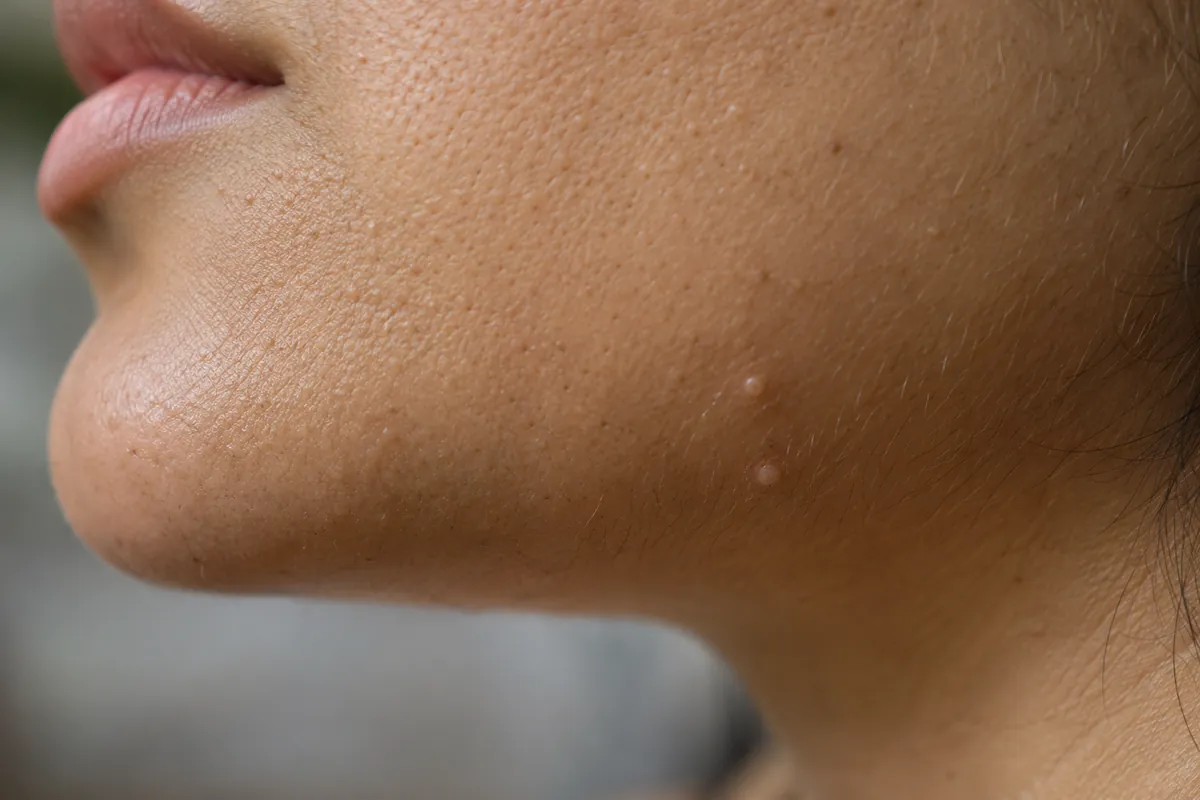
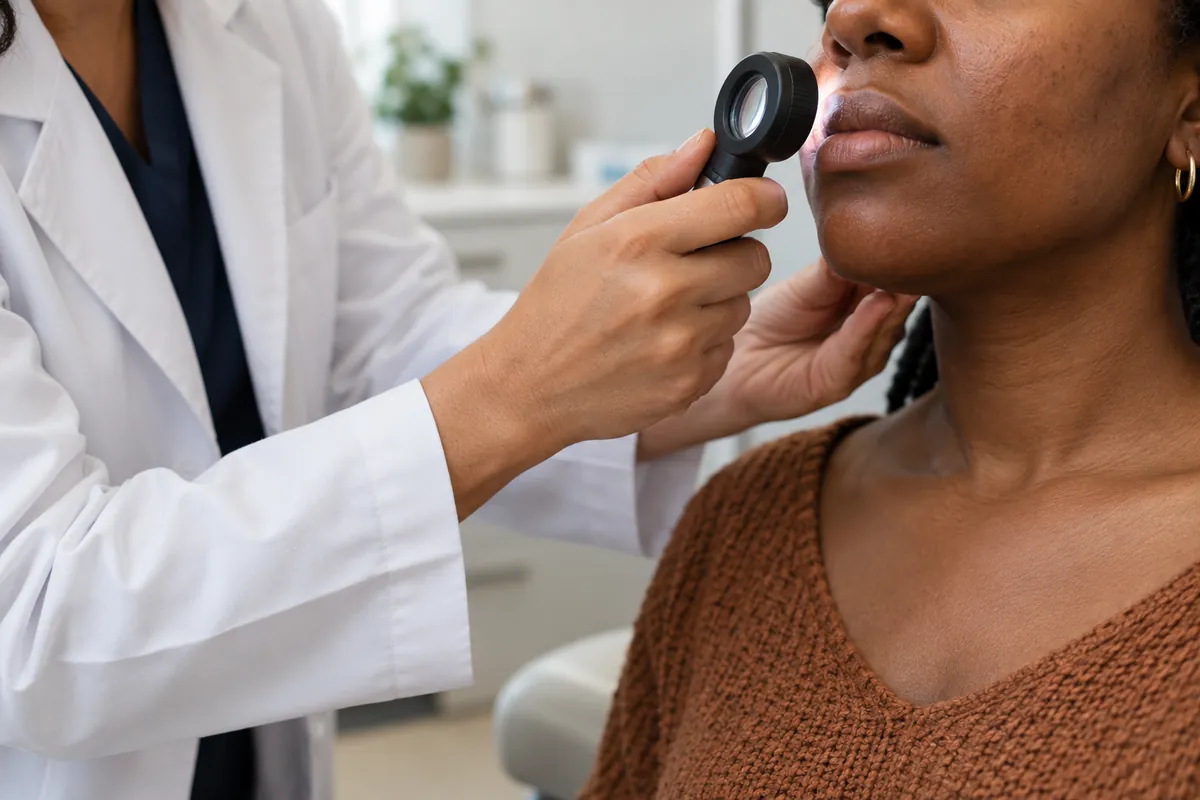
In most cases, yes. "Acne" is not one condition of the whole area. It is a set of individual spots at different stages, sitting among follicles that are perfectly healthy. Electrolysis works at the level of the single follicle, so the decision is made at that level too. A few closed comedones that are not red and do not hurt when touched are simply left out, and the hairs around them are treated as usual. Flat marks left behind by old breakouts are not a barrier either. An inflamed papule, a pustule, or a deep sore nodule is not treated, and neither are the follicles pressed right up against it.
The whole area is postponed only when active breakouts are so dense that working around each one stops being realistic. If inflamed spots cover a large share of the chin or the back, an electrologist cannot safely thread between them without the risk of entering an inflamed follicle by mistake. In that situation the sensible plan is to work on another area that day, or to wait until the skin is calmer, and to encourage the client to see a dermatologist so the acne itself is being managed.
Why a probe and an inflamed follicle do not mix
There are three separate reasons, and it helps to understand each. The first is direct entry. The probe slides into the opening of the follicle, the same channel the hair grows through. If inflammation is already under way in that follicle, or right beside it, the probe can carry the process deeper instead of just brushing the surface. With waxing the risk to acne-prone skin comes from pulling and friction across a patch. With electrolysis the risk comes from an instrument entering tissue that is already disturbed from the inside.
The second reason is the current. On a healthy follicle, the pulse of energy is small, local, and predictable, and the skin answers with a pinpoint of redness that fades. On an inflamed follicle the response is less predictable. The spot is usually more painful, the entry point takes longer to heal, and the risk of a local infection is higher because the skin's barrier at that spot was weakened before the session started. Inflamed tissue is also more likely to leave a dark mark behind, which matters a great deal on the face.
The third reason is hygiene. The probe is in direct contact with the contents of the follicle. If a pimple has opened or contains pus, placing a probe in or next to it risks moving bacteria along the channel the probe creates and into neighboring follicles. This is why a careful electrologist cleanses breakout-prone skin thoroughly before starting, uses a new sterile single-use probe for every client, and never treats a spot that is open or weeping. None of this is fussiness. It protects both the result and your skin.
What can be treated and what has to wait
Clients often arrive unsure whether they should have cancelled. The list below is the practical sorting I use at the start of a session. It is general guidance for understanding the logic, not a way to diagnose your own skin, and your electrologist will make the call after looking and gently feeling the area under magnification.
| What is on the skin | Usual approach |
|---|---|
| Blackheads and closed comedones with no redness or soreness | That follicle is skipped, surrounding hairs are treated normally |
| Flat pink, red, or brown marks left by old breakouts | Treated normally, with attention to sun protection afterward |
| A few scattered red, tender bumps | Those bumps and their closest neighbors are skipped, the rest of the area is treated |
| Pustules, open or weeping spots | Not treated, and a margin of skin around them is left alone |
| Deep, painful nodules or cysts | Not treated, a wider margin is left, and a dermatologist visit is suggested |
| Dense active acne across most of the area | The area is postponed, another area may be treated instead |
| Shallow, healed acne scars | Treated, sometimes with adjusted settings for individual follicles |
The difference between "skip the spot and continue" and "postpone the area" comes down to density. When inflamed follicles are few and scattered, the rest of the area is ordinary work. When they are packed closely, the healthy follicles between them sit too near inflamed tissue, and the margin for error disappears. I would always sooner reschedule a patch of skin than treat it on a bad day and spend the next month helping it recover.
How this plays out on the face, back, and bikini area
The chin and upper lip are the most common meeting point of unwanted hair and acne. The skin is thin and reactive, the follicles sit close together, and hormonal breakouts favor exactly this zone. Here I check literally every follicle before inserting, because a healthy follicle may be a hair's width from an inflamed one. Redness also lingers longer on the face than on the body. Cheeks behave similarly, with breakouts more typical in teenagers and young adults.
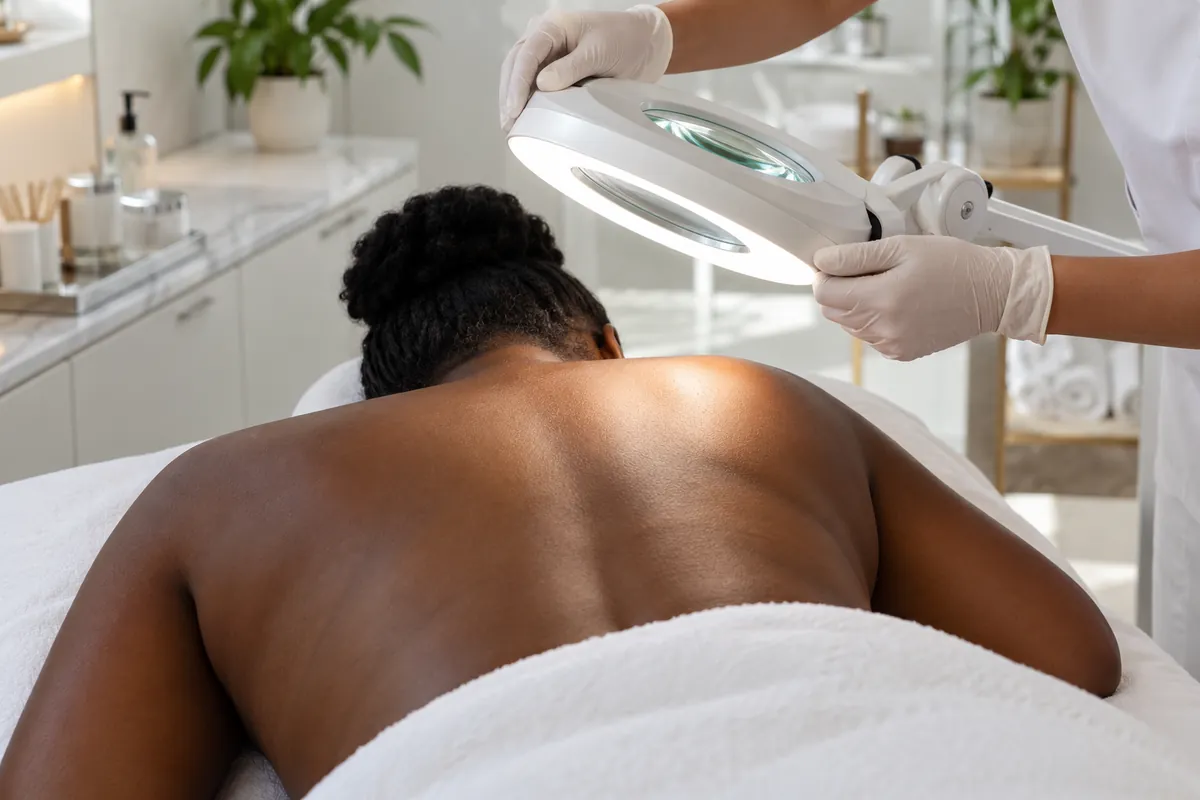
Body acne is a different animal. On the back and chest, oil glands are larger and the lesions are often deeper and more painful, even though the skin itself is thicker. Inspection takes longer simply because the area is large, and an electrologist needs good light and time to map which patches are calm enough to work on. Deep sore lumps get a generous margin. Thick skin can also hide mild inflammation, so I rely on touch as much as on sight: a follicle that is tender under light pressure is left for another day.
The bikini area combines thin skin, friction, moisture, and coarse hair, which makes it prone to irritation and to ingrown hairs that look like pimples. Scattered bumps are worked around. When there is widespread inflammation, the area is postponed completely. Many of the bumps clients call "acne" in this zone are in fact ingrown hairs or folliculitis from shaving, and those improve as the hair is permanently removed. I explain that process in the guide to electrolysis for ingrown hairs.
Breakouts after electrolysis: reaction or real acne?
Now the second question. Small bumps in the treated area after a session are common, and most of them are not acne. Each treated follicle is a tiny controlled injury. In the first hours you see pinpoint redness and slight swelling, and over the next day or two some spots form a tiny dry crust or a small raised bump. These sit exactly where hairs were treated, they appear together, and they settle together, getting calmer each day. That is the skin's ordinary healing response, not a breakout.
A true pustule is different. It is soft, domed, white or yellowish, tender, and it tends to become more noticeable on the second or third day instead of fading. A few of these after a session mean bacteria reached open follicles. The usual sources are ordinary: touching the area, putting makeup on too soon, a workout the same day, a phone pressed against a freshly treated jaw, or a heavy cream that sealed the follicle openings. In skin that already tends to clog and inflame, it takes less to tip a healing follicle into a pimple.
There is also a third category: your regular acne arriving on its own schedule. Hormonal breakouts along the jaw come in cycles, and a session can simply coincide with one. If the new spots are in the usual places, include follicles that were not treated, and match your usual pattern, electrolysis may not be the cause at all. A simple way to sort it out is timing and location. Reaction bumps are limited to treated follicles and improve within days. Your own acne ignores the borders of the treated patch.
Sometimes repeated bumps do point back to the session. If the same heavy reaction follows every visit, the settings may be stronger than your skin needs, too many closely spaced follicles may be treated at once, or the aftercare product may not suit oily skin. Tell your electrologist what happened on days one through five and bring photos. Lower intensity, wider spacing, shorter sessions, and a lighter aftercare product usually solve it. Normal healing and the rare signs of real infection are laid out in my guide to electrolysis side effects and risks.

Acne medications and electrolysis
Topical acne treatments change how skin behaves, even away from active spots. Retinoids such as tretinoin and adapalene, benzoyl peroxide, salicylic acid, and azelaic acid all make skin more reactive in different ways. Retinoids in particular speed up surface cell turnover and can leave the top layer thinner and easier to irritate. On skin treated this way, probe entry points may redden more and heal a little more slowly. This does not rule out electrolysis. It means the plan has to account for it, and it means your electrologist needs to know what you use.
Many electrologists ask clients to pause strong topical actives on the treatment area for a few days before and after a session. Whether that is right for you depends on what was prescribed and why, so check with the clinician who prescribed it instead of stopping on your own. An electrologist does not replace a dermatologist and has no business telling you to change prescribed treatment. Their job is to factor it in: gentler settings, a small test patch, shorter sessions, and a clear aftercare plan that does not stack irritants on fresh skin.
Oral isotretinoin deserves a separate conversation. It changes oil production and skin healing throughout the body, and skin is typically drier and more fragile during a course. Waxing is widely avoided on isotretinoin for that reason. For electrolysis, policies differ between practitioners. Some will not treat during a course and for a period after it, others will after clearance from the prescribing dermatologist. The right move is the same in every case: tell your electrologist before you book, and ask your dermatologist whether and when treatment is appropriate for you.
Oral antibiotics and hormonal treatments prescribed for acne, such as certain birth control pills or spironolactone, are usually less of an issue for the skin's tolerance of electrolysis, but they still belong on your intake form. Some antibiotics increase sensitivity to sun, which matters for the pink marks that follow a session. Hormonal treatments can also slow the growth of new unwanted hair over time, which is good news for the total length of your course. A complete, honest medication list lets your electrologist plan instead of guess.

Hormonal acne, teenagers, and men: timing and special cases
For many women, breakouts flare predictably in the days before a period. If you have a choice of dates for facial or bikini work, booking in the calmer part of your cycle lowers the odds of arriving on a peak. It is not always possible with a busy schedule, and it is not a requirement. But a client who knows her pattern and an electrologist who notes it in the chart can avoid a lot of skipped follicles and shortened sessions. Many clients also find the skin more sensitive to discomfort in that same premenstrual window.
Changes in hormones change the skin. Starting, stopping, or switching hormonal contraception, pregnancy, perimenopause, and new medications can all bring breakouts to areas that were calm before. If acne suddenly appears where you never had it, mention what has changed recently. It helps your electrologist judge whether this is a temporary phase or a longer trend that the treatment plan should be built around.
Acne along the jaw together with coarse chin or neck hair and irregular cycles is a combination worth raising with a physician, because it can point to a hormonal condition such as polycystic ovary syndrome. Electrolysis permanently removes the hairs that are treated, but it does not change the hormones that recruit new follicles, so medical management and electrolysis work best side by side. I cover that partnership in the guides on PCOS and unwanted hair and hormonal hair growth and electrolysis.
Acne is far more common in teenagers than in adults, and it is a normal part of hormonal change. Teenage skin is also more reactive to any intervention. Starting electrolysis at that age calls for a real conversation with a parent or guardian, a careful look at each area before every session, and a willingness to skip follicles whenever the skin looks doubtful. I explain the reason in plain words to both the teen and the parent, so a skipped patch is understood as care, not as a failed appointment. More on age, consent, and expectations is in my guide to electrolysis for teenagers.
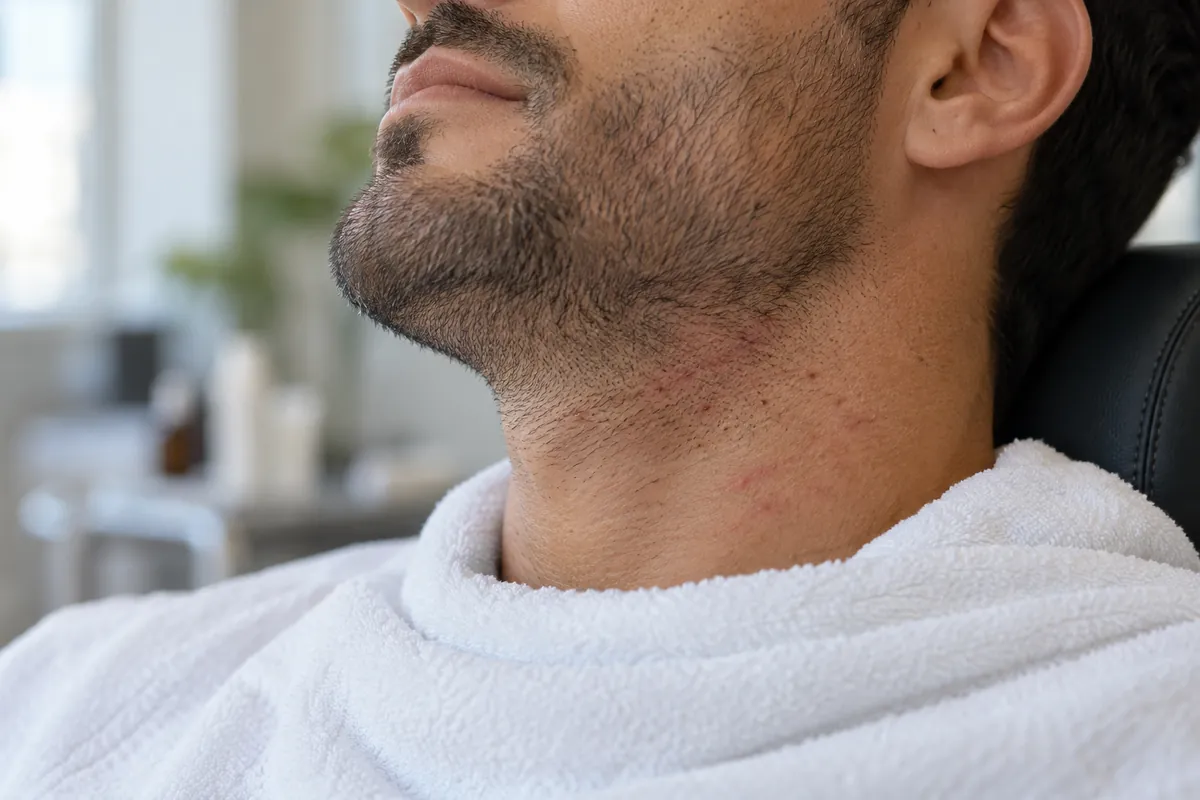
Men get acne on the face and back just as often as women, and the areas men typically treat, the beard line, cheeks, neck, back, and chest, have their own quirks. Male facial skin is thicker and more textured, which can visually mask mild inflammation. Shaving adds another layer: razor bumps and ingrown beard hairs are easy to confuse with acne, and an inflamed ingrown follicle is skipped just like a pimple. On a beard or neckline I feel the skin with a fingertip as well as looking, because touch finds tender follicles that the eye misses.
Numbing cream, acne marks, and acne scars
Some clients use a topical anesthetic before sessions on sensitive facial areas. With breakout-prone skin there are two things to keep in mind. Numbing products are usually applied in a thick layer, sometimes under a covering, and that can be heavy for skin that clogs easily, so the area needs to be cleansed thoroughly before treatment begins. Numbing also dulls the tenderness that normally flags an inflamed follicle. That is why an electrologist should rely on visual inspection and touch before the cream goes on, not on your report of what hurts during the session.
People with a long history of acne often have flat discolored marks and some textural scarring left behind. Neither is a contraindication. Flat marks are treated like normal skin. Scarred skin can respond a little differently from the smooth skin beside it: the tissue is denser, follicles may sit at an altered angle or depth, and sensitivity can be higher or lower depending on how old and deep the scar is. A good electrologist adjusts for individual follicles in those patches instead of running one setting across the whole area.
One caution applies to anyone whose acne has left dark marks. Skin that responds to inflammation with pigment will tend to do the same after electrolysis, leaving temporary brown dots where follicles were treated. They fade, but they fade faster with daily sunscreen and without picking. If you have a history of raised or keloid scars, say so at the consultation, because that changes how conservatively an electrologist should start and whether a physician's opinion is needed first.
Before your session: a checklist for acne-prone skin
A good session starts before the first insertion, with a two-minute conversation. A careful electrologist asks whether you have active breakouts in the area today, how sore they are, when they appeared, what you apply to your skin, and whether a dermatologist is treating you. Take those questions as a sign that the practitioner is planning the session around your skin on that particular day. When an electrologist declines to treat a few spots, or an entire patch, that is a reasoned precaution and not a whim.
- Arrive with clean skin: no makeup, sunscreen residue, or heavy moisturizer on the treatment area.
- Tell your electrologist about every acne product and medication you use, prescription and over the counter, and any recent changes.
- Do not pick, squeeze, or attempt extractions in the days before your appointment. Open spots cannot be treated.
- Skip scrubs, peels, and strong exfoliating products on the area for several days beforehand.
- Point out any spot that is tender, even if it is barely visible. Deep bumps are easier to feel than to see.
- If you wake up to a major flare on the day, message your electrologist with a photo before you come. A change of area or date is often the better plan.
- Ask what reaction to expect afterward on your skin specifically, so ordinary redness does not alarm you.

Aftercare when your skin breaks out easily
Aftercare matters more for acne-prone clients than for anyone else, because the margin between a healing follicle and a pimple is narrower. For the first day, keep your hands off the area, skip makeup, and avoid anything that leaves the skin hot and damp: workouts, saunas, hot yoga, long hot showers. Cleanse gently with lukewarm water and a mild, fragrance-free cleanser, and pat dry with a clean towel. Change your pillowcase the night of a facial session, and wipe your phone screen or use earbuds after work on the jaw or cheek.
Choose aftercare products with your skin type in mind. Thick ointments and rich balms that suit dry skin can sit heavily on oily skin and trap heat and bacteria in freshly treated follicles. A light, non-comedogenic soothing gel is usually a better fit, applied thinly with clean fingers. Ask your electrologist what they recommend for breakout-prone skin specifically, and do not improvise with spot treatments. Benzoyl peroxide, acids, and retinoids on fresh entry points sting, over-dry the skin, and can turn a pink dot into a lasting dark mark.
Return to your acne routine gradually, once the treated skin looks and feels calm, and follow whatever your dermatologist advised about timing. Sunscreen is the one product I ask clients not to skip once the skin tolerates it. Acne-prone skin and post-electrolysis skin both mark easily, and ultraviolet light is what turns temporary discoloration into something that lingers for months. The full routine for the first week is in my electrolysis aftercare guide.

Planning a course of treatment with chronic acne
Electrolysis is always a series of sessions, because hairs grow in cycles and only some follicles in an area are active at any one visit. Chronic acne adds a second moving part. On one visit a group of follicles is skipped because of an inflamed spot. By the next visit those follicles are ready, and a new spot has appeared somewhere else. This is a normal part of working with this kind of skin, not a sign that the course is going badly. It is the reason I keep notes on what was skipped and why, so each session starts from the current state of the skin instead of from memory.
It also means a course can take somewhat longer than it would on clear skin, since some follicles keep being pushed to a later visit. That says nothing about how well the method works. Each follicle that is properly treated is finished for good, and electrolysis remains the only method the FDA recognizes for permanent hair removal. The path to clearing an area simply has a few more stops. Knowing that in advance helps clients take a postponed patch calmly. What drives the total number of visits is explained in my guide on how many sessions electrolysis takes.
There is good news here too. Tweezing, waxing, threading, and close shaving all irritate follicles and cause ingrown hairs, and on acne-prone skin that irritation feeds breakouts. As electrolysis removes those hairs permanently, the daily plucking stops, the ingrown hairs stop, and many clients find that the bumps along their jaw and neck become noticeably calmer. Electrolysis does not treat acne and I never promise that it will. But removing a constant source of follicle irritation is a real benefit for this skin type.
Electrolysis compared with waxing and laser for acne-prone skin
Every hair removal method needs care around acne, for different reasons. Waxing pulls on a broad patch of skin. It can tear the weakened surface over a pimple, spread bacteria across the area, and lift skin thinned by retinoids, which is why active acne and retinoid use are standard reasons to postpone a wax. Laser treats a wide field with light and heat, generally is not performed over inflamed or broken skin, and only works on pigmented hair. Many of the hormonal facial hairs that accompany adult acne are too fine or too light for it.
Electrolysis gives the most flexibility. A single inflamed follicle can be excluded without cancelling the area, and hair color does not matter. The trade-off is that it demands closer inspection, because the instrument enters the follicle and a mistake costs more than a surface contact would. For practitioners, working safely around skin conditions is a core skill, covered in my guide to electrolysis contraindications for practitioners.
Who does what: electrologist, esthetician, dermatologist
An electrologist does not treat acne. If breakouts are frequent or severe enough to keep interrupting your sessions, the most useful thing I can do is say so and suggest you see a dermatologist, who can diagnose the type of acne and prescribe treatment. A licensed esthetician can support that plan with professional cleansing, appropriate home care, and extractions done properly, within the scope their state allows. When these visits are coordinated, sessions stop being cancelled for flares that regular care could have prevented.
Coordination is mostly about timing and information. Do not book a peel, extractions, or microdermabrasion on the same area right before or after electrolysis. Let each professional know what the others are doing. Scope of practice and licensing for each of these professions vary by state. If you are a student or a working practitioner sorting out what you may and may not do, the electrolysis licensing hub lists each state's rules, and an electrolysis course covers skin assessment and contraindications in the theory portion, alongside the supervised hours your state requires.
The bottom line
Electrolysis and acne are compatible on a selective basis. Quiet comedones and old marks do not stop treatment on the follicles around them. Inflamed, sore, or pus-filled spots are left out until they have healed completely, meaning no tenderness, no redness, and no crust. If active acne covers most of an area, the session on that area waits. After treatment, pinpoint redness and small crusts that fade over days are ordinary healing, while soft, tender, yellow-headed bumps that worsen on day two or three need attention.
Your next step depends on where you are. If you are considering treatment, book a consultation, bring a full list of your skincare and medications, and ask how the electrologist handles breakout-prone skin. If you are mid-course and breaking out, photograph the area for the first three days after your next session and review it with your electrologist. And if acne is flaring often enough to disrupt your appointments, see a dermatologist, so both problems are being handled by the right professional.
State Requirements
State licensing guides
Hours, exams, fees, and the licensing board differ by state. Open your state for the current requirements.
Looking for a practitioner or a program near you? Browse electrologists by state and city or beauty schools by state.
Common Questions
FAQ
Usually yes. Electrolysis treats one follicle at a time, so an electrologist can skip individual breakouts and treat the healthy follicles around them. Blackheads and closed comedones without redness, and flat marks from old breakouts, do not prevent treatment. Red, tender, or pus-filled spots are not treated until they heal. If active acne covers most of the area, that area is postponed and your electrologist may suggest working elsewhere that day.
Electrolysis does not cause acne as a condition. It does create tiny healing points, and small bumps or crusts at treated follicles are a normal reaction that fades over several days. Real pimples can follow if bacteria reach those open follicles, most often from touching, makeup, sweat, or heavy creams in the first day. Breakouts that repeat after every session are worth discussing, since gentler settings, wider spacing, or a lighter aftercare product often fix them.
Tell your electrologist before your session. Retinoids make skin more reactive, so treated spots may redden more and heal more slowly. Many electrologists prefer that strong topical actives be paused on the treatment area for a few days before and after, but that decision belongs to you and the clinician who prescribed the product. Do not stop a prescription on your own. If you are taking oral isotretinoin, ask your dermatologist whether and when electrolysis is appropriate.
There is no universal number of days, because spots heal at different speeds depending on their depth and type. The test is the skin itself: the spot is no longer tender, the redness has settled, and any crust has come away completely on its own. Your electrologist will check by sight and touch before each session. If there is any doubt, that follicle is skipped again, since there is no penalty for treating it at a later visit.
Not automatically. A few scattered spots are simply worked around. If you wake up to a significant flare across the area you planned to treat, send your electrologist a photo before you come. Often the best option is to treat a different area that day or to move the appointment by a few days. Do not try to dry out or squeeze spots beforehand, because open or picked skin cannot be treated at all.
Normal bumps sit exactly at treated follicles, appear together, stay small and dry, and look calmer every day. Signs that point the other way are soft white or yellow heads, pain that increases on day two or three, skin that feels hot, and redness that spreads. Contact your electrologist with a photo if you see those, and see a physician if they are worsening. The aftercare guide explains what to do in the first days.
Electrolysis is not an acne treatment, and no honest practitioner should promise that it will clear your skin. What it can do is end the cycle of tweezing, waxing, and close shaving, which irritate follicles and cause ingrown hairs. Many clients notice fewer inflamed bumps along the jaw and neck once those hairs are permanently gone. For acne itself, a dermatologist is the right professional, and the two approaches work well together.
Both need care, for different reasons. Waxing pulls on a whole patch of skin, can tear the surface over a pimple, and is generally avoided on skin treated with retinoids. Electrolysis allows individual inflamed follicles to be skipped while the rest of the area is treated, which makes it more adaptable, but it requires careful inspection of every follicle. For any practitioner, knowing when not to treat is part of the job, as covered in the contraindications guide.
Keep Reading
Related Guides


