Career
Do You Need a License to Do Makeup? Salon, Freelance and Film
Quick answer
In many states, yes: paid makeup application on the public usually falls under cosmetology or esthetics, so salon and freelance bridal work typically needs a license. Film, TV, fashion and some retail counter work are often exempt or treated differently, and a few states offer a makeup-only credential. Rules vary by state, so read your board's definitions and exemptions and get a written answer.
Makeup is one of the most common ways people enter the beauty industry, and it is also one of the most confusing when it comes to licensing. Some artists work for years doing weddings, photo shoots and proms without ever holding a state license. Others are told by a salon owner, an insurance application or a state inspector that they cannot touch a client's face without one. Both situations are real, and the difference usually comes down to where you work, who pays you, what else you do besides makeup, and which state you are in.
I am Aida Khazieva, a licensed electrologist and cosmetologist with more than twenty years in the treatment room. Over that time I have worked next to makeup artists in salons, trained students who wanted to add makeup to a cosmetology or esthetics career, and answered the same question again and again from freelancers: do I actually need a license to do makeup? This guide gives you the practical answer, the questions to ask your state board, and a clear way to decide whether a cosmetology or esthetics license is worth getting for the kind of makeup work you want to do.
The short answer: it depends on setting and state
In most US states, applying makeup to another person for pay falls under the scope of practice of cosmetology, esthetics, or both. That means the default legal position in many places is that paid makeup application on the public is a licensed activity. At the same time, many states carve out exemptions or simply do not enforce the rule in certain settings, most often theatrical, film, television and fashion work, and sometimes retail cosmetic counters where the goal is to sell product. A few states have created a separate, narrower makeup credential, and a few have relaxed licensing for some services altogether.
Because the rules are written state by state, there is no single national answer. The only reliable source is your own state board of cosmetology (or the board that oversees barbering and cosmetology in your state). Read the definitions section of the law first. If the definition of cosmetology or esthetics includes "applying cosmetics" or "makeup", and there is no exemption that clearly covers your setting, assume a license is required until the board tells you otherwise in writing. You can start with our esthetics licensing hub by state and the cosmetology licensing requirements by state, then confirm details directly with the board.
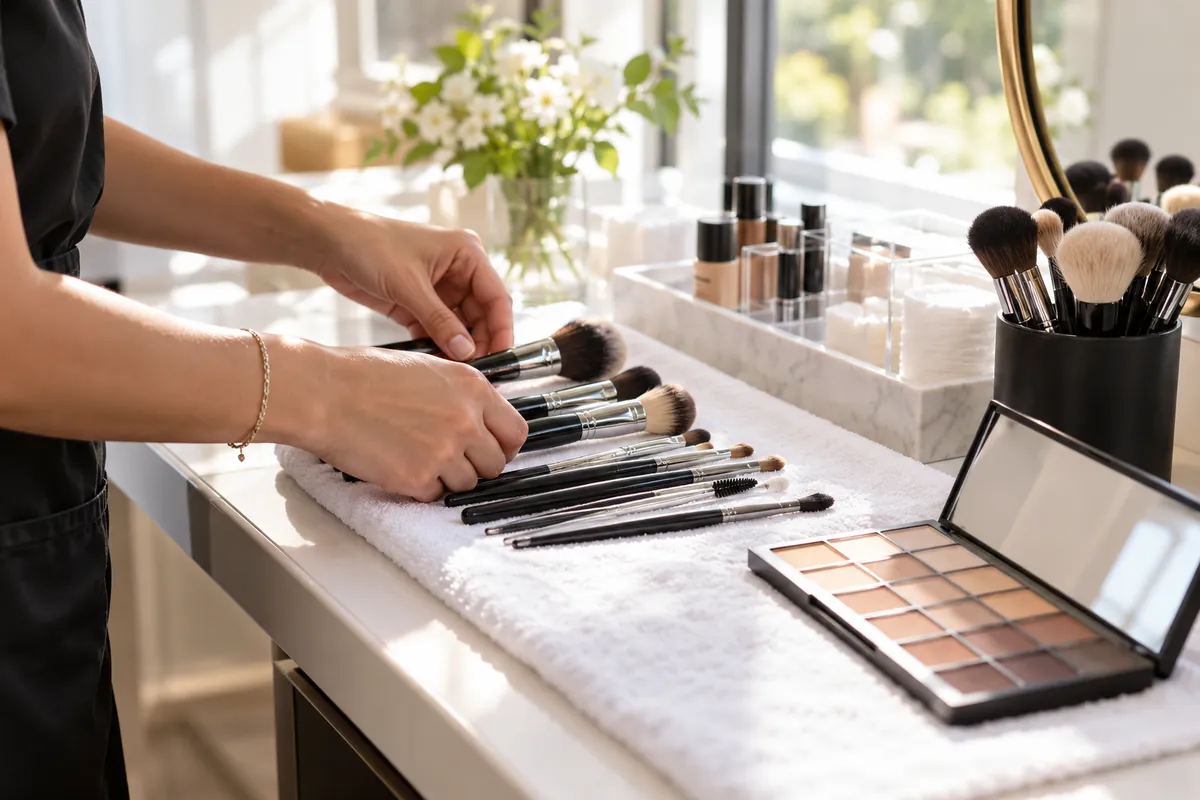
People outside the industry are sometimes surprised that makeup is regulated, because it looks like a cosmetic, surface-level service. The reason boards care is infection control. A makeup artist touches the eye area, the lips and broken or irritated skin. Mascara wands, lip products, cream foundations and sponges can carry bacteria, viruses and fungi from one client to the next. Conjunctivitis, cold sores and skin infections are the classic risks. Licensing is the state's way of making sure the person doing the service has been taught sanitation, disinfection, contraindications and basic skin science, and that the place where the service happens can be inspected.
There is also a scope-of-practice reason. Makeup application sits right next to services that clearly require training: lash extensions, brow tinting, skin prep with active products, and anything involving adhesives. When an artist moves from "applying foundation" to "applying strip lashes with glue" to "tinting brows", they are stepping into services that most boards treat as esthetics or cosmetology. Knowing where makeup ends and other services begin keeps you on the right side of the law, and it also keeps clients safe. I have seen eyes irritated by lash glue applied too close to the lash line by someone who had never been taught eye safety, and it is a good illustration of why boards draw these lines.
Salon, freelance, film and events compared
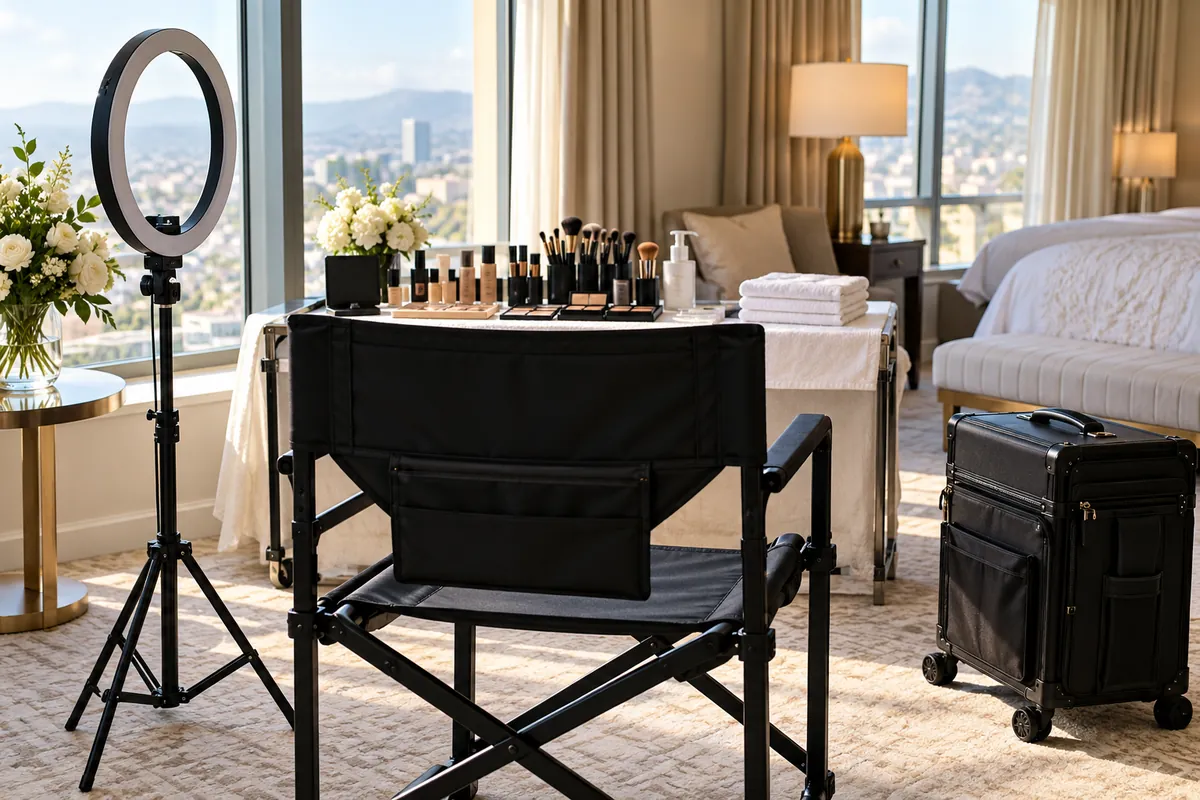
The setting you work in often matters more than the service itself. A salon or spa is a licensed establishment in most states, and the owner's establishment license typically requires that anyone providing services to the public holds an appropriate individual license. That is why salon makeup roles almost always ask for a cosmetology or esthetics license, even when the job is only makeup. Freelance bridal and event work is the gray zone: you are serving the public for pay, often in a hotel room or private home, and whether that requires a license depends on how your state words its exemptions and whether it regulates services performed outside a licensed establishment.
| Setting | Typical licensing picture | What to check with your board |
|---|---|---|
| Salon or spa | Individual license usually expected; establishment is licensed | Whether makeup-only staff need cosmetology or esthetics |
| Freelance bridal and events | Often treated as licensed work for the public; enforcement varies | Rules for services outside a licensed shop, mobile permits |
| Film, TV, theater, fashion | Frequently exempt or treated differently in many states | Exact wording of the theatrical or production exemption |
| Retail cosmetic counter | Sometimes exempt when tied to product sales; not universal | Whether charging for the application changes the status |
| Photo studio or content creation | Depends on whether the subject is a paying member of the public | Whether the studio counts as a production setting |
| Medical or post-surgical camouflage | Usually requires a license and close cooperation with the physician | Scope limits on compromised skin |
Use the table as a map, not a verdict. Two artists doing the same bridal look on the same day can be in different legal positions because one lives in a state with a clear performance exemption that does not cover weddings, and the other lives in a state that licenses makeup separately. When I talk to freelancers, the first thing I ask is where they work and who their clients are, because that tells me which part of the law they need to read.
When a cosmetology license matters versus an esthetics license
If your state requires a license for makeup, the two common routes are a cosmetology license and an esthetics (skin care) license. Both usually include makeup in their scope. The choice depends on what else you want to offer. A cosmetology license is the broader credential: hair cutting and coloring, chemical services, nails in many states, skin basics and makeup. It makes sense if you want to do bridal hair and makeup together, which is a very common and profitable package. An esthetics license is narrower and deeper on skin: facials, waxing, skin analysis, brow and lash services in many states, and makeup.
For an artist who wants to focus on faces, skin prep and makeup, esthetics is often the more natural fit. Skin knowledge makes makeup better: you understand why foundation separates on dehydrated skin, how to prep oily or acne-prone skin, and when a client has a condition that should not be covered and handled by a makeup artist at all. For an artist who wants to do hair and makeup for weddings, cosmetology covers both and avoids holding two credentials. Our comparison of the difference between a cosmetologist and an esthetician goes into the scope differences in more depth, and the esthetics course overview shows what the skin side of training covers.
Makeup-only credentials and certificates
A handful of states have created a narrower credential that covers makeup application, sometimes alongside related services like lash or brow work. Where these exist, they usually require fewer training hours than full cosmetology or esthetics and focus on makeup, sanitation and the law. Requirements, names and exam formats vary, so look for terms such as makeup artist, cosmetic application or similar in your board's list of license types. If your state offers one and you only want to do makeup, it can be the most direct legal route.
Do not confuse a state license with a private certificate. Many makeup academies, brands and online programs issue certificates of completion. These can be valuable for skill, portfolio and confidence, but they are not a license and do not authorize you to work where the state requires one. When a client, venue or salon asks if you are licensed, a private certificate is not the right answer. Be precise about what you hold. In my experience, honesty here protects you: misrepresenting a certificate as a license can cause more trouble than not having either.
Common exemptions and how to read them
Exemptions are where most freelancers find their answer, and they are also where misunderstandings happen. The most frequent exemption covers makeup for theatrical, film, television, fashion or photographic productions. The idea is that the subject is a performer or model, the work is part of a production, and the artist is not serving the general public in a shop. Read the wording carefully: some exemptions apply only to performers, some mention fashion shows, some say nothing about weddings, and some require that the service be performed on a set or location rather than in a home or salon.
The second common exemption covers demonstration or application of cosmetics by retail staff when the purpose is selling products. In some states this applies only when the service is free; charging a separate fee for the application can move it back into licensed territory. A third type covers family members or services performed without compensation. None of these exemptions is universal, and some states have none. When you read an exemption, ask three questions: who is the subject, where is the service performed, and is anyone being paid specifically for the application? If your situation does not fit every condition, the exemption probably does not cover you.
- Find the definitions section of your state's cosmetology law and look for the words makeup, cosmetics or "applying".
- Find the exemptions section and copy the exact wording for theatrical, retail and unpaid services.
- Check whether services outside a licensed establishment need a separate permit or are prohibited.
- Check whether your state offers a makeup-only or limited license.
- Email the board with your exact situation and keep the written reply.
- Recheck once a year, because laws and board rules change.
Freelance bridal and event work in practice
Bridal work is where many makeup artists earn most of their income, and it is also the area where licensing questions come up most. A wedding is not a film set, the bride is a member of the public, and the artist is paid for the application. In states where makeup is part of cosmetology or esthetics and there is no specific exemption for events, freelance bridal makeup is generally licensed work. Some states also regulate where you can perform services, which matters because bridal work is usually done in hotel rooms, venues and homes rather than in a licensed salon.
If your state allows licensed professionals to provide services outside a salon, there may be a mobile or off-site permission you need, or you may need to be connected to a licensed establishment. If your state does not allow it at all, a licensed artist may still be limited. This is why I tell students to ask the board two separate questions: do I need a license to do makeup for pay, and am I allowed to do it outside a licensed shop? Venues and wedding planners increasingly ask vendors for proof of license and insurance, so even where enforcement is light, the market is moving toward expecting credentials.
Film, television, fashion and retail counters
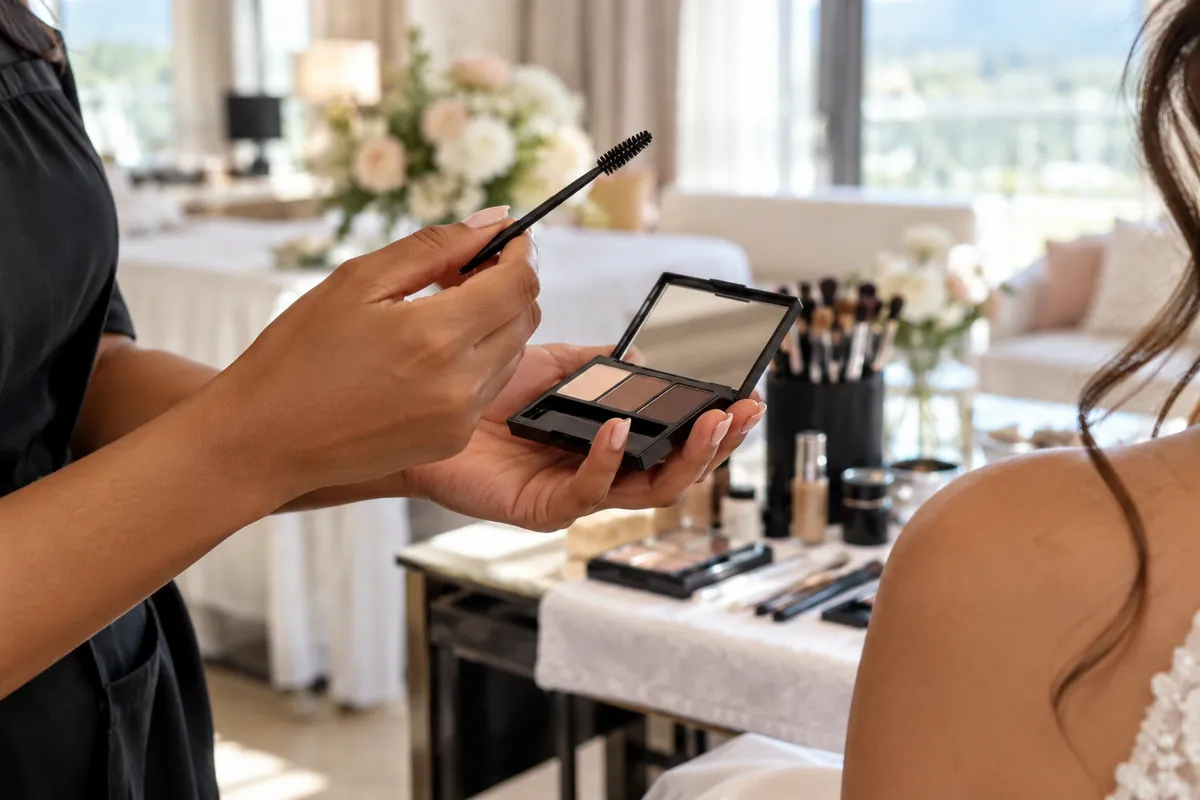
Production makeup is the area where many states are most relaxed, and it is also where a license matters least to employers. Productions hire on portfolio, reputation and set experience. Union work in film and television has its own membership requirements and pathways that are separate from state cosmetology licensing. Theater makeup often includes prosthetics, character work and quick changes. Fashion work involves models, editorial looks, speed and working with photographers and stylists. If this is your goal, a strong portfolio and real set experience usually do more for you than a state license.
That said, a license is not wasted in production work. Many artists move between production and bridal work depending on the season, and bridal work often does require a license. Some production jobs include hair as well, and hair services can carry their own licensing questions. A license also signals that you know sanitation, which is valued on any set where one kit is used on many faces in a day. If you are building a production career, consider whether you will ever want to work with the public, and plan your training with both paths in mind.
Department store and brand counter roles are a common first job in makeup. In many states, applying makeup in a retail setting to demonstrate and sell products is exempt or treated differently, especially when the application is free. The employer usually provides training on products and hygiene, and the job focuses on sales goals. These roles are a good way to practice on many face shapes, skin tones and ages, and to learn how to talk to clients about products. They are not a substitute for licensing if you later want to offer paid services on your own.
Watch for the point where retail work becomes a paid service. If you start charging a separate fee for an event look at the counter, or take counter clients to your home for paid appointments, you may be outside any retail exemption. I have seen artists build a client base at a counter and then move into private bookings without realizing the legal ground has changed under them. If you plan to make that move, check your state's rules first and consider getting licensed before your private client list grows.
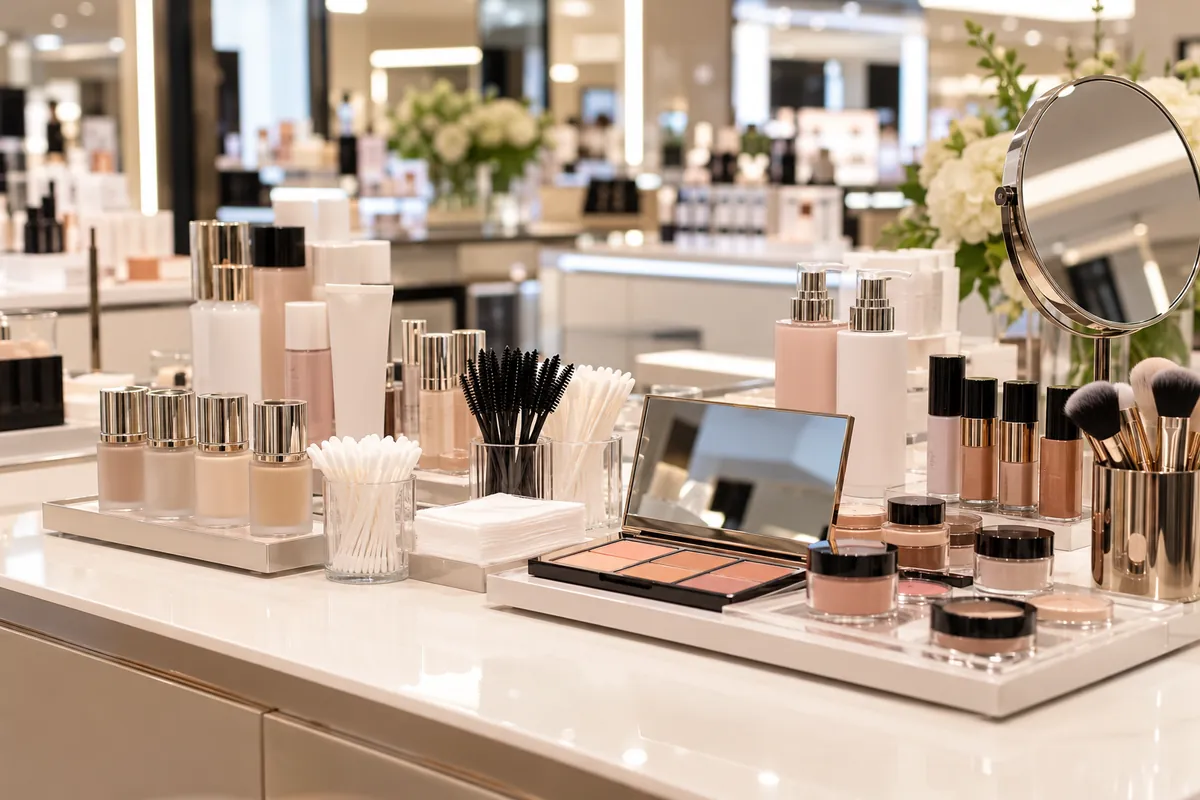
Sanitation standards every makeup artist should follow
Whether or not your state requires a license for your work, sanitation is the part of licensed training that matters most to client safety. A licensed program teaches the difference between cleaning, disinfecting and sterilizing, how to use an EPA-registered disinfectant according to its label, and how to handle single-use items. These habits protect you as much as your clients. One infection traced back to your kit can end a freelance career faster than any board inspection. Our article on mistakes new estheticians make covers several sanitation shortcuts that also apply to makeup.
- Never double-dip into mascara, lip gloss or cream products. Use disposable wands and spatulas.
- Depot or scrape cream products onto a palette with a clean spatula before applying.
- Clean brushes between every client, and disinfect according to your board's rules and the product label.
- Sharpen pencils before each client and wipe them.
- Sanitize hands before touching the face, and use gloves when the skin is broken.
- Throw away sponges after a single use or wash and dry them fully before reuse, following your state's rules.
- Do not apply makeup over active cold sores, eye infections or open lesions. Refer the client to a physician.
- Keep a written record of products used on each client in case of a reaction.
Kit hygiene is also about how you travel. A rolling kit that goes from a hotel floor to a car trunk to a bridal suite collects dust and bacteria on every surface. Keep clean tools and used tools in separate, closed containers, and never put a used brush back into the clean roll during a job. Bring enough brushes for the whole party, or a way to clean and dry them on site, rather than wiping one set between five faces. Check expiry and smell of cream products regularly, and throw away anything that has changed texture. These are the habits inspectors look for in a licensed salon, and clients notice them in a hotel room just as quickly.
Ask every client about allergies, sensitive skin, recent procedures and eye conditions before you start. Contact lens wearers, clients who recently had a chemical peel or laser, and clients using prescription retinoids may react differently to products and pressure. A two-minute conversation and a patch test for new lash adhesives or products can prevent a ruined event day.
Insurance, business licenses and contracts
A state professional license is only one piece of working legally. Most freelancers also need a local business license or registration, a way to handle sales tax if they sell products, and professional liability insurance. Many insurance policies for beauty professionals ask about your license status, and some will not cover services that require a license you do not hold. Read the application carefully and answer it honestly. A policy that does not cover your actual work is not much protection. Our guide to liability insurance for estheticians explains what to look for when you compare policies.
Contracts matter too. A bridal contract should state the services, the time, the location, the number of people, deposits, cancellation terms, and what happens if a client has a reaction or a contraindication on the day. Include a short skin and allergy questionnaire for every person in the bridal party. These documents protect you if something goes wrong, and they show venues and planners that you run a professional business. If you are deciding between working on your own and working inside a salon, the guide on business structure for independent beauty professionals covers the setup choices.

Services that cross from makeup into licensed work
Even in states where basic makeup application is exempt in your setting, some add-on services are almost always regulated. Lash extensions are the clearest example: they involve adhesive near the eye, and most states treat them as esthetics or cosmetology, sometimes with their own credential. Our guide on lash extension license requirements explains that topic in detail. Brow and lash tinting, brow lamination and lash lifts usually involve chemical products and are typically within esthetics or cosmetology scope.
Hair removal is another line. Brow waxing, threading and tweezing are not makeup, and boards treat them differently. Threading in particular has its own history of exemption debates, covered in our article on eyebrow threading license requirements. Airbrush makeup and temporary tattoos are usually still makeup, but some states have rules about body art and semi-permanent work. Permanent makeup and microblading are a completely different category, usually regulated as tattooing by health departments rather than cosmetology boards. Never assume that because one service is exempt, the next one on your menu is too.
| Service | Usually regulated as |
|---|---|
| Basic makeup application | Cosmetology or esthetics, with exemptions in some settings |
| Strip lash application | Often grouped with makeup; check adhesive rules |
| Lash extensions | Esthetics, cosmetology or a separate lash credential |
| Brow and lash tinting, lifts, lamination | Esthetics or cosmetology |
| Brow waxing | Esthetics, cosmetology or waxing credential |
| Threading | Varies widely; exempt in some states |
| Microblading and permanent makeup | Tattoo or body art rules, often via health departments |
How to ask your state board the right question
Many artists write to the board with a vague question like "do I need a license for makeup?" and get a vague answer that quotes the law back to them. A precise question gets a precise reply. Describe exactly what you do, where you do it, who the clients are, and how you are paid. For example: you apply makeup for paid bridal clients in hotel rooms and private homes, you do not do hair, you apply strip lashes with adhesive, and you are not connected to any salon. Then ask whether that work requires a license, which license type covers it, and whether services outside a licensed establishment are allowed for that license.
Keep the question short and neutral. Do not argue your case or try to steer the answer toward an exemption. Boards respond to clear facts. If the answer refers you to a statute or rule number, read that text yourself and save a copy with the reply. If your work changes later, for example you add lash lifts, brow tinting or hair styling, write again. I advise students to keep a simple folder with their license, the board's replies, insurance documents and training records. When a venue, planner or inspector asks a question, everything is in one place and you answer calmly instead of guessing.
- What exact services do I perform, including any adhesives, tints or chemical products?
- Where are the services performed: salon, hotel, home, studio, set or store?
- Who are the clients: performers and models, or members of the public?
- How am I paid: a fee for the application, a product sale, or a production rate?
- Am I connected to a licensed establishment, or fully independent?
- Do I work on minors, and does my state set any rules for that?
One more practical point: if you work across state lines, for example a destination wedding or a production that travels, each state's rules apply where the service happens, not where you live. A license in one state does not automatically let you work in another. Some states have reciprocity or endorsement routes, which our guide on esthetician license reciprocity by state explains. For a one-day event in another state, ask that state's board the same precise questions before you accept the booking, and price in the time it takes to check.
Real risks of working without a required license
If your state requires a license for your work and you do not have one, the consequences can include cease-and-desist letters, fines, and difficulty getting licensed later if the board has a record of unlicensed practice. The practical risks are often bigger: insurance that will not pay a claim, venues that refuse to book you, and salons that cannot hire you. A client with a serious eye infection after a session has a much stronger complaint against an unlicensed artist, and you have fewer defenses.
There is also a reputational side. Clients increasingly look for licensed professionals, and many search for proof online. Some boards have public license lookups, so a client can check your status in seconds. If you advertise as licensed and are not, that is far worse than simply being unlicensed in an exempt setting. My practical advice: if your work falls in a gray zone, either get licensed or write to the board and keep their answer. Do not build a business on guesses.
How to get licensed if you decide you need it
The general path looks similar across states, even though the numbers differ. You enroll in a state-approved cosmetology or esthetics program (or a makeup-specific program if your state has one), complete the required training hours, pass written and practical exams, and apply for your license. Some states allow apprenticeship routes. Online theory courses can help you learn skin science, sanitation and the law before or alongside school, but they do not replace the in-person hours your state requires and they cannot lead to a license on their own.
For an artist focused on faces, esthetics training gives you skin analysis, product chemistry, facial anatomy, waxing and brow work, and makeup. That combination makes you more employable and more confident with difficult skin. You can review the esthetics course to see the theory side, check beauty schools near you, and read our guide on how to become a licensed esthetician for a step-by-step overview. If you want hair as well, the cosmetology course is the wider route.
If you are in a setting where no license is needed, put the same energy into skill and professionalism that a licensed program would require. Take sanitation seriously, document your training, carry insurance appropriate to your work, and build a portfolio that shows a range of skin tones, ages and looks. Learn to photograph your work in honest light. Clients and productions hire on what they can see, and an honest portfolio builds trust faster than heavy filters.
If you plan to grow into bridal, salon or spa work, a license gives you more doors. Many artists start in production or retail, then get licensed once they know they love the work. That is a sensible order. What I discourage is the reverse mistake: building a large private client base in a state that requires a license, then trying to fix the legal side later. The longer you wait, the more you have to lose.
- Decide the services you want to sell in two years, not just this month.
- Read your state's definitions and exemptions for those services.
- Write to the board and save the reply.
- Choose cosmetology, esthetics or a makeup-only route based on that menu.
- Build sanitation habits now, whatever your license status.
- Set up insurance, contracts and a business registration before taking paid bookings.
Your next step
Start with your state. Look up your board through our esthetics licensing hub, read the definitions and exemptions, and send the board a short, specific question about your setting. If the answer is that you need a license, choose the route that matches the full menu of services you want to offer, and begin with theory so that school feels familiar from day one. If the answer is that your work is exempt, keep that reply on file, keep your sanitation standards at licensed level, and revisit the question whenever your work changes.
State Requirements
State licensing guides
Hours, exams, fees, and the licensing board differ by state. Open your state for the current requirements.
Common Questions
FAQ
In many states, yes. Wedding makeup is a paid service for a member of the public, and many states include makeup in cosmetology or esthetics scope with no specific exemption for events. Some states treat it differently or offer a makeup-only credential. Check the definitions and exemptions in your state law, ask your board whether off-site services are allowed, and keep the board's written answer. Start with the cosmetology licensing hub.
No. A certificate from a makeup academy, brand or online program shows you completed training. A license is issued by the state and authorizes you to perform regulated services for pay. Certificates are useful for skill and portfolio, but they do not let you work where a license is required. Always describe your credentials accurately to clients and employers.
Many states exempt or treat retail cosmetic application differently, especially when it is free and tied to product sales. The exemption is not universal, and charging a separate fee for the application can change your status. If you plan to take counter clients for paid private appointments, check your state rules first because that move often falls outside any retail exemption.
Choose based on the rest of your menu. Cosmetology covers hair and makeup together, which suits bridal hair and makeup packages. Esthetics goes deeper into skin, waxing and brows, which suits face-focused artists. Compare the esthetics course and the cosmetology course, and check whether your state offers a narrower makeup credential.
Many states exempt theatrical, film, television and fashion production work, or simply treat it differently from services to the public. Productions usually hire on portfolio and experience, and union work has its own requirements. Read the exact wording of your state's exemption, because it may not cover photo shoots for private clients, weddings or content creation.
No. Online courses can teach theory such as sanitation, skin science and the law, and they can prepare you for school and exams. They do not replace the in-person training hours a state requires, and they cannot license you. Use online theory as a head start, then complete a state-approved program.
Depending on the state, consequences can include cease-and-desist letters and fines, and a record of unlicensed practice can complicate getting licensed later. Insurance may refuse claims, and venues or salons may not work with you. If you are unsure, ask your board in writing before you take paid bookings.
Keep Reading
Related Guides


