Career
Cosmetology Apprenticeship vs Beauty School: Which Route Fits
Quick answer
A cosmetology apprenticeship lets you train toward a license inside a salon under an approved sponsor, usually while being paid, but only in states that allow it. Beauty school is available in every state and builds theory lessons and exam rehearsal into the program. Apprentices must log their hours carefully and organize their own exam study. Check your state board first.
A cosmetology apprenticeship is a way to earn the training a state requires for a license by working inside a licensed salon under an approved, licensed professional, instead of enrolling in a beauty school. It sounds like the obvious choice: you learn on real clients, you may be paid while you learn, and you skip tuition. In the states that allow it, it can be a very good route. It is also slower, less predictable, and far more dependent on one salon and one person than most applicants expect. I have worked as a licensed cosmetologist and electrologist for more than twenty years, and I have seen both routes produce excellent professionals and both routes fail people who chose them for the wrong reasons.
This guide compares the apprenticeship route with the school route in practical terms: who supervises you, how your hours are recorded, what you gain and give up, how to find and question a sponsor salon, and what happens if you move to another state partway through. One warning before anything else. Not every state offers an apprenticeship route, and the states that do write very different rules, which also differ by license type. I do not print hour counts or lists of states here, because those change and a wrong number can cost you months. For exact requirements, use your state board and our cosmetology licensing pages by state.
What a Cosmetology Apprenticeship Is and What It Is Not
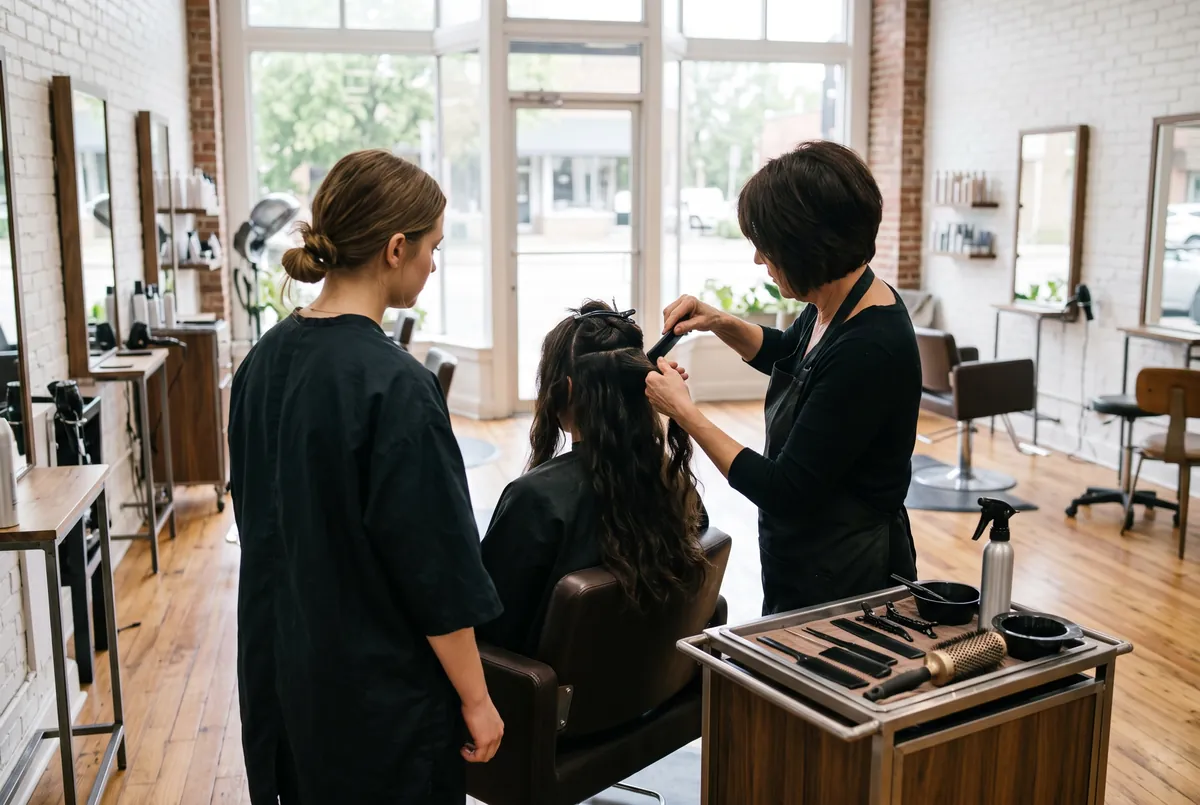
An apprenticeship is a formal, state-recognized training arrangement. It is not the same thing as getting a job as a salon assistant and hoping the time counts later. In a real apprenticeship, the state board (or the agency that handles licensing in your state) knows you exist. You are registered or hold some form of apprentice permit, the salon is approved as a training site, and a specific licensed professional is named as the person responsible for training you. The hours you work are recorded in a format the state accepts, and at the end you apply for the same exam and the same license that school graduates apply for.
People often search for a way to get a cosmetology license without going to school, and the apprenticeship is usually what they find. The phrase is misleading. You do not skip training. You move the training from a classroom to a salon floor, and in many of the states that allow this route, the total hours required are higher than the school requirement, not lower. Some programs also require a block of related classroom instruction alongside the salon hours, which means you may still sit in a class on certain days. The license is identical. The road to it is different.
It also helps to separate two things that share a name. A state board apprenticeship is the licensing route I describe in this guide. Separately, many salons run their own in-house "apprentice" or "associate" programs for people who are already licensed, to polish cutting and color skills before a new stylist takes a full book of clients. That second kind is advanced training after the license, and it has nothing to do with qualifying for the exam. When a salon tells you it offers an apprenticeship, the first thing to find out is which of the two it means.
First, Check Whether Your State Allows the Apprenticeship Route
Cosmetology is licensed state by state, so the first question has a different answer depending on where you live. Some states have a well-established apprenticeship route with clear forms and a steady number of approved salons. Some allow it on paper but have very few sponsors in practice. Some do not allow it at all, and the only route to a license is an approved school. A few allow it for one license type and not another. Websites that publish a single national list tend to go out of date quickly, and I have seen applicants plan around a list that no longer matched the current rules.
The reliable method takes about twenty minutes. Open your state's page in our licensing hub to see which board regulates the license, then go to that board's own website and look for the words apprentice, apprenticeship, or trainee in the applications and forms section. If an apprentice application or permit exists, read the instructions attached to it from start to finish. If you cannot find one, call or email the board and ask directly whether an apprenticeship route exists for the license you want. Get the answer in writing if you can, and save it with the date.

How a Cosmetology Apprenticeship Works in Practice
The details differ by state, but the structure is similar wherever the route exists. You start by finding a licensed salon and a licensed professional willing to sponsor you. In most programs the paperwork comes next and the training comes after: you and the sponsor submit an application, the state confirms that the salon and the trainer meet its conditions, and you receive some form of apprentice registration or permit. This order matters. In many states, hours worked before your registration is approved simply do not count, no matter how much you learned during them.
States commonly set conditions for who may train. The trainer usually must hold a current license in good standing, often with a minimum amount of licensed experience, and some states ask the trainer or the salon to complete an approval step of their own. States may also limit how many apprentices one trainer or one salon can have at a time, so that an apprentice is taught and not just used as extra hands. Supervision is normally direct: the trainer is expected to be on the premises while you work on clients. If your trainer is routinely absent, that is both a training problem and a compliance problem.
The learning usually moves in stages. Early on you observe, shampoo, prepare stations, mix color under instruction, and learn sanitation and disinfection routines until they are automatic. Then you perform parts of services with your trainer checking each step, then whole services on models or on clients who know they are booked with an apprentice. A good sponsor follows the curriculum subjects the state lists, which typically include hair cutting, coloring, chemical texture services, skin and nail basics, infection control, and state law. A weak sponsor teaches only what that salon sells, and that difference shows up later at the exam.
Many apprenticeship programs treat you as an employee of the salon, which means wages and the usual employment rules apply. This is the feature that attracts most people, and it is real. Go in with accurate expectations, though. An apprentice wage is a training wage. You are not yet producing service revenue for the salon, and your trainer is giving up paid chair time to teach you. Ask exactly how you will be paid, whether tips are shared with you, and whether your pay changes as your skills grow. Get the answers before you register, since changing sponsors later means new paperwork.
How Apprenticeship Hours Are Logged and Verified
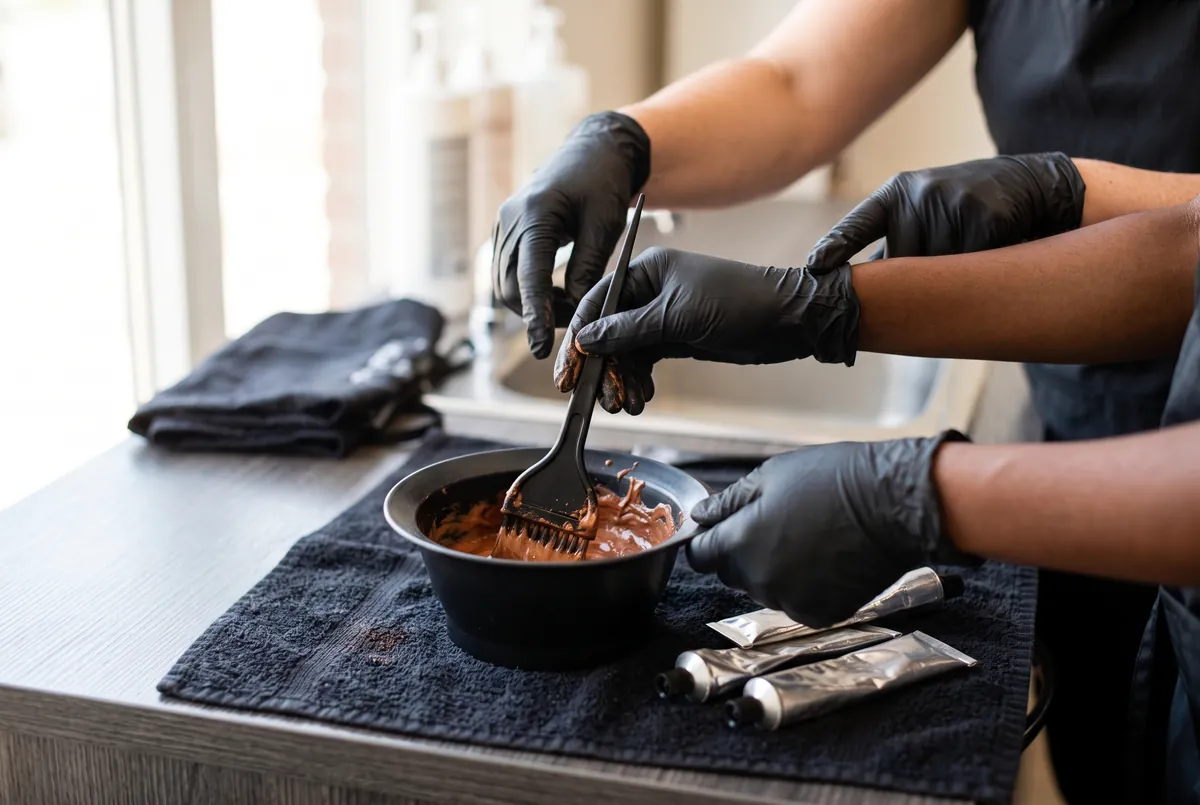
In a school, an administrative office tracks your attendance, usually with a time clock, and reports your hours to the state. In an apprenticeship, the record keeping sits with you and your sponsor. States that allow the route normally require a written or electronic log that shows the dates and hours you trained, and often the subject areas or types of services covered. The trainer signs or certifies the record, and it is submitted to the board on a schedule the state sets or at the end of the program. The board uses that record to decide whether you qualify to sit for the exam.
This is the part of the apprenticeship where I see the most preventable damage. A busy salon forgets to fill in the log for a few weeks and then reconstructs it from memory. A trainer leaves the salon and nobody signs the hours earned under that person. A salon closes and the records disappear with the owner. In each case the apprentice did the work and may still lose credit for it, because a board can only count what is documented in the form it requires. Hours that are not recorded properly are, for licensing purposes, hours that did not happen.
Protect yourself with a simple routine. Fill in the log on the day the hours are worked, not at the end of the month. Ask your trainer to sign at regular intervals instead of once at the end. Keep your own copy of every signed page, plus your registration approval and any letters or emails from the board, somewhere outside the salon. If your state requires hours across specific subject areas, track your running totals by subject, so that you notice early if you are far ahead in blowouts and far behind in chemical services or nail care.

How the Beauty School Route Differs
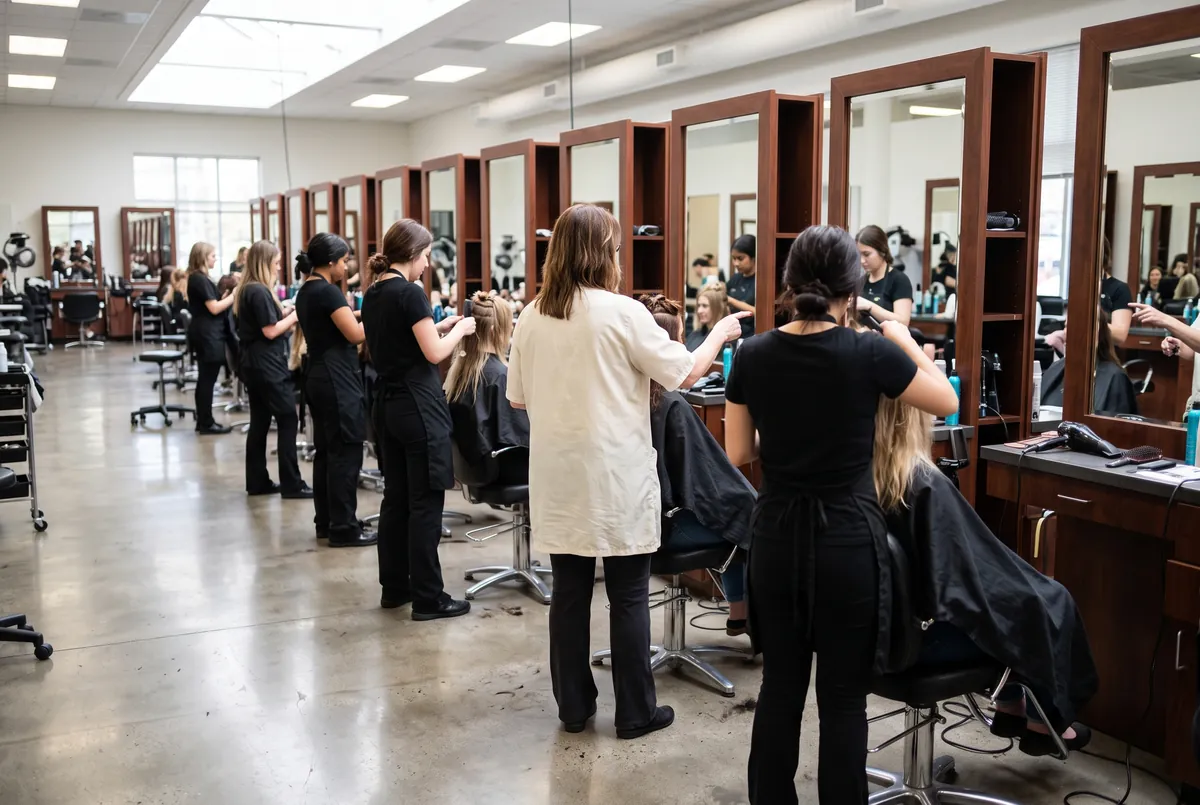
A state-approved cosmetology school is built to do one job: take a group of beginners through the state curriculum in a planned order and deliver them to the exam. You attend on a fixed schedule, theory classes cover the textbook subjects, and practical work starts on mannequins before moving to a student clinic floor where members of the public book discounted services. Instructors hold a teaching credential in most states, the school tracks and reports your hours, and you have a clear end date if you attend as scheduled. You pay tuition and you are generally not paid for clinic work.
I am not going to repeat the full school path here, because we cover it in detail elsewhere. The step-by-step sequence from choosing a program to your first job is in our guide on how to become a cosmetologist. Tuition, kit fees, and aid are covered in the guide to cosmetology school cost and financial aid. One point from that topic matters for this comparison: federal student aid is tied to eligible schools, so an apprentice in a salon should not assume grants or federal loans are available, even though there is no tuition bill to pay.
Cosmetology Apprenticeship vs School: The Real Trade-Offs
Most comparisons online come from schools, which favor school, or from salons looking for help, which favor apprenticeship. Neither route is better in general. Each one trades something you want for something else you want. The table below summarizes the typical pattern in states that offer both routes. Treat it as a map of what to ask about, since individual states, schools, and salons vary, and your own state's rules always take priority over a general comparison.
| Factor | Apprenticeship in a salon | State-approved beauty school |
|---|---|---|
| Availability | Only in states that allow it, and only if you find an approved sponsor | Available in every state through approved schools |
| Cost to you | Usually no tuition; registration fees, tools, and study materials are often yours to cover | Tuition, kit, and fees; aid may be available at eligible schools |
| Income while training | Often a training wage as a salon employee | Generally unpaid; many students work a separate job |
| Pace | Commonly slower on the calendar, and often more total hours than school | Fixed schedule with a predictable end date |
| Who teaches | One licensed trainer, sometimes a small team | Several credentialed instructors |
| Breadth of practice | Deep in what the salon sells, thin in what it does not | Covers the whole state curriculum, with less depth on real clients |
| Theory and exam preparation | Mostly self-directed unless the program includes related instruction | Built into the program |
| Record keeping | You and the sponsor keep the log | The school tracks and reports hours |
| Risk if things go wrong | Salon closure or a trainer leaving can interrupt your hours | School closure is possible but student records are usually more formal |
| Job after licensing | Often a chair in the same salon | You search for a first salon job after graduating |
The pay advantage is real, and for some people it decides the question. If you cannot take on tuition and cannot afford to study without income, a paid apprenticeship may be the only workable route. Weigh it against the calendar. In many states the apprenticeship takes longer than school, both because the hour requirement is often higher and because your hours depend on the salon's schedule. A longer training period means a later start as a fully licensed, commission-earning stylist. Paid training at a modest wage over a long stretch can end up costing more in lost earnings than tuition would have, depending on your state and your situation.
The second trade-off is depth against breadth. An apprentice in a busy color salon will handle more real color formulations before licensing than most school students see in their entire program. That same apprentice may have set a permanent wave only a handful of times, done few manicures, and never performed a basic facial, because the salon does not offer those services. School students see everything on the state curriculum at least in outline, though with less repetition on paying clients. A broad license assumes broad training, and the exam tests the whole scope.
The third trade-off is one teacher against several. In an apprenticeship, your education is only as good as the person training you. A generous, organized trainer who enjoys teaching can give you a level of individual attention no school can match. A trainer who is talented but impatient, or too booked to stop and explain, leaves you sweeping floors and learning by guesswork. In school you meet several instructors with different strengths, and a weak one is balanced by the others. You also learn alongside classmates, which matters more than people think: you see twenty different heads of hair and twenty different mistakes every day.
The fourth trade-off is the first job. An apprentice who finishes well usually has a chair waiting, already knows the salon's systems, and has met many of the clients. That is a strong start. School graduates have to find a salon and often spend time assisting before they build a clientele, which our career guide covers. The other side of that security is dependence. If the relationship with your sponsor sours halfway through, you may have to find a new approved sponsor, file transfer paperwork, and hope every hour you earned was signed before you left.
The Exam Preparation Gap Apprentices Need to Close
Apprentices and school graduates take the same state board exam. In most states that means a written theory test, and in many states a practical test as well. This is where the apprenticeship route has its most common weakness. Salon work teaches you to produce a result a client likes. The exam asks different questions: infection control procedures in a set order, chemistry of color and texture services, basic anatomy, skin and nail disorders you must recognize and refer, and your state's laws and rules. A stylist can be very good at balayage and still fail a written test on disinfectant contact time.
The practical exam has its own logic too. Candidates are scored on following a defined procedure with correct setup, sanitation steps, safety, and timing, often on a mannequin, and not on creative results. Habits that are normal on a salon floor can lose points in that setting, such as skipping a step because you know the client, or setting a tool down on a surface that is not part of your prepared station. School students rehearse the exam format many times. Apprentices often see it for the first time in the weeks before the test unless they or their trainer plan for it.
Close the gap deliberately from the first month. Get the candidate information bulletin or content outline for your state's exam and keep it next to your hour log. Buy or borrow a current cosmetology textbook and schedule fixed weekly study hours, treating them as seriously as salon shifts. Ask your trainer to run timed mock practicals on a mannequin during slow periods. Structured online theory can help you cover the textbook subjects in order. Online study supports your preparation. It never replaces the supervised hours your state requires.
For the exam itself, including how to read the content outline, how to pace practice tests, and how to rehearse the practical, use our guide on how to pass the cosmetology state board exam. Everything in it applies to apprentices. The only difference is that nobody will schedule the preparation for you, so put it on your calendar yourself and ask your trainer to hold you to it.
How to Find a Sponsor Salon
Finding a sponsor is often the hardest step, and it is the reason many people who prefer an apprenticeship end up in school. Sponsoring an apprentice is a serious commitment for a salon. The trainer gives up time, the owner takes on paperwork and responsibility to the state, and there is no guarantee the apprentice will stay after licensing. Many excellent salons simply do not do it. Expect to contact a good number of salons, and treat each conversation as a job interview in both directions.
Start with salons that have sponsored before. Some state boards publish or will tell you which establishments are approved for apprentice training, so ask the board first. Ask local stylists where they trained. Look at salons that describe an education program, since owners who already invest in teaching licensed staff are more open to apprentices. A front desk or shampoo assistant job at a salon you admire is also a legitimate way in, as long as you understand that those hours will not count until you are formally registered.
When you approach an owner, be specific and prepared. Show that you have read your state's apprenticeship rules and know what the salon would need to file. Explain your availability honestly, including any other job or family commitments. Offer to do a working interview so the team can see how you handle a busy day. Owners tell me the same thing repeatedly: they will teach technique to anyone, but they only sponsor people who show up on time, keep a station clean without being told, and listen. Those qualities are visible in the first hour.
Questions to Ask a Sponsor Salon Before You Sign Anything
An apprenticeship ties your license to one business for a long time, so ask more questions than feels polite. A salon that trains well will have clear answers and will respect you for asking. Vague answers are information too. Bring this list to the conversation, take notes, and ask for the important points to be put in a written training agreement, which some states require anyway.
- Is the salon currently approved or eligible to train apprentices in this state? Ask what the approval involved and whether you can see the paperwork the salon filed.
- Who exactly will train me, and how long has that person been licensed? Meet the trainer, not only the owner, and confirm the trainer meets the state's conditions.
- Have you trained apprentices before, and did they pass the exam and get licensed? A salon with a track record can describe how earlier apprentices progressed.
- How many apprentices does the trainer have right now? States often limit this, and even within the limit, more apprentices means less attention.
- What will my weekly schedule be, and how many training hours can I realistically earn? This determines how long the whole apprenticeship takes.
- How will I be paid, and how does pay change as I progress? Ask about wage, tips, product commission, and what happens during slow weeks.
- How do we cover curriculum subjects this salon does not sell? Nails, basic skin care, and chemical texture services are common gaps.
- Who keeps the hour log, how often is it signed, and may I keep copies? The right answer is regular signatures and yes to copies.
- Is there dedicated time for theory and exam practice? Ask whether the salon provides a textbook, mannequin time, or mock practicals.
- What happens to my hours if the trainer leaves, the salon is sold, or I need to transfer? You want a commitment to sign all earned hours promptly.
- Do you expect me to stay after I am licensed, and is that in writing? Read any agreement about staying, repayment, or non-competition carefully before you sign.
- Who pays for registration fees, tools, and exam fees? Small costs add up, and it is better to know the full list at the start.
Pay attention to how the salon runs while you are there. Watch whether stations are disinfected between clients, whether the team speaks respectfully to assistants, and whether the trainer explains what she is doing or works in silence. You will absorb the habits of this salon for the entire apprenticeship, good and bad. If anything in a written agreement worries you, especially repayment clauses or restrictions on where you may work afterward, have someone qualified review it before you sign. Walking away from a poor sponsor costs you a few weeks. Signing with one can cost you a year.

What Happens If You Move States or Your Training Is Interrupted
Moving is where the apprenticeship route carries the most risk, and there are two separate situations. The first is moving before you finish. Your apprentice registration belongs to the state that issued it. If you move to a state with no apprenticeship route, your salon hours may count for little or nothing toward that state's school-based requirement, and you may need to enroll in a school there. If you move to another state that does allow apprenticeships, you will usually need to register again under its rules, and whether it credits your earlier hours is that board's decision. Ask the destination board before you move, not after.
The second situation is moving after you are licensed. Here you are no longer an apprentice. You are a licensee applying to transfer a license, and the new state looks at your training, your exam history, and often your work experience. Many states have a path for licensed professionals from other states, but the conditions differ, and a state that does not offer an apprenticeship route may ask additional questions about training earned that way, or may weigh your licensed work experience instead. Our guide to cosmetology license reciprocity by state explains how transfers generally work and what documents to keep.
Interruptions inside one state are more common than moves. A trainer changes salons, an owner sells the business, a salon closes, or you need time off for health or family reasons. States that allow apprenticeships usually have a procedure for transferring to a new sponsor or pausing, and some set a limit on how long an apprenticeship may run in total. Learn that procedure at the start. If something changes, notify the board promptly, get your hours to date signed before anyone leaves, and do not continue working toward hours under a new trainer until the change is approved.

Esthetician, Nail, and Barber Apprenticeships
Readers often ask whether an esthetician apprenticeship exists, since skin care is all they want to do. The answer depends on the state and on the license. A state that allows a cosmetology apprenticeship does not automatically allow one for esthetics, nail technology, or barbering, and where those routes exist they have their own hour requirements, trainer conditions, and forms. Barbering is frequently regulated under separate rules or even a separate board. Do not assume that what you read about one license applies to another, even inside the same state.
The checking method is the same. Find the board that regulates the license through our esthetician licensing pages by state, then look for an apprentice or trainee application for that specific license on the board's site. If skin care is your goal, also think about where an esthetics apprentice would actually train. The sponsor must be an establishment licensed for those services with a qualified licensed trainer, and services such as waxing or facials carry their own sanitation and client safety standards.
One boundary applies to every route. Apprentice status allows you to perform services only within the scope of the license you are training for, only at the approved location, and only under supervision. It does not allow you to take private clients at home, to work at a second salon on weekends, or to offer services outside that license's scope. Electrolysis, for example, is a separately regulated license in most states that regulate it, and no cosmetology or esthetics apprenticeship covers it.
Who Each Route Suits
The apprenticeship route tends to suit a particular kind of person. You already know salon life, perhaps from working the front desk or assisting, and you like it. You have found a specific trainer whose work and manner you respect, in a salon where you would be happy to stay. You need income during training and cannot take on tuition. You are self-disciplined enough to study theory on your own after a full day on your feet. And you expect to stay in your current state long enough to finish and work for a while.
School tends to suit a different profile. You want the shortest and most predictable route to the exam. You learn best with a set curriculum, several teachers, and classmates. You are new to the industry and want to try the whole scope, hair, skin, and nails, before choosing a direction. You might move to another state, and you want training that is easy for another board to evaluate. Or you have looked for a sponsor and cannot find one you trust, which is a perfectly good reason on its own. If this is you, our school directory is a starting point for comparing programs.
Some people are a poor fit for an apprenticeship even when it is available. If you need external deadlines to study, the lack of structure will hurt you at exam time. If the only salon willing to sponsor you is one where you feel uneasy about cleanliness or how staff are treated, the low cost is not worth it. And if your reason is simply to avoid training, the apprenticeship will disappoint you, because it asks for more time, not less. Both routes end at the same exam and the same license, and a client in your chair will never ask which one you took.
There is also a middle path worth knowing about. In some states, hours can be combined or credited between school and apprenticeship under specific rules, so a person might start in one route and finish in the other. Whether that is possible, and how the hours convert, is entirely a state board decision, and the conversion is not always one to one. If you are considering switching, ask the board in writing how your existing hours would be treated before you withdraw from a school or leave a sponsor.
Common Mistakes on the Apprenticeship Route
Most apprenticeship problems I hear about were avoidable, and nearly all of them trace back to paperwork or to choosing a sponsor too quickly. These are the mistakes that come up again and again when apprentices describe what went wrong. None of them requires talent to avoid, only attention during the first weeks, when everything feels new and the forms seem less urgent than the clients in front of you.
- Starting work before registration is approved. Hours worked before the state recognizes the apprenticeship commonly do not count, however much you learned.
- Taking the salon's word that the route is legal. Confirm with the board yourself that the route exists for your license and that this salon and trainer qualify.
- Letting the hour log fall behind. Reconstructed records are inaccurate and can be rejected. Log daily and get signatures on a regular schedule.
- Keeping no personal copies. If the only record lives in the salon office, you lose it when the salon closes or the relationship ends.
- Training only in what the salon sells. The exam and the license cover the whole scope, so arrange practice for the subjects the salon rarely performs.
- Leaving theory for the last month. The written exam covers a full textbook. Weekly study from the beginning is the only approach that works alongside a salon schedule.
- Never rehearsing the practical exam format. Salon habits and exam procedures differ. Timed mock practicals expose the differences while there is time to fix them.
- Signing an agreement without reading it. Clauses about staying after licensing or repaying training costs should be understood before you commit.
- Working outside the approved arrangement. Doing services at home or at another location as an apprentice can put both your future license and your sponsor's license at risk.
- Not telling the board when something changes. A new trainer, a new address, or a long break usually has to be reported and approved.
- Ignoring a planned move. Find out how the destination state treats apprenticeship training before you invest a year in it.
The pattern behind this list is simple. In school, an institution manages your compliance and your preparation. In an apprenticeship, you manage both, with a sponsor whose main business is serving clients. Apprentices who accept that from day one, who read the rules themselves, keep their own records, and run their own study plan, usually finish well. Apprentices who wait to be managed tend to discover the gaps when it is expensive to close them.

Your Next Step
Make the decision in order. First, confirm whether your state offers an apprenticeship route for the license you want, using the board named on your state's page in our licensing hub. If it does not, the question is settled and your next task is comparing approved schools. If it does, read the apprentice application instructions in full, then spend two or three weeks talking to salons with the question list above. At the same time, visit at least one school, so that you are comparing two real options and not an idea of each.
While you decide, you can start building theory, because the subjects on the written exam are the same on either route: infection control, hair and skin science, chemistry, and safety. Our online cosmetology theory course is designed for that kind of preparation and for confirming your interest before you commit time or money. It builds knowledge only. It does not count toward state-required training hours and cannot replace a school program, an apprenticeship, or a license. Whichever route you choose, choose it with your state's current rules in front of you, and keep every signed page.
State Requirements
State licensing guides
Hours, exams, fees, and the licensing board differ by state. Open your state for the current requirements.
Common Questions
FAQ
In some states, yes, through a board-recognized cosmetology apprenticeship in a licensed salon under an approved licensed trainer. You still complete required training hours, often more than the school requirement, and you still pass the same state exam. Other states offer no apprenticeship route, and an approved school is the only option. No state issues a license without supervised training. Check your state's rules through our cosmetology licensing pages and the board's own website.
You find a licensed salon and a licensed professional who qualifies as a trainer under your state's rules, then register the apprenticeship with the state before you begin. You train under direct supervision, moving from observing and assisting to performing services, while your hours are logged and signed. Some programs add required classroom instruction. When you complete the hours, you apply for the state board exam, and after passing you receive the same license a school graduate receives.
Many apprenticeship programs treat the apprentice as a salon employee, so a wage is typical, and this is the main financial advantage over school. The pay is a training wage, and the details depend on the salon and on state employment rules. Ask a sponsor how you will be paid, whether you share in tips, and how pay changes as you take on more services. You may still pay for registration fees, tools, study materials, and exam fees yourself.
Usually it is not. In many states that allow apprenticeships, the required hours are higher than for school, and your weekly hours depend on the salon's schedule and your trainer's availability. School follows a fixed timetable with a predictable end date. If speed is your priority, compare the hour requirements for both routes on your state board's website before you decide.
In some states there is, and in others there is not. Apprenticeship rules are set separately for each license type, so a state that allows a cosmetology apprenticeship may not allow one for esthetics, nails, or barbering. Where an esthetician apprenticeship exists, it has its own hours, trainer requirements, and forms. Look up the board that regulates esthetics in your state and confirm directly with that board before making plans.
Once you are licensed, another state evaluates you as a licensee, looking at your training, exam results, and often your work experience. Many states have a transfer path, but conditions differ, and a state without an apprenticeship route may ask for more documentation or weigh your licensed experience. Keep your signed hour records permanently. Contact the destination board early, since processing a transfer takes time.
States that allow apprenticeships usually have a process for transferring to a new approved sponsor, and properly documented hours can often be carried over within the same state. The risk is losing hours that were never signed. Get your log signed up to the last day, keep your own copies, notify the board promptly, and do not count new hours until the transfer is approved. This is why regular signatures matter from the beginning.
Yes. The exam and the license are the same for both routes. The difference is preparation. Schools build theory lessons and practical exam rehearsal into the program, while apprentices usually have to organize their own study with a textbook, the state's exam content outline, and timed mock practicals. Start in the first month, not the last, and ask your trainer to check your progress.
Keep Reading
Related Guides


