Cosmetology
How to Get Rid of Blackheads Safely: Comedones Explained

Quick answer
A blackhead is a pore plugged with skin oil and dead cells, open at the surface. The dark color is oxidized oil and pigment, not dirt. Leave-on salicylic acid and retinoids such as adapalene treat and prevent comedones over two to three months. A licensed esthetician can extract existing plugs safely. Squeezing at home often causes inflammation, dark marks, and scars.
If you want to know how to get rid of blackheads, start with what they are. A blackhead is a pore plugged with a mix of skin oil and dead skin cells, open at the surface. Dermatologists call it an open comedo, and the plural is comedones. The dark color is not dirt. It comes from the plug being exposed to air, which oxidizes the oil and the pigment in it. That one fact changes how you should treat blackheads: scrubbing harder does not wash them out, because they were never a hygiene problem to begin with.
I am Aida Khazieva, a licensed electrologist and cosmetologist with more than twenty years in the treatment room, and extractions are among the services I have performed most often. I have also repaired the results of bathroom-mirror surgery more times than I can count. This guide explains what comedones are, why they form, which home ingredients work, what a professional extraction involves, why squeezing at home so often backfires, and when blackheads are a reason to see a dermatologist instead of an esthetician.
What blackheads and comedones are
Every pore on your face is the opening of a follicle with an oil gland attached. The gland produces sebum, an oily substance that travels up the follicle and spreads over the skin to keep it supple. The lining of the follicle sheds dead cells, which normally ride out with the sebum. A comedo forms when that system jams. Cells stick together instead of shedding freely, mix with sebum, and build a plug that widens the follicle.
If the opening of the pore stays wide, the top of the plug is exposed to air and darkens. That is an open comedo, or blackhead. If a thin layer of skin covers the opening, the plug stays pale and you see a small flesh-colored or white bump. That is a closed comedo, or whitehead. Both are non-inflamed forms of acne. Neither is red or painful by itself, although either can become an inflamed pimple if bacteria multiply inside or the follicle wall breaks.
Comedones can appear anywhere there are oil glands, but they cluster where the glands are largest and most active: the nose, the creases beside it, the chin, the forehead, and in many people the chest, shoulders, and back. Some people have a handful on the nose and nothing else. Others have dozens of closed comedones across the forehead or jaw that give the skin a bumpy texture, visible mainly in side light.
Blackheads vs sebaceous filaments
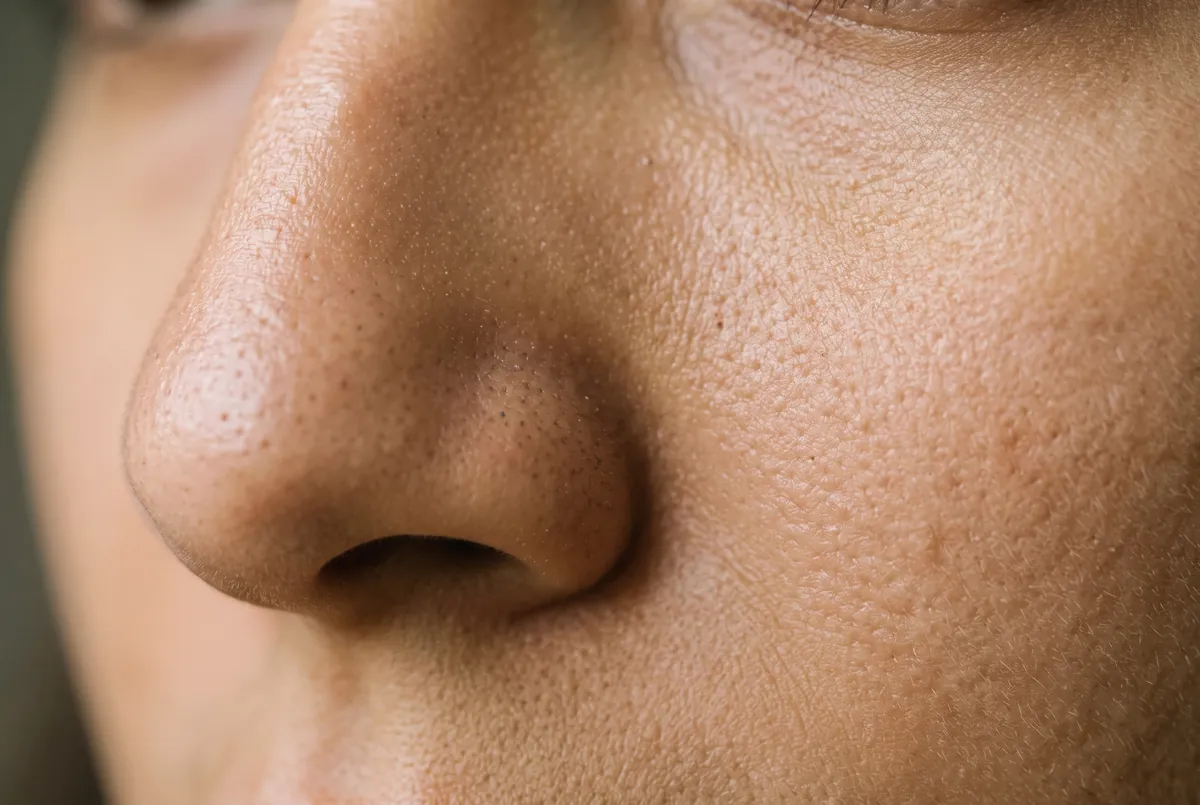
Many of the "blackheads" people try to remove from their noses are not blackheads. They are sebaceous filaments: tiny, evenly spaced gray or tan dots that cover the nose and sometimes the chin and inner cheeks. A sebaceous filament is a normal structure, a slim column of sebum and cells that lines the pore and helps oil reach the surface. If you squeeze one, a thin, pale, threadlike strand comes out, and the pore refills within days to a few weeks.
A true blackhead is different. It is usually larger and darker than its neighbors, it may be slightly raised, and it sits alone or in an irregular scatter instead of a uniform pattern. When extracted, it releases a firm, waxy plug with a dark cap. A pore emptied of a real blackhead can stay clear for a long time if your skin care keeps it from re-forming.
The distinction matters because it sets expectations. Sebaceous filaments cannot be removed permanently, and trying to do so daily with strips, tools, or fingers irritates the skin and can stretch the pores. They can be made less visible with regular use of oil-dissolving exfoliants and by keeping surface oil in check. I tell clients that the goal for the nose is "clean and unremarkable from a normal distance," not poreless under a magnifying mirror.
Why blackheads form
Two processes drive comedones. The first is oil production. Sebaceous glands respond to androgens, hormones present in everyone, which is why congestion commonly begins at puberty and can flare around the menstrual cycle, during pregnancy, around menopause, and with some hormonal conditions and medications. The second is the way cells shed inside the follicle. In acne-prone skin those cells are stickier and build up, and that tendency is largely inherited. If your parents had congested skin, you are more likely to as well.
Products can add to the load. Heavy creams, some hair pomades and oils, thick sunscreens, and long-wear makeup can contribute to clogged pores in people who are prone to them, particularly along the hairline and jaw. The label "non-comedogenic" means a product was formulated to be less likely to clog pores. It is a useful guide, not a guarantee, because skin differs. Sleeping in makeup and sunscreen is a reliable way to make congestion worse.
Friction, pressure, and humidity matter too. Chin straps, helmets, tight hats, phone screens held against the cheek, and masks worn for long hours hold sweat and oil against the skin and rub the follicle openings. Hot, humid weather increases oil flow. Over-washing and harsh scrubs, oddly, can also contribute: they irritate the surface and can leave skin both tight and oily, and irritation makes the lining of the follicle shed less evenly.
Diet is the question I am asked most. The honest answer is that research suggests a link between acne and diets high in sugary, rapidly digested carbohydrates, and possibly some dairy, in some people, but food is rarely the main cause and no single item is to blame for everyone. If you notice a clear personal pattern, it is reasonable to adjust. Chocolate and greasy food as universal culprits belong with the myths.
Why you should not squeeze blackheads yourself
Squeezing feels productive, and sometimes a plug does come out cleanly. The trouble is what happens the rest of the time. Fingernails and uneven pressure push part of the plug downward as well as upward. If the wall of the follicle ruptures under the skin, oil, cells, and bacteria spill into the surrounding tissue, and the body responds with inflammation. A quiet blackhead becomes a red, sore pimple, sometimes a deep one, within a day or two.
Repeated trauma leaves marks. On lighter skin, picked spots often leave lingering red marks. On medium and darker skin tones, they more often leave brown marks, known as post-inflammatory hyperpigmentation, that can take months to fade. Aggressive squeezing can break small blood vessels around the nose and can leave permanent indented scars. Unwashed hands add bacteria to freshly opened skin. And because skin was not softened first, far more force is needed than a professional would ever use.
There is also the matter of what you are squeezing. Without training and magnification, it is difficult to tell an open comedo from a sebaceous filament, a closed comedo from a milium, or an early inflamed lesion from a harmless bump. Each needs different handling. Milia, for instance, are small, hard, pearly cysts under the skin that will not come out with pressure at all, and attempts to force them only injure the surface.

Home ingredients and tools: what gets rid of blackheads
The most useful over-the-counter ingredient for blackheads is salicylic acid, a beta hydroxy acid. It dissolves in oil, so it can work inside the pore, where it loosens the bonds between the cells in the plug. It comes in cleansers, toners, and leave-on liquids and gels. A leave-on product generally does more than a wash that is rinsed off in seconds. Start a few times a week and increase as your skin tolerates it. Dryness and flaking mean you should cut back, not push through.
Retinoids are the other cornerstone. They are vitamin A derivatives that normalize the way cells shed in the follicle, which treats existing comedones and helps prevent new ones. Adapalene gel is available without a prescription in the United States, and stronger retinoids are available from a physician. Retinoids take patience: plan on two to three months of consistent use before judging the result, and expect some dryness and irritation in the first weeks. They are generally not used during pregnancy, so ask your physician if that applies to you.
Other ingredients play supporting roles. Alpha hydroxy acids such as glycolic and lactic acid exfoliate the surface and improve texture. Benzoyl peroxide targets acne bacteria and is most useful when blackheads are mixed with inflamed pimples. Niacinamide can help with oiliness and is well tolerated. Clay masks absorb surface oil and make pores look tighter for a day or so. They do not remove plugs, but they are a harmless and pleasant part of a weekly routine.
| Ingredient | What it does for comedones | Good to know |
|---|---|---|
| Salicylic acid | Oil-soluble, loosens the plug inside the pore | Leave-on forms work best, can be drying |
| Adapalene and other retinoids | Normalize cell shedding, treat and prevent comedones | Needs months, use at night, daily sunscreen |
| Glycolic or lactic acid | Exfoliate the surface, smooth texture | Do not stack with many other actives at once |
| Benzoyl peroxide | Reduces acne bacteria | Most helpful with inflamed spots, bleaches fabric |
| Clay masks | Absorb surface oil | Temporary effect, do not let them crack dry on the skin |
Introduce one active product at a time and give it several weeks. The most common mistake I see is a client who starts an acid cleanser, an acid toner, a retinoid, and a scrub in the same week, ends up red and peeling, and concludes that nothing works for their skin. A damaged skin barrier produces more irritation and more breakouts. One well-chosen active, a gentle cleanser, a light moisturizer, and sunscreen will outperform a crowded shelf.
Pore strips work by adhesion. Pressed on a damp nose and peeled off dry, they pull out the tops of sebaceous filaments and some loose blackheads. The forest of tiny spikes on the used strip is satisfying to look at, and the nose does look cleaner for a short time. Strips do nothing to stop pores from refilling, and they can irritate or even tear delicate skin. They should not be used on skin treated with retinoids, on sunburned or broken skin, or on anyone prone to visible capillaries around the nose.
Pore vacuums use suction to pull at the contents of the pore. In my experience they remove surface oil and little else from a genuinely plugged pore, while the suction itself can leave bruises and broken capillaries, especially on thin or mature skin and at high settings. Metal comedone extractors sold for home use are effective in trained hands and risky in untrained ones. Without softened skin, correct angle, and judgment about what to leave alone, the loop concentrates force on a small ring of skin and easily causes injury.
Oil cleansing and the so-called "grits" method have a following online. Massaging the skin gently with a cleansing oil or balm, then rinsing well, is a fine way to remove sunscreen and makeup, and it can loosen the tips of filaments. Long, vigorous massage sessions aimed at rubbing plugs out are not a good idea. They irritate the skin, and the grains people feel are often just balled-up product. Abrasive scrubs fall into the same category: they polish the surface without reaching the plug.

Professional extraction: how it is done
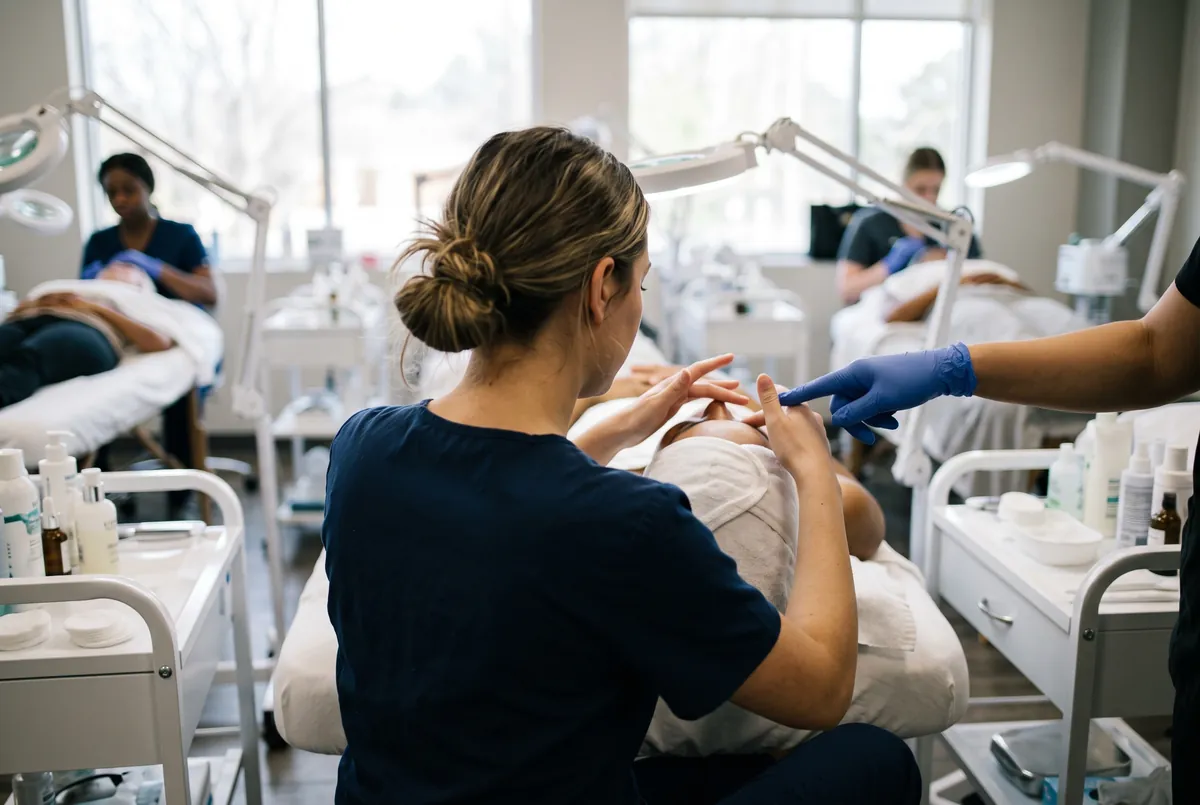
A professional extraction is part of a facial, not a standalone squeeze. The appointment begins with a consultation and a look at the skin under a magnifying lamp. I am sorting what I see into categories: open comedones that will release easily, closed comedones that may need preparation over several visits, sebaceous filaments that I will tidy but not chase, inflamed lesions that I will not touch, and anything unusual that I will mention so the client can show it to a physician.
The skin is cleansed, usually twice, and then exfoliated with an enzyme or a mild acid suited to the skin. A softening step follows. Many estheticians use steam for a few minutes. Others use warm compresses or a softening solution, which I prefer for clients with visible capillaries or rosacea-prone skin, because heat can aggravate redness. The purpose of all of this is to loosen the plugs so that they slide out with minimal pressure.
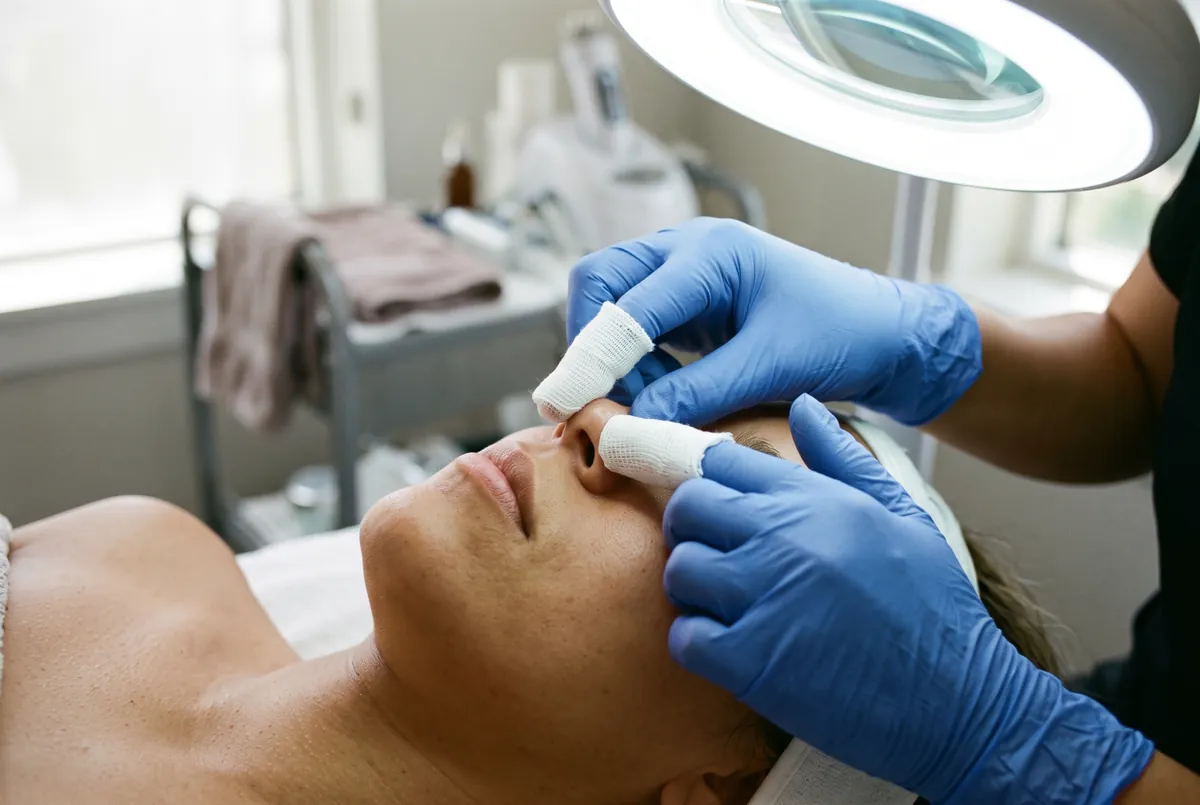
For the extractions themselves, I wear gloves and wrap my fingertips in gauze or use cotton swabs, placing gentle pressure on either side of the pore and slightly beneath it, rolling upward. Some estheticians use a sterilized comedone extractor for stubborn open comedones. For closed comedones, a tiny opening is sometimes needed. Whether an esthetician may use a lancet for that depends on state rules, and in some states it is not permitted. Anything that does not release with moderate pressure is left for next time.
Afterward the skin is wiped with an antiseptic or calming toner. Some providers apply high frequency, a mild electrical current delivered through a glass electrode, for its antibacterial and soothing effect. A calming or oil-absorbing mask follows, then a light moisturizer and sunscreen. A thorough session on a congested face can take a while, and a good esthetician will stop before the skin has had too much, even if not every pore is empty. A basic overview of the whole service is in my guide to facial care basics.
Manual extraction is not the only professional option. For skin with many small closed comedones, or skin that marks easily, I often lean on professional exfoliation instead. A light chemical peel with salicylic acid or another suitable acid, performed within the limits of state rules and the provider's training, loosens plugs across the whole face at once. Enzyme treatments and gentle mechanical methods such as microdermabrasion work on the surface and help products penetrate. A series of these treatments, spaced a few weeks apart and supported by home care, frequently clears texture that would take hours of pressing to address by hand, with less risk of marks.

What it feels like, and aftercare
Extractions are not painless, but they should be tolerable. Expect pressure and brief stinging, strongest around the nose and upper lip, where the skin has many nerve endings. Eyes often water during work on the nose. That is a reflex, not a sign that something is wrong. Tell the esthetician if a particular spot is sharply painful, since that can mean the lesion is inflamed and should be left. A professional who is working correctly will not leave deep nail marks, scratches, or bruises.
Immediately afterward, the skin is usually pink, with slightly raised areas where plugs were removed. This settles within hours for most people and within a day or two for sensitive skin. For the rest of the day, keep your hands off your face, skip makeup if you can, and avoid workouts, saunas, and hot showers. For the next several days, hold off on scrubs, acids, and retinoids, use a gentle cleanser and a light moisturizer, and wear sunscreen every morning.
A small breakout a few days after a first deep cleaning is not unusual, particularly if there were many closed comedones. It typically clears by itself. Contact your esthetician if you see spreading redness, swelling, crusting, or anything that worries you, and see a physician for signs of infection. Do not judge the result on the day of the treatment. The fair time to look is about a week later, in daylight, at a normal distance from the mirror.
The nose and other problem areas
The sides of the nose are the hardest place to clear and the first place to refill. The oil glands there are large, the skin is firmly attached to the cartilage underneath, and the curve makes it awkward to apply even pressure. It is also where broken capillaries most often appear after rough handling. On the nose I rely more on regular chemical exfoliation and less on force, and I am honest with clients that a completely empty nose is a short-lived state.
The chin and jawline tend to hold deeper, more stubborn comedones, often tied to hormonal patterns in adult women. The forehead is the classic site for many small closed comedones, frequently connected to hair products, hats, and bangs. Blackheads inside the ear and along its bowl are common and can be large. An esthetician can remove those in the outer ear, but nothing should be pushed into the ear canal. Blackheads on the back and chest are discussed with body treatments, where the skin is thicker and marks last longer.
A different pattern deserves a mention. Older adults with years of sun exposure sometimes develop clusters of large blackheads around the eyes and on the upper cheeks, on thickened, yellowish skin. This is related to sun damage, not ordinary acne. Likewise, a single very large blackhead that has been in the same place for years is its own type of lesion. Both are worth showing to a dermatologist, who can confirm what they are and remove them properly.
A routine that keeps pores clear
Morning care can be brief. Cleanse with a gentle, non-stripping cleanser, or simply rinse with water if your skin is dry. Apply a light, non-comedogenic moisturizer if you need one, and finish with a broad-spectrum sunscreen that suits oily or acne-prone skin. Sunscreen is not optional when you use exfoliating acids or retinoids, because both increase sensitivity to the sun, and sun exposure darkens the marks left by blemishes.
Evening is when the real work happens. Remove makeup and sunscreen thoroughly. If you wear long-wear products, a cleansing oil or balm followed by your regular cleanser does this well. Then apply your active product: salicylic acid on some nights or a retinoid on others, not layered on top of each other while your skin is still adjusting. Follow with moisturizer. Oily skin still needs hydration, and a well-moisturized skin tolerates active ingredients far better.
- Wash your face once or twice a day and after heavy sweating, with lukewarm water.
- Use one leave-on active consistently for at least eight to twelve weeks before changing course.
- Choose makeup, sunscreen, and moisturizers labeled non-comedogenic or oil-free.
- Keep hair products off the forehead and wash pillowcases and hats regularly.
- Clean your phone screen and anything else that rests against your face.
- Leave extractions to a licensed professional, and keep your fingers off between visits.
Consistency beats intensity. Comedones form slowly, over weeks, deep in the follicle, and they respond slowly. Clients who use a modest routine every day almost always end up with clearer skin than clients who alternate between doing nothing and attacking their face before an event. Professional facials every four to six weeks can support the routine, but they cannot replace it.
Adjust for how you live. If you wear a helmet, a tight cap, or a face mask for long stretches, cleanse or at least rinse the covered skin afterward, keep the fabric clean, and go lighter on makeup underneath. If you exercise daily, wash your face soon after, and do not let sweat dry on the skin under a headband. If you travel between dry and humid climates, expect your skin to need a richer moisturizer in one and a lighter one in the other. None of this is complicated, but small frictions repeated daily are often what stands between a good routine and clear pores.

Blackheads by skin type, age, and sex
Oily skin makes the most comedones, simply because there is more sebum, and it usually tolerates active ingredients well. The mistake with oily skin is over-drying it with harsh cleansers and alcohol-heavy toners. Combination skin often needs zoned care: actives on the nose, chin, and forehead, and less on the cheeks. Dry and sensitive skin can still have blackheads on the nose, and the answer there is a low-strength product used a few times a week with plenty of moisturizer.
Skin tone affects the risks more than the causes. Medium and darker skin tones are more prone to dark marks after any irritation, including rough extraction, harsh peels, and picking. For these clients I am especially conservative with pressure and strong exfoliation, and I emphasize daily sunscreen, which is the single most useful step for preventing and fading marks.
Age changes the picture. Teenagers typically have oily skin with blackheads across the central face, and they benefit from a simple routine and early professional guidance. Adult women often see congestion along the jaw and chin that follows the menstrual cycle. After thirty or forty, oil production gradually declines, but cell turnover slows too, so pores can look larger and plugs can sit longer. A retinoid suits many adults because it addresses congestion and signs of aging together.
Men generally have larger oil glands and thicker skin, and many have never had a facial. Shaving adds a factor: it exfoliates the beard area, which is one reason men often have more blackheads on the nose and forehead than on the cheeks. Ingrown hairs in the beard are a separate problem and should not be squeezed as if they were comedones. The products that work are the same for everyone, regardless of how they are marketed.

When to see a dermatologist
Comedones are a mild form of acne, and acne is a medical condition. An esthetician can do a great deal for mild congestion, and should recognize when a client needs more. See a dermatologist if you have many comedones over large areas, if they are mixed with painful, deep, or numerous inflamed pimples, if your skin is scarring or leaving dark marks, if congestion appeared suddenly in adulthood, or if several months of consistent over-the-counter care have made no difference.
A physician can prescribe stronger retinoids, combination topical treatments, and, where appropriate, oral medications or hormonal therapy. Women with stubborn jawline acne along with irregular periods or unwanted facial hair should mention all of it, because the combination can point to a hormonal condition. Dermatologists can also perform procedures outside an esthetician's scope. Tell your esthetician about any prescription you start, since treatments such as isotretinoin and topical retinoids change which facial steps are safe.

Myths about blackheads
The first myth is that blackheads are dirt. They are oxidized plugs, and washing more often or more harshly only irritates the skin. The second is that pores open and close. Pores have no muscles. Steam and warmth soften the contents and the surrounding skin, and cold water or toner can make pores look tighter for a short time, but nothing opens or shuts them. The third is that you can shrink pores permanently. Pore size is set mostly by genetics and oil production. Keeping pores clear makes them look smaller, and that is the realistic goal.
Other myths cause real damage. Toothpaste, lemon juice, baking soda, and glue-based homemade masks irritate or burn the skin and do nothing for comedones. Sun exposure does not clear acne. A tan hides redness briefly while ultraviolet light thickens the skin and worsens marks. Oily skin does not need to skip moisturizer. And a facial is not a one-time fix. Skin makes new sebum every day, so extraction without a home routine is a short-term cleanup.
Choosing a professional
In the United States, facials with extractions are performed by licensed estheticians and, in most states, licensed cosmetologists. States set their own training requirements and scope of practice, including whether lancets and certain exfoliation methods are allowed. You can verify a license with the state board. Our esthetics licensing hub and cosmetology licensing hub link to state rules, and cosmetologist or esthetician explains how the two licenses differ.
Look for a provider who asks about your medications and products before starting, washes hands and wears gloves, uses sterilized or single-use tools, prepares the skin before extracting, and is willing to leave a stubborn pore alone. Be wary of anyone who promises permanently clean pores or pushes a long list of products at the first visit. My guide on how to choose a cosmetologist has a fuller checklist, what a medical esthetician is explains clinical settings, and our studio directory lists professionals.
If this kind of work interests you as a career, extraction is a hands-on skill learned under supervision in a state-approved esthetics or cosmetology program. Our esthetics course covers skin anatomy, acne, exfoliation, and sanitation theory, and what an esthetician does describes the daily work. Online theory builds your foundation. It does not replace the in-person hours or exams your state requires for a license.
Your next step
Pick one proven active, salicylic acid or adapalene, and use it consistently with a gentle cleanser, a light moisturizer, and daily sunscreen for the next two to three months. Stop squeezing. If you want a head start, book a facial with extractions from a licensed esthetician and ask for advice on your routine while you are there. If your skin is painful, scarring, or not improving, make an appointment with a dermatologist.
State Requirements
State licensing guides
Hours, exams, fees, and the licensing board differ by state. Open your state for the current requirements.
Common Questions
FAQ
The quickest safe result is a professional facial with extractions from a licensed esthetician, which clears existing plugs in one visit after the skin has been softened. To keep them from returning, use a leave-on salicylic acid product or a retinoid such as adapalene consistently. Home ingredients take weeks to months to show their full effect, and squeezing at home often causes inflammation and marks.
No. A blackhead is a pore plugged with skin oil and dead cells that is open at the surface. The dark color comes from oxidation of the oil and pigment in the plug when it meets air. Washing more often or scrubbing harder does not remove blackheads and can irritate the skin. Ingredients that work inside the pore, such as salicylic acid and retinoids, are what help.
Both are comedones, pores blocked by oil and dead skin cells. In a blackhead, or open comedo, the pore opening is wide and the top of the plug darkens in the air. In a whitehead, or closed comedo, a thin layer of skin covers the opening, so the plug stays pale and appears as a small flesh-colored bump. Both are non-inflamed forms of acne.
Pore strips pull out the tops of sebaceous filaments and some loose blackheads, so the nose looks cleaner for a short time. They do not prevent pores from refilling, and they can irritate or tear delicate skin. Avoid them if you use retinoids, have sunburned or broken skin, or are prone to visible capillaries. Regular chemical exfoliation gives a longer-lasting improvement.
I do not recommend it. A metal extractor concentrates force on a small ring of skin, and without softened skin, the right angle, and training in what to leave alone, it easily causes bruising, broken capillaries, inflammation, and scars. Licensed professionals prepare the skin first and use sterilized tools. At home, rely on leave-on exfoliants and leave manual extraction to an esthetician.
For congested skin, a facial with extractions every four to six weeks is a common schedule, sometimes more often at the start and less often once the skin is clearer and your home routine is established. Your esthetician should adjust the interval to how quickly your pores refill and how your skin tolerates the treatment. More frequent or more forceful extraction is not better.
Some do, as the skin sheds and oil flow carries the plug out, but many persist for weeks or months, and a few become inflamed pimples. The tendency to form comedones usually continues as long as the skin produces plenty of oil. Consistent use of a salicylic acid product or a retinoid shortens the life of existing blackheads and reduces how many new ones form.
See a dermatologist if comedones cover large areas, are mixed with painful or deep pimples, leave scars or dark marks, appeared suddenly in adulthood, or have not improved after several months of consistent over-the-counter care. Also have large clusters around the eyes or a single long-standing large blackhead examined. A physician can prescribe stronger treatments than those available over the counter.
Keep Reading
Related Guides


